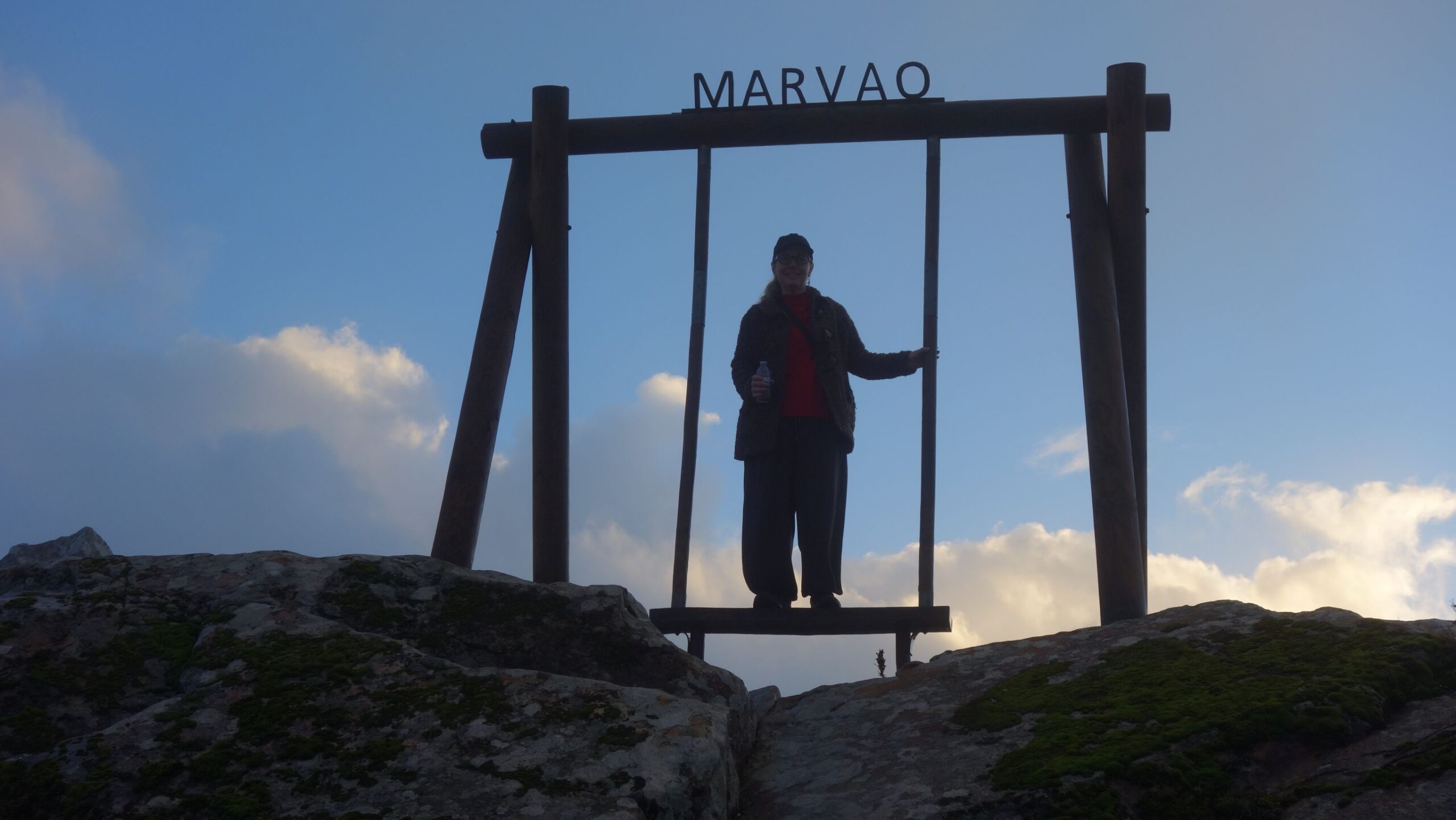
 One of the problems of inching north with drives of seventy-five or ninety minutes is that eventually the distance piper must be paid. If you drive straight to Porto to Lisbon, it takes over three hours. But we still had one more touring day left before we had to be back in the greater Lisbon area, and I elected to go east as well as south. At some point in my research, I had stumbled across the hill town of Marvao near the Spanish border. A cute hill town surrounded by a wall with a huge castle? Count me in.
And so we left Porto for the three-hour-and-fifteen-minute drive to Marvao. Getting out of Porto went fine, and we made good time going south. When we left the highway and started going east into the small mountains, we also drove into a misting rain that stayed with us until late afternoon. I’m not sure if it was really rain or if we were in a cloud/fog, but it was a little frustrating since one of the main reasons to get a hotel on a hill is for the view. Still, we drove on.
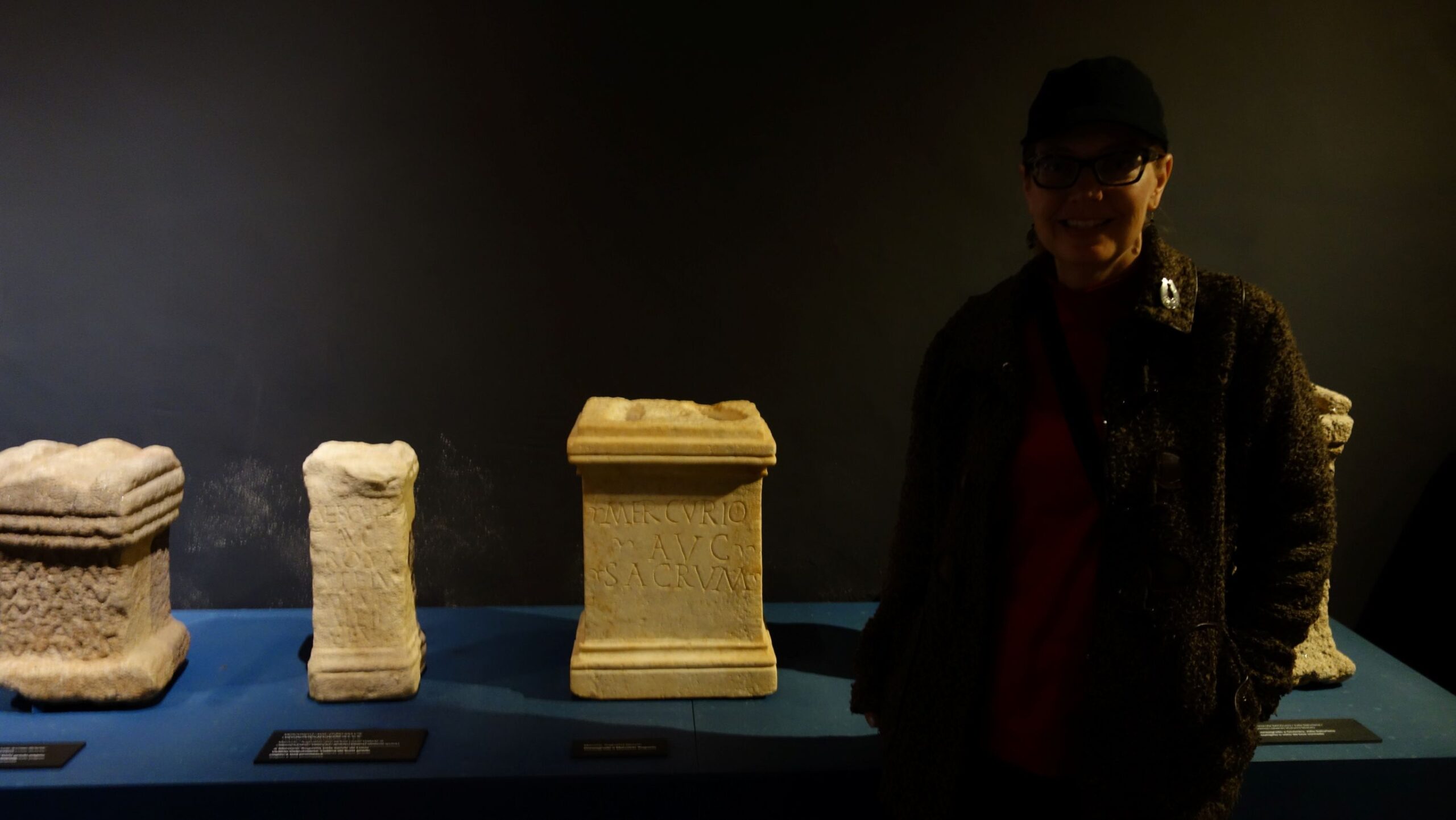 I decided that since check-in at the hotel wasn’t until 1:00, we should see a site first. So we stayed off the hill and drove a couple of miles to the nearby old Roman settlement of Ammaia, where two thousand Romans lived from the first century AD to the fifth century. We pulled up to the museum and grounds entrance at around 1:00 to find out the museum closes for lunch from 12:30 to 2:00.
So we backtracked to Marvao, heading up several gentle switchbacks and driving right into a cloud again. We checked into our very nice hotel that is inside the medieval walls and then ate a good meal as the only guests at the hotel restaurant. It seems a hill town off-season in the fog doesn’t bring out the daytrippers.
After lunch, the fog had lifted just slightly, so we took that as a good sign that maybe the fog would lift later in the day. Meanwhile, we drove back to the Roman museum and paid our five euros each to get in.
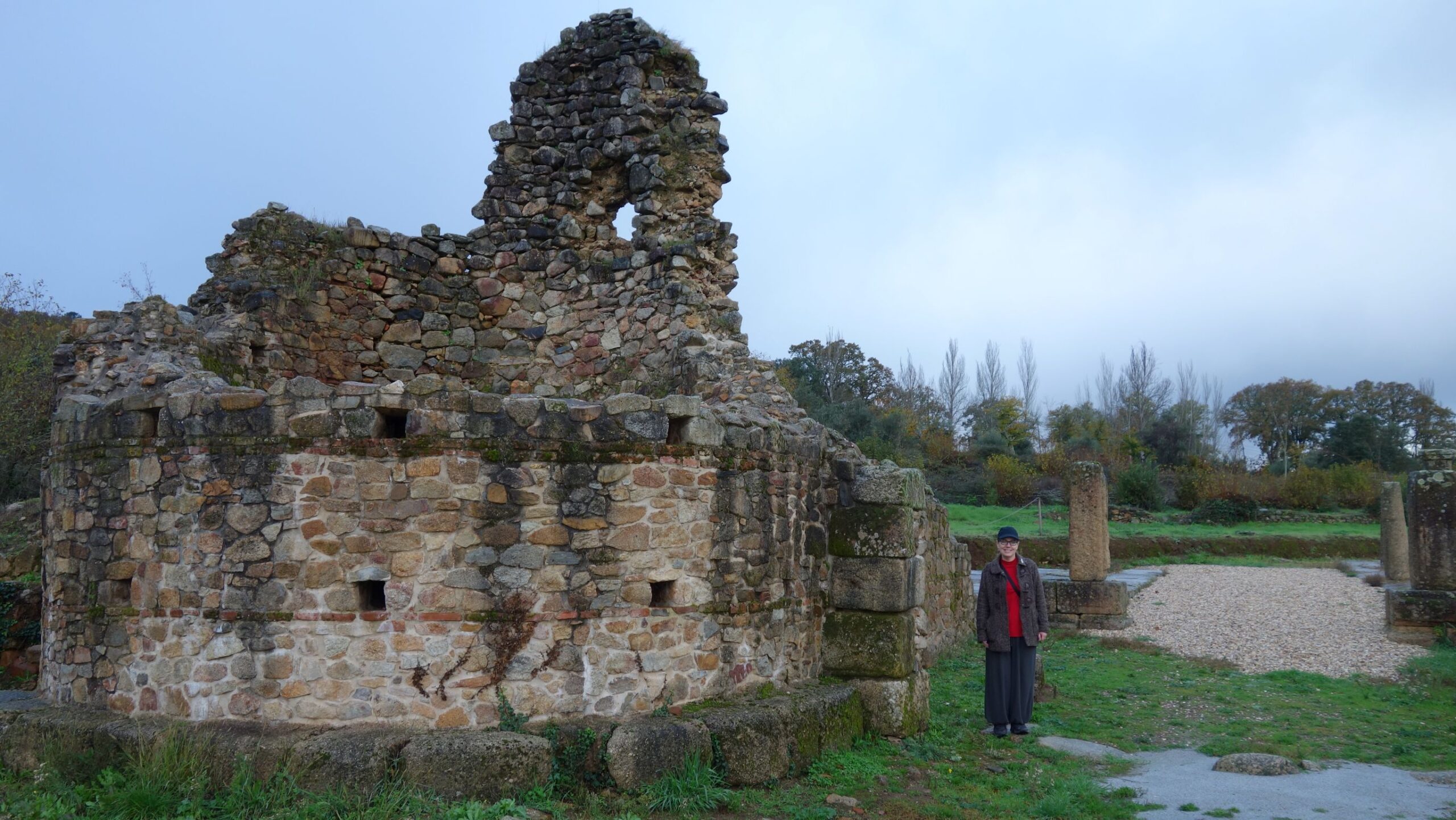 The museum is modest, with about eight rooms of artifacts and a film (in English) on what the settlement probably looked like based on limited archaeological investigations. Most of the work done in the area has been scans from the air, but there have been excavations of the old bath house, the forum with the associated temple, and a few other structures.
After the museum, you are allowed out into a field to wander the ruins. We started on a boardwalk that took us to the old southern gate of the town, and then we followed footpaths in the field to a few buildings that had been uncovered. The original town walls enclosed about sixty acres, so most of the site is still buried under fields. There’s even a country road that splits the site, with the bath house on one side of the road and the forum on the other.
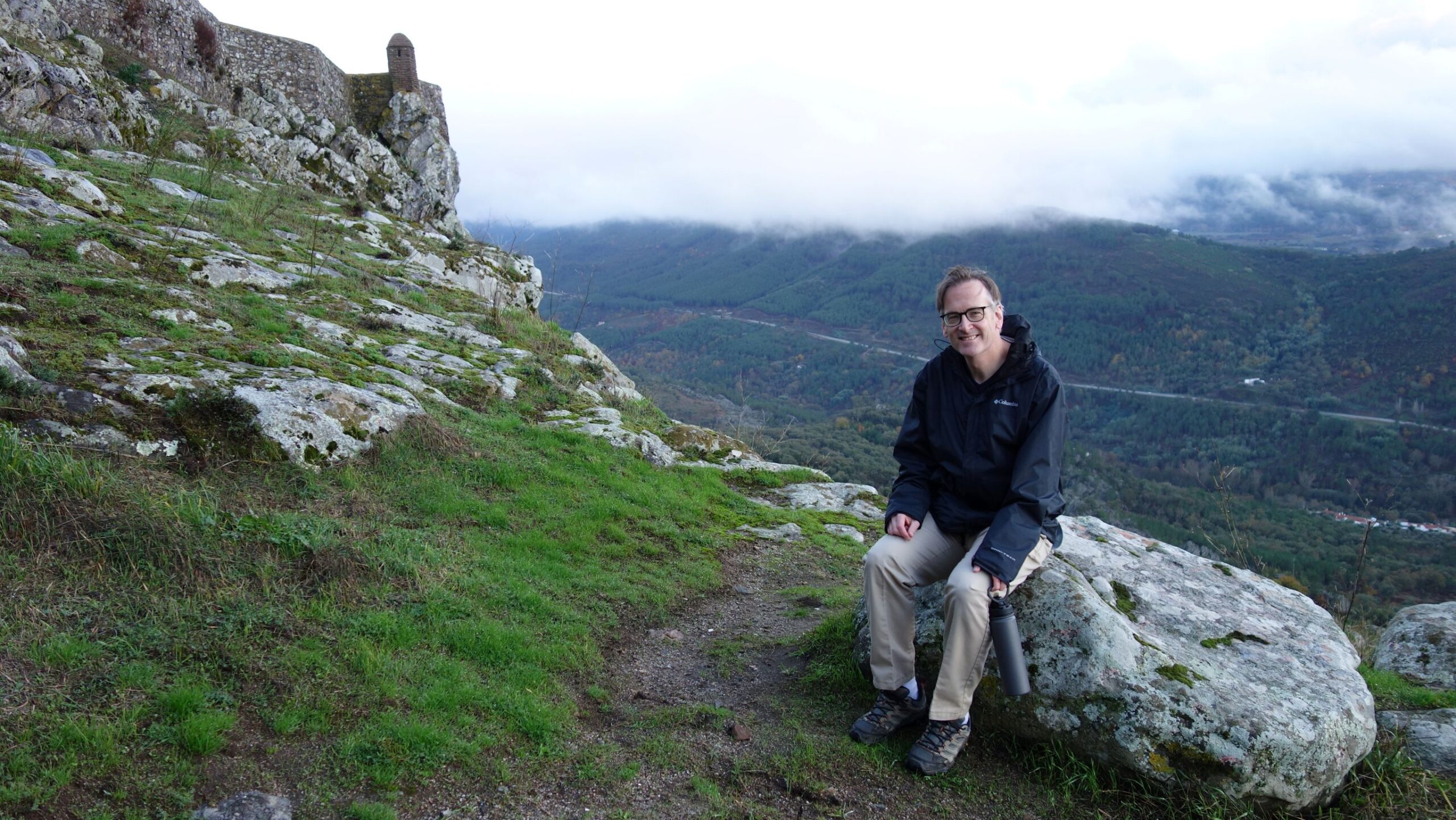 We wandered over the field area, but skipped the amphitheater and old bridge, as they were a bit further away and it wasn’t clear how to get to them. In all, it was a fine stop. It’s not a Roman site on the scale of major ruins, but it was interesting to see an ordinary Roman town, especially since we were only ten minutes away from it. It had stopped raining before we got to the museum, so it was a good visit.
We drove back to Marvao, where it was no longer raining and we could see some of the areas in the valley; we even saw a few patches of sun down there. We headed out into the town, heading up to head toward the best viewpoints. The walls were easily accessible everywhere, and so this town very much reminded us of the walled town we visited last year here in Portugal, Obidos. As grand as Obidos was, Marvao has better views, which started to come out with the patchy sun that had appeared.
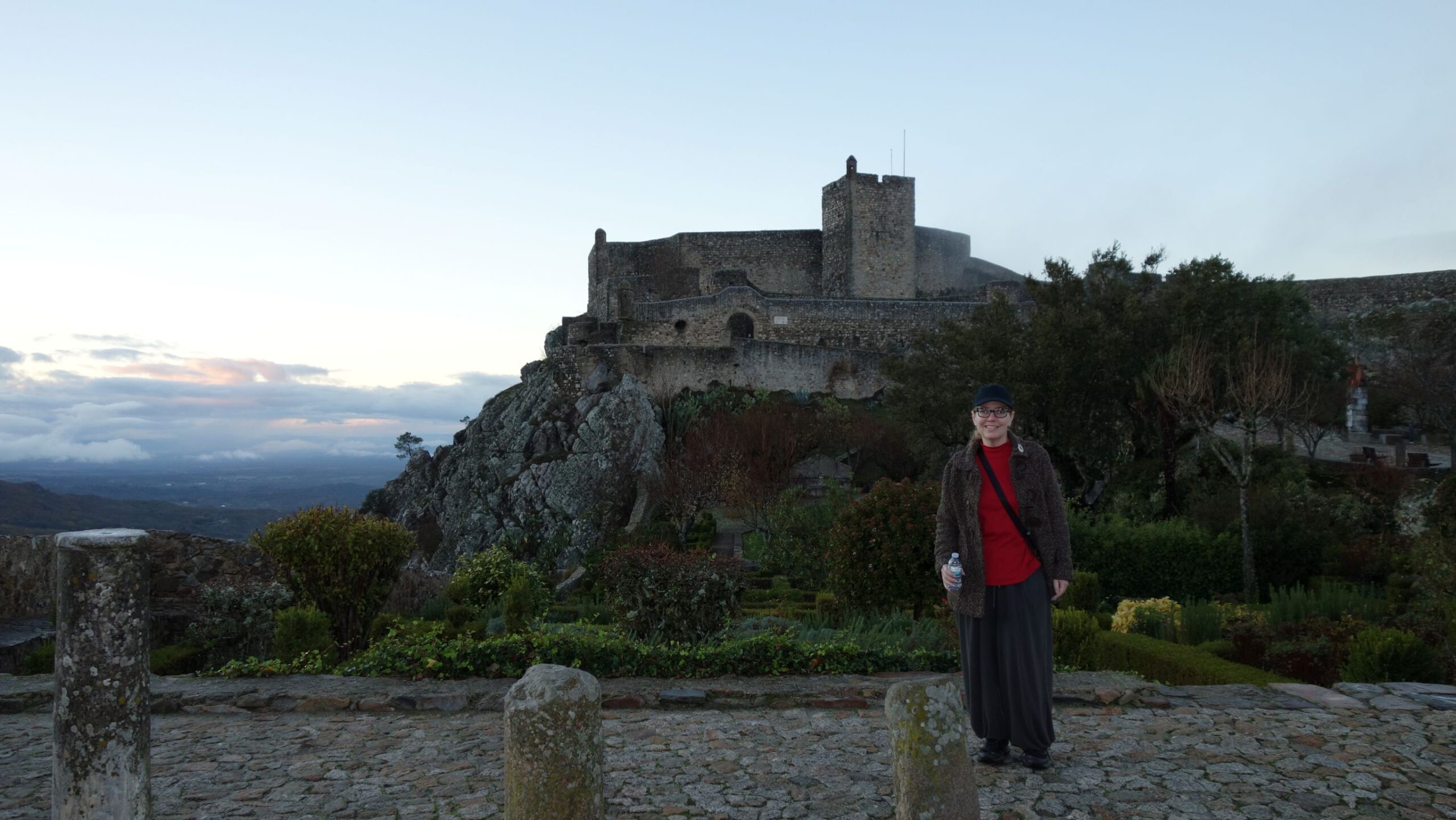 Somehow Marvao has two small and pretty parks – one up at the top of the hill (in the middle of the town) and one right in front of the castle proper. That surprised me, and they used the landscape well. It’s not often I see parks with a town wall as the backdrop of the park.
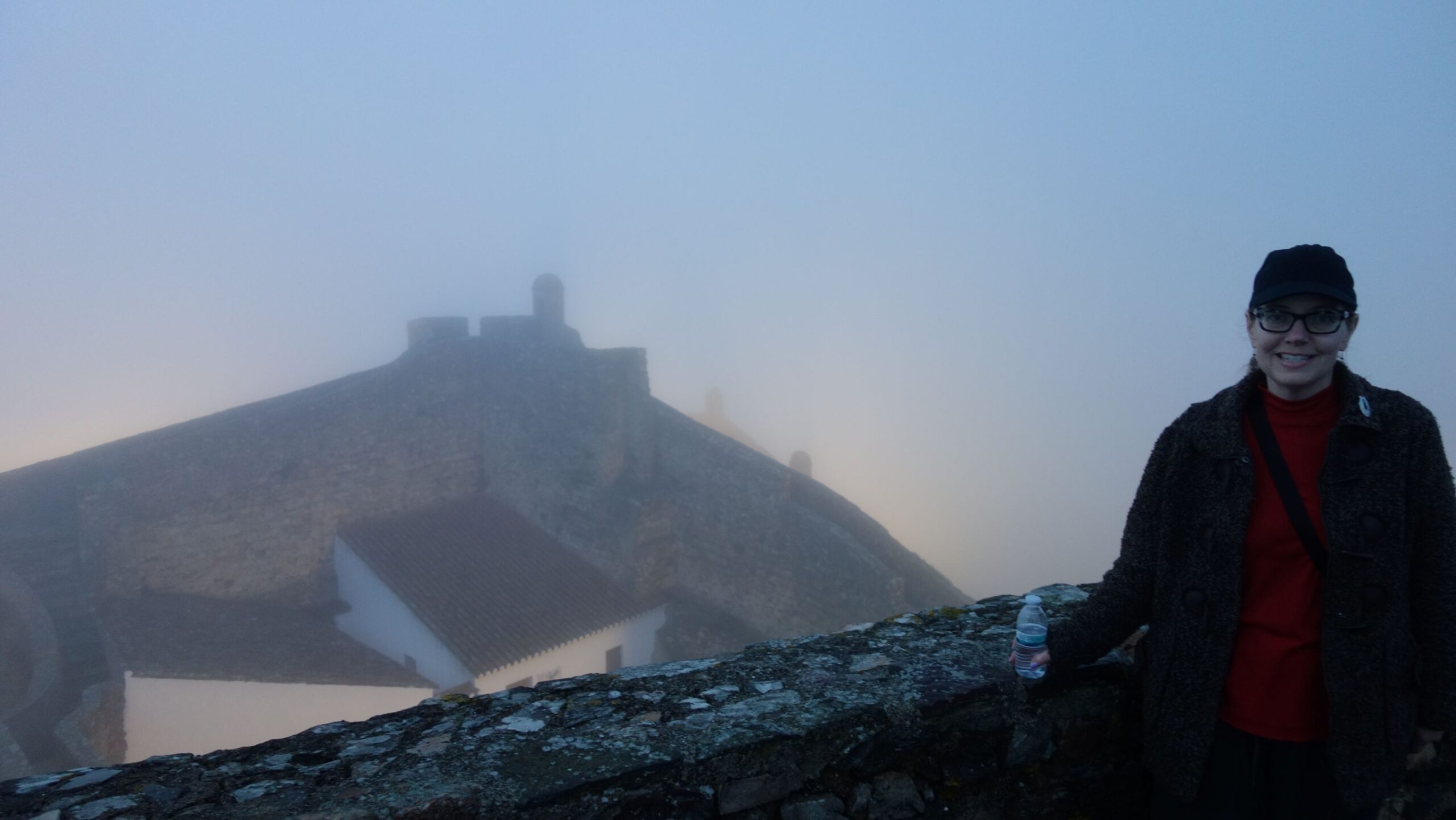
We mostly wandered and enjoyed the changing views. The valleys below kept changing as mist drifted in and over parts of them. The mist finally started to come back pretty thickly as the sun went behind a cloudbank near the horizon, just as we got to the castle itself. We went in and walked all over the place. It’s in perfect condition (no ruined parts) and is huge. We climbed walls and even the central tower. Between the mist and the setting sun, we lost more and more views into the surrounding area, but the fog was atmospheric (in more than just the literal sense). Once the gloaming had settled in, we headed back to the hotel, where Mer graded and I blogged to pass time until the very European supper time of 7:30. I’m hoping to maybe grab a little time tomorrow morning to see things here longer before we head the three hours back to the Lisbon area. Marvao has been worth a three-hour detour.