 Today was a good day for the practice of awe. From enormous churches to delicate stone carvings, to massive building complexes, to the display of raw power in nature, we spent a good deal of the day experiencing wonder.
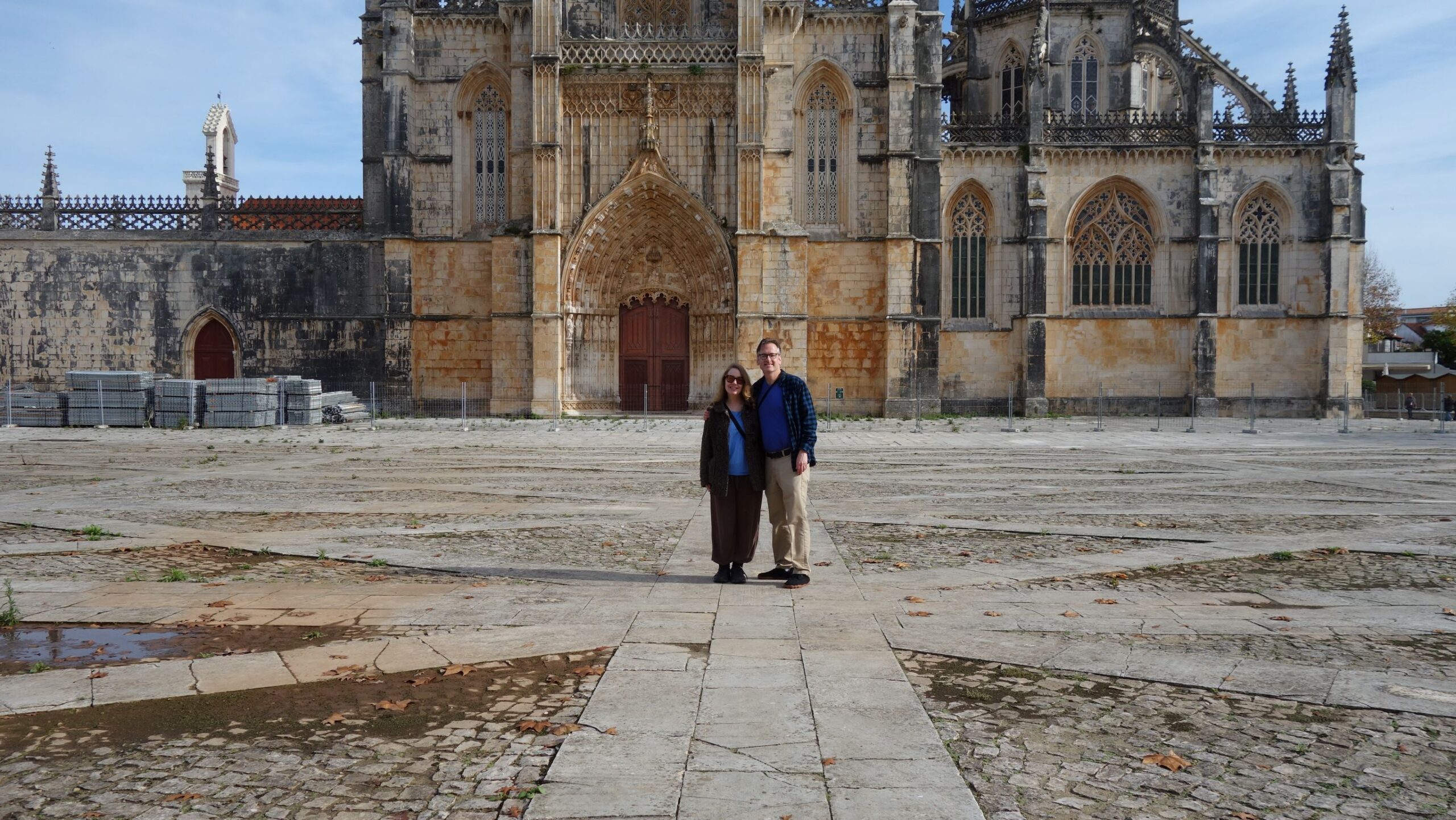
We started the day by driving thirty minutes to the nearby town of Batalha, home of the aptly-named Batalha Monastery. The monastery is a huge series of buildings centered around an elaborate church. It was built as part of a vow that the Portuguese king took. He fought with Castille (in Spain) for independence, and his six thousand men managed to defeat a Castilian force of thirty thousand men. The king then had the monastery built near the battlefield as thanksgiving. It took over 130 years to build the main structures, but even these were added to (and some later demolished). Napoleon’s troops did a bunch of damage to the structures in the early 1800s, and the monks were finally expelled by the king in 1834. The next king decided to preserve the buildings and started a renovation of them in 1840.
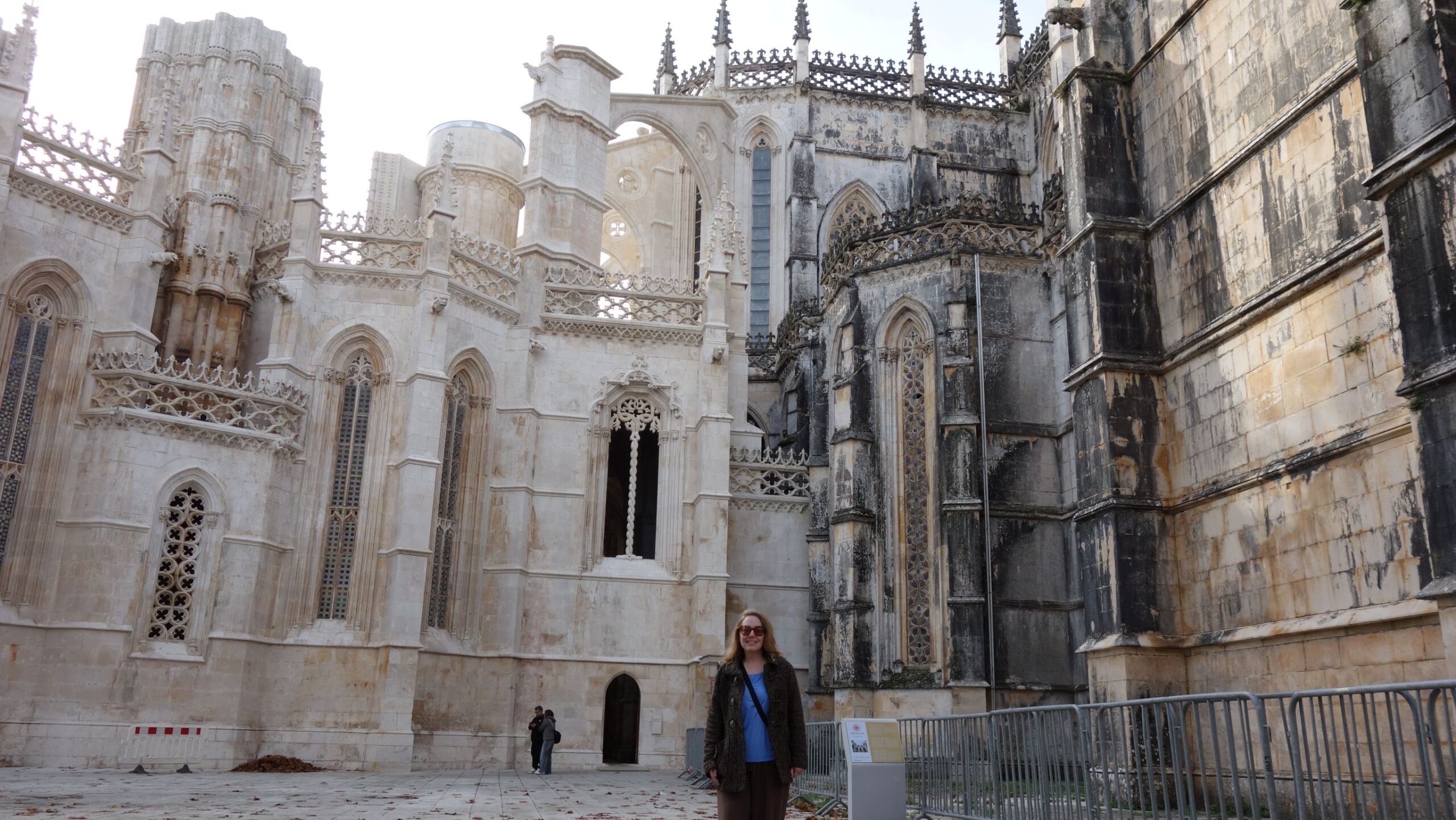 We started our tour by an accidental tour of the outside of the building. We stopped to admire the front of the church and then proceeded around to the side to find the ticket office. Admission to the church is free, but you need a ticket for the other buildings on site. We kept following signs for the ticket office, which turned out to be three quarters of the way around the church. Along the way, we noticed a sharp contrast between one section that we assumed had been recently cleaned and the rest of the church; the cleaned section looked brand new.
I had a good time talking with the woman behind the counter. When I said I wanted “everything,” she told me the monastery would be thirty thousand euros above the ticket price. I asked her if I could rent it since the upkeep would be so much. She was a game soul. She got us our all-inclusive tickets and showed us on a map how to go about the tour.
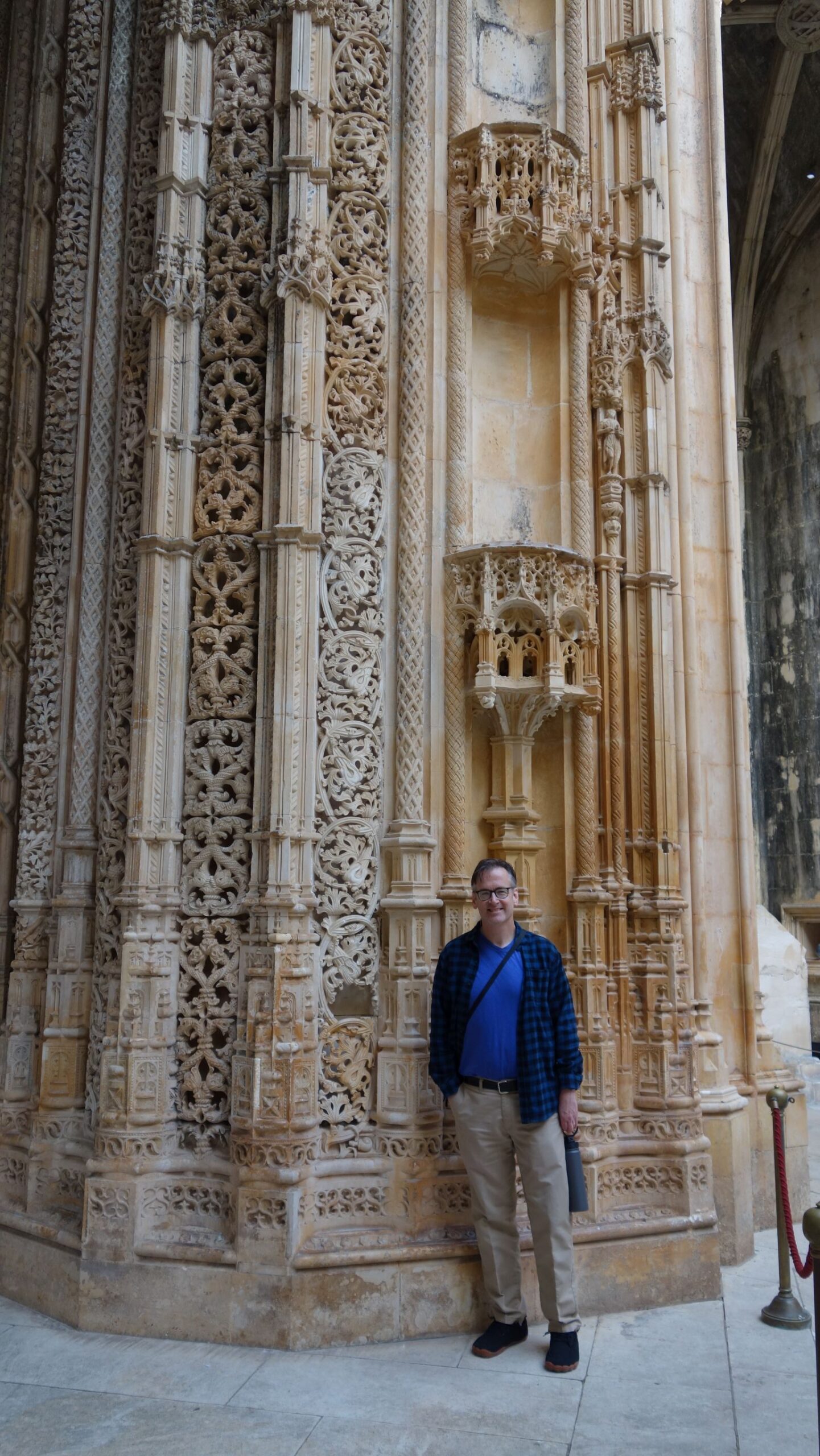 It started with the unfinished, or “imperfect,” chapels. This was the part of the church building that looked as if it had been cleaned. The chapel had no roof, and some windows had no glass. It seems that once the chapels were partly done, the king decided to take his money and pour it into a monastery in Lisbon, and so the chapel was never finished. It’s still a pretty space. The stone lacework at the entrance is exquisite and delicate (and somehow survived the 1755 earthquake that wrecked much of Lisbon and did some damage in many parts of Portugal). The main space of the chapel was largely round, with small chapels branching off the main building. These house the remains of the sons of King Duarte and his queen, Leonor, as well as the king and queen themselves. The king and queen are sculpted as holding hands, which I thought was sweet (and which we saw with another king and queen’s tomb elsewhere in the church). I liked the space very much.
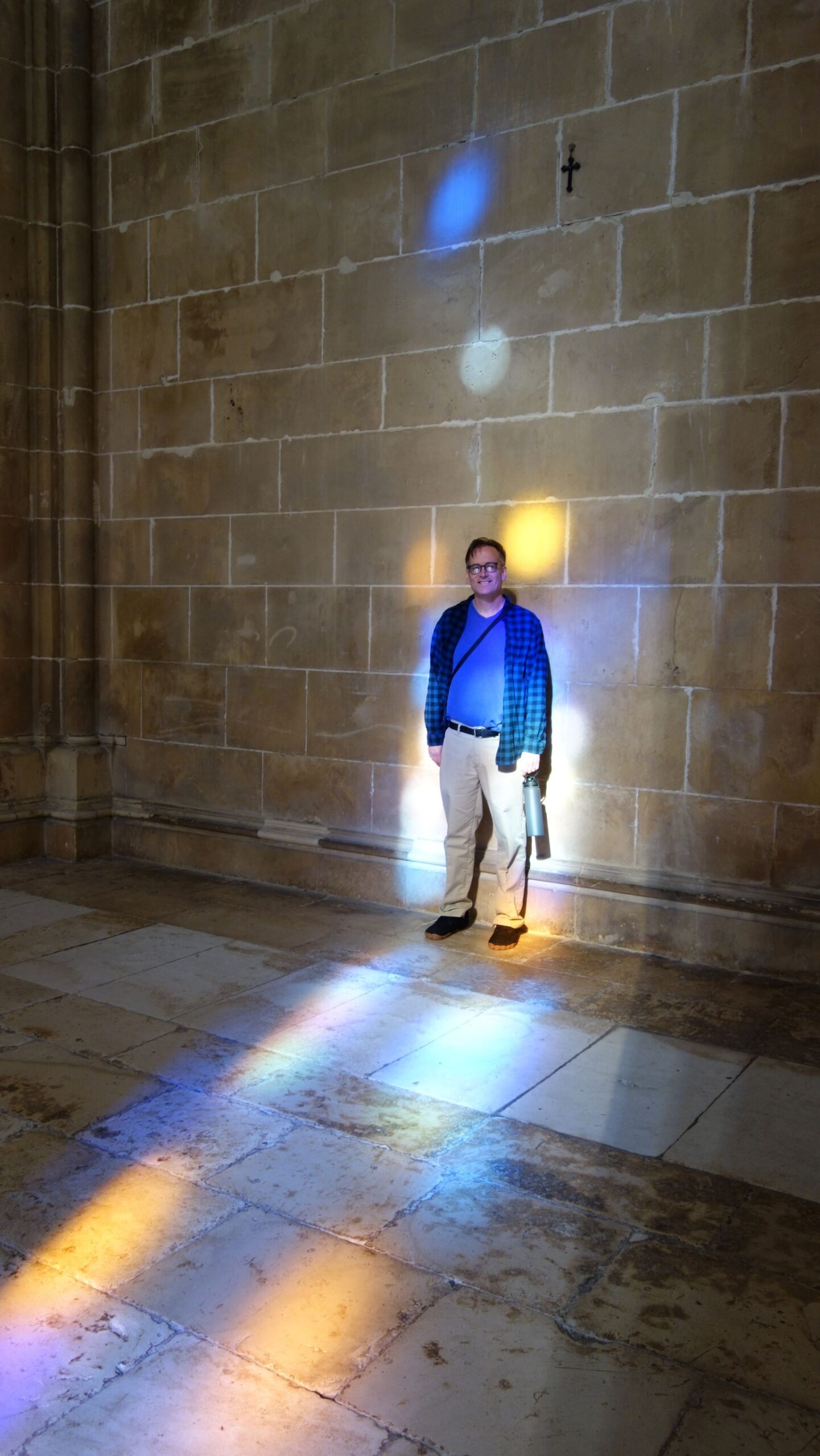
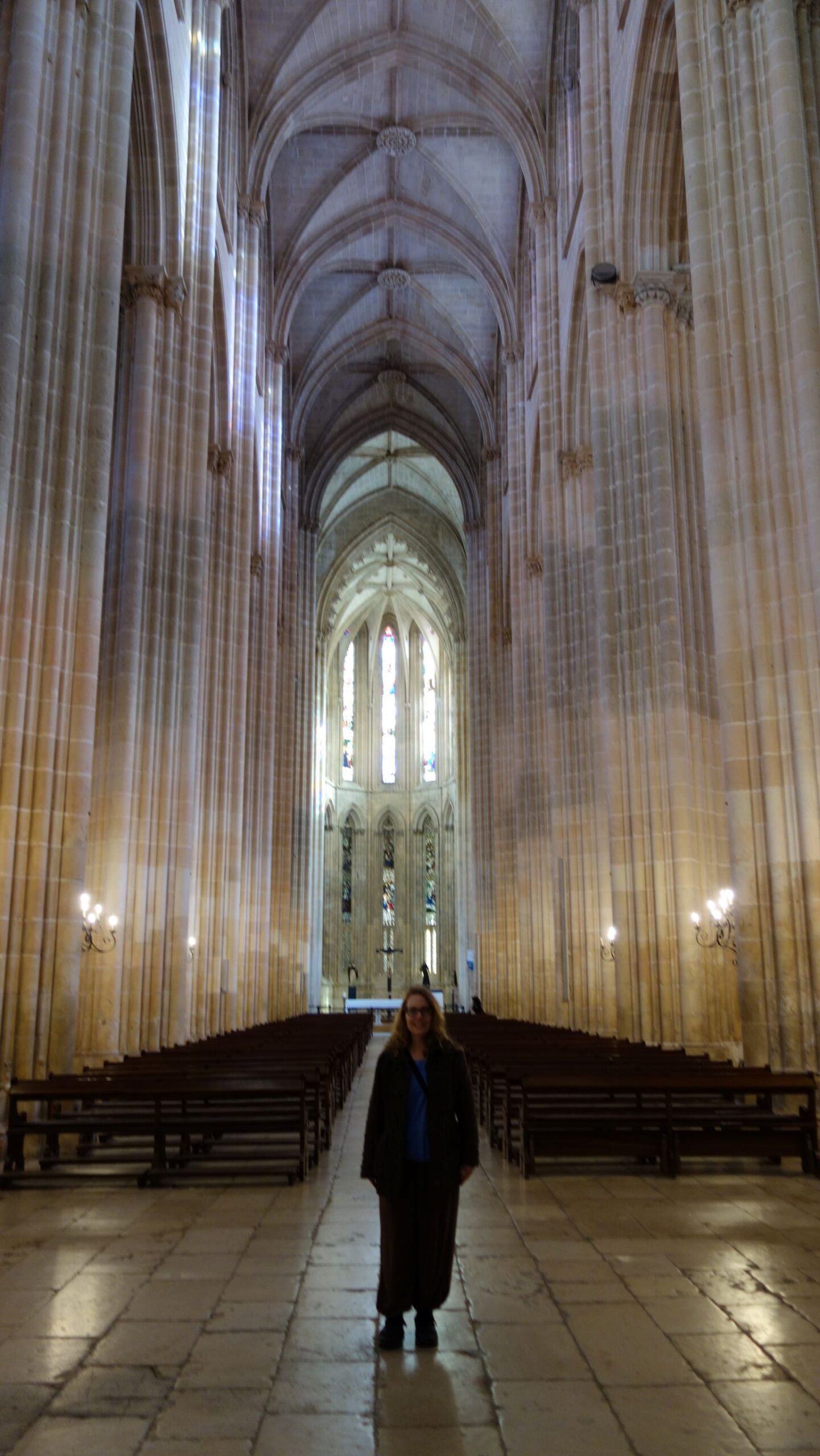 Next we went around to the entrance of the church. The inside of the main church was fairly simple, in contrast to all of the lacy stonework on the outside railings on the roof and on the door arches. The real showstopper of the day was the light streaming in though the stained glass – it was all over the sanctuary. The windows were simple geometric patterns of color, and that transmitted well onto the walls and floor. Unusually for a church of this time, there was no real altar – there was a raised platform with some chairs on it, but there was nothing at the back of the platform other than more church space, including more small chapels with more colorful light. We liked the church very much.
We next toured the Founders’ Chapel, where King Joao (the king who founded the independent kingdom) and his wife Philippa are buried underneath a hexagonal dome. They are surrounded by their talented and overachieving sons who went on to be explorers and rulers. One son died in captivity in Tangiers when he and his family refused to ransom him at the cost of a city given back to the Muslims. There was an exhibit in the room about the history of the family as recorded by Portugal’s greatest poet, Luis de Camoes. That was helpful to put the family into context.
 Next on the tour was the main cloister, where all the railings and columns were decked out in the elaborate Manueline style of ropelike curves and other decorations. One corner of the space had a huge fountain room where monks would wash before meals. We popped in a small room to watch a short video on the various phases of the building of the monastery, but a few minutes later, we were distracted by loud stomping noises. We turned and saw three soldiers marching into a room part way down the cloister. We got up and investigated. It was the chapter room of the monastery, a large space with a revolutionary (for the time) arched ceiling that people were afraid was going to fall down. It survived the 1755 earthquake. The chapter house is home to Portugal’s Tomb of the Unknown Soldier, and we had seen the soldiers approaching for the changing of the guard. Above the tomb is a broken crucifix, Christ of the Trenches; three of Christ’s four limbs are damaged, but the crucifix had otherwise survived a shelling in World War I. It was starkly beautiful.
 We the went into the adjoining smaller cloister, where we could get up to the second level as well. We saw a kitty washing herself in the central square, as if the place had been built for her. To be complete, we doubled back to the refectory, which now houses various objects from and remembering Portugal’s men who fought in World War I. There was a picture of Christ of the Trenches set upright in a blasted field, and it was very moving.
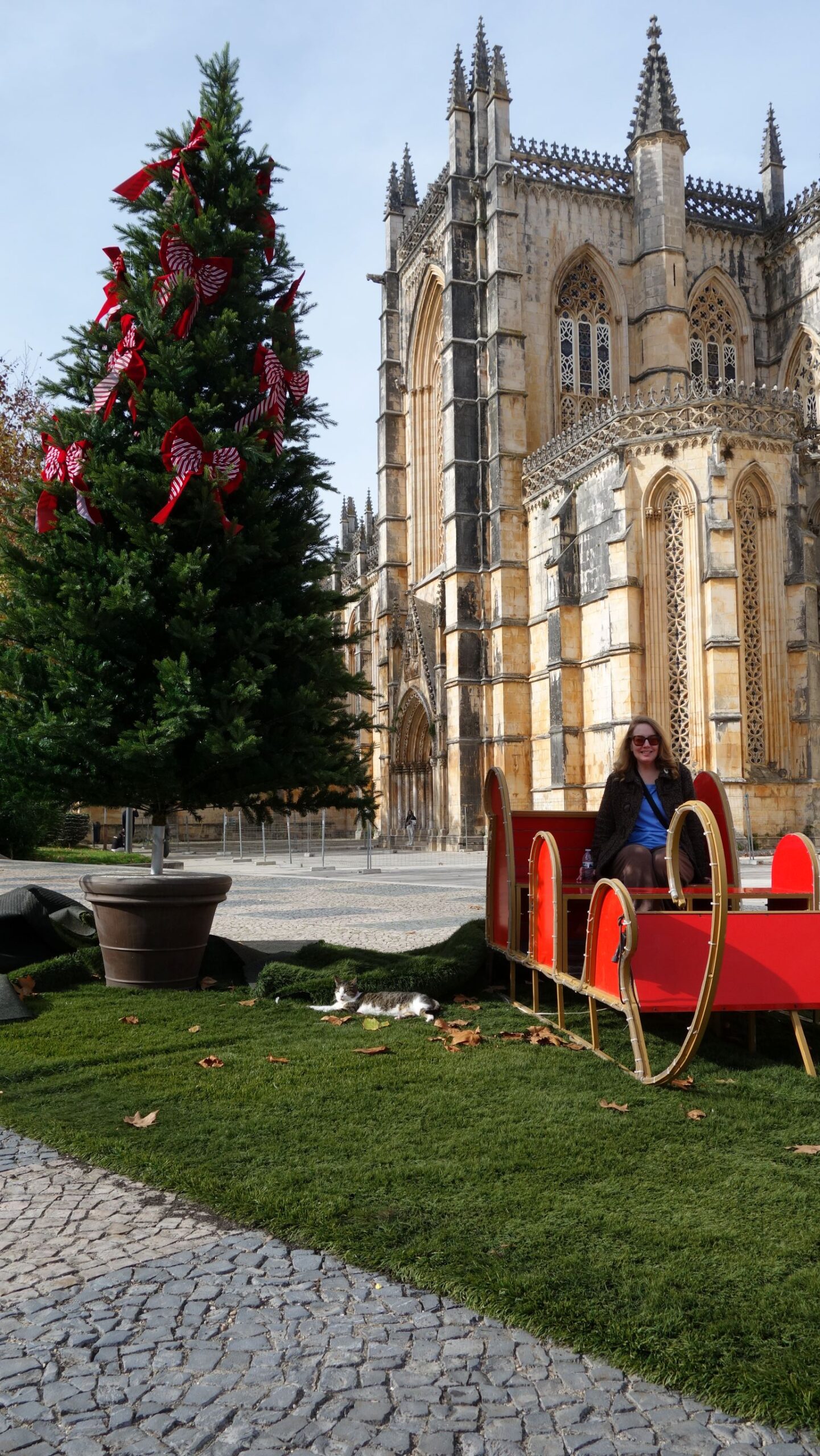
And so our tour of the monastery ended. We found a cafe right on the small square looking over at the church, and we had a light snack, mostly to relax in a pretty space. We saw the a local store’s cat flop down on the artificial grass put down for a sleigh for upcoming Christmas festivities. She looked quite content.
We headed back to the car and on to our second monastery of the day, the nearby but older Monastery of Santa Maria in Alcobaca. This church space was started in 1178 after the Moors were expelled from the area, and it was finished in just forty years and given to the Cistercians, who did their usual wonderful hydroengineering to bring in water from two nearby rivers.
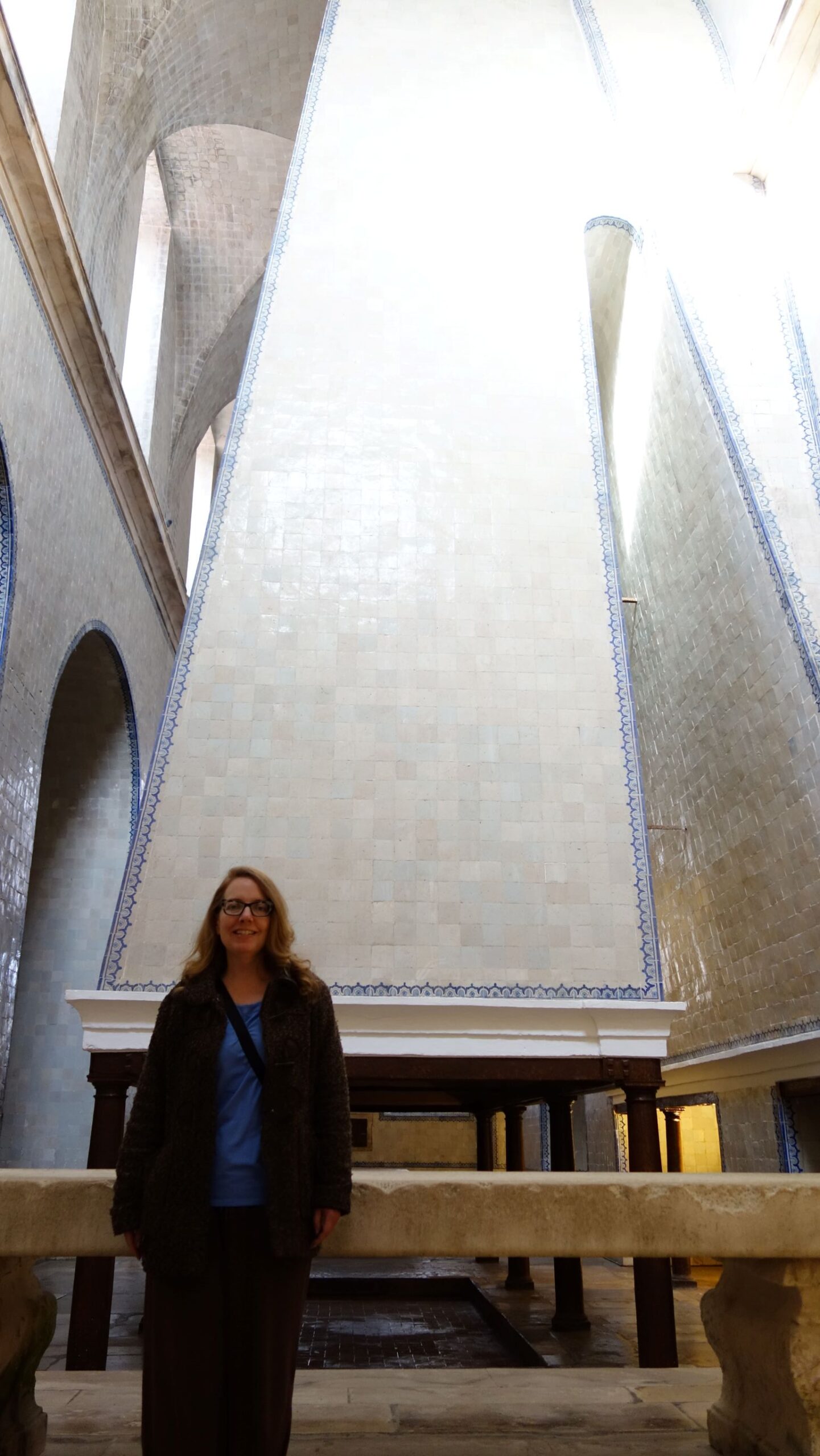
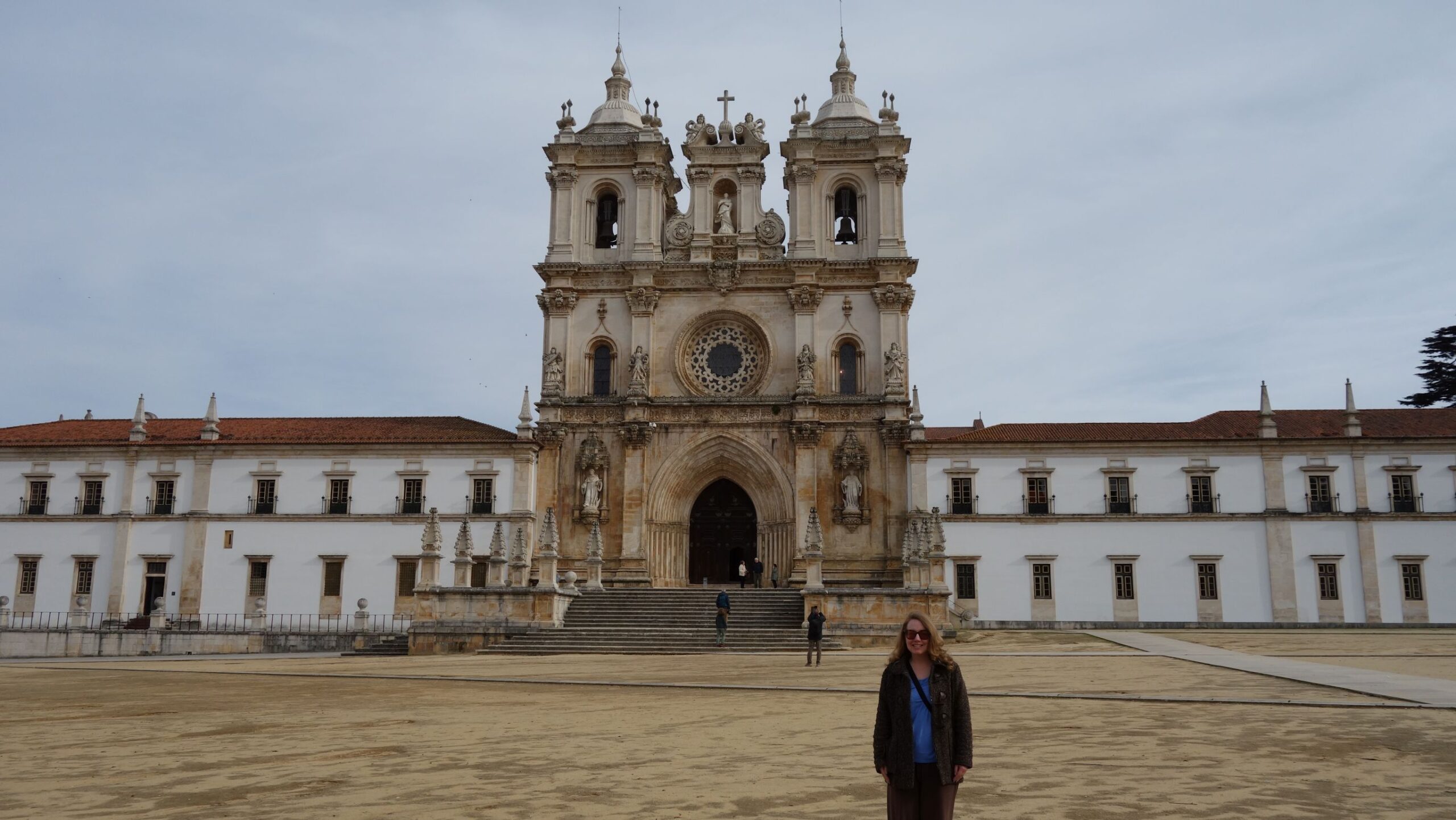 This church and associated monastery are much simpler in design when compared to Bathala, but still very beautiful in their own right. This tour also had a cloister, with two floors, and a fountain for washing, and even a sundial. Here, you could walk in the garden part of the center of the cloister, which is usually closed to visitors in most cloisters I’ve been to. There was a rectory and a scriptorium, but he real gem was the kitchen. I’ve never seen such a large kitchen anywhere, and it was all tiled in decorative tile. The fireplace alone was probably twenty feet long and was all supported on cast iron columns. It was easy to walk under the chimney and see four or five stories up to where it exited the roof. The kitchen was a huge space and fed hundreds of people every day at the height of the monastery.
 The church was clean and well lit, with minimal decoration. The transepts of the church held the tombs of King Pedro I and his lover/second wife Ines. Pedro’s father didn’t approve of Ines, who was Spanish, so he had her assassinated. That led to Pedro’s leading an armed revolt against his father, which was eventually settled. But Pedro is buried in one transept and Ines in the other, such that on the Day of Judgement, they will rise and see each other face to face.
We had paid extra for a tour of the sacristy, where the priests dress for mass. The sacristy is now the third one built in the same space, after the first one became too small and the second one collapsed in the 1755 earthquake. It’s a large and airy space, with lots of drawers for holding garments. The ceiling is heavily decorated with saints, especially Bernard, who founded the Cistercian order. At the end of the room is a circular space that holds the busts of saints and angels and martyrs, which were all used as reliquaries (where bones or hair of saints were kept). The busts have survived, but Napoleon’s men stole all of the relics themselves. The room is made of wood, which is flexible, and so survived the earthquake.
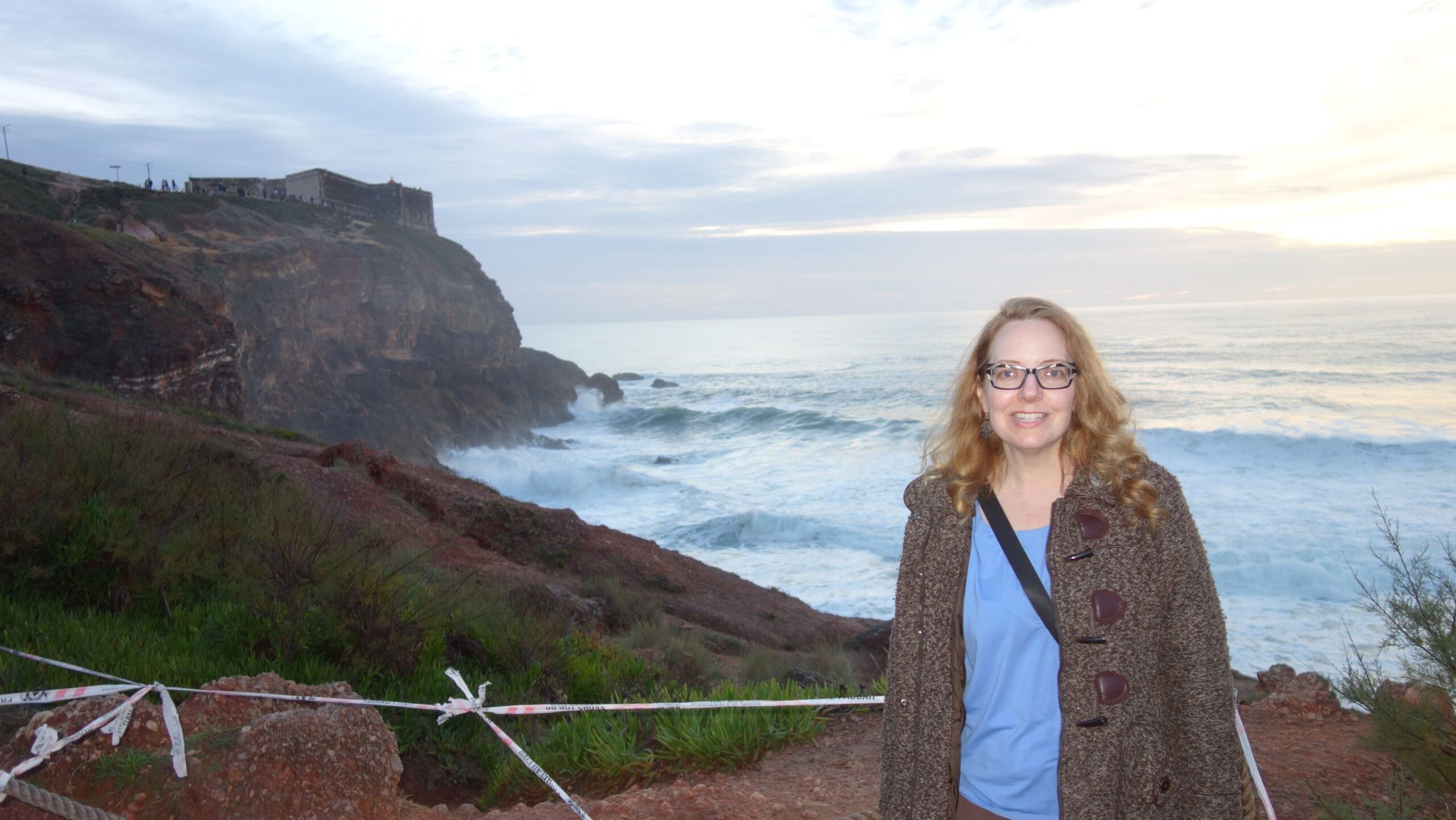
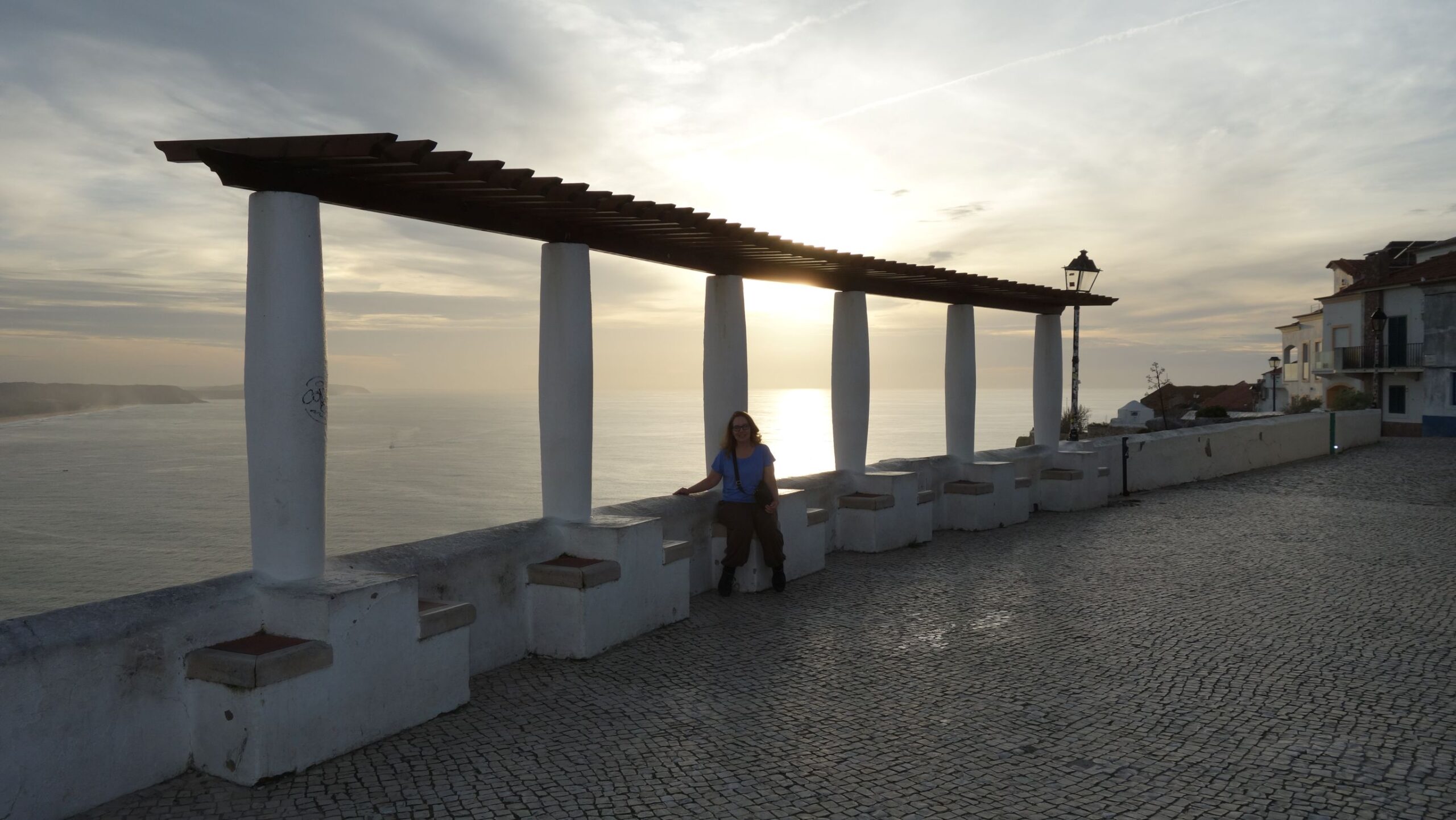 That brought the tour to an end, and so we headed back to the hotel in Nazare to regroup. I wanted to go see a cave on the north beach, which is on the other side of the lighthouse from the town and the south beach. Since the internet said we could walk there in thirty minutes, off we went. That included the “up – always up” stairway from last night. It was still quite a climb. We then walked all the way down to the lighthouse and then followed a path down and down toward the beach. The waves on this side of the lighthouse were huge – most were ten feet tall, and the big ones were fifteen feet or higher. It was very impressive. And we got a long look at them because our path ended with a “dangerous cliff – no entry” sign. Sigh. So no beach cave for us today, but we stood there for a long time just watching the waves come in. We even got to see two surfers out on the waves. Once the sun had set and it was getting darker, we headed back up and up to the upper town and then down and down to the lower town, where we had supper.
 We ended the evening by walking out on the beach to see the surf. It was dark, so you couldn’t see the waves until they broke and the foam appeared as if out of nowhere. It was pretty and awe-inspiring since all that power just thundered up on us out of the dark.
Nazare has been a great stop. I could spend many happy hours watching those waves, and these are considered a “flat sea” by locals. It must be something when the thirty-foot waves start crashing in. Tomorrow we’re off to Coimbra, where Meredith has made plans for us. I’m looking forward to it.