 When Meredith turned forty, she declared to me that we were going to Europe for two weeks every summer until we had gone to every country. This little project would take us into our seventies. After Mer’s parents passed away in 2014 and 2016, we inherited enough money to become debt free, and so we started traveling during some school breaks, like spring break and Thanksgiving. As such, we sometimes travel to Europe up to three times a year.
We’re in northern Portugal this week, and that makes the third time we’ve been to the country. We were here for a week with our friend Dubbs back in 2017, and we explored Lisbon and the town of Sintra. Last year, we spent a week visiting the south of the country. Now that we’re in the North, Mer has modified her rule. Three one-week trips equals one two-week trip, so we can officially count Portugal as off the mandatory-visit list. I’m very happy because now I can avoid Portugal in the blistering summer here. Portugal in November is much lovelier to my taste (fifties and sixties instead of eighty to a hundred degrees in summer).
 We flew out of Toronto on Saturday, and we left Ohio in simply beautiful sunny fall weather. That continued through Pennsylvania and New York and briefly into Canada; then we hit the fog. I’m not a hundred percent sure of the weather conditions that made so much fog possible, but we were in navigable but definite fog for most of the Canada portion of the trip. Happily for us, the fog cleared up about twenty miles before the airport, and we were able to take off on time as the fog started rolling back in. Oh, and we were daring on our timing – we only got to the gate two hours and forty-five minutes before takeoff, so we were pushing things pretty close in my book. We left our house nine hours and fifteen minutes before the plane was scheduled to leave, so that’s my new minimum for flying out of Toronto.
 The flight over was smooth, if a bit dull-seeming to me for some reason. I was restless for much of the flight and only managed maybe forty-five minutes of sleep. The Lisbon airport was a breeze to get through this time, as was picking up the car, and so by about 8:15 a.m., we were on the road to Nazare, a seaside town about seventy-five minutes north of Lisbon. Cue up the Neil Diamond tune to “Desiree,” since “Nazare” sounds like that.
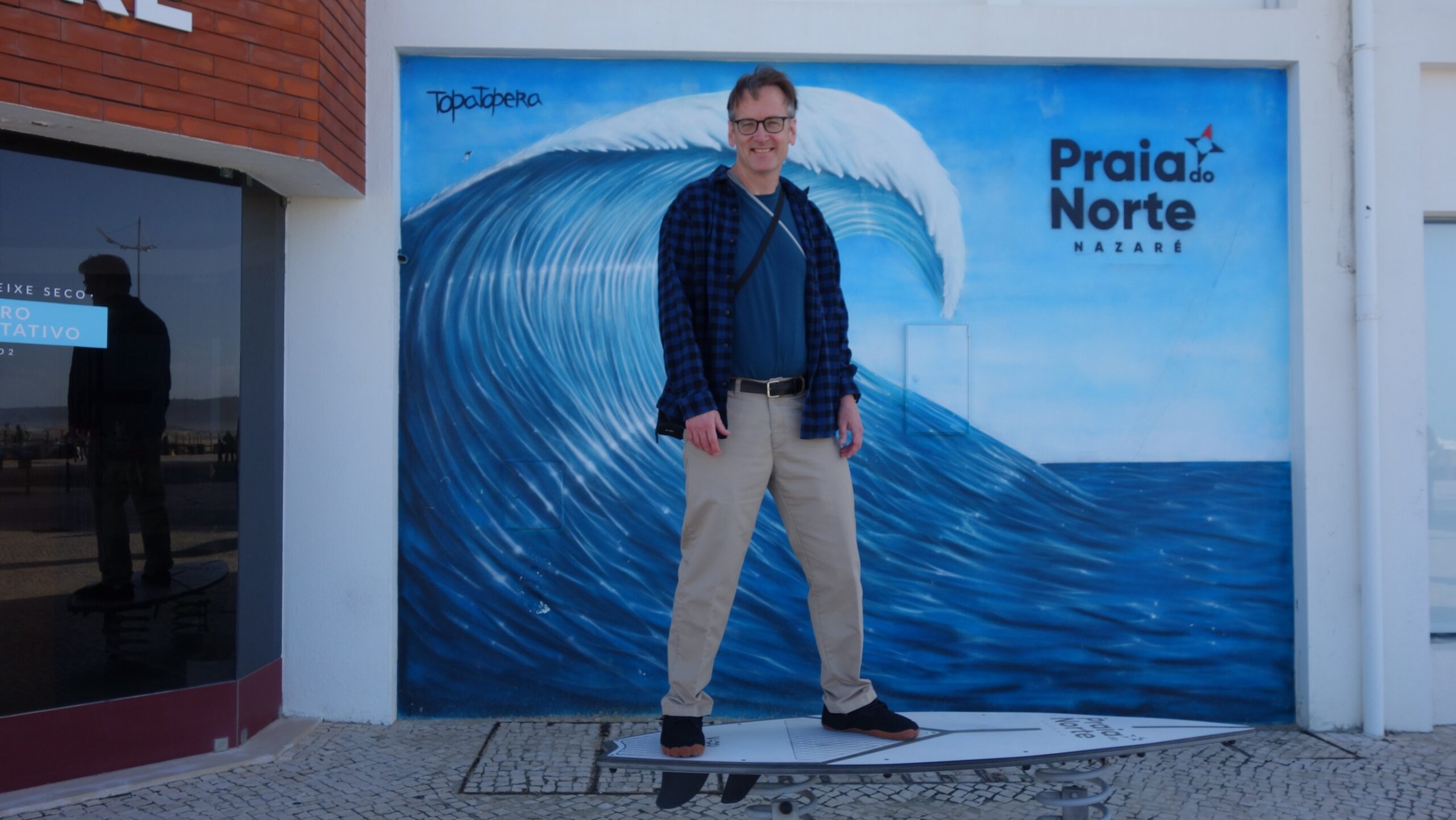
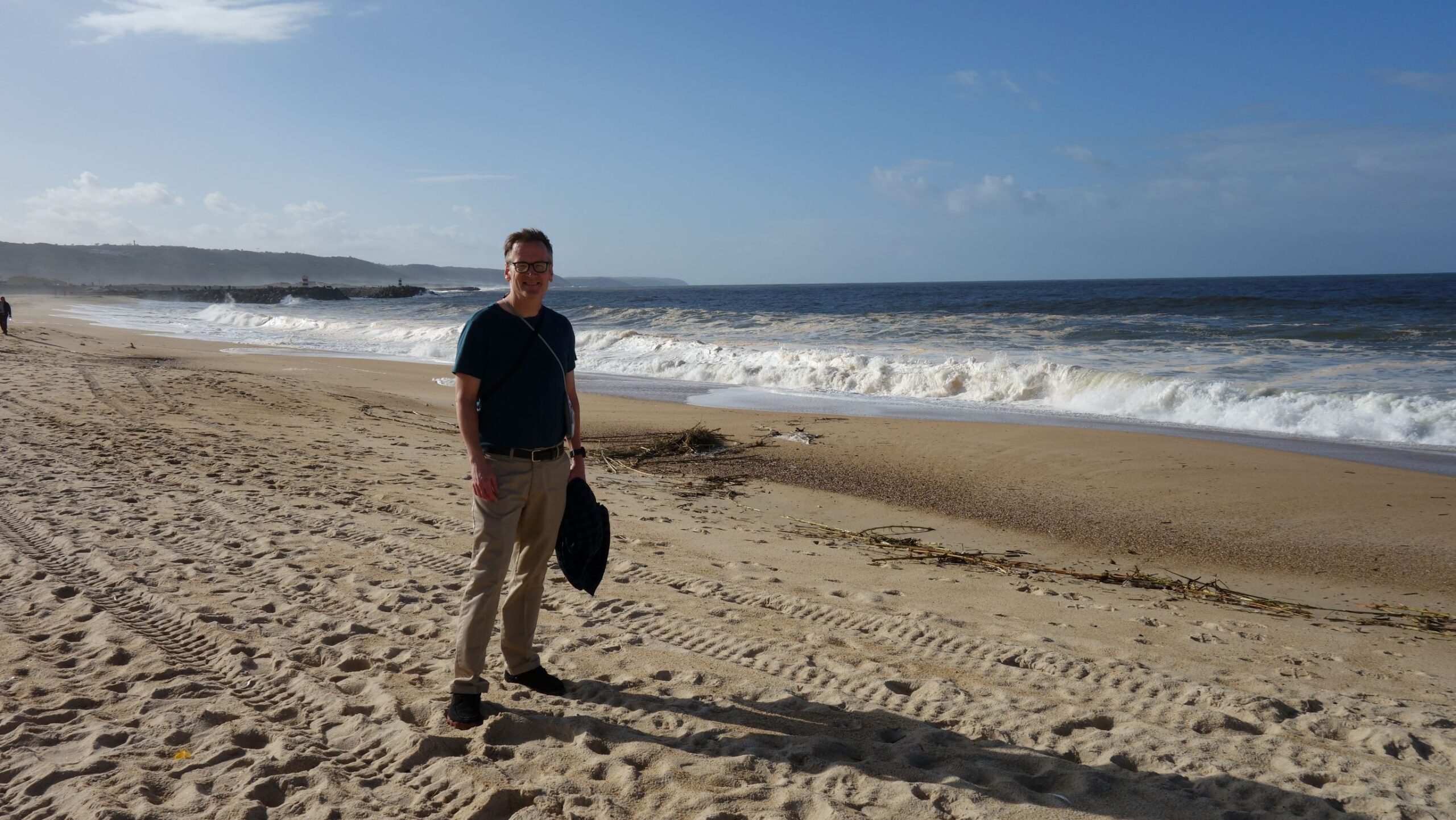
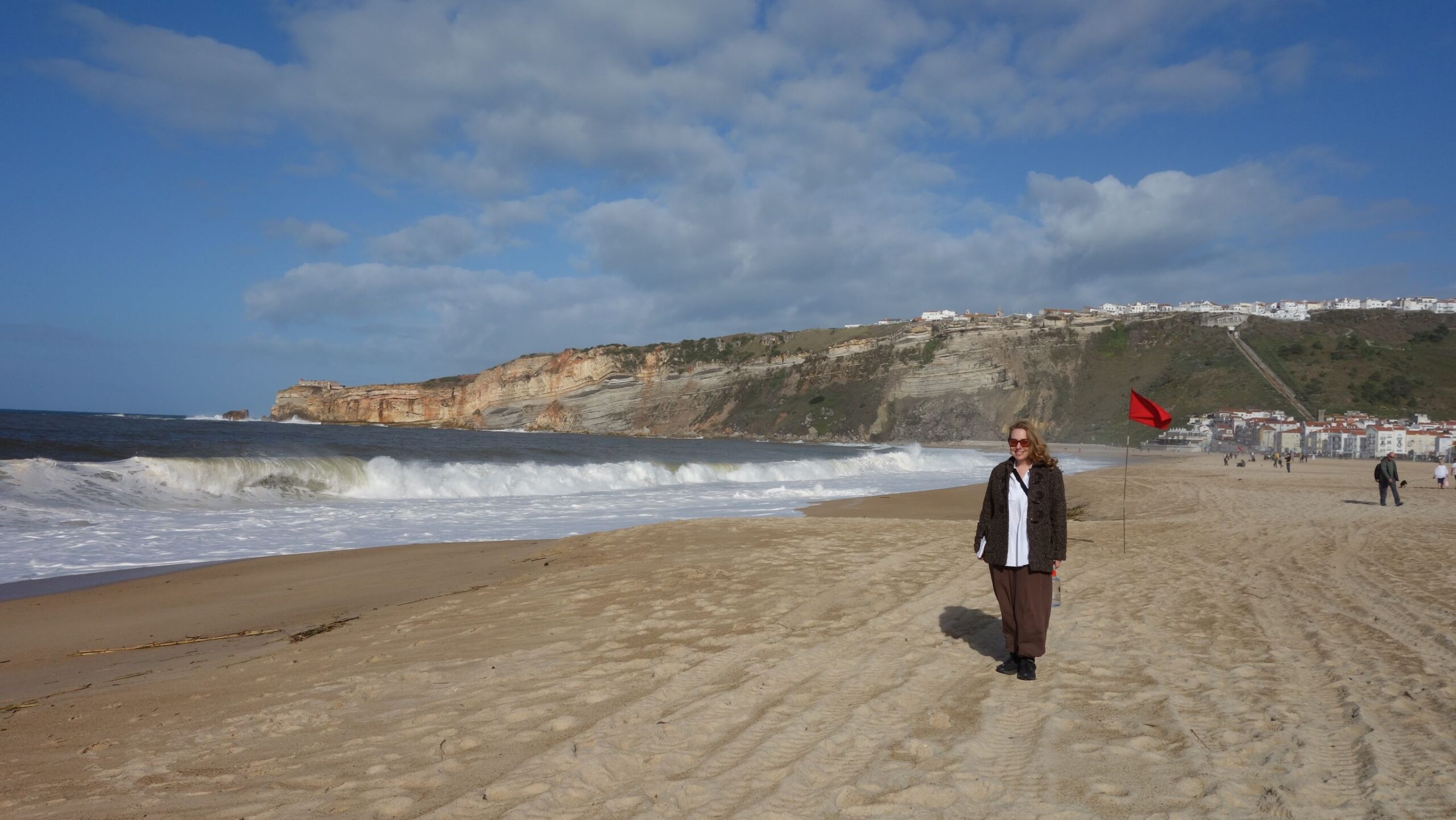
Nazare is known for a long and beautiful sandy beach, but is also known for having some of the biggest waves in the world. Waves have been recorded as high as one hundred feet tall here, and the “Big Wave Challenge” draws surfers from all over the world. Today was a gorgeous day – sixty-five and sunny and no wind. There were sill regular six-foot waves, with some waves getting as large as ten feet. The waves crashed hard into the beach area and were fascinating to watch, which we did stop to do a couple of times.
 We got to our hotel way early (around 9:30), so our room wasn’t ready. The woman at reception let us drop our luggage, and we parked the car on the street and headed out on foot. While Nazare isn’t pedestrian-only traffic, many of the side roads are small enough to discourage many cars, and so it’s a fun place to walk. Or to be a cat – we saw ten or more today while we were around town. Like Lisbon, Nazare has the attractive white and black stone tiles paving sidewalks, so it was fun to see the murals created on sidewalks and squares with the stones.
Mer and I walked over to the enclosed market area, where lots of older women wearing traditional petticoats were selling fruits, vegetables, meats, fish, and breads (although there were some men and younger women selling as well). We grabbed a sandwich from a cafe there and enjoyed people-watching.
 We then walked over to the former fish market, which now houses a small local museum. The current exhibition was on a man who made models of different Nazare boats. We also learned how men caught various fish and then the women gutted and dried the fish in the sun on the beaches. And then we went outside and saw fish being dried and people selling dried fish. It’s only on a small part of the beach, but it’s still there.
We walked along the beach, taking time to gape at the power of the waves. We also saw some guys playing beach soccer, which it seems is a sport here, with a European league. Nazare is reported to be pretty good at it. The Nazare beach is towered over by cliffs on one side, so the setting was very pretty. The waves are especially tall out on the end of the cliff area where there’s a lighthouse.
 By then I needed a bathroom, so we went back to the hotel. It was about noon, and our room was ready, so we were able to go take a two-and-a-half-hour nap to ease jet lag. After we both took a shower, we felt more able to face the touring world. We popped out and each got a slice of pizza, which we ate on the beach while yet again watching the waves.
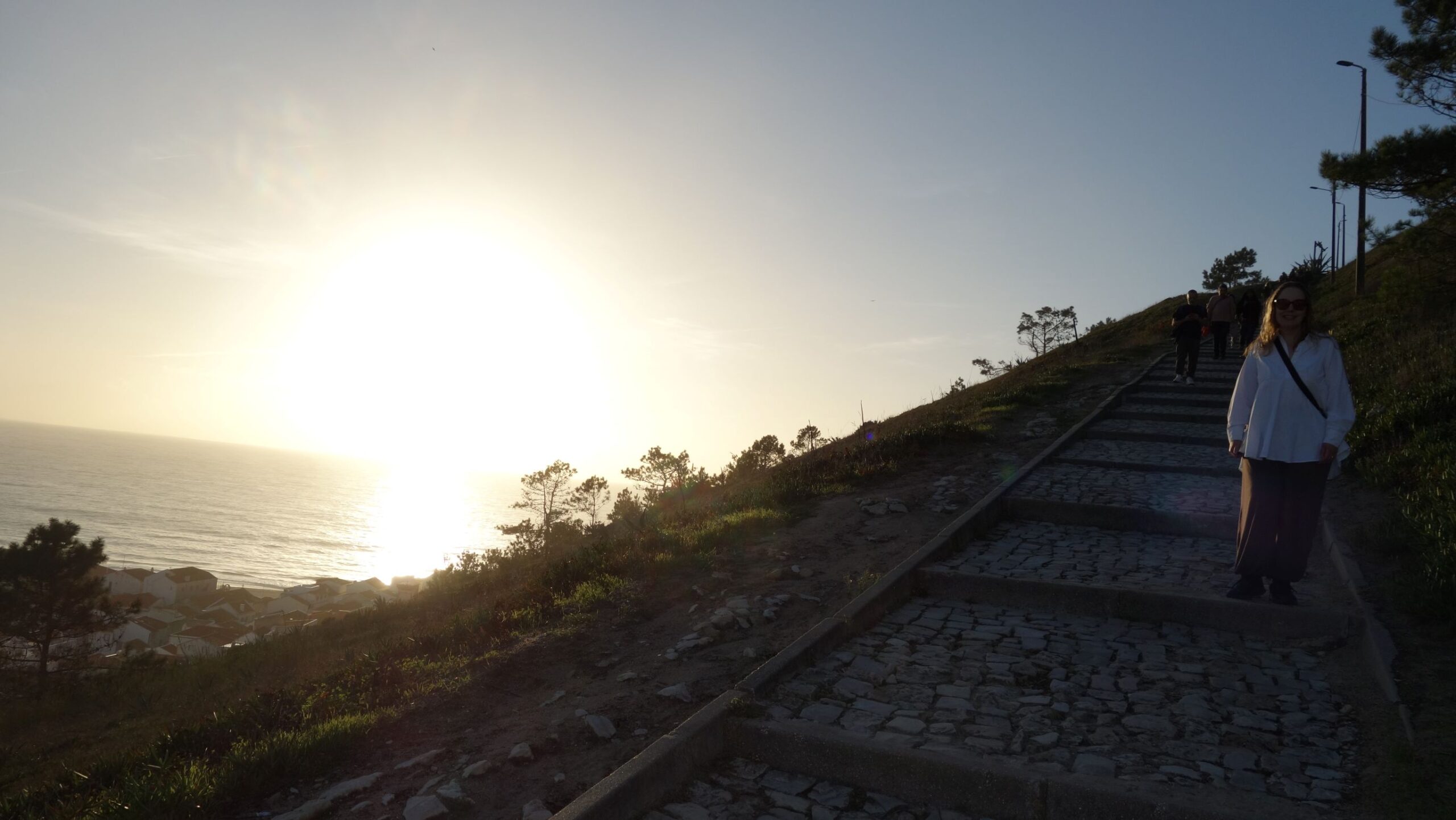
A couple of years ago when we toured Wales, we wanted to go see a castle. When we asked a local woman how to get there, she replied with a cute accent, “Up. Always up.” Nazare has stairs to the part of the town on top of the cliffs, and we headed out to try to find them. In general, “Up. Always up” was a good guide. By the time we got to the top, we were both sweating in the sixty-five-degree sun.
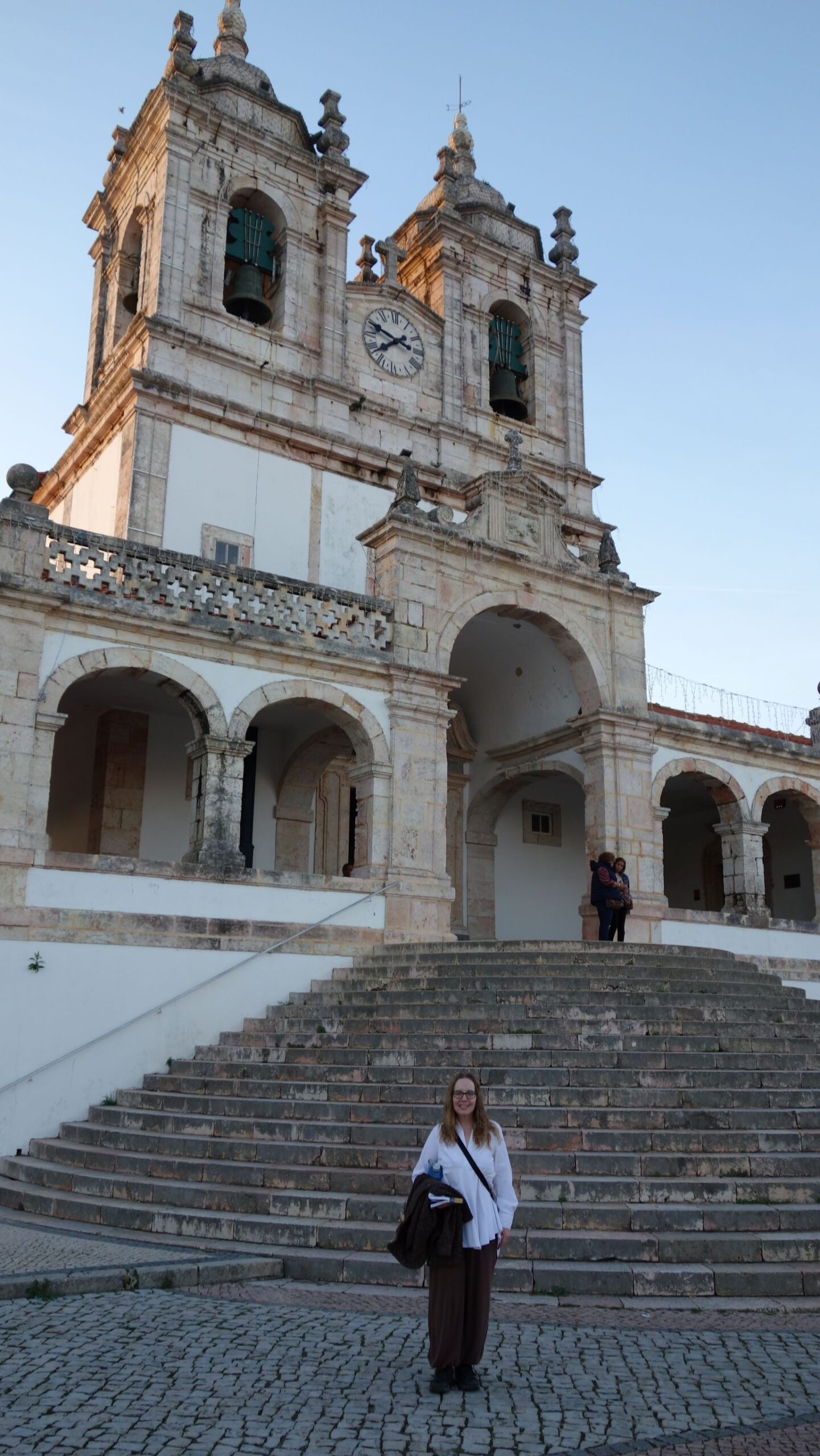 But it was worth it. The views of the beach and town were grand, and we also walked into the main square of the upper town. We went into the church on the square, which has a Madonna and Jesus statue from around 700 in it. When the Moors took over this area, the Madonna was hidden in the rocks of the cliffs, where it was hidden for 480 years or so. It was found as the result of a miracle, the nature of which I forget, and the Madonna was the most famous of Portugal’s pilgrimage sites until the twentieth century, when Mary appeared in nearby Fatima.
Local legend has it that a local nobleman was hunting a deer and was so intent on the hunt that he failed to notice he was on a cliff. The deer ran off the side, but the noble was saved by an appearance of Mary that stopped his horse. The church was built on that site.
 The inside of the church is very pretty, with blue tiles and gilding everywhere. We paid a euro each to go behind the altar to an area fully covered in tiles, and we got to climb a set of stairs that took us out over the altar to where we could see the Madonna statue up close. That was all easily worth a euro.
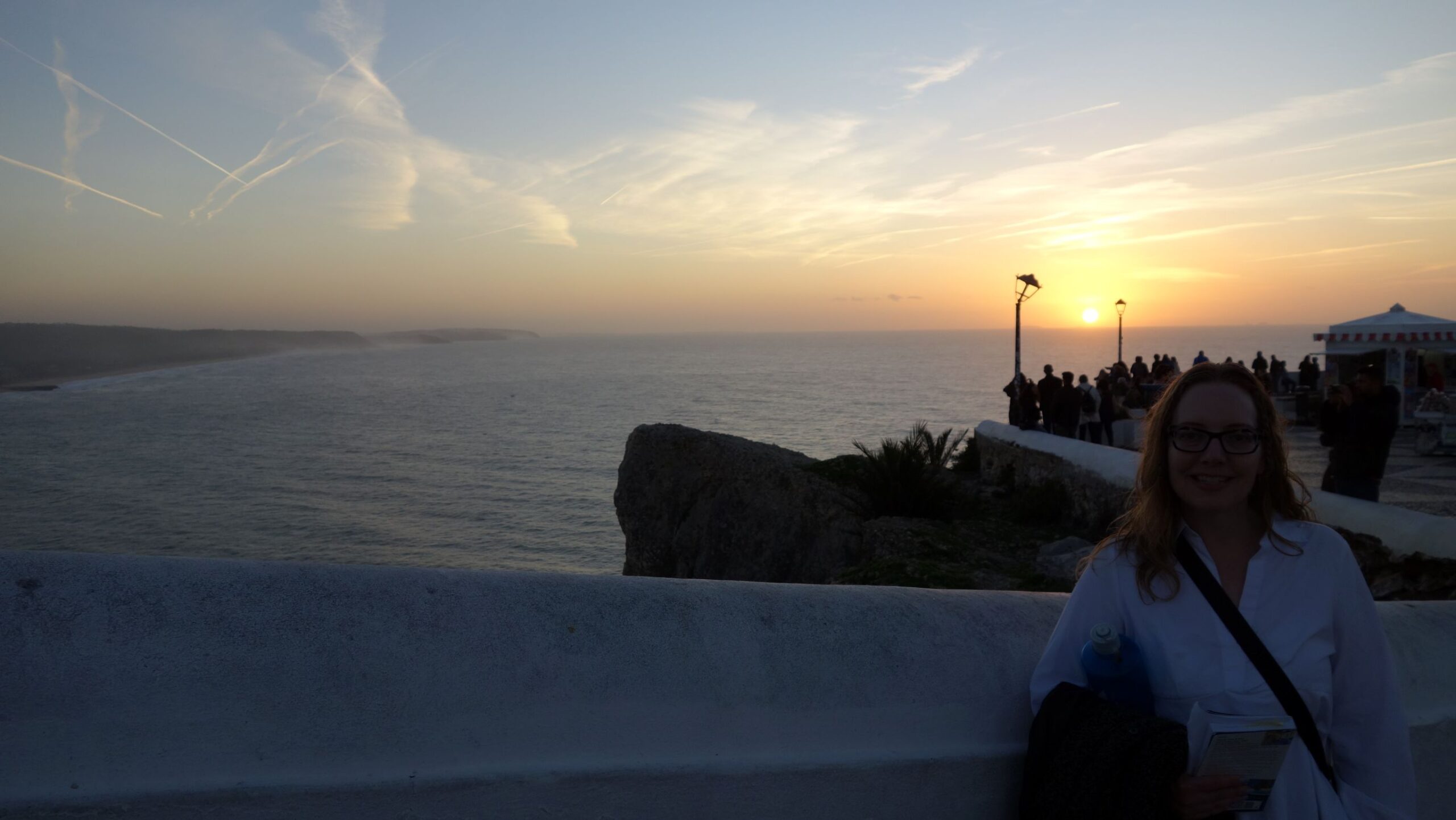
But some sites are still free. We went outside back to the cliffside, and we stood there for fifteen minutes watching the sun set behind some remote uninhabited islands. It was wonderfully peaceful.
After the sun went down but there was still light, we headed to the north toward the lighthouse. That area is where the really big waves are, and a sculpture honored both the deer legend and the surfing legends by putting up a huge man-deer surfer statue. A little girl made the whole crowd of people laugh by running up to the statue and putting her hand on his surfboard (as it were).
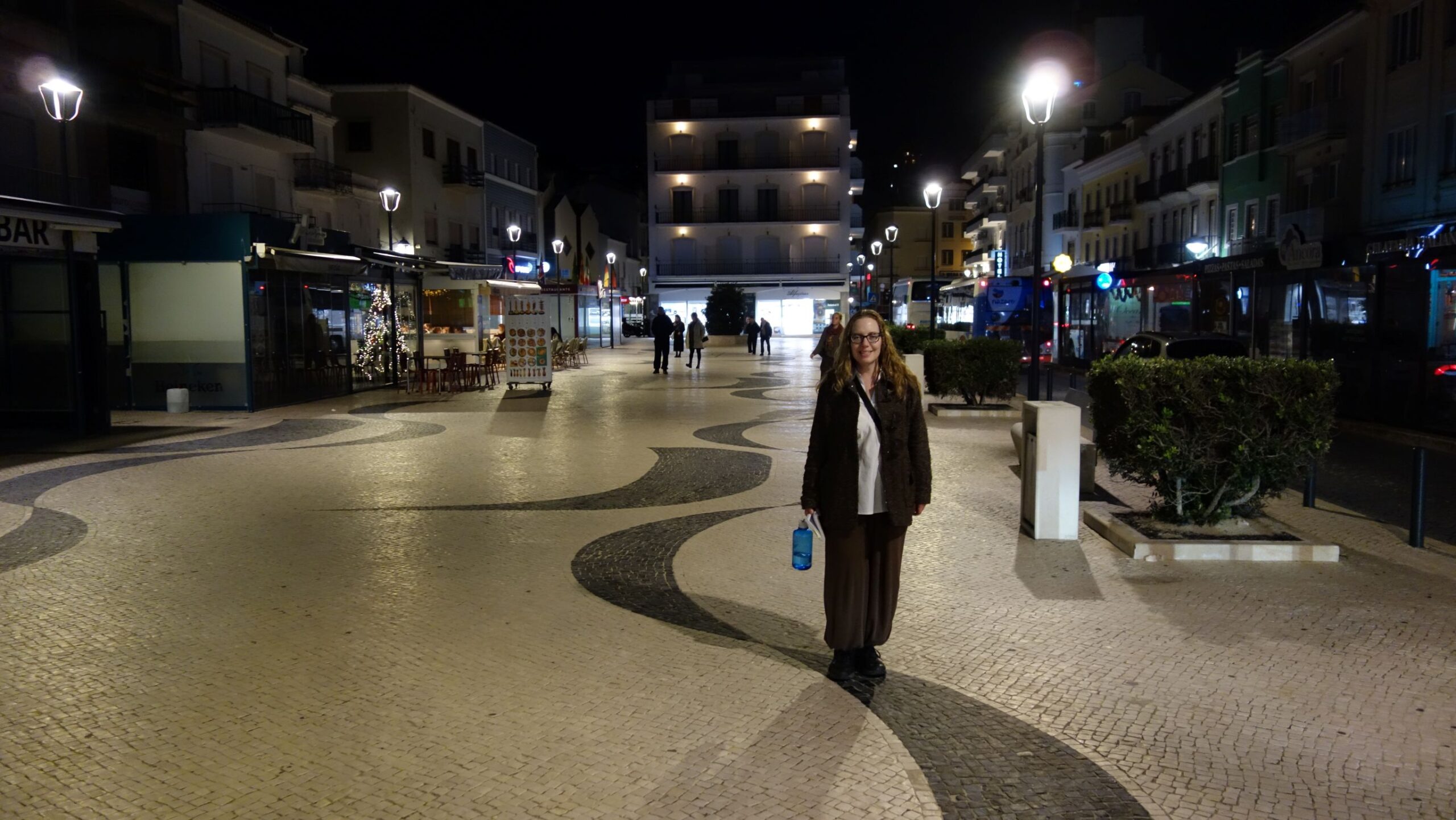
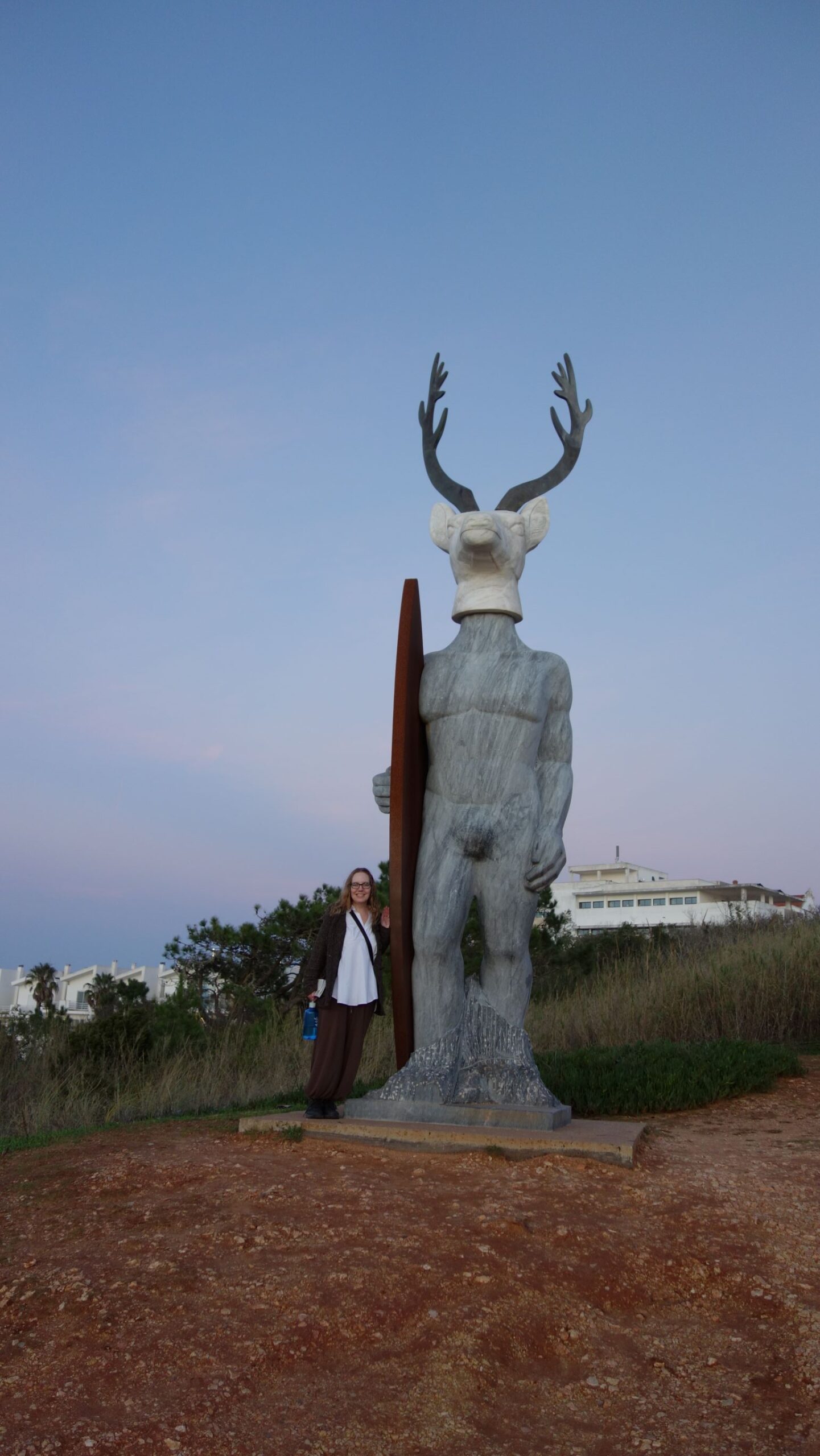 We took in the scenery again by the fading light, and headed back down to the main town for supper, where we ate pizza outside on a small square to the sound of the waves crashing into the nearby beach. Pizza and waves haven’t gotten old yet, and neither has Portugal. We’re excited about our third visit.