 One of the surprises we had from our Italy trip this last March was that the Milan transit system had adopted tap-to-pay for tickets. A fine idea, but we found out the hard way that you can’t buy two tickets on the same tap credit card. We only had one (our second credit card didn’t have tap-to-pay), so we scrambled to figure out how to buy an actual ticket.
I didn’t want to get caught by that again, so I ordered a replacement card for my card that didn’t have tap-to-pay on it, figuring that all major credit cards would have the technology now. I was wrong. The replacement cards still didn’t have it, and my last-second attempt to get a different card with tap-to-pay on it didn’t work in that the cards didn’t arrive in time.
 And so we found ourselves facing the Stockholm transit system. A system that implemented single-user tap-to-pay for on-board tickets. You can buy a transit card that has credit on it to tap, but on Sunday the stores that sell them don’t open until 10:30, and we were ready to go places a little after 9:00. And so it was that we made the decision to enjoy the sunny day and walk forty-five minutes to our first destination of the day.
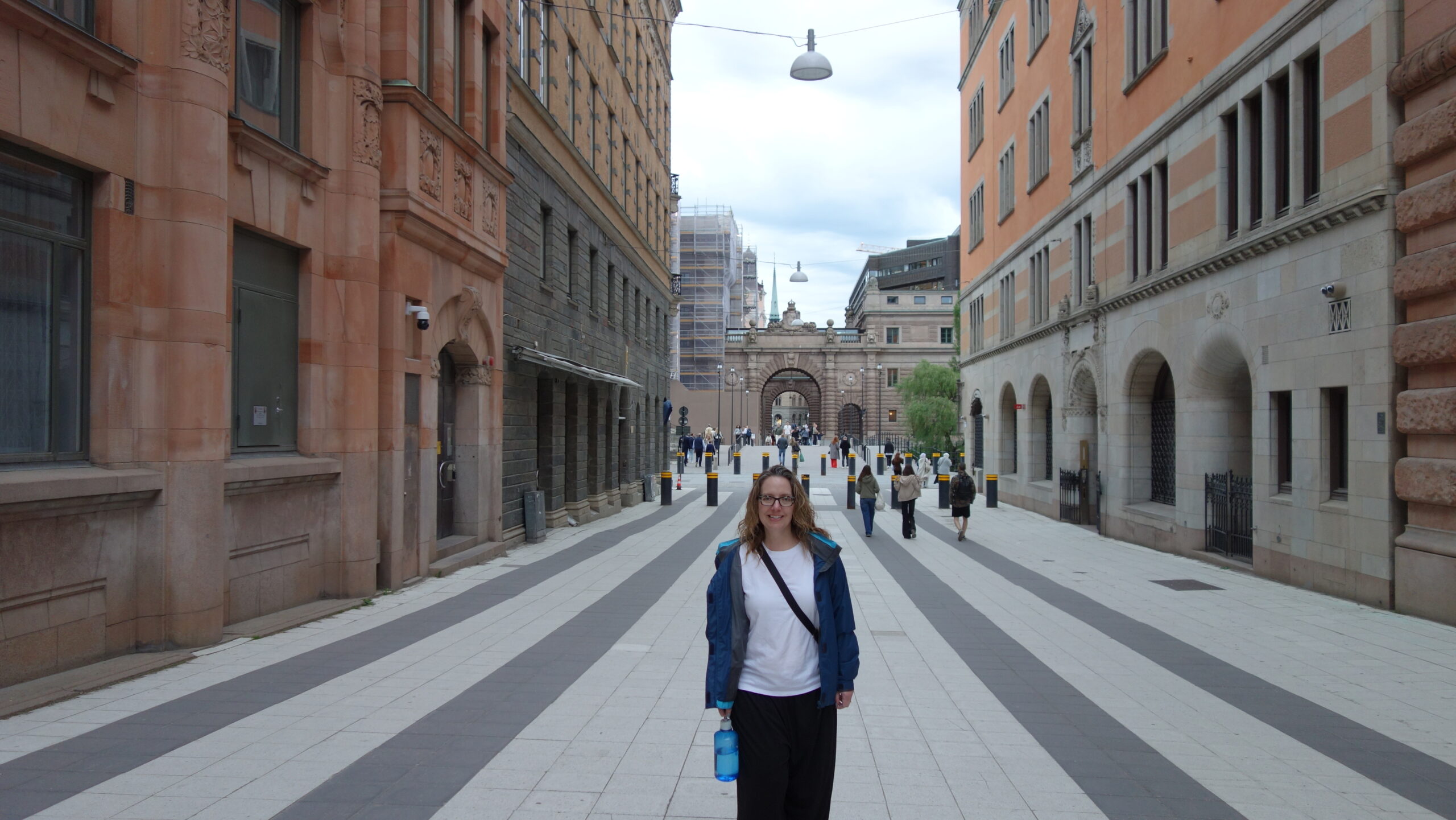
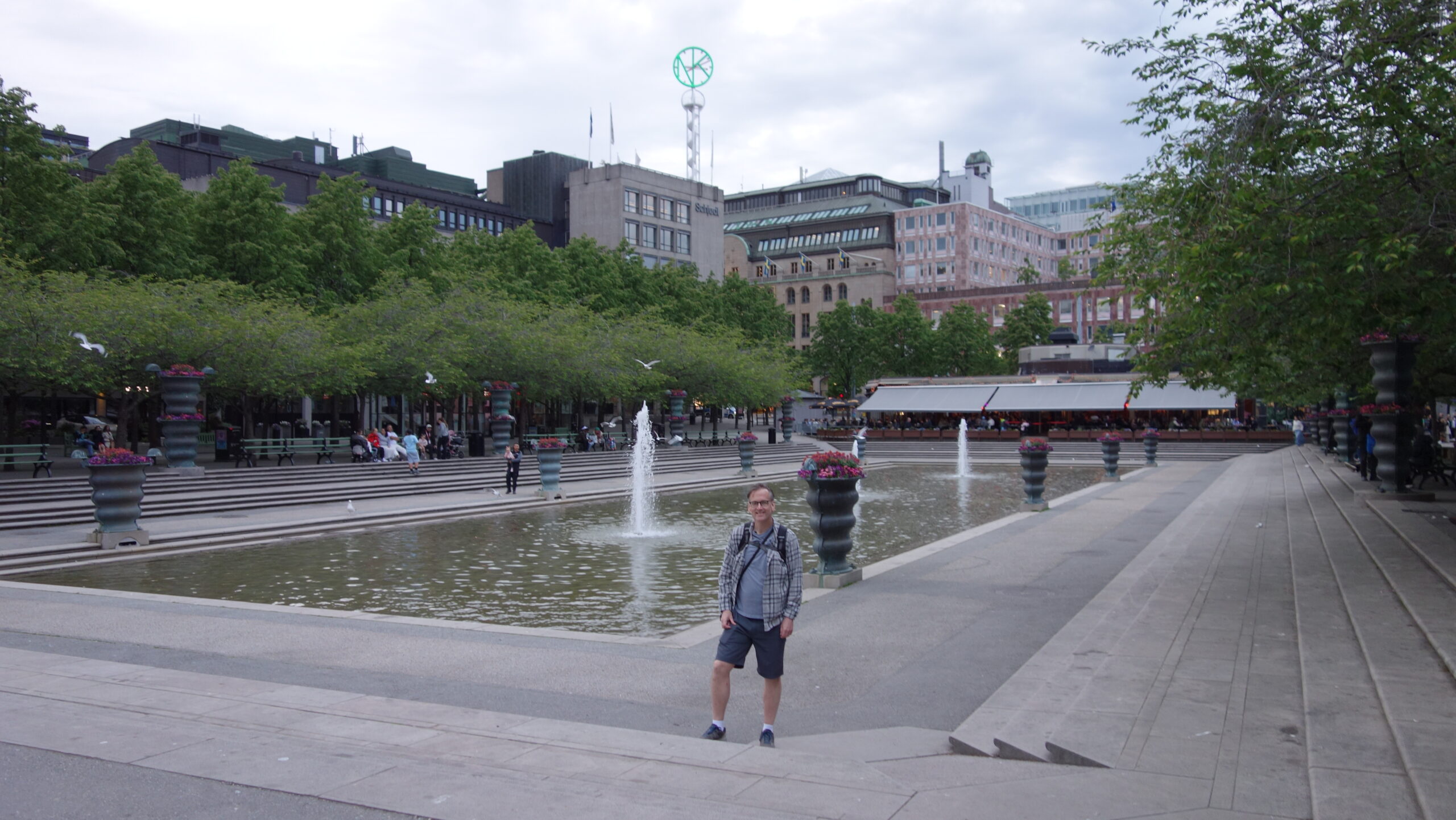
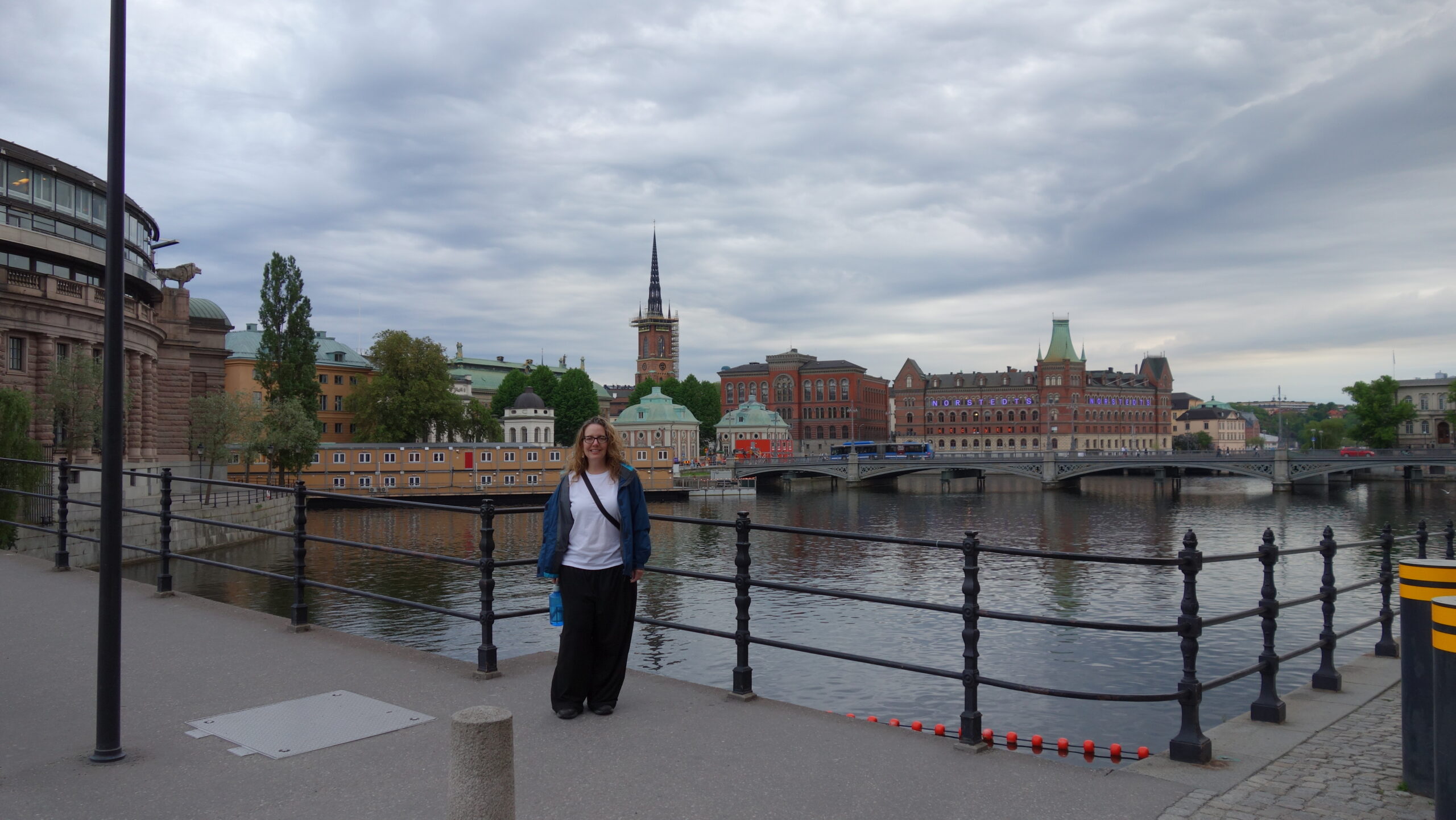
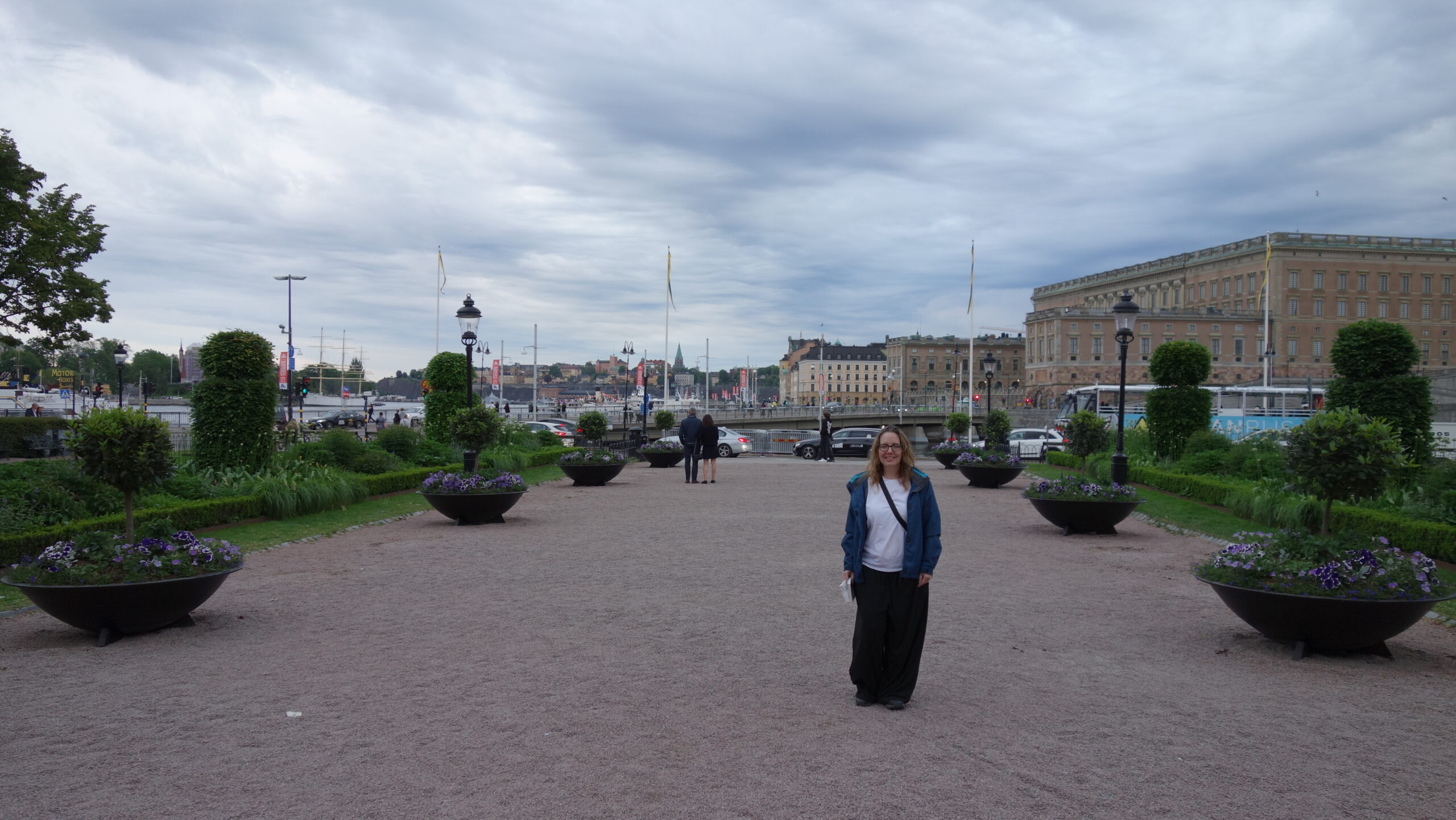
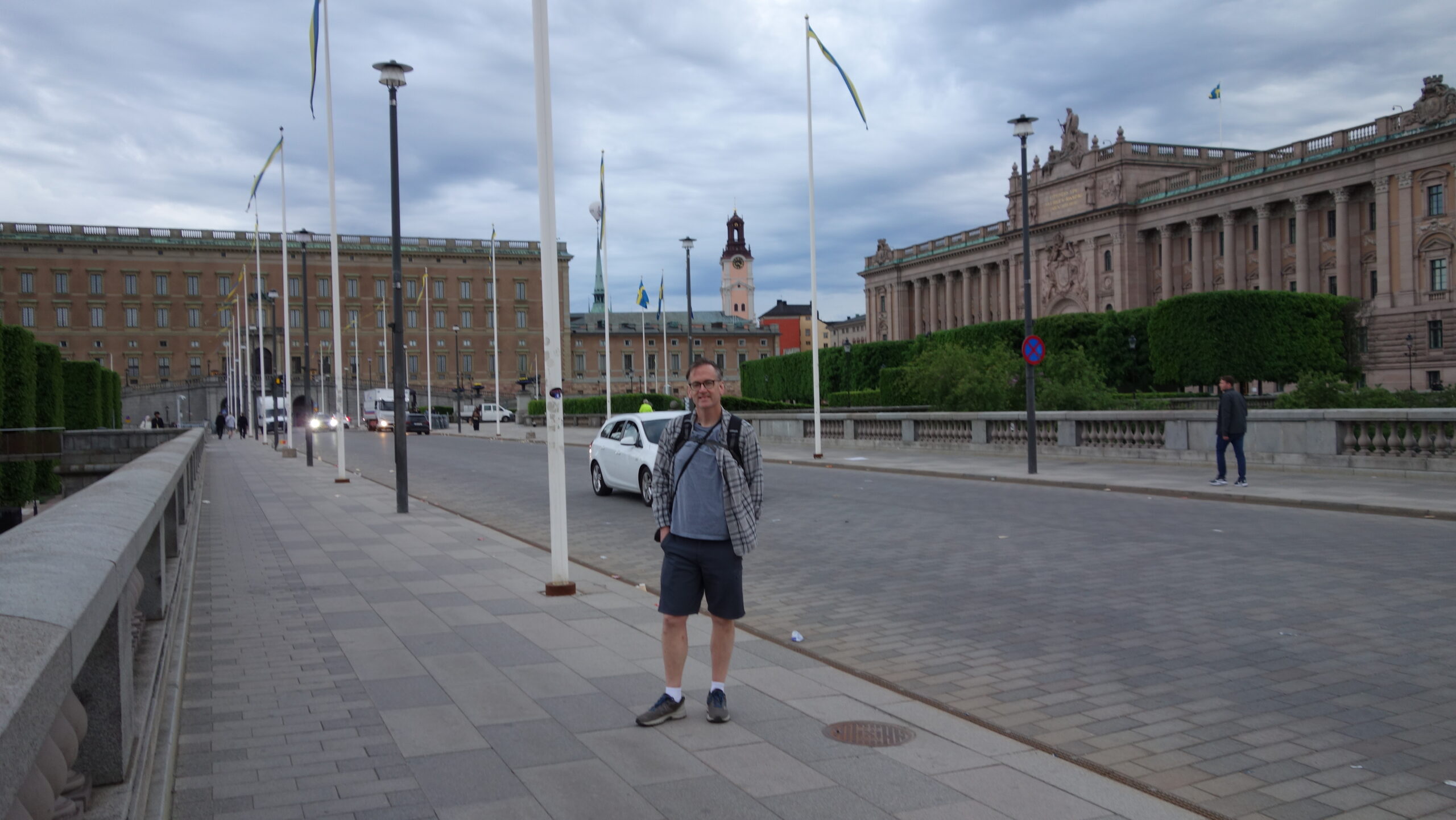
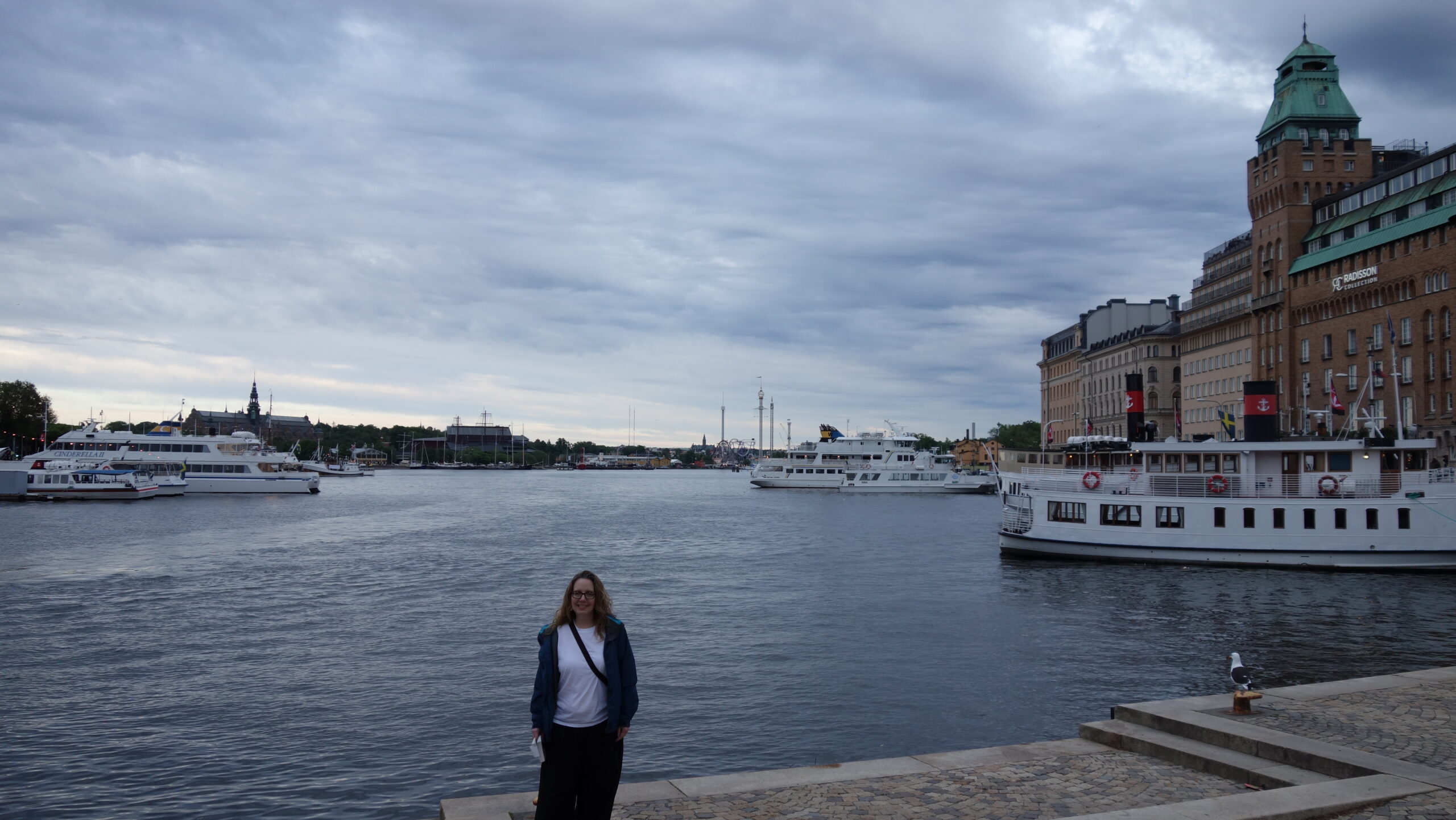
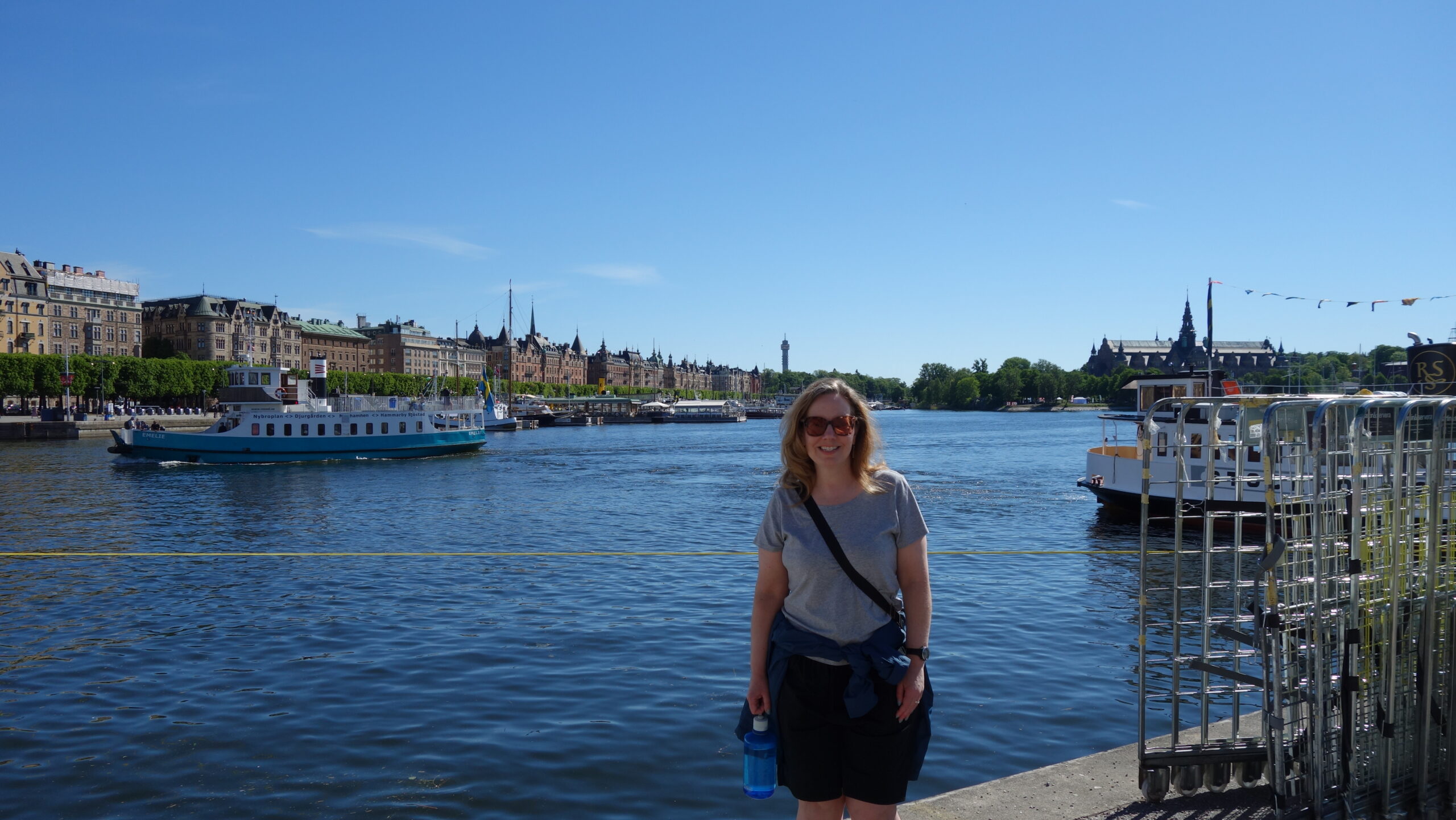
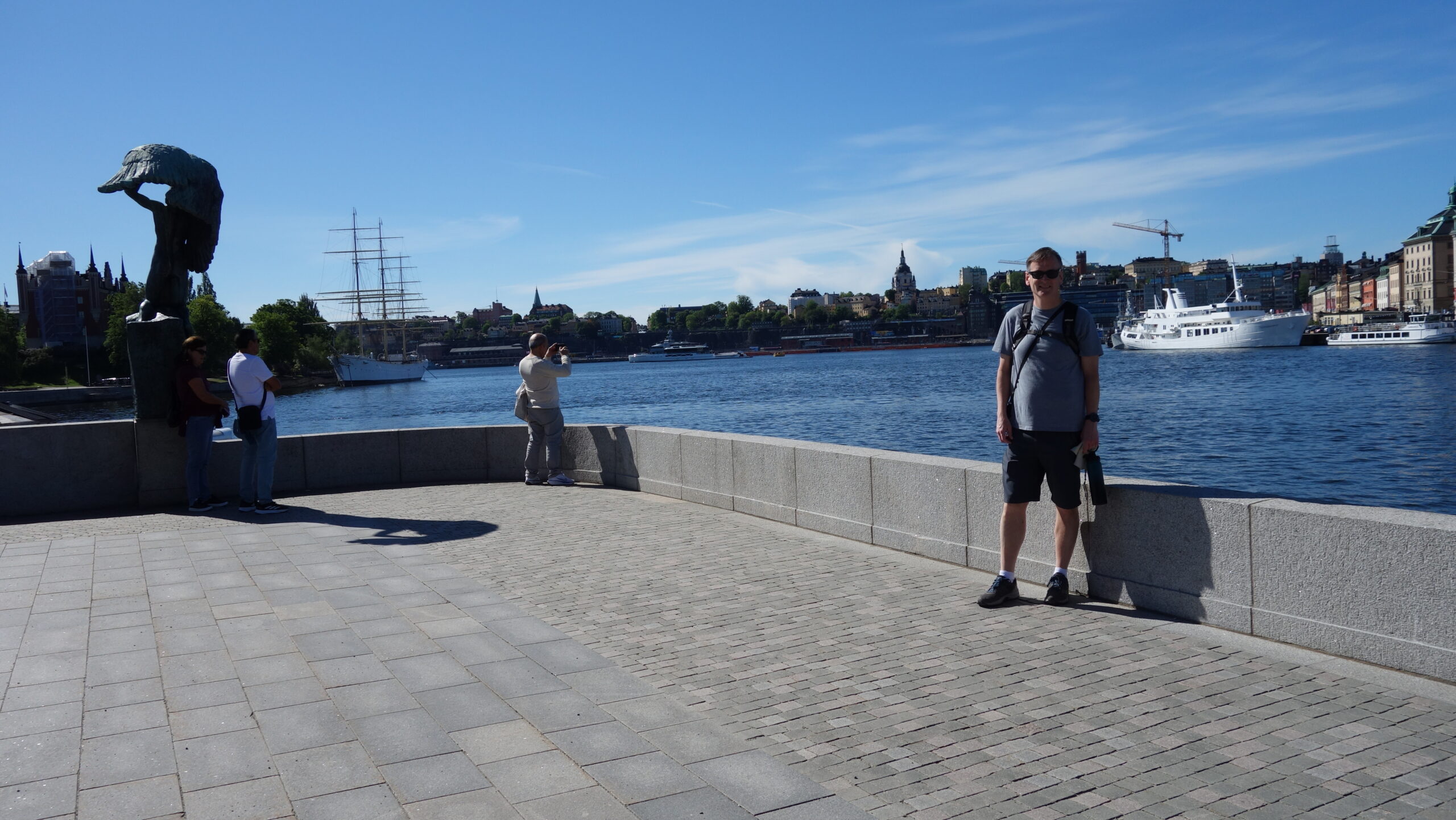
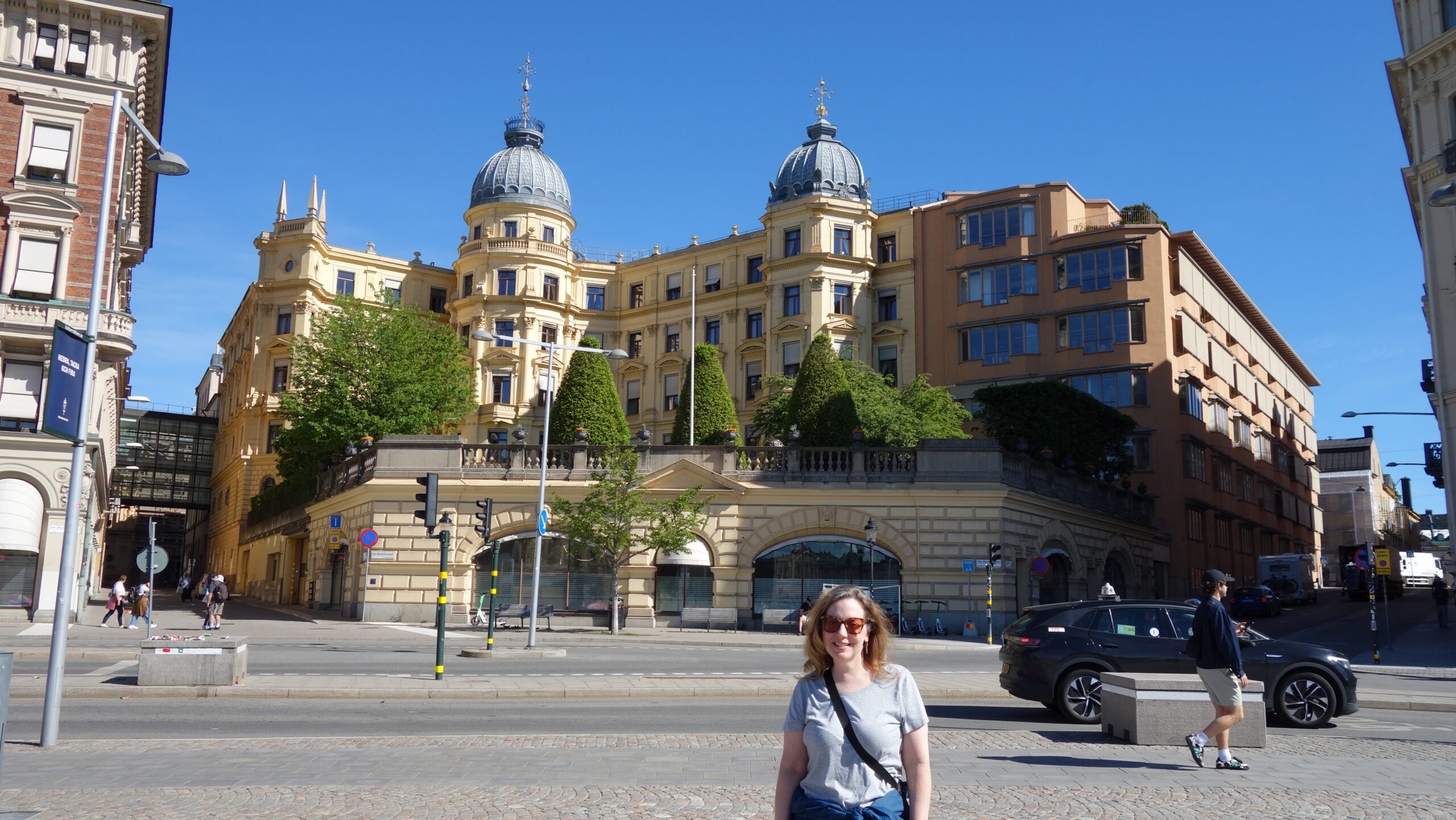
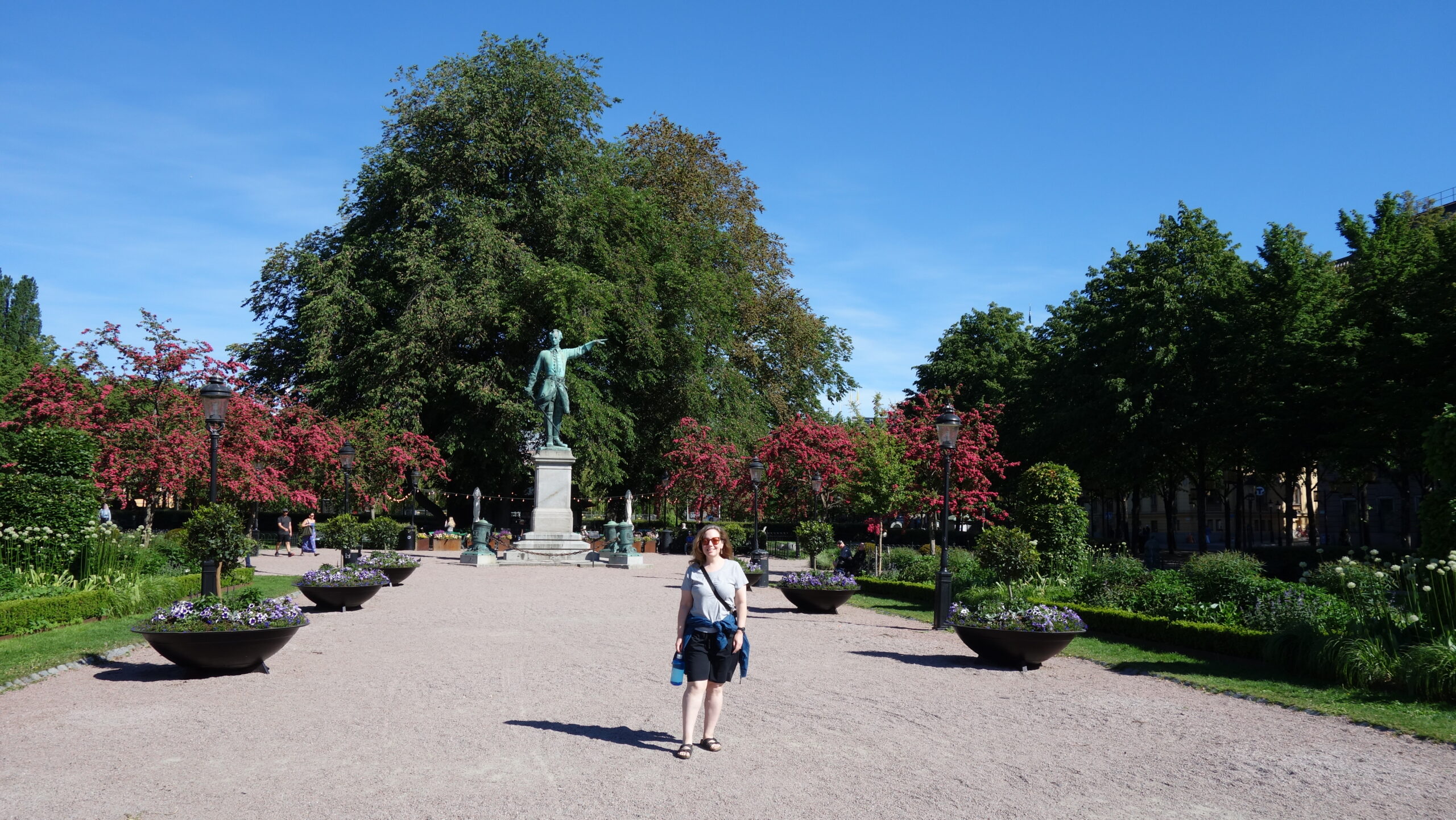
That was a nice choice. We walked along the water (is it a harbor if there keep being more water places where boats tie up?), and Stockholm didn’t disappoint, with varying views of the water, some parks, built-up islands, the amusement park, and tasteful old architecture. It was great looking around at the sights, and seeing people out enjoying a beautiful weekend day. The only downside for this fair-skinned (pasty) lad was the sun. It beat down on us the entire way, so that by the time we got to our destination, the sun exposure and jet lag had quite tapped me out.
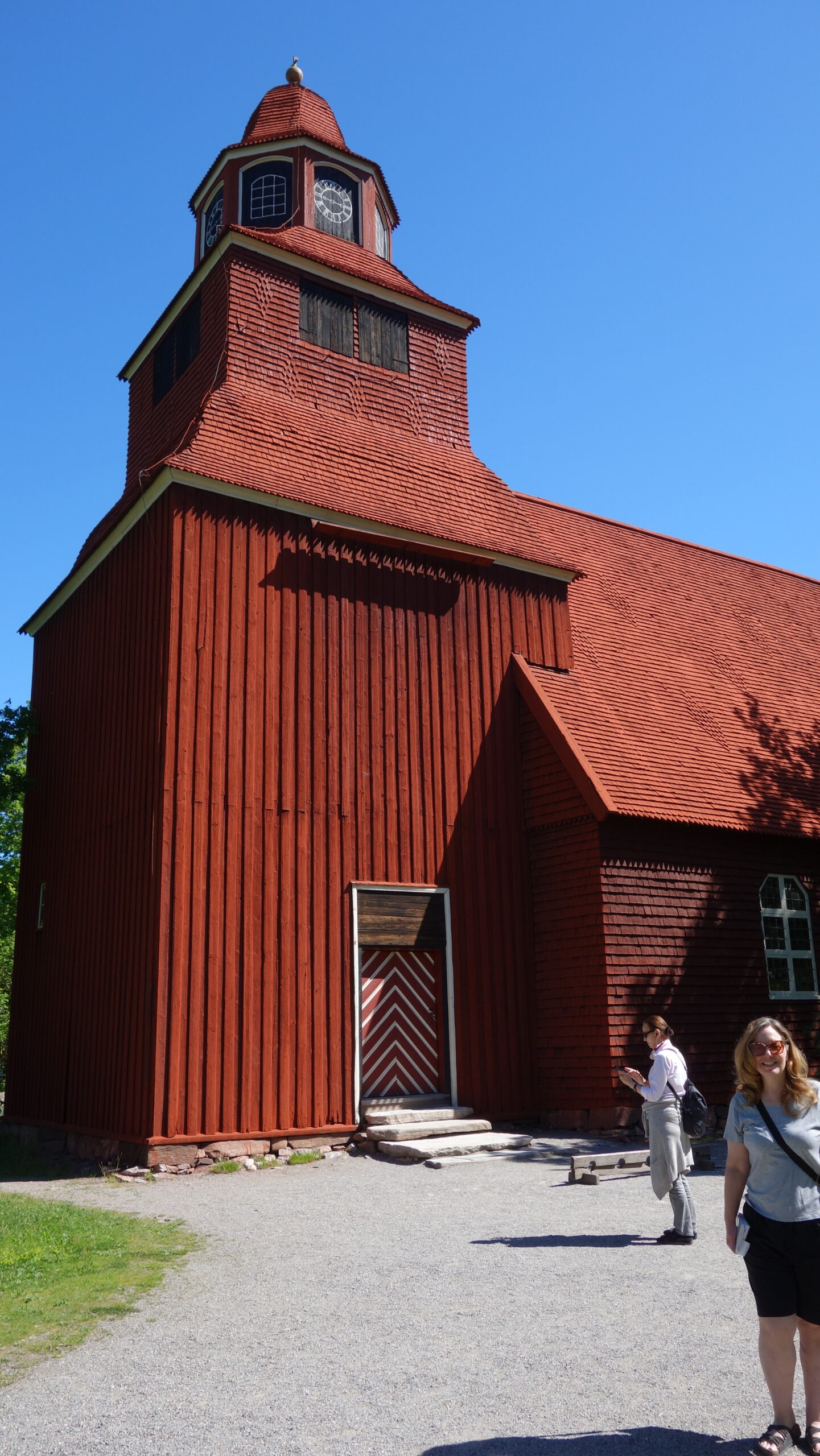
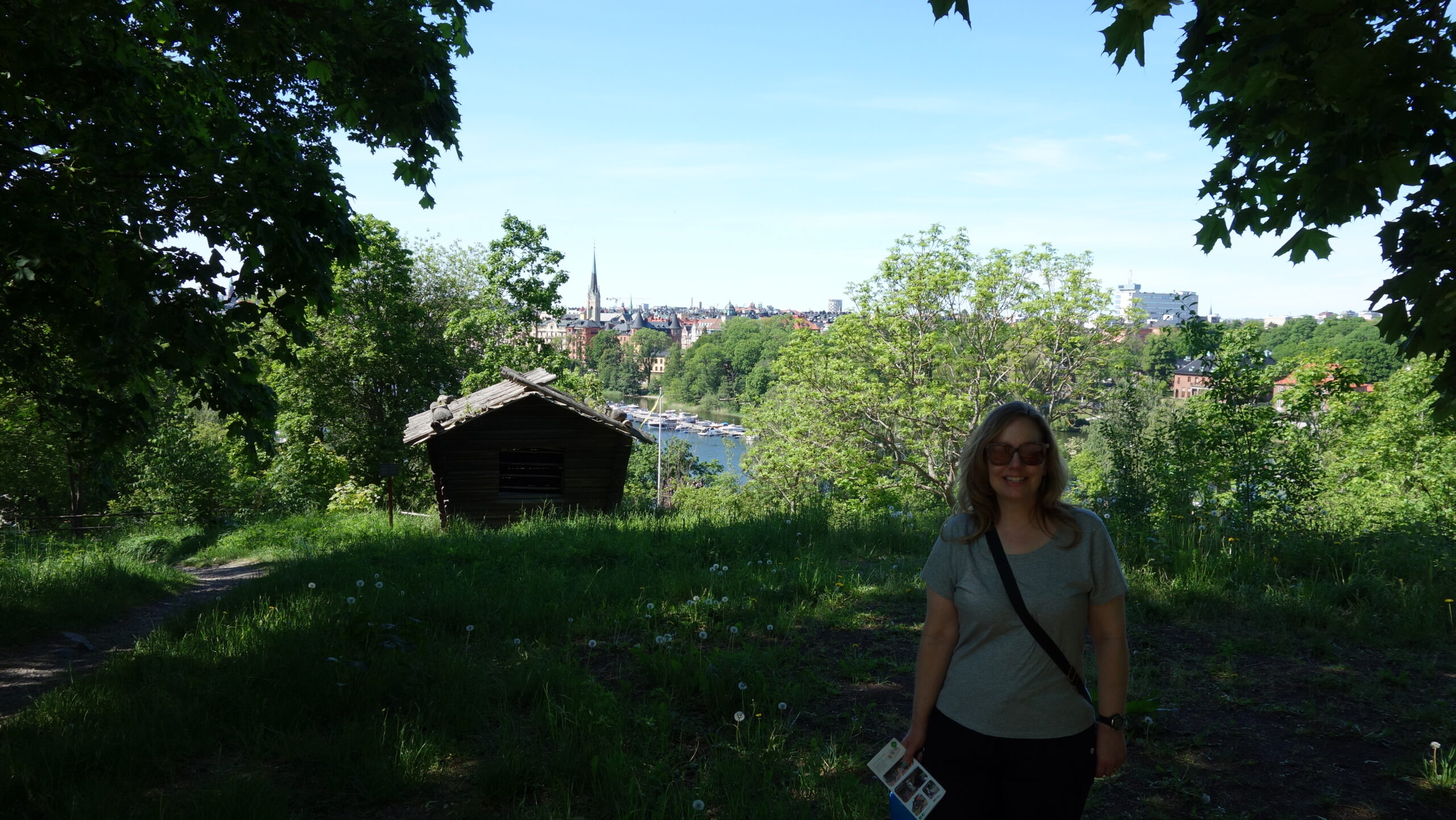
 But we had made it to the grand original open-air folk museum, Skansen. Founded in 1891, Skansen was the very first museum to move farm buildings, old schools, churches, tradespeople’s buildings, and so on, from various parts of the country to one location. The goal was to preserve the buildings from an older time when those buildings were giving way to modern ones. Skansen has been highly successful at it, now occupying 300,000 square meters of land (a football field? Rhode Island?) with 190 buildings on site.
Meredith I have been to enough folk museums in the US and in Europe to have seen enough buildings to house most of the peasant population of Poland, and we are fond of them. So, it was a sort of pilgrimage to go to the original one here in Stockholm. It amazes me that there are seventy-five acres inside the city limits on high ground overlooking the water that remain as a museum for old buildings. The 1890s Swedes were a bit visionary.
 The museum greeted us with a steep uphill climb, but that was an opportunity in the form of the ever-loved funicular. This one was the first we’ve ever been on that curved around a bend on the side of the hill (they’re usually straight). We’re always happy to ride a funicular, and this one dumped us out at the top of the hill, in the “forest region of northern Sweden.” Mer, who was in charge, skipped that section to go to the central area (where the food and merchants are) to scout out touring options. Along the way, she let me rest on a bench in the shade while we watched geese and goslings wander around. Since these weren’t Canadian geese, we dubbed them Norwegian geese instead. The goslings were cute fat little fluffballs.
The museum has several sections, all arranged around the central hub. We started in the stage area with a great view of the water and amusement park. We then explored, in halting steps interrupted by demonstrations and lunch, the Town Quarter, a little bit of the garden area, the Northern Swedish Farms, the Southern and Central Swedish Farms, and the Nordic Animals mini-zoo (which takes up a good chunk of the north of the park for large animal enclosures). All of this took us from 10:00 to 5:00, in typical Riordan museum touring fashion. See it all! (Or, at least, most – even in seven hours, we skipped a couple of buildings).
 We also saw a blacksmith demonstration, hosted by a woman. She said that women blacksmiths are documented as far back as the middle ages, but were usually limited to the daughters of blacksmiths or the widows of blacksmiths. She used a little portable forge table with a foot-driven bellows fan, and she made a steel flint for making sparks for creating fire.
We also saw a couple of folk dances with people in traditional dress. Only a small number of buildings were open, but the ones that were open were hosted by people in folk costumes, and the people were very friendly and had tons of knowledge about the buildings they were in. Some of the things we learned:
– In WW I and WW II, Sweden had a food shortage. They were neutral in the wars, but were blockaded from buying food from countries that were at war with each other, leading to shortages in Sweden. People in the cites were given plots of land outside the city to grow food on, leading to the creation of small cabins to sleep in and/or to help them escape the rain.
– Sweden had twenty percent of its population emigrate because of religious issues (early) or poverty (later). That made Sweden have the highest rate of emigration in all of Europe.
– Northern Sweden had more trees, which led to those there building bigger houses than were in the south. The bigger houses took more wood to build and more fuel to heat.
– It took five workers five hours to typeset one page of a newspaper. The typical newspaper only sold a few hundred copies, which were shared around.
– Stockholm had over two thousand dairy stores back around 1900 since local people didn’t have refrigeration. The milk was kept cool by ice in the store. Dairy stores were allowed to be open on Sunday morning until 11:00, which is when church started.
– The oldest building on the site is from 1320 and is made of wood (it’s an old storehouse). That’s pretty incredible for a wooden structure.
– Most of the farms and other buildings had wooden floors and some windows, and most had wooden roofs (some had turf roofs). That was quite different from folk museum houses we have seen in Ireland and Scotland.
– Manor houses, when their wallpaper became unfashionable, used it to paper the rooms of the servant areas.
That, along with lunch, took us seven hours. We left the museum at 5:00 and tried to find a bakery where we could get a light supper, but it seems to have gone out of business since Mer’s guidebook was printed. We did get to walk past the amusement park entrance, which was fun to see. After talking with a tram official at a tram stop for some time, we did decide we could use the tap-to-pay feature on my debit card. That will probably cost us some in foreign transaction fees, but at least it worked.
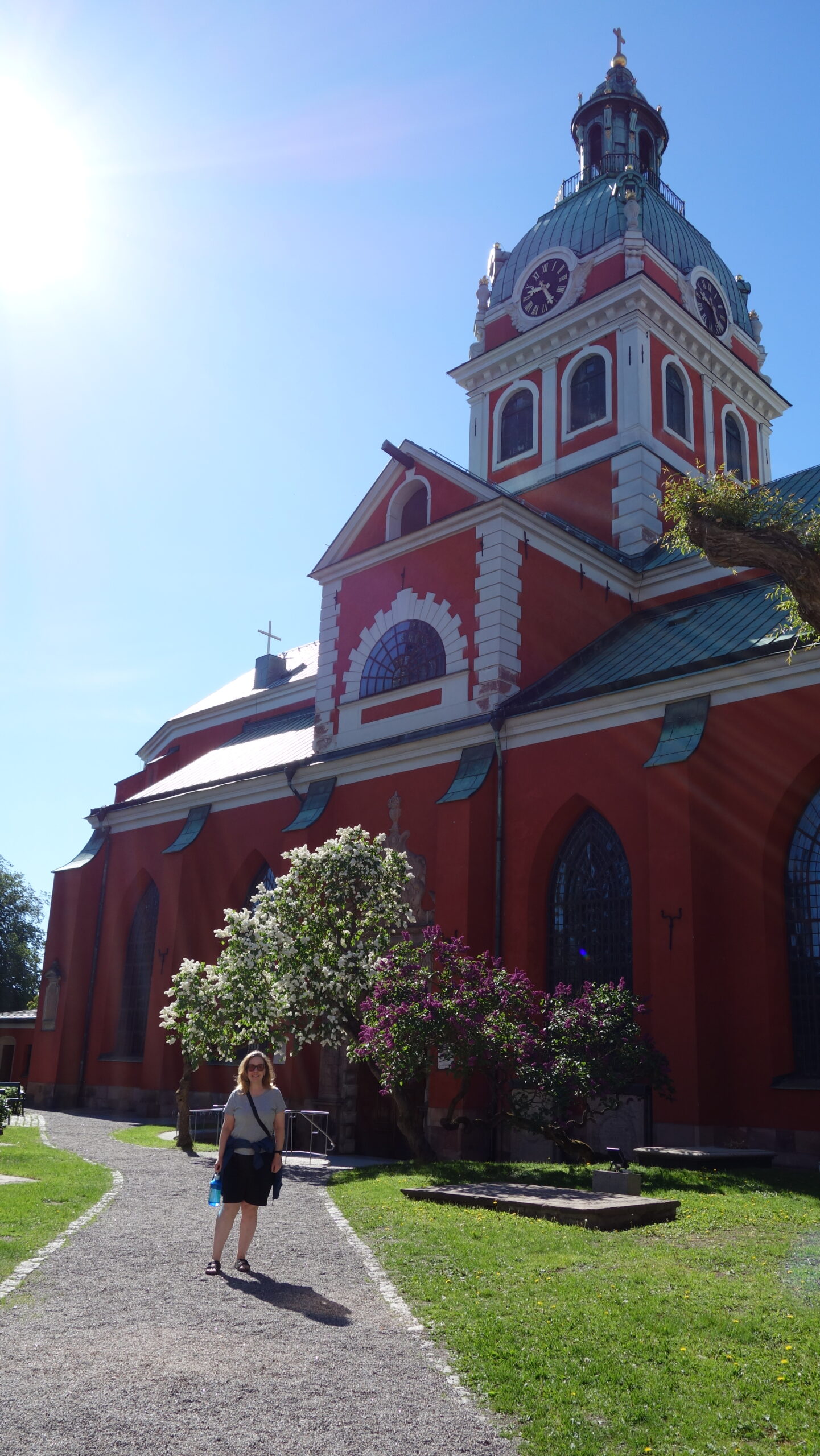
 A twenty-minute tram ride and a forty-minute bus ride got us out to a suburb, where Mer had found a church that had English options at 7:00 p.m. We got there about thirty minutes early and were surprised at the number of young people (in their teens and twenties) roaming about the place. We also discovered that the service was in Swedish, but with translation available on radio units they gave us. It’s also the first church I’ve been to that had a sixty-year-old woman as a door bouncer. She wasn’t letting anyone in until 7:00, darn it! I guess that was to control the rush of many of the young people to get to the edge of the stage.
The service was contemporary, high energy, loud (but not painful), and very produced, with lights and fog and a band and multiple video screens and even a dance team for one song. It seems to be working – the place was packed with enthusiastic youth. All but one of the songs was in English, so Mer and I were able to sing along. The sermon was in Swedish, but my translator was fine, until it wasn’t. The battery gave out about five minutes into a twenty-minute sermon. Meredith told me it was an excellent sermon on the power of the Holy Spirit and how that power is a blessing that is often provided to help a believer through a difficult time. Unfortunately, I didn’t understand most of it and spent that time fighting the effects of jet lag. I’m still glad to have gotten to church, and I’m pleased that the local church we went to seems to be doing well at reaching the local community.
 We took the bus back to our hotel, only to find the restaurant closed (it was about 9:00 p.m.). We walked around a bit and settled on takeout from a local Swedish fast food restaurant. After seeing lots of evidence of how people from one hundred years ago struggled to put food on the table, it’s hard to complain about having to get takeout.
A happy but tiring first full day of touring. I anticipate sleeping well tonight, especially because I don’t need to share my room with four other people or sleep as an apprentice on my work table.