 I think Aveiro got on my touristic radar when I looked up cute towns in Portugal. My guess is that nearby Costa Nova came up on the list because it is really cute, but Aveiro is wonderfully walkable, with cool architecture and water everywhere, so it could have come up too. It’s just hard to imagine a town of eighty thousand being called cute.
Getting to the hotel wasn’t too bad. We did have to keep driving in and out of rain and had to get gas (“How much gas do you want?” “I want to fill it.” “Yes, but how many liters do you want?” “Uhhh…”), but on the whole, there were no issues. Our hotel is right in the middle of the center of town, which means it has no parking right with the hotel. Instead, we were given a card to get us into a mall parking lot that was a two-minute walk away, but a six-minute drive away down several one-way streets and a couple of rotaries. Once I got the car parked, I was convinced that I wasn’t going to move it again until we left, even if I had to get a taxi or Uber to get to a couple of places I wanted to go.
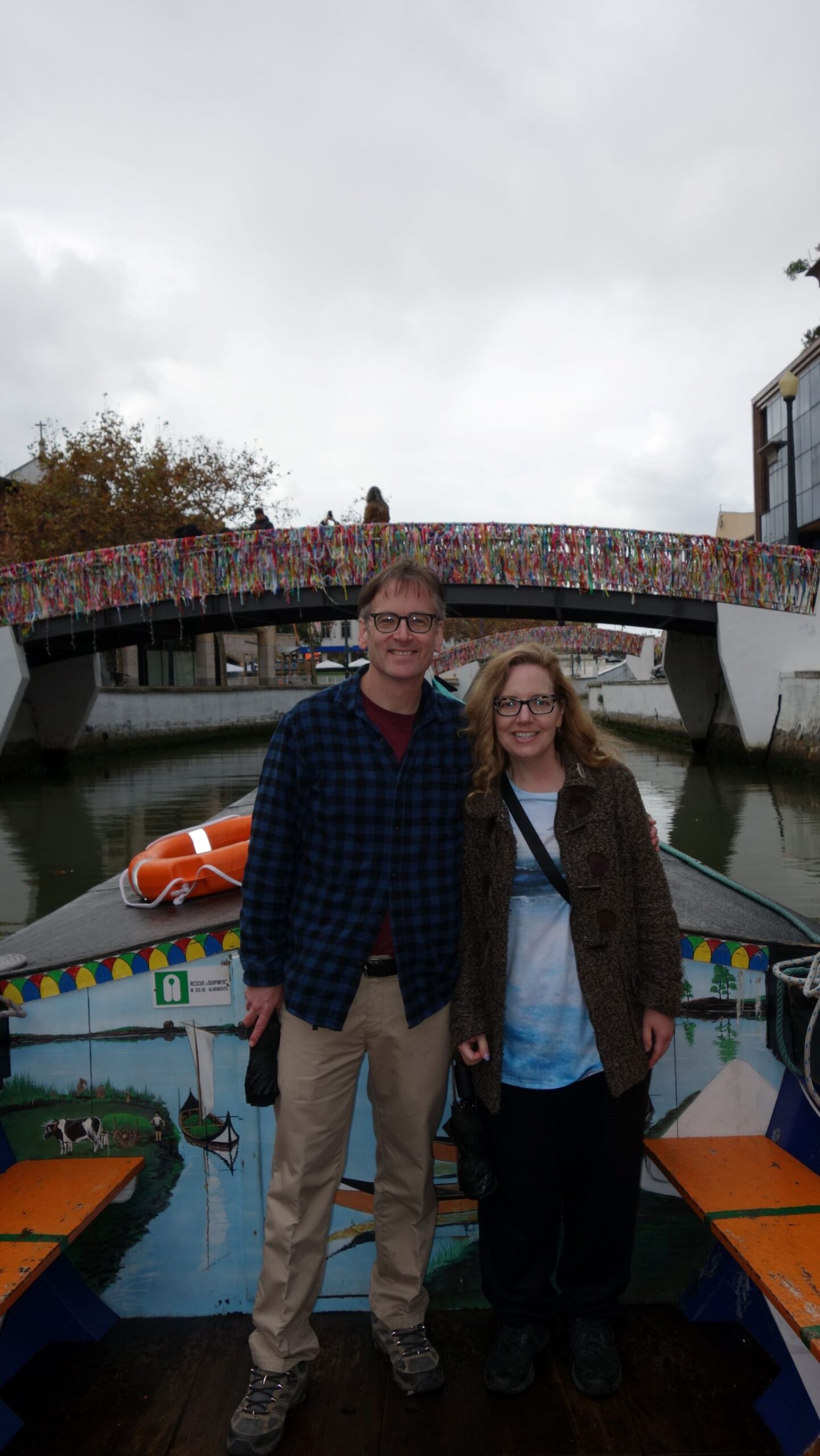
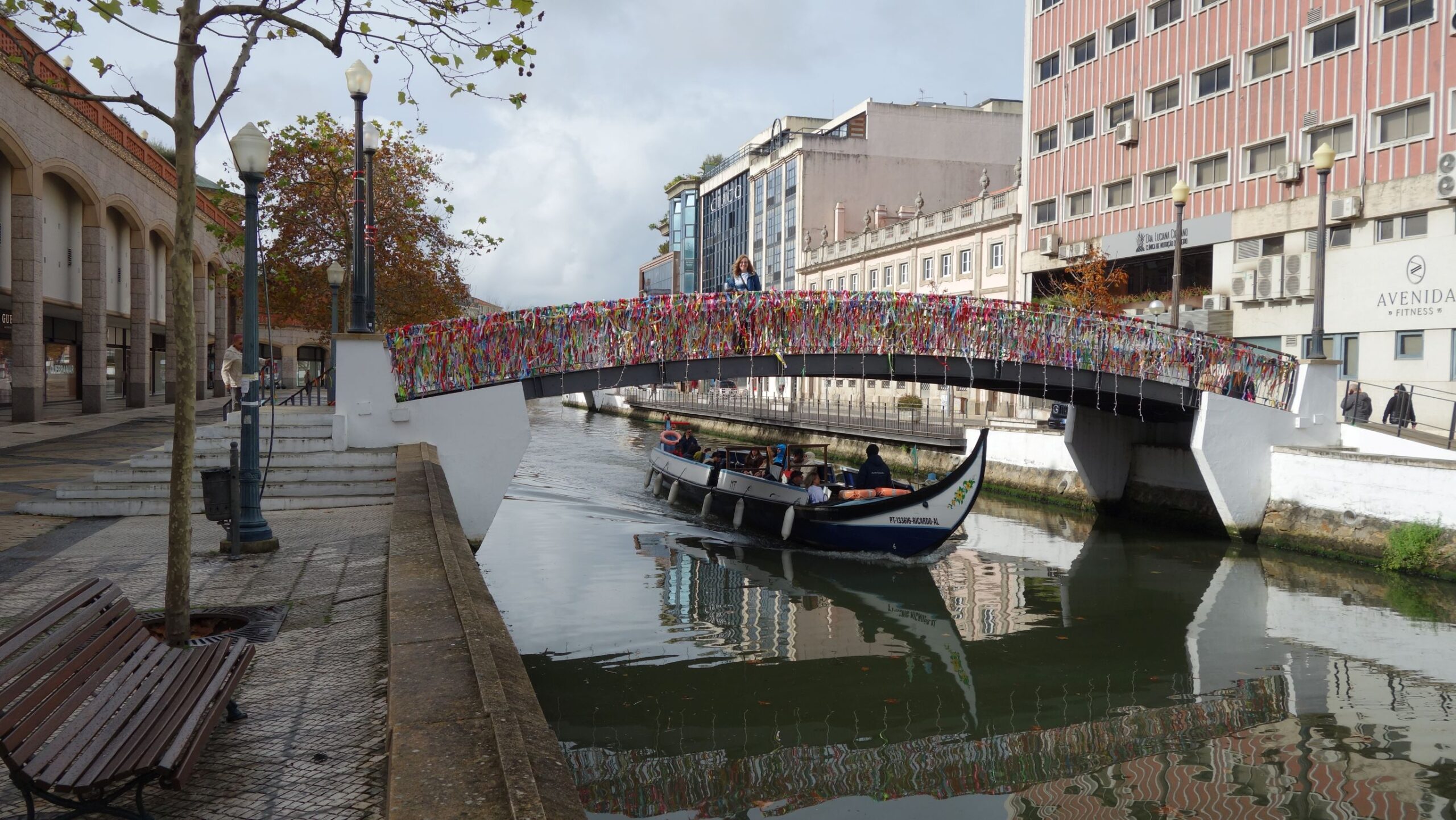 But we were here. Even our introduction to Aveiro wasn’t so bad as it could have been, given that we surfaced from the parking garage in a mall. The mall itself was spacious and was only built in 1998. It had somehow been designed to be partly an outdoor and partly an indoor mall, and it worked quite well. The mall spit us out on a canal, right in front of the friendship bridge, a bridge covered in brightly colored ribbons. From what we read, ten or fifteen years ago, a couple of university students tied some ribbons with kind messages on them to the bridge, and the tradition took off for that part of town. All the footbridges along the canal have ribbons on them. It was cheerful.
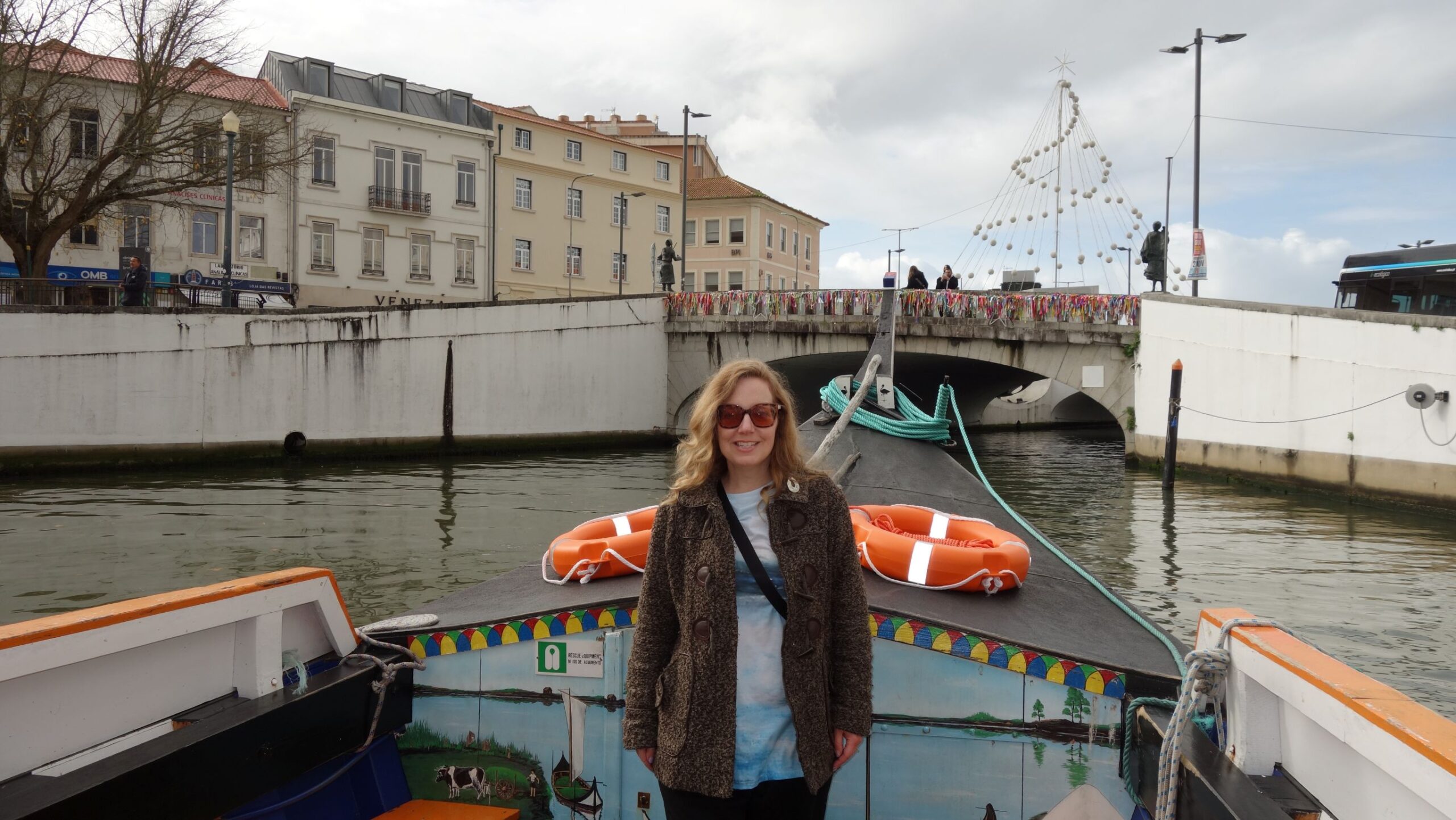
Our room at the hotel wasn’t ready, and we were told it probably wouldn’t be until 3:00, so we walked over the the nearby saltwater canal and bought a ticket for a forty-five-minute boat tour. We always like butt-sitting tourism, and we like getting on the water. After a short walk along the canal to pass the time, we boarded our boat and set off with our tour guide and one other couple (from Spain).
 We were in a large canal boat that used to be used for hauling salt. Aveiro was a major producer of salt, and these larger boats were used to haul it. There were smaller canal boats used for tours as well, and those used to be used to harvest seaweed to use as fertilizer.
We learned that Aveiro used to have over three hundred salt flats used to harvest salt, but is now down to just five or six. We were told by a later tour that no one wants to do the very hard and hot work of drying and harvesting salt anymore, and since salt isn’t used much as a food preservative anymore, the demand is largely gone. One section of town along the canals used to be all salt warehouses, but the last one of those closed a few years ago.
One of the other major industrial parts of the city along the canals used to be ceramic factories, used in the making of tiles. Portugal uses tiles both on the exterior of buildings as well as inside for decoration, and many used to be made here.
 The canals all are saltwater and are natural inlets of a lagoon that is tied to the sea. in fact, the canals used to be tidal, but the level is controlled now, and the sides have been built up. But they were originally natural inlets.
After the boat tour, we grabbed some lunch along a pedestrian shopping area. We came out into a fairly steady rain, but that only lasted for a few minutes. We went to the end of the shopping street, and I got curious about a church at the top of the street. We went in, and the church was very pretty, covered in tiles on the walls and with an ornate altar. But the surprise was a modern side chapel in a room by itself. It only had about twenty chairs in it, and the altar was covered in tiles painted simply and a bit abstractly, showing scenes from the life of Jesus’s passion. They were somber and beautiful.
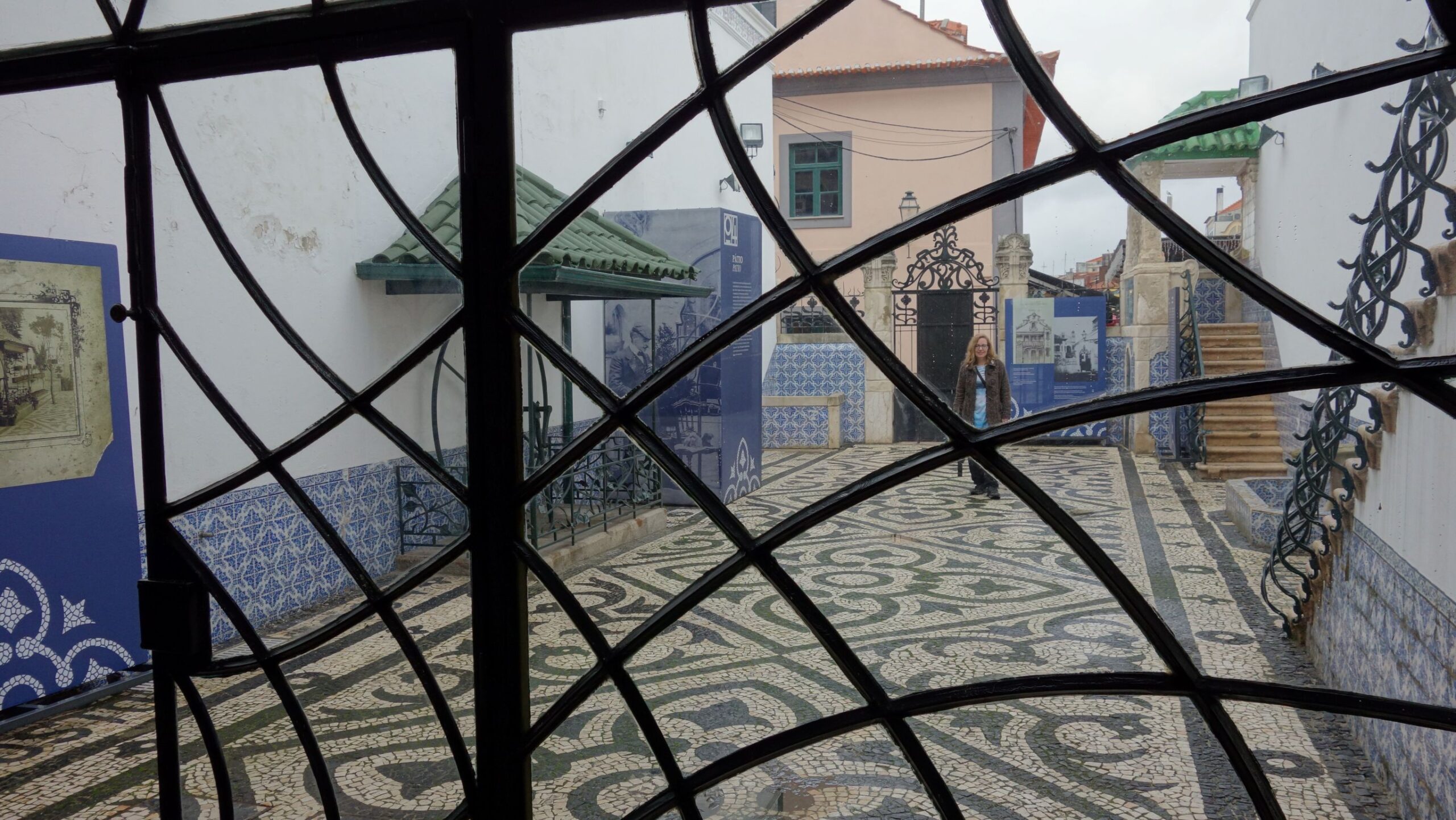
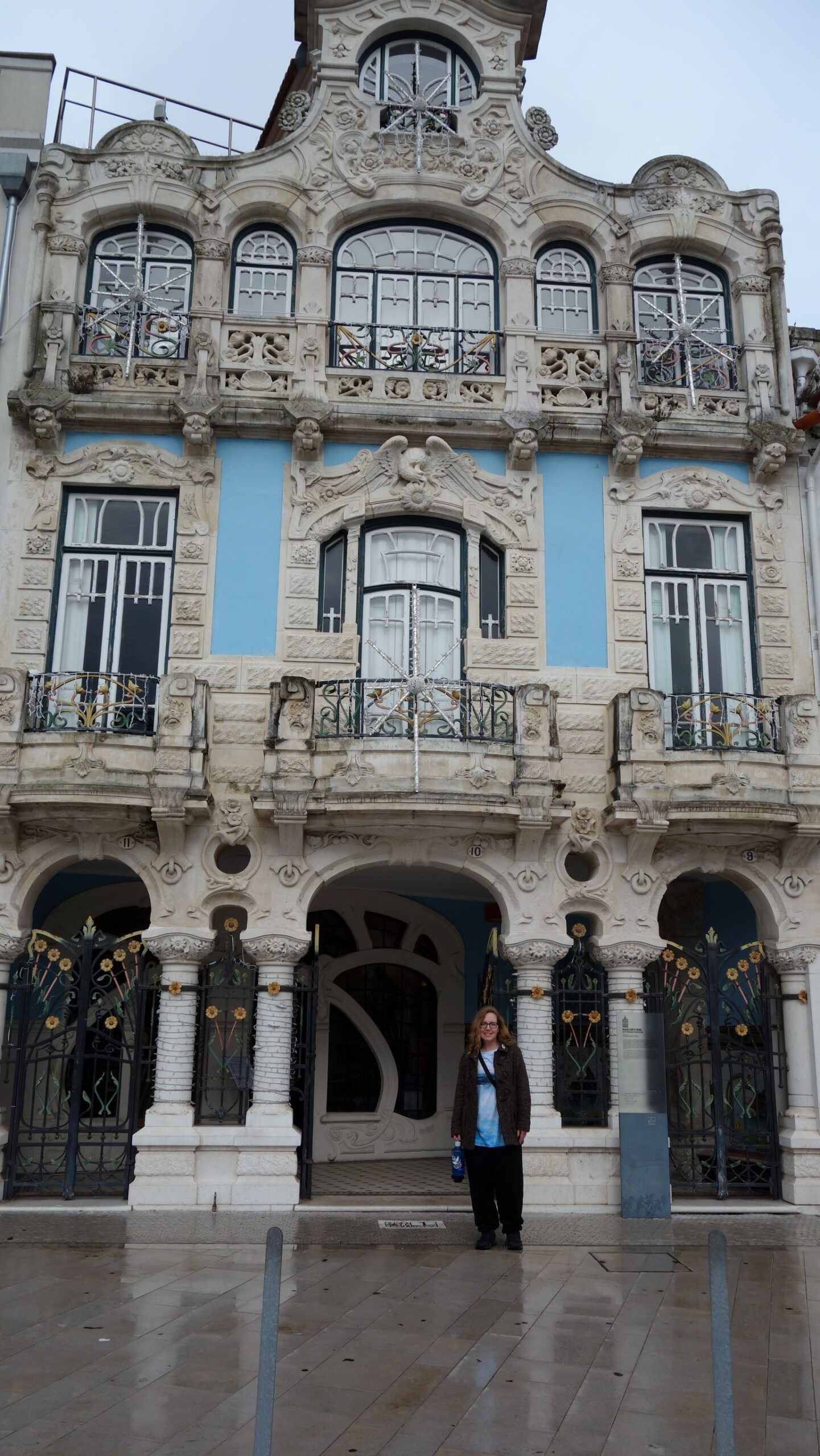 From the church, we went back to the main road and walked the short distance to the Aveiro Art Nouveau Museum, which is inside a Nouveau house from the early 1900s. I’m fond of Art Nouveau (and Art Deco), so this was an easy stop during an on-again/off-again rainy period of the day. Portuguese Art Nouveau is different in that it heavily used tiles in the design of the Nouveau houses. The Portuguese also used lots of curving iron and wooden frames, as in other cities. Aveiro has twenty-eight Art Nouveau buildings in the city, and I think we saw several of them in our wanderings. Not only did the museum tell about the development of Nouveau and how it was expressed in Portugal, but the house itself was a gem. The entry hall was heavily tiled, and the back of the house had a courtyard that used the traditional Portuguese white and black paving stones. All the railings were curved, as were most of the window frames and some of the door frames. It was a fun place to visit.
 By the time we left the museum, it was 2:30, so we went back to the hotel to see if the room was ready. It was. And oh, my. I knew it was a luxury hotel that we got off-season rates on, but our room has high ceilings, marble sinks and showers, an ornate ceiling in the bedroom, multiple floor-to-ceiling windows, and lots of space. The shower area and the bedroom area used to be separate rooms connected by a hallway, but the hotel renovation from a few years ago made the entire space into one room such that the sink and toilet are installed in nooks in the former hallway. It works really well and feels way above our middle class means.
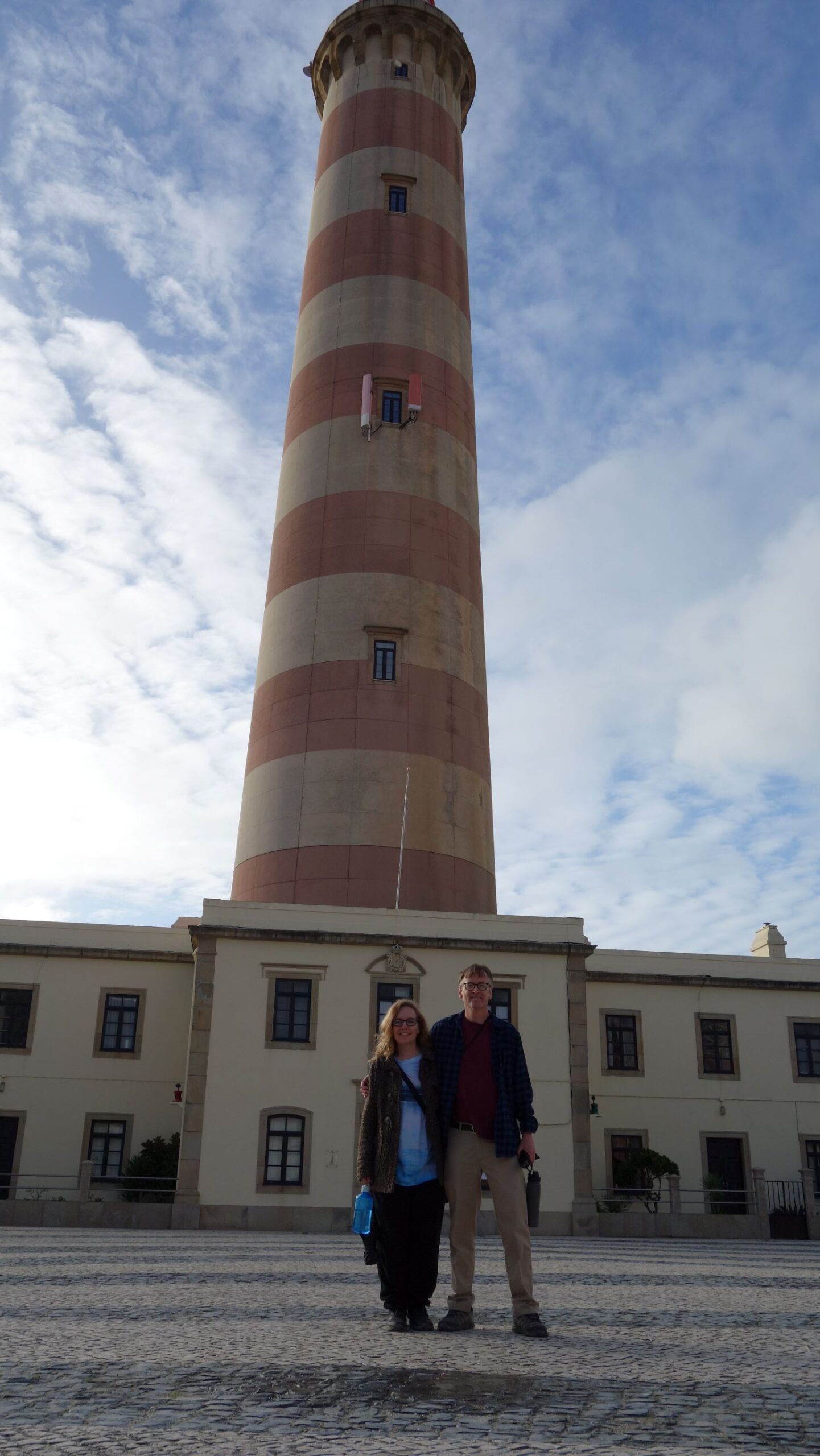 We headed out a couple of blocks to where I had seen a tour offered for the beach towns of Barra and Costa Nova, which are about seven miles away. I could have used my own car, but I didn’t want to drive anymore, so we paid for the tour. A van driver took me and Meredith and five people from Greece out to Barra. Barra is home to Portugal’s tallest (and most visited) lighthouse, coming in at 203 feet tall. It was only automated in 1990, and judging from the laundry on the line, someone still lives in the house there. The beach behind the lighthouse is calm for the area; breakwaters were installed to protect shipping and made for a calm area for swimmers who love the beach here because of that. Our driver told us that it changed things outside the breakwater and the waves are now much more forceful because of it.
After fifteen minutes to take pictures, we drove on to Costa Nova, which used to be a fishermen’s village. The fishermen built little houses on the edge of the canal to store nets and sails in when they weren’t in use. The men used to fish for cod near Canada, and so were gone for six months and home for six months. The equipment was stored in the small houses, and the fishermen lived behind the storage houses.
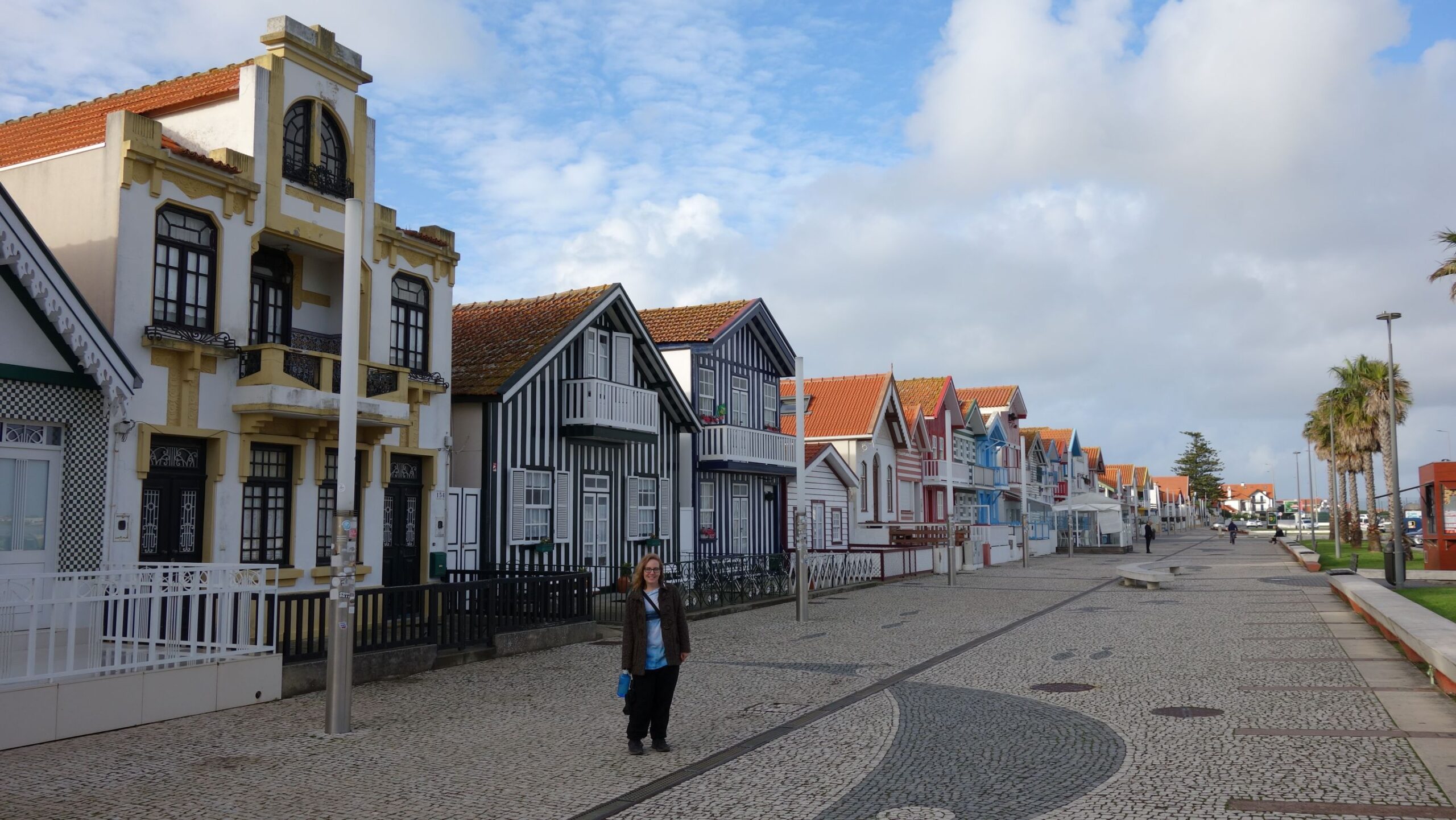 Then Canada regulated the cod industry because of overfishing, and the local population switched to fishing for local fish. That left the storage sheds unused. So the fishermen converted them to vacation homes and, to make them more attractive, painted them in bright striped colors. The houses are now a UNESCO-protected cultural asset and can’t be modified. Happily, most are still owned by the families of the original fishermen.
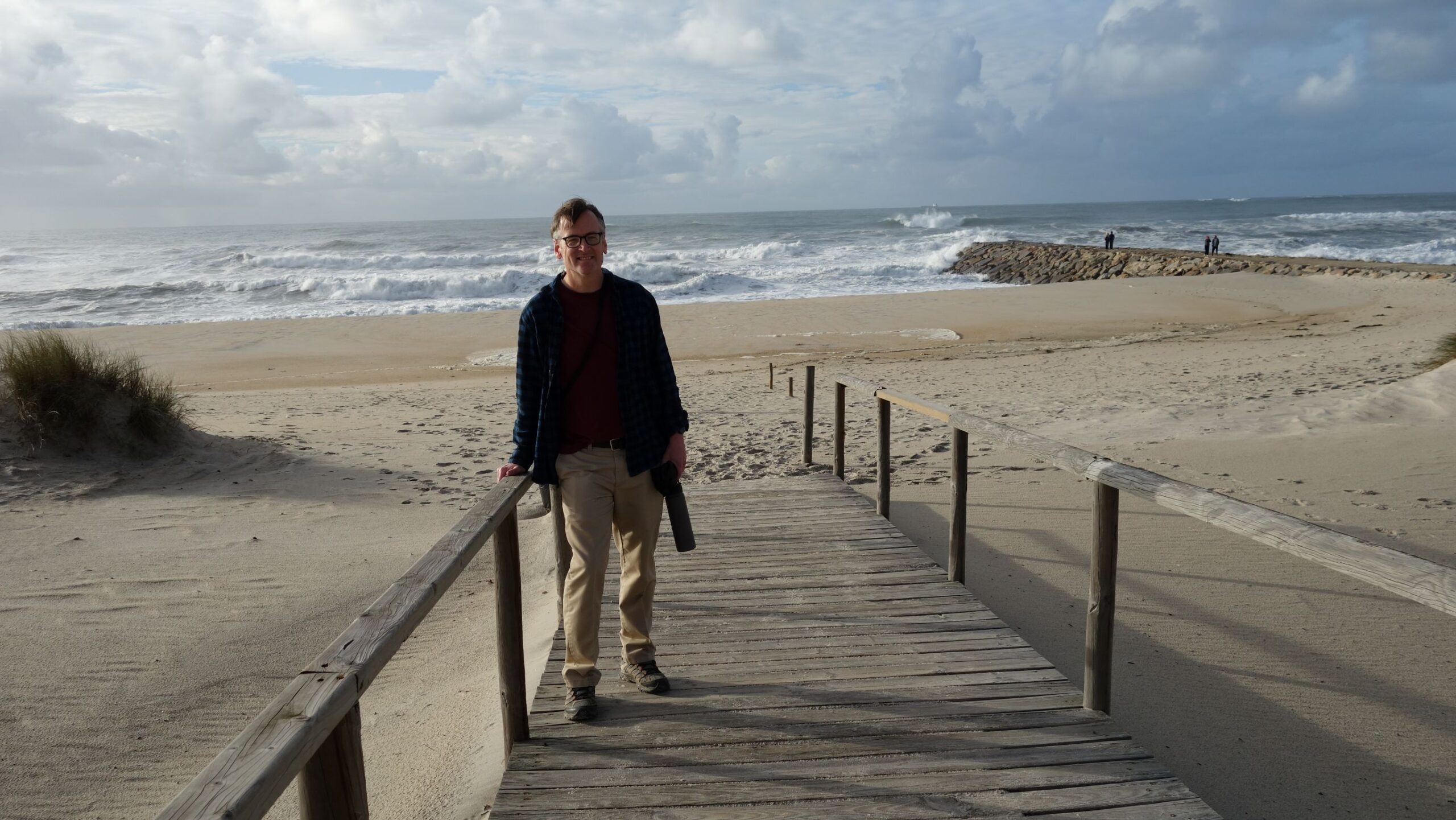
We got thirty minutes to wander alongside the brightly colored houses (and saw one Art Nouveau house as well), and then we walked up behind the houses and over the dunes to see the Atlantic Ocean. It was busy. The waves on the shore seemed to be coming from multiple directions and were breaking at various points as they approached the shore. These waves were mostly topping out at six feet or so, but they were forceful. Again, Mer and I were happy just to watch them roll in. Mer got to describe the sea as “roiling,” which isn’t a word you get to pull out often.
 We headed back into the city, and then Mer and I walked a mile to the Parque Infante Dom Pedro, a pretty and cared-for park that is along a waterway, crossed by many bridges. Aveiro has a university, and so we came across no fewer than three different student groups that we think were doing light hazing or initiation. It was a bit creepy to see people in black suits and capes all chanting things that we couldn’t understand. I’m assuming it was all in good fun. Still, the park was quite large and we liked it very much. On a sunny day, we could have lingered there. The rain had finally stopped before our van tour, but all the benches in the park were still very wet.
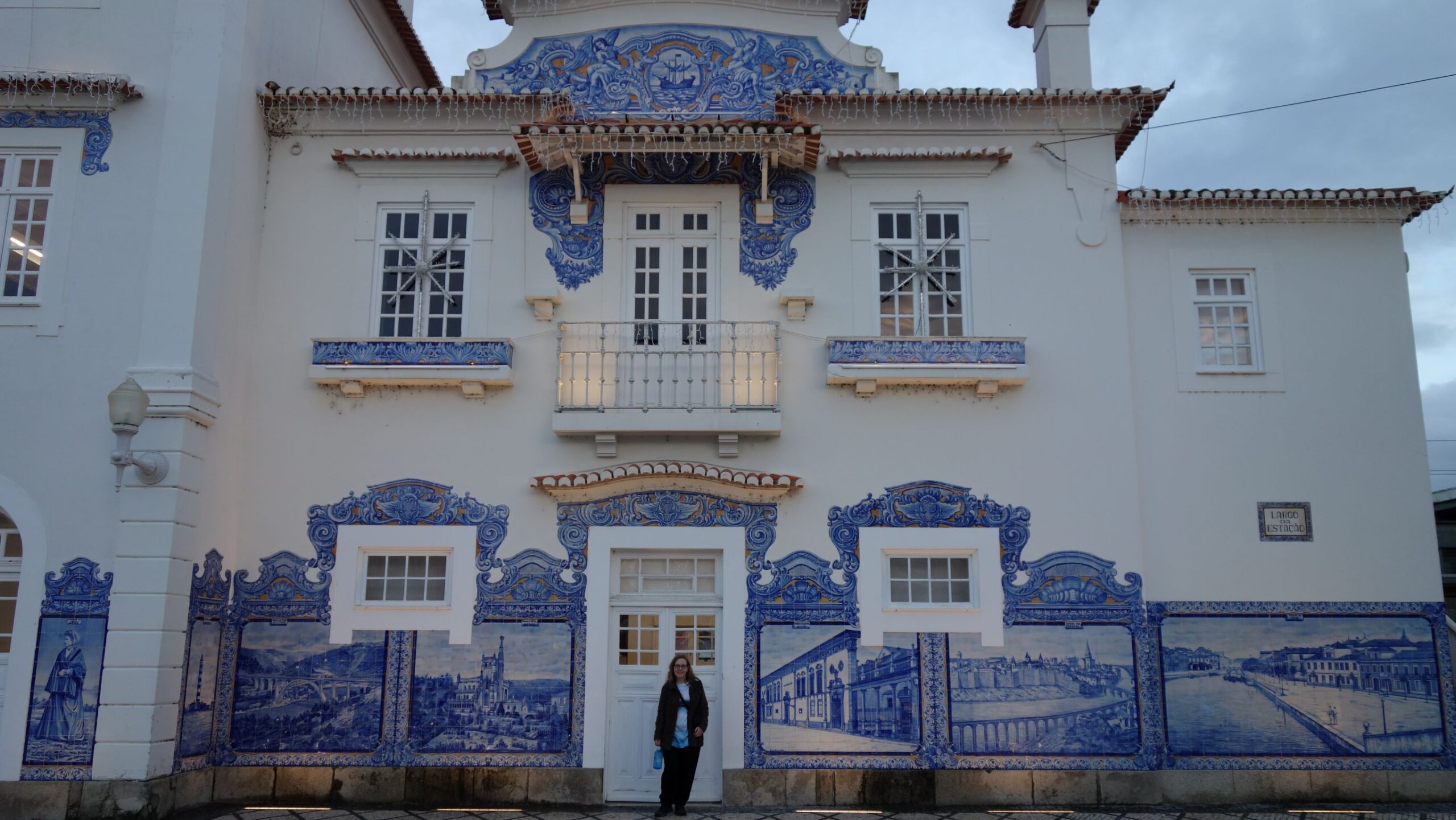
Finally, we walked a mile to the train station. That’s odd-sounding, but the old station is a two-story building covered in gorgeous tiles showing ordinary historical life from the area. It was a good stop.
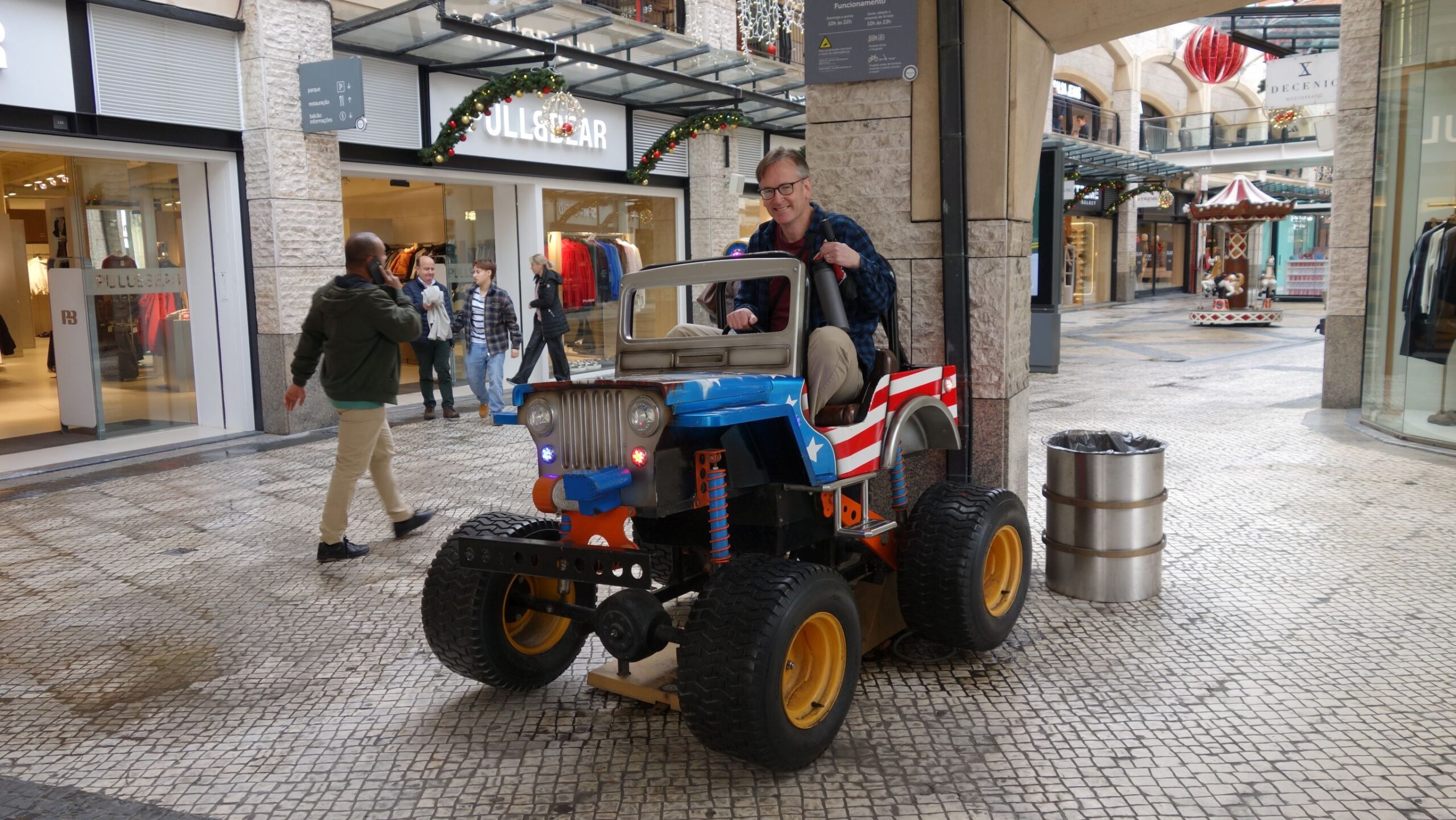
 From there, we walked back to the hotel area, where we grabbed some supper. After supper, we went back to the mall to pick up a couple of things I forgot to pack since the mall was right there, and we finished the evening by buying some chocolate.
I’m a fan of Aveiro. I did everything I had planned to do based on my internet research, but I’d still happily come back here to do lots of things that were marked on the tourist map (museums and churches and another monastery). It’s a fun small city, and even if I can’t remember exactly how I found it, I’m glad we made it here.