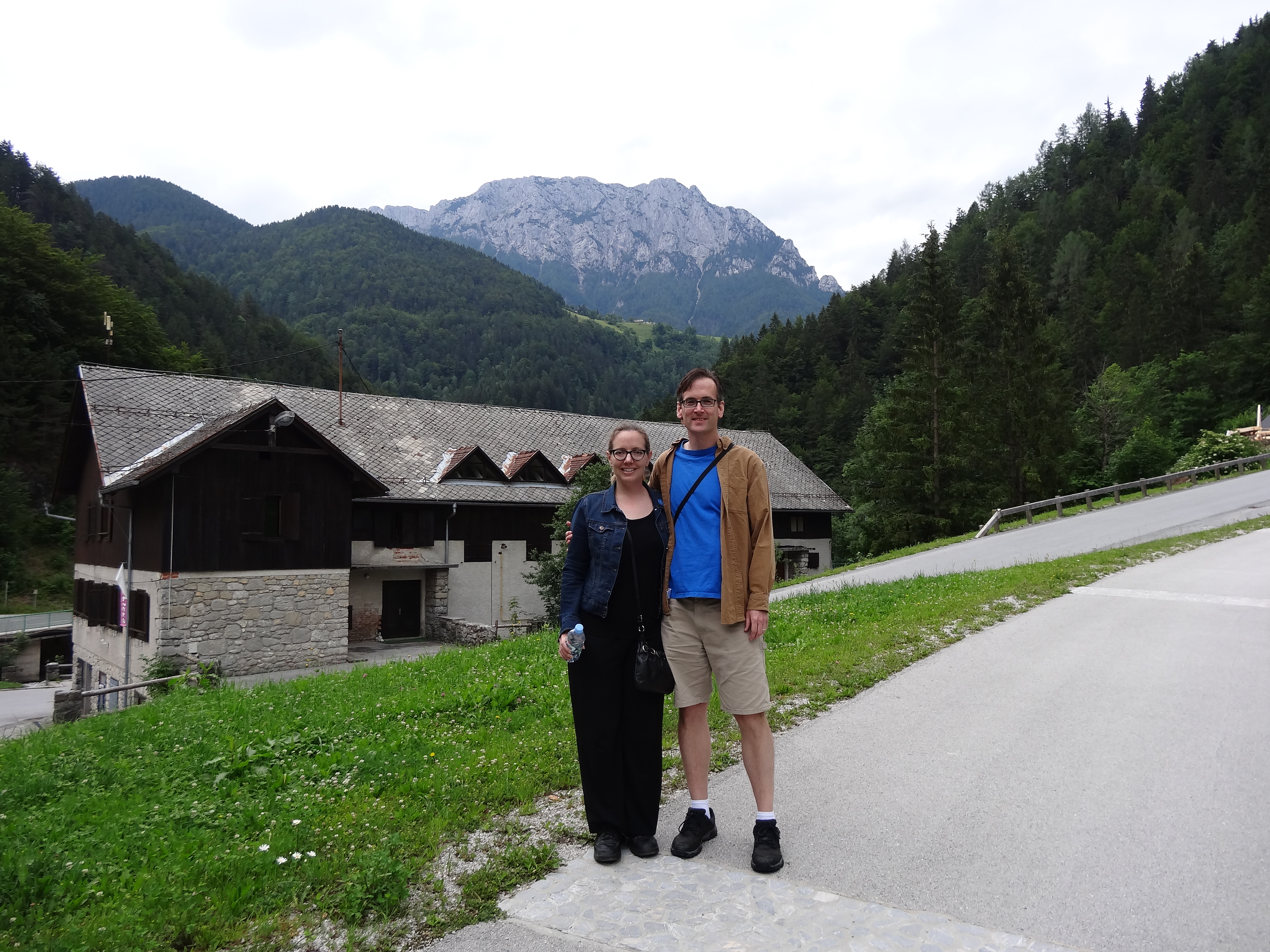
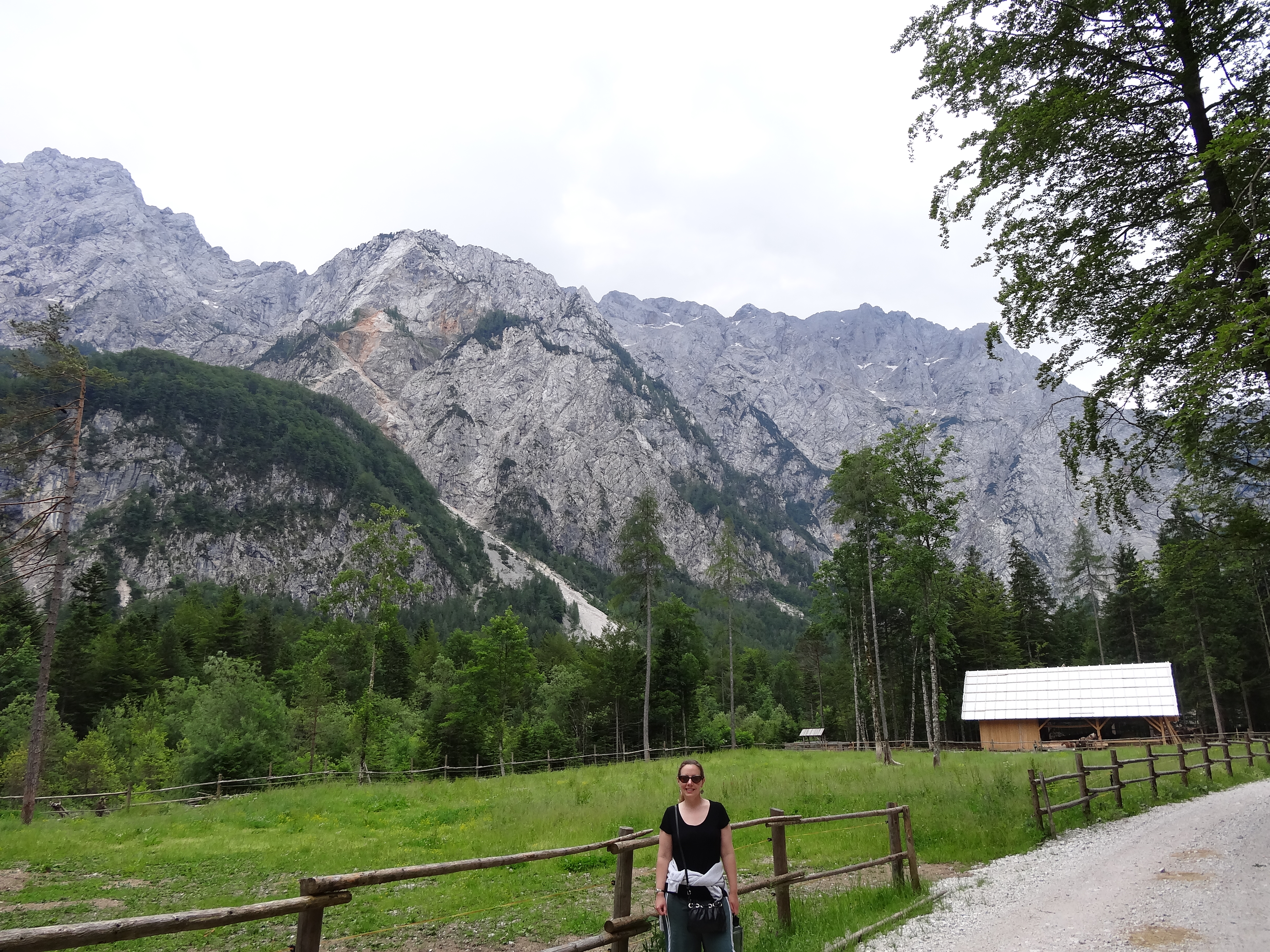
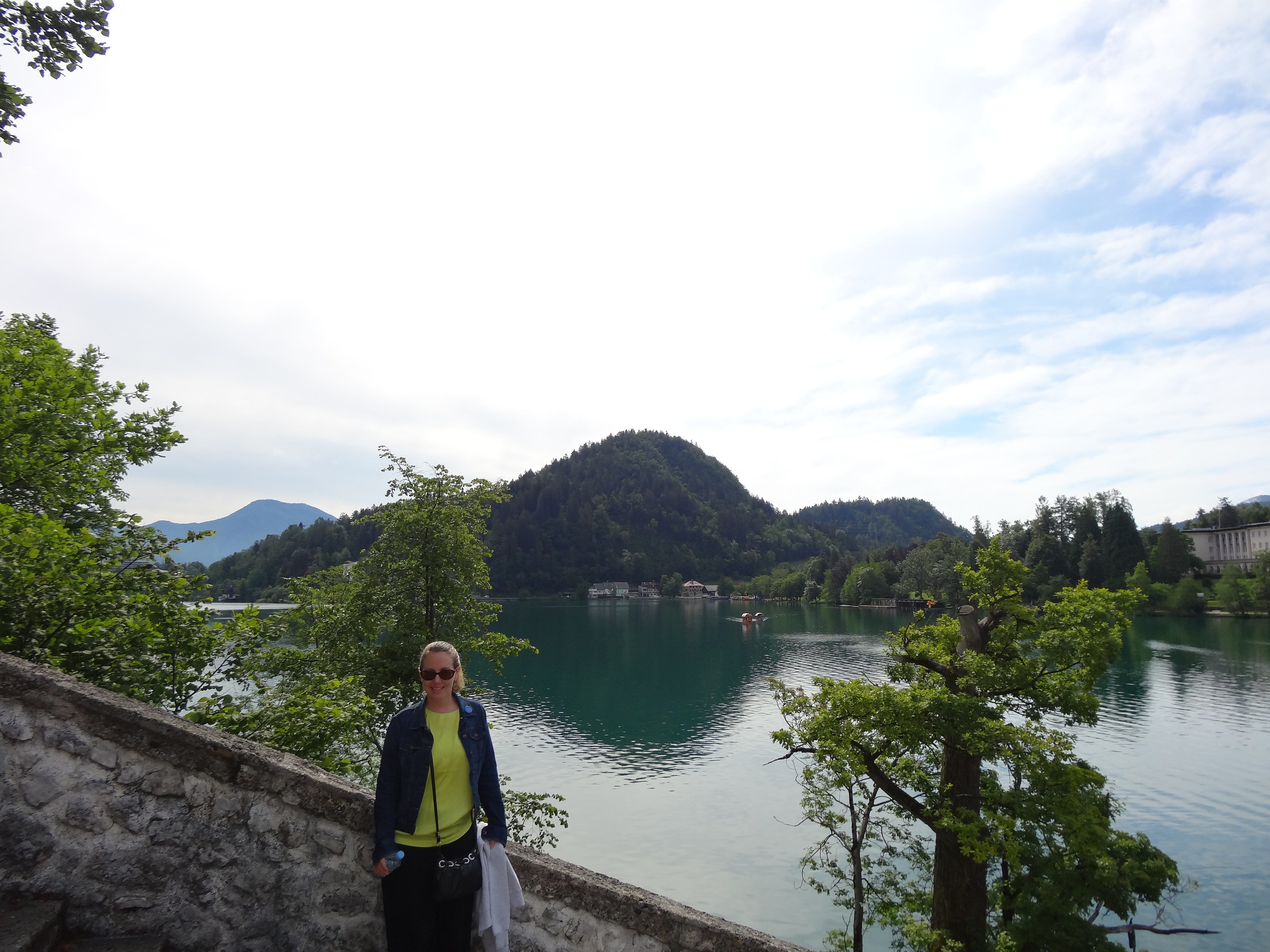
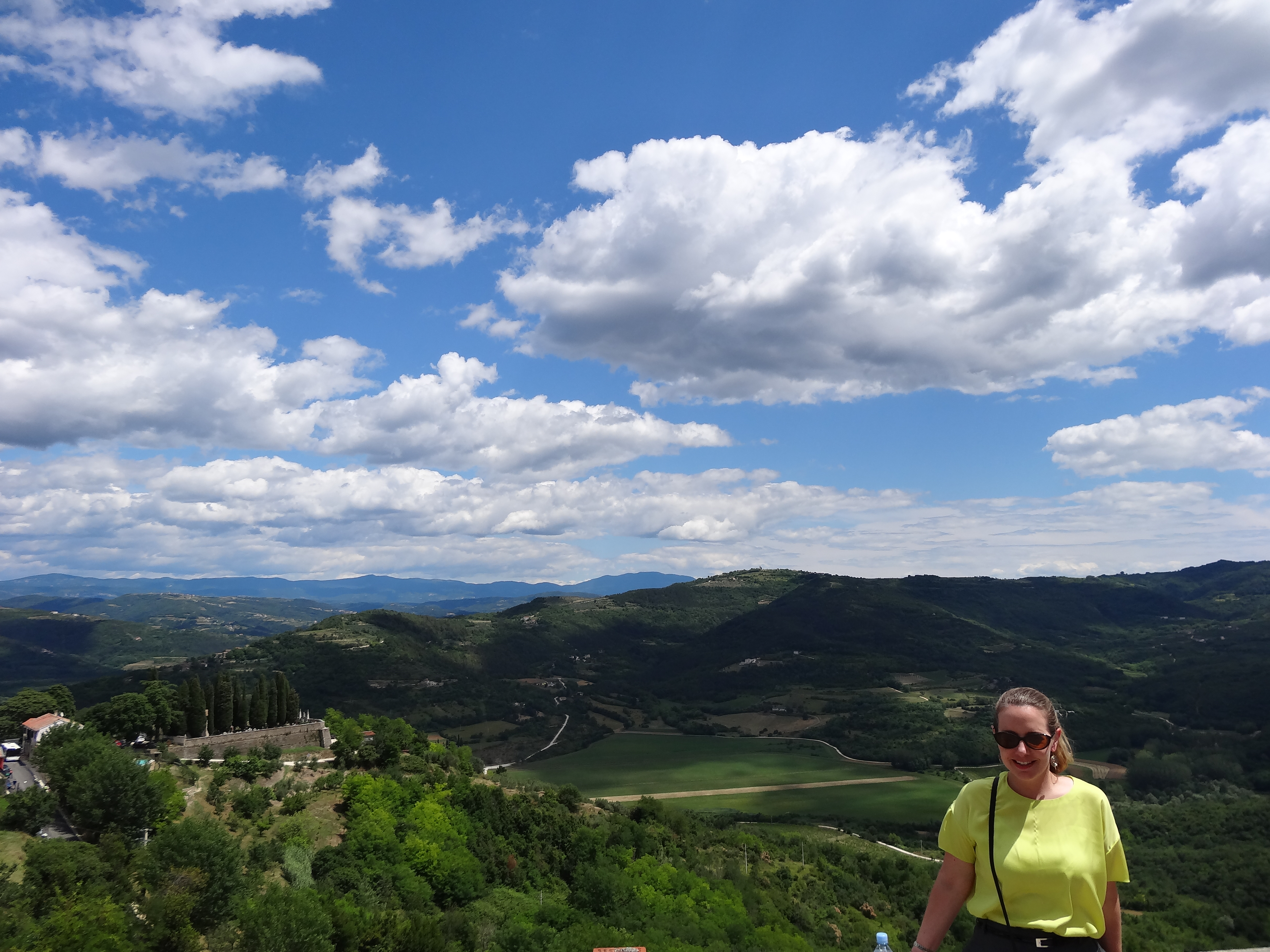
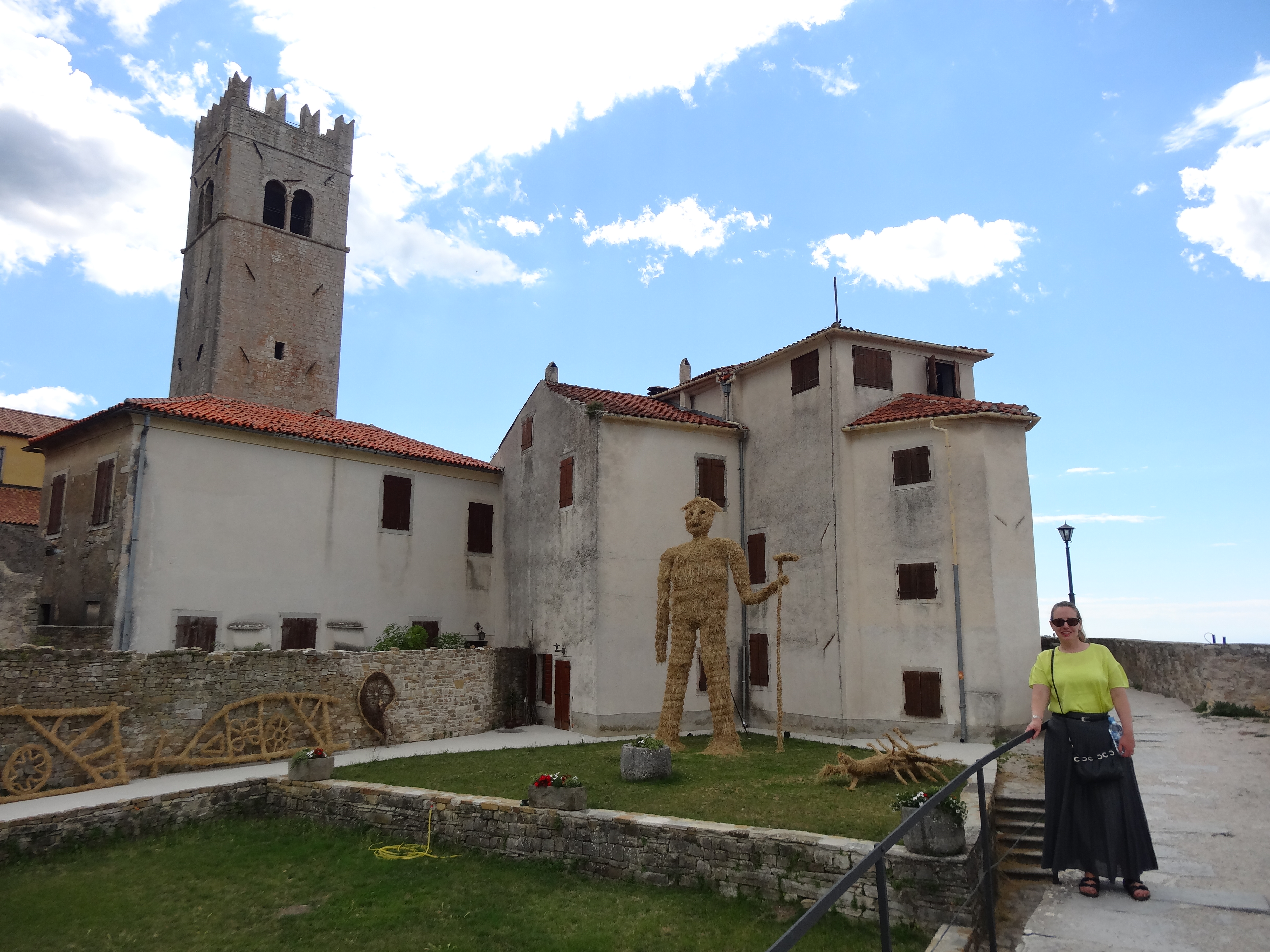
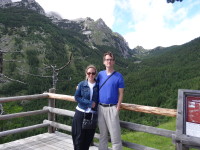
 Meredith and I like using local guides where we can find them and afford them. I also knew I did not want to drive in the Alps, even if “only” the smaller Julian Alps, so we arranged to have a tour guide drive us around them. That was a very good decision, since the drives I have done this week were easy compared to some of today’s roads.
Our guide was one recommended by Rick Steves’ tour book – his name was Gorazd, and he was in his late fifties. He was a native of Slovenia, but had traveled extensively while with the Yugoslavian national hockey team, including participating in three Olympics in the 1970s and 1980s. He lived for many years in Italy, playing and then coaching hockey, and he moved back about seven years ago to help with his daughter and son-in-law’s tour company (and to be with his grandchildren). He never remembered his father until he met him when Gorazd was thirty-two years old – his father had escaped Yugoslavia during the Communist years and was afraid to return. In short, Gorazd is an interesting man, and he took us all around today for about eight hours.
Gorazd picked us up at our B and B at the tourist farm, and we set off in his car, with Meredith in the front. I wanted her up front because a) she saved for the trip, b) she is more social than I am, especially with non-native English speakers, and c) I knew I might have trouble with my fear of heights in the Alps, so I thought it better to let her enjoy the best views.
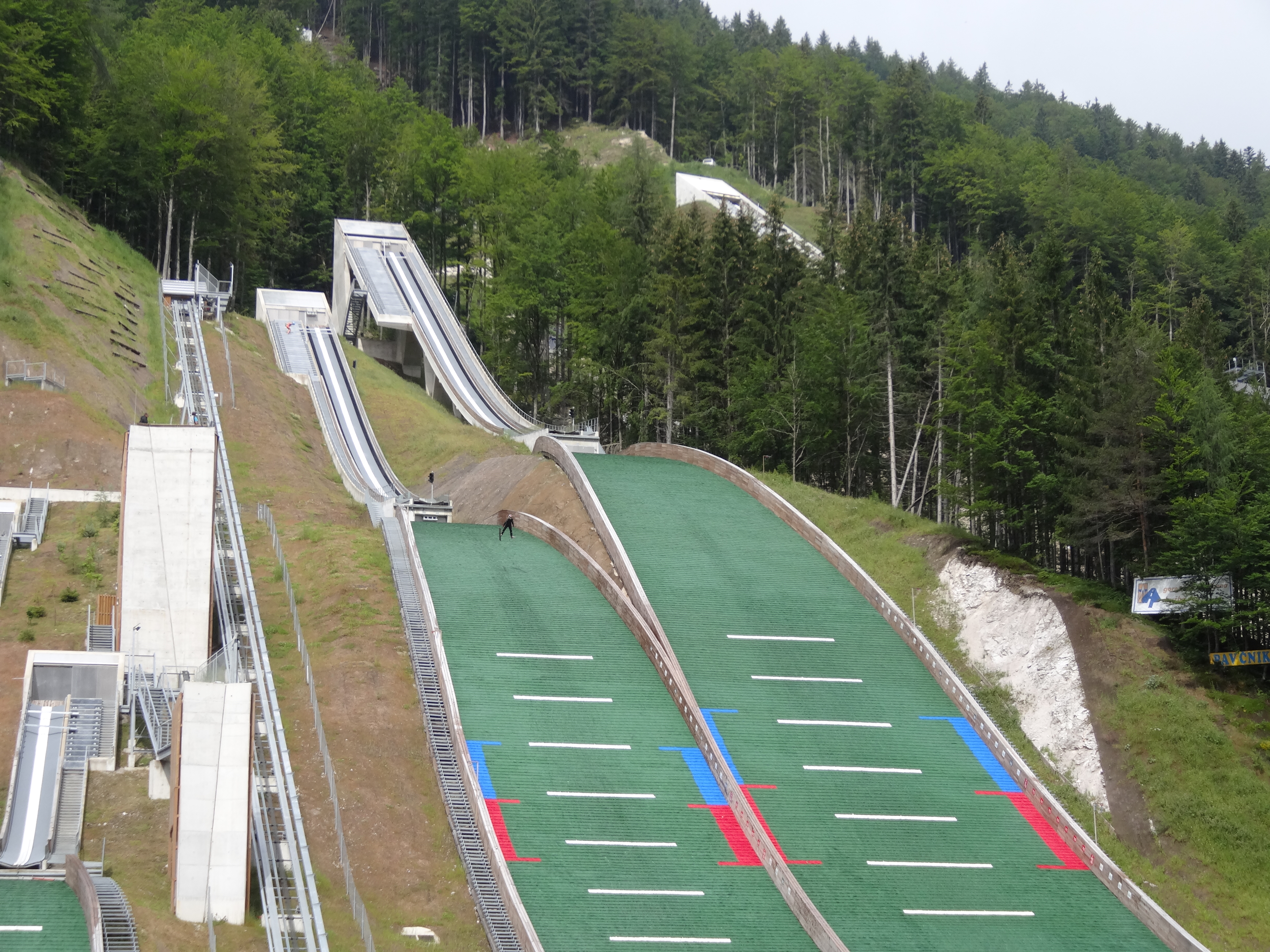
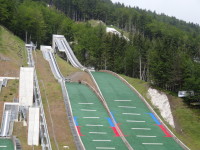 Our first stop was Slovenia’s ski-jumping center, where they have eight different jumping hills of different heights, including a bigger-than-Olympics monster hill where jumpers fly close to 250 meters (820 feet) in the air. We actually got to see some jumps on the intermediate training hills – they water down plastic grass on the landing area to make it slick, and the launch hill tracks are made of porcelain, so the track is always slick. We saw a boy and a girl about ten or twelve years old making some pretty impressive jumps.
We then got diverted from the original plan to go over the highest pass in Slovenia, because there was a bicycle race over the pass during the morning. Gorazd decided to do his tour in reverse, and that worked out perfectly. The morning weather was on-and-off rain, and we had steady rain while we were at lunch and while we were in a museum. The last few hours were gloriously clear, and so the reversal of the route worked out perfectly.
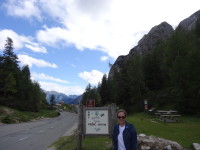 We went over a smaller pass that led us briefly through Italy (score another country for this trip!) and then back into Slovenia. Slovenia is a full member of the European Union, so they have open borders with other full-EU states like Italy, so the border crossing was almost non-existent, except for the old guard stations and one police car (that I think was there to check cargo in trucks – they never gave us a second look).
The drive was very pretty, and Gorazd told us how a landslide took out half a village and the road a few years back, but because Slovenians do not like to move, they rebuilt the homes. We stopped at a World War I fortress. Not much happened in this part of the world in World War II, but the Soca river area was a much-contested front in WW I. Slovenia fought with the Austro-Hungarian Empire against Italy (and Italy’s allies, the French, British, and Americans). This area of Slovenia was heavily fortified, and many of the mountain roads and passes were built because of and for the war effort. The fort at which we stopped had a lookout post on top of a cliff that was reached by a staircase-ladder that was mounted in the cliff face. Men had to climb that ladder every two hours for guard duty. It looked as if it would’ve been hazardous in the best conditions, let alone in the winter.
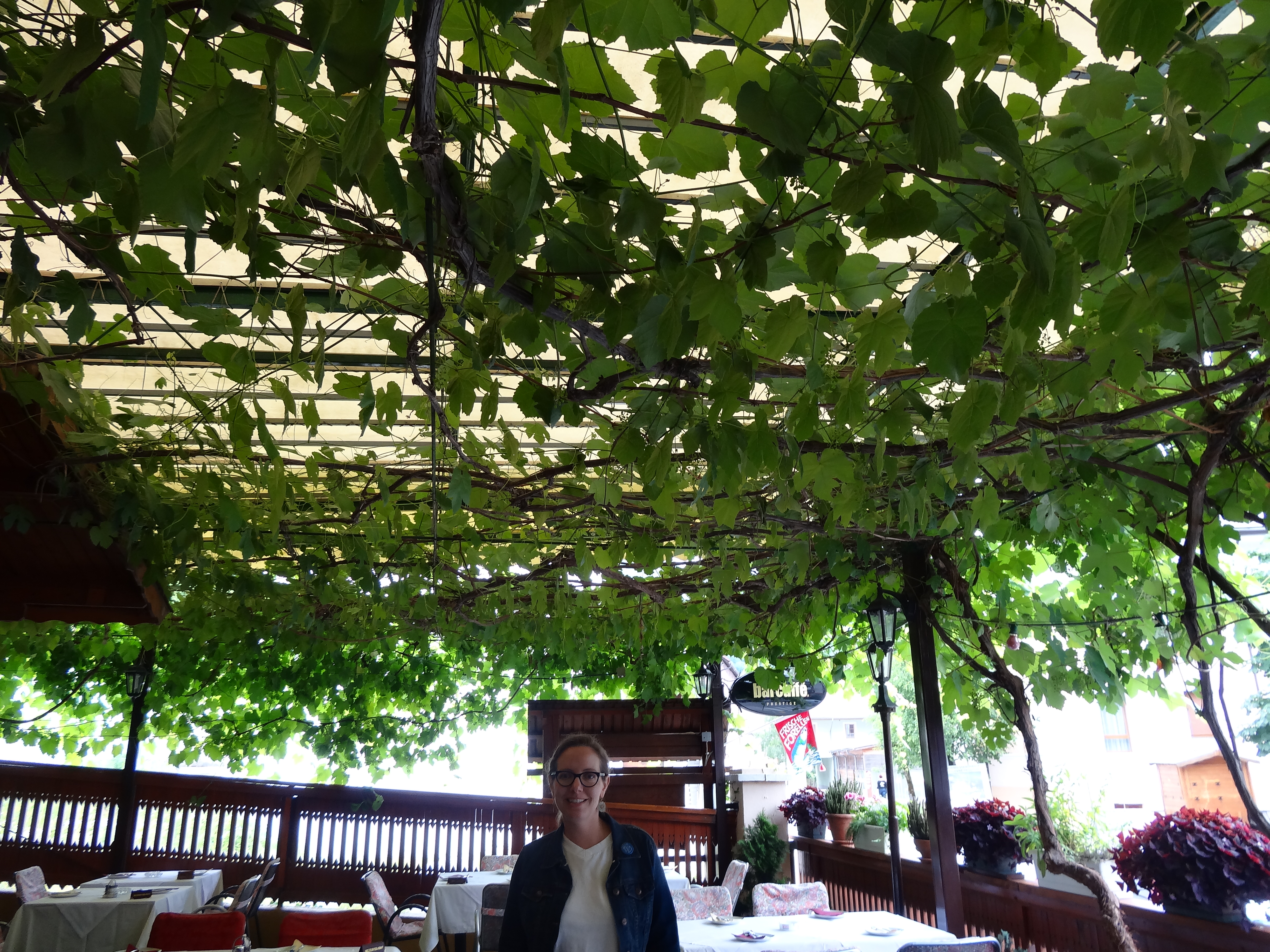
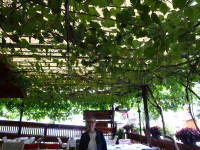 We continued on to a cute town called Bovec, where we ate on a covered patio, under a beautiful grape arbor. On the recommendation of Gorazd, we both ordered local specialty dishes, which were excellent.
We moved on to the next town, Kobarid, where we got out of the rain by spending about ninety minutes in a World War I museum. We saw a short film on the Soca front, which I had not even known about before this trip. Italy started WW I as a neutral country, but then after ten months of war, Italy launched a surprise attack on Slovenia and their allies, pushing into Slovenia. Much of the fighting in this region was in very difficult mountainous terrain. After a few months, Slovenia and Germany launched a massive surprise counterattack, winning back the territory and pushing a little ways into Italy, where they reached a stalemate.
The exhibits of the museum included passages from diaries of the soldiers, which were gruesome and moving. They had many photos of the war, including showing tunnels and trenches in the ice and snow in the mountains. There were weapons and other artifacts from the war. Gorazd later told us that when he was a teenager (which would have been in the late sixties), when he went hiking in the mountains, he could still see lots of old equipment from WW I lying around. He was told never to touch it in case it was still able to explode. The museum was very moving and was a sobering reminder of how many people suffered and died in WW I.
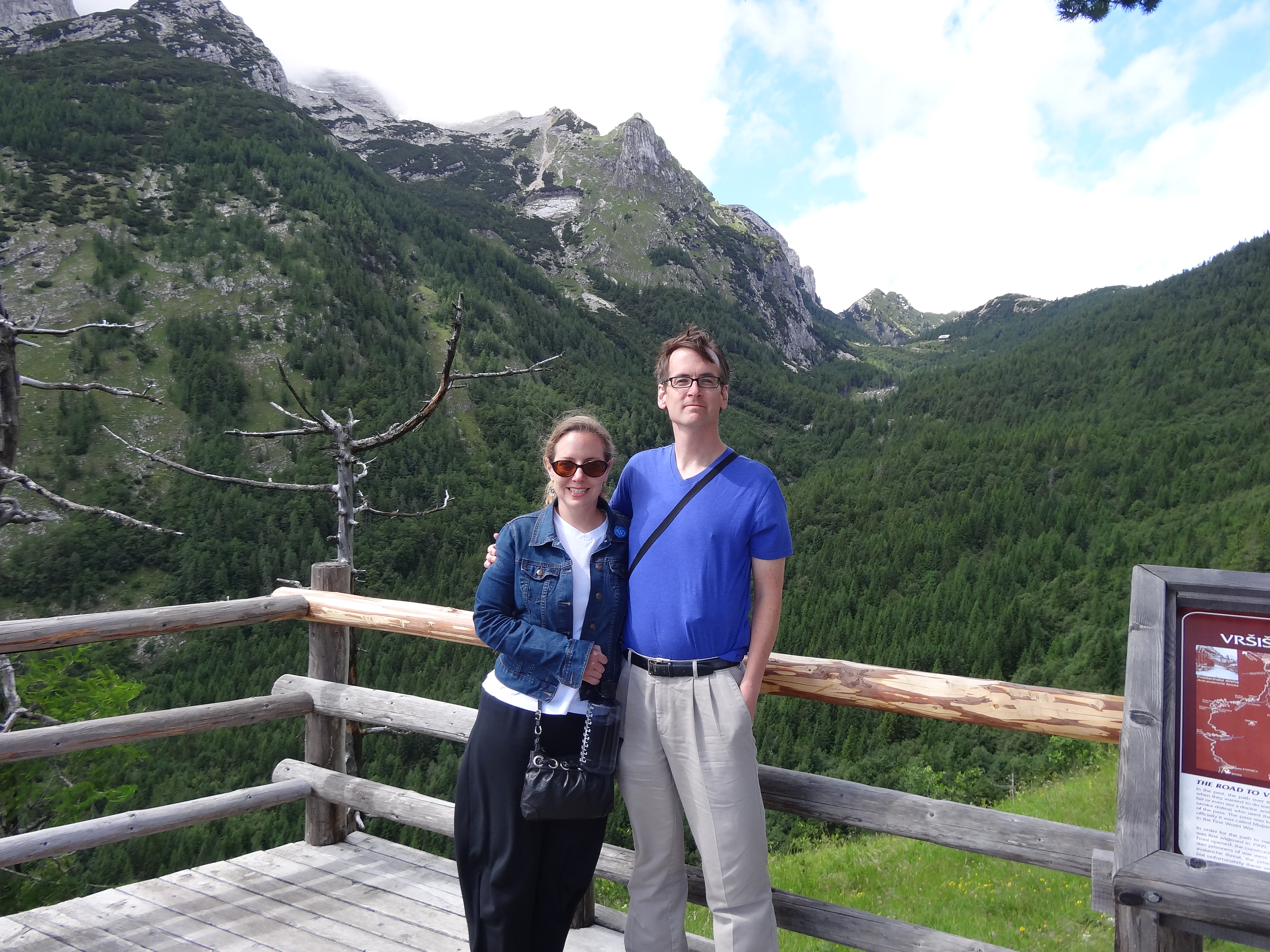
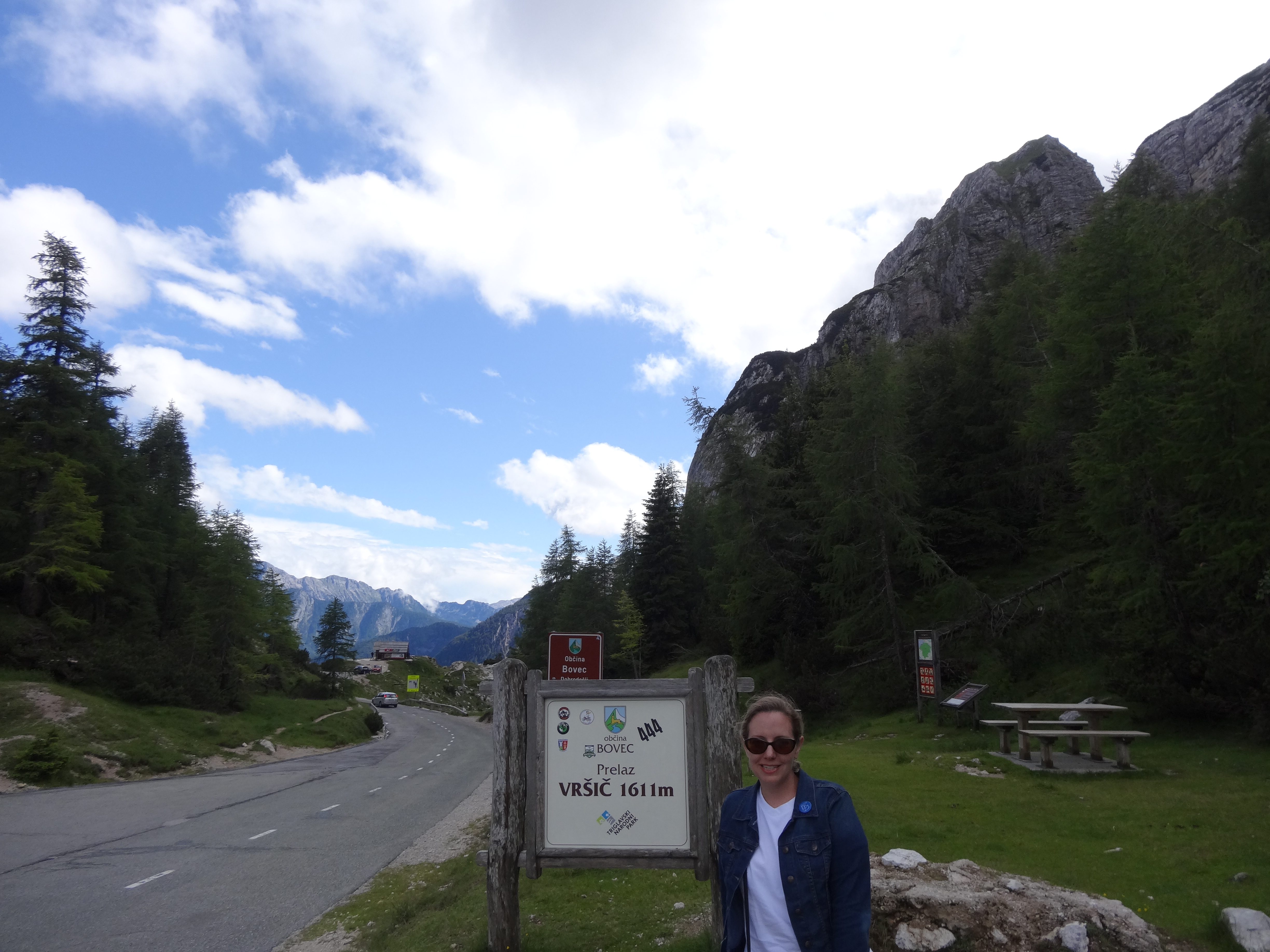
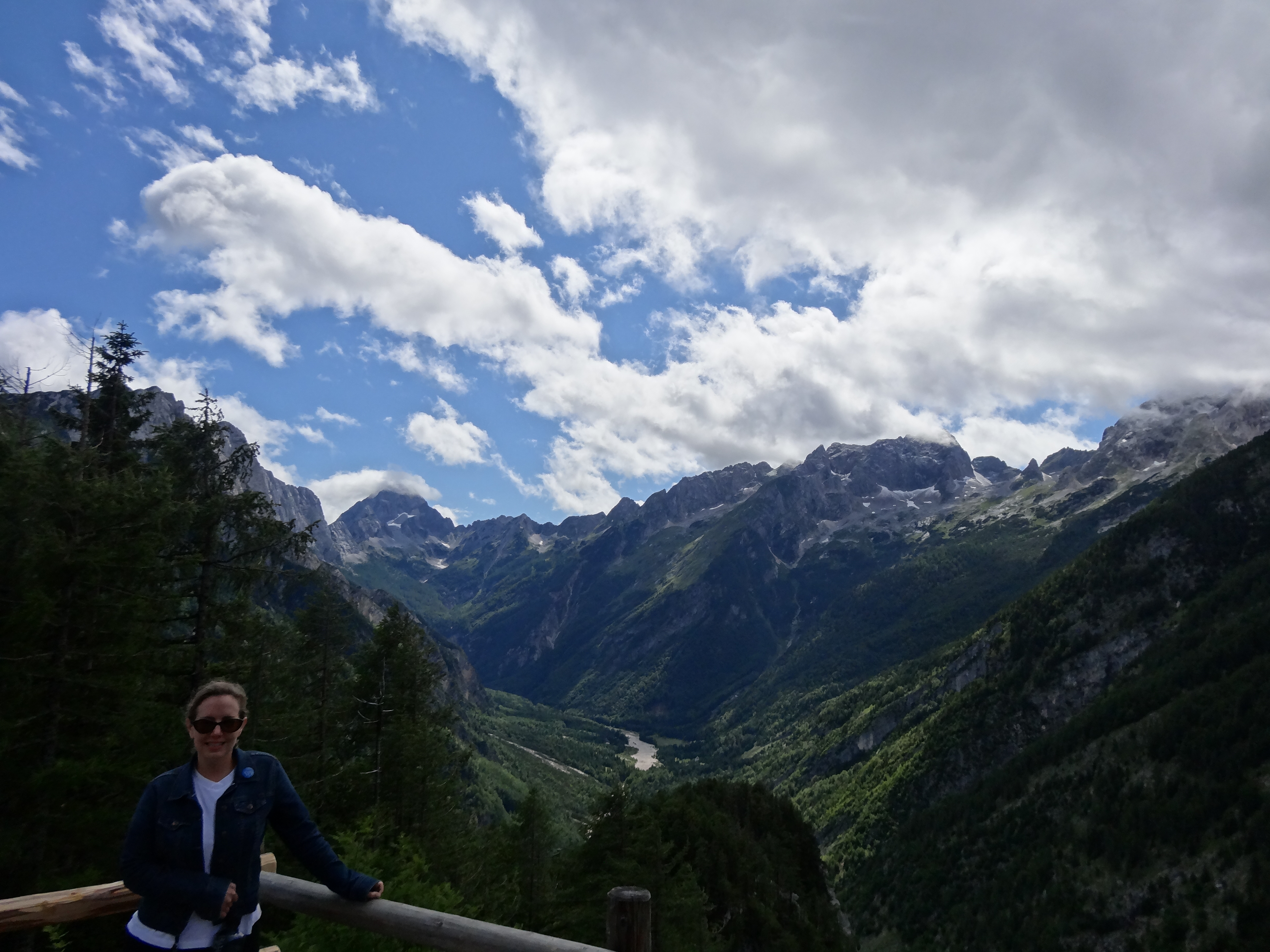
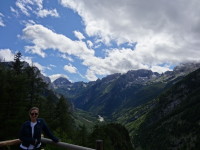 After we came out of the museum, we found that the rain had stopped and the sun had even come out. That was a happy thing, as we were headed to the Vrsic pass, which included twenty-five switchbacks on the ascent as we climbed to 1,611 meters (one mile). Here I was very glad that Meredith was in the front seat and Gorazd was driving. I got a bit sick looking out at the sheer mountains all around us. I was very happy to see them on foot when we pulled off at one point to see two different valleys, and again at the top, but the ascent was quite dizzying for me. Meredith loved it.
On the descent, we stopped at a small Russian chapel near the road. In WWI, the road on which we were driving was built partly by Russian prisoners. An avalanche occurred, killing some Russian prisoners and some of the guards. The friends of the victims built a small wooden chapel to commemorate their friends.
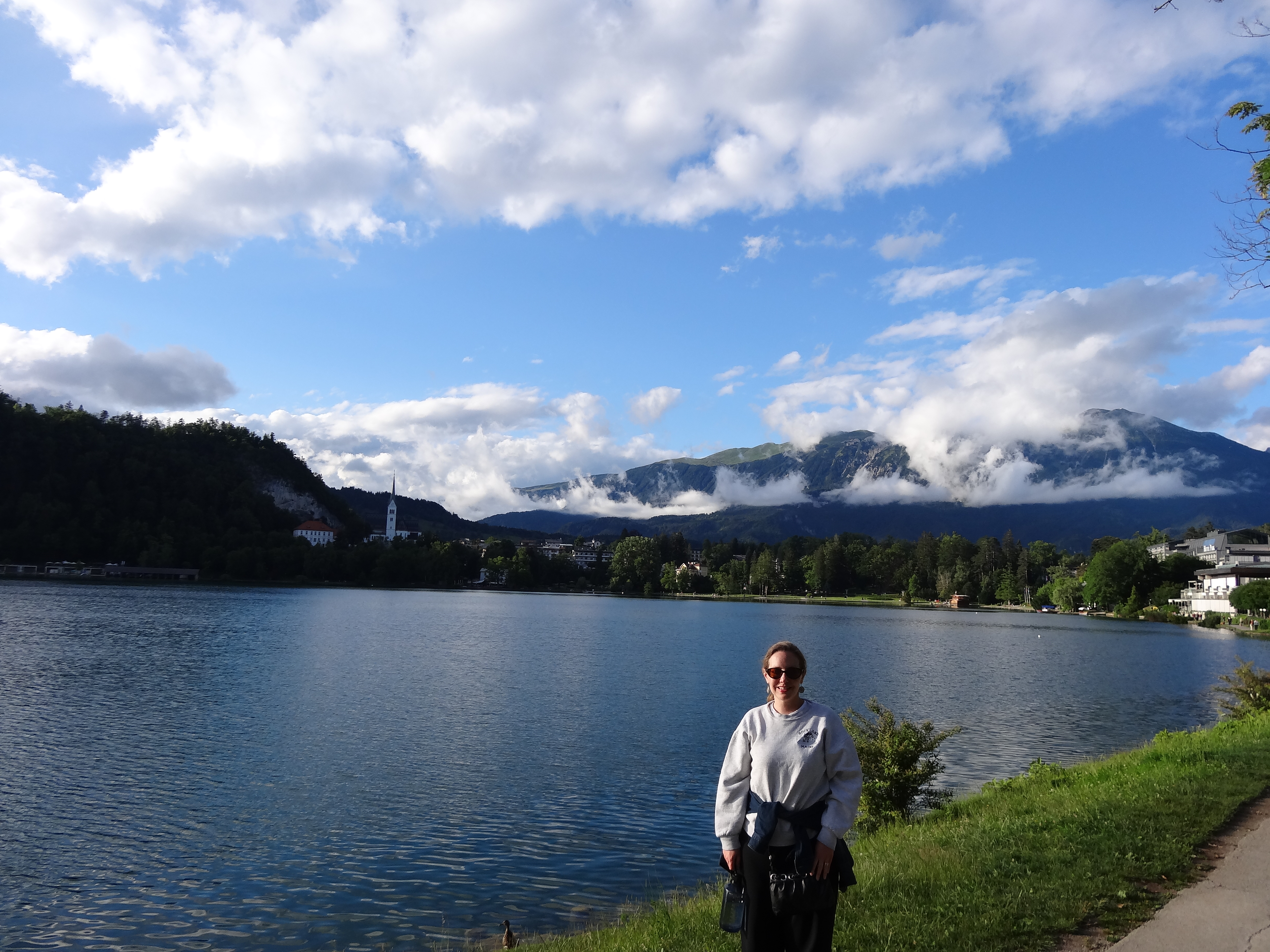
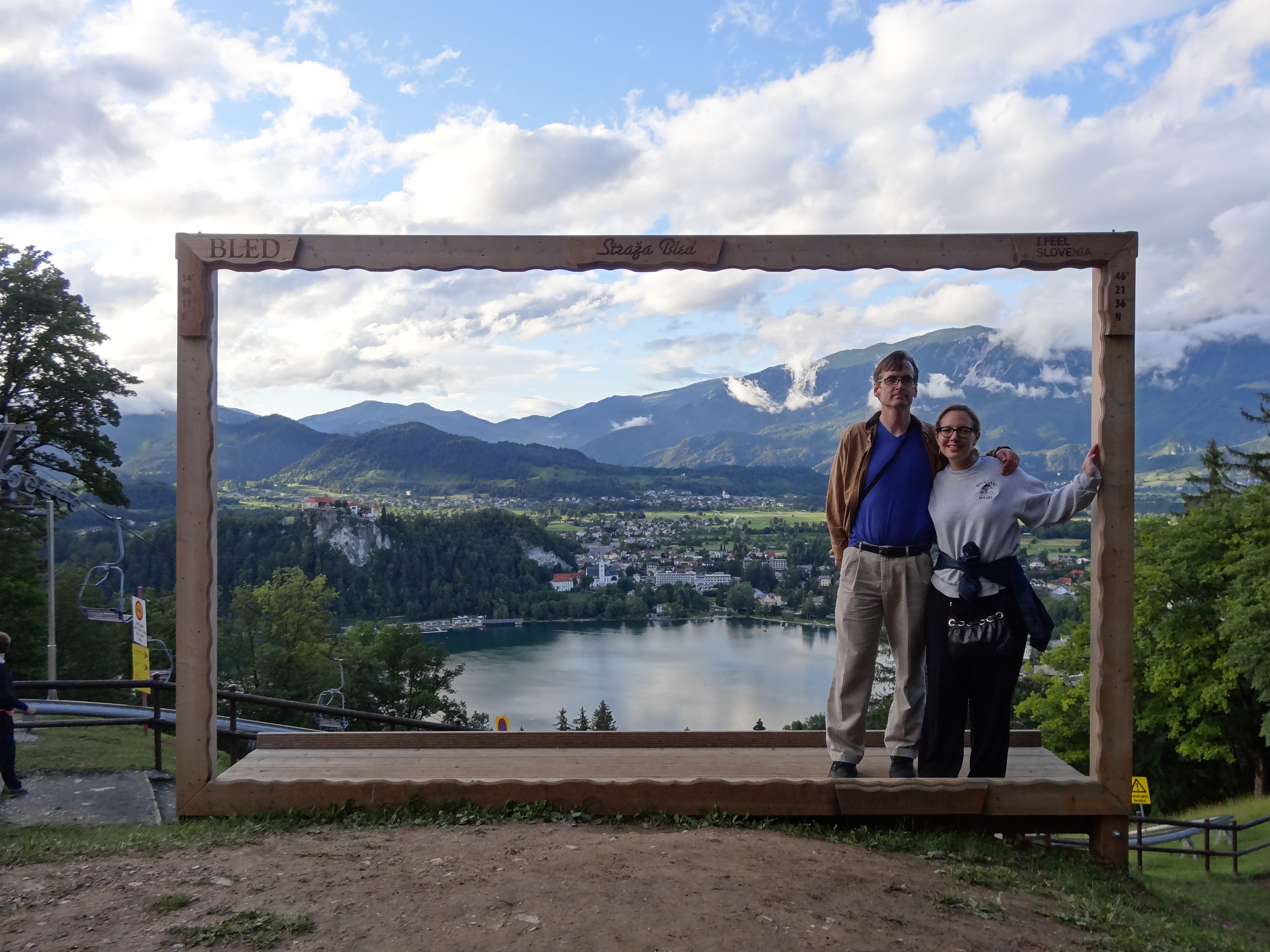
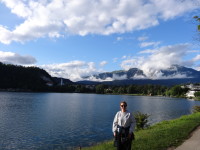 We then made our way back to Lake Bled, where we said goodbye to Gorazd. He was an excellent guide, and we were pleased with the day. We grabbed some pizza for supper, and then walked around part of the lake, enjoying the evening sunshine. We passed near the entrance to an adventure park that had an alpine slide, so I decided we should try it. We got to ride a slow and peaceful chairlift to the top, where we could look down on the lake, the town, and even the c
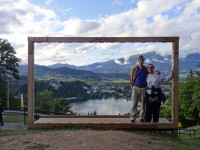 astle. Mer then got into a car, which was mounted to a single track all the way down the hill. I was much amused by her enthusiastic verbal manifestations of, well, fear, as she rocketed away. It was then my turn, and after getting situated, I was off. It was fun – it was fast, but the braking system worked very well, and the track was laid out with lots of curves to keep it interesting. Meredith and I both agreed it was a kicky little ride.
 We walked back to the B and B, where we were greeted by a busload of Italian tourists eating supper. We also got to pet two of the ten farm cats, and then we headed up to our balcony to eat some chocolate we had purchased, while watching the mountains – a fine ending to an alpine day.
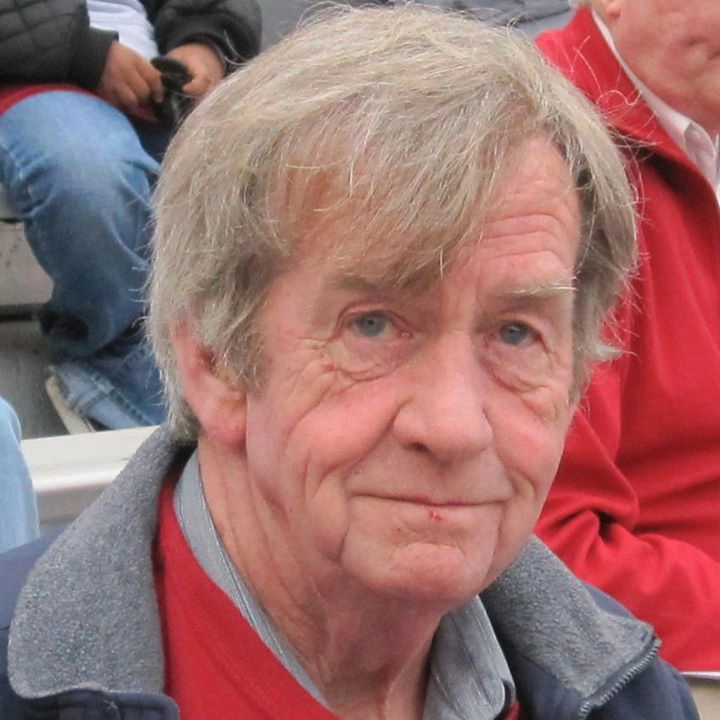 Dad died on July 14th, after a six-month battle with cancer. Here is the excellent memorial my sister Kelly wrote for Dad.