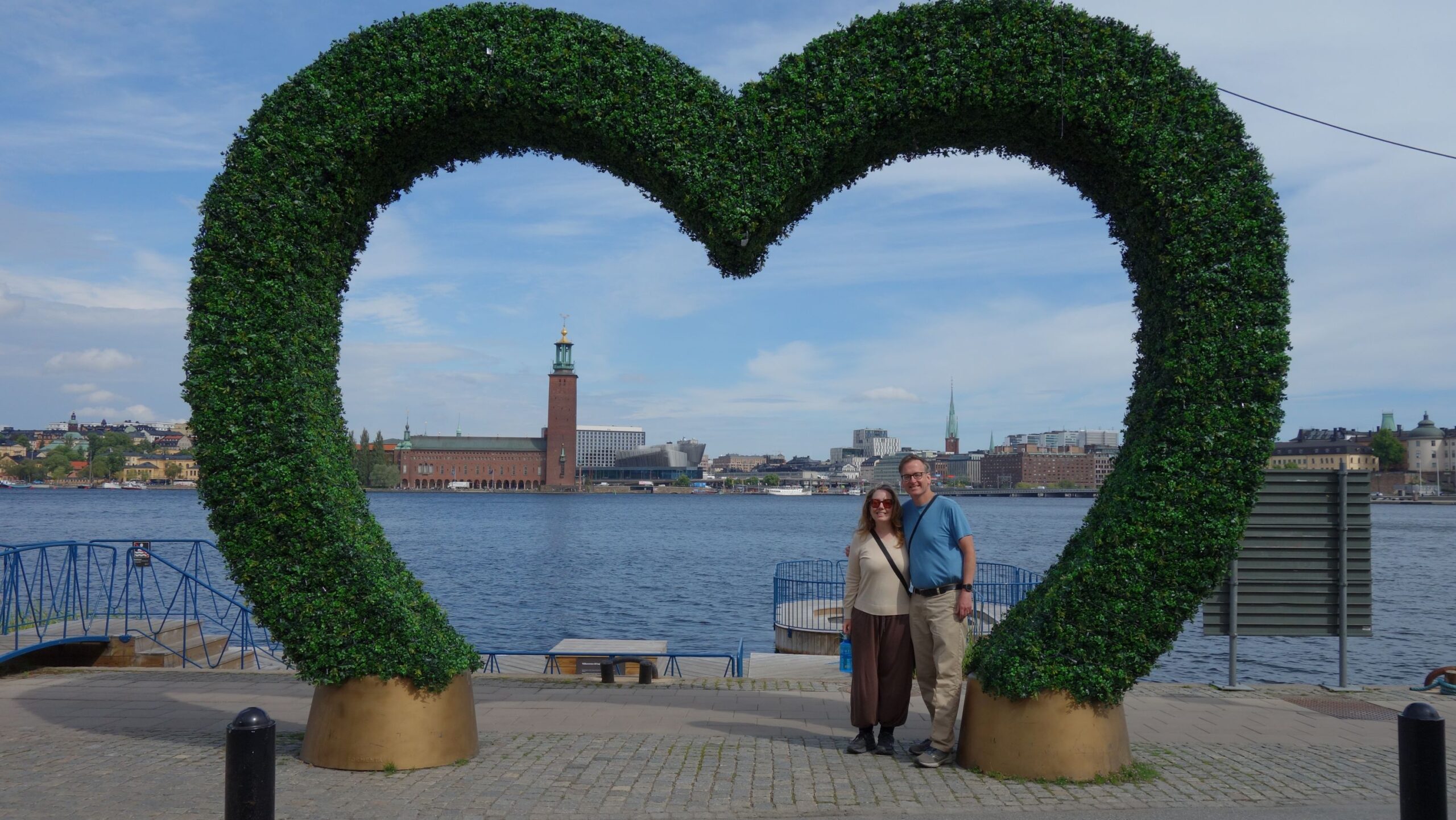
 Today was my one and only day to plan things in Stockholm (by my own choice, since I wanted my additional time spent elsewhere). So I was a little sad that the forecast called for rain showers and full-on rain in the afternoon, but the morning was beautiful. I wanted to take full advantage of that.
Usually, I’m a last-minute-planning kind of tourist. I like to get in the city and see what’s around before I start planning too many things. As I did my research this time, I found a bunch of things I wanted to do, so I actually reserved ahead. For four different things. Busy day today.
We walked down to the old-town island of Gamla Stan, past the in-town palace and along the harbor. We got to a small open square, where we met up with Max, a Ukrainian who has been living here for two years, and he was our street-legal golf cart driver today, to take us on a two-hour tour of Stockholm.
 It was a fun tour. Max took us all over the areas around Gamla Stan, crossing something like eight of the fourteen islands that Stockholm is built on. Max showed us (not exhaustively) –
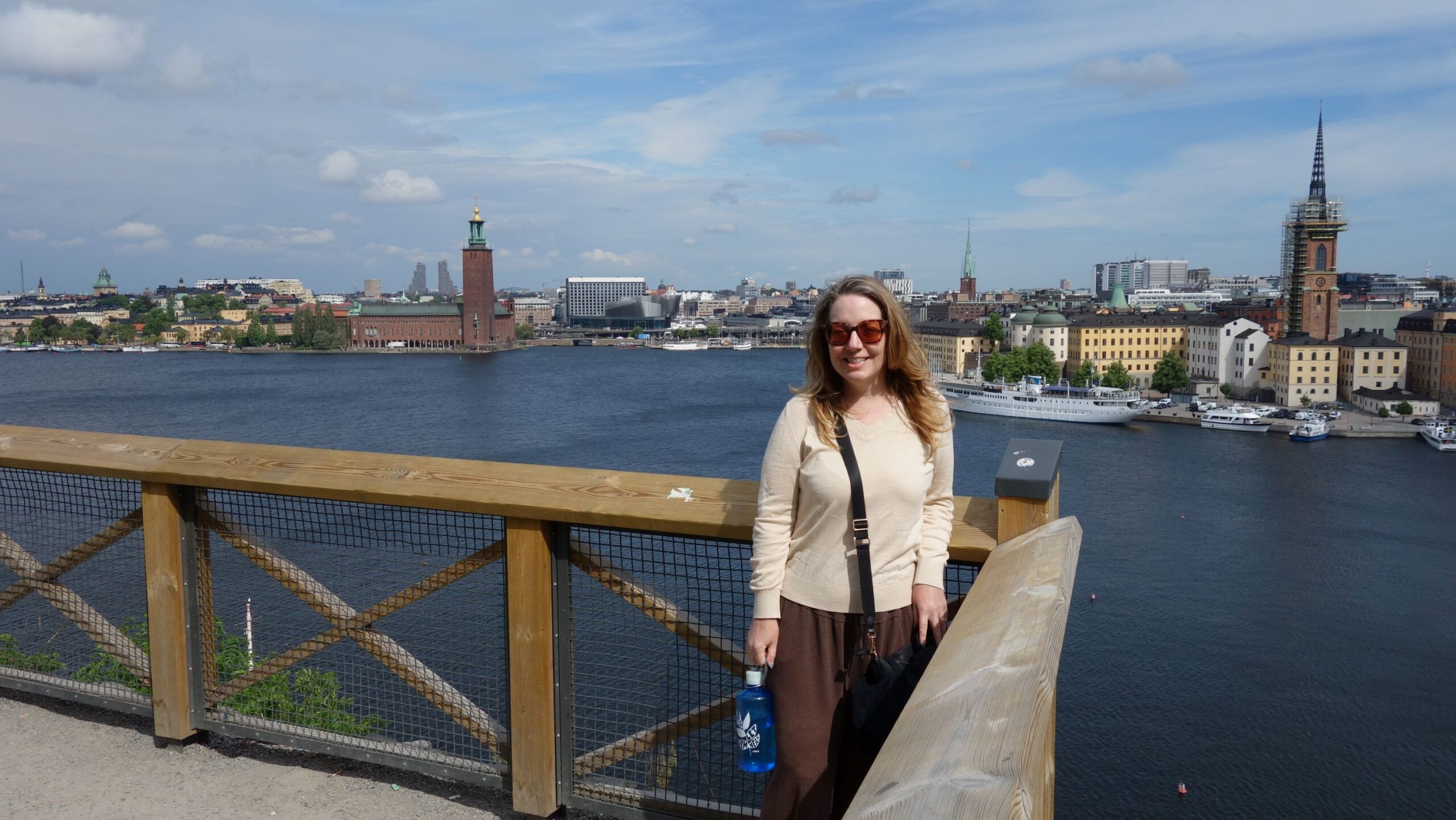
– Several high points to see the city from, including a clifftop park.
– How you can see one neighborhood where it straddled the before and after of dynamite; one side was built on visible rocks, and on the other side, the rock had been blasted out of the way.
– A very pretty building that was actually an elevator built to bring supplies up to a wealthy noble’s house on the cliff.
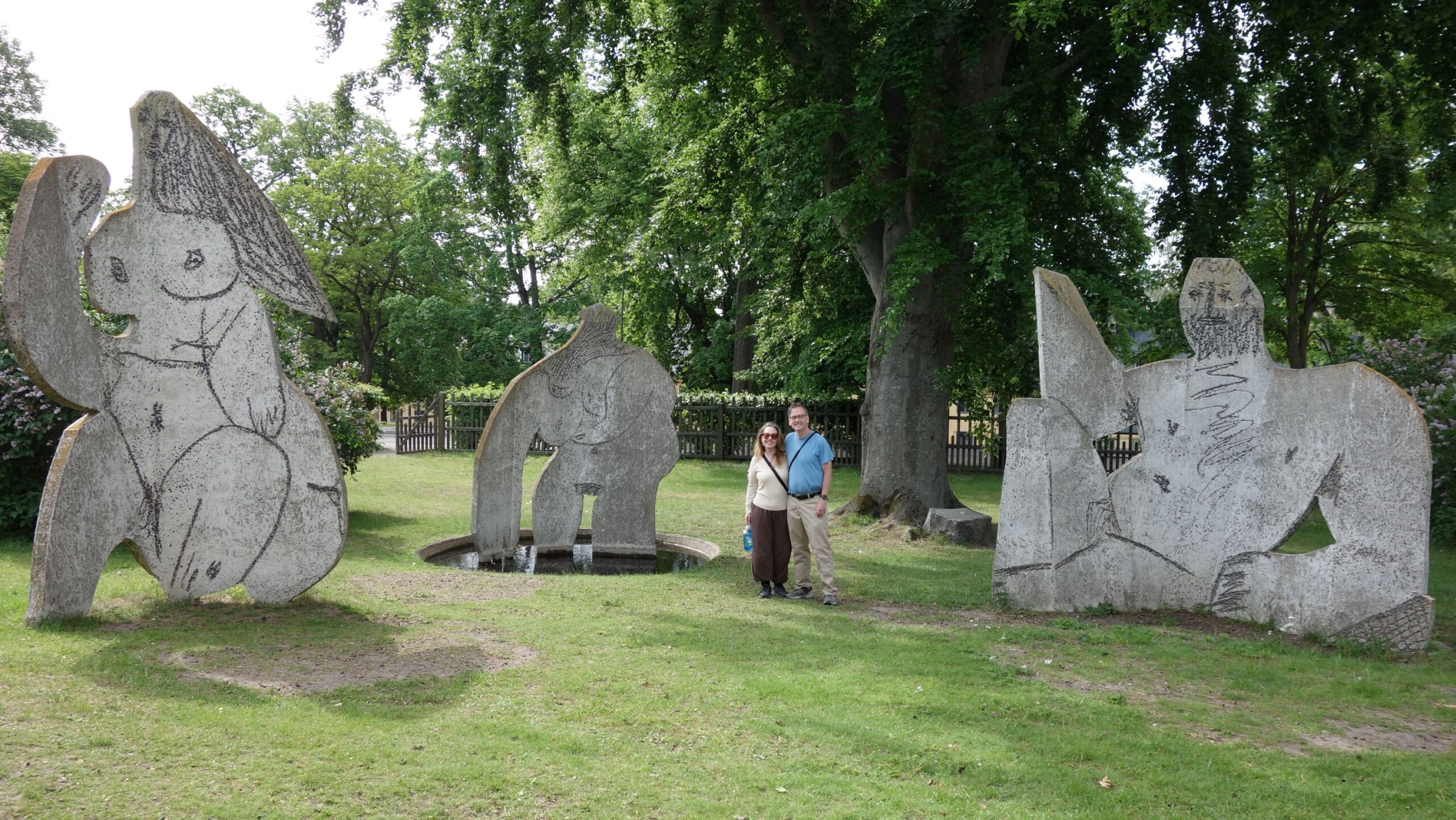
– An easy-to-miss grouping of Picasso sculptures.
– A statue of an actress that is heated to body temperature, since the actress had complained that statues were cold. People warm their hands on the statue during the winter.
– Where the ship the Vasa was built and roughly where it sank.
– He also told us that between private and public museums, Stockholm has over 350 museums.
 The tour lasted two hours, and the weather was still very fine, so I decided to press my luck to go to a fairly far-flung attraction that I had flexible tickets for. It was 11:00, and we had 1:00 tickets for another sight, so I knew that it was going to be tight, but the weather was good, so off we went.
We took the subway south about four miles, emerging in a random tower-housing area. Meredith was a bit confused, and I was really trusting my phone-given directions. It didn’t look promising. But then a large golf-ball structure came into view, and we were good. We were here to do the SkyView at Avicii Arena. The arena is used for large events, like concerts, but about fifteen years ago, glass compartments were added on the outside of the sphere, and you can ride it up to the top of the arena at 280 feet for views of the greater Stockholm area.
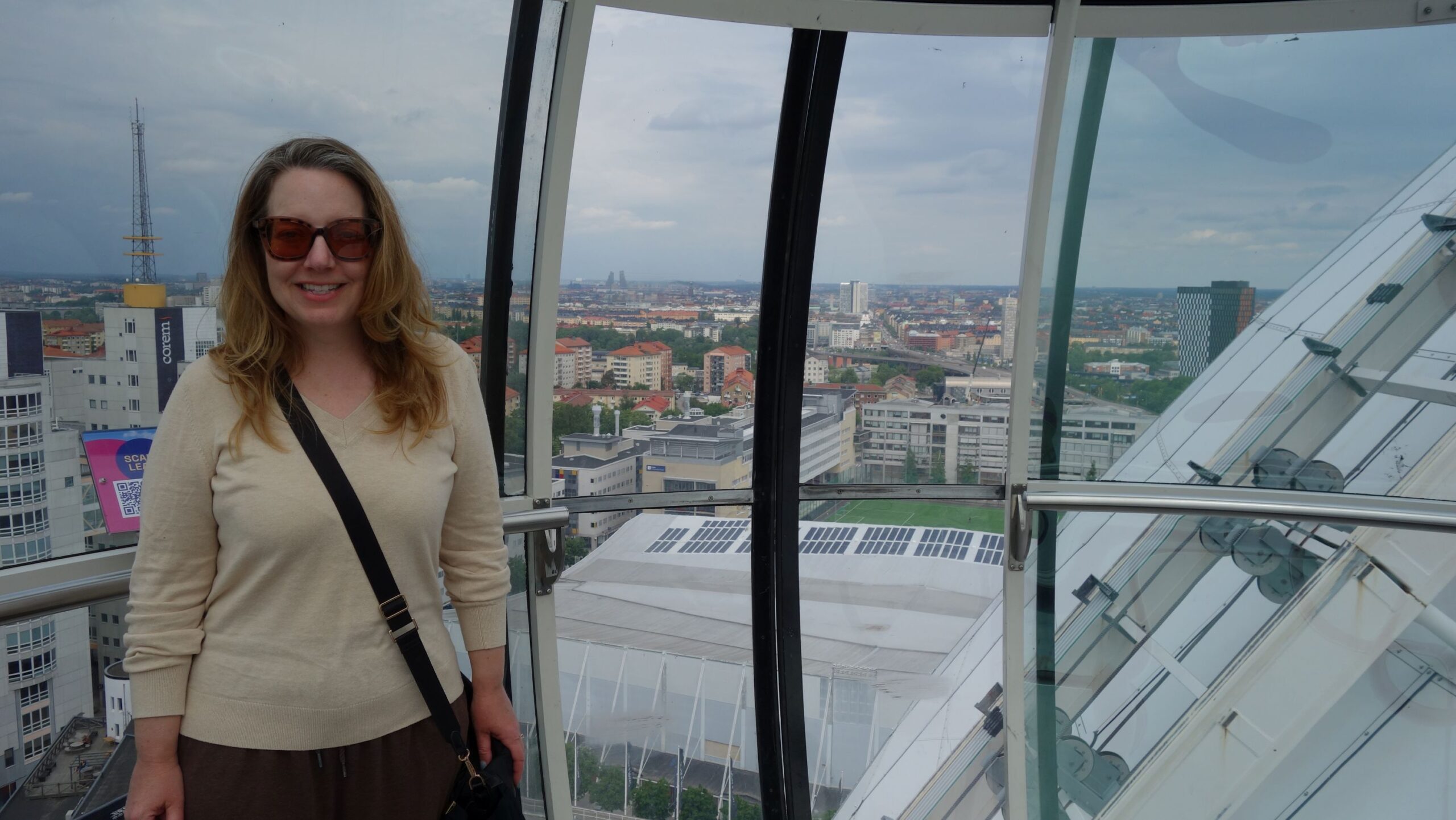 We had a few-minute wait, which made me think I was going to miss my 1:00 entry at the next sight, but we were here. We watched a movie on how extreme construction workers used helicopters to build the ride, and then we got to get on the gondola. The ride up follows the curve of the surface of the arena, and goes at a moderate pace. We sat at the top for several minutes, which gave us a chance to look around some. I had a couple of height-related moments of fear, but generally, if I was sitting and looking out, I was okay.
We got off the SkyView about 12:15 or so, and I began to think we had a chance. We walked purposefully back to the subway, took it to the central train station (north of Gamla Stan), and walked over to city hall, which is on the water facing Gamla Stan. We made it with about fifteen minutes to spare for our 1:00 entry time to climb the 365-step tower to the viewing platform on top.
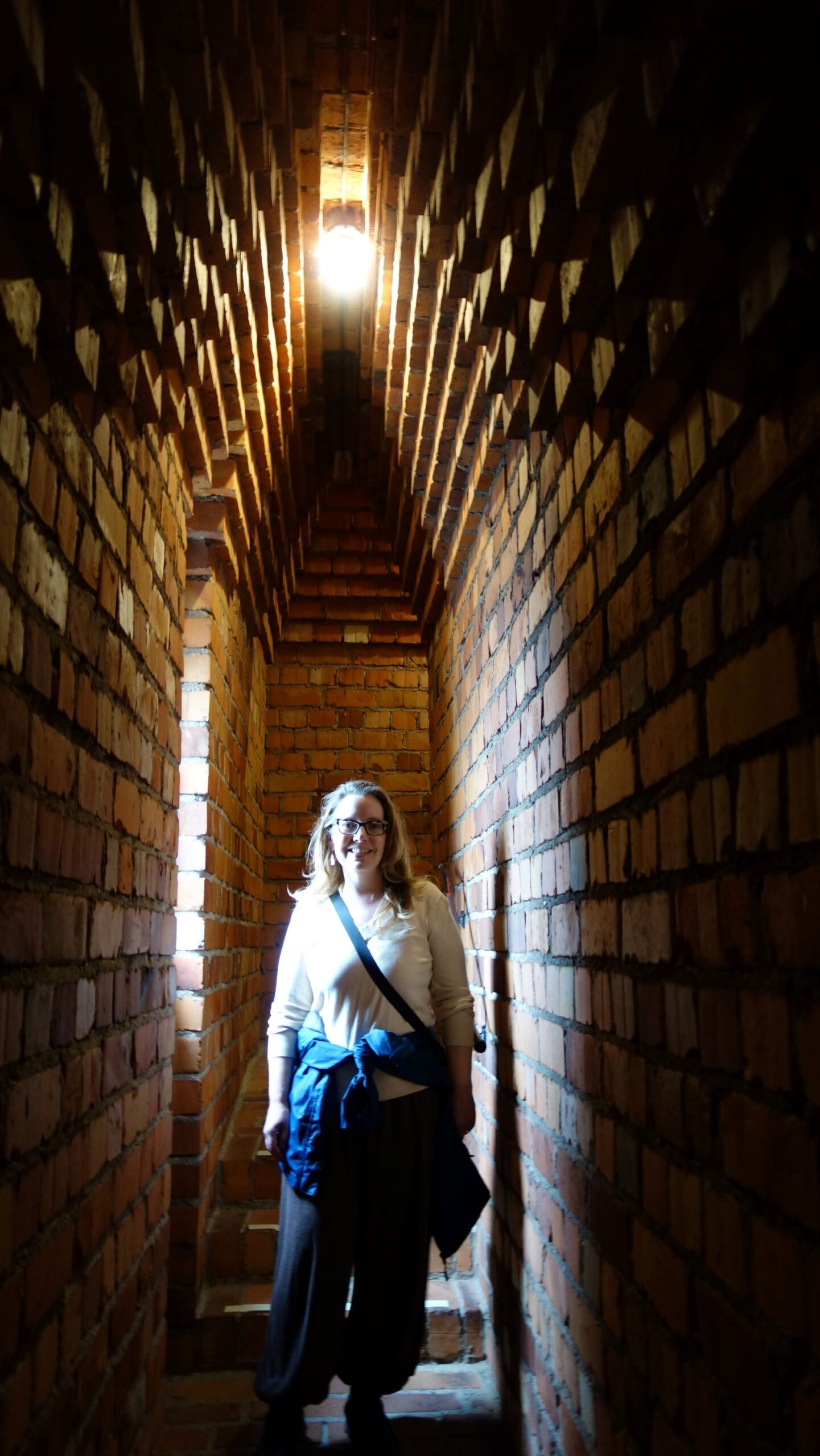 There is an elevator that will take visitors half of the way. Mer asked me if I was going to take it. She’s so droll! My patient wife joined me on the climb up. I loved it. The interior of the tower is almost all red brick, and at the half-way point is an open area for the interior dome for city hall. The space has been made into a small museum of busts of various people, including some of ordinary workers who helped build city hall. From there, the passageway wound around the tower, going up on slightly sloping ramps that had some steps along the way. The overhead brickwork was artistically done.
We made it to the top in about fifteen minutes, and the views in all directions were great. The view down to and over Gamla Stan was especially magnificent. And while I’m terrified of heights, the wise folks of Stockholm put up a cage all around the platform, even over the top. That somehow made me feel better, and I was able to stay up on top the full allowed fifteen minutes, albeit with my sitting as far back as I could manage. Usually, I leave Meredith on towers like this one, so she was happy I was able to be companionable.
That wrapped up my pre-arranged plans, except for a 7:00 supper reservation. We grabbed a light snack in the city hall cafe, and I checked the weather. It did seem as if rain was moving in very soon, so I decided to go to my backup indoor plan, to go see the Vasa Museum.
The Vasa Museum is dedicated to a ship that sank in 1628 on the day it launched. I thought the museum would show the ship and tell a little about it and we’d be there an hour or so. It turns out that the museum is one of the best museums I’ve been in anywhere. When you walk in, you are confronted with the entire Vasa sitting in front of you. It was a ship built to impress enemies of Sweden, and it still impressed me and Mer.
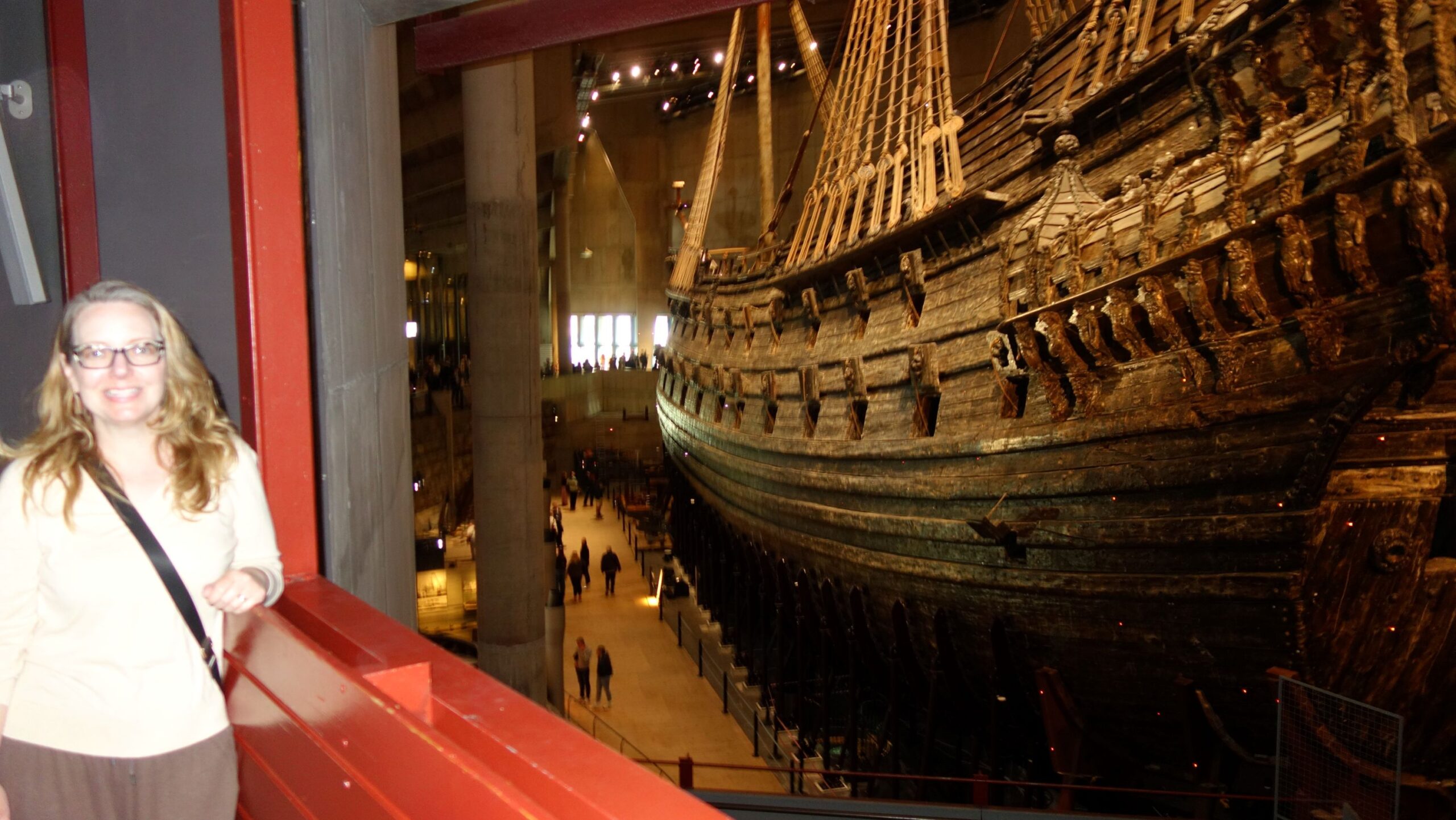 The museum has a film on how the Vasa sank, was found, was floated again, and was preserved. Then there are four viewing floors at different levels that highlight parts of the ship. One floor has a recreation of one of the two gun decks of the ship so you could feel how cramped the space was, and this was where the regular sailors and soldiers slept, as well.
The quick story – the king of Sweden wanted to get control of the Baltic Sea from Poland, and so ordered a huge ship to be built to go fight the Poles. He insisted that the Vasa have two gun levels, which the ship builder had never done before. The final product put the lower gun level only three feet above the waterline, and the second-level guns were higher up than normal, making the Vasa top-heavy. The Vasa was also a fairly narrow ship. Being top-heavy and narrow is bad for a ship. When the Vasa was launched (under pressure from the king), it got broadsided by a breeze and tilted over enough for the lower gun ports to start to take on water, which made the ship list more. It eventually sank after only twenty minutes of sailing, killing thirty to forty people who couldn’t get off.
The navy tried to raise the ship out of the ninety feet of water it sank in, but didn’t succeed, so the Vasa sat on the bottom of the harbor for over three hundred years, until the late 1950s, when a man who dreamed of finding the ship did actually find it, using a weighted, pointed metal cone to bring up samples from the sea floor. When he found a sample of oak (not native to Sweden), he guessed correctly that he had found the ship.
It took years to raise the ship and treat the wood so that it wouldn’t dry out and split. The Vasa was wharfed and opened to the public in 1961, and was moved to the new dedicated building in 1990, which was renovated in 2013.
Meredith and I spent almost three hours at the museum, admiring the ship from multiple angles and heights. We managed to catch an English-language tour, which showed some of the decorative touches on the ship and described the sinking in more detail. The ship cost about two percent of the national budget, so it was a severe loss.
The builders learned from the mistake – the sister ship was torn apart and made three feet wider than the Vasa had been. The other ship sailed for over thirty years. What a difference a few feet can make!
That wrapped up the museum, so we went back to Gamla Stan, where we wandered around for half an hour to see the sights, and especially the views across the bay to the city hall. We then went to our restaurant for the evening, Aifur.
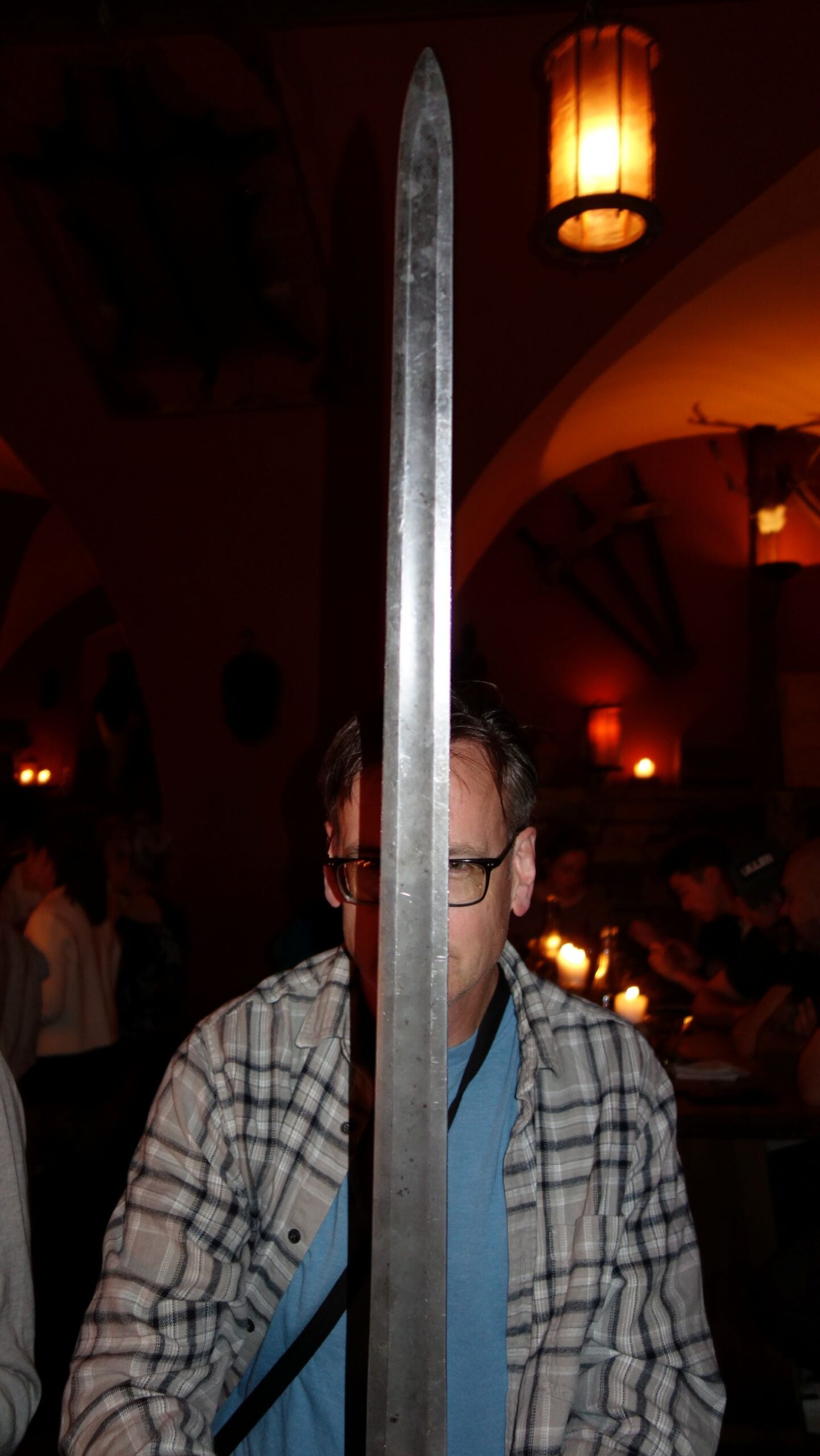 Aifur is a restaurant that serves food that is the best guess of what Vikings ate, and it’s Viking-themed. You are publicly announced to applause and hearty shouts from the other diners, and you are seated at a long common table. There is live music (a lute-like instrument and a bagpipe for our evening), and there is an extensive list of meads you can buy. I got a Sprite, but it was served in an earthenware glass. The place was joyfully loud and chaotic, and we had a good time. The food was good, and the experience was even better.
That finally wrapped up my day in Stockholm and ends our touring of the city for this trip. The rain was good enough to be heaviest while we were in the museum, and the slight drizzle we walked home in was warded off by our just wearing hats. Stockholm has been good to us, and we’re looking forward to the next part of our trip.