 Even when you have a printed guidebook AND a worldwide database of extensive knowledge, you can still end up staring out of a bus window at a small housing development with the sinking feeling that maybe this isn’t the main street of Sweden’s oldest town.
After a later breakfast today (after yesterday’s long day), we got moving a little before 10:00, heading to the subway, where we took a line to another subway line to a suburban train to a bus. The bus was headed to Sigtuna, Sweden’s oldest town, which was historic and supposed to be really cute. According to Google, the bus line ended at Sigtuna, so we sat back and relaxed all the way to the end of the line, to a view of the small housing development. We asked the driver about our destination, and he told us we should have gotten off at Sigtuna bus station (which is really just a small building next to a pull-off in town). To be fair, Mer had started to wonder about what we were doing as we drove past signs for the Sigtuna museum. She had thought it would be odd to have the museum away from the town center. It’s not – it’s on the end of the main street. We rode the same bus back, and the driver was kind enough to motion us to the front of the bus to tell us what to see – that was very kind. We got off the bus, ready to tour, around noon.
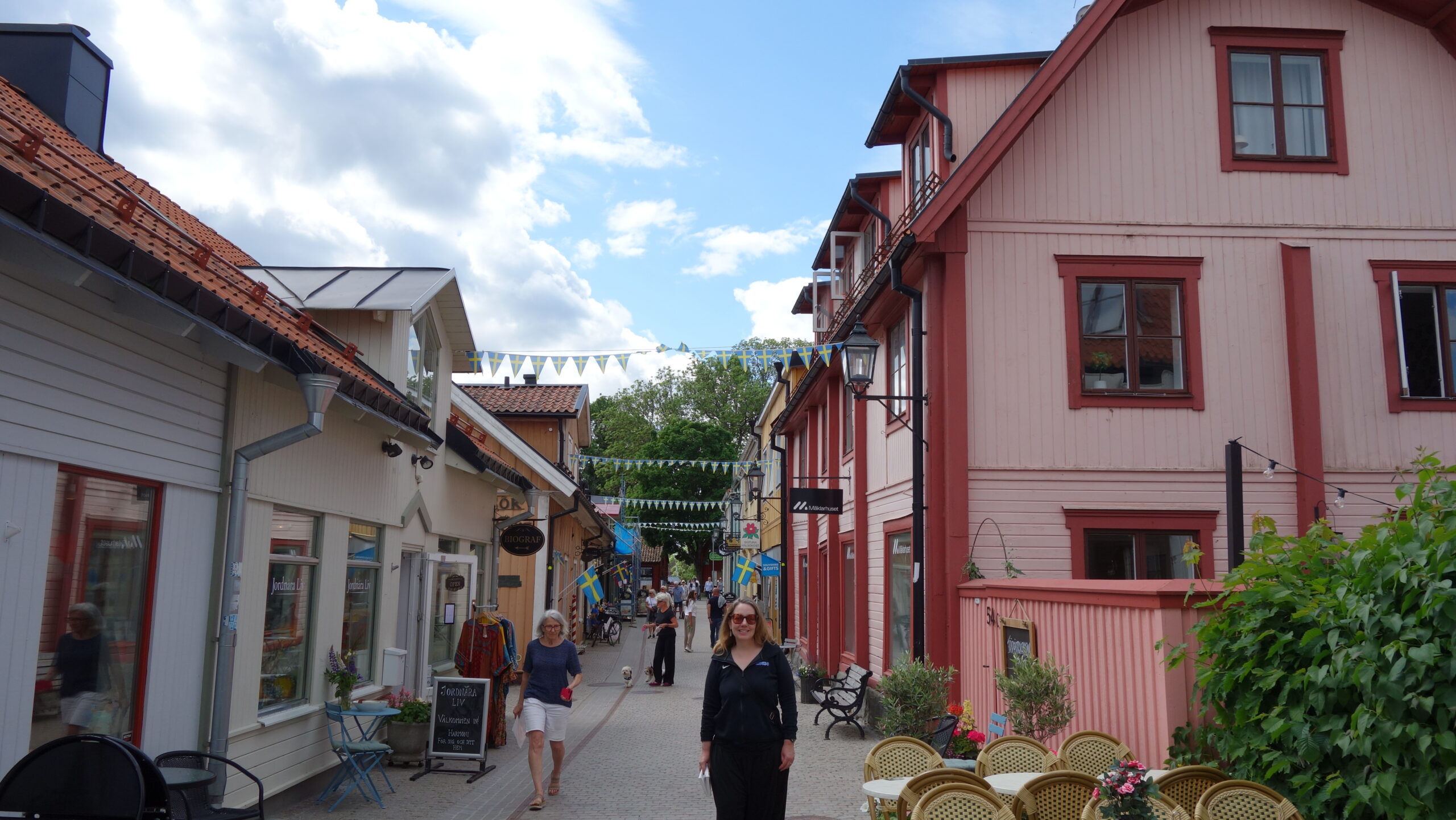
 The main part of old Sigtuna is mostly one long main street, which is pedestrian-only. There are shops on either side, and most buildings are painted red or yellow, which makes for a cheery downtown. We strolled along the four or five blocks of the street, ending in the Sigtuna museum, of road-sign fame.
The museum was also the tourist information center, so we picked up a map of the town. We also paid a small fee to visit the museum. It had two main sections – Viking-era Sigtuna (1000-ish), and twentieth-century Sigtuna. Some highlights:
– The Vikings traded heavily with Islamic countries using the Volga River and land routes to get to the Middle East.
– This led to huge numbers of silver Islamic coins coming to Sweden. Sweden has more circa-1000 Islamic coins in museums than the original countries do.
– There were two hoards of coins found in town, including one under a floorboard of a house.
– Sweden’s climate used to be temperate, allowing for animals to be outside year-round. It cooled over time.
– A volcanic eruption in the Americas in the middle ages threw up so much ash that the sun was veiled and winter in Sigtuna lasted for several years.
– Crosses and charms of Thor’s hammer were found together, showing that it took some time for Christianity to spread and truly replace pagan beliefs.
– Sigtuna had seven churches at the time of the Reformation because it was the home of the archbishop. Six of the churches were left to fall into ruin, with three still visible.
– In 1945, the town of fourteen hundred people received six hundred (mostly female) survivors of the Holocaust. The survivors and caretakers all had to quarantine for eight months.
– The airport being built nearby caused the town’s population to go from about 6,000 people to about 53,000 in the municipal area (about 10,000 in the historic town).
After the museum, we had a late lunch, eating outside in a small courtyard.
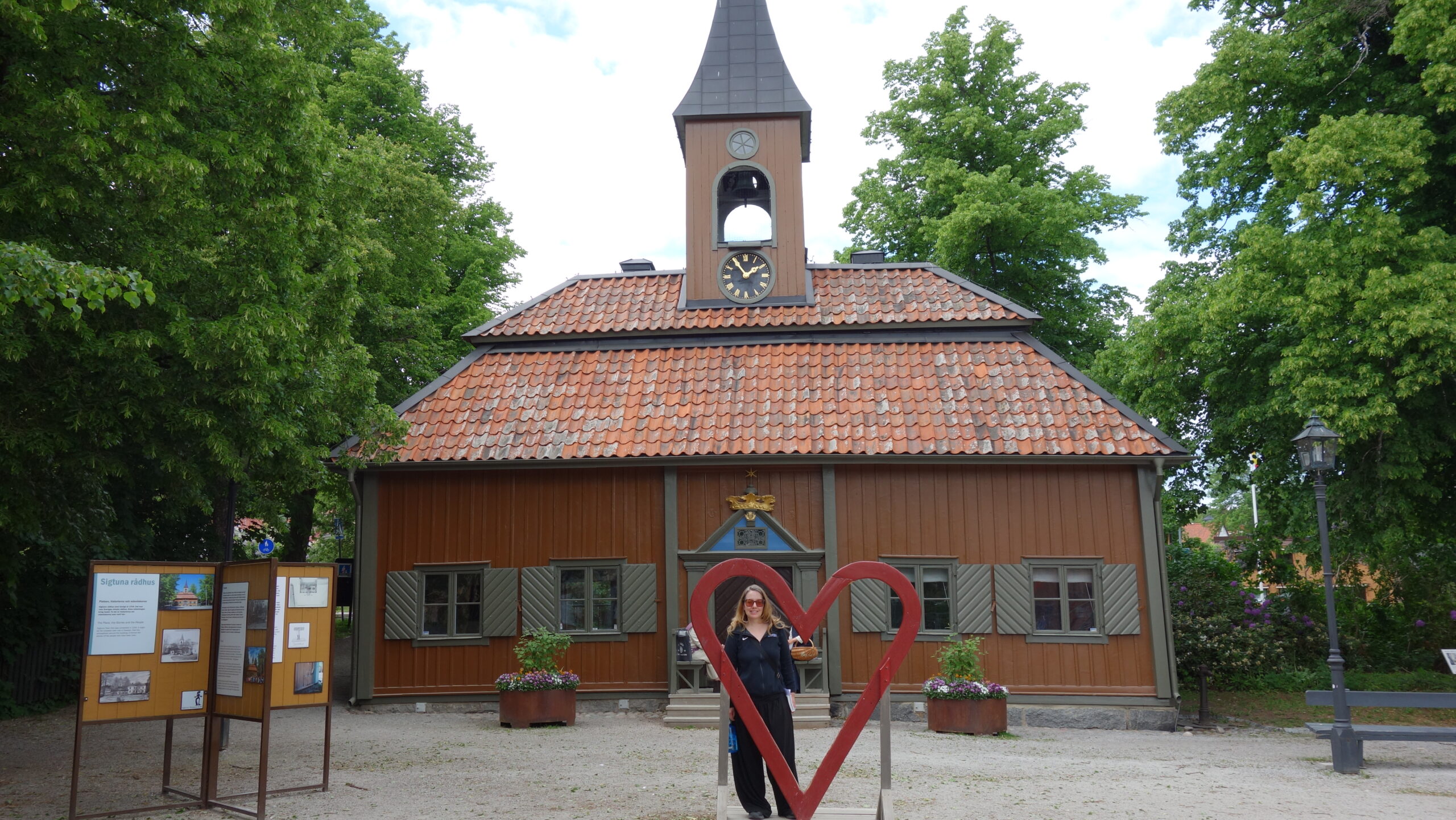
 We then walked off the main street to walk past the small town hall, and up to the remaining church of the original seven. It was open, so we went inside, and several parts of the church, including one entire section, still had the pre-Reformation murals on the wall, which is unheard of in my experience; most formerly Catholic churches got the murals painted over. I’m not sure how these survived, but I liked them. They weren’t the height of artistic endeavor, but they gave a great idea of what the church might have looked like at the time.
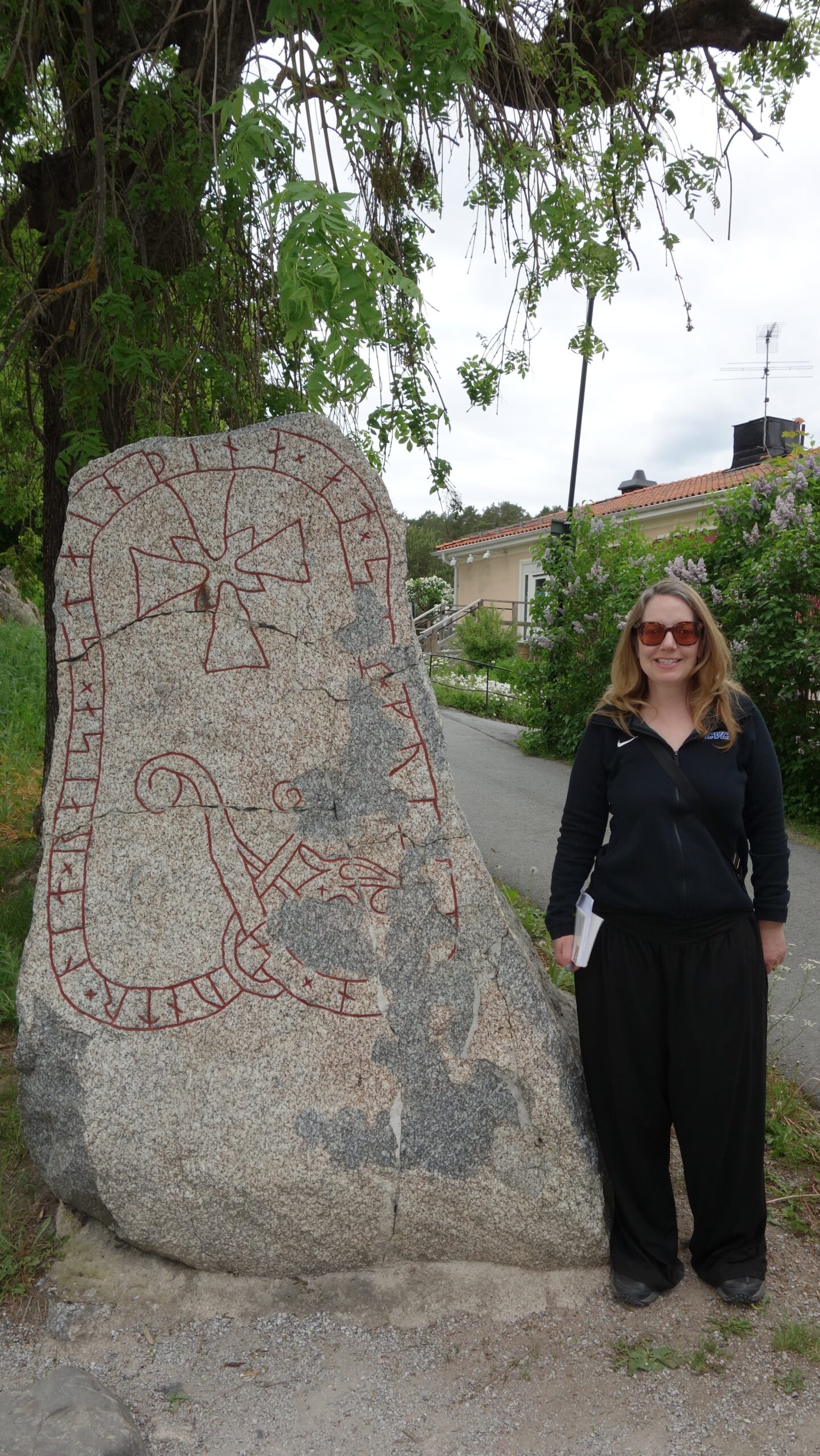
Mer then wanted us to use the map to find several rune stones. These stones were covered in Nordic runes, usually as memorial stones put up by family members. Sigtuna has the most rune stones of any town in Sweden, so we went to “collect them all.” I said we were on the road to rune. Meredith pointed out that “ruin” and “rune” aren’t said the same, but I thought it was funny.
We did find all the rune stones, including one about thirty feet up the side of an old ruined church. I think there were eight in all. It was a fun way to see some of the rest of the town.
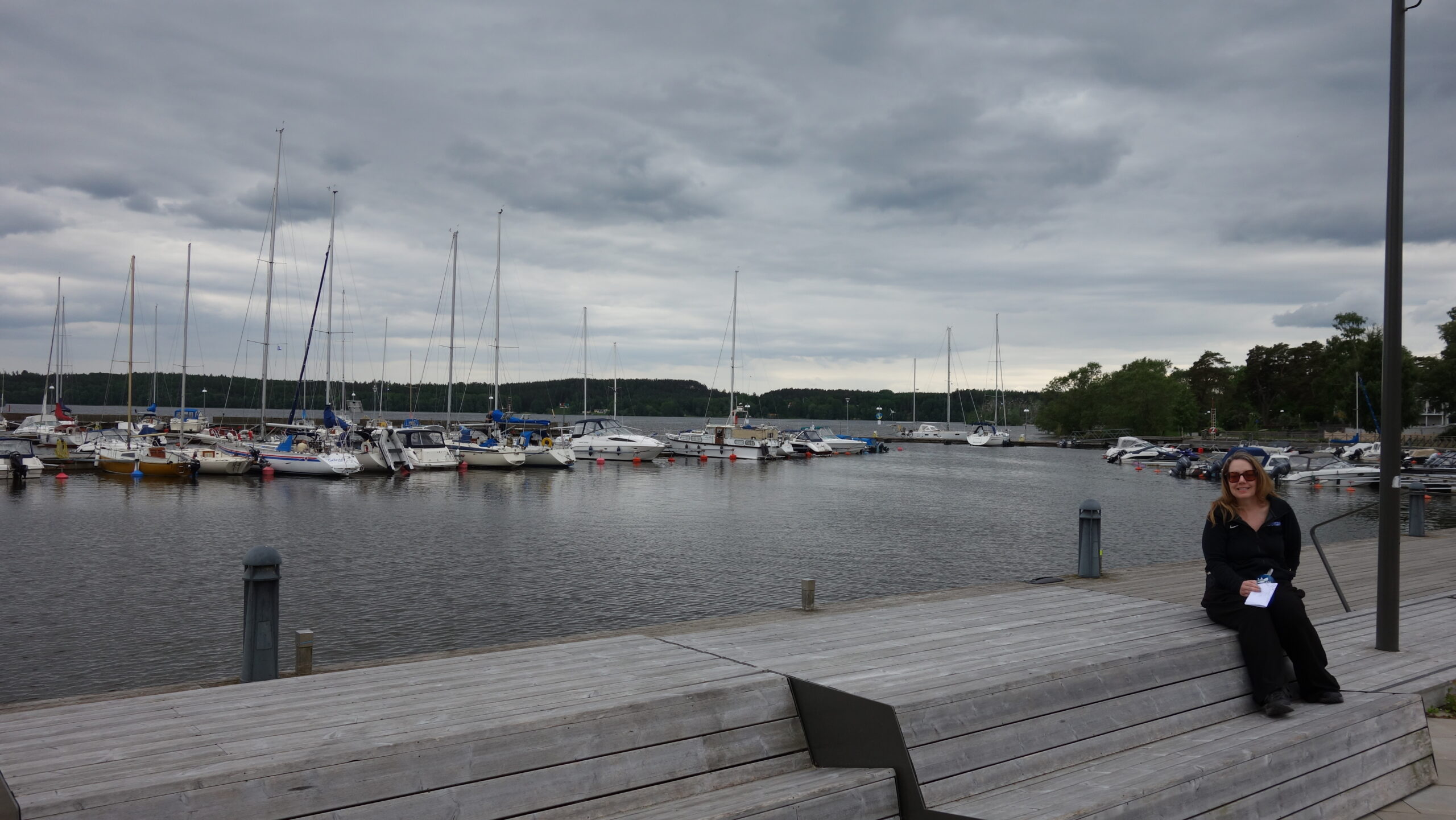 After rune quest, we did a quick stop at the tourist information building/museum for a bathroom break, and then we walked down to Lake Malaren, which is a huge lake, and is the same one that Drottningholm Palace is on. The lake is surrounded by fir trees and very much felt like a Maine lake. We sat and looked at the water and then walked along the shore for a bit, before heading back to the bus station to catch the bus/train/subway back home.
Getting back to Stockholm a little before 6:00 sounds like a full day. Surely, we had supper and called it an early evening. Ha! Not when Rick Steves has TWO Stockholm walks and we had only done one. Rick’s second walk covered much of Gamla Stan, the oldest part of the city, located on an island, and home of the palace and parliament building.
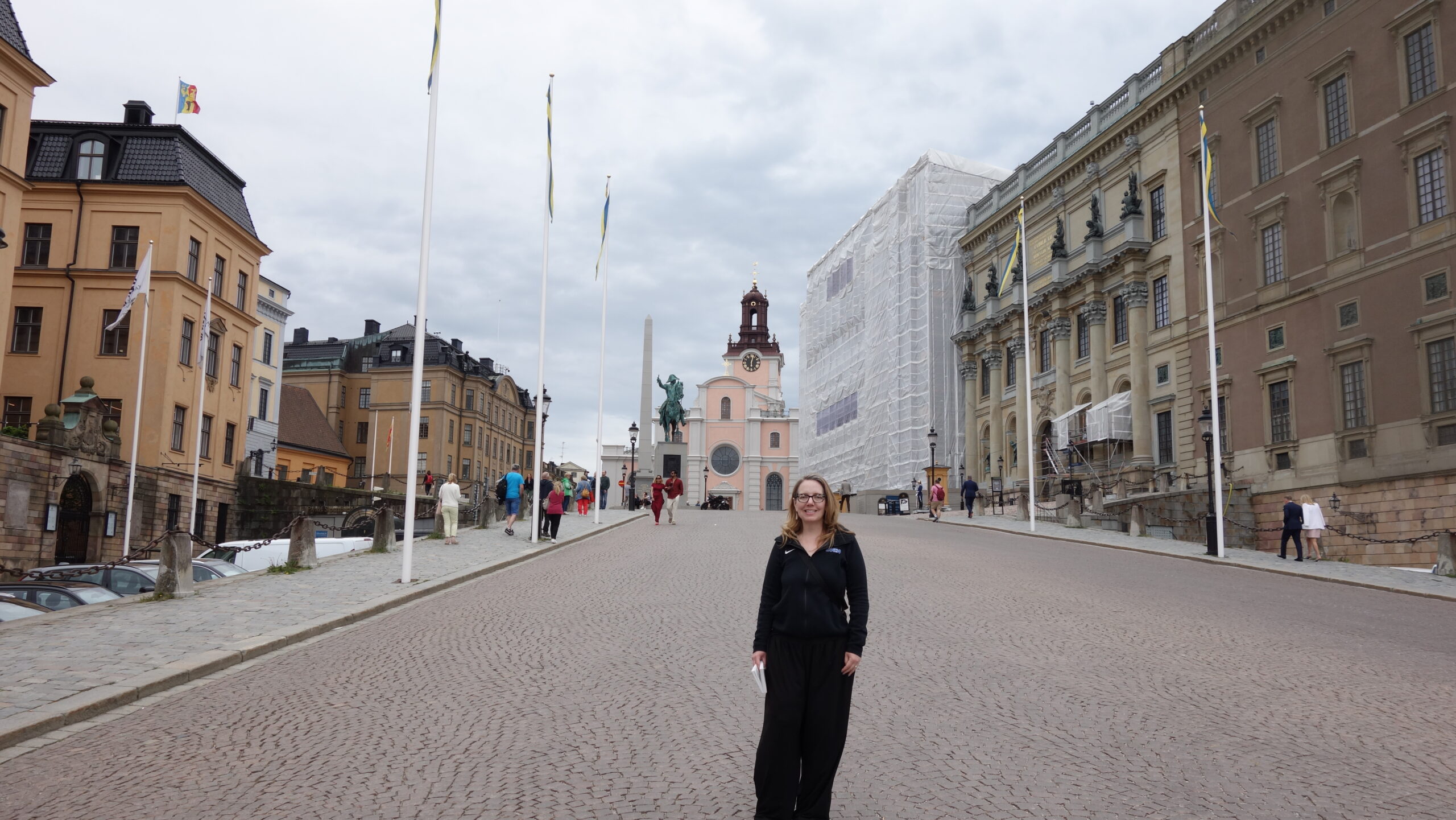 We got off the subway on Gamla Stan, and walked to the other side of the island, next to the king’s palace, to start the walk. We went up the hill in front of the palace to admire the views across the harbor, then went behind the Finnish Church (the Finns and Germans built their own churches once Latin worship went out and vernacular worship came in). There we saw the smallest of over six hundred statues of the town. Women of the area knit hats for the little boy.
We then wandered off into the wonderfully scenic lanes of the old city. They’re all too small for cars, and they meander delightfully. We went though quiet areas that used to be merchant housing (and still had the block-and-tackle posts near the roofline), and small squares with people hanging out, and one large main square that was full of life and happened to be next to the Swedish Academy, home of the Nobel Prize.
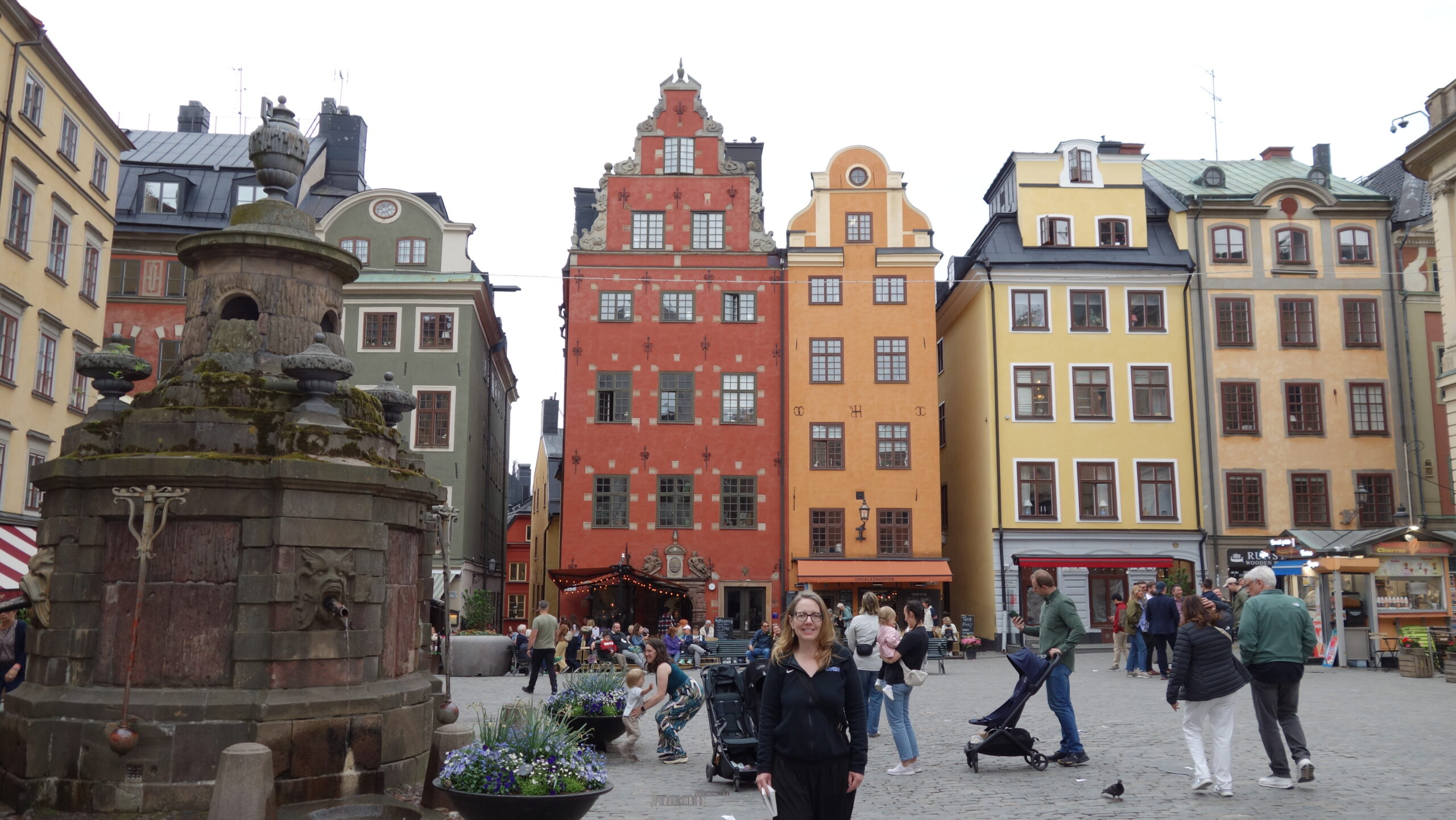 All told, we spent over an hour on the walk, and I was very pleased with Gamla Stan. It’s a gem of an island in Stockholm. And this time, our map held true.