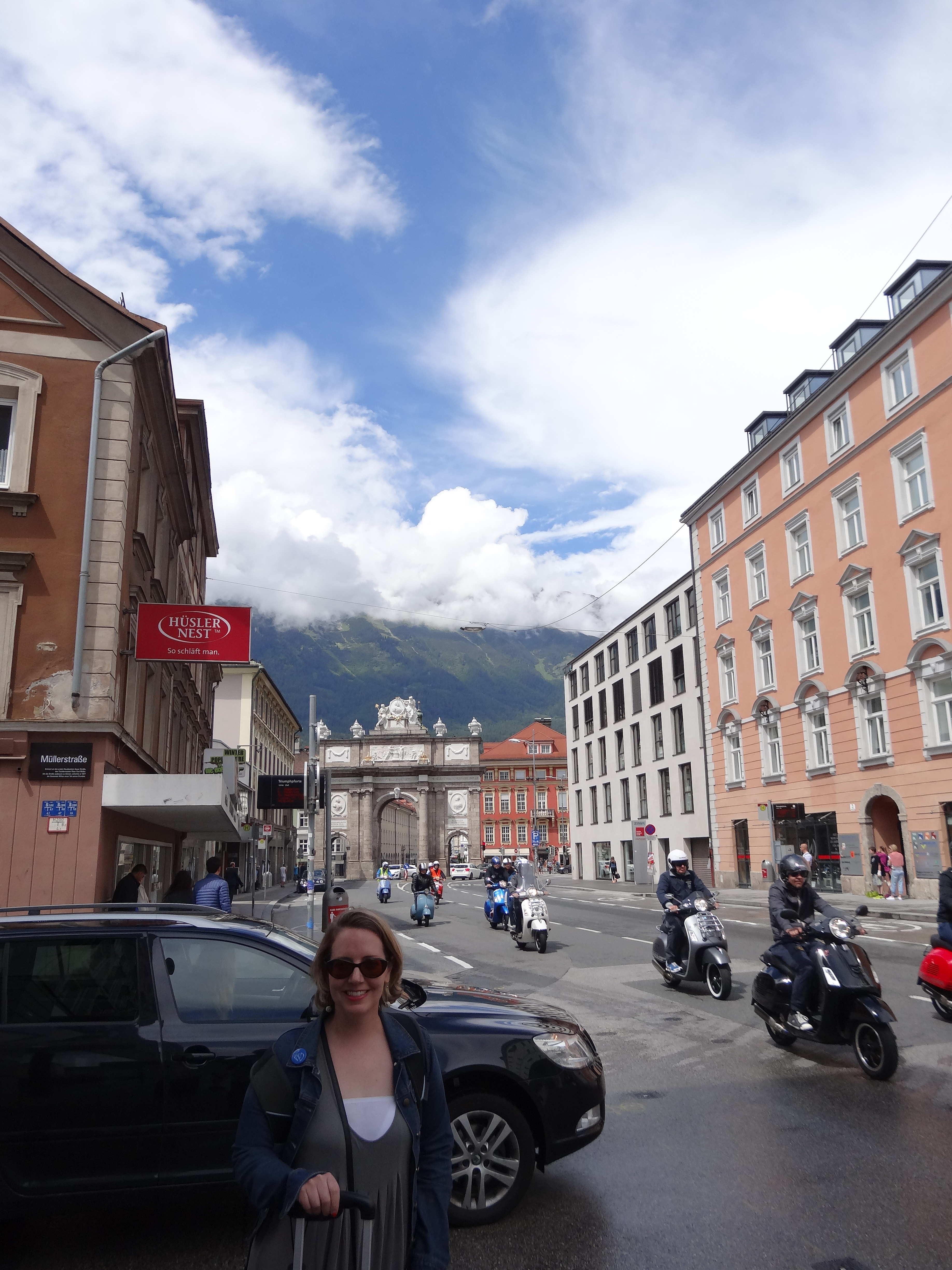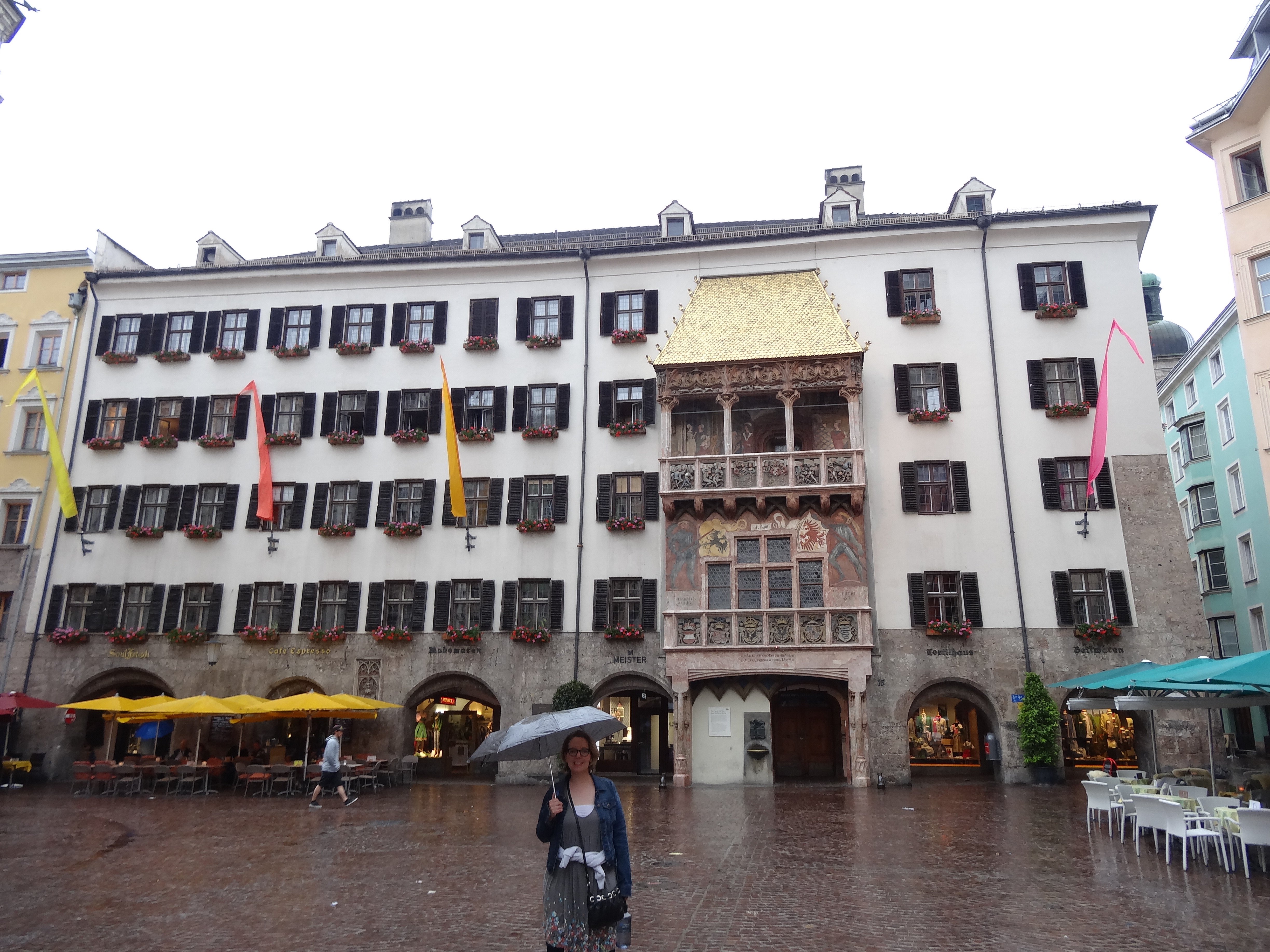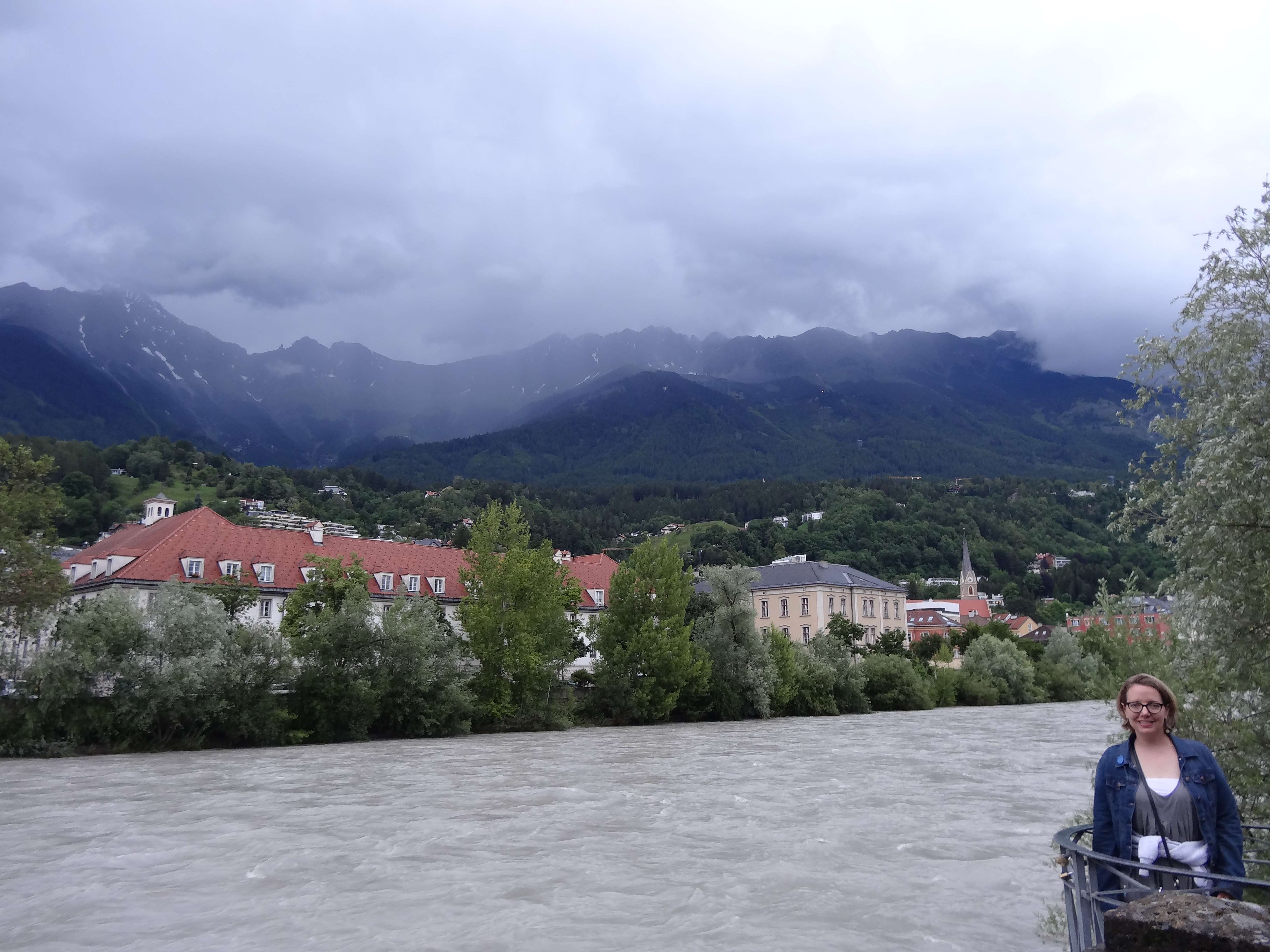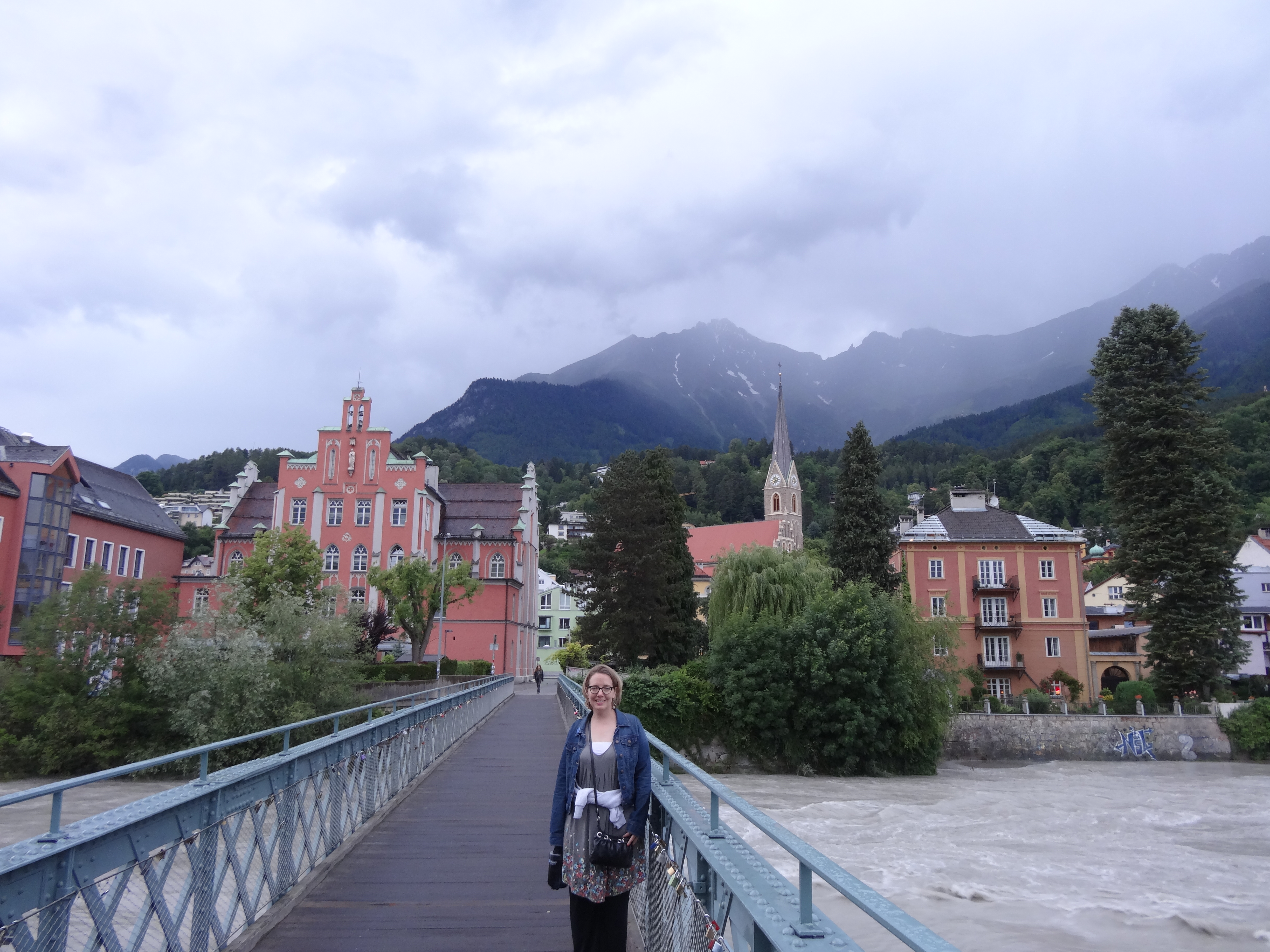
Author Archives: mriordan

The Balkans – Day 11, Wednesday – Plitvice National Park, Croatia

DSC01714Plitvice (plit-vee-sha) National Park is one of the main reasons we are here in the Balkans. For Christmas a couple of years ago, my brother got Meredith the complete one hundred episodes of the Rick Steves’ Europe TV show. We went through the entire collection over the course of a year, and two shows jumped out at us – one on the river valleys of Austria, and one on Croatia and Slovenia. In particular, the I-have-to-see-that moment for me was when Rick covered Plitvice.

It looked like somewhere out of South America – lakes that looked more like lagoons, lush vegetation, and waterfalls cascading everywhere. I never would have dreamed that such a place existed in Europe. Since Meredith gives me much say in what European country we will go to the next summer, we began to talk seriously about Croatia and Slovenia back last fall, and we finally booked tickets in early January.

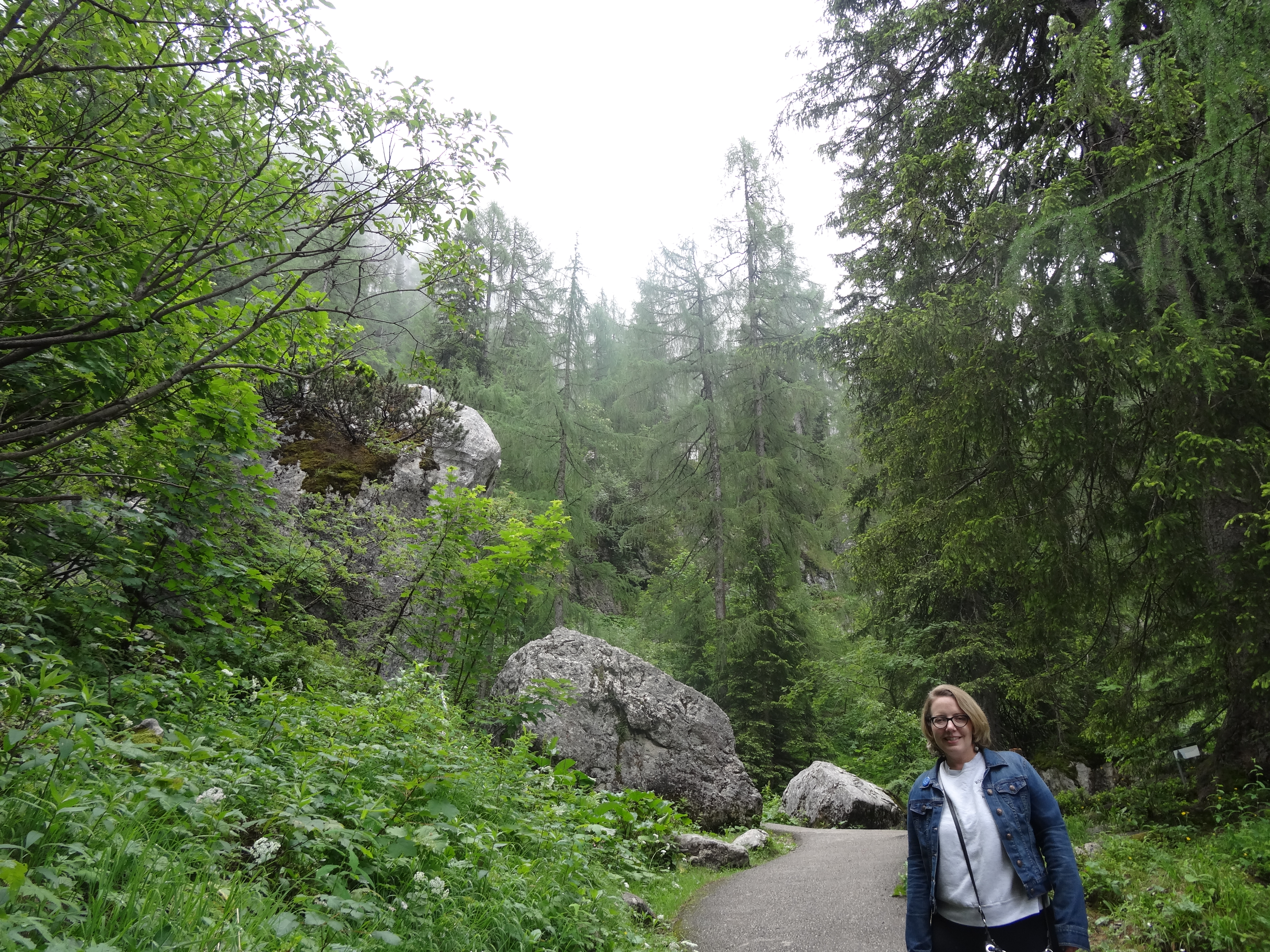
DSC01677To say I was looking forward to Plitvice would be an understatement. It seemed as if it would be magical. So, I was delighted this morning when we woke up and, despite forecasts saying otherwise, the rains of the previous night had stopped. It was still cool (in the mid-fifties) and cloudy, but it was dry. After a fine breakfast in our fabulous B and B, we drove the two or three miles to the park.

I pulled into parking lot two (of two). We would later find out that we were halfway along the recommended path that Rick Steves gives, since he starts at parking lot one. It also turned out by the end of the day that we thought we had made the right choice – we liked exploring the more expansive upper lakes region first, and we liked finishing the day with the largest waterfall in the park, which is at the end of the lower section.

DSC01671The park is made up of fourteen (our count) lakes or sixteen (Rick’s count) lakes. They are separated into the upper lakes and the lower lakes by a large central lake that has tourist boats running on it as a sort of water taxi. As mentioned, we started with the upper lakes. The upper lakes area has more and longer hiking trails, more lakes, more waterfalls, and more boardwalks that are built right over running water.

It was magical. As soon as we got off the short boat ride to the first upper lake boardwalk, I was hooked. There was rushing water everywhere – even under the boardwalk (and in a few cases over it as well). The plants were lush, and the falls were breathtaking in their variety – some were tall, some fell over many steps, some wound through plant life.

DSC01755The magic had some slight curses, though – with such beauty came tourist crowds, even on a poor-weather day like today. Tour groups were particularly hard to navigate, since the boardwalks and walking paths were generally only two people wide, and tour groups tended to take up both lanes for ten or twenty people deep. Still, we found stretches of the park where groups were thin or even absent, so that was okay.

The rain was harder to deal with. It started to sprinkle and then rain pretty steadily after the first half hour or so, and it continued to rain for about an hour and a half. Since it was only in the upper fifties or lower sixties, getting wet was a big deal. We both had umbrellas, but a cold rain has a way of working into a body. By the time we were getting close to the tops of the upper lakes, all I could think about was the snack bar – I wanted a hot chocolate and a dry place to get warm.

The snack bar did have hot chocolate and was dry and was warm. And was crammed with people. Meredith grabbed a seat at my urging when it opened up next to her, and I went and got us lunch, since it was about 1:00. Happily, by the time we had finished eating, the lunch crowd had lightened and the rain had more or less stopped. In fact, by mid-afternoon, the sun started peeking through, so the magic returned.

DSC01737We made our way down a less-used path on the far side of the upper lakes, which gave us fewer crowds, but also gave us some up-high spectacular views of the lakes and falls. We took our time, and eventually made our way back to the dock of the main lake, to take the longer ferry boat ride across the whole lake to the top of the lower lakes.

The lower lakes got off to a bit of bad start for me when Meredith and I got separated by a few mere feet that I could not politely cross as we waited for at least two full follow-the-tour-umbrella tour groups to get past a good photo spot. Once they were past, Mer and I were reunited and able to take our time along the bottom path.

DSC01752The lower lakes area is not so spectacular on average as the upper lakes, but it does have some amazing small falls full of vegetation – the water weaves in, around, and even through the growth. The lower lakes finish up (on our tour) with two enormous falls, one of which is a river-fed falls of 250 feet. We made our way back up out of the lower canyon area by climbing through a cave/sinkhole, and then walking along a path back to the park bus, which would take us back to near our parking area. The upper path we were on had several overlooks that gave great bird’s-eye views of some of the lower lakes and falls.

We got back to our B and B around 7:00, having put in seven hours in the park, most of it on our feet and most of it spent walking. We were pretty tired. Happily, our B and B offered dinner, which was a multi-course meal on an enclosed and heated patio, with a Croatian guitar player who also sang. It was a nice wind-down for the day.

DSC01723So, Plitvice did not disappoint me; I took over eighty pictures in seven hours. Plitvice was a huge reason that I have now seen amazing parts of Slovenia and Croatia, and we still have two full days of touring the Balkans to go.

The Balkans – Day 10, Tuesday – Motovun and Plitvice, Croatia

DSC01668When Croatian road crews hand you lemons, you can always try to make limunada. We were supposed to leave Motovun, which, if you remember, is a hill town, late yesterday morning and drive, which, if you remember, requires a car, to one of the world’s great natural wonders, Plitvice National Park. What I did not know is that the single road up to Motovun, where both our car and we were located, would be closed at 7:30 am to resurface the road. Crud.

We had some warning in the form of a note taped to our door the night before, so I parked the car below the city where I thought it would be beyond the construction. I was wrong – the car needed to be parked at the bottom of the hill, a good mile or so away. Meredith had mentioned that possibility, which is a good reminder to always listen to the wife.

We had multiple reports of when the road would open – 1:00, which came and went, 2:00, which came and went, and then we were told 7:00, which turned out to be about when we did leave, although I think the road was open closer to 6:00.

So, what to do with a day of enforced stay in a small hilltown? We explored the one lane we had not yet gone down (and I do mean down – quite steeply), where we met huffing bus tour groups walking up from the stairs below, groups who no doubt were about as thrilled about the road closing as we were.

That little bit of touring done, we got lunch, which we ate on the terrace of our B and B, the workers of which were very kind and let us hang out there. We went in search of a CD recording of the klapa music group we had heard the night before, which took some small effort and a fair amount of time. Finally, when it looked as if the road was not going to open until 7:00, we walked over to the town hotel/spa and got massages. Lemonade indeed – the spa was incredibly nice, and it only cost about $45 for an hour massage. When we had one last failed attempt to get out (with talking to a Croatian man who told me, “Big machine block road – this is sh**”), we walked back up to town in the rain to get supper. After supper, we finally were able to leave, about 7:00 pm.

It is about a three-hour drive to Plitvice, but ours was closer to three hours and forty-five minutes, since a) we were driving in varying degrees of rain, and b) our GPS once again decided that seventeen miles toward the end of the drive, in the dark, in the rain, would be on the most winding road I have ever seen, given that there are no mountains in this part of Croatia. We finally, happily, got to our B and B around 10:30, where we were very warmly greeted by a young woman who made us feel much better with her hospitality. We got into our room and pretty promptly went to bed.

Meredith’s motto for travel is “Everything is either a good experience or a good story.” Indeed.

The Balkans – Day 9, Monday – The Istrian Peninsula, Croatia

DSC01661We travel to expand our souls. Whether it be because of the beauty of God’s creation, the encounter with different cultures and customs, or examples of kindness from total strangers, travel makes our souls grow. Some moments are spectacular for this enlargement, and we had one of those tonight.
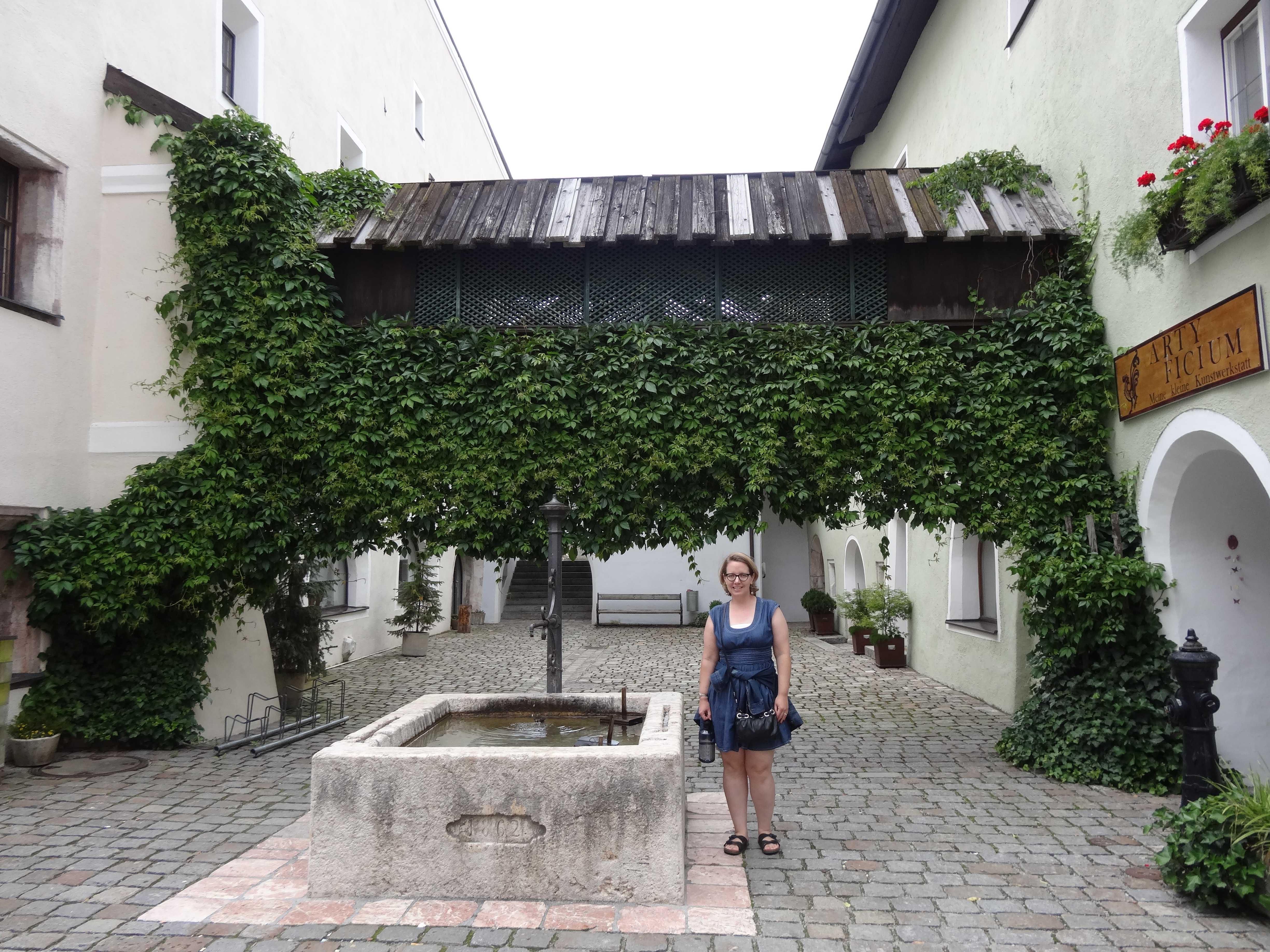
Croatia has a national folk tradition of men’s a cappella singing. We briefly heard a group singing in the square in Zagreb the first day we were in Croatia, but tonight was very special for us. On a tip from our guidebook, we got to hear the Motovun group practicing in their church, here on a soft evening in the twilight. It was just a practice, not a show or a concert, and it was still magical. The harmonies were tight and often in four or more parts, and the dynamics of the songs moved fluidly. The melody lines were usually slow moving, which added to the swelling and ebbing of the music. All of this happened in a church with great acoustics – the final notes would hang in the air for a couple of seconds after the singers were done. We got to hear six or seven songs over ninety minutes, what with the group’s going over parts of the songs and having one break for the singers. We sat quietly at the back of the church and tasted a very small part of the divine. What an amazing night.

We did do some other things today as well. We explored the Istrian Peninsula, which for us was by car, covering several hill towns and the beautiful coastal old town of Rovinj. We got launched today around 9:00, with the goal of seeing some of the other hill towns in the area. We managed to get to:

– Buje – Buje is a large hill town that is more about working people than tourists. We wandered the town for about thirty or forty-five minutes, seeing a square with a good vantage point of the Adriatic Sea, an old defensive tower, and an old church and its graveyard.

After Buje, I got whimsical and followed signs to a sculpture garden. We found it, and the sculptures were interesting, but the setting was intriguing. The sculptures were set up in the middle of nowhere, next to a (at the time) closed café. Someone had still been taking time to mow the grass, and there was a large stage area next to the garden with a few dozen stored chairs up at the front of the stage. I have no idea what the story is behind all of this.

DSC01655– Groznjan – Groznjan was a delight. It is a small hill town with a labyrinth of small cobblestone streets. We enjoyed wandering around them with glances into the many stores selling art of various kinds (mostly glass). I grabbed a hot chocolate to drink on a small square, and we finished the visit with fresh donut holes eaten next to the main church.

– Zavrsje – Zavrsje is a small and mostly deserted hill town, with some of its homes caving in. Only about forty people live in it now, down from the pre-WWII high of a few hundred. We walked up the main street and came back around the edge of town on the main new road.

– Oprtalj – Oprtalj has a nice and functioning main section facing the road that passes along it, but we got back into the back sections of town, and again some of the buildings were caving in. Oprtalj was very near a scenic pull-off of the road that had a commanding view of Motovun.

We saw cats of all kinds in all of the hill towns – they seem to be everywhere. As cat people, we are rather fond of that.

DSC01664We headed back to Motovun, where I decided to beat the hottest part of the day with a siesta – a nice midday nap. It worked, too – by the time we were ready for the evening around 5:00, it was much cooler than it had been at 3:00.

We hopped back in the car and drove an hour south to the old town section of Rovinj. Rovinj used to be a small island only a few feet from the mainland, and it had two sets of DSC01665walls. What that means for today is that the interior of the old town is wonderfully claustrophobic feeling, with random lanes winding through multistory buildings, all leading uphill to the Church of St. Euphemia. St. Euphemia was a Christian martyr around 320, and the church is supposed to have her body in a tomb behind an altar (you can see the tomb, which is certainly very old).

DSC01667We wandered the harbor front, and into the maze of streets, up to the church, and then back down to the Adriatic Sea again, even going down to the rocks that border the swimming area. Mer was hungry after our no-lunch afternoon, so we swung by a bakery for a small cheese roll for her to munch on the hour-long drive back home.

We drove back to Motovun, where we once again got take-out pizza with the hopes of eating it in the square where we could hear a klappa singing group. We did, and then we moved inside the church, and you know the rest.

The Balkans – Day 8, Sunday – Lake Bled, Slovenia and Motovun, Croatia

DSC01645We were up and ready and had eaten breakfast by about 8:30 and checkout was not until 11:00, so I thought we would have just enough time to walk to Lake Bled and get a pletna boat out to the small island in the lake. A pletna boat is unique to Lake Bled – it is powered by a standing rower in the rear of the boat, and there is no rudder – the entire boat is steered and powered by the one man.

It was a beautiful, if slightly cool, morning, so the half-mile walk was quite pleasant. We got to the boat dock and did not see any boatsmen around. Then, a bus pulled up and a group of about thirty Asian tourists got off. On cue, two boatsmen showed up and got the group on board two boats. The second man indicated he had room on his boat, so he let us on, which was very kind of him.

DSC01637Our boat trip was very quiet for most of the trip, with the exception that the Asian tourists were laughing and chatting some. As we got toward the island, they all wanted to take pictures in the front of the boat, which involved a lot of shifting around, which caused one fairly exciting listing of the boat. That incident settled everyone down.

We got off the boat at the foot of the main stairway to the church on the island. There are ninety-nine steps, and tradition holds that a man should carry his bride up the stairs on his way to get married to prove he is ready for marriage. I told Meredith we would do well to walk up them, but as that is where the tour group went, we took the quiet path to the left of the stairs that led around to the back of the island. It was just a little after 9:00, and it was very quiet. The Olympic rowing center already had rowers on the lake, but they did not make any noise.

DSC01638We made our way to the back of the island, where we found a smaller staircase, which we took up to the church. Since the tour group was in line to get in, we ducked into the souvenir shop that had a small art gallery on the second floor, which we had all to ourselves. The art was mainly modern religious art from the 1930s-1960s, which I enjoyed very much. They also had a room full of handmade clay dolls, each sporting a folk costume of a country in the European Union.

We headed back outside, and we thought we did not have enough time to tour the church and bell tower (the boats strictly give you forty minutes on the island), so we walked down the main stairs in front of the church. In a nod to our forty-something bodies, I did not carry Meredith up the stairs, but we did hold hands as we walked up them without stopping. That makes us as ready to be wed as we need to be after almost seventeen years of marriage.

We were rowed back to shore at a slightly different place from where we started, and the tourists disembarked. Mer and I were left on board and got a short private trip back to the original docks. On the way, the main town church chimed out its bells for the 10:00 mass, and it rang out over the lake. It was peaceful and beautiful.

DSC01640We walked back to the tourist farm, where we packed and checked out. We were headed to Motovun, in Croatia, a little over two hours away. We stopped about an hour into the drive at a rest stop to spend our remaining seven euros in change on three candy bars, which we thought was an excellent investment.

Most of the trip to Motovun was along a major highway, but happily the GPS won out again, taking us off the highway in order to take us along the shortest route, which ended up being a winding road followed by a more-or-less one-lane road. I’m glad I can count on some things being consistent, even when we left the mountains behind.

Motovun is a hill town on the Istrian Peninsula, which is very close to Italy, and in fact was part of Italy from the end of WWI to the end of WWII, when it became part of Yugoslavia and then Croatia. The area has a very Italian feel, with lots of vineyards and olive farms.

DSC01643Being a hill town, the town is (wait for it) on a hill. It is also a walled town, so our guidebook warned us parking was limited. We told the man at the bottom of the hill we were staying at a small B and B just inside the lower wall, and he let us in for free. Then, at the end of the road at the top of the hill, we were waved on again, this time going up a medieval cobblestone street which was about twelve feet wide, in a car, with pedestrians everywhere. More happy nerve-wracking driving. We made it to the lot just outside the wall and parked, but later I moved the car out of the town so I would not have to face the tourist crowds in the morning. Yikes.

Our B and B has a terrace with a spectacular view of the western valley. We grabbed lunch from a restaurant and got it as take-out so we could eat it on the terrace. I had warned Meredith that today was going to be low-key. After lunch, we wandered the walled town and then the road up to the town, including the small cemetery outside the walls. That all only took about an hour, even in strolling mode. We went back to our little terrace so I could plan my next move. I read about a lot of cool-sounding things, but they all sounded tiring. That was my clue we should take a nap, which is what we did. On our trips, I have found that a nap about halfway through the vacation goes a long way to keeping the energy up.

DSC01642After the nap, we grabbed more food as take-out, and we ate on the terrace and watched the sun go down – spectacular. Once it was quite dark out, we wandered the thirteenth-century walls, which are beautifully lit, and on which we only met two pairs of people on the entire fifteen-minute walk. I did meet a fluffy kitty on a wall, whom I stopped to scratch his head. He was super friendly, and then he walked away a bit and marked his territory, part of which now seemed to include my right hand. Happily, Mer had water and hand sanitizer with her.

DSC01651So, I guess today was all about letting quiet and beauty seep into our souls, along with a little needed rest. Tomorrow the touring can start again.

The Balkans – Day 7, Saturday – Lake Bled, Slovenia and Julian Alps tour (with Italy bonus)

DSC01624Meredith and I like using local guides where we can find them and afford them. I also knew I did not want to drive in the Alps, even if “only” the smaller Julian Alps, so we arranged to have a tour guide drive us around them. That was a very good decision, since the drives I have done this week were easy compared to some of today’s roads.

Our guide was one recommended by Rick Steves’ tour book – his name was Gorazd, and he was in his late fifties. He was a native of Slovenia, but had traveled extensively while with the Yugoslavian national hockey team, including participating in three Olympics in the 1970s and 1980s. He lived for many years in Italy, playing and then coaching hockey, and he moved back about seven years ago to help with his daughter and son-in-law’s tour company (and to be with his grandchildren). He never remembered his father until he met him when Gorazd was thirty-two years old – his father had escaped Yugoslavia during the Communist years and was afraid to return. In short, Gorazd is an interesting man, and he took us all around today for about eight hours.

Gorazd picked us up at our B and B at the tourist farm, and we set off in his car, with Meredith in the front. I wanted her up front because a) she saved for the trip, b) she is more social than I am, especially with non-native English speakers, and c) I knew I might have trouble with my fear of heights in the Alps, so I thought it better to let her enjoy the best views.

DSC01612Our first stop was Slovenia’s ski-jumping center, where they have eight different jumping hills of different heights, including a bigger-than-Olympics monster hill where jumpers fly close to 250 meters (820 feet) in the air. We actually got to see some jumps on the intermediate training hills – they water down plastic grass on the landing area to make it slick, and the launch hill tracks are made of porcelain, so the track is always slick. We saw a boy and a girl about ten or twelve years old making some pretty impressive jumps.

We then got diverted from the original plan to go over the highest pass in Slovenia, because there was a bicycle race over the pass during the morning. Gorazd decided to do his tour in reverse, and that worked out perfectly. The morning weather was on-and-off rain, and we had steady rain while we were at lunch and while we were in a museum. The last few hours were gloriously clear, and so the reversal of the route worked out perfectly.

DSC01628We went over a smaller pass that led us briefly through Italy (score another country for this trip!) and then back into Slovenia. Slovenia is a full member of the European Union, so they have open borders with other full-EU states like Italy, so the border crossing was almost non-existent, except for the old guard stations and one police car (that I think was there to check cargo in trucks – they never gave us a second look).

The drive was very pretty, and Gorazd told us how a landslide took out half a village and the road a few years back, but because Slovenians do not like to move, they rebuilt the homes. We stopped at a World War I fortress. Not much happened in this part of the world in World War II, but the Soca river area was a much-contested front in WW I. Slovenia fought with the Austro-Hungarian Empire against Italy (and Italy’s allies, the French, British, and Americans). This area of Slovenia was heavily fortified, and many of the mountain roads and passes were built because of and for the war effort. The fort at which we stopped had a lookout post on top of a cliff that was reached by a staircase-ladder that was mounted in the cliff face. Men had to climb that ladder every two hours for guard duty. It looked as if it would’ve been hazardous in the best conditions, let alone in the winter.

DSC01622We continued on to a cute town called Bovec, where we ate on a covered patio, under a beautiful grape arbor. On the recommendation of Gorazd, we both ordered local specialty dishes, which were excellent.

We moved on to the next town, Kobarid, where we got out of the rain by spending about ninety minutes in a World War I museum. We saw a short film on the Soca front, which I had not even known about before this trip. Italy started WW I as a neutral country, but then after ten months of war, Italy launched a surprise attack on Slovenia and their allies, pushing into Slovenia. Much of the fighting in this region was in very difficult mountainous terrain. After a few months, Slovenia and Germany launched a massive surprise counterattack, winning back the territory and pushing a little ways into Italy, where they reached a stalemate.

The exhibits of the museum included passages from diaries of the soldiers, which were gruesome and moving. They had many photos of the war, including showing tunnels and trenches in the ice and snow in the mountains. There were weapons and other artifacts from the war. Gorazd later told us that when he was a teenager (which would have been in the late sixties), when he went hiking in the mountains, he could still see lots of old equipment from WW I lying around. He was told never to touch it in case it was still able to explode. The museum was very moving and was a sobering reminder of how many people suffered and died in WW I.

DSC01626After we came out of the museum, we found that the rain had stopped and the sun had even come out. That was a happy thing, as we were headed to the Vrsic pass, which included twenty-five switchbacks on the ascent as we climbed to 1,611 meters (one mile). Here I was very glad that Meredith was in the front seat and Gorazd was driving. I got a bit sick looking out at the sheer mountains all around us. I was very happy to see them on foot when we pulled off at one point to see two different valleys, and again at the top, but the ascent was quite dizzying for me. Meredith loved it.

On the descent, we stopped at a small Russian chapel near the road. In WWI, the road on which we were driving was built partly by Russian prisoners. An avalanche occurred, killing some Russian prisoners and some of the guards. The friends of the victims built a small wooden chapel to commemorate their friends.

DSC01632We then made our way back to Lake Bled, where we said goodbye to Gorazd. He was an excellent guide, and we were pleased with the day. We grabbed some pizza for supper, and then walked around part of the lake, enjoying the evening sunshine. We passed near the entrance to an adventure park that had an alpine slide, so I decided we should try it. We got to ride a slow and peaceful chairlift to the top, where we could look down on the lake, the town, and even the cDSC01633astle. Mer then got into a car, which was mounted to a single track all the way down the hill. I was much amused by her enthusiastic verbal manifestations of, well, fear, as she rocketed away. It was then my turn, and after getting situated, I was off. It was fun – it was fast, but the braking system worked very well, and the track was laid out with lots of curves to keep it interesting. Meredith and I both agreed it was a kicky little ride.

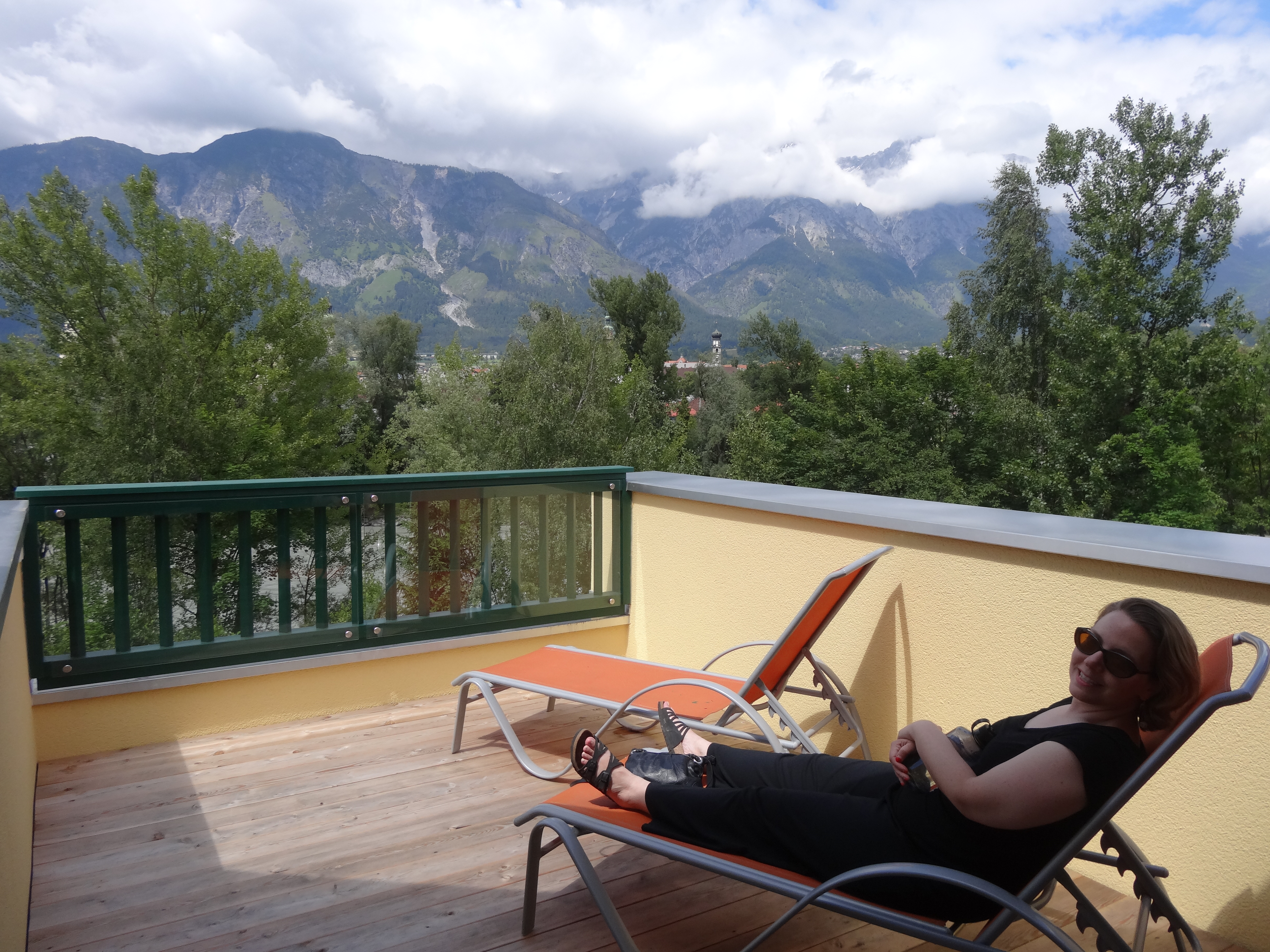
DSC01634We walked back to the B and B, where we were greeted by a busload of Italian tourists eating supper. We also got to pet two of the ten farm cats, and then we headed up to our balcony to eat some chocolate we had purchased, while watching the mountains – a fine ending to an alpine day.

The Balkans – Day 6, Friday, Logarska Dolina and Lake Bled, Slovenia

DSC01593To go from Logarska Dolina to Lake Bled takes about an hour and forty-five minutes. If you use Google maps, it sends you southwest on major highways through the capital Ljubljana. Rick Steves’ guidebook sends you southwest on major highways through the capital Ljubljana because “mountains get in the way.” If you are clueless, mapless American tourists totally dependent on a GPS, you go OVER the mountains on one-and-a-half lane roads with numerous switchbacks! Fun!

Before we left Logarska Dolina, we did swing into the tourist center to say goodbye to Nina, our museum friend. We stayed and chatted with her for about an hour and exchanged e-mail addresses. We hope to stay in touch in case we come back or she comes to the United States. She is a bright, fun, and cheerful girl.

The over-the-mountain with-some-woods drive was made more exciting at the start by the fact that our GPS kept losing signal with the satellites. Once we got out of the looming Logarska mountains, it settled down. My theory was that we were getting nearer and nearer the satellites as we drove up and up.

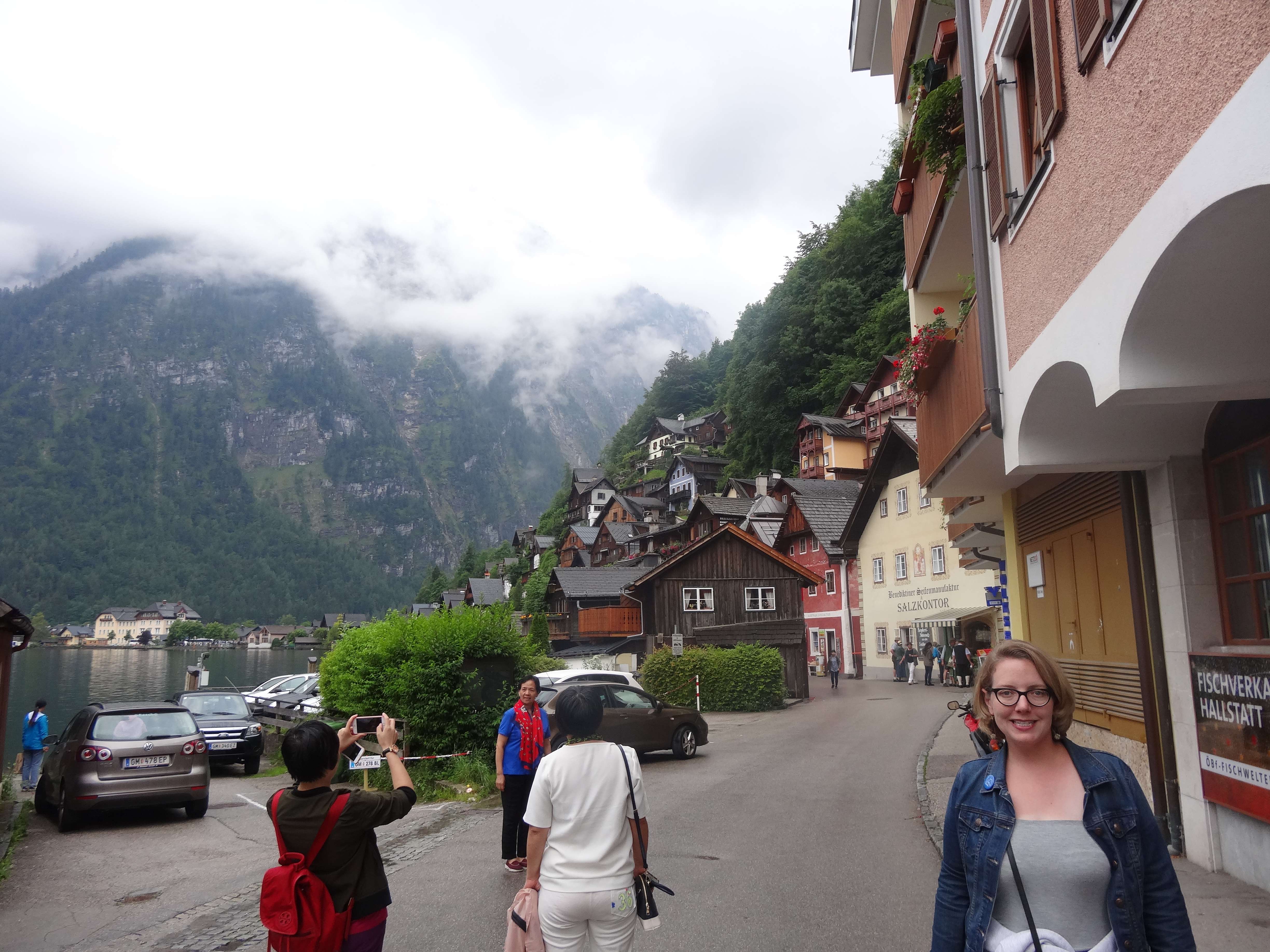
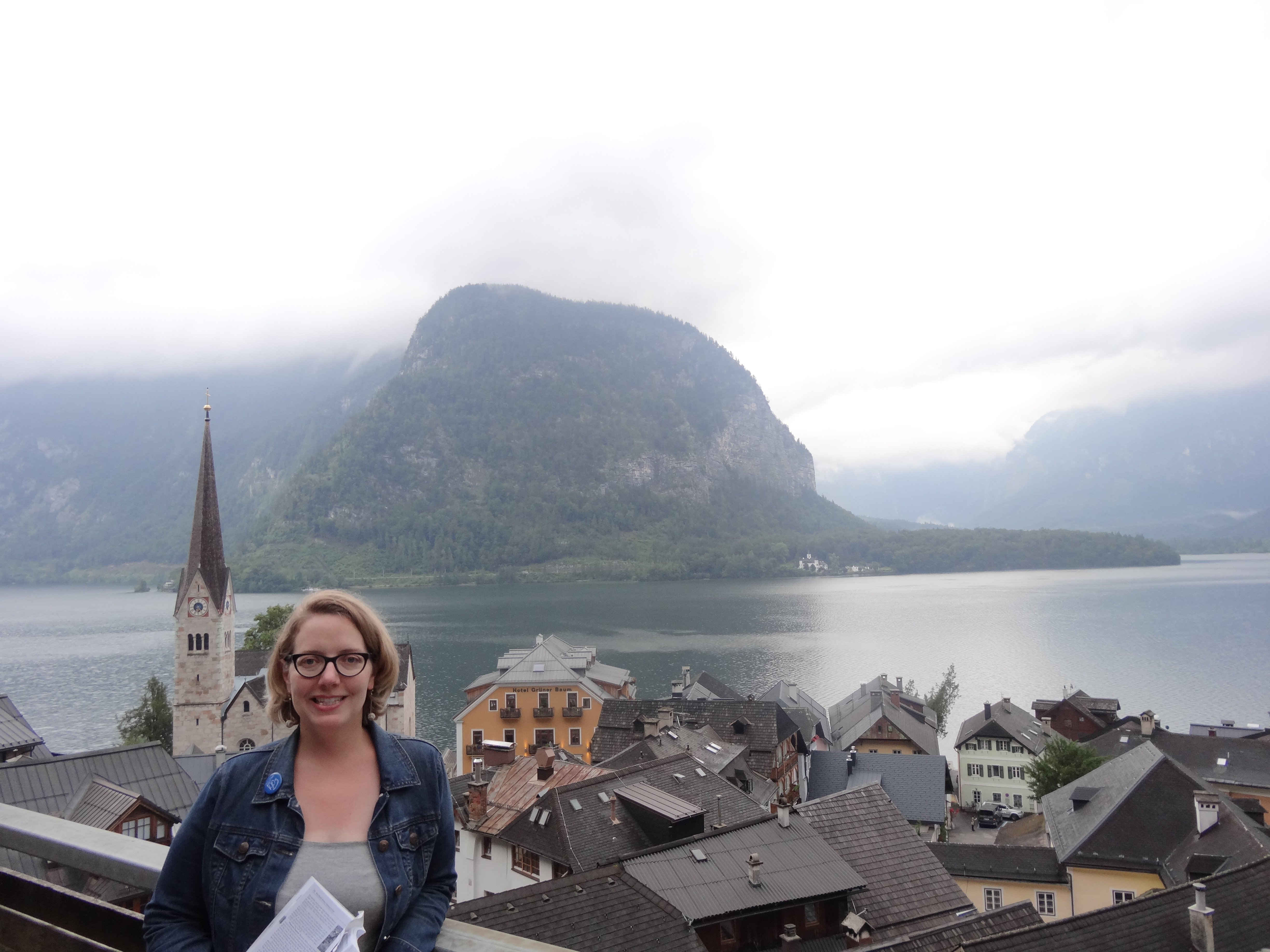
DSC01587We arrived at our tourist farm Bed and Breakfast around 2:00. A tourist farm is a working farm that also happens to have a few rooms for rent. Our farm is about a half-mile walk to Lake Bled, a small but beautiful lake that is admittedly a bit of a tourist trap, but it is a pretty one. It has a small island with a hill on it, and on the hill is a cute church. The town is presided over by a very impressive cliff with a castle on it, and the town itself is fairly cute. What we did not know but know now is that Lake Bled is also home to the Slovenian rowing teams who have done quite well in the Olympics.

We dumped our stuff in our room and started walking to the lake, in a gentle but steady rain. In a rare moment of sense, I had listened to Meredith a couple of days ago and bought an umbrella. It came in very handy today. The lake is about 3.5 miles around, and the whole way has a path, which is public. We turned right when we reached the lake, and started toward the town of Bled, about a mile away. Happily, about this time, the rain stopped. We got to Bled and went to a restaurant right on the lake, but we chose to eat inside (facing windows) because of the bugs that had come out after the rain.

DSC01588We had a very good late lunch and dessert, and we took our time, since it had started raining again, and this time a bit more steadily. Finally, we decided we should just brave the weather, so out we went with our umbrellas. Meredith put me “in charge” for the next few days, so rather than trudge around the lake in a steady rain, I decided to change plans and climb up to the castle, which offered some indoor diversions. We climbed a steep path that became a series of stairs, and made it to the castle, just in time for the rain to start easing up. Ah, well.

The castle is interesting as a castle, with a proper wall and towers and arrow slits and such. It offers a working model of an early printing press and a history of the importance of the press in Slovenia (it was used to print church books in the then-outlawed Slovenian language). We got to see a small photography exhibit on the Bled area that was very good. There is an iron-working shop that sells hand-made iron items. They have an extensive museum about the history of the Bled area, the castle, and the geography and geology of the region. All well and good and interesting.

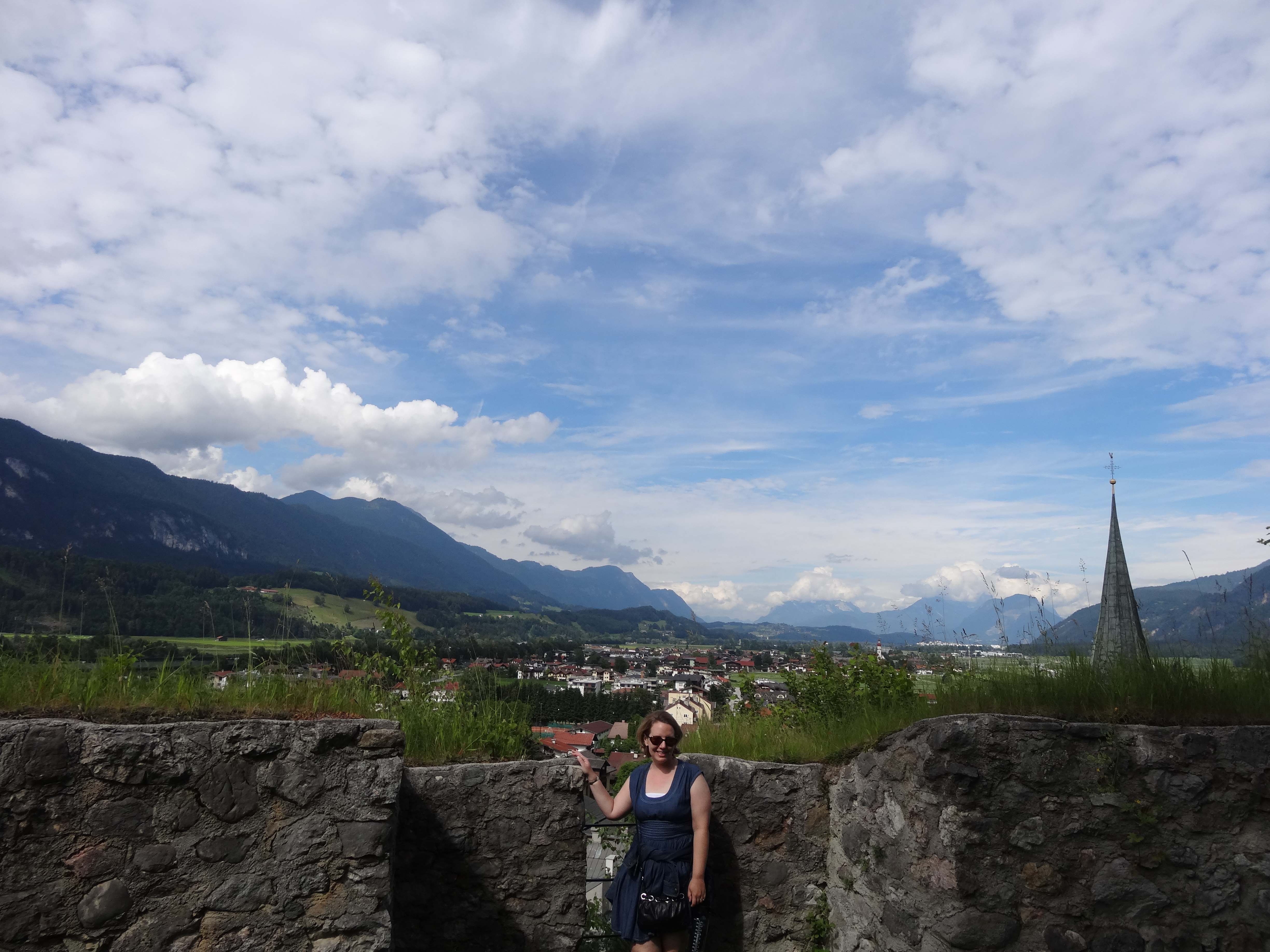
DSC01596But the winning reason to go to the castle is to climb as high as possible and admire the view. You can see the lake and the island. You can see the cliff face of the castle. There are small and big mountains (up to about 6,500 feet tall) in every direction. It was spectacular.

After we toured the castle, we headed back down to the town in a misting rain. We ducked into a market and grabbed a couple of sandwiches and candy bars for a supper later back at the B and B, at which point the rain finally stopped for good. We found where we left off on the lake trail, and we continued on our way.

DSC01603Some of the highlights of the trail included seeing the island from all angles, and seeing the lavish few homes allowed on the lake. We got to see the rowing center, and saw some crews out rowing. There are even some small grandstands set up near the finish areas for the scows. There was a boardwalk built over the lake at the shoreline for about two hundred yards. And all the while, the weather kept getting better and better, with some patches of blue sky peeking out. By the time we finished our lake walk and were headed back home, the sun had come out, and the sky was beautiful with the sun shining off the clouds and the wispy fog on the mountains.

DSC01607We got back to our farm and were greeted with the happy vision of two kittens staring at us from a stack of railroad ties. Very cute. We headed back to the room for a late supper and called it a day, one that was mostly dry for us.

The Balkans – Day 5, Thursday – Logarska Dolina, Slovenia

DSC01557Sometimes, Rick Steves’ guidebooks are not clear. I quote, for example, his saying that one of the smaller valleys in this area is “more gentle and accessible with better and more level roads.” Ha! Either we missed a turn, or Rick was smoking something. But I get ahead of myself.

After we got ready and had breakfast at our hotel, we jumped in the car. Logarska Dolina is the major valley in this region, but there are two smaller valleys here as well. One, we explored yesterday on the end of our drive on the Panoramic Road. The other was the morning’s destination, and Rick boldly proclaimed it as easy to deal with, which was good after the logging road we seemed to be using yesterday.

DSC01551The road up into the valley started off a bit intimidating. It was paved, but was certainly only one car wide, with no turnoffs. We got through that well, and the road widened out. Well and good. After a little distance with great views, the pavement ended. Odd, but still okay. Then the road took a major hairpin turn and narrowed. Then it had another hairpin turn. Soon, we were driving way up over fields and other drop-offs, with no guard rails, no sight lines, and very few places to pull off. The views were spectacular, but the driving was white-knuckle in many places. We kept driving up and up and up, hairpin curve after hairpin curve, until we came to a grouping of three farms and a dead end. Drat – we’d have to drive down that same road. Happily, Meredith asked me how the brakes were, which reminded me that in the standard-shift vehicle we had, I could leave it in first gear and not use the brakes much. We made it down safely, but I was very glad not to have to do that drive again.

After the Fun Drive (and the views were amazing, I have to say), we drove over to the major valley, Logarska Dolina, with its major roads, biking trails, walking trails, some hotels, and some restaurants. I was pleased to pay seven euros to get in if it meant I could drive normally in the park.

DSC01561Meredith wanted to start with the major waterfall in the park, Rinka waterfall. You can drive almost to the waterfall, about five miles into the park. You need to walk the rest of the way along a decent, if somewhat rocky, trail that takes about fifteen minutes to get to the falls. They are worth it. The falls do not have a heavy volume of water, but that makes it more interesting. They are very high at three hundred feet, and the water breaks up some as it falls in waves and is blown around by the wind. The short of it is that the falls move left and right as the wind gusts, and it is fascinating to watch. You can hike right up to the edge of the falls, and there is an observation platform with a small store. Meredith and I took advantage of both by having the world’s most scenic ice cream stop – falls on one side and towering cliffs all around.

The cliffs in the park are amazing. They are almost all grey, with very steep sides. They are around 6500 feet tall, and they seem to loom over you if you get close enough to the bases of the mountains.

DSC01568When we got back to the car, Meredith wanted to drive halfway down the valley to a tourist information station, and then walk the hiking trail back to the parking lot of the falls, which would be roughly a two-mile walk, which would take about an hour each way.

Three small issues. One – the tourist information station was closed. Two – the stopping spot was more than halfway to the entrance. Three – the walk took us two full hours, one way. But I get ahead of myself.

The start of the trail was very peaceful – it seemed deep in the woods, even though the road was never far away. In the full two hours and twenty minutes we spent on the trail in the park, both before and after supper, we never saw another soul on the trail. My theory, which Mer likes, is that bikers use the road and the serious hikers hike on the alpine trails. At any rate, we had the place to ourselves.

DSC01563The trail was quite varied over the length of it. We had smooth, pine-needle soft footing, heavily rooted trail, gravel parts, and steep, rocky sections. It started out flat, but slowly rose for most of the trail, ending with some heavy-breathing sections of trail. It was not always perfectly marked – we had to guess at several points, and made one serious mistake that, if we had not corrected it, would have had us hiking up to a mountain hut. We caught that one after only a couple of minutes. Generally, the trail was engulfed in trees, but that made it very dramatic when they would open up and you would see the mountains looming over you. We crossed dry stream beds full of gravel, and we came up toward the falls in such a way that we could see them from a distance, which you can’t do if you take the road.

DSC01572By the end of the trail, we were both pretty tired – it had taken two hours over some rough terrain. By mutual consent, we took the road back toward our car, which was still a forty-five-minute walk. Our car was parked across the street from a farm/hotel/restaurant, so we grabbed supper there even though it was only 5:00. We got to eat at the most scenic table on the planet, and the food was farm fresh and pretty healthy.

DSC01562After supper, we checked out the waterfall behind the hotel, which was not a free-fall waterfall like the bigger one, but was still impressive and came down over the rock face in several channels. Mer wanted to walk a little more, so we walked another ten minutes down the walking trail, away from the falls. It was more of the same with lots of trees and some glimpses of mountains, but it was pretty and super quiet. We felt really isolated.

We drove out of the valley and toward the small village next to our hotel. We were going to grab some dessert, but before we did, we ran into Nina, our young museum guide from yesterday. We wanted to show her a picture of a rare flower we took. She was impressed, but informed us it wasn’t the flower we’d thought it was. Ah. Still, we talked with her for thirty or more minutes, about multiple topics, from where she goes to school to Slovenian politics to the breakup of Yugoslavia. She was warm and friendly, and we love talking with locals.

DSC01550-bWe missed all of the stores in the village closing, so we drove back to the smaller valley to see if we could find where we had missed the “easy” road. We could not, and rather than get stuck on that nail-biter road again, I turned around. We went back to our hotel, where we had dessert from their restaurant, on the deck, overlooking the mountains as the sun went down. It was a fine evening (and day).

The Balkans – Day 4, Wednesday – Ptuj, Velenje Castle, and Logarska Dolina (Valley)

DSC01542One thing you can count on for sure on a Meredith-led sightseeing tour is you will sleep well. I did not wake up at all last night, and was again surprised when the alarm went off. We wrapped up our time in Ptuj with getting ready, eating breakfast, packing, and checking out. We pointed the car west an hour, and ended up in an industrial town of forty thousand people, Velenje. We were there to see its very scenic castle, which overlooked a very concrete-rich town.

The castle looked like a proper castle, if more luxurious looking. It had a wall and towers, and you even had to enter it via a narrow footbridge. We found the reception area and bought two tickets to the castle and its eclectic collection for only five euros total (about seven dollars). This is already pretty shockingly low, but the woman who took our money then took us around the castle herself, narrating everything in solid but wonderfully, charmingly broken English. She spent almost two hours with us, all for seven bucks.

DSC01531We saw all of the collections, and we learned about the town along the way. The town was created to work the coal mines of the region, with the city begun around 1950 and officially “opened” just a few years later, having gone from a village to a small city almost overnight. The architecture was classic communist concrete apartment block, but it still was a mighty achievement.

The collections: we started with medieval Valenje, with a look at the church of the time, and how a peasant would have lived. We got distracted with asking questions, so we missed the aristocracy portion of the exhibit. We then moved on to life during Communist times, which in Yugoslavia was not so harsh as in Soviet-style Communism. We got to see several rooms of works by local painters, some of which were very moving. After that was a look at the works of an excellent local sculptor, who is now ninety and still creating art. Next was a collection of African artifacts (including a mask room where the guide started with the lights out and turned on a switch that made some of the eyes glow) that had been the collection of an artist who lived and worked in Africa for over twenty years. He died in Valenje, so his collection and some of his art went to the museum. We were then walked through a mock-up of an early twentieth-century pub and general store. Outside the main keep of the castle, we saw a chapel with artifacts from a church that was flooded by the building of a dam. There was an exhibit of mastodon bones found in the area, and a collection of high school art which was good, including a couple of excellent works. We finished the tour with a small room of WW2 memorabilia and artifacts. It was quite a tour!

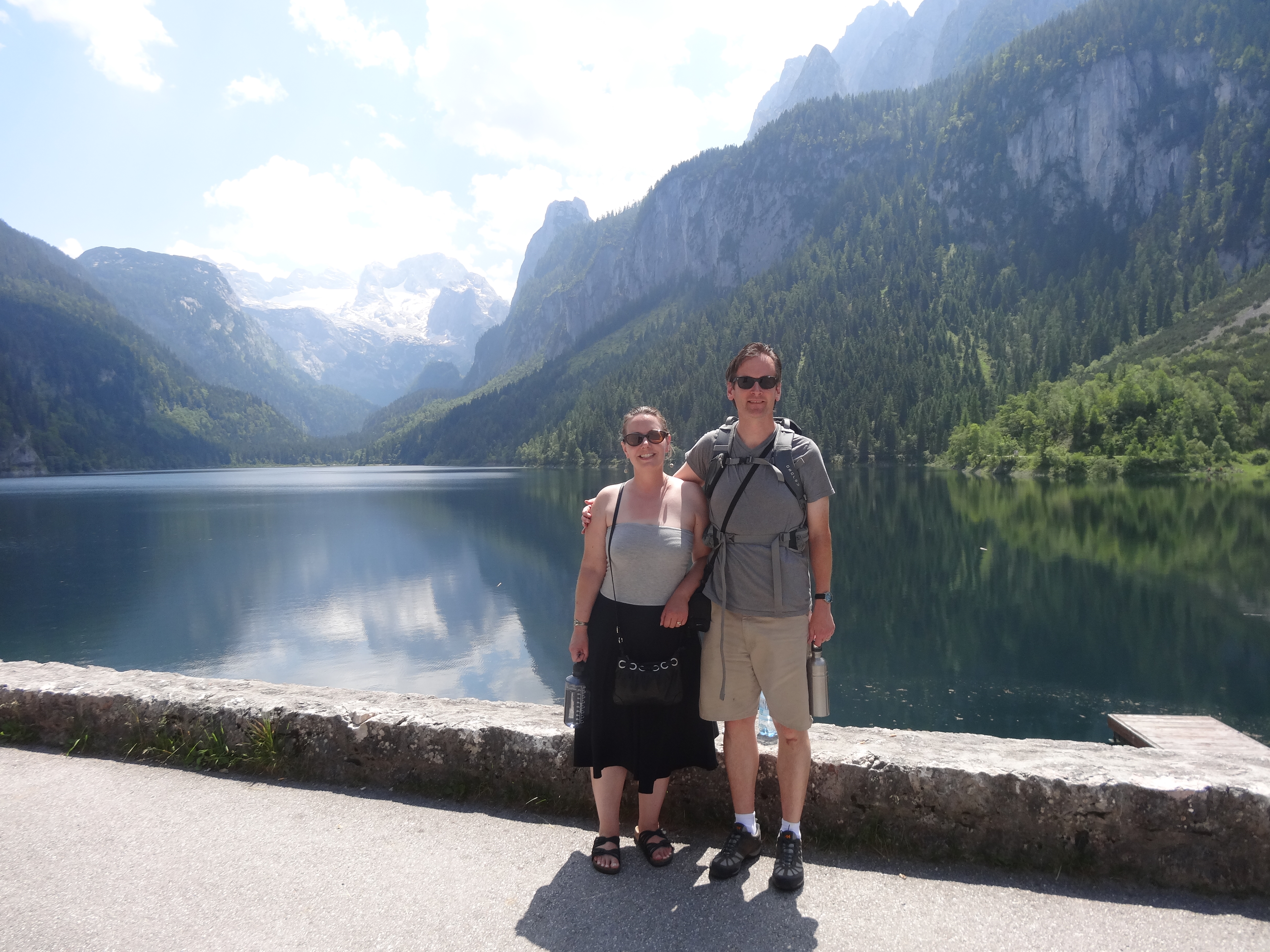
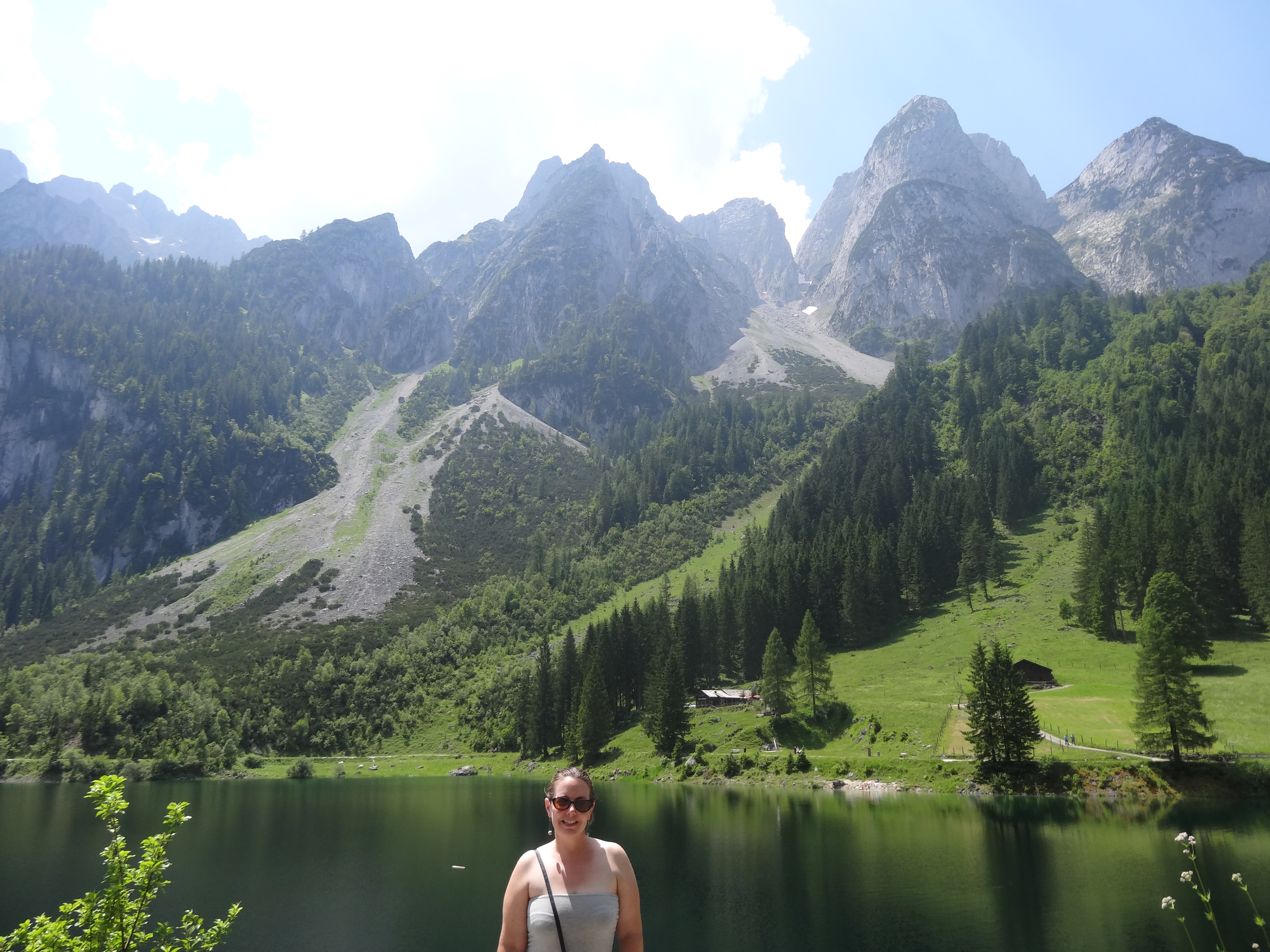
DSC01532We then drove on to our destination for the next two days – Logarska Dolina. Dolina means “valley.” The Logarska region is remote and is protected as a park, so it is very rural. The mountains are the foothills of the region’s Alps, and so are very dramatic. The roads are narrow and winding, and the road was not even built until about 1900, so the region has not been touristed for very long.

We set up camp at our small hotel (with a kitty!), which looks out over the mountains and has a stream running right next to it – beautiful. We drove into the small town about a mile away to visit the information center and to get lunch (lunch was a sandwich from the local supermarket). While I was waiting outside the bathroom for Meredith, I struck up a conversation with the young woman who was at the information desk. She was very friendly, and so when Meredith came out of the bathroom, we did all the things she recommended. We watched a fifteen-minute film on the region, and then she took us through a small mock-up of the area’s highlights, geography, and culture. She escorted us up the hill to another building to show us a butterfly collection and fossils found in Logarska Dolina or nearby. She was a great guide, and all of this was free. On her recommendation, we climbed a little higher to get a close look at the village church.

DSC01545We stopped in at the information center again for some dessert to fuel us for the next sightseeing jaunt – a drive along the Panoramic Road, which is a sometimes two-lane road that is sometimes paved that winds up into the alpine fields and farms. Happily, except for the first half-mile on the paved section, I never met an oncoming car over the whole eight-mile trip, which took us about two hours.

The scenery was amazing. I kept stopping the car to get out and look and to try to take photographs that I knew would never capture the depth of the mountains. Then, we would go another half-mile, and I’d have to stop and get out again. It was cloudy and still beautiful – it must be spectacular on a sunny day. We extended our driving trip by taking an unpaved road around part of the valley. There were parts of the road that reminded me of logging roads – rough and not very wide. It was not so scenic as the Panoramic Road, but it was still worthwhile. As an aside, we took one wrong turn, which we quickly sorted out. If we had not, in just a few minutes we would have been at the Austrian border.

DSC01538We got back to the hotel around 8:00, and so we settled in for the night. We got supper in the hotel restaurant and then decided to get ready for bed. The temperature is supposed to get into the forties tonight, so we’re anticipating another sound sleep after a busy Day Four.

The Balkans – Day 3, Tuesday, Ptuj and Maribor, Slovenia

DSC01528Europeans have several clear advantages over Americans. One, they serve hot chocolate at every breakfast, winter or summer. Two, bathrooms are private privies, being mini-rooms inside larger public restrooms. Three, most modern European places have built-in shades that slide over the window completely, blocking all light.

It was this last feature that made me surprised when the alarm went off – it was still dark, so I could not understand why the beeping started. It turns out it was 8:30 am, since breakfast only went until 9:30, but it seemed early to my eyes.

Breakfast was included in our B and B, and it was a continental affair, with granola, yogurt, breads, meats, cheeses, and so on. In an exciting international moment, what I thought was strawberry jam turned out to be some rather pungent meat puree. Happily, Meredith warned me to that possibility before I ate it.

After breakfast, we crossed over the river on the pedestrian/bike bridge, and we walked ten minutes along the river. Along the way, we spotted two kitties, one of which was very happy to have his head petted. We ended up at the local spa/water park. The spa has saunas and whirlpool tubs and swimming pools and… water slides. As one does. The park did not look open quite yet (it was 10:30), so we decided to go to Plan B – to go back and get the car and go to Maribor.

Maribor is one of my leading town candidates for 1950s film monster names (as in, “Release the… MARIBOR!”). Above and beyond providing me with some quirky humor, Maribor is Slovenia’s second biggest city (after the capital Ljubljana), with about 130,000 people. The downtown area is busy, but has some good walking sights, so we visited those.

DSC01529After parking the car in a hotel garage (for about five dollars), we walked to a large square near the river, which is the same one that runs through Ptuj, the Drava. We took a look at a monument to plague victims that was in the square, and then we headed down to the river to walk along it for a bit. We saw a couple of swans, some ducks, some very lovely willow trees, a nice bridge with water fountains shooting into the river, and an old fortress that had been converted to a wine shop. It was a very pleasant walk.

We headed back up to the square and into the main pedestrian zone. It started to rain lightly, so we stopped at a café to grab a hot chocolate for me. Sadly, the mist kept falling, so we continued on to look at a Franciscan church. Meredith knows I am a St. Francis fan, so I like to see Franciscan churches. This one was made of brick, and was fairly new, having been finished around 1900.

Meredith’s trusty guidebook by Rick Steves recommended a small museum for those interested in history, so we checked it out. It turned out to be a very interesting museum. It covered Slovenia’s involvement in WW1 and WW2, with some focus on Maribor in the war. The WW1 and WW2 portions were presented side by side, so you could compare causes of each war, weapons in each war, medical treatment, women’s participation, propaganda, and so on. It was fascinating to do it that way, and we learned a lot. You could even send a Morse code message from one bunker in one room to another bunker in another room, assuming your partner did not confuse dots and dashes.

DSC01530We finished up our tour of Maribor with a visit to its small cathedral. The cathedral’s main interest for me was its stained glass windows. Four of the windows were representations of the four Gospels, and they were created in 2004. Another window showed Pope John Paul II and was dated 1999. We thought it must have been to commemorate a visit, but were not sure. Meredith pointed out it was the first time she recognized someone from our lifetime in a stained glass window.
Back in Ptuj, we grabbed a quick bite to eat at a bakery (it was around 4:30), before heading back to the spa. The water park was still closed because it was too cold out, but the spa was open. We changed in the free-for-all coed changing areas that happily had individual booths, and made our way into the spa. We spent much of our time there in one or another of the three hot tubs, but in between sessions there, we found one fun water slide that was attached to the spa itself, and it was running. The slide was interesting in itself – the slide was an enclosed tube. The top was illuminated with pictures of the Coliseum in Rome and the Parthenon and some random pictures of flames. The middle section was lit in an orange-pink light, and the bottom section was in total darkness, which was a bit freaky. We must have ridden the slide at least ten times, and as far as we could tell, we were the only people over the age of thirty going on it.
We did also swim in the pool, but I found it to be a fair amount of work to swim a lap, so the hot tubs won out over the pool. Mer wanted to try the sauna, and I cautiously agreed. We went to the least-hot sauna (around 120 degrees), and I opened the door. Dante yelled to stop letting all the cold air in, so I slammed it shut. Actually, there were already people in there, and the brief exposure to that much heat and steam caused me to take a step back. No, thank you! The hottest sauna was a whopping 210 degrees; why people would do that is beyond me.

The spa was a great treat coming so soon after a long airplane trip. I told Mer more than once that it was the best day touring ever.

After the spa, we walked back to the town to grab supper at a pizza place, where we ate outside, as we have most of our meals here. We were determined to find ice cream, but the ice cream places were all closed at 9:30 – who knew? We found a restaurant that served pastries, and we ate those out on the main (new) square of the town, which was almost empty. It was a quiet ending to a fairly mellow day. Here is hoping for a good night’s sleep in my very dark room.

The Balkans – Day 2, Monday – Zagreb, Croatia and Ptuj, Slovenia

DSC01521We woke up in Zagreb, Croatia, which is important to establish on a trip that covers three countries in fourteen days. We showered and got ready, and moseyed out to a bakery on the main square to pick up some breakfast pastries, which we took back to our hostel and ate in their lovely enclosed courtyard.

Then we packed up, checked out, and set out to pick up our rental car. With the help of Google Maps (thank you!), we figured out which tram and then which bus to take to get to the car rental place. We got there with only a little difficulty in finding the bus stop. It turned out that their computer system was down, so they drove us back out to the airport and dropped us there. The computer was down there as well, but the young man at the desk filled out the forms by hand and away we drove, listening to Cat Stevens and the Beatles on Croatian radio. We were headed to Ptuj (pit-too-ey) in Slovenia, a trip of only a little over an hour, made much easier by my strangely-ahead-of-the-game thought to buy a GPS with the Europe maps loaded on it, a week before we left home. It worked like a charm.

The roads in Croatia are excellent, with the highway having a speed limit of 80 mph. When we got close to the border, we had to go through several tunnels in smaller mountains. The border crossing was almost effortless – the guards on both sides of the border looked at our passports and the Slovenian guard stamped them.

DSC01510We arrived at Ptuj around noon. I found the town to be charming – it is built on a small hill, with a scenic river out in front, and red-tiled homes huddled together. We found our B and B, an amazing little place called Silak (shee-lahk). It is run by a very friendly couple who informed us the house is between five hundred and eight hundred years old (the oldest records were lost in a fire, so they do not know for sure). It is always humbling to sleep somewhere older than my country. The B and B has beautiful exposed beams, marble tile in the bathroom, slanting roofs (which Mer has always loved), air conditioning, and internet access. I highly recommend it.

DSC01511Once we dumped our stuff, we set out to wander the small town and to acquire some light lunch. On the recommendation of our host at the B and B, we stopped off at the library in town and made our way to the top floor. The top floor showed off an amazing array of exposed beams, and had good views of the river. We then wandered up the hill a bit, skipping the tempting stairs to the castle, and made our way through the old small square to the newer square, where we found a bakery. We munched on cheese bread while sitting on a bench outside the town hall, where we got to observe the very quiet town in all of its inaction. My kind of place.

After lunch, we did head up to the castle. The castle is now a very eclectic museum, housing several collections. We started with the mask collection, which is really a costume collection of the costumes villagers wear for a parade late in winter. The parade is designed to drive off winter and bring in spring, so it has a fertility feel for much of it – plows and livestock and a display of eligible young men and women. The main focus of the parade is the flock of Kurent demons – people dressed up in wool, masks, horns, stick, and cowbells, who are supposed to frighten the winter away.

DSC01512Once we had seen the mask museum, we entered the main section of the castle itself (which is more of a fortified mansion than a typical defensive castle). The main floor is now a museum of the furniture that had been used in the castle, from the 1700s until the 1900s. You can also see the three-hundred-year-old plastered ceilings with their still-intact ornamentations.

Next on the tour list was the castle’s festival hall, which is still used for concerts. The hall is surrounded by huge portraits of various people groups, mostly Turks, and all certainly done by people who had never seen a Turkish or a Chinese or a Native American person before.

DSC01523We headed upstairs to the third floor to look at the art collection of the castle, which is mostly paintings of the lords and ladies of Ptuj, along with copies of masterpieces done by local artists. That was fascinating – it was interesting to see why talented locals were not so good as world masters – it generally came down to details – background figures were not painted in detail, or foreground subjects had no life to them (no individual hairs on the head, clothes not fluid, etc.).

We wound our way down to the ground floor again to look at the musical instrument collection, which includes the remains of several rare Roman instruments. There are also sixteenth-century lutes, and a good collection of harpsichords and pianos, along with some old marching band instruments.

The last of the collection is the armory, where there were a couple of suits of armor, several small cannon, some firearms of various types and ages, and lots of swords. The most impressive part was they had a two-handed great sword lying out for people to heft for photographs. It was very heavy.

DSC01527We had dodged a short but heavy rain while in the castle, and so with good weather we headed back to the B and B to regroup before supper. After a fifteen-minute rest, Mer took me to a local monastery that had been destroyed by bombs in World War 2, but had been rebuilt in stages from the 1980s to 2010. The church of the monastery is simple, modern, and one of the most beautiful churches I have ever seen. The stained glass is modern, with vibrant colors and shapes suggesting Biblical events instead of showing them outright. In one window was a shape suggesting Jesus wearing the crown of thorns. In another was probably a boat that could have been Jesus calming the storm or walking on the water, or could have been Noah’s ark. They were very impressive. The church also had modern art versions of the stations of the cross that were more suggestive than literal, and several of them were very moving. Inside the church was one older lady who was very friendly, but did not speak English. We both felt bad that we could not understand her, as she was talkative and seemed very proud of the church.

For supper, we swung by the room and then we walked the short distance over to the Amadeus restaurant, where we promptly ate too much. I made the mistake of thinking a “starter course” was an appetizer, when it really is a full meal in itself. I have no idea how the Italians, who eat multi-course meals often, do it. By the time my real meal came, I was comfortably full. I foraged on – it was a very good meal.

DSC01518We saw some rain coming after supper, so we went back to the room to wait it out, which took about twenty minutes. Then, we strolled the town to a cute restaurant for dessert. The restaurant had a patio built around three trees that had the thickest foliage I have ever seen. As such, you sat under a canopy of leaves. It was pretty marvelous. We had some cake, and I got my first European hot chocolate of this trip – that I pretty much had to eat with a spoon (European hot chocolate is pretty thick). After a quick walk down to the river and across the pedestrian bridge for an evening view of Ptuj, we went back to the B and B to escape the rain that had just started up again. Thus ended Day Two of our little adventure.