Category Archives: Uncategorized

Belgium 2018 – Day 4 – Tuesday – Ghent

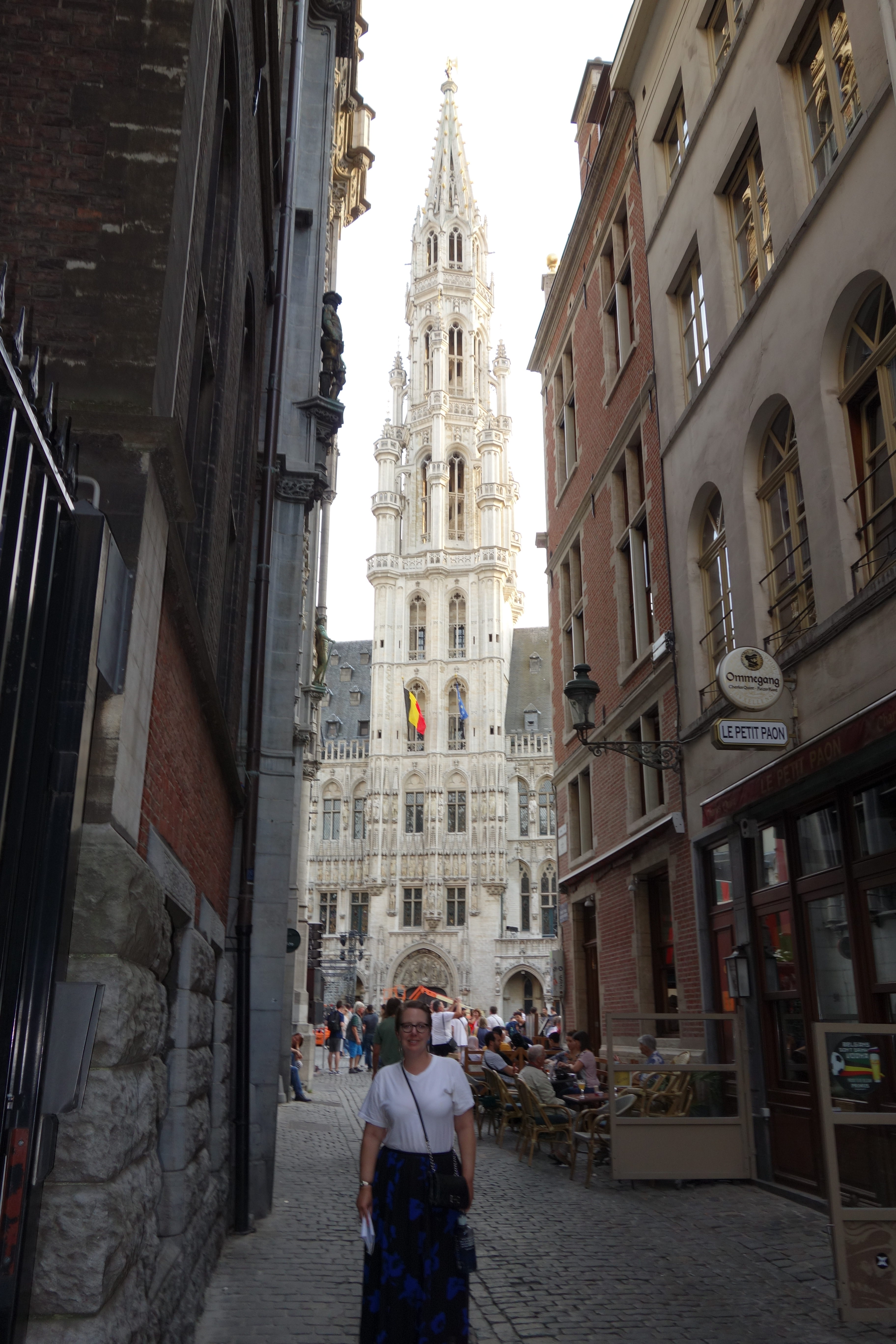
When you travel, things do not always go according to plan. Sometimes you leave a museum to go back home, and twenty minutes later, you find yourself back at the museum. Sometimes your guidebook tells you to get on a bus going away from your destination. Sometimes the boats stop running at 6:00, even with tons of daylight left. For travel to be a success, you need to roll with these sorts of things and not stress about them. Mer always says that most things are either a good experience or a good story. So we beat on, boats against the current, borne back ceaselessly into the past. At least as long as the boats are running.

We got launched from our particular berth around 9:30, and we took the tram back out to the train station. From there, we walked into Cidadel Park, which is a park I had seen on my map of Ghent and one that I wanted to see. So that was a happy bonus. We walked through the very pretty park, which had plenty of flowers, some statues, tons of trees, a couple of fountains, and an artificially-augmented hill – the “stones” jutting from the hill were made of concrete. Our ultimate destination was on the far side of the park – the Fine Arts Museum.

We got in for free on our ever-handy three-day Gent City Card (which gives us free transportation as well as various free entries around town). We almost had the museum to ourselves – most rooms either had no one in them or only  one other couple. We walked in to the galleries and were immediately drawn to a large room decorated with wild and fantastical “plants” and “animals.” It was very colorful, and chaotic, but we both liked it. We would have gone there anyway, but what drew us was a small group of musicians and singers practicing modern pieces, which they continued to do the whole time we were in the museum. It lent a mystical quality to the morning.

Meredith loved the layout of the place. There were arrows and numbered rooms that led you through the exhibits. In general, the rooms were laid out chronologically, which is very helpful to people like me, who can see development in art over time if spoon-fed it. Most of the museum’s works were either excellent works by minor artists or lesser-known works of major artists. It did have two very trippy-looking paintings by Bosch, who painted around 1500 but had a style that looked as if it were from the 1930s. Dali could have painted these. It blows my mind every time I see a Bosch painting (or one attributed to him).

There were really good works of religious art, including a small room dedicated to religious modern art. My favorite work in the collection was one where Jesus is being mocked by four guards while two of them pry the crown of thorns down onto the head of Jesus. The are all looking at Jesus and laughing, but Jesus is looking slightly sad and is staring directly out of the frame at us, the viewers. It wasn’t clear if he was looking at us in an accusing way or in an “I’m doing this for you” way, or both. It was quite moving. It was done by the Flemish painter, Jan Janssen, who was heavily influenced by Caravaggio, around 1647.

Many of the rooms mixed old and new, which Meredith pointed out was the same as in the Design Museum yesterday. In a room of paintings from 1500, the museum would show a few modern paintings. In the modern works rooms, they would have objects from 1600. It was a thoughtful way to keep linking the artworks.

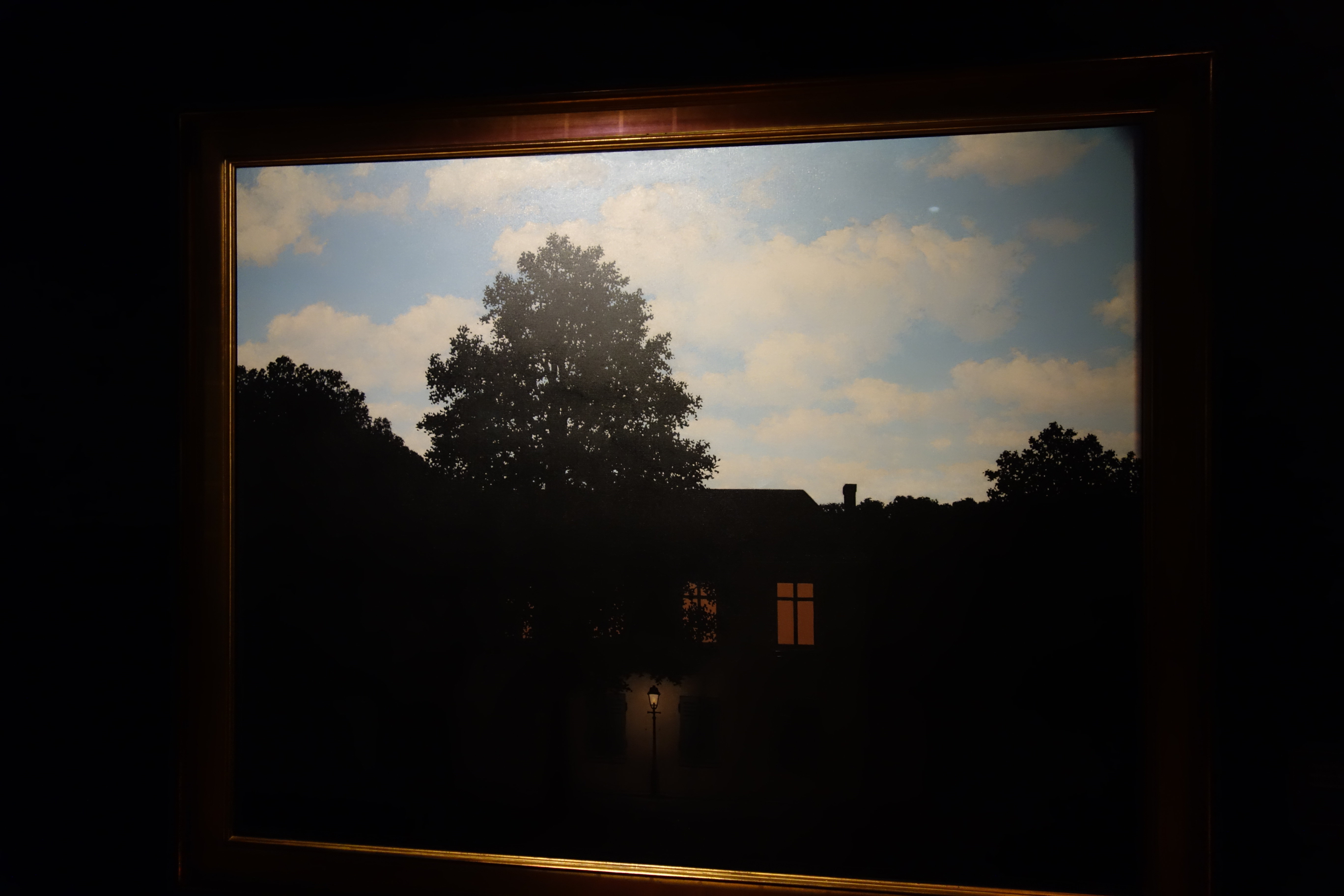
We saw the entire museum that was open; several spaces were closed, as the museum was between exhibitions. We got to see two Rodin sculptures, the Bosch paintings, Magritte, Brueghel, Rubens, and other famous artists, as well as many good “unknown masters” and some lesser-known painters. We saw everything in about two and a half hours,

Mer wanted to go back into town for lunch, so we left the museum and walked back through the park. Mer let me scamper up the hilly area, and then back down on the other side. We kept walking past places we recognized, and then slowly we began to realize we had not seen that pond on the way in. Or that busy street. Or that museum up ahead…wait a minute….

We had gone straight when we should have turned right at an intersection, and the walkway had taken us right back to the Fine Arts Museum. So we got to see pretty much all of Cidadel Park. Roll with it. Keep walking and laughing. We got back to the tram station and back into town around 2:00 for a nice lunch in an enclosed courtyard of a small restaurant.

After lunch, we took about a half-hour rest stop at the hotel. Part of traveling at forty-five years old and up is managing backs and knees. Then it was off to a buzzer-beater tour of a small museum on ordinary family life in Belgium over the last one hundred years or so. We got into the museum at almost 4:30, and it closed at 5:00, so we did not read a lot of the placards. The exhibit was quaint, showing various aspects of life as if it were a calendar. There was birth and death, childhood and teen years, marriage and older life. They had artifacts in each room to go along with the theme: the birth years had strollers and such, the teen room had album covers and Walkmans and older video games, and so on. We really liked the school room and the wedding room – both had pictures from across the century, and we got a kick out of guessing the years based on the fashions. We were usually right, but there were some surprises – the 1990 school photo looked to me as if it were from 2000, so I was wrong there.

Back to the hotel to reorganize, and then back out to the main square to catch a bus out to a far-flung site. Our guide book said to take a certain bus, so we jumped on it. Mer asked the driver at the next stop if we were on the right bus. We were not – in fact, we were going the wrong way. Somehow, inexplicably, Rick Steves had let us down. We got back on the other bus going the other way, and got back to the main square, where we waited for another bus that did not come for ten or fifteen minutes, at which point Mer decided to kick over to Plan B – boats.

There are several companies that ply the river by prying money out of your hand, and it looks very pleasant. We walked over to the main bridge to find one boat company closed up. We checked with the second company and their last boat went out at 6:00; it was 6:30. Tomorrow, then. Go with the flow.

Mer had a nearby restaurant picked out, but I did not like the food choices, since they were mostly fish and steaks. That meant the choice fell to me, so we found an Italian place where we could sit outside and Mer could speak Italian to the staff. It was  a good pick. We finished the meal with a waffle from a nearby stand, completing the Belgian trifecta – waffles, chocolate, and fries.

So, it was an unplanned early evening back at the hotel, getting in around 8:00. Mer did some research on the buses for tomorrow, so everything should go according to plan. Unless it doesn’t. Either way, we are on vacation in Belgium with each other. That plan always works.

Belgium 2018 – Day 3 – Monday – Ghent

When we tour Europe, one of the great challenges is staying fed. By this, I don’t mean we don’t get food – we always eat lots on these trips. It’s more that we can’t seem to get the day to work out right so that we eat meals at normal times. Tours and sightseeing do not always line up in neat patterns like that. So today, for instance, we ate breakfast first thing. Normal. Then we did some things (descriptions coming) such that we could have eaten just before noon, only three hours after a fairly large breakfast, or, we could tour on and eat when we could (probably 2:00). We chose the latter. We then snacked around 5:00 because we could and wanted to, but then that threw off the need for supper, which we still ate at 7:00 so that we would not be hungry later on. Granted, it is not a terrible problem to have; it just seems to pop up on every European tour we do at some point.

The touring started off with an interesting visit to Design Museum Gent. Belgians love design, even for ordinary objects, and that has been borne up in this university town. There are several museums, many art shops, bookstores on art and design, and stores selling high-end (and well-designed) household goods. The Design Museum itself was interesting, with the collection housed in an old wooden house surrounding a new steel-and-glass structure, so that you had the contrasts of the dark wooded house and the airy glass section.

The main focus of the exhibit today was on a young designer named Baas. He caught the design world’s attention with his senior work in university, when he took wooden furniture, burned it, and the coated it with lacquer to make it strong enough to be used again. There were several pieces from the “Smoke” series on display, and I was not sure about them. Interesting idea, but I was not sure that I liked it as design or art. They were followed by several movies of Baas himself in a room doing various things (like tossing in bed while real sheep wandered about). They were clever and interesting and even thought-provoking, but they seemed to me to be all art and no design (going by my own rule of thumb that design has some practical aspect to it, whereas art does not need to be practical at all). Still wasn’t sure about Baas.

Then he pulled it out for me, getting both thoughtful and whimsical. We encountered several pieces of furniture cast out of bronze that had been based on quick and imaginative sketches Baas came up with. He was trying to create fantastical objects that seemed to defy gravity. I liked them.

Baas has a lot of work that focuses on or brings in an element of time. He had several functional clocks on display where the clock faces were films of people drawing and then erasing the hands of the clock, and then drawing them again the next minute. He really filmed the people (including himself) doing this for twelve hours so that the clocks would really tell time. Two of the clocks even had videos of bells hanging above the heads of the hands-keepers, and when it got to the top of the hour, the person would reach up and hit the bell the requisite number of times. Baas even had a film from shot from above showing two people sweeping two lines of garbage and sand around in the form of hands on a clock, so that it really functioned as well.

The next room was really fun. There were a bunch of working fans that looked as if they had been sculpted out of colorful clay. Then, Baas collaborated with an artist to make a claymation film of the fans being made as a fiftieth anniversary film. The work was displayed in 2006, so the film had a date of 2056. It was pretty funny.

Then, Baas had an entire room filled with a glitzy, over-the-top display for five simple chairs. He had entered the display in a design show in Milan, and he thought the competition had become all about getting the most social media hits. So, he decided to poke fun at things by presenting his chairs as the center of a circus, with Baas himself playing a carnival barker. It was glitzy and loud and fun, and the gently mocking presentation won Baas best-in-show that year.

So, in the end, I liked Bass’ work. I think he would either be a really fun guy to hang out with (which is what I hope), or he would be really pretentious.

The museum had two other floors of various displays on design, and some were quite eye-catching, while a few were merely eye-rolling. The entire museum took about two hours, which is an excellent size for a museum. Oh – one quirky thing I loved. One room had an elaborate carved wooden chandelier. On the chandelier was a carved boat. Someone, and I really hope it was a curator, put a Playmobil pirate in the boat. That made me smile broadly.

After seeing a pirate, it was only right that we storm a castle. Ghent’s castle is imposing, which was the idea. It was built in the late 1100s as a display of power to the independent townspeople of Ghent. It later became the home of the local counts and justice system, and eventually, by the late 1800s, had become a textile mill. It got restored in the late 1800s and early 1900s, and is now a great tourist attraction. Meredith really loved it since the tour was well laid out with arrows, and numbers marked each place you were supposed to go. That way, Mer could be sure she saw everything.

The castle keep and tower offered good views of Ghent, although Mer complained that the defensive shutters in the ramparts were obstructing views for the under-six-foot crowd. I pointed out that the designers were probably not thinking of tourism and views. Nothing too historical happened in the castle (in a world-history sense), and other castles are bigger or better situated for views, but it was fun to wander around inside the place.

After a quick lunch at 2:00, we ended our touring for the day with the walk in Rick Steve’s guide book. Since we are thorough people when it comes to things like this, it took us about four hours to do the walk, which did include a chocolate break and a fries break (two things for which Belgium is known). We did the whole walk, but a few highlights stood out.

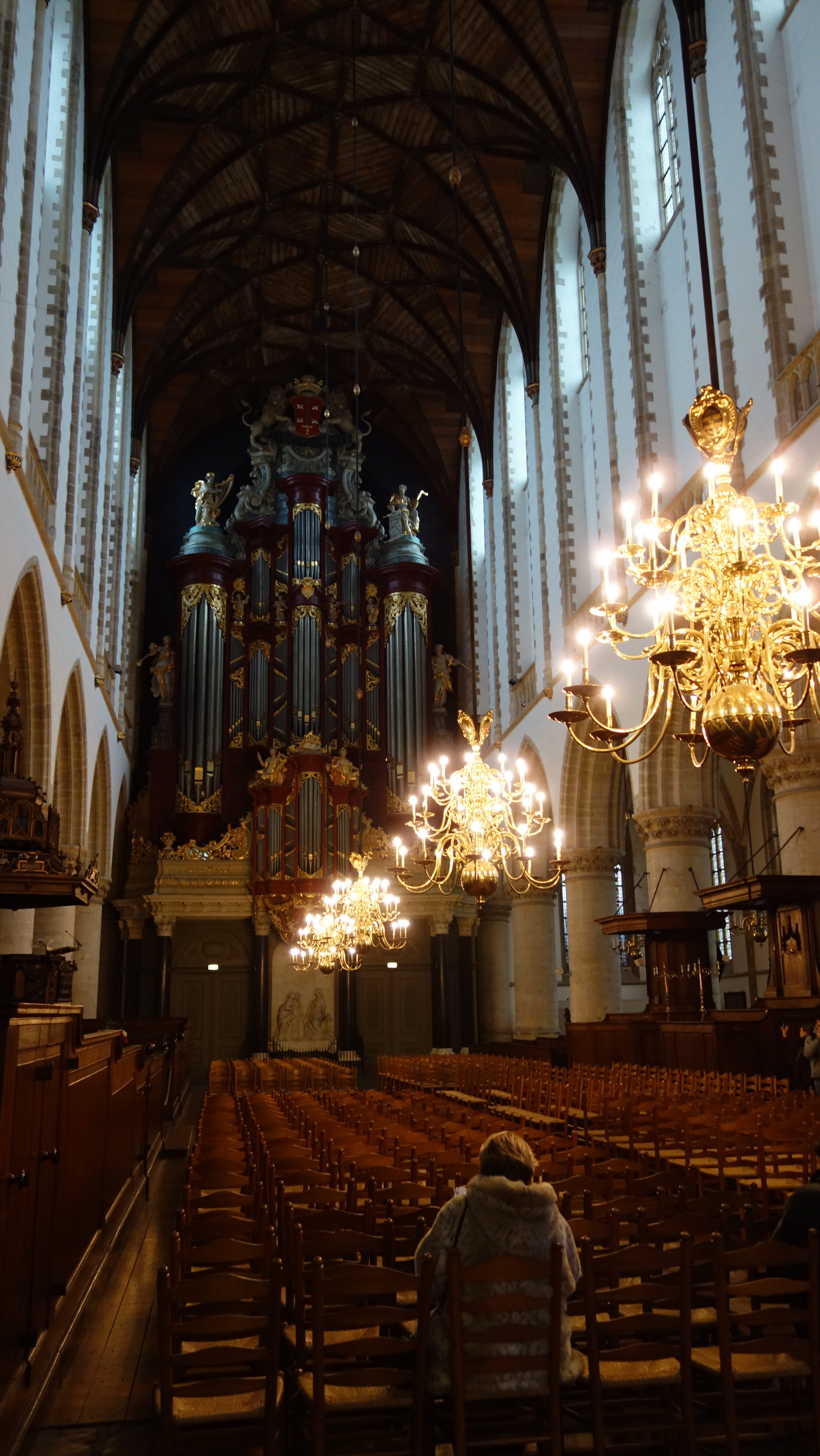
We went into the Church of St. Nicholas, which is under renovation in the front half (entrance) of the church. This church is also airy and very tall inside. The church organist was practicing while we were there, so that added to the atmosphere. There was also an exhibit of photographs around the whole church showcasing bald women, mostly women who had lost their hair to chemo.

We next toured the town bell tower. We got to see the drum that ran the bells in action (it activates every quarter hour). Then, Mer, of course, went out on the narrow ledge at the top of the tower, which I passed on. Instead, I read about the history of the biggest bell in the tower, which has been cast three times – once to be replaced, and once because the second one broke (although after a hundred years, it was finally repaired years in 2006). We finished up with a video on the unexpectedly complex manufacturing process for casting large bells; it is dozens of steps over several weeks. I had no idea, and given the technology used now, this is not how it has always been done.

The rest of the walk was around town, including taking us to a square we had not been to before, and which happily sold fries that were recommended in our guide book. The tour finished back near the castle, so we headed back home to rest for a bit before setting out for supper and a fairly early evening back at the hotel, happily well fed.


Belgium 2018 – Day 2 – Sunday – Ghent

Sometimes you are unavoidably confronted with your own middle age. As we were walking through the amazing center of Ghent, a store window caught my eye. I made a little noise of delight and trotted across the street. I was staring intently and happily at the window when Meredith came up behind me, saying, “Husband…” in a tone that meant something, but I was not sure why. I said, “Yes?” and was asked what I was looking at. I told here I was admiring the two models of the P-51 Mustang airplanes in the window, which she pointed out were right next to (and I do mean right next to) the large display of black and white postcards of nude women. I never noticed.

This morning, we took the train from Paris to Brussels, which takes about eighty minutes. We then transferred to a train to Ghent, which took about twenty-five minutes. During that time, a polite Belgian asked us where we were from, and so we started talking. From what I gathered though his good, but heavily accented, English, he has started his own bank with his own currency that would be legal tender anywhere, allowing for better exchange of goods and (more importantly to him) ideas and understanding. He gave me a one euro (?) dollar (?) mark (?) bill. He was very insistent that we should love ourselves and then everyone else, and that being joyful was the key to good health. He then helped Mer get her luggage off the train. A nice man, with an enormous dream.

We took a tram from the train station to the historic center of Ghent, and then found our hotel, which is a converted monastery; the room that Meredith booked for us is really large and really nice. I told Mer there must be some mistake, since I usually am the one splurging for nice digs. We actually didn’t see the room until later in the afternoon – since it was 12:30, we were too early to check in, so we dropped our bags and went back into town for lunch.

Ghent is pretty amazing. The town was founded on the confluence of two small rivers, and there are a few canals off the rivers as well. People use the waterways for touring and pleasure, and it adds to the charm of the town. There are about 8,127 churches (Ghent used to be very wealthy and was an important city), and there are lots of cute shops and restaurants.

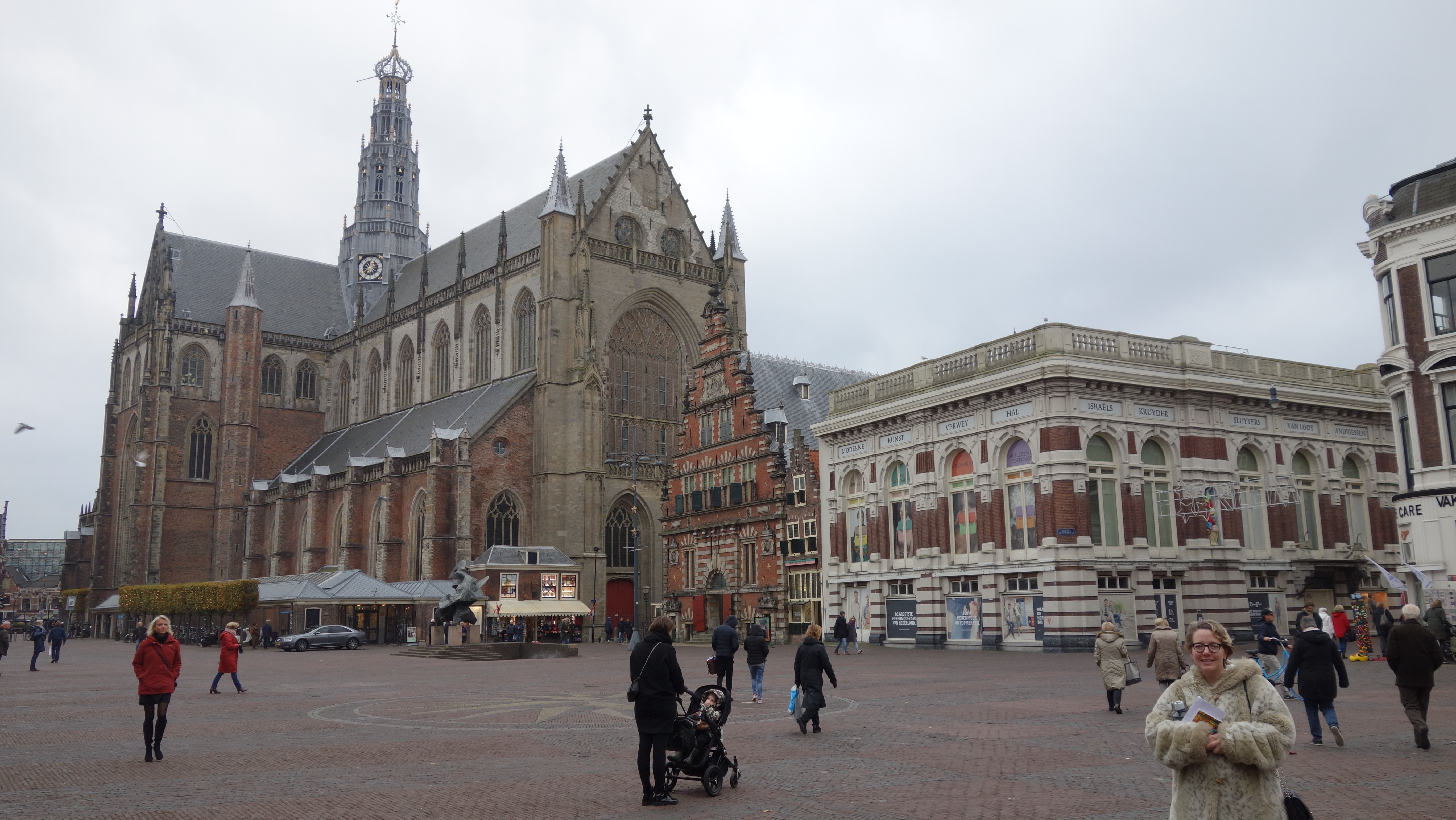
After lunch and getting checked in to the hotel, we went to Ghent’s cathedral, Saint Bavo’s. St. Bavo was a seventh-century lord who, after his wife died young, donated all his wealth to the poor and became a hermit. The church is quite interesting inside. It is very vertical-feeling, with a ton of open space and a one-hundred-foot-high ceiling. The altar and pulpit are ornate, and there is a good amount of decent art in the church. There are some odd and important things in the church too.

In one chapel is a statue of Father Damien, who ministered to lepers in Hawaii in the 1800s. His statue is quite lifelike, so I kept being startled when I kept seeing it out of the corner of my eye as I looked around the church.

In about 2015, a small whale was hit by a cargo ship, and the whale died. It washed up in Ghent. What do you do with the remains of a whale? You strip it down to the skeleton and hang it in the cathedral, of course. The church is using it to tie in to the Biblical story of Jonah (and the whale). Can’t say I’ve ever seen a whale skeleton in a church before.

There is a paining of Bavo by Paul Rubens that is very good. The most important art, though, is the altarpiece The Adoration of the Mystic Lamb. This huge altar painting is by the Van Eyck brothers, and it was the first painting done in oil by a master artist (around 1425). The detail is exquisite, and based on real human bodies, and must have been shocking and startling to see when it was dedicated. It also has a mystery attached – one of the panels was stolen in 1935, and an exchange was agreed on, but before the panel was returned, the man who claimed to know where it was had a heart attack, and his last words were something to the effect of, “My office – bottom drawer, key.” They found the key, but no one has been able to find the panel, so it is still missing. The panel has been replaced by a copy, but people are still looking for the original.

It was about 5:00, and we knew we would be eating late, so we grabbed some gelato before walking to a small street at the edge of the historic district, where we attended a small church service. Looking online, Mer had found an English-speaking church (Every Nation Ghent). We went, and it was geared toward the considerable college-aged population of this university town. I’m pretty sure we were the oldest people in the room, but it was fine. We sang some songs, and heard a sermon from an Austrian woman who lives in Spain with her Filipino husband. Every Nation Ghent indeed! The people were quite friendly, and we got to chat with a young woman who is in residency for pediatric care. It is good to go to church in a different country – it helps remind you God is bigger than America, and lets you see natives in a normal setting (besides shops and museums).

From there, it was supper and home. Mer took it easy on me today, getting me back around 9:30. She probably wanted to keep me from gawking at more shop windows.


Belgium 2018 – Day 1 – Saturday – Paris

Clearly, I still have it. I had only gotten as far as Paris’ baggage claim before the first young and pretty French woman threw herself at me, even with Meredith standing there. Mer thought the woman only wanted me to grab her luggage before it went by me, but that was clearly a flimsy excuse. Sorry, ladies – this one is taken.

The first day is a long travel day, and while our travel was smoothly uneventful, from waking up in Ohio to getting into bed for a nap in Paris was about twenty-eight hours. Lesson one – make sure your hotel is easy to get to by public transportation from the airport. Our hotel is really nice, and it is in a quiet business sector, but it is south of the Seine River, while the airport is fairly far north of the city. Getting to the hotel required two Metro trains and a tram, and then a half-mile wander through a maze of streets, all on a foggy brain. I need to remember this for future travel – make the first hotel an easy one to get to.

We did get to our hotel and checked in around 5:00, and we slept until 7:00. I was in charge of today, so we walked though residential neighborhoods, which we like to do, for about thirty minutes, ending up at a crepe restaurant with a limited view of the Eiffel Tower. After a fine meal, we walked over to the Seine, where I wanted to walk along the man-made island called the Ile aux Cygnes (Swan Island). It is only about thirty feet wide, and has good views of all the river traffic. Much of the path is lined with fine mature trees, and one end of the island looks up at the Eiffel Tower, while the other end is the location of a small version of the Statue of Liberty. We had never been on the island before, and it was a mellow way to be in the heart of Paris.

After the Ile aux Cygnes, we walked back to the hotel area. I had hoped to explore a park, including the scientific balloon you can pay fifteen dollars to ride up in, but sadly, the park closed at 9:30 and we got there at 10:30. Next time.

On to Belgium tomorrow, if all goes well. Paris got an abbreviated treatment today, but it treated us right well.


Belgium 2018 – Day 0, Friday – Toronto

Egad! A Friday near a major city, with a border crossing!

Normally, Meredith and I fly out on a Saturday, but it was much, much cheaper to fly on a Friday this time, so I took the day off. But I was quite anxious about crossing into Canada, and then having to drive from Buffalo to Toronto along what may be the most populous section of Canada, right around 5:00 on a Friday evening.

We are going to Belgium, but flying from Toronto to Paris because to fly to Brussels would have been $400-500 more than flying to Paris. Adding to the unusual nature of the flight was that our flight was scheduled to leave at 11:45 pm. At least we could sleep in at home. So of course I was up at 6:30 and Mer was up at 8:30. So much for hoping to sleep in.

The Toronto airport is about five hours away, so I figured eight hours with a lunch stop and border crossing and traffic. We ate lunch at home, so that saved time, but I was worried about Friday traffic. Add in the three hours of recommended time for international flights, and I thought we should allow eleven hours. Rounding the time, I determined we could leave at 1:00, which we managed.

Canadian border at 4:30, and we got through in ten minutes. Ah ha! Traffic galore on the Canadian side! I am wise! It cleared up after a couple of miles – it was due to construction. Somehow, passing city after city of a half-million, we sailed along, getting to the airport at 6:30, even with a snack stop.

Ah! But the airport loomed! Who knew what lengthy lines awaited us there?!  As it turned out, we got to the ticketing gate and were told we were too early, and could come back in ten minutes, which we did. They then sent us over to the business class check-in because that check-in was not busy. Security was a small wait, but not too bad. In the end, we were at the gate at 7:30, just six and a half hours after leaving our house. We were at the gate three hours before boarding. Ooops.

Supper in the airport is a fine way to spend time, especially when you are not rushed. I could not convince Meredith that I should spend time getting a massage. I guess she was stressed over the time crunch to board our flight.


France 2018 – Day 7 – Saturday – Nice and Paris

Meredith and I woke up sometime in the morning to the sound of thunder, and it was raining lightly when I ran out to try to get breakfast, but by the time we checked out of the hotel, it had stopped raining, and by the time we boarded our train to Paris, the sun was out. But sometimes things still pop up, and there was a mechanical issue with our train, so we had to get off and then wait for another train.

As such, we got underway ninety minutes late, which simplified our Paris plans. I had been torn as to what to do – I wanted to go to the Muesee d’Orsay, but it was going to be tight. Our original train was getting in at 3:45, and the museum closed at 6:00. Now, we were getting in at 5:30, so there was no issue with going to our hotel first.

We decided to go up the hill to the Sacre Coeur (Sacrd Heart) church area; the views of Paris are fantastic because of the hill, and the streets around the back of the church are full of restaurants. We took the Metro and walked (with stairs, of course) and got to the church to find the square full of people. It was a pleasant evening, but the crowds surprised me, it being still March. We got in the line to get into the church, and got in fairly efficiently, and got to stroll around the simple and elegant interior of the sanctuary.

We headed to behind the church for supper, and did a little art souvenir shopping first. Dinner was in a busy restaurant, but they seated us in a small room upstairs, so it was quiet. Supper was not quick, taking over thirty minutes to get our food, and about ninety minutes to finish dessert, but we were not in a big hurry.

We went back to the square to see the Eiffel Tower lit up for night, and then walked toward the Moulin Rouge so we could see it. Along the way, we found an open store that carried macarons, which Victoria had been looking for as gifts. She was very excited, and we laughed as she tried to make up her mind which flavors to get.

We did make it to the Moulin Rouge, and took an all-get-fired photo in front of it, but it was fun. We rode the Metro back to our hotel, bracing ourselves for the early wake-up call to start the long trip back home tomorrow. Lord willing, we will be back in Toronto by about 1:00, which could put us home by 8:00 pm. Then, work on Monday.

France was delightful for us for this vacation, and we had a great time with our group. We had good weather, most things went smoothly, and we ate some good food, saw some amazing sights, and generally had much fun together. It is hard to imagine spending a week in a better way.

France 2018 – Day 6 – Friday – Nice

Some days on vacation, you just get blessed. The forecast for today, even as of this morning, was rain on and off all day. We managed to get through the entire day and evening with just one short drizzle of about five minutes, and the morning was great, with puffy clouds and warm temperatures in the low 60s. We got a long day of touring in (my pedometer on my watch logged 14.2 miles for today), and we had a really good day.

Meredith N., Regina, and Shelby decided to do their own thing this morning (shopping and going to the Russian Orthodox cathedral), so Mer, Victoria, and I all set off about 8:30 to head over to Castle Hill, a high point of land on the east side of Nice where a castle used to be. The castle was destroyed in the early 1700s by King Louis, who did not want to risk having to fight the castle someday, but it is still called Castle Hill, and now there is a park and playground at the top. We walked through the flower and fruit market in the old town along the way to take in the sight of rows and rows of pretty flowers being sold.

There were stairs to climb to get to the top of Castle Hill, but Nice was kind enough (and wise enough) to supply an elevator. Sadly, it did not start operating until 10:00, and it was only 9:00. So, the stairs it was. There were several viewpoints along the way to stop and rest at, and the day was very fine for views.

We reached the top and wandered around – it is quite a large area on top of the hill. We came across a cafe that was just opening at 10:00, and since Victoria had missed breakfast this morning (other than a mini-croissant in the market), we stopped to enjoy a light snack and great views. We swung down the front of the cafe area to see the huge artificial waterfall, and then decided to take the elevator down to the seafront again. It was sunny, at least for the time being, and Victoria wanted to try being the needle in a huge human-sized sundial near the “I Love Nice” sign. Since Mer and I wanted a rain-free picture of the sign, we agreed it would be fun. The sundial was hard to figure out, because you needed to make some time-of-year correction we did not fully understand, so we moved around on the dial until we simply got the right time. Voila! Victoria was also kind enough to take our second picture at the sign.

We all wanted to visit the cemeteries at the top of the hill, so we went back up the elevator. The first cemetery was the Jewish one, and it was small and crowded, but was still in at least some use (based on the dates on the headstones). Next door was the much larger and less crowded Christian cemetery, which was also still in use. I assume the size difference in the two cemeteries dates back to a much earlier time when Jews would have been forced into smaller spaces, but I am not sure of the actual history.

We walked down the back side of the hill and the all the way around it, since that was how the road went. We went back to our crepe place for lunch, and the others showed up there toward the end of our meal, having just come from the Russian Orthodox church. That was a little funny, in that that was where we were going next, so we made plans to meet up later to go to the Matisse Museum.

We walked over to the church, stopping at a bakery along the way (it was a munching kind of day). The church is beautiful, in a traditional Orthodox style, even though it was only built about a hundred years ago. We went inside and were offered the chance to take a tour, which we were happy to do since none of us speaks Russian and we knew very little about the Orthodox faith. Our guide spoke good English and took us on a tour of the icons (pictures of saints) in the church. She also showed us a door that was built for the Tsar of Russia, but he was killed by the Soviets before he ever got to use it, so the door has been barred shut so that no one will ever use it.

The church was built fifty percent by the Tsar to honor his son who died at twenty-one years old of spinal meningitis while in Nice, and fifty percent by donations of Russians living in Nice, which had become very popular. Since it was built, Russians have continued donating art and icons to the church, so that it is very beautiful inside.

We finished off our tour with a small chapel outside the church that had been built before the church was constructed. The chapel honored the son who had died, and was built around the location of the bedroom where he actually passed away. It was brightly decorated inside, with some modern paintings based on traditional icons. The entire tour only lasted a little over thirty minutes, but it was very informative.

We swung by the hotel so I could look up the bus line we needed to get to the Matisse Museum, and then we headed over there. We met the others at the entrance around 4:30. The museum closed at 6:00, but we had read it was quite small. In we went.

I knew almost nothing about Matisse. His work looks really simple and abstract, sometimes looking like a sketch or caricature. But he did enough “traditional” drawings and sculpture, especially in his early work, to show how talented he was; the simple-looking art was a conscious decision on his part. The museum housed three floors of his art, spanning his long life. Since I cannot read French, I could not read the placards next to the art, so we all finished up fairly efficiently – we were done by 5:00.

Mer and I wanted to see the nearby Franciscan church and monastery/gardens, which the others had seen while waiting for us to get to the museum. We agreed to meet for supper at 6:30, and Mer and I walked the short way across the park to the church. It was simple and tasteful, painted with scenes from the life of Saint Francis. The gardens were not fully in bloom yet, but there were some flowers out, and there were pleasant views of the east side of Nice (away from the beach/bay).

The evening wrapped up, still rain-free, when we all met for supper and then gelato. Victoria and I wanted to get back to the hotel to rest, and the others went to the Promenade des Anglais. Mer told me they went to the fancy hotel, the Hotel Negresco, for drinks (which included hot chocolate). I was back at the hotel watching boules (a ball game like bocce) on TV. I like quirky foreign television, and sports do not require me to understand words.

Our rain-free (more or less) Nice portion of our vacation is drawing to a close. We have our five-hour train ride back to Paris tomorrow, and then home on Sunday. Nice has treated us very well.

France 2018 – Day 5 – Thursday – Nice, Cap Ferrat, Eze-le-Village, Eze-Bord-de-Mer

On vacation, you need to have transportation, even if it is just walking, which we have done a lot of. This vacation, we do not have a car, so we have spent a fair amount of getting to stations, waiting for trams and buses, then getting to where we are going, only to have to walk more. It is an okay way to get around, but when the more tech-savvy members of the group talked about using Uber to get a ride home the other night, it reminded me there are other ways. Sadly, Uber does not work for a group of six, so we are still bus-bound.

All of this by way of intro to getting out to Cap Ferrat, a small peninsula very near Nice. We left the hotel a little after 9:00, and after walking, riding a tram, walking, getting a bus, and walking, we finally made it to our destination on Cap Ferrat around 10:30 am; by car, it normally takes about 25 minutes. C’est la touriste!

Where we got to was well worth it – the Villa Ephrussi de Rothschild. The villa was built by a wealthy daughter of a banker, and she bought seventeen acres of land on the high ground on the narrow neck of land out to the peninsula. Here, with views in all directions, she built a lavish villa and sculpted seven elaborate gardens in the early 1900s. When she died in the 1950s, she left the place to the French government as a public space.

The house is impressive, with an indoor courtyard designed to look like an outside one. From it branch the main rooms – a couple of receiving rooms, a dining room, and Rothschild’s bedroom and bath. The upstairs had a viewing terrace, as well as more bedrooms. All the rooms had lots of windows for the views.

The gardens are amazing. The main garden directly behind the house includes a huge fountain that has choreographed water jets, set to classical music that plays every twenty minutes. We never heard the same music repeated while we were there, and the fountain was great fun to watch. Above the fountain was a Greek-style round temple, with a cascading stepped waterfall that fell into the main pool for the fountains.

From the main garden, you could wander through six other gardens – a rose garden (not yet in bloom), a Japanese garden, a rock garden, a Florentine (Italian) garden, a Provencal (local) garden, an exotic plant garden, and a Spanish garden. Scattered throughout the gardens were sculptures and fountains. We were there sufficiently early enough that we often had rooms in the house or places in the gardens to ourselves. It was grand.

We finished up around 1:00, and decided to split the group again. Mer and I wanted to go to Eze-le-Village, where we had seen the ruined castle on a hill when we had gone by on the bus the day before. The others wanted to get back to the hotel to change into nice clothes and then go to Monaco to at least see the lobby of Monte Carlo and other parts of the town. We all rode the same bus partway back to Nice; Mer and I got off early in order to climb up to the middle Nice-Monaco road to catch a bus back to Eze. Turns out it was quite climb, involving a lot of stairs. We were not sad to sit for a bit before the bus came.

Eze is not very big – mostly some shops on a couple of streets leading up to the former castle. We grabbed a quick crepe and ate it while we sat on a bench before proceeding up to the castle. Much of the former castle has been turned into shops and restaurants, and even a high-end hotel (starting at 370 euros a night). It was fun to wind through really narrow streets, looking in shops crammed into rock-bound rooms. We made our way all the way up to the top of the castle, where we paid to get into the garden there.

The views really were incredible. The mountains were on one side, and the sea on the other, and you could see in every direction. The gardens were well-laid out, with cactus on the sea side, and a Mediterranean garden on the land side. Sprinkled throughout were statues of semi-finished women, who all had different expressions on their faces; the less finished torsos seemed to suggest trunks of trees. It worked well for a garden.

We explored the rest of the castle, including making it to the church and graveyard that are up on the hill. We found some really narrow back streets, and got to see into one very fancy room of the hotel when the door was left open. We walked back down to the main road, where we stopped at a bakery to get a snack and ask where the bus stop was.

After thirty minutes of waiting for a bus, I decided this was a stupid waste of time. I thought it would be brilliant to walk down the Nietzsche Footpath, a steep and rugged 1.7-mile path down to the bigger Eze-Bord-du-Mer. What could go wrong? It seemed better than waiting for a stupid bus (which was going to be another thirty minutes before it came, if there was room to get on).

About seventy-five minutes later, after some rough footing, a few gasps of panic while slipping, and several astonishing views, we got to lower Eze. The Nietzche Footpath is not built for speed. Oh – it was named for Nietzche since he thought of the concepts for his book Thus Spoke Zarathustra while walking on the trail. How he could have thought of anything other than planting a firm foot, I’m not sure, but he managed.

I had planned on getting the bus back to Cap Ferrat to eat supper and then walk around the coastline, but that had disappeared in a fog of fatigue. We took the bus back to Nice, and then rode the tram, before walking to a restaurant for supper. We got back to the hotel around 9:00, on foot, of course. The others seem to be still out on the town – I hope they are having a wonderful time in Monaco. They can at least get a train back to the station in Nice, which should make for an efficient and comfortable end of their evening.

France 2018 – Day 4 – Wednesday – Nice and Monaco

Some days of touring with Meredith are a gamble, but she usually comes out a winner. You may walk, say, 13.7 miles in a day, but she has good things to go see. And, as a bonus, you can usually count on sleeping well that night.

Today, Mer let me sleep in until 8:00 am, with us meeting the rest of the group in the lobby at 9:30. Mer wanted to go see the Marc Chagall museum, and that did not open until 10:00 – thus the late start. We walked to the museum, which turned out to be up on a hill, causing some panting. Sometimes, you do have to suffer for your art. We got there right after 10:00 and got into the museum with a plan to meet back together at 11:30, since the free audio guide was supposed to take about an hour.

The Marc Chagall museum started out as the Biblical Message Museum, housing seventeen huge paintings on Biblical stories that Chagall donated to France, with the condition the government build a museum to house them. So Chagall got to be the first major artist who helped design a museum to house his work. The collection has since grown, so the museum got renamed, but the original seventeen paintings (and one mural) are still there on display permanently.

Chagall was born in Russia in a practicing Jewish family, and so both Russian themes and Jewish themes show up in his art. The stories he painted were all from the Jewish Scriptures (the Old Testament), but often he painted his hometown into the background. He also used the idea of Russian Orthodox icons, making sure that Moses or Abraham or David always looked the same in each painting to help identify them.

Chagall seemed to have a complex relationship to Jesus. He often depicted Jesus as crucified somewhere in his work, and the audio commentary said it was to represent the suffering Jew or more generally the suffering of humanity. I can see that, but Jesus was often painted into scenes of moments where God helps people (like the sacrifice of Isaac, or Jacob’s ladder dream). I’m not sure how that all works out for what Chagall meant, but I think there is a lot going on in his work.

His art is very modern, bordering on sketches. He crams his backgrounds with images, sometimes mixing Biblical stories, sometimes cramming in different times in the same work, sometimes adding strange creatures or plants. On the whole, I liked his work very much – I found it thought-provoking and interesting. I’m not sure I would qualify it as “pretty,” but I liked it.

We had lunch at the cafe, sitting outside (yay!). After lunch, Mer and I went back in to the museum to finish a small wing we had missed and to see the film about Chagall’s life. The others left to go to Eze-le-Village, a nearby town where they make perfume. Turns out the Chagall film, which was advertised to be in English, was in French, so we gave up on that pretty quickly.

We went back to the hotel to regroup, then to the train station to buy transit passes for the tram and bus system, so we could catch a bus to Cap d’Ail, a small(ish) town on the way to Monaco. We got off there so that we could walk along an ocean path into Monaco itself. The path had great views of the houses and buildings along the coast, as well as the ocean and the cliffs above the towns. We backtracked a few minutes to go out onto a very small peninsula park which could see toward both Nice and Monaco. The walk was a great way to get into the city.

Monaco is crazy. It is crammed full of buildings and ingenious roads and pedestrian ways that maximize use of space. There are signs of wealth everywhere, from high-end shops to luxury car dealers to advertisements for one-bedroom condos for 3.2 million euros ($3.9 million). We walked up the main hill in Monaco to the palace area. We passed by the palace, but did take in the cathedral, which is modern, but simple and peaceful. There are cute streets and shops around up on the hill, but we were pressed for time, so we took a bus from there to Monte Carlo, the famous casino. We could not get in, as we were not dressed for it, but we did see all the high-end cars parked out front. The cafe with the view of the casino was selling $35 cheeseburgers. We passed.

We then did something almost unheard of for us in Europe. We went to a chain. Starbucks. We needed a bathroom, and so we gave in. I do have to say that the hot chocolate and pastry we bought were excellent, and since it was a rooftop Starbucks, it may have one of the best views of an American chain shop anywhere. After the rest stop, we walked back to the bus stop, where we took a bus that brought us back to Nice along a higher road, so that we could see a different perspective. We passed thought the perfume town, which looked beautiful, and I now hope to get to it tomorrow.

Back in Nice, we went with a safe choice for supper – it was late, and I was not feeling adventurous, so we walked back to our crepe restaurant from two nights ago. Then, it was home to the hotel, where we caught up with the others and heard about their day (and they loved the perfume town, Eze-le-Village). I really did log 13.7 miles walking today, and I am really tired, but I came up all aces for tourism today.
France 2018 – Day 3 – Tuesday – Nice and the Gorges du Verdon

One way to get a good local experience when traveling is to hire a local guide. If you also hire one who drives, you save on a rental car AND you don’t have to drive on terrifying mountain roads. So, we met Cici this morning outside the hotel around 8:00 am.

Cici was was taking us on an all-day tour of “the Grand Canyon of Europe” – the Gorges du Verdon, which is the largest canyon in Europe. It is about two hours away from Nice, so Cici filled us in on Nice and the region as we drove along on the highway, until we got off in Grasse, which is known for being the first place to produce perfume:  perfumes have been made here since the 1700s. It is lesser known for the roads that go up and up into the mountains surrounding it. Beautiful views – glad I was not driving.

We continued along before stopping in an adorable little village, Castellane. The funny thing about Castellane is that it is the “big town” of the very rural area. It had a few places to eat, so we grabbed some tea and hot chocolate and used the bathroom. We did not have time to climb up to the ruins of the castle, or the even higher church built on the edge of a cliff above the town. Mer and I explored the in-town church and then ran back into the group as they explored the town. With its being March, the place was mellow and cute. Cici told us that in August, it is almost impossible even to move in the town, since it is the gateway to the Gorges.

We piled back in the van and got on a winding road that was hugged between a river and the mountains. Sometimes the mountains overhung the road. The van had a sunroof, which was fun to look out of, up the side of the cliffs. The river dropped away as the road kept rising, and then Cici took us down to a parking area where we could get out and walk down rock stairs to the river itself. The path down was dwarfed by limestone mountains, and the path continued on for miles. We took it down as far as the river itself. We did not test it out, as the warning signs told of how the river could rise quickly as the nearby dam raised and lowered the water level, but Cici told us it was very cold, as it was all melt water from the mountains, some of which still had snow on the peaks. The climb back up the stairs was tricky and induced some strained breathing in the group, but it was worth it.

For balance, since we had been to the bottom of the gorge, Cici took us to a viewpoint called Point Sublime. Walking out to the point was eerie – mostly bare limestone with some scrub brush clinging to it, with looming mountains all around. It felt almost alien. The point was okay for me – a good, solid viewing platform with good handrails. I stayed away from the edge, but was otherwise okay. Mer loved it, of course. Victoria went with us, but the others decided to hang out on a rise of rock part way along the Point Sublime trail.
Cici was then going to take us to another cute villiage for lunch, but it turned out the road was closed until Saturday for road work. So she improvised and took us to the village the long way around, which was how we were supposed to go back home – through the mountains and over the second highest bridge in Europe. I was sitting on the passenger side of a high-up van, so I could see down into the gorge. Usually straight down. I suddenly found the view of my lovely wife, sitting beside me, to be intoxicating. I could not take my eyes off of her. When we got to the bridge, I was slightly ill at the height of it, followed by a climb out of the bridge area. Ugh.

Happily, the landscape calmed down some as we pulled into a small village for a late lunch. We had a great meal in Aiguines. It was a very welcome break from the overwhelming drive.

We finished the touring part of the day in an amazing little town called Moustiers-Sainte-Marie. The town was pushed up against some cliffs, with a small river running through the village. Partway up the cliff was a small chapel, and way above the chapel, strung on a wire between two massive rocks, was hung a star. Tradition holds that a knight said that if he came back from the Crusades, he would hang a star between the two cliffs. Nowadays, the star is put in place by helicopter.

We had about forty-five minutes to explore the town, so Mer and I checked out the twelfth century church in the main part of town, before seeing if we could climb to the chapel on the cliff. Mer was kind enough to let me go ahead, and I made it up the switchbacks to the church in about fifteen minutes, which gave me about ten minutes to pray inside. Mer came along then; I was very proud of her for persevering. We walked down together and got back to the group only a couple minutes late. The others had explored the shops in the village and had seen us making our way down from the chapel.

Cici then drove us back to Nice, which took about two hours. She dropped us off about 6:00 pm, having done a really excellent job of driving and narrating and answering questions. Getting a guide was really the way to go.

After a thirty-minute rest, all of us walked over to the old section of Nice, where we had supper at a pizza place owned by actual Italians, and we followed that with gelato in the old town. We went back to the hotel, where Mer and I retired to the room around 9:15, while some of the others went back to the seafront to check out the main classic hotel in town, the Hotel Negresco, where you are allowed in if you visit the bar for a drink or some food.

It was a day of highs and highs, as it were, but well worth it.