Author Archives: mriordan

Ireland 2023 – Days 0 and 1, Saturday and Sunday, Londonderry, Northern Ireland

We certainly have much to be thankful for – this is our sixth trip to Ireland and our sixth Thanksgiving trip to Europe since 2016. It’s an abundance of cultural riches, and we love it. This time we are traveling with our CVCA colleagues Julia and Sydney.

We left, as we do most of the time, from Toronto because of the cheap airfare that tends to be about half of what it would cost to leave from Cleveland or Detroit. We had a smooth go of it, leaving at 8:00 am for a 5:30 pm flight. We got to the airport at 2:00, and we were at out gate by 3:00. The flight over was fine – I managed to get a bunch of fitful naps while Meredith graded, and we got to Dublin over thirty minutes early. We picked up the car and drove the three hours to Derry, with much of the drive in the dark. Welcome to a northern country in the late fall. (I will use the name Derry instead of Londonderry because A) Derry is shorter, and B) all of my Irish songs call it Derry, and C) we love the show Derry Girls.)

We arrived at our B and B at 9:00 am, and while one of our two rooms wasn’t ready yet, we were invited into the breakfast room and encouraged to help ourselves to various foodstuffs. There is a film festival in town this week, so I met and talked to a German filmmaker who has a short film showing on a German man who decided to go fight with the Ukrainians, and the reaction of his family. It was an interesting conversation.

We stowed our gear in our one available room and headed out to explore Derry. We walked down to the Foyle River and walked across the very pretty Peace Bridge, which was built in 2011 and joined together the Catholic and Protestant sides of Derry. There’s a riverside park on the other side that we checked out because it was full of tall poles as an art installation – they are supposed to be lit up at night to cast interesting shadows, but it was still day.

We walked back over the bridge and up past our B and B, past St. Eugene’s Cathedral at the top of the hill and over to a smaller church – the Derry Donegal Christian Fellowship. It was a good service, with a couple of speakers giving short meditations, and music for about thirty minutes, and a sermon on how Paul debated with the intellectuals of Athens, and how all the philosophies discussed there would not have offered the hope and peace that Jesus promises and gives. The people were very friendly, and for a small church, it had a ton of kids and was also very multicultural (for example, after the service, we were invited to coffee by a Romanian man, an invitation we had to decline for jetlag reasons).

After church, we went back to the place that will be our home for the next few days and slept for three hours and showered. Then, back out again. We went down to the river again, where we tried to check out a craft fair that a woman at church had recommended, but the fair was closing down by the time we got there. We ate supper at a nearby Chinese restaurant, and then walked along the river, past the Peace Bridge, to the next car bridge, where we wanted to see a sculpture of two people reaching for each other over the river. It was in the middle of a car roundabout/rotary, so we couldn’t get right up to it, but it was worth seeing even from a distance.

We headed from there up the hill to the old walled city. The walls still exist and are about one mile around. We went into the old town, and to a small square where there is a WW I and WW II monument that was decorated with dozens of wreaths made from poppies. We’ve seen that often at British monuments – it seems that WW I in particular still has a place of remembrance in the British psyche.

There look to be a ton of lights strung for Christmas all through the old town, but they weren’t on yet. I’m hoping we’ll get to see them before we leave on Thursday. We walked down out of the old town and back to the area where we had supper, and then back home. It was only 8:00, but an early night on the first day isn’t a bad thing. It was a fine day of touring, and the rain even mostly held off (at the end of the day, there was a light mist for which we didn’t even need umbrellas). I’m thankful to be back in Ireland again and looking forward to tomorrow while happy with what we did today.

Maine 2023, Days 7 and 8 (Friday and Saturday) – Portland and Rockland with Camden

Friday was forecast to be rainy all day, and so I had planned a mellow at-home day of games and movies. So, when the forecast suddenly improved, I was left scrambling to figure out tourist things to do. I came up with a couple of ideas of things in Portland.

Meredith always likes to get out on water when we are in places where that is an option, and I was tired from several long days of lots of walking and hiking. So, when we can get a boat tour, we can sit AND see things, something we call butt-sitting tourism. I found an hour-and-forty-five-minute harbor tour of Portland harbor, covering several lighthouses and forts, as well as some of the harbor islands. We drove down and had the usual slightly difficult and expensive time finding parking in Portland’s Old Port, but we managed. And so we had a good time on board the tour boat.

In addition to the lighthouses (including the famous-for-Maine Portland Head Light) and forts, we did see beautiful homes, both on the mainland and on islands. We got to see a couple of islands that are now city parks that you can get to via boat or causeway, and we saw sea birds and a few seals. The weather held, although it was cloudy for the last half of the tour, and many people retreated out of the wind on the deck, going into the cabin below. We stayed on the deck for the better views.

After the tour, we fueled up on some snack food and toured a shop or two. I then realized we had time to make the 4:00 train for the Maine Narrow Gauge Railroad. The four-car train does a three-mile out-and-back trip along the harbor and a track that is only two feet wide (standard tracks are four feet, eight and a half inches). It was cheaper to build narrow gauge railways, but they couldn’t haul so many people or so much cargo. Anyway, the train was a very relaxed tour, going about four miles per hour, but it was relaxing and interesting, and all the seats faced the harbor. Another successful butt-sitting tour. We headed home via Lewiston so we could eat supper at Roy’s Hamburgers again.


Today (Saturday) was forecast to be cloudy in Rockland all day, so we headed that way. As you may remember, when we were there the other day, fog rolled in later in the day, so we couldn’t see much near the ocean, so we skipped driving up Mt. Battie in Camden. With clouds today, we figured we could fix that.
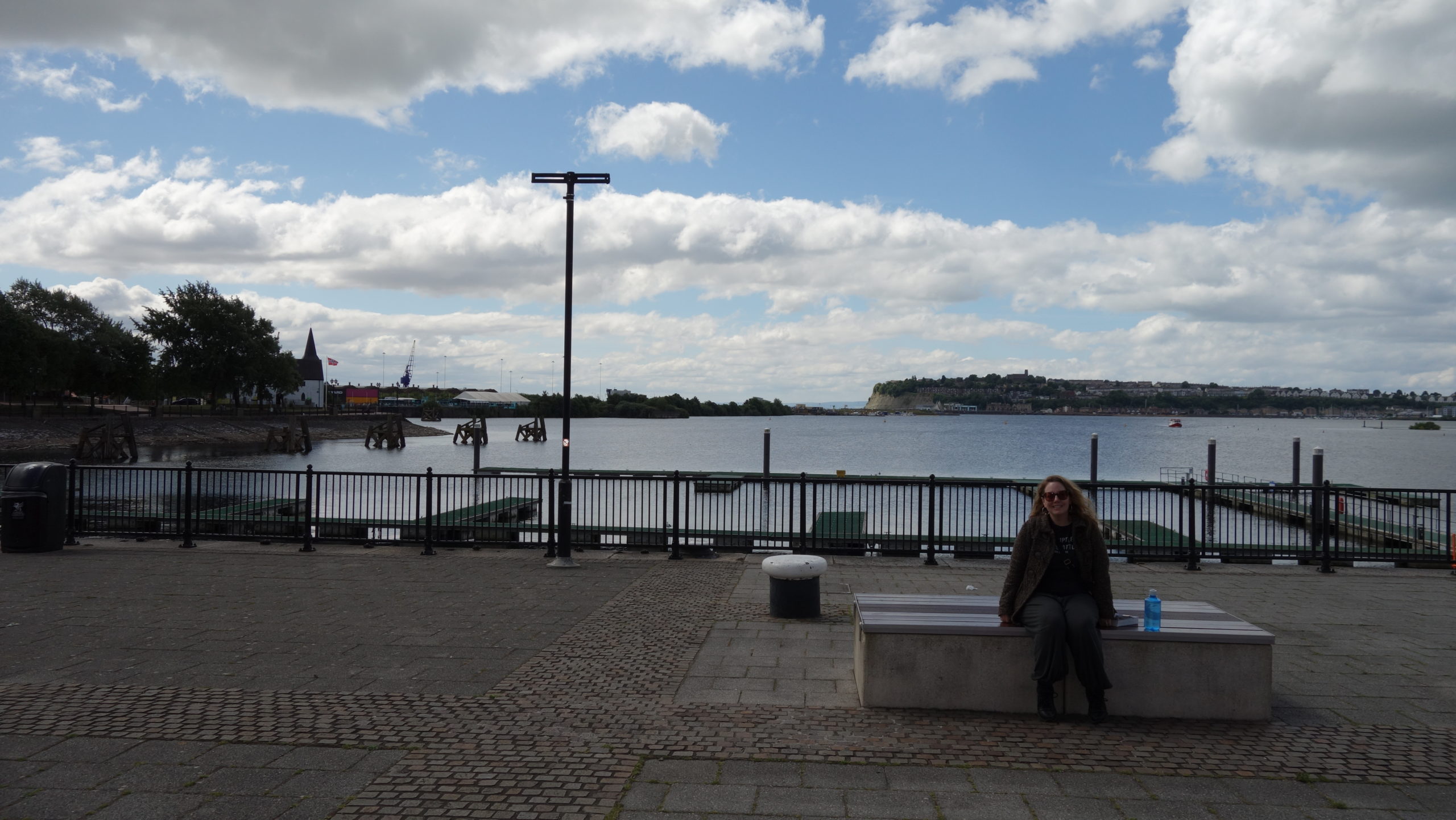
So, when we got to Rockland about 11:00, we were greeted with thick fog. We improvised, walking and window shopping down one side of Main Street and up the other. It’s a fun shopping scene with many galleries and quirky shops.

Once we had finished Main Street, the fog had lifted to low clouds, so we drove over to the Samoset Resort to get lunch on the outside deck that overlooks part of the golf course and the ocean. We couldn’t quite see to the other side of the bay, but we could see quite a ways out. Then the fog started rolling back in. As we finished lunch, it was getting hard to see the sea.
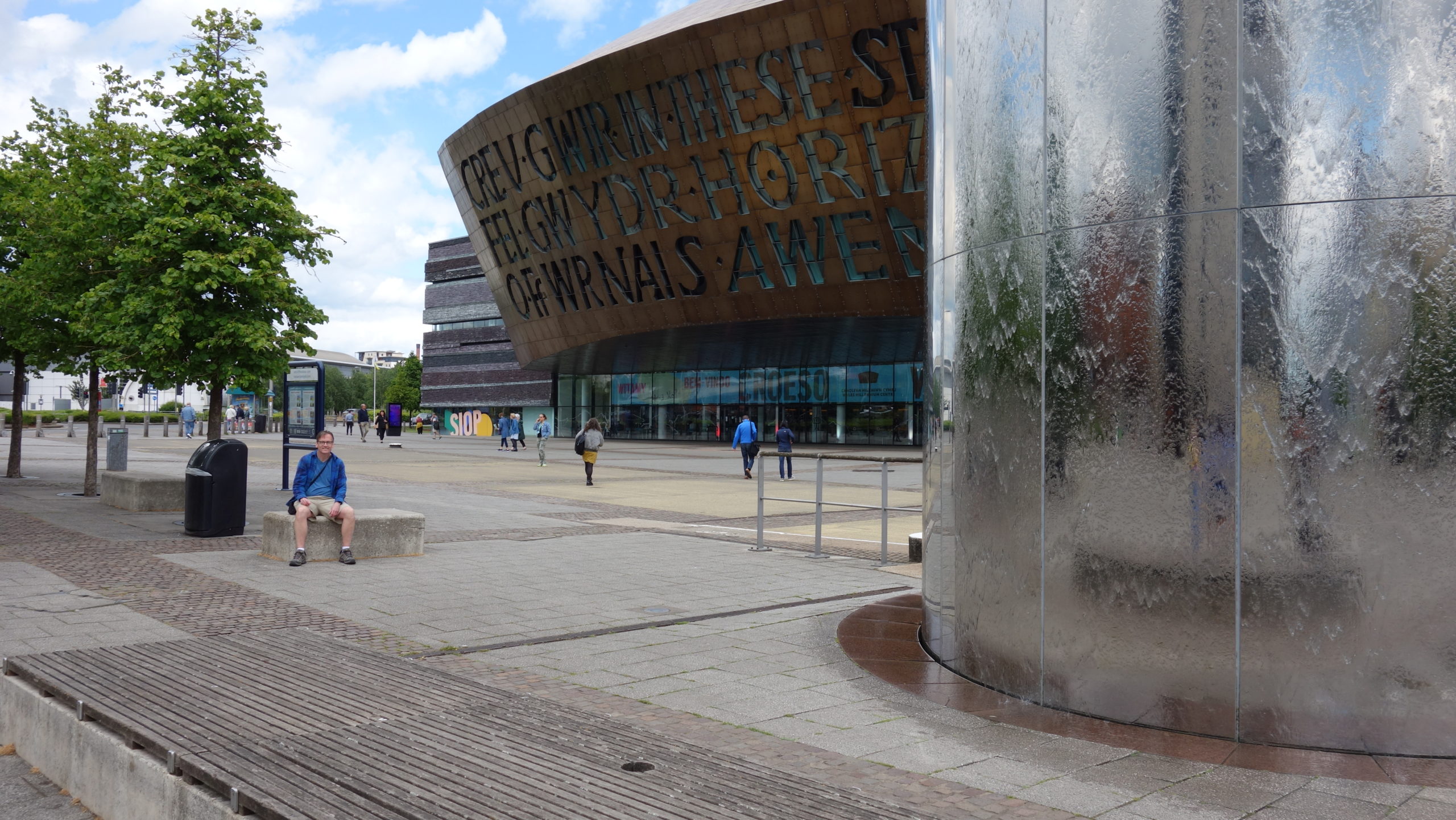
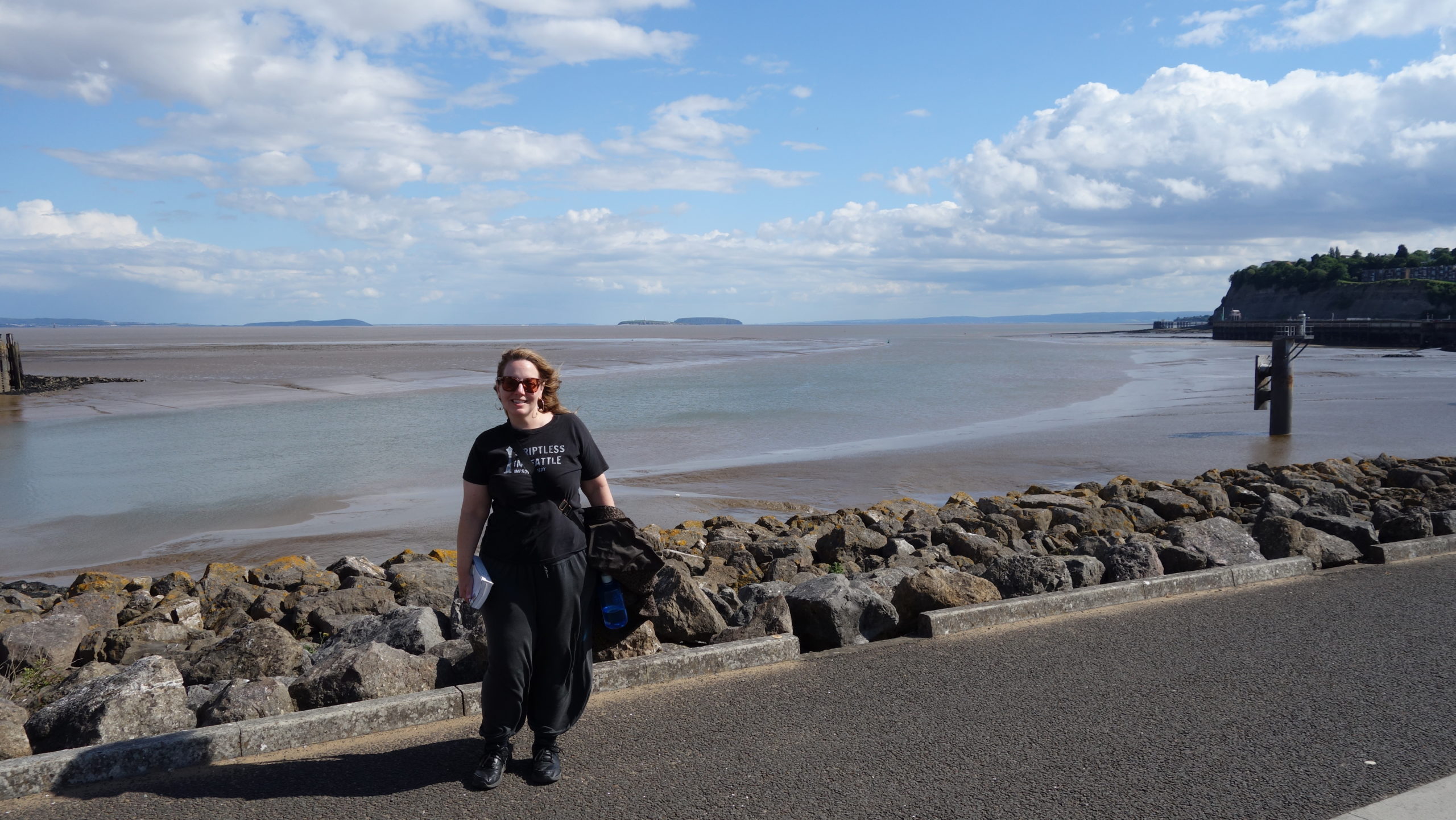
We went up to Camden anyway to see if the weather was different. As we drove, the fog gave way to low clouds, but upon getting to the town, we couldn’t see any of Mt. Battie, not even the base. So we turned to window shopping again, and spent a long time sitting in the park next to the harbor. At one point, the mountain made a brief appearance, but by the time we got back to the car, the moment had passed. We drove home. We were sad to have missed driving up to Mt. Battie and the views it offers of the coast, but we had still made a good day on the coast. We ate a quick supper at home and finished the day with ice cream beside a river in the next town up the road, Wayne.

And so wraps up the Maine portion of our trip. We were going to stay another day, but it is supposed to rain pretty hard all day tomorrow, so we figured we might as well use the wet day as a travel day. We’ve booked a place in Ithaca, New York, which is a pretty town, so we can continue the touring there if the weather is good and we get there efficiently.

Maine has been a fun and delightful time.

Maine 2023, Days 5 and 6 (Wednesday and Thursday) – Acadia National Park and Pemaquid Lighthouse with Rockland Breakwater

Wednesday was forecast to be a beautiful, sunny day, if hot inland, so we decided to make that the day we would go to Acadia National Park, which is on Mount Desert Island, about three hours away from Livermore Falls. Brianna had indicated that it was the one place she would like to go in Maine, so away we went.

I had big plans for the day – get to Acadia and hike along the ocean, then go to Jordan Pond House for lunch and maybe hike around Jordan Pond, and finish up with driving up to and hiking to South Bubble Mountain, one of the mountains that overlooks Jordan Pond.

Right. We got to Acadia and parked about 10:00. We were near Thunder Hole, which is a tidal channel that booms when waves crash in. We checked it out, and it wasn’t booming much, but we sat on the rocks and looked at the ocean for a time, which became the go-to activity of the day. We found about half a dozen places we thought were good sit-and-watch spots over the course of the day.

We hiked south on the Ocean Trail, which is a fairly easy hiking trail along the ocean from Sandy Beach to Otter Point, a four-and-a-half-mile round trip. The sun was warm, but the ocean breeze was cooling, so we were comfortable. We took things very easy, stopping often to look around. We watched a few cliff climbers along the way, which looked terrifying, even with the ropes. We didn’t see too much wildlife (some seabirds), but the ocean crashing into the rocky shore was endlessly fascinating to watch.

We got to Otter Point and turned around. The trip back was much faster, since we didn’t stop, and we got back to the Thunder Hole area around 1:30 or 2:00. We bought some water and ate some of Brianna’s planned-ahead granola bars, and plunged back onto the trail to finish it by going to the beach. That part of the walk was more crowded and less scenic, but still had some pretty places. The beach itself was busy without being over-crowded, and is a rare (for Maine) sandy beach. Meredith waded a bit, and we headed back.

By the time we got to the car, it was close to 3:00, and I began to realize that my original plan was overly ambitious. We drove to the Jordan Pond House, where we ate a light lunch of popovers while looking out at the pond. It was a pretty spot for a spot of lunch. By the time we finished eating, it was 4:00 and time to head home. Because of some delays and stopping for supper and then, afterwards, dessert at Fielder’s Choice, an ice cream stand in Winthrop, we finally got home after 9:00, for a fifteen-hour day. Whew.


Today (Thursday), we started out late, as all three of us were puttering around (and I had to turn around to get my forgotten camera). As such, we didn’t get to Pemaquid Point until about noon. Pemaquid Point is home to a pretty lighthouse, but more importantly for us, it features some pretty incredible rock formations that slope down to the sea, where the waves hit the rock from many directions. If you like watching the sea, this is the place to do so. We ate some baked goods we had picked up near the Point, and then we spent about two hours moving from spot to spot, watching the sea. We could have stayed even longer, but Mer still wanted to visit her parents’ and grandparents’ graves in Rockland, see Rockland’s breakwater, and drive up to Mount Battie in Camden.

We did stop at Moody’s Diner for lunch/supper about 3:00. Moody’s is a local institution, and so we were pleased to get Brianna there, where she was able to be introduced to Maine blueberries in the form of pie. For those who don’t know, Maine blueberries are much smaller than normal blueberries and are sweeter. They are raked off of ground-hugging bushes rather than picked. Brianna proclaimed she liked them.

We drove up to Rockland, to the cemetery. Mer’s grandparents’ gravestone was in great shape, but her parents’ stone was covered in a grey moss, so we cleaned that up.

On to the breakwater; Rockland’s breakwater protects the harbor, and the breakwater is just shy of a mile long. We walked out to the base of the stones, which you can walk out on, when I remembered I needed my hat and sunglasses since the sun was shining (except for some light, wispy fog on the far side of the bay). I ran back to the car to get them, and ended up chatting with a retired couple who were sitting in their yard. The husband had taught in Livermore Falls until 1979, so we talked about people we knew.

I headed over to the breakwater again, to find Mer and Brianna coming to find me. I had thought they had headed out on the walk, but they had waited for me. As we started the hike out, the fog started drifting in. The far shore disappeared, and then some of the boats, and then the bay. I knew we were in for real fog when both the lighthouse and the shore disappeared. It was an odd sensation to be visually stranded on the breakwater, but very cool as well.

We made it out to the lighthouse, which favored us by materializing out of the mist. We turned back and quickly lost the house in the fog again. We finally saw the shore when we were about ninety percent (or more) of the way back. We gave up on the idea of driving up the coastal Mount Battie, since we wouldn’t see anything, and so we started to drive home. We drove out of the fog in about five miles. The coast is a strange creature.

So we had two excellent days on the coast. Saturday is starting to have a better forecast, so we may head back there to try Mount Battie again. Tomorrow’s weather forecast keeps vacillating, so we will probably have a low-key local day. After two long tourism days, we can use a bit of rest.

Maine 2023, Days 3 and 4 (Monday and Tuesday) – L.L.Bean’s and Western Maine

Monday we had rain forecast for all day, so we looked for indoor things to do that would still be Maine-related. We struck on going to L.L.Bean’s, a world-famous outdoor store that is based out of Maine. The stores (note the plural) are in Freeport, which is a little over an hour south of Livermore Falls.

It seems as if many people had the same idea that we did – we had trouble finding parking in the lots (note the plural). We found parking in a remote corner of a remote lot, so we were good. The rain had stopped for a bit, so we didn’t get wet while wandering around. It was like that all day long – some rain and then it would stop.

Bean’s has three stores – the home store with bed and bath stuff, the bike/kayak store, and the main store, which is clothing, camping, hunting and fishing. We popped into all three. The employees we interacted with were all very friendly. You may pay a premium for Bean’s, but there is good service.

After Freeport, we drove up to Auburn for lunch. We swung by the Auburn Mall because they advertised a for-nerds store, but that store (along with many others) was closed at 3:00 in the afternoon, which was odd. For lunch, we ate at Roy’s Hamburgers, which is a must-stop for me when in Maine. We ate in the car since it was windy and starting to rain again.

I took back roads home so I could show Brianna the Norland’s Living History Center, an old farm still run as if it were two hundred years ago. We also went into the actual town of Livermore Falls so Brianna could see my old high school building, which is now empty.


Today (Tuesday) was supposed to be good weather by early afternoon, but the day started out rain-free, so we left in the morning around 10:30. We wanted to explore western Maine, and we started about an hour away at Coos Canyon. Coos is a canyon with cool rock formations that are easy to climb around on. Normally. Maine has had an unusual amount of rain over the last six weeks, and Coos Canyon showed it – there were very few rocks showing, and the torrent encouraged wise viewing distances.

From Coos, we drove northwest toward the Rangeley Lakes region, going over the Height of Land, which is a dramatic pull-off overlooking several of the lakes and multiple layers of western mountains. We lingered there for some time.

We drove into Rangeley, where we ate lunch on a patio overlooking a small lake (on the back side of the town) that I hadn’t even known had existed. Brianna then got tea from a coffee shop, and we walked down to Rangeley Lake to look at the mountains and the water.

Then, on to a scenic drive west, dipping briefly into New Hampshire and back into Maine near Grafton State Park. We drove slightly past the park to Step Falls, a nature preserve of seven falls and pools. When we had been there a decade ago, the pools were crystal clear and great for wading in. Again, not today. We walked the mile back in to the falls, and the water rammed its way down over the rock faces. What pools were visible were churning masses of water. We still managed to find a few rocks to sit on and watch the water and mountains, but no wading today.

One last stop – Mer wanted to go back two miles to the park to see Screw Auger Falls, so we did that. The falls there drop into carved-out shafts of rock. It’s very dramatic, and more contained than Step Falls.

That left the hour-and-fifteen-minute drive back home, getting us to Livermore Falls around 8:20 pm, completing our ten-hour tour day. We took good advantage of the pretty weather.

Maine 2023, Days 1 and 2 (Saturday and Sunday) – Middlebury (VT) and Ogunquit (ME)

We’re back in Maine, and we brought along our colleague and friend, Brianna. Brianna had never been to the Northeast before, and our showing around our friend Jacob back in 2016 had been a fun time, so we decided to try again.

We headed out Saturday morning, and after an uneventful ten hours or so, we ended up in Middlebury, Vermont. Mer and I graduated from Middlebury College back in The Day, and we love Vermont, so we thought that it was a good place to show Brianna. We ate on a restaurant patio next to Otter Creek, and then spent a happy, if somewhat humid, two sunset hours touring the college campus and a little bit of the town.

We spent the night in Rutland (forty-five minutes south of Middlebury), and decided to head toward southern Maine, so we planned on crossing over Quechee Gorge, the deepest gorge in Vermont. We managed to do so, but we had to take a long detour since the main highway was posted as closed. Once we got to the gorge, we hiked the trails there for about an hour, which was another fun and humid time.

On to Maine – we were delayed a bit by traffic and a self-imposed detour in New Hampshire to get around it, so we got to the cute coastal town of Ogunquit around 3:00. We ate a handy lunch/supper combo at a restaurant that had some views of the ocean, and then we walked along the Marginal Way, a mile-ish long paved trail along the ocean. The fog was slowly rolling in, which was pretty. It was a good intro to the coast.

We left the coast around 6:30 and got home to Livermore Falls at 8:30. And so, we tour on today, looking for indoor things to do since it is raining all day today.

Lithuania 2023, Reflections

“Why Lithuania?”

We got that question a lot as we prepared for this trip. And the general sense of our answers was either “We’ll find out!” or the Mt. Everest of tourism – “Because it’s there!” We didn’t know much about the country apart from our research, and there are no world-known sights like the Eiffel Tower or the Roman Coliseum. But it’s in Europe, and Mer wants to see all of Europe, so we were going.

I’m very glad we came. It’s a pretty country with friendly people. While it lacks Alps or cliffs, it does have wonderfully explorable Old Towns in a couple of cities, and while the Curonian Spit isn’t widely famous, it should be. I’ve never seen anything quite like it.

Some general reflections of the country that didn’t fit in the other 21,000 words I wrote.
The people are bend-over-backwards friendly. I only had one “meh” interaction in two weeks, and that was with a cashier at very close to closing time. She was probably tired. We had wonderful interactions with waitstaff, from the waiter in the manor house in Kretinga who didn’t know much English but was trying very hard, to a charming waitress named Gabija (“Gabby”) whom we met at breakfast this morning. She wanted to ask us about the US, and she has promised to e-mail us a list of things to see in Lithuania. Museum guides followed us around to make sure lights were on and to point the way to the next room. Great people.

The roads are excellent. After a trip to Cornwall last summer and a couple of trips to Ireland last year, it was good to have wide roads. I still don’t always understand the signs as I’m driving, but we made do. Electric scooters are common here, and not just rental ones. People own electric scooters to get around on in the dedicated bike lanes in almost every town.

I’m pleased that American culture hasn’t wiped out local cultures. As much as I love American culture, it’s eye-opening to see how people think differently, and the difficulties of trying to figure out local customs always make me relax more when I get home. One great example – the light switches for bathrooms are on the outside here for every bathroom. Normal Matt interaction with a bathroom: Matt walks up to the bathroom door and pulls on the push door. Matt worries it might be locked and doesn’t want to be the impatient-rattle-guy. Matt gently pushes on the door. The room is dark. Matt instinctively looks down and then remembers the switch is outside the door. Matt takes two steps back (in more than one way) and flips the switch. Nothing. Still dark. Flick. Flick. Nothing. Flick, flick, flick. Sudden dawning that Matt is turning the lobby light on and off as the staff hurries over to help the clueless tourist. (This actually happened.)

Lithuanians now hold my spot for the number-one outdoor-loving people, displacing the long-reigning Austrians. Every little town has multiple parklands with trails. There is outdoor sculpture everywhere. Extensive playgrounds for kids and ball fields of several kinds are in many parks. And, new to me, there is outdoor workout equipment in many parks as well, even in towns of just 4500 people. Maybe it’s the long winter season, but Lithuanians love being outside.

A coming fashion watch to keep an eye on – there was a surprising number of women who had very long hair. Hair down to the waist was something we saw every day (not on every woman, obviously), and one woman had hair that came down to her knees. It will be interesting to me to see if that spreads to the US over the next couple of years.

Once in a hot air balloon is enough. Done that.

Food, even familiar food, tastes different. That is always the case in another culture – I’ve even seen that as close to home as Canada. It’s good thing to try, and a source of great comfort to get back to my favorite foods when I get home.

Mer and I think that Lithuania is the love-child of Maine and Ohio. Of what we saw, the country is pretty flat, like Ohio, but the coast often reminded me of Maine (except it lacked the numerous small islands). Pine trees grow everywhere here, and that felt like my erstwhile home as well.

I didn’t see many reminders of Soviet rule, which is as it maybe should be, since Lithuania got its freedom over thirty years ago. Many buildings are new, and people seem happy and thriving. There are still Communist-era buildings about, but more and more newer structures are going up.

The main odd thing that struck me was the lack of people in tourist places we went. We were often alone or nearly alone in museums, and even some restaurants. I hope that changes for Lithuania – it seems an especially attractive place to come to from other places in Europe. And while I would probably direct new-to-Europe travelers from the United States to London, Rome, Paris, or Ireland, Lithuania is a worthy place to come for people looking for a more intimate European experience. So, why Lithuania? Because it’s here. And you should go.

Lithuania 2023, Day 14, Monday – Birstonas

Sometimes I luck out. Birstonas wasn’t on one of the webpages I used for planning – it didn’t make the “Twenty-seven Top Things to Do in Lithuania” rankings, although it made the “Even More…” list. Mer’s guidebook mentioned it, but not in great detail. So I’d debated hard about ending the vacation in a town so little known and researched by me, but I saw that it was surrounded by a river on three sides, and I knew it was a spa town. I figured it had to be pretty.

It is. We got going today around 10:00, and we spent four hours strolling the town. I had very little in the way of a plan. I guessed there was a river walk, and I wanted to take it. There was, and we did. It was scenic, with the river on our left, and the far bank was covered in trees. Our path had mown grass down to the riverside, and often had parklands on our right. We passed an ice cream stand about 11:00, and I took it as an excuse to sit and watch the river. Or I used the river as an excuse to get ice cream. Chicken/egg.

We broke from the river toward the south end of town in order to use a free bathroom. That was across the street from a church, so we crossed over to look at it. The church itself was closed, although the front door was open and gated so that people could look in. Then we saw we were next to a park with pretty flowers and sculptures. And then there were children splashing in something that turned out to be a shallow basin. In view of a very orange building which was a mineral water tap (it is a spa town, after all).

We got back on the last bit of the river walk, which passed more park land, a tree-lined path, and a huge statue to one of the Grand Dukes of the Duchy. The path ended at a pretty large hill compared to the flat town, so we took the winding path up to the top.

The views up there were great. It seems the Grand Duke built a lodge on the hill, and you can understand why. The hill overlooks the river where it turns sharply east, and the taller parts of buildings peek out from the numerous trees. We sat up there enjoying the view, the breeze, and the birdsong for about thirty minutes. We also saw there were much more direct stairs we could have climbed, so we took those down.

As we got to the bottom of the hill, Mer spoke magical words – “Is that a ride?” She had spotted off to one side an “alpine” coaster. It may be the smallest alpine coaster I’ve seen, but we certainly had to try it. And it was only eleven bucks for both of us to ride. Sweet. We had to wait in our little coaster cars while the people in front went first. The track was short enough that only one person could be on it while another was on the accent hill. Mer was in front of me, and she got to go up. As I headed up the climb hill, I saw her zooming down, laughing her head off. She was having a great time. I understood at the “top” of the hill – there was a little section more to go up, so the coaster was longer than we had thought. It was a kicky little ride. The designer(s) had made the track longer by making it wind around, which meant multiple tight corners where you were pulling some Gs. It was plenty fast enough to be fun. I got off at the bottom, checked my map to see if we had time, and then bought two more tickets to go again. What fun.

On the way back to the hotel, we walked by the shallow basin area again and saw that people were walking around with their shoes off. There was a track around the basin and fountain made of various materials, and you were meant to walk on them. We decided to try it. Walking on the different textures, according to my tourist map, “…strengthening the body, strengthening the immune system, cheering.” I’ll tell you that walking on a pit of pine cones is not cheering. Ugh. I made it all the way around the track, and Mer made it halfway before she sensibly opted out. We both then waded in the (presumably) mineral water basin, which also had a couple of different materials on the floor.

We waked though town in the general direction of our hotel, walking through a very tidy brick square. We got to the edge of the park again and took the sculpture trail walk back home. We got back a little after 2:00, which gave us some rest time before our relaxation time – I had a scheduled massage at 3:15, and Mer had one at 4:35. Those went about as you would expect – pretty nice, especially after two weeks of miles of walking.

Then supper in the hotel, and back outside. I wanted to see if boats were touring the river, but they don’t seem to do so at 7:30, so we went back to aimless wandering. We went toward anything we found interesting – parks, sculptures, flowers, chocolate bars in a market. The after-dinner stroll was about an hour, ending back home at the hotel.

And that’s it. We need to be heading toward Vilnius about 11:30 tomorrow, so we can sleep in and take it easy before the two flights that get us back to Newark. We get back in late enough that we’ll need to spend the night near Newark, but then, Lord willing, we’ll be back home Wednesday afternoon, to family, friends, kitties, routines, and cultural comforts. Because we are both very lucky people.

Lithuania 2023, Day 13, Sunday – Trakai and Birstonas

Mer had done a great job keeping all of the drives on this trip to a couple of hours or less. But, unless you are doing a circle, you will probably have a long day to get back to where you started. That day was today. We had a four-hour drive to Trakai, which is a small town just outside of Vilnius.

Tourists pretty much go to Trakai to see one thing – the reconstructed castle that sits on a small island in one of the lakes. The castle was built about 1400, and the capital was moved there for a time. Eventually the castle fell into ruins, and in the 1800s, artists and poets started coming to it and lamented that it was in ruins. Around 1900, a private citizen used his own money to restore one tower. Finally, around 1930, things took off, and by about 1990, the castle was fully restored and is now a symbol of Lithuania that graces multiple postcards and guidebooks. It’s rated in all tourist books and sites as a must-see.

As a side note, it is interesting to me that the country restored it (mainly under the Soviets, which I found odd, since a castle isn’t a proletariat kind of thing). My understanding is there is a serious debate in archaeology of conservation versus restoration. In conservation, you keep the ruins in the best shape you can, but you leave them as ruins. In restoration, you rebuild the missing bits. Outside of Trakai Castle, I can only think of one restoration on an original site that I have seen – the Newgrange burial tomb in Ireland, where an archaeologist in the 1970s restored the decorative outside of the tomb from the rock he found there, and modern archaeologists take exception to that decision. So to do it on the scale of a whole castle is something.

A good something, at least for the economy. We got into town, on a Sunday, around 2:30, and the place was mobbed. It took us awhile even to find parking, and when we did, it was because Mer saw a sign at the end of a side street that most people probably missed. There were multiple tour buses parked in a big lot, so people come to see the castle and, on a sunny day like today, to play in the lakes. We were about fifteen minutes from the castle, so where we parked was a little quieter, so we decided to eat at the first place we found, which overlooked a lake. It was a pleasant spot.

We got launched on our castle outing around 3:00, and got to the bridge going there a little after that. It was packed with people everywhere, but, as it turned out, we had probably hit the last high-tourist time. The castle is open until 7:00, but by 4:30 or so, the tours go home.

The approach to the castle is fun. You cross a bridge to an island, then skirt the island halfway to another bridge, where you finally see the front of the castle. It’s a great unveiling. The castle is stone and brick, but the brick is the most visible, so it gives the impression that the front is all red. We crossed the bridge and were delighted that for whatever reason, the admission today was free. Score!

The castle has two courtyards – an outer one and an inner one, where there is a large central tower. There were open doors in the outer courtyard rooms, so we checked them out. When the outer court was reconstructed, the local history museum set up displays in the twelve rooms open to the public. The displays have nothing specific to do with the castle – it’s just the gallery for them. There were displays on porcelain figures, carved ivory, crystal, signet stamps, smoking pipes, and, a bit oddly to us, beaded purses. We looked at everything in a cursory way, which was sufficient, since we had a time limit to see everything.

The inner keep was more interesting in that it had to do with the castle. There were three levels of courtyard stairs that led into rooms that had displays of the history of the castle and the restoration effort, as well as the archaeological finds found on the site. Again, we didn’t dwell too much, but we did read a few placards on the history of the place, which is how I know about the restoration process.

We popped outside to walk around the castle and had gotten halfway around when a bird relived himself on Mer’s purse, which is now the second time that that has happened in Europe in the last two years. Odd. But that required her to walk back to the bathrooms in the castle to wash it off, so I sat on a bench looking at the lake.

When Mer rejoined me, guano-free, we managed to get around the whole castle. It was easier to see where the original castle section met the restored section when we could get closer to the walls on the three back sides. We explored the tiny island, which was mostly a matter of finding places to look at the lake, and then we headed back to shore. I wanted to find a good picture spot, which we did. We kept going along the shore of the lake until we saw a large dark cloud front coming in. We beat a hasty retreat as the wind sprang up. We got back to the car with thirty minutes left on our parking tag, but we had avoided the rain that was coming. So that was a successful outing.

It would have made sense to stay in the Trakai area until we fly home Tuesday – it’s close to Vilnius and the airport – but I wanted a mellow ending to the vacation. We headed west again for an hour to Birstonas, which is a small spa town just south of Kaunas. We checked in to the hotel just as a drenching rain let go, so we tried to get supper in the hotel restaurant. They were out of the couple of things I wanted to try, and by then the rain had stopped, so we went out on the town. The easiest way into town is through a park of tall pines, and, being in Lithuania, the park was full of sculptures, including one of a fat and happy-looking kitty. The air was cool, and the birds were singing, and it was a nice contrast to the crowds at the castle. We found a restaurant that was open, and we were the only customers for a time before a family joined us in the room. It was mellow, with quiet jazz music playing covers of eighties pop songs. Fun times.

That was the day. It was a shorter day because of the drive, but we made good use of it. Tomorrow, we’ll be in a pretty spa town where breakfast starts at 9:00, so we even get to sleep in. I still want to tour the town, as there are things to see and do here, but it can be a mellow touring kind of day. We’ll see where whimsy leads me.

Lithuania 2023, Day 12, Saturday – Caronian Spit

Growing up and for many years, I had thought that dunes were the sandy mounds you see at some beaches and in deserts. Then my mom and stepdad bought a house in Weko Dunes in western Michigan, and I learned that dunes can be densely covered in forests and don’t look sandy at all. Granted, if you dug down two inches, you’d hit sand, but I hadn’t realized that dunes could be covered in trees.

That is the case for much of the Curonian Spit. It’s a giant sandbar that stretches sixty miles out from the detached portion of Russia, Kaliningrad, with about half in Lithuania. It’s about two miles wide at the widest and has a tiny opening to the Baltic Sea in the north near Klaipeda. Most of the Spit we saw (the eastern side) is heavily forested with pines. At least some were planted to keep the dunes from shifting, since the drifting sand could cover villages. Back in the 1700s, Nida, where we are staying, had to move, as the old village was subsumed by sand. People later figured out that trees could help stop the drift.

On one side of the Spit is the Baltic Sea, and on the other is the Curonian Lagoon. I kept seeing freshwater birds swimming on the lagoon, which I couldn’t figure out – the lagoon connected to the Baltic Sea in the north, so I figured it had to be salt water. I had Mer look it up, and it turns out that the southern end of the lagoon is fresh water. There is enough fresh water coming into the lagoon in the south from rivers, and the connection to the sea is so small, that the water stays salt-free (except in the north near the opening).

We crossed over on a car ferry from Klaipeda, with the trip taking about five minutes. We drove south on the Spit to the village of Juodkrantė. When we went to Sventoji the other day, we had thought it was going to be a small, cute, sleepy village. It wasn’t. Juodkrantė was, though. We got to the town and passed a few sculptures on the lagoon side of the road. I then realized that the complicated statues were made of sand. I pulled into the next parking lot, much to the amused exasperation of Meredith, who was in charge today. She humored me, and we went and looked at the sand sculptures, which were fantastic.

Mer wanted to tour in Juodkrantė anyway, so we left the car in the lot and walked along the lagoon through a (non-sand) sculpture park for about three quarters of a mile to the entrance to the Hill of Witches. That sounds more spooky than it really was. It should have been called “The Hill of Folk Tales,” but I wasn’t consulted. The Hill is a circular trail up a large, forested dune. Along the way are about eighty wooden sculptures depicting figures from various Lithuanian folk tales. There were many witches, but also ordinary people and animals and dragons. We tried to construct narratives for some of the sculptures. Most were pretty wild, and I’m sure we were wildly wrong. They were all fun to look at, and in a pretty place, so we had a good hike. One highlight was that there was a carved, adult-sized teeter-totter. Neither of us had been on a see-saw in decades, and we had a good time.

We came out of the woods about twenty feet from where we had gone in, and we headed back to the car. I was getting hungry, so Mer directed me to Preila, a really small village on the lagoon. We went to a restaurant which is now in my running for prettiest place to eat. We had a little wooden hut to sit in just for the two of us, and it looked out over the lagoon. There were roses all about, and the air smelled of them. The temperature was mild, and there was a gentle breeze. It was a wonderful stop.

We then proceeded on south to the last Lithuanian village on the Spit, Nida. Nida is the largest Spit village, with 2400 people, but is still very quiet and walkable. And we did just that. After checking into the hotel (and petting the hotel kitty, Lancelot), we walked the town. Mer had picked up a tourist map and decided to go to the places marked on the map. She didn’t actually want to do any specific activity, like museums, but they were destinations to go to in the town.

Some of the pre-supper highlights: we climbed from next to the lagoon up to a summer house built by the German author Thomas Mann. He was only able to use it for three summers before he had to leave Germany in 1933 for being critical of the Nazis. But it’s in a pretty place, and Mer loves literary connections.

We swung by a shop and looked at some wares. I was taken by a pretty, small cello made of amber – about six inches tall. I asked to look at it, and the helpful saleswoman took it out and told me all about it and the 3200-euro price. We left without it. It was beautiful, though.

We checked out the local cemetery. Not only is it in a pretty location, up on the hill of the dune, but the headstones of the area are unique to the Spit. Many are made of wood, and the markers are carved – horse heads for men, and hearts and birds for women. There were also several wrought-iron crosses for more recent markers.

We regrouped at the hotel, and then went to explore the southern part of the town. It was a pleasant walk, as we stuck next to the lagoon. We found a restaurant that was next to a folk museum, and so we were treated to an a cappella group singing traditional songs that seemed to be mostly rounds (repeated phrases spaced apart a few seconds). If we hadn’t been in Lithuania, Mer and I both agreed we would have thought it was Native American singing.

After supper, we had one last outing – we walked along the lagoon to take the stairs and boardwalk up the largest still-migrating dune in the area. It’s about 170 feet tall. We puffed up it, and the views from the top were worth it. Mer had hoped you could see both the lagoon and the Baltic Sea from the top, and you could. You could also see the cheerfully called “Valley of Death” below the dune, where only scrub grass grew, and you could see the curve of land that helped mark the border with Russia (about a mile away, as far as I could tell). The sun was about an hour from setting, but it was still pretty, with some puffy clouds reflecting the evening light. We lingered for about ten minutes, but couldn’t stay for sunset because we have a fairly early morning tomorrow with a four-hour drive back toward Kaunas.

It was a fine stroll back to the hotel, as we stuck by the lagoon for most of the way. The evening had cooled off, and the lagoon waters kept changing color as the sun set. I’m very glad we got out to the Curonian Spit – it’s a special place. But, like the dunes, we too keep moving. On to Trakai Castle tomorrow.

Lithuania 2023, Day 11, Friday – Klaipeda

Klaipeda and this region is collectively called Lithuania Minor. It has a complicated history. If Lithuania’s history is tough for an American to figure out, then Lithuania Minor’s history goes to eleven. Complicated doesn’t even begin to cover it.

Mer hit a triple today – three museums in one day, and all for one ridiculously low price. We’ve been joking how every Lithuanian museum costs five euros to get into (about $5.50). My best guess is that museums here are subsidized somehow, because there is no way they can cover costs for five bucks for a ticket. Today, Mer noticed at the first museum that there was a combo ticket for the three museums she was possibly interested in seeing, and the cost for all three together was six euros. For three museums. My sight-loving and thrifty wife was thrilled.

We started the day at the Lithuania Minor History Museum. It focuses on this region – the western part of Lithuania, near the sea. It’s a small area, but has seen many changes. The museum did the museum thing and started in the stone age and worked up to about 1200, but it did so in four large cases instead of four rooms, as we had seen in previous museums. Since it focused more on the Klaipeda area, it focused more on the several tribes here, and that meant they could speak more in depth about customs, especially burial. Graves are one of the major sources of information on the people of the area, and so we got to see a mock-up of what a wealthy woman would have worn based on what they found in her grave. That was interesting; the most unusual thing was the two-pound chain she wore, which had buckles and multiple chains of metal. Iron-age bling was a thing.

As far as I understand and remember, this area was home to a bunch of tribes. They had some dealings with the Vikings, sometimes fighting them and sometimes living peacefully with them. Then European crusaders came along to fight with the pagans (a loose justification for a land grab). One of the groups built a castle here at the mouth of the river and called it Memel. Then, somehow, the Teutonic Order took over and fought the locals for 150 years. Sometimes the town around the castle was burned to the ground, and once or twice the castle was burned.  Then the Teutonic Order ticked off too many people, and Lithuania and Poland joined forces and beat them back in many places. I think the Order signed a peace treaty here, but that’s some of the muddy area for me. The Reformation came along, and the head of the Order converted the Order and founded a Duchy instead. Happily, he was the first duke, so that worked out.

The bottom line of all of this is that Lithuania Minor had a mixture of Lithuanians and Germans. That became tricky, as both Lithuania and Germany laid claim to the land, as well as Poland and Russia by proximity. When Russia controlled the area, for much of the 1800s, they tried to ban books in the Lithuanian language and tried to make the area more Russian. It didn’t work, as a healthy book-and-newspaper-smuggling business sprang up in adjacent East Prussia (which was part of Germany). The Russians gave up in the late 1800s.

Klaipeda was right on the front line in World War I as Germany forced Russia back. Once the war was over, Lithuania Minor was taken from Germany as part of the Treaty of Versailles.  It was run by the victors, and mostly by the French. They eventually gave the territory over to Lithuania, which made it an autonomous region within the country. Then in 1939, Germany forced Lithuania to give it back to them, claiming it was German.

So World War II was terrible for this region. Men were drafted to fight for Germany, and again the front lines ran through here as Germany and Russia fought over the place. By the time the war had ended, a staggering ninety-one percent of the local population had either left or was evacuated ahead of the Russians or was dead. Ninety-six percent of the Jewish population of the area died. The town was a wreck. It’s hard to imagine that this vibrant place has only really been around for about eighty years.

The museum had other exhibits, including on one money in the region. With so many nations coming through, there have been many currencies, even from just 1900. There was a book collection and objects from twentieth-century life and a section devoted to folk living in the 1800s to the mid 1900s. The final room had a collection of decorative pins and a room set up as if it were in the 1970s. Quirky museum.

The second museum was the Castle Museum. There is no castle at the Castle Museum – the castle was torn down in the late nineteenth and twentieth centuries, but the earthworks from around the castle are there, and it looks as if they have construction projects going on to rebuild a visitor center in the form of one of the towers. There is a top-notch museum in the middle of the old castle complex, focusing on archaeological finds from the castle and the Old Town.

Much of what was covered in the Castle Museum overlapped with the info from the earlier history museum, but with more artifacts. We had very good audioguides, and there was a film that introduced us to members of the town from a few hundred years ago. All of the displays were of items dug up here, so that was interesting. The items were, not surprisingly, made up largely of military items and fishing items, as well as broken housewares and some jewelry.

Outside the archaeology museum were two tunnels to explore – one of brick that displayed photos from the early twentieth century, but the placards were all in Lithuanian only, so we made quick work of that tunnel. The other was where ammunition had been stored, and that was dedicated to the years 1939-1945, with dozens of interactive screens and maps. There were photos and a German and a Russian military uniform, as well as films. I was a little sad that we were rushed for time – it would have been easy to spend an hour or more in the bunker. The last display was on victims of the war, told in photographs. One of the saddest ones was a newspaper article of lost persons showing three little girls looking for parents or relatives. In the center of the room was a long table covered in sand. If you brushed the sand away from the glass it was resting on, it revealed photos of people or personal items. It was moving.

It was about 5:00, and the last museum closed at 6:00, so we left the castle complex and walked over to the Blacksmith’s Museum. The museum was made up of ironwork all from one master blacksmith from the early twentieth century. I like ironwork, so this was my cup of tea. The museum was very small – a medium-sized room downstairs, a large room upstairs, and an outdoor courtyard. The work was excellent, especially the crosses done for churches and graves, but the highlight of the museum was the woman working there. She took us around and showed us everything herself, which was immensely kind. Especially since she spoke almost no English (maybe a dozen words, all told). Though speaking to us in Lithuanian, she used gestures and inflection to try to help us understand, and she kept that up for the twenty-minute tour. It was very touching. She really wanted to help us, which is something we have found from all of our museum visits – the docents try hard to make sure you see things by pointing the way to the next exhibit and going with you to make sure the lights are on. Great people.

Having exhausted our museum tickets and ourselves, we went to the main square in the Old Town for supper. The music festival was still going on, and we enjoyed about an hour of swing music and the swing-end of jazz while we ate. That was a good way to relax after being on our feet for much of the day.

Tomorrow we head over to the Curonian Spit, a miles-long sandbar that separates the Curonian lagoon from the Baltic Sea. We’ll have a short ferry ride to get there with the car, and here’s hoping that won’t be too complicated.