Author Archives: mriordan

Wales 2024 – Day 3, Wednesday, Hadrian’s Wall and Lincoln, England

Travel takes a little bit of madness. You pay a fair chunk of money to be up for twenty-four hours to get to somewhere to disrupt sleep patterns, eat strange foods (or at least familiar foods prepared in strange ways), make your feet and other body parts hurt with exertion, encounter strange languages like Scottish and North Lancastrian, and generally put yourself out there into unknown situations. And a little madness sometimes leads to bizarre things, like letting Dubbs be in charge.

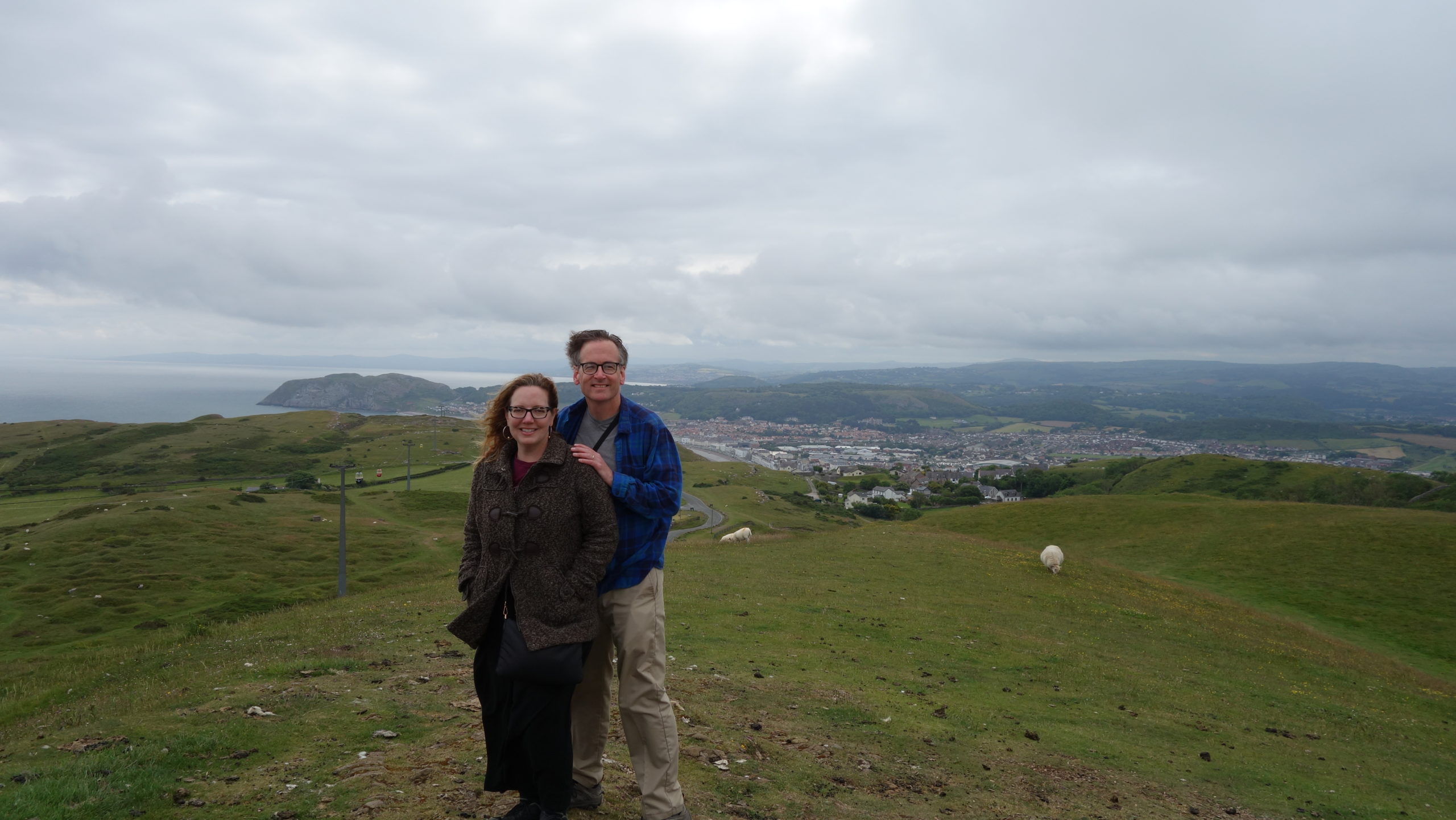
We were driving from Keswick to Lincoln, where Dubbs and Candice are working on their master’s degrees, which is a little over three hours away. But Dubbs wanted to see Hadrian’s Wall, which adds about eighty minutes to the trip. But a) we’re all nerds and like old things, and b) we knew we’d spend more than eighty minutes on the site. So off we went, getting to Housesteads Fort along part of the wall.

Dubbs picked that part of the wall because of the fort (the foundations and some of the walls of the fort are in excellent condition), but also because it has a small section of Hadrian’s Wall on which you can (legally) walk. And so we churned our way the half mile from the parking lot to the museum and fort, mostly uphill (it seems the Romans wanted to put a wall and fort at the top of a hill), with a temperature of fifty and in winds gusting over thirty miles per hour in spitting rain. I was pleased to be wearing every jacket I brought, for a total of four layers.

The fort remains varied from being roughly ground-level to being about four feet high, and there were information placards all over the site. We started by going around the entire outside of the fort, climbing to the top of the hill where the fort and Hadrian’s Wall met, and then we went down along the wall, through a gate, and back up the other side of the fort, all in varying degrees of rain. Once we got to the front of the fort and entered it, the rain ended, although the wind kept us company.

Dubbs called Rome “the original franchise” because the Romans standardized so many things. The Roman fort was based on one design, which was adapted for local topography. It had four gates, which had roads that led to the main administrative center of the fort. There was one large (and heated) house for the commander and barracks for the eight hundred men who manned the fort. The men slept eight to a room in cramped quarters. There were some buildings right outside the fort for tradespeople and some families of the soldiers. This particular fort was in use for over three hundred years (from about 100 to about 400).

We wandered all over the site learning these things, and Meredith asked the ticket taker where we could walk the wall. She indicated up the hill to where we had started our tour. I had seen the wall and wondered about it, but Dubbs had protested that the sign at the top of the hill indicated that the wall trail went down along the fort and not back along the wall. I imagine the sign makers from thirty years ago:

John: Hey, Bob. I finished the sign for the wall trail going this way. Should I put the other sign up for the wall walk?
Bob: Eh. It’s a wall, and you can walk on it. It seems pretty evident to me. Besides, the match is on the telly at the pub in twenty minutes, and it’s raining and windy. I say we leave it.

At any rate, we went back up the hill and walked the half mile or so of wall that could be hiked. The views were spectacular and the drop-off on the Scottish side was dizzying in places. We came back along the normal footpath next to the wall.

We explored the small museum, and then went back to the car park area and had lunch at the cafe. All told, we were on site for over three hours. It was a good time.
The three hours to Lincoln were uneventful, but the end was a bit tough – I had to drive through parts of the medieval town center, and that was stressful. We dropped Dubbs and Candice off at the university about a mile outside the center (or centre) and drove back to our hotel, where Mer and I got situated.

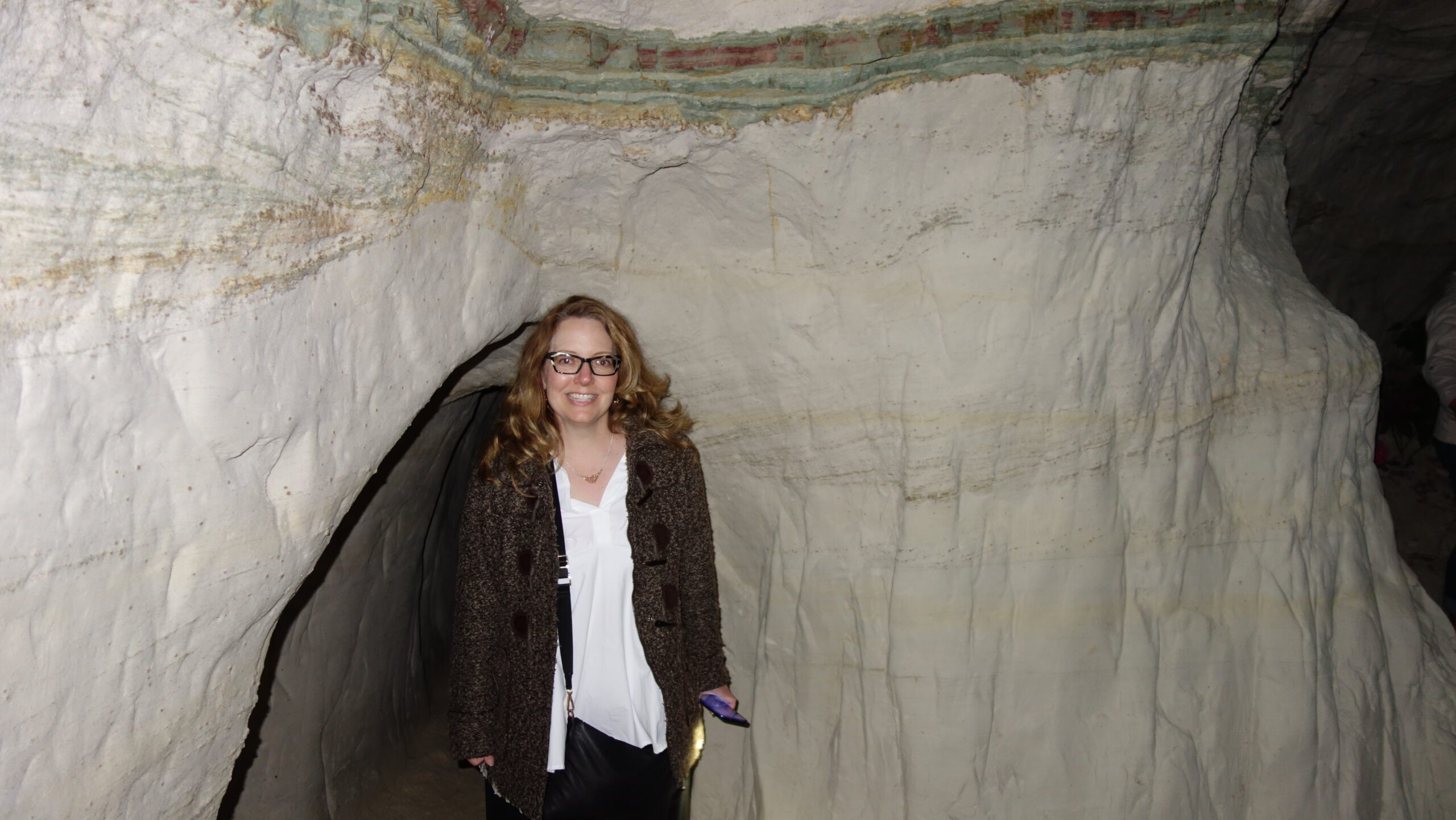
So it was we finally went out to wander the small town center about 7:30. We stumbled across some spectacular views of the cathedral and some of the original wall. We ate supper at a pub, and even found some Roman ruins of the eastern gate on the way back to the hotel. That was a good warmup for All Things Roman in Lincoln for tomorrow, because Dubbs is still in charge.

Wales 2024 – Day 2, Tuesday, the Lake District, England

“Next time” is a great touristic rallying cry for us in order to save our vacation sanity. When we can’t see everything we wanted to see, or when things don’t go as planned, we often console ourselves by saying, “Next time!” Sometimes “next time” can happen because of rearranging plans, and sometimes “next time” comes much sooner than you would think.

Yesterday evening I had hoped to hike out to Friar’s Crag, which we did. I had also hoped to hike up to a viewpoint in Castlehead Wood, but the sign said it took forty minutes, and it was late, so I regretfully skipped it and told myself I’d do it next time. Enter jet lag. I was wide awake by 5:00 am, and since we are so far north, it was already light out. I saw that it wasn’t raining, and so I dressed quietly and slipped out around 5:30 to see if I could manage the hike up the hill. The walk took me through town and down to the lake, and I met no one (in fact, I met no one until I got back to town on the way back to the B and B). I loved that. I got to the trailhead for Castlehead Wood and took it next to pastures to where it crossed a road. The directional signs for the trail disappeared, and so I made my trail decisions based on what went up. And up it went. There were two tough sections – one long and steep section and one short section that required a little scrambling over rocks.
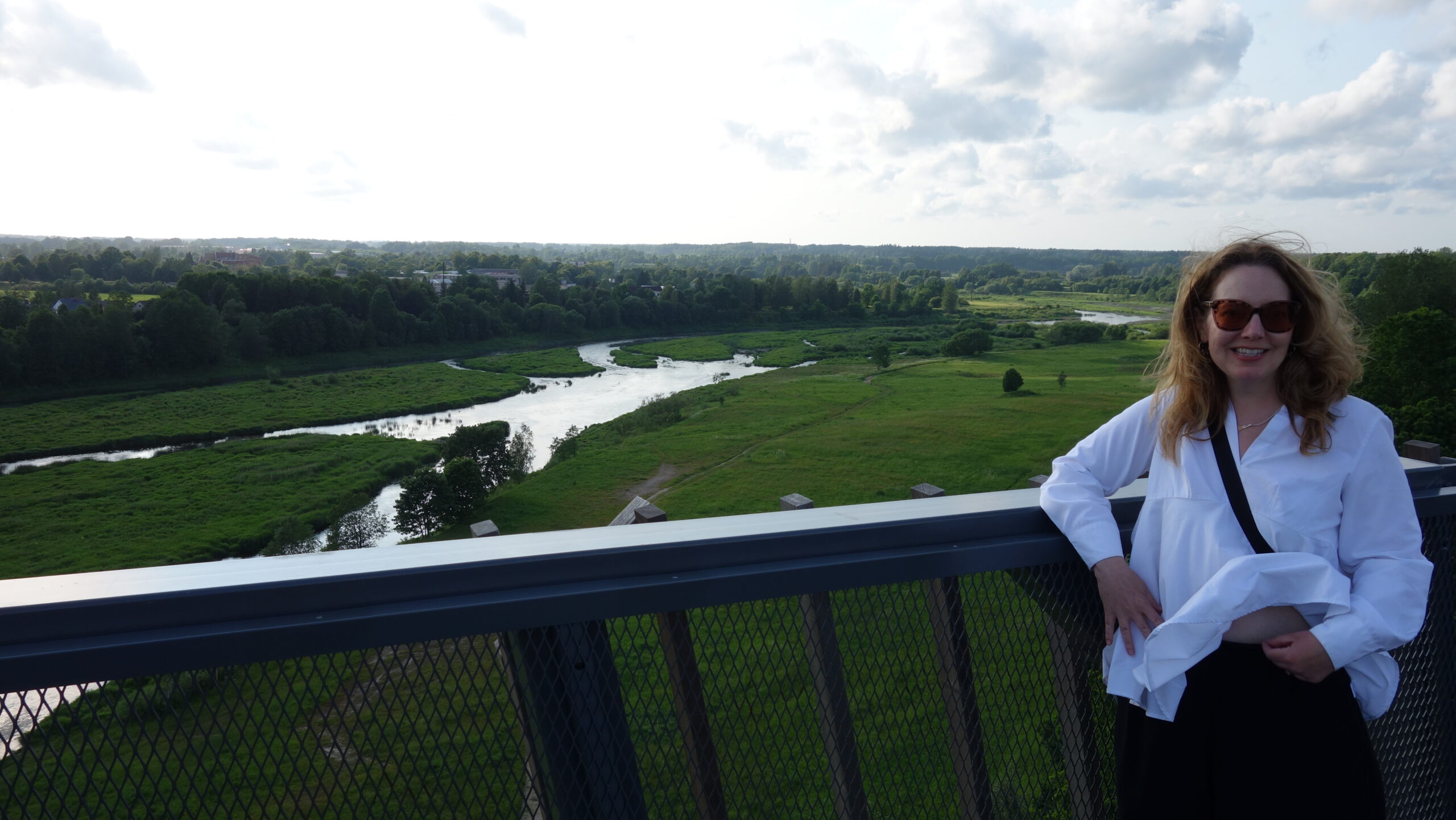
It was worth it. The viewpoint had a magnificent view of the lake and the hills overlooking the lake. There were good views over the hills away from the lake as well. There was a bench there, so I sat for several minutes and watched rain showers move in over the southern part of the lake. I decided that that was a signal for me to get going, and I got back to just past the boat launch before the rain caught me, so my last half mile or so was in a light rain. My total time to hike to the hilltop and back was one hour, which included sitting at the top for a bit. I was back in time to shower and still take a forty-minute nap while Mer went out and hiked in a park nearby. Then we had breakfast and headed out for the day.

The forecast called for showers and rain all morning until between 1:00 and 2:00, so Mer tweaked her plans for the day, putting the indoor stuff first. We all (Mer and Dubbs and Candice and I) piled in the small car and headed south for half an hour, to the town of Ambleside. Dubbs had wanted to see Bridge House, a house built on a bridge, and a picturesque one that was sketched often in the 1800s and is now photographed often. We were having trouble finding it, but we drove past a small bridge while looking for parking. Dubbs said out loud, “That can’t be it,” because of the small size. It was, of course. Still a pretty picture to take, but more amusing after Dubbs’ evaluation.

From Ambleside, we drove north again to Dove Cottage and the Wordsworth Museum. Wordsworth, along with his friend Coleridge, invented a new plain style of poetry that celebrated nature and ordinary people, and so gave birth to Romantic poetry (“Romantic” as in the literary period, not the hitting-on-a-girl kind). Wordsworth inherited some money, and so he and his sister were able to move into Dove Cottage here in the Lake District, where they went on walks (at a time when people didn’t walk in nature for pleasure) and where Wordsworth wrote poetry and his sister kept a journal. She also transcribed Wordsworth’s poetry for him, which is fortunate, since his handwriting was poor.

The museum is small, with four rooms highlighting Wordsworth’s poetry and life at Dove Cottage. The cottage itself is furnished much as it would have been back in the early 1800s, according to things mentioned in the Wordsworths’ letters and in Dorothy’s journal. We were allowed to explore the cottage on our own, including being able to touch anything. The admission also allows for touring the grounds, but when we tried to do so, it started raining quite hard. So we gave up on the grounds and drove back to Keswick to get a light lunch before heading out again.

That worked well, as the rain stopped as we were looking for a place to eat, and by the time we were on the road again, the sun was burning through some of the clouds. We headed off west and south to do a Rick Steves’ guidebook’s recommended driving tour.

That was a (mostly) great choice. The sights of driving through the Lake District mountains were spectacular, but the roads were terrible, with a narrow way and bad sightlines. I drove slowly and cautiously, but the driving was tense in a few places. But the results were worth it.

We drove up and up and up to Newlands Pass, where there was a small parking lot. We got out to hike a few hundred yards in a stiff wind over to a waterfall, which was lovely, We then crossed the road and climbed part way up a mountain. I got to a ridge area first and was hit with a very strong and steady wind. It is probably in the top two strongest winds I have ever encountered, only (maybe) bested by the winds at the top of the Saxholl Crater we climbed in Iceland. It was a giddy feeling to experience that much power in the wind. The views from the ledge area (about half-way up the hill) were grand in all directions.

We drove on (down) to the tiny village of Buttermere, which has a cute and scenically situated church, and a convenient cafe. We visited both. From the cafe, we hiked down to Buttermere Lake, another pretty setting of water and hills.

We then headed back up and up through the Honister Pass, which tops out at a functional slate mine, which was closed by the time we got there. From the pass, we drove back down into the Borrowdale Valley. We stopped to hike to the Bowder Stone, which is an enormous chunk of rock that probably fell from a nearby mountain, but is now freestanding. It’s big enough to have a stairway built on to it so you can climb up to the top. We did.

The last stop of the evening was at the very swanky Lodore Falls Hotel, where Candice and I ordered hot chocolate to ensure we got the required exit code for the parking lot. It was a very nice place to sit and relax, but then we hiked ten minutes or so behind the hotel to the eponymous Lodore Falls. The Falls are tall and narrow and pretty. They are surrounded by forest, so we couldn’t see all the way to the top.

That ended the scenic drive, as I drove past an optional turnoff to a few other sights. With the lakes and mountains and rock walls, it is difficult and dangerous to turn around, and it was already 8:00 pm, so I kept going on the road the short distance back to Keswick.

And so ended a long but touristicly successful day. An early start and some strategic scheduling minimized today’s “next time” category.

Wales 2024 – Days 0 and 1, Sunday and Monday, Keswick, England

Getting launched is an important aspect to any travel itinerary. Every year I give Meredith a guidebook for Christmas which lets her know which European country I picked for us to go to that summer. This last Christmas, I gave her a book on Poland, and we were excited by that prospect. Then the price tag hit – Poland’s airfare stubbornly stayed up around $1,000 each, over several weeks, even five months out. When I stumbled across tickets to Scotland for $470 each, we made the reluctant choice to change our destination. While Meredith has her own rule that we can’t repeat a summer-trip country, and we had been to Scotland in 2017, we decided to use Glasgow as a launching point to go to Wales, which is new to us.

But, Wales is a haul from Glasgow – five hours away or so. That’s a long trek on no sleep, so we decided to throw in the northern Lake District town of Keswick, England, into the tour. It’s only a two-hour drive from the airport, and we had never been to the Lake District before. As a bonus, our friend Dubbs, who is studying for yet another master’s degree over in England, agreed to meet us in Keswick, bringing along a fellow student and friend, Candice. So we are all here in Keswick until Wednesday morning, when we all go to see Dubbs’ university town, Lincoln, for two days. Then we finally head to Wales for ten days.

The Cuyahoga Falls to Toronto airport to Glasgow airport to Keswick was largely uneventful, although there was an hour delay for the plane to take off due to some paperwork not being filed. That got us to our B and B around 11:00 local time after our having been up for about twenty-two hours. Wonderfully, our room was ready, and so we went to bed for three or so hours. After showering, we were ready to head out with Dubbs and Candice about 4:00. Any touring on an arrival day is bonus, and so we got launched on our touring by going to the local lake boat launch.

There is a boat service that pops around Lake Derwentwater, stopping at several points to drop off or pick up people. I expect it is used by hikers often, but it is also an easy way to see the lake and the surrounding hills. I think our boat was the penultimate one of the evening, and with the overcast skies and some luck, we ended up being the only people on the boat for the first half of the run (we picked up a small group of people half-way around). Mer and I are fond of what we have coined “butt-sitting tourism,” especially on a long travel day. The boat tour lasted about fifty minutes, and we did have some misting rain at times, but it was still a very pretty cruise.

After that, we wandered in a park next to the boat launch before heading to supper at a local tavern in the pedestrian area of town. That was a welcome stop, and then we swung by the B and B to reorganize. Meanwhile, the sun mostly came out, so when we went back down to the lake to hike out to Friar’s Crag, it was very picturesque. Friar’s Crag is at the end of the main walk that goes past the boat launch, and it looks south over the lake and hills. While the sun was shining on us, there were clouds on a few of the hills, and the clouds spilled down the slopes into the valley, giving a dreamy look to some of the edges of the lake. We lingered there for a bit, and then walked back to the B and B. Dubbs and Candice went to a store to get some ice cream, but Mer and I went back to the room in the hopes of getting launched on a good night’s sleep.

Colorado 2024 – Days 3 and 4, Monday and Tuesday, Colorado Springs and Calhan

Mer ended up talking with a woman at the wedding on Sunday about the area, and they got to talking about Mer’s plans to go to the Garden of the Gods park. The woman was very enthusiastic, but warned Mer that “it’s not very big – it won’t take you too long to see it.” On Monday we spent six hours there.

The Garden of the Gods is a park full of dramatic and unusual red rock formations. According to the park, the name came from two surveyors who came across the formations in 1859, and one proclaimed, “This would be a great place for a beer garden.” (Hold your judgement.) His companion replied something to the effect of, “It would make a great garden of the gods!” When the park was donated to the city by the landowners around 1900, it was on the condition that the park be free and be called “The Garden of the Gods.” And so it is.

As you could guess, on a beautiful holiday Monday, the park was mobbed. We parked at the visitors’ center, and the woman at the info desk recommended walking into the park from the center, a walk of about fifteen minutes. Since the road to the small parking lots of the park was backed up at least that much, it was an easy decision. We walked in.

Which is the best way to go anyway. It allows the park slowly to reveal itself. The main features of the park are three huge rock monoliths, and as you walk in and around them, the features change. That is true for walking close up and getting far away. They are fascinating regardless of where you see them.

We wandered in and around the large stones, covering all the paths we saw on our map. By the time we had finished with the main northern area, I was out of water and getting hungry, so we walked part-way back and happened to catch the shuttle bus back to the visitors’ center, where we ate and filled our water bottles.

We wanted to see the southern end of the park, which has more, if smaller, stone features, but I didn’t want to walk the almost two miles there to start the hiking. I decided to risk moving the car. The southern end has several small parking lots and is far away from the visitors’ center and large crowd-drawing formations, so I banked on being able to find a parking spot. I was right, but there were only a couple of open spots. Nonetheless, it worked, and we started hiking the southern end of things. We saw a huge balanced rock and the companion rock that looks like a steamboat. We swung by an enormous trading post to use the bathroom and then got out of there. We hiked up to two towers of rock joined together with a window in the rock that looks over to Pikes Peak. And we got all the way up to a stone tower that looks like a Scotsman standing there, complete with a tam (the beret thingy).

All in all, our “not much to see” tour of the Garden of the Gods took ten miles of hiking and six hours of time (including lunch). It’s a magnificent place to wander.

From there, we made a quick refueling stop at the hotel room and then went back north to the Air Force Academy. Mer wanted to see more of the campus, and we both wanted to see their free student production of How to Succeed in Business without Really Trying. We saw a B-52 memorial with a retired B-52, the Academy cemetery (which will take any member from any of the military academies), overlooks for the campus and sports fields, and the outsides of a couple of buildings. By then it was time for the musical.

The students did a great job. There were about thirty actors on stage for the production. One thing that surprised me was they used a recorded score for the music. Military academies have a long history of great musicians, so that was a bit strange. Maybe the end of the year is too busy for the bands and musicians on campus.

The three leads (the protagonist, the lead woman, and the antagonist) were all superb. They were a joy to watch. I wasn’t familiar with the story or music from the play, so that was fun for me to discover. It is a play poking fun at big businesses, and also how women were treated in 1960s business culture, and it worked in that way. We enjoyed ourselves, even if the play was three hours long, including a ten-minute intermission. And if you’re wondering if a military academy play starts on time (most theater productions start five to ten minutes late), let me advise you to be prompt.


Today (Tuesday) was “my” day, and so I drove us about an hour east of Colorado Springs to the small town of Calhan. Or, to be more specific, down a dirt road a fair bit outside of the small town of Calhan, to a parking lot in the middle of a high plains scrub-grass prairie. Mer said she trusted me, but wasn’t sure why we were there. We hiked up a small rise and got a glimpse of some white bare rock formations. Down the hill and along the path further, we started to see some colors in the rock. I had brought her to see the Paint Mines Interpretive Park.

The Paint Mines is an area where rock covered up variously colored clays, producing these colorful and fantastically shaped columns and mounds. They are very fragile since they are largely made of clay and soft stones, but there are paths back in among the shapes and miniature canyons. We walked along most of the trails that wound through the “mines” and spent a good two hours there.

The “mines” are more like open pits. Native Americans used the clays for pigments, and as recently as the early 1900s, the area was used to mine colors for bricks. What remains doesn’t look like a mine or a pit, and the colors and whites are vivid. We had a blast.

Back to the hotel room for more water. I have found the mile-high air to be very dry and drink about twice as much as I normally do. From the hotel, we went back to the cute “crunchy” neighborhood we had been in on Sunday morning, to go to the Michael Garman Museum and Gallery.

Michael Garman was a sculptor of 1/6-scale miniatures of people and urban settings. He passed away in 2021. I expected a few large doll-house sorts of things, but I was happily very wrong. Garman’s work was exceptionally detailed, with peeling wallpapers in rooms and trash in trash cans and individual bottles in bars. He loved using mirrors to create depth and even used them to change scenes in rooms, so that if you looked in a window of a building, you would see one room, and then a light would come on nearby and a different room would replace it. He used angled glass to project holograms of people into rooms and alleys, and his attention to detail even went as far as having Casablanca showing in the town’s movie theater (visible if you looked in through the door). We were overwhelmed by the museum and went through it three times (it’s not terribly big). We also had fun with provided scavenger hunts that asked us to look for very specific details in the town, like looking for one sports pennant or for the location of one birdcage.

By the time we got done with the museum, it was too late for me to stick to my plan to go back to the WW II aircraft museum, so I changed my plan and went to the nearby Red Rock Canyon Open Space (a large park inside the city limits). This park has rock formations like those in the Garden of the Gods, but on a smaller scale and with very few crowds on a work day. Sadly, we only got to hike there for about twenty minutes before a storm threatened, so we went back to the cute neighborhood for supper, hoping the park area would clear up. It didn’t, and so we called it a night after walking around a few blocks looking at the shops in the area. I would have loved to hike in the park more, but it seemed wise to play things safe to keep us from encountering lightning and possibly getting soaked. The area around our hotel (the north side of town) was fine – the storms seemed to be coming through in a narrow band.

And so ends a good, if short, trip to Colorado. Tomorrow we fly home, and since it took us three and a half hours to get here on Saturday, we’re going to leave about four hours before we have to get the to airport since we don’t know what morning rush hour looks like. It will be good to get home and see family, friends, and felines.

Colorado 2024 – Days 1 and 2, Saturday and Sunday, Colorado Springs

Meredith had a student, Hope, who was an excellent writer in Mer’s classes, and Hope went on to become an author and to work in the publishing industry. Mer and Hope have stayed in touch over the ten years or so since Hope graduated, and so it was that several months ago we were delighted to receive an invitation to Hope’s wedding. Even though Hope lives in Ohio, she decided to have a destination wedding in Colorado Springs. The wedding would have been a delightful priority for us no matter what, but to have it held in a pretty place in a state neither of us had been to made it an event indeed.

We flew in on Saturday, and after three and a half hours of getting through the airport, getting to the car rental place, getting our car, getting our second car after the rearview mirror fell off in my hands, and then navigating through a surprisingly heavily trafficked highway, we got to Colorado Springs, which is supposed to be an eighty-minute drive away. We drove straight to our 1:30 docent-led tour of the National Museum of World War II Aviation, getting there at 1:31. I ended up missing the intro movie as I used the bathroom, but otherwise, we made the entire three-hour tour.

It was excellent. Our docent was a retired Coast Guard pilot who was qualified to fly anything the service had (single engine, multi engine, prop, jet, helicopter), and he was highly interactive and personable. He asked our group lots of questions to have us give many wrong answers, and he then explained the what and the why. The planes were magnificent, and there were probably two dozen planes in the hangar, all of which can still fly. He took us around and highlighted about eight different aircraft, and then took us over to the hangar where people restore aircraft and talked about that process. Almost everyone at the museum is a volunteer (they have two paid positions), and it seemed as if that included the restorers (it was a little murky in that the restorer hangar was run by a separate non-profit that was closely associated with the museum). We finished the tour in another hangar, in which the museum still has a functioning mechanical flight simulator from the 1930s, which was a mechanical marvel to see in action. The man demonstrating it put the “plane” into a spinning stall and recovered from it, all while being enclosed and having to rely on instruments and feel.

There was a more modern simulator we could use, but by then I was feeling pretty poorly from lack of sleep, water, and food, so sadly, I passed that up and went to the car to eat a granola bar and drink the rest of my water, and then we headed out for the hotel so I could eat and rest before evening plans. A few quick things learned from the museum:

  • One of the major advances in planes was the variable-pitch propeller. That acted as a gear box for the plane, which allowed for both power and speed options. It took until the 1930s for engineers to figure out how to build that system.
  • Aluminum was precious and expensive during the war years, so many planes were covered in sail cloth, which was stretched and sealed.
  • Aquatic airplanes needed to  have small steps in the hull to cause bubbles, which broke up water tension, which would have held the plane to the water.
  • Navy aircraft had foldable wings that were held in place by just one or two bolts depending on model.

Mer had evening plans, so after my hour nap, we drove a short distance up the road to Cosmo’s Magic Theater, which, as you may have surmised, is a theater for magic. Cosmo had a long career of touring the US, but he wanted to stop being on the road, so he built this small theater that seats about fifty people. He and other guest magicians perform magic tricks in the intimate space, which allows for lots of interaction, at which Cosmo was very good. He bantered with us, telling stories of how he learned magic (from the age of five) and having audience members help him with tricks. Cosmo even came out to the lobby before the show, during intermission, and after the show to chat with his audience. Mer and I got to talk with him and his wife for about five minutes after the show. It was a lovely evening, and the magic was top-notch. I only had vague guesses on how things actually worked on maybe ten percent of the illusions. We followed the show up with ice cream in a cute downtown part of Colorado Springs.

On Sunday, the wedding wasn’t until 3:00, so we had the morning to explore. We went out to a small mom-and-pop breakfast restaurant in a very crunchy-seeming neighborhood (“Tie dye grand opening!”) that was also having a street festival. The food was very good, and I had a slight view of the mountains from the front deck area.

Mer then had us head north a few miles to the Air Force Academy. It’s a dramatically set campus, sitting right in front of mountains. The working area of the campus is small, but the area for the grounds is something like ten miles long and four miles wide. We got out at the visitors’ center and explored it efficiently since we didn’t have a ton of time. We did take the time to watch the “a year in the life of a new cadet” film, and we both decided it was something for which we wouldn’t have been cut out. I don’t particularly like being yelled at. We browsed the rest of the center, where I learned that all cadets are required to be involved in sports of some kind, either intermural or intramural.
We spent the rest of our time wandering the campus. Sadly, the rather iconic chapel is being renovated until 2027 and is fully hidden under a huge box. But we walked up an adjacent hill that had a path put in that led to small areas to sit for prayer and contemplation and gave great views of the surrounding area. We explored a courtyard full of large monuments to WW II aircraft and the people who served on them, and we poked around one open building where we discovered not only that the cadets had a theater society, but that they were putting on a free show of How to Succeed in Business without Really Trying. It was hard to think of these hard-nosed military people singing and dancing around, but there I am stereotyping.

We headed home to the hotel to get ready for the wedding, which was only a few minutes away at a lovely facility that looked out over the mountains. We pulled in just as a car with a couple of former CVCA students pulled in, which was fun. We spent most of the evening chatting with them, especially since they were seated at our table. The ceremony was simple but formal, being an Anglican service of marriage. The reception afterwards was great, with good dinner music (mostly swing and related music), and Mer and I danced a fair amount. Anytime we needed a break, we went out on the veranda to look at the mountains.  The wedding wrapped up about 8:30, and we went back to the hotel, where I went to bed as quickly as I could. Mer still had Monday plans, so I needed my rest.

Ireland 2023 – Day 6, Friday, Dublin, Ireland

I’m proud of Julia and Sydney. They decided to tackle Dublin on their own today, and it sounds as if they did a magnificent job of it. They got to the National Museum of Ireland when it opened, and took their time looking at bog people and hoards of gold and what-all the museum has. They then went to the National Gallery of Ireland, to which Mer and I haven’t been yet. They said it was really good. At one of the museums (I think it was the art museum), they made a friend of one of the room guards, Gerard, with whom they chatted for some time. The gift of the gab is rubbing off on them! They tried to finish the day with the eclectic Chester Beatty Library and/or Dublin Castle (both are in the same area), but both were closed today for some reason. On the whole, though, they had a great daytime of touring.
Meredith, Dubbs, and I walked over the Liffey River a short ways to a recreation of an Irish famine ship, the Jeanie Johnston. The rebuilt ship is seaworthy and sailed to Canada and the US back in the early 2000s and then was used by the Irish navy for training, before Dublin bought it and turned it into a museum. The Johnston was chosen as the ship to rebuild because no one ever died on board the ship, with a total of over two thousand passengers on her various voyages. Even when the original ship sank later as a cargo ship, the crew was rescued after over a week of seeing the ship become more and more waterlogged and slowly sinking during a storm.

When the potato blight hit the Irish fields in the mid-1840s, the crop failed. Of eight million people Ireland, one million starved and one million left. The ones who left mostly went to North America aboard ships like the Johnston. Most ships had remote owners who were trying to make money, and conditions on ships were poor, which led to the death of one in four passengers. The Johnston was owned by a local owner who knew many of the passengers, so he did what small things he could to improve conditions — he had a doctor on board, he turned away and refunded tickets for anyone who was sick, he required that passengers spend at least thirty minutes a day on deck for air and sun, and he made sure the crew emptied the chamber buckets below decks multiple times each day. The captain himself would go down below decks to visit and cheer the passengers. It seemed to make a difference.

After the ship tour, we walked over to the 14 Henrietta Street museum, which is a museum dedicated to a Georgian house on Henrietta Street, a cul-de-sac of brick houses that were fashionable and expensive in the 1700s. The house was owned by a wealthy family who entertained lavishly. Several of the front rooms have been restored, although there is little furniture in them. After about fifty years, the house became a law office, and then was converted into a tenement house, with the huge home being split into seventeen one- to three-room apartments. The move was good-hearted as a way to solve Dublin’s over-crowding as people moved from the country to the city. The landlord installed gas lighting, running water in the basement, and flushing toilets in the back. It was all considered modern, and so rents were fairly high. To help offset the costs, families had extended family members move in or sublet rooms in the apartments, so that by around 1900, there were over one hundred people living in the house (and that didn’t count “the unfortunate poor” who slept in the stairwell and weren’t counted by the census). As late as the 1970s, there was a family of eight living in one room in the house. Two of the apartments of the house have been restored to how they looked during the tenement days. One was squalid, and one seemed tidy (if cramped). Both have been reconstructed based on scraps of paint, wallpaper, and linoleum that were found on site, as well as interviews with former residents who grew up there in the forties and fifties.

We then grabbed a light lunch and took a cab up to Ireland’s National Cemetery, where almost 1.5 million people are buried, with about 200,000 monuments. I have never seen so many large Celtic crosses before. Multiple famous Irish people are buried there, and we sought out a few. We looked for the writers — the Irish poet and playwright Brendan Behan and the poet/priest Gerard Manley Hopkins, as well as Maud Gonne MacBride, who was a close friend to Yeats. Mostly, we enjoyed wandering and looking at headstones that caught our eye for the beauty of the memorial or for the inscriptions on them. There’s the tallest round tower in Ireland in the cemetery, and several general memorials (including a very moving one from the French to honor the Irish who fought for French causes). It may seem weird to tour a cemetery, but the three of us enjoyed it.

We met back up with Sydney and Julia at the hotel before going out for a quick grab-and-eat supper so we could make our 7:00 time for the National Leprechaun Museum’s presentation of “Dark Tales” — adult versions of Irish folk tales. Mer and I had done this a year ago, and it was a delight again. I love good storytelling, and we heard about banshees and a man who invited the dead to a party, and one or two warring magicians, and more. It was a full hour of stories, and it flew by.

From there we walked back home. That ends the Irish adventure for this time. We leave for the airport in the morning. Dubbs is going to go to the EPIC Irish emigration museum because her flight leaves later than ours, but we’ll go straight to the airport. Ireland and the Irish people have once again been very kind to us, and I hope we can all get back someday. Tomorrow is the long eighteen-plus-hour trip home, but at least we have good company for the journey, with much to recap and discuss.
Ireland 2023 – Day 5, Thursday, Boyne River Valley and Dublin, Ireland

Happy Thanksgiving! We are very grateful for the stay we had in Derry the last few days. We had multiple pleasant interactions with Irish people, and our hosts at our B and B were superb. We’ve had good health so far on the trip, and the weather has been much better than the days of solid rain we had seen in the forecast when coming to Ireland. So far, so good. But we’re not done yet!

We left Derry late in the morning and headed south toward Dublin. After a three-hour drive and a last-minute detour due to a closed bridge, we arrived at the Battle of the Boyne visitors’ center. As the Battle of the Boyne continued the story we saw beginning with the siege of Derry, I thought it would be a good sight to visit. We needed something that we could see in a couple of hours and that was close to Dublin, and Boyne fit the bill. Plus, Meredith and I hadn’t seen it on our last trip to the valley a year and a half ago, so it was new to all of us.

The visitors’ center is a small, but well-done, presentation of a very important battle about which I hadn’t known much of anything. The deposed Catholic king of England, James II, got French support to land troops in southern Ireland. France was hoping England would get tied up and leave France alone to go conquer things. William of Orange, a Protestant king of England who had deposed James II with the approval of Parliament, arrived in the north of Ireland with his troops. The two forces met at the Boyne River, and after William’s near brush with death from a very near miss of a cannon, William of Orange’s troops beat James’ army, and so Catholic Ireland lost an ally, and France had to deal with England messing around on the continent.

We petted a kitty outside the cafe (so cute) and then ate lunch before going into the center. The map room was offline, so that was a little disappointing, since I love an animated light map. But there was a fifteen-minute film explaining the events of the day, and a docent went outside with us to point out important places from the main battle. We walked along one path to a marker explaining where a small town had been, and then went back to the car another way.

Since we had a little time, I decided to try to squeeze in seeing a ruined abbey that was nearby. We had to go around the same under-repair bridge, so it took a bit longer than it should have, and when we finally found it in a cow field, there was a fence around it with the gates zip-tied shut. Not my finest tour-leader moment.

We headed off to the Dublin Airport to return our car and meet up with our friend Dubbs. Dubbs is spending a year or more studying in England, and she was kind enough to fly over to Dublin to spend a couple of days with us. We returned the car with no issues, and Dubbs met up with us after only a few minutes of our waiting. Since there were five of us, we took a taxi into Dublin to our hotel. It was much easier than dealing with a bus and walking while dealing with luggage.

Once we dumped the luggage, we walked over to the Temple Bar area, which is a happening place for bars and food. We finally found a quiet place next to a hotel where we could eat and still talk, and we got caught up some on Dubbs’ adventures of late. After supper, we walked to Grafton Street (with a quick detour to get a photo op with the statue of Molly Malone of Irish song fame), which is the main shopping street of Dublin, because we were pretty sure it would be all lit up with pretty lights. It was. We walked the length of the street and then headed back home to the hotel.

It’s been good to spend time with Sydney and Julia, and it was fun to add Dubbs to the mix, and Meredith, of course, is my favorite travel companion. I’m so very thankful that I have quality people in my life.

Ireland 2023 – Day 4, Wednesday, Antrim Coast (and Derry too), Northern Ireland

One of the great benefits to being in a (mostly) English-speaking country (some accents are impenetrable) is the ability for monolingual me to communicate. Based on my firm grasp of my native tongue, I’m able to get local recommendations from, well, locals. That superpower is what led me to tour the Inishowen Peninsula yesterday. Today I knew we were going to tour the northern coast (the Antrim Coast), but I added a stop to our agenda based on the recommendation of our B and B host, who had asked after what we were doing today. He said stopping at Downhill to see the bishop’s house (Downhill House) and temple would be worthwhile, and he was right.

It took about an hour to get to Downhill, and we arrived in a soft misting rain. We could see a large ruin of a house on the top of a rise, but we walked into the walled garden instead, based almost solely on the presence of bathrooms on the far side of the garden. There was little to see in the garden — it is mainly the home of several apple trees and picnic tables — but it did get us to the bathrooms and a pretty dovecote (a house for doves), and, more importantly, it took us to a side path that bypassed the ruined house and took us to the Mussenden Temple, which the Earl-Bishop had built as a library to house his books. Fun fact — because of the damp of Ireland, he had a fire going year-round in the basement of the temple to keep his books dry.

The temple is built to look like a Greek temple in miniature, and it sits right on the edge of a rather dramatic sea cliff overlooking a couple of miles of beaches. It used to be further from the cliff (they could drive a carriage around it), but the cliff eroded, and it’s only a few feet now from the edge. The rain had stopped for us, but the wind was whipping, and the waves were crashing impressively into the beach. The temple was connected by a long path to the main house, which is where we headed. The back of the house looked like a castle with battlements. There were a few cars and trucks in the entrance for workers, and so that way was closed. I thought the house would be closed, but we wanted to see the front. Sydney and Julia took a crushed gravel path around to the right, and Mer and I took the wetter but less windy way around to the left, and we met in the front, which was decorated in a Georgian style (think classical homes) instead of like the castle in back. The main stairs to the house were intact, and the front of the house was open. In we went.

The house had been lived in until the 1920s, and was used as a barracks during World War II, and was finally abandoned in 1945. So it’s been less than eighty years since the place was given up, and there is now no roof anywhere, no windows, no doors, no upper floors, no stairs, and even some of the walls are missing. It always amazes me how quickly a house “knows” no one is living there and falls apart. Still, the house was picturesque and grand in a ruined way, and several of the rooms were still labeled as to what they were, and we think based on open space that the house must have had a large interior courtyard. We wandered around quite a bit before heading back to the car. It had been a great recommendation.

We drove on to a highlight of the coast and one of Julia’s bucket-list items, the Giant’s Causeway. The Causeway is a series of forty thousand hexagon-shaped columns that protrude up from the ground between the cliffs and down into the sea. The Causeway was obviously built as a bridge by the giant Finn McCool to go fight a Scottish giant so that Finn wouldn’t have to get wet on the trip over. There are even similar rocks in Scotland, so that’s proof positive of the causeway’s having been giant-built.

We had a tip from the internet, backed by the recommendation of our host, to park at the Causeway Hotel instead of at the next-door visitors’ center. The hotel charges ten pounds for parking, and the receipt acts as a voucher for ten pounds off eating in the tearoom, which we knew we would do, so it was like free parking. You can walk from the parking lot to the road to the Causeway by walking over the green-space roof of the visitors’ center, and you can even use free restrooms on the hotel grounds. It’s an amazing deal when you consider that the official parking lot charges 12.50 pounds per person, or, in our case, a staggering total of almost fifty pounds (sixty-three dollars). Somehow the Rick Steves guidebook didn’t mention this hotel lot option, so I mention it instead.

We chose to walk down the road/sidewalk to the Causeway. There is a bus that costs one pound each, but we all wanted to see the sights along the way, and we would take the bus back up the hill. That was the right choice. The path slowly revealed different parts of the coast, and the waves were mighty. I asked a ranger, on a scale of one to ten, how active the sea was today. He said, “On a scale of one to ten, don’t go in.” The waves were great.

We took a ton of photos on the way down and then got to the causeway. There are three causeways, with the first being shorter and smaller, the middle being bigger and longer, and the last one being huge – both tall and long. We all climbed on the first one, and went down to the last one. Sydney, in her words, “chose life” and sat on a bench looking at the pretty. Meredith, Julia, and I climbed up to where two rangers were standing, chatted with them a bit, and then walked out to near the end of the causeway. While were were out there, the wind picked up even more. It was a wild place. We stayed for a bit, and then made our way back just as it started to rain again, this time a little harder. We got on the bus and headed back to the top of the hill, where we left the visitors’ center crowd and made our way to the tearoom. It was warm and cozy and decked out for Christmas, and we got some light food (scones and cookie bars) that were delightful. In all, our parking and food came in around thirty-three pounds, or seventeen pounds less than parking alone would have been in a different parking lot. We were very pleased.

It was getting late now, around 3:00, and we headed off to the next sight, the Carrick-a-rede rope bridge, which is a rope bridge to a scenic island. I figured it would be so, but the bridge was closed because of high winds, and we weren’t even allowed down to see it. I reset the tourist compass to go south about twenty minutes, to go to the Dark Hedges. The Hedges are a dual row of trees on each side of a road, and they are thick and tall enough to cover the road over. It’s a pretty sight on its own (it’s been featured twice on our Ireland page-a-day calendar), but it was also the backdrop for an important scene in the fantasy show Game of Thrones, of which Julia is a huge fan. She was pretty excited. Sadly, part of the road was closed for construction, but we still got to see much of it, and got a few fan photos for Julia. That was satisfying.

The drive back to Derry was long, as it was in the dark and had on-and-off rain, but we got home a little before 6:00. After regrouping (and letting me calm my frazzled driving nerves), we headed out for supper at an excellent restaurant just inside the old city walls, but on the far side (from us) part of the walls. After supper, Mer and I walked the walls the long way around to see them at night, and Julia and Sydney went home the quicker way.

Since the walls dumped us only a block from the pub to which we had been last night, I suggested we check it out again to see if there was different music on tonight. There was, and so we took a seat at the end of the bar, and we were happily confused. Last night the crowd was there to talk and to drink, and several parties were quite tipsy and loud. Tonight, the crowd was quiet and mostly listening to the music, and no one seemed to be drinking too much. My theory is that for the pub, the “weekend” is from Thursday to Tuesday, so we hit it on a quieter working night. We stayed for about half an hour and heard two different songs about Derry that we knew, as well as a Scottish song and several covers of American songs. It’s an odd thing to watch two middle-aged Irish women waltz to “Rhinestone Cowboy” in a pub, but it was a fun way to end the evening. After all, always trust the locals — they know more than you do.

Ireland 2023 – Day 3, Tuesday, Inishowen Peninsula, Donegal, Ireland (and Derry too)

Today I made the bold decision to go “OR” — Off Rick. Mer is fond of Rick Steves guidebooks, and they have stood us in good stead, but every once in a while, I want to go somewhere Rick doesn’t go. A local man strongly recommended the Inishowen Peninsula, which is what is north of Derry. I had been eyeing that trip anyway, and we had never been there before, so with a local’s endorsement, I decided to spend the day exploring there. We managed to get to about half of what I wanted to do. Next time.

We managed to get out of town and into the country (and to actual Ireland) pretty quickly with the help of the GPS. It sent me down increasingly small roads until it told me to turn into someone’s field, which was clearly wrong. I swapped over to my travel phone instead, and that got us where we were going – the reconstructed ring fort Grianan of Aileach. The fort is situated on top of a hill overlooking multiple mountains, a river, an island, and a lough, so we were already impressed just from the parking lot. The original ring fort was constructed around 600 or so, but legend has it that it was mostly destroyed around 1100. The fort was rebuilt in the mid-1800s by a well-meaning archeologist, but the method would probably appall most scientists today, who seem to favor preservation of ruined sites. At any rate, as a tourist, I appreciated the ring fort, as it was where I could climb the walls and look all about. It may be less pure, but is more functional than a thousand-year-old pile of rocks.

We took a ton of pictures and enjoyed the views. We lingered for some time up there and walked all around the fort, both inside and out. We then headed north to our next destination, the town of Buncrana. The town is right on Lough Swilly, with a pretty beach and paved walking trails along the water. The lough has many small mountains spilling down into it, so it was also a pretty place to be. We walked north for three quarters of a mile so I could see a stone bridge, and along the way, we discovered were were on the “Amazing Grace Trail” — a walking trail with signs that told the story of John Newton, the former slave trader who wrote “Amazing Grace” and fought to end slavery in England. I got treated to the hymn in three-part harmony from my traveling companions.

As we approached the bridge, we stopped next to a parking lot to take pictures, and a woman got out of her car to come over to us. She recognized us from the small church we attended on Sunday, and we were in the same parking lot in the same lightly populated northern part of Donegal at the same time. That was amusing. She recommended we go over the bridge and walk along the lough some more, which we did. The views of the sun off the water were especially good, but we only went less than a mile along the trail, since it seemed to go on for some ways.

That left a hefty walk back to the car, so we stopped at a snack shop in the parking area to use the bathroom and grab some candy bars. The woman at the till continued our experience of meeting gregarious Irish folk who were very kind to us and loved chatting. Fortified with sugar, we found our way back to the car to head up to our next sight, which had been recommended by our saleswoman — Fort Dunree.

Fort Dunree is a fort built in the late 1700s by the English to protect the harbor against the French. It was an active fort for the British through World War I and even into the 1930s as part of the agreement that created the Republic of Ireland, but in the 1930s, the fort was handed over to the Irish, who staffed it during World War II to keep the fighting nations from messing around with neutral Ireland’s waterways. Sometime after that, the fort was decommissioned, and the small army town of wood and aluminum huts around the fort have fallen into disrepair, and multiple signs warned us that we wandered the area at our own risk.

The lower fort is still intact as a museum, but as it was late, we skipped it. Meredith, Julia, and I walked down to some lower pill boxes for the views while Sydney contented herself with viewing the pretty from a bench by the fort. After we looked around, I wandered up a path into the old army town area, and saw the upper fort higher up on the hill. Julia asked if that’s where we were headed, and I nodded, of course. Meredith and Julia are game souls.

The upper fort was worth the climb. We not only got great views of the mountains on the opposite shore of the fort, but we also got to see a long crescent beach towered over by a rocky mountain that was on the far side of the fort hill and couldn’t be seen from below. We stood up there to listen to the silence, broken only by the distant sound of the waves crashing on the beach below.

Back down to the car and on to our next sight, which was more of an experience. I wanted to drive over the Gap of Mamore, which isn’t towering, at eight hundred feet tall, but is very dramatic as you go down the north side of the gap. We stopped at a pull-off near the top and spent a decent amount of time there looking at the sea and small town below and the mountains all around. And the sheep. There are always sheep. We stopped again part way down for different views.

By now, we were running out of daylight. One of the downsides of traveling in Ireland in November is that it gets quite dark by about 4:30. I programmed the GPS to take us thirty minutes away to a circle of ancient standing stones. We almost made it. My phone GPS had us walking into someone’s back yard and field, so I knocked at the door to ask about the stones. A very pleasant lady answered and told us where it was, and invited us back to her gallery when we were done. I wasn’t fully sure of her directions, and the light was really failing, so we stuck around to see her art.

Mary works with bog wood. That is wood dug out of peat bogs when someone digs up turf to burn. Bog wood can take up to five years to dry, but then Mary carves it based on shapes that were suggested by the wood. The results are fairly abstract in most cases, but she had some representative pieces as well. We liked her work and bought a small necklace to use as a Christmas tree ornament.

That ended the Inishowen Peninsula tour, and a thirty-minute (occasionally tense) drive brought us back to Derry, where we got supper. We went back home, and after a short break, Mer and I went to a local pub to see if they had music tonight. They did — a solo singer who played guitar. Julia and Sydney decided to stay cozy at the B and B, but Mer and I stayed at the pub for about an hour. We were very pleased to have gotten to some live music.

Tomorrow will be mostly Rick-led as we explore the scenic Antrim coast. We’ve continued to have mostly rain-free weather, which opens up the outdoor options nicely. Here’s hoping for more beauty as we putter around the island.


Ireland 2023 – Day 2, Monday, Londonderry, Northern Ireland

One of the reasons we travel is being there. It’s easier to understand why England was afraid of what was going on in France when you are in Dover and can see France just twenty-three miles away. You can understand why Venice was a maritime power when you are surrounded by water everywhere in the city. You can see why the Scots would flee to the remote Highlands when threatened by the English. And being in Derry, I was able to make a little more sense out of “The Troubles” and of the song “The Town I Loved So Well” and of the newer show Derry Girls.

We got underway today about 10:00, starting with a tour of the mile-long circuit of the 350-year-old still-intact city walls. Meredith was narrating out of her usual trusty guidebook by Rick Steves. The walls are now a strolling place for anyone, but from the 1970s until about 2005, they were closed to the public, as the British patrolled the walls, especially to keep an eye on the Catholic Bogside area below the walled part of the city. More on that in a bit.

For those who don’t know or remember, “The Troubles” is a term used to describe the tension and violence that were in Northern Ireland between (mostly pro-Irish) Catholics and (mostly pro-English) Protestants. The Troubles were mainly active from 1970 or so to the late 1990s, with the British finally removing most troops by 2005 or so. Derry/Londonderry was a hotspot for the Troubles, but happily, peace has more or less been the norm for over twenty years now. May it long continue.

Anyway, we were a short way into our wall walk, and just beginning to learn about how the Catholic King James II laid siege to the Protestant stronghold of Derry, when it began to rain hard enough for us to think about inside options. We headed over to the Siege Museum, where we learned the story of the siege that was started when a group of young apprentice men took things in their own hands and shut the city gates on the approaching army, which sparked the will to resist from the town and started a 105-day siege by the English forces that was eventually commanded by the king himself. It was only broken when two relief ships managed to fight up the river to relieve the city, just before the twenty thousand people inside the walls, who’d been eating mice and rats and were on the brink of starvation, were about to capitulate.

The Siege Museum also told of the Apprentice Boys Society, which is group of men who honor the defenders of the city. They organize a couple of marches each year in the city and sponsor the museum. The presentation was a bit pro-Union/Protestant, but still useful in starting to untangle the mass and mess of history that led up to the Troubles. Catholic King James II had to retreat and was defeated a year later in Ireland and was replaced by a Protestant king in England.

The rain had stopped by the time we left the museum, so we continued on our wall walk. It did have grand views of the surrounding hills (Donegal in the Irish Republic, just a few miles away), and of the memorial murals that were painted on Bogside (Catholic) houses in the 1990s. We got close-up views of the in-the-walls Protestant cathedral and enjoyed getting most of the way around. When we had just a couple hundred yards left in the wall walk, the rain returned, so we went into the Tower Museum, which had a permanent exhibit on the history of Derry, an exhibit on the excavation of a Spanish Armada ship from the nearby loch, and a temporary exhibit on the show Derry Girls, which has much to do with our being here.

My brother had recommended the show to us a while ago, and our friend Meredith showed it to us. We loved it. It’s a comedy (of all things) about five teenagers going to school in the nineties in Derry during the Troubles. It’s brilliantly funny in many places, and poignantly serious in a few places. Since we hadn’t really done the Derry area on our previous trips, Meredith said she wanted to see Derry on this one. Because of the central location of the city for all things north on the island, we decided to stay here for four nights before finishing the week in Dublin.

Anyway, the Tower Museum exhibit had sets and props and costumes from the actual show, and video interviews with the creator. Julia had seen the show, and so the three of us chuckled through the sets, and it made Sydney add it to her to-view list. Much fun.

The museum wound us on a one-way route through the history of Derry, starting with the founding of a monastery in an oak grove (“Derry” seems to be related to the Irish word for grove), and continuing on to the town’s being an ecclesiastical center, to the town’s being sacked a few times by Vikings, to the town’s being razed by an Irish lord who had been pro-English until a change in policies ticked him off, to the area’s being settled as a “plantation” (a deliberate plan of foreign settlement), to the rise of the walled town, to the siege, to the debate about Irish Home Rule, to the creation of a Republic of Ireland and a separate Northern Ireland, to the Troubles, and to the peace of the last twenty years. Whew. It was fairly complicated, and a man to whom we talked in a pub called it whitewashed and simplified. I’d hate to see the hard history, then.

We went up to the top of the tower (of the Tower Museum), where we had a great vantage point to see the city, although the rain had smeared the safety glass all around the viewing area, so the sights were diminished a bit. We wound our way back down through four floors of the story of finding and excavating a Spanish Armada ship. I had not remembered that after the encounter with the English, the ships retreated east and north up around Scotland and then tried to go around Ireland, with many ships sinking along the way from the English navy or from running aground.

Back outside again, we ducked into a cute area with craft stores and had a late lunch at a cafe set in a recreation of a cottage. Good food in a pretty building with friendly staff made for a good repast.

At my insistence, Meredith and Julia and I finished the last two hundred yards of wall walk while Sydney went home to rest for a bit. The three of us then walked down to Bogside to look at about ten murals commemorating issues around the Troubles. There were murals on peace, and some showing defiance, and some remembering the victims of Bloody Sunday (when fourteen unarmed people were shot by a British regiment who thought they were under fire) or innocent bystanders like a girl shot by crossfire. The murals are all large, with most taking up the end of a building. Along the way, we saw a memorial to ten men who died of a hunger strike while in prison, protesting for the right to be treated as political prisoners. We also saw a memorial to the victims of Bloody Sunday.

By then it was quite dark and cold, so we walked back to the B and B to regroup and get more clothing. We all then decided to go to the Guildhall, which acts as a town hall, which has an exhibit on the English plantation (settlement) system and how it failed to deliver on the ideal plan promised to investors (push out all the Irish, make a ton of money, and convert everyone to the Anglican church). The building itself was quite beautiful, and as an added bonus, we spent about twenty minutes talking to Lucy, a young woman from Derry. We chatted about the Troubles (they aren’t taught in the now-mixed Protestant/Catholic schools until seventh year) and Lucy’s studies (nursing) and about life in Ireland and in the US. She was friendly and kind, and I enjoyed talking to her.

We went to a pub for supper and with an eye out to playing a pub quiz at 9:00. Pub quizzes are trivia games, but are taken very seriously in the UK, and we thought it would be fun, even if we were terrible (we don’t get many UK pop references). It turns out that there was an important soccer match on tonight, so the pub quiz was pushed back to 10:00, which was way too late for us. But we got to talk to the man working in the pub who looked to be about our age. He had a terrifically thick accent, but with some context and concentration, I managed to follow most of what he was saying. He told us about Derry and growing up Catholic during the Troubles. We talked for about forty-five minutes before we excused ourselves and headed home for the night.

So between two museums, memorials and murals, boots on the ground, and two town natives of different ages, I now have a slightly better understanding of the Troubles and the history of Derry. That’s worthwhile, but so were the dozen or so interactions with very friendly people today. Understanding that people are people is a very worthwhile reason to travel.