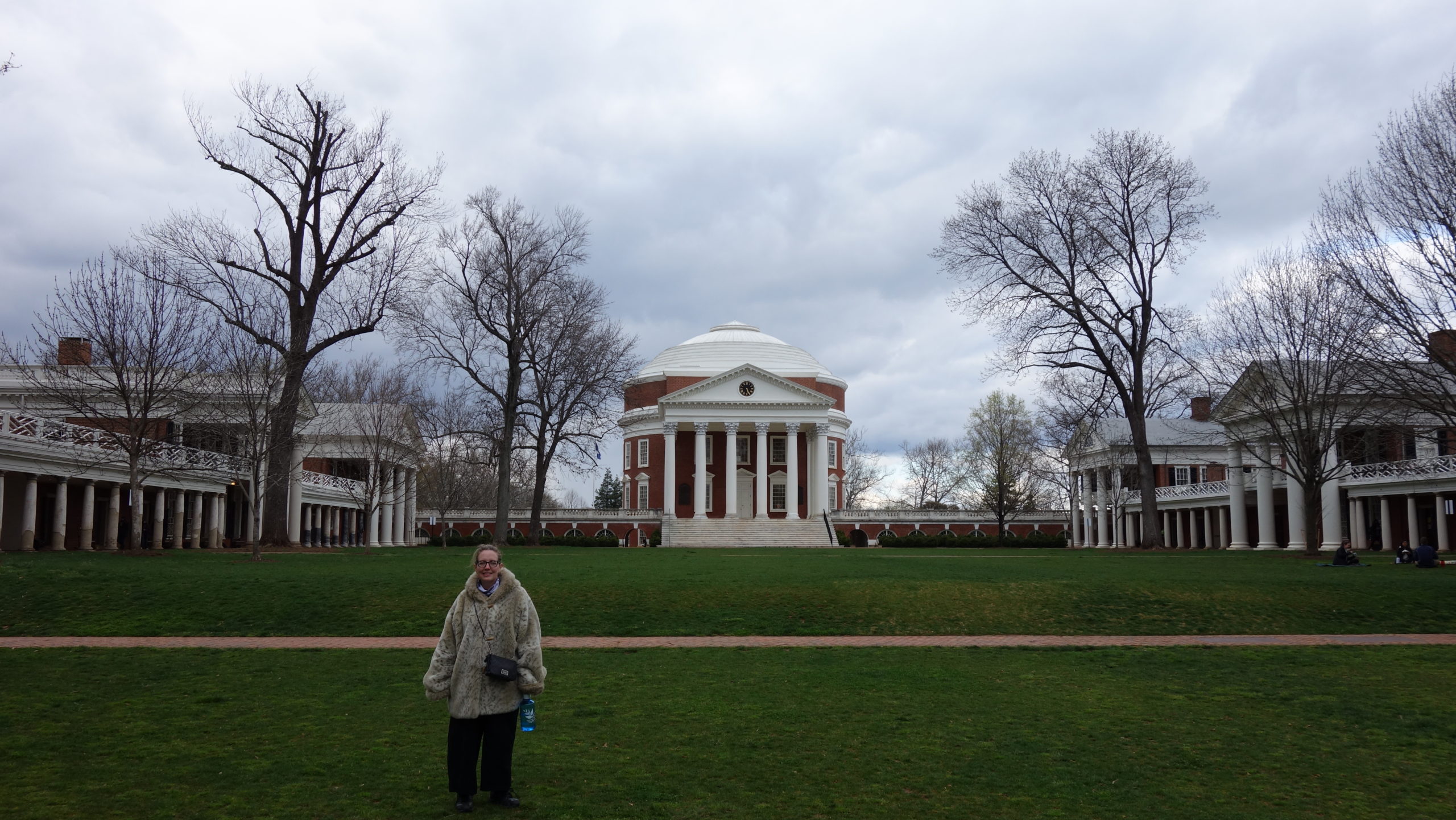
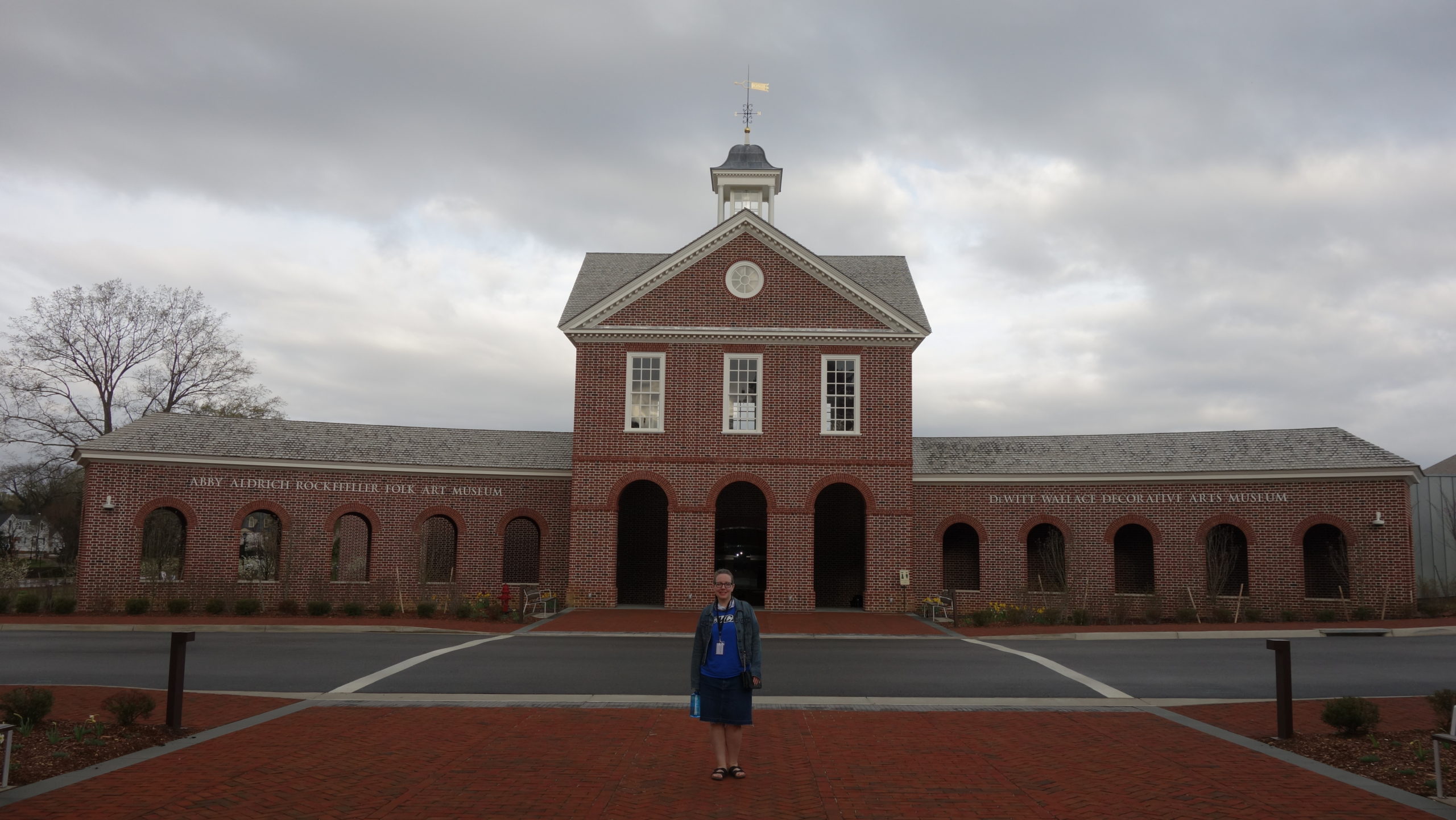
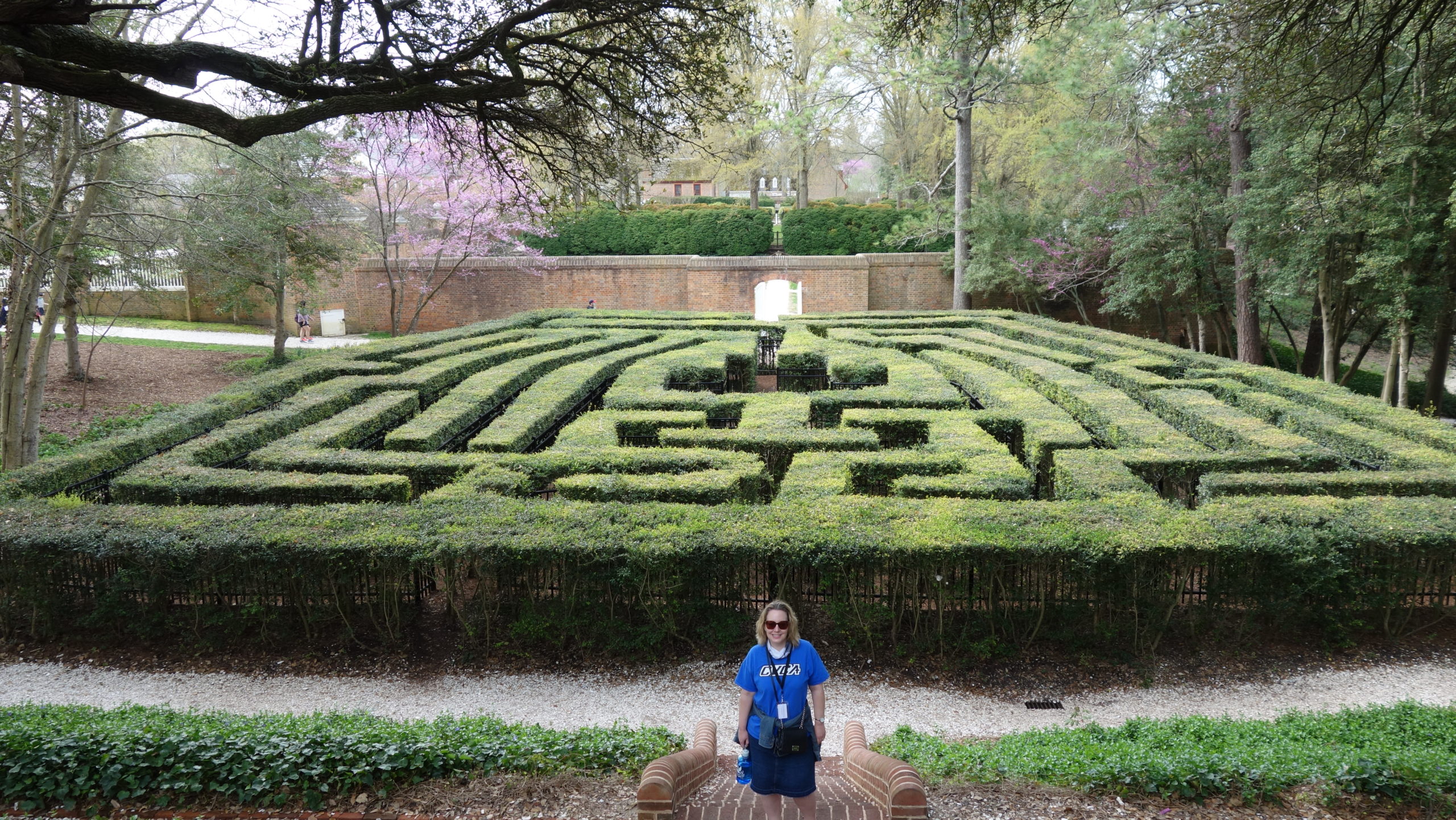
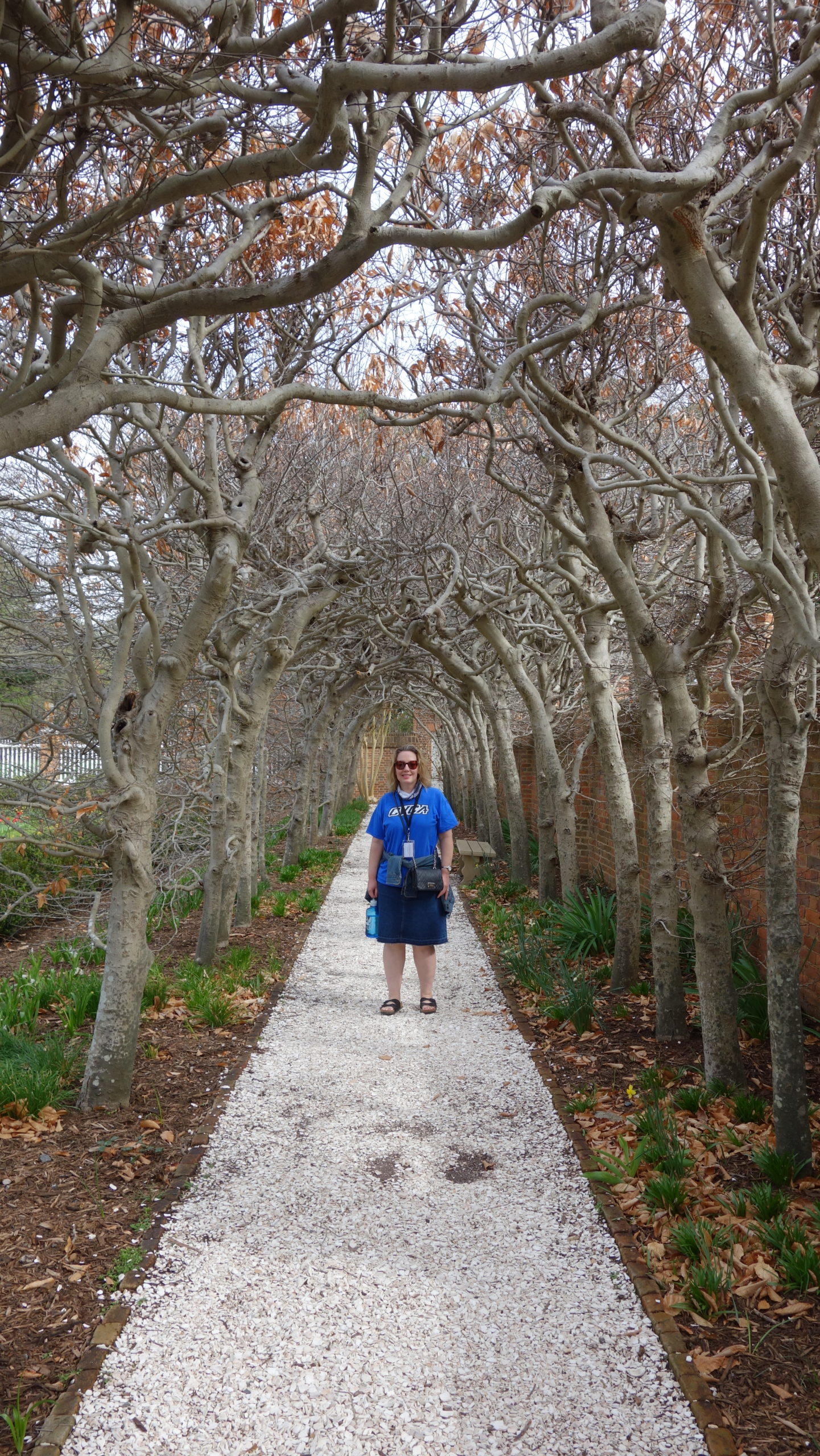
Author Archives: mriordan

Czechia 2019 – Day 10 – Saturday – Pustevny to Valtice and Lednice

Travel exposes you to all kinds of new ideas and experiences, which is both good and bad. After ten days of being confused about signs, not sure about food, unable to make change efficiently, and unsure of cultural rules of the road, and confusing “hello” and “thank you” in conversations, I was happy to see something familiar and welcome. Enter the Ostrava Steelers and the Prague Lions, on TV, with Czech announcers and miked referees, playing American football.

What a treat. It seems in Czech you can add a “y” to an English noun, so I was able to see stats about passy, yardy, and touchdowny. The play was solid, if slower than in an NFL game, and the play calling was more conservative, with passes over five to seven yards being rare. It sort of had the feel of a solid (not nationally ranked) college game. I caught the game in the early part of the third quarter, and had a fun time munching on the traditional football food of gingerbread “ears” while filling in commentary for my overly patient wife. I got to see the Lions beat the Steelers on a go-ahead touchdowny with 1:40 left to play, to win Czech Bowl XXVI (it really was the championship game).

But we are here to tour, so back to that. We drove over two hours to the twin towns of Valtice (where our hotel is) and Lednice. The towns are small, unless you count the 37,000 bikers who seemed to be on the road – it is a popular biking area. We checked in to the hotel, and headed off to our first sight a little after noon. Mer told me to put in a town in Austria, not because we were going there, but because our destination was in that direction. Since my Czech geography is poor, I was surprised when the GPS told me the Austrian town was four miles away. I had no idea we were so close to Austria.

We stopped short of the border, though. We pulled up to the old border crossing, where there was a building with half the windows boarded up, but the side building was open for the Museum of the Iron Curtain. Inside was a small but decent museum showing the history of the border, from Czechoslovakian independence in 1918, to German annexation in 1938, to Soviet occupation in 1945, to the installation of barbed wire across the border in 1951, and up to the 1980s. The main floor had information in Czech, German, and English, but the lower level was all in Czech, so that was harder to understand. We did get the wall where the names of those who had been killed attempting to cross the border were listed, and the detention cell spoke for itself. The museum was small enough to be seen in under an hour, but it was worthwhile to actually be at a border stop and see what had happened there.

We then drove off to Lednice, to see the Lednice Chateau. The chateau was the summer home to the princely family the Liechtensteins, who may or may not have been in with the royal family of the Austro-Hungarian Empire: it gets really confusing, especially in translation. What does not need translation is they were loaded with cash. When twenty-first century tourists think the building containing the riding stables and school is the main palace, you have means.

The chateau is the result of restless rich people mucking about for five hundred years. Every hundred years or so, the new owner of the place would do major renovations on something. The current house was remodeled in the late 1800s. It is a magnificent great house – maybe my favorite I have seen. The main floor is elaborately covered in warm carved wood (except for three rooms for the use by the ladies of the house, which were painted or wallpapered). It made the interior feel harmonious, and my favorite example of woodcarving in the house was the spiral staircase which went from the library up to the prince’s rooms, which was beautiful.

We toured the main level with about twenty-five other tourists, with a guide speaking Czech. We had English printed handouts. That worked well, except for the size of the group, which sometimes had trouble moving through hallways. We also took a tour of the family rooms on the second (upstairs) floor, but this time it was just us and two Czechs with a Czech tour guide. It is a strange thing to be on a tour of five people and never really be acknowledged. I don’t blame them, but it was an odd sensation.

While waiting for tours, we explored a small part of the extensive grounds, mainly staying in the formal French garden. If weather allows, we’ll go back tomorrow to wander in the area one of the princes had converted from swamp lands into small lakes and park grounds, complete with building a Turkish minaret at the end of the park, as one does on a formal chateau grounds.

We finished the day with a short walk around the main area of Valtice, which has an excellent central square with a wide lawn, on which many families were relaxing or playing. We had supper and then went up to the room to see the exciting second half of the game. A day of new experiences and new-old ones too.


Czechia 2019 – Day 9 – Friday – Pustevny and Roznov pod Radhostem

Mer got us up and moving early this morning, which even included a rare (for Riordans) fifteen-minute time limit on a buffet breakfast. We had to be in the town of Roznov pod Radhostem at 9:00 to meet a private tour guide, so we had to go.

One of the challenges of being ninety-nine percent clueless in a language is the frustrating inability to read signs. This especially is true in all things driving-related. Once in town, it was not clear where we could legally park. Our strategy, which has worked so far, has been for me to stay with the car in case I am asked to move it, and Mer goes in somewhere and asks someone about parking. Or, in some cases, we figure if we have to pay something, we are okay. Today was both – Mer asked someone, and she sent us to a nearby pay lot.

With the car sorted out, we walked over to the Wallachian Open-Air Folk Museum, a museum that is dedicated to preserving the buildings and lifestyle of the inhabitants from the region’s past. We have been to several such museums in the States and in Ireland and in Scotland. In the Wallachian museum, the buildings seemed to be largely from the 1800s, with a few older. They were either moved from their original locations, or replicas were built.

We usually will splurge for a private guide at least once on our trips. We have found private guides to be very helpful in pointing out what is important and in filling in details and stories that are not found on the information cards. Our guide, we found out at the end, was giving one of his first English-language tours for the museum, and he apologized for being nervous. We thought he did quite well. For about two hours, he led us around the three sections of the museum, and even though there were only the three of us, because he was a guide, the docent actors at each place activated the machinery (in the mills) to show us how it worked. It was great.

We started off in the technology and mill section, which consisted of a barn of wagons, carriages, and farming equipment, including a very clever horse-drawn reaper and raking machine. We then moved on to the functioning mills, starting with the iron mill, which is like a blacksmith’s shop on steroids. One of the fascinating things to me was how ingenious people were at harnessing water power. In the iron mill, they could turn water on and off to power a huge bellows, a giant iron hammer for beating metal, and a sharpening wheel. The ability to arrange simple mechanisms to turn circular motion (the water wheel) into up-and-down motion for the bellows or lifting motion for the hammers was interesting to see. There were some terribly clever people around.

We also went to a felting mill, where giant hammers pounded cloth into felt. We saw a grist mill, where grain was ground and then sorted into chaff and wheat. We got to see a functioning sawmill, where the water powered both the up-and-down saw and the horizontal motion of the log against the saw. We saw a human-powered flax-seed oil press, which took several steps and ended with huge beams being screwed together. A common refrain from our guide was “it was hard work,” including the alarming fact that childhood mortality in flour millers’ families was eighty percent, exacerbated by breathing the flour dust (compared to fifty percent childhood mortality in the general population).

We left the mill section behind and crossed over to the wooden town. These buildings were from town folk, so it had a pub, a church, a mayor’s house, and some other buildings. Around the church was a small graveyard that contained memorials or even the final resting places of about forty of the area’s famous people, who were mostly sports figures. Each headstone was unique and tended to be artistically interesting, often symbolically showing what the person was best known for.

The church itself was beautiful, with almost all of the building made of wood, including the organ pipes. In this particular church, there was a blue roof that was striking, but our guide said that was not typical of churches in the area. I thought the church felt very warm from all of the wood, and it was intimate in its size.

The mayor’s house belonged to the richest man in town, and the mayor was not an elected position – when the mayor retired, his son took over, but the ex-mayor still had the right to have a room and meals in the house. Several times each year, the mayor would hold dances for the townspeople in his main room, which was about the size of a small school classroom. When not used for dancing, the room was where the mayor and his wife and all of his children slept, with the parents getting the bed and the children sleeping on benches or on top of the earthen part of the stove.

Which leads us to the village – the typical peasant dwellings. These usually had one one room for the entire family, which in one case was thirteen people. They might have some storage rooms attached or stalls for animals, but most of the living happened in the main room. What struck us as we wandered around the homes was that some of them were set up as they had been around 1950, but except for the electric lights and the radio, they looked the same as the 1850 houses. One interesting place we saw was a shepherd’s summer hut – it was set on huge skis so it could be moved across wet grass to new pastures as needed.

After the museum, we headed back to the hotel up on the mountain at Pustevny. We ate lunch, and just as we finished, it started raining fairly hard. This was the first real rain we had encountered on this trip, and it put the brakes on Mer’s plan to ride the chairlift down to the valley and back. We debated a bit on what to do, and we got fortunate in that the rain took a break for about thirty minutes, and there were two men playing instruments and singing on the terrace of our hotel, so we sat and listened to them. One played the violin, and the other played a huge and unusual hammered dulcimer. It had a single pedal (like what pianos have) that allowed the strings to play freely or muted them. The upper notes sounded like a dulcimer, and the middle notes sounded a lot like a banjo, and the lower notes sounded somewhat like a piano. The few people around us all seemed to know the songs being sung and mouthed the words or actually sang along. It was a fun backup plan.

The rain came back, so we went back to the room for about an hour to take stock, after which Mer decided that, as the rain had stopped again, we should try the correct hike that we had failed to do last night. Mer asked at the front desk, and the receptionist showed us a map, so we got it right this time. We hiked along the blue trail, with the goal of reaching the statue of Radegast. Radegast was the Czech god of the sun, the harvest, and friendship before Christianity came along. It seems J. R. R. Tolkien knew his Slavic mythology, as he named a wizard in The Lord of the Rings Radegast. Along the way, we came to a large vista overlooking the valley serviced by the chairlift, so we still got to see what Mer had wanted to see on the lift. We reached the statue, and it was fine, but the viewpoint was the clear highlight of the trip.

That left supper, and after supper, I reminded Mer the hotel had a ping pong table, so we played and she beat me 21-18, the closest I have ever come to beating her. If it was 1850, the kids would have to sleep somewhere else so that I could play a rematch.

Czechia 2019 – Day 8 – Thursday – Kutna Hora to Stramberk to Pustevny

Wisdom is a good thing. Sometimes I have it and sometimes I don’t. Wisdom: managing to navigate my second Czech detour successfully (“Is that a detour? It looks like a detour. I’m following that truck.”) Wisdom: coming to a parking lot area full of people walking up a road, and seeing a sign we could not read, but that had a picture of a car and a motorcycle on it. We had no idea what the sign said (it could have been “No cars in winter”), but we agreed it looked sketchy, and we planned another route to Pustevny.

He don’t look wise: seeing two signs that led up the hill to the town of Stramberk from public parking. One was was along the road we had just driven down, which seemed long to me. So I advocated the footpath, which turned out to go mostly straight up the hill, steeply, on washed-out gravel footing.

He don’t look wise: seeing an example of Stramberk’s specialty pastry, a gingerbread cone called an “ear,” I decided I had to get a large one filled with whipped cream. Turns out a little whipped cream goes a long way, and the ear would probably have been better if it had been plain (they were very good).

He don’t look wise: taking a pre-dinner hike on the red trail at Pustevny, and despite frequent exposure to how wonderfully well Czech trails are marked by blazes, we kept wondering out loud why it had been so long since we had seen a blaze and why the trail was not showing any real vistas. We found out on the return trip that we had missed a well-marked branch off the dirt road we were on. If you don’t see a blaze on a trail in Czechia for five minutes, you are going the wrong way.

At any rate, travel is like that. In addition to my own wisdom and lack thereof, we have gotten ourselves deep enough east in Czechia that signs show directions to Polish and Slovakian towns. We were warned by our Jewish guide in Prague that we were going into an area where people did not speak much English, and she was not wrong. We keep having endless fun watching the other one of us mime things to patient Czechs. In general, we are managing, but Mer admits it is unnerving, since it has been over twenty years since she was so linguistically challenged (not since she lived in a Hungarian part of Transylvania in 1995-96, and even then, she was a quick study for Romanian, which was widely spoken).

It was the longest driving day of the vacation, or so Meredith tells me. It was a little over three hours to Stramberk, and then another forty-five minutes to Pusteveny, except for the road mistake we made that made it more like an hour and a half. Despite all the time in the car, we still had a good day. Stramberk is an adorably cute town nestled in a high valley under a stone tower. The tower is available to climb, so of course we did that. Meredith loved the views from the open windows, while I managed to peek at the views through the arrow slits. Until I got halfway around the tower and could not take any more, and retreated inside. I sat at a closed, inside glass window and felt much better while Mer made her way around the outside twice.

After the tower, we walked down into the small town square, where I ate my poorly-chosen “ear.” Then we continued down though the town along the easy-to-walk road we should have come up. The best thing about the poor choice of a trail is that it came out at the tower instead of the town square, so we started with the literal high point of the place.

Back in the car, to one suspicious road, to a nearby town’s tourist information center, and finally on up a surprisingly good, wide road to our hotel for the evening, in the ski resort of Pustevny. During the summer months, it is a busy place during the day, with hikers and mountain bikers, but by 6:00 things get quite quiet. Which is one reason neither of us questioned not seeing anyone on our hike of the red trail that wasn’t. It was not a total waste – the forest through which we walked was pleasant, and we could get occasional glimpses of the valley below. Above all, it was very quiet, which is how we heard the pickup truck coming up from behind us on the return walk. Where he was going, I have no idea, but he turned off on another track just as he got up to us; he stared at us – I’m not sure he was used to meeting people up there.

Returning to the lodge, we had supper and retired to the room. The room has a superb view of the eastern mountains, and the air is cool. While we can be questioned on many choices, no one is going to wonder about the wisdom of choosing this room.

Czechia 2019 – Day 7 – Wednesday – Jicin to Kutna Hora

Meredith assures me she would always rather travel with me than without me. I may have tested that love today as we headed off to Kunta Hora, with my twenty-seven variations of “Kunta Hora” set to the tune of “Hakuna Metata,” from Lion King. I’m sure Mer was endlessly thrilled.

The drive from Jicin to here was only about an hour, and so we got here around 11:00. Since we knew it was going to be too early to check in to the hotel, we drove to the Sedlec Ossuary. An ossuary is a place for depositing bones, which is not all that unusual in space-constrained European towns, but what is unusual is when the people in charge start decorating with bones.

While we were there to see the ossuary, we wandered the outside graveyard first. Many of the headstones were from the twentieth century, and many had photos attached to the marker. Most plots were in family groups.

We went into the small chapel above the ossuary despite Mer’s guidebook saying it was dull; Meredith is rather OCD about seeing everything at a sight if it is free or included. We are both glad we did. The church is plain and small, but what was really striking is that the wall had twelve modern paintings of the life of Christ, starting with the triumphal entry and ending with some scenes after the resurrection of Jesus (who, being mistaken as the gardener by the woman at the tomb, is shown rather charmingly carrying a shovel). I loved the art, and even bought a copy of the paintings in a book that cost something like $1.50.

A monk piled up bones into pyramids in the crypt of the church in the 1600s, and then later, in the 1800s, an architect decided to expand that vision into full decorations made out of human bones. It is a bit odd, yes, but the point of these things (and this is the third such place to which we have been in Europe) is that life is short, and then you have to face God. The recording to which we were listening even gave a non-pushy version of the gospel, telling us that these dead were waiting in hope for the resurrection of the dead in Jesus.

As for the actual decorations, there were two huge chalices, a cross, a coat of arms, three of the four original pyramids (one was in storage during a renovation project), and some other small patterns, including the name of the designer, in bone. But by far the biggest and most ornate one was a huge chandelier in the middle of the chamber, which, our audio guide informed us, contained at least one of every major bone in the human body. Sorry, folks, no pictures – for me, I personally feel as if it is disrespectful to take photos of the dead; I’m not sure why. Seeing the display is okay for me since it fulfills the purpose of reminding me about the importance of the hope of eternal life.

We drove over to the hotel, even though it was too early to check in still, if only to park the car. We haltingly made our way into the center of town about three-quarters of a mile away, following road signs as best we could. We managed. Mer took me to near the top of the hill of the town, where we came around a corner and saw St. Barbara’s Cathedral, which is sort of huge and completely magnificent. I say “sort of huge” because it is oddly tall for the length of the church: the original plan had been to make the church longer, but the money ran out as the town’s silver mines dried up over four hundred years. The church was started around 1400 and was finally finished, after several long stoppages of construction, in the early 1900s.

The exterior of the church is striking because of the height, and for the long flying buttresses along the walls. In between the buttresses are huge windows – stained glass from the early 1900s (except for one Chagall-esque window from 2013) on the lower level and clear glass on the upper level. The clear glass allows the church to be flooded with light and makes for a very clean-looking interior, especially after some of the fanciful Baroque churches we have seen on the trip.

Since silver paid for the church, there are many tributes to miners. In fact, the church was supposed to have been founded by some miners who got trapped underground, and who then prayed to St. Barbara, the patron saint of miners. They were supposed to have been shown where to dig to get out of the mine. One of them had a vision of Barbara at a tree in the forest, so he carved a statue of her out of the tree, which attracted worshipers, and so that became where the cathedral was built. In an unusual move for a church, there is a full-sized statue of a miner in a place where there would usually be a saint.

Silver was mined here for about four hundred years, from about 1300 to about 1700, making Kutna Hora a very rich town. The coin minting operation in the town supplied coins all over Europe. Some of the people who did not benefit much seemed to be the miners. We went to the town silver museum and took a tour of a mine shaft. Being a miner, to put it bluntly, sucked. Once the mine got deep, you had to take up to three hours to get into the mine, work a six-hour shift (or more, in later years), and then spend three to four hours climbing back out of the mine – thirteen or more hours a day, six days a week. Miners started work around twenty-one years old and generally retired (or were dead) by the age of forty, when they could help the women and children on the surface with the washing of the silver ore.

In the actual mine, the miners had small clay lamps by which to work. This was demonstrated for us in the mine, using a flickering flashlight. It was dim. In this dimness, the miner had to find any silver veins in the rock, where they would appear brown or grey or black. So he had to use hand tools to get a black rock out of a harder rock in the dark, lit only by a clay lamp. Miners also worked far apart to minimize casualties in case of a flood or a cave-in. It sounded like a very hard life.

The mine through which we walked was not like other mines we have visited; the miners were following veins of silver, and so the mine was very narrow, in many places only shoulder-wide. To get out of the mine, we had to walk along a shaft used for diverting water out of the mine, and in one spot, the roof was only four-and-a-half feet off the floor, and in another spot, it was only sixteen inches wide. I found out that I start to get antsy if I can’t stand up for long periods of time – I would have made a very bad miner, for many reasons.

The fun did not end with the miners, though. The mining pollution contaminated the area water. The people who purified the silver ended up breathing vaporized lead. And the minter, who hammered silver by hand, eventually went deaf from the noise. I’m grateful to live in the twenty-first century.

After supper outside facing a square, we ended the day by finishing up a walk of the town, enjoying the squares, the colorful buildings, and the magnificent views of St. Barbara’s Cathedral. Being in Kutna Hora means no worries.

Czechia 2019- Day 6 – Tuesday – Bohemian Paradise (Cesky Raj)

Yet more rocks.

It was still my day, we were still in the Bohemian Paradise, and so today was about more rocks. But, this time, it was with much less elevation. I made up for that with more distance today. Our hotel clerk recommended the hike today between two castles about two and a half miles apart. The trail followed a mostly dirt road along the spine of a hilltop, so there were only a couple of hills along the way. No stairs. All good.

It was a great recommendation. We got to the southern castle (think more of a chateau here and less of a repel-the-peasant-hordes kind) and paid to park. When I was asked how long we would be there, I made a wild guess and said four hours. We paid our ninety crowns (about four dollars) and parked. I decided we should pay the two extra dollars to get a ticket to see the exterior of the castle, which I figured would have great views.

Both the southern castle and the northern one were built on the stone columns we had come to see. It does give you a commanding start to your castle height, so why not? It also affords great views. Hruba Skala’s courtyard mostly looked out on countryside, but if you looked south you could see Trosky Castle, and if you looked north you could see rock columns sticking up over the tops of surrounding trees. The trees are really tall here.

After exploring the castle, we headed north along the path/road. It went through fairly dense forest, but with rocks sticking up in many places. Because of my four-hour time limit, I decided to ignore some side trails and some stops we passed, and we focused on staying on the trail to the second castle, Valdstejn. About a third of the way there, we got to our first overlook, for which Mer now knows the word. We walked out onto a point, and we were greeted with an amazing sight – huge rock towers sitting in the midst of a forest. It was very impressive, with dozens of columns sticking up, some in groups and some alone. We could not yet see Valdstejn Castle, since (as it turned out) the rocks were in the way. We lingered there some time.

We jumped back on the main trail, but quickly found a bench that overlooked the rocks, so sitting there claimed more of our time. On the heels of that was another lookout, this time right up close to some of the tallest rock examples. Time kept ticking away.

We made it to the other castle, but then I had to see inside the walls of that one too. This was a later-modified castle, and had several buildings and levels, and so it took some time to get out to the platform the last private owner had built in the 1800s. I can see why. It looked south over the forest of stone, and in the distance, clear against the sky were the two towers of Trosky Castle. More time, but well spent.

We had a little over an hour to get back to the car, two and a half miles away. So we skipped the interesting but illegible-to-us poster advertising something dragon/bat/lizard-ish going on in the back moat area, and we headed south. I did decide we had time to stop and look at the north-facing overlook again; it was too beautiful to pass up.

We were making good time, so when we got really close to the car and I saw some stone stairs going down into a crack in the rock, then surely we could take a look. That led to a sort of chamber of stone (with no roof, of course) with another stairway. We had time. That led down into a cathedral-like space of towering trees and rocks, with a path that wandered away. We took it about a hundred yards until I knew we were pushing our luck. I told Mer I wanted to go buy two more hours of parking so we could come back. She told me to go ahead since she knew I could go faster.

I hustled back, afraid of being fined or towed. I found the three parking attendants and asked if I could buy two more hours. A woman spoke decent English, but looked confused. I told her I wanted more time for parking. She asked me how much I paid. I didn’t remember, but I told her it was for four hours. She told me that I had paid ninety crowns, and that meant I was good for all day. Ah. I see.
The good news is Mer laughed when I met back up with her, and we had more time to go explore the new trail we had found. We went back down to the cathedral-like clearing and followed the trail. It wound around giant columns interspersed with tall pines and other trees. We kept being amazed that fantasy films had not been made here – it certainly would have done for Middle Earth. We got to the end of the path, where we could see it joined up with a road, and so we went back to a stone stairway we had skipped, this one going up. The stairway was narrow, especially compared to the height of the stone on either side. We finally came up between two picnic tables, back at Hruba Skala.

We checked out the courtyard one more time, and then drove off toward the town of Semily, about thirty minutes northwest. The interesting thing about driving by GPS is that it seems the GPS is largely concerned with getting you there in as direct a line as possible, sometimes bypassing better roads to shave off two minutes. As such, we found ourselves driving up, over, and down a small mountain with a winding road, and two (presumably local) drivers who seemed determined to mate with my back bumper. I finally found a pull-off to let them pass, and then the GPS told me to turn right.

This road was a good example of a classic back-country Irish road. No shoulder, and just a little over a car-width wide. We laughed at it, and the the tar road started showing signs of wear. The grass started popping up in a few places in the middle. And it got narrower. And then there was a lot of grass between two strips of tar. Until there wasn’t. Then it was a gravel car path. With bad sight lines. Mer asked me where I was taking her, and I told her it was supposed to be a good-sized town. Just as I said that, we rounded a corner and she saw the town laid out less than a mile away. Somehow this cowpath of a road led right into a residential neighborhood. I have only been on one road that primitive before (in France in 2007), and this one may have had the French one beat. It was only by God’s grace that I did not meet another car coming the other way (or even a hiker, for that matter) – there was no room, with very few places to pull off.

After a quick stop at the TI (tourist bureau), we found our way to the reason we were in the town, which was to hike the Rieger Trail (Riegrova Stezka). I had seen a picture of a boardwalk attached to a cliff face over a pretty river, and I wanted to see that. Besides, the river hike would be flat for our tired legs. And it was – no individual part of the switchbacks were particularly steep. Sigh.

The boardwalk was right near the start of the trail and was pretty, and it had the added bonus of being across the narrow river from a rock-climbing course, so we saw a couple of climbers coming down the rock face. Our trail turned into the woods and started going gently uphill. Until the aforementioned switchbacks, which put on some serious elevation in a hurry. We huffed our way over that, and went on to a viewpoint, where a bench looked out at the river in an area of gentle rapids. We sat there and enjoyed the water and the sun for some time, and then I figured we had to head back home, since it was already after 5:00.

Happily, the GPS left the cows alone, and we had good roads all the way back to the hotel.

Czechia 2019- Day 5 – Monday – Bohemian Paradise (Cesky Raj)

Rocks.

People often ask Meredith how we decided to go to Czechia this summer. When Mer turned forty, she told me she wanted to go to all the countries of Europe, but I could pick the country each year. So, when people ask her about why Czechia, she defers to me. It’s because of the rocks.

When I was poking around the Internet looking at the offerings of different countries, I stumbled across pictures of Czechia’s national parks, and one in particular was appealing – the Cesky Raj, or “Bohemian Paradise” in English. It is close to Prague, and not too huge (so everything is close together), and it has the Prachovske Skaly – Prachov Rocks: stunning, huge columns of rock thrust into the air. If it were not enough just to see them, you can climb them (if adventurous), or climb up and through them on rock stairs jammed between gigantic monoliths of stone. I clearly needed to see these, and that is why we are in Czechia.

The Bohemian Paradise did not disappoint. We started with the Prachov Rocks this morning, which are only about five miles from Jicin. We started our hike a little after ten, and it would be after two o’clock before I decided we should move on, and there were still a few trails we left unexplored.
After paying the modest admission fee (about four dollars each), we walked up a slight incline in wooded terrain. We turned the corner and saw our first stone tower, and I was in awe. And it turns out that it was an isolated one and not especially large. As we walked on, more and more columns came into view, and it felt like something out of Lord of the Rings. We walked into a horseshoe-shaped collection of stone, and it was unlike anything I have ever seen.

And then I saw stairs. Leading into the rocks. And thus began the theme of the day – climbing. The Prachov Rocks are pretty amazing at any angle, so getting to see them from the ground, from more or less inside them, and from the top of them is a pretty great day. We found five viewpoints, with my linguistically astute wife figuring out the word for “viewpoint” partway through the day. Some views were mostly of the rocks, and some were of the rocks and of the surrounding countryside. Spectacular.

The only downside to the tromping around was my slight neglect in not having tried to obtain a trail map. There are multiple trails, all well marked with color-coded blazes, but I did not know where each trail led. Oddly, the park did not bother to align with my mental map and guesses, so there was a long hike around the top that resulted in some serious backtracking, keeping in mind that up-and-down progress was usually involved. My wife stayed in good humor anyway; she is a gem. She even was okay with my finding a rock staircase near the parking lot on our way to take a break, and it turned out to be a long and very steep staircase. It let us out at a beautiful vista (yay!), and then the trail dumped us back to where we had been thirty minutes before (boo!). I may have gone down to go up to go down again. Ooops.
Finally, around two o’clock, I decided that my legs were tired and that I wanted to go to another site, so we left the rocks behind, at least for now. We headed the few miles over to the ruins of Trosky Castle, which is the symbol of the park – two towers sitting on columns of rock, all by themselves and visible for miles around.

While we were able to drive to a parking lot below the castle, there was still a fair amount of “up” involved. Once we got to the gate and paid our entry fee (again, who is going to quibble after climbing for a third of a mile?), we went up to the gates, where we could climb…up… into either of the towers. We picked the higher climb to the bigger lower tower (the higher tower is not accessible; you can only get to an observation tower/platform a little ways below it) for no other reason other than there were no people walking that way at the time. It was a long way up.

Mer said late in the day that she can give little better praise to a place where she had to climb than, “It was worth it!” The big tower gave magnificent views of the surrounding area, even to some distant mountains on the edge of haze. The biggest “window,” which was almost certainly a collapsed section of wall or maybe a door, gave direct views of the smaller and higher tower on the other pillar of rock. The two towers used to be connected by the living quarters of the owner, but now only some walls remain between the two. The drawings of the full castle we saw were very pretty.

We lingered in the big tower, and then went down and then up into the observation tower at the foot of the little tower. Similar results – great views of the land and of the bigger tower. Also, more stairs.

We finally made our way back to the car, and I drove us off to the last stop of the day – a series of three lakes our host had said were very romantic. It would be an easy walk in a pretty place, and Mer would love it and me. A great win. And then we pulled up to the RV campsite. Odd. And the man who took our parking fee said there was no trail around the lake, but we could walk over to the other campsite on the very small lake. Hmmmm. This was not the romantic late afternoon I was imagining. But! He did say the other campsite connected to the trail that would take us back to the rocks. I could still salvage this!

By going up, of course. And up. And up. And as we crested the hill, where I had hoped to see the Prachov Rocks…was a parking lot. We had come to the far side of the rocks area, a site we had passed in the car that morning, and the rocks were still a one-mile walk (probably up) away. I turned us around and walked back to the car. The slightly good parts were that the trail was pretty, through tall and straight evergreen trees, and also that Mer found the whole thing funny. Funnier going down, but still funny.

We got back into Jicin around six o’clock, and we grabbed some take-out pizza to eat in the beautiful courtyard of our hotel. We finished the day by walking the remainder of the pedestrian part of the town (that we hadn’t seen yesterday), and we took time to eat some ice cream in a small square near the clock tower. And it was all on level ground.

Czechia 2019 – Day 4 – Sunday – Prague to Jicin

We have two hard-and-fast rules when we are traveling in Europe – you will waste time, and you will waste money. Sometimes things do not go as expected, and you have to swing with it. One of the little joys we have had while traveling has been to go to English-speaking church services on Sundays when it is possible; it requires us to be in-country on a Sunday and to be in a big enough city to support a church that speaks English. Prague qualifies as both, so we found a church near our hostel that had a service at 10:30, and we dutifully arrived at 10:00 to find the doors of the building locked. Since the church met in a commercial building on one of the floors, we thought we might need to buzz in, but we could not find a buzzer. We stood there for a few minutes before we went to a cafe to get on the internet (and have a muffin).

I brought up the church website, and under the worship section it mentioned they now meet at 4:00 pm. Huh. I know I didn’t make up that 10:30 am time out of nowhere. Mer asked to see the computer, and she went to the church homepage, where it said, “Change in worship time June 23rd – 10:30 am”, which I took to mean, “Starting June 23rd, we will be meeting at 10:30, for summer hours.” It turns out they meant, “On June 23rd only, we are worshiping at 10:30 am.” I’m not sure why the June 23rd notice was still online on July 14th, but it meant we missed church – we were too late to get to any of the other services on time, so we went back to the hostel. It was about eighty-five minutes of wasted effort, but you will waste time when traveling.

We headed out to the airport to pick up the rental car. Prague is an amazing city, and we did not see anywhere near enough of it, so I am happy we will be back at the end of the trip for a day. We did the tram-subway-subway-bus trip out to the airport, where we picked up our bright green Skoda Fabia, which is the same make of car we had on our Croatia trip three years ago. Skoda is a Czech company, so we are playing to the hometown team.

My brilliant idea, with which I was very pleased, was to get the car out at the airport (as opposed to in the city) so that I could avoid city driving while getting used to a strange car, and a manual shift one at that. I also brought along our GPS with the additional map on it, which promptly told me to take a right. To the city center. Sigh. I’m not sure where the Hertz office is in the city, but at least the route I did take did not take me too far into downtown before getting me back on a highway.

We had an uneventful two-hour drive to our next destination, the town of Jicin, population sixteen thousand. Although that is a bigger number than I would have guessed, the main part of the town where our hotel is located is very small and walkable. We got checked in to the hotel by a very nice clerk who said we were the first Americans he himself had ever checked in. He had a preference for sixties and seventies American rock music, so we did not mind the check-in process at all while we listened to his playlist.

Once settled, we popped next door to a cafe for a snack, based solely on the fact the cafe sign had a cat logo, and there were painted cat paw prints showing the way to the door. We also ran into the first people with whom we’ve interacted in Czechia who spoke no English. Happily, there was one other customer there, and she spoke English, so she helped us, although we did end up with two orders of an excellent hot chocolate instead of one. I did not mind.

We wandered the center of the town, which is very cute, with colorful buildings and a tower. I saw people walking around up at the top of the tower, so I decided we should do that. I think it cost about $2.50 to go up – it’s not all bad being out of Prague. Near the top of the stairs, the tower opened up to a room which was filled with puppets who seemed to be performing for a king puppet. It was a little odd, as there was no explanation, which we could not have read anyway.

At the top, we paid the admission fee; the clever locals let you climb up to the top before charging you. Are you going to say no at that point? The views from the top were excellent, or so Meredith tells me. I was terrified of the height, and it was all I could do to make it around the perimeter of the tower and take a few photos of Mer before retreating back to the safety of inside the tower, where I happily looked out over the landscape through a window. It was excellent. Mer stayed out for two full circuits of the tower.

We had been told of a tree-lined alley that we could walk along that ended at a loggia (huge covered porch) that had been built by Waldstein of the Waldstein gardens and palace in Prague. It seems as if he built this and several castles around in the area. So we walked out. And walked. And walked. It turns out the path was about 1.3 miles long, but it did end in the loggia. As we approached, we heard music being played, so we popped up onto the porch to investigate, and there was a small Renaissance-style band playing, with a lute, and recorders, and a cello, and even a hand-pumped organ. We sat and listened to the free concert for about thirty minutes; it was completely unexpected. Just like the huge wind storm that blew in with driving rain. When we were over a mile and a half from our coats and umbrellas. So we waited the rain out, admiring the double rainbow that was produced, and then as I proclaimed we could just about go, we got a boom of thunder and some more rain, but mostly on the town side of the loggia. It was a very tight cloud, it seems. The rain finally stopped, and we headed back to town, dry.

Once we got past the tower, I wanted to see a small park to the left, so we went that way. As we got into the park, we heard music, so we delayed supper and went to investigate. It turned out to be a woman singing with her small guitar band. She was singing Irish songs that we knew, in Czech-accented lyrics, with (presumably) explanations to the audience as to what the songs were about. Probably. Did I mention we don’t speak Czech? We listened for two and a half songs, and then she wrapped up – we had caught the end of the concert, but it still was a delight.

After supper at an Italian restaurant, we went back to the hotel. We missed church and did not miss the city center, but we also stumbled into two unlooked-for concerts. Sometimes things do not go as expected, and that can be a very good thing.

Czechia 2019 – Day 3 – Saturday – Prague

Touring Europe allows you to see great art, history, architecture; experience new cultures and try new foods; hear new music and speak new languages; gain a greater understanding of the human condition. Then you hand the guidebook over to Matthew….


Today was the first day of the Czechia trip on which I was in charge of what we got to do; Mer and I split up vacation days so that we each take turns planning things (or winging things, in my case). My first day on the job was made happily harder in that it was supposed to rain, and it didn’t (other than a brief shower as we walked from a tram stop to a church). Good problem to have, but it required some midday modifications to the itinerary, which had been indoor-intensive.


We took a new (to us) tram to the Little Quarter, which is the area right below the castle. As we got off the tram, it started to rain, so we headed for the Church of St. Nicholas to tour the inside out of the weather. It was on my rainy-day list anyway, and it was a good stop. The inside of the church is as Baroque as I have seen anywhere. The Baroque era was (roughly) from 1600 to 1750, and involved elaborate, over-the-top decorations. In the case of St. Nicholas, it meant almost every surface was covered with decoration – it was almost hard to take in. My brochure from the church had a great line in it that made us laugh out loud, even as we tried to be quiet in a church – “The elemental lack of restraint in the individual elements is typical of the architect.” Quite so.


We looked around the church for a time and discovered we could go up to the gallery, where we could see the higher decorations more easily, as well as ten large paintings from the life of Christ. Mer loved the viewpoint, but I could not get near the edge to see things well. As we were about to leave, I asked the man at the door if the crypt was open. He looked confused and asked if I knew German. Since I did not, I left, much to the disappointment of Mer, who wanted to see me mime “crypt.”


By this time, it had stopped raining, so we walked down toward the river, going down and under the Charles Bridge, onto Kampa Island, which is full of shops and restaurants and is quite pretty once you get away from the bridge area, and it even includes a large working waterwheel. As we were walking through the park on the island, we heard marching band music – a full band arrangement of the pop song “Happy.” Of course, we had to investigate. It turned out to be the Copenhagen Show Band, touring around and playing in the park today. They did not march, but they did have a few dancers, and the band was very active in playing (swaying or waving instruments around), and they seemed to be having a great time. We stayed until they stopped playing, which was about ten minutes (which included a Disney-movie medley). It was a “happy” stroke of travel luck to stumble on them.


We headed over to the river to get yet another perspective on the city, and we noticed the river lock guide was decorated by a dozen yellow light-up penguins. As one has, of course. We struck up a friendly conversation with an older couple from Scotland, and the husband had been in the United States a few times, including Maine. He said he had the best blueberry pie he had ever had there. That pleased me very much – a little hometown pride.


From Kampa, we walked toward the castle hill, with my having the idea to take the funicular up the hill to save walking. But there was a huge line for the ride, so instead we went to look at the Monument to Victims of Communism. It is made of a series of statues on stairs; men who get progressively thinner and lose limbs as they get higher up the stairs, until there is nothing left. It is well done.


After lunch, we walked and took a tram up to the Wallenstein Garden and Palace. Wallenstein was a man who made a ton of money in the Thirty Years’ War in the 1600s, and he build this huge estate where the Czech Senate now meets. The grounds are open for free, and today part of the palace was as well. There are fountains and shrub-lined paths, and peacocks roam freely. There is a large artificial grotto wall that is kind of creepy looking with dripping rock formations, and an owlery. The palace main hall is huge, only topped in size by the Prague Palace hall, and it is now used for concerts and lectures. A few other rooms were open as well, but the hall was the main showpiece.


We used the subway to get back to Wenceslas Square, where we headed toward the Mucha Museum. As we got close, of course I veered into the Senses Museum instead. The museum is small, but fun, full of displays that trick your senses and mess with your head, including a spinning tunnel that makes you think a stationary walkway is moving, and a forced-perspective room that makes one of you look much bigger than normal. It was a good time, if not exactly high-brow culture.


When we came out, the day continued to be nice, so I improvised and took the subway back to the gardens area, where we then walked and walked and walked over the river and past the Charles Bridge and all the way over close to the National Theater. Later, Mer gently pointed out that we took the subway to a far point to walk back to a point that was only about ten minutes from where we had started. Oooops.


But we did get on the Vltava River. We rented a paddleboat for an hour, and we circled Strelecky Ostrov island and then sat quietly on the river looking at the Charles Bridge and surrounding area. We do like to see cities from the water when we can, even if it involves some unnecessary walking.


Having learned my lesson, we walked back the direct way, grabbing supper along the way. We got back to the square around 7:30, in time to buy tickets for the 8:00 showing of Srnec Theater’s black light show. Black light shows are a Prague art form in which black lights are used to highlight props that are then “magically” moved about by stagehands dressed in black. The founder of the Srnec Theater came up with the idea in the 1960s, and the show tonight was comprised of a series of ten-minute long skits involving lots of things floating and flying. There was a western-based one with a trotting horse, and a magician causing things to zoom about, and a woman hanging laundry that moved, and a fish that became a mermaid and back again, and other shows. It was brilliant fun – the skits were clever and funny, and the illusion was almost perfect (you could occasionally see a black-covered hand or arm if it got too close to the normal light). It may not have been the ballet, but it was a great time all the same.


We headed back home for the evening having put in our last full day in Prague for this trip. Tomorrow we head out into the rest of the country, which will hopefully be a different kind of museum of the senses.

Czechia 2019 – Day 2 – Friday – Prague

We in the United States do not have a great sense of long history; it has not sunk down and become part of who we are. We celebrate historic buildings built in 1901 and put up “History happened here!” signs celebrating the dedication of a “History happened here!” sign in 1965, and these are fine – I find them interesting.

Then you hit Europe. Where the oldest operating synagogue in all of Europe, built around 1290, is known as (really), “the Old New Synagogue.” Since there was an even older synagogue around when the newer one was built, it became the New Synagogue. Then, after a few hundred years, it became the Old New Synagogue. When your “new” synagogue is over seven hundred years old, you have some history behind you.

After a too-early wake-up alarm around 7:15 am, on day two of jet lag, we had breakfast and then went to the old city, to the old Jewish quarter, where we met up with a Jewish tour guide and three other Americans for a three-plus-hour walk through the remains of the Jewish neighborhood of Prague.

I say “what remains” because in the 1860s, Jews were granted full citizenship rights by the Austro-Hungarian Empire as a larger part of concessions to minority groups to help quell rebellions. Since Jews were no longer required to live in a segregated neighborhood, the wealthy families moved out into the larger city, leaving the area to the Jewish poor, and later the poor in general. By 1900, the area was a slum, and the city razed most of it to make way for new buildings. They did leave a few synagogues and the old Jewish cemetery behind, as well as a few other important buildings.

We started at the Old New Synagogue, which is an Orthodox congregation. That means, in part, that women are segregated from the men who sit in a rectangle around the cantor who chants the service. The women watch and listen through small windows in the interior walls. I was surprised at how small the main room is – about the size of a large school classroom. It is also a reminder of how much time has passed that to get into the synagogue, you need to go down four or five steps; the synagogue was build at street level, meaning that the surrounding area has been built up that much over seven hundred years. And yet as recently as 2002, the building and environs were flooded by the Vltava River up to three or four feet deep.

We next visited Maisel Synagogue, which is no longer an active place of worship, but instead is a museum that tells the story of Jews in the Czech region. Many of the objects were given to the Prague Jewish community for safekeeping ahead of serious persecution during World War II. There was an excellent computer-animated movie of how the old Jewish quarter looked in the 1880s; a librarian made an accurate 3-D paper model of the city of Prague at the time, and remarkably, the model still survives, and became the basis for this short film.

We went on to Pinkas Synagogue, which is also no longer active. Instead, it has been turned into a very moving memorial to the almost eighty thousand Czech Jews who were murdered in camps by the Nazis. The name of every known victim is neatly handwritten on the walls of the building, while recorded voices quietly read the names of the dead over speakers. In addition, there was a small room filled with artwork drawn by children at a holding camp called Terezin. The children were allowed to have an art class, and some of the teachers hid the work safely away. It is hard to imagine the life the children led that brought them to draw things like being thrown out of school, or drawing a hanging of a Jewish man, or drawing pictures of the trains that took people away. It was at this synagogue that we learned that the Nazis required local Jewish leaders to pick which Jews would be rounded up; the Nazis asked for a certain number, and then the local council had to provide that many Jews. It was chillingly cruel.

Pinkas exits though the old Jewish cemetery from around 1400 to1700. There are something like twelve thousand headstones, but an estimated forty thousand people are buried there, as people were buried on top of older graves because of space constraints. Somehow, this cemetery was left alone by both the Nazis and the Communists.

The last synagogue we visited was Klausen Synagogue, which now houses a museum explaining Jewish holidays and traditions. I know a fair amount about Jewish holidays and customs from the Bible, but there are a lot of extra-Biblical traditions that exist. For instance, I had no idea there was a “Days of Sorrow” centered on remembering the destroyed temple from 70 AD and the one before that in 570 BC. It would be an interesting place to visit when we have more time someday.

We finished the now-almost-four-hour tour by walking to a statue commemorating Franz Kafka, and then on to seeing the outside of the Spanish Synagogue, which is under renovation for almost two years. Our guide showed us pictures from inside, and it is beautiful – heavily decorated in the Moorish style of geometrical shapes with bright colors.

The tour was very good, and our guide was very patient with all of our questions. It was a morning well spent, even on only a few hours’ sleep.

Since it was almost 2:00, we walked over to near the Charles Bridge, where we had lunch in a small coffee shop. Refreshed by food and rest, we walked back to the bridge, where we climbed the tower on the Old Town side of the bridge. It is a solid climb up about 150 stairs, but the views of the old town, the bridge, and Prague Castle were all worth it. In addition, I’m usually terrified of heights, but the windows that looked out from the ramparts were high enough that I felt safe.

The forecast had called for rain all day today, but we had only been rained on for short periods during our walking tour. It began to rain as we crossed the bridge to the castle-side tower, where we climbed up that one as well. That tower was much less crowded than the twin across the bridge; I’m not sure if it was because of the rain or because the crowds seem to hang out on the Old Town side of the bridge. Either way, it made for a pleasant viewing platform, even in the light rain. We retreated inside the tower for a few minutes when I saw some nearby lightning, but that passed, so we went back outside.

We walked back across the bridge and headed back into the Old Town. It rained hard for a few minutes along the way, but then stopped for the rest of the evening. Having a total of about twenty minutes of rain in a whole day of touring was a real blessing when we thought it was going to rain all day.

We jumped on the number 22 tram to take a scenic ride up to the castle area. Sitting while touring was a welcome change. We got off near the top of the hill to wander in a quiet neighborhood area, where we only saw four or five people, none of whom seemed to be tourists.

We took the same tram back to the center, where we ate a quick meal at a sandwich shop on the main shopping drag. It was not quaint, but it was getting late, and it seemed like a good idea to get back to our hostel to try to get a full night’s sleep – I’m in charge tomorrow, and of course I only have vague ideas of what we might do. I’ll need to sleep on it.


Czechia 2019 – Day 1 – Thursday – Prague

In the past, I have left as early as twelve hours before a flight was scheduled to take off – five hours to get to Toronto, three hours before an international flight, and then I left four hours of “squishy” time for traffic, food stops, border crossing, etc. After getting to the airport ridiculously early several times, I tried to aim for eleven hours, but we left late, so we actually left ten hours before takeoff. We skipped food (because of the early evening flight, we were just going to have lunch in the airport), breezed through the border, and hit no real traffic. As such, we were sitting at the gate three full hours before the flight took off. Which was then delayed twenty minutes. Meredith is pushing for nine hours for the next Toronto-based trip. She likes to live wildly.

The flight was uneventful, but the trip from the airport to our hostel was not so easy. Mer waited until we were waiting for the bus to tell me we needed to take the bus to a certain stop to transfer to the Metro. Fair enough. That we would take to a stop to transfer to another line. Okay. Which would take us to a stop where we would go up to street level, to catch a tram. In a city in which we had not traveled before, with signs in Czech, while jet-lagged. What could go wrong?

It actually was not too bad – we did struggle a bit with trying to figure out which direction of tram we should take, but Mer saw a famous church spire that got us fixed on the map, and we headed away from it toward our hostel. Never mind that it turned out to be the wrong church – it still worked. We also wandered a bit on the far end trying to find the right street, but it all worked out so that we were checking in around 9:30 am. Sadly, our room would not be ready until 3:00ish, so we stored our bags and headed out to explore the city – the jet-lag-breaking nap would have to wait.

We were smart enough to buy three-day passes for all public transportation in Prague, so the tram-to-metro and metro-to-tram riding we did all day was easy to do. We went down to the Old Town, where Mer took me on the start of a Rick Steves walk, starting in Wenceslas Square, which has a museum on one end, and the other end leads further into the Old Town. We ambled though the square in a little bit of a fuzzy-brained fog, but it was exciting to be in a new city (for me – Mer, of course, had been here for a couple days in the 1990s).

We went down a narrow and cool (if commercial) street that ended in a huge square where the Old Town Hall sits on one side and Tyn Church on the other. It is a really beautiful space, with pretty buildings, open space, and a huge monument to a priest who tried to reform the church in the 1400s – Jan Hus. He was excommunicated and then burned at the stake for trying to do so, but he has been a symbol of Czech independence ever since (even as they were dominated by the Habsburgs of the Austro-Hungarian Empire).

The Old Town Hall has a complex and cool clock from the 1400s that tells the time, the zodiac, the amount of daylight, the time of sunrise, and so on. Of course, it is so complicated, I could not figure out how even to read it as a clock. But, on the hour, it gives a small automated performance before sounding the hour, to hundreds of camera-toting tourists. First, Death turns over his hourglass and starts ringing a small bell. Then, two windows open up, and the Twelve Apostles appear at each window. Finally, a rooster crows, and the windows close, and then the hour chimes. It is a remarkable clock, despite seemingly not impressing the teen boy behind us who was being ribbed by his family for having a “we waited ten minutes for THAT?” attitude. He was smiling as they gave him grief. I liked the clock.

It was about noon, so we took the Metro to a quiet neighborhood for lunch. It was a little out of the way, but Mer wanted a quiet lunch away from tourist hordes, and it was lovely. We ate outside next to a small round “square” bordered by five-story apartments.

Back to the main square, we did more of the Rick Steves walk, passing through Ungelt Sqaure (where merchants once stored wares, since there were only two entrances), then peeked into a highly decorated Baroque church which was sadly closed, but had provided windows to look though. We wandered down to the Fruit Market Square, which was fairly small and cozy, and past the Estates Theater that now seems to focus on Mozart operas, and finally ended up at the Powder Tower, which used to be the main gate in the city walls. It is beautiful and imposing.

Next to the Powder Tower is one of the most magnificent buildings I have ever seen – the Municipal House. It is a fabulously decorated homage to Art Nouveau. Art Nouveau was a celebration of new techniques of construction that allowed the architects to incorporate elaborate curved designs into iron decorations and stained glass and tile work and mosaics. The Municipal House is pleasingly decorated inside and out with art everywhere. It is a grand building, and I loved it.

We had managed to get to the early afternoon, so we headed back to the hostel, getting there about 2:30. After an initial protestation from the new desk clerk that we were too early, the original clerk explained things to him and he let us have our keys so we could finally go get a three-hour nap, followed by a shower. We both felt much better after that.

We had supper in the same neighborhood as where we had lunch, in a small beer garden. There may have been a German tourist or two, but we did not hear anyone speaking in English. So, another quiet meal.

We finished the evening off by strolling though the now-lit city to the Charles Bridge, build by Charles IV of the Holy Roman Empire in the 1300s. The bridge is beautiful itself, and the Vltava River is pretty to look at, but on top of all of that, it overlooks the Prague Castle, started by Charles, and it’s one of the largest castles in the world. At the center of the complex is the striking St. Vitus Cathedral. It is a remarkable spot, even if we had to share with hundreds of other tourists.

As an aside, this bridge is shown in Spiderman – Far from Home, and I was able to identify where that scene was shot, which was very cool. But the movie shows the bridge empty of people. I’m here to tell you that is never the case on a good-weather evening; even a quick shower of rain did not dampen the spirits of the crowds on the bridge and in the small square.

We walked the full length of the bridge and back, and then headed home. Mer had figured out which stop to use on the tram to get us really close to the hostel. The only issue is that the tram going TO the city stops there, but the tram coming FROM the city does not. We discovered this the hard way, overshooting our stop by about a mile or so. We decided to wait for the return tram, but it was a little creepy on a deserted bridge in the dark.

And so, having clearly become masters of Prague’s transit system, we wrapped up day one.