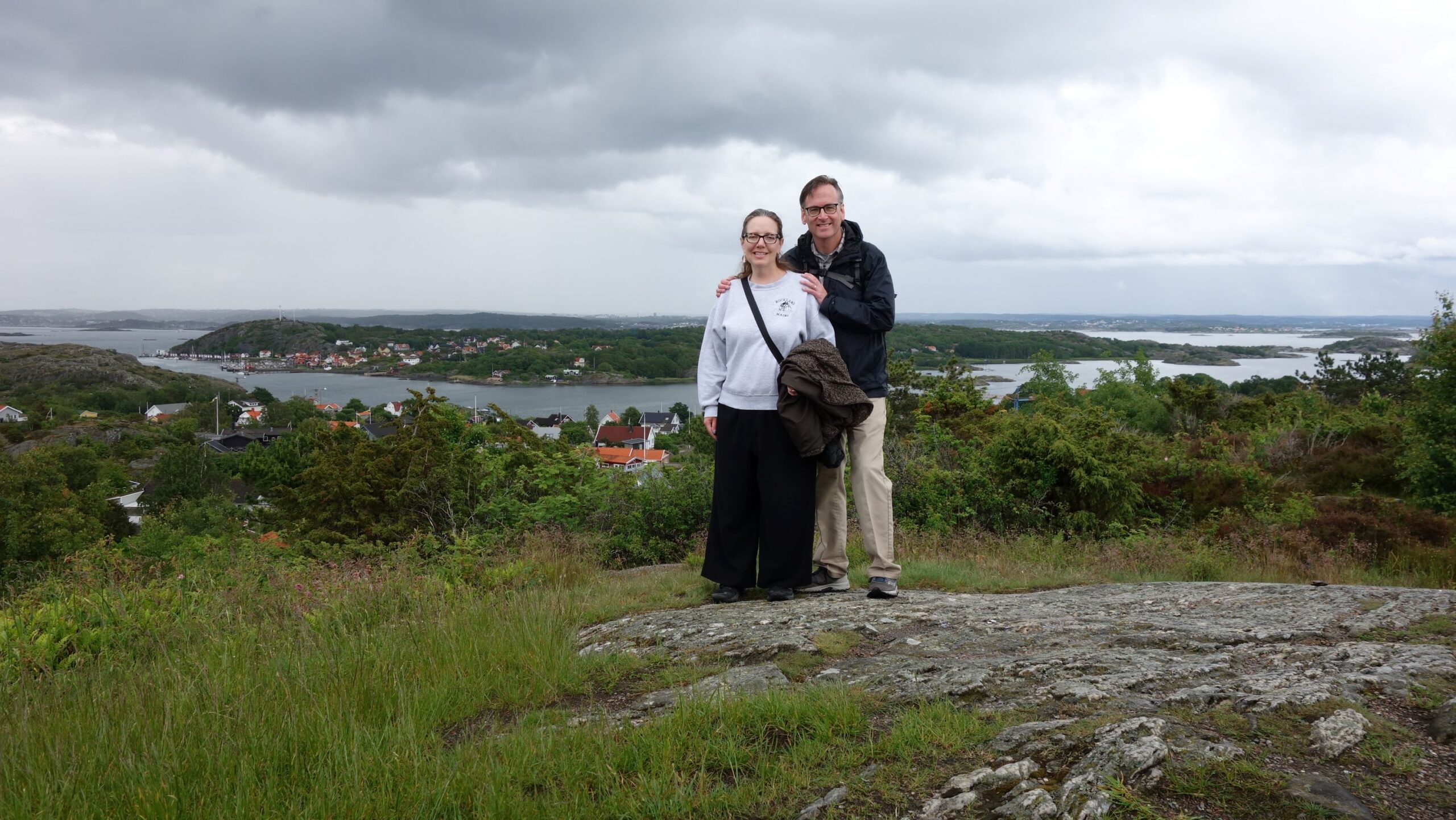
 Weather was an issue again today. It’s almost like forecasting the weather in a coastal city on a shallow sea with islands all around is difficult. Last night’s forecast said the rain would start at 1:00 p.m. today. This morning’s said the rain would start at noon. By 11:00 a.m., the forecast said the rain would start at 5:00. I finally just decided to do my thing and see what happened.
The free short-jog ferry only runs during the week, so we took a tram ride to get across the river, ending up in the general area of the Haga neighborhood, where we had been yesterday. It would have been smarter to have thrown in Skansen Kronan yesterday when we were right there, but these things happen on touring trips sometimes.
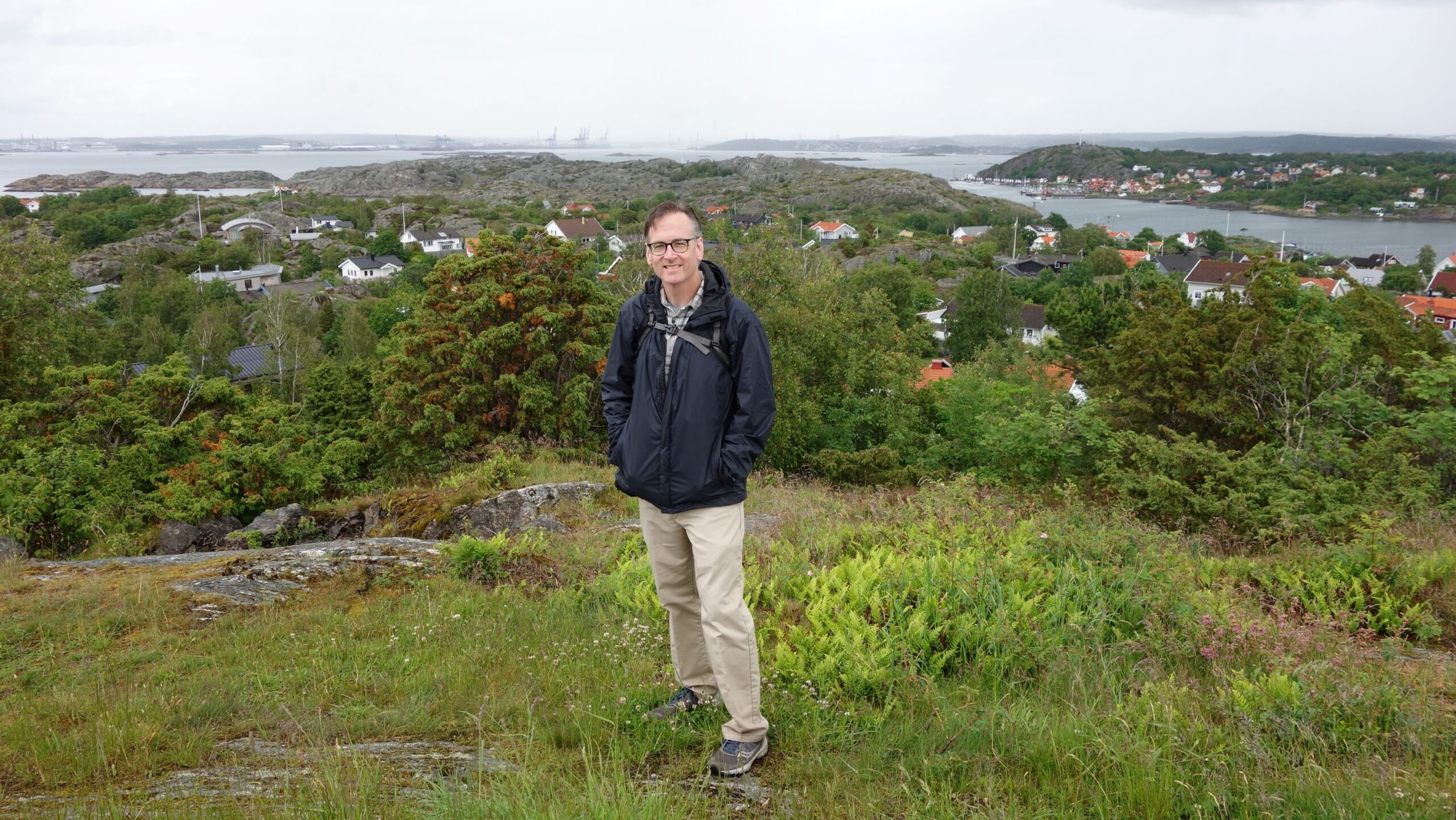
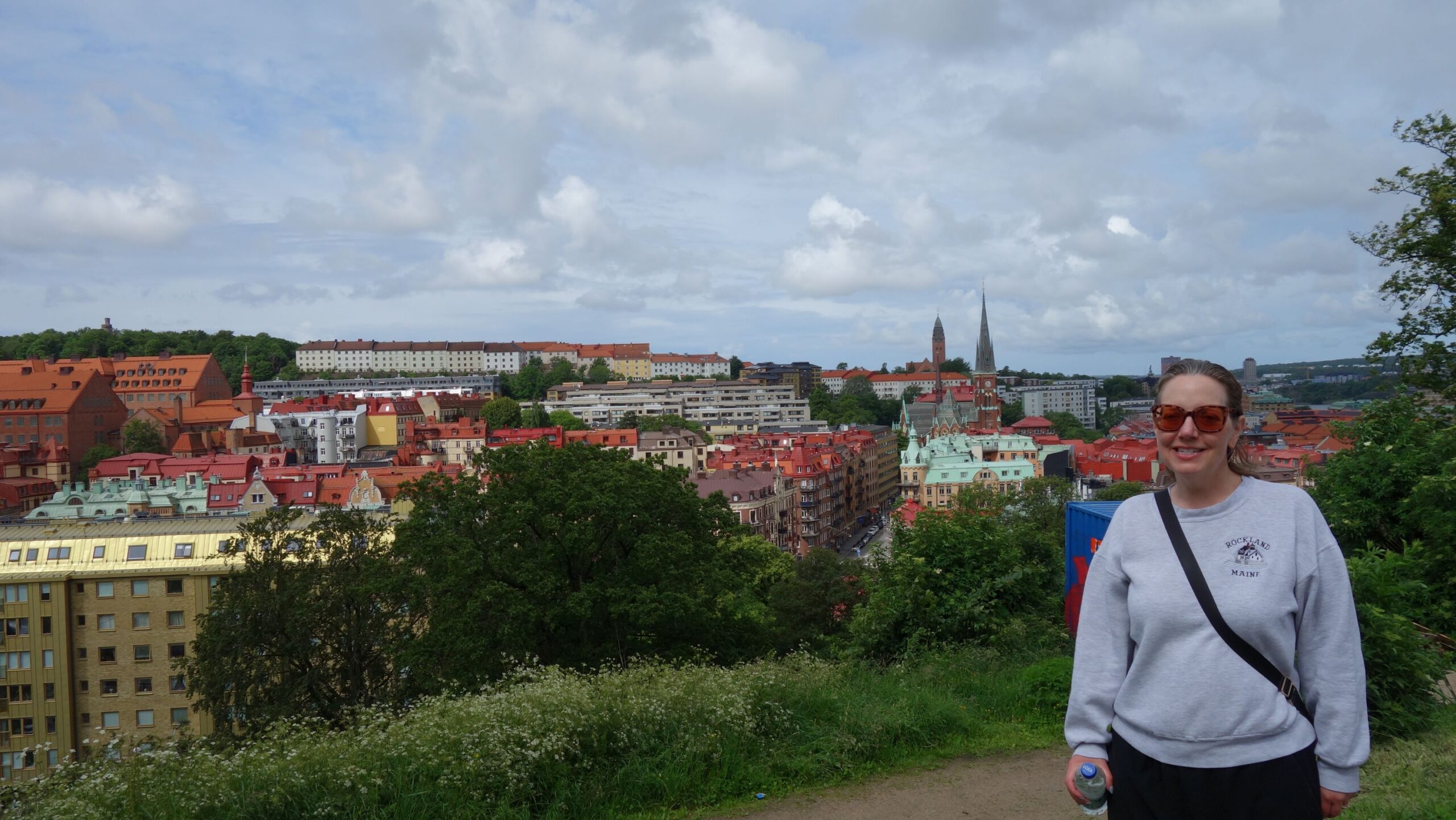
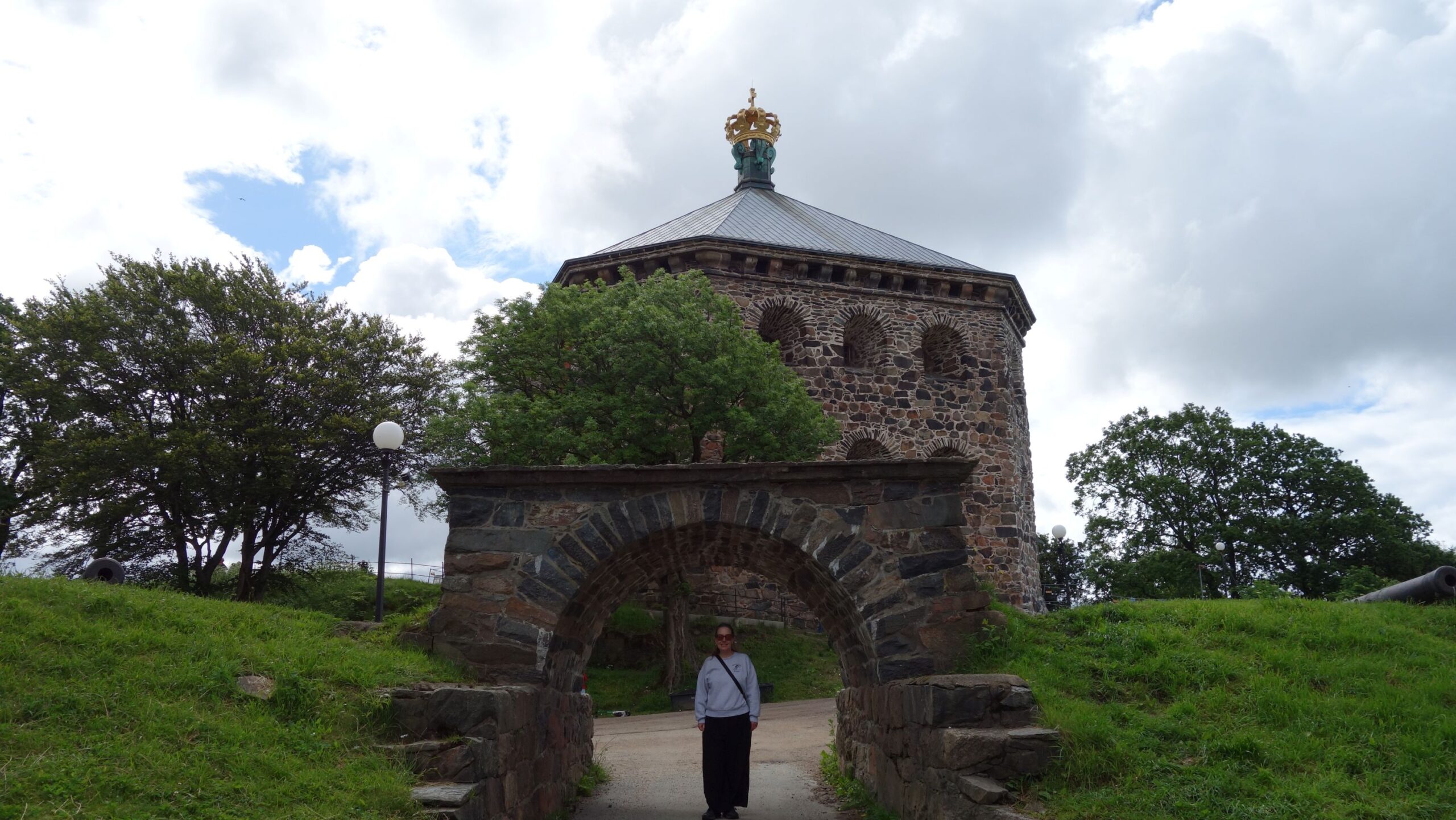 Before I knew that the weather was going to be all over the place today, I had planned on using the brief window of good weather to climb a hill in the Haga area to get to a small fort called Skansen Kronan, which was built around 1700. The fort isn’t open, but it’s intact and so is interesting to see, and the views from the top of the hill are quite good. We enjoyed the views and stayed for fifteen minutes or so. That was also where I checked the weather and decided I was going ahead with my outdoor plans anyway.
And that meant going down the hill and taking a bit of a walk (right through Haga, of course) to the nearest tram station, to catch the tram we took for forty minutes or so to the end of the line, where we boarded a ferry for the Goteborg archipelago. I figured that even if it started raining, we could see some pretty islands from the ferry, go ashore on the island of Branno, get lunch, and go home. If the weather cooperated, we could keep touring on Branno instead.
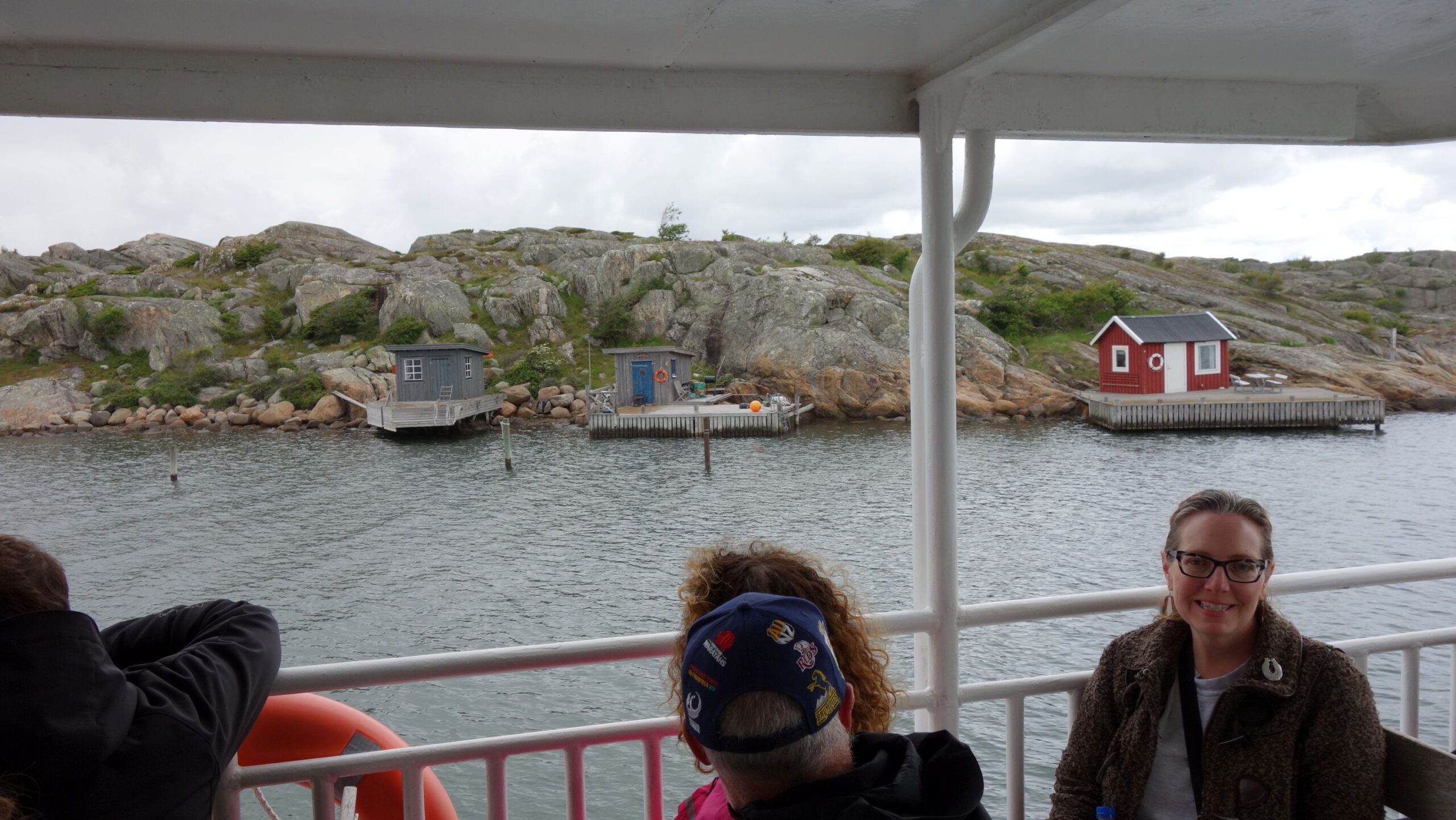
 The ferry ride out was great. We got to sit on the second floor (deck) of the boat, and we were under the cover of a roof, but the sides were open air. The water rolled by, and we got to see bald granite rocks sticking up out of the water, and then the first green island came along, and it was covered in grass, and we saw some sheep grazing. We stopped at two other islands on the way, and the houses we saw were cute. This looked promising.
We got to Branno and got off the boat in a gentle rain. There didn’t seem to be a main street, or much of a street at all – there were just houses connected by paths. As I consulted my phone to find a cafe, the rain came down much harder. I started thinking of getting lunch and going home, but as we walked to the cafe, the rain stopped.
 When I looked for a cafe, I thought it would be a white building with a patio facing the sea, nestled in with other buildings. The cafe we found took some finding. It was behind a construction area and was surrounded by the Land of Misfit Sea Equipment – boats and other gear that was lying around on shore. The cafe itself had good food, but was pretty rustic in the indoor area. It did have a nice roof patio that looked out on the sea, but the rain kept us inside, as it rained again during lunch.
By the time we finished lunch, the rain had stopped, so we hiked up into the lanes/paths to a nature reserve. I wanted to find a lookout I saw on my phone map. After a false start down someone’s driveway, we found a trail that said, in Swedish, “Viewpoint.” Or “Lake trail.” Or “Beware of wild boars.” We took the path, but it didn’t seem to be climbing up. Later, Mer saw a map and thinks the trail led to a lake.
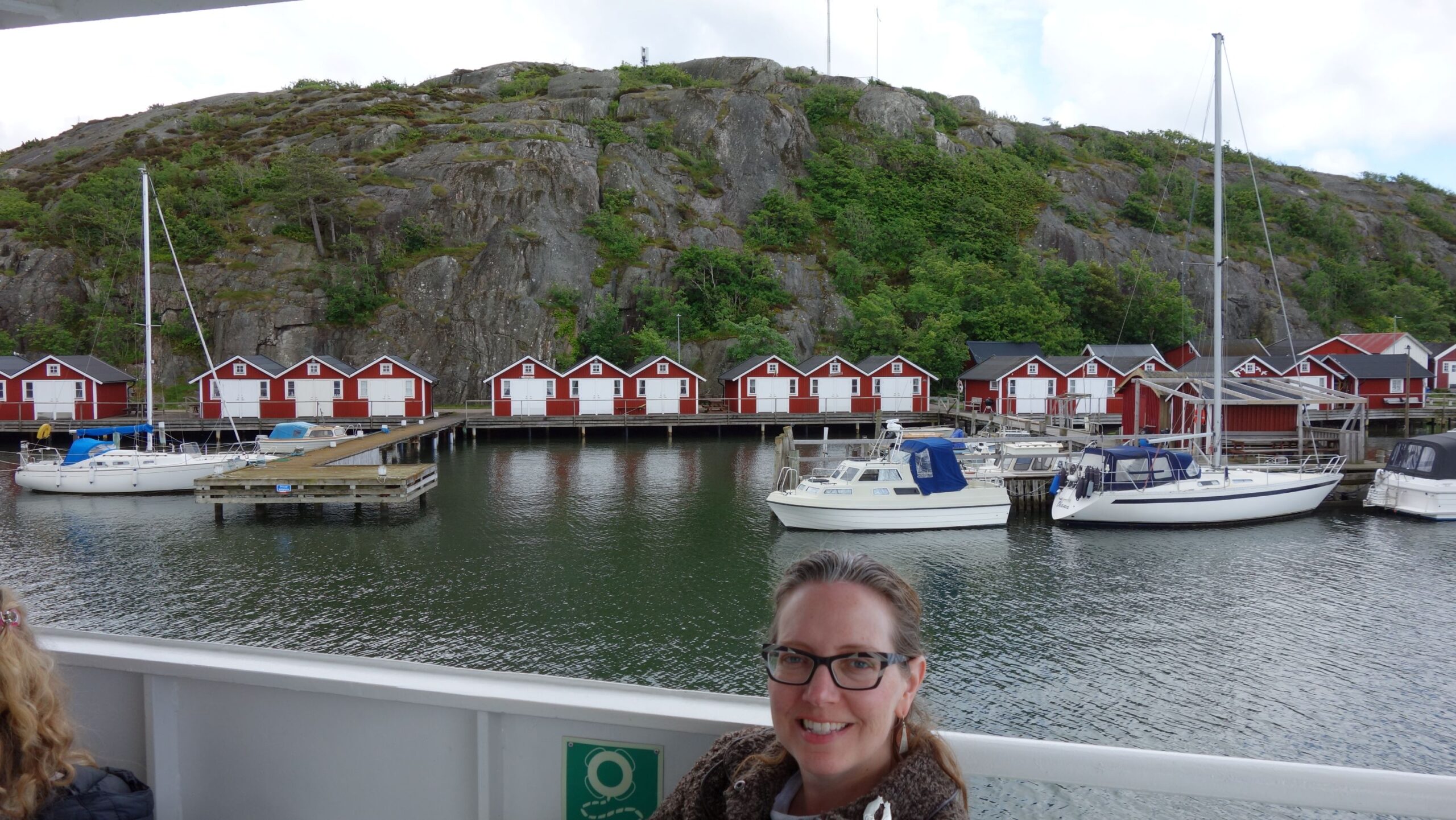 I decided to head back into town to wander, and as I looked at my map, I saw that there was a viewing platform. We clearly needed to do that. We walked up the lanes/trails in a gentle rain, and then we hiked up smaller gravel trails until we got to some stairs, which we took up. They led to the old visual telegraph station, which was on a rocky bald with unobstructed views all around. And the rain had stopped. In fact, we stayed there thirty or forty minutes, and the sun even came out toward the end. We sat looking out to sea or back toward Goteborg, and we listened to the birds sing and the wind move the tree leaves. It was wonderfully peaceful.
I checked my phone and saw that the next ferry we could catch was at 4:00 and then not again until 6:00, so we made our way down, allowing for plenty of time so that, well, we didn’t miss the boat. We made it and had a lovely cruise back to the mainland, where we got on a tram again. About halfway back into the city, the rain came back.
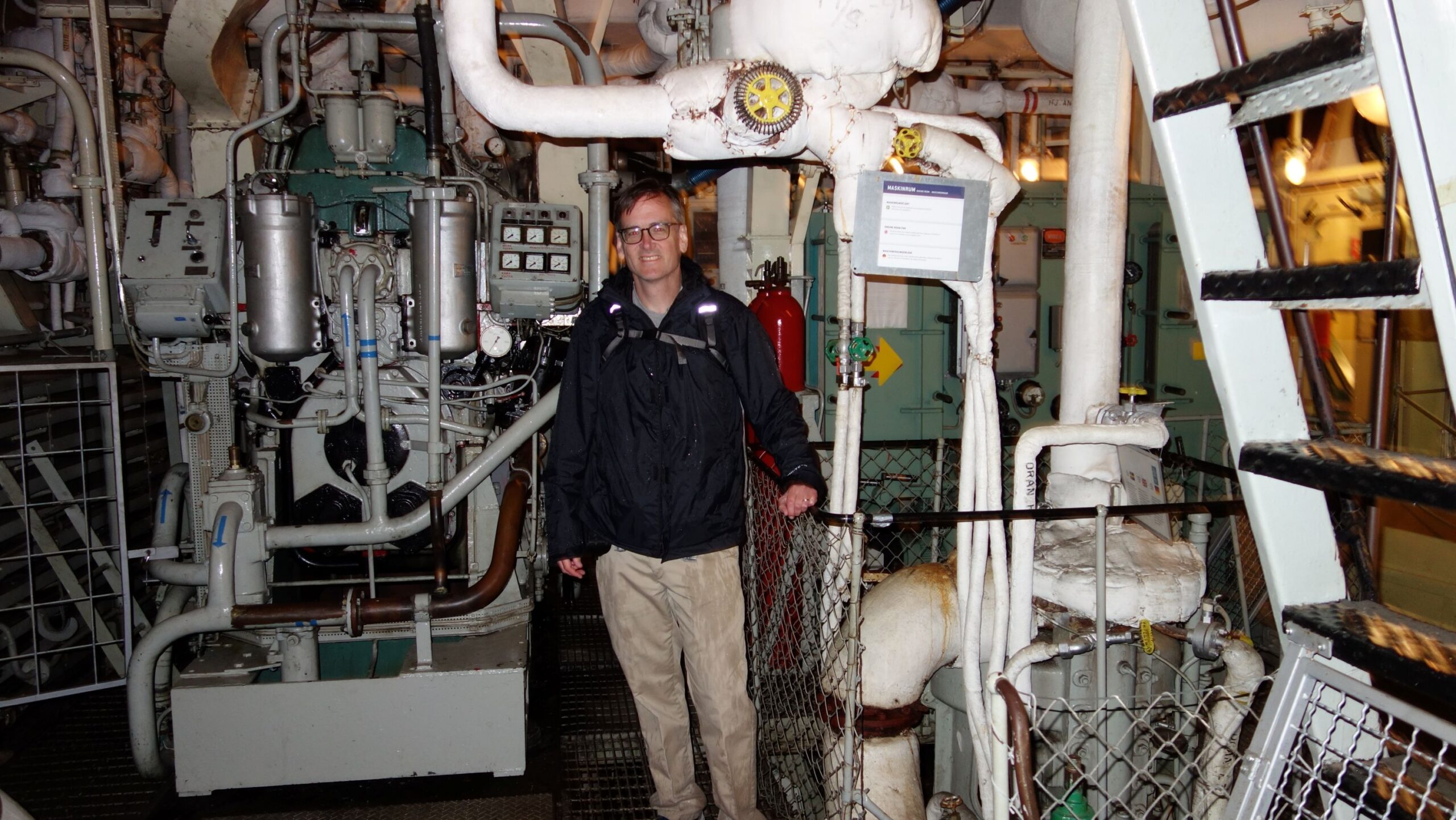 After we got off the ferry, we headed to the Maritiman Museum, Goteborg’s maritime museum made up of ten ships. The museum was open until 8:00, and it was only 5:00, so I wanted to go. The museum has a Swedish destroyer from the late 1950s, which was the first ship to test a ship-to-ship missile. It also has a submarine from the sixties that has a torpedo “revolver” where the crew could quickly rotate the torpedo loader and load four more torpedoes. We also got on board a PT boat used for rescue missions, and (most unexpectedly to me) the museum also has a Monitor-class ironside from 1879. The top bridge is missing now, but the bulk of the ship is still there. That was a great find.
We spent the bulk of our time on the destroyer HMS Smaland. Much of the ship is open to the public to clamber around on, from the engine rooms to the top deck, where the captain would command from. As a side note, Mer mentioned how she had never clambered around ships until she met me, and now she has been on multiple ones. That pleased me very much.
Even on a ship from the late fifties that was in service until the late seventies, life on board still felt crowded. Most of the ladders between decks were very steep, there were lots of places to hit your head or stumble, and many places on ship had exposed moving parts. It seemed as if it would be a rough place to spend weeks at sea.
After the destroyer, we went aboard the submarine Nordkaparen. I love subs – I love the engineering of them and how everything has to be efficient. The Nordkaparen was made in the late sixties but was still using diesel engines to charge batteries for undersea use. The sub could remain underwater for two days at normal speed, but that dropped to two hours at full speed. I found out that the Swedes later developed engines that run on liquid oxygen and so don’t need to charge batteries anymore – the engines are quiet and allow the sub to remain under as long as it has fuel.
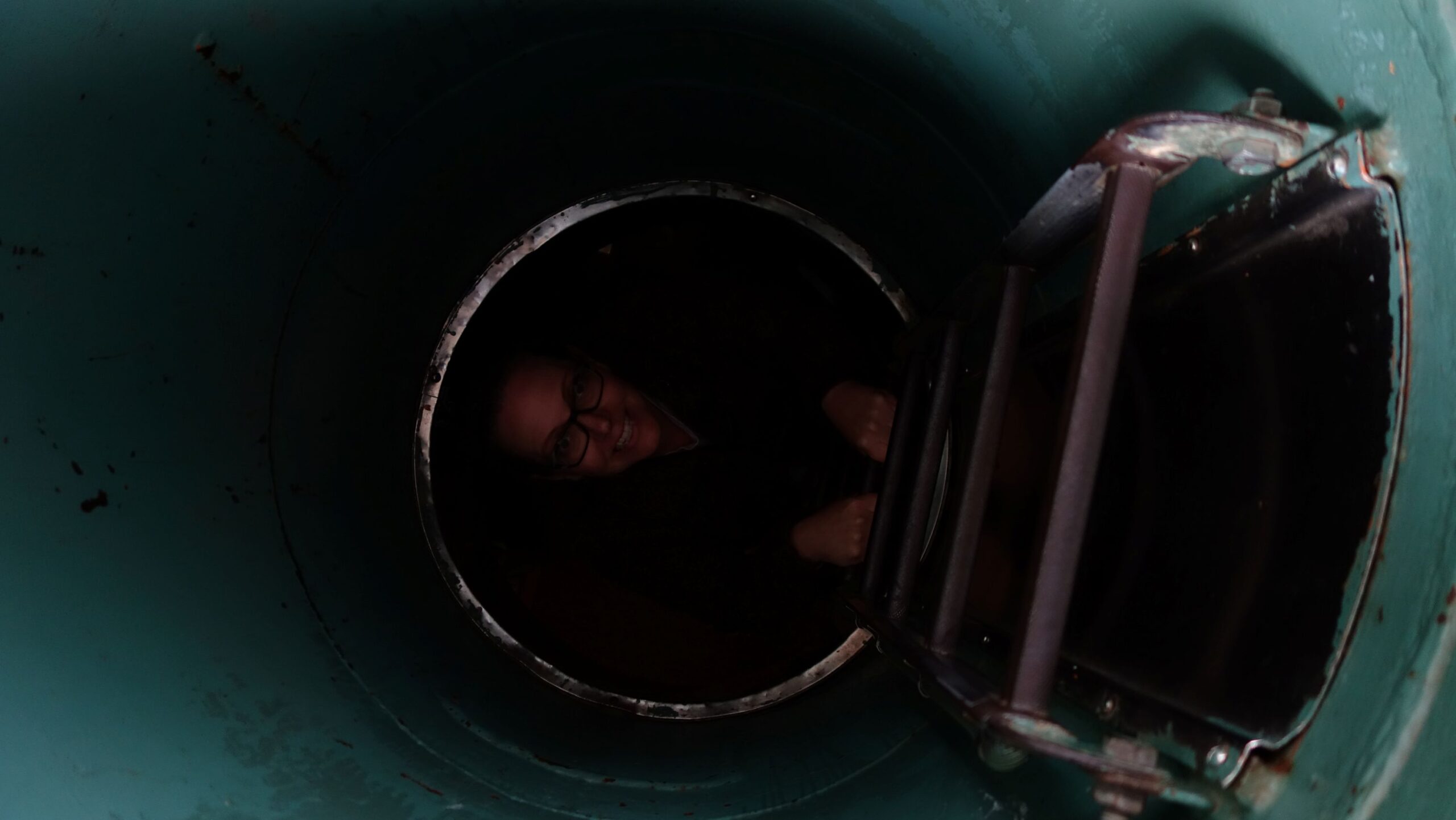 The Nordkaparen was really cramped AND was the first submarine I’ve been on where the public has to go down the hatchway ladder, which is vertical and in a tight space. It was great. There were also two pressure hatches in the sub that were 2.5-foot diameter circles that you had to get through. The forward area of the sub had a “six shooter” revolver-style chamber, but was filled with eight torpedoes. With four in the tubes already, that gave the boat twelve total torpedoes to use, and they could be loaded four at a time because of the rotating chamber.
We finished off the tour with a quick walk-through of the Monitor-class ship and the PT boat. The Monitor-class boat was very simple, although I loved that the officer’s cabin had a coal stove in it. You could get on the deck of the PT boat, which only retired in 2001, but that was it – you couldn’t go below decks.
That was a fun museum, and we mostly avoided the rain that came and went by our being below decks on the destroyer and submarine. By the time we came out of the sub, the rain had finally stopped, and the sun had come out.
 We went back to our hotel, figuring we would eat there, but the restaurant was fully booked. I don’t think either of us will pass out from skipping supper, but having to do so was a surprise to me. However, since this is an office area and not a residential area, to get something to eat, we would have had to cross the river again, so I elected to pass on that.
A tower, an archipelago, and ten boats made for a good day, even in the sometimes rain. Goteborg has been a fun city.