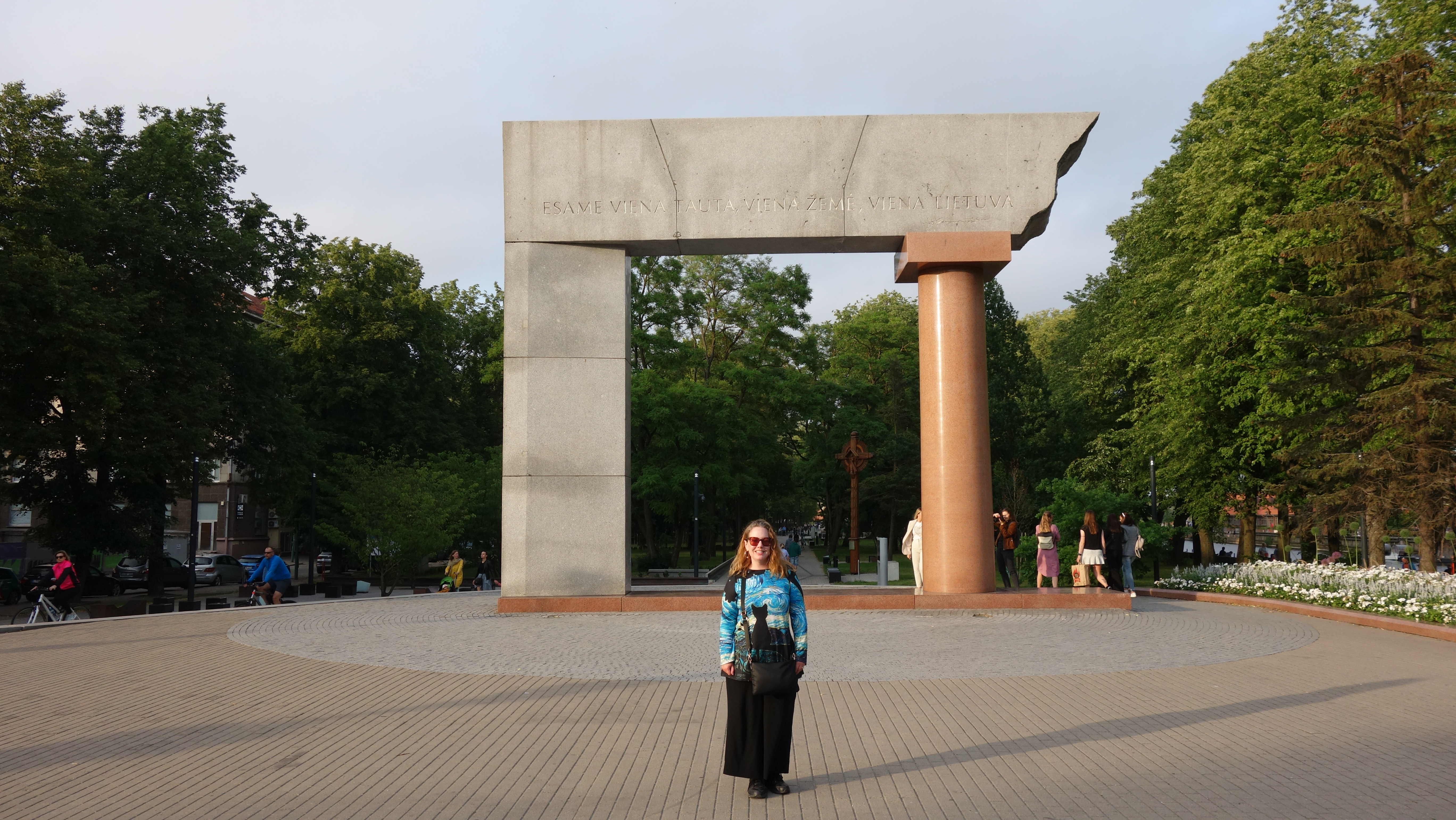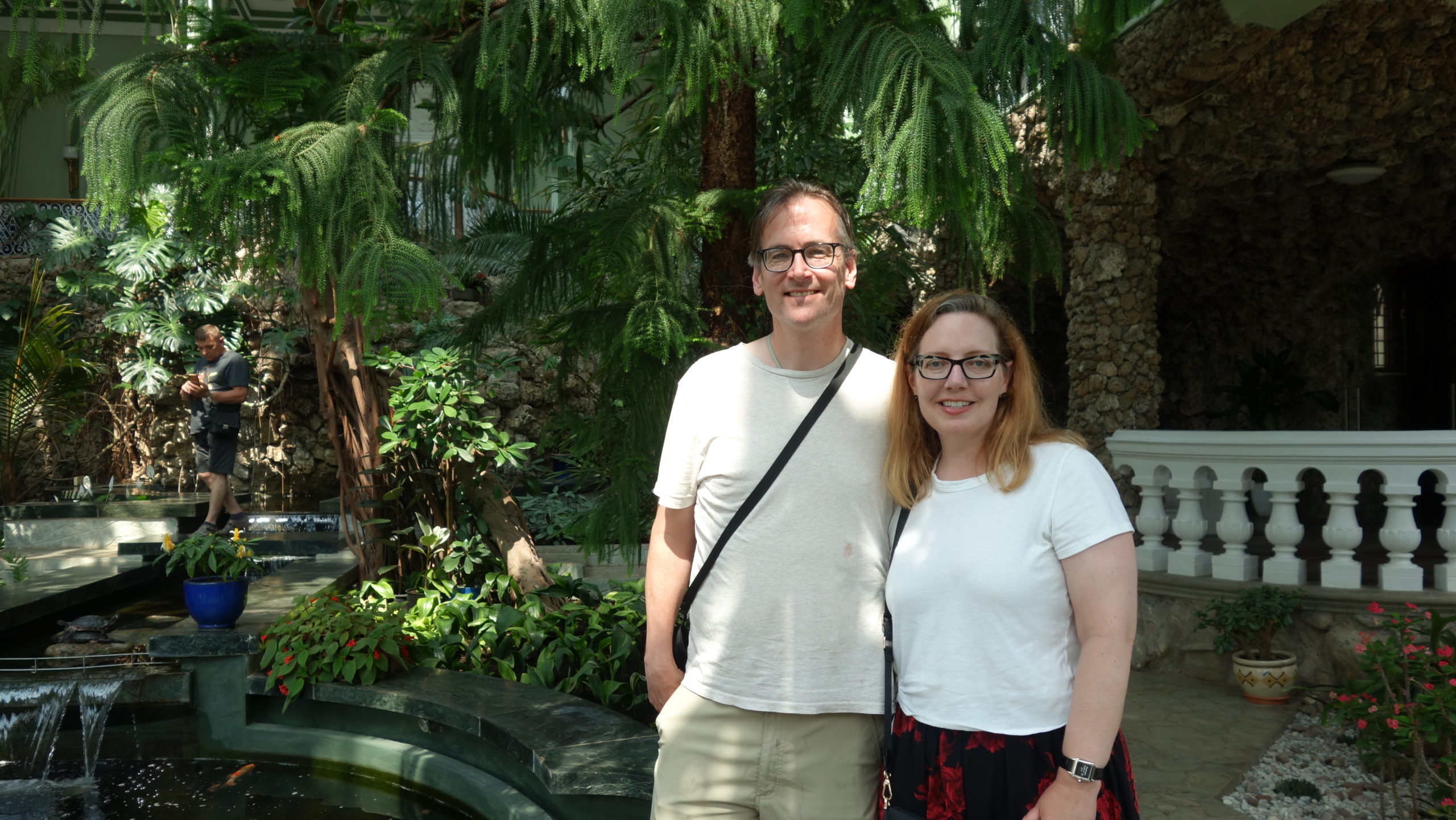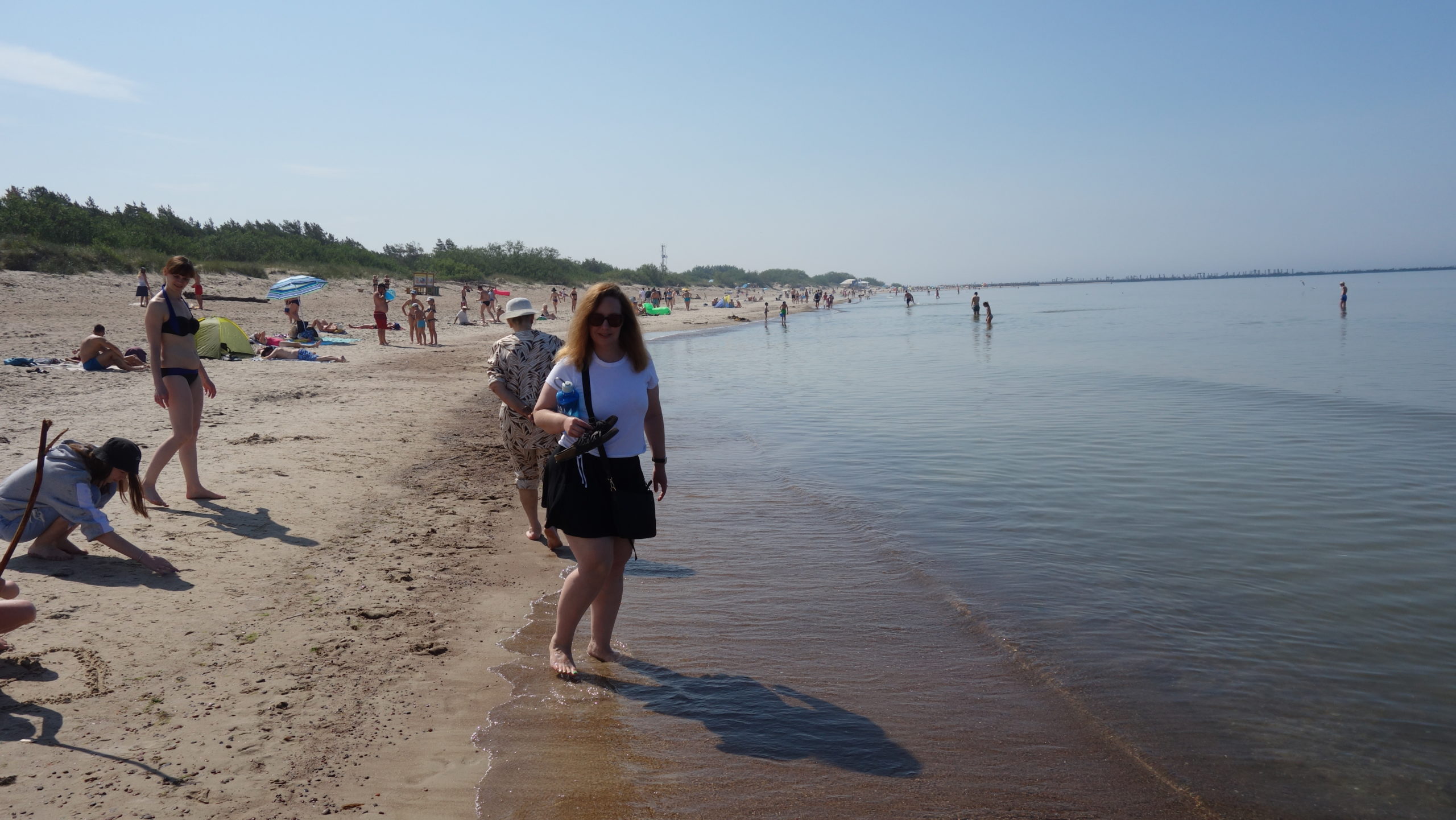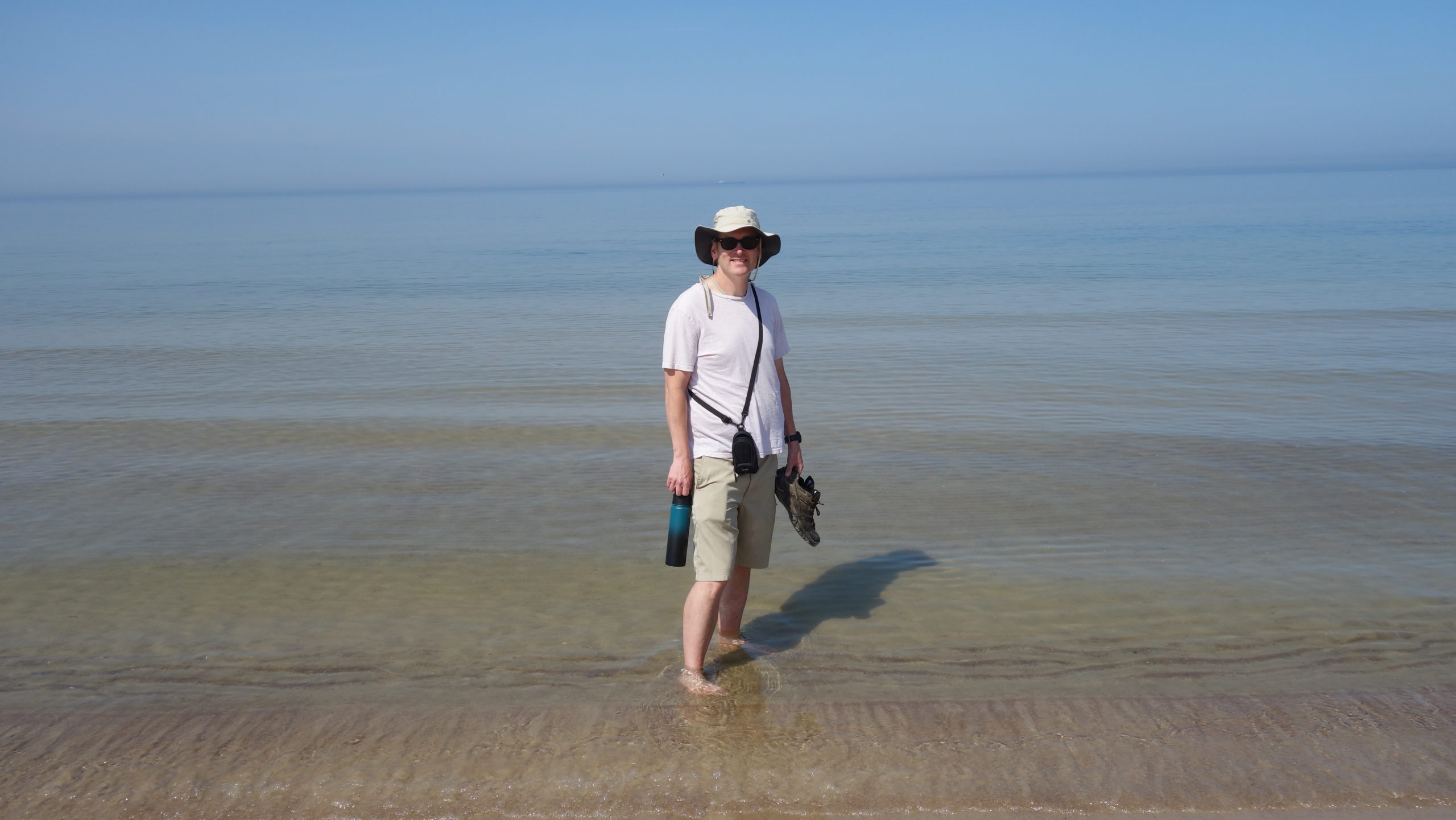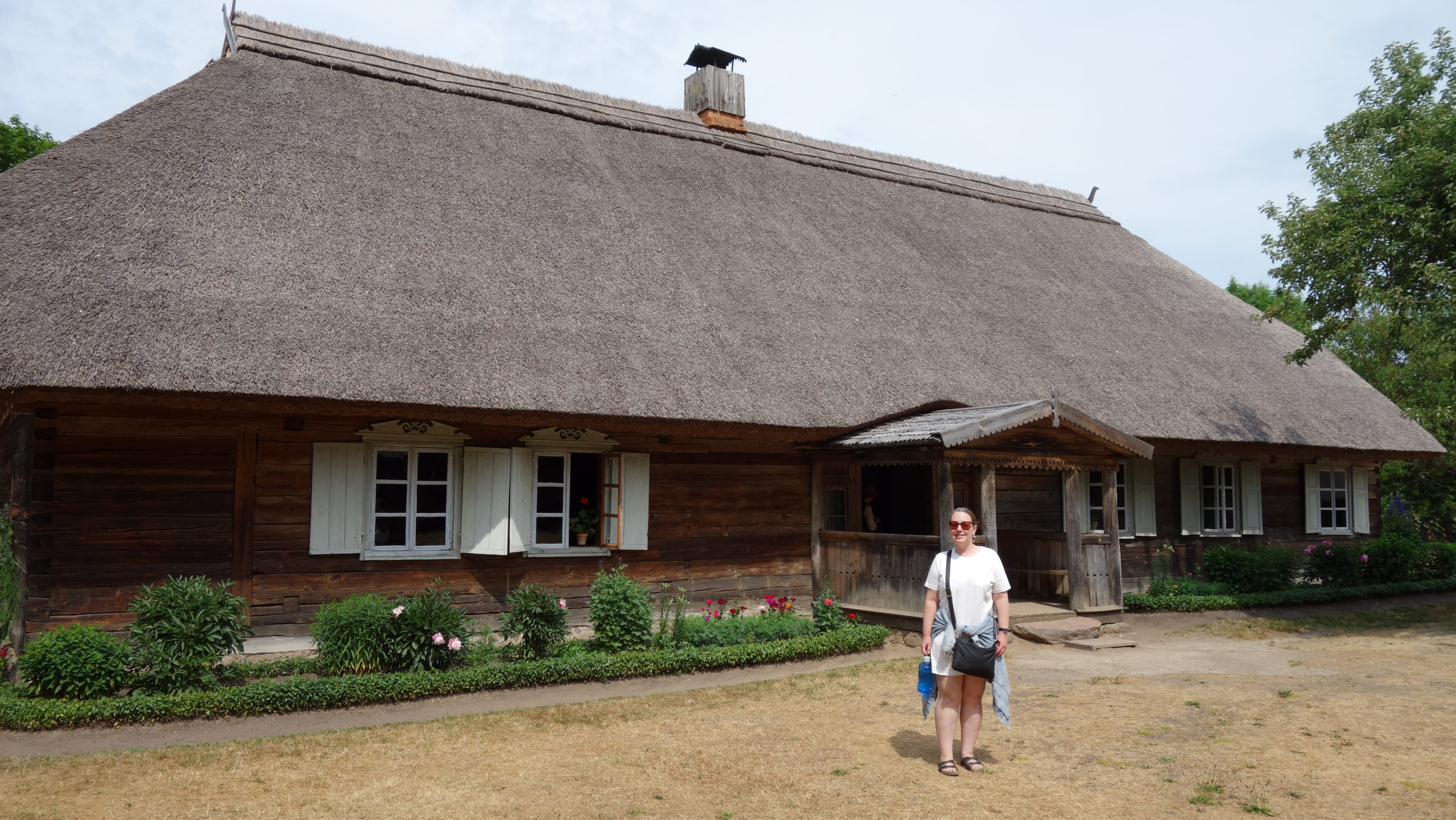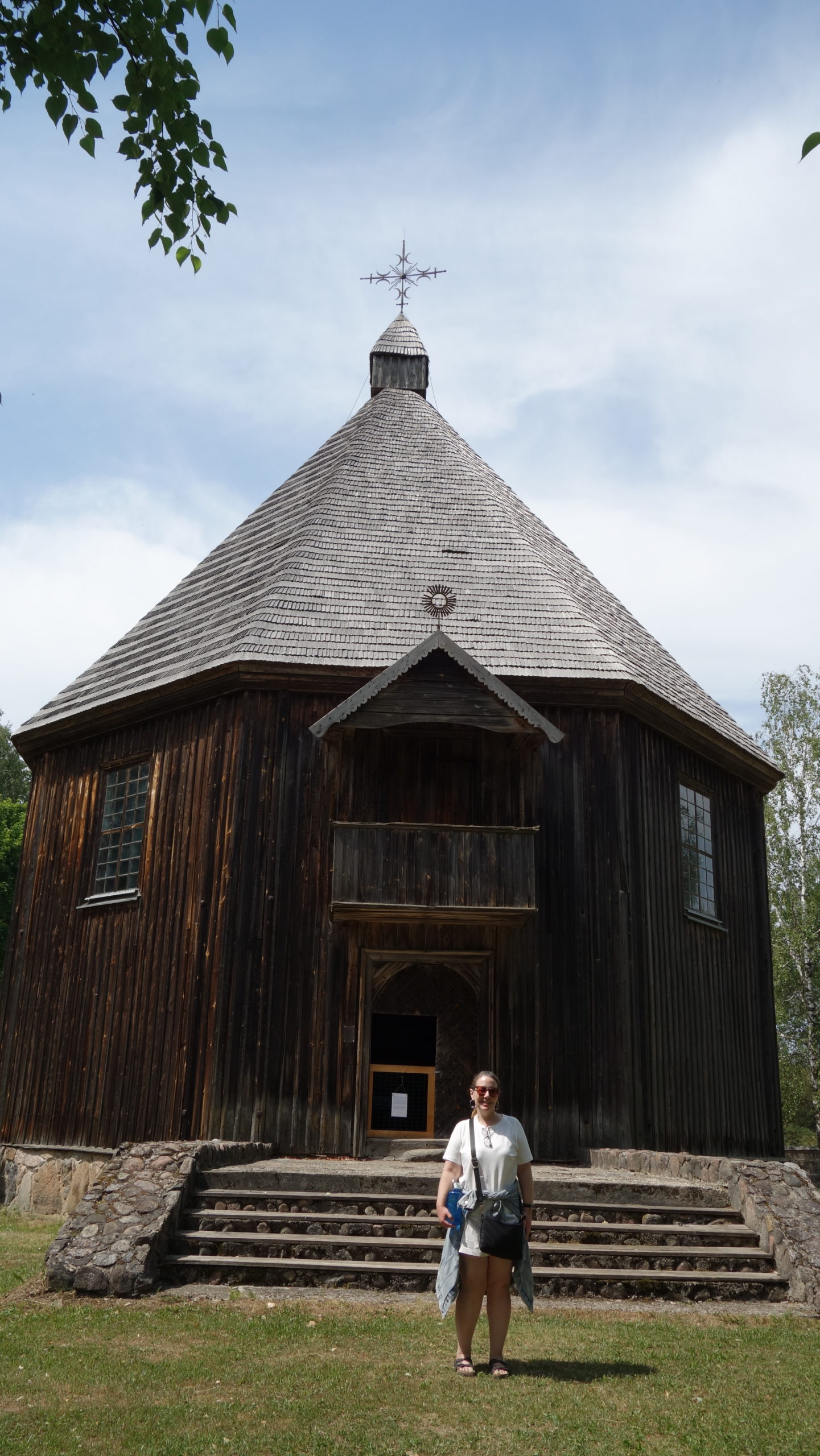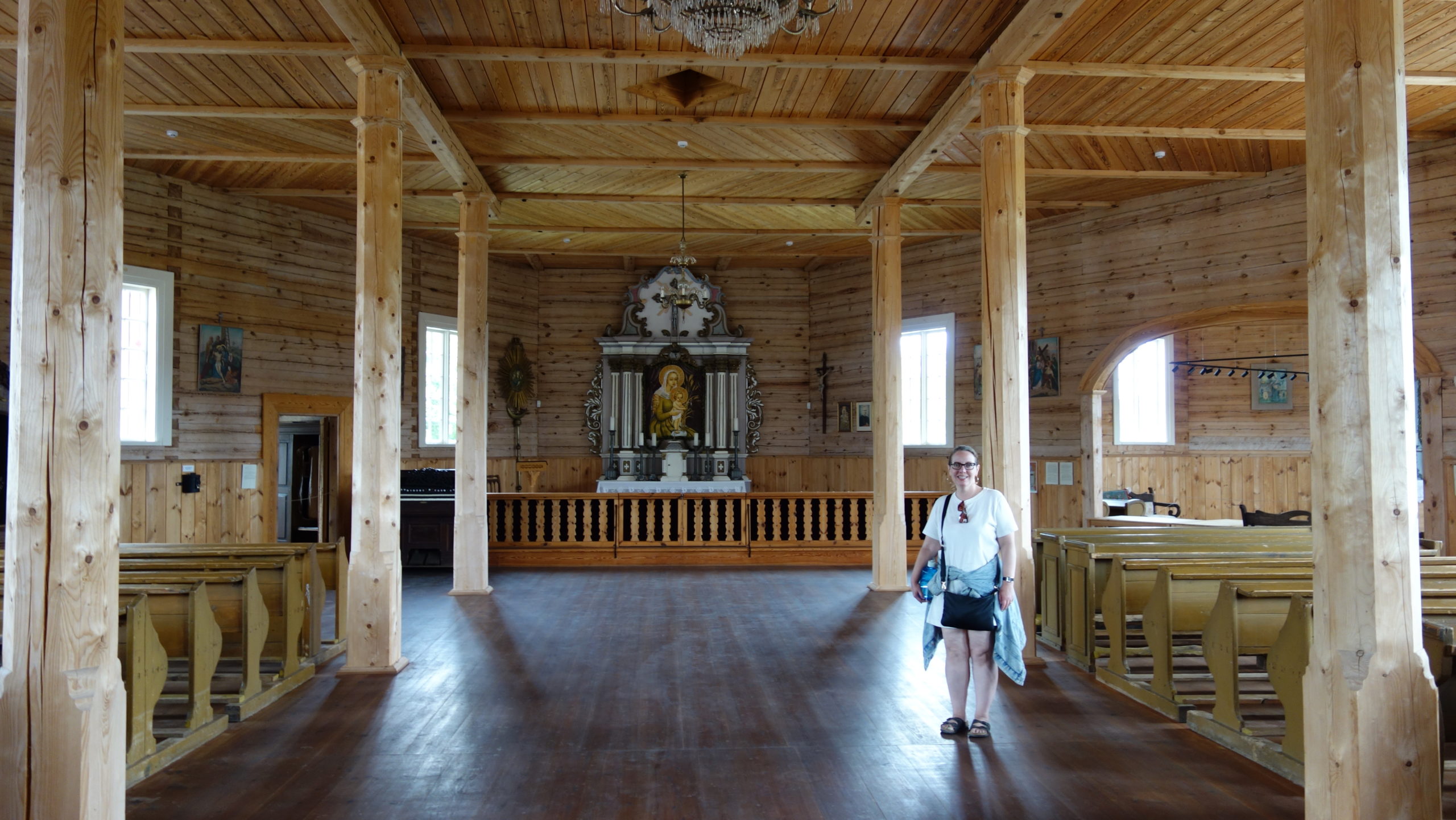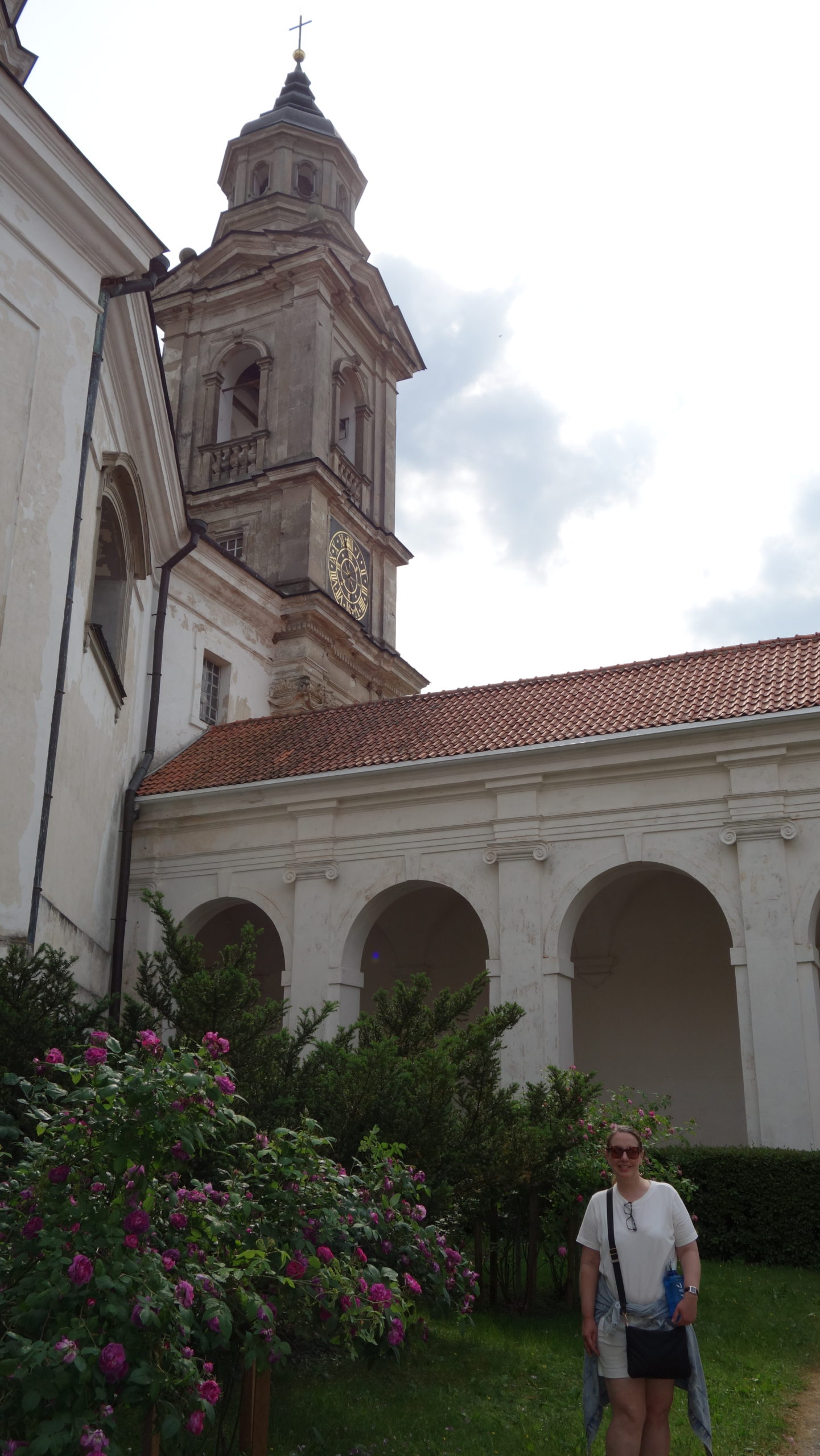
Ireland (Thanksgiving) 2022, Day 6, Friday – Dublin

The fellowship of the Dublin trip broke up today, at least for most of the time. Shelby, Regina, and Neuf went off to do a dizzying amount of touring – the Marsh Library, St. Patrick’s Cathedral, the Little Museum of Dublin, the EPIC Emigration Museum, and a 90-minute bus tour of all of Dublin. I think they were using different clocks than we were.

Meredith and I got a late start, setting off around 10:00 to go to sites we had not seen before. We started at the General Post Office (the GPO), which is still a working post office, but was the main headquarters for the Easter Uprising of 1916. There is a museum on site now that only opened in 2016, so we wanted to check it out.

It was an excellent little museum. It framed the history that led up to 1916, with Home Rule a very real and near possibility for Ireland. Home Rule would have kept Ireland as part of the United Kingdom, but returned some powers back to the Irish, including an Irish parliament. Home Rule was almost a done deal when World War I broke out, which tabled the issue in light of the war. If the war hadn’t broken out, would Home Rule have passed, and if that had happened, would there have been an uprising? Interesting, if unanswerable, questions.

There were pro-union Irish who didn’t want Home Rule – they saw themselves as British and opposed the movement, even with some going so far as to create an armed group in Belfast. In response, pro-nationalist Irish armed themselves in Dublin, which created the armed group that rebelled Easter week. If the unionists hadn’t armed, would there have been a rebellion?

The nationalists were being supplied weapons by the Germans, and a shipment of twenty thousand rifles was intercepted by the British as it came into an Irish bay. If that had gotten through, would there have been more Irish troops in Dublin that week (instead, there were about fifteen hundred Irish versus twenty thousand British by the end of the week)?

The museum walked through each day of the uprising in an excellent film. Mer mentioned how strongly it reminded her of Les Miserables – the rebels kept hoping for a popular uprising. It was quite the opposite at first – the local Dubliners were irritated at the disruption. But, as the rebels held out against overwhelming odds for days, the mood began to change. The public swung over to the nationalist side when the British tried the leaders secretly and then executed them over the course of over a week. As information leaked out, outrage began to build, which allowed the nationalist party to get voted in during the next election. They set up their seats in Dublin instead of in London, which didn’t go over well in England, which didn’t help the mood in Ireland.

Eventually, a guerilla war broke out for two years, which ended with the English and Irish signing a treaty that broke off six counties in the north to remain in the UK, and the rest of Ireland would have local power, but still swear allegiance to the king. This compromise split the Irish, and a civil war broke out a few months later that lasted a year. The more radical nationalists lost the shooting war, but were eventually elected into power, which helped bring about the Republic of Ireland in the 1940s.

As you can see, the museum covered a lot. The recommended time to cover the material was forty-five minutes. It took us over two hours, and we skipped some things. We do love a good museum.

On the way to get some light lunch, we passed a free exhibit on the Irish poet Seamus Heaney. So, after lunch, we went back to it. It was one of those delightful surprises we run into when we travel. The exhibit had many original pieces that Heaney had donated to the national library, so we got to see some of his edits on earlier drafts. Many poems were reprinted or read out loud, and many of the phrases Heaney came up with were gorgeous. He often focused on ordinary things, people, or work, but expressed them in eloquent poetry that sometimes choked me up. Mer tried to tell me of one of her favorites that reminder her of her mom, and she couldn’t even recite it for the tears it brought. The man had a way with words. We stayed there for an hour, until they closed at 4:00.

That didn’t leave us a ton of time before most tourist things closed at 5:00, but the National Museum of Archaeology is free, so we went there for thirty minutes. I got to see the bog men, who were people who were killed and thrown into bogs. Their bodies (and sometimes hair and clothing) were preserved. It was timely because we had read about how the bog men moved Heaney to write poems about them that compared what was done to them to what was going on in Northern Ireland at the time. We also got to see a small gold boat about which Heaney had written – we stumbled across it without even knowing it would be in the museum. We saw the Brooch of Tara – Mer went to look up where it was when she realized we were standing in front of it. We also got to see a few hoards of gold that had been found in bogs over the years. It was an efficient use of thirty minutes.

We ate supper in the Temple Bar neighborhood, and then walked north of the Liffey to go to the National Leprechaun Museum for an evening of dark storytelling. We met up with the others there, so our little fellowship was reunited. The museum was a ton of fun – Mer and I had thought it would just be a matter of showing up to hear stories, but we kept moving from room to room, passing through a giant’s room (where we jumped on the furniture), and going through a forest and a mirror maze and a glen. At each stop, we heard stories about changeling children and brutal kings and leaders fighting, all told by a witty Irishman from the southwest of Ireland, who also had a grand singing voice. It was a fantastically good time, and a good note on which to end our trip.

Mer and I went back to the hotel to look up itineraries while Neuf and Regina and Shelby went to eat supper. One way to squeeze in half a dozen tourist sights is to skip supper. It was a fantastic trip, with surprisingly good weather over the week – we only got rained on twice, for a total of about twenty minutes. What wasn’t surprising was the good fellowship. We had a good group with which to roam about the old sod.

Ireland (Thanksgiving) 2022, Day 5, Thursday – Dublin

I am very thankful that modern life lets us travel to Europe quickly and affordably. International commercial air travel has been around less than one hundred years, and jet travel only started in 1958. Not too long ago, Europe would have been a month-long proposition, and very expensive. Now we can afford to go two or three times per year, and going for a week makes sense because getting here is so quick. It’s still a marvel, and I am grateful.

We took an Uber (taxi) today to start out because we were going to a fairly far-flung sight – Kilmainham Gaol. Kilmainham is a jail that was active from the 1700s to 1923, and it mostly was used to house petty criminals, but five percent of the prisoners held there were political prisoners, and so it has remained an important Irish site.

Meredith and I had been to Kilmainham back in 2000 or so, and I jokingly told our driver that I supposed lots of things had changed. He said, in all seriousness, that they had. It turns out the next-door courthouse that was active in 2000 closed down around 2008, and now houses information about the court, and is where tours meet. Between the jail and courthouse, a museum has been added, which focuses on the events of the Easter Rising of 1916, which led to Irish Independence in 1922, which led to the Irish Civil War in 1923. While most tourist tours dump you out in a gift shop at the end of the tour, Kilmainham tours end at the museum, so you have an excellent context for the displays in the museum.

Kilmainham had thousands of prisoners over the years, especially during the Famine of 1845-1850, when some thought it better to be in jail than to starve to death. But the most famous prisoners were those who were held in Kilmainham for their role in the Easter Uprising of 1916. The rebellion was badly outnumbered (about two thousand versus twenty thousand), and the leaders were caught and held and executed, except for one woman who was second in command of a brigade, who was released after a year. One man married the night before he was shot and was allowed to spend ten minutes with his new bride; they held hands and never saw each other again. One man was so badly wounded he couldn’t stand for the firing squad, so they shot him while he sat in a chair. While the rebellion didn’t have popular support, the public outrage at the execution of fourteen men enraged the public and led to strong Irish nationalism, which finally resulted in a treaty for independence in 1922. The terms of the treaty were controversial, so that sparked a civil war that lasted about a year, and some members of the anti-treaty group were held in Kilmainham, except this time it was fellow Irish guarding them. It’s a complex and important place for Irish history.

After seeing the jail, we walked through the pretty grounds of the modern art museum and the adjacent hospital grounds. It was a pretty late morning, and we took our time. We took another Uber back to the hotel, and then went nearby to Christ Church Cathedral to tour it.

Christ Church is the oldest surviving building in Dublin, with the crypt dating back eight hundred years or more. It’s an interesting building to me because it is the only cathedral I know of where the roof collapsed (I assume because of lack of maintenance, but I don’t know). The collapse damaged one wall badly, and a “temporary” wall was put up that lasted three hundred years, until the 1800s, when a rich whiskey distiller donated about (in today’s money) thirty million dollars to repair the building. The wall that stayed up was kept in place, but you can see that it leans out about a foot and a half. Those sorts of structural things interest me.

We ate lunch, and then split up. Shelby went to tour a whiskey museum, while Regina and Neuf went down to the river to see Ha’penny Bridge and then wander around the Temple Bar area, which is a neighborhood of bars and restaurants that is happening in a tourist-intensive sort of way. Mer and I walked twenty minutes over to The Little Museum of Dublin.

The Little Museum of Dublin was a bit of a mystery to me, but it was starting to rain, and I knew we only had a couple of hours if we wanted to get back to St. Patrick’s Cathedral in time for the evensong service. The Little Museum turned out to be housed in a Georgian house of a type that was common in Dublin in Victorian times, and it had two rooms filled with Dublin memorabilia. A guide joined us and gave us a thirty-minute overview of Dublin’s history, using the pictures on the wall as visual aids. Our guide was energetic and loud and had a corny sense of humor, and she was Greek (but spoke excellent English). Dublin is more cosmopolitan than I remember – as far as I can tell, we’ve not had anyone Irish wait on us in any service capacity in a hotel or restaurant, and not always in the museums, since we’ve been in Dublin. But our guide was fun, and it was a good overview of many of the things we had learned at Kilmainham during the morning.

We did make it back to St. Patrick’s Cathedral for evensong. It was a lovely service, lasting about thirty minutes. The excellent choir did all of the singing, and was largely made up of school-aged girls, although it did have a few older men for the bass parts. Shelby, Regina, and Neuf went instead to the 6:00 evensong at Christ Church, which they said was very beautiful.

We finished the evening looking for food. It took awhile to find a restaurant that had seating, but we found a BBQ place in Temple Bar that fed us very well, which we followed up with waffles and crepes at a gelato stand. Not a traditional Thanksgiving meal, but the gratitude was still genuine.

Ireland (Thanksgiving) 2022, Day 4, Wednesday – Dublin

We like to make connections when we travel (and in general, actually). Meredith has had much fun this trip being in places where things happened that relate to what she has been teaching regarding literature during England’s Restoration Period (and on into the eighteenth century), when the monarchy was restored after Cromwell’s Commonwealth (which lasted about twelve years). Since Ireland was deeply affected by events surrounding this time (Cromwell is still reviled in parts of Ireland for his brutality), things pop up related to what Mer has been covering in class.

Today, we toured Trinity College, where Samuel Johnson got an honorary doctorate; he was also Mer’s featured author for the eighteenth century. The other day we were in Kilkenny, where Cromwell’s army damaged the castle wall; Mer had just finished teaching about Cromwell and the Restoration as background for the literature the class was reading. The connections come up when you travel in English-speaking countries and you teach English.

Back to Trinity. We took an actual student-led tour instead of a self-guided tour. We tend to find guides much more interesting. We were led around campus by a woman from India who was about to finish up her master’s degree. We learned several things over the hour we were with her:
– Trinity admitted women around 1900, and now sixty percent of the student body is women
– Only a thousand of the eighteen thousand students can live on campus – the rest have to find housing, which is difficult in Dublin right now
– The oldest buildings date back to the 1700s
– One building was made entirely of Irish materials, and the carvings on the building are all of Irish flora and fauna
– There are six libraries, and the best-known one (where the Book of Kells is housed) is about to undergo a three-year renovation to make it safer for the rare books housed inside

After the tour, we did get into the library to see the Book of Kells. Mer and I both remember it being in a display case on a counter in the main library. That is not the situation anymore – there is an anteroom where you learn about other illustrated manuscripts and how the Book of Kells was made. I was amazed it survived – the abbey in which it was housed was raided by pillagers several times, and fires seemed to break out every few years (the boards just listed ten or so years and ended with ellipses…). The book itself is in a huge case all alone in a twenty-by-twenty room. It was opened to a page of mostly text, with just a few individual letters being illustrated. It was subtle enough that Mer thought it was a different old manuscript and had to go back to see it when I pointed out it really was the Book of Kells.
The Old Library main hall is special. It is what a library should look like – lots of wood, space, busts of great thinkers, and shelves and shelves of books. It was quite a sight to see. And oddly, it dumped us out into a gift shop.

After Trinity, we split up – Neuf, Regina, and Shelby went off to see 14 Henrietta Street, a house museum about tenement life in Dublin. Mer and I walked over to the EPIC Emigration Museum, which is fairly new, having opened around 2016. It was founded by an Irish emigrant who managed to do okay by becoming the CEO of Coca-Cola; he wanted to tell the story of ordinary Irish emigrants, giving the reasons they left, and the impact they have had on the world. EPIC stands for Every Person Is Connected.
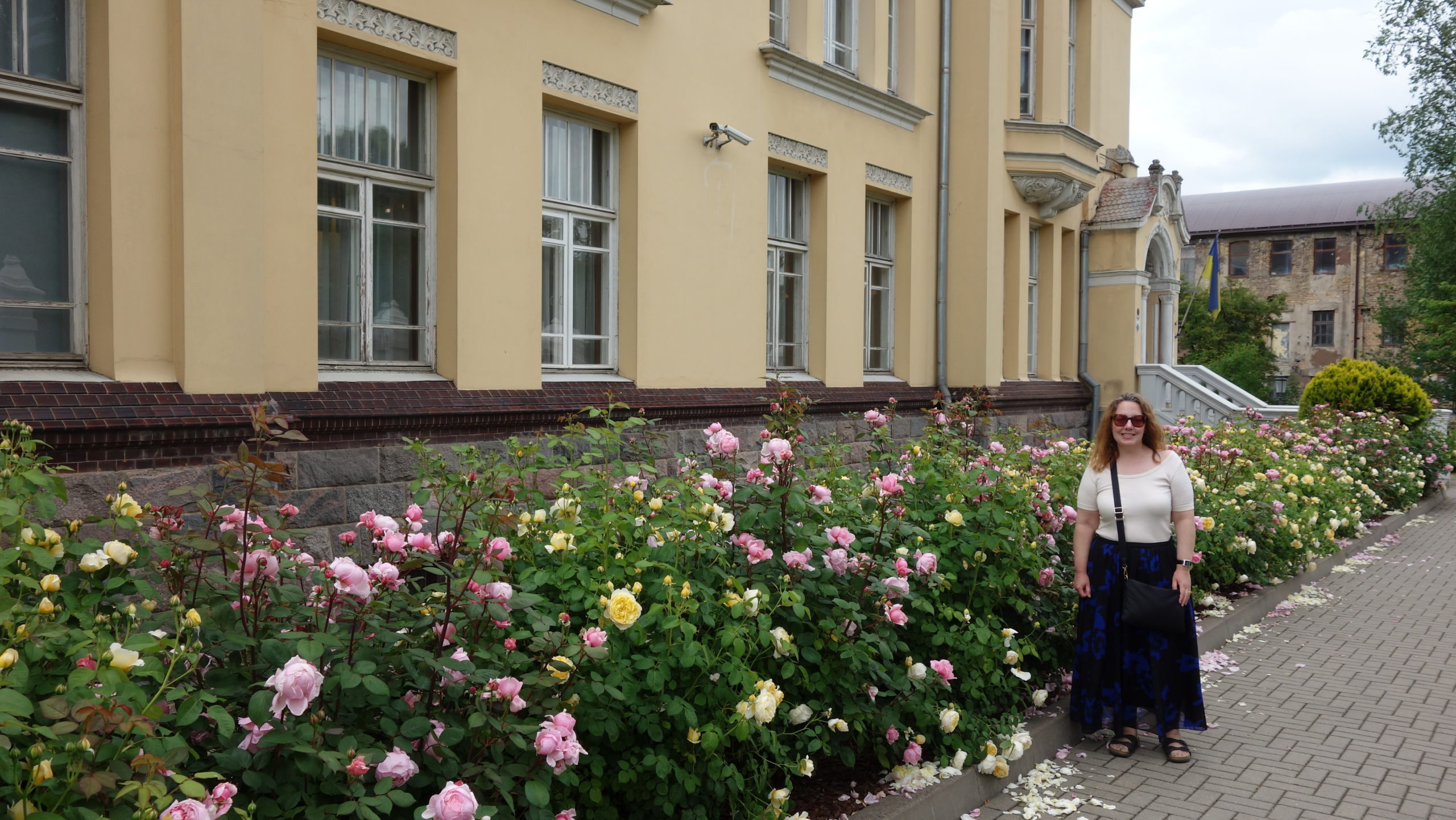
The museum is largely interactive, with twenty rooms laid out in a one-way path. Each room has a theme, and you can stamp your room passport in each room. A themed, one-way museum with stamps – it’s as if it was made for Meredith. She was pretty happy.

Some of the rooms gave reasons why people left (war, famine, poverty, unjust laws, etc.). Some talked about what the Irish did after they left (one room on “infamy,” where they talked about outlaws, one room on soldiering, one on discoveries and science, one on religion and social work, etc.) The room on music and dance was my favorite, while Meredith was thrilled that two whole rooms were dedicated to storytelling. In typical Riordan touring fashion, while the museum said it would take about ninety minutes to get through the rooms, we took four hours, and we even skipped some of the detailed interactive stories.

We walked back toward our hotel area, stopping at a cafe for a snack since we had missed lunch (it was after 3:00 when we left the EPIC museum). We regrouped and got more water at the hotel, before walking back to Dublin Castle to go to the Chester Beatty Museum, where we met the others.

Chester Beatty was a man who made a ton of money from mining, and he was an avid collector. He sounded like a generous and open-handed man, and before he died, he built a library in Dublin to house his extensive collection – mostly Buddhist, Islamic, and Christian texts and art. The collection includes the oldest known papyrus copies of  the Gospels and Paul’s letters, dating from the third century. He left everything to the Irish people on the condition that it be displayed for free (we did leave a donation).

The five of us took a highlights tour, which mostly consisted of old manuscripts from the three religions, but did include a dragon robe that only the emperor of China could wear. It seems Beatty collected eight of these robes. There was also a cool and huge printed panorama of 1700s London, showing from Westminster all the way past St. Paul’s. I loved the Christian material, of course, but the entire collection was interesting.

That left only supper, which we grabbed at a pub that had live music at 7:30. We stayed for over an hour, and the music was fun and entertaining, but the duo only sang a couple of Irish songs that I recognized, and neither of those were ones I knew well. I may need to try again tomorrow so I can make a better personal connection to the music.

Ireland (Thanksgiving) 2022, Day 3, Tuesday – Rock of Cashel and Dublin

Keen observation is key to good tourism. It helps you more fully appreciate art, scenery, local culture, and more. If observation opens the lock of tourism, I misplaced the combination today. Happily, good fortune, kind people, and some gracious mercy from God kept saving me.

After breakfast in Waterford, we headed out to Cashel, about eighty minutes away. We had no real difficulty in getting there, although my GPS sent us down some “real” Irish back roads that were narrow, so the others got to experience the joy of one-lane two-way roads. Meredith and I were at the Rock of Cashel last March, but this time we approached it in such a way as to be able to see it as we approached, and it was an impressive sight to which to drive up.

We bought a ticket for a guided tour, since we enjoy those, and it gave us about twenty minutes before the tour let us into Cormac’s Chapel. The chapel is the first and only intact Romanesque chapel in Ireland, and access is restricted to only fifteen minutes each hour to try to help preserve the (water-absorbing) sandstone structure. Since we had time, we went to see if the audiovisual presentation was running, and it was. That was new to me and Meredith since it hadn’t been running last March, and the part we saw ran through the local area history from about 1200 and on, with a focus on ecclesiastical efforts of ordinary monks since they interacted with ordinary people. We had to leave for the tour before the film looped back around to the early period of the Rock.

Cormac’s Chapel was fully restored over a period of seven years, with a roof being built over the structure to allow it to dry out, which took three years alone. It reopened for limited-number tours in 2017. It’s a small building, but the carvings in the rock, especially on the inside, are well preserved, and a few traces of 1100s paintings still survive inside. A larger chapel was built right next to (as in inches away from) parts of the smaller building about one hundred years later as something of a power play, as a bishop from a competing family wanted to show off his building over the older chapel.

With the exception of the round tower (from around 1100), the rest of the buildings on the Rock are in some form of ruin – none have full, if any, roofs, and the Bishop’s Palace is closed to tours since it is so caved in. But, on the top of a wind-swept hill overlooking beautiful countryside, the ruins are picturesque. The cathedral is surrounded by a still-used graveyard, but it was closed in 1930 to all except people who signed themselves and their children up in a register. There are still five people left alive who have the option of being buried on the Rock when they pass away.

After the tour and another circuit of the grounds to take photos, we returned to the car to beeline for Dublin. It meant skipping lunch, but Dublin was about ninety minutes away, and I could get us to our hotel by about 2:30 if we didn’t stop. That would allow me to try to get the car back to the airport before rush hour. Happily, the others agreed to the plan, and so we drove to Dublin.

Getting into Dublin was less troublesome than I had anticipated. I dropped the others at the hotel so they could tour while I took the two-plus hours to return the car and get back to Dublin on a bus. While I was away, the others went to the National Museum of Archaeology to look at the remains of people who had been preserved in bogs and to look at treasure hoards that had been found.
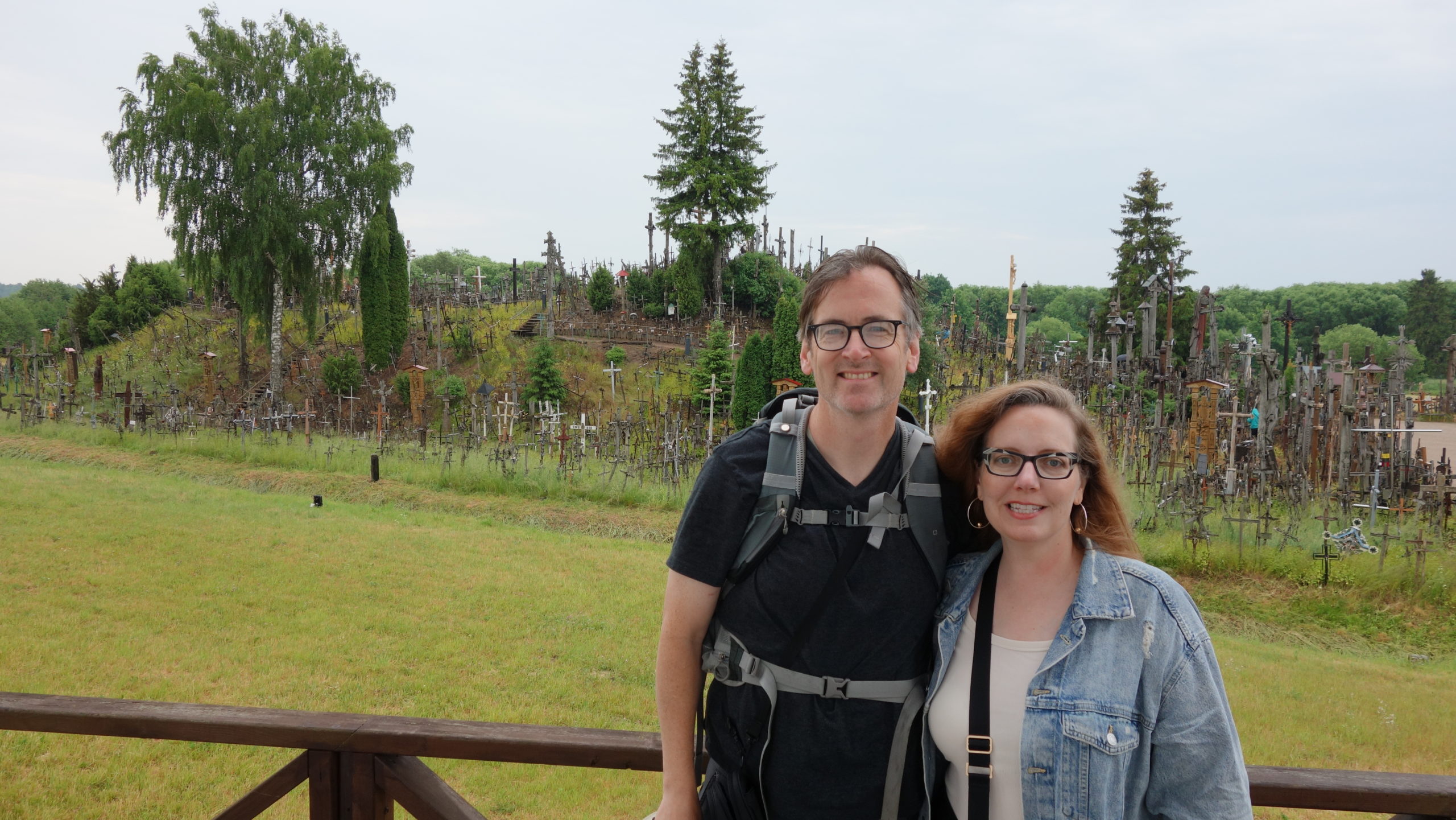
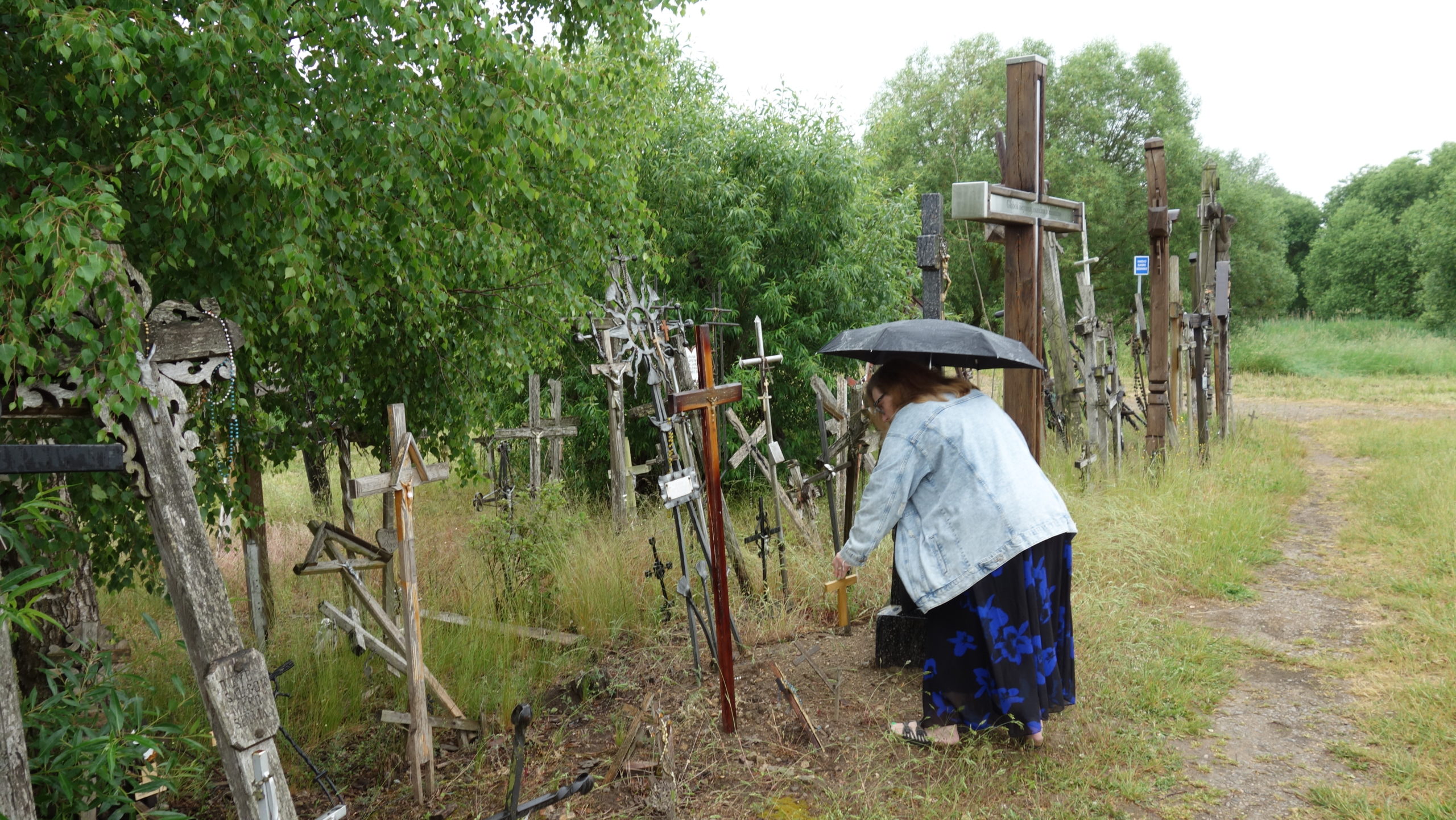
Meanwhile, I drove the leisurely way back to the airport, going right through Dublin. Some parts were very slow, with traffic backed up by cars turning, blocking other traffic. I made it to the airport area, and found a gas station to fill the car up, but had to wait for about ten minutes for the taxi driver of the car in front of me to meander back to his car to move it. I filled the tank, but there were no free spots in the parking lot where I could park to go in and pay my road toll I owed (you have the option to pay at gas stations), so I figured I’d figure it out later. Except I couldn’t find the rental return. I circled the terminal for a second time, and wound up back at the gas station, where one spot had opened up. I parked, paid my toll, and asked a taxi driver how to return my car. He told me it was in the Terminal 2 parking garage, which proved to be correct, despite the total lack of signs anywhere indicating that. I returned the car, only to discover that there was no one on duty in the garage, so I had to go to the rental counter to give the keys back. Happily, there was no line.
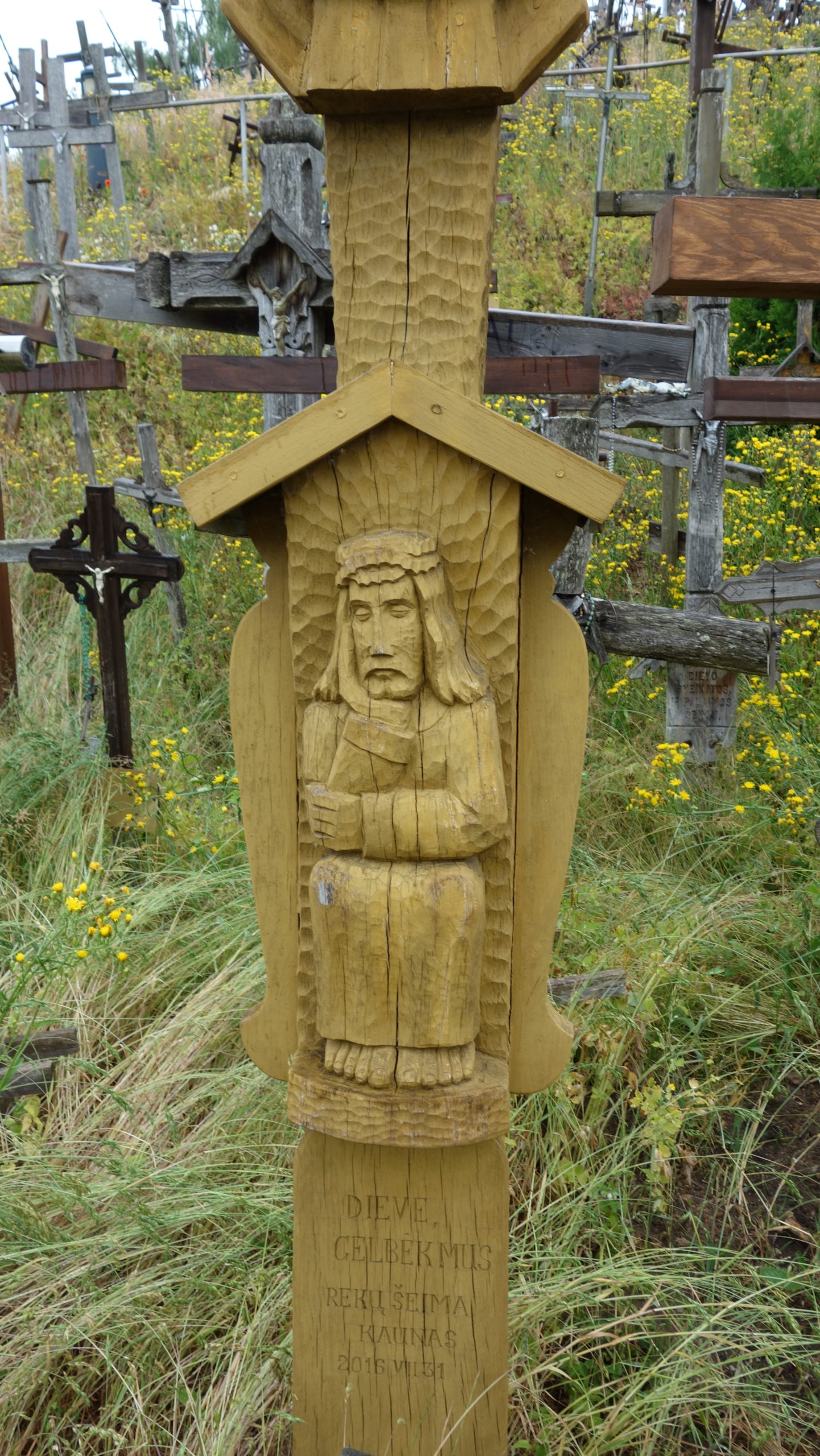
I was surprisingly efficient in finding and getting on a bus that was to take me back to Dublin. The trip was relatively quick, and because I carry a cell phone when I travel, I was able to text Shelby and found out they were at the museum. Based on that, I got off the bus a stop or two early and began following my phone directions to walk to the museum. I missed a turn that I was thinking of taking, but the phone dumped me out into Grafton Street, which is the shopping area for Dublin. It was all decked out in lights for Christmas. Mer and I have a CD with a song talking about how “on Grafton Street at Christmas time, the elbows push you round…,” so I texted Shelby a quick message on how “wow” Grafton Street was. She replied that they were on Grafton Street, outside a store called Pandora. I started to text back that I needed to look that up, as I would never find them in the masses of people, when Neuf walked up to me. I was standing directly outside the Pandora store, never having noticed it. That was happy.

We went and found a restaurant and ate, and then went back to Grafton Street to take in the scene and window shop. We then went to find the statue of Molly Malone, who is a woman from a folk song about a woman who sells mussels and seafood. I had wanted to find the statue back in 2014, but they had moved her, so I missed it. When we were here last March, we ran out of time. This time, we all found her and had a good photo op.

I wanted to see if a local pub had music on yet, so I went to look up where it was when the others pointed out we were looking at it. Another fine moment. Sadly, their music didn’t start until 9:30, and since it was only a little after 7:00 and we were all tired, we called it a night. We walked the twenty minutes or so back to the hotel.

We had another fine day of touring in Ireland today, at least by my observation.

Ireland (Thanksgiving) 2022, Day 2, Monday – Waterford and Kilkenny

Sometimes weather is crystal clear, and sometimes plans crystalize with the help of friendly people. We had both today, as the heavy rains of overnight moved out just before we got launched on touring today. We stopped at a cafe to have breakfast, and the manager took a friendly interest in us and our plans, and gave lots of good advice. On his suggestion, I made a higher priority of getting to Kilkenny to see the castle there – he said it was worth the drive, and so our afternoon plans were firmed up.

Out morning plans were the reason we were here in the city – to go to tour the Waterford Crystal factory. We got there around 9:30 and passed the time happily in looking around the showroom and store. The work there is exquisite. They had a violin, an Irish drum, and a Celtic cross, all made of highly precise crystal. If anyone has about forty thousand dollars lying around, I can spend it for you. I settled instead for a tree ornament for thirty dollars. The “regular” crystal bowls and glasses were gorgeous, and I was fond of several of them. I settled instead for a tree ornament for thirty dollars. My willpower was strong today.

The tour itself was conducted by a retired master cutter, who’d cut crystal for about forty years. Almost all Waterford crystal is cut by hand (eight percent is cut by a machine), which is done by craftsmen who have apprenticed for five years and then worked to become a master for two more years. The men to whom we talked on the cutting floor all had at least thirty years of experience. That apprenticeship model is in place for all of the stages of production – making molds, blowing the glass, inspecting the crystal, marking the pattern, cutting, and sculpting. Except that sculpting (hand-engraving, sandblasting, doing custom work) takes even longer. These people are dedicated to their work.

It was a fascinating tour. We got to chat with the cutters, and one of them invited us to touch his diamond cutting wheel, as it spun. We trusted him enough to try, and it was smooth to the touch and felt like a hard rubber, but it could do a number on crystal. Odd, but helped explain how his hands weren’t all scarred up.

Probably one of the two most memorable pieces on the floor was a carpenter’s kit made all of crystal – about fifteen hand “tools” all sculpted of glass. The other was a large crystal monument to 9-11, with the remains of the twin towers in glass with engraved firefighters in front of it. It was moving.

After a quick stop back at the hotel, we drove the forty minutes to Kilkenny. We ate lunch at a cafe on the high street, and then went to the castle. The castle has parts dating back to around 1100, but it had been restored by the government from 1970 to 2000 to look as it did during the Victorian era, based on photos that still exist. The castle was sold to the government for fifty pounds in the late sixties under the condition it be restored – no one had lived in it for thirty years, and the place had fallen apart.

The castle is missing the south wall (of four original walls) because Oliver Cromwell’s army caused so much damage to the wall that it had to be torn down. It now looks out over a pleasant grassy park. The interior of the castle is about what I would have expected from a Victorian great house – high ceilings, colorful wallpapers, carpets, portraits of family members, and a large dining room. It also had a former art gallery that took up a whole floor of one wing, with the interior roof and walls still fully intact, including the decorative paintings on the roof, which was a wooden-beamed affair that mixed Viking and Celtic design (Waterford was founded by Vikings). That was the most impressive space to me.

We popped out front to the rose garden, which still had some blooming roses. We then crossed the street to the former stables, where we strolled around a decorative garden being transformed into a Christmas wonderland (but still in process). Shelby found two craftsmen stalls open, where we got to talk to a potter and to two goldsmiths, all of whom were women “craftsmen.” I learned that the difference between a silversmith and a goldsmith is the scale of the work, not the metal – silversmiths work on larger pieces, like bowls, while goldsmiths work on smaller pieces, like jewelry.

By then, most of the regular shops and museums were closed, but we wandered around the high street and a few back alleys, popping in to some still-open shops. We walked all the way down to the cathedral to see if the grounds were open, but they weren’t; happily, though, the church and round tower were lit up, which was pretty.

We drove back to Waterford, where we found a pub that served good food and played eighties music. Neuf found that one because she liked that they had two large nutcracker statues out front. Nutcrackers equals good food, somehow.

That wrapped up a successful day two of our Irish adventure. For being on a short time constraint, I feel as if we have given Waterford and Kilkenny a good chance to give us a feel of the cities. Tomorrow we head back to Dublin (and return the car), via the Rock of Cashel, if I can see my way clear to getting there.

Ireland (Thanksgiving) 2022, Day 0 (extended!) and Day 1, Friday to Sunday

A few months back I stumbled across $460 tickets to Dublin, and so we decided to go back to Ireland for the second time in 2022, and we invited our colleagues Regina Pykare and Meredith Neufeld (“Neuf” to distinguish her from the Meredith to whom I’m married) and Regina’s daughter, Shelby. We’ve all traveled together before, and Neuf had expressed a desire to get to Ireland at some point, so that was a nice bonus.

What was more of a surprise was the five feet of snow Buffalo got over the Thursday-Saturday time frame. Since we fly out of Toronto for these cheap flights, we usually go through Buffalo, but that wasn’t an option this time. We were grateful going west was a clear option, and so we went through Detroit, and because of the extra two hours that adds to the trip, we left on Friday night, a day before we were planning on heading out. We drove as far as Windsor, Canada, which is across from Detroit. I’m glad we had our travel phone working – when we hit traffic, we were able to look up that there was a ninety-minute backup of trucks to take the bridge to Canada, so we found the cars-only tunnel instead and only lost about fifteen minutes total. The Saturday portion to Toronto was smooth, and we ran into the others in the airport before we had to resort to texting them. The flight over was uneventful as well, which is a very good thing.

And so, Ireland. We picked up our car, which the company had bumped up to the next class for us, which was fortunate, since we filled the trunk completely and all the non-drivers had to hold a backpack (or, in Mer’s case, my fairly light suitcase). Not ideal, but it was the price for getting a car that I felt okay driving (aka, not a passenger van). We were never in the car for more than ninety minutes at a stretch, so I didn’t feel too bad, especially since Shelby and Neuf managed to fall asleep for the longest stretch.

We headed out into the Dublin dark – it was around 7:00 am, and sunrise was closer to 8:00. Our ultimate goal was to get to Waterford, in the south, but I wanted to show off some of rural Ireland along the way, so we detoured through the Wicklow Mountains. There is an old military road the British built that goes through some very unpopulated parts of the mountains, and they are starkly barren, with only low-lying brush growing. They are lovely, and we got to them just in time for the sun to come up – and the sun’s energy helped drive the thirty-mph winds in the mountains. Turns out the mid-forties are very cold with that kind of wind, but it was all worth it. We pulled off a few times to get out and take pictures and look around, and the light kept changing as the sun came up more fully. Next to a lake, there was one section of forest that was pitch black even after the sun was largely up – you can see (or not see, I suppose) why wild stories of the forest abound in Ireland.

After coming out of the Wicklow Mountains, which we had largely to ourselves (I think we saw four cars in an hour), we drove over to the old monastic settlement of Glendalough. Glendalough was an important site, founded in the sixth century, with most of the current buildings from the Irish ecclesiastical boom time of 1100-1200. There is a still-active cemetery with many Celtic crosses, several intact buildings (including an Irish round tower), and a few ruins. All of these are set in a beautiful setting of small mountains, a stream, two lakes, and thick forests. And it’s free to visit (except for a four-euro parking fee). It was very cold as the area clouded over, and the wind was fierce, but we escaped the rain that moved in just as we finished up. And then we drove out of it. Good timing.

I drove us the ninety minutes to Waterford, but I had to stop for caffeine and sugar along the way, as I was approaching twenty-four hours of no sleep. Waterford was pleasing to drive into – there is a Christmas fair going on right now, right on the river, and our hotel is downtown too, so I could drop the car and forget about it for awhile. The only unfortunate thing is that out hotel’s official check-in time was 4:00. Since Mer and I bank on getting a three-hour nap to help us shake jetlag, and we usually can get into rooms by 1:00 (or even earlier), that was a setback.

We strolled through the Christmas fair. It was fun to see Waterford out playing. The fair had a Ferris wheel, a carrousel, an ice rink, several smaller rides, and multiple booths selling food and wares. It was festive. We ate lunch back at the hotel (excellent), and then Meredith and I wandered the town in a mellow exploratory way while Neuf, Regina, and Shelby went to a timepiece museum and a silver museum. Mer and I finally got into our room just before 3:00, and we slept and then showered, getting out into the city around 7:00, feeling quite a bit better. We ran into our friends, who had just kept doing things. I know they were planning on riding the Ferris wheel and carrousel, but we didn’t get to catch up more to see what they had been up to for the three hours since we had seen them.

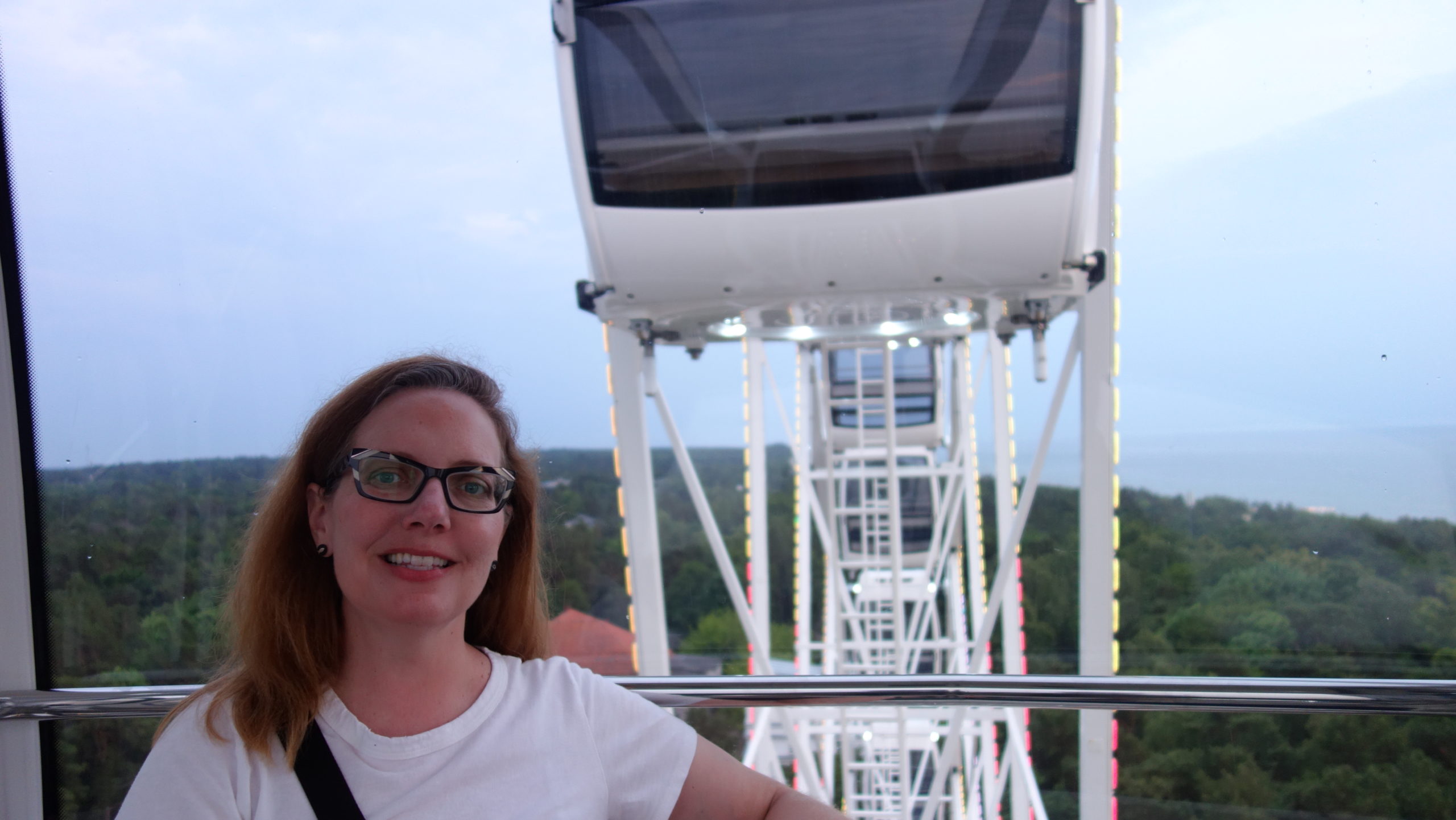
Mer and I rode the Ferris wheel, which gave decent views of the town and river, and in the dark, we could see the Christmas lights around town. We had planned on exploring the booths of the fair, but they were all shut down by 7:30 on this Sunday, so we went to a pub instead. We wanted supper and were hoping for music. While we ate supper, the waiter put a soccer game on, and it was Ireland versus Malta, which was funny since my brother, Shannon, his wife Jolene, and our friend Dubbs are in (or, for Dubbs, is on her way) to Malta this week. Ireland won, 1-0.

The music in the pub turned out to be two guys playing contempory covers of music, so we passed on that. We decided it was okay since we would get an earlier night, which will hopefully help us shake jetlag. But, even with our tiredness, it is great to be back on the old sod.

Catness, 2007(?) – June 29, 2022 – Matt’s Tribute

Catness came flying up the stairs from the lower level of our ranch home. I was standing at the top of that set of stairs and at the bottom of the stairs to the upper level. Catness stopped his dash, looked up at me with wild eyes, put his ears back, and bounded up the upper stairs at full speed. “Catness is wound,” I announced to Meredith.

Catness was our long-haired black and white kitty who amused us for the last ten years. He first got on our radar when he started living under the trailers in back of CVCA, the school where we both work. My first memory of Catness was I saw him across the grass near the building, I called to him, and he came bounding eagerly over to me and purred up a storm when I started petting him. I picked him up and showed him to Meredith through her classroom window, which was nearby.

In 2012, the Hunger Games movie had just come out, and since Catness had long hair, the students of the school assumed he was a girl and started calling him Katniss, after the hero of the book/movie. Most of the kids liked “Katniss,” but in a large school with students as young as eleven, there were bound to be a few who didn’t like cats, and Mer saw him get kicked one day. From that point, she was determined to find him a home. We already had five cats, so I encouraged her to find him a home with a student.

I forget the exact sequence now, but I think Mer found a student who took him home, but then the family dog didn’t like that, so Catness ended up somehow at a vet’s office waiting to be adopted. Mer was going on senior trip, and she let me know when she left that she “wanted THAT kitty.” My recollection is that the vet seemed suspicious of me until an assistant saw the cat stickers in our car’s window, and so Catness came home with me.

“Katniss” became Catness through my incompetent name memory. When we verified that “Katniss” was a boy, Mer wanted to change his name. I couldn’t remember what the name was, and Mer kept associating Katniss with the girl hero of The Hunger Games, so we came up with Catness instead. We figured Catness was the embodiment of being a cat – the essential nature of a cat. And I could remember his name.

Catness fit in well at home. He wasn’t chummy with any of our other cats, but they didn’t fight either. Catness turned out to be a superb athlete kitty, racing around the house and being flexible enough to fall asleep with his back paws in one direction and his front paws twisted 180 degrees in another direction. Catness very quickly discovered the “catwalk” – the top of the wall that separates our kitchen from our living room; it’s a standard wall, but we have a cathedral ceiling, so there is a six-inch-wide top to the wall that Catness enjoyed walking or sitting on. He would jump from the floor to the counter to the refrigerator to the catwalk. Other cats have done that as well, but Catness was up there quite often.

Catness never lost his outdoor nature. We had to watch for him when we went in and out of the house because he would try to sneak out in his younger years. I think he succeeded twice, and each time I caught him when he stopped to sniff at a plant. He would also sharpen his claws on anything – furniture, wood trim, and even metal heating registers. We expect some cat-related destruction in our home and are okay with that, but when Catness started making grooves in the wood in our music room, we knew we had to do something. We said we would never declaw a cat since we were okay with occasional claw pricks showing on the couches, but we had never had a cat starting to destroy parts of the actual house. We either had to get Catness declawed or give him up. So we reluctantly got him declawed. He seemed unfazed by that, and for most of his life he still tried to sharpen his now-missing claws on various parts of the house. The only downside we saw was the other cats eventually figured out that Catness couldn’t defend himself the same way as the other cats, so they would occasionally pick on him by chasing him around. Happily, that didn’t happen often, and Catness would usually just flee to something high in the house.

Catness was clearly the smartest cat we had ever had. Not only did he manage to escape a couple of times, but he was good at problem solving. Once, Mer made a pork roast in the oven, and because we had a house full of meat-loving animals, she pushed it to the back of the hot oven and left the door cracked about four inches to let the oven cool down some while she went to use the bathroom. She was gone for a couple of minutes, and when she came back, she found Catness with three paws on the open oven door, one paw on the oven, and a large chunk of pork in his mouth. We never figured out how he managed that in a hot oven, but he was a clever kitty.

Catness also loved chicken. Anytime I made chicken, he would come running into the kitchen and paw at my butt until I gave him some. I left a bowl of shredded chicken on the counter, wrapped in foil with a plate over the bowl. When I came back in to the kitchen, Catness was on the counter, had gotten the plate off the bowl without making any sound, and had peeled back the foil. Again, he was quite bright.

Catness liked me, but he loved Meredith. He liked to sit on her grading table for many of the hours she graded, and he would sleep near her on the bed. Sometimes he would wrap himself around her head, but that was fairly rare. He usually waited until Meredith moved in the morning, and she would stretch out an arm, and he would come and settle next to her with his head resting on her arm. It was very cute.

Catness was a joy to have around the house for nine years. When we got back from our summer trip to Iceland in 2021, we found he was hunched under the bed and had pooped on the bedroom floor in several places. Thus began a year of Catness finding new places he felt conformable – the bedroom, the corner of the office, the bathroom sink, and so on. Wherever he went, he would stay there for two or three weeks and then find somewhere new. In each place, he would find a corner to go to the bathroom in, so we started putting two litter boxes wherever he was. I still don’t know if the behavior shift was because we had introduced a new year-old female cat to the house (he was fine with her for two full months before we left for Iceland), or if he was beginning to feel poorly, or both. In the spring of this year (2022), Catness was finally diagnosed with some kidney issues and maybe a blood issue, so we put him on special food. He still would snuggle some with Meredith and even on rare occasions join us on the couch.

We took a summer trip to England this year in June, and left the cat sitter instructions on how to care for Catness. When we got home, Catness hadn’t touched his food from earlier in the day, so I gave him some fresh food. He sniffed at it and curled back up without eating. I left it with him all night and he didn’t eat it. I tried giving him another different food, and he wouldn’t eat that either, even when I put a little on my finger. We knew the time had come – he was very sick. The vet said his kidneys and his blood disease were fighting each other, and we were doing the right thing. So, on the day after we got home from England, on Wednesday, June 29th, we said goodbye to our clever, athletic snuggle baby.

I expect that Catness came flying up to St. Peter, looked at him with wild eyes, put his ears back, and bounded up to Meredith’s future heavenly mansion to wait for her outstretched arm to come to him. I’m sure Peter announced, “Catness is wound!”

The Condition of Being a Cat (Meredith’s Tribute)

As I was preparing for the school day, I heard a knock on my classroom window.  Opening the blinds, I saw my husband Matthew holding a beautiful long-haired tuxedo cat with a black nose and a white-tipped tail.  It turned out that the cat had taken up residence underneath the trailers behind our school, and since it had been discovered there around the same time that the Hunger Games movie was released, the students started calling the cat Katniss.

Many students were delighted to have a school cat.  She was friendly, not feral, and I can picture her running across the grass to greet Matthew when he called to her.  But with over eight hundred students in the building, I feared that there might be at least one or two who might try to hurt her.  Every morning when I came to work, I had trouble relaxing until I’d seen her and knew that she was all right.  Then one afternoon, when I came into my room before my next class was about to start, a couple girls were looking out the windows, and one of them gasped, “That boy is kicking the cat!”

I stormed back into the hall and out the door, and it’s God’s good grace that a) the cat appeared unharmed, and b) the boy was nowhere in sight … because I really don’t know what I’d have done if I’d found him mid-kick.  Something that could’ve gotten me fired, I suspect.  But the incident convinced me that the cat couldn’t keep living behind the school, and that we needed to bring her home.

Convincing Matthew was a little trickier.  We already had five cats, and he was reluctant to add a sixth.  Though I’m not a frequent crier, the thought of the cat’s falling prey to any more abuse got my waterworks going.  “I don’t want ‘another cat,’” I sobbed to Matthew, “but I want this one.”

Apparently, I wasn’t the only one who thought Katniss needed to be rescued, because before we had a chance to claim her, we learned that one of my students, Lauren, had taken her in.  Yet Katniss didn’t get along with Lauren’s other pets, so Lauren took her to her local vet in hopes that someone there could find Katniss a better situation.  At this point, the school year was almost over, and I went out of town briefly for senior trip.  By the time I returned, Matthew had visited Lauren’s vet and brought Katniss home.  

Some of the students had claimed that since Katniss was living outdoors and didn’t look totally clean, she must have had fleas, but they were wrong — not only about the fleas, but also about the “she,” as it turned out.  I guess people think that fluffy cats look more feminine.  Now we had a problem, though:  we needed to find a new name.  We tried several, but we were so used to thinking of the cat as Katniss that none of them stuck.  Matthew said that since the name Katniss had been made up for The Hunger Games, it wasn’t inherently male or female.  Because I’d read the trilogy, it seemed female to me; however, I was willing to compromise by changing the spelling to “Catness.”  I figured that if, for example, “happiness” is “the condition of being happy,” “Catness” could mean “the condition of being a cat.”

Unfortunately, the condition to which Catness had grown accustomed was that of being an outdoor cat, and in his early days with us, he was something of a flight risk.  He wasn’t standoffish, but he was less affectionate than he’d seemed when at the school, and, most disturbingly, he liked to scratch everything.  As owners of clawed cats, we’d limited curtains and rugs and replaced our cloth chairs and couches with harder-to-shred leather ones … yet Catness also scratched metal and wood.  You can live in a house with minimal fabric, but it’s tough to eliminate metal and wood, and the gouges were adding up.  When we’d adopted our first two cats from a Chicago shelter, we’d had to promise to keep them as indoor-only cats and not to declaw them.  After having had Catness for a destructive year, though, we did finally decide that we’d never promised we wouldn’t have him declawed. 

To our relief, the surgery went smoothly, and besides healing quickly, Catness actually became more affectionate afterwards.  Nonetheless, he still had a mischievous streak, especially when it came to food.  Such as the time he figured out how to get into the cupboard above the counter so he could access his dry food.  Or the time Matthew had covered a bowl of shredded chicken with a heavy, fragile plate while he briefly left the room; while the bowl was unattended, Catness managed to get up on the counter and knock the plate off the bowl without breaking it or upsetting the bowl itself, and was happily mid-munch by the time I found him.  Such was his fondness for chicken that Matthew would usually just give him a little, in response to Catness’s plaintive wails.  We called him “Chicken Monster,” since I’d warned Matthew early on that by giving in to those wails, he was creating a monster.  

However, Catness’s crowning food-related achievement involved pork, not chicken.  I’d made some that was done cooking, so I opened the oven door, but to keep it safe while I went to the bathroom before dinner, I shoved the pan toward the back of the oven and only opened the oven door a little ways.  Returning to the kitchen a few minutes later, I was shocked to see Catness sitting on the counter with a large hunk of pork hanging from his mouth.  To this day, I have no idea how he managed that.  The oven was still quite hot, and Catness didn’t even have claws that could’ve aided him in snagging the meat.

Occasional acts of food thievery notwithstanding, Catness was a great cat, as corroborated by multiple visitors who expressed a wish to take him home.  He was so companionable with Sokhai, a young Cambodian man whom we hosted for a couple weeks, that in any of the sporadic e-mails we exchanged with Sokhai over the years, he always inquired about his “little friend.”

Catness was fond of most people, including Matthew, but he was my special baby.  Sometimes he liked to sit on the bathroom counter and help me get ready in the morning.  Sometimes he’d help me exercise — when I got out my floor mat, he’d roll around next to me as I stretched to pet him.  Sometimes he’d join me while I watched TV; though not much of a lap cat, he’d curl up right next to me.  However, my favorite snuggle times with Catness were on summer mornings when I could sleep in.  He’d often sleep by my feet, but when he’d sense that I was starting to wake up, he’d come closer.  If I lay on my side and stretched out my arm, he’d come rest his head on it, like a pillow, while curving his body against my torso.  He was my Fluffy Gorgeous, my Black-Nosed Cutie, my Little Mr. Fluffy Paws.  To the tune of “Papa Loves Mambo,” I’d sing, “Mama loves Catness — da da da daaa da da — Catness loves Mama — da da da daaa da da.”

During the first year of the pandemic, Matthew and I, like many other people, got to spend lots of quality time with our pets, but when we had the chance to take a trip to Iceland last summer, we were eager to go.  While we hate leaving the cats when we travel, we prefer it to the alternatives of not traveling or not having cats.  Returning from Iceland, though, we encountered something new to us:  Catness had not handled our absence well.  He’d always been a cat who’d find a certain spot that would be his preferred spot for a time, maybe a couple weeks or so, and then he’d find a different one … yet after Iceland, this behavior got more extreme.  He’d almost never leave his preferred spot, and seemed to have a particular aversion to being on the floor.  We took him to the vet, but no one found anything physically wrong with him, so we hoped that he’d return to normal soon.  A couple months later, he still hadn’t, so we took him to the vet again, but again, there was no indication of a health problem, and his appetite continued to be pretty good.  (He’d never had any past health issues, either, except for the year or so that he turned into Sneezy Cat — allergies, the vet said.  We weren’t sure what to do about this until Matthew had the radical idea that maybe it was time to have our furnace ductwork cleaned out, and that seemed to be the solution.)  

In lieu of physical explanations for Catness’s recent behavior, I considered psychological ones.  One time when Catness was leaving the litter box, I saw him get pounced on by Folio and Selkie, our newest additions to the family, both less than a year old.  They seemed playful rather than hostile, and Catness hadn’t had a problem with them before we left for Iceland, but perhaps because he was getting older as they were getting bolder, or perhaps because he didn’t have claws with which to defend himself, he saw them as a threat.  At the same time, when his preferred spot was one that had room for them too, such as on a couch or a bed, he rarely seemed bothered by their being near him.

To try to accommodate Catness’s determination to play “The Floor Is Lava,” Matthew and I responded with a determination to play “Musical Litter Boxes (and Food and Water Dishes).”  Whenever Catness would switch his preferred spot, we’d make sure he had food, water, and litter nearby, whether his spots were more obvious ones (like beds or couches) or quirkier ones (like my clothes hamper, a nook in Matthew’s roll top desk, or either of the bathroom sinks).  For a time, when we thought that the other cats might’ve been causing his stress, we tried keeping him in our bedroom with the doors shut, to give him a safe space — which meant that Matthew and I slept apart:  I stayed with Catness, and Matthew slept in the guest room, so that the other cats could be with him.  But eventually, Catness seemed restless, and we opened the room again.

For a few months, I kept hoping Catness would improve; however, a day came when he took a definite step in the wrong direction.  This was one of the times when my hamper was his preferred spot, and one day, while we were watching, he stood up and urinated on my clothes, despite there being a litter box in close proximity.  It was quick and easy enough to wash the clothes, but his willingness to foul his own nest was clearly a bad sign.  We bought puppy pee pads and layered them with old towels, changing out both regularly, and we took him back to the vet.  At this point, physical issues were becoming apparent, and he was starting to lose weight.  Even so, he continued to eat — and to be affectionate, purring when petted and rolling over so we could rub his belly.

While we knew that Catness wasn’t in great shape, he wasn’t in rapid decline, either, over the next few months.  During the winter, we’d bought tickets to go to England in the summer, so when June came, we went.  We’d explained to our cat sitter about keeping food, water, and litter near Catness’s preferred spot (the downstairs bathroom sink, at that time) and about changing out and washing the towels.  I felt a bit apprehensive about leaving him, yet wasn’t anticipating major changes in the couple weeks we’d be gone.  And there didn’t seem to be any.  Our cat sitter didn’t report any problems, and our friend Dubbs came over to visit the cats and took pictures of the ones who stuck around long enough to let her, which included Catness, now in the tub but looking otherwise unchanged.

Getting home, we found Catness in the tub; however, I felt a cold knot start to form in my stomach when I saw that the food near him was uneaten.  Thinking that perhaps it hadn’t been put close enough, I set it right next to him, and he still had no interest.  The next morning, after seeing that he hadn’t eaten anything in the night, Matthew made one more vet appointment.  I tried to tell myself that it wasn’t the final vet appointment, but when I saw my stoic husband’s red eyes and the crumpled tissues in his hands, I couldn’t lie to myself any longer:  I knew I only had a couple more hours with Catness.  We moved him down to the couch, where I stroked his still-silky fur, now wet with my tears, and told him how much I loved him.  When Catness’s eyes started to glaze and his breathing grew labored, Matthew called and begged the vet’s office to let us bring him in sooner, which they did.

Catness was a part of our home for ten years.  I cried in my yearning to have him, and I cried to have to let him go.  When we already had five cats, I’d never intended to get another … but I’m so glad I got that one.  

Maine 2022, All-in-one Post

For the first time since summer of 2019, Mer and I were able to go home to Maine. A quick summary of our travels:

Sunday – We left Ohio Sunday morning, going as far as Manchester, Vermont. Manchester, like most of Vermont, is beautiful, nestled between two mountain ranges (the Green Mountains and the Taconic Mountains). We ate at Ye Olde Tavern (from 1790), but since they asked us to come back in fifteen minutes, we wandered the town, going down to the small river and falls. Along the way, we saw what looked to be a large pink-wire art installation taking up most of a two-story building. When we looked in the windows, we saw five kitties lounging around – it turns out the owner takes in found cats and lets them live in the building. Very cute.

Monday – We toured Hildene, the summer home of Robert Todd Lincoln. The house was large and elegant, but not huge. The gardens were pretty, especially with the mountains in the background. We also toured the Hildene farm, petting an enormously fluffy Angora rabbit. We left around 2:00 and went the rest of the way home to Livermore Falls.

Tuesday – We hiked nearby Mt. Pisgah with my stepmom Kellee. It has a fire tower at the top, and the views over the lakes and hills are worth the climb. Mer and I then headed to Lewiston/Auburn to eat at one of my favorite places to eat anywhere, Roy’s Hamburgers (and it was the ice cream stand branch, so I could get a frappe (shake) there!). After lunch, we met my brother Jeremy, who works for Bates, who then gave us a tour of the college, which I’m not sure I had ever gotten. It is a harmonious brick-building campus, with one large quad. They have done a lot despite being locked in by the city all around. Mer and I then did a short hike in a bird sanctuary in Lewiston about which I had never known.

Wednesday – Kellee, Meredith, and I went to the Coastal Maine Botanical Gardens, which, not surprisingly, is on the coast, or, more accurately, on a tidal river near the coast. Mer and I had been to the garden a few years ago, but it is a very pretty place to be, and since we were last there, the garden has added five huge wooden trolls designed by a Danish artist. Those were super cool, especially the ones holding full-sized trees. We spent about five hours there.

Thursday – Mer and I had a mellow day, getting massages at The Senator Inn in Augusta. If you get any spa services, you can use the spa facilities for the entire day, so we used the saltwater pool and the hot tub, and read our books for several mellow hours. We then went candlepin bowling (I managed an 81 for a high score), and finished the day by seeing an English translation of a Moliere play based on a Greek myth (Amphitryon) at the local Theater at Monmouth. The play was about Jupiter and Mercury taking on the forms of two humans so that Jupiter could sleep with the man’s wife. Since there were two doubles in the play, mistaken identity ensues. It was fun, even if Jupiter came across as REALLY creepy.

Friday – Mer and I went to Rockland, which is where, in past years, we spent many happy days visiting Mer’s grandfather Carleton, who passed away in 2017. We visited the graves of Mer’s parents and grandparents, then drove by the old house (largely unchanged), then walked downtown Rockland. We drove up the coast to Rockport, where we got out to tour the small harbor, which I don’t think I had ever done before. The coast is a pretty place to stroll. We spent the bulk of the afternoon and early evening visiting some of Mer’s remaining Maine family. Mer’s cousin is house-sitting a camp (i.e., a cabin, to non-Mainers) on the coast, so we got to visit and eat while looking out over the ocean and rocky coastline. Life is rough. After the visit, we drove up the nearby Mount Battie, where we lingered some time, and then we finished the evening by walking some of the Rockland Breakwater.

Saturday – We headed down to Brunswick to meet Mer’s college friend Julie (and her boyfriend) for lunch at an old woolen mill on an island in the Androscoggin River. We sat outside in the shade, which was pretty wonderful today. After lunch, Mer and I drove down to Bailey Island, all the way out to Land’s End. After we walked around a little, we drove a mile or so over to the Giant’s Steps, a small coastal park featuring huge rock “steps” down to the ocean, and lots of traditional dramatic Maine coastline. We drove back to Brunswick, and tried to find either of two nature preserves to hike, but we couldn’t find them (we didn’t see any signs).

Sunday – After going to church this morning, we drove north to the town of Weld, where Kellee and Jeremy and Jeremy’s girlfriend were all kayaking. I figured we would call them when we got there and see if they were near the beach. It never occurred to me we wouldn’t have cell service, but it is in western (rural and mountainous) Maine. So we kept on going to the lovely little town of Rangeley, where we sat and looked at the lake for some time. We finished the outing of the day by driving a few miles back the way we had come to see Smalls Falls, a rest stop next to a pretty waterfall area. We walked around in the woods and then sat by the falls, watching the water. We then headed home for the evening. We leave Maine tomorrow morning, but will only go as far as Syracuse in New York, and then go the rest of the way home Tuesday.

England 2022, Day 15, Monday – Dover

“All Kent hath yielded; nothing there holds out / But Dover castle: London hath received, / Like a kind host, the Dauphin and his powers.” – Philip the Bastard to King John in King John (Shakespeare)

One of the great things about travel in England is that in most places we go, something important happened there. Today, that somewhere was Dover Castle. Dover Castle was built (at least the central tower was built) by King Henry II starting in the 1180s, and the castle has been added on to and used for different purposes ever since. The castle was never taken by any attackers, so the tower is still the original one that Henry II built. Shakespeare’s play deals with Henry’s son, who lost much of the huge France/England/Wales/Ireland empire that dad had inherited or conquered. King John is also famous for ticking off his barons enough that they forced the Magna Carta on him.

At any rate, Dover Castle was Henry’s showpiece. It is huge, and the number thrown at us today was it cost about seven billion of today’s pounds ($8.6 billion) to build it, although comparisons of money across such a vast amount of time are notoriously bad. Since many pilgrims came through Dover on the way to Canterbury to see the shine of Thomas Becket, Henry wanted a PR piece to help smooth over his own part in having had Becket killed. The tower clearly stated who had the money and power in the region.

Since Henry’s time, the castle and grounds have been used to prepare against possible invasion by Napoleon, as a watch post and Royal Navy harbor during WW I, as the headquarters of the Royal Navy during WW II, and as a Cold War bunker through the early 1980s. The grounds of the castle are huge; there is much to see. We spent six hours there today.

We started with a guided tour of the underground WW II tunnels, used as the navy’s headquarters. The tunnels had been carved as barracks for men during Napoleon’s time, and the navy moved into them. They called out of retirement Admiral Ramsey, who masterminded Operation Dynamo, coming up with the entre thing in about one week. Dynamo was the plan to extract 45,000 British troops (of about 140,000) who were trapped on the beaches of Dunkirk. The admiralty didn’t think it possible to get more troops out. In the end, by using even fishing ships and yachts, 338,000 men of the British Army and their allies were rescued over eight days. It was a huge and unexpected success. To follow that up, Ramsey also coordinated other navy operations in the Mediterranean and  ran all the navy operations for D-Day. He was a remarkable man. Sadly, he died in a plane crash in 1945 before the end of the war.

We took the other guided tour offered, which was to tour the underground hospital, which was ultimately used as a dressing station. We “followed” (on audio speakers) a wounded pilot though the admission process, prep, and surgery, while the lights flickered on and off during an air raid. It was a much shorter tour, but gave a good overview of the difficulties of treating wounded underground; it’s hard to operate with little or no lighting, and space was cramped.

After that, we were free to wander around. We checked out the WW 1 watch post, which included a high platform for flag signals, as well as a bunker for telegraph operators. The men here watched the Channel for any boat and identified if it was a friend or foe. Since you can see France on a clear day (like today), it would have been hard for ships to hide from binoculars. The Channel is only twenty-three miles wide here.

The castle map had numbered buildings, so I decided to follow them more or less in order. The first stop was a Roman lighthouse from the first century that is still mostly intact (a top layer was added as a bell tower for the circa 1000 church). The church right next to it is still open for services, although they have blocked up the “Saxon door” without any commentary as to why.

After that was the magnificent Great Tower and surrounding walls. When I thought of castles when I was a kid, the pictures in my head matched this castle. It is giant and blocky and intact. The Tower has been restored inside to how it probably looked, based on manuscript pictures and descriptions. The layout was fairly simple – three main levels split in two – the kitchens, the guest sleeping areas and banqueting hall, and then the king’s bedroom and chambers. You could also go up on the roof, which had great views.

After a quick lunch, we explored the medieval tunnels. I think these were to help move men around while under cover, but there was no information given. The tunnels were outside the Tower and first walls, but were inside the second set of walls overlooking the moat between the walls. It doesn’t surprised me that the castle was never taken – it was defended to the teeth.

After the tunnels, we went up on the embankment and outer walls, where there were cannons from the nineteenth century next to anti-aircraft guns from the 1940s. There were also spectacular views of the inner walls and tower.

That took up our six hours, and so we wended our way back to Canterbury. We got a light supper at a bakery, and then went to the walled part of the city, where we walked through a small park, and then ambled along the High Street further than we had yesterday. We had some happy views of the cathedral down small alleys of old shops.

And so we wrapped up this tour of southern England. We couldn’t have asked for better weather – we only had about forty-five minutes of real rain when were were trying to tour, and that was over fifteen days. England hath received, like a kind host, Meredith and her tourer. A jolly good trip for us.