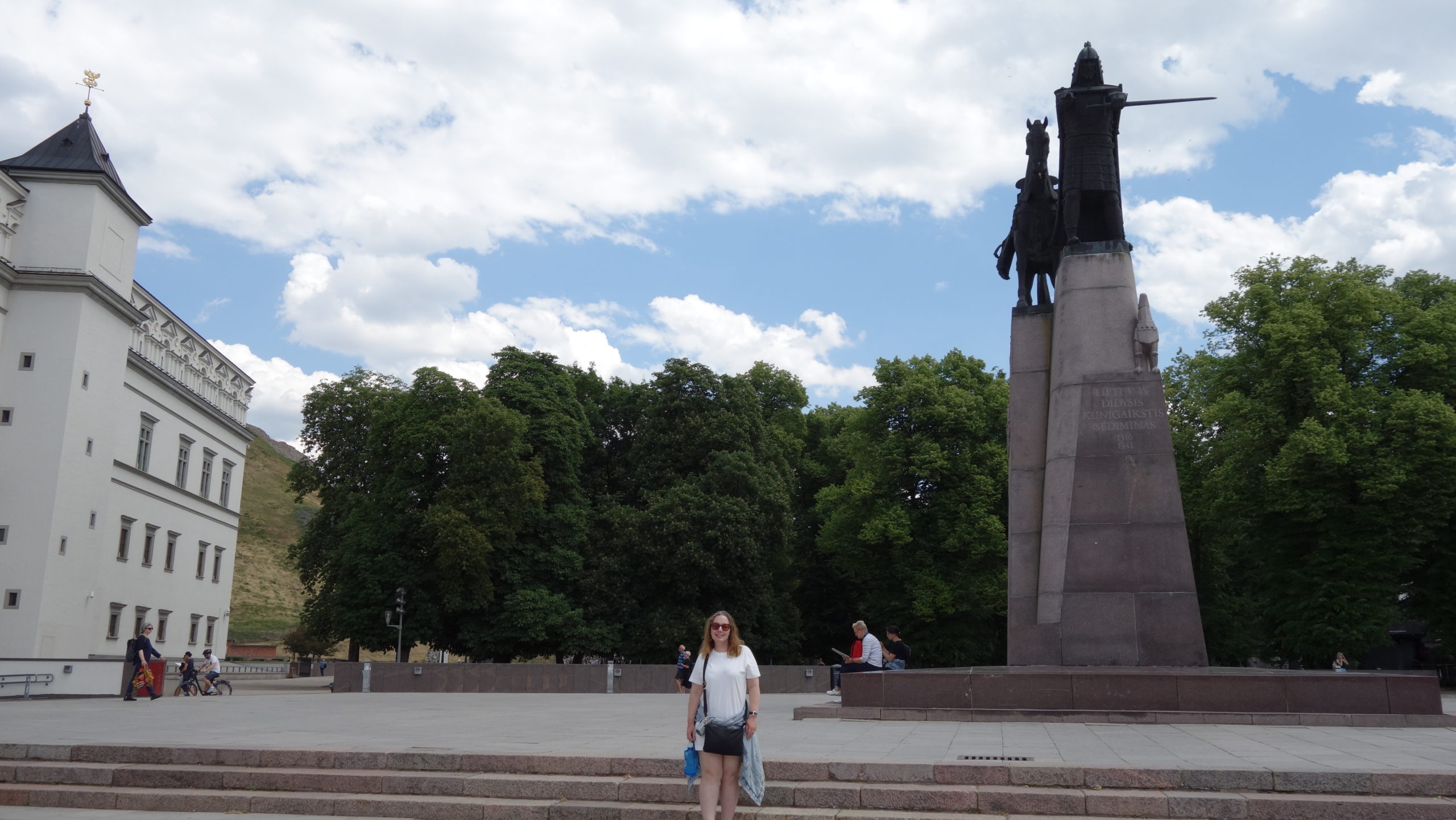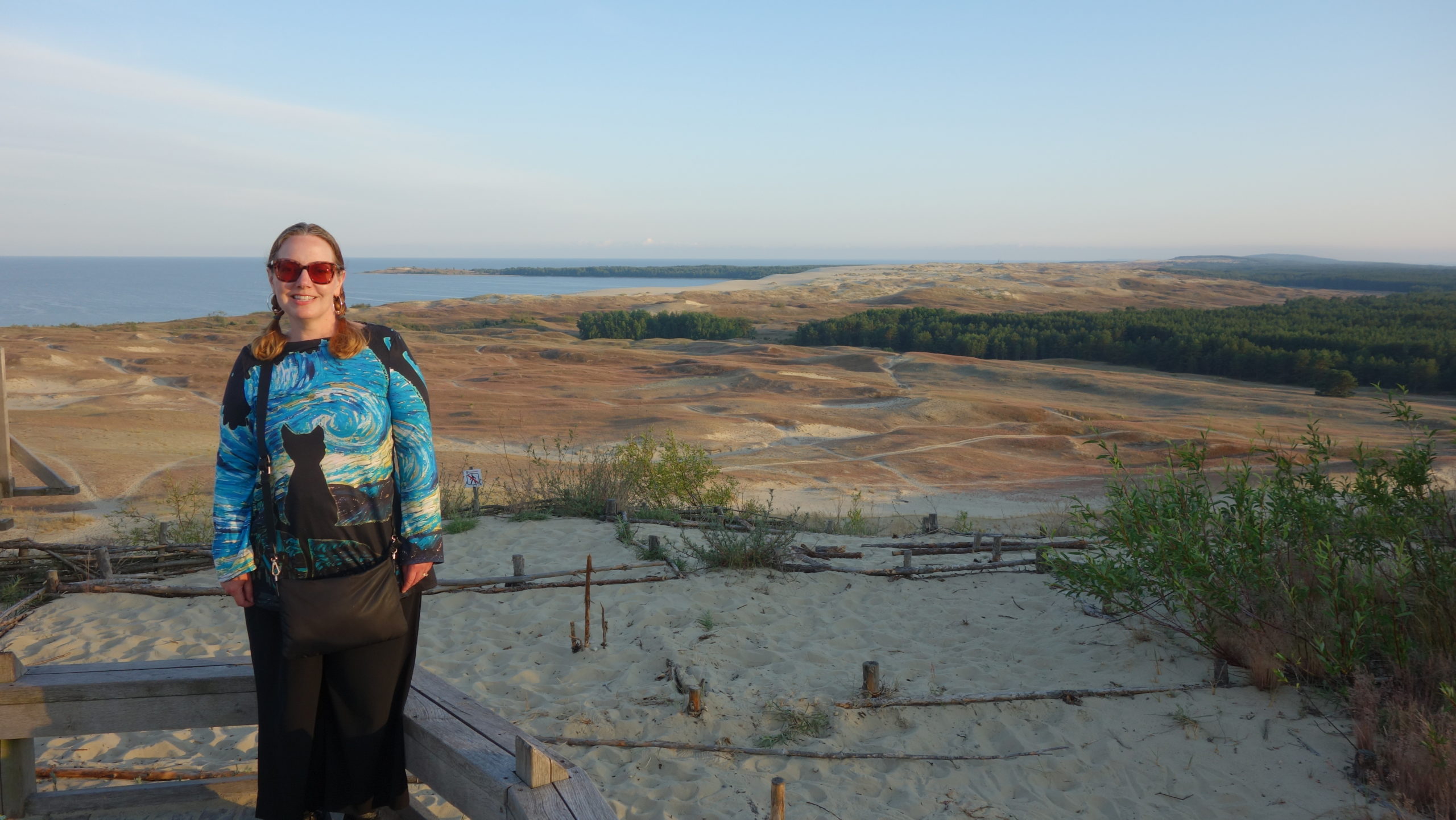
Lithuania 2023, Day 7, Monday – Cold War Museum in Plokščiai, Palanga

Dirt (and sand) was an important theme today. From roads to holes to beaches, dirt was an issue. We left the Šiauliai hotel this morning and drove west for about two hours, following my GPS. I wasn’t paying too close attention (I was in mid-yawn) when it told me to turn left. I hadn’t even seen a road there, and that was largely because it was small. It was a one-ish lane road taking us into the middle of a national park. Fair enough.

Then the pavement ended, and we got our one-ish lane dirt road. In a sign of how dedicated Lithuanians are to the outdoors, the wide and paved sidewalk continued. As we bounced along the dirt road, Mer began to question where the heck we were going, and thought maybe the GPS was wrong. Nope. We pulled up to a parking lot outside a mostly empty field that was gated with four layers of barbed and electric wire. I have the best outings for my wife.

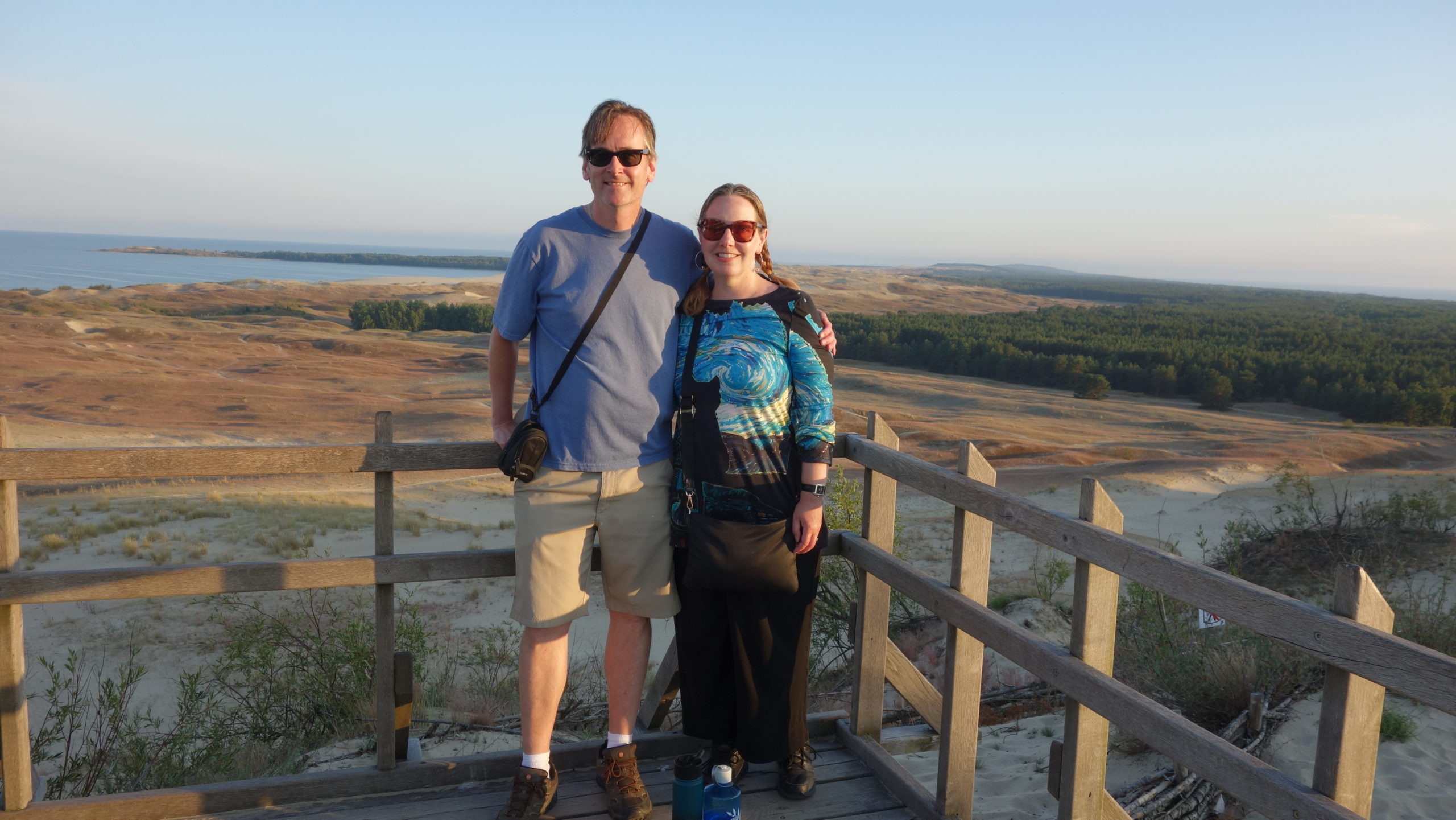
We were in the middle of nowhere because that is where the Soviet Union decided to build its first underground missile base. They chose this site in Lithuania because it was close enough for the mid-range missiles to hit all of western Europe, and because the soil was sandy, making it easy to dig. And, when you have a nigh endless supply of labor, you bring in ten thousand soldiers with shovels to dig out four missile silos by hand. I’m not sure if digging equipment would have been seen by spy flights or if the men were just cheaper, but they dug out four one-hundred-foot-deep silos and the support/command bunkers, all by hand.

The grounds of the base had been protected by four or five layers of wire. Some of them were just barbed wire, but all of them could detect a breech and alert the commanders. One fence delivered a lethal amount of electricity to anyone who touched it. The fences were also patrolled, and there were phones hidden in trees for efficient communication.

The bunker was entered though three pressure doors. In the case of an attack, the underground could be sealed off for up to three days, and it could withstand a nuclear blast from just a few miles away. The base missiles were pointed at Great Britain, West Germany, Norway, and Spain at various times. The silos became operational in the early sixties and were abandoned in the early eighties when the missiles there had become obsolete and it would have cost too much to update the silos. The men had to be able to report to duty within four minutes of an alarm sounding, and the rockets could be launched in forty-eight minutes. Happily, they never were. But it was close.

I knew about the Cuban Missile Crisis, of course. I had forgotten it was brought on by the US putting missiles in Turkey. Cuba was the first time the Soviets put missiles outside of their own border, and the US, to put it mildly, freaked. Kennedy embargoed the supply ships coming into Cuba, and the US went to DEFCON-2 (out of 5, where 1 is active nuclear war) for the only time in our history. Kennedy was within a few hours of authorizing an invasion of Cuba when diplomacy prevailed. The Soviets would withdraw their missiles if the US promised to not invade Cuba and if the US removed all nuclear weapons from Turkey. That worked for everybody.

(One odd note about the Cuban Missile Crisis display in the bunker – there were original newspapers from the time, and they were all The Bennington Banner. Bennington is a small town in Vermont. Not The New York Times or The Washington Post. The Bennington Banner. How does that even come to be?)

The second close call, the one I didn’t know about, was the “Prague Spring” uprising. In 1968, the new president of Czechoslovakia called for democratic reforms. The Soviets were afraid that the the Czechs would join Western Europe and that other Soviet-bloc countries would follow. So they sent in 500,000 troops and 5,000 tanks to put down any reforms. The leaders of the Soviet Union feared that NATO would invade Czechoslovakia, so they ordered warheads loaded on all missiles in Eastern Europe, which was the only time that happened.

In the end, the Americans and Soviets had enough power to wipe out the entire planet, so Reagan and Gorbachev signed a treaty to destroy all medium-range missiles. Both countries still had plenty of long-range missiles, but it was a start.

We learned all of this in the bunker for the silos. The various rooms housed information on the Cold War, on Soviet propaganda, on weapons and missile development, and more. We saw where fuel was stored (away from the men because it was so toxic), where the men worked (the radio operator was never allowed to take his headset off while on duty, so the wire was fifty feet long to let him go to the bathroom), and various other rooms. The large room that used to hold pressurized air had been converted to a film room showing peaceful scenes of nature and cities and museums. If you pushed the red button in the room, the room went red and the film was replaced by footage of test explosions of nuclear bombs. It was very effective.

The tour showed off the majority of support rooms on the two levels of the bunker. It ended, not surprisingly, with one of the four silos itself. Even today it is an impressive sight.

Our audioguide welcomed us to the museum and said we would be there about an hour. In the Riordan-house way of touring museums, we were there for three hours. It was a really well-done museum.

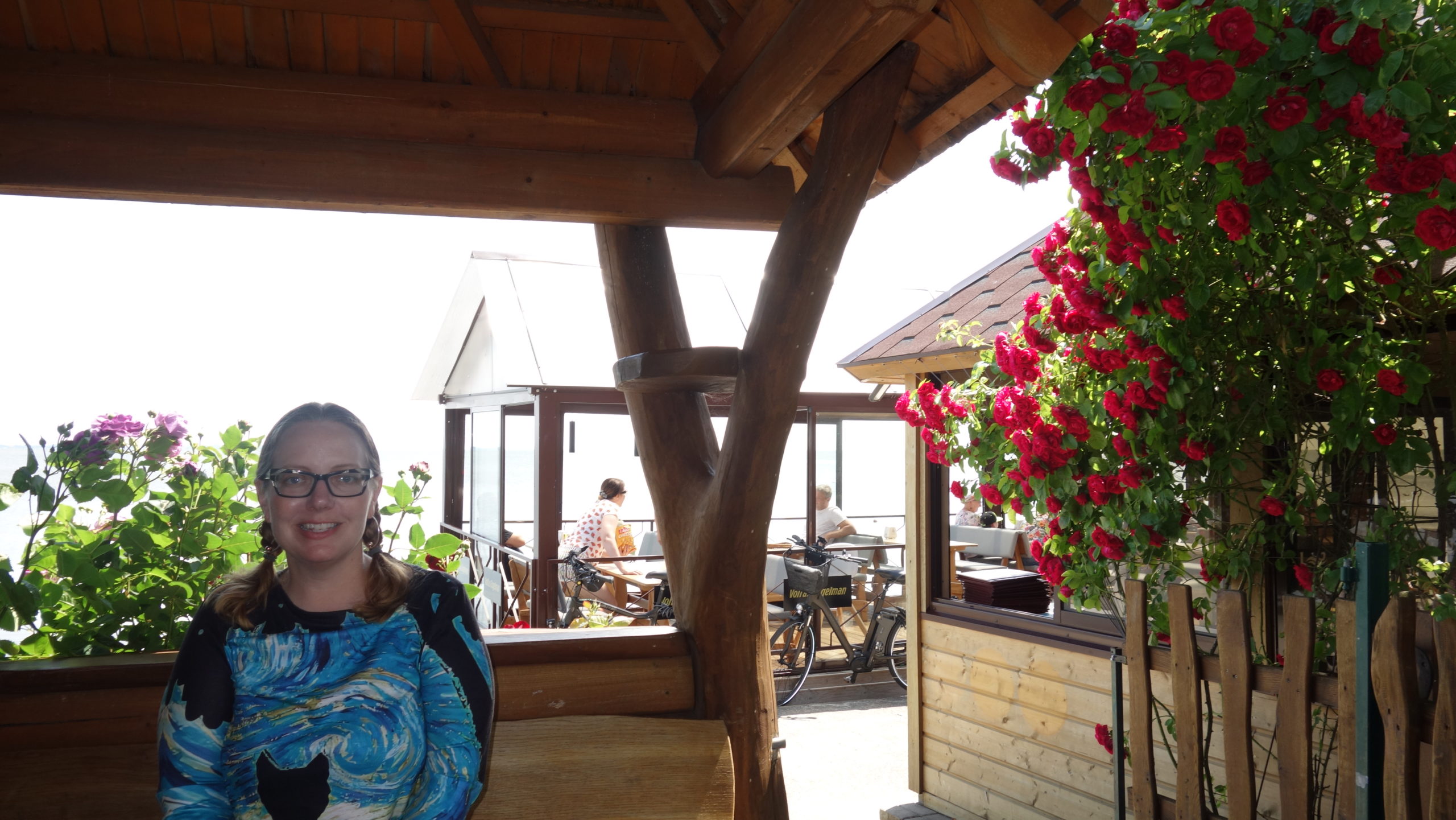
I had toyed around with going on to a World War II German bunker along the coast, but decided to get to our hotel in Palanga instead. Palanga is a small resort town on the Baltic Sea. As we drove up to our hotel neighborhood, it became odd. The houses and buildings were all new and top-notch – not cheap. But the road was mud. Our best guess is that the builders finish all the buildings first, and install the roads last. It creates an unusual juxtaposition. The hotel here really is very nice.

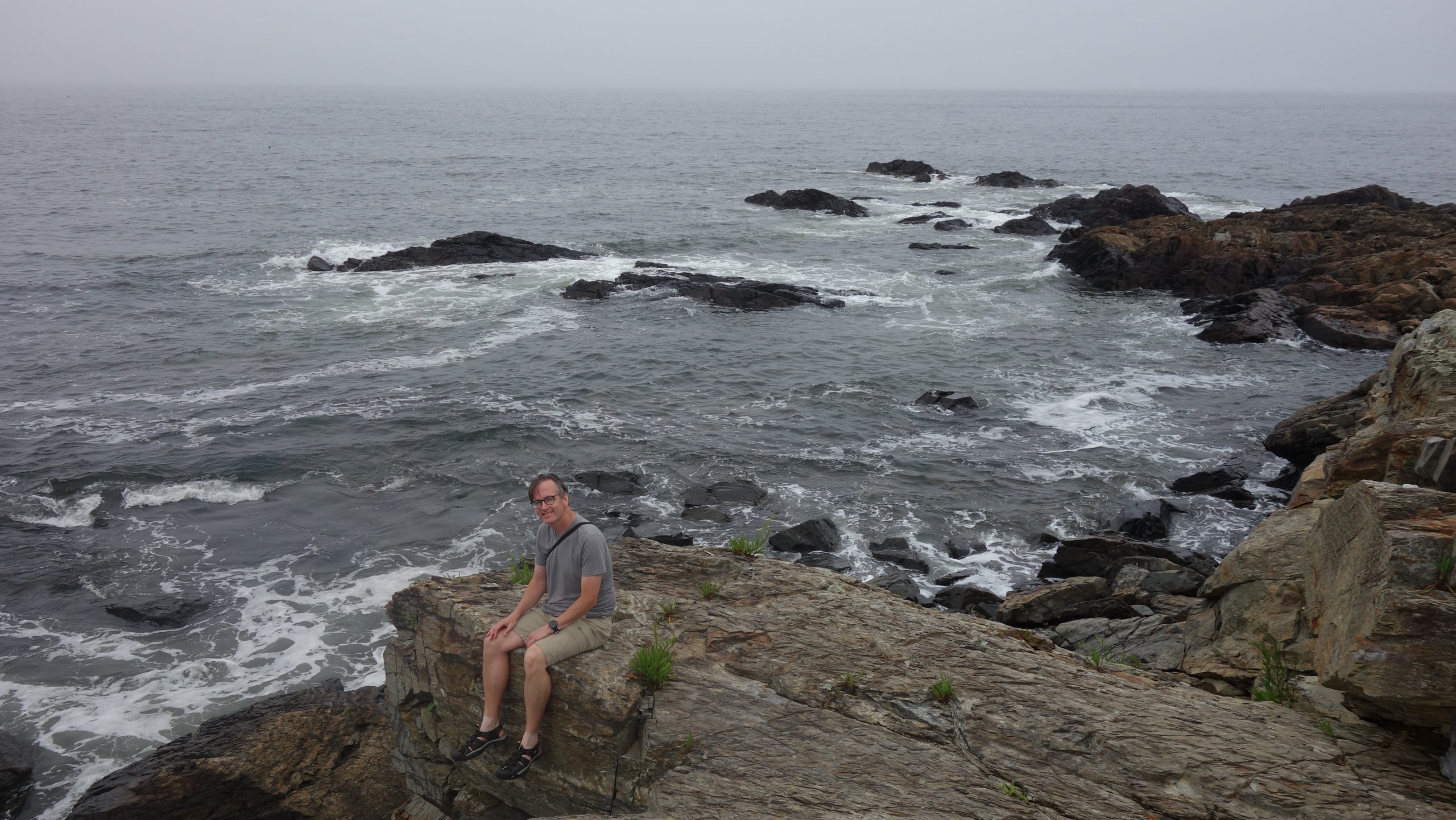
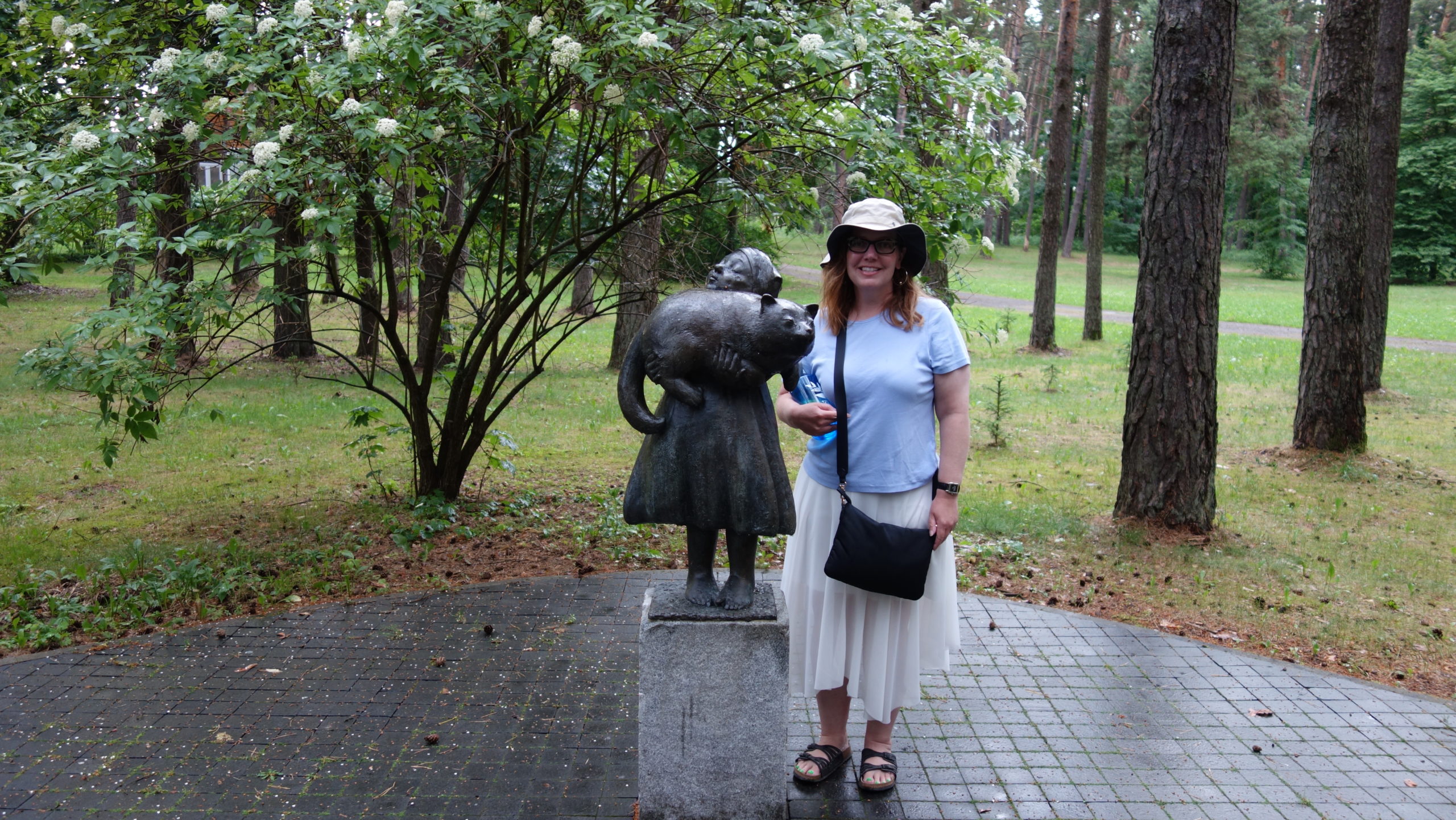
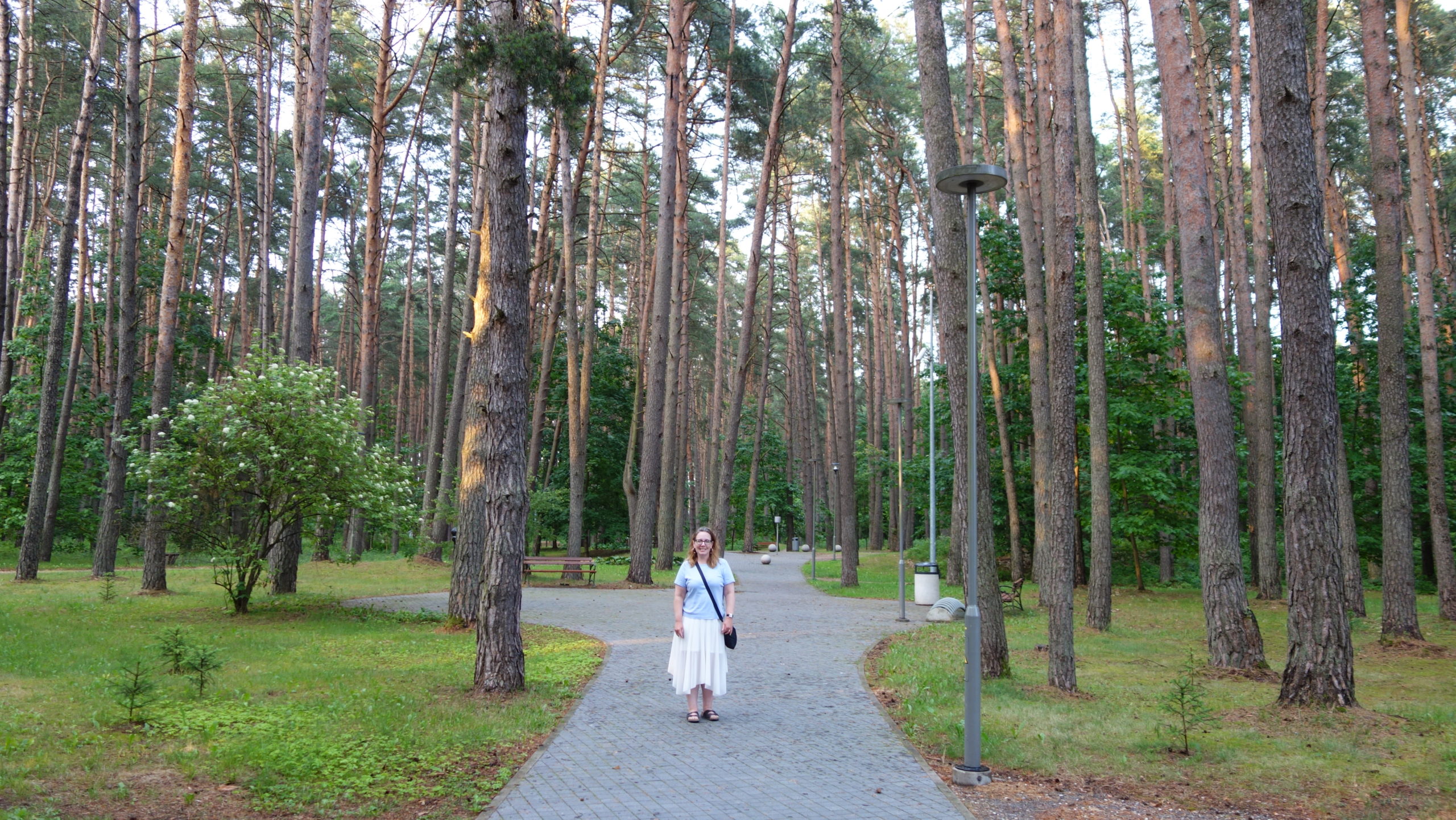
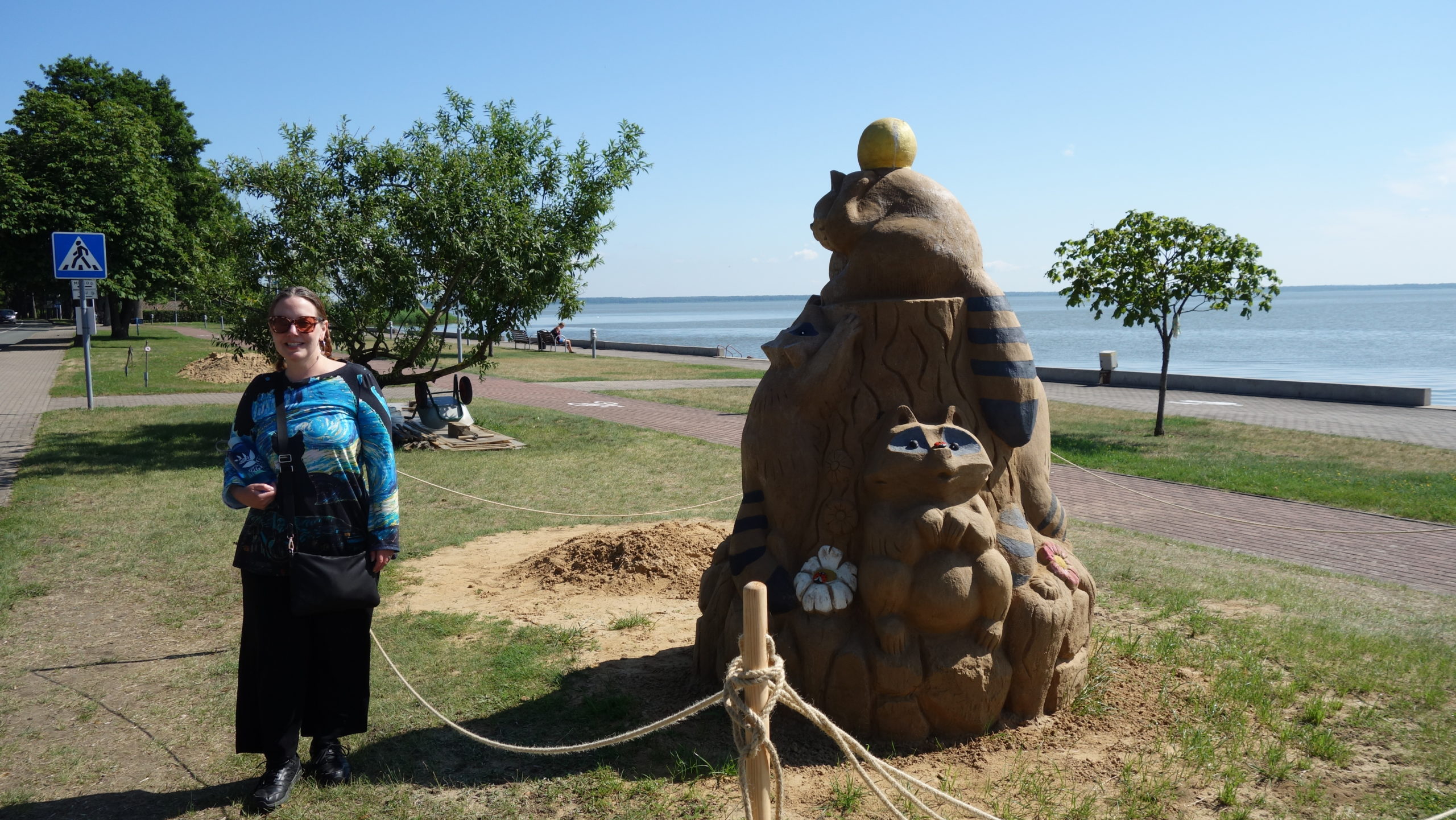
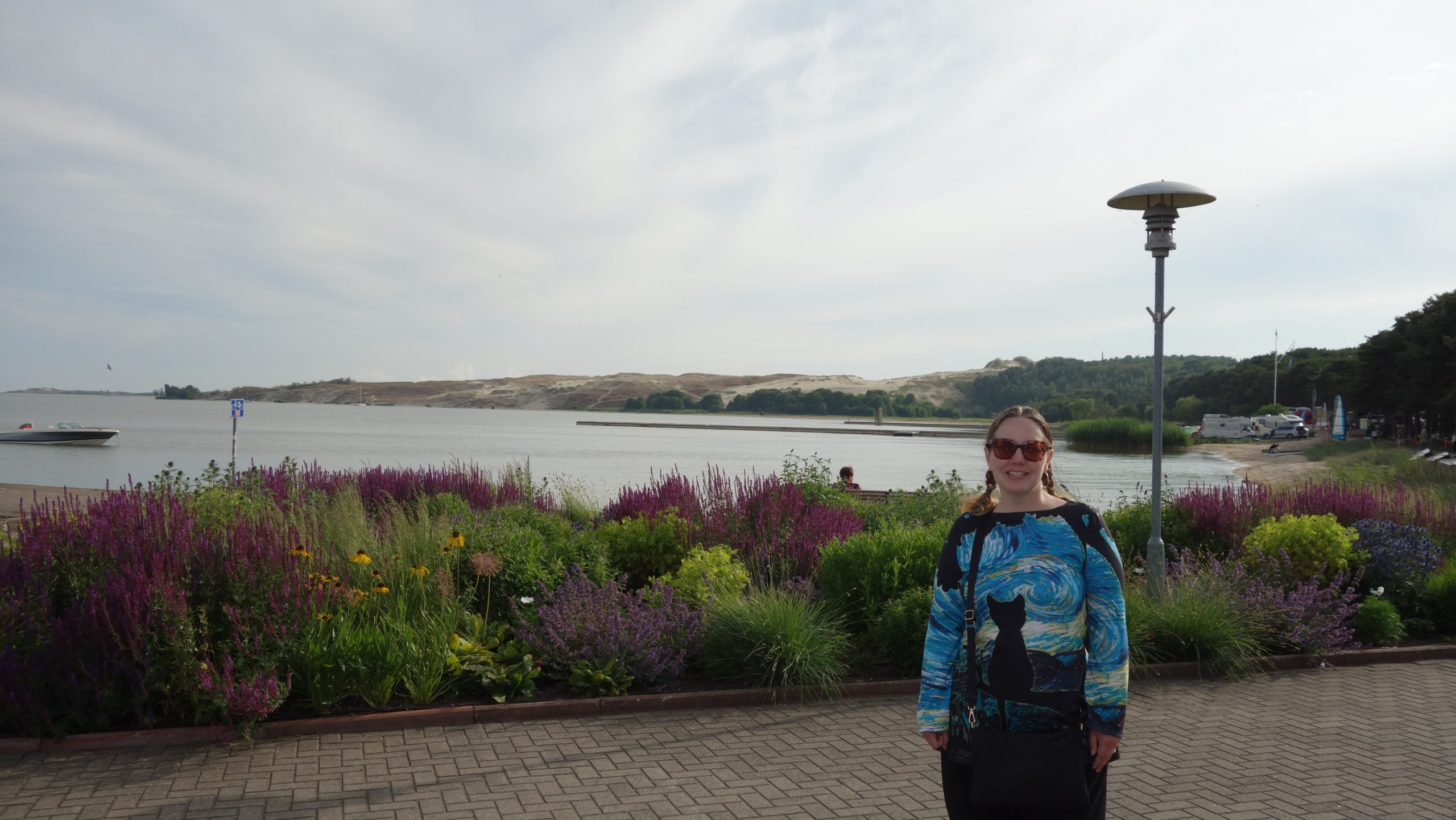
I decided to walk to the beach to see the sea. That took us by a large and pretty park of mature pines, and got us to the beach, about ten or fifteen minutes from our hotel. My plan of walking to town along the ocean was foiled by the tide being in, and it being very difficult to walk in the loose sand. It was a cool day and cloudy, and the water was only 55 degrees, so the beach was pretty deserted. We headed back to solid footing.
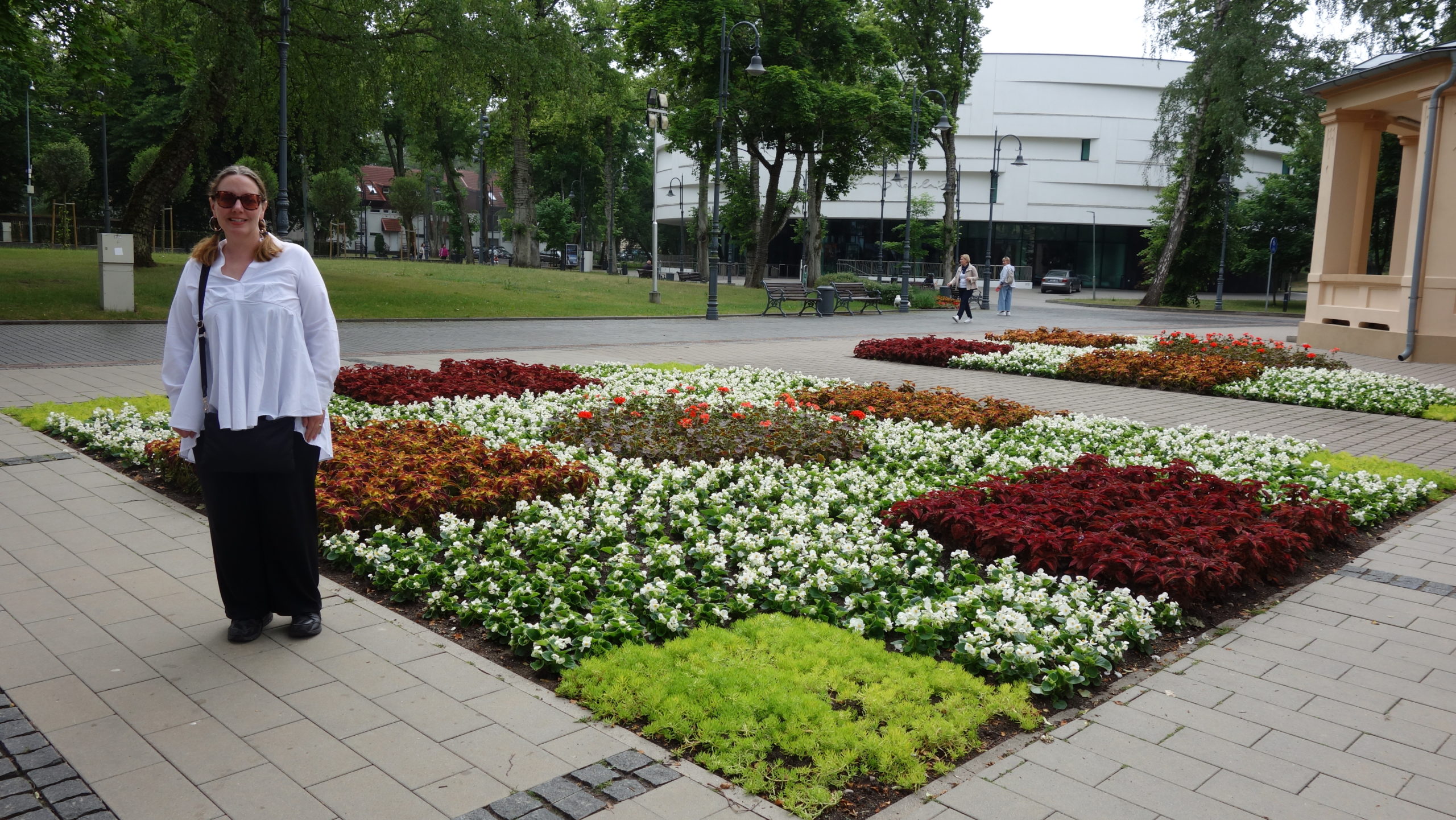
That wasn’t so bad. We started walking along the paved hike-and-bike trail that goes fifteen miles to the next town, and I saw a boardwalk. We took that, and it dumped us into the park forest, which led to a canal, which led to more boardwalks, and finally to the center of town. We did some mid-vacation errands (new toothbrush, fingernail clippers, cash from an ATM), and found an Italian place for supper. Even though they didn’t have English menus, they used enough Italian names for us to get a good meal. We followed that with dessert from a French bakery.
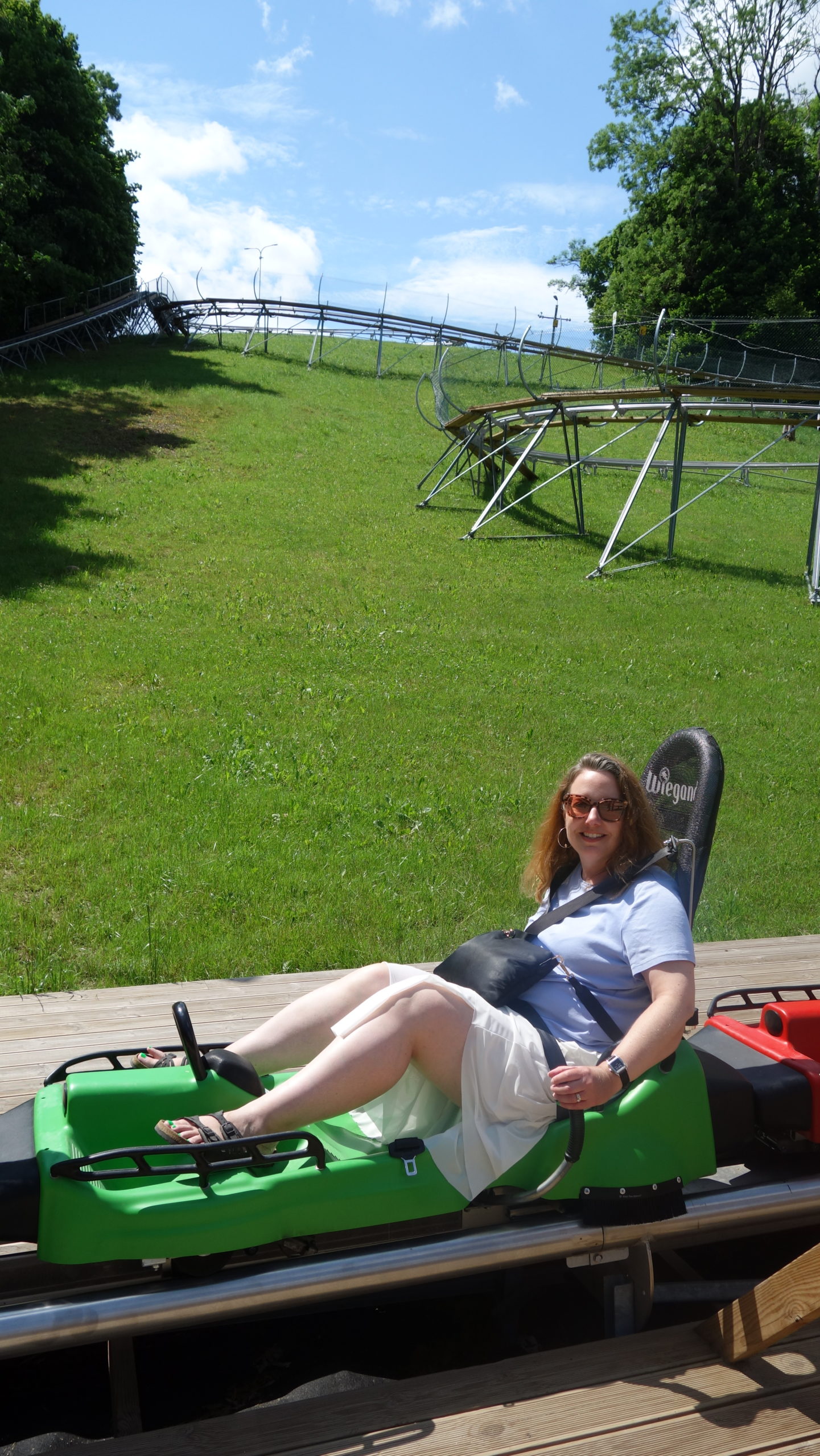
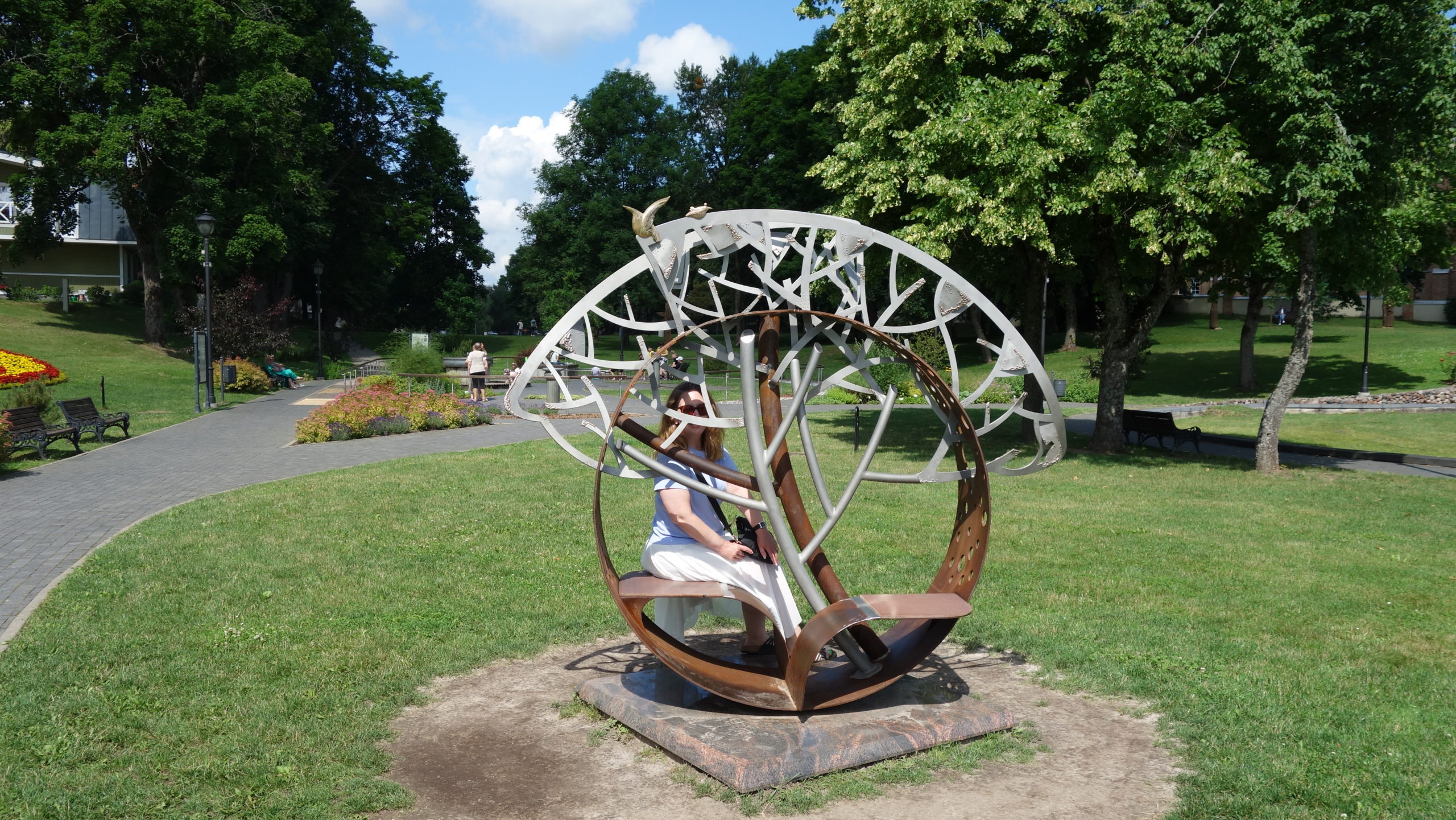
That was about it. We took a meandering, check-the-cell-phone-often way home that left me even more confused about navigating the town. It was almost like having sand in my eyes, but maybe it will be clearer tomorrow when Meredith takes over for two days here in town.

Lithuania 2023, Day 6, Sunday – Siauliai

Mer had a museum day planned for today, and one of the slightly odd aspects of the museums we saw today was their lack of concern for keeping the years in strict order.

The final museum we saw today was the Frenkelis Villa Museum. Chaimas Frenkelis was a Jewish leather worker who came to Šiauliai because Šiauliai had excellent railroad connections. He started a little leather-working business, and ended up with a huge factory that had some people calling Šiauliai the “leather capital of the world.” Frenkelis came here in the late 1800s, and eventually had a mansion built next to his factory.

I know next to nothing about leather, but Frenkelis came up with ways to make it soft, and with high quality. His product took off, and he became very wealthy (this was in the early 1900s, before the Soviets came in the 1940s). He seemed to be a decent man, supporting Jewish culture and city establishments, helping his workers, and more. He was awarded a medal from the government of Lithuania for his social involvement.

Then World War I came. I had not known that Lithuania was on the German/Russian front lines, but it was. The Russians were forced back, and Germany took Šiauliai for a couple of years. In their doing so, sixty percent of the buildings in the city were destroyed, and I think the population dropped by three quarters. Frenkelis fled with his family to Russia before the Germans got here. The family came back after the war, but Frenkelis died soon after. His son rebuilt the factory, but it never reached the pre-war production it had enjoyed.

My villa history gets a little muddy in and around World War 2. As far as I can tell, the Germans used the house as a headquarters, and then later the Soviets turned it into a hospital for fifty years. When it was finally turned back over to Lithuania in the early nineties, it was in rough shape. The house was restored, and I’m glad it was.

The house is now home to a history of industry in the area, but we could only look at pictures since we can’t read Lithuanian. The second floor held art in most of the rooms, except for the dining room, which was set up for a formal dinner. That was all fine, but the gem of the tour was the house. Look up and look down in great houses. The floors were all wooden and were lovely, but the ceilings were gems. The house was built in an art-deco style, and I’m a big fan. Every room had a different ceiling, and many were deco in style. Some were simple, and some were more complex, but they were all compelling. I want to deco my ceilings now.

Our tour took about an hour, and we closed the place out. We were still able to enjoy the pretty rose gardens of the home – it is open until 10:00 to the public as a park. There were all kinds of roses, which were in bloom, and a cool four-headed fountain, all with the house as a backdrop. Mer and I sat on a bench next to the fountain and relaxed.

After church, Mer took us back toward our hotel. We were looking for a specific address, but it seems Šiauliai has a novel way of numbering addresses. Even numbers are on one side, and odd numbers are on the other. Fine. But the evens and the odds don’t have anything to do with each other. House number 42 is across the street from house 23. It can make finding a building difficult. We were looking for number 47, and when we got to 45, the next building changed because it was on a crossroad. Okay. But then the next number was also out of order, because that address was still attached to the first building, even if that was around the corner. We finally found 47, but it was harder than it could have been.

Mer had brought us to the Šiauliai History Museum. That was fun, as it has been hard for us to keep track of the complicated twists of Lithuanian history, and especially that of the last 250 years. The museum is a decent size, with three levels of exhibits. We started in the basement, which covered pre-history to about 1300. There was one exhibit safety sensor in the whole museum, over a simulated grave with some early bones and artifacts. I set it off by pointing at something for Mer. Serves me right.

The second floor made a jump to about 1700. I think. The second floor played loose with this whole chronology thing. One placard would talk about 1800, and the next would be about 1750. The exhibit picked up in the early 1800s, but still had a mysterious order to events. As far as I can tell, and this isn’t authoritative, Šiauliai history went something like this: the Duke of the Grand Duchy of Lithuania set up Šiauliai  as some sort of economic zone, and rented it to rich people. They had the job of keeping the economy going, but making sure it stayed under some level, or the city would become a “free city.” At some point, a duke bought the whole place and kept it for himself, and it eventually became a free city. One duke was forward-thinking and did a lot of good for his farmers by hosting agricultural exhibitions and modernizing equipment. On the bigger stage, it sounded as if Poland-Lithuania got broken up by Russia in the 1800s, who in turn got booted by Lithuania after WW I. Then I think Poland came back in until 1941, when the Germans rolled in. They lost the war, and the Soviets took over for fifty years until 1991. Simple.

The third floor of the museum was my favorite. I had notice over the last few days that there are carved wooden sculptures everywhere in Lithuania – many are religious in nature, but Šiauliai has many quirky ones in the park next to our hotel. The third floor of the museum was almost all carvings, from religious statues to coat racks to bobbins for wool to masks for holidays. Standing before an entire wall of carved wooden crucifixes is impressive. They also had one case of highly decorated eggs that were so detailed as to take them well past the realm of folk art. It was a fun place to explore.

We left the hotel after breakfast and walked toward the main square. As we got to the cathedral, Mer steered us into the church. She declared that people go to church on Sundays. Even people who don’t speak the language. So, our second Mass in a Lithuanian cathedral. It was quite beautiful. The cathedral was surprisingly simple and harmonious inside. It was painted all white, and the windows were prismed clear glass instead of stained glass. Even the Stations of the Cross were made of white plaster or wood or such.

And then the music got off to a great start. The opening song was sung by a small men’s choir accompanied by an acoustic guitar. I had never heard a guitar in a cathedral service before, and it worked really well for the tune they were singing. The men singers kept singing throughout parts of the service, but the organ played the rest of the time until the last song, which was guitar and voices again. In that acoustic space, it was special.

I also liked that the bishop proceeded down the aisle, making eye contact with people and blessing them with the sign of the cross. When he saw two children, he stopped even though the rest of the processional in front kept going. He laid his hands on the children’s heads and smiled. It was touching.

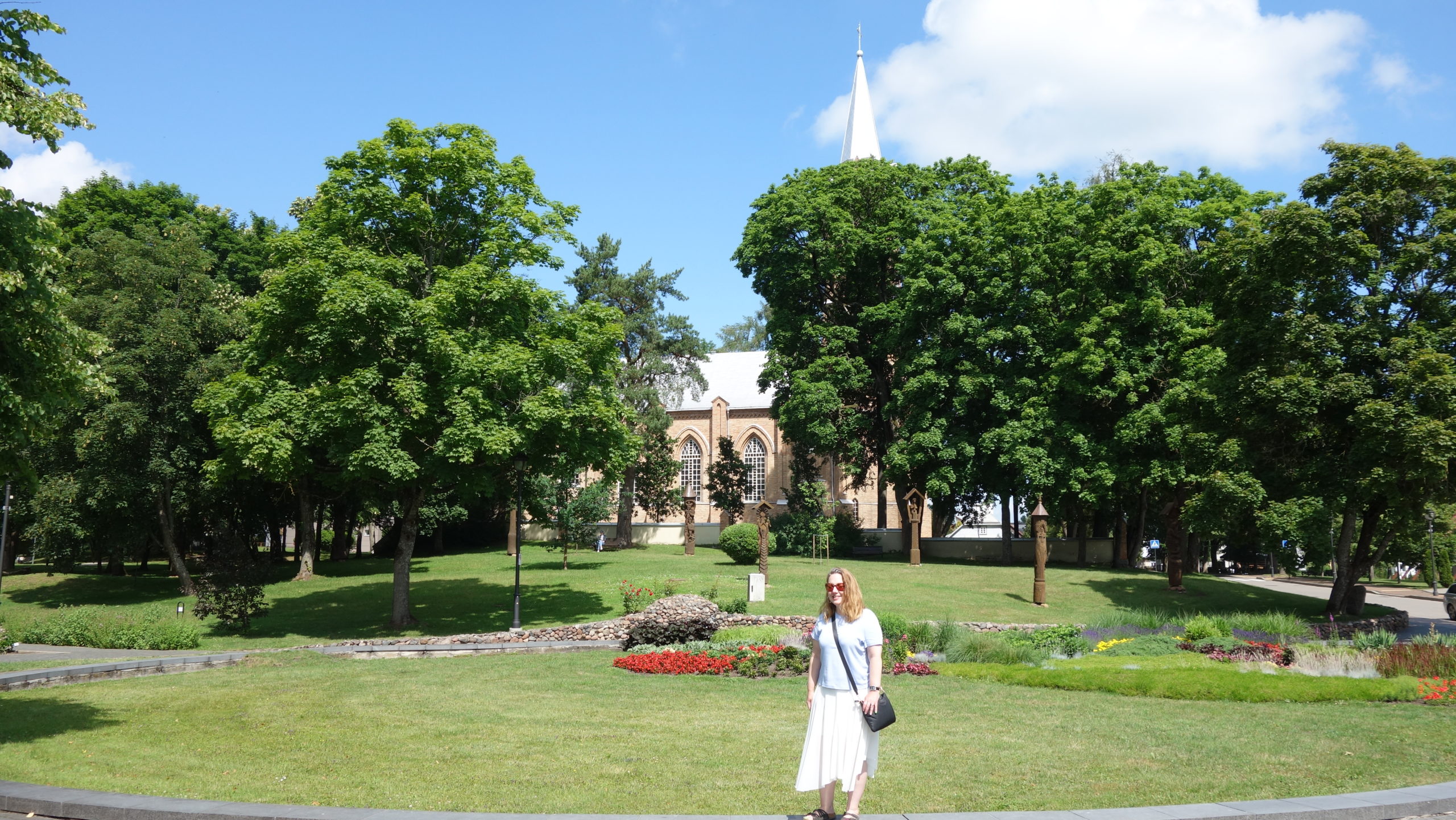
The rest of the service was interesting to see what we could recognize, which wasn’t much, but wasn’t nothing either. In all, it was a good way to start the day. We left the cathedral and circled around it, looking at the many wooden sculptures that were on the grounds, as well as a large sundial next to a pretty metal cross.

After the history museum, we headed back down to the pedestrian street and took it to almost the other end, where Mer continued her museum day with the Bicycle Museum. This museum had three floors, although really only the top two had bikes on display. We thought we would see the evolution of the bike over time, but that again shows my narrow-minded approach to time. There were military bicycles from the 1940s next to a tandem bicycle from the 1980s. We discovered that Šiauliai has had a well-respected bike factory since the 1950s or so, and that explains why the museum is here. They had the one millionth and five millionth bikes produced on display.

It surprised me how many bikes were just one-speed bikes you associate with French women pedaling though the countryside with a front basket of wine and a baguette. Probably seventy-five percent were of that variety. They did have two weird semi-unicycles from the 1980s – they were like unicycles with training wheels – they had one big wheel with pedals attached, but had two very tiny (think roller skates) wheels attached out in front to lean into. I’m not sure what market they were trying to hit, but one was from the United States and one from Germany, so someone thought there was a market.

From the pictures of athletes on the wall, it looks as if Lithuania has a successful women’s bicycle program – most of the pictures were women. There was also a story of a seventy-three-year-old Lithuanian man who organized a trans-USSR ride. Sadly, he died in an accident along the way, but the ride did finish. Another Lithuanian man, a forty-seven-year-old physicist, organized a “ride around the world” trip of five continents, starting in Seattle and finishing in Hiroshima. He wanted to promote peace and sustainability, and over six hundred people took part in the ride at some point (four people total finished the fifteen-thousand-mile ride).

We had surprisingly great weather today for a day forecast to be raining much of the day. It never rained at all. After supper, we were walking back to the hotel, a bit disappointed that we had missed getting dessert from a bakery by just a minute or so (they had just closed), when we heard classical music from the park next to the hotel. We walked over to investigate. Just as we got to the outdoor amphitheater, the music stopped, and people started spilling out onto the walkways. We were disappointed, but siren-like, the music had led us on to an ice cream stand that was open. We had dessert in a lovely park.

So, all in all, a very good day. No rain and still dessert and we learned a bunch about the local area. Here’s hoping tomorrow lines up at least as well.

When the alarm went off this morning, we could hear hard rain against the skylight of our room. That was a bit discouraging, but we got ready and went downstairs to have an excellent breakfast. It was funny – the American guys who work for the defense contractor were down there, so there were five Americans and two Italians in the breakfast room. It sounded as if we were at Bob Evans. Anyway, by the time we were done, the rain had stopped, so we were off on another day of touring adventure (with Meredith in charge).


Lithuania 2023, Day 5, Saturday – Kryzių Kalnas (the Hill of Crosses) and Siauliai

Meredith’s Mistake Maxim: when you travel, you will waste time and/or money. You just need to accept it and try to correct what you can.

We left Kaunas in a steady rain this morning. Mer was in charge and tried to program my GPS to go to our next site in the north. There were two of them, so she guessed at one. It was north and the right distance away, so off we went.

Mer gets sleepy in cars, so I let her doze on and off over the next hour. We came to a blocked road, and while I asked the GPS to get us around it, Meredith became suspicious of where we were. She grabbed our paper map (it’s like a GPS, but you can’t zoom) and looked at the two sites. We were headed to the wrong one, a mistake that would take forty-five extra minutes to correct. She spent a good chunk of that time wondering why she hadn’t just looked at the map in the first place, but who would have guessed there would be two places with the same name, both in the north, both the correct distance away, but still fairly far apart? I told Mer that maybe the rain would stop in the extra forty-five minutes.

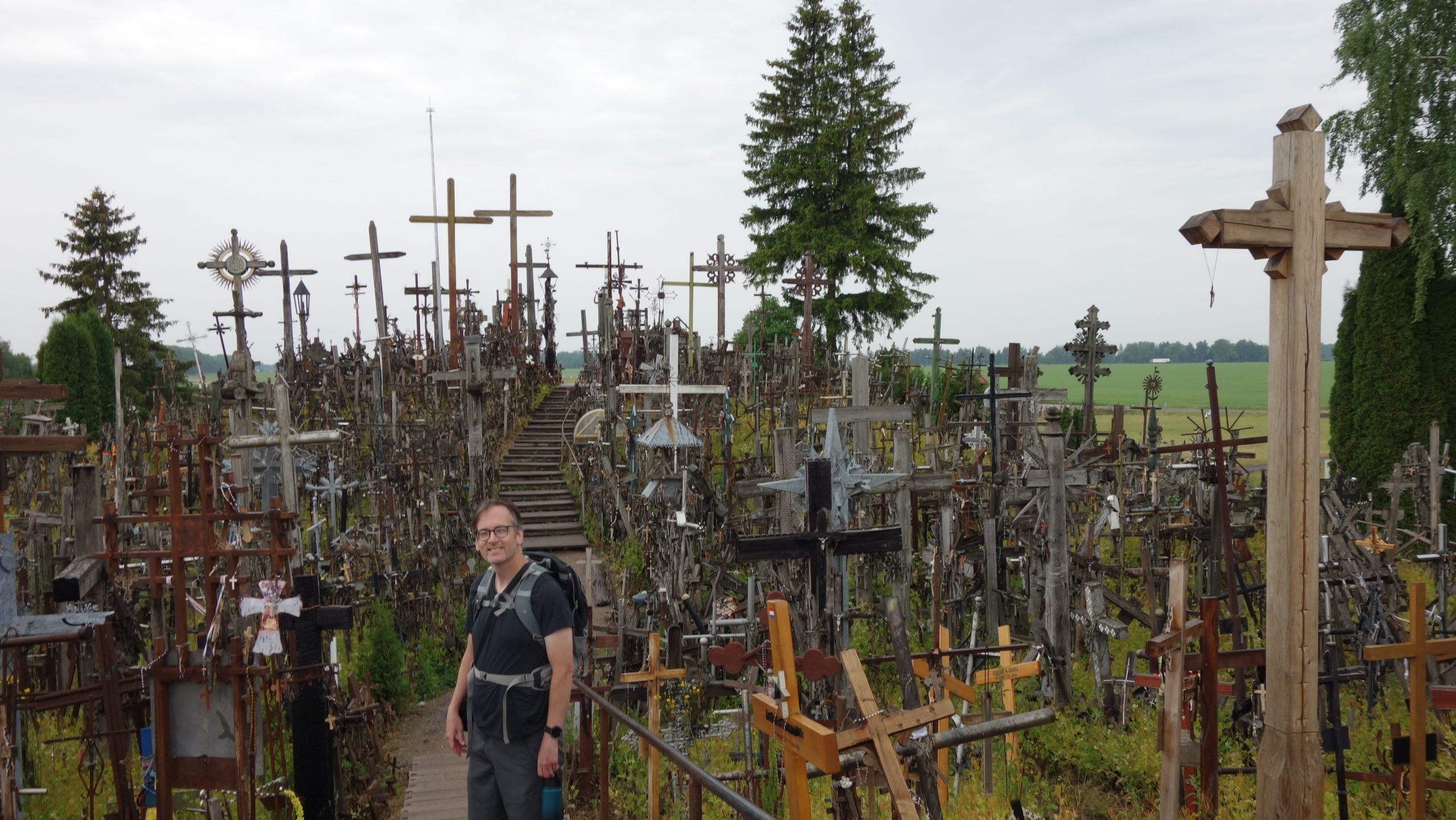
We got to our destination with no further issues. We arrived at Kryzių Kalnas, the Hill of Crosses. Just north of the town of Siauliai is a hill covered in approximately 200,000 crosses. No one is sure how it started, but by the time the Soviets rolled in in the 1940s, there were over 400 crosses there. The Soviets removed them. The locals replaced them. Five times the Soviets removed the crosses, bulldozed the hill, covered the area in sewage, and finally gave up in 1985 because the locals kept replacing them. The hill has become a symbol for Lithuanian independence.

One very cool thing is that the rules governing the site allow anyone to place a cross anywhere, as long as it is under two meters (6.5 feet) tall, and as long as it doesn’t destroy previously placed crosses. This included nailing or hanging smaller crosses on existing bigger ones. Mer had very cleverly brought a cross with us from home, so she placed it in one of the “arms” that extend from the hill.

It was still raining when we got there, but not enough to interfere with touring the site. We were there about ninety minutes, and the rain lessened until it finally stopped about forty-five minutes in. That was nice.

Several of the crosses had the “distressed Christ,” which seems to be a Lithuanian image of Jesus. We’ve never seen it anywhere else, but have seen multiple examples here over the last few days. It is an image of Jesus, sitting down, leaning his head against his right hand, and looking sad.

Several of the NATO air squadrons had erected crosses for their air groups while stationed at the nearby airbase. There was an intricate life-sized version of St. Francis. Someone had made a cross out of bicycle gears. Many crosses were decorated with folk carvings. There was a hidden “cave” made by the branches of a fir tree that was filled with crosses. There was a cross made from a computer memory stick, and one made of nails nailed into a board.

The site itself is much larger than I thought. As I mentioned, there are two arms of crosses that extend out from the hill. Except for footpaths, the hill itself is largely covered, and I was surprised that when I got to the top to find that the hill was a saddle – there were two hilltops joined by a low area. I have to admit to a certain satisfaction that the Soviets tried to get rid of Christianity, and the hill still stands while the USSR is long gone. “…I will build my church; and the gates of hell shall not prevail against it.”

We then headed into the town of Siauliai, where we will be for two nights. We checked into our hotel, meeting an American named Ryan (or “Red”), who is a defense contractor here. He couldn’t tell me much about what he did, but he had tons of recommendations for the town since he has been here several times. He was most kind.

We walked into the town itself, passing the huge steeple of the Cathedral of Saints Peter and Paul. We headed down a bunch of stairs, passing a number of Communist-era concrete apartment buildings, until we got down to a park area. In the middle was an enormous pillar with a golden archer standing on top – Sundial Square. The 60-foot-high column is part of a huge sundial, which commemorates the 750th anniversary of the city. That’s pretty awesome.

We kept on walking, passing a very pretty lake which had buoys set up for rowing races, and climbed a hill to get to the far side of the center of town. Mer took me back into a housing area to see… Katinų Muziejus – the Cat Museum! A whole museum dedicated to kitties! The museum had over six thousand representations of our favorite felines, from figurines to paintings to toys to mugs. Just as importantly, there were six museum kitties roaming around, although we only saw five of them. Two were very friendly. Good kitties! There was also a small separate room containing some exotic birds and reptiles and other small animals, which was fun, but we all know who the six real stars of the museum are. We spent about an hour there.

We headed back down to the lake, just strolling. Down by the lake was a family park, and like the park in Kaunas, it had workout equipment, a huge playground, outside ping pong tables, wooden lounge chairs, and even a small bike track with banked corners and small bumps to jump over. It seems Lithuanians love their parks and do them very well.

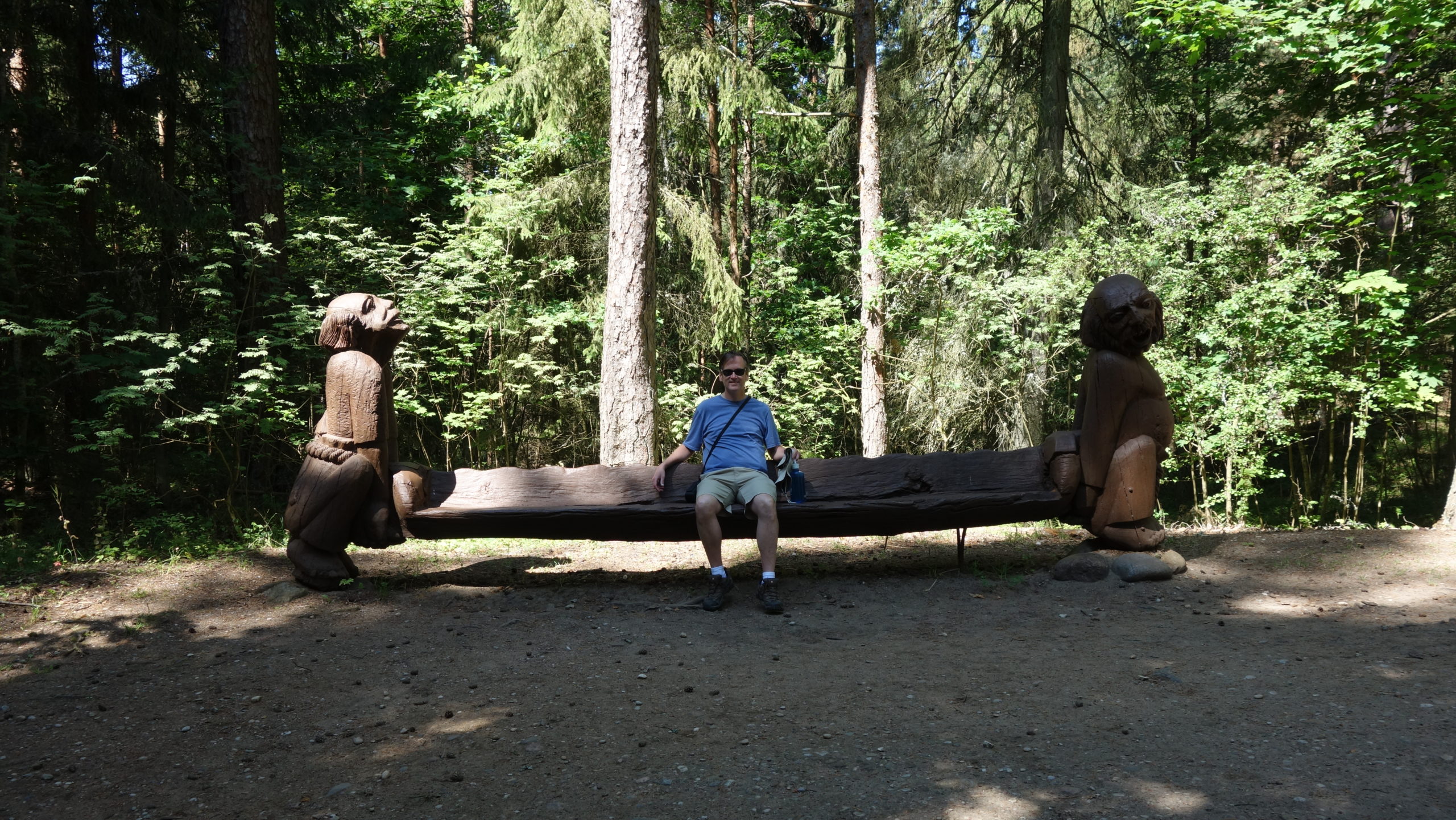
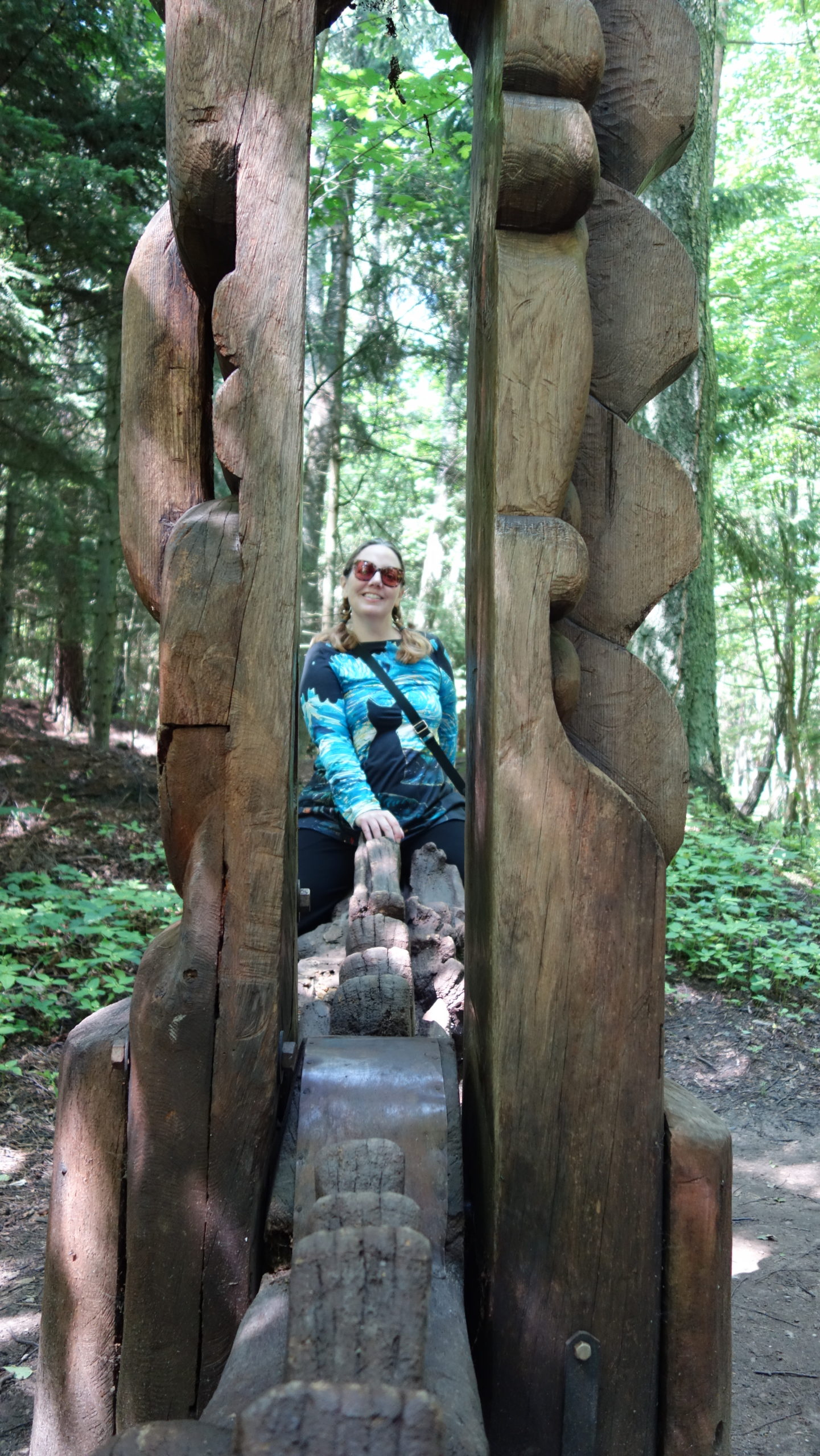
We finished the evening by walking the pedestrian-only main shopping street and getting something to eat in a very cool brick cellar restaurant. We walked back to our hotel by going through a wooded park, which was full of carved wooden sculpture,

In the end, we got everything done today that Meredith had wanted to do, even with the delay, and that delay is what allowed us to have rain-free time at the Hill of Crosses. Sometimes mistakes get made, and those mistakes help make the day.

Lithuania 2023, Day 4, Friday – Rumšiškės Open Air Museum, Pazaislis Monastery, and Kaunas

We left Vilnius behind, and we felt pretty good about our time there. There were a few more things I would have liked to see, but we hit all the big things. We had to get back to the airport to pick up the car, and that went pretty well once we found a backup route to the airport. We missed the quick bus to the airport by a minute (we saw it pull away), and the next one was inexplicably over an hour wait. We walked five minutes to the next stop and got a slower bus.

Getting the car was easy, and getting out on the road was fine. We have a European GPS, so navigating is easy. The car is a six-speed stick shift, and I would have preferred an automatic, but that isn’t too bad. Things were great until we got to suburban Kaunas, which is Lithuania’s second biggest city, with 300,000 people. But let’s go to the country first.

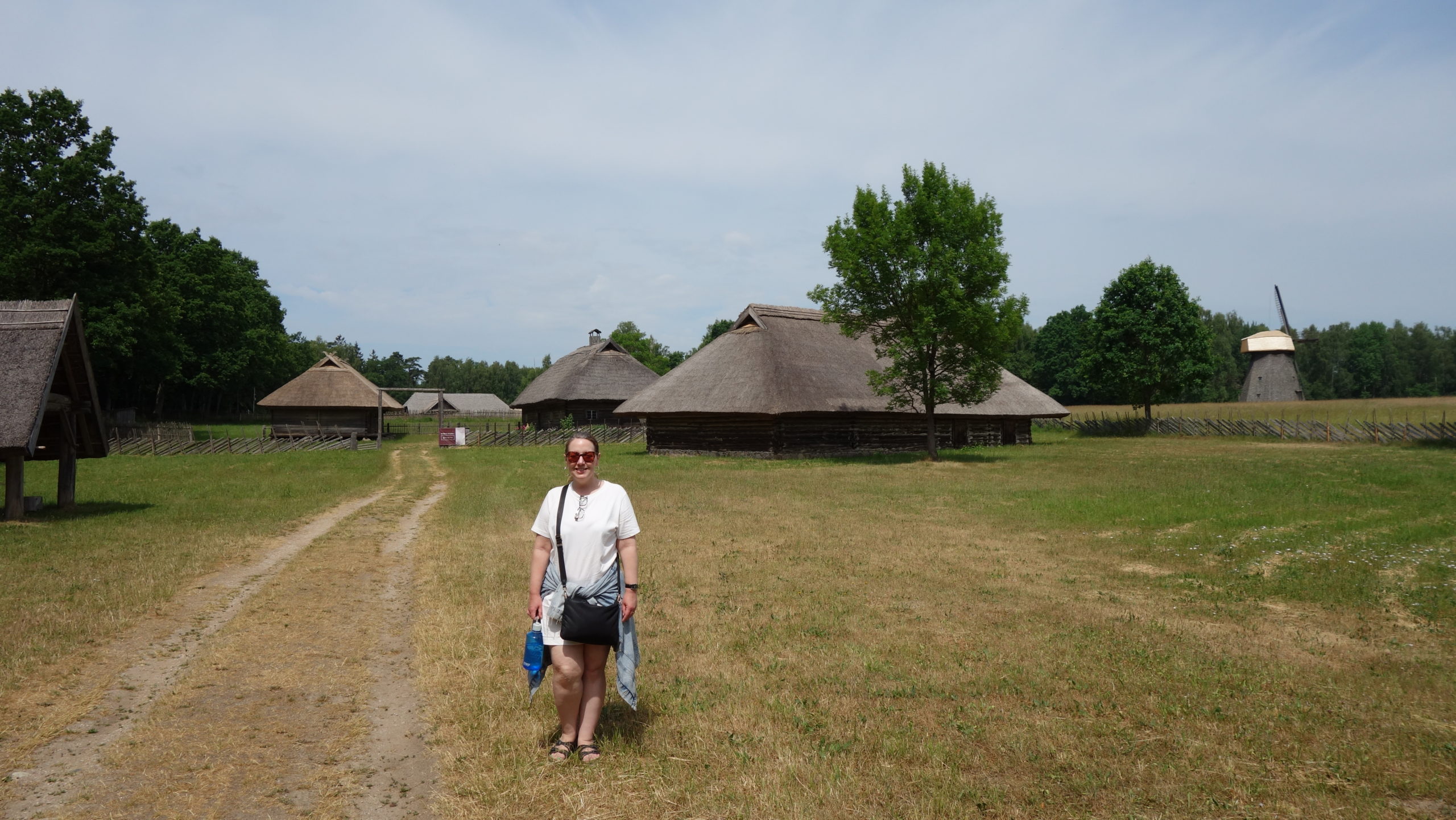
Our first stop was the Rumšiškės Open-Air Museum, which is a folk museum of saved buildings from all across the country. Most date from 1850 to 1930, but there were a few dating back into the 1700s as well. Mer and I like folk museums, and have been to more than half a dozen in Europe and the U.S.

This was a bit of a different experience. We got to the ticket window and got into the museum, but couldn’t see any buildings. I had been handed a map that was in Lithuanian, but did have distances along paths in meters. I couldn’t help but notice that most of the distances between building clusters was marked with hundreds of meters. The place was huge. Ridiculously huge. And the buildings were organized by region (west, southwest, etc.), but even in the regions, the buildings were far apart. I’m not sure if it was to prevent a fire from spreading if it broke out, but it resulted in a lot of walking. I think I had us in at over five miles in the museum, and we only saw about three quarters of the buildings.

That was okay, actually. Meredith had noted in the folk museum in Scotland that the differences in the living spaces of rural people went largely unchanged over hundreds of years. This was true here as well – farmhouses were built of wood in the early 1800s and had thatched roofs, and so did many farmhouse built in 1920. Rich farmers had wooden floors (and one even had wallpaper over the log walls), and poorer farmers had dirt floors.  There were out-buildings for animals and storage, and the grounds around the living houses were tidy and pretty with flowers. Several of the homes were open to visitors, but many we could only see from the outside. We couldn’t talk to any of the docents because they didn’t speak English, so we had fun guessing what things could have been used for, or why things were certain ways. I’m sure we were right, given our vast expertise in nineteenth-century farming techniques.

The most unusual buildings were the two churches – one was a small rural church, and the other was a reconstructed village church, but both were octagonal in shape. I don’t remember seeing that before.

We ate waffles in the 1900s village, where the twelve-year-old girl translated our order to her mother for us. We then headed back to the car. We had spent over three and a half hours at the museum.

And then on to Kaunas. I was trying to get us to Pazaislis Monastery, which is about six miles from the center of town. We were supposed to get there at 3:30, but that would be enough time, since they were open until 5:00. Then, three miles from our destination, we hit stopped traffic. There was road construction, and they were only letting a few cars through, and only every few minutes. After sitting more or less in the same spot for ten minutes, I tried a different route. One that took me through… The Rotary of Death.

On our detour, we had gotten close once again, and had successfully managed several roundabouts (or rotaries, as Mainers call them). No sweat. I came up on a large one, but guessed I had to be in the middle lane of three. Mostly right. The Rotary of Death doesn’t play by normal rules. Three lanes go in. One peels off. I feel smug for being in the right lane. My lane suddenly ends, so I make a quick dash into the inner lane, which is stopped because someone wants to leave The Rotary of Death by going straight out of The Rotary of Death, but that cuts across two new incoming lanes. I cut around that mess when my GPS demands I exit, but that requires cutting across two lanes of traffic. I made the first one, but an incoming car cut me off from the second lane, and I had to abandon the attempt. Then The Rotary of Death channeled me off, so I couldn’t have dreams of going around again.

Needless to say, I was flustered, and pulled into a parking lot that turned out to be for an old fort now stocked with twentieth-century military equipment. Sadly, the fort was closed, but I’d calmed down by the time I read about it and looked at the machines I could see. I determined to give The Rotary of Death one more try, and then to give up if I couldn’t make a NASCAR-style driving maneuver. This time it worked.

Smooth sailing now to the monastery! Oh, right – this is suburban Kaunas. My GPS told me to go left, but the local sign said to go right. My GPS was correct. That required a turnaround a half mile past my turn.

All of which it to say we got to the monastery at 4:15. We still went inside, of course – we had come too far to go back empty-minded. We had to ask at the upscale hotel desk that was in the front hall of the complex where the entrance to the church was, and after a little confusion (“This is not it – you need to go outside”), we were in.

We were checked in by a sweet lady with a high but melodious voice. I told Mer I stopped listening to the words so that I could let the sounds just wash over me, and she agreed. The woman could come home with us and read the sides of our cereal boxes and we’d be happy. The actual monastic complex open to the public was small – two courtyards, the church, and a side hall with a display on the history of the place.

The church was fun – we went in and were confronted with an open hole in the floor, with an uneven staircase into darkness. I went down, of course. Mer followed me when I yelled up that it was okay. It was a crypt, and the kind of one you’d expect with the word “crypt.” There were a couple of holes open in the wall with boards sticking slightly out where there was a carved board where a head would rest. It was clearly for a dead body. What little writing we could make out from the plaster covering the other graves seemed to show that these men died in the 1700s.

The church itself was highly decorated, but not in an over-the-top Baroque sort of way. It had many decorations where the action above, which was usually earthbound (not in heaven), was being seen by us from below, as if we were looking up out of a pit. We hadn’t seen that before except for when looking up into “heaven.” It was a bit unsettling to imagine where were were supposed to be looking up from.

The history of the property was probably interesting, but we had to skim most of it because of time. It seems the monastery went from Catholic men to Orthodox men to Catholic women. Even from some things we read during our couple days in Vilnius, we had guessed that Lithanian has no separate word for “convent” – women, too, lived in a “monastery.”

We left at 5:00 and drove into Kaunas. I’m guessing I had the city’s respect by then, having survived The Rotary of Death, because the drive in wasn’t too bad (one white-knuckle ordinary rotary moment of a sudden stop for a pedestrian). Our hotel has parking, so I left the car in the lot and looked forward to a car-free evening.

After supper, we took a walk through the Old Town of Kaunas. It was smaller than the one in Vilnius, but its main street was wider and filled with restaurants the entire way, which on a Friday felt festive. The main street dumped us into the huge square around the town hall, and again it was alive with people eating outside of restaurants.

I wanted to see the castle remains, so we walked west toward a park. What a park! It had everything, and everything was being used by playing people: many basketball courts, outdoor ping pong tables, a huge playground, a full-sized track, a soccer field, an outdoor workout area with machines, open spaces for picnics, a kiddie playground, and more. There were people everywhere, having a great time.

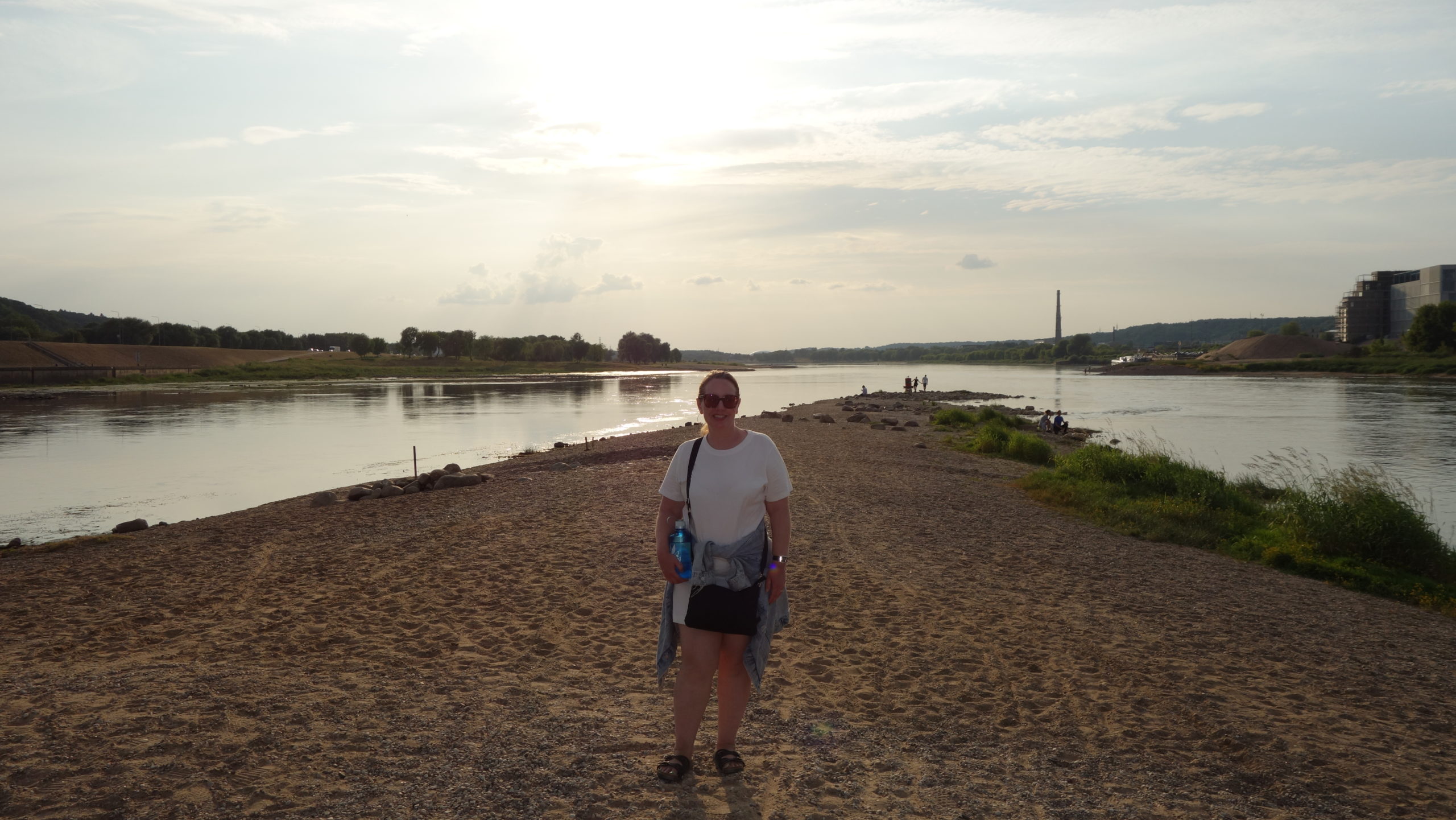
I saw the castle, but decided to come back to it so that we could walk out to the point of the park where the two rivers of the city met. It was mostly pretty (and there were teens swimming in the river too), but at some point, some shortsighted city planner had built a smokestack right on the other side of the river where the point points. It was still a peaceful spot.

We worked our way back to the castle, which is now really a moat, some half-walls, and one tower. We walked around much of it and even climbed up into the tower to look about. There are seats built facing the moat in a couple of places, so I’m guessing the moat area is used for performances.

With that, we walked back to the hotel, tired but pleased with the day. Tomorrow, Mer takes over for planning, so we’ll see if her day comes together more easily than parts of mine did.

Lithuania 2023, Day 3, Thursday – Vilnius

Travel is difficult, and travel is exhilarating. I like my home comforts and routine as much as anyone else, and travel throws that out the window. Strange beds and strange hours and strange foods and strange customs all make normal activities harder. Add in that day three of my European vacations tend to find me at my most tired, and today could have been a long day. But then things happen – good things, unplanned things, delightful things. And that makes up for the hard.

We started the day by heading over to the university quarter of Vilnius to see the school. On the way, I got distracted by a silver and stone shop; I like both silver and stone, and we walked out with some new earrings for Meredith. We got just up to the university area, and I saw the bell tower for St. John’s church, which our guide had recommended. It is the tallest tower in the old town, and, as a bonus, it has an elevator. I decided to get distracted again and go tour it. I was delighted to discover that St. John’s is the church on the university grounds, so I’d found the university as well.

But first, the tower. There was a small museum about the founding of the university and some distinguished scholars from the school. My favorite was a display of a preserved cut-away human head, with the note that the professor of anatomy who’d acquired it was “the head of the department.” That made both me and Mer smile.

We climbed the small set of stairs to the main level, where there was a Foucault’s pendulum, which reassured us the world was still spinning. We got into the elevator and zoomed up to the top level, where there were safely barred windows with good views of the city. Except I saw a dicey-looking set of stairs going up, and I have a compulsion to climb. Up I went. And I found myself on a level with four doors that went outside to a catwalk around the edge of the tower, and two of the doors were wide open. I yelled down to Meredith that she needed to come up, because she loves that sort of thing. She scrambled up the steep stairs and popped out onto the ledge to see what she could see.

Mer wandered slowly around the exterior of the tower while I stayed safely inside. Whenever Mer got to one of the four door openings, she tried to reason with me that the balloon had been much higher. Silly girl. A balloon and a tower are totally different things! How did I know that the tower with its “railing” wouldn’t fail me? I did step out on the ledge to get a picture of Meredith. It was terrifying, and I whimpered loudly the whole time I was dangling out in space before getting back inside the tower where I belonged.

We made our way down to the ground and proceeded to try to find as many of the university’s thirteen courtyards as we could. I think we found five. A couple of them were very pretty, with lots of shade and plants. We also stepped into St. John’s church, which was very very Baroque in all of its gold-and-cherubim glory around and above the altar.

We strolled the short distance from the university back to the Vilnius Cathedral. I wanted to see inside again since it had been a quick pop-in yesterday. We were only inside for a couple of minutes when we heard some very beautiful vocal music, so we went up more into the church and sat down to listen. It turned out to be the start of 12:30 mass. We were there, so we stayed. It was an interesting experience. We aren’t familiar with the Catholic liturgy and certainly don’t know Lithuanian, so we stood when others stood and sat when others sat. There was some really great music, and we thought we caught the rhythms of the Lord’s Prayer being said, as well as some other small parts (like “Have mercy on us” as a response to prayers). It was a pretty great unplanned event for us, and that was fun.

We stopped for a quick snack. It seems that making desserts really beautiful is important here – small cakes are somehow glossed up to have a shiny gloss to the outside. They’re little works of art. We still ate them, of course. It wasn’t the first time, or last, that we noticed how much less sweet European desserts are. They are still good, but often are pleasant instead of decadent.

After fortifying ourselves, we visited the Museum of Church Heritage, which is in an old monastery church. It is a treasury museum, meaning it holds silver and gold and linen objects that were used in worship. Many were very elaborate, and it seems to have been a fashion to beat gold and/or silver into coverings for parts of paintings, so that Mary’s dress would end up being of beaten gold. As far as I could tell, the original painting was complete and the gilding was an afterthought. In my opinion, the plain paintings would probably have been better, but it wasn’t my painting or gold, so my thoughts don’t matter much.

The church items were interesting for us – we like that sort of thing. But we’ve seen a ton of European church art over the years, so what really brought us to the museum was my desire to see the “Scenes of the Easter Prelude.” Back around 1700, churches used paintings and props to tell Bible stories leading up to Easter. They could be coverings for the altar that would be huge, with twenty or more panels of stories. There were also stand-alone figures used to enact the Passion narrative, from Roman guards to Mary to Jesus (both in the tomb and gloriously raised from the dead). We had never seen anything like that in our travels, and so the collection and information about the pieces were excellent.

On the way out, we also found an outdoor installation of artists’ interpretations of the twelve apostles and the scene of Jesus washing the disciples’ feet. Each representation tried to take something from the Bible or from associated legend for each disciple, so that the drawing of Peter had a rooster in it (since he denied Christ before the rooster crowed). One of the most interesting was for Andrew – little is known about Andrew, so the artist did the life of Andrew in eight-bit graphics, like an old video game. The idea was we could see Andrew’s story, but not much detail. It was fun.

More up awaited, so we had to get to that. There is one tower from the city walls that still survives, and that is on top of a hill overlooking the cathedral. It seemed we should go up there, but happily, there is a funicular to get you up the hill. As we went up the hill, a band was doing a soundcheck at the base of the funicular, so we had quite good musical background noise while we toured the tower complex. The views from the top were good, but we didn’t pay to go in the tower itself. We had been nearly as high earlier in St. John’s tower, and we were headed to the Hill of Three Crosses next, which is free to climb and has better views.

We walked down from the tower and about a half mile over to the stairs to get to the Three Crosses. The Three Crosses commemorate when Lithuania converted to Christianity (sometime around 1450, I think). They are three huge white crosses that can be seen from all over the city. They were the last thing visible to me in the old town area when I was in the balloon drifting away from town. We were told the Soviets took them down, but the Lithuanians rebuilt them after the country became independent in the early 1990s.

The views from the Three Crosses were special. You could easily see all of the old town, which you couldn’t see even from St. John’s tower, since it was in the middle of the old town. From the Hill of Three Crosses, you can see all of the streets and red roofs in one panorama. Oddly, there was a different band doing a sound check on the back side of this hill, so both of our hill climbs had bands warming up.

We stayed up on the hill for a fair amount of time – twenty minutes or more – and then made our way back into town. We walked all the way up to the town hall area, where we had supper at an Italian restaurant. On the way back to the hotel, we stopped to get donuts to go, and looked for a place to eat them, but couldn’t find a clean bench.

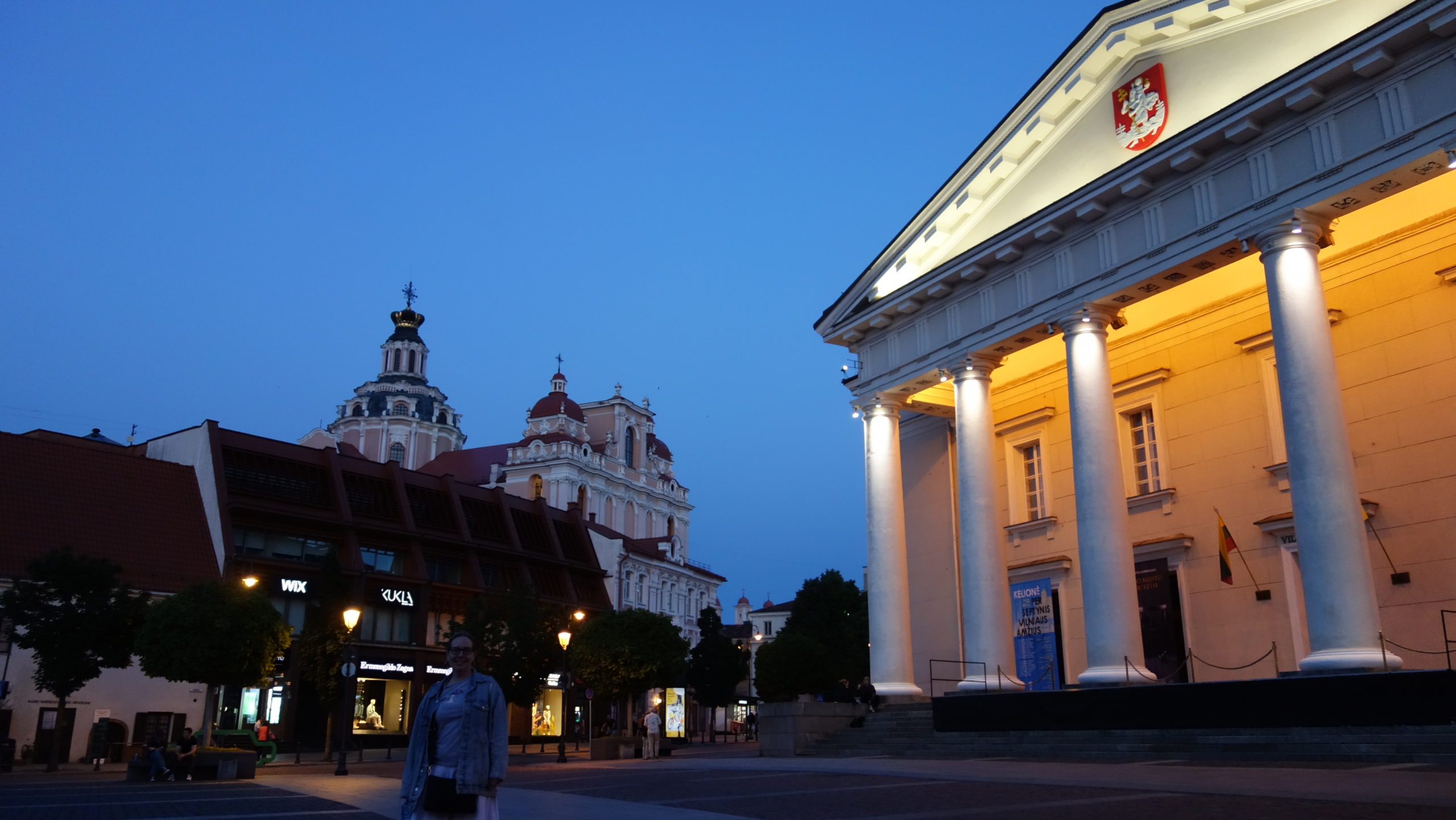
That was when happy surprise number two happened. As we approached the town hall square, we heard beautiful a cappella music and saw a crowd of people sitting in the square. We sat down and ate our food while a women’s group sang do-wop and swing-style songs in Lithuanian (except for singing “Who Could Ask for Anything More?” in English to finish up their set). And in case you were wondering, Lithuanian women’s a cappella groups also snap their fingers while singing, like every college group I ever saw. Once they were done, the “BigBendas” (big band) took over, playing great swing numbers while featuring a man and a woman as singers. They also did two numbers with an accordion player who was incredible. Oddly, after his two numbers, he hurried off to his nearby van, threw his accordion in the back, and sped away. I guess there was a polka emergency somewhere.

The music was so much fun that we stayed, even though it was in Lithuanian, and even though it began to shower lightly halfway through the concert. It was delightful to see so many people enjoying big band sound being sung in a language only three million people speak. I had a ball, and went home floating. My legs were tired, my feet were sore, and now I really need some sleep, but the delightful things that come from travel, planned or unplanned, are worth the extra effort.

Lithuania 2023, Day 2, Wednesday – Vilnius

I love my wife. I’m very afraid of heights. Oddly, Vilnius brought those traits together today.  Read on.

We overslept a little this morning; despite both of us checking the alarm, it was still set for 8:00 pm instead of 8:00 am. I woke up at 8:30 and got us going. I had wanted to be touring at 10:00, and we managed 10:15. That was okay, since I didn’t have any timed plans until noon.

We wandered. I like doing that in a new city, especially when it’s a compact and well-defined old town part of a city. I picked what looked to be interesting and uncrowded lanes, and we wandered for an hour. We found a cute spa courtyard full of flowers, and we climbed to a high spot on our end of town (the south end) to spy out the lay of the land. After a quick stop back in the hotel to dump Mer’s jacket and use the bathroom, we headed north down the main street all the way to the other end of the old town, which is where the Vilnius Cathedral is located.

We hung out next to the impressive portico of the church, identifying huge statues of Abraham and Moses and the four Gospel writers. We poked our heads into the free-standing bell tower, but it cost money to climb, and we didn’t have time to do that, so we went back outside, where we waited a few minutes to meet Ruta (Ruth), our local guide for the next three hours.

Readers of ye olde blogge may remember that we highly recommend getting a walking tour of a new city, especially if you can manage a private tour. Locals always help put things in context. Ruta was our age (fiftyish), so she grew up under Soviet rule, and the saw the transition to an independent Lithuania, so she had a great historical context. Additionally, her PhD was in Vilnius architecture, so she was well versed in that. She was a great resource.

Some highlights from our three-hour tour (cue Gilligan’s Island theme music here):
– We learned that the cathedral had been rebuilt several times and was originally a pagan temple.
– Lithuania was the last pagan country in Europe, probably because of the difficulty of outsiders getting in the country because of its swamps and dense forests.
– The founder of Vilnius (seven hundred years ago this year) had a dream of a howling wolf, and the local pagan priest told him he would be a successful leader who would found a capital where Vilnius is (smart PR move).
– The founder didn’t use force, but instead used diplomacy to increase his lands and wealth.
– He was very tolerant and invited people from all over Europe to come (tax free). It worked.
– Lithuania grew in size through marriages and alliances to become the largest country in Europe at one point.
– Vilnius has one of the oldest universities in Europe (from the late 1500s), and it takes up about a quarter of the old town.
– The Jewish Quarter was prosperous and well tolerated, with Jews making up about sixty percent of Vilnius’ population at one point. The Germans came in 1941, and the Jewish population has never recovered here.
– All the churches in Vilnius have two towers (except for one church, which is in disrepair from the Soviet era) – it was part of the Baroque movement here.
– In a bend in the smaller of the two rivers of the city is the semi-independent republic of Uzupis, which is mainly made up of artists and other free-thinkers. They have their own constitution and government.
– A monastery next to Uzupis has a gorgeous chapel with tokens of thanks (for healings) that are mounted in a gilded setting on either side of the altar. It was quite beautiful.

That was our three-hour tour of the town, and Ruta even threw in a snack break at a place she loves. We also got to pet a very extroverted kitty in Uzupis. After our tour was over, I waded in the river to sit in a swing chair in Uzupis. You’re supposed to get a wish if you sit in it. Because of how it was tilted forward, I think my wish was to not fall into the river.

Mer and I walked back to the old town from Uzupis, and ate an early supper at a local Lithuanian chain. It was hearty local food, and we ate in an old wine cellar, so that was fun. We needed to be done with supper before our next tour at 6:30.

And here is where love meets terror. Mer was surprised when I shook hands with a man waiting next to a van and she read his shirt, which said, “Smile Balloon Tours.” I knew Mer would love an aerial tour of the city, and I knew I’d be terrified of hanging in a STUPID WICKER BASKET three thousand feet off the ground. Love makes us do stupid things.

We drove to a huge park on the outskirts of the city, where we were told to wander for a bit. There were ten balloons going up, and since they do climb up to three thousand feet or so, and since the airport is very, very nearby, they need to coordinate the launch with air traffic control. So we had a nice walk in the park for about forty-five minutes, where we got to see Vilnius at play. We got to watch as the balloons were inflated using giant fans, and then the pilot used the burners to heat the air to one hundred degrees Celsius. We scrambled into the basket and then held on as the gondola rocked around as the craft became buoyant. They released the anchor line, and we zoomed into the evening sky (it was about 8:00 pm).

It was somewhat alarming, even for Meredith, suddenly to shoot a couple of thousand feet into the air with no real sound of propellant. The pilot only hit the burner as needed, so much of the flight was silent. We had great views of Vilnius and the old town, and we drifted away from the city. It was startling how quickly the city became dense forest. And it was starling when Mer and I saw a smokestack suddenly appear right under us (we were facing backwards in the basket). My guess is it was an old coal-burning power stack, but it was really tall and right there where we were. Sheesh.

I alternated between tense and scared and terrified for half the flight. The pilot lowered us down to a few hundred feet when we got outside the city, and I was able to relax some then. It was great to see suburban Lithuanians come running outside as we passed – people do love hot air balloons.

Our group was diverse – two people from India, two from Belarus, two from Estonia, me and Mer from the US, and the pilot from Lithuania. And we all laughed as we landed in a field and bounced three times before coming to a rest. People are people.

We got our first-time-flight certificates and had a glass of champagne (or orange juice for us teetotalers) as the balloon got packed away. We got a ride back to the old town, where Mer and I elected to get out of the van at the cathedral so we could walk the main drag at twilight. We stopped at a cafe to get dessert to celebrate a successful flight and day in general. Sometimes love really does push you to new heights.

Lithuania 2023, Day 0+ and Day 1 (Sunday to Tuesday) – Vilnius

Usually I open my travel blogs with “Day 0”, or the day we spent getting to the airport and then on to Europe. But we had late graduation parties on Sunday, and we were leaving out of Newark Airport (a seven-hour drive), so we broke Day 0 into two days. Day minus-1?

On Sunday, we drove to Bellefonte, Pennsylvania. I had picked it because it had an inexpensive hotel and was about half-way to Newark, but I was actually disappointed we didn’t have more time there. The town is very cute and has a very pretty, well-lit river walk that we drove by.

Monday was uneventful, except we were both surprised by a thriving old-school mall. We got off near Newark to find a restroom and figured there would be one in the mall right off the exit. We are used to malls closing in our area (at least some of them), so it was a surprise to find a huge mall where every storefront was full. It was clean and modern-looking, and was big enough that it took about ten minutes to find a bathroom. Malls aren’t dead. How very 1990.

We got to the actual airport about three and a half hours before the flight left, but breezed through check-in and security so quickly that we were still at the gate three hours early. Even when I plan things correctly, we still sit at the gate for hours. We took advantage of the time to have a meal at a restaurant.

The flight was largely uneventful (other than my having a very unhappy and active child in front of me), and I actually managed to get some sleep on the plane, which is very rare for me. We landed in Copenhagen Tuesday morning (today), where we had a five-hour layover. We again used the time to get some food, and read our books; I suspect I’ll actually finish my seven-hundred-page Harry Potter book before I get home.

The flight to Vilnius was also uneventful, and we were startled at how quickly we just walked out of the small airport, which looks like a train station. We were in luck – a bus going to “City Centre” was right there, so we jumped on, since our hotel was in the Old Town. It took me about thirty minutes to figure out that City Centre and Old Town were not the same in Vilnius, unlike in some European cities. That led to a one-hour trip to correct the mistake, but we finally made it to our hotel, just inside the Old Town. It is attached to a church, and so I think it is an old convent. It’s basic, but comfortable, and the location is just what we wanted. Like the beds. Even though it was now 6:00 pm local time, we did our usual jetlag-busting nap of a couple of hours.

Even though that timing was less than ideal, Europeans eat later than Americans, and so we headed out around 8:30, feeling much better for having slept and showered. Vilnius is far enough north that it stays light until well after 10:00, so we had a good view of the sun setting as we sat outside for supper. It was a short touring day, but we had a good meal in a pretty place, and we are here safely, so that is a win for the start of our Lithuania tour.

Gatlinburg, Spring Break 2023, Part 2 (Wednesday and Thursday)

After a hearty breakfast at my go-to restaurant in Gatlinburg, Crockett’s Breakfast Camp, we headed out on the Newfound Gap Road, up into the park. We were headed to the Alum Cave Trailhead, which is one of the more popular hikes in the Smokies, so I was not terribly surprised when I found that the parking lot full – it was about 10:00, and my guess is that the serious hikers were on the trail by 7:00. We turned around and found a spot in a small lot about three quarters of a mile down the hill, and we hiked back.

Alum Cave Trail is a gem. The first mile of the hike is along a very pretty small river, and the river and trail are lined by trees and thick rhododendrons. The light in the park is always somehow magic, and it plays with water and leaves and even some kinds of branches in a gleaming way. I love it. After a mile, the trail starts seriously upwards, and there are some rough rocky parts, but nothing too extended. I let Mer take the lead so she could see the views without my being in the way, and we took our time. The trail was busy with hikers in both directions, but we still had lots of pockets of solitude.

We got to Alum Cave, which is less of a cave and more of a seriously impressive overhang, and we hung out enjoying the sunshine and the views. We munched a little trail mix I had brought along, and generally had a mellow time of it before heading back down.

The hike back down is easier, especially since we both used hiking poles (I think poles shine on downward slopes since they help take weight off the knees). And…wait for it…in Tennessee, in the middle of the woods, two miles from the trailhead, over five hundred miles from home, Meredith ran into one of her students. While he was not actively hostile, it wasn’t clear to me that he was thrilled to meet a teacher in the middle of his vacation. His dad was more animated. We continued on and got back to the trailhead and on to the car with no more close encounters of the student kind.

We drove back toward Gatlinburg, stopping once at a pullout to look at a great view of the mountains. Mer pointed out that the trees below us were starting to leaf out, while the ones higher up were not, making for a green line across the terrain.

Back in our temporary home, we regrouped and then walked down to the Skylift so we could explore it during the day. Mer did the Skybridge again while I sat in a glider chair looking out at the mountains. She came back, and we did the Skytrail (seeing a theme?), which is a trail that runs along the rim of the two small mountains, coming out at the end of the Skybridge. The walkway had several pictures and stories from the devastating fires of late 2016 – they completely destroyed the Skylift and its buildings, which had to be rebuilt. The pictures were sobering – they showed fire all over the mountain.

We rode back down into town and found a place to eat. We sat outside next to a small stream, which was a great way to relax. By the time we were done with supper, Mer wanted to see things from the mountain at night again, so we went up the Skylift for the third time. We got our money’s worth! She did the bridge again, and collected a now-fairly-cold me. We sat near a firepit so I could warm up, and went off to our hotel.

Today (Thursday) was an inefficient day. We got up at 7:30, but it took some time to get out into town, so we had a wait at Crockett’s. Then we had to go back to the room before heading in to the park, where I wanted to hike a trail leading from the visitors’ center, which was a madhouse. We got stuck there in not-moving traffic for ten minutes or more before I managed to get out of the parking lot, leaving the hike unexplored.

As such, we finally got into the woods on a “quiet walkway” hike around 11:00 am. It was peaceful, and after a steep climb up a side trail, we found an old cemetery. Most of the gravestones were eroded away, but a couple from the late 1800s were still legible, and there was a stone from 2019. It seems if you have a family plot in a cemetery, you can still be buried in the park. We continued our hike for a bit and turned at a stream that I didn’t have the shoes to cross.

That took us to our next hike, to the Little River Trail. We’ve both done this trail before, but we had to park in the overflow parking, which put us right next to the small main street of what used to be the vacation cabins of wealthy families. They are all owned by the park now (which acquired the deeds in the 1930s), but families were allowed to stay on for some time. The last cabin in use was used all the way until 2001. We had explored these cabins before with my sister and her family back in 2017, but we poked around a few of the cabins and spent a good amount of time talking to the volunteers on site.

One downside to hiking in shoulder season is that some things are closed. Like bathrooms. The ones in the cabin area were closed, so we hiked the half mile out to the nearest open ones, and then back again. We finally got going on Little River around 1:00.

The trail isn’t flashy. It’s a wide gravel road next to the Little River, and there are no sweeping vistas. But it’s a serenity-inducing trail with the sound of the river and the pretty of the many small waterfalls. We only hiked in about forty-five minutes because it was so late when we started, but it was a fine hike.

On the way back into town, we were slowed by traffic at one point as people stopped to take photos of a bear only a hundred yards from the road, so Mer got to have her second bear encounter in the park, even if only from our car.

In town, we showered and got ready. I wanted Mer to see the town in full, so we headed down the main drag. We found a restaurant at which to eat, and then explored all the nooks of the tourist trap section. We found a couple of little alleys down which I had never been before, alleys which were quiet and had some cute shops. We got to the end of the shopping gauntlet, and turned back, but took time to go into a surprisingly high-end clock store. It seemed odd to have a store with clocks costing upwards of eight thousand dollars next to t-shirt stores, but it was there.

That ended our evening for Thursday. We have one more full day in the park, and maybe a few hours on Saturday, depending on the weather. We’ll go back to our friend’s house in Louisville on Saturday, and get an early start for home (and kitties!) on Sunday.

Gatlinburg, Spring Break 2023, Part 1 (Sunday to Tuesday)

Over the last few (non-Covid) years, we have tried to go to Europe over our spring break, and I had intended that we should do so again if we could find affordable tickets. Every time I would find a good fare online, I would go to check on it later (usually the next day), and it would have gone up by a hundred dollars or more. Happily, we had a backup.

In January, I went with a CVCA trip to Gatlinburg, my third such trip since 2017. I’d always call Meredith from Gatlinburg and tell her what a wonderful time I was having and how much I loved it in town after a day of hiking. This year, on one such call, she finally suggested I should bring her to the Smokies so she could experience it too. I had brought her here back in 2017, but only for a couple of days, and we had kids along in the form of my niece and nephew (and sister, but she’s a game soul). So, while we had fun with the family, we couldn’t do serious hiking and lots of tacky touristy stuff, especially when we were staying in a house outside of town. To experience the fun wonder of the main street of Gatlinburg, you really need to be within walking distance of everything.

So, given that Europe kept being fickle with prices, we decided to come to Gatlinburg. We decided to tag on a two-day stay with a friend in Louisville on the way. The weather all looked good, so on Sunday, after church, we drove to our friend Beverly’s house. Beverly is the epitome of hospitality – she took us out to eat on Sunday, made us breakfast Monday and Tuesday mornings, and took us to a cute college town, Berea, that is ninety minutes from Louisville. We had lunch at a swanky old tavern, and walked the college campus, and then looked around the art district, all in glorious sixty-five-degree sunshine. We hadn’t seen Beverly in seven years or so, so we had a very good time getting caught up.

On to Gatlinburg today. We got here and checked in to our downtown hotel, and drove over to the visitors’ center to pick up a new-this-year parking pass for the park (fifteen dollars a week). As we drove away from the crush of humanity at the center, it started to rain, so I modified my plan of hiking Laurel Falls Trail and changed over to driving an hour to Cades Cove, which is an old settlement area that still has eighteen buildings from the 1820s to 1930s. Both Beverly and my friend Jordan (a teacher at CVCA) recommended it, so that’s where we headed. The drive gave time for the rain to pass, so we were able to tour the site in good weather.

Cades Cove is an eleven-mile one-way circle, and we did the whole thing, although we missed a couple of buildings. Once you pass a building, your choice is to walk back, drive the whole circuit again (stuck behind people going eight miles per hour), or skip it. So we skipped a few. Our main take-away was that isolation is more important in the style of building than time frame. The houses in Colonial Williamsburg were built one hundred years earlier than Cades Cove, but looked more or less like modern homes. Cades was all log cabins until the 1860s, and even after that, some were still built. The Cove had had more people than I’d have thought, with about seven hundred residents in 1900. The national park bought up the area in the 1930s and 40s, and kept the buildings that are around today.

That put us back in town around 7:30. Trying to decide how to dress for the weather, Mer asked me if we’d be going up any mountains on the edge of town, and I assured her we would not. After a quick supper, we went up the Skylift chairlift to the top of a mountain on the edge of town. It was too good a deal to pass up – for two dollars above a normal ticket, we could get an additional day (tomorrow). That way, Mer could see the town at night tonight, and go up during the day tomorrow. Mer may have hinted that going up tomorrow night would be okay too. She had a blast walking a suspension bridge at the top. I got about a third of the way across before turning around from fear. I’m looking forward to the trail at the top tomorrow instead.

The plan for the rest of the week is to enjoy hiking in “the nature” and doing tourist tack stuff in town. I do love this place.

Ireland (Thanksgiving) 2022, Odds and Ends

Having a younger person (Shelby) on the trip is always a good thing. She was our taxi-summoner as needed, and she booked us in on our flight from her phone yesterday. In the past, I’ve always avoided doing that since airport bag check machines always told me to see a desk agent anyway. Today, it worked very well – we skipped the very long line for check-in, and so got to our gate in about thirty minutes. Which put us here three hours early.

This was an excellent trip. We are inclined to think all Europe vacations are going to be excellent, but Ireland did well by us with the weather. Right before we left, the forecast was for rain four or five of the six days we were here. We had twenty minutes of rain over all the times were were out.

The food was quite good. I had heard that Dublin especially had gotten “foodie,” and we benefited. While we still had some good pub grub, we also had excellent American BBQ, good pizza, and yummy breakfasts, and in general ate too much.

The Irish and those living here were universally kind. I accidently blocked a parking lot because I thought I had to pay at the exit. The woman behind me didn’t freak out, and instead explained where the pay machine was, and she waited for me to come back (I did run to be as fast as I could). All of the service people in hotels and restaurants and museums were helpful and polite. It is an attractive trait to cultivate.

We did have some good “Irish” driving moments for the new folks for the first couple of days we had the car. We had to stop for a herd of sheep on one road, and another road was a two-way one-lane road with rock walls on either side. Good times.

Despite our having been in Dublin multiple times, there are still some things I would wish to see. The little village of Howth is at the end of the Dublin DART train line, and is supposed to be cute. There is a replica famine ship on the Liffey. Mer and I have never done the Big Bus tour of the city, which is an overview of the sights of the city. We’ve never done the art museum, and Marsh’s Library of old books looks great.

Shelby, Meredith (“Neuf”), and Regina did great. They kept a sense of humor and put up with the small mistakes that happen on trips. They are good travel companions. And Shelby is good with her phone.

So, Lord willing, we’ll be back in Ohio tonight, which is always a bit mind-bending. I’m looking forward to my friends, family, kitties, and routine, of which I am fond. And I’m sure I’ll be used to work again in a few days.