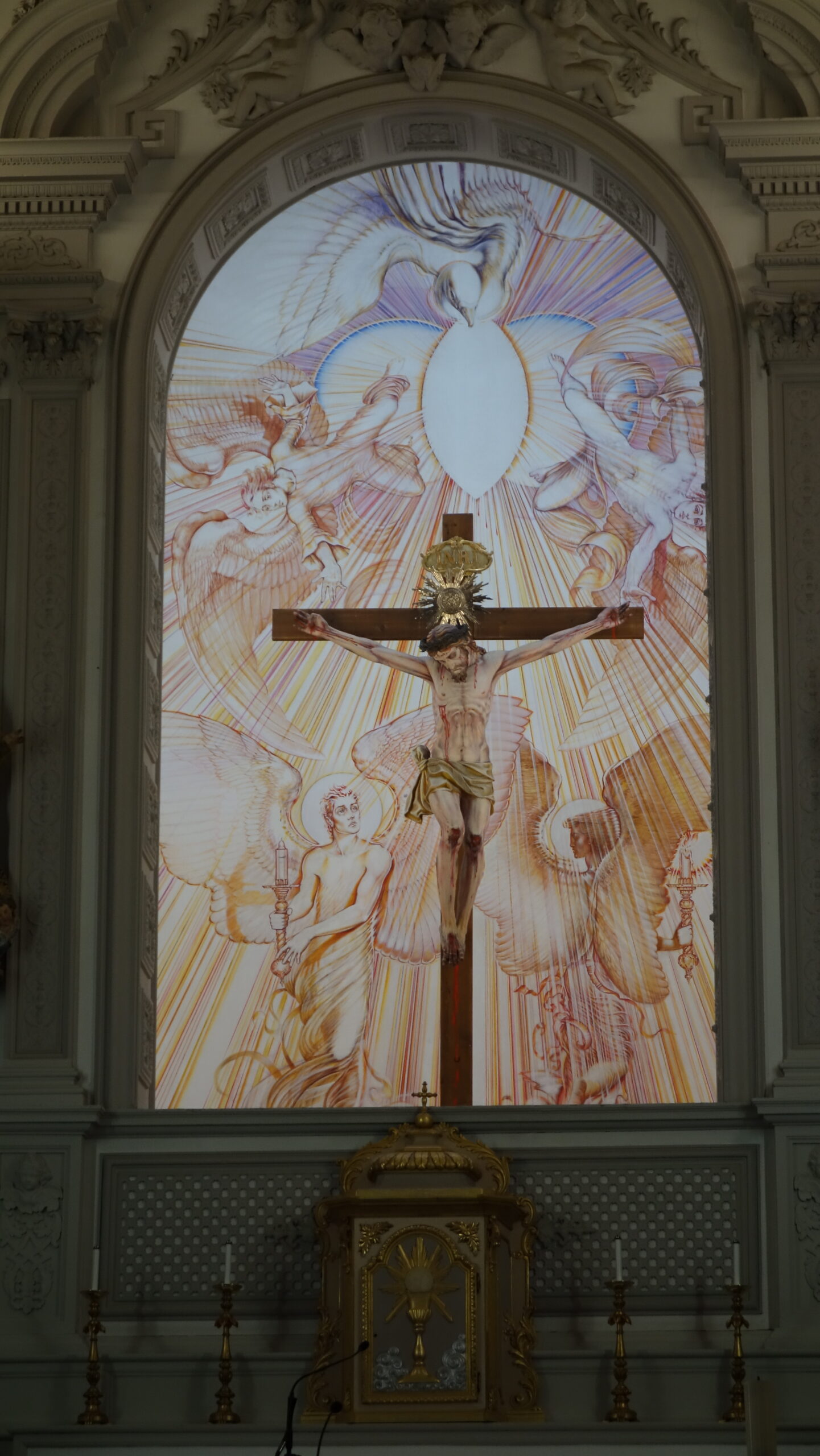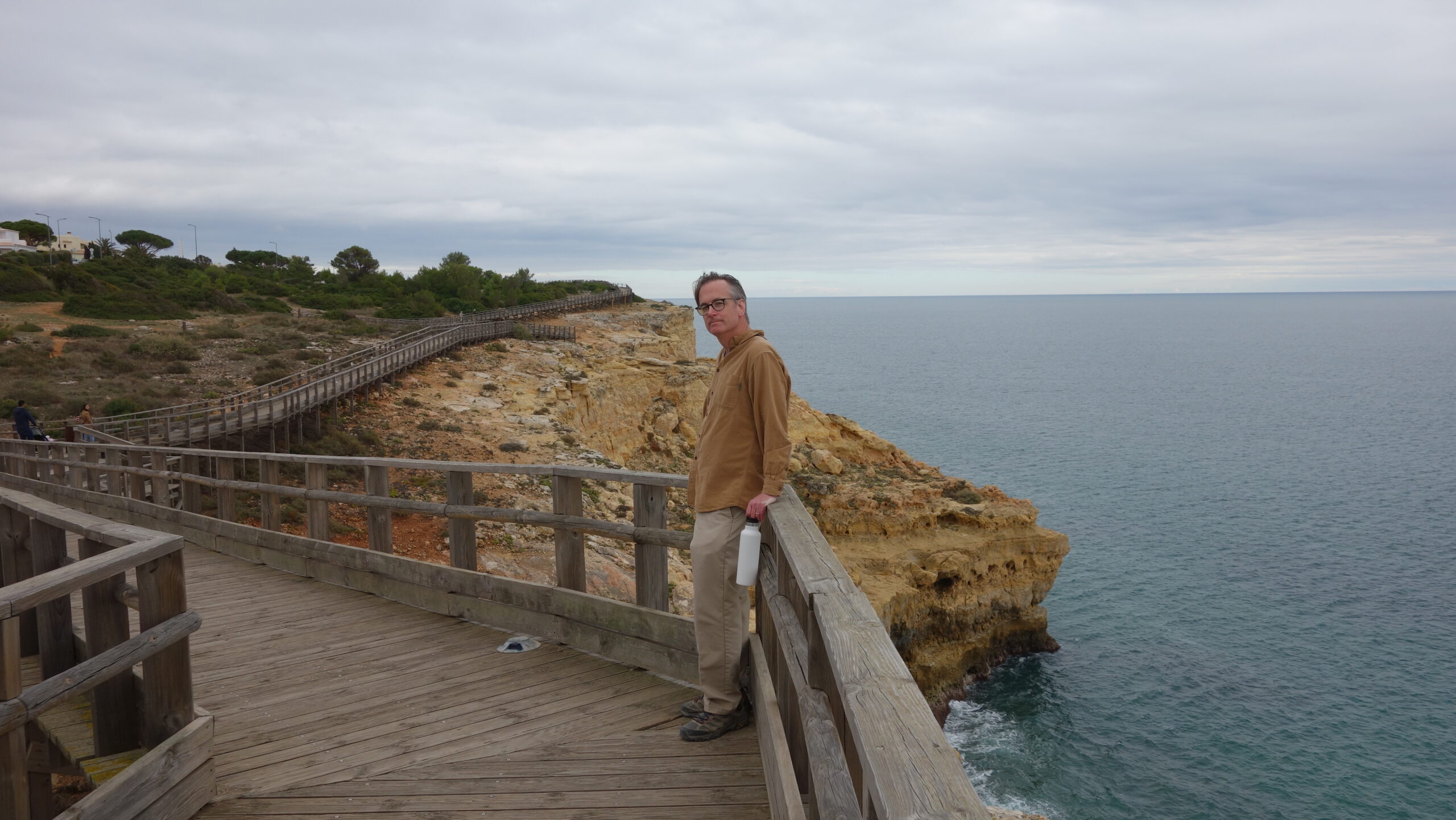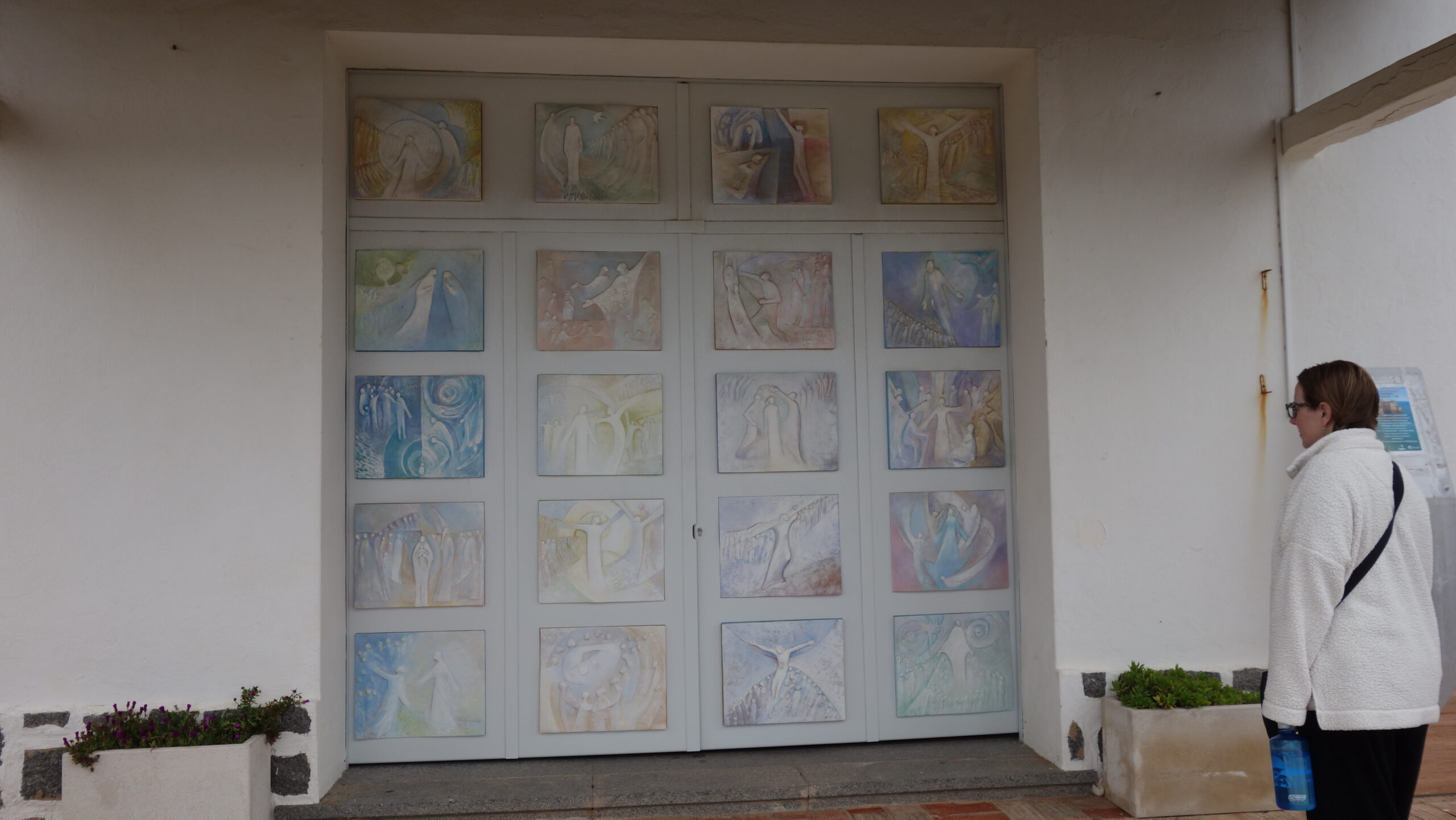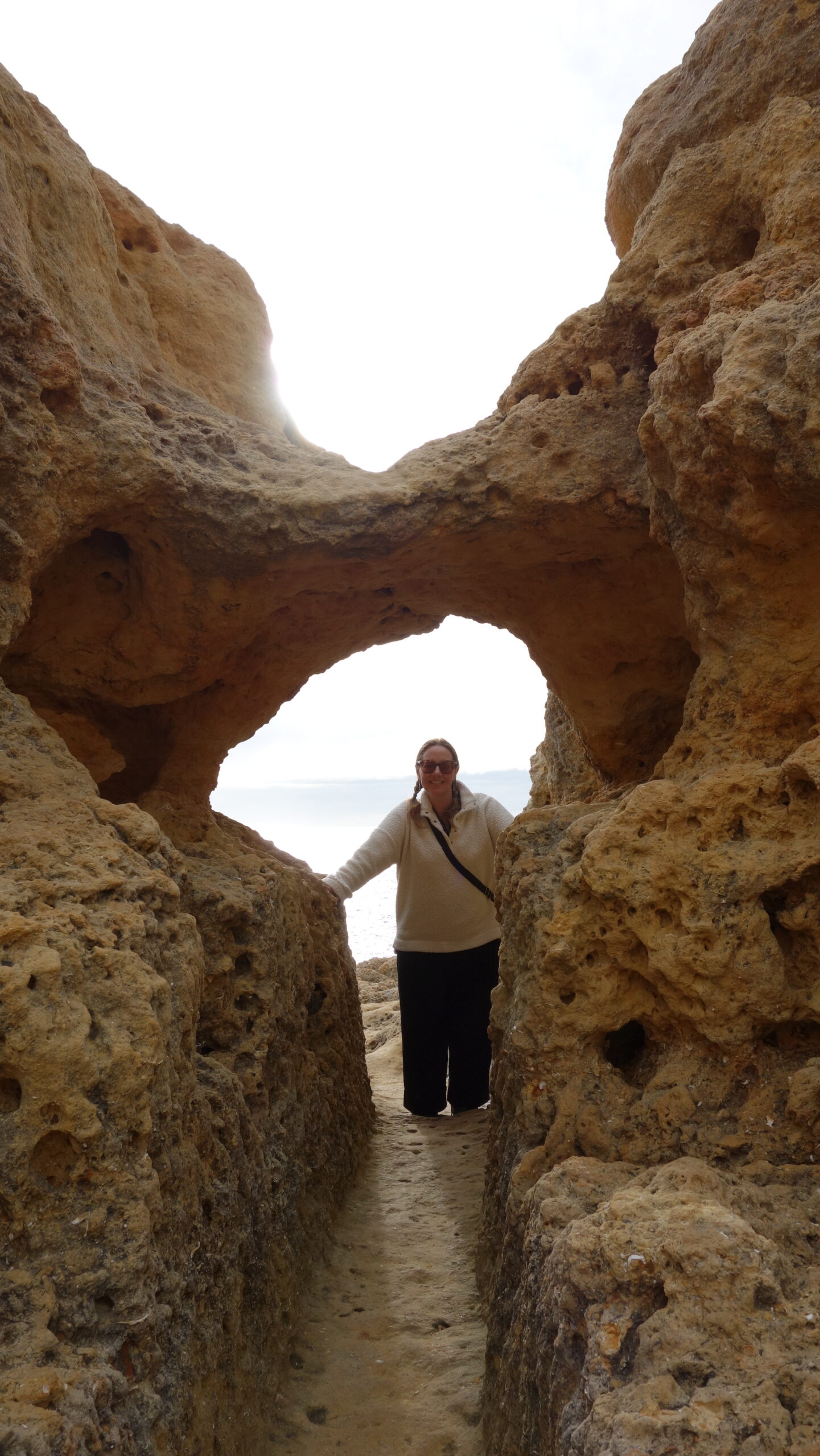
Portugal 2025 – Day 1, Sunday, Obidos

With my being employed again after my year in school last year, we decided we could afford to travel for Thanksgiving break again. Portugal turned out to have cheap tickets for a direct flight out of Toronto, so here we are.

Getting here was fairly smooth, with the only hitch being a one-hour delay for the plane to  take off. Since we had a direct flight that was scheduled to get in at 6:45 am, a delay didn’t matter all that much.

We got to Lisbon and picked up our car after dealing with some very friendly rental agents. Mer directed me to put the town of Obidos into out GPS, and off we went.

Meredith picked Obidos as a day-one excursion based on the facts that the town sounded cute to explore on foot and that it was only forty-five minutes north of Lisbon. Although we’re focusing on the south of the country on the trip, Obidos won a spot based on those recommendations.

And it was a great pick. I got off the highway, turned a corner, and boom, there was castle. And a good what-the-movies-teach-you-to-expect kind of castle with crenellated walls sitting atop a hill. The walls were forty feet tall or more in places and enclosed a small town inside the still-existent walls.

But cute always comes with a cost. In trying to find our just-outside-the-walls hotel, I had to drive up narrow one-way cobblestone streets that somehow the medieval designers didn’t make for automobiles. Short-sighted urban planners. I finally found my way out of the maze and parked at the base of the castle hill to walk up, but there were some jet-lag-accentuated stressful moments.

We dropped our bags at the hotel around 10:00 am and were told our room would be ready around 1:00. That gave us three hours to explore Obidos properly, which is just about the right amount of time to see the inside-the-walls part of the town.

We made our way up to the main gate in time to see the storming of the gates by at least three bus tours. The town never stood a chance. Back when the Moors had the castle complex, the Portuguese king took the castle by assaulting the front gate while a group of his men sneaked up the back of the castle while using the obvious tactic of dressing as cherry trees. If you can’t trust the Ents, who can you trust?

The touristic hordes didn’t have tree disguises, but they did have pocketbooks and wallets, and the town was running a full-fledged counter-attack assault on savings accounts. This took the form of the always-required children’s plastic armor and swords that are found in castle towns all across Europe, but the main street was pitching the local Portuguese liquor, Ginja, a cherry-flavored drink served in little chocolate cups for 1.50 euros. Mer even tried some at a bakery we stopped at for lunch. She proclaimed the liqueur to suggest she was drinking cough syrup until she could actually eat the chocolate cup, at which point the cherry flavor complemented the chocolate nicely.

We did a Rick-Steves-guidebook walking tour of the town, which took us up to the main gate tower and then back down to the ground and down a quieter restaurant street before plunging us into the merchant melee of the shopping gauntlet. But it was a cute gauntlet, I have to say, and we did grab lunch on it (as well as Mer’s aperitif). There were a couple of church squares, one of which was the sunning spot of a cute tiger kitty, and we made our way up to the old church in front of the old keep of the castle, which is now a luxury hotel. The church is now a bookstore, which is appropriate since Obidos has a literary festival every year.

We went up to the hotel/keep to observe the town from a vantage point, and then we went back down before scaling the western wall. The sort-of stairs were posted with a sign telling you this could be a dumb decision, and they weren’t kidding. There were the battlements on top of the wall to keep you safe from the enemy below, but that gravity thing was clearly someone else’s problem. On the town side, the wall had no rails, and the top of the wall was just uneven enough to keep you guessing. The wall was about four feet wide, which was good, but if you were to fall, the consequences would be grim in many places as you dropped thirty feet onto cobblestone. I can only imagine how fun all of that would be if you were wearing armor or carrying pots of oil to pour on hostile people below.

We made it back to the main gate and went back down to the streets to take a quiet residential street near the western wall. That got us back to the north side of town, and we went back down the hill to our hotel, where we finally got to get into our room for a three-hour nap and a wonderful-feeling shower.

Thus refreshed, we went back out into the Obidos evening. The tour buses had all gone, and so when we went up the gate tower and walked the eastern wall, we had the walk all to ourselves. We did use my cellphone flashlight to keep an eye out for trip hazards, but we were fine. The town was all lit up, including all of the battlements along the wall. It was a pretty place to walk.

After the wall got us to the northern end of town, we strolled back along the closing-up shopping street to the main gate and got supper at a pizza restaurant outside the wall, where Mer got rice and bass, as one does at a pizza place.

After supper, we took the quieter restaurant street inside the walls to the north end of town, and back out and down to the hotel. We sat on a swinging chair on the patio for a few minutes, glad that the porch had a roof since it was raining lightly. Then, we finally called it a day.

And a great first day it was. We got some sleep and some food, and thoroughly did a major tourist site. That makes for a grand opening to our Portuguese adventure.


Maine 2025 – One Big Ole Blog Entry

When I add a travel entry to Ye Olde Blogge, I usually do so every night for international trips and every other night for domestic trips. This last week, we had a great time vacationing and visiting family in Maine, but a combination of my being tired from long touring days combined with Mer’s need to use the laptop to do school prep work meant I only now am getting around to jotting down what we did, in one contains-everything entry.

We had the good fortune to travel to Maine with our friend Brianna, who went with us on our last trip two years ago. She’s a fun and enthusiastic traveler, so we were very pleased she could join us. Plus, on our last trip, several things we showed her were marred by weather (fog) or circumstances (local flooding of water features). As such, we had a chance to show her some of those sights again under normal circumstances.

We take two days to go from Ohio to Maine, and so Saturday we got as far as New Hampshire. It was a long day, but set us up nicely to do some Maine touring and still get home to Livermore Falls in time for supper on Sunday. And so, here’s a summary of our days in Maine:

Sunday – We decided to explore Kennebunkport, which is a cute coastal town where the Bush family (of president fame) has a vacation home. It turns out Kennebunkport is a bit more sprawling than we had imagined, so after an hour of wandering the main street area, we took an hour-long trolley tour of the highlights of the area. It took us out to the ocean and to an old and elegant hotel where we stopped for a photo opportunity off their large patio overlooking the ocean. We drove along the scenic road that overlooks the Bush vacation home (and other beautiful homes, of course). We saw and heard about the large home successful sea captains built, and finished the tour going out along the large public beaches (and seeing more oceanfront homes). It was a good way to see the town.

We did get home to Livermore Falls in time for supper, for which my stepmom had made homemade lasagna and whoopie pies. After eating too much, I suggested we take a walk on the trail to the top of nearby Mt. Pisgah, and so the four of us did that. It was a bit of a race against sunset, and the woods got dim enough that we walked back down a fire-access road instead of down the trail. The views from the top were still very fine.

Monday – Mer took charge of the day and took us to Fort Williams Park in Cape Elizabeth near Portland. The park is home to Portland Head lighthouse, which none of us had ever seen in person (there are tons of photos on postcards in Maine). The park is home to an old fort that was in use until World War II, as well as park lands, two small museums (on the fort and on the lighthouse), the shell of an old mansion, and the lighthouse itself. We joined a free forty-five-minute guided tour that walked us around much of the park, and then we explored the park on our own, including wading in the fairly cold Atlantic Ocean.

Tuesday – Kellee joined the three of us as we explored the Maine Botanical Gardens. It was a very hot day, so we took it easy, but the gardens offered lots of shade. Mer and Brianna joined a tour of the gardens, but it was large enough that Kellee and I dropped out after we discovered we couldn’t hear the guide. We sat in the shade in various pleasant places as we kept in the vicinity of the tour so as to not lose Mer and Brianna.

The garden has five large wooden troll sculptures around the grounds, and we managed to find four of them. We missed one, and by the time we discovered we had missed it, we were sufficiently far away from it as to decide not to go back for it. Many of the garden trails are in the woods and along the Back River, so that was a beautiful and pleasant way to manage the heat. We were all rather taken with the “fairy garden” where people could build little fairy homes out of sticks and rocks and moss. Many were very creative, and the garden had installed some stone structures around with Celtic-style carvings and a small Stonehenge-type circle to add some magical feel to the area. It was well done.

Wednesday – We headed to the coast to the Rockland area. Mer still has some family in that area, and we had arranged to meet Mer’s cousin and her family at the Samoset Resort for lunch. The Samoset is one of my favorite places to eat because the deck looks out over the golf course and ocean. It’s a lovely spot.

But we got to Rockland early enough that we drove out to Owls Head, which is home to a lighthouse on the far side of the harbor from the Rockland Breakwater light. The Owls Head light is in a park on the ocean, and you can climb right up to the lighthouse. The views were very pretty, and we even had the lighthouse to ourselves for several minutes.

Lunch was excellent and it was good to catch up with Mer’s cousin and family. They are lively people, and we chatted for about an hour and a half.

After lunch, we hiked the Rockland Breakwater, which is seven eighths of a mile long. The day was brilliantly sunny, and so we got to show Brianna a fog-free breakwater walk (although the last foggy visit had its own beauty).

We then drove up to Mount Battie in Camden, which two years ago was so fog-bound we didn’t even bother to drive up. We got to the top and were surprised to see some very cool but odd fog. The day had been hot and humid, and so now in the late afternoon the warm air over the ocean was condensing to low-lying fog. It was sunny over land, but the ocean had fog over it, and only to a very low height. It was quite lovely, and I had never seen anything like that.

We finished Wednesday by briefly going to Rockport Harbor, which was foggy. It’s still a pretty place, even in the fog.

Thursday – On Thursday, I was planning things, so I took us back to the coast, to the Brunswick area. Brianna’s Instagram algorithm alerted her that there’s a Hobbit-themed cafe in Brunswick, so we stopped there first for second breakfast. I’m a bit fussy with food, so while I loved the decor of the cafe, I popped over two doors down to get some food from Frosty’s Donuts. After some time, Mer and Brianna joined me, and I encouraged them to get third breakfast – the donuts at Frosty’s are in the argument for best donuts anywhere. So good.

From Brunswick, we drove south to Orr’s Island and then on to Bailey Island (they both have bridge access). We stopped at Land’s End gift shop to sit on the rocks and look at the ocean, as well as to take a quick look around the store. From there we went over to the amazing Giant’s Steps public park, which is a half-mile path along some of the best of Maine’s rocky coast. We sat in various spots for a long time.
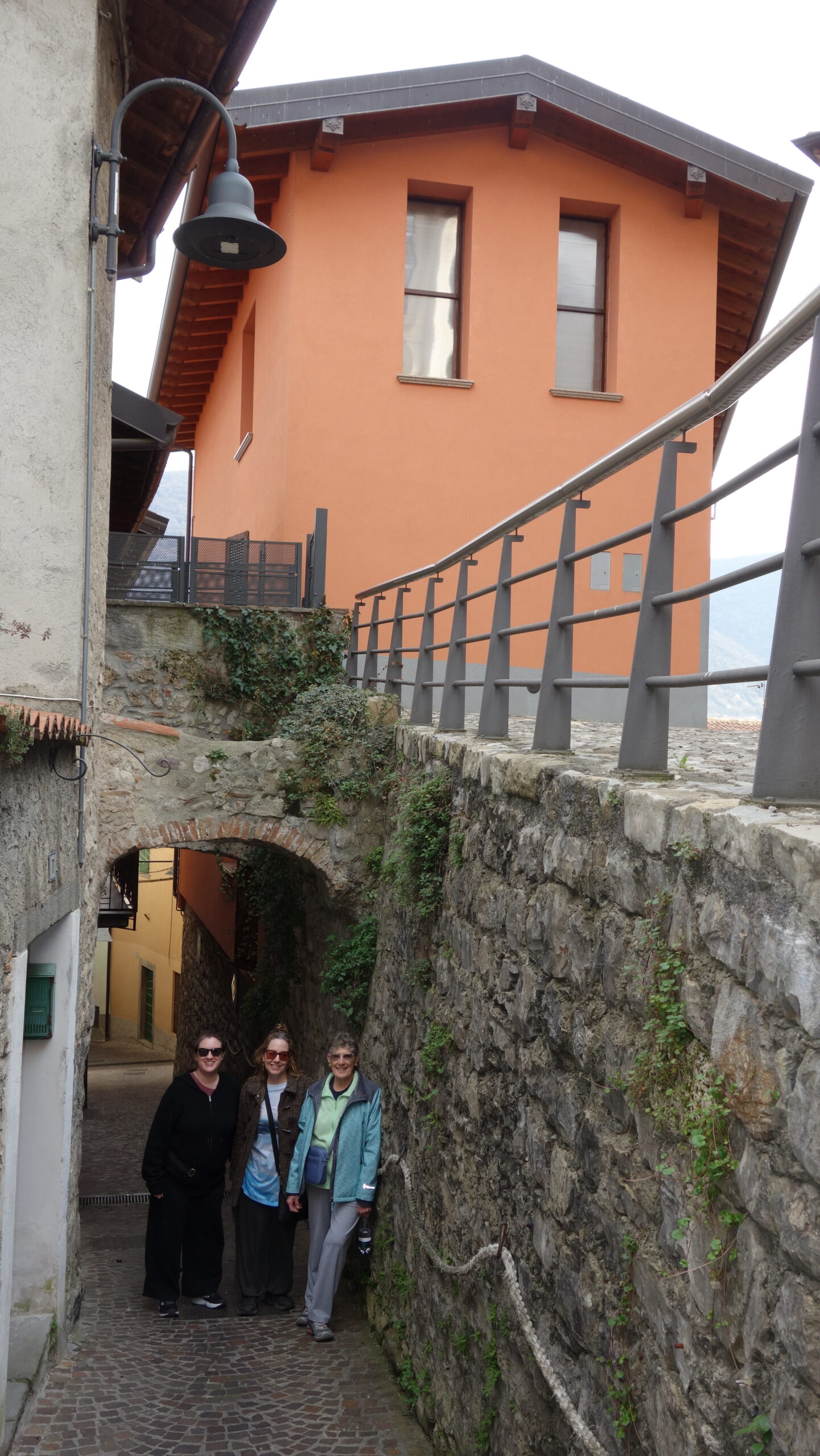
We drove back off the islands to Harpswell to do a hike called the Cliff Walk. It’s a bit of a seductive pull-you-in trail. It starts out as a wide crushed-gravel trail for four tenths of a mile, but then becomes a more traditional root-intensive path through the woods. It then adds in two or three very good elevation gains, and we added in two long peals of thunder for bonus material. But the woods were pretty (and not too buggy), and the path ran along an inlet called Long Reach for a long ways. The literal and figurative high point is a 150-foot cliff overlooking Long Reach and a small island. It was a tough hike, but we were pleased with the payoff.

Friday – I was tired on Friday and so tried to arrange a boat tour on Sebago Lake, but the lake had two- to three-foot waves on it, so the boat couldn’t go out. So I punted back to the original more-active plan of going to Coos Canyon and Step Falls, which are in western Maine. The day was finally much cooler, and so was a good day to go inland.

We had visited both of these places two years ago with Brianna, but Maine had just had an unusually rainy season, and both places were a torrent of rushing water that effectively covered the canyon and step features. This time, Coos was its usual tame self, and we could get down on the rocks next to the stream.

Step Falls was much the same way – last time the best we could do was sit on rocks on the high areas and marvel at the rushing water. This time Step Falls was back to being a moderate flow, and this allowed us to climb around on multiple levels of the falls and wade in the pools at a couple of different levels. We sat on the edge of a pool with our legs in the water and relaxed. Step Falls is back in the woods a bit, and the hike in and out was pretty as well.

Saturday – We left on Saturday, but we wanted to do some light touring on the way to Syracuse, New York, where we would be spending the night. I took us thought New Hampshire and Vermont, which are pretty places to drive, and we visited Middlebury College’s mountain campus, Bread Loaf, which we hadn’t taken Brianna to two years ago when we drove through Vermont. We also walked the Robert Frost Trail, a short hike with Frost poems posted along the side of the trail.

And so today we head home to Ohio. It was great to see Kellee and Jeremy and Mer’s cousin Tracy and her family. It will be good to get home, but we had a fun time in the Northeast.

Latvia 2025 – Day 13, Thursday, Riga

There are many ways in which I know Meredith loves me. Yet one more obvious (yet judgmentally questionable) instance is that she decided to plan all around me and my post-food-poisoning-illness needs instead of going off on her own and seeing potentially more exciting stuff. She decided she would rather spend slower touring time with me in the immediate environs of Riga than be by herself doing/seeing other things. I married up.

I managed to eat a fairly decent amount of breakfast, but then had to come upstairs and lie down for ten or fifteen minutes before Meredith finished her breakfast and joined me. Even though it was “her day” today, she said she wanted to collaborate based on what I felt I could do. I told her I really wanted to see the Art Nouveau buildings she had seen yesterday, so we set off toward the most concentrated blocks of them in the city at a pace that would challenge the heartiest ninety-year-old. Happily, it was a perfect weather day with tons of sun and cool temperatures.

It’s not a short walk. From out hotel, it’s over a mile, but we took several scenic detours that got us closer to as much as three miles away, all at a shuffle. En route, Mer showed me several of the places she had seen on her tour yesterday, including pointing out a square that had “wavy” themes because a river used to flow there, a secluded alley area that a hotel bought up and made into one hotel made of several buildings, the “powder tower” that was renovated by people collecting and selling pigeon poop as fertilizer, and more.
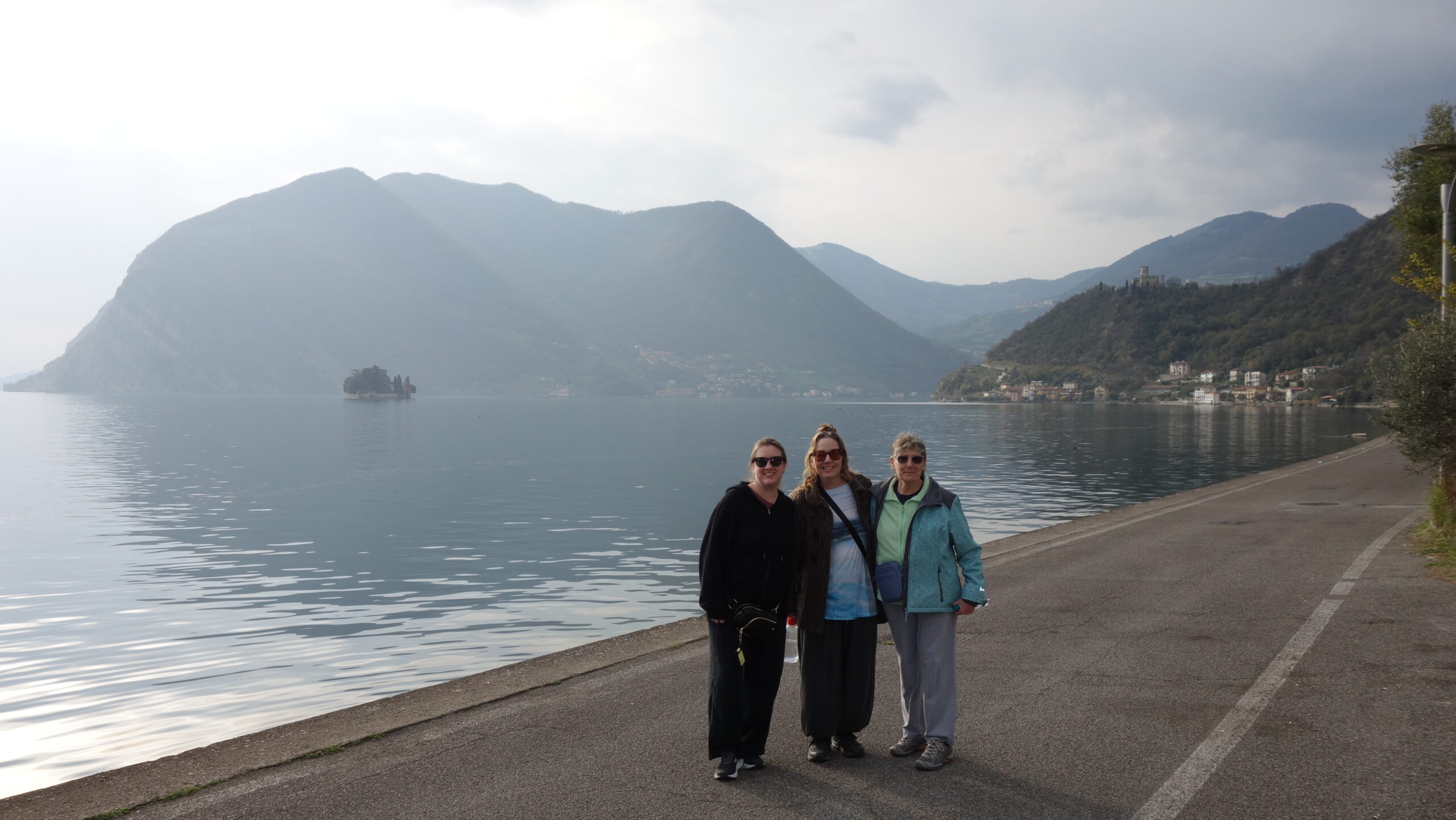
All along the way, we were seeing Art Nouveau buildings, of course. Riga hit a major building boom around 1900 just as Art Nouveau came into fashion, so now some forty percent of Riga’s buildings have some Art Nouveau influence on them. Art Nouveau, so Mer tells me, involves decorative elements using curves and nature motifs and faces and figures (often elongated with fantastic expressions). I love these details on and in buildings, so I was excited and impressed when we got to the best section of town to see Art Nouveau buildings. There are three or four blocks where buildings on both sides of the street are layered with ornamentation. Areas around windows, ironwork railings, figures on corners of buildings, faces looking down from the rooflines or from between stories, animals on or around doorways, and on and on. I was delighted.
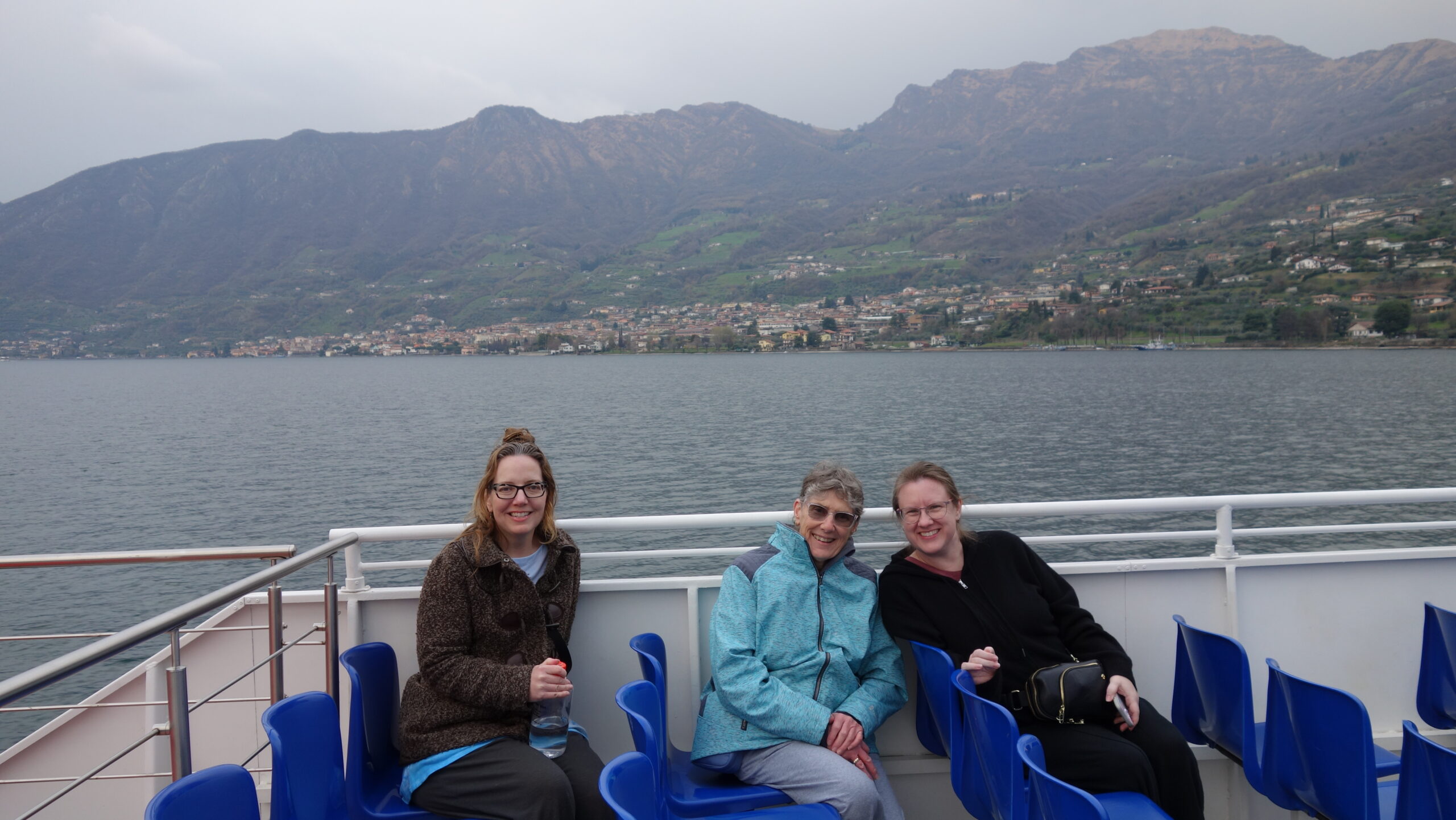
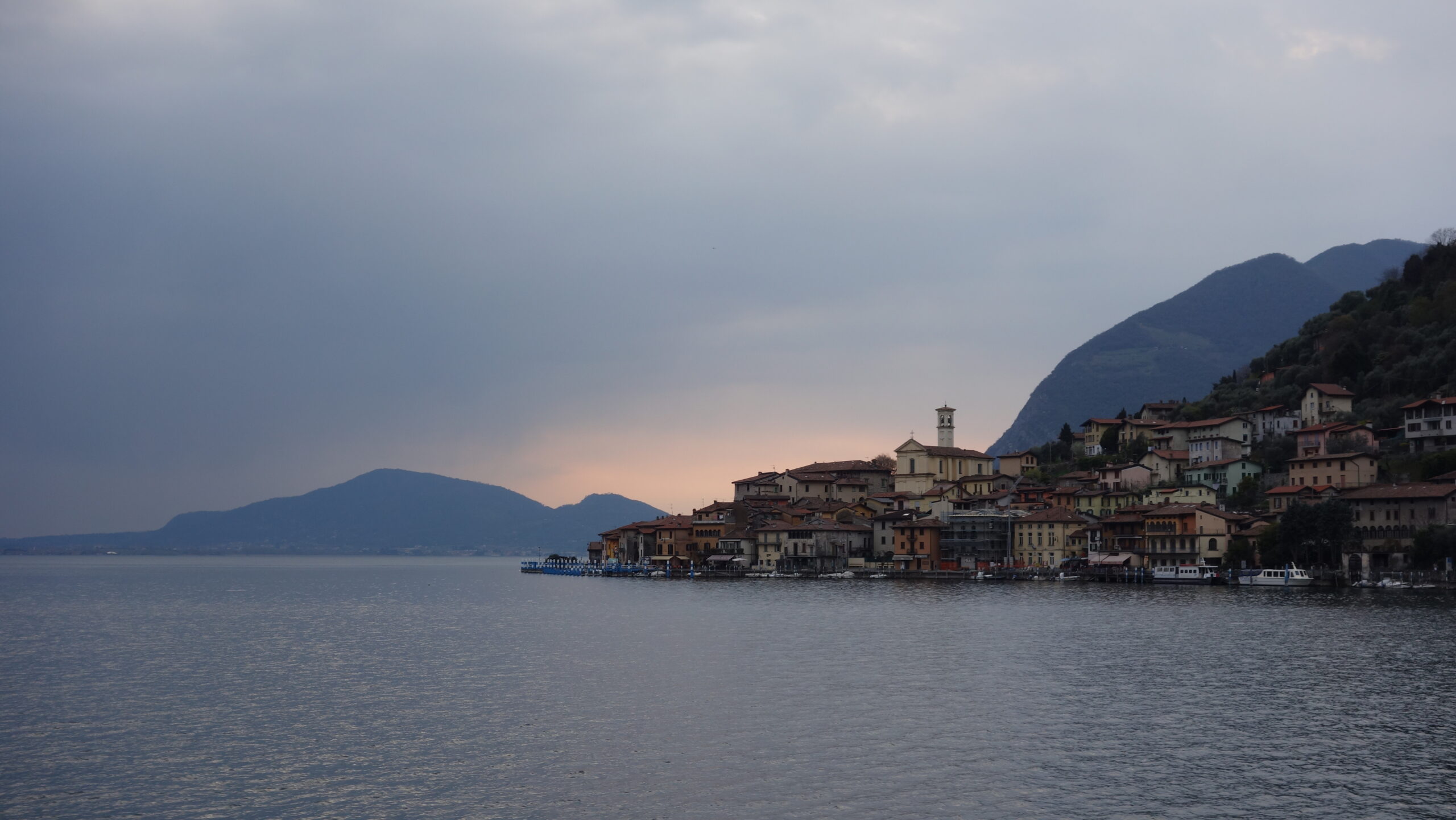
We walked around the entire area marveling at the buildings. Not surprisingly, many embassies are in this part of town; ambassadors seem to like nice living. Mer pointed out what she learned from her tour – the Russian embassy is in this part of town, so Latvia officially changed the name of that street to something like “Ukrainian Freedom” so that all official correspondence to the Russian embassy has to go to “Ukrainian Freedom Street.” I’m not surprised that the Latvians are strongly in favor of Ukraine.

I have no idea why, but the Irish embassy had a statue of a cat proposing to another cat up on their second floor balcony. Leave it to the Irish to be whimsical.

Across the street from the Irish embassy was a building with a magnificent five-story spiral Art Nouveau staircase that Mer took me inside to see. The building also happened to house a museum with an apartment decked out as it would have been in the 1920s. The basement of the museum gave an overview of Riga and Art Nouveau as well as having some artifacts from the time, and an exhibit on Art Nouveau buildings in Holland. But the gem was the first-floor apartment. The decorations and furniture and even the woodwork were all in the Art Nouveau style. I loved loved loved it. So much class and style, in my book.

The building also had a museum of the apartment of a famous Latvian painter, Janis Rozentāls. His apartment was designed by the architect specifically to have a living space for Janis’ family on one floor and his studio on the top floor (although it also had one room for a close friend who was a writer who lived there). It was also a great chance to see another apartment in the building. Janis’ art was modern and impressionistic, and I liked it quite a bit. He seems to have done mostly portrait work.

After the museum, we finished off our tour of the Art-Nouveau-intensive neighborhoods and made our way back home. I was tired and needed a rest. Once we got back to the hotel, Mer and I both took short naps. That recharged me enough that we set out again around 3:00 to go find Jana Seta, a map store that also has a large collection of original Soviet maps. The clerk, who was really helpful, told me that it was the only remaining map store in the Baltics. He helped me find a Soviet tactical map of the southeast of England and the Calais area of France that I bought to give to a teacher at CVCA who teaches about the Cold War. Meredith amused herself by reading European tour books about the USA.

From the map store, we walked to a park to take a canal/river cruise. We had already been on the river on Tuesday, but I was getting tired again, so sitting-down tourism was an attraction. Plus, it was a pretty day, while Tuesday had been cold and cloudy, and we asked specifically if the boat would have commentary. The boat did end up having recorded commentary, but at a low enough volume that it was hard to catch everything. We chatted with the other people on the boat – a couple from Germany, two women from Finland, and two women from England. We were a little United Nations on the boat. We did learn from the commentary that the town’s market (before the blimp hangars) had been by the river and difficult to keep sanitary because of bugs and rats. We also learned that when Latvia’s president is at home, the presidential castle flies his flag, and when he’s gone, it’s lowered. That’s helpful for door-to-door salesmen to know. The commentary also mentioned that the river/Baltic Sea harbor area is about eleven miles long, which helped explain to us why we couldn’t see the sea from the city.

After the cruise, we had pizza for supper (it seemed safe). We then walked over to St. John’s Lutheran Church (of the pretty vaulted ceiling fame) to hear the Royal Holloway Founder’s Choir from London; it’s a university choir that is currently touring Latvia. The singers did five numbers with an organ, then an organ solo, then a long piece with the organ, and then an organ solo, and they finally finished the evening with four a cappella songs, which were my favorites (the notes just hung in the air of the church).

And so that finished up the day and our time in Latvia. We have a relaxed morning tomorrow with having to catch the airport bus around 10:00, and then we’re underway. Lord willing, we’ll be back in Toronto around 9:00 p.m. EST (4:00 a.m. Latvia time), where we’ll spend the night before heading home to kitties, family, and friends on Saturday. And maybe some safely prepared food, too.


Latvia 2025 – Day 12, Wednesday, Riga

So it appears that my late lunch/early supper yesterday caused me a moderate case of food poisoning. My Wednesday involved an exciting private tour of my GI tract. By 4:00 in the afternoon, I was feeling moderately better, so I did go over to join Meredith at the Museum of the Latvian Occupation, which tells the story of Latvia under German and Soviet rule. I managed to walk the two blocks, stay for half an hour, and walk the two blocks back to the hotel, where I promptly fell asleep from the exertion. Not the best touring day ever.

And so, for the first time in thirteen years of travel blogging, Mu-sings is proud to present a guest author, Meredith.


Sometimes the travel challenges that worry you aren’t the ones that should, apparently.  Matthew and I take turns being in charge of our touring, and while Matthew’s first three days went swimmingly, he spent the last two days wondering how he would find sufficient touring activities when the weather forecast looked grim and the majority of Latvia seemed to be closed for a national holiday … yet we ended up having a great time.  Yesterday evening, however, he anticipated a fine final day of his being in charge, since although the weather was still seeming iffy, the morning was supposed to be dry, and even if the rest of the day proved rainy, the indoor options would be open again.  It was a fine day of touring indeed – but unfortunately, I was the only one able to enjoy it (and my enjoyment was tempered by not being able to share it with my beloved).

Still, one doesn’t get to go to Riga every day, so once I was convinced that his condition wasn’t going to be helped by my presence or harmed by my absence, I decided to start the day on my own, beginning with breakfast.  Oh, Matthew – I’m so sorry that of all the Latvian hotel breakfasts we’ve had (or haven’t had, in the case of our Sigulda hotel), you had to miss this one.  The buffet was vast:  I spent at least a few minutes just trying to get oriented to its layout and offerings.  Matthew, I really hope you can take advantage of it for our final couple days here – I especially recommend the potato casserole, of which I had three helpings.

But I couldn’t keep eating indefinitely, because I had a 9:30 rendezvous with Ieva (“EE-eh-vuh,” Latvian for “Eve”), the guide Matthew had booked for a private four-hour tour of Riga.  She was terrific.  In addition to learning more about Riga, I also learned more about Latvian life in general.  Being in her early forties, Ieva doesn’t have a lot of memories of Latvia’s Soviet years, but she shared a few, such as being excited when her father somehow got access to a large number of bananas, or being proud to help her mom and other women serve soup to those manning anti-Soviet barricades in January of 1991.  Ieva told me about some Latvian customs, too, like the celebrating of name days (May 22nd is the date set aside as a “name day” for those with nontraditional names) and Midsummer (Latvians like to stay up to see the sun set and then rise, but since it was so cloudy the other night, Ieva and her family ended their celebration earlier than usual).

With regard to our tour of Riga, Ieva started in the Old Town, some of which Matthew and I had seen in our wanderings yesterday afternoon, but much of which was new to me.  The Old Town has a plethora of beautiful buildings and a handful of lovely squares, so we spent most of our time outside (despite the forecast’s prediction of cloudy yet dry skies all morning, there was a little rain off and on, but nothing particularly problematic).  We did briefly pop into a couple places where we could see interiors for free – one of the churches and a small architecture museum housed in one of Riga’s oldest stone buildings.

After spending a couple hours in the Old Town, we went to Ieva’s favorite bakery, where she bought us several typical Latvian treats:  bacon buns and two sweet pastries, one of which was a sort of Latvian spin on a cheesecake square, and the other of which was a Latvian version of a cream puff.  She also kindly bought a bacon bun and pastries for Matthew (but he’s not up to that level of rich foodstuffs yet, so these ended up being my dinner).

The next portion of our tour was visiting Riga’s Central Market, a place that’s distinctive both inside and out.  It’s housed in several German Zeppelin hangars left over from World War I, with different types of products in each of the different hangars:  meats in one, fruits and veggies in another, souvenirs in another, dairy products and some other miscellaneous edibles in another, and seafood in the final one. Multiple stalls outside the hangars sold more stuff, from clothing to flowers.  It was a fascinating place, but I resisted buying anything (though if you need to know where to get pig snouts or smoked eel the next time you’re in Riga, I now know where to send you).

For the final portion of our tour, Ieva took me to a neighborhood that has helped to make Riga “recognized by UNESCO as unparalleled anywhere in the world,” according to our guidebook, in the realm of Art Nouveau architecture.  I’d seen some snazzy Art Nouveau architecture before, including impressive examples in Prague, as well as noteworthy examples in Riga’s own aforementioned Old Town.  But the elegant architectural confections in the city’s so-called Quiet Centre were jaw-dropping, especially where there were several in a row.  So from a visual perspective, that was the tour’s climax, but we also had a lovely denouement, as Ieva walked me back to our starting point through a couple different parks and down streets I hadn’t yet seen.

Returning to the hotel room, I was hoping to find Matthew vimful, vigorous, and ready to join me in the rest of the day’s touring … but fearing I’d find him curled up and whimpering instead.  The actuality was somewhere between those two extremes:  he clearly wasn’t feeling great, but was trying to muster the energy to take a shower.  I was trying to decide if I should go see a sight that would require me to figure out how to use Riga’s public transportation system or if I should just go to the sight that was a mere five-minute walk away.  Figuring that Matthew might want to join me tomorrow at the latter sight, I was leaning toward the former, but he convinced me that, since the further sight closed at 5:00 and it was already almost 3:00, that would be a poor use of my touristic time.  So I headed instead to the nearby Museum of the Occupation of Latvia.

The museum has been around since the early nineties, but underwent extensive renovations just a few years ago; the result is an effective and thought-provoking treatment of Latvia’s twentieth-century experience.  Part of the building that contains the museum is a dark, windowless, architectural eyesore from Soviet times, yet as Ieva earlier explained, Latvians see the building as part of their history, and a reminder of the dark times that they survived and overcame.  The museum’s Latvian-American architect expanded the building with a white section that represents the present in contrast to the dark past, and capped that section with a glass one that represents the future.

Because I almost always feel as if I get more out of museums if I have a guided tour, I arranged to join the 3:30 English one … and our group of seven included a family of three who lived in Cleveland Heights.  Our guide took us to each different area of the museum, addressing that area’s overall emphasis and drawing our attention to some of the specifics.  The areas’ emphases were varied, including deportation transport conditions, gulag prison experiences, types of resistance, and more, ending with eventual liberation.  Among the items we saw were a machine the Soviets had used for eavesdropping on foreigners in a hotel restaurant, “postcards” written on birchbark, an actual piece of Latvian rye bread a deportee had saved, and a set of metal dentures a prisoner had made for himself.

Once the guided tour was over, I went back through the museum a second time on my own (Matthew had come and gone, by this point).  I’m always a fan of museums with one-way layouts, as they reassure me I’m not missing anything – and, in the case of historical museums, they often help me feel more aware of chronological developments.  Not only did this museum have the one-way layout, but it also had some effectively immersive touches.  For example, a number of the displays were behind bars that didn’t obscure the objects or information, but did keep reinforcing underlying themes.  Similarly, most of the museum was fairly dark, though again, not generally in a way that obscured objects or information.  When you entered the section about deportations, you walked through a somewhat stylized yet accurately sized model of one of the train cars, so you got a better sense of how claustrophobic it would’ve been to have to share that car with forty other people for days on end.  In one of the Soviet sections, the lighting was red.  And the liberation section was on an upstairs level that allowed you to look down on the rest of the museum and feel a sense of rising above the darkness and struggle.

I finished my visit just a few minutes before the museum closed, and left with increased gratitude for the freedoms I’ve enjoyed thus far in my life – and an increased sense that what we tend to see as hardships are usually pretty trivial compared to what many have endured.  Nonetheless, while food poisoning is more of a minor inconvenience than a true hardship, I do hope Matthew and I are both feeling in tip-top touring shape tomorrow, especially since it’s our final full day in Latvia.  However, whether we are or not, we’ve been richly blessed.


Latvia 2025 – Day 11, Tuesday, Riga

Today was cold for the season (high fifties). Today was cloudy. Today was windy, with fifteen-mph winds and gusts higher. But, importantly, today didn’t (mostly) rain.

That was a huge blessing. Even this morning when I checked, the morning was clear of rain, but there were supposed to be showers at noon and rain at 1:00. With the Ligo holiday today, most indoor things were closed, so a rainy day was going to be a challenge. Walking around a city, no matter how cute it is, in a cold, wind-driven rain isn’t any fun.

We returned the car to the airport with no issues. If it had been raining, we had talked about taking a cab. Since it wasn’t raining, and I had looked up how to get to the hotel using a bus, we decided to take the bus, which would be about four dollars instead of thirty dollars. And then we found out that with the holiday today, all public transportation was free all day. Meredith was most pleased.

And so we got to the hotel by about 10:30 and stowed our luggage in its storage. According to the forecast, we had about one hour of rain-free time, followed by showers, so I thought we could take a canal and river cruise that was leaving at noon. Since the boat would have cover, if it rained some, that would be okay. I had just set off toward where the boats were when I saw people at the nearby river-only boat. We crossed over to investigate and found out it was leaving at 11:30 a.m., and it was a little after 11:00. That worked for me, so we got on board and sat on the upper deck, which was protected by a roof but was open on the sides. The wind was chilly on the river, so we were happy to have the boat folks supply us with blankets here at the end of June.

The river cruise itself was pleasant. We got to see both sides of the Daugava River, including the very cool-looking, sort of triangular National Library, as well as the taller buildings of the Old Town on the other side of the river (and there are a TON of steeples in the Old Town). We had about three minutes of spitting rain, but Mer and I just scooted back from the edge of the boat to get more under the roof canopy. We came off the boat a bit cold, but dry.

After swinging by the hotel storage room to dig out more clothes, we walked into the Old Town. It still wasn’t raining at 1:00, so we were going to take advantage of the weather. We started with the wonderfully spired St. Peter’s. It’s a brick church with a three-tier steeple, and you can take an elevator up to the first steeple tier. We got into the church simultaneously with a large tour group, so we headed right to the elevator to go up, figuring the group would come along before too long. It was a good choice; we got right on the elevator when it opened, and went up. We were greeted by strong winds and spitting rain, but really great views of the city. Sadly, between the weather and my fear of heights, I didn’t stay too long, even taking the last spot on the elevator and leaving Mer (with her blessing) to get down as soon as I could. Meredith appreciated the extra time on the top because she loved it up there, and while I was waiting for her, the tour group came up the stairs and filled the lobby area. I had to look for Mer’s hat when the doors opened because of all the people in the way.

We looked around the main level of the church, and it had two abstract sculptures of Jesus on one side of the church. One was a very rough sculpture of Jesus carrying his cross, and the other was Jesus on the cross, but in such a way that part of his body was under some swirling obstructions (wind? fire?) which gave the appearance of Jesus ascending as well. Both works were great.

The altar was also unusual – it was a huge but harmoniously carved wooden altar. St. Peter’s is a very vertical church, and so the altar reaches high into the church. Jesus on the cross is the main figure, but there are smaller figures of saints around the base of the altar, in a more subtle way. We sat down and enjoyed looking at the altar for several minutes.

When we got out of the church, there still was no rain, so I wandered. Riga’s Old Town is a gem of a place to wander. I just kept taking whatever street looked interesting to me. We accidently found the side view of St. Peter’s, and we stumbled upon St. John’s, which was open. We went in and were greeted by acoustically lively organ music (recorded). The church was also unusual in that the vaulting of the ceiling was all painted red, grey, white, and black. It was beautiful (the picture doesn’t do it full justice).

We roamed around the Old Town some more, taking in the wonderful building colors and elaborate fronts of buildings. I had been determined to push on until it rained, but I was no longer sure it was going to rain, and we were both getting hungry. So we took a touristic chance on the weather and ate at a traditional Latvian restaurant. When we came out a little after 3:00, we still had no rain. I decided we should check in to the hotel and use the opportunity to get some more water and to use wifi to check on the weather.

The weather forecast showed some showers in the area, but the real rain was holding off until about 6:00. I decided to go to the nearby TI office and get a map and use that to make my aimless wanderings more aimful but still just wanderings. I saw a ring of parks around the enormous Freedom Monument, and we like parks, so that was our direction. The town sign near the monument, as well as the one in the town hall square, both have characters from the recent Best Animated Film winner, the Latvian film Flow. The movie focuses on a cat and some other animals the cat meets when a flood comes. There are no words in the film, and it is excellent, but really tense for me since I can’t stand seeing cats in peril, even pretend peril. At any rate, Riga has embraced the movie’s characters on the signs.

After the impressive Freedom Monument, I saw a tree-lined walking path going down the street, so we took that to the gorgeous white-and-red-brick Orthodox cathedral of Riga. It was open, so we went in to see the church and found an evening service going on. My limited understanding of Orthodox services is that the priest says and does most things, and most of those things happen behind a screen that separates the congregation from the holy place. So even though there was a service on, respectful tourists were still welcome. We walked into a little slice of heaven as a boys’ choir (or women’s choir – we weren’t sure which, since we couldn’t see the singers) was singing and filling that enormous space with beauty. We stood (people stand for Orthodox services) for about fifteen minutes listening to the singing and the priest intoning things. It was a happy chance experience.

After the church, we walked through a park to look at an artificial tree with birdhouses covering it. Each birdhouse had a wire to it, so we think (and hope) it lights up at night. But since night here is currently from 11:30 p.m. to 3:30 a.m., we’re not going to find out firsthand.

We walked back to the first park near the Freedom Monument and explored the paths of the park. There was the boat canal I had set out for earlier, and tons of flowers, and an elaborate artificial stream that kept going under the paths and fed multiple pools and waterfalls. We chanced upon the national opera house, which seems to be doing a dozen or so one-night-only productions of major operas during “opera month.” That’s an undertaking.

During our hike, it had showered a couple of times, but nothing too heavy. Around 6:00, it started to rain steadily, so we headed back to the hotel. As we got close, the rain stopped. Ah, well. We had already gotten in six or more hours of touring that I hadn’t expected to be able to do. It was a fine day in Riga.

Latvia 2025 – Day 10, Monday, Sigulda

Ligo is Latvia’s almost-summer-solstice celebration that is held over June 23rd and June 24th. It celebrates summer with women wearing flower wreaths on their heads and men wearing green-leaf wreaths. Many cars are decorated with greenery as well, including some on twenty-something-year-old guys’ cars. One hotel receptionist told us that Ligo “is a bigger holiday in Latvia than even Christmas.” It’s kind of a big deal here.

As such, I didn’t hold out much hope for tourism stuff today. I had confirmed that the cat-themed restaurant/bakery was open until 6:00 pm, so I knew we wouldn’t go hungry, but I wasn’t sure how much other stuff would be open. My initial checks showed that the major cultural stuff was all closed, but then I checked the tourist-amusement stuff, and that was the jackpot. Several things were open on shortened hours. The day was set around what was open.

Since it was a major holiday and I wasn’t expecting too much to be going on, I let us sleep in this morning. Add in going to get breakfast at the cat cafe and coming back to the room to put tomorrow’s breakfast in the refrigerator, and we didn’t get going for the day until 11:30. But we had places to go!

The first place that was still open was a cable car across the valley. Latvia is fairly flat (the highest point in Latvia is about a thousand feet). But it does have a pretty major valley here in the national park with the Gauja River running through it.  And that river has a couple of bridges over it in the valley, but for elevation-resistant hikers and tourists, there’s a cable car across the valley. Each way takes about seven minutes. Since very few things were open, and today was a national holiday, the first car we could get on was a little over an hour out, at 12:40. So we took that as an opportunity to walk toward the other open tourist trap – Tarzan Park.

Tarzan Park is an “adventure park” with things to do for the kids, but also had yet another alpine slide in this flat country, along with a chair lift to get you back up out of the valley. We were going to check that out, but I got distracted by a hiking trail that had a viewpoint symbol at the top of the trail. At the top. As in it went down. All the way to the river, as it turned out. I somehow missed the twenty-seven-percent-grade symbol that was posted there (stairs have a grade between thirty and fifty percent, so imagine a three-thousand-foot-long staircase, and you get the idea). At least it was paved with bricks, and it was a pretty day. Still, my wife really clearly loves me. There were some grand views across the river, but the best views for the trail were actually down at the riverside.

By the time we got back up to the top and got back to the cable car, we only had twenty minutes to wait, so we used the restroom and looked out over the valley. The actual cable car ride was very pleasant. You could see a huge manor house, and you could see two castles, including Turaida Castle (where we were a couple of days ago). The ride over takes seven minutes, and the car runs every twenty minutes, but I had nothing particular to do on the other side, so we came right back on the same car. We had to get to Tarzan’s.

We walked back over to the park and got tickets to go down. Usually with alpine slides, Mer and I do a scenic run and a speed run. We thought that that would be the case here, but the track had other ideas. The track weaves in and out of trees, so there isn’t much to see for a scenic ride. Plus, the thing is so darn kicky that you need to pay attention to the track. It is really fast, and the corners are sharp and not terribly smooth. It jerks you around quite a bit. So the speed run of letting the slide go full-out really didn’t happen either. It was still a great ride, and we did it twice. As a bonus, we got to ride up the very peaceful chairlift, which goes over sections of the slide track, so we could see others zooming down the hill.

Having finished our third downhill ride outing of this trip, we got back in the car and drove over to Sigulda’s new castle, which is conveniently next to the old castle. The new castle is set in a pretty, enclosed, small park and we checked that out. The castle was closed today, but you could still go on the balconies, which had great views across the valley and good views of the old castle. The old castle was just open today – no entry fee. There were workers in the castle area setting up for the town’s Ligo celebration (including an eight-foot-high woodpile for a bonfire that I’m not going to leap over, no matter how much luck I’d receive), so I guess they must have just figured to let anyone in. So we went in to check it out.

The old castle was partly restored in the twentieth century, but that seemed limited to the front wall and tower of the castle. There are no intact rooms, and really only the front and part of one interior wall are standing (and a small tower at the back that was closed). But the castle did have great views of the manor over the valley on one side of the castle and Turaida Castle on the other. We were very pleased to have seen it.

We left the castle and went the short distance over to the town’s Lutheran church. The steeple was oddly large for the church, and we had noticed that style in Lithuania two years ago. Happily, the church was open (in your face, pagan ritual holiday!), so we went in. The inside was painted to look sort of like colorful marble, and the effect worked really well. The church looked as if it could easily hold a couple of hundred people, and the decorations were mainly limited to the altar area, with a large painting of Jesus praying, looking up to heaven. The choir/organ area was open, so we went up there as well, and there was a display of about a dozen nature “paintings” made of colorful shirt buttons. It sounds odd, but it worked quite well in an impressionist way – if you stood back a bit, you could easily see the flowers or trees or the like.

By now it was getting close to 4:00 and was starting to rain, and I didn’t want to risk missing a chance to eat, so we went back to the car, preparing to find some food and to wait out the rain. The first two places we tried were closed, and the third place was mobbed with people, so we just went back to the cat cafe and had a very good meal for fairly cheap. Always trust the restaurant with a resident cat.

Since it was still raining fairly hard when we finished, we went back to the room for thirty or forty minutes. Mer read, and I tried to find things to do in Riga tomorrow when it’s going to rain AND almost everything is going to be closed. The rain stopped, so we headed back out to go hiking. I really wanted to see Paradise Hill.

On the map, you could park near Paradise Hill and walk to it. Or you could park some distance away and walk a trail to it, seeing several sights along the way (caves, an old castle hill, etc.). I elected to do that to extend the hike on this fine evening.

We set off with our town-provided map in hand. It didn’t show every detail of the trail, but had certain sights marked on it, so I could just look for signs to the sights. Except when the signs to a particular sight weren’t posted on every signpost. Or when one of the sights shared the same name as other sights except for a minor second word. We found a very pretty small sandstone canyon, but that was a dead end we had sidetracked to deliberately. On our hike to Paradise Hill, we went down approximately 3.7 million wet, slanted, and sometimes mud-covered wooden steps. We had to cross three downed trees across the trail. We saw a pretty stream and followed it along until we started to go back up out of the valley, which was a great sign for an upcoming hill. Until it wasn’t. As we emerged from the trail into a meadow about forty-five minutes later, Meredith declared, “There’s the haystack we saw earlier.” We had somehow completed a loop without my knowing it from my map.

We drove over to the Paradise Hill parking lot.

From there, the trail to Paradise Hill was wide and flat and in excellent condition. In ten minutes, we were at a large viewpoint that had wonderful views of the river valley and of Turaida Castle. There was even a two-person swing. We lingered there about twenty minutes enjoying the birdsongs and the cool evening. It was worth figuring out how to get there.

After leaving Paradise Hill, we went back to the car and went home. Tomorrow we have to leave early to return the car before we spend our last three Latvian days in Riga. I need to get to work on finding tourist trap things that might open late tomorrow.

Latvia 2025 – Day 9, Sunday, Sigulda, Ligatne, and Cesis

Today was a very odd day. Getting breakfast was odd. The weather was odd. Our GPS was odd, and then when we checked the phone maps, the phone was odd. Following signs to the first sight was odd, and the first sight itself was odd in many ways.  Today was a very odd day.

Our hotel doesn’t have breakfast included, so we headed off to the cat-themed restaurant from last night, which has an attached bakery. We wanted to save time from the twenty-minute walk, so we drove. But the road near the bakery is all torn up, so we couldn’t turn onto the street, so we parked in a nearby lot and walked the seven or eight minutes to the bakery. Total transit time, about fifteen minutes. We ordered some excellent food to take back to the room and walked back to the car. In an ever increasing rain, on a day when to forecast called for no rain. Clouds/rain/sun/clouds/rain/sun was a pattern for most of the day. The GPS took us back a roundabout way, so the return trip was about seventeen minutes total, but at least we didn’t get soaked in the pouring not-raining.

After breakfast, Mer wanted to head to the small village of Ligatne and found the site she was looking for in my GPS. It told us the twenty-minute drive was going to take fifty minutes, but that included going down some dirt roads, and my GPS really hates estimating dirt road time. We followed it from the main road to a country road to a back road to a dirt road to a small dirt road to a tractor path, and I finally stopped when I saw a “Do not enter” sign with no explanation. We checked the phone, and it agreed I should keep going.

I did not.

We programmed the GPS for the town of Ligatne itself, and Meredith figured we could follow signs. We got to Ligatne, and while Mer was checking a sign, I accidently bumped the GPS to go back to our hotel. It showed we could get there in… 20 minutes. Stupid dirt road.

Mer found a sign she wanted. She said it was a slightly different name, but it was what she was looking for. It turns out she was quite wrong, but it worked out. Off we went, following some signs (they got a bit sparse in places), and arrived at two large buildings at the end of a very minor dirt road. One was clearly an apartment building. The other looked to be under construction and had no signs on it. As we were trying to figure things out, two normal-looking men without hardhats came out of the under-construction building, and we saw a woman in a wheelchair sitting next to the door. Mer said she had thought it was a government-assisted living center for the elderly, but we might as well see what was inside the unmarked building.

It turns out the unmarked building was a health and wellness hotel AND sat above a sight I wanted to see – a secret Soviet bunker. Again, no signs anywhere. I guess that’s how secret the bunker is.

Meredith had come to see a trail system that had animals in woodland enclosures along the trail. We got a trail map from a woman who was channeling old-school Eastern European customer service (maybe she was having a bad day), and we made a noon reservation for an English tour of the bunker (it was 10:30 at the time). Off we went.

We hiked around the back of the wellness hotel, and it became clear why the facelift on the front was happening. The back was classic sixties Soviet concrete architecture. We were so distracted by the building that we missed a turn and kept going on a smaller trail. It took us past the apartment block and a very creepy, overgrown, abandoned seventies playground. We wound up into the woods, but I kept trying to use the map Mer picked up, so I kept us curving around the hotel complex, which involved some scrambling down some steep parts of the trail. We knew we should hit the Gauja River, so anytime we saw water, we followed it downstream. Eventually, we came out on a large trail that led to a beautiful, wide pool of the river which reflected sand cliffs. It was lovely. It also helped us find where we were on the map, which helped us get back to the right trail.

Which was an exercise trail. Every hundred yards or so was a sign telling us to do exercises. There were no animals in sight anywhere, in pens or otherwise. We finished up the exercise trail without actually doing any of the exercises, and we had time to check out the second trail, one showing off Latvian mythology. There were carvings of fantastic creatures every now and then along the trail, and toward the end, we actually encountered other people for the first time in over an hour. We finished up our hike and headed into the super secret wellness hotel to wait for our tour.

There was a Latvian tour that went first, and then a Russian tour, and finally, we got to go. There were five of us Americans and six Germans. Our guide was a fantastic, theatrical, over-the-top man who may be my favorite guide ever. He played up the role of being a Soviet Communist, throwing himself into everything. He picked people out of the group to be members of the party, such as a major in the KGB who had to issue a summary of the Twentieth Soviet Congress, and Meredith got to be picked as Madame Secretary of the Latvian Communist Party, which gave her the only private office and bedroom in the bunker. Meredith was escorted by our guide down the hallway as he shouted in Russian to make way for Madame Secretary. It was great fun.

We learned that the bunker could house 250 (important) people for three months, during which it needed no help from the outside. Communication equipment was deliberately outdated so as to be easy to repair by those in the bunker. The air could be drawn from outside, but could also be created by the same system the Soviets used for diesel submarines. Offices and beds and cafeteria space were used in shifts since there weren’t enough to go around for everyone (except Madame Secretary Meredith, of course). The bunker was deemed necessary after the Cuban Missile Crisis, and it took twenty years to build at the rough cost of twenty billion dollars  in today’s money. We also learned that it was expected that school children could get a gas mask out of a storage bag, screw on the charcoal cylinder, and have it on over their faces within seven seconds. Also, there were enough gas masks in circulation to protect about ninety-five percent of the civilian population.

We had a great time, and as a bonus, we got to eat in the bunker cafeteria, which is original (as is all the bunker) to the 1980s. We were served dumplings, and that actually served as Mer’s and my lunch for today. Well timed.

We found out later, back in the room, that the site that Meredith was actually looking for was five miles away from the bunker. But it worked out well, as we would have missed the bunker tour if we had done the other sight first.

From the bunker, we drove to the very cute little town of Cesis. Mer wanted to see if the new and old castles (side by side) were open. They were not, as it’s Sunday today and the next two days are the Ligo summer celebration, which is a huge deal in Latvia. One Latvian told us it is more important as a holiday than even Christmas. Pretty much everything shuts down (which should make touring over the next two days interesting), and so it was with the castles. But we got to pet a kitty curled up on a bench next to the castle, and the castle center had a sign on it saying (in English), “Do not let the cat in.” Good kitty.

We popped into the tourist information center to pick up a map of the town, and the woman working there also gave us a walking tour map. We like focused touring, so that was great. The old town is easy to walk around in, and we took advantage of that. We did have to keep putting layers on and off and sunglasses on and off as the weather changed every fifteen minutes or so, but it was a great walk.

The walk gave us many views of the old castle and took us down past a pretty pond in a park that was still cleaning up tents from a weekend festival. We found out later it was an “ideas festival” where various groups (politicians, university professors, military, etc.) come to have conversations with ordinary people. It sounded pretty great.

The walk took us up to a hill overlooking the park and then down and back up again to yet another very colorful Orthodox church. From there we found a small square and we saw that the Lutheran church was open, so we went in,

We were informed we could climb the bell tower (101 steps) for six euros, so we bought tickets for that. We looked around the church, which was simple but solemn, and then we climbed the tower. It was split into various landings, and on each level was an exhibit. One was on how the church looked in every century from the 15th century and on. One was on a time capsule they found from around 1850 that was placed in the steeple (the current church congregation put their own time capsule in the steeple for future renovators). My favorite level was one of an artist who had drawn very simple drawings and watercolors based on sermons she’d heard. They were beautiful and effective (and in Latvian, which made the scripture references hard to read).

As per normal, Meredith loved the views from the tower, and I was nervous. I added to that the concern the bell might ring (there were warnings that hearing damage could result). We stayed there long enough for Meredith to see out all eight windows and went back down. The bell didn’t ring.

On the way out, I mentioned to the young man at the desk how much I loved the art, and he pointed out that I could by postcards of some of the works, so I did. I saw he was reading in his (Latvian) Bible, so we started chatting. He has several friends in the US, and he collects different English translations of the Bible to compare to his Latvian one. He was the one who told us about the ideas festival, and we had fun chatting for about fifteen minutes.

We continued our walk, which took us to the main square of the town and Town Hall, before we headed into another small park with a pond and beautiful flowers. Here Mer and I finally got to try a see-saw that also rotates 360 degrees; we had seen ones in other parks. They are fun, if a little hard to get on and off of. The walk finished off back at the castle.

We decided to go home because the local Sigulda bobsleigh track was open for touring until 8:00, although the wheeled sled that you can take down the track stopped running at 5:00. Unfortunately, as we got just a little over three miles from our hotel on the major road, traffic came to a stop. After forty minutes of only going three tenths of a mile, I did a U-turn, and we went back to Ligatne for supper. It seemed much better than sitting unmoving in traffic; plus, we needed to use the bathroom.

Supper was lovely on a enclosed porch. The sun had finally come out to stay, and after supper, we walked some, going up a hill that overlooked the town, and then exploring along the fronts of caves locals had carved into the sandstone cliff in order to have cool food storage. We stopped at a couple of different overlooks for the fairly rain-full small river gushing along in front of the cliff, and then we came home.

So not too much went to plan today, and we have some tourism challenges coming up with the two-day holiday and some rain moving in. But today turned out well, so we have every reason to think we’ll still have a good time.

Latvia 2025 – Day 8, Saturday, Turaida Museum Reserve and Sigulda

Today we got the trifecta of Riordan tourism – Turaida Museum Reserve near the town of Sigulda. Turaida has a castle AND an open-air museum AND a sculpture park, all on one site, and all for a low price of about ten dollars. Except, of course, that I’m a student, so I got in for about five dollars. I’ve now gotten a student rate at four sites. My education is clearly paying for itself.

We got to the museum/park about 11:30, along with a tour bus to join the other half-dozen tour buses already there. Turaida is the most-visited site in Latvia, so no surprise there. But what amazes dedicated tourists like us is that when we went by the lot to go get lunch at 2:00, all the buses were gone. I guess two hours at a fifty-five-acre site with a dozen buildings, a castle, and a sculpture garden with twenty-six sculptures is way more than enough. Not so for us.

We figured that the tour groups would head to the castle, so Meredith steered us onto the walking/hiking paths on the other side of the park. We met no one on the meadow trail, and we only met one group of young and middle-aged Latvians coming out of the woods when we were going into the woods trail. Otherwise, we had it to ourselves. The woods trail was especially pretty – dense woods and tall trees with the trail winding around them. We also had several signs along the trail telling us (in a very light version) about the culture of the ancient Liv people of the area. Most things were pretty basic (“The woods were important for fuel and food…”), but we found out that the bird is an important symbol to the Livs because it was somehow involved in creation. We also found out that if we washed our faces in a cold spring that was just a trickle though the mud, we would become beautiful. Neither of us cared about impressing the other enough to kneel in the mud.

The woods trail dumped us out into the middle of the main part of the sculpture garden. I love outdoor sculpture, so this was a big hit for me. Just like in Kuldiga, this park was the work of just one artist (not the same one as in Kuldiga). That is very interesting to me as it helps you to see the artist’s style. This artist was more abstract than the Kuldiga one, but still mainly focused on the human form (or forms for more than one person). To my untrained eye, the style was again a more humanized form of the “heroic figure” style of art I usually associate with the Soviets. Probably our favorite was Mother and Daughter, which somehow, with just hints of features, conveyed a young and lovely woman on one side and an older woman on the other. The figures were obvious to both of us even though the sculpture wasn’t literal in form.

We made our way along the path of the garden back to the welcome center area and the open-air museum found there. We had already seen an open-air museum in Ventspils consisting mainly of fishermen’s homes and buildings. This one was different from that one (and from all others that I’ve seen) in that they were all buildings left in place from when the grounds of the museum were still a manor. (I never learned whose manor it was or what happened to the manor house). So these buildings were all unified in the purpose of supporting the manor.

Not exhaustively, there were a stable and a carriage house, and a “bath house” that was really a sauna and which was used for healing the sick, delivering babies, drying meats, and so on. There was a huge building where the hired hands slept during the week (they worked Monday noon to Saturday noon before going home). There were a fish storage building and a couple of homes for craftsmen on the manor. There was a house for the governor of the estate, and a church.

While we didn’t have even close to enough time to read and watch everything, some things I remember were:
– The serfs were freed in 1817, but still had restricted movement for about twelve years.
– Many of the ex-serfs became hired hands on the estates they had been on, and the lord of the estate could still do pretty much what he wanted to do, including whipping them.
– Agricultural reform around 1900 broke up a lot of the manors and gave the land to peasant farmers.
– The Latvian war for independence seemed to be against Bolsheviks, with whom they shared many beliefs, except that the Bolsheviks refused to want Latvian independence.
– Latvia won the war for independence against great odds. It took two years, and the independence lasted until 1945, when the Soviets took over.
– The castle on the hill was started in the 1200s, like most good castles.
– The castle was largely abandoned after a huge 1776 fire burned all non-stone structures.
– The castle changed hands several times as the German Teutonic knights fought Riga’s archbishop over the control of much of Latvia. The power struggle seems to have caused that version of Latvia to collapse.
– The castle was restored in the twentieth century.

After lunch we headed up to the castle itself. The main tower had been fully restored, and so we climbed that. Mer loved the views while I sat comfortably on a bench in the safe middle of the platform. We explored the ruined parts of the castle as well as the other restored parts – the south and east walls and buildings. They housed exhibits on what life was like at the castle, and some history of the archbishop fighting the the knights.

While we had had a wonderful weather day for most of our time, it did rain some while we were at the castle (around 5:00). We avoided the worst of it by looking at the things in the inside rooms of the castle. We finished our tour of the museum land by looking at the three or four buildings we hadn’t yet seen. And so we managed to cover the museum in about six hours, finishing up a little before 6:00.

We drove back the short distance to the hotel and checked in, and then walked out into town for supper. It was still misting when we started, but the rain finally stopped for the day as we were on the way. We ended up at a cat-themed restaurant that had a resident kitty. I was tickled (and the kitty got some scratching love from me).

After supper we were going to wander the town a bit, but everything is spread out more than it looked on the map. We headed home since we have two more days here. We can try more things tomorrow.

Latvia 2025 – Day 7, Friday, Rundale Palace and Jurmala

When we plan these European trips, Mer and I split the days of one of us being in charge. For this trip, that meant I got to plan six days. As I sifted though my options, I came down to one free day (today), but I had a problem: I wanted to see Latvia’s “Versailles” (Rundale Palace) AND I wanted to see the tourist beach town that is next to Riga (Jurmala). After much consideration, I decided on doing both. I would drive from Kuldiga to Rundale (2.5 hours) and see the palace. We’d then drive on to Jurmala (1.25 hours) and spend the night there. I knew that this would shortchange both sites somewhat, but I wanted to see them both.

It worked out quite well, overall. The drive to Rundale went well except that in the last ten minutes, we drove into light rain. Since we had come from the west, I figured it would all blow over, especially in the twenty-mph winds. Besides, we could tour the inside of the palace to start with and then do the extensive garden.

What a place. I think that most large palaces claim to be “the Versailles of *****”, but Rundale can definitely be mentioned in the same breath. It has all the pomp and luxury of Versailles, but is a smaller structure (Versailles has over 2000 rooms while Rundale has 138). I actually liked many of Rundale’s rooms more than the ones at Versailles – they suited my taste somehow. I’m picky in palaces.

The palace was built between 1736 and 1740 by Ernst Johann von Biron, the Duke of Courland. He seems to have won favor with a Russian princess who unexpectedly became the empress and favored von Biron. Needless to say, when the old Duke of Courland died, von Biron got the post. As part of his own anticipation of becoming successful and wealthy, he built Rundale as a summer home and hunting retreat. The palace was expanded and redecorated from 1764 to 1768. When the empress died, von Biron was accused of skimming off the Russian treasury and sentenced to death, a sentence which was commuted to exile, but he was able to come back in 1763 under Catherine the Great.

The house and the gardens were both designed by the same Italian architect, so they are very harmonious together. From beginning to end of the building of the house and gardens, very little was changed from the original plans.

The gardens were kept up all the way until World War I, when they fell into disrepair. The house was used as a school at that time. A limited restoration of the gardens happened in the 1930s, but the house restoration didn’t start until 1964, and the restoration (as much as has been done) took fifty years. By now, 45 of the 138 rooms are fully restored, along with the outside of the palace and the gardens.

We toured the rooms that are open, and they are opulent. We saw some pictures of rooms before restoration, and would like to give a huge shout-out of thanks to the skill of the restorers. They did an incredible job.

For me, while the duke’s bedroom and the duchess’s bedroom were both striking, my favorite rooms were the two (yes, two) ballrooms. They were large and elegant spaces, and both elicited a “wow” from me as I entered.

It took us ninety minutes to tour the house, and that was without our using an audio guide or stopping to read the information in the rooms. We had a light lunch in the cafe and headed out into the gardens, where we finally got a chance to do some butt-sitting tourism. “Butt-sitting tourism” for us is what it sounds like – getting to do a tour of somewhere while sitting down. In this case, we got to ride on a small tourist train (with just the two of us) while it went around the garden. We got to listen to a running commentary on the gardens as we went, so I know that the garden has over two thousand varieties of roses in it. It was also designed to be seen from above, centered on the second-floor bedroom of the duke. The garden has five major “arms,” or large paths, that radiate through it, with many secondary paths. We wound through many of them. It was a fun little tour, but Meredith was glad the tourist train provided a blanket on the last day of spring (it was a little cool).

After the tour, we walked around the garden on our own. We liked the “blue garden,” which was actually made up of mostly purple flowers. We stumbled on the outdoor amphitheater that can seat six hundred people. And we walked the circular maze at the back end of the garden (a footpath maze, not a hedge maze).

By then it was almost 3:30, so we dashed quickly through an exhibit on decorative art, covering the 1400s to the early 1900s. By 4:00 I felt we should leave if we were going to see anything in Jurmala.

We got to Jurmala about 6:00 and got settled in our room, and I decided we should eat on the pedestrian street in town, Jomas Iela (street). To get there, we walked two hundred yards over a forested dune to the largely empty beach. It was in the mid-fifties, and the wind was blowing over the sea, and there were choppy waves crashing on the beach. We saw one swimmer. We walked past a lady who was wearing a winter coat in front of the “Summertime Cafe” on the last day of spring. That made me smile.

The beach walk was pleasant, if a little cool, and got us close to downtown. Even walking away from the beach here is fun because many of the houses are elegant and pretty to look at. When we got the the pedestrian street, we were surprised it was framed at one end by a wildly colorful Orthodox church. The rest of the street was mostly lined with shops and restaurants. We ate at an Italian pizza place, and had ice cream down the street a bit, where we ran into two American women. One works in Latvia (she didn’t say what she did), and her friend was visiting and then heading on to Florence, Italy.

We started home after ice cream, making a detour down the main street leading to the beach. I wanted to see what the main beach access looked like. It had a concert venue next to it with a pop concert going on, and a lit-up dancing fountain in the street itself. When we got to the beach, the wind hadn’t died down, so we got some sand kicked up in our faces.

The walk home took about thirty minutes, but I loved looking at all the houses and the many mature trees, all with the distant sound of waves. It was a fun walk. I could easily spend another day here tomorrow to explore, but Meredith takes over the next two days. I’m glad I decided to squeeze both sites in today. It was worth the extra driving.

Latvia 2025 – Day 6, Thursday, Kuldiga

Sometimes you step up to the touristic plate swinging for a homerun. And then you realize you’re facing the Latvian national team and their fearsome pitcher. First, he throws a mean curveball of weather at you. Then his screwball of “no factory tours” is unhittable. Finally he rams a fastball of renovation right down the plate. It makes for a long game.

We always check the weather when we travel to see what we need to wear and if we need umbrellas and that sort of thing. This morning, Kuldiga was supposed to have strong thunderstorms with frequent lightning and heavy downpours from about 10:00 to about 1:00, with some rain after that until 4:00. Not great, but we could do some inside things. It was mostly sunny when we set off, so I decided to do my far-flung option first.

Not too far away from the old town is the Kalku Street Quarter. It’s an old industrial area that now houses a brewery, a gym, and some shops. We walked there, but with a bit of difficulty resulting from my inability to read any sign in Latvian. Meredith finds this fascinating. She points out that the sign says, “Blahblah,” and that we are looking for “Blahblah.” What I see is the immediately forgettable “Blqxzwyh” and so never bother with signs.

At any rate, we were there to see the very cool-sounding Klavins Piano Workshop. Davids Klavins founded the company to design new acoustic pianos, and he came up with what I describe as two-story vertical grand pianos. The player sits on a platform near the top of the piano and the soundboard extends some ten feet or more below the player. I found a clip online, and the piano sounded very sweet and responsive. And the factory had signs on the door saying, “This is a working factory! No guests!” So much for my tourist map telling me to go “listen to fantastic stories of experiences from piano master Davids….” You should still look up Klavins Piano clips – they are something to see.

We walked back into the old town to the Town Garden park, where we had seen sculptures yesterday. We toured the whole park today. There are twenty-two sculptures of people in the park, all done by the same woman artist. She worked from roughly 1950 to 1990, so mostly under the Soviets, and yet her work is more human and tender than art I usually associate with heroic-style art produced under Communism. Some of her art showing women in national dress singing together (a national tradition) struck us as dangerous to create during Soviet rule. We’re not sure when the works went on display, so maybe they were after Latvia gained its independence. At any rate, we really liked the sculptures. And the park had pretty flowers, a boardwalk, and a fountain in it, so it checked a lot of our park boxes. We really liked it. Since we were close, we went to a viewing area for the river’s falls and sat there for a few minutes.

From the park, we went to the Living Museum (or the Live Museum, depending on which source you ask). It’s a small history-of-Kuldiga museum with animatronic and video displays. It was also locked at 11:50 when it supposedly opened at 11:00. Mer helpfully interpreted a sign as saying it would open at noon. It had just started raining lightly but steadily, so I thought we would wait for the museum. The rain lightened (starting a pattern of no rain/light rain/steady rain/no rain), and I thought we could be more entertained over next to the TI (tourist information office) by watching the dancing fountain there. The TI was just around the corner, so we went and watched the fountain until 12:05.

We went back to the museum. The door was locked.

We went back to the TI and went in. The woman at the desk confirmed that the museum should be open.

We went back to the museum. The door was locked. I called the number on the sign. After “Hello?” we got cut off.

We went back to the TI. I asked the woman to call, which she did. It was a fairly long conversation. At the end of it, she told us the museum was open and she didn’t know why we couldn’t get in.

We went back to the museum. There was a young woman in street clothes standing in the door. She offered some kind of apology that I didn’t quite catch and she got us our tickets. It seems as if the “live” part of the Live Museum is the live guide, who was the young woman. She asked us to take as seat in a dimly lit room and told us to wait a minute so our eyes would adjust. She came back a couple of minutes later wearing a medieval-style robe and not her street clothes, so it seems likely that our eyes adjusting took the same amount of time for her to change.

Still, she was lively and funny. She took us through several rooms that sort-of kind-of told some of the history of the town using props, animatronics, and film projections. Imagine a small-scale Disney doing light history. We started in the punishment room, where we saw how people were punished in town back in the day. There was a pillory, of course, but there was also a metal-bar box for anyone deemed lazy. The box was too small to stand up in, and would have been tight to sit in. The authorities would put the lazy person in the box for forty-eight hours with no food, water, or shelter. Lastly, they had a dummy display of hanging, which could be quick (immediate death) or slow (four-plus hours) depending on how it was done.

We then moved into a room of the Baron Jacob Kettler, who helped make the Grand Duchy of Courland (this part of Latvia) rich and powerful by building lots of high-quality ships. The English and French ordered Courland ships, and the Baron used his own ships for trade. He made settlements in Gambia and Tobago, and he used the settlements to trade amber and grains with Africa, slaves to Tobago, and tobacco and coffee and cacao to Courland. It brought in a bunch of money to the town and area. The Baron is celebrated still in several displays around town, but the locals tend to gloss over the slave-trade part.

From the Baron’s room, we boarded a ship (it really rocked on the waves) to Tobago as settlers, with fifty percent of us dying along the way. None of us ever came back to Courland.

Next was a room with a skeletal figure who jumped at us. He represented famine. After the Baron’s death, the ruling family moved their government to another town and built another castle there. Kuldiga lost most of its income, and famine resulted.

The next room had a wrapped-up dead body in it. The woman had died of the plague. The plague came late to Latvia in 1710, but it ended up killing ninety percent of the town. The adjacent room had plague victims locked in the church with their hands out toward us (this part is solidly a legend with no documentation). The last room was Kuldiga of today, with a picture of the Baron and a picture of a hundred-year-old local sculptor who also was an actor and translated French films into Latvian. That was the statue of the man Meredith sat next to yesterday, and local legend says that since she sat and had tea with him, she will now live to be a hundred too.

And that was the museum. It took maybe thirty minutes, and was a good amount of touristy fun.

We headed up the road to go to another sight, but since we were passing an old house that had the largest mantel chimney in Latvia in it, we stepped inside (it was free). We poked around the place and couldn’t find a mantel or chimney. Then I found a closed door that opened into a dim room with a large step down, so I went in. I still couldn’t see a mantel or chimney, and then I looked up. I was standing in the enormous chimney. There was no mantel – I don’t know why it was called that, but it seems as if the idea was to heat the stones in the huge chimney, and the stones heated the rest of the building. It’s not efficient, which is why most are gone, but this one was impressively large.

On to our next sight! We went to Visumnica (“Universe”). I wasn’t sure what it was, but the tourist map made it sound like optical illusions or mirror tricks or the like. It was mirror fun. Mer and I got to go through by ourselves. We started with a small mirrored room that had a light and sound show for three minutes with infinite-seeming lights in every direction. We got to do that one twice (maybe the day was slow?). There was a room with a lit-up plant sculpture reflected in slowly moving mirrors that made it hard to figure out where to go. I may have walked into a mirror. That was followed by dangling fiber optic strands between mirrors, and a vertical rope tunnel you stood in and had mirrors top and bottom. It gave the feel of a sci-fi time-travel tunnel. There was another small infinite-distance mirror trick, and a room where wall-sized mirrors slowly moved to make it feel as if the whole room were moving. As we have seen in illusion museums before, Meredith finds these fun and stands there enjoying them. I find them interesting but spend the whole time fighting my body as it leans against the tilt of the room even though there is no movement.

It was now 1:30, and we hadn’t really been rained on. We were in the clear! We stopped at a bakery and got lunch, and then headed back to the room to check the weather and top up water so we could go on a hike next to the river. The forecast said the rain was done, although the radar showed some clouds over the Baltic Sea that worried me some. Still, we were good. We dropped the umbrellas and went to go to the hike.

We got about four blocks when it started to sprinkle.

No worries! I wanted to see the inside of the Catholic church in town, which is supposed to be lavishly decorated inside. We could wait out the obviously passing storm in there. It was a bit tricky finding the church since it was surrounded on three sides by other buildings, but we made it!

It was closed for renovation.

No worries! I wanted to see the inside of the old Lutheran church. We got close to there as it started to rain harder, but the church was open, so we were in luck. The church had almost no decorations, but that may be because it was used as a warehouse and horse stable under the Soviets. We were able to get right up by the elaborate elevated pulpit and got up to the colorful altar. The man working there let us go upstairs to see the organ and choir area. There was a Bible exhibit of Bibles from many countries and times (the oldest one I could make out was from 1750 or so). We took our time and headed back outside. It had stopped raining, so we headed toward the hike along the river.

It started raining.

I decided to duck into a nearby riverside restaurant. It was a little after 4:00, so we would have a ridiculously early supper. It turns out the restaurant was high-end, and supper cost about fifty dollars (which is a lot considering our lunch at the bakery was five dollars), but the food was excellent. And we ate while the rain stopped.

Except it hadn’t.

We headed back to the room to get our raingear and to check on the weather. It stopped raining as we were walking back. The forecast said rain was done, so we added layers on since it was getting into the mid-fifties, and we headed out to the hike.

We got to the river before the rain came back. But this time, it was one cloud, and the rain stopped for the day after just a couple of minutes. The long-awaited hike along the river, which promised, according to my tourist map, “uncharacteristic views of the Old Bridge and the Venta Waterfall,” was underway.

It was a pleasant hike, and we did get to see the bridge and waterfall once or twice, but mostly it was a nice path in the woods next to the river. You could catch glimpses of the river through the trees. After a mile or so, we got to a side path that went down to the river. We went down there and watched the water go by for a couple of minutes and then came back to the old town. I wanted to cross the brick bridge again and walk the other bank past the falls to a swimming area upstream. That gave good views of the falls and bridge, and we were pleased with the hiking portion of the evening. We headed home.

Tomorrow is another day for Team Tourist versus the Latvian national team. We came out okay today, and I expect we’ll be fine tomorrow.