France 2019 – Day 0 and 1, Saturday and Sunday – Toronto, Reykjavik, Paris (Roissy-en-France), Avignon

Getting to Avignon was a bit of a trek – Ohio to Toronto by car, Toronto to Reykjavik (Iceland), Reykavik to Paris, and Paris to Avignon, with layovers in between. All told, it took about 34 hours door-to-door. With the time change and travel on both ends, it turns out to be four days of traveling for four days in Provence. That, at times made me wonder if it was all worth it, and if we should have just stayed in Paris or northern France.

It was not all travel. We cleared European Union customs in Reykjavik, so getting through the airport in Paris was easy. We checked where we were going to get our high-speed train for Avignon at 5:00 pm, and still had over three hours of time, so we grabbed a taxi to head into the town area of Roissy-en-France, the Paris suburb where the airport is located. We figured we could at least grab some not-at-the-airport supper.

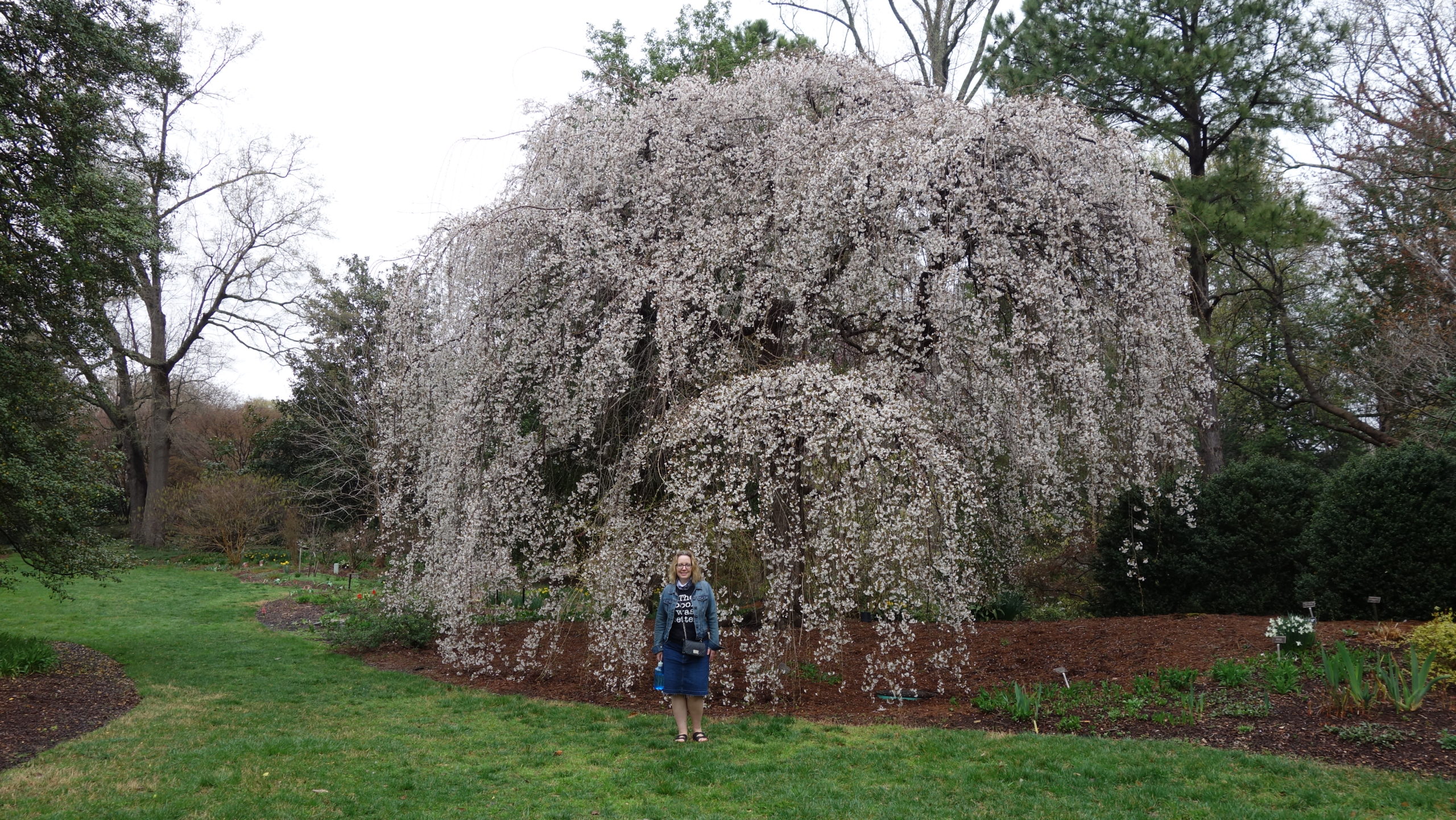
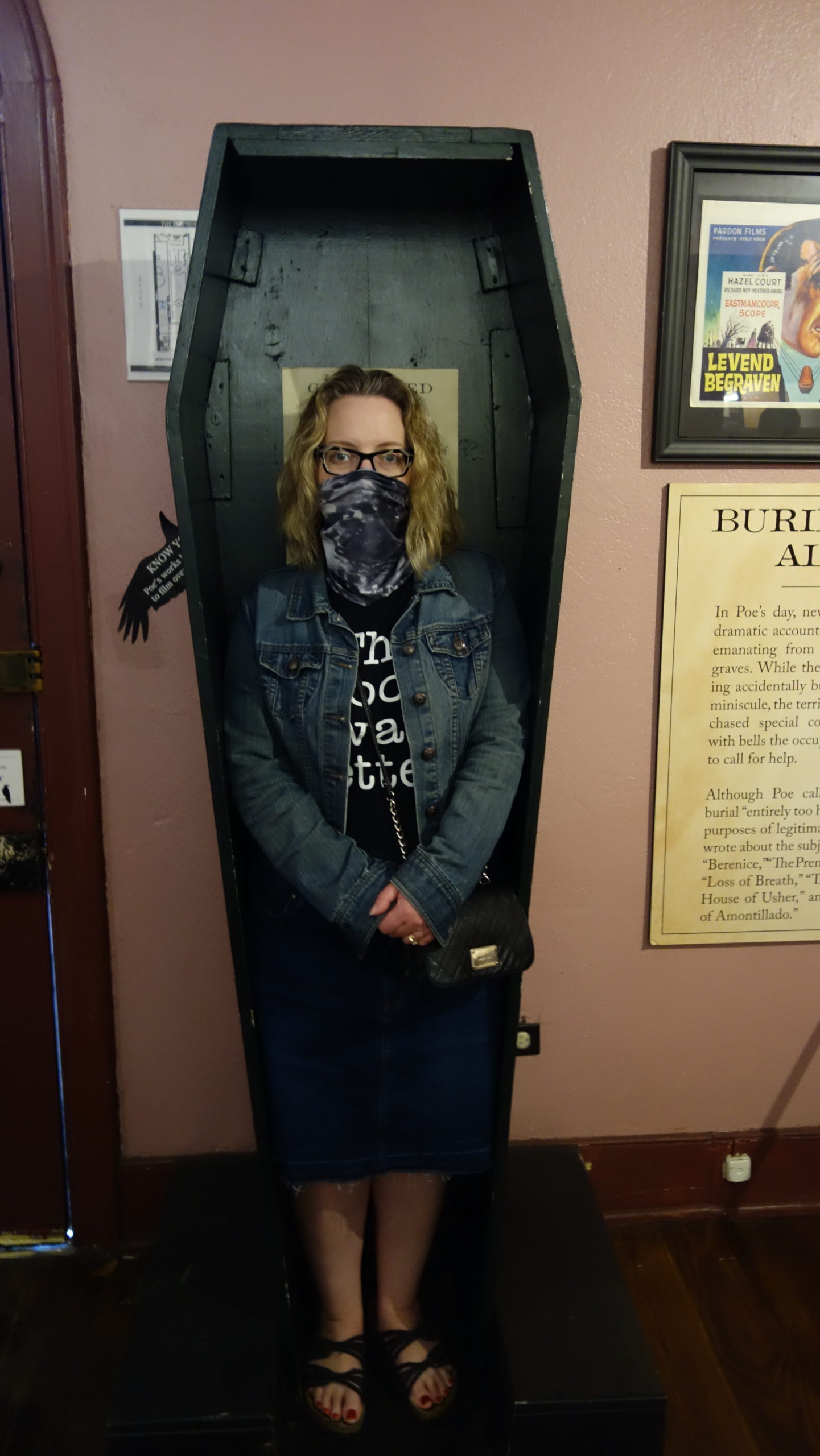
The little downtown area of Roissy-en-France is cute – the taxi dropped us off on a small two-block street that had a few restaurants, and we ate at a small pizza place. After supper, we explored the area some, checking out a park and a cemetery. I know cemeteries are an odd thing to visit as a tourist, but we find them interesting – there are stories to be told in them. Here, a strange number of people seemed to die on the young side – 50’s and 60’s, although there were still a surprising number of people making it into the 80’s and 90’s. There were some WW I graves, and a section set apart for about thirty WW I and WW II graves that were specially set apart as a memorial. Some of the gravestones had pictures on them, and many of the graves were heavily decorated with lots of plaques and flowers. It seems as if Europeans visit and care for graves more often than Americans do, or it is a result of having slightly-raised graves that do not require lawn care – you can decorate them if they do not have to be mowed.

We also checked out the local church, which was open but empty of people. It was a good-sized church, but fairly simple inside, and was a quiet place to visit. We finished our little tour of the town by walking along the restaurant street to the town hall, where we waited by a fountain for our Uber car to take us back to the airport.

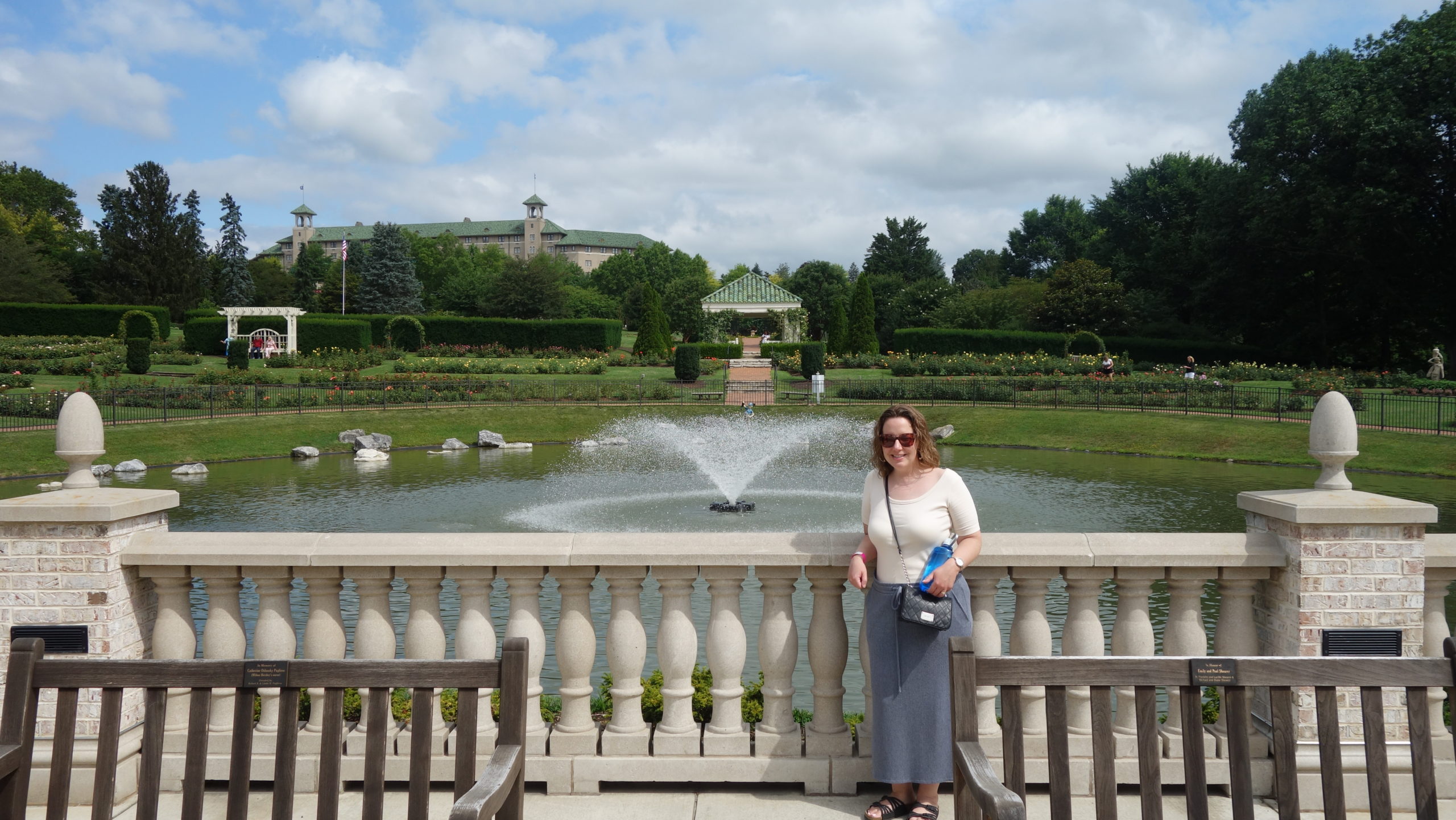
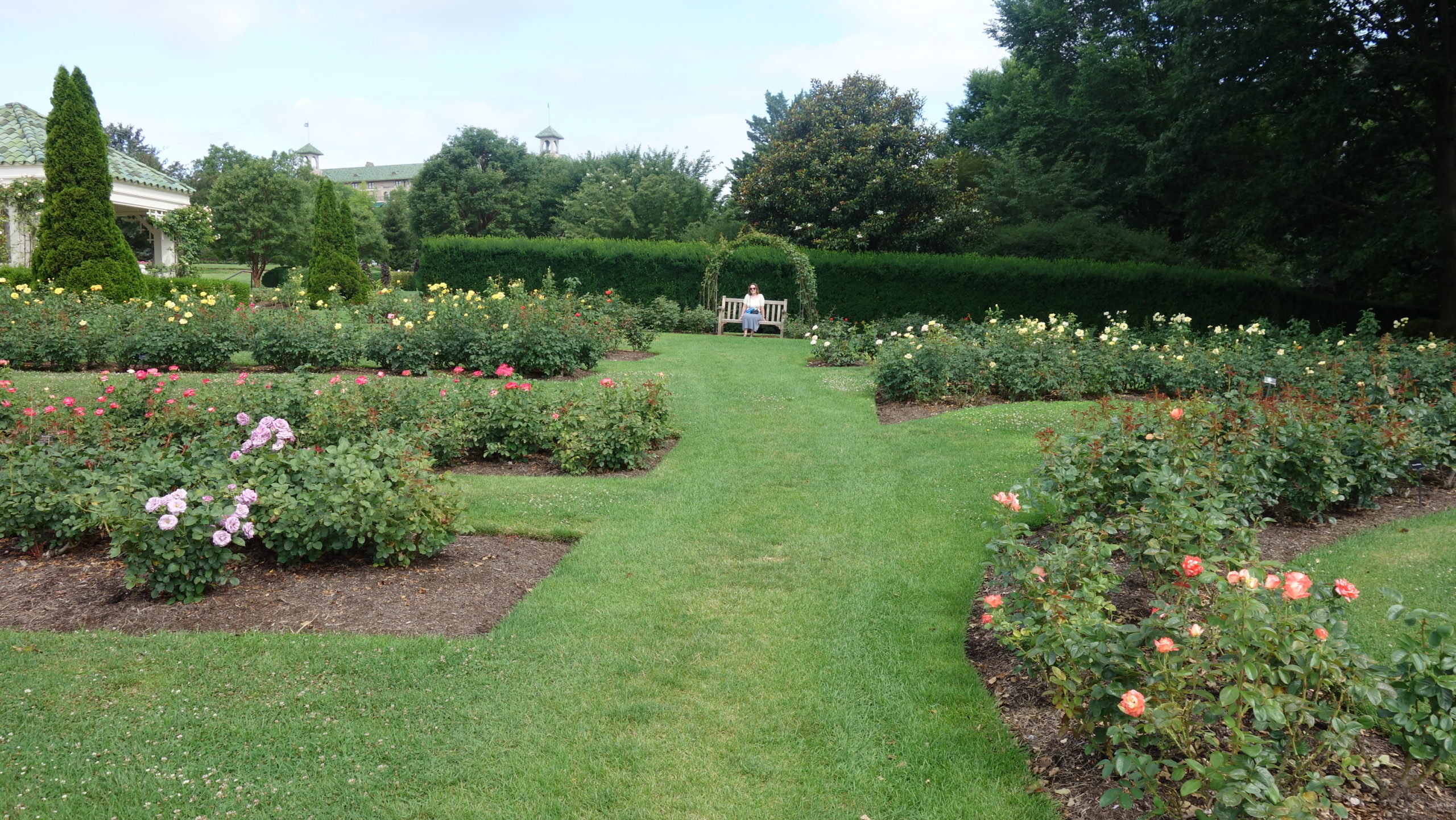
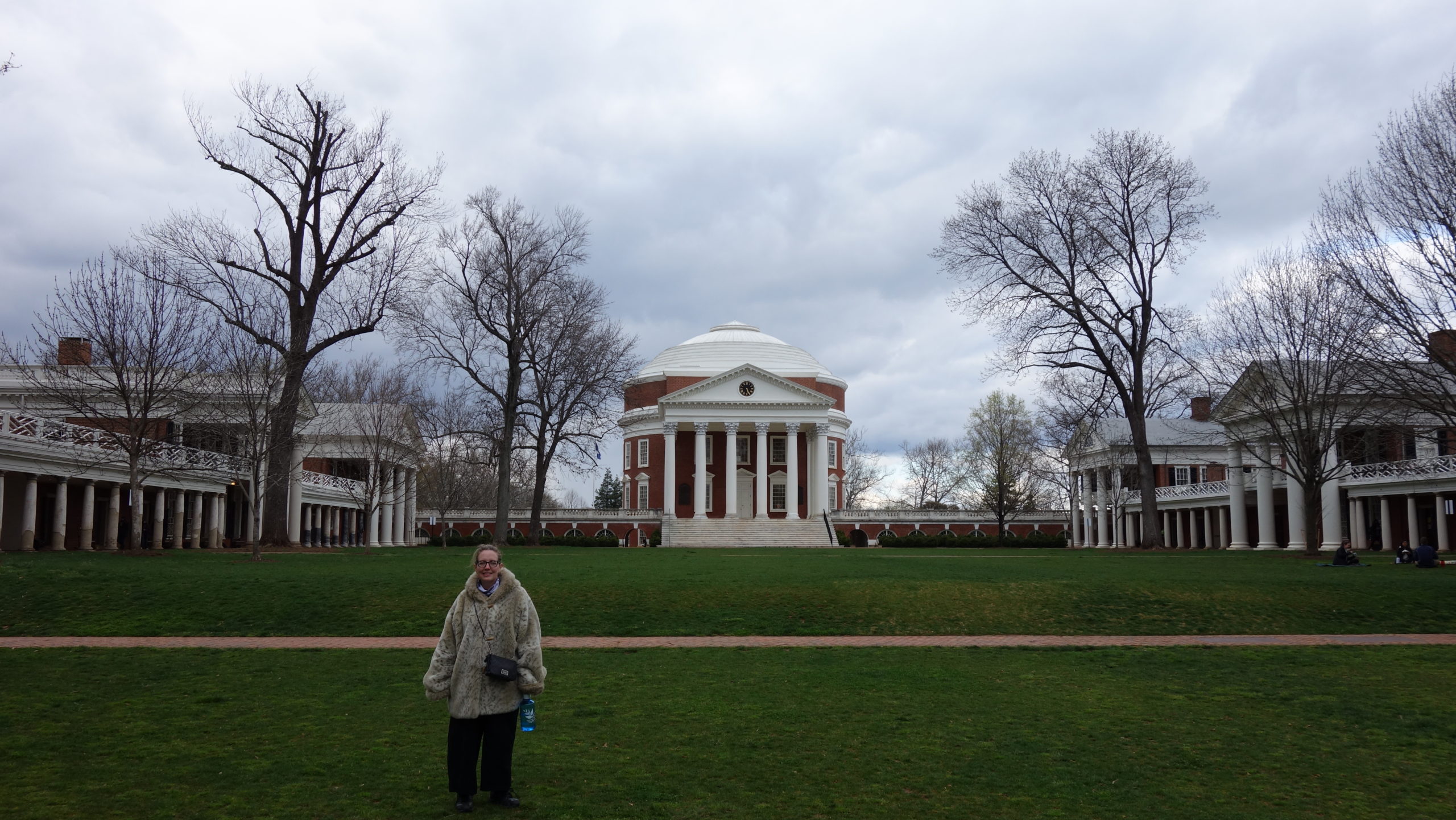
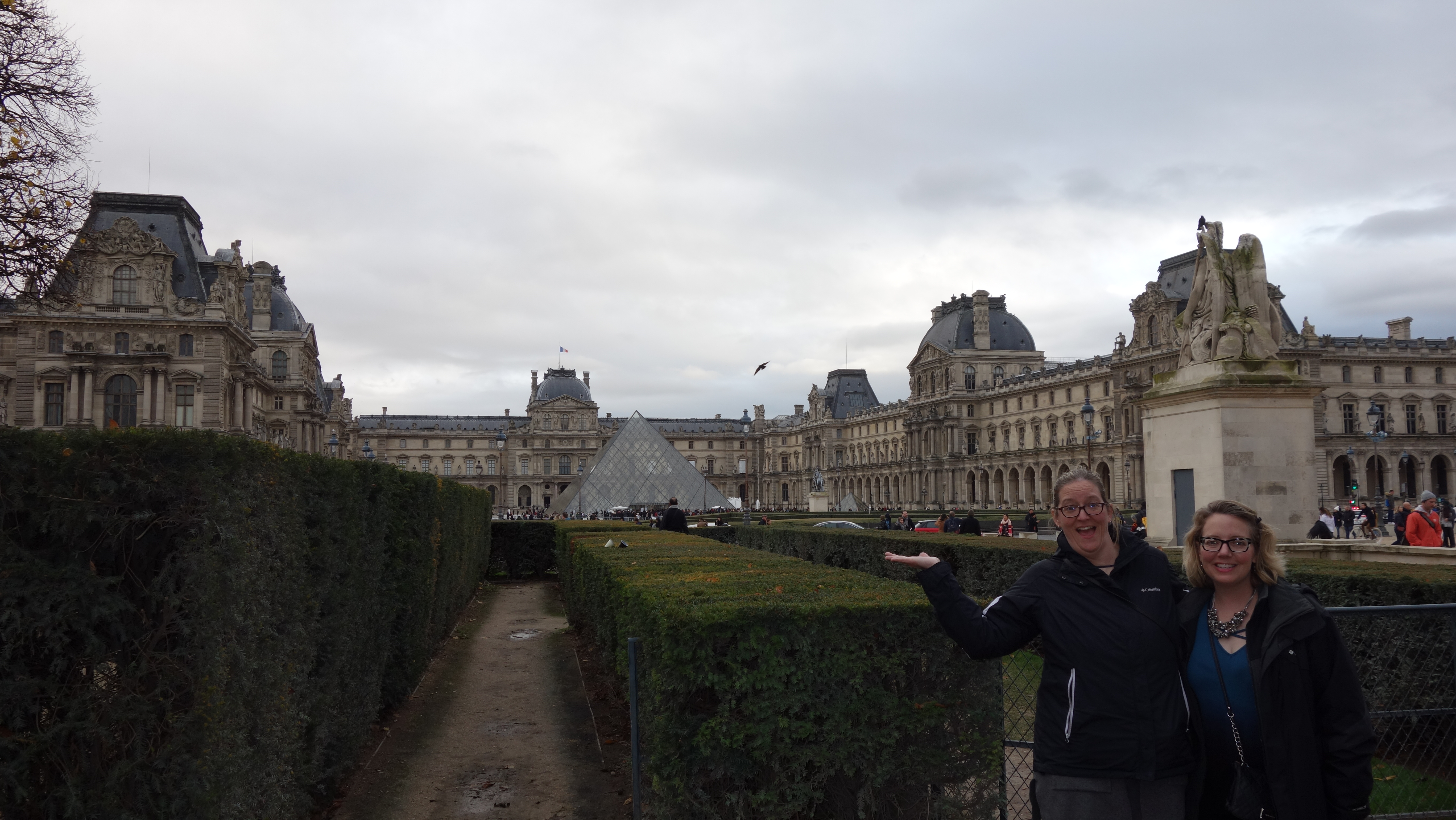
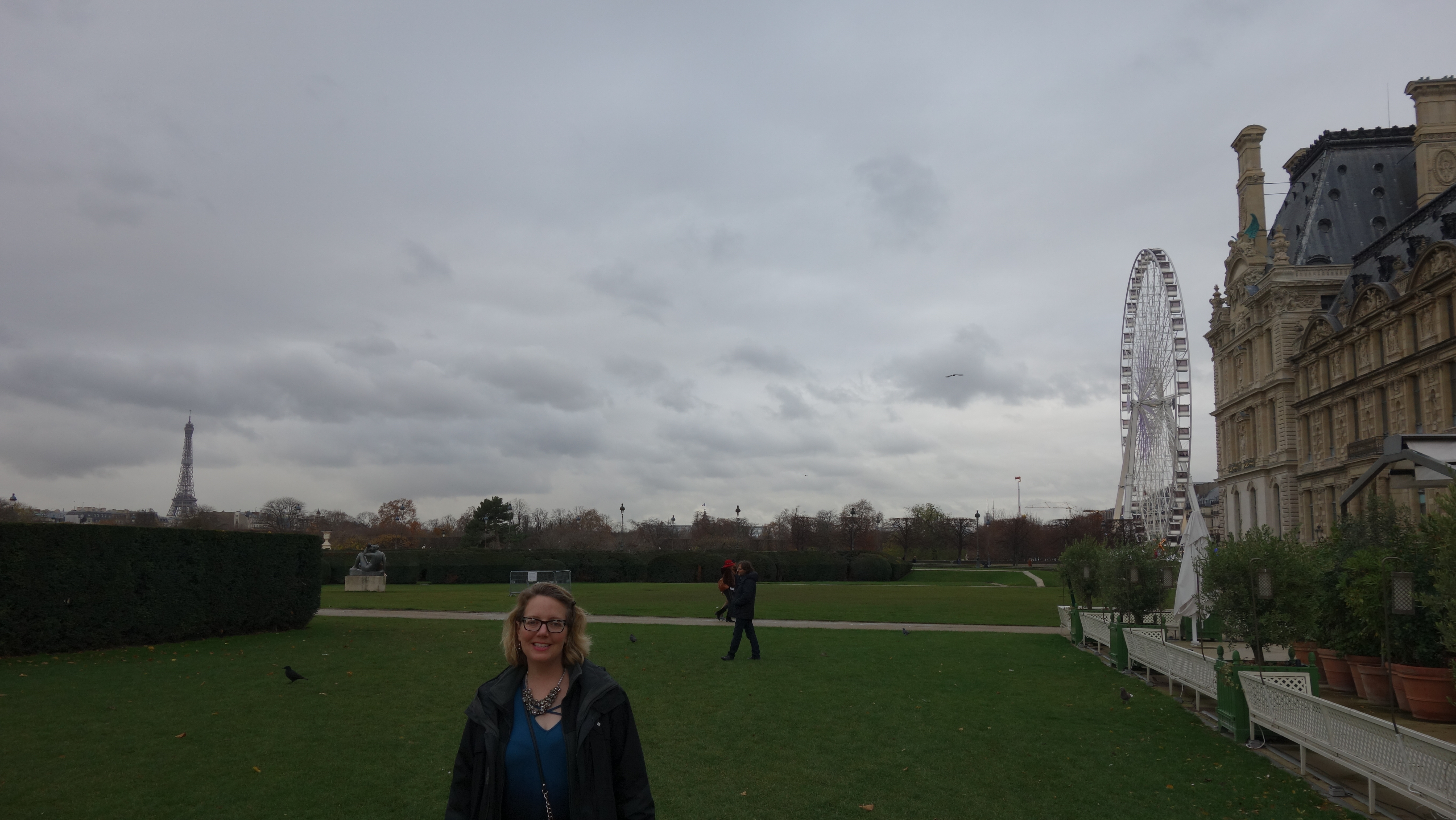
The train trip to Avignon was uneventful, except the high-speed train had to be moved over to slower tracks because of flooding on the line from heavy rains earlier in the week. As such, we got to Avignon a little over an hour later than we were supposed to, which is not encouraging when you are trying to stay awake. But, we got here, and as we walked through the largely-deserted historic center on our way to our apartment, as we passed through the gates of the old walls of the city, I was reminded of why I do end up traveling thirty or more hours to get to places like this. Hello, Provence!


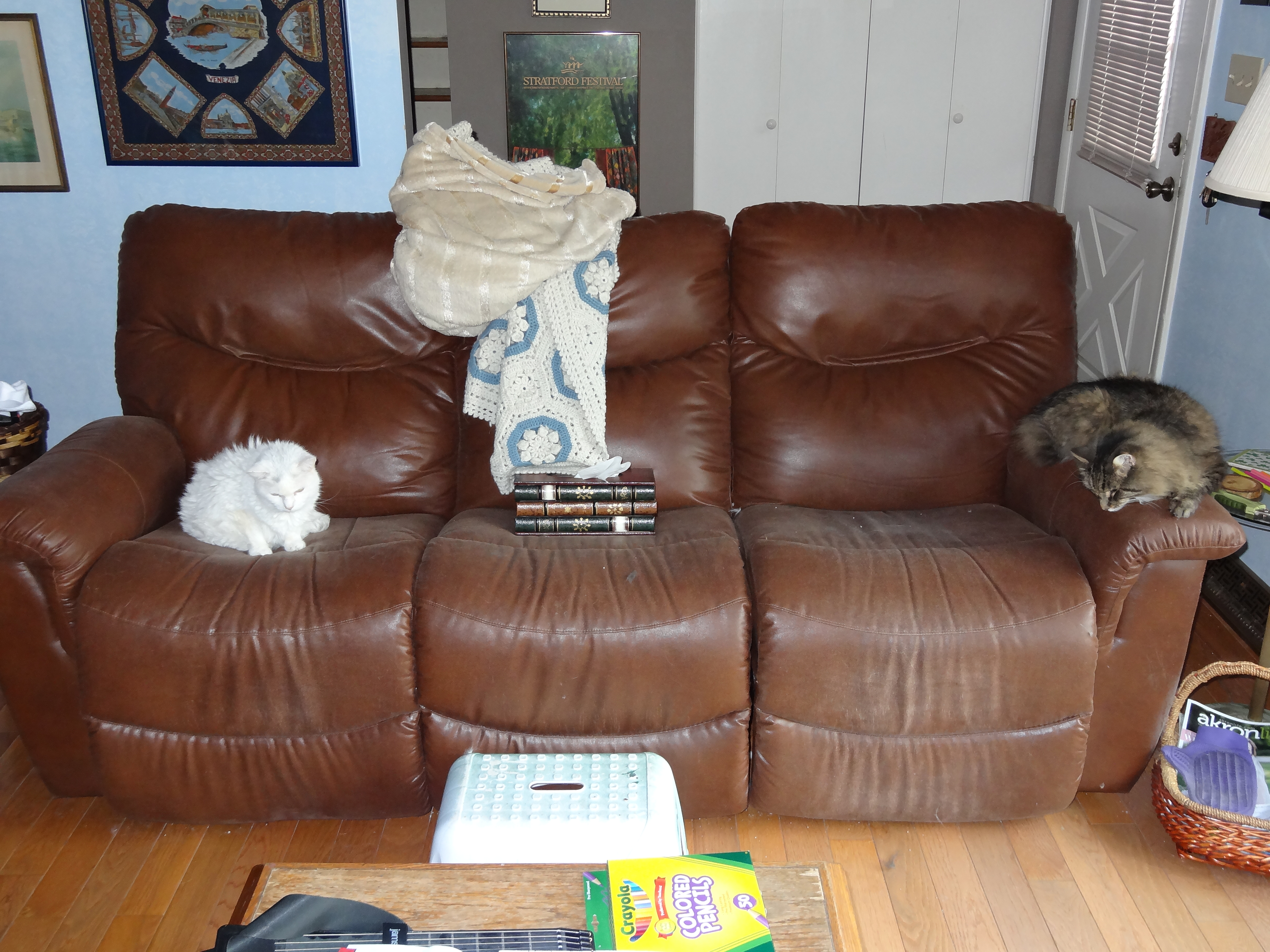
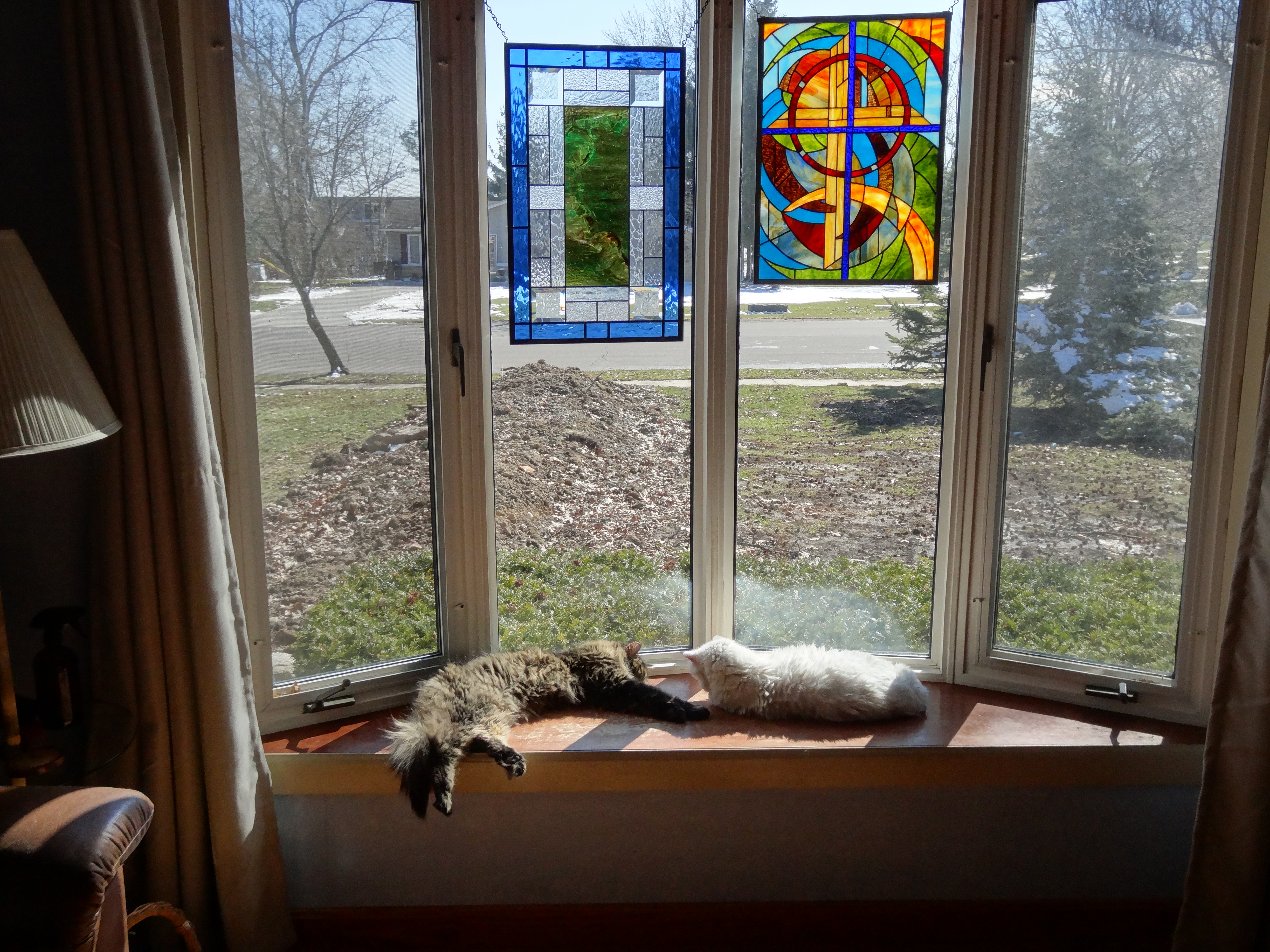
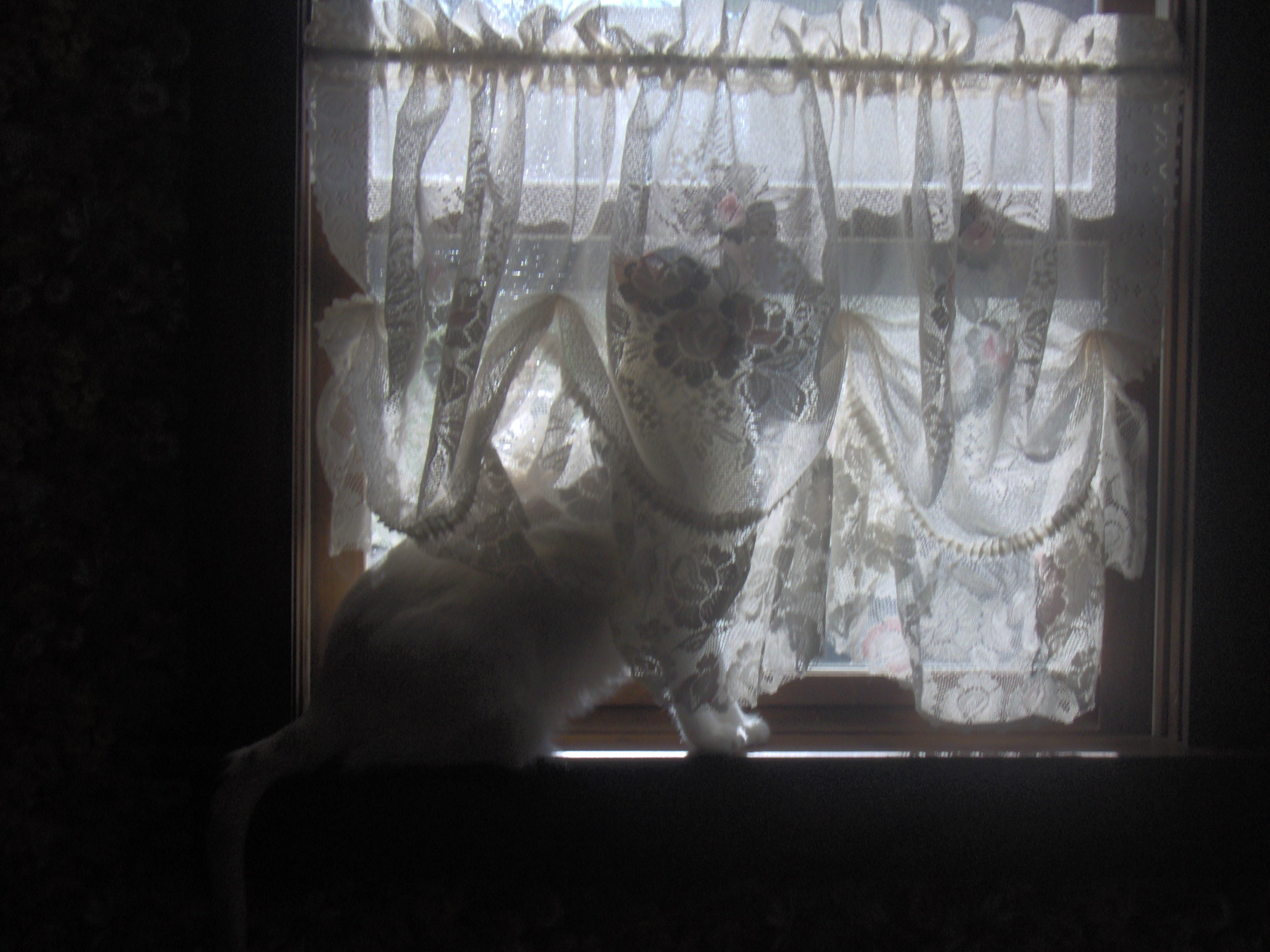
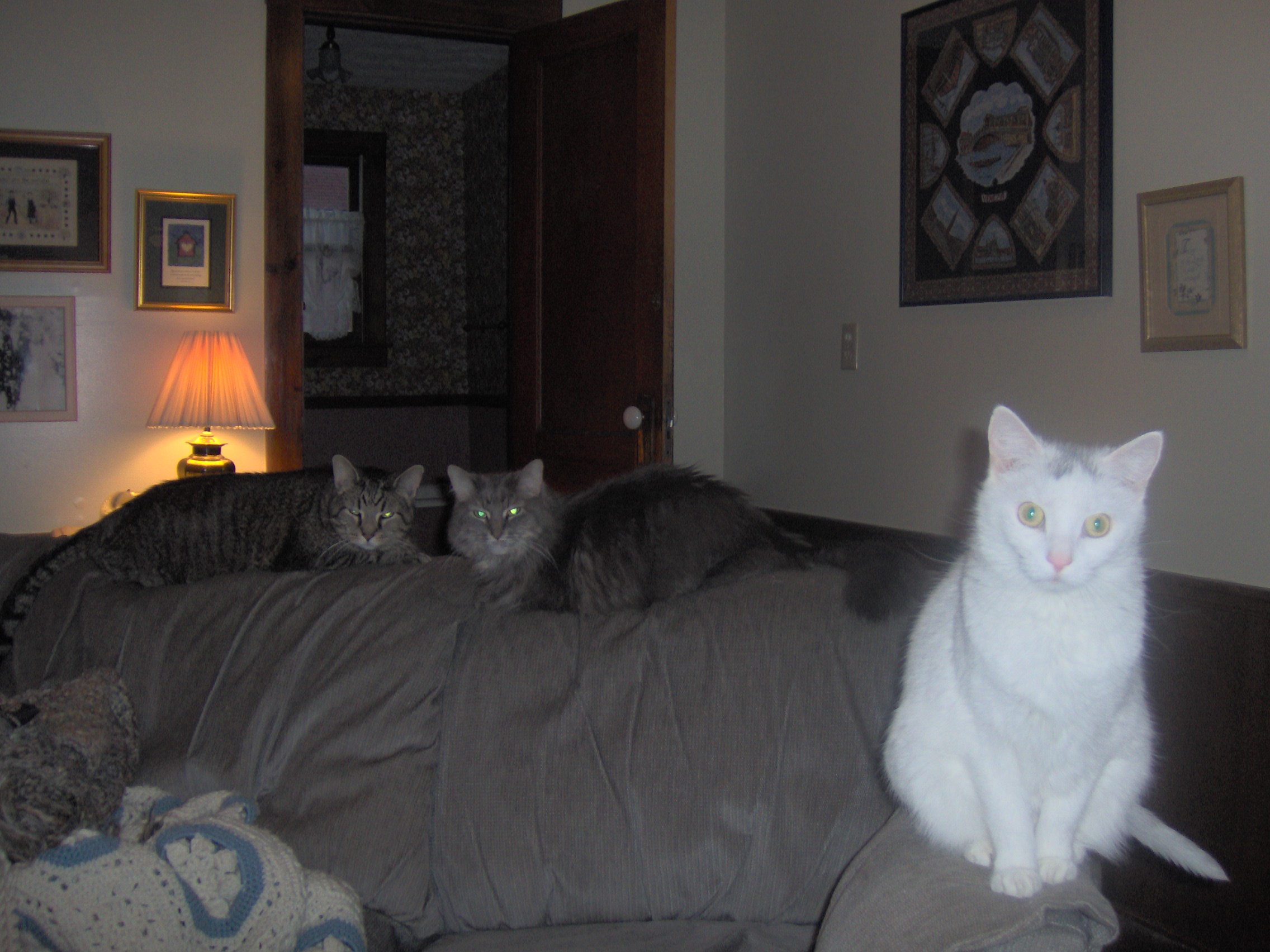
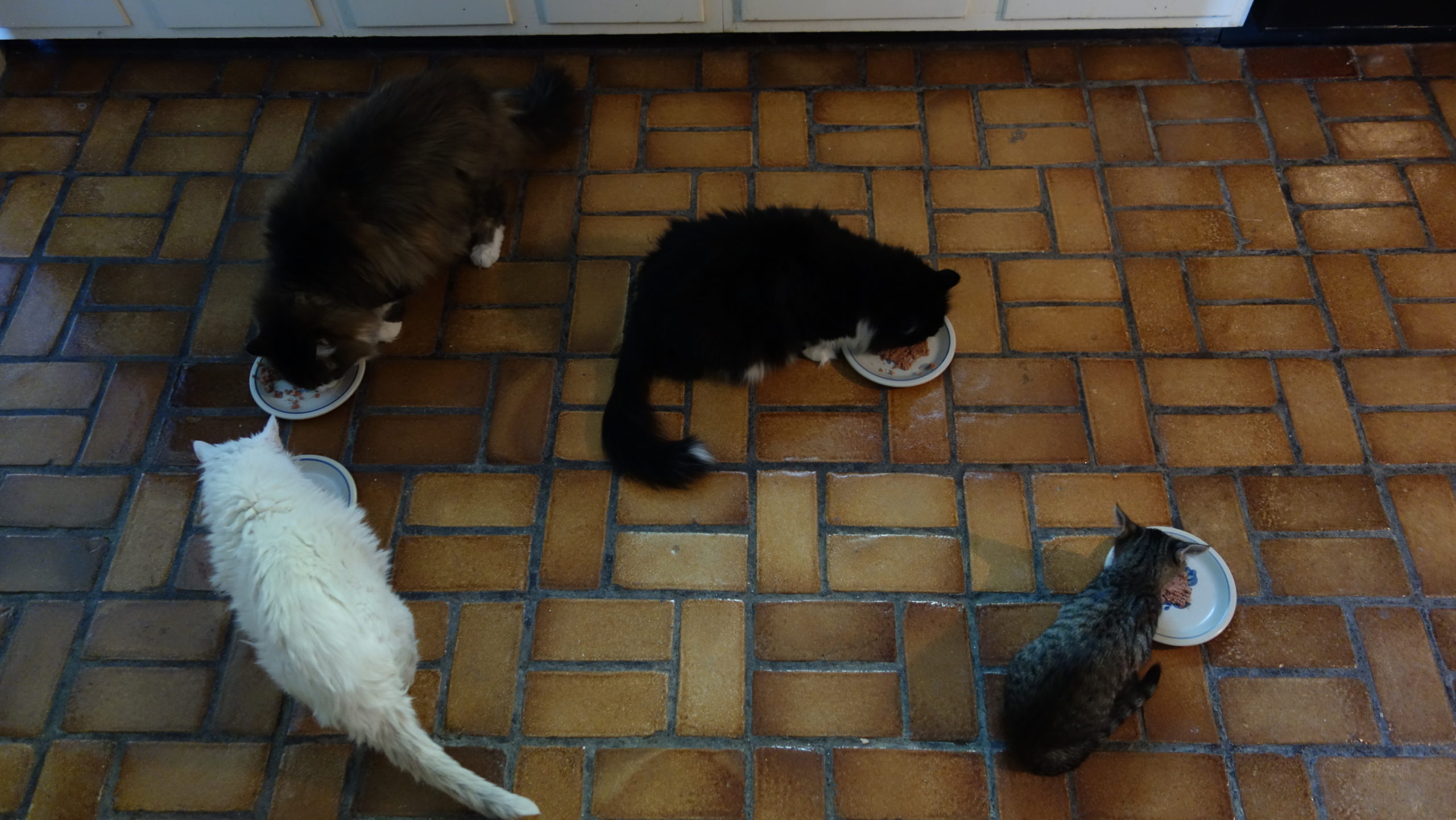
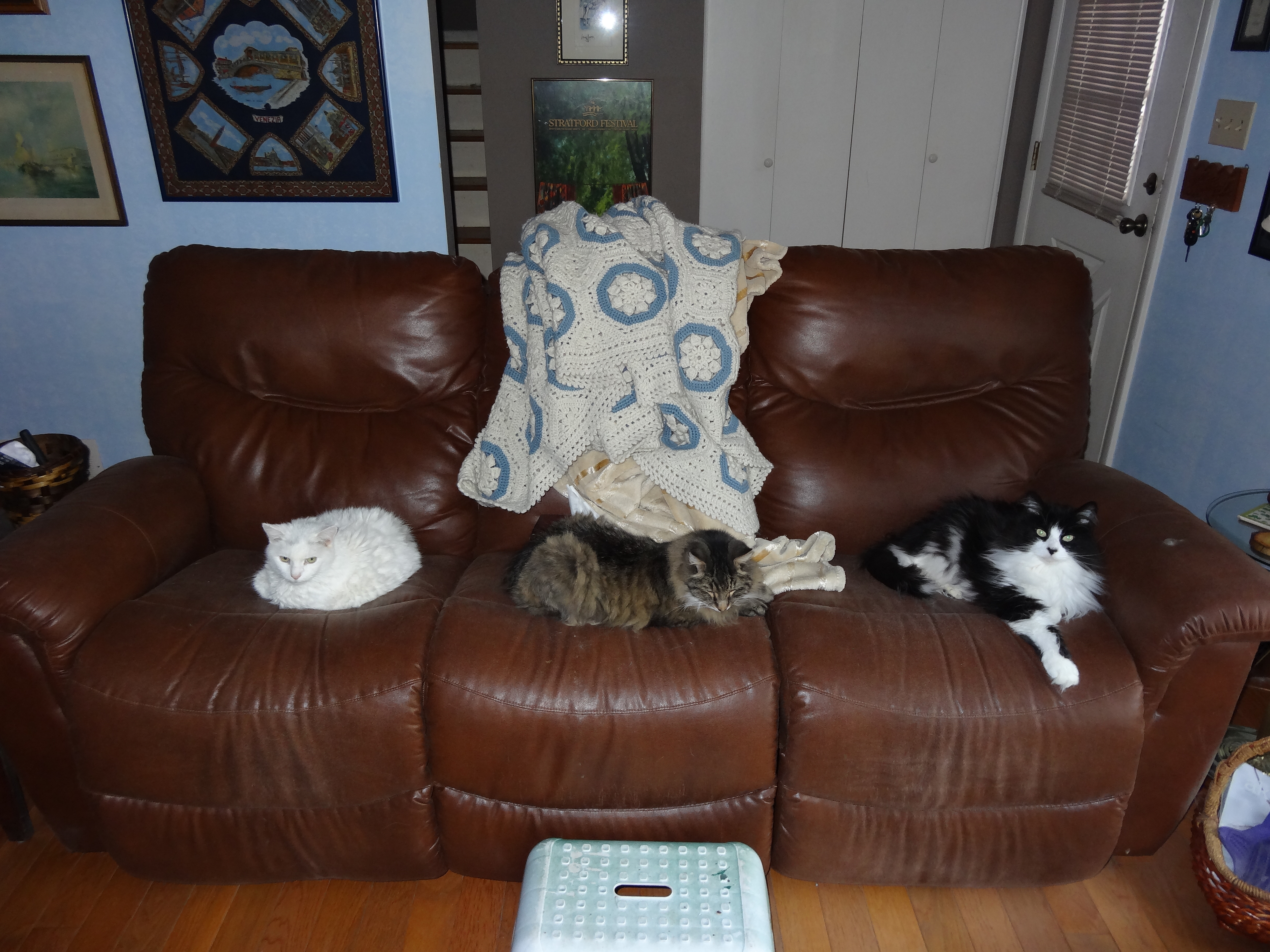
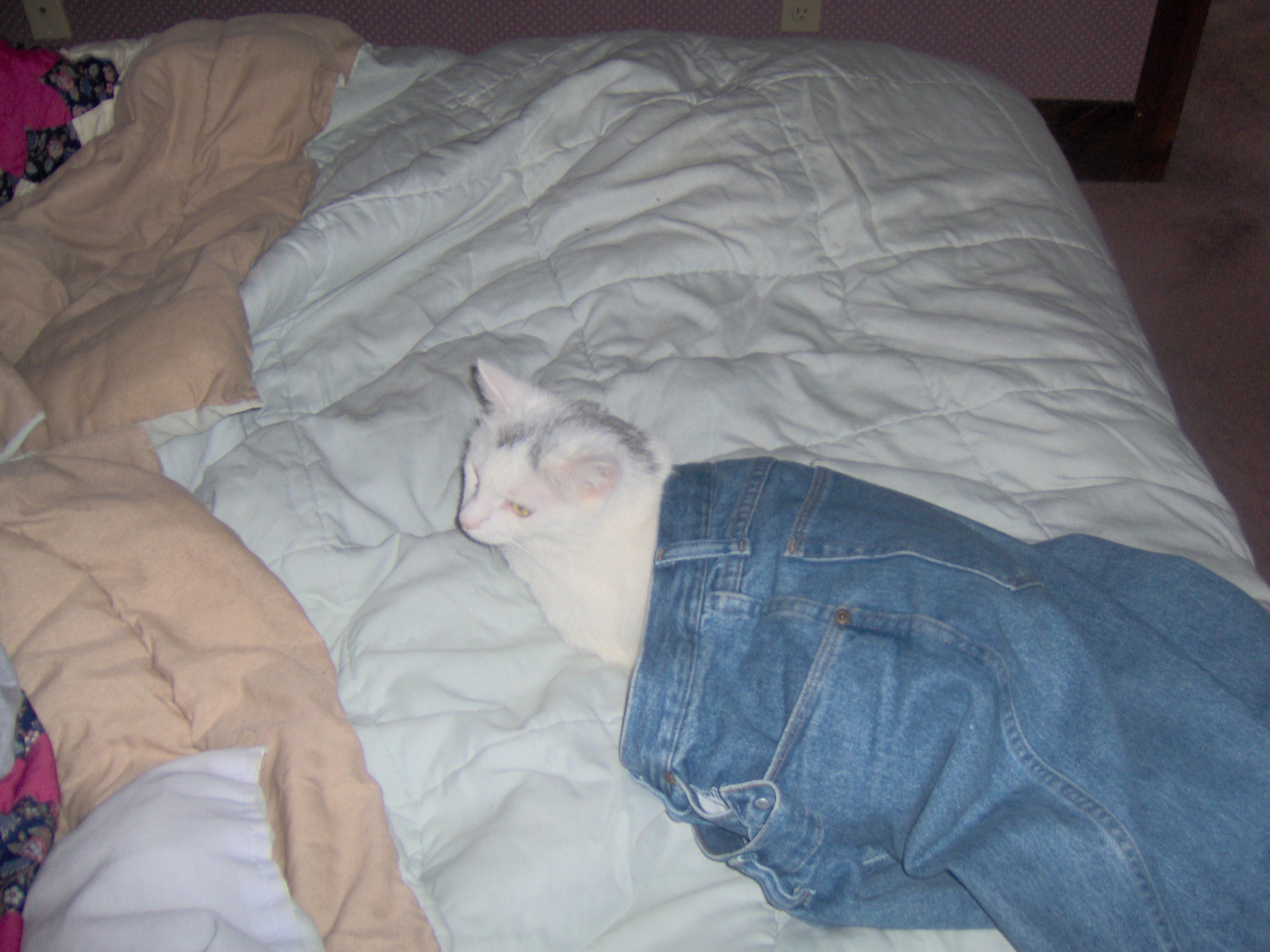
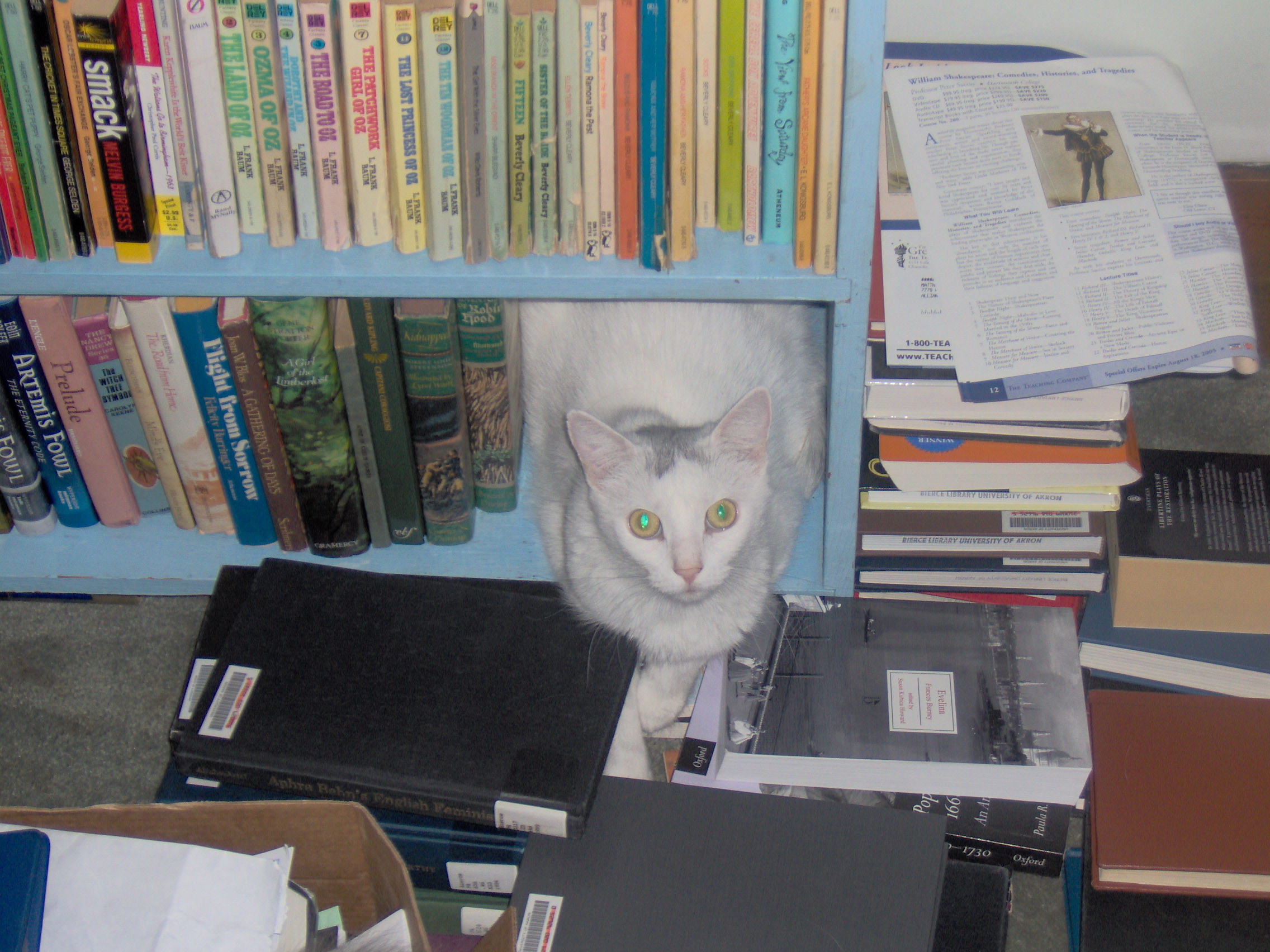
Thereness – A tribute to Skittles (a.k.a. Skit, Skit Kit, Sweet Skit)

“To most people, Hans Huberman was barely visible. An un-special person…. He was always just there. Not noticeable. Not important or particularly valuable.” In the novel The Book Thief, Hans Huberman is the foster father of the main character, Liesel, and he’s not only my favorite character, but he’s also Liesel’s favorite person. The narrator explains how, to most people, he wouldn’t really stand out, yet to Liesel, his “thereness,” as the narrator puts it, is one of the key qualities she treasures in him: “The girl knew from the outset that Hans Huberman would always appear” when she needed him, “and he would not leave.”

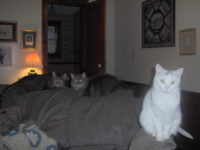
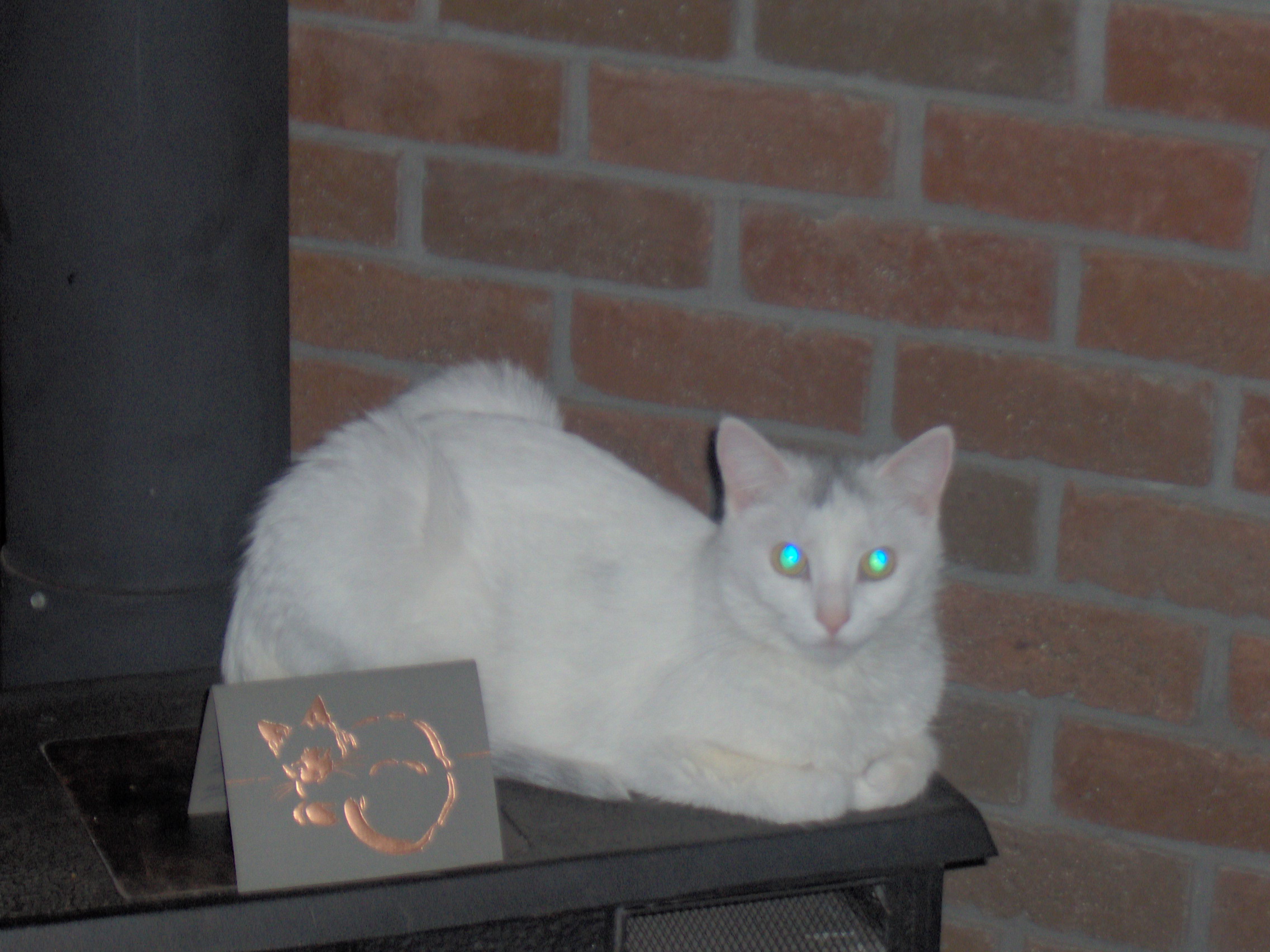
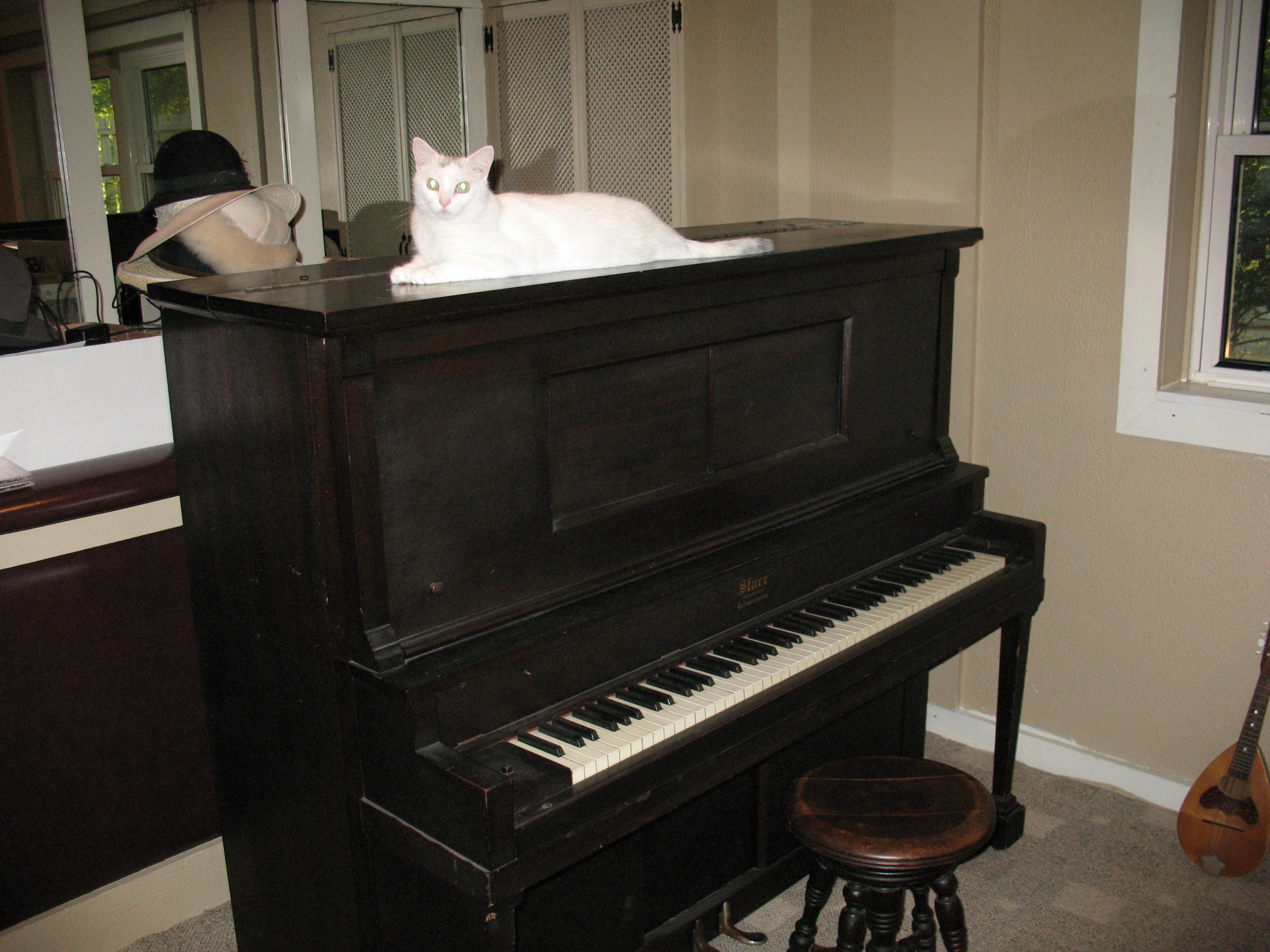
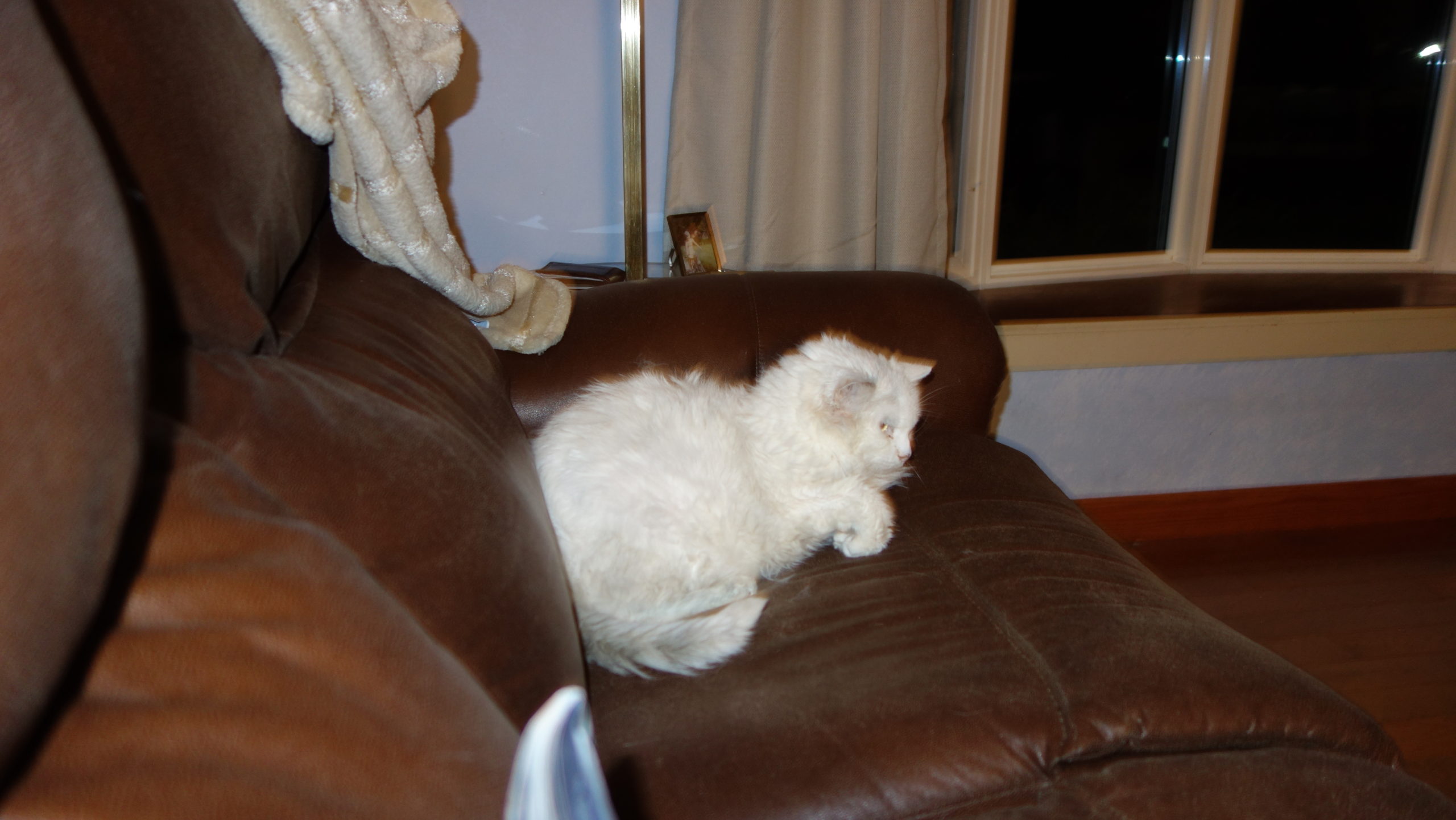
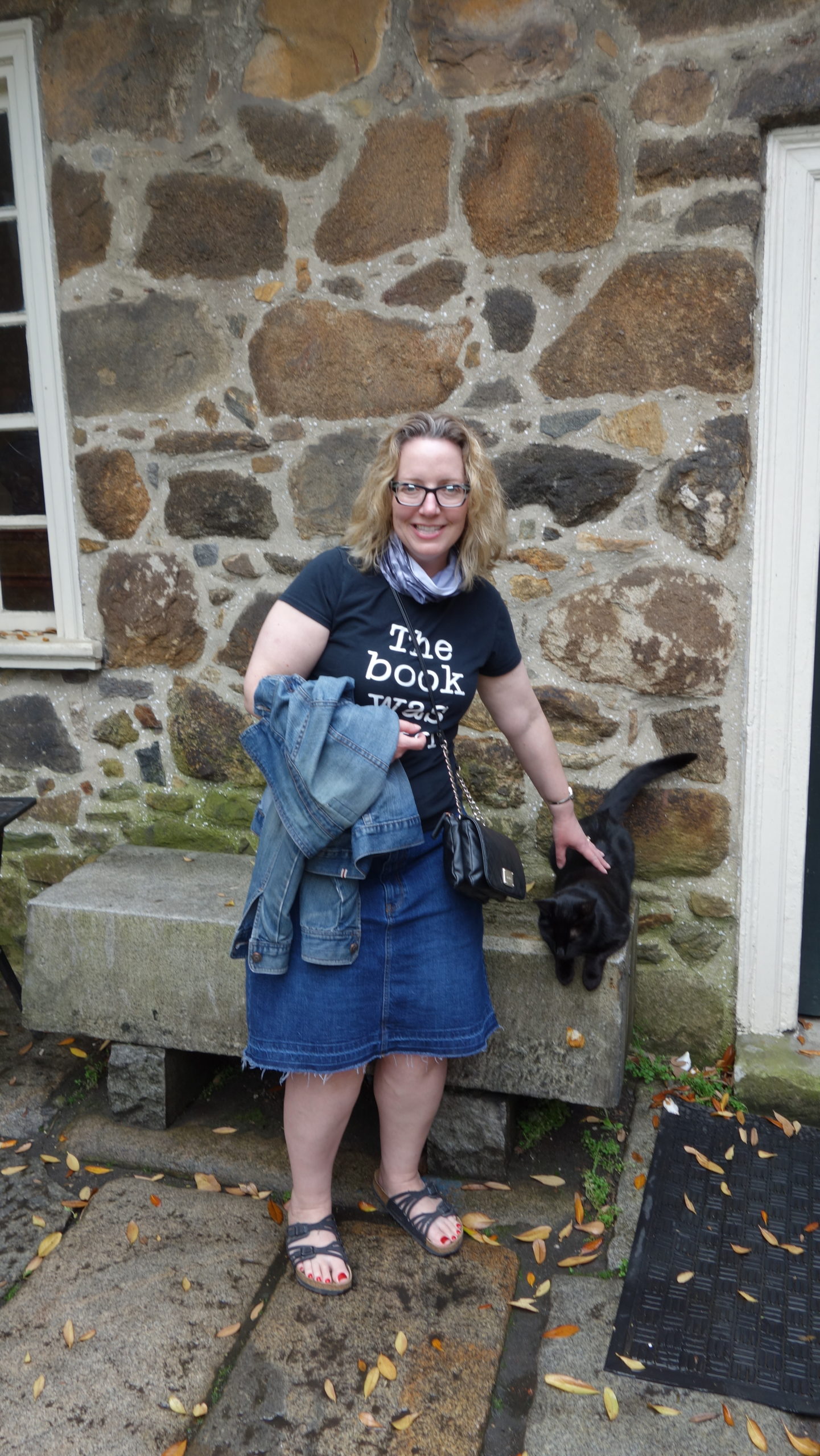
Matthew and I adopted Skittles, along with his father Linus, from a woman whose young son had developed sudden and severe allergies. Skittles was ten at the time, and we’ve never felt right about renaming older cats. We made a slight exception with him, though, in that his given name was Skittle, singular, and between our familiarity with the candy (which always seems to be referred to in the plural) and the fact that Matthew used to have a cat named Skittles, we unconsciously kept adding an “s,” so Skittles he became. As we got to know him better, however, we didn’t so often add the “s” as drop the “tle,” generally calling him “Skit” or “Skit Kit.”

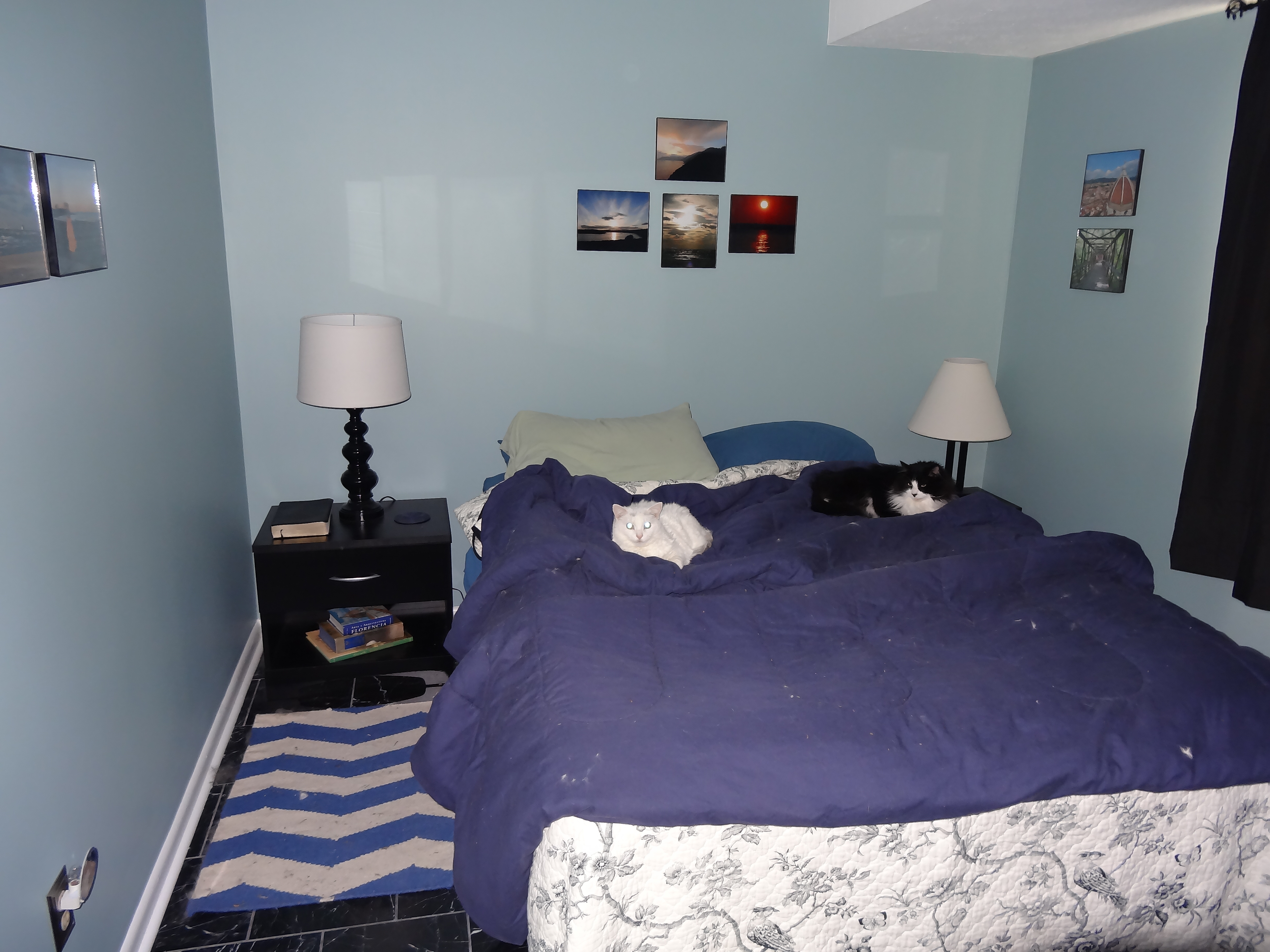
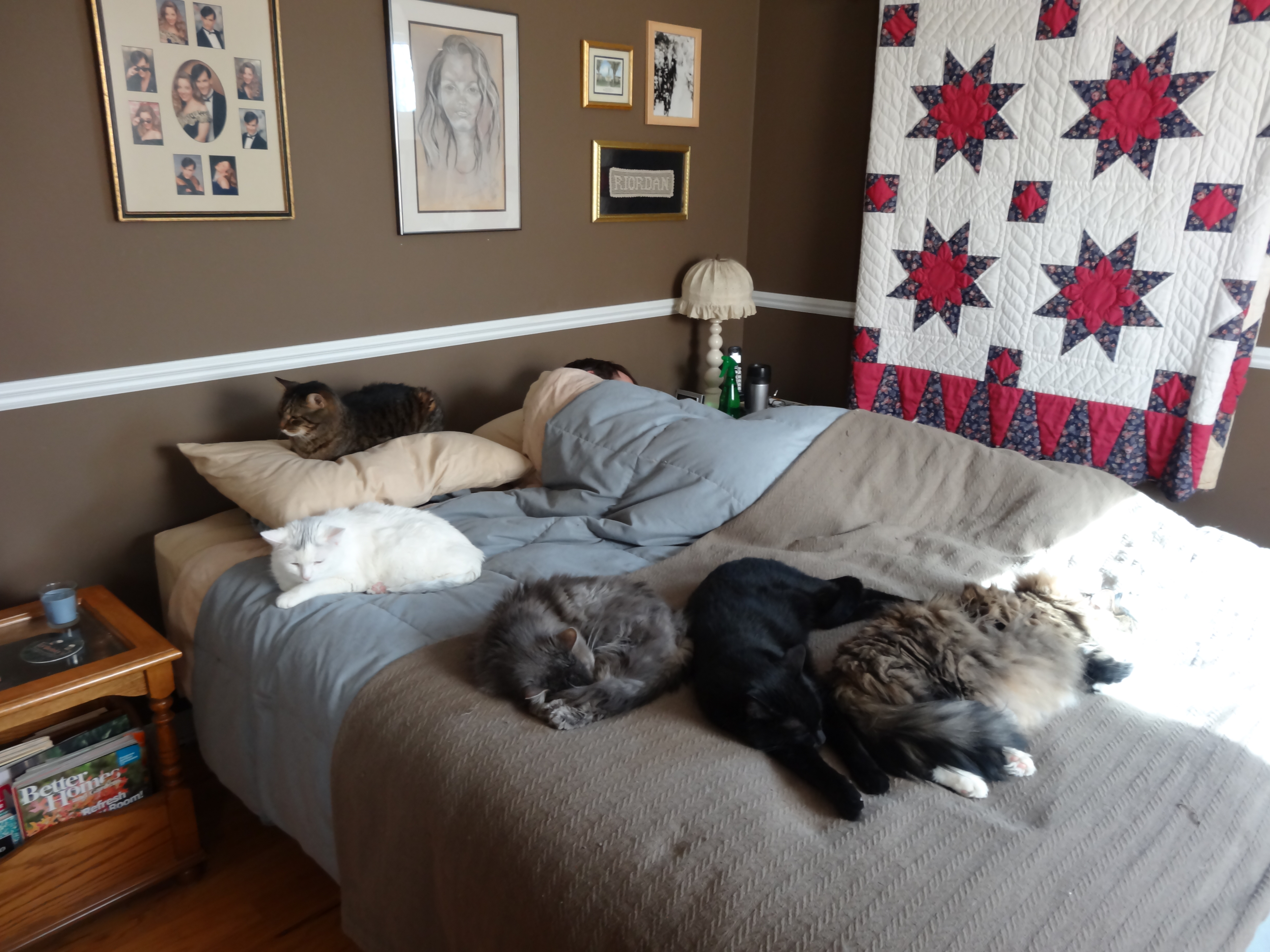
We’d been warned before adopting Skit that he was shy and might spend most of his time under our bed, so we considered it a credit to our cat-whisperer skills that he was more often on the bed than under it, and if he was under it, he’d come out to greet us when we came in the room. What we didn’t know was that, comfortable as Skit seemed in the bedroom, he’d rarely leave it in the over two years he lived with us. To our relief, he learned to go to the basement for the litterbox, and we’d occasionally spot him on the main or lower level of the house, but most of the time, he stayed upstairs, usually in the bedroom. He was always just there.

Though warned of Skit’s shyness, we weren’t told until we met him that he was somewhat crippled from a kittenhood injury. Between this and his age, he wasn’t exactly agile, but since he didn’t seem to be in discomfort, and he could still climb stairs and jump up onto the bed, we found his gimpy gait to be part of his cuteness. We realized, nonetheless, that most people probably wouldn’t regard him as too special. He’d never win any beauty competitions or become a Cover Cat. “He’s a lover, not a looker,” we’d say. Despite his generally weighing about ten pounds, normal for an adult cat, he always looked scrawny, and although we’d scritch his head all the time, we hesitated to pet his back, because it was a bit disturbing to feel his spine. He also had an odd tail, unusually wide at the base, but then, about halfway down its length, narrowing abruptly and ending in a pointed tip. His claws wouldn’t retract all the way, clicking on our hardwood floors, and the “thumb” claw was freakishly large and thick and needed to be clipped to keep it from growing back into his paw.

During his time with us, Skit actually became even less physically attractive. He grew a large bulge on one of his shoulders; the vet diagnosed it as a lipoma, a fatty tumor that was unsightly but benign, so we decided not to traumatize Skit by having it removed. Before that, we did have the vet remove a cyst on his upper lip, leading to a couple weeks of his having to wear the “Cone of Shame.” Even after he was no longer our Cone Kitty, his face still wasn’t the loveliest, as he’d scratch his chin until it was raw or even bleeding. The vet suggested that it might be a contact allergy, so we changed blankets, which appeared to help.

We got Skit in the late spring, and he stayed on the bed much of the time for those first few months, but when the temperatures dropped, he’d hunker by the register, as if trying to absorb all the heat he could. With the return of warmer weather, he returned to the bed; however, after his second winter with us, he stayed by the register even as spring and summer came. Wanting to encourage him to get back on the bed, I suggested taking away the blanket we’d put on the floor, thinking that he’d seek a softer spot … yet after a few days of his continuing to hunker on the hardwood floor, we felt bad for his aging bones and gave him the blanket once again. For about a year, we could pretty much count on his being cutely curled up on that blanket whenever we entered the room. He was always just there.

Or nearly always, at any rate. Grateful not to have to keep a litterbox upstairs, we did decide to humor Skit by bringing up a plate of canned cat food every day and by providing an upstairs bowl of water in the hall; we didn’t want to risk his dying of hunger or thirst. So Skit would regularly leave his blanket for food and water. He’d also leave it almost every night in what became an endearing ritual. He liked me but was especially fond of Matthew, and almost every night after we turned out the lights, we’d hear his clicking claws crossing the floor in a lurching, lub-dub, heartbeat rhythm, uneven because of his bad leg. Getting to the bed, he’d jump up on Matthew’s side and settle on his chest while we scritched his head and stroked his sides. These goodnight snuggles were important enough to Skit that when we were sleeping in the downstairs guest room, where it’s cooler and darker, he’d often venture out of his safe space to find us. Sometimes he’d come down to that room to see me even when Matthew wasn’t with me.

After about two and a half years of being blessed by Skit’s thereness, of feeling that he would always appear when we needed him and wouldn’t leave, we did the leaving ourselves by going out of town for a weekend. Notwithstanding Skit’s multiple minor maladies, he’d never shown signs of any major illness, and all our other cats seemed fine too, including the eighteen-year-old, so we didn’t have any concerns about leaving them for a couple days. Still, we arranged for a cat-sitter to look in on them, and before we left, I found all five so I could give them a farewell petting and tell them I loved them.

I do this every time we go out of town, and every time we return, we start by looking for each of the cats, to make sure they’re all okay. We assumed they would be this time, too, but as I came into the bedroom, Skit wasn’t there on his blanket. This wouldn’t have alarmed me automatically except for what was on his blanket: he’d had diarrhea, something that had never happened before. Thinking he might be hiding under the bed, I lifted the covers and peered under the edge, but he wasn’t there. Just then, Matthew came upstairs and said, “I found Skit … in the basement by the litterbox…. He’s dead.” Everything had been fine when the cat-sitter had visited the day before.

The abruptness of Skit’s demise made it in some ways less emotionally grueling that when we’d lost cats in the past. We didn’t have to watch him suffer, realize he probably wouldn’t recover, make the awful appointment, and return home with an empty cat carrier. But I’m still not used to the fact that when we come to the bedroom and glance toward the wall by the heater, he’s no longer there.

Claws Around My Heart – Skittles 2007(?) – 2019

“Click, click…click, click…click, click.”

You always knew when Skittles, our sweet gimpy tiger kitty, entered a room. His back claws were long and a few of them could not retract all the way, and so he clicked wherever he walked. In addition to the sound, he walked with a staccato rhythm as well; it seems as a kitten he had an accident where he got hung up trying to jump over a baby gate, and it messed up his haunches to where he had a distinctive duck waddle for his back legs. Two quick clicks – “click, click” and a pause, followed by two more clicks as he waded through his daily life.

Skittles was quite a cat. His back-leg injury left his back half pulled-looking, so that although he was a normal weight (about nine pounds), his back half collapsed down to a narrow bony body that was difficult to pet since you could feel every bone in his spine. He had some hair missing around his lips and sometimes his chin, and his physical features in general were somewhat homely when considered individually. But, when you threw in his amazingly sweet temperament, all of his ugly-duckling features combined together in a magical way, making him adorably cute.

By nature shy, Skittles was, I think, reclusive because of his limited mobility. When we brought Skittles home with his father Linus back in May of 2017, we put them in our bedroom to begin the week-long socialization process with our existing kitties. While Linus went on to boldly roam the entire house, Skittles rarely left the safety of his bedroom. He would leave to use the littler box and to eat, but when he did, he added a low growl to his “click, click,” to alert the other cats that he was on the move.

And move he could, especially given his back legs. On the rare occasions I caught Skittles outside the bedroom, he would sprint back to his safe spot at a surprisingly quick pace. Skittles was also able to spring up on the bed, despite his legs. He spent much of his first year hunkered down on our bed.

Until it got cold. Then, Skittles discovered the wonder of the forced-air vent, and he loved that it spit out warm air. He would bundle his bony body beside the register, and would stay there for hours without moving. I felt bad for him sitting on the floor, so I gave him a blanket to sit on, one that he would turn out to be allergic to, causing him to lose his chin hair for months. I eventually figured it out and got him another blanket.

Meredith and I figured that when winter ended, Skittles would jump back on the bed again, but he never really did. He stayed by his trusty vent all through the summer – maybe he liked the air conditioning, or maybe it was his safe spot. Either way, we kept a blanket down for him all the time.

There was one time when Skittles would leave his favorite spot – bedtime. When I climbed into bed, Skittles would click his way over, jump up on the bed, and proceed to sit on my chest while I scratched his ears. He sometimes would settle down in my chest, often with his front claws on my throat, which would cause me to haul the blanket (and Skittles) down the bed and away from my larynx. He would stay as long I I kept petting him. When I stopped, he would either jump down, or go to the foot of the bed for a few minutes before going to get a drink.

How that cat loved water. We kept a bowl of water outside the bedroom for him so that he could get a drink without having to navigate stairs. When I would put fresh water in the dish, he would leave the heat to come get a drink, usually just as I was putting the bowl back down again. He would drink for a long time, and for some reason it was part if his nightly routine as well, after he jumped off the bed.

One of the most amazing things about Skittles is how much he loved me. Mer and I sleep in the downstairs guest bedroom on weekends because the room is darker than our bedroom, making it easier to sleep in. When I would go to bed, about three-quarters of the time, I would get settled and hear “click, click” coming down the stairs. The kitty who loved his heating register and who rarely left the bedroom somehow knew I was in bed, and he was coming down the stairs to get his bedtime loving. It was adorably sweet of him. He even did it once to my brother, Shannon, when Shannon was visiting one weekend; this from the cat who ran from everyone.

This last Labor Day weekend, Meredith and I went to visit a friend in Michigan, leaving on Saturday and returning on Monday. When we left on Saturday, all was well, and there was no indication that Skittles could be ill – he was lying on his trusty blanket as always, and had come up on the bed Friday night for bedtime love. When we got home Monday afternoon, Skittles was not under the bed or on his blanket, which was unusual, but probably meant he was in the basement using a litter box. The only indication of concern was there was some diarrhea next to his blanket. I went looking for him, and I found him lying dead next to a litter box. My guess is he must have had something sudden happen, like a heart attack, and he lost control of his bowels, but he still tried to get to his litter box. What a sweet kitty. He had passed away just one year after his father, Linus, had died, and only around twelve years old.

It is hard now to not see a blanket on the bedroom floor, or to hear “click, click” on the stairs, and when I go to bed, I really miss my sweet tiger kitty. He was an improbable mess of a cat – homely and cute, terrified and friendly, slow and quick, settled and roaming, and he clicked his claws all the way into my heart.

Czechia 2019 – Day 14 – Wednesday – Cesky Krumlov to Castle Zvikov to Prague

Today was a happy-sad day. Sad because it was our last day of touring in Czechia, at least on this trip. Happy because I could turn in the rental car and rely on public transportation again. I find driving in Europe to be stressful, so it is always a bit of a relief to be rid of the automobile.

But, before we get to Prague, there was more touring to do! I knew it was going to be hot in Prague today, so I wanted to stop somewhere along the way to break up the drive and to putter about somewhere not fully paved with roads and sidewalks baking in the sun. We happened to see a postcard of Castle Zvikov in our B and B in Cesky Krumlov, and so I looked it up. It looked beautiful and looked to be about halfway to Prague. That was our stop.

I was very much surprised to drive through the narrow streets of the small village near the castle only to pull up to a large parking lot nearly full of cars and with a tour bus. It seems that while Zvikov is not on the tour routes known to most Americans, the Czechs know it very well.

While we did not tour the interior rooms of the castle, the grounds and the fortifications were open in which to wander for free. The castle is built on a small peninsula where the smaller Otava and the larger Vltava rivers come together, with a grand view of the rivers, the cliffs around, and the heavily forested hills on the shores. There is also a landing for two boat services that offer to take you up the river and back, but I could not figure out where to buy tickets or how things worked, so I gave up on any boat tours.

We strolled around all the open parts of the castle, resting wherever there was shade and a good view. There were a number of people about, but it never felt crowded; my guess is many people parked in the lot and then took a boat tour.

From the castle, we made our way to the Prague airport, with only a slight detour around the airport to find a gas station to fill the rental car. While there is a gas station on the leaving-the-airport side of the road, for some odd reason there is not one on the going-to-the-airport side. With the help of the GPS, we made it work, and said goodbye to our car. As an added bonus, we met a man in the rental lobby who had his cat with him, so we got to pet a kitty.

We took the bus to the metro, and then walked to our hotel with only one consultation of a map. We got settled, and then took the metro to the Jewish Quarter, where I promptly got lost and proved how close that area is to the Old Town Square when we suddenly turned a corner and found it. We were not supposed to be there. Another hasty map consultation and some furrowed-brow moments, and we found our destination – Speculum Alchemy, the alchemy museum.

Back around 1600, the Habsburg king moved his court to Prague.  Johannes Kepler and Tycho Brahe both came to work for the court as Prague became a center of learning. The king also sanctioned a secret alchemy lab, where serious minds worked on potions and medicines and tried to transform base metals into valuable ones. At some point, the cellar labs caught fire, and the entrance was bricked over, and so the labs were lost for almost four hundred years. The river flooded badly in 2002, and part of the street in front of the now-museum collapsed, revealing an old underground passage that led to the old labs, where much of the original equipment had survived, including Latin copies of the recipes for the medicines and potions they made.

The museum is very small, but it is (now) dramatically hidden behind a bookcase, which is a nice touch. The lab consisted of only five rooms, but the story was interesting and the fact they had so many original furnishings was great. Who forgets all these things for almost four hundred years? Neat.

After the museum, we strolled back from the Old Town Square, heading to Wenceslas Square. We stopped for supper at an Italian place run by real Italians, and it was in a secluded inner courtyard, making it peaceful, even just fifty yards from tourist central. After supper, we swung by Wenceslas Square to check out the Gallery of Steel Figures, which looked wonderfully touristy, but it was getting late. I’ll settle for a castle and a lost four-hundred-year-old room, and I’ll see the Gallery next time we are in Prague.

Czechia 2019 – Day 13 – Tuesday – Cesky Krumlov

If you can’t stand the touring heat, strategize. Today was the first day that heat (sunny, mid-eighties) made carefree touring more problematic. Happily, Mer and I have worked out some heat-related methods from our various travels.

1. Get some elevation. This was not so dramatic today, as I really wanted to go to the top of the nearby hill that has a church on it and promised good views of the town. We trudged up the hill first thing in the morning, and while the sun was still intense, there was some shade along the way. At the top, we did have commanding views of the town, as well as shade and a solid breeze. Also, it was such a pretty spot, we sat on a bench there for some time. Taking it easy is another good method of keeping cool.

2. Pace yourself. We walked into town after hiking down the hill and topping off our water at our B and B. We walked quite slowly, and paused to take a look into St. Vitus Church, which is the tall church in the middle of town. The inside is relatively plain, but the floor-to-ceiling windows are very impressive. Our walk was a fairly long one, over a mile, ending at…

3. Get underground. Since we did a medieval silver mine in Kutna Hora, I thought it would be fun to contrast it with a modern graphite mine that only closed in 2003. Plus, the inside of the mine is always fifty degrees. We put on mine clothes since graphite can stain easily, pulled on boots because of the water in the mine, put on our circa-1990 lead-acid battery hooked to our lights, and climbed aboard a little mine train that took us 1.2 kilometers into the mountain (.75 miles), where we were 250 feet under a hill. Our group all spoke Czech except for us and two others, but we had little papers telling us what we would be seeing. Also, our guide tried to translate the most important things into English, so it was a good experience.

We got to see how air came into the mines through chimneys to the surface, and how that air was blown around by powerful fans (she turned one on for us, and that thing moved some air). We got to see pneumatic drills that drilled holes for the blasting charges, and the equipment used to clean up the rubble, which was sent for cleaning and refining.  We saw a tunnel that was closed for too much radon gas, which made me wonder about how the radon just stayed in there, and we saw little dwarf statues the miners put around the mine in order to placate the real dwarves they thought might be there (even in the 1990s – miners are superstitious).

4. Find shade. A good place to do this is a garden, and Cesky Krumlov’s castle does have one, way up on the hill. It has a formal French garden, which still has some shade trees, and long hedgerows stretching back to a pond full of lilies, fish, and ducks. Along the way, we ran across a revolving outdoor theater – the entire seating area could rotate 360 degrees to face different areas, presumably used for different scenes. It would be interesting to see how that actually worked. We stayed for several minutes at the pond, watching the aquatic foul swimming about, and then walked back to the French garden, where we sat in the shade for a short while. We were handling the heat well.

5. Don’t take a longcut. Sometimes being whimsical on a hot day does not pan out. I could take the we-came-that-way path, or try the new one I saw. We walked down the new one, which went down and south of the old town, with a wall that separated us from it. By the time we got to the bottom, we were quite a ways south of where I had wanted to go, and I was out of water. We stopped at a bakery to get something to drink, and a snack, and made our way back to the B and B. I figured it took about twice as long as it should have.

6. Rest. We stayed in the B and B for about an hour, to cool off and to let the sun get lower so there would be more shade.

7. Find an amazing place to eat in the shade. Mer’s favorite spot in town was where a small canal joins the Vltava River; it looks as if it used to drive a water wheel, but now is just a lovely spot where the water flows together right in front of two of the town’s towers. And there happens to be a restaurant with a terrace right over the canal, and for some reason, we were the only ones on it for a whole hour. It was a pretty relaxing meal.

8. Cool your feet. After supper, we waded in the Vltava, which was cool, but not cold, and it is in the same lovely spot, except now we could see the main wooden bridge of the town. We lingered there for some time too. Oh, and a hot air balloon went by again, while we were standing there in the river.

And so we took a slow walk home, getting back after 8:00. We sat outside and had ice cream bars, and watched the evening light play with the landscape. It was a hot time in the old town tonight.


Czechia 2019 – Day 12 – Valtice to Cesky Krumlov

It was another long driving day – over three hours, with a minor detour and a major pain-in-the-butt drive through a small city in stop-and-go-traffic, with a very odd lack of gas stations or rest stops for the final hour or so, but the end result was worth it. We got to Cesky Krumlov.

The last three full days in Czechia are “my” days: days when I am in charge of the touring. I poked around on the internet for awhile a few months ago, and Cesky Krumlov looked as if it should be very pretty, which it is. It is a small warren of buildings and streets crammed into a bend in the Vltava River, just a few miles north of the Austrian border. It has the second biggest castle in the country (Prague’s is the biggest) overlooking the town, and has a very tall church, St. Vitus, standing on a high point in the center. It all looks like a postcard.

We left the B and B close to 4:00, and I told Meredith that I did not want anything other than a map – I just wanted to wander at whim and get lost. It’s a very small town, and the church or castle is almost always visible, so you can’t get too turned around. We found a small park with an overlook to the castle, and then drifted around until we found the main square, managed to cross the river on one of just two bridges, and puffed our way up the lane into the castle for magnificent views of the main town. It was a good place to linger.

Plunging back into town, we almost left the southern end of town by accident, so I turned us back to find the church. By that point in the evening, it was closed, but I checked out a small lane that ended in a view of the river and was next to a house with an open window. Out of the window came the strains of a very talented piano player practicing some very difficult classical music. So we lingered again for several minutes.

Back we went into the small maze of roads, and across the first bridge again. We found a restaurant our B and B had recommended, and we sat on the terrace next to the river, eating and watching tourists float by in canoes and rafts.

It turns out that watching people shoot the small rapids next to the small waterfalls is highly entertaining. After we ate and left the main town by going south, we found a place where there is some pretty kicky water. Several of us stood on the concrete chute and looked down to the boaters as they passed. Their reactions to the sudden speed of the water and the small drop were varied, but all pretty funny. We lingered there as well.
Just to drive the cute theme home, as we were walking back to our B and B outside of the old town, a hot air balloon drifted overhead and went before us as we went home. It may have been hard to get to, and may be full of tourists, but Cesky Krumlov is worth lingering in.

Czechia 2019 – Day 11 – Sunday – Valtice and Lednice and Mikulov

You are rich when your stable makes twenty-first century tourists think it might be your actual chateau, but you add some money sauce to the cash stew when your grounds are so large, with so many things to see on those grounds, that those poor confused tourists can walk over ten miles on your estate AND take a bout tour on your river, and still not see everything. Such is the wealth of the Liechtenstein family and the wonder that is the Lednice Chateau.

We began in the greenhouse, which at three hundred feet long was quite big – we think the staff member said it was the second oldest greenhouse in all of Europe, after only the one in Kew Gardens in London, but I think that may be the second oldest cast iron greenhouse or some sub-category. Nevertheless, it was impressive:  big and airy-feeling inside, with pleasant views of the French garden on one side. We circled the perimeter twice, once to see it, and once to see it again as a rain shower passed over outside. Mer loved the striped and speckled-leaf plants; I went for the clover and the ferns.

After the shower passed, Mer wanted to find the location of the birds of prey show that was going to happen at noon. On the way there, we passed an archery booth being set up; it was not quite ready yet, so we told the guy we would be back, and we went on to the birds. We passed two handlers with birds coming the other way, to go entice the crowds. We found the show area, and the birds were all there on their perches. There were over thirty different kinds – eagles and buzzards and kestrels and owls and falcons and more. The show helped the group fund programs to rehabilitate wounded birds to be released back into the wild, or so the English signs told us. Satisfied we could get back, we went to shoot things.

Mer wanted me to go first, so I shot a basic bow four times before switching to what I wanted to shoot – a replica of a medieval crossbow. It was fun, and of the three real shots I took (not counting the misfire that happened as I was adjusting my hands), I hit the target twice and just missed the third time. The young man said he was impressed.
Next, Mer had a go. She was quite good with the bow, hitting the target well with three shots. She then really nailed it with the modern crossbow after being too high with her first shot. We both voted Mer “most improved” with the medieval crossbow, just barely missing with her last shot.

After we took a short stroll in the grounds, Mer went to the bird show to get a spot and I ran back to the car to get our umbrellas – the sky was looking threatening. It ended up lightly raining two or three times during the show, and once later as we walked, so having the umbrellas proved useful. On the whole, though, we had good weather all day.

The birds of prey show was pretty great. It lasted a full hour, and the handlers pulled two little kids down to help with the birds at various points. We saw an eagle glide over the field and over us, we saw some smaller hawk-like birds dive-bomb fake rodents being pulled around on strings, we saw a bird knock a remote-control bird out of the air, and more. Most of the birds we saw were very beautiful, although it was hard to see them gulping down raw meat, or, in one case, a whole foot of some kind of bird. Ugh.
From the bird show, we had a quick snack break, since it was after 1:00. We then followed the path thought the ponds and lakes, out past the fake Roman aqueduct, over a couple of pretty wooden bridges, up to the Turkish minaret. According to Rick Steves, the rumor is that the prince wanted to build a church, but the locals could not make up their minds, so he got frustrated and started to build a mosque instead. He did at least build a very tall minaret, which we climbed. Sort of. I bravely made it up to and out on levels one and two (of three), but two was pushing it, so I went back down while Mer went up to three. She said I had made a good choice for my fear of heights, since level three did not add much to the level-two view.

From the minaret, Mer wanted to take a boat ride along the small river on the edge of the estate, which takes a slow and mellow forty minutes to get out to the artificially “ruined” castle on the estate, which our boat guide said was used as a hunting lodge. He also told us the river used to flood the area, so in the 1980s, the main river was rerouted, which caused the floodplain to dry up, killing off many of the trees. So, instead, artificial ways to flood the area were installed at great expense. Progress.

Mer’s plan was to get off the boat at the castle, then take a horse-drawn carriage ride back, but we missed the last one by fifteen minutes. We walked back, about a mile and a half. By then, I was quite ready for supper, so we went back to the car. That meant we left a large portion of the formal gardens unexplored, and we never found several buildings of which we had seen pictures. Next time, I guess.

We drove to the nearby town of Mikulov, which was a postcard of a town wedged between two hills, with a ruin on one and a church on the other. The main square is cozy, colorful, and inviting. The only issue, which keeps being an issue on this trip, was trying to figure out where we could park; I almost left the town because I was getting so frustrated, but then  Mer finally saw a pay-for-parking machine. I bought about $1.50 worth of parking, that gave me the right to park until 8:00. Great! Until I remembered that in Europe, 8:00 pm is 20:00, so my ticket was for 8:00 am. Tomorrow. It turns out parking was free in the evening.

We had some trouble finding a restaurant that was open and still serving dinner, which was odd, because it was only 6:30. Several places were closed, and one was only serving dessert. We did get a good meal at a bistro on one end of the square.

Mikulov was a wonderful-seeming town, and I would have loved to have hiked the two hills and toured the convent in the old town. We had to settle for dinner. Tomorrow we move on to another part of this wonderful little country. Even with two full weeks, we can’t even see all of a chateau estate, let alone all the beautiful places around. That is why we always tell ourselves, “Next time!”


Czechia 2019 – Day 10 – Saturday – Pustevny to Valtice and Lednice

Travel exposes you to all kinds of new ideas and experiences, which is both good and bad. After ten days of being confused about signs, not sure about food, unable to make change efficiently, and unsure of cultural rules of the road, and confusing “hello” and “thank you” in conversations, I was happy to see something familiar and welcome. Enter the Ostrava Steelers and the Prague Lions, on TV, with Czech announcers and miked referees, playing American football.

What a treat. It seems in Czech you can add a “y” to an English noun, so I was able to see stats about passy, yardy, and touchdowny. The play was solid, if slower than in an NFL game, and the play calling was more conservative, with passes over five to seven yards being rare. It sort of had the feel of a solid (not nationally ranked) college game. I caught the game in the early part of the third quarter, and had a fun time munching on the traditional football food of gingerbread “ears” while filling in commentary for my overly patient wife. I got to see the Lions beat the Steelers on a go-ahead touchdowny with 1:40 left to play, to win Czech Bowl XXVI (it really was the championship game).

But we are here to tour, so back to that. We drove over two hours to the twin towns of Valtice (where our hotel is) and Lednice. The towns are small, unless you count the 37,000 bikers who seemed to be on the road – it is a popular biking area. We checked in to the hotel, and headed off to our first sight a little after noon. Mer told me to put in a town in Austria, not because we were going there, but because our destination was in that direction. Since my Czech geography is poor, I was surprised when the GPS told me the Austrian town was four miles away. I had no idea we were so close to Austria.

We stopped short of the border, though. We pulled up to the old border crossing, where there was a building with half the windows boarded up, but the side building was open for the Museum of the Iron Curtain. Inside was a small but decent museum showing the history of the border, from Czechoslovakian independence in 1918, to German annexation in 1938, to Soviet occupation in 1945, to the installation of barbed wire across the border in 1951, and up to the 1980s. The main floor had information in Czech, German, and English, but the lower level was all in Czech, so that was harder to understand. We did get the wall where the names of those who had been killed attempting to cross the border were listed, and the detention cell spoke for itself. The museum was small enough to be seen in under an hour, but it was worthwhile to actually be at a border stop and see what had happened there.

We then drove off to Lednice, to see the Lednice Chateau. The chateau was the summer home to the princely family the Liechtensteins, who may or may not have been in with the royal family of the Austro-Hungarian Empire: it gets really confusing, especially in translation. What does not need translation is they were loaded with cash. When twenty-first century tourists think the building containing the riding stables and school is the main palace, you have means.

The chateau is the result of restless rich people mucking about for five hundred years. Every hundred years or so, the new owner of the place would do major renovations on something. The current house was remodeled in the late 1800s. It is a magnificent great house – maybe my favorite I have seen. The main floor is elaborately covered in warm carved wood (except for three rooms for the use by the ladies of the house, which were painted or wallpapered). It made the interior feel harmonious, and my favorite example of woodcarving in the house was the spiral staircase which went from the library up to the prince’s rooms, which was beautiful.

We toured the main level with about twenty-five other tourists, with a guide speaking Czech. We had English printed handouts. That worked well, except for the size of the group, which sometimes had trouble moving through hallways. We also took a tour of the family rooms on the second (upstairs) floor, but this time it was just us and two Czechs with a Czech tour guide. It is a strange thing to be on a tour of five people and never really be acknowledged. I don’t blame them, but it was an odd sensation.

While waiting for tours, we explored a small part of the extensive grounds, mainly staying in the formal French garden. If weather allows, we’ll go back tomorrow to wander in the area one of the princes had converted from swamp lands into small lakes and park grounds, complete with building a Turkish minaret at the end of the park, as one does on a formal chateau grounds.

We finished the day with a short walk around the main area of Valtice, which has an excellent central square with a wide lawn, on which many families were relaxing or playing. We had supper and then went up to the room to see the exciting second half of the game. A day of new experiences and new-old ones too.


Czechia 2019 – Day 9 – Friday – Pustevny and Roznov pod Radhostem

Mer got us up and moving early this morning, which even included a rare (for Riordans) fifteen-minute time limit on a buffet breakfast. We had to be in the town of Roznov pod Radhostem at 9:00 to meet a private tour guide, so we had to go.

One of the challenges of being ninety-nine percent clueless in a language is the frustrating inability to read signs. This especially is true in all things driving-related. Once in town, it was not clear where we could legally park. Our strategy, which has worked so far, has been for me to stay with the car in case I am asked to move it, and Mer goes in somewhere and asks someone about parking. Or, in some cases, we figure if we have to pay something, we are okay. Today was both – Mer asked someone, and she sent us to a nearby pay lot.

With the car sorted out, we walked over to the Wallachian Open-Air Folk Museum, a museum that is dedicated to preserving the buildings and lifestyle of the inhabitants from the region’s past. We have been to several such museums in the States and in Ireland and in Scotland. In the Wallachian museum, the buildings seemed to be largely from the 1800s, with a few older. They were either moved from their original locations, or replicas were built.

We usually will splurge for a private guide at least once on our trips. We have found private guides to be very helpful in pointing out what is important and in filling in details and stories that are not found on the information cards. Our guide, we found out at the end, was giving one of his first English-language tours for the museum, and he apologized for being nervous. We thought he did quite well. For about two hours, he led us around the three sections of the museum, and even though there were only the three of us, because he was a guide, the docent actors at each place activated the machinery (in the mills) to show us how it worked. It was great.

We started off in the technology and mill section, which consisted of a barn of wagons, carriages, and farming equipment, including a very clever horse-drawn reaper and raking machine. We then moved on to the functioning mills, starting with the iron mill, which is like a blacksmith’s shop on steroids. One of the fascinating things to me was how ingenious people were at harnessing water power. In the iron mill, they could turn water on and off to power a huge bellows, a giant iron hammer for beating metal, and a sharpening wheel. The ability to arrange simple mechanisms to turn circular motion (the water wheel) into up-and-down motion for the bellows or lifting motion for the hammers was interesting to see. There were some terribly clever people around.

We also went to a felting mill, where giant hammers pounded cloth into felt. We saw a grist mill, where grain was ground and then sorted into chaff and wheat. We got to see a functioning sawmill, where the water powered both the up-and-down saw and the horizontal motion of the log against the saw. We saw a human-powered flax-seed oil press, which took several steps and ended with huge beams being screwed together. A common refrain from our guide was “it was hard work,” including the alarming fact that childhood mortality in flour millers’ families was eighty percent, exacerbated by breathing the flour dust (compared to fifty percent childhood mortality in the general population).

We left the mill section behind and crossed over to the wooden town. These buildings were from town folk, so it had a pub, a church, a mayor’s house, and some other buildings. Around the church was a small graveyard that contained memorials or even the final resting places of about forty of the area’s famous people, who were mostly sports figures. Each headstone was unique and tended to be artistically interesting, often symbolically showing what the person was best known for.

The church itself was beautiful, with almost all of the building made of wood, including the organ pipes. In this particular church, there was a blue roof that was striking, but our guide said that was not typical of churches in the area. I thought the church felt very warm from all of the wood, and it was intimate in its size.

The mayor’s house belonged to the richest man in town, and the mayor was not an elected position – when the mayor retired, his son took over, but the ex-mayor still had the right to have a room and meals in the house. Several times each year, the mayor would hold dances for the townspeople in his main room, which was about the size of a small school classroom. When not used for dancing, the room was where the mayor and his wife and all of his children slept, with the parents getting the bed and the children sleeping on benches or on top of the earthen part of the stove.

Which leads us to the village – the typical peasant dwellings. These usually had one one room for the entire family, which in one case was thirteen people. They might have some storage rooms attached or stalls for animals, but most of the living happened in the main room. What struck us as we wandered around the homes was that some of them were set up as they had been around 1950, but except for the electric lights and the radio, they looked the same as the 1850 houses. One interesting place we saw was a shepherd’s summer hut – it was set on huge skis so it could be moved across wet grass to new pastures as needed.

After the museum, we headed back to the hotel up on the mountain at Pustevny. We ate lunch, and just as we finished, it started raining fairly hard. This was the first real rain we had encountered on this trip, and it put the brakes on Mer’s plan to ride the chairlift down to the valley and back. We debated a bit on what to do, and we got fortunate in that the rain took a break for about thirty minutes, and there were two men playing instruments and singing on the terrace of our hotel, so we sat and listened to them. One played the violin, and the other played a huge and unusual hammered dulcimer. It had a single pedal (like what pianos have) that allowed the strings to play freely or muted them. The upper notes sounded like a dulcimer, and the middle notes sounded a lot like a banjo, and the lower notes sounded somewhat like a piano. The few people around us all seemed to know the songs being sung and mouthed the words or actually sang along. It was a fun backup plan.

The rain came back, so we went back to the room for about an hour to take stock, after which Mer decided that, as the rain had stopped again, we should try the correct hike that we had failed to do last night. Mer asked at the front desk, and the receptionist showed us a map, so we got it right this time. We hiked along the blue trail, with the goal of reaching the statue of Radegast. Radegast was the Czech god of the sun, the harvest, and friendship before Christianity came along. It seems J. R. R. Tolkien knew his Slavic mythology, as he named a wizard in The Lord of the Rings Radegast. Along the way, we came to a large vista overlooking the valley serviced by the chairlift, so we still got to see what Mer had wanted to see on the lift. We reached the statue, and it was fine, but the viewpoint was the clear highlight of the trip.

That left supper, and after supper, I reminded Mer the hotel had a ping pong table, so we played and she beat me 21-18, the closest I have ever come to beating her. If it was 1850, the kids would have to sleep somewhere else so that I could play a rematch.

Czechia 2019 – Day 8 – Thursday – Kutna Hora to Stramberk to Pustevny

Wisdom is a good thing. Sometimes I have it and sometimes I don’t. Wisdom: managing to navigate my second Czech detour successfully (“Is that a detour? It looks like a detour. I’m following that truck.”) Wisdom: coming to a parking lot area full of people walking up a road, and seeing a sign we could not read, but that had a picture of a car and a motorcycle on it. We had no idea what the sign said (it could have been “No cars in winter”), but we agreed it looked sketchy, and we planned another route to Pustevny.

He don’t look wise: seeing two signs that led up the hill to the town of Stramberk from public parking. One was was along the road we had just driven down, which seemed long to me. So I advocated the footpath, which turned out to go mostly straight up the hill, steeply, on washed-out gravel footing.

He don’t look wise: seeing an example of Stramberk’s specialty pastry, a gingerbread cone called an “ear,” I decided I had to get a large one filled with whipped cream. Turns out a little whipped cream goes a long way, and the ear would probably have been better if it had been plain (they were very good).

He don’t look wise: taking a pre-dinner hike on the red trail at Pustevny, and despite frequent exposure to how wonderfully well Czech trails are marked by blazes, we kept wondering out loud why it had been so long since we had seen a blaze and why the trail was not showing any real vistas. We found out on the return trip that we had missed a well-marked branch off the dirt road we were on. If you don’t see a blaze on a trail in Czechia for five minutes, you are going the wrong way.

At any rate, travel is like that. In addition to my own wisdom and lack thereof, we have gotten ourselves deep enough east in Czechia that signs show directions to Polish and Slovakian towns. We were warned by our Jewish guide in Prague that we were going into an area where people did not speak much English, and she was not wrong. We keep having endless fun watching the other one of us mime things to patient Czechs. In general, we are managing, but Mer admits it is unnerving, since it has been over twenty years since she was so linguistically challenged (not since she lived in a Hungarian part of Transylvania in 1995-96, and even then, she was a quick study for Romanian, which was widely spoken).

It was the longest driving day of the vacation, or so Meredith tells me. It was a little over three hours to Stramberk, and then another forty-five minutes to Pusteveny, except for the road mistake we made that made it more like an hour and a half. Despite all the time in the car, we still had a good day. Stramberk is an adorably cute town nestled in a high valley under a stone tower. The tower is available to climb, so of course we did that. Meredith loved the views from the open windows, while I managed to peek at the views through the arrow slits. Until I got halfway around the tower and could not take any more, and retreated inside. I sat at a closed, inside glass window and felt much better while Mer made her way around the outside twice.

After the tower, we walked down into the small town square, where I ate my poorly-chosen “ear.” Then we continued down though the town along the easy-to-walk road we should have come up. The best thing about the poor choice of a trail is that it came out at the tower instead of the town square, so we started with the literal high point of the place.

Back in the car, to one suspicious road, to a nearby town’s tourist information center, and finally on up a surprisingly good, wide road to our hotel for the evening, in the ski resort of Pustevny. During the summer months, it is a busy place during the day, with hikers and mountain bikers, but by 6:00 things get quite quiet. Which is one reason neither of us questioned not seeing anyone on our hike of the red trail that wasn’t. It was not a total waste – the forest through which we walked was pleasant, and we could get occasional glimpses of the valley below. Above all, it was very quiet, which is how we heard the pickup truck coming up from behind us on the return walk. Where he was going, I have no idea, but he turned off on another track just as he got up to us; he stared at us – I’m not sure he was used to meeting people up there.

Returning to the lodge, we had supper and retired to the room. The room has a superb view of the eastern mountains, and the air is cool. While we can be questioned on many choices, no one is going to wonder about the wisdom of choosing this room.