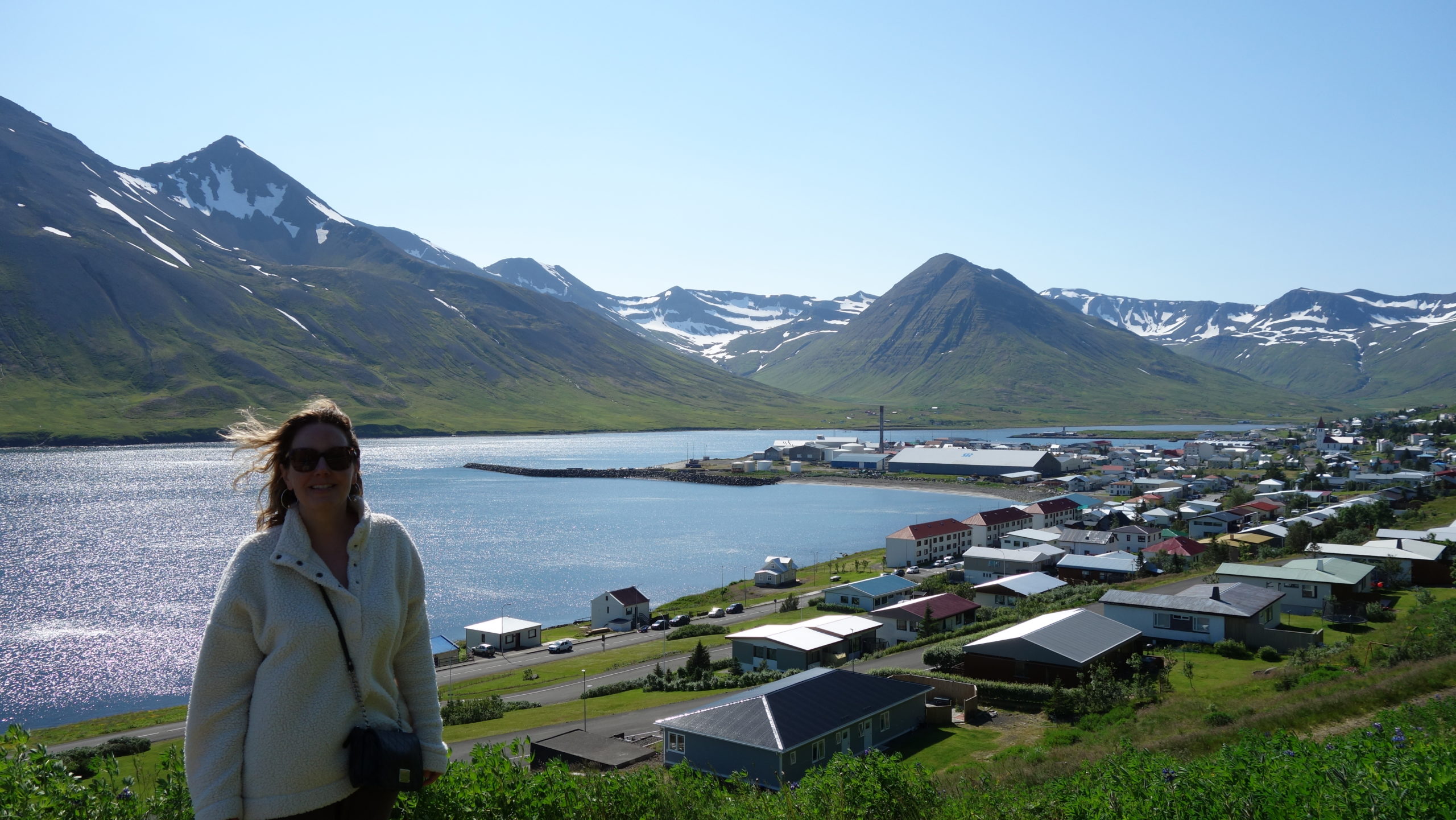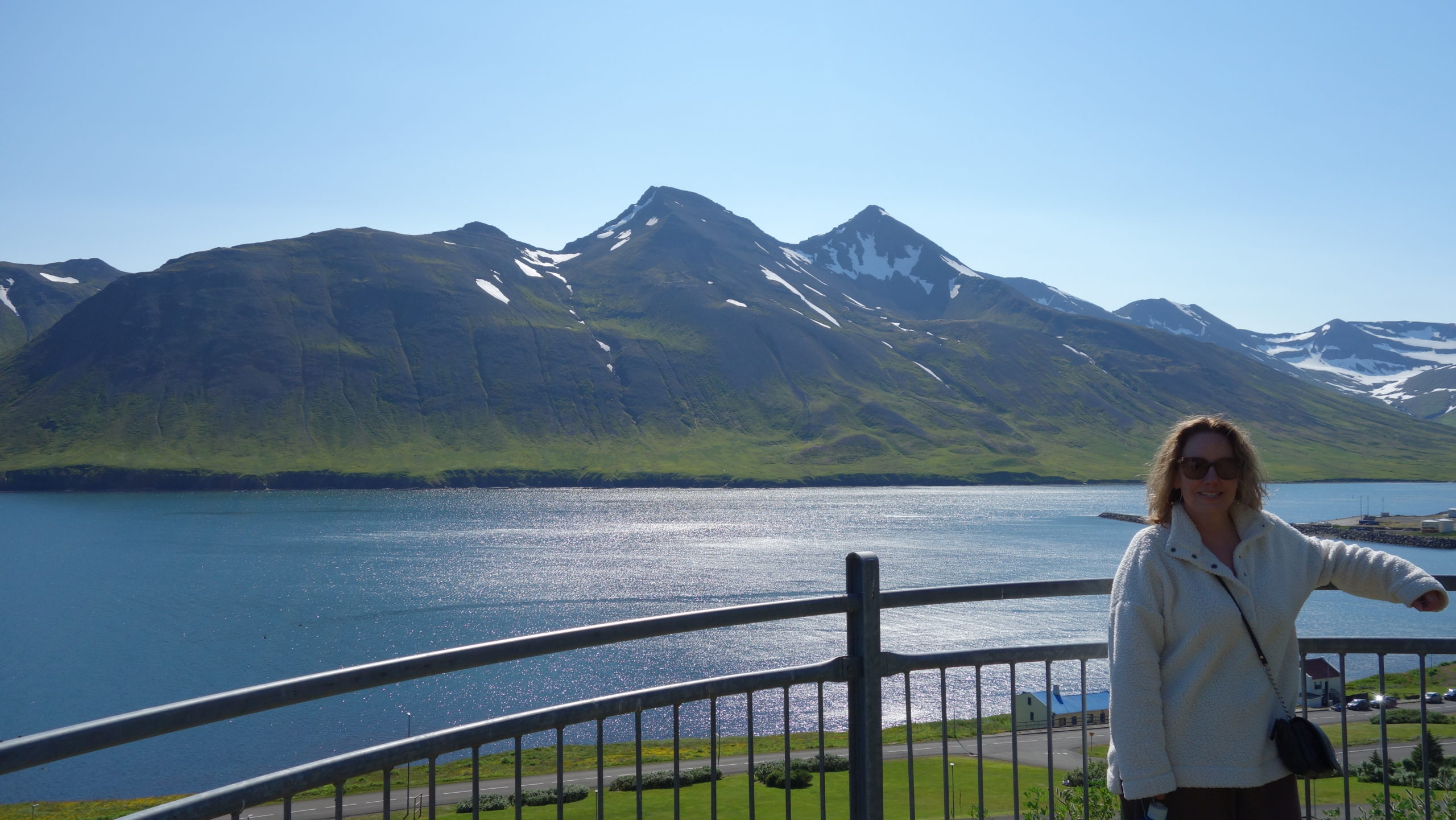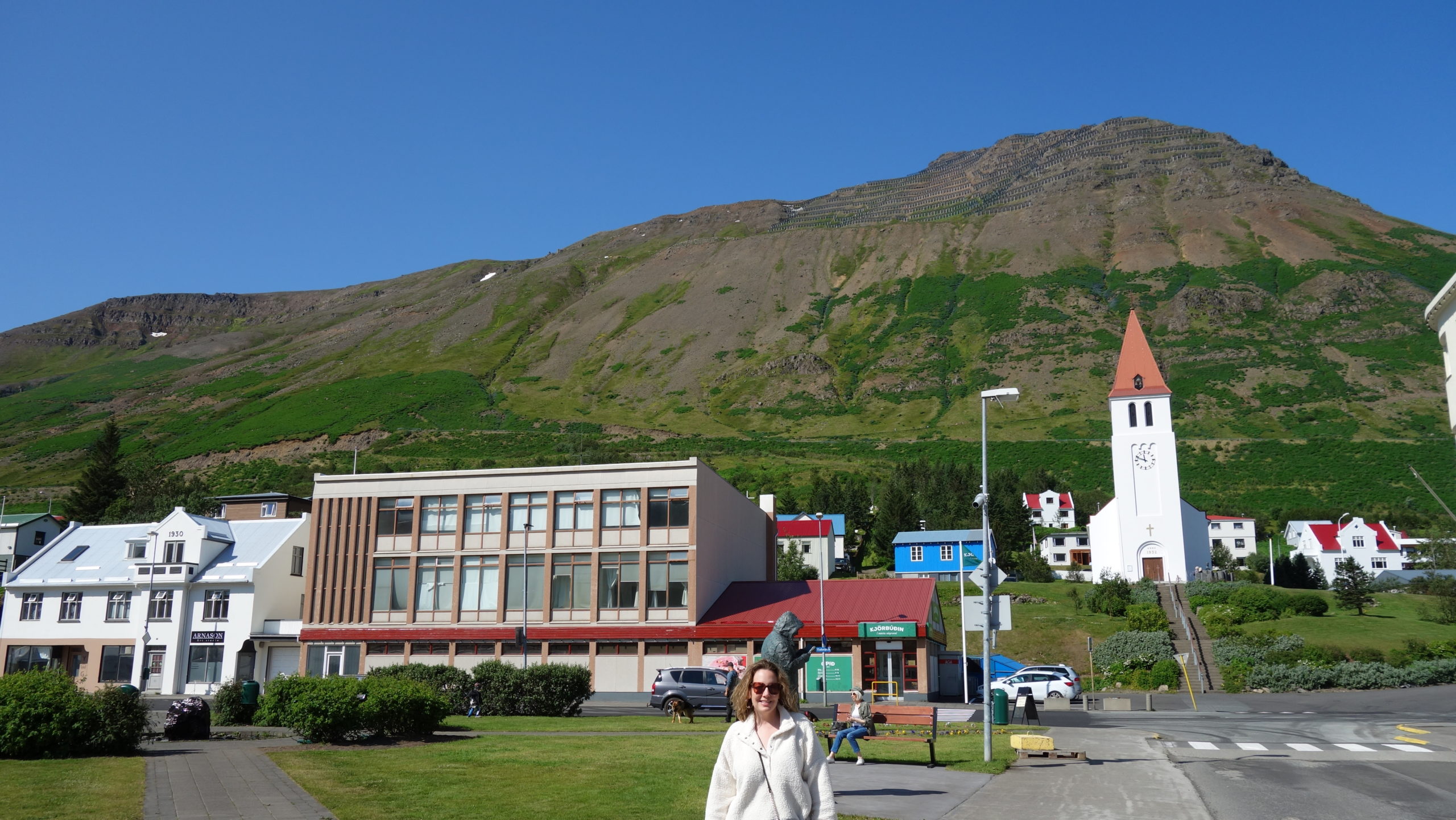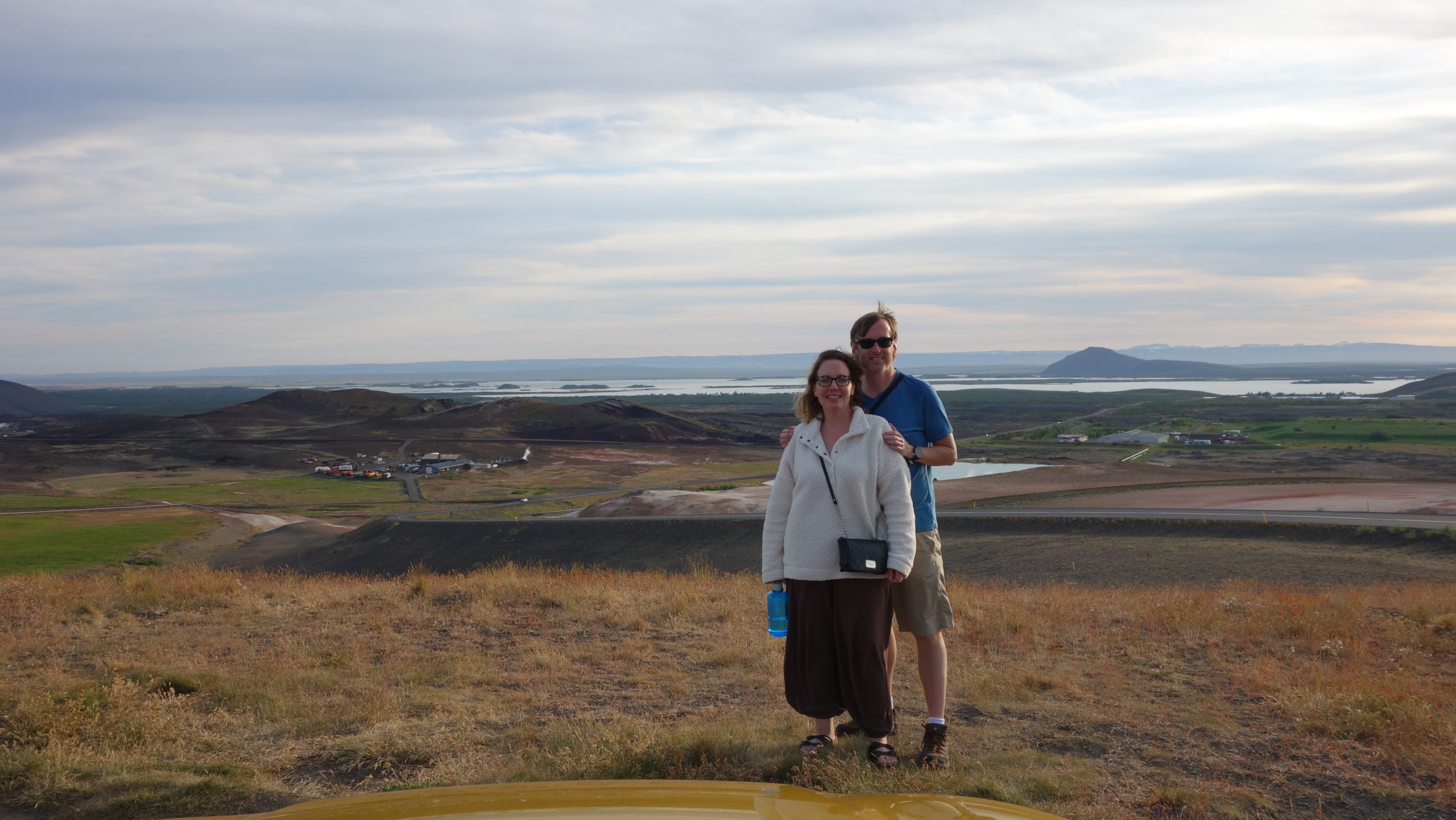
Virginia, April 2021 – Day 6 (Friday) – Norfolk

Our touring schedule sometimes requires perseverance. Today, in order to be in a lovely place, we pushed through:
– Temperatures in the mid-thirties with twenty-something-mph winds (two days after temperatures were in the seventies)
– Counting on the on-site café to be open for breakfast and being disappointed
– Walking a half-marathon (13.1 miles) worth of distance over the course of the day
I know these “hardships” are not much in a pandemic age, but they sure wore me out today. The wind and cold almost made us give up in the first hour, but we stuck it out, and the temperatures, while never warm, did get up to comfortable by noon.

Anyway, we made our way to Norfolk, which is a navy town of 240,000, to go to the Norfolk Botanical Garden. Yes, we had already been to Richmond’s earlier in the week, but our visit was free (for our being members of Stan Hywet Hall and Gardens), we like walking in botanical gardens, and there are some special features of Norfolk’s gardens. They are surrounded by water on three sides (the water of a lake, not the ocean); at 175 acres, it is the largest botanical garden in Virginia; and it abuts an airport. Really, really abuts it – the garden started out as a WPA project at the same time the airport was built in the 1930s. You can walk to and from the airport easily from the gardens, and there is a viewpoint looking right at the airport, with the airport fence only ten or twenty yards away. One of my favorite spots on the grounds is a bench overlooking a quiet inlet of the lake, over which jets were taking off right overhead (just a few per hour, so not too disturbing, but very cool). Anyway, you can actually drive in, fly in, or boat in to the gardens, which is pretty great. There are actually two interconnected canals for boats to float up to the visitor’s center.

So, yes, another botanical garden, but one with a cold start that almost made us change plans. I’m glad we didn’t. There are twenty-six display gardens and two large “exploration gardens” that are essentially woods with good paths and lots of azaleas planted around. I enjoyed all of the spaces, but several stood out to me:

– The Perennial Garden, where hundreds of daffodils and tulips were planted around a fountain, in a symmetrical way, in a place that was adjacent to one of the canals.

– The Renaissance Court, which is a series of terraced lawns facing a huge fountain, which in turn looks onto another great space, which is…

– The Moses Ezekiel Statuary Vista, where the garden has displayed eleven sculptures of famous artists through the ages, with all the statues being created by Moses Ezekiel, who was born in Virginia during the 1800s.

– The Flowering Arboretum, a huge space full of flowering trees, which are planted such that some of the trees are always in bloom. Today it seemed as if every third tree was in full flower. This was probably my favorite place in the botanical gardens.

We saw all the individual spaces, and then caught the last tram going around the park. It was good to sit for awhile, and the tram gave us a good overview of what we had seen during the day, with the driver providing some light commentary along the way. Satisfied that we had done everything to do at the gardens, we quit a little early – at 4:45. Hey, we aren’t young anymore.

Virginia, April 2021 – Day 5 (Thursday) – Charlottesville

This blog entry is brought to you by Kelly Horwitz, my sister, who recommended most of today’s itinerary!

From our cabin, Charlottesville is about a two-hour drive away, so I was a little hesitant to go all that way. So, I e-mailed my sister, who lived there for three years while getting her law degree. I was pretty sure she was going to volunteer to come and guide us around, her praise of the place was so high. I also came to the conclusion that I have driven almost two hours to go to parts of Amish country back in Ohio, so that settled it – westward we went.

It had rained all night long, but had stopped by the time we got to our destination. But it had gotten cold – 40s with wind, which was a far cry from the sunny and 70s we had been enjoying. So we had a rare day on which my often-commented-on Spider-Man jacket was on display next to Meredith’s “whoa!” fuzzy winter jacket. One lady at lunch said she loved both our jackets. We were pleased with that.

Our first stop of the day was a little country shack called Monticello, the home of Thomas Jefferson. We got to see a ten-minute film on Jefferson that focused largely on the contradictions of a man who fought hard for liberty, but kept slaves. I would have liked more of Jefferson’s own words in the film, but it was okay. We actually got to see it twice, because we waited for Jefferson himself to show up in the form of (wait for it) Williamsburg’s actor. When you don’t go to Williamsburg, Williamsburg comes to you. I thought George Wythe was a more powerful speaker, but Jefferson presented his ideas in a conversational tone that was pleasing. He spoke about the delicate nature of a democracy, and how we needed to be vigilant in preserving our liberties by remembering the words of the Declaration of Independence. He spoke for twenty or twenty-five minutes, and then we were ready to head up to the house.

We walked up to enjoy the unfolding views. Monticello is on a small mountain, and so the scenery changes all the time. The walk also led us past the large, still-used family cemetery where Jefferson is buried, with a grave marked by a ten-foot obelisk.
We approached the house from an angle, and lower down, along the gardens on the north side of the hill. So I decided to explore all around the house and save the front for last. We couldn’t go in the house because those tickets had sold out online, but we were fine wandering the grounds. The keepers of Monticello are trying to recreate the gardens as Jefferson had them, and I’m not sure where they are in the process. There were full beds of plants growing, and it was a very pretty spot, so much so that Jefferson had a small writing space constructed there. He would work in the garden some, and then write in his little office overlooking the valley and mountains.

The estate originally had a line of buildings along “Mulberry Row,” which housed free workers and slaves, and housed small shops where things the estate needed were made, or were sold. Most of those buildings are gone, but some have been reconstructed, and Jefferson’s stable still exists. All of the buildings that had information available talked about the enslaved people who lived and worked there, and a few mentioned the free workers who helped to build the house itself.

We wandered up to the back of the house, which is not unusually impressive compared to the more famous front, but has the advantage of far better views. We made our way into a tunnel that went through the basement and storerooms, learning how the household ran.

We finally came around to the front of the house, which is beautiful. To our surprise, it is not huge. It is large, of course, but with much of the space out of sight in the basements and under the two wings of the house, it looked to be a magnificent large home, and not the palace-sized building I had always supposed it would be.

We stopped by a few places we had missed, including the rest of Mulberry Row, and headed back down the path to the parking area. We had a short drive to our lunch place, the Michie Tavern, which dates from about 1793. Kelly had recommended it. In her words – “On the way to TJ’s is Michie Tavern which dates to the 1700s. (Although I think they moved the tavern to its current location from elsewhere, so I don’t think TJ and Monroe were pounding brews there.)” Even if Jefferson never tipped back a brewski there, we got to have our first buffet in a year – really excellent southern food. The concession for the pandemic was we had to wear our masks and put on plastic gloves before we could get to the serving area. We may have had two plates, and the ambiance was great – bare wood everywhere, and tin plates and cups. I loved it.

Stop three on the Tour de Charlottesville was Highland, the estate of James Monroe. The setting of Highland was also quite pretty, but may have been better in that it was lower than the surrounding hills on a couple of sides, so the hills were close up, instead of across a valley. The down side is that the actual house Monroe built and lived in for a time burned to the ground (probably between 1730 and 1750, after he had sold the plantation), and then was completely lost to memory. It was found again in 2014 after some small archeological work was done on site, and they hope to do more this summer.

It turns out what had always been presented as Monroe’s house was actually a guest house (from 1818) and a later addition from 1870. Ooops. They confirmed the dates by dating the tree rings in the timbers used in the existing house. A few outbuildings still survive as well.

Kelly had mentioned she liked the peacocks wandering about, but sadly, they are no more. There are sheep and a donkey and a kitty on the property, but we didn’t get a chance to see the kitty. We did have a long talk with a docent, and she filled us in on all the complexities of working out what had happened to the estate, and how that knowledge keeps changing. We also talked some about Monroe’s slaves, and how he sold many of them off to take care of his debts, but that he refused to break up family groups, even if it meant less money for him.

The final destination of the day was the University of Virginia, but I took a whimsical detour up to Carter Mountain Orchard. The views from on top of the mountain were breathtaking, but some of that may have been the thirty-mph winds whipping around up there. I hope to go back some day when we can sit and enjoy it.

UVA was where Meredith’s dad got his ABD (all but dissertation) degree in English, and my sister got her law degree. Also, it was where Edgar Allan Poe went to school for one semester before having to withdraw because of lack of money. That doesn’t stop UVA from having a marker on Poe’s room and having it viewable from outside, as well as having a medallion in the street leading up to his dorm. We were actually glad they honored him that way, and Meredith was able to get pictures of the Poe-related things.

We stopped by The Lawn, which is the heart of the original campus that Jefferson designed during his retirement. It is harmonious and symmetrical, and I found it to be very pleasing. Not bad for a self-trained amateur architect.

Virginia, March 2021 – Day 4 (Wednesday) – Williamsburg

People make much of history, so it is no surprise that I have found interacting with people in Williamsburg to be the most satisfying part of the day. Whether it be tradesmen, guides, historical interpreters, archeologists, or impersonators playing famous people, I have found the people of Colonial Williamsburg to be friendly, interesting, and engaging.

We got to the museum today just as they opened, and we went right to the governor’s palace to get a chance to see inside. Even though we got there right at 9:00, there were already over ten people in line, so we had a fifteen-minute wait or so, which was fine since we had an in-costume interpreter there giving us some background on not only the palace, but some of the neighboring houses as well. For instance, the next house down the street was owned by a man with many slaves; after the war was over, he could not justify fighting for liberty while still owning other human beings, so he freed all of his slaves. This didn’t go over well with the rest of the community, and he finally moved to Maryland.

Once we got into the palace, we got to go through the three main ground floor rooms, as well as look into the side rooms. Sadly, because of Covid restrictions, we were not allowed to go upstairs. The entrance hall and the next room were covered in muskets and swords so as to leave no doubt about who was in charge. Until he wasn’t. In January of 1775, the governor was a hero, having fought off Native Americans in the Ohio valley. But by June of 1775, public opinion had turned so much against him that he sneaked out of the palace back door at 2:00 am, never to return.

I was happy to see the inside of the palace, which was elegant, but I was equally happy that I had not waited an hour for the ten-minute tour. I applaud Colonial Williamsburg for their being open during a pandemic, and taking precautions seriously, but it does cause a long (and well-spaced) line at the most popular attractions.

We did much the same with the nearby Wythe House. Wythe was a prominent lawyer and leader of the community who tutored a young Thomas Jefferson in the law. His home is open, but only the downstairs rooms, so our twenty-minute wait led to an eight-minute tour. But it dumped us into the garden, where in one building were three coopers working. We chatted with them for five or six minutes, which was an unexpected encounter.

Since the Wythe House was our last house we could tour, we went back to the palace gardens to kill some time. The gardens are in full bloom with tulips, which only last a few weeks, so our timing was good. We sat on a bench on top of the old ice house mound, which overlooks the shrubbery maze, and we amused ourselves watching people wandering back and forth.
Next was a rare (in these times) treat – we got to see some theater. There is a small stage near the palace, and we got to see a twenty-minute condensed version of Bach’s “Coffee Cantata,” in which a young woman who is addicted to coffee rejects three suitors who try to convert her to (in order) beer, tea, and water. It was light-hearted and fun, and was only the second play we have seen of any kind in over a year (the other being CVCA’s fall play).

The short length of the play gave us time to walk to the other stage in town, over by the capitol building. We got to see an impersonator be George Wythe himself, and the actor was amazing. His voice was rich, his pacing was deliberate, his command of the material was impressive, and his ability to stay in character for the questions at the end was mesmerizing. He spoke for about thirty minutes, and I felt I could have happily listened to him for an hour. He spoke on the four points of law (municipal, national, scriptural, and natural law, in that order), and tied that in to the need to teach and model virtue for the sake of the republic. He interacted with the audience frequently, always in character. It was a masterly performance, and I was thrilled to get to see it.

After a brief stop in the Williamsburg garden (to talk to the gardeners), lunch was next, which for the third day in a row was at the Williamsburg art museums (they combine a folk art museum with a design museum). That put us next to the last sight we needed to see – an active archeological excavation of the grounds of a wealthy man who was reported as having the best gardens in all of Virginia. We spoke with three of the archeologists on site, and while they are interested in anything they might find, the long-term goal is to discover the old garden beds and what was planted in them, so as to be able to recreate the garden. We got to hear how they looked for discolored dirt in the digs, which indicated that area had been dug up at some point, and they followed those trails. They are in year three of a five-year dig, so they have plenty of additional ground to cover. That is good, since one of the scientists was on day four of digging along a soil trail about three feet long, and had found nothing as yet.

We also chatted on our way out with a friendly young man who was in costume. We talked about the dig, about eighteenth-century sanitation, about the owner of the land and his publicly cantankerous marriage, and about the Facebook group on eighteenth-century clothing. As one does. We like nerds. They are always interesting.

By then, it was about 2:30, and the long-anticipated rain finally started falling, so we made our way into the museum. I overheard there was a musician playing, so we found him and listened to him play the viola da gamba for about twenty minutes, and we got to ask him questions. The viola da gamba is a cousin to the cello, except it has seven strings (instead of four) and is supported by the musician’s legs (instead of a post on the bottom of the cello). So we got to experience theater and live music on the same day.

The museums looked quite fine, especially for a regional museum, but as I was tired, we kind of hurried through them. I did like the exhibit on grandfather clocks, which included the gear mechanisms. We also both liked an exhibit on American portrait painters, which helped even our untrained eyes see the difference between good painters and great painters. Mer also pointed out a sign saying that hooked rugs are arguably the only original American folk art, and they came from Maine. I remember seeing hooked rugs around in my youth in Maine, although I feel braided rugs were more common.

Day three of Williamsburg was a fine day, with lots of interaction with people. If it were a normal year with all the buildings fully open, I expect we would need to be going back for a fourth day, but maybe we can save that for later in this year. For now, for us, Colonial Williamsburg is history.

Virginia, March 2021 – Days 2 and 3 (Monday and Tuesday) – Williamsburg

Meredith and I often laugh about “History Happened Here” signs, since they often seem to talk about something minor happening in the area back in 1910. It usually doesn’t conjure images of long history. Colonial Williamsburg is a different matter – many of the buildings date back to the mid-1700s, and the actors wandering the streets portray Washington, Lafayette, Patrick Henry, and other famous folks, as well as more humble tradespeople.

Sunday night, I was agonizing over if we should spend one day or two touring the historical town. I looked online, and everyone seemed to say two days, so I planned on that. Of course, I got it wrong; we need three. And that is in the many-buildings-closed Covid era. Meredith and I are a bit…thorough.

Williamsburg is mainly along two streets. We didn’t plan it this way, but it worked out so that we did the longer street on Monday, and the shorter street (almost) today. I have to say almost, because there are still two buildings we didn’t get into because the lines were long. We’ll beeline to those tomorrow before the crowds hit, and cross those off the list.

Happily, we went into the ticket office in the not-yet-seen art museum, and my plan was to buy a three-day pass (there are no two-day passes). The cashier asked if we were teachers, and since we are, we ended up with two year-long passes for just twelve dollars (total) more than two three-day passes. So, if we need to spill into a fourth day, we are covered. And we can still come back in the summer or next fall or have Christmas in Williamsburg. Options abound.

We chatted with several actors/docents who were in period costume. Good effort is made to make things appear as authentic as we know how. Costumes are made by hand, using textiles and techniques used in the eighteenth century. All the carts and harnesses are made by the craftsmen in the town, and when they have the opportunity to reconstruct or repair a building, the on-site carpenters and brick makers are involved in that. Some things are updated, since people live in the area – most of the updates aren’t overly visible (outside of cash registers), but the buildings have electricity and plumbing, and the main road is paved. Since the original road was reported to have been covered in mud as deep as six feet at times, I’m okay with the updates that help us enjoy the museum.

There are eighty-eight original buildings in the town (ones dating back to 1776 or so), and many others that have been recreated from original town records and archeological efforts. The long street is about one mile long. There is much to see. Rather than recount everything we saw, I’ll mention a few things that stood out.

The two most impressive buildings are on opposite ends of the town – the capitol building, where all three branches of government met, and the governor’s palace. Both are made of a pretty red brick. The county court (for non-felony cases) was also elegant, and the magazine (armory) was impressively stout in brick. Most buildings were made of wood, and many were small by today’s standards. For the craftsmen, they typically had a shop on the first floor and lived above it on the second floor.

Some fun facts we learned over two days, in no particular order:
– After independence was declared, many raw goods were hard to procure. There are records of skilled workers idle for want of material.
– Orphaned girls could be taken in and apprenticed to silversmiths and blacksmiths.
– 52% of the population of the town were slaves.
– The town had dealings with multiple native tribes, which were treated as independent nations from each other.
– Tribal membership was not strictly based on bloodlines, but captured people could be adopted into the tribe and became full members of the adopting family.
– The waterways around the area are tidal, and so did not work well for water-wheel-run mills. Sawing logs was done with two-man saws, with one man standing in a pit and the other standing on top of the log.
– The town had fourteen taverns (in a town of eighteen hundred people). This was because the government and courts met in town several times per year. When the government moved to Richmond later, twelve of the taverns followed it.
– Enslaved people typically slept in the same room where they worked. Only a couple of the biggest and richest places in town had quarters for the slaves.
– Tailors measured men’s bodies to make clothes, but for dresses, the cloth was pinned up on the women and then sewn.
– County judges (thirteen of them) worked for no pay – it was a status symbol.
– Lafayette paid his own way over here to help in the revolution, and paid for his own upkeep. He was made a major general at the age of nineteen.
– A hogshead barrel of tobacco weighed a thousand pounds, and brought in enough money to buy six and a half more acres. When tobacco prices plummeted, the farmers tried growing indigo instead, which was in fashion.
– The governor of the free state of Virginia (Patrick Henry was the first) had to supply all costs of his entertaining guests out of his own salary.

We had a good time talking with people, and we saw three one-man shows – two by Native Americans and one by “Lafayette” – that were well done, and the closest thing to theater we have seen in awhile.

After the second day in Williamsburg, we made a quick trip out to Freedom Park, home of the small but free Williamsburg Botanical Garden. The park looked huge, but we had run out of touring time for the day. Next time.
We have really enjoyed Colonial Williamsburg, and history really did happen here. Good thing we have another day (and maybe more) to see more of it!

Virginia, March 2021 – Remembering Touring, Day 1 (Sunday)

This is a rare domestic trip entry on the blog, but after eight months of our not leaving Ohio at all because of the pandemic, Virginia feels exotic! It’s our spring break, and I decided to take Meredith on a mystery trip. I plugged in “Eight-hour drive from Akron,” and Google gave me a map radius and a few destinations. One of those was Williamsburg. To my knowledge (which turned out to be correct), Meredith had never been, and neither had I. There seemed to be a ton of stuff to do in the area, so Williamsburg it was.

Funny how you forget how to do some things, like packing. Mer wisely uses a list, but even she forgot her toothpaste (I remembered mine, so all was well). Me, not so good. I forgot my pillow and my neck massager (to help with my regular neck issues), and, more seriously, I managed to forget my computer. I actually remembered to bring my printer (to print off tickets and maps and such), but no computer. Genius. I was reduced to using my car-only smart phone on wi-fi, and it drove me into such a rage at using it, I ordered a computer from Amazon. How anyone uses a phone for any non-emergency is beyond me. It definitely firmed up my position on not ever carrying a phone. Sheesh.
Anyway, the trip to Virginia was uneventful, although the eight-hour trip took us nine-and-a-half hours for some reason. We didn’t hit traffic until the last three miles, and we only stopped for a fast-food lunch, so we’re not sure where the time went. We are staying on a small farm that has rooms in the main house, as well as two very nice cabins on the property, and I booked us into a cabin as splurge, since we had not been traveling much in the last fifteen months. The cabin has a porch and rocking chairs, so evenings have been spent eating chocolates and watching cows.

Sunday was supposed to have rain in the morning and afternoon, but had a window from ten to two of no rain. I took the forecast at its word, and drove us, in the rain, to Richmond, to go to the Richmond Botanical Gardens. It stopped raining as we approached Richmond. Go, weather service! As an added bonus, we are members of Stan Hywet Hall and Gardens in Akron, and they have reciprocal admission with about three hundred gardens around the country, so we got into the gardens for free.

The gardens are a great size, especially with rain threatening in the afternoon – about fifty acres, and it took us a little over three hours to walk them all. The conservatory mirrors the welcome center, framing an arbor and a dancing fountain. At the bottom of the hill is a large pond used as a retention basin for another nearby lake, and the shore was awash in colors from daffodils and flowering trees. There is a woods section with more flowering trees, and a Japanese garden with a large tea house next to a waterfall, where we had a pleasant outdoor lunch.

Just as we finished the gardens, it began to rain slightly, so we hurried back to the car and drove off to our next destination, the rain-proof Poe Museum in downtown Richmond. Richmond is the city where Poe spent the most time, and it has the largest collection of Poe memorabilia, which is not overwhelming – it fits into three buildings, built around a courtyard garden. It is an excellent museum, especially if your wife teaches Poe, which mine happens to do. Mer was excited. Plus, the museum has two black cats, like those Poe describes in one story, and they were born on or around Halloween. Poe AND kitties – I scored a big win.

The museum used the artifacts to tell of Poe’s early life, his writing, and the mystery surrounding his death (he died four days after being found in a Baltimore gutter, wearing someone else’s clothes, and he was unable to recover sufficiently to tell anyone what had happened). It brought out in stark relief how many people, especially women, died around Poe – his mother, his first love, his wife, and others. The writing section showed how Poe largely invented the detective story, and wrote science fiction as well as updating the horror genre from Gothic tales to psychological ones.

And, as an added bonus, the rain had stopped when we came out. We used the unexpectedly dry weather to take a walk down by the James River, and up to a monument on a hill (the Confederate statue at the top had been taken down, but the monolith was still there), and then through a residential neighborhood to get back to the car. Nothing spectacular, but a nice walk.

We drove back to Williamsburg, and used the fine evening to wander around the campus of William and Mary, which is much bigger than I had guessed. We spent almost two hours walking around the bulk of the campus. It is very pretty, with all the buildings made of brick, and we found out the college was founded over three hundred years ago, which is saying something in North America.

We went back to our cabin, where we watched the cows join us at home, and went to bed after a happy day of touring.

France 2019 – Day 6, Friday – Paris

We bid adieu to Avignon this morning, catching the high-speed train to Paris, and from there we took the Metro to our hotel, checking in a little after 2:00. We wanted to do some sightseeing, so we headed back out, got off the Metro at the Louvre, walked through the beautiful garden park out front (complete with Christmas village with carnival rides), and walked over to the Musee d’Orsay, where we bought tickets and stowed my backpack and got into the actual museum around 3:30.

I love the Musee d’Orsay. It might be my favorite art museum in the world. It is an old converted elegant train station, and the main floor and the two second floor wings running down the sides of the museum are dedicated to statues and sculptures. I’m a big fan of sculpture, so I wanted to visit all of the sculpture areas. When we got inside, Dubbs got excited about seeing a Degas special exhibit, so she went off to that while Mer and I looked around at the sculptures. They were pretty fantastic, and included several Rodins (I’m fond of his work). I really liked an art-deco-influenced sculpture of a polar bear, and a beautiful sculpture of a young woman called Aurora – the marble of her spread-out hair was so thin that light actually could shine through parts of it. Amazing stuff.

We still had time after seeing the two floors of sculpture, so we took a quick blitz to the top floor where the Impressionist art resides (as well as an overlook of the whole main floor of the museum). We then headed back downstairs, and used the last twenty minutes to look in galleries off to either side of the main hall, generally wandering to whatever caught my eye, which tended to be paintings that showed unusual or prominent lighting.  We were both struck by a painting called Jerusalem, by Jean-Léon Gérôme – it took us a few seconds to see that the foreground had the shadows of three crucifixions. It was a subtle and powerful work for us.

We met up with Dubbs, who had come from the art museum gift store, which is always dangerous for her. After eating supper at a restaurant across from the back side of the museum, we walked over to the Christmas village near the Louvre, where we spent time snacking on crepes and watching Paris play. It was a bit crowded, so we eventually walked over to the Champs-Elysees, toward the Arc de Triomphe, where we remembered a bigger and better Christmas fair from three years ago. It was a pretty walk, which is a good thing, since it turned out that the Christmas village was not there anymore – it seems to have been moved to the smaller version by the Louvre. Too bad.

And so ends our last evening in Paris. We head out on the long reverse trip, but happily without the three-hour train ride:  just Paris to Iceland to Toronto, then driving home. If all goes well, we should get home around 3:00 am Sunday (France time), a mere twenty-five hours in motion. That, along with several hundred dollars, of course, is the price we pay for European travel. We’ll have all of Sunday to get some recovery rest and to pet our kitties. We have had a grand trip with great weather, but I do look forward to my home routine. I love travel in Europe, but I miss my people, my routine, my bed, my normal food, and my kitties. Thanks for tagging along via the blog!

France 2019 – Day 5, Thursday – Pont du Gard and Avignon

Before I dive in, this is the fourth Thanksgiving Mer and I and Dubbs have traveled together, and I am very thankful for the chance to travel. There is no God-given right to travel to Europe, and we are blessed to have the health, time, and resources to get over here more often than most people. We are very fortunate to live in a country where and in a time when travel is allowed and fairly easily possible. I was reminded tonight that our most recent Thanksgiving dinners have been: a French restaurant in Paris, an Italian restaurant in Lisbon, a Mexican restaurant in Amsterdam, and, tonight, an Irish pub in Avignon. Much for which to be thankful, indeed.

On to travel! Water, water, everywhere, and let’s add more. If you recall, I mentioned that the city of Nimes had a huge natural spring of water that supplied the city. Then the Romans spent years and tons of money building a thirty-mile-long aqueduct to Nimes, mostly as a power statement. The water system stated that Rome was firmly in charge of the area. The system fed Nimes with about one hundred gallons of water per second, which was used for fountains and wealthy homes and such. In building the aqueduct, the Roman engineers had to build multiple bridges to carry the water along, and the grandest of these was the Pont du Gard, most of which still stands today, two thousand years later. That was the destination today.

It is a Riordan maxim of travel that when you travel, you waste time or money or both. Today was some of both, as I did not rent a car for this trip, and the public transportation to the bridge consists of three buses a day at odd times. So we wasted some money and took an Uber car out to the Pont, and wasted time on the back end, as we needed to wait for about thirty minutes for the car to show back up. Such is travel.

But it was worth it. The Pont du Gard is more than just the bridge – there is a museum and a short film, and a park around the area, and of course the actual Gardon River that the aqueduct crosses. So the landscape itself is very pretty. The museum is solid, with displays on how the rock was quarried and moved and lifted into place, and a model of all the bridges that were made for the project, and topographical information to show that the water dropped all of forty-five feet over the thirty-mile channel. The movie was also decent, with great shots of the bridge, and comparisons to other objects (about as high as the Statue of Liberty or the Roman Colosseum).

But at the end of the intro material is the real thing, and the Pont du Gard did not disappoint.  From all the views we had of it, it was impressive, and we got to walk out along the bridge that was built next to it in the 1800s. Although we did not have the place completely to ourselves, there were few enough people that we had the bridge all to ourselves. Pictures from both sides were pretty great – either the aqueduct was in the picture, or the river and countryside were, or both. It was a fine day today, so we did not rush around.

We crossed over the river and walked up stairs to a viewpoint for really spectacular views. We could get up to the level of the top of the Pont on the way. You can’t get out on it during off season, which is disappointing, but it was an okay trade-off to have the place with so few people around.

We went back down, and Mer and I crossed over a bunch of uneven limestone floodplain rocks to get by the river, where we sat and watched the river go by. Dubbs stayed on the level ground, since her ankles tend to give out on rough ground. Again, a pretty day, and we took our time.

By then, it was about 1:00, so we grabbed lunch at the on-site restaurant, which, in European fashion, was a leisurely affair. By the time we finished lunch, crossed over the bridge, and got back to the visitor center, it was about 3:00. We called for the Uber driver, and finally got back to Avignon around 4:30.

After we regrouped at the apartment, we headed back up past the Pope’s Palace, past Notre Dame, and up to the top of the hill of the town, to the Jardin du Rocher des Doms. The views from up there are tremendous, especially of the old bridge and the river and the tower across the river. We watched the sun go down, and then explored the Jardin. It is extensive, and there was more to see, but we ran out of light, and the garden was not lit.

We headed back down into town, to go the the aforementioned Irish pub. We had a good supper, and a walk back home, and the finish of a good day. You can be thankful for simple things in life, even when those simple things take place on a different continent. Hope everyone had a wonderful Thanksgiving day!

France 2019 – Day 4, Wednesday – Nimes

Rome had the Gaul to leave tons of Roman-related sights around southern France, and a couple of the best ones are in the city of Nimes. After breakfast, we took the thirty-minute train to Nimes to see what we would see.

Beauty, actually. As soon as we left the train station, we walked onto a wide, tree-lined pedestrian way that ran over half a mile to a square with a fountain, and although the fountain was off for the winter, the long artificial stream running the entire length of the pedestrian way was still full of water. Since train stations are not always in the most scenic part of the town, the welcome-to-Nimes was pretty special.

As soon as we got to the dry fountain, which in itself was fun to look at, with sculptures all around, we could see the amphitheater we had come to see (Dubbs says NEVER to call an amphitheater a coliseum since that is the one in Rome). The coliseum in Nimes is the best preserved one in the world, since it was used as a fortress for much of the post-Roman history of the town. It is one of the twenty biggest, seating 24,000 spectators when it was built. Once again, we mostly had the place to ourselves. Other than a few workers, the entire place only had three or four other tourists in it, and they mostly were on the other side of the arena.

We had audioguides, which presented a description of typical gladiatorial games – highly anticipated combats that crowds loved, but that rarely ended in the death of the gladiator – gladiators were too expensive to train, and if one died, the sponsor had to pay a large sum of money to the school from which the gladiator came. The audioguides also had us climbing all over the place, to the point where we found ourselves climbing a ridiculously small staircase that came out on the top wall and top seats. We chose the seats and not the no-railing wall. The view was spectacular, with the coliseum in the foreground, the for-Christmas Ferris wheel behind, and a church steeple behind. All in all, we spent almost an hour and a half tromping around the place.

On to the next Roman ruin! Or not-so-ruined. We went on to the Maison Carree (“square house”) a few blocks away. The Maison Carree is the best preserved Roman temple in the world, again, because it has been in continuous use – as a church, a house, a storage barn, and more. The temple was dedicated to Caesar Augustus’ grandsons, and is, as far as I can tell, completely intact. There used to be other buildings all around the temple, but they are gone. The temple now shows a short film on the founding and Roman history of Nimes. The short version – the Celtic people who lived here chose to support Julius Caesar in his wars against the northern Gauls. They picked the winning side, and were granted status as a Roman colony, with Roman citizenship available to important members of the city.

It was a beautiful day today, so we sprang to eat on the terrace of the cafe at the museum that overlooks the Maison Carree. The food was fussy to my taste, but I ate Dubbs’ potatoes and had dessert, all while getting to look at the temple in the pretty square. The meal was pricey, but we were paying for the experience, and it was worth it.

We next headed toward Jardin de la Fontaine (the Fountain Garden). We got a good approach, walking along the canal that exits the garden, and so we got to see the garden unfold as we came up to it. The town was named from the name of the deity of the spring here, which should give you an indication of the amount of water we are taking about. This is not a fill-up-your-bottle kind of spring – it is a full lagoon, multiple pools, and running canal kind of gushing supply of water. All of this is at the base of a good-sized hill, so the gardens run up the slope. It is one of the prettiest urban parks I have ever seen. And it also has a Roman ruin at the bottom and at the top of the hill.

The “Temple of Diana” is a ruined hall of some kind that scientists agree was not dedicated to Dianna and was almost certainly not a temple. It is from the first century, and is still striking, and so was fun to explore. Then came the trek up the hill, which was not a small walk. At the top was the Magne Tower, a Roman tower that was once the highest point along the seven-kilometer wall around the city. The tower has lost the top story since it was built, but is still climbable inside, and gives a grand view of the city.

Back down the hill, through the amazing park, and back into the center (with a pause in a park to watch old men play boules, the French version of bocce, followed by a detour for pastry near the Maison Carree), all the way back to the coliseum, and to the Musee de la Romanite (the Museum of the Romans). The Musee tells the story of Nimes from the pre-Roman time up through the Middle Ages, with a long focus on the Romans, in chronological order.

It is an excellent little museum, combining two-thousand-year-old artifacts with modern technology. So they had mosaics, which were impressive, but then they would project close-up images of parts of the mosaic, or they would project in the missing parts of a fresco on a wall. On inscriptions, they would use projectors to deepen the contrast on the marble, to make it easier to read, and provided a translation (in French) under the Latin. They had a wonderful topographical map onto which they projected Nimes, showing the town at different times through the centuries (it shrank down for much of the post-Roman period). Finally, there was a display where you were virtually dressed in Roman garb, but it was done automatically. I may have appeared as a first-century woman on a screen. Fun museum.

That ended the evening in Nimes, and we caught the train back to Avignon, where we got take-away food from a food stall. We figured we had eaten “classy” at lunch. Too many meals like that and we could be ruined.


France 2019 – Day 3, Tuesday – Avignon

Breaking up is hard to do, unless you have a ton of resources at your back. From roughly 1300 to 1400, the Pope and his supporting bureaucracy moved the Papacy from Rome to Avignon. He moved because, according to the tablet-guides we used, “of political, religious, and economic reasons.” According to Dubbs, the Pope was kicked out. Either way, the Papacy was in Avignon, and the popes wanted to create a palace and supporting offices. In just twenty years, they built the old palace, and then subsequent popes kept adding on. But I get ahead of my touring self.

First, we started in the grand church next to the Popes’ Palace, Avignon’s Notre Dame. The church is very large, but not jaw-droppingly huge like St. Peter’s in Rome. It does have the advantage of being on a hill, so it has pretty views, and the golden statue of Mary on top of the church is huge, and very lovely. The interior of the church has many chapels off to each side, including one with a carved marble statue of Mary that is lit so subtly that we could not tell where the light was coming from. People were working in that chapel, setting up pews, so we could not get very close, but that was fine, since it left the lighting a mystery. One of the chapels also had a statue of Joseph holding Jesus, which is rare in my experience. There was a chapel with Mary holding the body of Jesus, and that chapel had the first black-and-white stained glass I can remember seeing, which was very appropriate for a chapel depicting the dead Jesus. Finally, there was renovation work going on near the entrance, and it made me smile that 80% of the multi-story scaffolding was hidden behind one single religious painting. That is one way to hide the work going on.

Back to the Popes’ Palace. It was home to nine popes, all of whom reigned for eight or more years; no “accidents” with this string of popes, and the election of the next popes went smoothly as well. It was not until there were competing Rome/Avignon popes elected that there were any issues, and I believe the Rome popes eventually won, ending the Avignon papacy, although the Pope did own the town itself until the French took it during the revolution in the late 1700s.

I had a first for me in touring – instead of an audio guide, we got iPad-like tablets which showed us a map of how to go through the rooms. This made my wife, who loves to see everything, very happy. Also, in each major room, there was a symbol that you could scan, and you would “time travel” back to the 1300s, and the tablet would show you what the room looked like at the time, virtually; wherever you held the tablet, it would show you that part of the room, with narration on the use of the room. It was really effective, but I had to keep reminding myself not to get so distracted with the virtual room that I forgot to look around the real room as it is now. Most rooms have lost their decorations over the last six hundred years, and most rooms had no furniture other than benches to rest on, so having the real and virtual rooms worked really well.

Some of the highlights? The treasury had hidden chambers under the flagstones for the most precious items and monies, and these floor panels were not discovered until the 1980s. It was an isolated room in the heart of the palace, and was protected by a wooden and iron door, which was still forced twice. The first time, the thieves were caught before they stole anything. The guide did not mention anything about the second time, so I assume they got away with some valuables.

There was a huge hall that was used for banquets. The Pope and the cardinals sat up front on seats, and any lowly visitors, like ambassadors and nobility, had to share benches down the hall. No one was allowed to leave until an inventory of the goldware and silverware was completed.

There was a pretty little chapel off the dining hall that was lavishly decorated with the story of a local saint. Someone decided later it would be a perfect room for a lead-smelting furnace, with a chimney through the roof. Happily, somehow, much of the decoration survived.

The large main chapel, used for important services during the church year, and for ceremonies like the election of a new pope, held an art exhibit of realistic drawings of (mostly) men, usually inspired by religious themes. They wore modern dress, and the artist hung the drawings on the sides of buildings all around the world and photographed the works and sometimes people viewing the work. It was very effective.

The tour ended on top of one of the towers of the palace, so we had grand views. Sadly, out of season in November, the rooftop cafe was closed, but we again enjoyed the entire palace with usually only two or four other people around. That was very useful in a few of the smaller rooms.

We were channeled though the gift shop, of course, and while Dubbs was picking out a few things for Christmas gifts, a tour group leader started asking Meredith some questions about where groups came out. Mer answered them as best she could, and only later did the woman come up and tell Mer that she’d thought that Mer worked there. Mer just has that kind of air of authority from years of teaching.

So, thumbs up to a great tour of the Popes’ Palace. Even after six hundred years and multiple uses by various groups, it is still very impressive (and huge – we saw relatively little of it, even though we took three hours).

After a quick detour home to regroup, and a leisurely lunch, we headed over to the remains of the Avignon St. Benezet bridge. It was the first bridge built across the very large and very powerful Rhone river, built, according to legend, by the inspiration of the 12th century shepherd boy Benezet (Benedict), who claimed that God told him to get the people of Avignon to build a bridge. They laughed at him, and told him if God told him to build it, then he should pick up a huge bolder and carry it down the river to start the bridge, which he promptly did. Alternatively, historians think Benezet may have been a 12th century entrepreneur who started a bridge guild to make money. Either way, the bridge got started, and was worked on, on and off, for several hundred years, and sections were washed away on a regular basis. Many historians think the bridge was never fully completed in stone, and by the late 1600s, the bridge was not rebuilt. Four arches still remain, along with the gatehouse and drawbridge. The views from the end of the bridge are very pretty, both looking up the river, and looking back at the town. The views down river mostly are occupied by the much newer car bridge.

We got our art museum fix of the day by going to the very small Musee Angladon. It is a collection of art from the 1800s and 1900s, with a few big names like Degas and Van Gogh in the exhibit. The collection was donated from the estate of a wealthy fashion designer from the early 20th century. There were only about eight or ten rooms of a few paintings each, which made the museum easy to see, even at an easy pace. We were there for slightly less than an hour.

We finished the evening by doing a back-street walk though the twilight of Avignon. It started at a swanky hotel, where we got tea (and hot chocolate) and pastries, while getting to listen to a piano and violin duet. It was lovely and relaxing. The rest of the walk was through small lanes and back streets, past a pretty church and Avignon’s one synagogue, and ending near a water wheel in what used to be a cloth-makers’ street where there had once been 22 water wheels. On the way back to a restaurant to get supper, we stumbled across a cat cafe, so we all fawned over the kitties on the other side of the window for several minutes.

Supper was at a good crepe place, and we were the only customers until the last five minutes we were there. We enjoyed our food, but oddly, the staff had one song on repeat, so we heard a 40s-style French singer over and over and over and over. As background music went, it was fine, but hearing it about fifteen times or more was getting a little old by the end.

That ended a solid day of touring in Avignon. Mer has put me in charge of the next two days, so the pressure is on to find fun and interesting things to do, even without the resources of the papacy behind me. Here is to more touring!

France 2019 – Day 2, Monday – Arles

Late November is definitely off-season for tourism in the south of France. Add to that the fact that many businesses close on Mondays, and there can be some challenges because of this. But the off-season also brings some spectacular opportunities that you would never see in July.

We are staying in the town of Avignon, but we took a short train ride to Arles. Mer and I had been there before, back during our tour-the-whole-country trip with Mer’s parents in 2007. On that trip, we had been moving every day, which limited touring opportunities. Then, we only remember seeing the city’s excellent Roman coliseum, and that was pretty much it.

Today, we had the entire day. We walked in from the train station, pausing to look at the Rhone River, which is a working river with lots of large boats. We strolled into the winding streets of the old city center, and Mer remembered the hotel where we stayed back in 2007, and she was right (of course). The first real stop of the day was the coliseum.

Arles was an important Roman city, both for trade purposes and for supporting the winning side in Julius Caesar’s power struggle. For both, they were rewarded with Roman buildings, like a circus for racing chariots, a forum, a 20,000-seat coliseum, and a 10,000-seat theater. The coliseum is amazingly well preserved, and is still in use today for sporting events.

We bought a “Liberty Card” at the gate, which lets you get into four different sites and two museums, all for a price lower than seeing two things. Here is where the off-season fun began. We walked into the arena, and, other than one worker working in the nosebleed seats, we had the entire arena to ourselves. And two cats. Other people did come in later, but for a good ten minutes, we were all alone in the entire site. And, even after we ran into other people, it was a total of three tourists, in a place that can still seat thousands. It was pretty great. We sat up as high as the pubic is allowed for tourism, which is about halfway up the existing seats. That was followed by walking three quarters of the way around the place, and that led us to the medieval tower that can be climbed. During the Middle Ages, the coliseum was converted into a small walled town, with two hundred houses and four defensive towers. One of the towers is open to the public, and offers great views of the countryside. Since Dubbs (our friend Ami) teaches Latin, she was geeking out. A little.

On to the next site! We walked a short way down to St. Trophime Church, which is a twelfth-century building with an intact Romanesque facade that is crammed full of carvings of people on Judgement Day, and is open to a cute square with an obelisk in it. The interior of the church is worth seeing too, with multiple side chapels and several good works of art. We met a very friendly man who explained to Meredith the symbolism of a sailor’s cross (in French), and then Mer translated the gist. He was kind for taking the time to help us; I think he worked for the church in some maintenance capacity, but he was happy to talk with us.

From the church, we walked around the corner to the associated cloisters, which were included on our Liberty Card. The cloisters had an enclosed green space (formerly used as a graveyard), and was a quiet and pretty place to be. The covered walkways were heavily carved with statues depicting Bible stories and some local legends. In a surprise to us, the cloisters had three exhibits on creche (nativity) scenes – one room by talented amateurs, one room by professional artists, and one by artists from Mozambique. I liked creches from all three rooms – some were carved, some were done with needlework, one used gourds, and one was even made of tasteful finger puppets. We took the time to look at all of them.

After a quick lunch, we walked though a maze-like series of streets to soak up the atmosphere of the local town, on our way out to the Ancient History Museum on the edge of town. The lanes we saw were wonderful and cute and very effective in turning us around. We came out of them with no real idea where the river was and where the museum would be. Dubbs rescued us with her phone, which promptly sent us through a slightly dodgy neighborhood which seemed to have too many adults sitting around on a Monday afternoon. We did find the museum, however, and that was good.

The museum started with Arles pre-Roman, but someone (who teaches Latin) wanted to move efficiently along to the Romans. The museum excels there – probably eighty percent of the museum or more is Roman-related. They have excellent models of the whole town in different centuries, and ones of the coliseum, the circus, the forum, and the theater, all laid out in their (best-guess) original splendor. They have tons of pots, a bunch of sculptures, several mosaic floors with a suspended walkway to see them, and many sarcophagi from the early Christian period, but the showstopper is a 2,000-year-old river boat.

Archaeologists found the boat in the river in the early 2,000s, and the boat was largely intact. So began a several-year process of figuring out how to raise the boat (after cutting it into ten sections) and how to preserve the boat for initial prepping and for the long term; that involved soaking in resin and then exposing it to gamma radiation to cure any metal parts like nails. The boat was painstakingly put back together, and is now well housed in the museum, surrounded by objects recovered around the boat from the river excavations. It was pretty great getting to see the scale of the vessel, and they even had it partially loaded with the original cargo of rocks.

It was easier to find the river path for the fifteen-minute walk back into the city center. We were still in time to see the ruins of the Roman theater; admission was still on our Liberty Card. Yay, us! The theater is not in so good a condition as the coliseum, but is still excellent, and the theater is still used as such – it still has seating for 6,000, although most of those seats came from an 1800s renovation. The original Roman seats only go up eight or nine rows, but the original space in front of the stage still exists, as does one set of columns for the stage wall. There are lots of ruins around as well to give visitors some idea of the size of the backstage buildings.

The last free-to-us site was the underground Cryptoporticos, which were the support structures for the forum buildings. This one was a tad disappointing in that it is just a really really long and empty cellar. And old cellar, but just a cellar.

After checking out the Forum Square, which has the “Night Cafe” made famous by Van Gogh, and then looking around a small church next to a scenic overlook, we finished our evening in Arles with a good meal at an open restaurant that we stumbled upon on our way back to the train station. The downside of off-season travel on Mondays showed up when the first two restaurants we tried to find today were both closed, as was the case with the crepe place AND ice cream place we wanted to go to back in Avignon. Nonetheless, it’s still worth it, even if food can be a little harder to find.