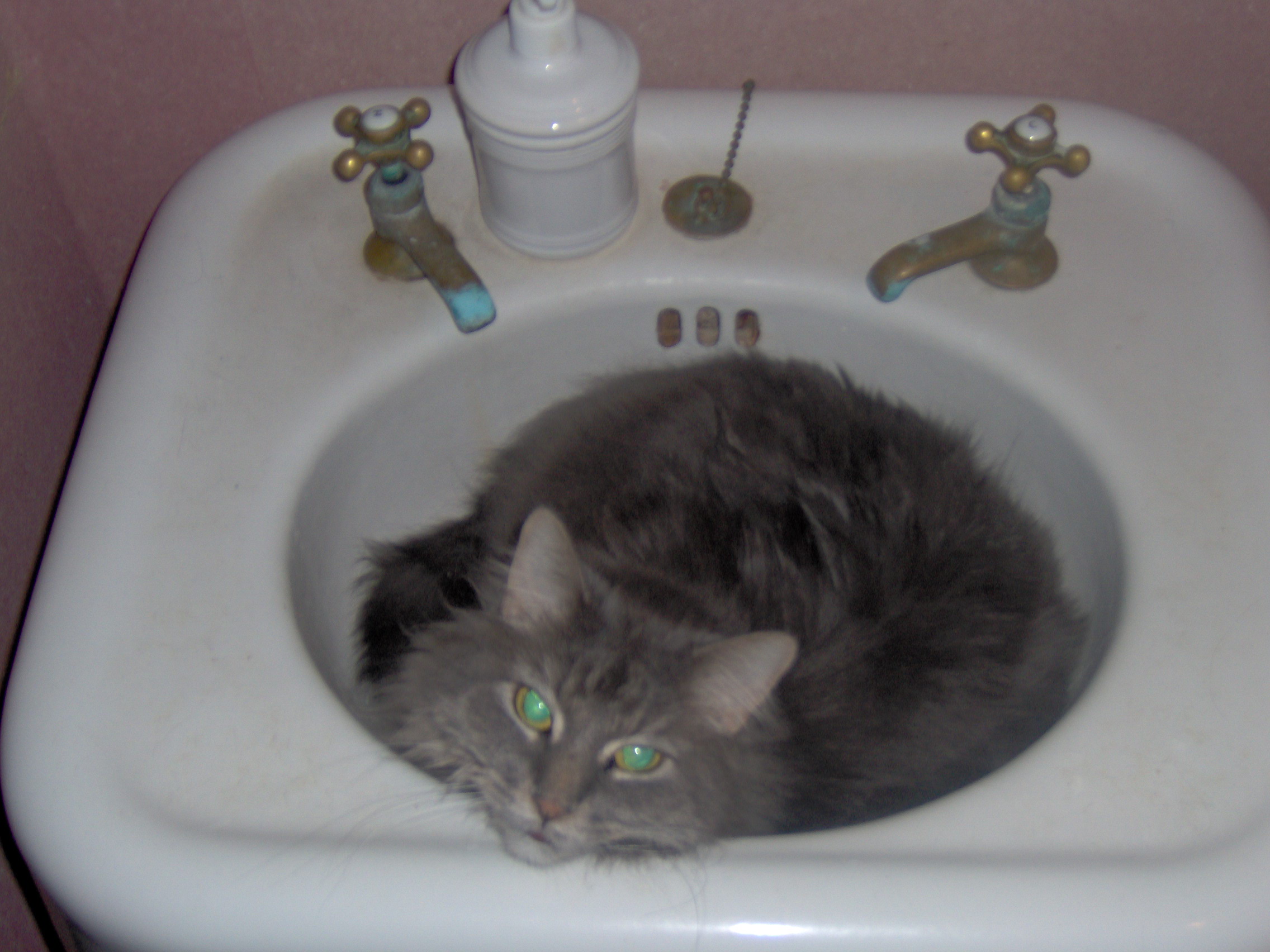
 The Second-Choice Cat
– Memories of Macska –
(aka Poofling, Snug, Snag, Snug-o-let, Such Motchk, Frumple-baby, Snuggle-puddin’)
“This cat was my second choice,” explained my friend Laura as Matt set down the box containing our apartment’s newest resident. Laura had graciously volunteered to be my proxy at the animal shelter, since I was afraid that, surrounded by cute, beseeching felines, I’d feel obliged to adopt them all. Laura’s first choice had been an affectionate white female named Praline – but Praline had already been spoken for, and remained at the shelter only because she had a broken leg that hadn’t quite healed.
In lieu of Praline, Laura had selected a fluffy gray six-month-old kitten we named Macska (pronounced “Motch-ka”), the Hungarian word for “cat.” The name had been picked before its recipient; though after a year of teaching English at a school in Transylvania, I could still hardly form a complete sentence in Hungarian, I knew assorted vocabulary words, including those for a number of animals, and I thought “Macska” would be a good name for a cat, particularly a somewhat exotic-looking one.
At first, all I could see of Macska’s looks was a pinkish-gray nose with light beige fur on either side of it, as he sniffed the unfamiliar smells in our apartment. As soon as the box was opened, he hopped out, showing no fear – just plenty of curiosity about his new environment. I was smitten by the charms of this inquisitive little beast.
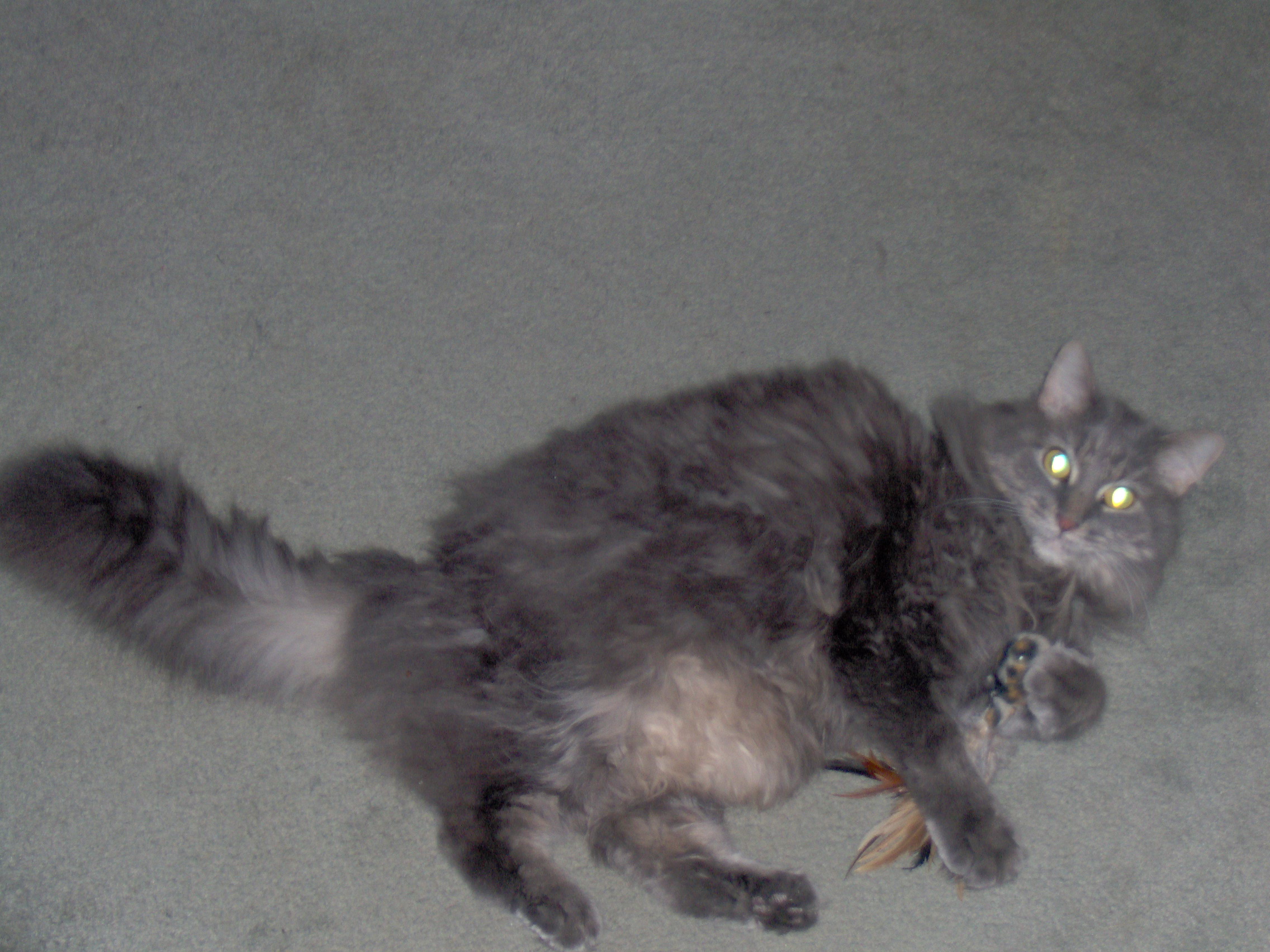 Granted, we may have been biased in claiming that Macska was World’s Cutest Cat, but besides having a striking appearance, he knew how to work it. Think Puss in Boots, from Shrek. He would lie on the floor, fluffy belly begging to be petted, and roll slowly onto his side, and then look up as if to see what effect his antics were having on his audience. At a science museum in San Francisco, we saw an exhibit on cuteness; it mentioned, among other factors, that people typically find creatures with unusually large, round eyes to be cuter than their more normal-eyed counterparts. Our perception of Macska’s cuteness now had some scientific data to back it up.
It was a multisensory cuteness, as well. Despite the fact that I’ve never actually felt the fur of an angora rabbit, I always said Macska’s long gray fur was “angora-soft,” because its extraordinary texture seemed to merit a distinctive modifier. In addition to the tactile pleasure of stroking this angora-soft fur, petting Macska, even just once or twice, almost always activated a surprisingly loud purr, peaceful and soothing in its rhythmic rumble.
Most of Macska’s other habits were adorable as well. When we lived in Chicago, the door of our apartment opened into a long hallway that led to the living room. Sometimes, we’d be about to leave, and Macska would be curled up against the door, which led to a game we called “launch-the-kitty”: one of us would pick him up around the middle and swing him forward and backward while counting to three. On three, we’d release him, and he’d sprint down the hall and into the living room. He loved this game so much that if we didn’t get out the door efficiently, he’d sprint right back and block our egress in hopes that we’d launch him again. He was also a fan of tug-o’-war. We had a simple cat toy that was merely a long, colorful piece of fabric attached to a plastic stick. I think the intent was for owners to wave it around while cats would chase the end of the fabric … but Macska preferred to bite the end of the fabric and not let go, regardless of our gentle efforts to pull it away from him. Giving up on getting him to relinquish the fabric at our urging, we’d cry, “Tug!” and praise him for doing it so effectively.
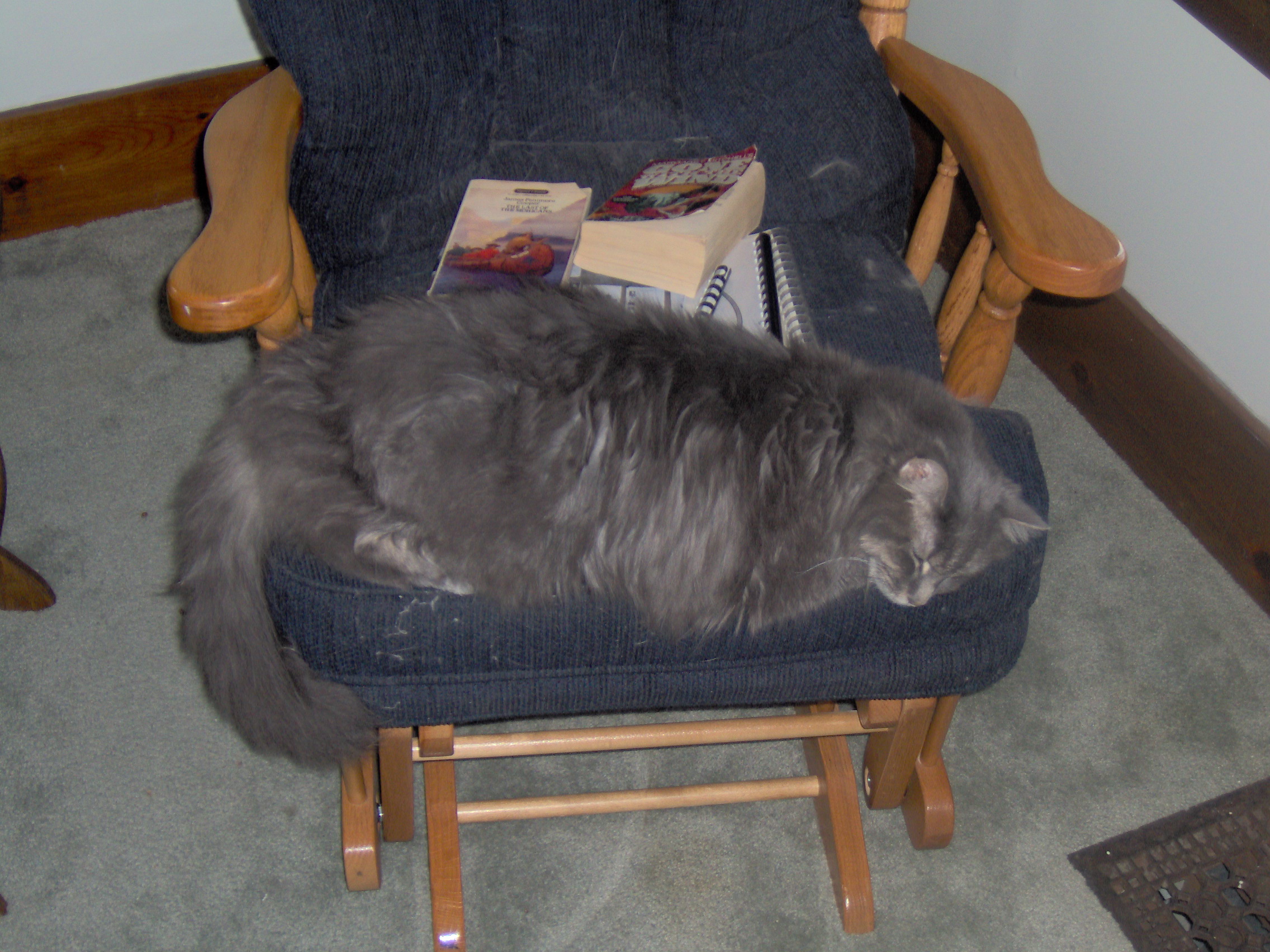 Macska was as cute asleep as he was awake, especially when he’d cover his eyes with his paw. We called him the “meld-a-beast” for his seeming ability to become one with any comforter or rug or pillow on which he slept. Sometimes, he sought more offbeat naptime accommodations. On our dresser, we used to have a dollhouse, and when Macska wasn’t yet fully grown, the dollhouse’s second-story terrace, above its conservatory, proved a perfect place for a catnap. And of course, Macska loved the holidays, because it meant he could climb into our artificial Christmas tree and curl up around the trunk. Telltale tufts of gray fur in the flattened-down branches first clued us in, but occasionally, we’d find Macska himself blinking sleepily at us, apparently content in the knowledge that he was our favorite ornament.
Macska’s most enduringly endearing habit, however, was his penchant for lap-snuggling. We used to call him the Lap Slut, because he’d spend a bit of time with one of us, and then switch to the other, and then back again. More flatteringly, we also called him the Kitty Ambassador, because he wasn’t afraid of strangers, and would gladly snuggle in their laps too, if allowed, at times helping “dog people” to understand a bit better what made “cat people” tick. In recent years, Macska became the Spiritual Kitty, because of the regularity with which he’d join me in the morning as I sat on the couch reading my Bible or writing in my prayer journal.
Not all of Macska’s habits were cute. Some were just odd – like his licking fetish. He’d go through occasional stages during which he’d lick various surfaces, from the metal tub faucet to the plastic laundry baskets. For a while, he even liked to lick the wall at the head of our bed, though his doing so would get him shut out of the room. And then, more annoying than odd, was the way he sometimes chose to get our attention: by batting at our hands (on the couch) or heads (in bed), and, if this didn’t get the desired result (having someone pet him), he’d keep batting, but with his claws out.
The worst habits, though, were the ones Macska may not have been able to help. When he was only a few years old, he had some urinary problems. The good news was that they mostly went away when we gave him a special, vet-prescribed cat food. The bad news was that it’s pricey stuff, and we ended up feeding it to all our subsequently acquired cats too, rather than go through the constant hassle of trying to make sure they all got enough to eat without letting Macska eat the normal food or letting the others eat the special food.
 Soon after we got the urinary problems under control, Macska began having intestinal problems as well. So we kept an eye on him, and if he started getting blocked up, we’d take him to the vet for an enema. This wasn’t fun for any of us, but seemed to be working … until the enemas were being needed more and more frequently, and we weren’t sure how often we could put him through this and still feel he had a decent quality of life. But then, at the vet’s suggestion, we tried giving him small, daily doses of a laxative powder available at the grocery store, sprinkling it in his moist food so he’d eat it. We’re pretty certain this prolonged his life by two or three years.
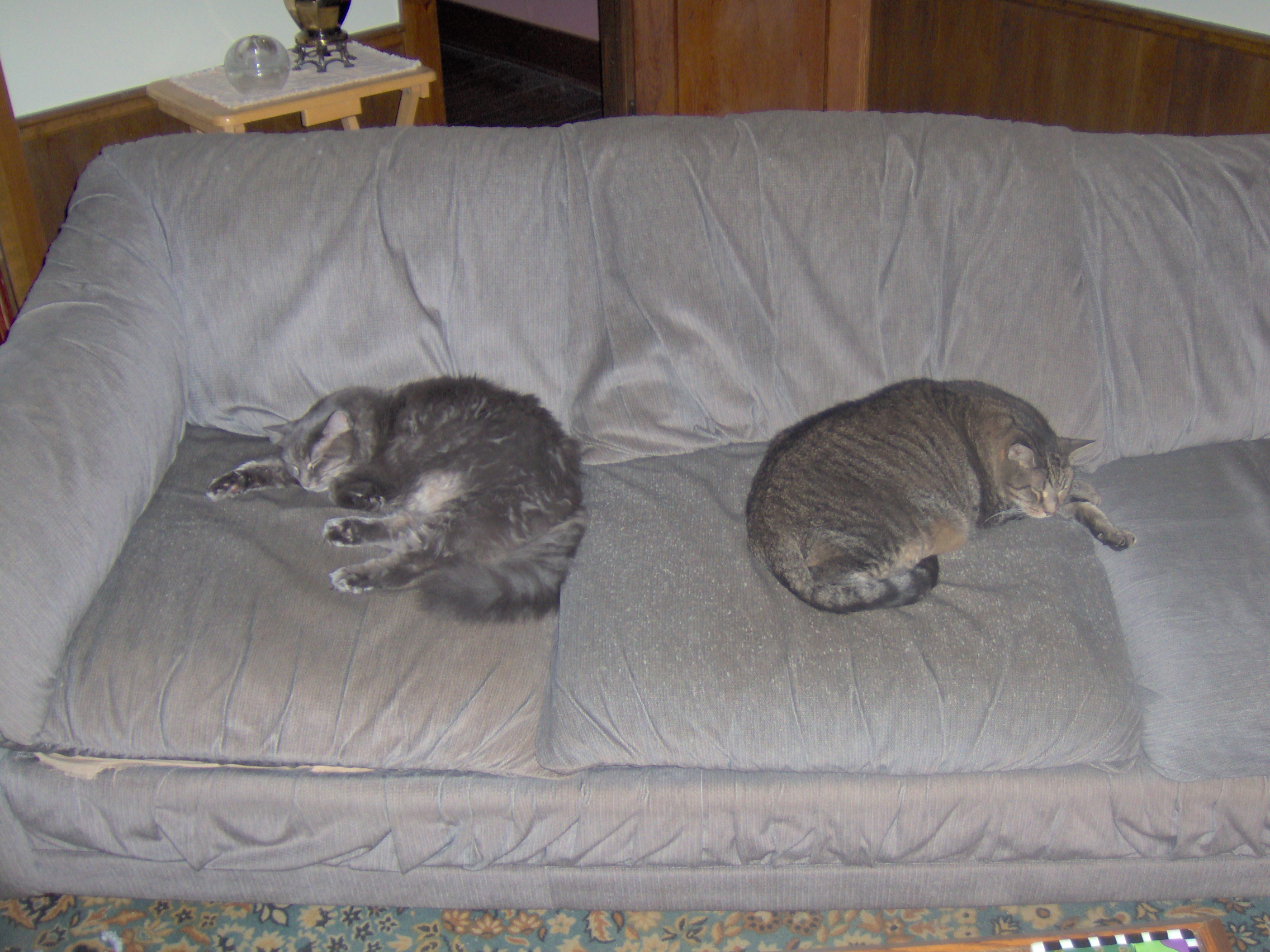
In fact, about three years ago, when those car-window stick-figure families started getting particularly popular, we thought it would be amusing to get one for ourselves, consisting of Matthew, me, and our (at the time) five cats. Not too long after that, we took in Cat Number Six – and yet we didn’t order a sixth cat sticker, because Macska’s health seemed precarious enough that we worried, on some level, that as soon as we got the sixth sticker, Macska would die.
Yet he hung on, and between the special food and the miracle laxative powder, Macska was in some ways healthier than he’d been as a middle-aged cat. Nonetheless, we couldn’t deny that he was getting older. Though he still seemed to have a decent appetite, he became progressively scrawnier, and while I continued to pet him along the sides, and to scritch his head and belly, I stopped petting his back, because it was too disturbing to feel his spine. “You’re just skin and bones!” we’d say, and then add, “Skin and bones – and fur and purr – and love.”
In the past couple years, Macska wasn’t grooming himself so well, either, and his long fur developed frequent lumps that needed to be cut or shaved. And his movements seemed stiff. He struggled a bit when jumping up to the couch or bed; and when jumping down, his back legs wouldn’t land quite right. We thought it was just arthritis.
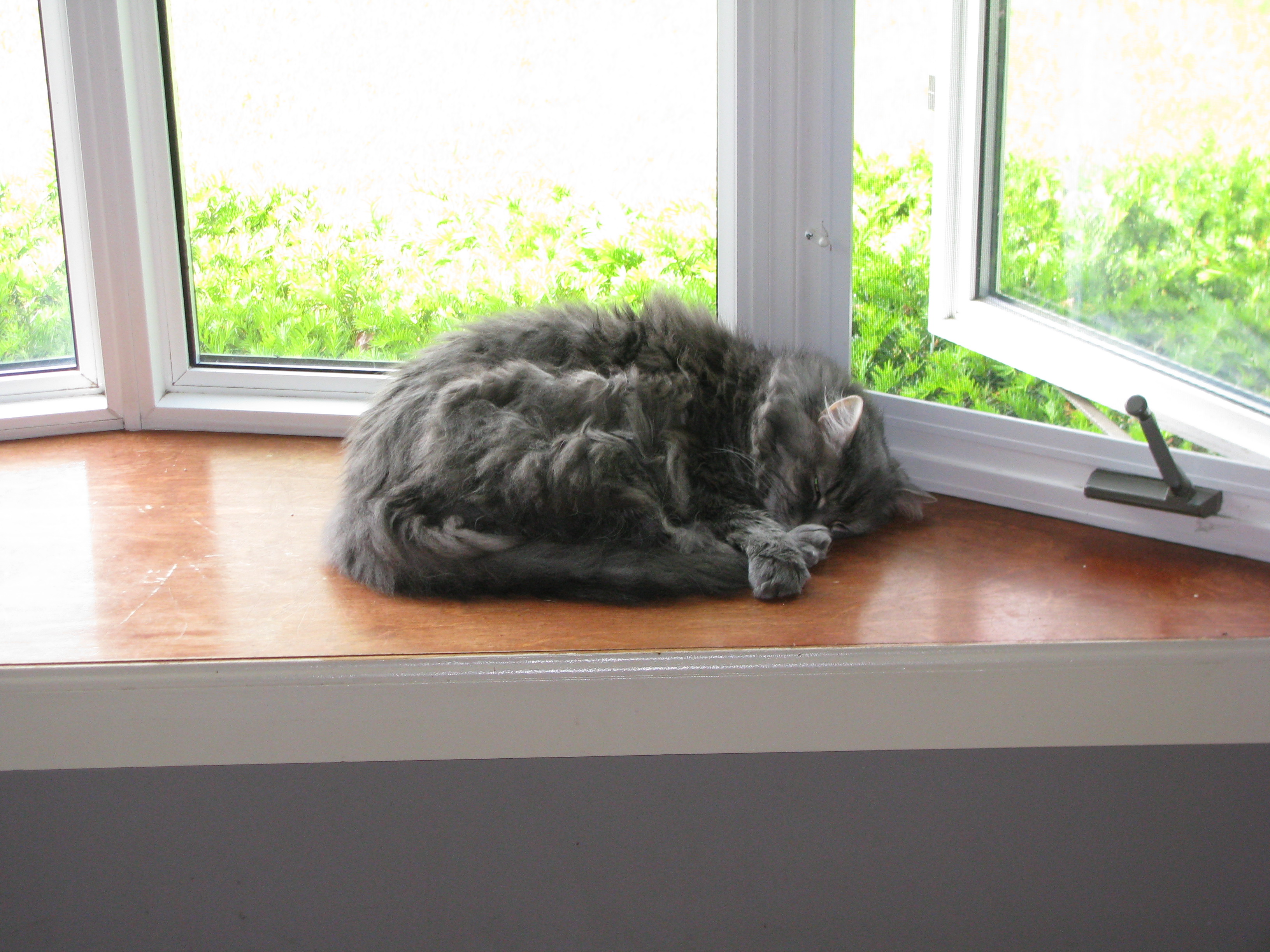 We continued to think this until, about three weeks ago, Matthew saw Macska’s back half just buckle underneath him and fall over as he was trying to walk. Frightened, Matthew wondered if this was the end, but since Macska started moving more normally before long, we continued to tell ourselves it was probably just arthritis.
Problems returned, however, about a week later. Matthew took Macska to the vet and found that he had both a tumor and a heart problem, and to treat the former would mean exacerbating the latter. He also had a urinary tract infection, so the vet gave us some medication for that, and we hoped we could at least clear that up and make Macska more comfortable during his remaining months, or weeks.
But as it turned out, we didn’t have weeks. We didn’t even have one week. Over the next couple days, Macska stopped eating, and appeared to be moving less and less. We’d come home from work and find him in the exact same spot on the couch, with no evidence that he’d been elsewhere. We’d pick him up and set him in front of his food and water bowls. He’d drink some water, but would ignore the food. We’d then set him in the litter box, and nothing would happen, other than his attempting to leave it. So we’d put him back on the couch, where he’d change his position with evident difficulty.
By Friday night, we were talking about the possibility of having Macska euthanized, but despite his obvious illness, the decision itself was not so obvious to us. He was still drinking; wasn’t that a good sign? And he could still move, albeit not easily. And above all, he was still purring, still making that sweet sound suggesting contentment, tranquility, and love. His eyes, though – it was getting harder to look at his eyes. They’d become somehow smaller, yet the pupils appeared to have grown, so no longer were they round, alert, and greenish-gold; they were triangular, and black, and looking at them made something in my chest constrict.
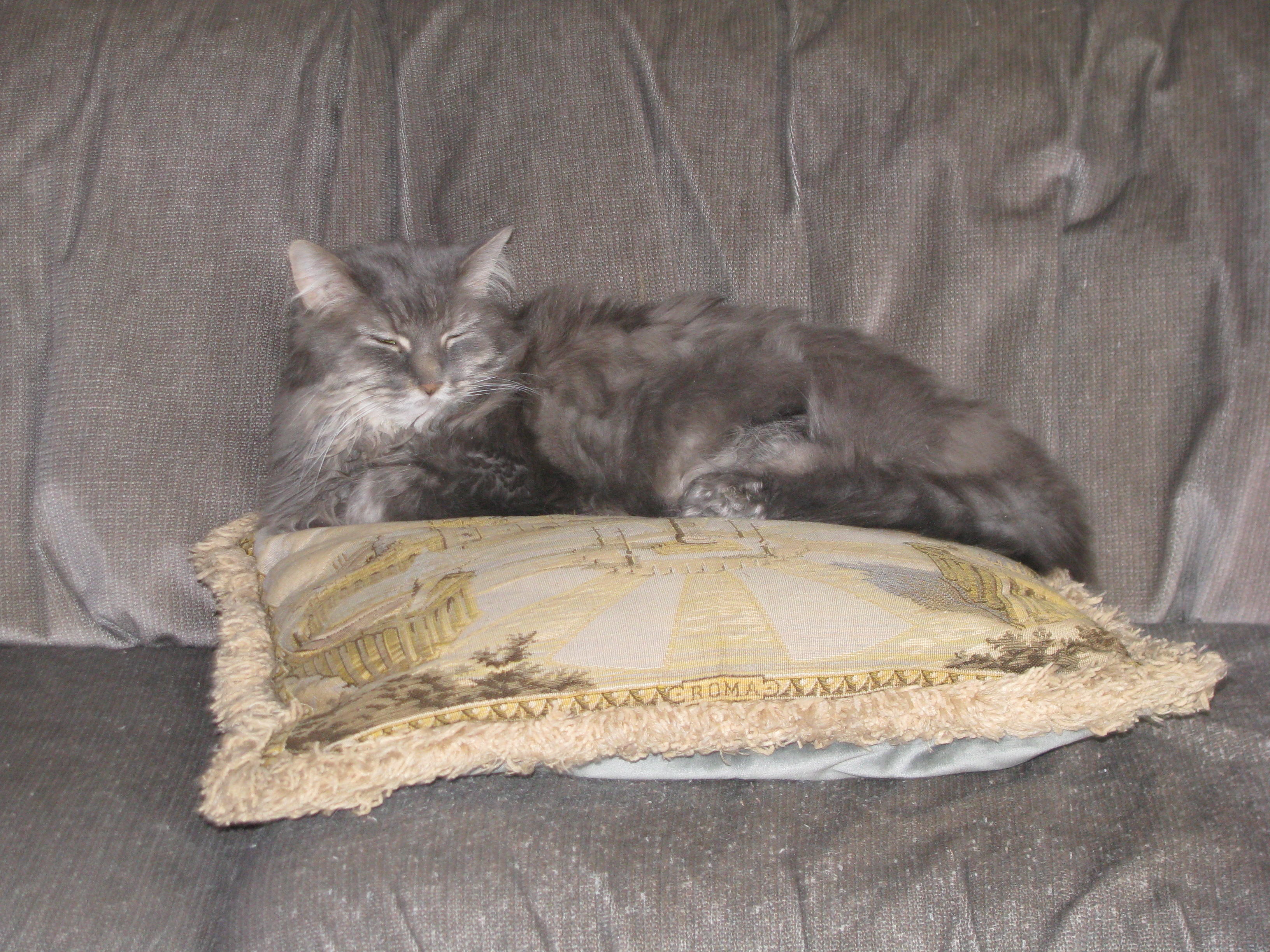 So after Matthew went to bed on Friday, I stayed up for another half hour, gently stroking Macska’s head and sides, and weeping softly as I murmured repeatedly what a good kitty he was.
The next morning, Matthew called the vet’s office to make the appointment, his voice choking on the words. Come at 11:45, they told us. Three more hours. Three more hours to wait … but also three more hours to spend with Macska. We watched a movie, and Matthew put Macska in my lap. Partway through, we paused for a bathroom break, after which I insisted that Matthew should get a chance to hold him too. Macska acquiesced for a while, but though he’d seemed to like us both pretty equally for most of his life, there was no denying that, in recent years, he’d become a Mama’s kitty. After a short time on Matthew’s lap, this cat who had barely moved for several days struggled to his feet and lurched in my direction. Humbled by this show of devotion that seemed so undeserved on my part, I reached out to hold him for one final hour.
At the vet’s, a man sitting next to us said, “That’s a handsome cat.” At that point, it was hardly the truth, but it was kindly meant, and perhaps the man could still glimpse traces of how cute Macska had been in his prime. When I see strangers on the brink of tears, my own instinct is to keep my distance, but this man was unafraid to enter into our pain, and though I don’t remember exactly what he said, his quiet, sympathetic conversation provided welcome comfort.
And then we were called to go into the room. This was the first time we’d ever had a cat put to sleep, and I was startled by how quickly it happened. Sixteen years of “Tug!” and “Launch!” and laps and love, sixteen years of sharing our home and our hearts with this small, affectionate creature, and his life was snuffed out in about a minute, if that.
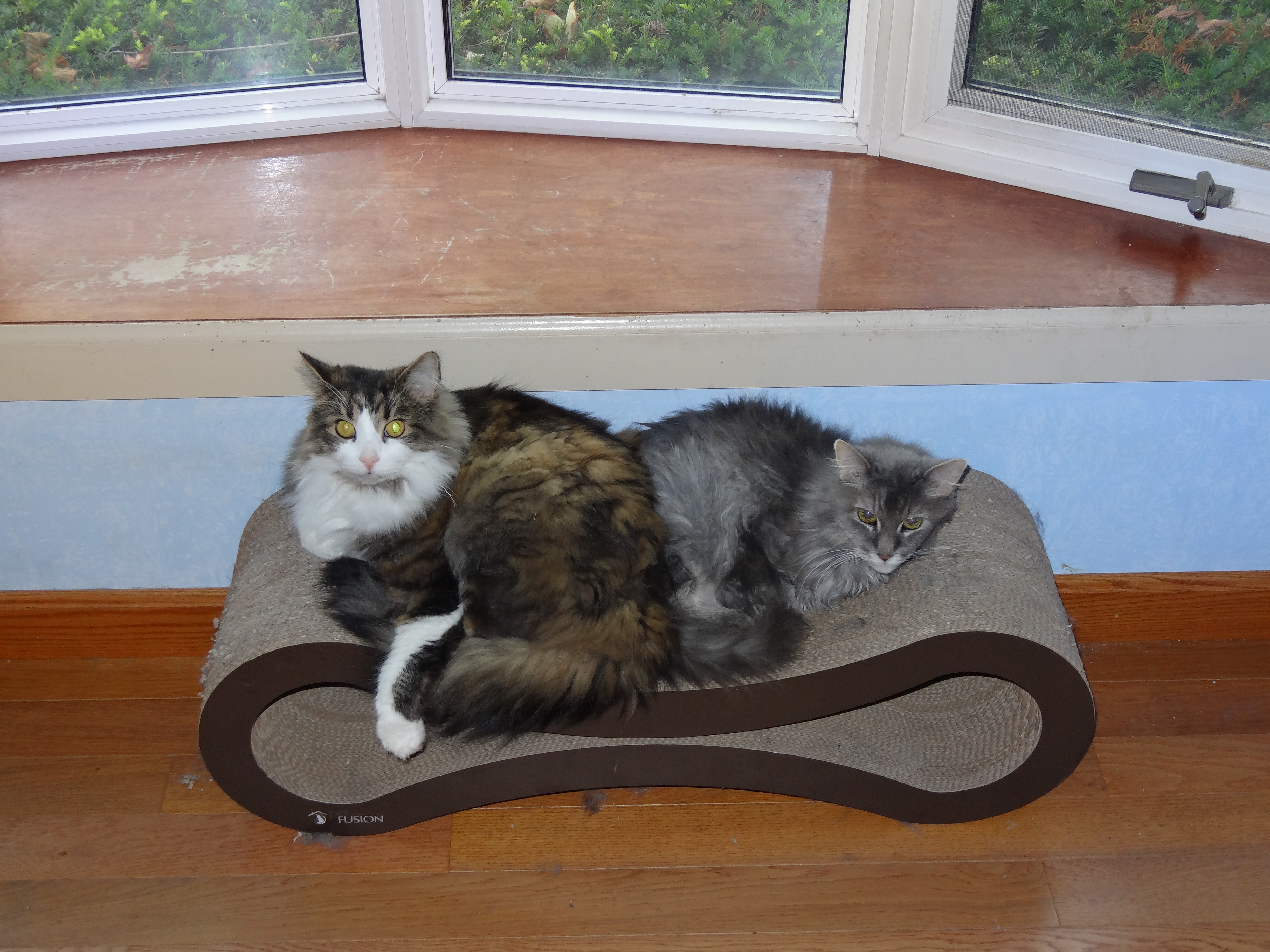 So now, for the first time in over two years, the sticker count on my car window is right. Five cats. The sticker count is right, but the atmosphere feels wrong. My lap is lonely in Macska’s absence. Sitting on the couch without a furry gray cat to anchor me, I sense, even subconsciously, both physically and emotionally, that something – someone – is missing.
I’ve wondered sometimes about that white cat, Praline, Laura’s first-choice cat at the shelter. Was she as sweet as she seemed? Did she bring her owner much joy? Likely she did, and I’d be glad of that. But for myself, I’m grateful that she’d already been claimed. Laura’s second-choice kitty turned out to be the perfect choice for us.
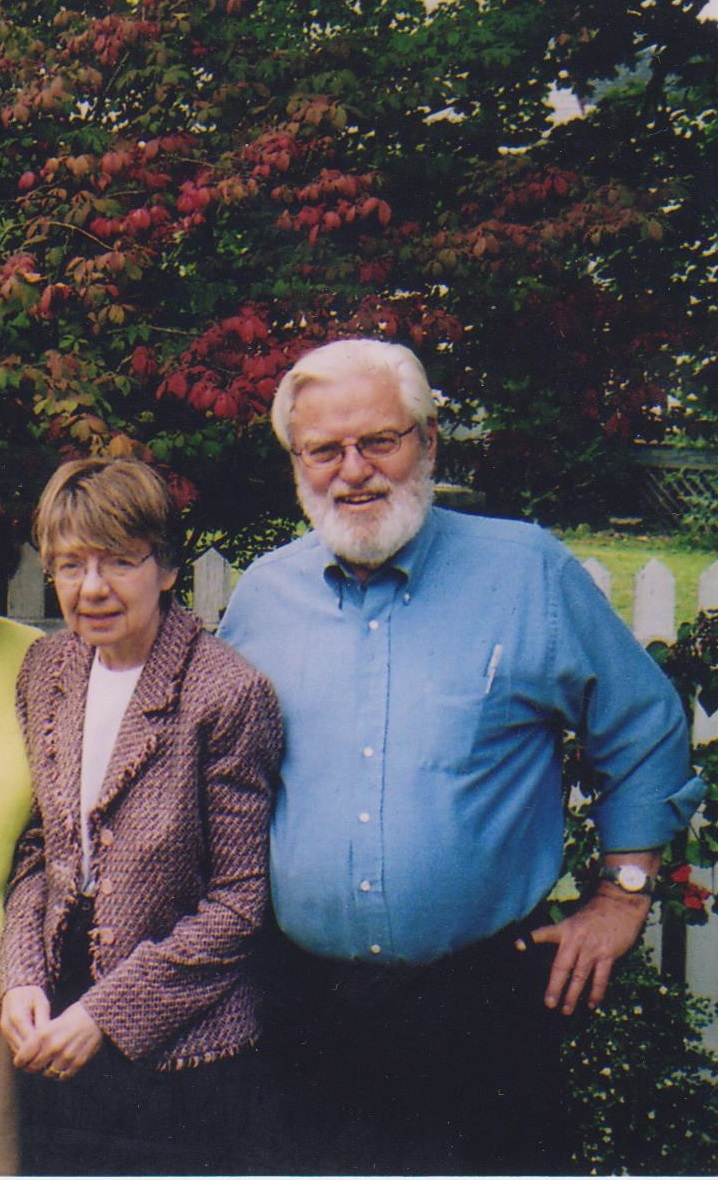
 I did miss posting this by one day, as our anniversary was yesterday, but I am very blessed to be married to my best friend. I really can’t imagine my life without Meredith in it (or, if I can, I imagine a very lonely life). I love you, Meredith! Here is to 61 more years.