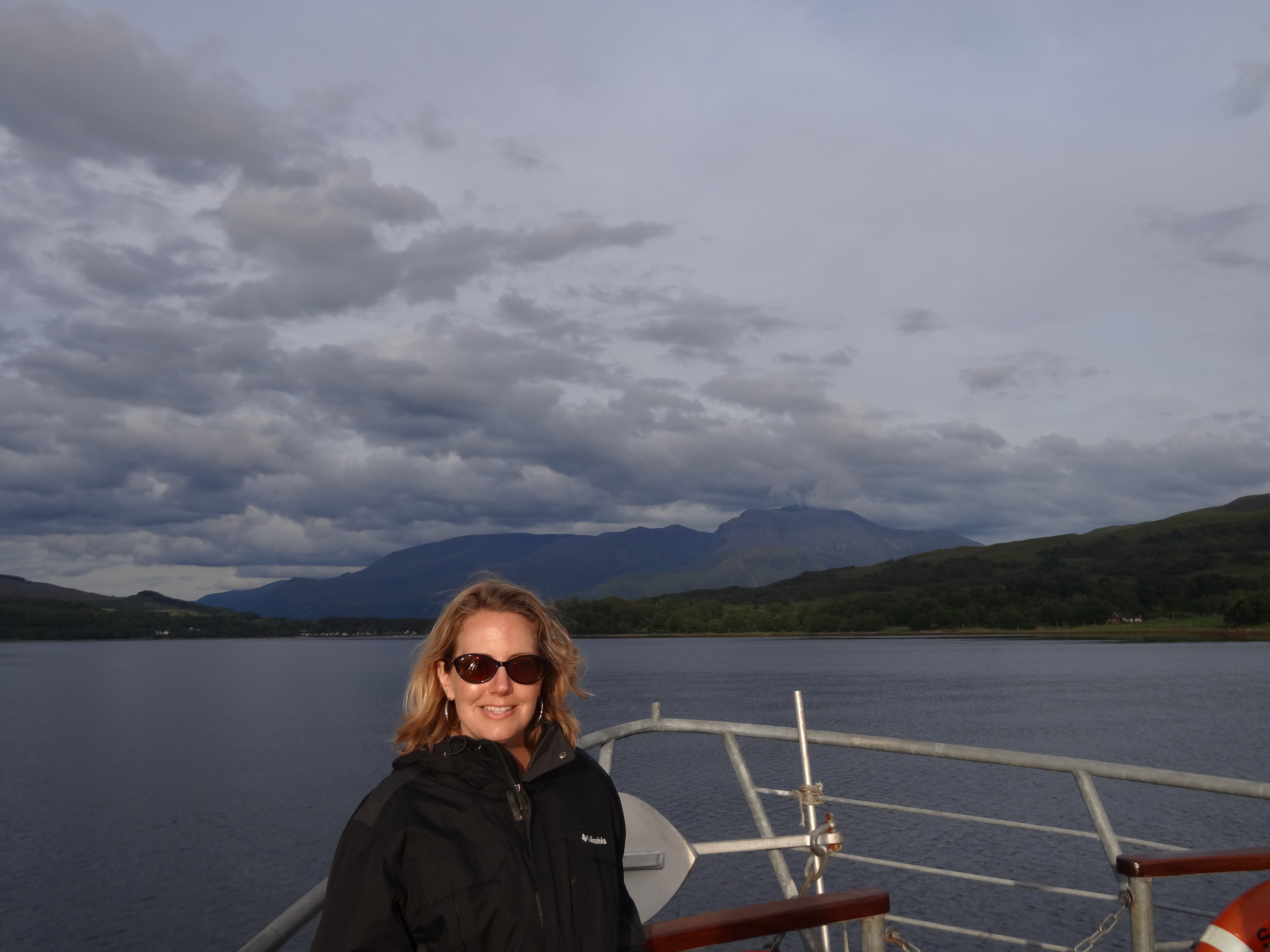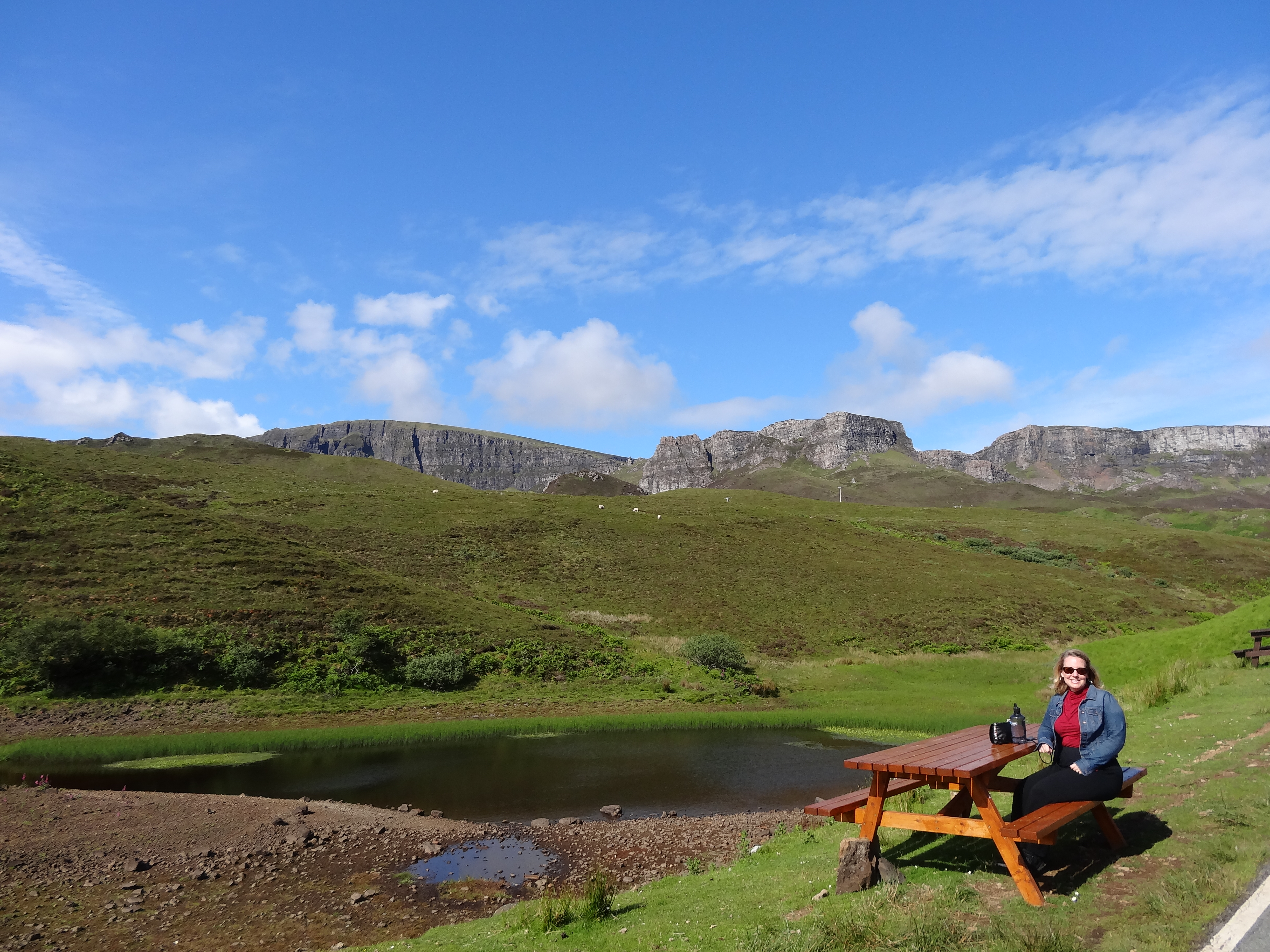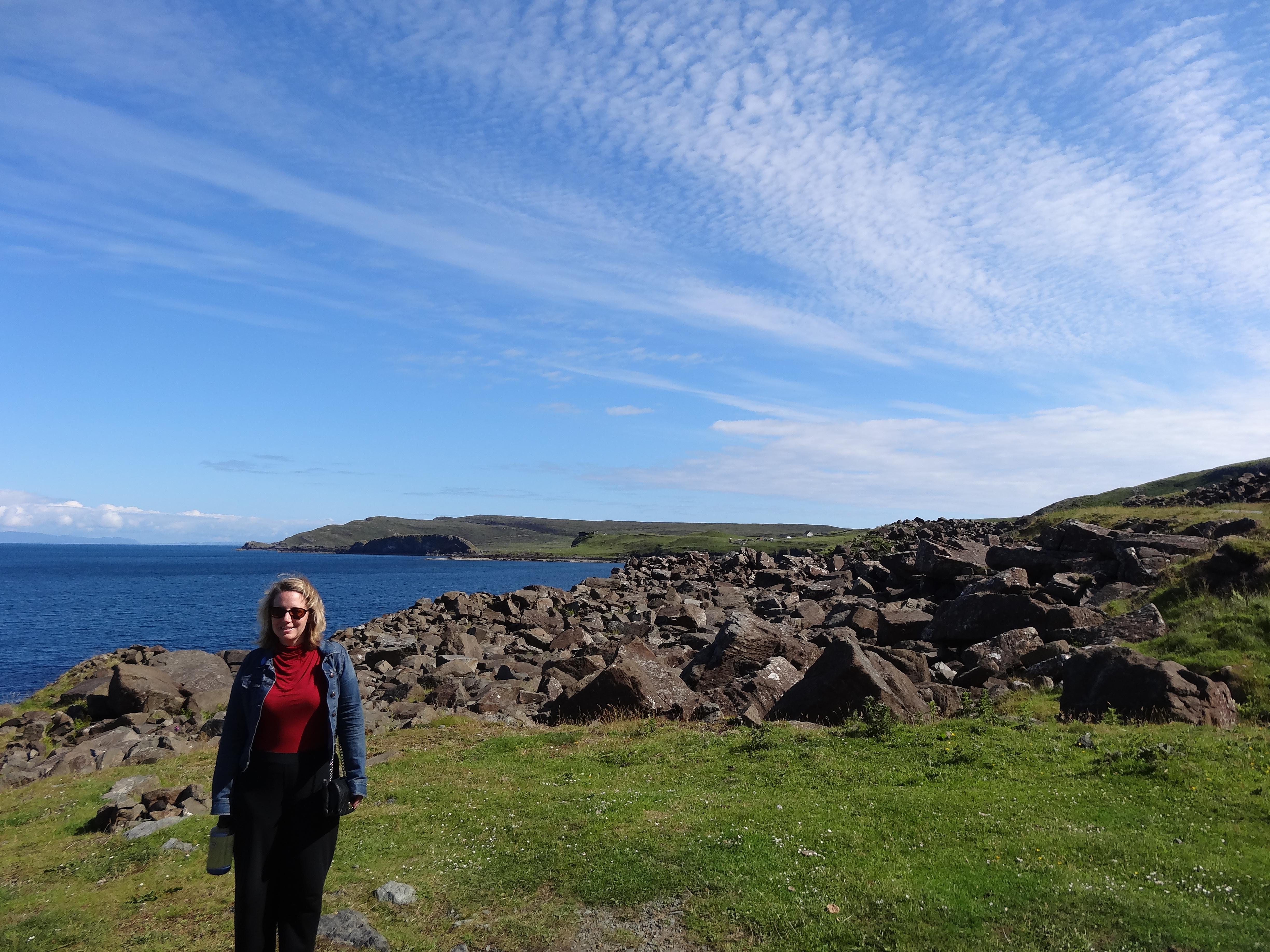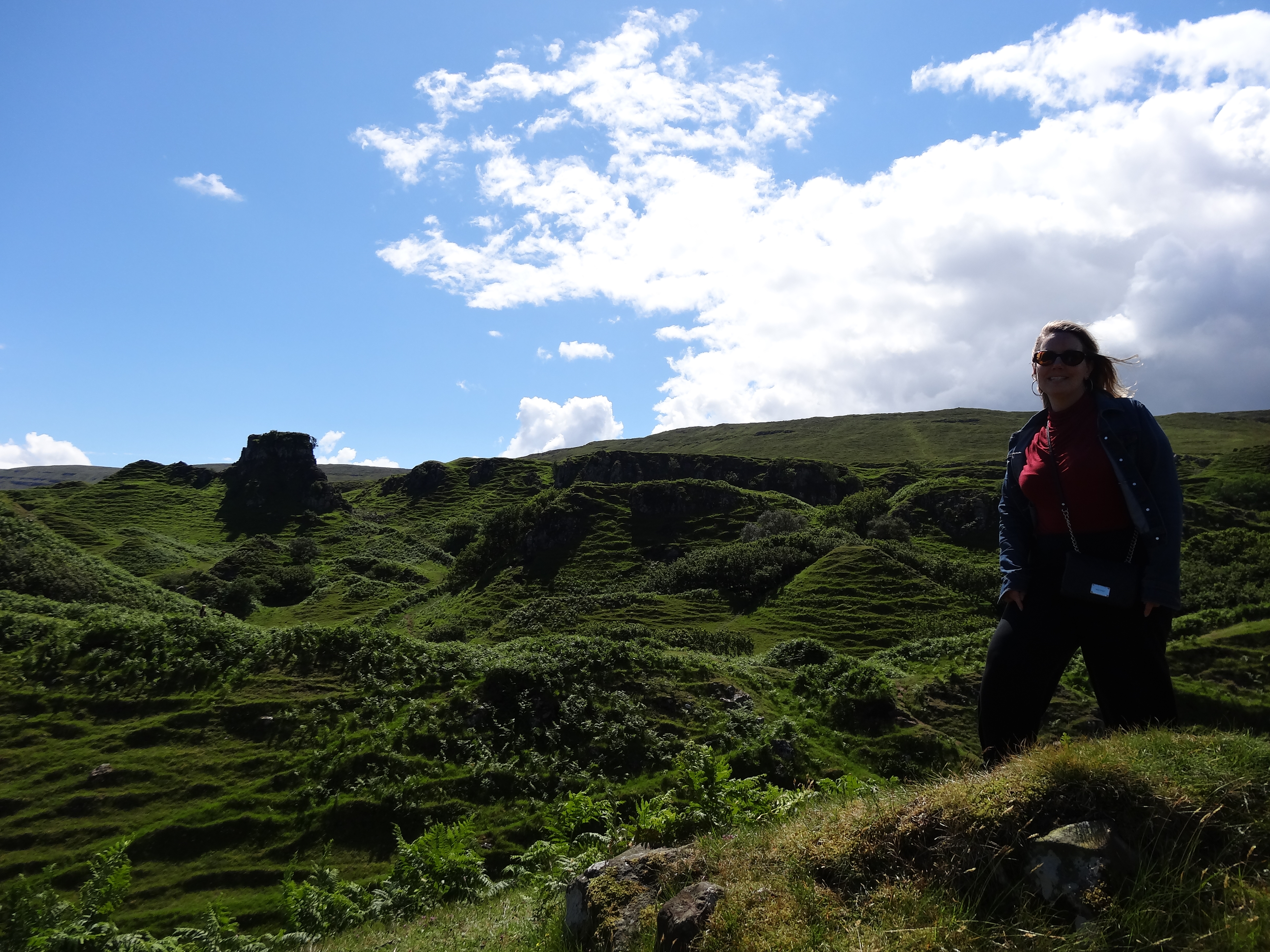
Scotland 2017 – Day 6 – Friday – Pitlochry, Newtonmore, Craigellachie, Ballater

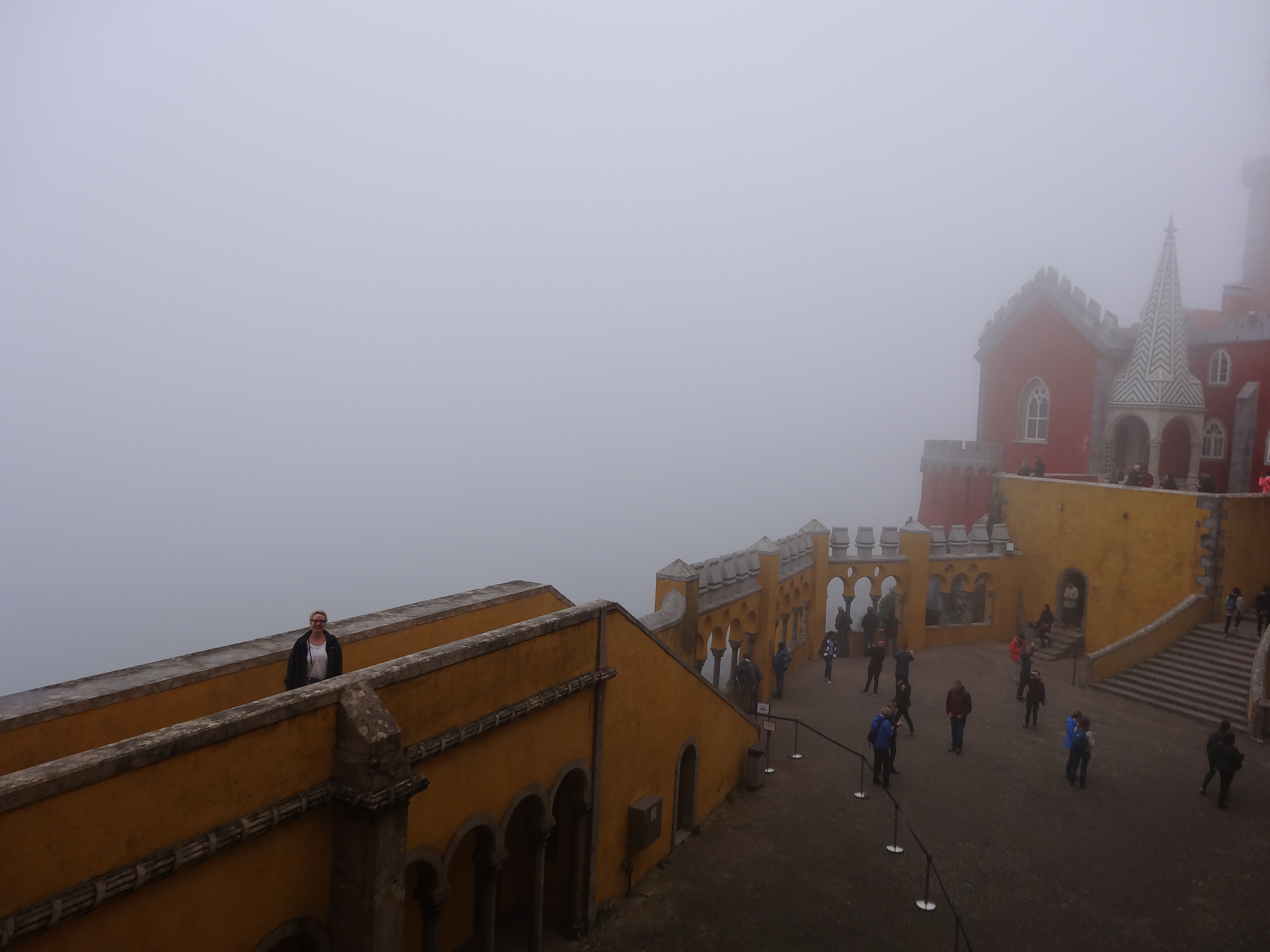
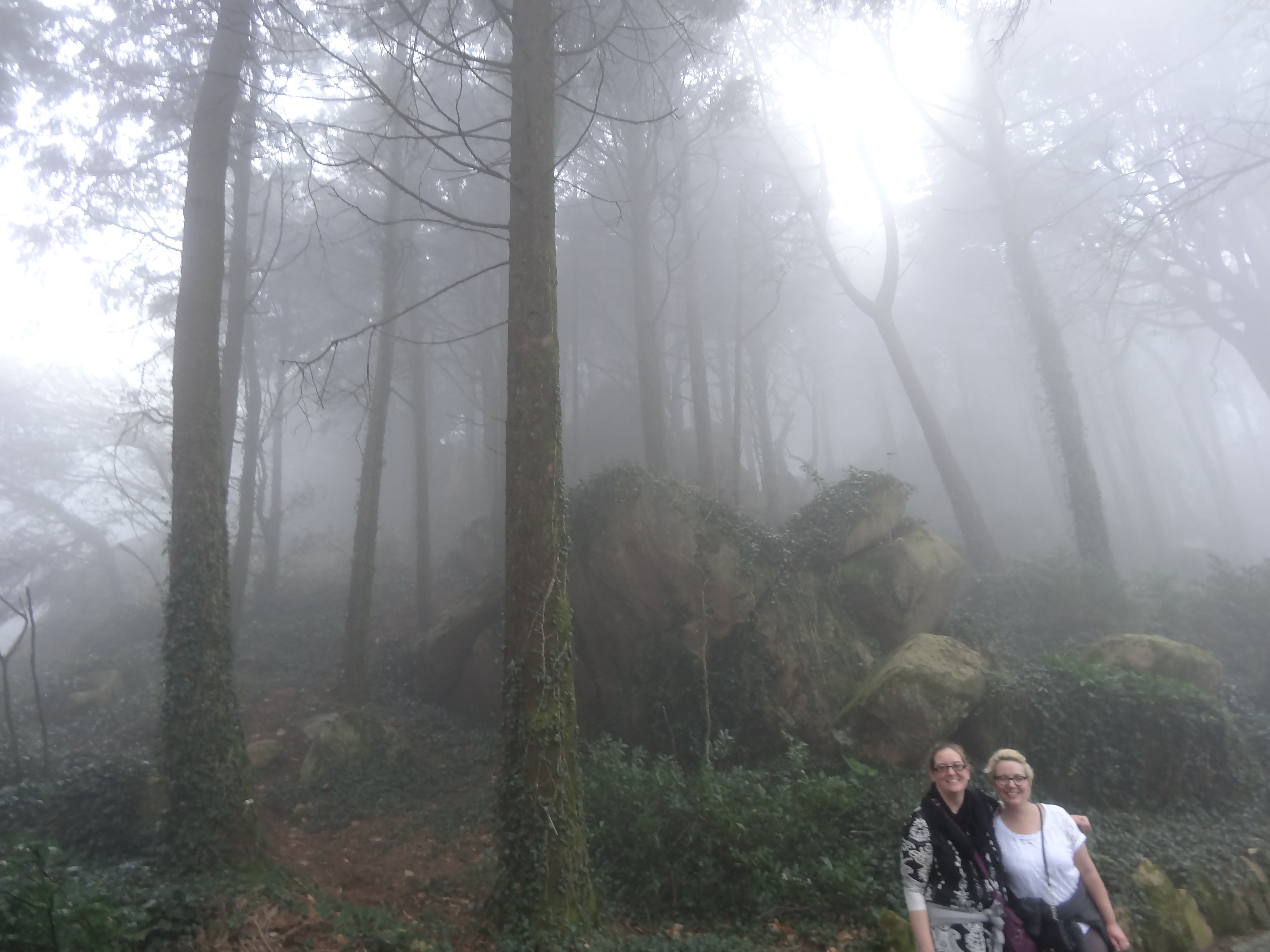
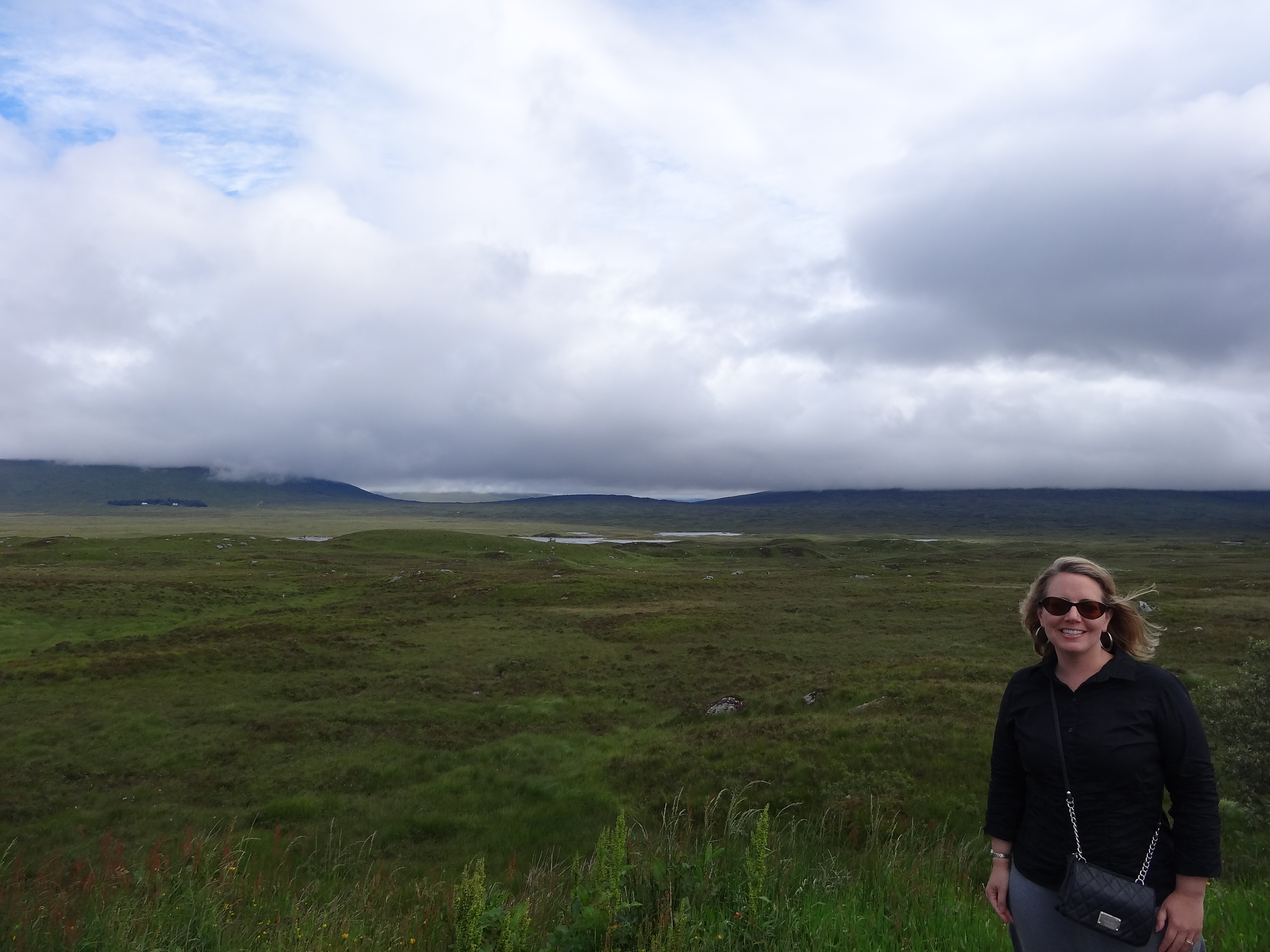
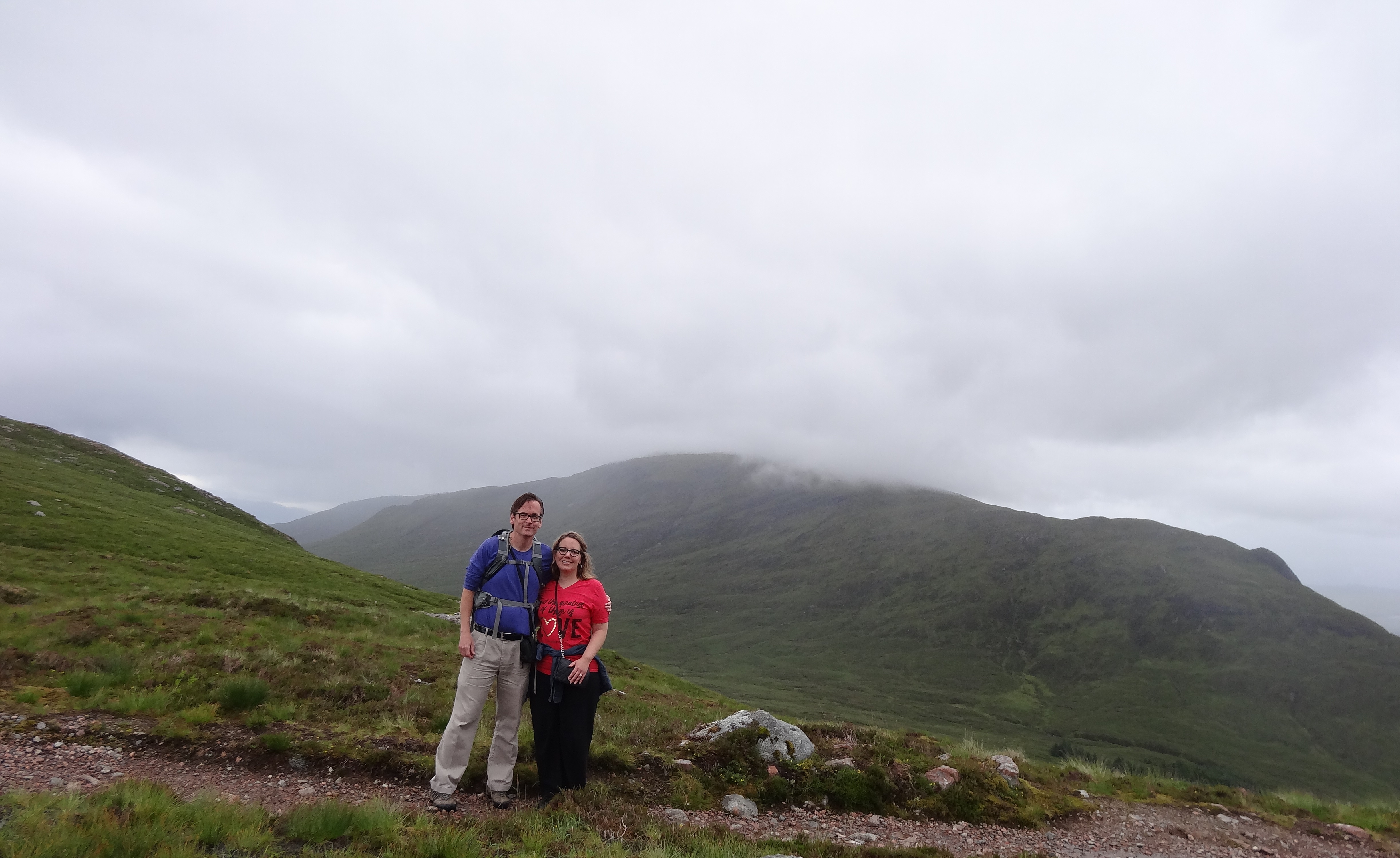
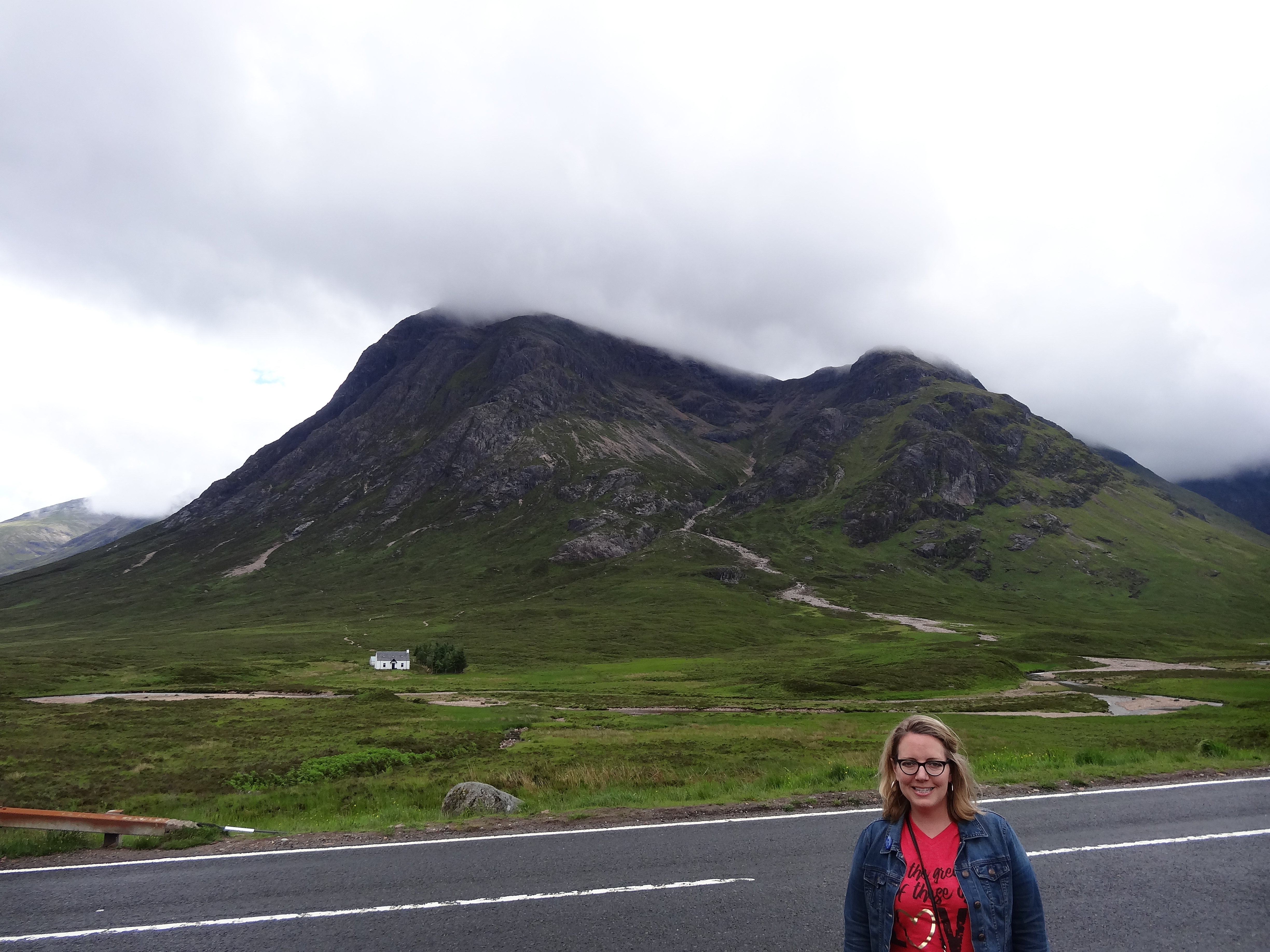
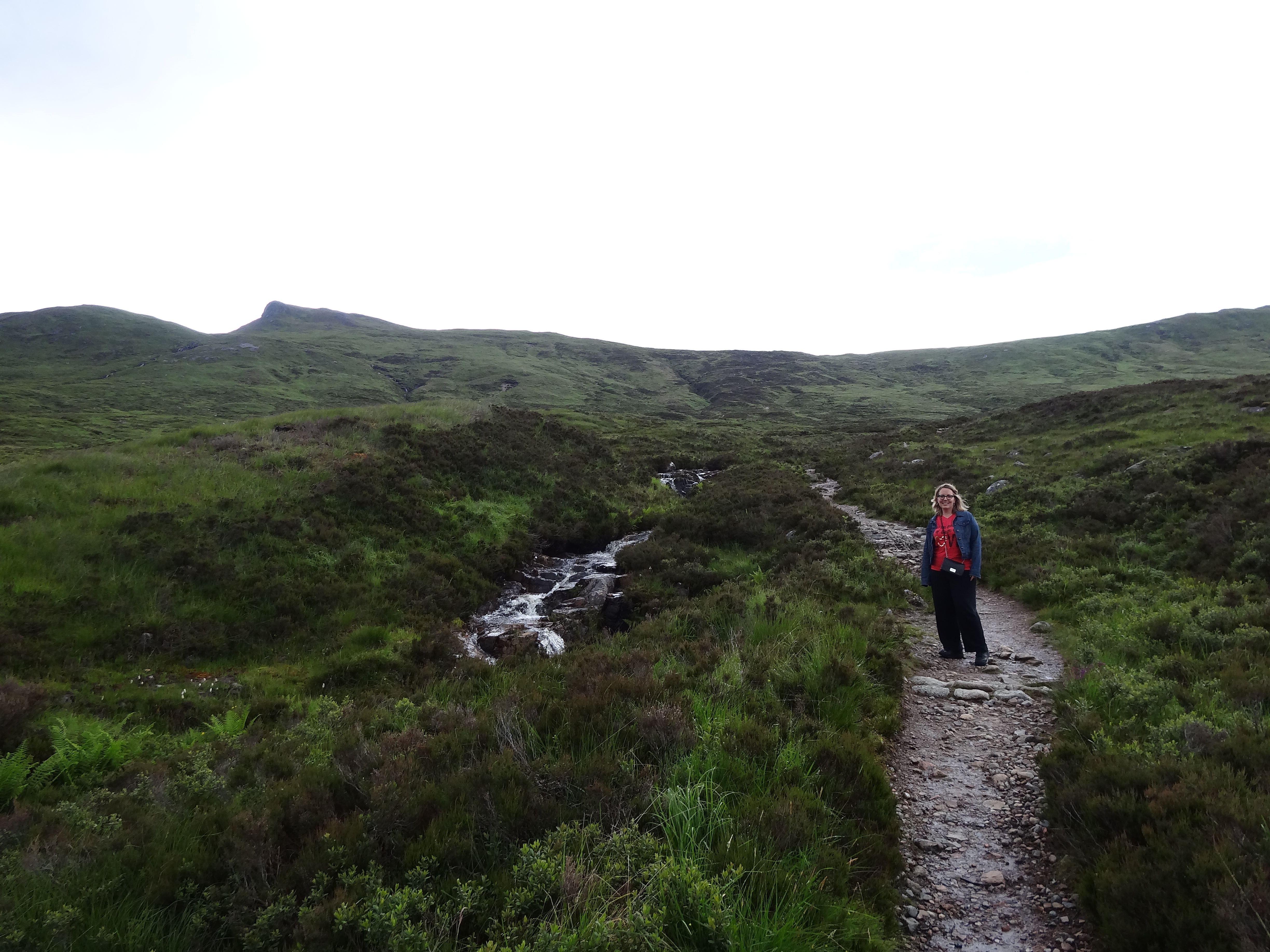
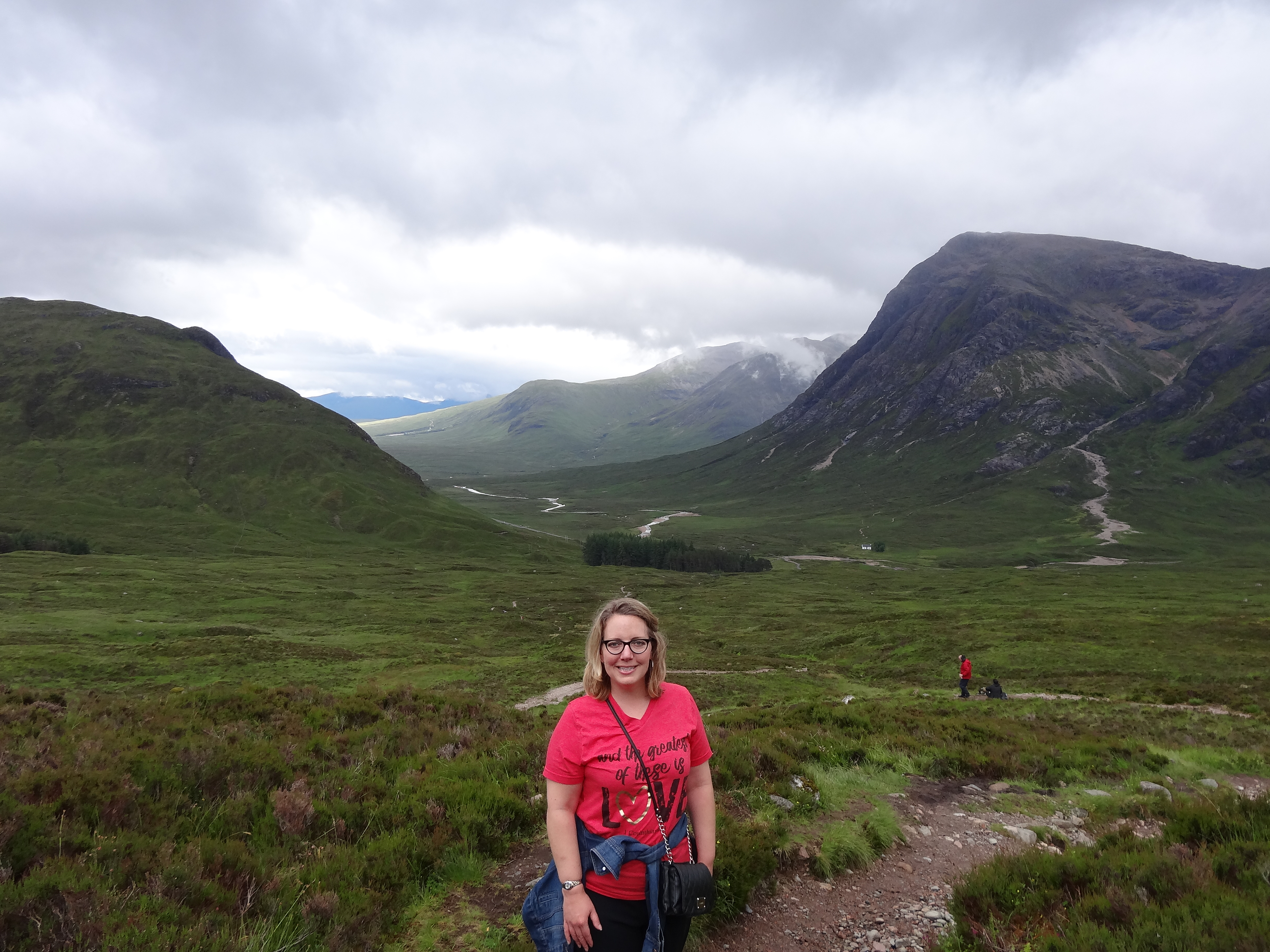
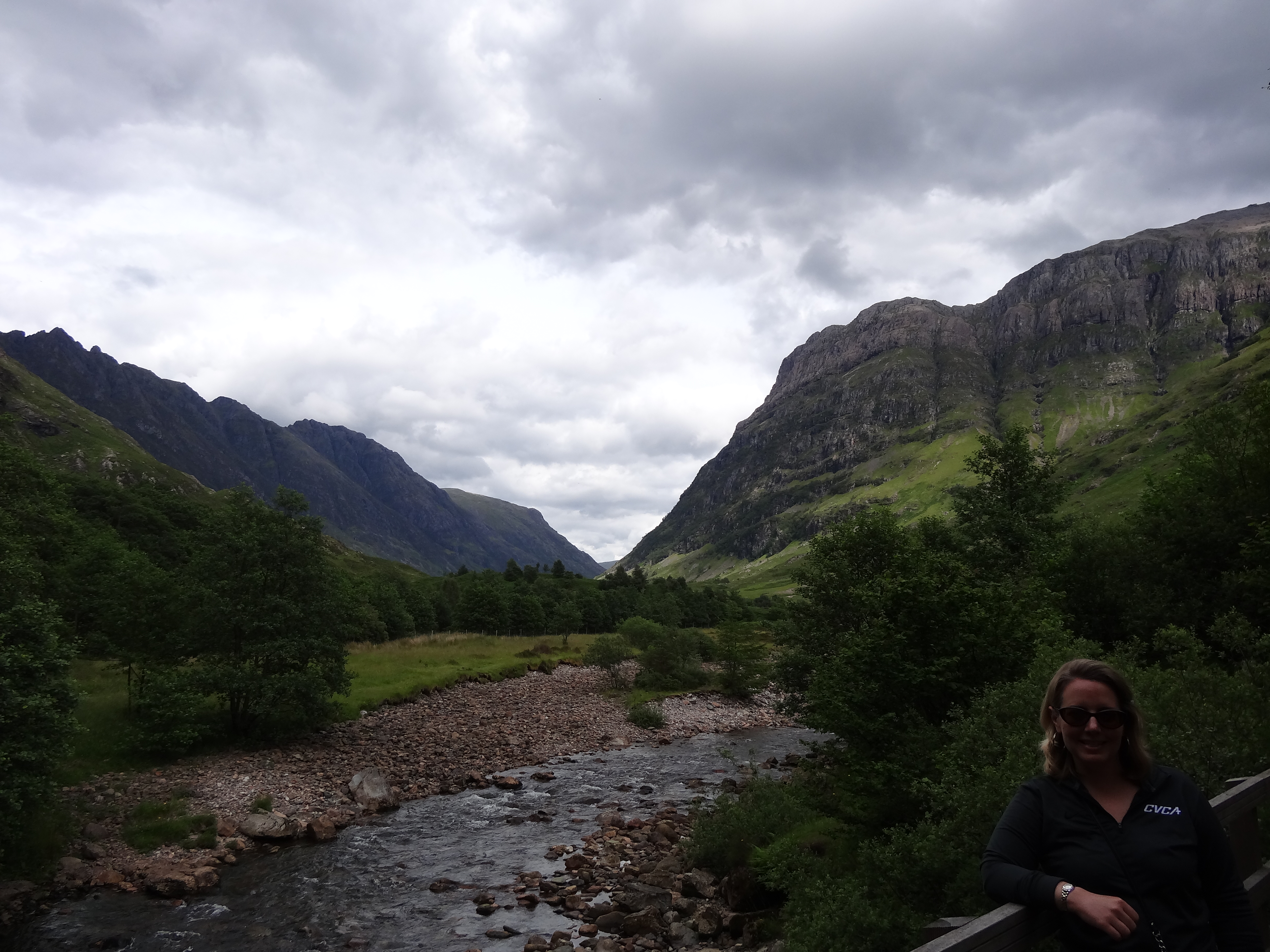
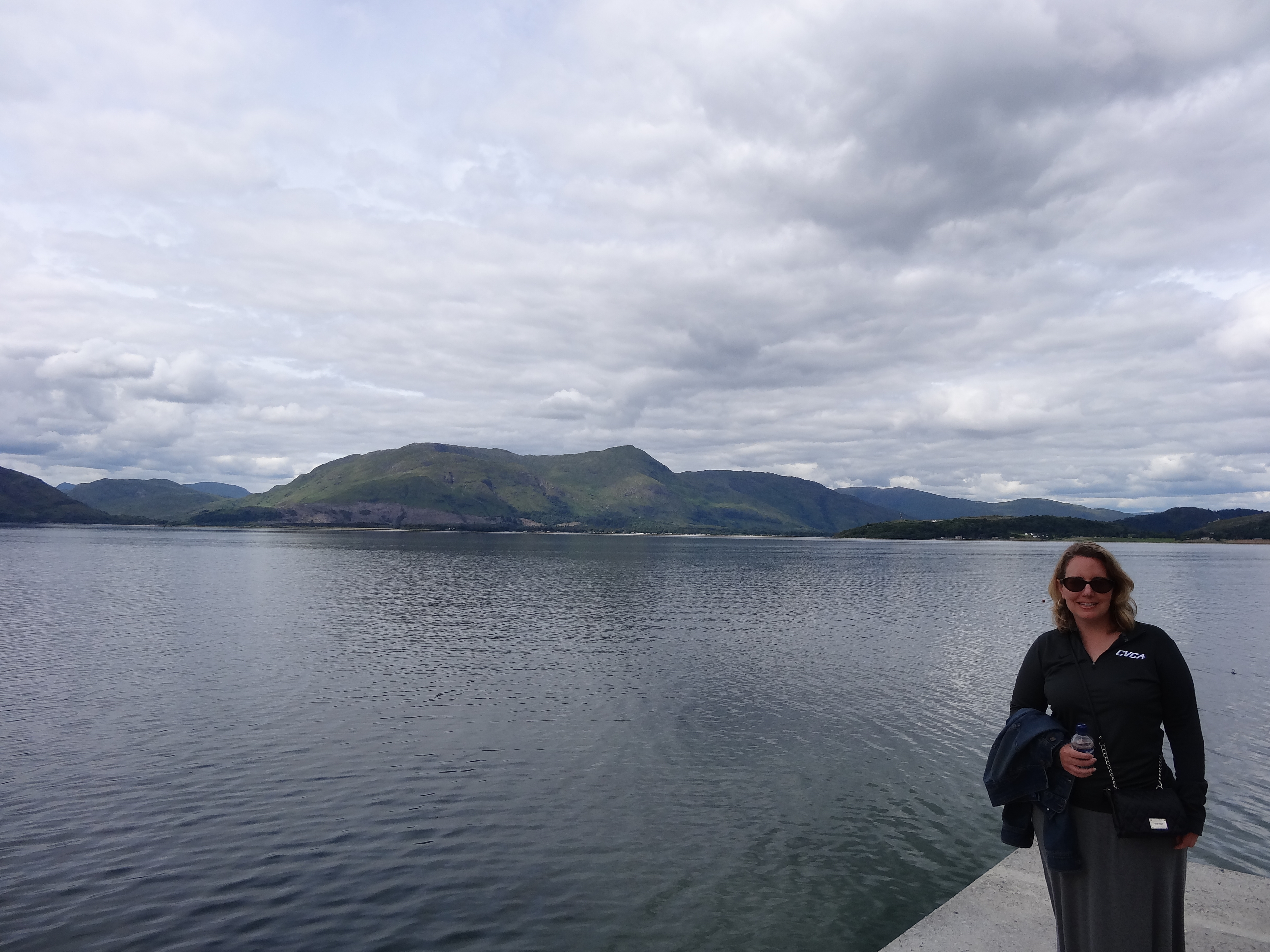
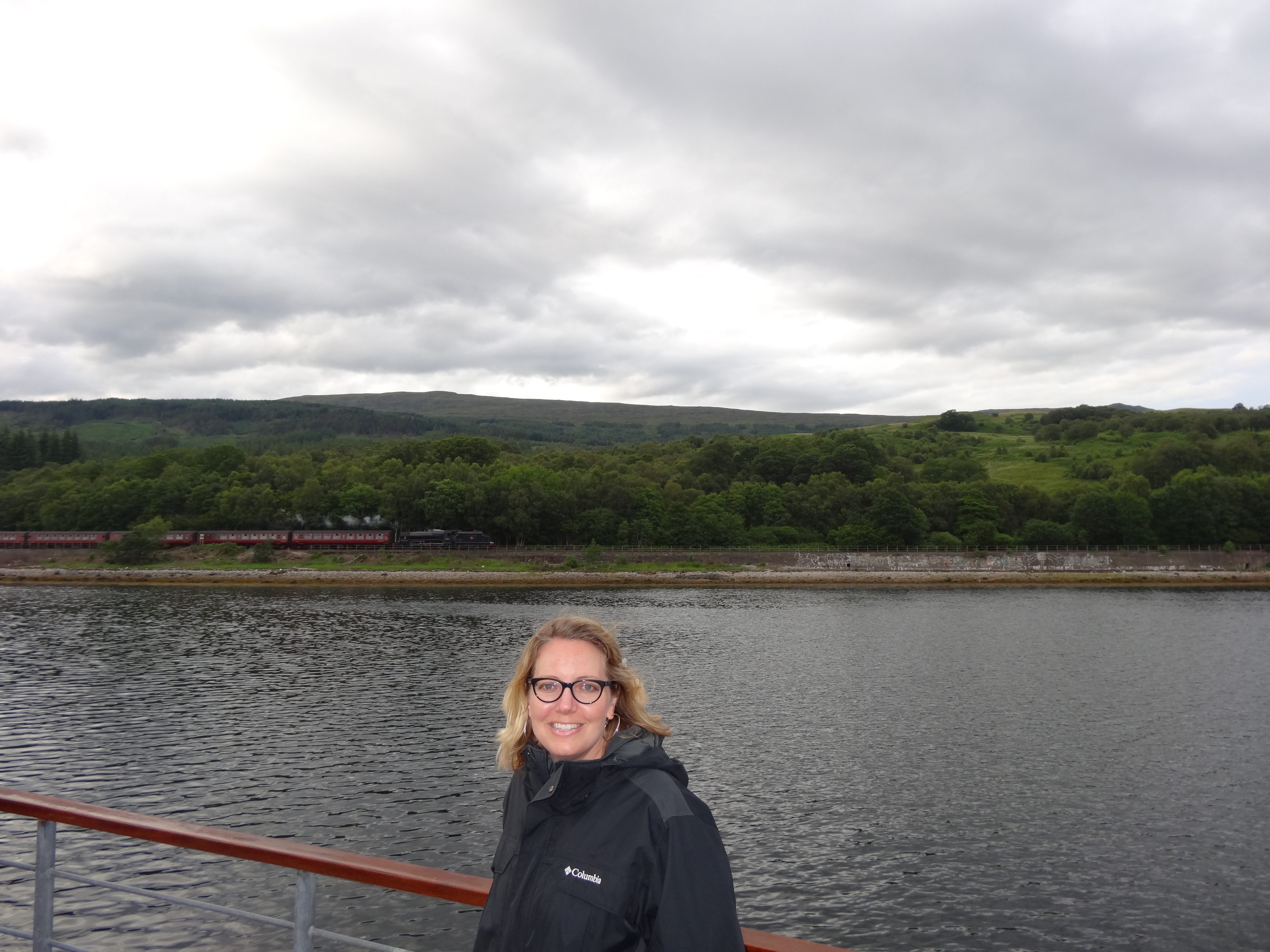
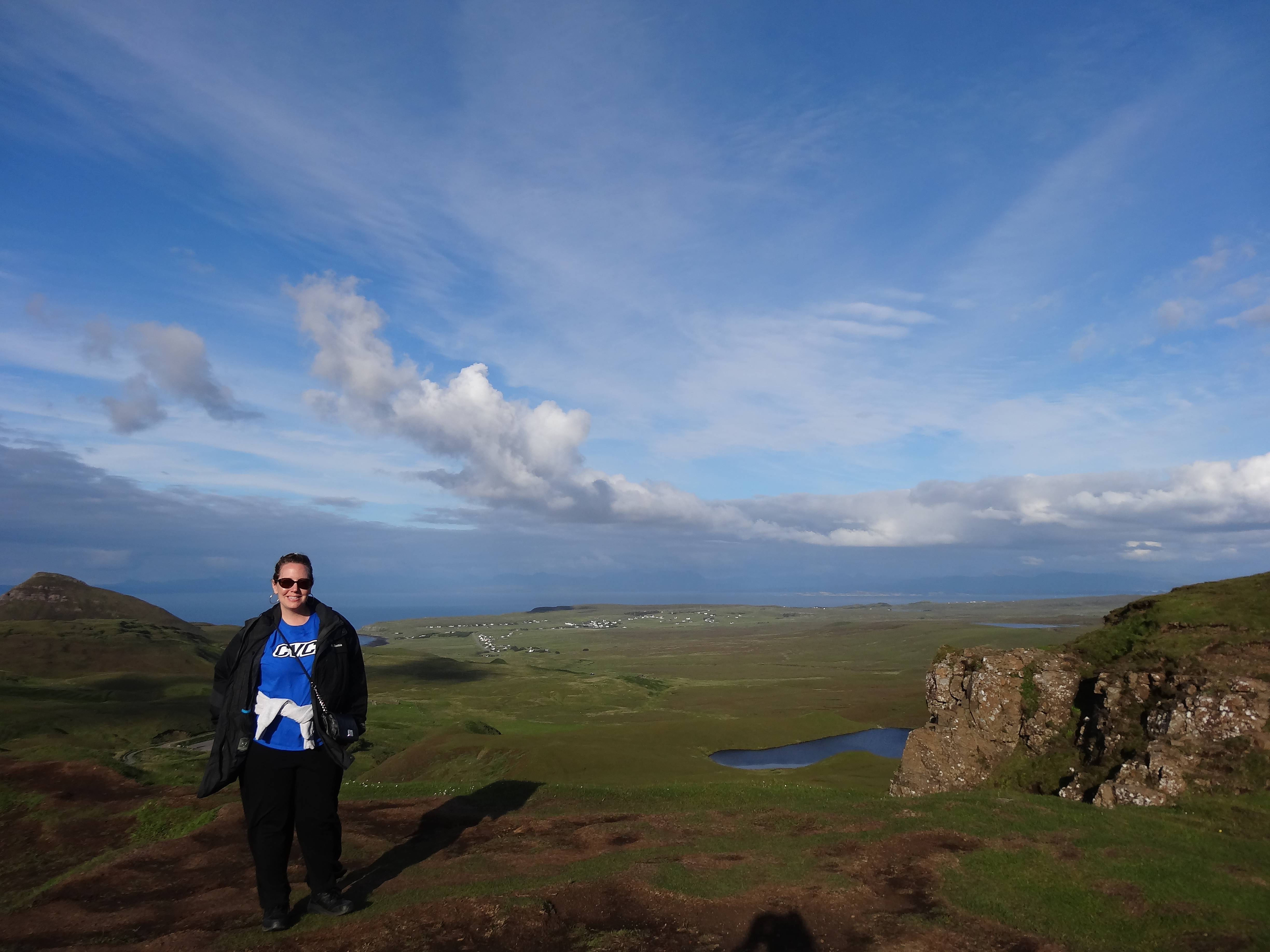
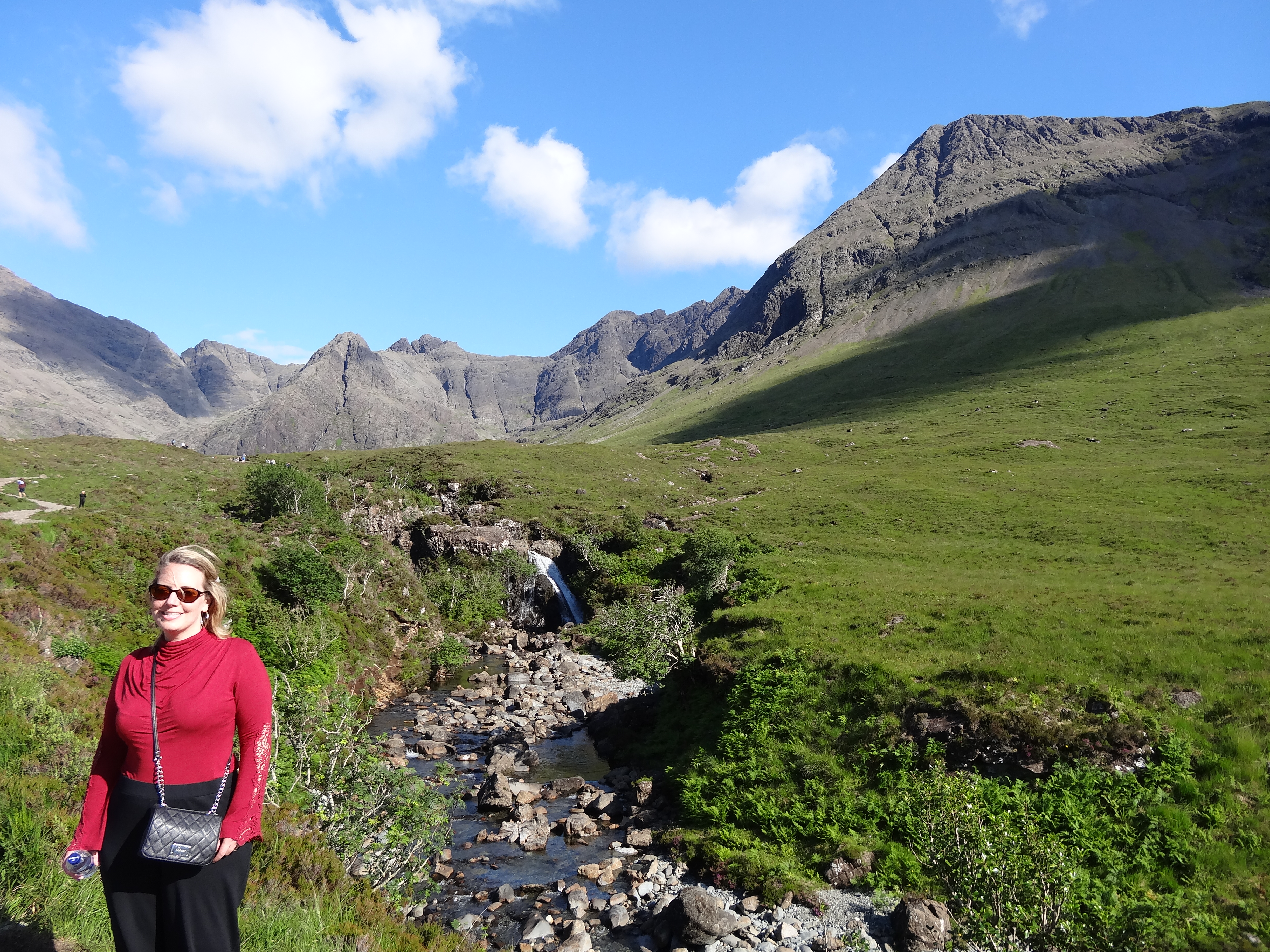
People in Chicago, Ohio, and Maine like to tell you, “If you don’t like the weather, wait a minute.” That is usually exaggerated at least a bit, but I think the phrase must have originated in Scotland. We drove around in the highlands a lot today, but we were never more than one hundred miles from where we started. We started out in cloudy and calm, then drove into misting rain, then into rain and wind, then just wind, then mist again, then thick fog, and then into sun and clouds, all within eight hours and one hundred miles. When in Scotland, wear layers.

We started the day heading back to Newtonmore, back to the Highland Folk Museum. Meredith does not like to leave museums unseen, and we were passing right by it. She said she did not want to stay long. After an hour and a half, we had seen the rest of the museum. Yesterday we had seen the 1700s section, so today we toured the 1930s and 1940s section, which included a weaver’s, a tailor’s, a couple of houses, a meeting house/locker room for the Scottish sport shinty (like Irish hurling – a rough version of field hockey), a railway depot, a clock repair shop, a sheep farmer’s hut, and a farm. One of the most interesting exhibits was from the 1940s farm, which was set up for wartime Scotland. It included a table set with one week’s worth of food under rationing – it was not a lot. I had not remembered that rationing continued in Britain until 1954. There were some stories posted of children never seeing a banana until they were seven years old.

We got back on the highway, heading northeast, which kept adding to the furthest north we have ever been. We drove over to Speyside Cooperage, which is a barrel maker in the heart of whiskey-making country. Meredith felt we should do something related to whiskey, but neither of us drinks, so she decided to go to a cooperage instead.

It turns out that if you add swelling music, high-definition video, AND multi-sensory stimulation (like smells and heat lamps), you can make cask-making about as epic as Lord of the Rings. The introductory film was excellent. I did not know that whiskey gets almost all of its flavor and color from the cask in which it is aged. So the cooper insisted they are one of the most important parts of the whiskey-making process.

Speyside mostly repairs barrels; they only make about two hundred new casks each year, as opposed to about ten thousand repaired casks. A whiskey barrel has a lifetime of about sixty years, so it can be used three times or so for whiskey. Fun fact: bourbon can ONLY be made in new barrels, so many whiskey casks come from bourbon makers.

The coopers do most of their work by hand, and they are paid by the barrel. To become a journeyman cooper, you need to spend four years as an apprentice first. To repair a barrel, the cooper takes it apart and replaces any bad slats or iron bands. The cask will then be pressure tested and, if passed, it goes on. The inside charring (charring the inside makes charcoal, which helps remove impurities from the aging whiskey) is removed, and the inside is burned again to make new charcoal. The barrel is then ready for shipping. Oh, and the cooper shop had a calico cat wandering about on the factory floor. Good cooper kitty!
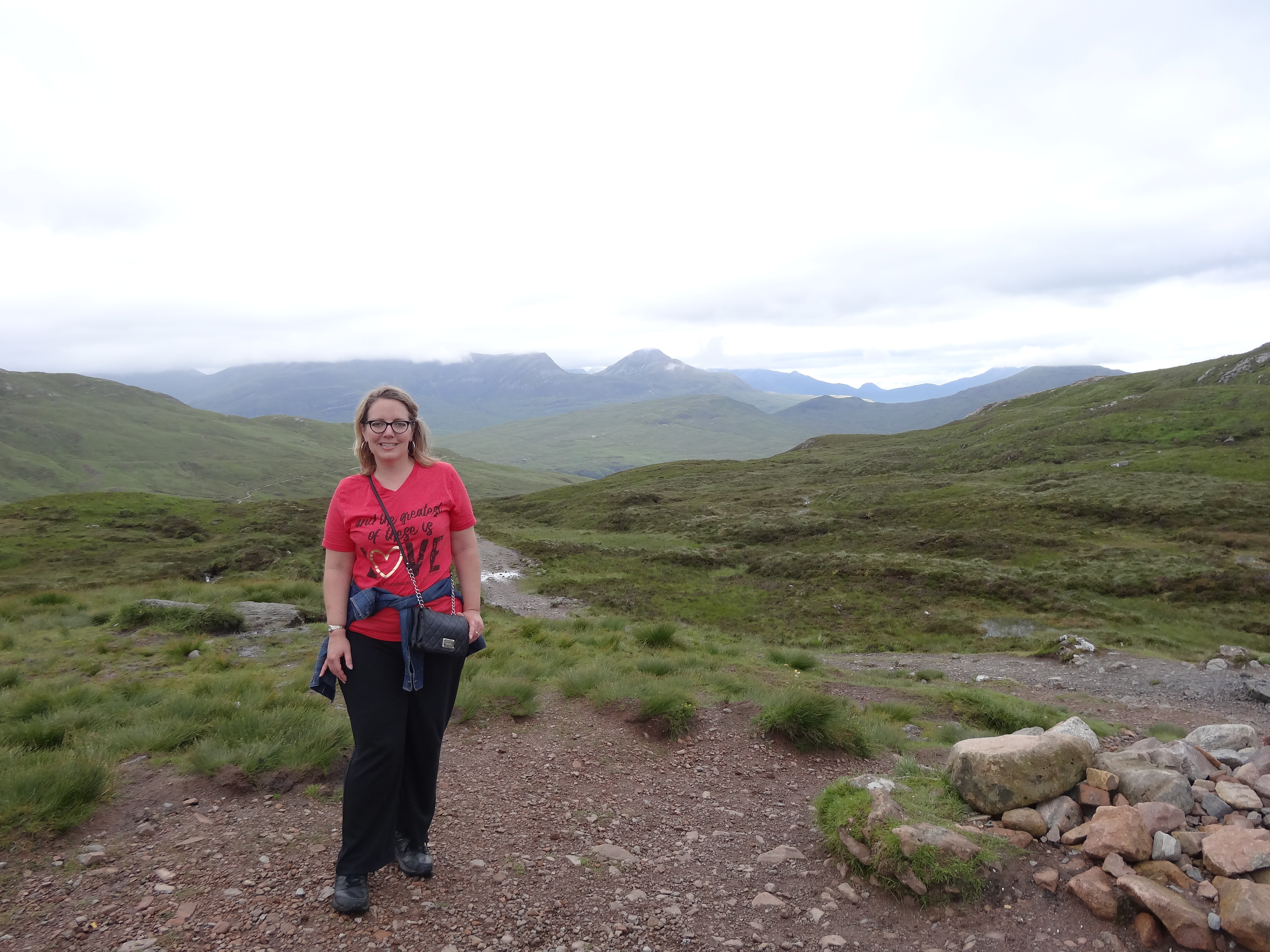
We turned back south, taking the eastern road through the Cairngorms National Park, which is supposed to be a very scenic drive. It was, but it started in the rain and, later, fog, which obscured many of the mountains. The hills were patchwork with green grass and brown heather, and it was a sobering landscape (except for the whiskey drinkers). As we got more and more south, we drove out of the weather and finally got some dramatic landscapes, especially as we approached the town of Ballater.

Ballater is a cute town, and has a pretty river running through it. The main claim to fame for the town is that Balmoral Castle, which is owned by the Queen, is nearby. I can understand why – the area is very beautiful, and Queen Victoria had a railway line built to the town for easy access to the castle. We wandered through the town for about half an hour, and then took the very scenic drive back to Pitlochry.

Pitlochry is home to an excellent theater festival, so Meredith had me swing by it to see what was playing. She picked up two front-row tickets to see Absurd Person Singular, so we stayed and ate a light supper at the theater, then saw the show. It was a dark comedy about three married couples each hosting Christmas Eve parties on three successive years. Underlying the plot was the drive for each couple to impress “the right people” at the party. It was very funny in many parts, and uncomfortable in others (the men of the play are pretty ghastly). It was a good play, and we had a great time talking to the retired Scottish couple from Glasgow who were sitting next to us. The husband was an avid cyclist who biked about seven hundred miles in a week last year on the continent, and he was a retired physicist who worked in medical imaging. The wife was a semi-retired ballet teacher and an avid theatergoer. They were interesting people to talk to.

Meredith milked all the time out of “her” last day before I take over tomorrow – we got back to the room at almost 11:00 pm after a full day of touring. I expect some of “my” days will involve sleeping in.

Scotland 2017 – Day 5 – Thursday – Kenmore, Newtonmore, Pitlochry

You know the weather is special when the Scots themselves complain about it. I can never remember shivering from cold before in late June, even when I was in the mountains in Austria and Italy. I shivered today – highs in the low fifties, strong and steady winds, and a steady, driving rain. It was cold. Welcome to June 29th!

At breakfast, Meredith asked a cafeteria worker what the golfers at St. Andrews did on days like today. She was told they play – the golf only stops if conditions are life-threatening (like lightning). I can’t imagine paying over two hundred dollars to play eighteen holes of golf and then getting terrible weather, but they play on.

We got in the car and drove over an hour to Kenmore, to the Scottish Crannog Centre. A crannog is a hut built out in the water of a loch, either on logs driven into the bottom of the loch or on a pile of stones that have been built up from the bottom. There are the remains of dozens of crannogs in Scotland and Ireland, dating from as long as 2,500 years ago. No one is sure why the huts were built – it may have been for defense, it may have been a status symbol, or both. But, because the loch waters preserve the wood and other artifacts around the crannog site, they help archaeologists piece together a good picture of what life was like around the hut.

For starters, the Scottish Crannog Centre rebuilt a crannog using (mostly) traditional methods and materials; it took them three years, even with the aid of a not-so-Iron-Age chainsaw. So building these things was not easy, and once they were built, maintenance on them would have been ongoing.

The scientists studying the crannog near the site of the reconstruction (on Loch Tay) found lots of artifacts – they found paddles from boats, one clay pot that may have been acquired through trade, some bronze and iron tools, a small piece of woven cloth which weavers were able to reproduce, stone weights and tools, wooden tools, seeds and bones and other food waste, and more. This led to a good picture of what life must have been like – hard, and short, with people not living past fifty, and many skeletons deformed from the physical labor the people had done.

The center was staffed with several helpful people who gave demonstrations of what crannog life may have involved, from drilling holes in stones to create weights for nets, to grinding grain for bread, to using a bow and stick to create fire (a labor-intensive task – much better not to let the fire go out). We got to go into the crannog itself, where twenty or more people would have slept, along with several of their animals. The crannog was surprisingly big, but still would have felt crowded to us; to the people of that time, it was free heat.

After lunch, we headed north to Newtonmore, which is in the Highlands, and is home to the Highland Folk Museum. It took longer than we thought to get there, so we only had about forty-five minutes to check it out. The museum has a four-building village to show what life was like in the 1700s in the area, and then several buildings from the early 1900s. We toured the 1700s buildings, which were made of wood, turf, thatch, and some stone. They were dark and smoky. The house would have held up to twenty people, with the adults sleeping up to five per bed. Meredith pointed out how little had changed in the two thousand years since the crannogs. Once again, I am glad I live with the comforts I live with.

We left the Highlands and drove back south to Pitlochry, where our B and B is. Pitlochry is a very cute little town on the Tummel River. We checked in, and since the rain had finally stopped, we took a walk up into the woods to go see the Black Spout, a large waterfall nearby. It was a surreal hike – it was through woods covered in huge ferns, so it looked prehistoric. We were gone for over and hour and never saw another person. We almost gave up at one point, since we were not sure we were going to find the falls, but then we saw a small bridge, which then led us to a path that was marked with a signpost. So we found the Black Spout, which was worth the walk. The path there even has an impressive viewing platform so you can see the falls without any vegetation in the way.

We walked back into town, where we had a very light supper (we have been eating a lot of late), and then back to the B and B. We persevered with Meredith’s touring plan despite the weather, and so it was a fine day in the end. In the warm and dry room.

Scotland 2017 – Day 4 – Wednesday – Dundee and St. Andrews

We had a good little chat with our B and B host before leaving Stirling; he told us some places to see, some of which I hope to incorporate when it is “my” week next week. Our host was a very friendly and helpful man, and I would highly recommend his B and B for any one staying in the Stirling area when in Scotland (Number 10 Bed and Breakfast).

We hopped in the car and used mercifully large roads to head over to Dundee. Meredith helpfully counted the roundabouts we had to navigate in an hour (thirteen, I think); after a couple of missed turns and some construction, we arrived in Dundee at Discovery Point. It sounds like a hands-on science museum, but it is actually a museum dedicated to the sailing and steam ship Discovery, which took Commander Scott and forty-five men to Antarctica in 1901 to explore the continent and study it for science. The expedition lasted two years, and the small museum did a fantastic job of presenting the building and stocking of the ship, the men who sailed her, the difficulties they faced, some of the discoveries they made, the difficulty in getting out of the ice after two years, and what happened to the ship after they returned home. The museum also usually includes touring the Discovery herself, but the ship is currently being worked on for conservation purposes, so that part of the museum was closed. We still spent two hours at the museum, and could probably have spent another hour if we’d had the time (and if our parking had not expired).

The museum was well laid out, with rooms dedicated to a theme – the building of the ship, the men who manned her, the science that was discovered, and so on. Each room had short videos to help explain the room, as well as typical information placards, as well as the audio guides we rented. They also had a good ten-minute overview film partway through the exhibit to break up the rooms. I was very impressed. Some of the fun facts we learned:

– The ship was made of wood because wood flexes under ice pressure, whereas steel and iron are brittle. The hull was twenty-six inches thick and made of seven different types of wood for strength, as well as the bow being reinforced with steel for cutting through the ice.

– Dundee was selected to build the ship because most places had forgotten how to build wooden ships. Since Dundee was a center for whaling ships, which were made of wood for flexing against ice, Dundee still knew how to make them.

Discovery was a triple-masted sailing ship with a steam engine for emergencies or for ramming through ice. Coal was too bulky to bring along in sufficient quantity for regular propulsion, so they sailed most of the time.

– In addition to the men, the captain brought along a cat.

– The conditions were harsh, and the expedition lasted two years. The ship was freed from ice in February 1903 by help from relief ships sent, the use of gunpowder to blow the ice, and a shifting wind that aided in ice breakup.

– Discoveries included the life cycle of the king penguin, many new species, proof that Antarctica was a continent (as opposed to islands or just ice), the realization that the magnetic field changed slightly before the Auroras appeared, the detailed mapping of a large section of coastline, the penetration into the interior, and more.

The expedition was a huge success. Eleven volumes of scientific findings were published, as well as many specimens being brought back for museums. Commander Scott became famous and returned to Antarctica a few years later, reaching the South Pole a few weeks after a Norwegian explorer got there first. Scott and his four companions all passed away on the return trip, falling just eleven miles short of a resupply station that would have saved some of them. One of the Discovery‘s junior officers, Shackleton, returned as well, and when his ship was destroyed, he set off to row eight hundred miles to South America to get help, with just three others in a large rowboat. He made it, and all the men survived.

We left the museum and drove the short distance to St. Andrews, the birthplace of golf, including the world-famous Old Course. It also houses the University of St. Andrews, where we’re staying in a small but nice dorm room. After getting situated, we walked into town to tour around, but first to get ice cream. As we were standing at a crosswalk looking confused, a woman offered to help us. We got to talking, and in another small-world moment, she turned out to be the aunt of a CVCA alumna who is married to one of Meredith’s former students, so the woman had been to Stow and Cuyahoga Falls and knew where they were. She also knew where the ice cream place was, and it was good to get ice cream, even if the day was only fifty-five degrees out (with a brisk wind).

We headed down through the town to the Old Course to check it out, swinging by the Museum of the University of St. Andrews, mostly to use the restrooms, but the four-room exhibits were interesting to breeze through, and they had a wonderful terrace overlooking the beaches. We got down to the Old Course, and it is immaculate, with a fairway that looks better than some greens I have seen. We snapped some pictures, and wanted to get a picture of the small stone bridge on the eighteenth hole, when we saw normal folks walking out on the course and getting a picture. One man laughed that the golfers were good enough to miss the people there. So we walked out between golfers and grabbed a photo. Also odd for a world-famous course, there is a road/path through the middle of the fairway across two holes. Drivers and pedestrians are warned by signs that there are golfers playing. Fair enough.

Next on the list was heading down to the two-mile-long West Beach. The beach is beautiful and is where the opening sequence to the move Chariots of Fire was filmed, so Mer wanted a picture of me running. We found it amusing that there were three lifeguards on duty; not only were there howling winds and cool temperatures, leading to no swimmers, but the lifeguard shack was fully enclosed, presumably to protect against the elements.

We walked back up to town, following a walking guide from Mer’s Ricks Steves guidebook. We stuck our heads into the main courtyard of the downtown location of the University St. Andrews, and then over to and along the cliffs of the town, and down to the small East Beach, which is at the foot of a ruined castle. The castle was destroyed at some point during the Scottish Reformation as Protestants and Catholics fought each other. We got to the castle after 5:00, so the museum and castle grounds were closed. We kept walking and were suddenly overtaken by a large group of mostly middle-aged runners and walkers. We are not sure what they were running for, but we got out of their way, since the path was narrow. We made our way down to the ruined cathedral, but it also was closed for the day. The cathedral was not destroyed suddenly, but fell into disuse and fell apart over a couple of hundred years. We finished our walk though the town through some back lanes and the oldest section, and then we found a place for supper. My hands were pretty well frozen, so I was very pleased the bar/restaurant served hot chocolate.

We put in a good walking show today, logging over ten miles. I suspect I will sleep well tonight.

Scotland 2017 – Day 3 – Tuesday – Stirling and environs

We have had tremendous luck in our years of traveling. In more than a dozen trips to Europe in about twenty years, we have enjoyed good weather and good health. We have had a few hours of rain here and there, but nothing that lasted all day or was problematic. That streak finally came to an end today when I woke up with a sore neck, which induced a headache, which induced an upset stomach. In addition to that, we had an on-again, off-again drizzle all day long, with windy conditions in low-fifties temperatures. We were still grateful that it was not a hard rain all day, but it was the worst weather we have had in our international travels.

The headache and other ailments were easier to deal with. I took a couple of Advil and ate as much breakfast as I could stomach (which was not much). Then, Meredith was kind enough to delay the start of the touring day by about an hour and a half to let me go back to bed. That did the trick. I was pretty much back to normal, and away we went.

We walked up the main hill in Stirling, all the way to the top, to the castle. Oddly, castles always seem to be built on high ground. It did mean that it had great views of the surrounding area. Stirling’s castle is an important one for Scottish history. It sits at the main river junction between the Highlands to the north and the Lowlands to the south. The castle was home to Scottish monarchs for a couple of hundred years, although the height of the castle was around 1600, right before James VI of Scotland became James I of England. After James moved to London, the castle became less used and eventually became a headquarters and barracks for the army. The army finally moved out in the 1960s, and the castle has been renovated in an attempt to make it look as it might have in the 1500s.

We got to the castle just a few minutes past 11:00, so we missed the 11:00 tour. We figured we would catch the 11:30 tour, so we wandered into the Queen Anne’s Gardens, which are beautiful and have a magnificent view of the surrounding area and of the main body of the castle itself. We briefly checked out the small museum of the history of the castle, which included a Chutes-and-Ladders-style game that we dubbed “Siege and Ladders.” Sadly, Meredith hit a great ladder and won easily.

After failing to capture my castle, we made our way to the courtyard to catch the 11:30 tour. The poor tour guide forgot all about it, and so did not show up until about 11:45. He did not make excuses, but just told us he forgot. He was fun and charming, so no harm done. He took us on a forty-five-minute tour, starting at the main gates, which used to be much bigger but were severely damaged by Cromwell’s forces; the gates had been decorative and could not stand up to canon fire. A canon-resistant outer wall was later added.

From the inside court, we got a look at the exterior of the main buildings, and he explained what each was – the King’s residence, with 250 statues posted around the outside as display of power and wealth; the Great Hall, restored with golden paint and a new timber roof; the kitchens, where two rooms have been restored to look as they may have done in the 1500s; and the chapel, which James had built for a baptism of his son (and as a display of power and wealth, since he was soon to become King of England).

The guide took us into the Great Hall, which was the largest secular building in Scotland at the time it was built. The ceiling was a special kind of timber ceiling, designed to be strong and built by ship-builders. The hall can be rented out today for weddings and other special events. Not a bad reception hall.

We finished out tour in the chapel, which was built to be the same proportions as Solomon’s Temple in Jerusalem (but at one third the size, since space was limited in the castle). While there, we saw an advertisement that in a few minutes, the Georgia Boy Choir would be performing, so we stayed.

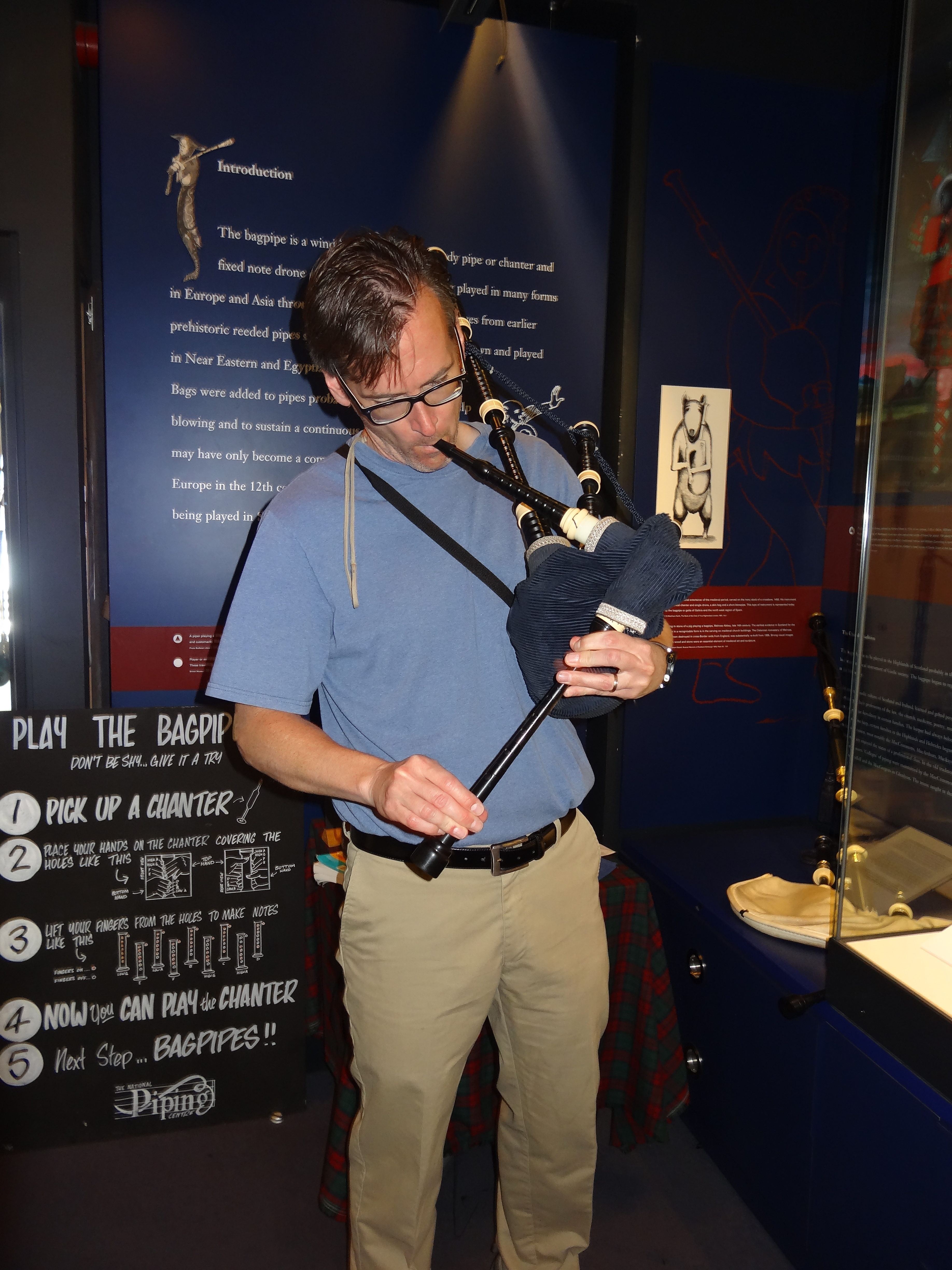
We were initially not sure if the choir was from Georgia in the US or from Georgia over by Russia. When we saw the program opening with three religious tunes including “Amazing Grace,” we figured it out. The group, made up of boys from seven to seventeen (with three or four alumni as chaperons), sang for about an hour in the magnificent acoustics of the chapel. The were excellent, and I am not always a fan of boys’ choirs. They had three numbers in which they were accompanied by Scottish bagpipes. If you thought the pipes were loud outside, you should hear them inside an enclosed space. Yikes. But the high notes of the youngest boys could still be easily heard. The group did a nice mixture of sacred and secular pieces, and ended with a rousing Scottish song that got people up for a standing ovation. Catching them here was another happy travel coincidence.

By now it was after 2:00, so we took a much needed lunch break in the castle cafeteria, after which we explored the other buildings on our own for about two hours. We checked out the royal apartments, which have been restored and are highly decorated, including the “Stirling Heads” – wooden carvings of around fifty decorative heads that used to be mounted on the ceiling. The heads were all important people of power – James and his queen, Henry VIII, a few caesars, nobles, etc. The originals are kept in the castle museum, but decorated ones have been remounted in the king’s chamber. We got to see the originals in the museum as well, and most of them are in excellent shape.

We looked over the battlements and the ever-shrinking fog-bound view, and then finished up with the kitchens, where we were both surprised to learn that the kitchens were the realm of men and boys – women were not usually allowed in.

Our castle ticket included a tour of the nearby Argyll’s Lodging, the home of a noble that has been restored to what it probably looked like in the 1500s. The house was impressive, but I am still smug and grateful for plumbing and central heating.

That finished off the sites on the hill, so we went back to the B and B to plan our next outing. Meredith wanted to take a two-hour driving tour of nearby landscapes, so we headed out in the misty rain. My biggest issue with driving here is the conditions – the roads are fairly narrow, but the default speed limit is a whopping 60 mph, which people really do drive. It is tense driving, to say the least.

We headed out to see Lake of Menteith (Scotland’s only “lake,” as opposed to lochs). There is even a national park there, so we assumed there would be a vista or welcome center or something. We were wrong. There was one parking lot, with a footpath down to the lake. We kept going, assuming there was somewhere else to see. Not really. After turning around a couple of miles later, we did find a two-car pull-off that had a path down to a very small beach, where we could see the lake and surrounding hills. It was pretty and very quiet; we were still surprised that there was not even a bench or table or the like.

We continued on to the town of Aberfoyle, which is a gateway into the Highlands. I had no idea that the Highlands started so dramatically – they just loom over the town. In one spot, you are in the Lowlands, and just a few yards away are the Highlands, with very little transition. We turned there and headed back to Stirling, to the B and B and then back downtown for supper.

So, headache and rain happened, but we still got a successful day of touring in, with a choir surprise as well. Bonny.

Scotland 2017 – Day 2 – Monday – Edinburgh, Falkirk, and Stirling

When she turned forty, Meredith told me she wanted to go to all the countries in Europe that are covered by a Rick Steves guidebook – something like fifteen countries (or regions) in all. She said I could choose where we went every year, but it had to from one of the books, and we could not repeat a country unless we had done a new one already during the year. Fair enough.

Scotland made its way to the top of the list for several reasons. It was a new book to the Rick Steves canon, so Mer was not aware it was an option. They also (mostly) speak English in Scotland, which, after several trips of my not being able to communicate, was a definite plus. Finally, and this is not to be underestimated after last year being so hot in Austria, Scotland is cool. It is cool to the degree that it looks like we will not see 70 during our stay here. I love it.

All that to say that I slept very well last night, and enjoyed burrowing under a blanket. After a fine breakfast and our getting ready, we checked out and grabbed a bus back into the old city to pick up our car. We were a little startled to see a line in the office; it turns out this was, for some reason, their busiest day of the year so far, with more than seventy rentals before noon. We waited about thirty-five or forty minutes to get our car, and as far as I could tell, no one in the line was getting visibly upset.

Let’s check off the rental car fun! Make you have never heard of. Check. Steering wheel on the wrong side. Check. Left-hand shifter with backwards pattern. Check. Add to the mixture one moderately congested old city, sprinkle liberally with roundabouts seemingly every half-mile, and shake well with driving on the left-hand side of the road. Good times. At least for today, there was only one panic stop, which of course happened as I was trying to merge on a roundabout (I was checking ahead of me to see if anyone was merging ahead and almost missed the car coming at me as I was trying to merge). Meredith was probably pleased to be treated to a low-level rant for much of an hour as we drove to Falkirk.

Falkirk, as it turns out, is the home of Helix Park, which in turn is home to the Kelpies, the world’s largest horse sculpture. I did not know where we were going or why, so when I was very suddenly confronted with two horse heads one hundred feet high, it made an impression. A very positive one. I love sculpture, and then I love it more when it is outside, and then I love it even more when it looks like something. The Kelpies sculpture is modern, but shows off strength and emotion in a work where you get what is normally a grass-eye view of things. On top of all of that, we got a guided 30-minute tour, which included going inside the smaller of the two heads (Duke, as opposed to Baron, the other horse). Brilliant – we got to see the structure of the sculpture, which was an intended part of the work from the beginning; the artist wanted the public to be able to see inside.

For those wondering about the title, kelpies are water spirits that can change shape, and when they are above water, they look like horses. If a person tried to ride the kelpie, he got stuck to its back and was then drowned and eaten. Good myth. Since the two horses in this work are on either side of a working canal, the water-horse myth seemed like a good one. In addition, the artist wanted to pay tribute to all of the working horses that helped on the canal. I flat-out loved it, and we were there for about two hours (which included a light lunch). Oh – for those who worry or are curious about cost, the sculpture cost about five million pounds. It has brought in three million visitors in three years. That is a good investment in public sculpture.

Since Falkirk is a mid-sized working town, you would think that the Kelpies would be the end of the tour, but you would be wrong. Falkirk, on the far side of 3,217 roundabouts, is home of the world’s first and only boat elevator, the Falkirk Wheel. It is a marvel of clever engineering, and its job is to lift (or lower) canal boats up from one canal up about a hundred feet in the air to another canal. It opened in 2002, replacing a much earlier and now filled-in series of eight locks. Scotland takes the canals, which are now mostly for pleasure use, very seriously. They had been closed in the 1960s, but made a comeback in the 1990s, and the Wheel rejoined two major canal systems again.

It does this through balancing two huge tubs of water that boats maneuver into. The tubs, 180 degrees apart on a circle, then seal up and rotate around, bringing boats up and down at the same time. Since the tubs are balanced to weigh the same, it takes less than a dollar’s worth of electricity to rotate the whole system halfway around. “Ah!” you say. “What about the weight of the boat?” The boat displaces its weight in water, which is how something floats. So, the sixty-ton boat pushes out sixty tons of water from the tub, and so the tub ends up always weighing the same no matter what boat is in the system (or if there’s no boat at all).

Of course, you can buy a ride on a boat to then ride the Wheel up, take a short ride on the canal (through a tunnel in a mountain), and then come back and go down the Wheel. Not too surprisingly, we did just that. The ride down is eerie because for half the ride there is very little to gauge movement against. Once the ride is halfway down, you can see the center axle of the Wheel, and then can easily tell you are moving. When the Wheel was built, it was just to move boats; it was not a tourist attraction. But the curious kept coming, and so a small complex sprang up around it. I loved that right in front of the Wheel was a fully working and active canal lock that I got to see in operation twice. Nifty.

With that, we made our roundabout way to Stirling, where we checked into our B and B. We walked the mile or so into the main town center and ate supper before walking back to the B and B, where we had to buy a permit from a machine for parking for the next day. I was a pound short in coins. Back into town we went to buy dessert, and then back again to the machine. We are now legally parked outside out the B and B, which is its own form of engineering feat.

Scotland 2017 – Day 0 and 1 – Saturday and Sunday – Toronto, Glasgow, Edinburgh

The European summer vacation this time is to Scotland, and as has been our cheap habit, we flew out of Toronto again. It involves a longish drive of about 5.5 hours, but it costs about half of what any airport in or near NE Ohio charges.

So, we got up Saturday morning, got ready, took care of the kitties, and were on the road about 9:00 am for a 6:55 pm flight. That was prudent, as there was about a twenty-minute wait at the Canadian border, and we always have to stop for the bathroom, so we got to the airport a little after 3:00 when I was aiming for 4:00. That worked out okay too, as the line to check-in took about an hour, after which we cruised through security in just a few minutes. That left us at our gate about two hours before boarding, so we ate in a real restaurant (as opposed to take-out).

The flight over is not long, as trans-Atlantic flights go, taking only about 6.5 hours. The biggest surprise on an otherwise smooth flight was the lack of entertainment systems in the seat-backs. I had read about this movement in the industry, but this was the first time I had seen it (or not seen it). To save weight and money, airlines are doing away with seat-back screens and instead offering movies and TV and such using wireless to tablets, laptops, and phones. We had my laptop, but I had stowed it and was not too much inclined to get it out for a shorter flight. So, we both read instead, and I actually managed a few restless short naps.

We got in to Glasgow on time around 6:45 am, but it took quite awhile to clear customs and get our luggage. We had to get to the train station to get to Edinburgh where our B and B was located, but that was easy via a bus from the airport. We saw a (very) little of the city as we drove in, and the downtown looked nice as far as I could see. We got to the station and onto a train around 8:00 am, just a few minutes before it pulled out.

So it was we got to Edinburgh around 9:20 am, and after a couple of mis-starts, we walked the 1.5 miles from the station to our B and B, getting there about 10:30. The walk let us see the city at a slower pace, and it looked interesting – the restaurant scene suggested a very multicultural city. We also kept catching glimpses of Arthur’s Seat, a huge rocky hill right up against the town. It was odd to be in an urban area and see this huge green hill opening up at the end of alleys and streets.

The slower-paced walk also was good in that by the time we got to our B and B, our room was almost ready. As such, we were able to grab a jet-lag-busting three-hour nap and still be heading out to explore by about 3:00 in the afternoon. Since it does not get dark until 10:30 pm this far north, that left plenty of time to explore.

We grabbed a quick lunch/supper at a pub, which was a great little pub – sprawling, with lots of nooks, and as a bonus, they had great food. Fortified, we grabbed a bus back into the downtown area to explore the Royal Mile.

The Royal Mile is a (more or less) mile-long stretch of road that starts at the top of the hill at the castle, and then runs straight down through the middle of the city and ends at the royal residences and the new Scottish Parliament building. The end of the street also has amazing views of Arthur’s Seat.

On the way to the start of the walking tour (from Meredith’s Rick Steves’ tour book), we ran into a woman advertising a free improv show which started at 7:30. Mer seemed as excited about that prospect as I did, so we made tentative plans to go see it. We also got to see a witty street entertainer swallow a long balloon and lie down on a bed of nails. Random things like that are what makes travel special.

The castle was closed since it was a little after 5:00 on a Sunday, but we were able to stick our heads into the adjacent weavers’ mill, though it turned out the looms were not running since it was Sunday after 5:00. The gift stores (multiple) were all open, of course, and seemed to be doing a steady business.

There are a LOT of Scottish stores along the mile, especially the first half. I’m not sure how twenty stores all selling kilts stay in business, but they seem to do just that. We did not bother with those too much, instead focusing on the sights mentioned in the guidebook. That included several tiny (and blissfully quiet) alleyways into isolated courtyards, the original Parliament building, a huge old church that now houses the main office of the Edinburgh Festival, and then St. Giles Cathedral, which is central to Scottish Presbyterianism. We saw where the old gates had been (the “End of the World” to those who dwelt inside the walls at the time), as well as a tiny piece of the wall. We saw a small church that is where the queen worships when she is in town, and the adjacent cemetery where Adam Smith (of Wealth of Nations fame) is buried. We finished the walk at the new Parliament building, which is very funky and deliberately unimposing, as well as getting to see (through locked gates) the royal residence palace, where the Queen will actually be residing starting on Tuesday for a few days.

The walk being over, we headed back up the street until we found the crossroad where the improv show was going to happen. The theater was in the basement of a bar, and looked to seat about sixty people. The stage was just an open space up front, and we sat in the front row, so we were very close to the action.

It was a fun evening, There were three acts, with the first one going about fifty minutes to an intermission, and then the second and third acts splitting the second half of the show. The first act was made up of five people, and they did fifty minutes of continuous scenes based off of the word “turtle.” They got launched on the word, and then would yell, “Cut to …” whatever, which would change the scene to something that had gotten mentioned at some point, like, “Cut to the doctor’s office.” It worked really well, and was quite strong, with just a couple of scenes that were a little slow.

The second act stole the show for me. I think it was a husband/wife team, and they sang improvised songs based on fake song titles we would give them. They had wonderful chemistry as they told us the (made up) background to the song we were about to hear, and they kept adding information to the scene before finally singing the song (while the guy played banjo or mandolin or even concertina). They were warm and engaged the audience well, and they were great.

The last act of the evening was a little uneven. They had some brilliant moments, but also had some slower ones as well, and they used off-color language more than I cared for. It was still entertaining, though, and we had a good time seeing improv with a Scottish accent.

We finished the evening by eating at an Indian restaurant that was still open at 10:20 at night, and got back to the B and B around 11:30. It was a very solid day of touring, which is remarkable given that when we travel to Europe, we usually do well to squeeze in supper and a little sightseeing on the first day. Getting to see a local show was very special.

Italy 2017 – Day 7 – Saturday – Rome

Meredith, due to the nature of her job with its accompanying huge load of grading, leads a fairly sedentary life. I’m not sure if that allows her to save up tons of energy for bursts of activity or what, but she has an uncanny ability to tour like a madwoman, walking miles and miles and still keep on going. She out-toured everyone else a bit, so at least for Saturday morning, Meredith and I were on our own while the others slept in a bit. We had agreed to meet at the Pantheon around 11:00, but Meredith and I were off at 8:00, heading over to the Colosseum metro stop to walk over to Le Domus Romane. We happened to run (ha!) into the setup area for the start/finish of the Rome Marathon, which was happening Sunday. There were a lot of runners jogging around the area.

Le Domus Romane is a well-done exhibition of a fairly recent archaeological find that was found under an office building very near Trajan’s Column. You can now tour the site, and we had 9:30 am reservations for a tour in English. That gave us enough time to grab breakfast at a nearby cafe, with views of the Victor Emmanuel Monument, with a waitstaff that was robustly Italian – they were loud and expressive in what seemed to be the normal operations of their jobs. That was fun.

The Domus exhibit is really well done. The original excavated site is encased under glass that you walk on, which can be unnerving when you are walking on glass stairs that do not match the real stairs underneath them. Our group of fifteen or so filed into a dark room behind an Italian guide, and the recorded system started up.

Through an effective use of lights and computer projectors, the narration brought to life the third century villa of some very wealthy Roman, perhaps a senator. The narration would tell us about something while the specific thing being spoken about was lighted, making it easy to identify. They used projectors to fill in gaps in mosaics, and reconstructed what walls may have looked like by projecting on to the existing sixteenth-century walls.

The rooms that have been found include a small gymnasium with a small pool, a bathing room with hot and cold pools, a sauna-like room that was heated from below by wood fires fed by Roman slaves, a kitchen, and the largest existing domestic staircase yet found, so the house was at least two stories. There is part of an earlier first-century Roman road outside the house (our word “street” come from “strata,” since Roman roads were built in layers), and a floor mosaic of the house next door was found. It was all told in a clear way, and the theory of how the house became rubble to be built upon was either a fire, or a fire caused by an earthquake, since there is evidence of burning starting in the kitchen, and some of the flooring has been cracked in places, which is consistent with earthquake damage.

The house was originally heavily decorated with different and expensive colored marble, and some evidence of painting exists. The house was very large, probably with a courtyard or garden as well. I would have been happy with the tour had it ended there, but we were shown some artifacts from the house as well. Then, we walked along the World War 2 bunker tunnel that had been placed under the building above, until we got to a small theater, where we saw a twenty-minute video on Trajan’s Column, which has a continuous scrolling story all the way up the column. You can’t see the story up close outside, and even if you could, it would be difficult to tell what was going on. The video solved both those issues by zooming in on parts of the story and then explaining what was going on, which was mostly Trajan’s conquest of the area around present-day Romania. It was very informative, and done in an interesting way.

The only down side to the tour was that we got out at 11:00, which was the same time we were supposed to be meeting the others over at the Pantheon. We walked there as quickly as we could, and got to the square in front of the Pantheon about 11:30. We found Tim and Jacob waiting by the main fountain, while Regina and Meredith N. were in shops around the square. Jacob had a box of cannoli waiting for me. Our friend LT loves cannoli, so we had planned on eating some in front of something important and then sending the photos back to him. Dessert in front of the Pantheon seemed to qualify, and they were really good cannoli, too.

Meredith N. and Regina came back from shopping, so we all went into the Pantheon to take a look at the inside. It is large, and the dome there is as wide as the building is tall, and no dome until Florence’s Duomo fifteen hundred years later was ever made so large. There are two royal tombs in the church, for Victor Emanuel and another king of Italy, and they are guarded by an honor guard. The Pantheon was converted from a temple for all gods into a Christian church in the fourth century, and so it survived in good repair when other buildings were being looted for marble. We wandered around the interior for about thirty minutes before heading out toward the Vatican.

We walked to the Vatican because it seemed easier to walk than to figure out the Rome bus system; plus, we got to walk across a bridge over the Tiber with amazing views. We ate at a restaurant right outside the Vatican, which was probably a mistake. The food was fine, but we probably got ripped off. The man who sat us told us there would be a discount for six people, but our service charge (a charge for sitting down) still came to 16 euro. After the meal, he told us he could not take a credit card, so we paid cash, but then when we walked out, there was a big “Visa/MasterCard” sticker on the front door. Welcome to Rome.

We had to wait in the security line of St. Peter’s for about forty-five minutes to get our bags scanned and to walk through metal detectors. We were hit up multiple times by tour guides promising to get us past the line, usually polite, but one or two were a bit rude when we told them no. I will not miss being hit up for money, that is for sure, but that is the added price of admission for anywhere that attracts tourists in Italy.

I had forgotten how huge St. Peter’s is. It is the longest church in the world, but it is also mind-numbingly high. Even the side chapels, if you put a church from one of them across to another, would make for an enormously large church anywhere. The decorations are elaborate, but not cramped-feeling like in Westminster or as thorough as at St. Mark’s in Venice. It has a very open feel to it.

The church is dominated by the canopy over the altar, which was designed by the sculptor Bernini. It is made of four twisted bronze pillars, and is very, very tall. The altar is built above the tomb of St. Peter, which you can see (from a distance) in the crypt tour, which we did. We saw the tombs of several popes, including one who only reigned for twenty-two days and one who only reigned for only thirty days. I don’t know this for sure, but back when being pope also meant being the ruler of a large country, I suspect there was foul play more than once.

Meredith and I also did the treasury tour, which let us see some of the valuable and odd things the Vatican owns. We really liked several modern sculptures by the same artist, and we were impressed with a metal tomb of a pope that was never used, but showed the ten academic divisions as women around the tomb, including theology as a topless woman. Bare truth? Not sure.

We met everyone else back at our meeting place near the bag check around 5:00, except Regina, who wanted to stay for the Latin mass at the high altar. So we waited at one end of the portico arms of St. Peter’s and watched the world go by for about forty minutes in the late evening sunshine as the sun started to go down behind the church. It was very peaceful. Jacob was able to run over to a nearby tourist tax-refund store, so he was able to get most of his money back from taxes on things he had bought. That was a good use of time.

After Regina rejoined us, we walked back to behind the Pantheon to go to a restaurant which turned out to be closed. On a Saturday evening. In Italy. That possibility had never occurred to me. So we hiked over to the Pantheon to go to another restaurant, which turned out to be under renovations. So I gave up, and as a group we found an excellent place nearby. All is well that ends in my being fed.

After strolling around to get dessert (some pastries, some gelato), we walked back down to the Colosseum stop of the metro, so everyone got to see the Colosseum lit up at night, which is just about a perfect a way to end our time on this trip to Florence and Venice and Rome.

Italy 2017 – Day 6 – Friday – Rome and Vatican City

We eat on these trips. A lot. Happily, that is either countered by or caused by the miles of walking we do each day. Today we logged 13.5 miles. So far on the trip, we have walked 67.6 miles, and we still have one more day of touring to go. The accumulated miles made us all a little weary, and so tonight was an early night for us – back at the hotel by 9:00 pm.

It was an impressive art day. We started by taking the metro and (what else?) walking to the Borghese Gardens and the villa found therein. The gardens are huge, and simple but pretty. The villa is pleasant and tasteful on the outside, and is two stories tall. It happens to contain one of the best small art collections in the world, with multiple Bernini sculptures and three or four Caravaggio paintings, as well as other paintings by other masters and many ancient sculptures.

I happen to like both Caravaggio and Bernini, and I was very excited to see their works. The Borghese Museum limits the number of people allowed in the museum since the space is so small, and you can only stay for two hours. We grabbed an audio guide for a small fee, and that walked us through the major works in the museum in just about two hours (we could have used another ten minutes or so).

The museum did not disappoint. I had seen video shots of Bernini’s Apollo and Daphne, where Daphne is running from Apollo. who has more than dinner on his mind. She asks her father, a river god, to save her, and he turns her into a tree. Bernini sculpts that moment, and it is spectacular. I was familiar with it, but in person it is wonderful to be able to look closely at various details, like the feet taking root, or like Apollo’s fixed gaze on Daphne’s face. It is also nice to be able to walk around the work, so you can see it from different angles.

I expected to love that piece, but Bernini’s David was a complete surprise to me. He creates David in mid-throw of his sling stone – the body is tense and twisted, the sling is taught, and David’s face is screwed up in concentration and effort. I really loved it.

There were several other Bernini sculptures, and they were all excellent. I also enjoyed seeing the Caravaggio paintings, which included his version of David and Goliath, with Caravaggio’s own head serving as the model for Goliath’s severed head. The paintings were all created with realistic settings and people, which was new for religious paintings – even his secular paintings had touches of real life in them, such as blemishes on fruit.

The house itself is worth seeing too. The rooms were decorated with the art in mind, and so many of the rooms are lavish. Borghese was a cardinal and nephew to the Pope, and so he had a ton of power and very deep pockets. On the plus side, he loved art and wanted to showcase classical art alongside the new art in Rome, and he wanted the public to be able to see it. On the down side, he was ruthless in getting art that he wanted, including threatening prison for those who had paintings that he wanted. The way to get a papal pardon was to “donate” the art to the gallery. Yikes. What goes around comes around, as when Napoleon’s sister married into the family, and so Napoleon was able to “buy” many of the ancient works, at a deep family discount. The works are still in France at the Louvre to this day.

We left the museum around 1:00, and grabbed some lunch over at the square where the Spanish Steps are located, while Jacob ran to do some quick shopping. The square was a very pleasant place to eat lunch, and then we jumped back on the nearby metro to head over to the Vatican, to go to the Vatican Museums.

Props and praise to my well-planning wife, who had reserved tickets online for us. The line for normal tickets looked to be an hour long. As it was, even with reserved tickets, it took about ten minutes to get into the museum.

Meredith and I had been to the museum a little over twenty years ago. It has changed. A lot. The new museum had a dedication date of 1998, and so many of our memories of our last visit can no longer be confirmed. I’m not sure if it is a fault of the renovations moving people less efficiently or if there was an enormously larger number of people who were there today, but from the start of the museum all the way though eight or ten galleries, up to the contemporary art rooms, which are right before the Sistine Chapel, we were sardined into a most dense crowd. It was difficult to move in any direction without bumping into someone, and to stop in front of any work would have been hard. I was mostly interested in the rooms themselves, which are ornate, and I wanted to get to the modern art area.

I happen to love modern religious art. I think modern art, when focused on something grounded in a text like the Bible, excels at communicating emotion. It also can challenge the viewer to see a well-known story in a new light. The Vatican’s collection was very good in this way. I did not like everything I saw, but I did like much of it, and there were two or three very moving pieces.

We did make it to the Sistine Chapel, which was crowded, but there was room down one side and to the back. I like the chapel ceiling – it is a tremendous accomplishment. I also find it hard to look at since it is straight up, and also involves many stories, from the creation of the world though just before the birth of Jesus . So I actually prefer Michelangelo’s Last Judgment painting on the wall of the room. It is huge, but still easier to look at since it is not on the ceiling; plus, it is only telling one story, and that focus helps bring the epic nature of the work into my ability to comprehend it.

One funny thing happened in the chapel – a woman walked up next to me, took my arm, and asked me if the wall was not even more impressive from way back here at the back of the room. Startled, but polite, I agreed it was. She then asked me another question (I forget what it was), to which I agreed as well. At that point, she realized I was not her husband, and with a slight laugh and apology, she found him. Meredith saw the whole thing and said he did look a bit like me. I thought the whole thing was amusing.

That ended the art portion of the day, but not the walking. We left the museum, and walked a third of the way around to the front of St. Peter’s church. The others who had not seen it before were amazed at the size of it. We hung out there, exploring the portico and taking pictures, for fifteen or twenty minutes, before we walked over and then down alongside the Tiber River. We headed down to the Trastevere neighborhood, an area of tight streets, varied shops, and good restaurants. I picked out a restaurant based on the fact that they had a display of their house-made pasta, and it was a good pick. The waiter was very Italian, taking away my olive oil plate from me before I was done, claiming that if I had too much bread, I would never eat the pasta course. He also was reluctant to bring cheese over for Tim since it would spoil the pasta. He encouraged Tim to try the dish without the cheese, and never did bring any over. He was fun-loving and joking, but very serious about his food.

Regina and Meredith N. did some quick shopping in that area on our way out, and so we used the time to eat gelato (the streak continues). Our walk took us across the small island in the middle of the Tiber, and then over to the Circus Maximus, which I thought would be amazing, but turned out to be, for the most part, a really huge field. There were some ruins at the far end of the field, so that made me feel better. A couple of streets over we grabbed a metro and headed home. Tons of art and tons of walking. We were all tired.

Italy 2017 – Day 5 – Thursday – Venice and Rome

Regina and Meredith N. managed to get up early, breakfast, and still get out for a little shopping in Venice before we were scheduled to meet at 9:15 am. I did not think they would find much open, and they said most shops were closed, but they did find a few open and came back with a few things. They squeezed more time out of Venice. Sadly, we had to leave today.

On to Rome. It is a smooth train ride from Venice to Rome, taking three hours and forty-five minutes. Our hotel in Rome is only three blocks from the train station, so by 3:00 or so we were in our hotel room, topping off water bottles and dropping luggage before heading out to do a quick exploration of the city.

We stopped for a quick light lunch at a nearby pizza place, and then went back into the train station to buy three-day passes to the Metro system. Rome’s Metro is not extensive – only two main lines and a third under construction. It seems that when you dig in Rome, you tend to hit ruins, and then construction stops. Still, the two lines do an okay job of getting you to or near popular sites, so we wanted to get passes.

Enter the slight downside to Italy – sometimes frustrating inefficiency. The first pair of ticket machines we came to had two “helpers” standing at the machines – people who purported to help you figure out the ticket system (which is not hard and has an English option), in exchange for a tip. No problem – I found more machines down the stairs, and we tried using both bills and credit cards, but neither would work. So we tromped back upstairs to the main office, where we finally were able to buy tickets from a real person. We set off on the metro.

The Colosseum metro stop must be the most impressive in the world. You step out of the stop, and your vision is almost entirely filled with seeing the Colosseum. Tim wanted to see three things while in Rome – the Vatican, the Colosseum, and Trajan’s Column. We managed to check off the latter two within the first hour of being in Rome. We wandered around the Colosseum, checking out about half of the outside before turning aside to look at Constantine’s Arch, which commemorates Constantine becoming the sole emperor of the whole Roman Empire (and the battle which led him to adopt Christianity as the preferred religion in Rome). We walked up to the Forum’s gate so Jacob could see Titus’ Arch, which refers to the sacking of Jerusalem in 70 AD. Then, we tried to walk up toward the top of the hill to get to the main square around the Victor Emmanuel Monument, but we were hemmed in by Forum gates and construction walls where Rome was building part of the new third subway line. We backtracked to the main road, which did lead us up away from the Colosseum

The Victor Emmanuel monument is enormous – it is hard to grasp how big it is without seeing it. Our Rick Steves guidebook suggested it would be how Rome looked back in Roman times – a huge, sparkling, fairly new monument, and it was even designed in classical style when it was built in the 1860s. That was a helpful suggestion since it is sometimes hard to imagine some of these two-thousand-year-old ruins as new and shiny.

After the VE monument, we ate supper, where we got to eat outside for the third evening in a row. We had a mellow time, even after the entire restaurant was filled inside and partly outside with a huge group of French middle school students. I was amused to see the teachers sit together, light up cigarettes, and order beers and wine.

Refreshed from supper, we followed a walking tour from Rick Steves – we saw several emperor victory columns, some pretty squares, and a bunch of former palaces. We saw the Piazza Navona, which is huge and has a massive Bernini-sculpted fountain in the middle of it, which includes a fake Egyptian obelisk. We saw the outside of the Pantheon, which Jacob claimed to be the most impressive building he has ever seen, and we got to throw coins in the Trevi Fountain (which is supposed to ensure you come back to Rome). We finished the tour at the Spanish Steps, which are a wide and long set of steps that lead up to a pretty church where you have commanding views of Rome, including the dome of the Vatican in the distance.

That ended the tour, and we used the metro to get back to the train station and then walk home. I’ve summarized everything so it may seem short, but it all took over seven hours and resulted in our walking over ten miles for the day. That is a pretty good tour, considering we spent about four hours getting here and only had part of the day for sightseeing.

Italy 2017 – Day 4 – Wednesday – Venice and Burano

Italy, as a country, is already difficult to understand with regard to how it works and works pretty well. It is chaotic and full of energetic people who love the good life. In the middle of this improbable country is the impossible city of Venice. A city, built more or less in a swamp, should not function at all, let alone have been a world power just as a city for four hundred years. I love this place – it is simply magical.

Venice may be the most romantic and photographic city in the entire world. So naturally, Genius Boy hit something when putting the camera away last night that left it with no charge in the battery, so I took no pictures on my own camera at all, all day. Not when we took the water bus to St. Mark’s square or when we toured the Doge’s Palace. Not when we took the water taxi around the eastern end of the island and then out to the beautiful small island of Burano. And certainly not as we walked back home across much of Venice, including over the famous Rialto bridge. Happily, Meredith N. took a bunch of photos and gave them to me, so Ye Olde Blog is not barren.

So, we did indeed start our day taking the twenty-minute water bus down to St. Mark’s square. The bus goes right down the entire length of the Grand Canal, so it in itself is a good way to see Venice. The plan at St. Mark’s was to spend about four hours there, touring the Venice city museum, the Doge’s Palace, and St. Mark’s itself.

The main feature of the fine square around St. Mark’s is St. Mark’s – it is an amazing church, having been built around 1100, and is well decorated inside and out. The square is huge, with fine buildings all around it, with the city museum on the opposite end from St. Mark’s. There are multiple high-end restaurants that feature live music (classical or jazz) outside as a means to draw in customers, but it also adds great ambiance to the square.

We got our museum/Doge’s Palace combination tickets in the museum, which is supposed to have short lines. In our case, there was only one group of six or eight ahead of us, but they took about five minutes to process – I have no idea why. The museum is manageable sized, meaning you can see everything in about an hour if you don’t stop to read every description card, most of which are in Italian anyway. The museum contains things you would expect from a maritime power, like globes and models of ships and maps and such, but it also showcased some of the fine rooms that were in what is now the museum. It had several hoards of coins found around Italy. It had, oddly, a very old reliquary box discovered in Turkey about 100 years ago. It also had a small but respectable archaeological museum in one wing. Following what was to be the pattern of the day, we set a meet-back time so everyone could go where they wanted to, which we did again after we met up. As such, Meredith and I spent about thirty minutes more at the museum than the others, before we moved on to the Doge’s Palace.

The Doge was the elected-by-peers leader of Venice when it was powerful and rich. His palace reflected that by being perhaps the most impressive display of wealth and power I have ever seen in a building, and I have been to Versailles. Everything in the palace was ornately decorated – walls, ceilings, staircases – and most of the decorations either glorified Venice or the Doge specifically. The Doge’s seat, no matter which room we were in, always was in line with some artwork depicting Jesus, usually looking down at where the Doge would sit. That includes the biggest oil painting in the world, featuring Jesus in heaven with five hundred saints surrounding him. The entire palace was designed to let you know who was in charge, and it was not you.

We toured the entire palace, and the famous Bridge of Sighs where prisoners could see the outside world through a window before being brought to the cells, which we also saw. Most of the cells had a door that you would have to stoop through to get out of, and there were holes in the walls that I guessed were used to pass food though so you would not have to open the door. Combine that with corridor doors every few dozen feet, and I have no idea how anyone would ever escape from there.

We had lunch down a tiny little alley near St. Mark’s. It was full of eateries, including some fairly aggressive waiters out front telling us how sad we would be if we did not eat at their establishment. We found an inexpensive sandwich joint, and then agreed to meet in the square around 3:00. Meredith and I headed off to explore St. Mark’s.

For many years, my favorite church anywhere has been St. Paul’s in London. I love the majesty and simplicity of St. Paul’s, and having services in English helps. London has competition now. St. Mark’s is visually amazing. The floors are covered in mosaics of patterns, the walls are made of different types of marble, and the ceilings are fully covered in mosaics of biblical stories and tales of the saints. The dominant color is gold – everywhere on the ceiling that is not covered with figures is all in gold tiles. It is brilliant and awe-inspiring. It was hard to know where to look (other than up).

The only slight downside is we wandered in while the organ was being tuned, and it was the upper (piercing) register. I had never thought about an organ being tuned, but it involves playing the same note for a long time. Still, I suppose we got to hear the organ.

We wandered the main floor of the church, and then paid five euros to see the in-church museum, which takes up the balcony area. It has mosaics that were taken down in the late 1800s for a renovation, some paintings and tapestries, some huge choir books, and, most importantly, the four copper horses that used to stand on the balcony of the outside of the church. If I understood correctly. the horses were cast around the year 200, and were taken from somewhere that Venice conquered (maybe Byzantium?), and they were brought back to the church and put on display. They were moved inside the museum in the 1970s to protect them, and replicas were put outside.

The other reason to tour the balcony is to see some of the mosaics up close. There are some that come right down to the floor in the balcony, and even the ones on the ceiling are about fifty feet closer. There is even a stone ledge to sit on, so you can stare upwards in some comfort (and without running into other people). Finally, the museum tour lets you go outside on the balcony, which overlooks the square, and even out there you get very close-up looks of some of the exterior mosaics. You can see the lagoon with all the boat traffic, and the square with all the foot traffic. The sounds of the bands playing float up to you, and you can even sit down on a ledge next to the church facade. It is quite wonderful.

Our last stop in St. Mark’s was the golden altarpiece. You can pay two euros to go up front where the priest ministers from, and behind a screen, facing away from the congregation, is the elaborate altarpiece from around 1100. It is all gold, and covered in over a thousand precious stones, and it is quite large – probably six feet by twelve feet. We also got to see, close up, the standard altar with the tomb where St. Mark’s bones are kept (fun fact – while the church was being built, they forgot where they put the bones; after a public prayer service, the doge found them in a hollowed-out pillar).

We met up with the group in the square, as arranged, and walked over to the water buses. It took six of us, and asking an attendant, but we finally figured out how to get the two boats we needed to get out to one of the islands that I wanted to visit – Burano, where the people are famous for making lace. The first bus took us around the east edge of Venice, which Meredith and I had never seen. It ends in a huge park, with gardens sponsored by or inspired by various nations. It looked beautiful, and so is now on my list for my next visit to Venice. The boat ride was gentle and about forty minutes long, causing me to almost nod off and giving Jacob a chance to doze. We transferred to the next boat and rode it for another thirty minutes or so; the boat stopped briefly at the island of Murano, which is famous for glass, but we didn’t have time to get off and visit. That is also on the “next time” list.

We arrived at Burano about 5:30, and not surprisingly, our route took us through a narrow shopping street. When I heard that the island made lace, I pictured endless white doilies. I was quite wrong. The Venetians made lace into dresses and scarves of all colors, and they were beautiful. If we’d had more time on the island, Meredith would have had a new wardrobe. Instead, with a little help from a restaurant that was already fully booked, we found a restaurant on the main drag, which we had accidentally wandered off of. After a leisurely meal, we again split up, agreeing to meet at 9:00.

Burano in the evening is pure magic. The homes are all painted bright colors, and after 6:00 the vast majority of tourists go home, and the island is very quiet. Meredith, Tim, and I walked over to the local church, which has a tower that is visually leaning to one side. Toward a playground. That was being used by happy children. I assume they keep a close eye on the tower.

Tim wanted to sit in a park facing the lagoon, so Meredith and I strolled about, enjoying the quiet town. There were groups of older women talking together, and a few men puttering on boats in the small canals. We saw about ten cats, but only two were tame enough to let us pet them, and even that was warily. We were completely captivated. As darkness fell, we crossed a bridge over to the next island. It had a lighted path that went around the island, although we did not know that at the time (we found out by seeing a jogger reappear multiple times), We walked along that waterside path, eventually sitting on a bench, looking over that the fairy-light-lit town of Burano, while listening to a group of young Italian men playing soccer on a field behind us, unseen behind a high hedge. We happily sat there for about twenty-five minutes.

We met the others early, a little after 8:30, and about five minutes after the boat for Venice pulled out. That was fine, as we caught the next one at 9:10. The ride back in the dark was interesting, as we could only see the navigational lights dimly lighting the water behind us, as well as distant lights of the shore and the occasional boat, including a large and elegant party boat decked out as a pirate ship.

Once back in Venice, we walked back to the Grand Canal. There, Jacob said he wanted to cross the Rialto bridge and go back to the hotel a different way. We all agreed to go with him, and the trip back included a bonus stop for gelato, which kept our daily steak going. The walk back was wildly Venetian – some wide streets, crowded with people, some narrow alleys with no one around. It is all part of the package that makes Venice probably my favorite city in the word to visit.