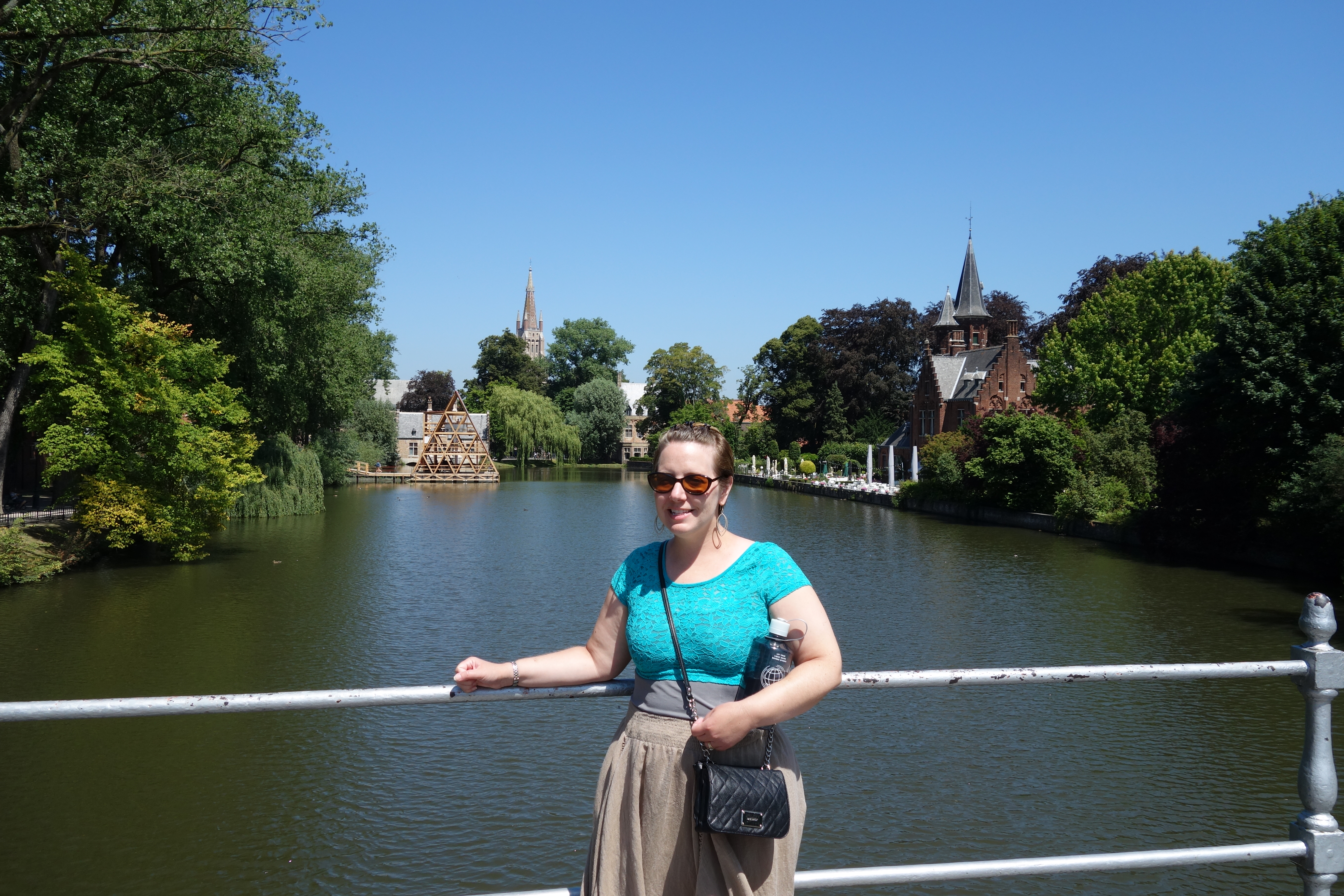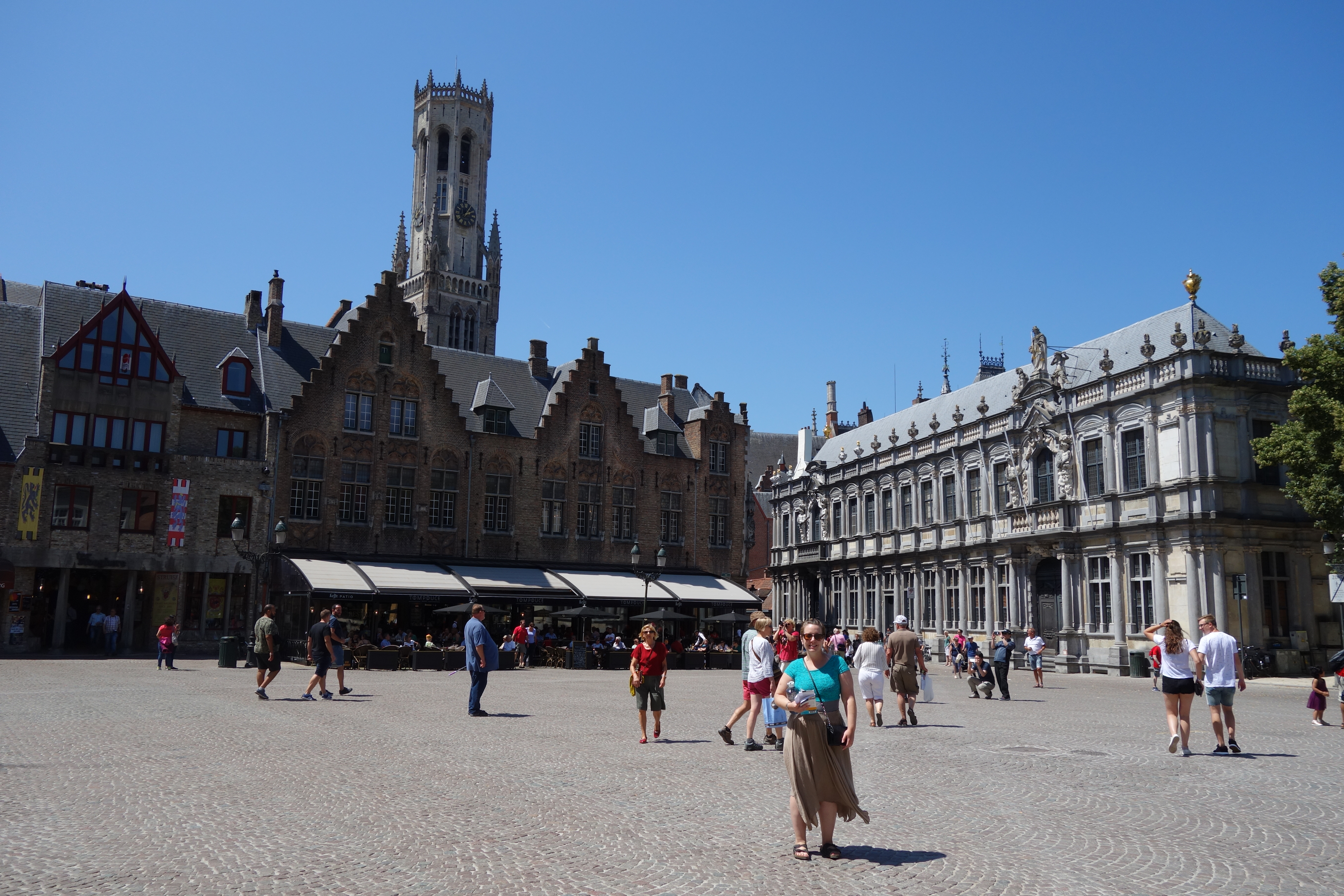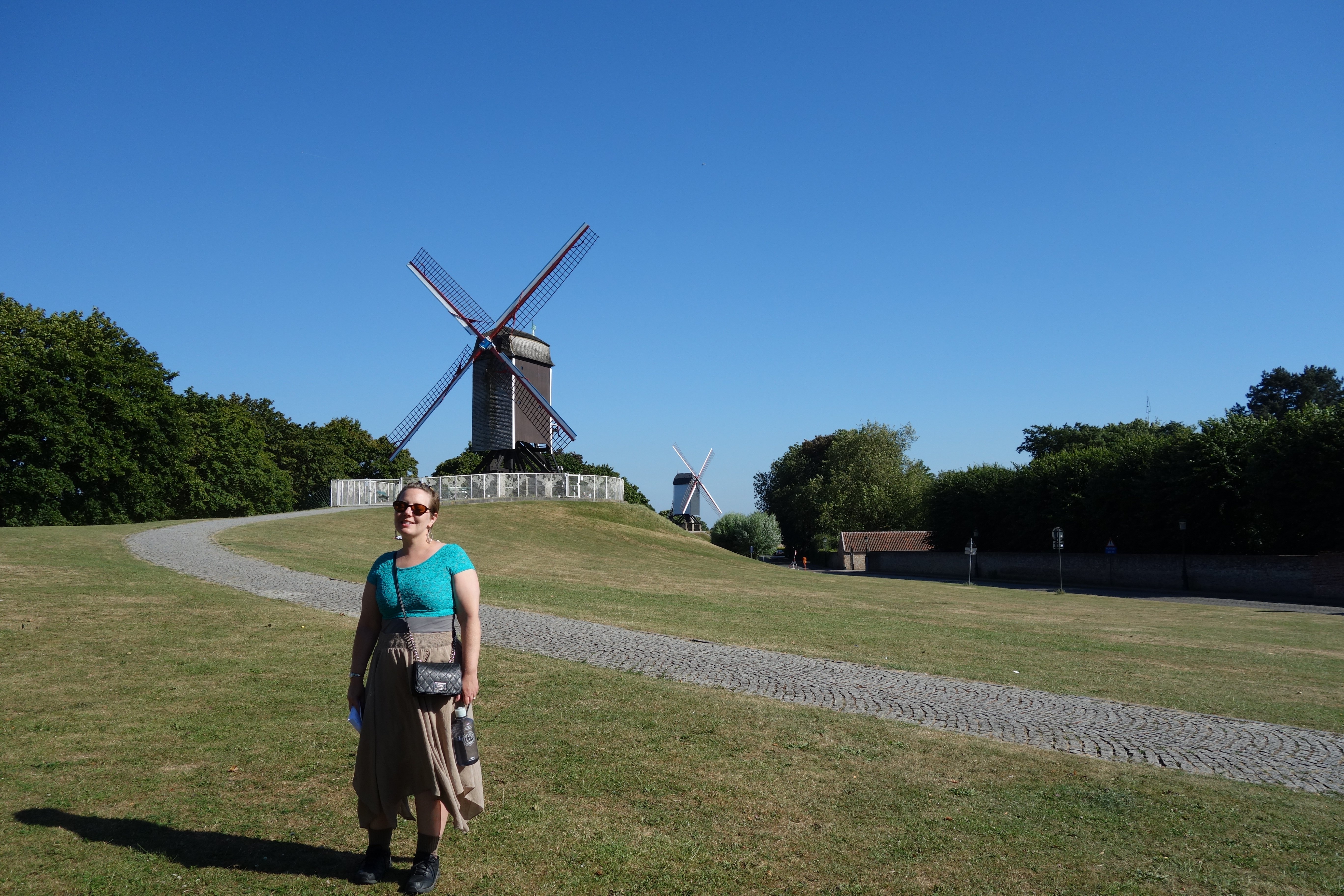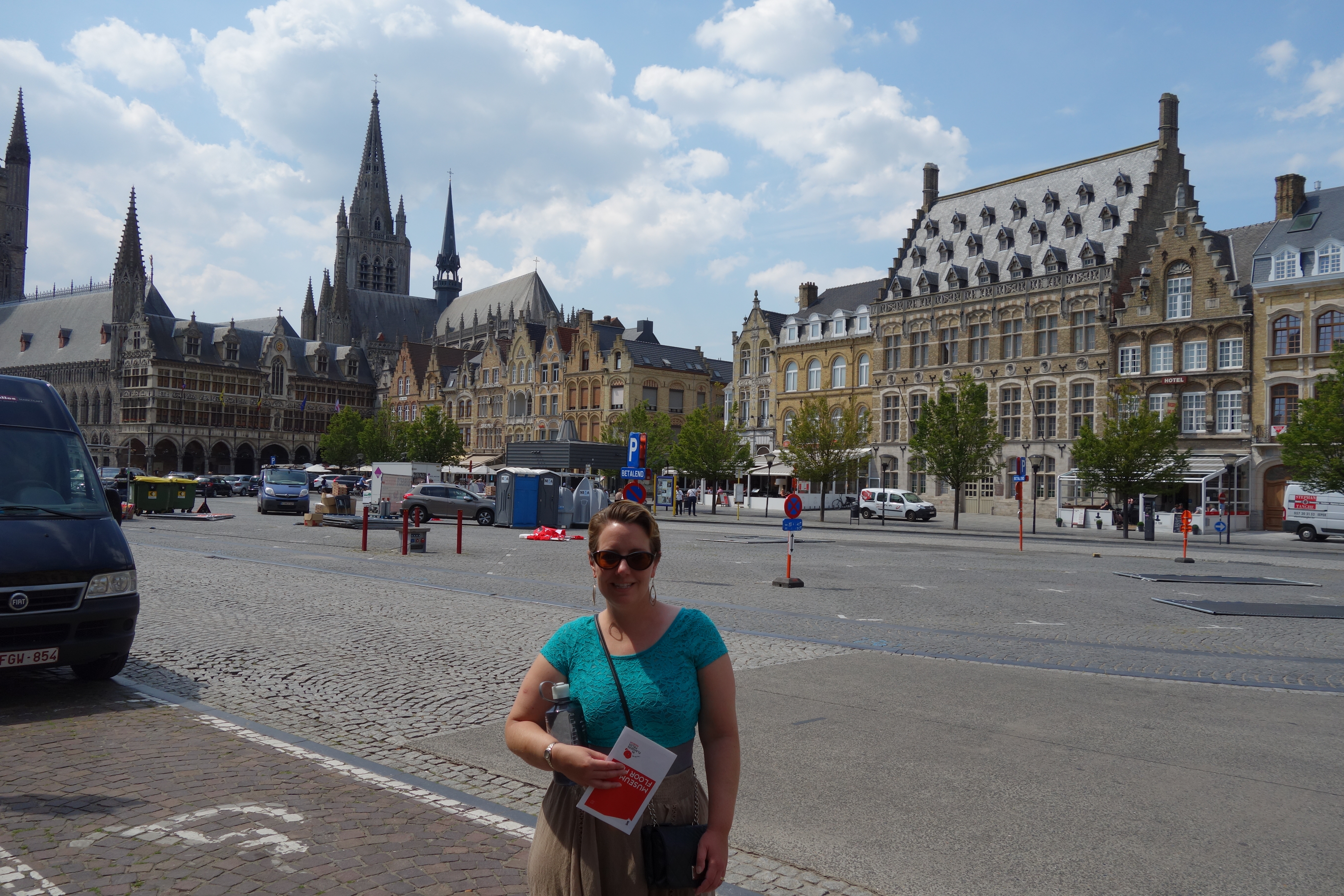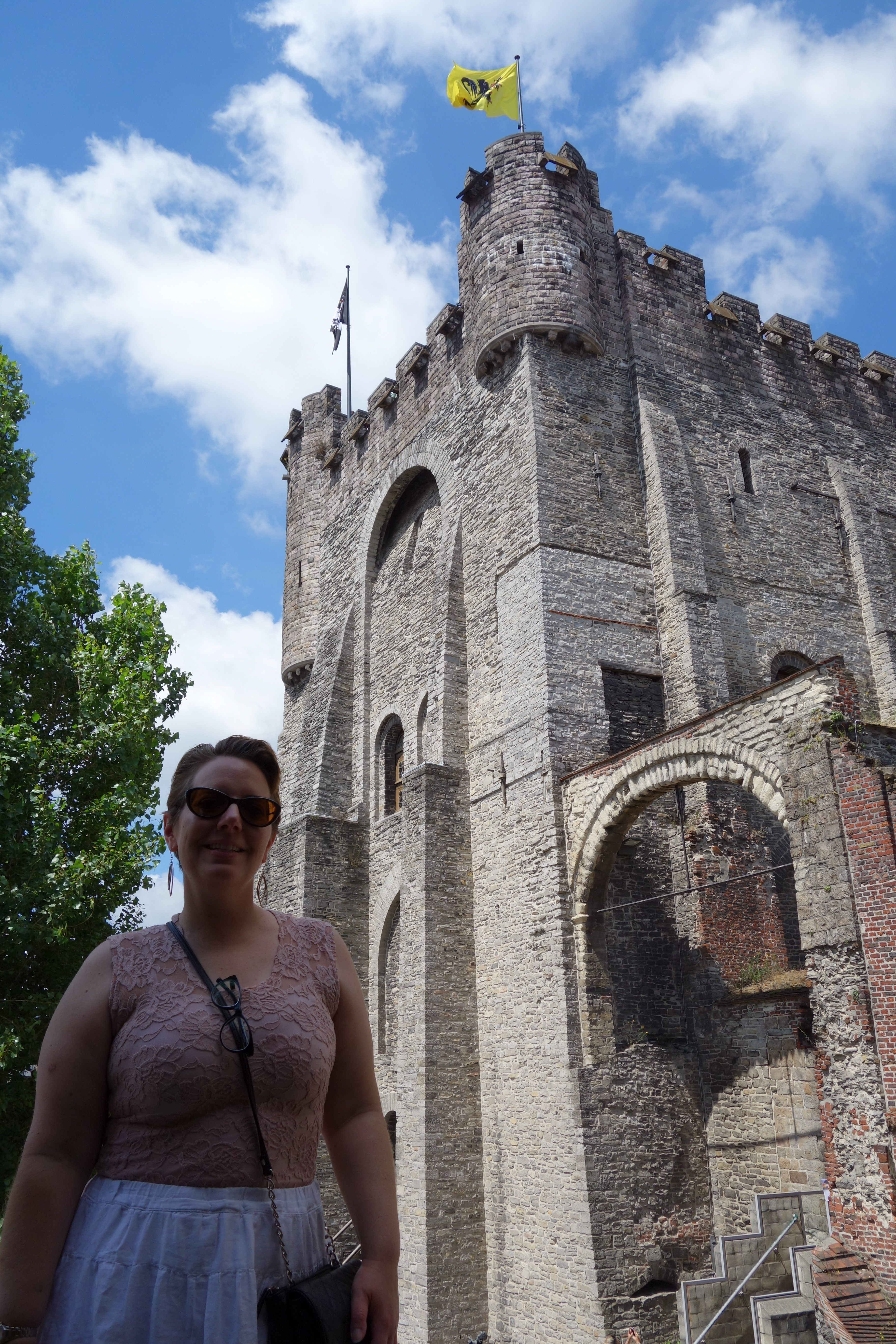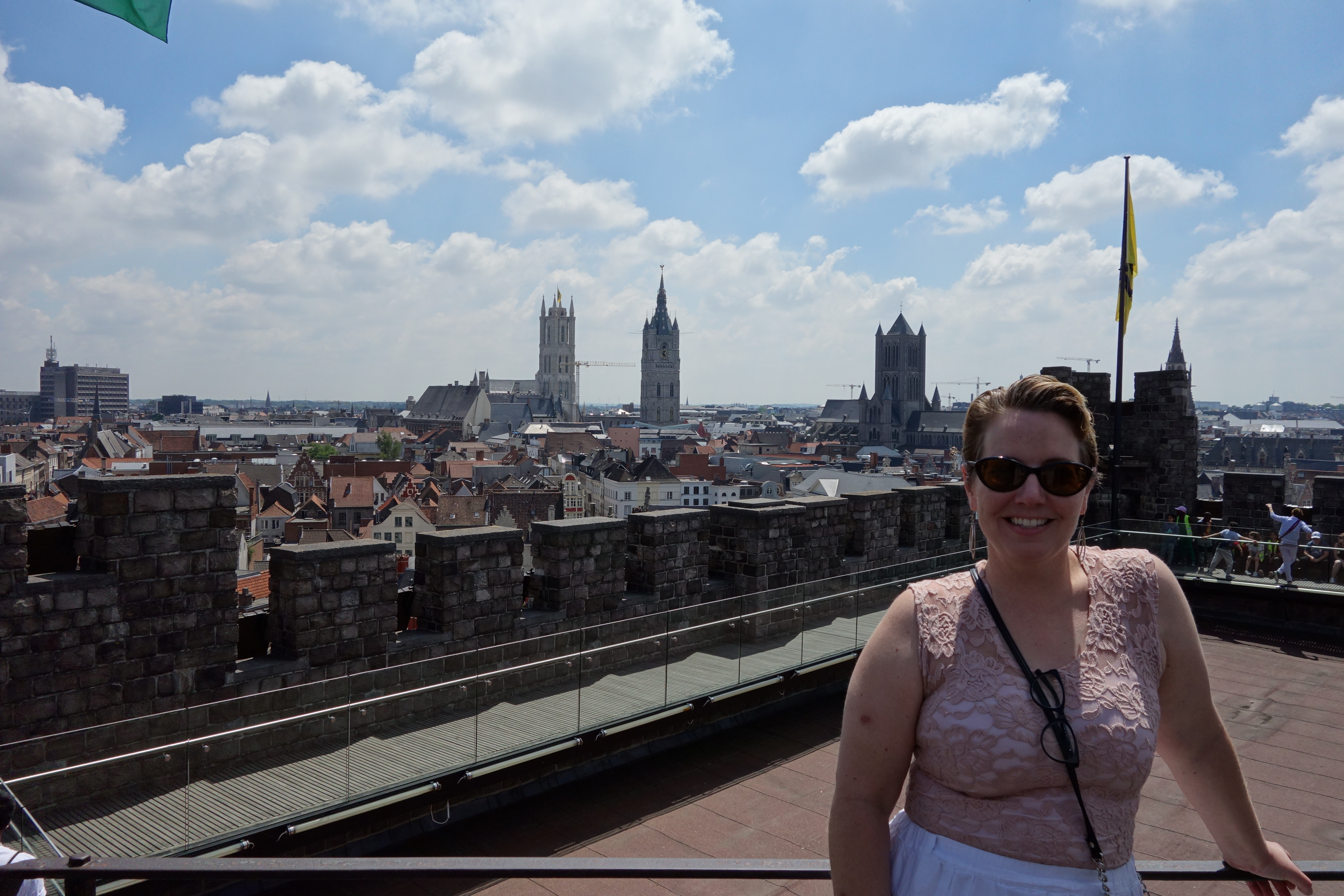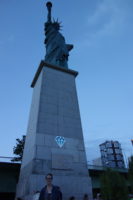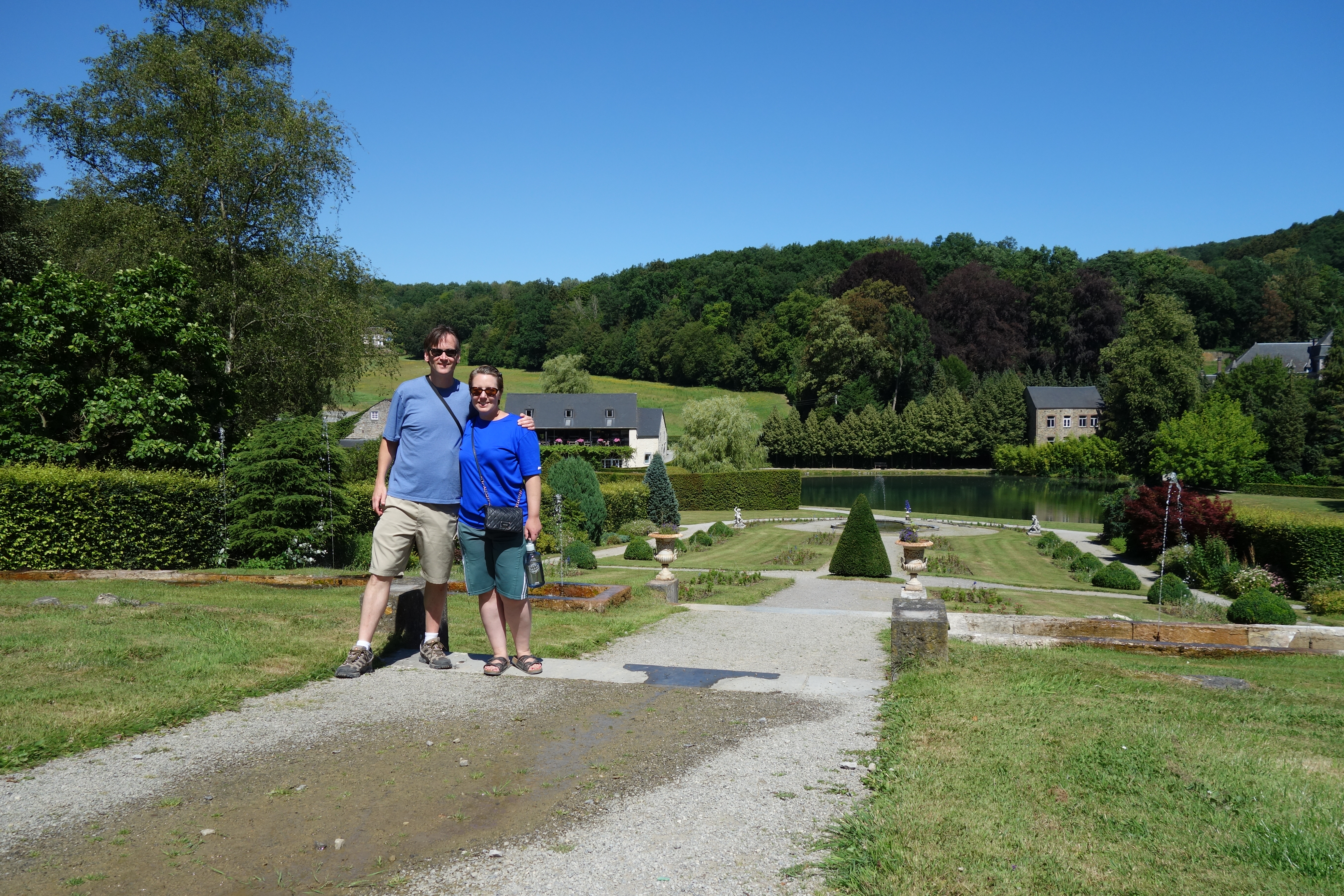
France 2018 – Day 4 – Wednesday – Nice and Monaco

Some days of touring with Meredith are a gamble, but she usually comes out a winner. You may walk, say, 13.7 miles in a day, but she has good things to go see. And, as a bonus, you can usually count on sleeping well that night.

Today, Mer let me sleep in until 8:00 am, with us meeting the rest of the group in the lobby at 9:30. Mer wanted to go see the Marc Chagall museum, and that did not open until 10:00 – thus the late start. We walked to the museum, which turned out to be up on a hill, causing some panting. Sometimes, you do have to suffer for your art. We got there right after 10:00 and got into the museum with a plan to meet back together at 11:30, since the free audio guide was supposed to take about an hour.

The Marc Chagall museum started out as the Biblical Message Museum, housing seventeen huge paintings on Biblical stories that Chagall donated to France, with the condition the government build a museum to house them. So Chagall got to be the first major artist who helped design a museum to house his work. The collection has since grown, so the museum got renamed, but the original seventeen paintings (and one mural) are still there on display permanently.

Chagall was born in Russia in a practicing Jewish family, and so both Russian themes and Jewish themes show up in his art. The stories he painted were all from the Jewish Scriptures (the Old Testament), but often he painted his hometown into the background. He also used the idea of Russian Orthodox icons, making sure that Moses or Abraham or David always looked the same in each painting to help identify them.

Chagall seemed to have a complex relationship to Jesus. He often depicted Jesus as crucified somewhere in his work, and the audio commentary said it was to represent the suffering Jew or more generally the suffering of humanity. I can see that, but Jesus was often painted into scenes of moments where God helps people (like the sacrifice of Isaac, or Jacob’s ladder dream). I’m not sure how that all works out for what Chagall meant, but I think there is a lot going on in his work.

His art is very modern, bordering on sketches. He crams his backgrounds with images, sometimes mixing Biblical stories, sometimes cramming in different times in the same work, sometimes adding strange creatures or plants. On the whole, I liked his work very much – I found it thought-provoking and interesting. I’m not sure I would qualify it as “pretty,” but I liked it.

We had lunch at the cafe, sitting outside (yay!). After lunch, Mer and I went back in to the museum to finish a small wing we had missed and to see the film about Chagall’s life. The others left to go to Eze-le-Village, a nearby town where they make perfume. Turns out the Chagall film, which was advertised to be in English, was in French, so we gave up on that pretty quickly.

We went back to the hotel to regroup, then to the train station to buy transit passes for the tram and bus system, so we could catch a bus to Cap d’Ail, a small(ish) town on the way to Monaco. We got off there so that we could walk along an ocean path into Monaco itself. The path had great views of the houses and buildings along the coast, as well as the ocean and the cliffs above the towns. We backtracked a few minutes to go out onto a very small peninsula park which could see toward both Nice and Monaco. The walk was a great way to get into the city.

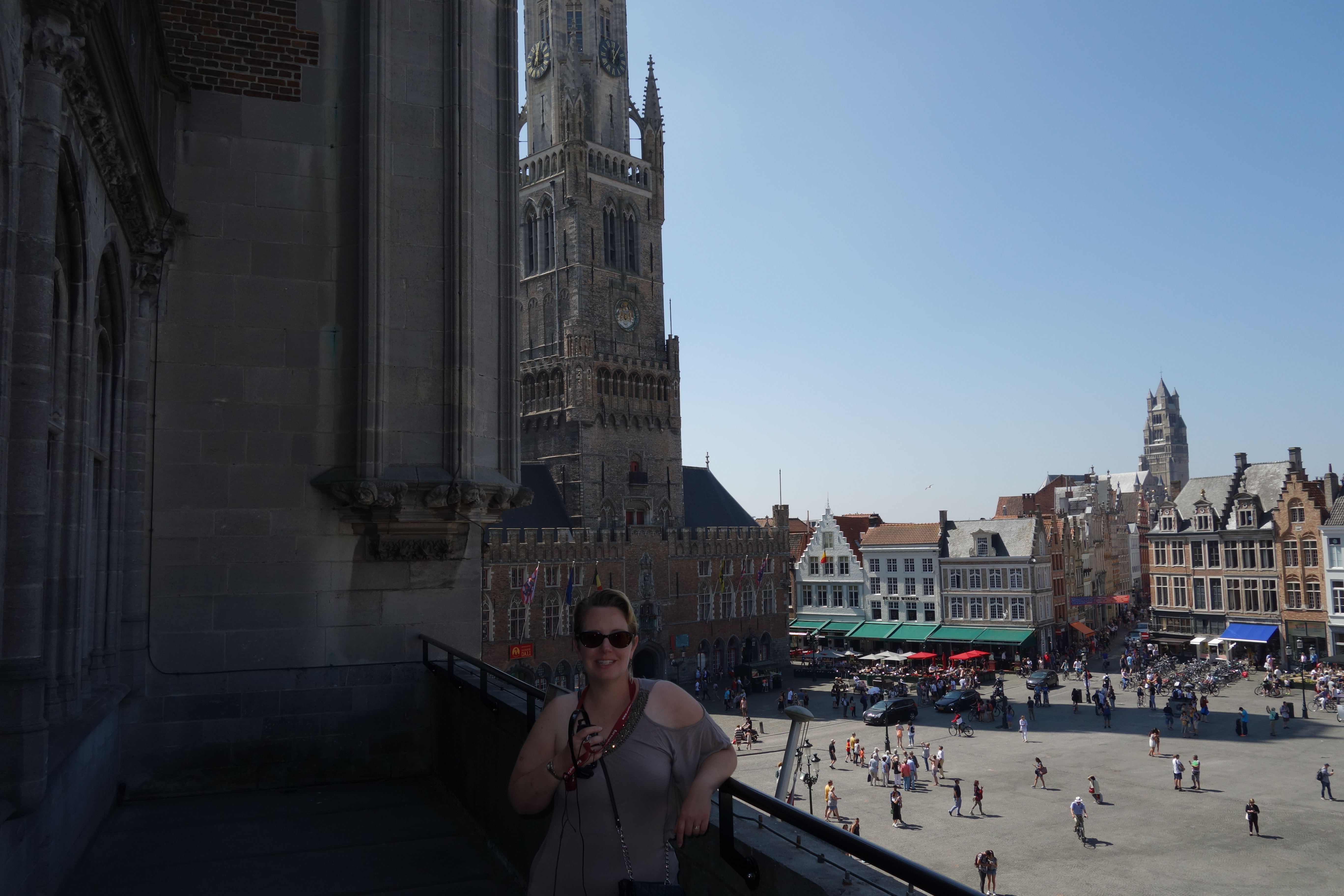
Monaco is crazy. It is crammed full of buildings and ingenious roads and pedestrian ways that maximize use of space. There are signs of wealth everywhere, from high-end shops to luxury car dealers to advertisements for one-bedroom condos for 3.2 million euros ($3.9 million). We walked up the main hill in Monaco to the palace area. We passed by the palace, but did take in the cathedral, which is modern, but simple and peaceful. There are cute streets and shops around up on the hill, but we were pressed for time, so we took a bus from there to Monte Carlo, the famous casino. We could not get in, as we were not dressed for it, but we did see all the high-end cars parked out front. The cafe with the view of the casino was selling $35 cheeseburgers. We passed.

We then did something almost unheard of for us in Europe. We went to a chain. Starbucks. We needed a bathroom, and so we gave in. I do have to say that the hot chocolate and pastry we bought were excellent, and since it was a rooftop Starbucks, it may have one of the best views of an American chain shop anywhere. After the rest stop, we walked back to the bus stop, where we took a bus that brought us back to Nice along a higher road, so that we could see a different perspective. We passed thought the perfume town, which looked beautiful, and I now hope to get to it tomorrow.

Back in Nice, we went with a safe choice for supper – it was late, and I was not feeling adventurous, so we walked back to our crepe restaurant from two nights ago. Then, it was home to the hotel, where we caught up with the others and heard about their day (and they loved the perfume town, Eze-le-Village). I really did log 13.7 miles walking today, and I am really tired, but I came up all aces for tourism today.

France 2018 – Day 3 – Tuesday – Nice and the Gorges du Verdon

One way to get a good local experience when traveling is to hire a local guide. If you also hire one who drives, you save on a rental car AND you don’t have to drive on terrifying mountain roads. So, we met Cici this morning outside the hotel around 8:00 am.

Cici was was taking us on an all-day tour of “the Grand Canyon of Europe” – the Gorges du Verdon, which is the largest canyon in Europe. It is about two hours away from Nice, so Cici filled us in on Nice and the region as we drove along on the highway, until we got off in Grasse, which is known for being the first place to produce perfume:  perfumes have been made here since the 1700s. It is lesser known for the roads that go up and up into the mountains surrounding it. Beautiful views – glad I was not driving.

We continued along before stopping in an adorable little village, Castellane. The funny thing about Castellane is that it is the “big town” of the very rural area. It had a few places to eat, so we grabbed some tea and hot chocolate and used the bathroom. We did not have time to climb up to the ruins of the castle, or the even higher church built on the edge of a cliff above the town. Mer and I explored the in-town church and then ran back into the group as they explored the town. With its being March, the place was mellow and cute. Cici told us that in August, it is almost impossible even to move in the town, since it is the gateway to the Gorges.
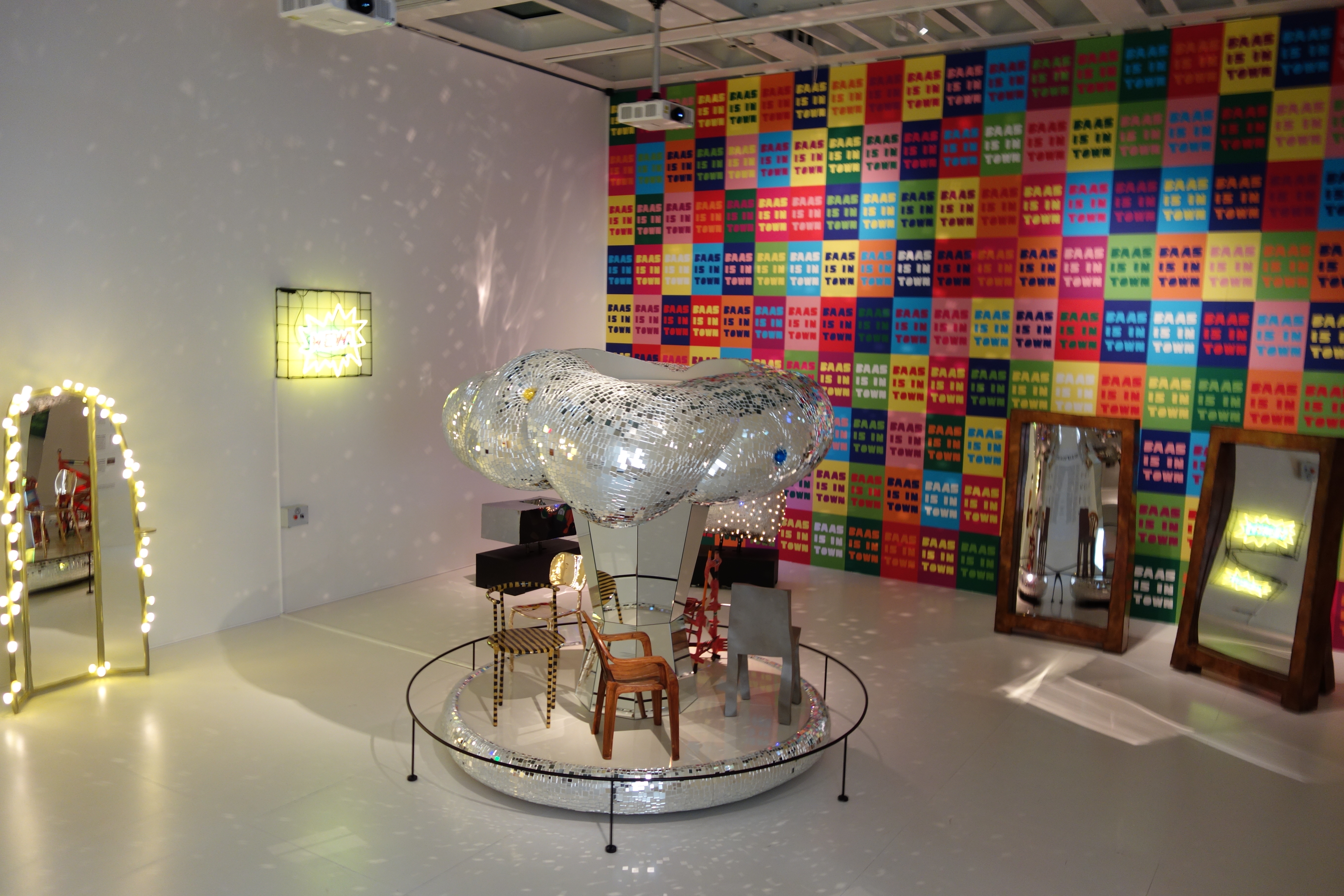
We piled back in the van and got on a winding road that was hugged between a river and the mountains. Sometimes the mountains overhung the road. The van had a sunroof, which was fun to look out of, up the side of the cliffs. The river dropped away as the road kept rising, and then Cici took us down to a parking area where we could get out and walk down rock stairs to the river itself. The path down was dwarfed by limestone mountains, and the path continued on for miles. We took it down as far as the river itself. We did not test it out, as the warning signs told of how the river could rise quickly as the nearby dam raised and lowered the water level, but Cici told us it was very cold, as it was all melt water from the mountains, some of which still had snow on the peaks. The climb back up the stairs was tricky and induced some strained breathing in the group, but it was worth it.

For balance, since we had been to the bottom of the gorge, Cici took us to a viewpoint called Point Sublime. Walking out to the point was eerie – mostly bare limestone with some scrub brush clinging to it, with looming mountains all around. It felt almost alien. The point was okay for me – a good, solid viewing platform with good handrails. I stayed away from the edge, but was otherwise okay. Mer loved it, of course. Victoria went with us, but the others decided to hang out on a rise of rock part way along the Point Sublime trail.

Cici was then going to take us to another cute villiage for lunch, but it turned out the road was closed until Saturday for road work. So she improvised and took us to the village the long way around, which was how we were supposed to go back home – through the mountains and over the second highest bridge in Europe. I was sitting on the passenger side of a high-up van, so I could see down into the gorge. Usually straight down. I suddenly found the view of my lovely wife, sitting beside me, to be intoxicating. I could not take my eyes off of her. When we got to the bridge, I was slightly ill at the height of it, followed by a climb out of the bridge area. Ugh.

Happily, the landscape calmed down some as we pulled into a small village for a late lunch. We had a great meal in Aiguines. It was a very welcome break from the overwhelming drive.

We finished the touring part of the day in an amazing little town called Moustiers-Sainte-Marie. The town was pushed up against some cliffs, with a small river running through the village. Partway up the cliff was a small chapel, and way above the chapel, strung on a wire between two massive rocks, was hung a star. Tradition holds that a knight said that if he came back from the Crusades, he would hang a star between the two cliffs. Nowadays, the star is put in place by helicopter.

We had about forty-five minutes to explore the town, so Mer and I checked out the twelfth century church in the main part of town, before seeing if we could climb to the chapel on the cliff. Mer was kind enough to let me go ahead, and I made it up the switchbacks to the church in about fifteen minutes, which gave me about ten minutes to pray inside. Mer came along then; I was very proud of her for persevering. We walked down together and got back to the group only a couple minutes late. The others had explored the shops in the village and had seen us making our way down from the chapel.
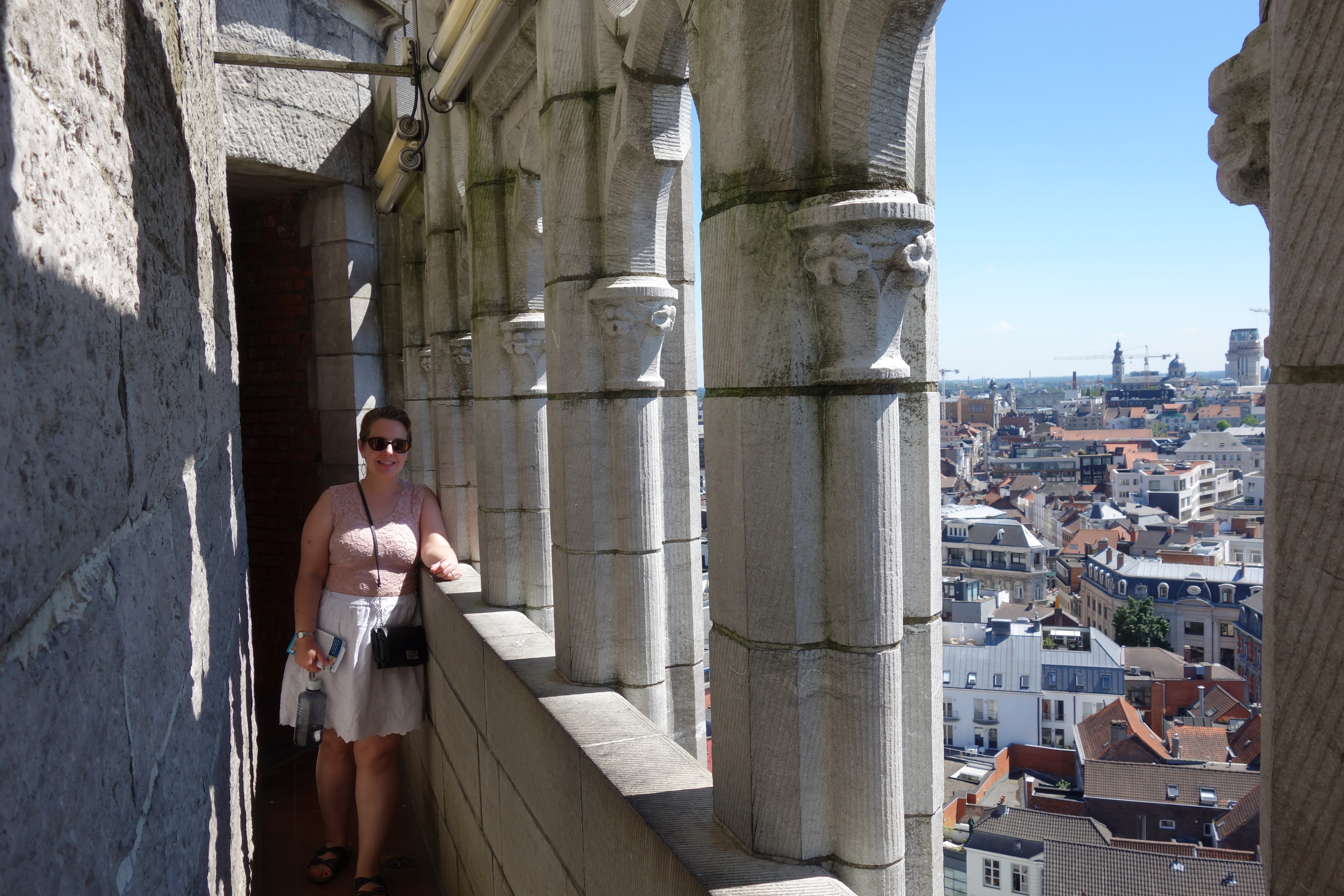
Cici then drove us back to Nice, which took about two hours. She dropped us off about 6:00 pm, having done a really excellent job of driving and narrating and answering questions. Getting a guide was really the way to go.

After a thirty-minute rest, all of us walked over to the old section of Nice, where we had supper at a pizza place owned by actual Italians, and we followed that with gelato in the old town. We went back to the hotel, where Mer and I retired to the room around 9:15, while some of the others went back to the seafront to check out the main classic hotel in town, the Hotel Negresco, where you are allowed in if you visit the bar for a drink or some food.

It was a day of highs and highs, as it were, but well worth it.

France 2018 – Day 2 – Monday – Paris and Nice

Today was another travel-intensive day, but it was an interesting one, as we were traveling to Nice by high-speed train. We left the hotel around 8:00 am and grabbed both breakfast and lunch at a bakery on the short walk to the train station. We got to the station early (of course), but the wait was only about forty-five minutes. Then, we were off on our five-hour trip to Nice.
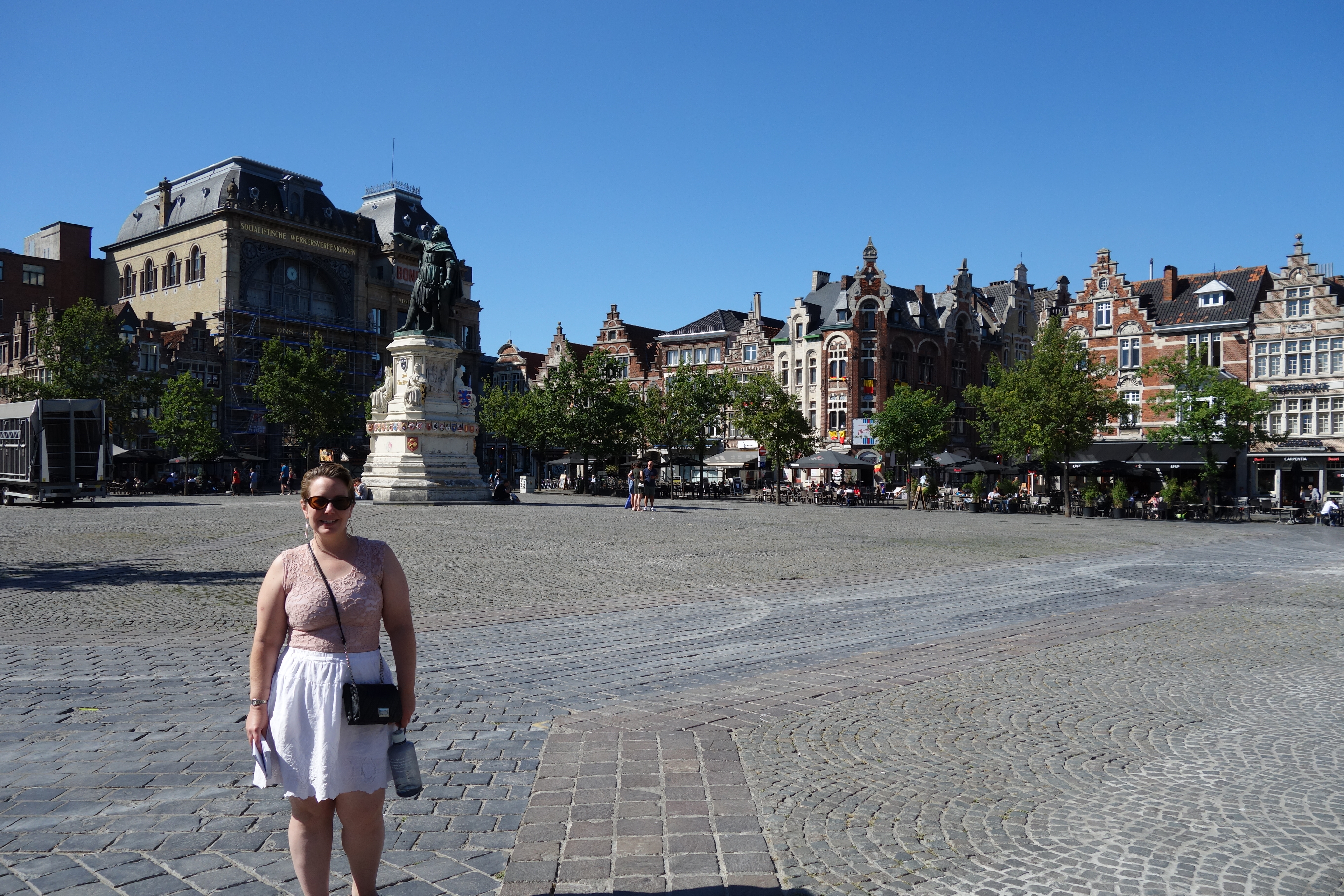
Meredith and I both like trains, in that you can see the countryside go by. We were able to see the flat farmlands around Paris change into rolling hills and then some small mountains, and then the sea appeared. Since the train was a high-speed one, we only stopped about five times, and then that was all in the south of France. Meredith was excited to see glittering ocean and palm trees.
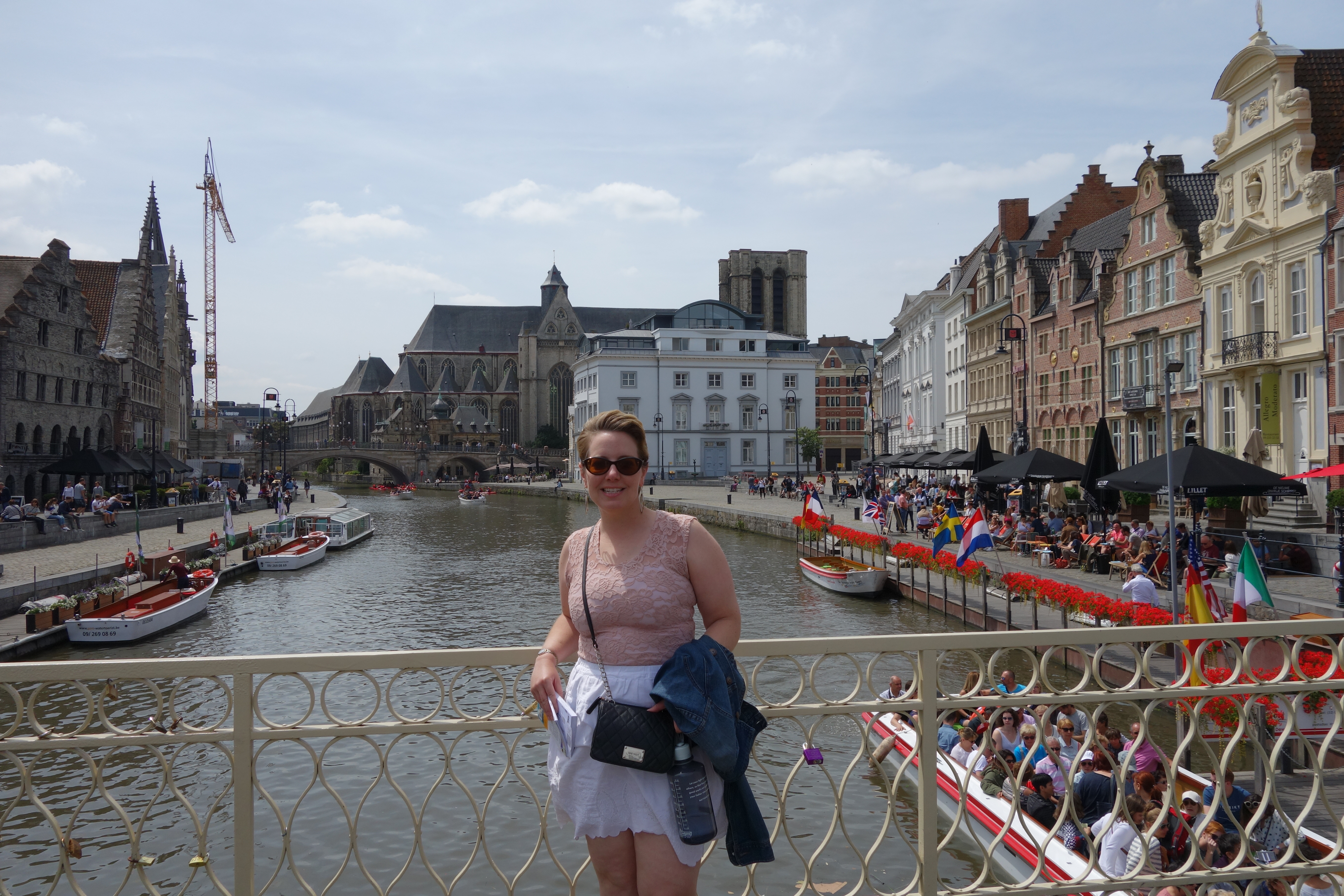
We got to Nice a little after three and walked a few blocks to our hotel, which is centrally located, only about four blocks from the ocean. We got situated and then discussed plans. Mer wanted to take a bus to one end of the ocean walkway, the Promenade des Anglais, and then walk back, a walk of about four miles, all along the ocean, and walking toward the prettier end of Nice. The others decided to opt for a tourist tram, which took them all over the city, and gave them audio commentary along the way. That worked out well in that Meredith N. had hurt her foot missing a step on the train, so she did not want to strain it with too much walking. When we all met up later, they all said how much they enjoyed the tram.

We walked down to the main road along the coast, and after walking a few blocks, we caught a bus that took us to the edge of Nice’s airport, which is on the far end of the Promenade. We then strolled along back toward the center of town. We enjoyed the sun and the water, and we enjoyed not being cold – it was in the mid-to-high 50s. We stopped along the way to smile at the only-men playing boules (like bocce) on the seaside boules court, and we walked a (very short) distance along the gravel beach. It was hard going, so we popped back up to the walkway.

We were supposed to meet the others at a crepe restaurant at 6:30, and after a quick rest stop at the hotel, we got there at 6:38, only to discover that they did not open until 7:00. Welcome to Europe. We waited until 7:05, and when the others still had not turned up, we went in and ordered. Happily, before the food showed up, they came in; they had gone to another creperie with a similar name. It all worked out fine, and we had an excellent meal. The restaurant had a 30s swing-music/jazz theme going on, so the music was great, and the waiter gave Victoria a hard time for not finishing her meal, which was really funny.

We went back to the hotel to grab more clothes as it got colder, and then Meredith, Regina, Shelby, and I headed out. Meredith N. and Victoria wanted to get some rest (it was 9:00 already), and so they stayed back. The four of us went back to the Promenade to finish the rest of the walk, ending at the foot of Castle Hill at the end of town, where we got sprinkled on by one cloud for about five minutes. Meredith and I pressed on to go see the huge and tasteful war memorial on the other side of Castle Hill, while Regina and Shelby decided to go check out the local casino. I’m not sure yet how they fared. Mer and I found the memorial and then walked down to the old section of Nice, where, after a few false starts, we found the gelato (ice cream) stand we were looking for. We ate in a small church square and then headed back to the hotel, walking through one of Nice’s main squares and getting to see some interesting streets along the way.

For a day we started in Paris, and one where our touring did not begin until almost 4:00, we had a successful run around Nice. It is a great little town, and we are looking forward to exploring it more. After a good night’s sleep.

France 2018 – Day 0 and 1 – Saturday and Sunday – Toronto, Canada, and Paris, France

This spring break trip involves me and Meredith, with three co-workers – Meredith, Regina, and Victoria – and a former student, Shelby, who is also Regina’s daughter. The main part of the vacation is going to be spent in Nice on the French Riviera, but first we have to get there. That meant driving to Toronto again to use the cheap airport with a direct flight to Paris.

The first part went very well. The trip went well, and we all met up at the airport, where we got through security efficiently, which put us at the gate three hours before the flight was to leave. Since the flight started boarding about an hour before departure, that really put us there two hours early. Not too bad, and we puttered the time away reading, wandering, and eating.

The flight was great, and so we arrived in Paris. Customs was efficient, and so we found ourselves trying to figure out the train system to get into Paris proper, when we figured out that although we had brought a guidebook on Nice, we did not have one on Paris. Ooops. Mer and I put our heads together and figured it out, and so, in the end, we got to our hotel around 11:00 am, Paris time. Sadly, the hotel was very busy this weekend, and so our rooms would not be ready until standard check-in time at 2:00.

That was a curve ball. Mer and I count on grabbing a two- or three-hour nap on arrival to help break up jet lag, and now we would have to tour in Paris, running on no sleep for about twenty-three hours. Not an insurmountable issue, but it did mean we were a bit foggy.

We decided to go get lunch, and I remembered there were good restaurants on the two islands in the Seine River, where Notre Dame is located. We walked there along the river, which is always a good way to get to know a city. We found a small cafe on the Ile Saint-Louis, the smaller of the two islands, and we ate a leisurely lunch. The weather was quite good, and the sun came out, so we walked over to Ile de la Cite, the bigger island, and walked in the park surrounding Notre Dame. Today was Palm Sunday, so the lines to get into the church were quite long. We enjoyed the outside of it, and then made our way back to the hotel, where we got some rest.

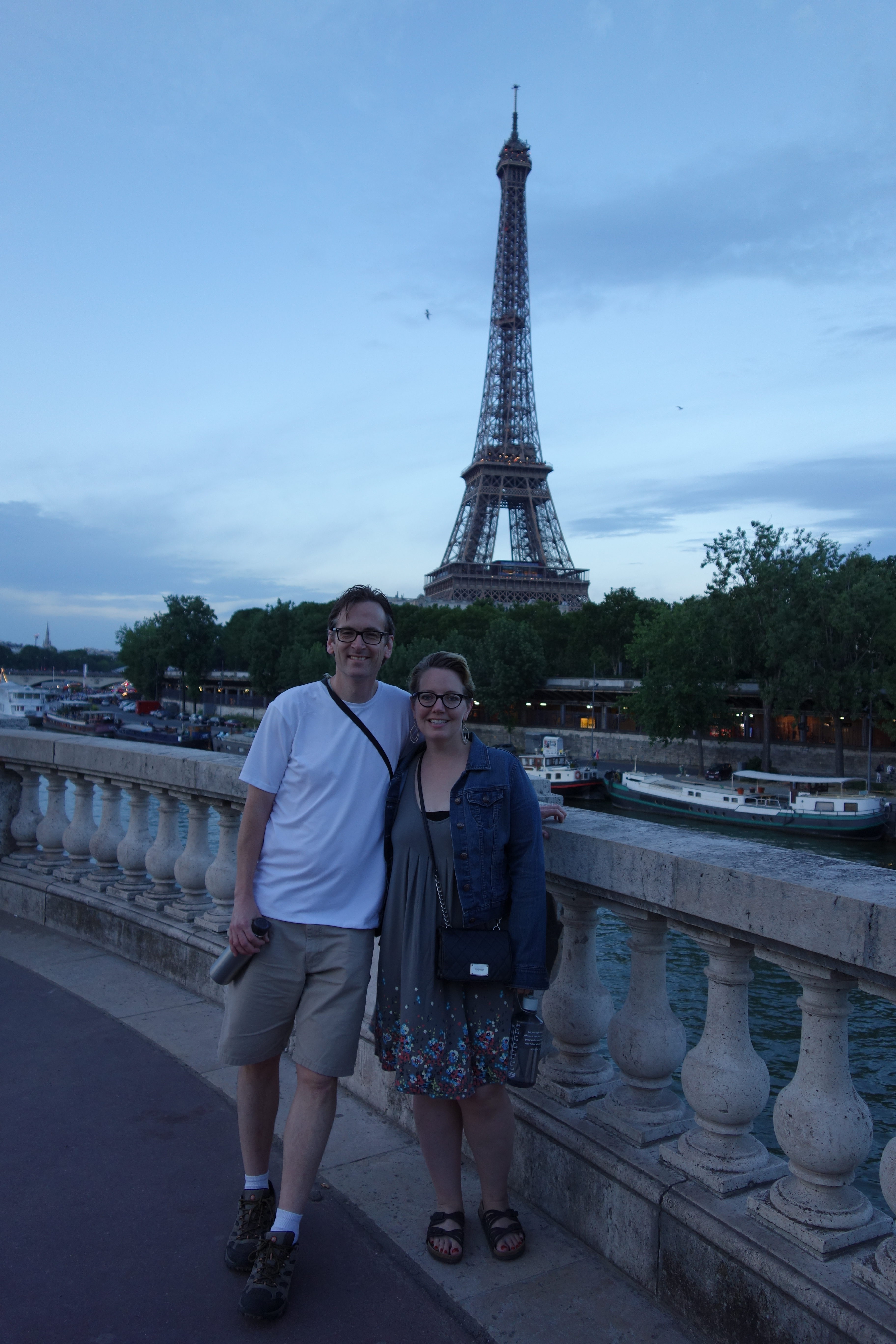
We got launched on Paris Tour part two at 6:00. We decided to take a riverboat tour of the Seine, so we took the Metro over to the Champs-Elysees  and walked down to the river. We got on a fairly crowded boat where the top deck was roped off. We were confused until we finally figured out the river was so high that the boat barely could get under bridges. Anyone sitting on the upper deck would have been in danger from low clearance. In fact, the boat turned before Notre Dame because it could not make it under one pedestrian bridge, but we still got great views of the city, especially the Eiffel Tower.

Everyone seemed to enjoy the tour, but by then it was 8:00, so we found a creperie (crepe restaurant) where we had supper. Since it was so close to the Champs-Elysees, we took the time to walk up to the Arc de Triomphe, where we took the pedestrian tunnel to get right up to it. Since it was now almost 10:00, the crowds were largely gone, and Victoria even got a picture of the full Arc with no traffic in the picture, which is very difficult to do.

From the Arc, it was back to the Metro and home to our new, modern, and funky hotel, which includes iPad-controlled lighting, shades, and TV. It is in a perfect location, next to the train station, for us to catch our train to Nice tomorrow morning.

Lisbon, Portugal – Day 7 – Saturday

We kicked around several possibilities for today – going back to Sintra, exploring the beach town Cascais, or puttering around Lisbon. We settled on Lisbon, to finish up the couple of remaining sites we had not yet seen.

After breakfast, we ran back home to get umbrellas since it was spitting occasional rain, and then we walked along a new (to us) road to go to the cathedral here. Along the way, I needed a bathroom, and we ran across a free archaeology museum that had restrooms. The museum was only one floor, but was interesting and well presented. It focused on the remains of the Roman wall of the city and the buildings that had been built along it, which turned out to be mostly for processing fish and fish oils. The ruins were encased in glass, so we were able to walk over them and look down on them. Great little place, especially for free.

We made it up to the cathedral, which is an impressive medieval church built like a twin-towered fortress. It is massive and solid, and it survived the 1755 earthquake and is still in use. St. Anthony (of Padua, where he died) was born near this church and was baptized there. It is simple stone inside, with only a few paintings. There are three brilliant stained glass rose windows. The church excels in impressing the weight of history and worship onto you.

To save wear and tear on week-long-stressed knees, we took the small bus from near the cathedral up to the castle, which dominates the high point of the town. It is huge, with multiple walls, including the inner keep, which had multiple gates and intact ramparts. The castle was built by the Moors around 900, and was conquered by the soon-to-be Portuguese king around 1150. One of the famous heroes of Lisbon threw himself into a closing gate and used his dying body to keep the gate open so the castle could be stormed.

The views from the castle are great from every angle. We got to see the entire city and finally put it together in our heads, resulting in our laughing at how close some of the major squares are, when we had been thinking of them as very separate places. That is the the result of piecing the city together from meandering trolley rides. We got to walk along many of the tops of the walls all around the place. It continued to sprinkle on and off, but never to the point of discomfort.

We walked back down toward town, stopping in at a very cool art shop that seemed to be featuring creche (nativity) sets. Some were very moving in execution or simplicity; others were strangely whimsical. The shop itself was in an interesting space, with a rocky floor and a brick roof. Of course, my favorite works were over $1,200 and $800 each. I always seem to pick out the expensive ones.

Lunch was inside because of the rain, but it had cleared up by the time we finished. We walked home and rested for an hour before heading out for our final evening on the town. It was mellow – we walked up to the iron tower elevator (near the ruins of the convent) and took the elevator down, where we walked through a couple of squares to look for the market set up in one of the squares. We found it, and it was the same as two days ago, so we went back up to the convent area and had supper in a square facing one side of the convent. It was a pretty place to eat, and then we went home.

Lisbon treated us well, and we enjoyed the city very much. It is walk-able, interesting, and people-friendly, and we are thankful indeed to have been here this week.

Sintra and Lisbon, Portugal – Day 6 – Friday

One of the reasons to travel is to discover things of wonder. That wonder can be natural (like the Alps) or artificial (like the Eiffel Tower). Even better is when you find something that captivates you that you never even knew existed. Especially when it is wonderfully quirky.

Such is the Quinta da Regaleira house and estate in Sintra. It was mentioned in our Rick Steves guide book, and online reviews said it was fantastic, but nothing really prepared me for the actual site. We took the train back to Sintra, where the Moorish Castle still played peek-a-boo with us through the fog and we only saw the Pena Palace tower dimly right at the end of the day. So, still not a great day for views from the mountain.

But, happily, the town of Sintra and the Quinta da Regaleira were both below the cloud line, and it was a nice day to be outside. We spent about five hours roaming the grounds and (briefly) the house, so we were happy the rain from Thursday had gone.

We walked from the station to town, which involves walking around a steep valley, so that you actually see the town close at hand the entire walk. The sidewalk is lined with sculpture, which is a good touch. The Quinta da Regaleira is above the town, so we continued our walk to the main gate, which is about halfway up the sloping grounds of the estate.

And what grounds. We decided to head up while our legs were fresh. Not long into the uphill walk, we came to the waterfall on the estate. With a pond. With stepping stones across the pond. Which led to the underground passage that led behind the waterfall. That led to the underground passage that led to the “Initiatic Well,” a spiral-staircase-encircled well about ninety feet deep. But halfway up the stairs there was another underground passage that we HAD to take.

This dumped us out at the “Portal of the Guardians,” a semi-circular wall with two climbable towers on either side. That overlooked the “Terrace of the Celestial Worlds” with its tall ziggurat tower. That you can climb and see the Moorish Castle from.

But we were climbing up. So up we went, along winding paths through dense trees to the Grotto of the Virgin, a cave currently without a shrine. That marked the highest point in the estate, so we followed the western wall path down before heading over to the Unfinished Well, which also had stairs leading down, to the (obviously) underground passage that led to the Grotto of the East, another cave, near the Aquarium, a cave with one wall of glass to let the viewers see the water on the other side (fairly tame in late November).

That finished the upper half of the grounds. We made our way down to the lower half, finding and climbing the quite tall Regaleira Tower with its grand views of the Moorish Castle and the town of Sintra. We had to backtrack there a bit to find a way down to the Fountain of Regaleira, which was a huge wall of mosaic stone with a super-small fountain with the output of about what a drinking fountain would put out. It was fun in that way.

Back to the western wall path, only to be distracted by the Labyrinthic Grotto, my favorite part of the park. It was an opening leading to a series of narrow passages that wound around. Some of the paths led to other paths, and some were dead ends. They finally came to a huge muddy cave that looked out onto a small pond. Happily, there was a stairway out, next to the Balnearium Fountain and a small “natural” bridge across the pond. After crossing it, we made a quick dash over to look at the decoratively tiled Pisoes Loggia, and then a beeline toward the cafeteria for lunch, taking us past a row of statues of Greek gods.

Lunch was outside on the patio, looking over the house and grounds and mountain, with a couple of different kitties wandering about. That is about as ideal an eating spot as you can come up with. After lunch, we went and visited the ornate Chapel, where we climbed a spiral staircase to its small balcony, before climbing it back down all the way to the…wait for it…underground tunnel that took you to the base of the house.

We toured the first floor of the house, with its magnificent views, but sadly, the second and third floors were closed for restoration, so we did not get to climb up to the balconies. We did spend some quality time sitting out on the main floor balcony, watching the fog come and go on the mountain.


To make sure we saw everything, we finished off the row of Greek gods. That was it. A very well-spent five hours of child-like wonder.

Why is all of this here? I’m not sure. The brochure tells you how Carvalho Monteiro hired architect Luigi Manini around 1900 to expand the house and grounds, but does not say why. Some of the things in the house suggested there was an ideal of a “philosophical estate” where nature and contemplation were stressed, but it never really got to the why of the entire place. I think Carvalho had money and imagination and playfulness. I am very grateful – what a great place to wander and wonder.

We took the train back to Lisbon, and then home to rest for forty-five minutes. We wanted to explore more of the Alfama neighborhood (the old one that survived the 1755 earthquake), so we had a relaxed supper up there, where we had a good time with a fun waiter who gave us a hard time, and then we chatted with a Korean man who lives in New York doing graphic design for commercials. We then wandered the narrows streets up to and back down from the castle area, before walking over to the upper shopping district for dessert, where we finally got to see some Christmas lights. The municipal lights have been hanging all week, but haven’t yet been lit. Happily, the mall came through for us with a spectacular color-changing tree. After dessert, we headed home, but sadly, not through any secret tunnels.

Lisbon, Portugal – Day 5 – Thursday

Even on the best of vacations, sometimes rain must fall. Or at least is predicted to fall; we were supposed to get heavy rains and winds, starting sometime between 10:00 and 11:00. So, we decided today would be a good museum day. We started with a late breakfast, and finished up well after 10:00, and we were thrilled at the sunny skies – we would not have to get soaked walking to the museum. Off we went to escape the coming torrents, to our refuge – the Gulbenkian Museum.

The Gulbenkian Museum was founded from the collection of a wealthy Armenian who was granted refuge in Portugal during World War 2. When he died, he left his impressive and eclectic art collection to Lisbon as a thank you. The collection includes ceramics, textiles (mostly rugs), wood work, sculpture, paintings, furniture, and more, spanning ancient Egyptian art, Islamic art. Chinese art, European art, and others. Many of the pieces were obscure to me, but he had several sculptures by Rodin, and some paintings by Monet, Manet, Degas, and Renoir, and an entire room of paintings of Venice by Guardi.

I loved the European art, especially the religious art. There was a wooden statue of Mary that was very moving – she was old and sad, and this was not a modern statue (I think it was from 1700 or so). I also liked a huge tapestry called something like “The Children’s Dance,” in which a bunch of Cupid-like children were dancing. And then you notice that one of the ones up in a tree had inverted a quiver of arrows, and the arrows had fallen on a dancing child, who was now looking unhappy and bleeding. Odd.

I loved the Rodin sculptures. Mer laughed at one called Sister and Brother, in which two siblings were cozy – she said it was just like me and my sister. Next to it were two lovers kissing passionately, and I said that was just like us. Mer saw that it was called Early Springtime and remarked that we were more of Early Autumn. Touche.

There was a special exhibit called “Beyond the Mirror” which explored the mirror in art. It was interesting, showing how the mirror was portrayed in early art, and then later was used as the subject of art itself. So we had exhibits where the focus was on the reflection of someone, or we had art that incorporated real mirrors. It was well laid out, and it was a thoughtful theme to trace in art.

We got done with the Gulbenkian around 1:30, and came out to cloudy but dry skies. We wanted to go to a couple of museums back out in Belem (out by the monastery), so we had to take the subway to the train station. When we emerged at the train station, it had rained, but was only sprinkling, and so it was in Belem as well. We walked the ten minutes to the Museu Colecao Berardo, a modern art collection spanning (roughly) from 1900 to today.

I am not the biggest modern art fan, but I like early modern art and religious modern art. This museum had no religious art, but a solid collection of early modern art. It also had three fourths of the school-aged population of Lisbon there, but we managed to avoid them, on the whole. About half the collection was from recent modern art, which usually makes me mad. It did so again today. I think I finally figured out why. Art should point to truth, and modern art rejects the idea that there is truth, or even that art should have a point. So, in the end, it mocks real art that does point to truth. And that makes me angry. I also get a bit ticked off when art that I could have easily made with no training ends up framed in a museum. At any rate, I was no big fan of the second half of the museum, although I still found a couple of pieces I liked for the color or pattern.

After a rest stop at a cafe, we made our soaking and windy way over across the street to the National Archaeology Museum, which is a small museum in the long wing of the monastery. They had three small exhibits – one on an excavated area of Portugal, covering from the stone age through the Romans; one on Egypt; and one on Roman artifacts dealing with death and the gods. It was well laid out, and the Portuguese exhibit even had some artifacts you could touch, but I was getting a bit tired and hungry. Three museums in one day were a pretty good haul. We made our really wet and windy way back to the train, to have the rain stop for the day when we got to the station. Twenty minutes of being in the rain was not bad for a day forecast to have it all day long.

Back in Lisbon, we had a traditional Thanksgiving meal at an Italian restaurant with pizza and steak. Dubbs said we should all say some things we were thankful for, which was a good idea on Thanksgiving. After sharing a few things each (including family, friends, health, good living, good jobs), we ate well. That made me feel much better, so that I was happy to go to the shopping street to see if the Christmas lights were on yet. They weren’t. We comforted ourselves with dessert, and I began to think about bed.

Then Mer said she wanted to do the Trolley #12 tour. #12 runs a small circular path around the main part of downtown Lisbon, and even though it covered some of the same ground we had already done, it had some new areas too. Off we went. It was amazing how well it tied together areas we had come at in a roundabout way, or had popped up in from the metro. We did the whole track in about twenty minutes, getting off at a small market in a square, where we browsed and bought a few things. Then it really was back on the metro and back home for the evening. And the forecast has the rain ending by 10:00 tomorrow morning. Back to outside touring we go!

Sintra, Portugal – Day 4 – Wednesday

We got going a little early today because we had some travel involved – we were going to the nearby town of Sintra, about a 45-minute train ride away. We got to the Rossio train station (the one with the cool Islamic-inspired facade) and onto a train that pulled out at about 9:15.

Sintra is home to several castles, and so is a popular tourist attraction. We got off the train with a couple hundred of our newest friends, and piled on to a full-sized bus that did an amazing job of squeezing up a small mountain. We passed by the Moorish Castle, which we came back to later (and so we will here too), and pulled up outside the Pena Palace, a fairy-tale castle from the mid 1800s, built by King Ferdinand II. It is completely over the top, with tons of colors and styles:  Islamic influences, Indian styles, and visions of medieval castles, all rolled into one.

Although it was clear in Lisbon and in the town of Sintra, the top of the mountain was enveloped in a thick fog. Since the sun was out lower down, I was confident it would burn off and give us magnificent views. So we got an hour-long audio tour of the castle, and wandered through the comfortably ornate interior. Since the castle was built on and incorporated an existing monastery, many of the rooms are normal-sized and more comfortable-seeming than opulent palaces like Versailles.

When we came back out from the interior, the fog was still swirling, but we walked the “wall walk” anyway, during which our audio guide rhapsodized about the views from the walls. They were still interesting, in a Brigadoon sort of way, with fleeting glimpses of the town below being swallowed up in fog.

It was about noon, so we grabbed some lunch in the cafeteria, and I was confident that while we ate, the fog would burn off. When we came out, the fog was still swirling. Pena Palace has extensive grounds with cobblestone paths (it is good to be king), and so I decided we should walk the lower-down grounds to give the fog time to burn off.

After a false start or two in trying to find any landmark other than the palace, we got situated. We found the queen’s fern garden, and from there we climbed though dense, vine-covered trees, with the fog drifting through it all. It was magical. Dubbs brought up the Lord of the Rings and Braveheart soundtracks on her phone for quiet atmosphere, and it suited perfectly. Every corner was a delightful surprise of nature and weather interacting in amazing ways. We found a small grotto where the monks would come for solo contemplation and prayer, and a view terrace favored by the queen. We couldn’t see anything but fog, but the sign post said she loved the view.

We finally climbed all the way to the highest point in the park, where there was a high cross erected. The views are spectacular. Or so we were told, since all we saw was fog. Still, the mystical quality imparted to the grounds by the fog was worth it. We headed all the way back down through the grounds, leaving two thirds of the grounds left unseen because of lack of time.

We next walked down the mountain a few minutes to the Moorish Castle. It was built by the Islamic Moors as an outpost to help defend Lisbon, and was conquered during the reconquest around 1100. It is a huge and impressive complex, with two well-defended hills connected by a wall. The castle inside the walls is so small as to have escaped our notice before we found it on a map – it is a keep tucked into one corner of the lower hill wall. But the wall and fortifications are remarkable. The castle is in excellent shape, as it was restored by King Ferdinand II as part of his palace complex, so the park would have a proper castle to look at. We wandered the walls from the smaller hill and up to the larger hill. The wind was blowing quite hard, and the fog was fairly thick on the larger hill, although the views from the smaller hill were quite good. It seems the fog had a strict elevation it stuck to.

We caught the bus back down, and then took the train back to Lisbon, getting back around 6:00. We ate supper near the train station, sitting outside in the windless, fog-free air. We then took the Metro and some trams around town in quest of crepes, failing on our first attempt, but finally finding an open place near Commerce Square. We walked back home, full, happy, and tired. It seems it takes at least twelve miles of walking to see the fogs of Sintra.

Lisbon, Portugal – Day 3 – Tuesday

After a long day of touring yesterday, we slept in a little, finally getting launched around 9:30, and grabbing breakfast at a nearby cafe. Mer promised a much easier day today, and we started easily enough with grabbing a trolley heading west out of town. The trolley was ten minutes late, which meant it was very crowded, even at 10:00, with most of the passengers being tourists and heading where we were – St. Jerome’s Monastery in the nearby suburb of Belem.

St. Jerome’s Monastery was built around 1500 by King Manuel, and it is about three hundred yards long, with a large church on one side and the monastic halls stretching along from the church. You can tour the church for free, which meant it was fairly crowded. The church and halls are distinctive – the arches holding up the roof and the columns are shaped in the forms of ropes, and there are sea motifs all over. The church is large and airy feeling, especially for 1500. I liked the church well enough, but the cloister was lovely.

The cloister, probably based on the ten-euro entry fee, was far less crowded and much larger than the church, with a two-level portico built around a square. The entry fee also granted us access to the choir loft of the church, which offered better (and quieter) views of the church itself. Back out on the portico, we ran into some kind of play going on for a school group, with a devil (with horns), an angel, and several monks. We walked past the angel, who was sitting on a stepladder, and he smiled and nodded, since angels are friendly. These are the wacky, fun moments of travel.

After the monastery, we crossed through a park and under a busy road to the enormous Monument to the Discoveries, a huge concrete block carved roughly in the shape of a ship with great men (and one woman – a queen) carved upwards to the prow of the boat. It was originally built in 1940 for a World’s Fair, but the gypsum model was torn down and a replica was rebuilt in the 1960s. It is a lovely place to sit, with the 25th of April Bridge behind it (looking back toward town) or looking down river toward the Atlantic. You can pay a few euros to climb to the the 170-foot tall structure, which Dubbs and Mer did, while I stayed below soaking up the sun and people-watching. Mer said there was also an exhibit in the monument called “Red Atlantic” about the slave trade and the native peoples who were exploited during the age of exploration and colonization.

We had lunch in an Italian restaurant that looked out at the monument and river, along with the bridge and the statue of Christ. We decided for the more efficient way back into town, and so we skipped the trolley and took the real train back home, where we rested in the apartment for about half an hour, until 3:15.

Mer decided to continue to take it easy on us by having us tour by trolley. We rode the #28 trolley around for most if the evening, which is a trolley that meanders through Lisbon, going through many of the tourist-friendly areas (and a few less-touristed areas too). Our first stop was at the end of the #28 line, at a large cemetery. Mer and I like to go to cemeteries – they are interesting and usually in pretty places. This cemetery got off to a good start, with a group of four or five cats hanging out near the gates. The attendant at the the cemetery church would not let us in the church for some reason (maybe it was too close to closing time in thirty minutes), but we got to wander the impressive rows of mausoleums of some of Lisbon’s wealthy families. The monuments were tightly packed together, and for the most part were fancy and well kept. Several had glass in the front doors, so you could see the coffins and the photos or flowers placed by the family. On the way out, we saw a momma kitty and her three kittens, so that made us smile.

We took #28 down to Estrela Basilica, a large church that allowed you to climb up to the roof (for a small fee). The views of the surrounding area were fine, and if you dared, you could go into the dome of the church and look down to the church floor. Meredith and Dubbs dared, while I got very interested in the outside of the dome. The inside of the church was clear of statues and columns, but the ceilings were painted in geometric patterns. They had chants playing on the speaker system, which was wonderfully atmospheric. We sat and contemplated or prayed, and then crossed the street to another fine Lisbon park, to use the restroom.

We rode #28 to the other terminus, which was in a fairly tourist-free area, so after a few minutes of searching for a restaurant, we gave up and got back on the #28 to go back to a crepe shop we had seen. We found out, as we walked in at 7:10, that it closed at 7:00. We tried a couple more places, but they were not appealing, until we finally found a friendly little place where the waiter spoke excellent English. There was a tiny old Spanish lady in one corner, and an Italian mother and child in the other. It was cozy, and the portions were unusually large, especially for Europe. It was a fun experience.

#28 took us back into town, where we got off at a lively square rocking out to a small group of drums and saxophones. We ducked into a bakery for dessert, where I was charmed by the girl behind the counter – she was energetic and friendly and had an adorable accent. From there, we walked a few minutes home.

Mer made good on her promise of taking it easier today – only 6.8 miles of walking!

Lisbon, Portugal – Day 2 – Monday

Sometimes, the touristic journey of 29,700 steps starts with one misstep. We started today heading out a little after 9:00, and after a little searching, we found a bakery down by the river so we could have rolls by the water. So far so good. It was a perfect day – all sun and comfortable temperatures, and it was a beautiful spot to eat breakfast. Meredith was sitting on the sea wall while Dubbs and I sat on a nearby bench. At least until Hitchcock showed up and twenty seagulls swooped in on Meredith to add to her group of pigeons. That made her retreat back to the bench, and that is when we realized she had sat in some seagull guano on the seawall. So, back to the apartment we went so she could change clothes. Then we set off to the bottom of the hill that our apartment was on, before Mer realized she had forgotten her guidebook. I volunteered to go back for it.

So it was we got underway about 10:00 or so. At the airport, we had bought “Lisboa Cards.” These cards get you discounts or free entries to various places around town, and they give you free access to buses, subways, and trams. We walked back to the train station, where we picked up a Metro train to take out to Edward VII Park. Oddly, rush hour in Lisbon seems to last until 10:30 promptly, when our train went from crowded to almost empty.

Edward VII Park was named for the English king who visited here in the early 1900s. It is a park located at the end of the boulevard we had seen last night, and we wanted to walk from the park down the boulevard. The park is excellent – there are still-flowering trees, well manicured lawns, monuments, a (currently turned off) fountain, and a huge building that may have been a palace at one point, but today was hosting a convention on power (of the electrical kind, not the kingly kind). The main park section was open and gave great views all the way down to the river.

We stopped by a huge monument to the man who helped rebuild Lisbon after most of it was destroyed after a 1755 earthquake. It also had a fountain that was turned off. I’m not sure if the fountains get turned off from thrift or fear of freezing, but it was a small shame that there was no water in the ones we saw.

The boulevard was very pleasant, heavily lined with trees and shops. We took advantage of the latter by swinging in to a cafe to buy a hot chocolate for me so we would have a legitimate reason to use the bathroom. Rest stops like that are surprisingly important when touring, so you need to be strategic about them. Never pass up a free WC!

Mer started our official walking tour with a slight non-walking cheat – she took the funicular (uphill train) up to the Bairro Alto area above the main town. Dubbs and I walked up because we got tired of waiting for the tram and wanted to keep moving so things did not stiffen up from inaction. Portugal is built on and around seven hills, and so there are neighborhoods to explore that require changing elevation.

The Bairro Alto funicular stopped at a park at the top with great views of lower Lisbon and the bay. The very best viewpoint was under construction and so was fenced off, but it still had “a pleasant aspect,” as it were. We wandered the hill neighborhood until we came to a former monastery that had been converted to a beer hall. The inside walls were covered in tiles depicting scenes (the older ones dedicated to God, the newer ones dedicated to beer), and it seemed like an ideal place to have lunch.

After the earthquake of 1755, the town was rebuilt, but the town left the ruins of a convent intact as a monument, and this was our next destination. They have also added a small archaeology museum that is eclectic, to say the least, with religious objects saved from monasteries, to a small library, to three mummies, to a display on excavations of a nearby mound. The real jewel was the convent, though. The ribs of the vaulted ceiling held up only sky, and it was hauntingly beautiful. Meredith pointed out accurately that she loved how the place inspired an awed hush – people were talking in low tones, if at all.

Since Lisbon is situated on some serious inclines, people have designed ways to deal with elevation. The funiculars are an obvious choice, and have been around since the late 1800s. They also have multiple elevators, including an iron one built around 1900. It is reminiscent of the Eiffel Tower, and in addition has an observation deck on top of the elevator shaft, which is accessed by a tightly winding spiral staircase. Since it was free to Lisboa Card holders, I went up, even though I knew I probably would not like the height. I was right, but I did stay for about two minutes before beating a hasty retreat back down to the safety of the enclosed elevator level.

The top of the elevator is near a major shopping street, so we checked that out, which included a stop off at a gelato shop (Italian ice cream). The street itself had a few street performers and the cafes spilled out onto the street, so it was a festive place to walk down and back up.

We finished our walking tour by heading over to the Miradouro de Santa Catarina square, which also had grand views of the downtown. There was also a statue of a large humanoid monster that represented the Cape of Good Hope, which was treacherous. A small bronze man, representing Portuguese explorers, was staring it down along with a resident pigeon.

We made our way back to a funicular that we took down a long, gentle slope. Until the street seemed to disappear – the hill had suddenly gotten roller-coaster steep. It stopped at the bottom, and we found ourselves one block from the apartment, where we took advantage of it for a half-hour rest and snooze-fest before heading out on scenic walk number two around 4:30.

We headed back to the river and along it to Commerce Square. Since we had to pass under the huge arch on the land side of the square, and it was free on our Lisboa Cards, we decided to go up to the top of it. It was close to sunset, and the views were quite good, especially for being in the valley. There was a commanding view of the square, and the views of the shopping street behind the arch and surrounding areas were fine. We got to see the sculpture on top up close and appreciate how huge it is.

From the arch, we walked a short distance to an elevator, which took us up to a road, which after a short walk took us to another elevator, which emptied us out on a street which we could climb (up) to the castle. The castle and grounds were about to close, so we did not bother paying to go in, but we were able to wander inside the neighborhood inside the old walls, which is where the rich lived to be close to the king. Now it is filled with shops and restaurants and small homes of middle class people, which made it a good place to amble.

We left the ramparts behind, heading down through narrow streets. We lit upon a cute little square that had a restaurant with outdoor seating, so we had supper there. Mer asked for tap water to drink and the waiter shook his head no, but we laughed when at the end of the meal he brought Mer a small plastic bottle of spring water – it was very kind of him.

We were now at the top of the Alfama neighborhood, which is a cluster of houses and apartments that were not destroyed in the earthquake, and so the narrow, twisting streets still exist. We started from a pair of squares with excellent views of the valley, and then proceeded down stairs and streets, back down to the river. Mer then announced, at the unbelievably late hour of 8:00, that she had one more place to go see, so we found a Metro stop and took a couple of trains out to the Parque das Nacoes, a site where Lisbon hosed Expo 98 for 150-plus countries back in 1998.

But that is not what we saw when we came out of the train station. We were confronted with a large three-story mall, designed with nautical themes and flanked by luxury apartments that were shaped like sails. I was a bit surprised by Mer taking us to a mall, since she is not a shopper, but then she explained the mall and train station (which was funky with arches and tree-like supports) were both designed by a famous architect, who also designed the newest bridge in Venice, Italy, which we had seen.

We walked through the mall, and enjoyed the elevator, which had a TV monitor that gave you your elevation, and when we went below sea level by a few meters, it “plunged” us under the ocean on the screen. Nice touch for an elevator.

Behind the mall was the park, which is vast, and largely covered over by cobblestones and buildings from the Expo. We walked along the row of flags of the countries that had attended, then along the river, and ended near the new huge bridge across the Tagus. From there, we made our way back to the Metro, two trains to the central station, and by foot back home. The total walking for the day was about 29,700 steps, or 15.4 miles. It was also past 10:00. We were quite ready for bed.