Category Archives: Uncategorized

Paris – Day 2 – Monday

dsc02571After grabbing take-out breakfast from a pastry place across the street and eating back in the apartment, we got launched on our touring day a little after 9:00. Dubbs had been in contact with her insurance folks, and they said she could get crutches to help with her twisted knee at any pharmacy around. Happily, we saw one down the street when we came out of the apartment, so we got her mobile with a single cane-crutch (a cane with an arm extension for stability). With Dubbs mobile again, we hit the Metro (subway), where we bought a six-day pass. Mer and I like those passes because then we never have to think about jumping on a subway.

The first stop of the day was the Louvre, maybe the best art museum in the world. Dubbs wanted to visit twice, once to see Greek and Roman statues, and once to see paintings. Today was to be the statues. We entered the Louvre, not through the famous glass pyramid entrance, but through the Metro entrance underground. It was impressive — there is a huge underground high-end mall, then the main reception area of the Louvre. We went to stash our stuff in a storage locker, when a Louvre staff member came over to Dubbs and led her over to a locker for those with handicaps. For free. Yay for the cane!

dsc02556We walked over to the Greek wing, but there were staff members there turning people away. We figured something was wrong, and turned around to go to another escalator, but that one was blocked by staff too. We saw one in use and started that way, when an announcement came over the PA system telling all guests to please leave by the nearest exit. No explanation why. We went to get our stuff, and we left by the glass pyramid exit. We decided that since we did not know what was going on, or how long it would last, we should go to Plan B, which was to head over to the Isle de la Cite via the Metro, to go visit Notre Dame.

We got off the Metro on the island in the Seine that makes up the Cite, and Meredith noticed that Sainte Chapelle was nearby. Sainte Chapelle was a private chapel constructed by King Loius IX, who built it to house some Christian relics that he had bought from the emperor of the Byzantine Empire, especially the crown of thorns that was put on Christ’s head. Sainte Chapelle is considered one of the finest Gothic period buildings, and is very beautiful. So, we decided to go see that first before heading over to Notre Dame.

dsc02559Our guide book was not wrong. We entered the first floor, which is where the servants worshiped, and even this level was impressive. It had vaulted ceilings that were used to support the chapel above, and very fine decorations in the red, white, and gold colors of St. Louis (Louis IX). There is also a statue of St. Louis at the far end of the chapel that is considered a decent likeness of the king. We wandered up the servants’ stairs (a narrow spiral staircase) to the king’s chapel. Coming up a spiral staircase was actually a good thing as it persevered the view of the chapel for an all-at-once reveal. And what a reveal it was — I have never seen anything like the inside of the place. There are huge stained glass windows everywhere, to the extent that there is more surface area of stained glass than actually stonework holding the building up. It seems the Gothic architects were excellent at pushing weight load to specific spots, so it allowed for huge open areas for glass. The result is spectacular. The windows not only take up most of the wall, but are also about sixty feet tall, and have vibrant colors. The front altar is tiered, with a canopy that covered the relics, which are no longer there (some were lost in the Revolution, and the crown of thorns went to Notre Dame); however, the altar is still impressive. The full result is a grand mixture of awe-inspiring visuals with a very clean and simple church. We had audioguides that explained about the church and the windows, and so we spent over an hour there.

dsc02564We then wandered over to Notre Dame, mostly to see the inside of the church. We wandered around the perimeter of the inside of the church, checking out the various small chapels and some of the artwork. Once we made a circuit, Mer and I decided we wanted to do the tower tour, on which Dubbs passed, since it involved many stairs. She decided to visit the small gift shop, and then said if we were not back, she would be sitting in the main section of the church, praying.

Mer and I went outside to get in the line for the tower tour. We got a snack from a local crepe stand, mostly to break a fifty-euro bill. For some reason, ATMs in Europe always dispense fifties, which are about as welcome here as fifties are back home — a lot of money to hand over for a two-euro purchase. It started to rain a little, which let us take delight in the “drooling” gargoyles of Notre Dame; when it rains lightly, the various rain-spout gargoyles look as if they are drooling. We find that pretty amusing. After about twenty minutes, the line had moved very little, and so we gave up on the tower tour. We went back inside to find Dubbs, and when we did not find her right away, we sat up at the front of the church to pray a little. We then got up, and Dubbs saw us. She told us she got to chatting with some young missionaries from England, and they prayed for her knee to heal, which was very kind.

dsc02567It was then time for lunch, despite the crepe Meredith and I had eaten thirty minutes before. Dubbs had not eaten, so we took her back to where we had gotten the crepes, and we went inside the attached restaurant, where we ate and rested for the better part of an hour. During that time, we decided to try the Louvre again, figuring it could not still be closed.

We were right. We went back in through the same Metro/mall station, and we stored our stuff in a free handicapped locker, again thanks to Dubbs’ cane. We set off for the Greek sculpture gallery, and this time we got in.

dsc02577The Louvre is ridiculously huge. It was originally a palace, so in addition to the art housed there now, the building itself is beautiful to see. Almost every ceiling is painted elaborately, and many of the hallways stretch on for long distances, allowing you to see the architectural harmony. Dubbs had our visit planned out to see specific works, as well as anything we happened to see along the way. As such, she took us to see the sculpture Winged Victory, and the Venus de Milo, and a statue of Aphrodite, as well as one of a huge woman representing the muse of tragedy. We swung by to see the Mona Lisa, just to make sure I saw it, since it was my first visit to the Louvre. It was mobbed with people, but I got a fairly good look at it. We saw a famous painting of St. Sebastian, and we finished the quick tour with seeing the Italian sculpture of Cupid and Psyche (a famous one of them about to kiss).

dsc02584That took us about two hours, and we were meeting a former student, Grace, for supper over by the Eiffel Tower, so we had to go. It took us a little longer than expected, since we had to change three trains to get there, but we found her waiting for us, around 6:20 pm. She took us to a small restaurant a couple of blocks away, on a road with a spectacular view of the tower. We ate a leisurely meal, and then headed back to see if we could go up in the tower itself. There was a slight wait, and it was already after 8:00, so Grace excused herself; she had to work the next day. We pressed on, and it turns out we all were going on separate tours of the tower. I am scared of heights, so I did not want to go higher than the first level (about 300 feet up). Dubbs wanted to go up to the top, but anyone with a cane is not allowed to go higher than the second level (about 490 feet). Mer wanted to go to the top (about 1,010 feet). That is pretty much what happened. I toured the first level, which has some information on how the tower was built, as well as some glass floors for thrill seekers, that I studiously avoided. Dubbs and Mer did the second floor together, and then Mer went up while Dubbs came back down to the first floor. I was already on the ground at that point. Mer said the top was thrilling, but very cold in the windy evening. Meanwhile, I got to see the tower light show at the top of the hour (10:00). We all met back up at the bottom.

dsc02576It was sufficiently late that we decided to take a taxi back to the apartment. That got us back home a little after 10:30. I have a pedometer on my watch, and we had put in 20,300 steps, which is about 10.1 miles walked. We were a tad tired, and went to bed pretty quickly.

Paris – Saturday and Sunday, Day 0 and Day 1

dsc02543We had been planning, or at least talking about, going to Paris for Thanksgiving ever since we had seen really cheap airfare last year at this time. The cheap airfare came though again, so we set off this morning with our friend Ami (“Dubbs”) around 10:45 am, heading for Toronto for our direct flight to Paris.

The drive to Toronto was uneventful, except for a gas pump being weird that was not working right, and probably cost us money in that it would not let me cancel the transaction and I think the next guy got a free tank of gas. C’est la vie.

Our flight was at 8:45 pm, so I was hoping to be at the airport by 5:45. The border crossing into Canada and the traffic around Toronto can both cause delays, so I build in extra time. As such, we were at the airport at 4:30. We also got though security much faster than when we went through last June on our way to Austria, so we were at our gate before 6:00. So, for the first time I can ever remember, we went to a real restaurant in the airport and ate a sit-down meal, because we had time. That was actually fairly pleasant, and a good break from the typical airport routine.

dsc02545The plane left a few minutes late, but since it was a direct flight, that did not matter much. The flight went well, and I even managed to get an hour or an hour and a half of fitful sleep on the plane. I also got my butt kicked in three games of trivia against Mer and Dubbs, using the plane’s entertainment system. I tried watching one of the Harry Potter movies, but I gave up on it after about thirty minutes when it was not grabbing me. Mostly, I read a book and tried to sleep some.

We got to Paris a little after 10:00, went through the border control, and got our luggage. We hiked the 17.997 miles to the airport train station, and we transferred across a couple of metro lines, getting to our little Paris apartment around 1:00. In all, it was about 20.5 hours, door to door.

Meredith and I always nap as a way to fight jet lag, and so we slept for about three hours, and Dubbs even managed to grab about an hour and a half of sleep, which is rare for her. Meredith and I showered, and so we were ready to hit the town about 5:00 pm. We headed out, and got to the bottom of the stairs in the apartment building. The last step was not carpeted, and it was a different height from the rest of the stairs, and it was dimly lit, and so, sadly, Dubbs missed the step, and twisted her knee badly. Since she has had injuries to her knee before, it was fairly serious. She was in some pain and could not do stairs very well, but she was still game to go out, so our compromise was to get a taxi to take us to Notre Dame instead of taking the Metro (subway), which would have involved a ton of stairs.

dsc02551That turned out to be a blessing. Meredith’s plan for the evening was to use a taxi to go around the main sights of Paris, to see them all lit up at night. For some reason, the taxi driver, who was a very nice man, took us a short way up a hill to Sacre Coeur, a church that is a Paris landmark. By the time we got there, Mer had decided we should just use him to take us around Paris, so that worked out well.

Mer and I ducked into Sacre Coeur to see the inside of the church. Dubbs passed on it since it involved stairs. Inside the church, we experienced another one of those magical travel moments. The Sunday evening mass had just started, and a nun was singing, and it was beautiful in the acoustics of the massive hall. We listened to the end of her chant or song, and then we had to get back to the taxi. It was beautiful, and unexpected, and those moments are why I love to travel.

dsc02552For the next two hours or so, our taxi driver took us around Paris, which really is a gem to see lit up at night. Meredith loves to get an overview of major cities when we visit them, and this was a good way to do just that. We saw a ton of sights, but some of them that jumped out at me included:
– The Moulin Rouge, which is the red-light district of Paris, and was still very busy even on a Sunday evening. Oddly, when the driver asked if we wanted to stop for a few minutes, Meredith said no.
– A huge new-to-Paris Ferris wheel at one end of the Champs Elysees, which lines up beautifully with the Arc de Triomphe and is impressive with the Eiffel Tower in the background.
– The Champs Elysees was lined with a “Christmas village,” which featured well-lit booths set up along the street for the Christmas season. They were magical-looking with all the pretty lights.
– We circled the Arc de Triomphe, which is impressive as a monument, but also interesting with the free-for-all multi-lane traffic circle around it.
– We drove by the Eiffel Tower, and we were lucky enough to be there at the top of the hour when the five-minute light show plays on the tower. It was impressive.
– We swung by the Louvre art museum entrance, and drove around the huge building.
– We stopped at Notre Dame to see the outside of the church.
– We finished the tour by driving slowly by impressive window displays showcasing animatronic and whimsical polar bears.

Our taxi guide dropped us at a restaurant about half of a block from our apartment, and we went inside, where we ate an excellent and leisurely meal. That wrapped up our first day in Paris, and we were all pretty pleased with how it had turned out.

Day 16 (Sunday) – Munich, Germany; Toronto, Canada; Cuyahoga Falls, Ohio

DSC02163Let’s lob in a couple of stereotypes here. Stereotype number one: Germans love their cars, and they love to make them go “vroom.” Stereotype number two: taxi drivers are aggressive drivers. So, I probably need to have my head examined for having us get into a German cab Sunday morning to go to the airport.

I can now officially report that I have gone as fast in a car as I ever have in my life. I felt as if the driver was going extremely fast on the highway, so I leaned over to see the speedometer and it had just hit 200 kph, which, for those keeping score, is 120 mph. Keep in mind this was on a highway with a speed limit of 78 mph. It was terrifying, but what was I going to say? It was by far the riskiest thing we did all vacation, and I was glad to get to the airport. To firm up my notion of avoiding German cabs, the fare was 70 euros ($78), and the driver tried to sell me a $50 Canadian bill for 25 euros (it is worth 35 euros), even through he was at the airport, where he could have exchanged it for the going rate.

DSC02092To add insult to irony, the world’s fastest cab got us to the airport at 8:00 am, which is what I was aiming for. Our flight was at 11:50, and we had missed a flight in Italy a few years ago because of oversleeping, and it took us three full hours to get to the plane in Toronto two weeks ago. So, I was being cautious. After wandering around the airport for a few minutes and asking a couple of people where Air Canada was, we found the desk. Which was closed. Until 9:00 am. We were gently chastised for getting there so early by another airport official, saying we needed to be there three hours early. This went over well with me, as you can imagine, and Meredith was only smug for a couple of seconds before becoming supportive (she tends to favor getting to the airport three hours ahead).

We did manage to get to the gate about two hours ahead of the flight because security checks were efficient. Then, I set off in search of water for Meredith, who gets super dehydrated on planes. I searched most of the wing of the airport we were in, and there were no drinking fountains anywhere. So, I shelled out $5 each for two water bottles and returned to Meredith.

DSC02343Then, I set off in search for breakfast. I searched most of the wing of the airport we were in, and I found only four restaurants, two of which were serving lunch foods already, and one of the other ones was a sit-down place only. I have not come across such a huge expanse of airport without food places in my travels — the wing of the airport we were in had over eighty gates. I suppose they could not fit food in between the 80% of retail space devoted to duty-free shopping. Really, who decides to buy jewelry or watches at the airport? Someone must, because the shops were everywhere.

I walked up to the counter of the one remaining food place and looked at the list of foods. I asked for a ham and cheese croissant. They did not have those. Sigh. I’ll have scrambled eggs to go. There is a ten minute wait for those. Sigh. I’ll have the ham and cheese pretzel. Please sign this mortgage agreement. At least I had breakfast finally.

DSC02050The rest of the trip home went well. The flight was very calm except for the last ten minutes of coming in to land in Toronto, when we hit some turbulence, which made Mer feel ill to her stomach. It did take us ninety minutes to get off the plane, get our luggage, get through customs, and get back to our car, but I had expected that. From Toronto, it is a four-and-a-half hour drive home, although it usually takes us a little more than five hours since we stop a couple of times to stretch and get gas. So, we got home around 10:00 pm (4:00 am in Germany) to kitties who seemed happy to see us, judging by the frantic need for petting they required. The hotel-to-home stage took about twenty-one hours, but I can’t lay any blame for delays on the taxi ride.

Day 15 (Saturday) – Munich, Germany

DSC02408One of the reasons to travel is the surprises, which are more often than not quite good things. We got to Munich today in the late afternoon, after a four-plus-hour train ride, which had been preceded by a mad dash for the train despite our being there over an hour and a half early (who knew the same train could be split to different destinations during the trip?). Since it was late, we knew we only had a few hours to see anything, and that included getting supper.

I decided we should take the metro/underground down to the old section of Munich to soak up the local ambiance and to get supper. As we came out of the metro station, we came upon a good-sized group of people listening to a speaker and carrying signs with crosses and the name “Jesus” on them, as well as other German words. That was somewhat surprising, as I was not expecting any organized event in the square, let alone a Christian one. We noted it with interest, and then headed off toward a huge church that Meredith though was famous.

DSC02409The main street between squares was mobbed with people, so I veered us off to a side street, where we came upon the church we were looking for, in a surprisingly small front square with a pretty fountain in it. Gathered to one side of the fountain was a group of about twenty-five young people, singing. After a few seconds, we realized they were singing Christian songs. In English. We went over to check it out, and to sing along. In between songs, various people said things in German that we did not understand, but some of them had balloons with a cross, an equals sign, and a heart. We stuck around for about twenty minutes until the group broke up, but in the course of it, we learned that tonight was Munich’s “Holy Spirit Night,” a night when youth groups from all over Munich took to the main square to tell people about God. It was very impressive to see the joy they had, and how much fun they were having together. It was a grand surprise, and not something we would have ever been able to plan. Keep on traveling!

DSC02412We found a Slovenian/Croatian restaurant off of another square, and so we were able to blend this summer’s trip with last summer’s trip. After supper, we headed back to the underground, where the Holy Spirit Night was just about to get going officially. It was drizzling a bit, but there seemed to be a good crowd milling about. We took the underground home to the hotel, with a minor detour for some Milka candy bars for the plane. We will get up at 6:00 am tomorrow to start the twenty-hour process of finding our own beds Sunday evening. It has been a great tour of Austria and a little bit of Germany. Many thanks to Meredith for getting us to Europe again!

Day 14 (Friday) – Vienna

DSC02392Sometimes, when I travel for longer periods, I start to miss the familiarity of home. Compound that with a language barrier, unfamiliar food made of every part of the pig, confusion while driving or trying to follow maps, countries where air conditioning is equated with weakness, church bells cheerfully tolling the hours all night long, coins worth $2.50, $3.50 bottles of Sprite and Coke, and the complex mystery of figuring out plumbing, and you can end up with a boy who misses home somewhat. So, when I saw, like a vision, a Fridays restaurant on the corner tonight, be kind and do not judge to know we ate there for supper. I knew exactly what “sizzling chicken” meant and was pleased to get it.

We started today off by going back to St. Stephen’s to visit the couple of sights on our all-inclusive ticket that we did not get to yesterday. Since it was relatively cool out and we were still fresh in the morning, we tackled the complete and thus taller south tower of the cathedral. It had over three hundred steps going up a tight spiral staircase, and even that only got us about halfway up. We made the long tromp up there, and I have to say from an objective point of view that it was a little disappointing. The stairs led to a fairly large room that I assume used to hold bells, but now held a souvenir shop, with eight small windows that looked out over the city. Granted, it was nice for me since I am scared of heights, but I felt it must be a little bit of a let-down for people who climbed so far up. Mer was content — she loves views, so she looked out over the city in all four directions with me looking over her shoulder from a few feet back. Then we headed back down to the street. Down was much easier.

DSC02394We headed back into the main church to take our last tour — the treasures tour. One of the city’s museums is being renovated, so the religious artifacts have been returned to the church for display. As an added bonus, the display area is up with the old organ in the back of the church, so it affords great views of the cathedral itself. The artifacts were interesting to us since we like religious art, and they dated from around 1300 to around 1800. The tour finishes off in the reliquary room, which was packed with holy objects containing a holy artifact, usually a piece of a bone of a saint. There were several full skulls and even one entire decorated skeleton. The gold, silver, and jewelry work in these objects was very impressive.

That finished up St. Stephen’s for us, and so I took us northeast by the metro system, to go ride a giant Ferris wheel that is over one hundred years old. It still has the huge enclosed cars that resemble railroad cars. What I had not remembered was that the Ferris wheel was in the middle of a good-sized amusement park. It offered a chance to see Austrians at play with their families, and that looked fun. So, we rode the Ferris wheel (called Riesenrad, or “giant wheel”), which went high enough to make me leery, but not so high that I panicked. It took about fifteen minutes to go around.

DSC02398After that, we rode a small roller coaster. Meredith nailed it when she pointed out that the amusement park was more or less a fairground-style park that was bigger and permanent. So, we rode the little coaster, which was kicky. As always, the Austrians seemed to care little about liability, and we were allowed to ride with our water bottles and our guidebook (it was all fine). The coaster was a steel coaster, but not fully smooth. The stop was especially rough on both Meredith’s and my shins, which barked up against the footwell in our car.

That was enough for rides for the day, but we did spend a pleasant time roaming the park and watching the rides. Oddly, there were many duplicate attractions. There were at least four “houses of horror,” at least three “fun houses,” two swing rides, and at least three swinging-arm rides that inverted the riders (made them spin around overhead). I’m not sure why the park is set up like that, but it seems to work. The rides are pay-per-ride, which worked great for us, but seemed like a costly afternoon if you went there with a family of four, for whom shelling out about $20-$25 per ride would add up pretty quickly. On the plus side, there was no wait for any ride that I saw.

DSC02399After lunch at the park, we headed back into the main old city, where we jumped on the Ringstrasse tram cars. The Ringstrasse is a huge circular street that follows the route of the old medieval walls. There are streetcars that circle this road too, and we had a transit pass, so we jumped on the trams to circle the entire old city. It is a fast and cheap way to see, very briefly, many sites.

We finished out our official touring of the day with a visit to Haus der Musik (“Music House”), an excellent museum dedicated to sound and music. They have fun interactive displays, like a musical keyboard staircase, an entire floor given over to the science of sound, and a chance to virtually conduct the Vienna Philharmonic Orchestra (I got a standing ovation on my first try, as did Meredith; her second attempt at conducting a waltz ended with insults from the players). They also had some of the displays from the dismantled opera museum, and an entire floor dedicated to composers like Mozart, Beethoven, and Schubert. Even though I am not into classical music and opera so much, the museum was excellent, with lots of things to actually try and do.

Then came supper at Fridays. Try to keep the scorn to a dull roar. I know all about how dull roars get to my brain now, so watch it.

Day 13 (Thursday) – Vienna

DSC02388One of the great skills traveling adults should have is the ability to read subway maps. We’ve now managed to get around on mass transit in Chicago, New York, DC, London, Paris, Rome (for what the two subway lines are worth) and now Vienna. The names of stations change, but the basic maps look the same. It makes major city travel much easier. Ticket systems are another matter, of course.

We left Baden and headed to the Vienna airport to return our car. Our plans for the last three days are all in major cities (Vienna and Munich), so we had no need of a car. Getting to the airport was no problem at all — the route was well marked by signs and even airplanes painted on the road in the correct lanes, but, man, was finding the rental car return entrance a huge pain in the butt. We followed signs to a parking lot that was full of rental car signs, but we could not find any way into it. We circled the lot twice, in calm and soothing airport traffic, before making a probably illegal left-hand turn onto a small road that finally revealed an entrance to Fortress Enterprise. We left our little car of ten days behind, which always makes me a little less tense. I love the flexibility of a car in Europe, but the combination of not being able to read signs, unknown-to-me road rules, aggressive drivers, motorcycles and bicycles everywhere, and too many one-lane roads all add up to my being slightly tense while driving. It was a good car, though, and we will miss out only source of air conditioning.

DSC02382We took the subway into downtown Vienna, and we checked into our budget room, which is very small but serviceable. I will say that I have missed air conditioning and fans on this trip, and that seems unlikely to change for the next two days.

Ah! People singing in loud voices while they die, or if it is a comedy, singing while they measure for furniture — we must be at the Vienna State Opera house. We took an interesting and lively tour of the building, which was for sure the ONLY way I was ever going to get on that stage. Parts of the building are still from the 1800s, but much of it was rebuilt after World War II. That turned out to have some good benefits, in that the stage was expanded to the side for more storage room, which is needed, as the opera house puts on forty-five different operas per year, and runs four or five per week. They need the extra space for storage of sets, which they change out daily, or two times per day if they are rehearsing an opera in the morning. They employ one thousand people all year round, on a budget of one hundred million euros. I am not a huge opera fan, but the building was interesting, and how it works was very interesting.

DSC02383We tried to find the nearby opera house museum, wandering around a courtyard for several minutes, wandering into offices and storerooms, and almost walking into the opera house school. We finally asked around and found out there used to be a museum, but it closed (from the look of things, they needed the storage space).

On to St. Stephen’s! The cathedral in Vienna is one of the only things I vaguely remember from my trip here twenty years ago. It is huge, Gothic, spired, and quite lovely. We got the all-inclusive ticket that gets you everywhere (remember, it was a Meredith-in-charge day today). We started with an audio guide that pointed out twelve areas of the church, including the new organ from the early 1990s. My favorite fun fact — the cathedral is always under renovation. It takes about forty years to renovate the church, so when they finish, it is time to start renovating again. The recording used it as a sign of the futility of human endeavors. I liked that.
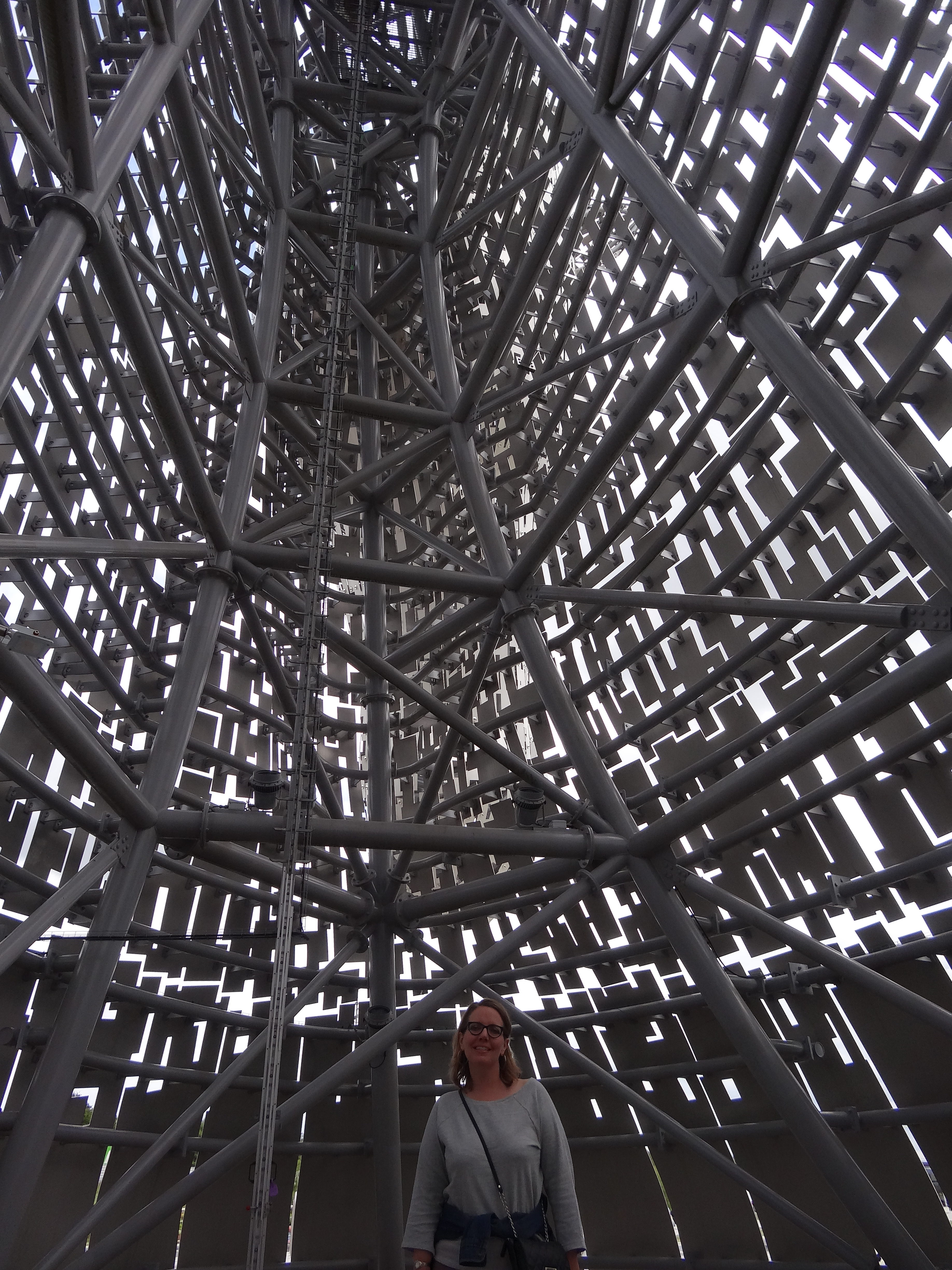
DSC02386We rode an elevator up the smaller of two towers of the church. The tower building was interrupted by a war with the Turks, so the tower was never finished. It has good views from the top, and the safety netting goes well over my head, so I was only moderately queasy up there and was able to wander around with Meredith.

We finished the touring of the church for today with the crypt. We have more of the church to see, but we ran out of time today, so we will see the rest tomorrow. The crypt is still in use for the burial of bishops and cardinals, and the Hapsburg royal family was all entombed there. Fun crypt fact — they embalmed the bodies using wax so the bodies would not stink up the church when they decomposed. On the shelves around the coffins are jars full of alcohol containing the removed organs of the bodies, except the hearts, which are kept in silver jars near the palace (I think). The crypts connect to the old underground cemetery where 11,000 people were buried after an edict that no one could be buried inside the city limits. The crafty people reasoned the law did not forbid being buried under the square, but only on it, so they designed an underground cemetery. The practice was stopped after forty years when odors began making it difficult to have mass in St. Stephen’s.

DSC02384That mostly finished up the day. We had supper and ice cream, then went back to the opera house. Since it was the last day of the season, they were broadcasting the live performance on a huge screen outside the opera house, and Meredith wanted to see some of it. We stayed for about a half hour before going home. Since it was in Italian with German subtitles, I was a little fuzzy on the plot, but it seemed as if it went some thing like: an implausibly older man who can sing his lungs out falls in love with a beautiful girl who can also sing her lungs out, but she is the daughter of an evil baritone, so there are going to be problems.

We returned to out room just as some (hopefully) cooling rain began to fall, so we had another good day of Riordan tourism.

Day 12 (Wednesday) – Baden

DSC02378Spaaaaaaaaaaaaaaaaaa. Last year in the Balkans, we learned that some spa treatment can go a long ways toward restoring tourism morale. So, when I was researching places to go between Melk and Vienna, I was delighted to come across Baden.

“Baden” is German for “bath.” Baden is the home of springs and baths dating back to Roman times, and our hotel connects to a large pool area that has indoor and outdoor pools and hot-tubs. Moreover, the town has a huge park system, and has a large rose garden to wander through as well. It sounded perfect for late in the vacation.

DSC02371We got to the hotel really early, around 10:30, but they still had a room ready for us. We have been very fortunate that way all trip long. With a home base to work from, we set off to see the old town pedestrian area, which, like most old town areas, was filled with shops and restaurants, and, more surprisingly, a small Beethoven museum in the house he rented here for three summers. The town center was cute, but we continued on over to the main park of the town, which is really really big.

Oh, and it was hot. And I like to climb. So, every chance we had we went up. Then up again. And some more up. I kept expecting to find a vista overlooking the town, but the woods up on the hill did not open up. When I started sweating through my shirt, even in the shady woods, I knew it was time to go back. Then, of course, much lower down, we found a vista. Go figure.
DSC02373To reward ourselves for a hike well done, we stopped in at a cafe for some pastries, and we got to sit in a little outside nook area that only had two tables in it, so we had a private dining area right where the old town began. It was a fine place to people-watch.

After we were thus fortified, we went to the Beethoven museum. It was very small, with only eight rooms, but they did a nice job of maximizing the material they had to work with. They told you how Beethoven was in Baden to try to improve his health, how he took three rooms in the house, how and whom he entertained, how he liked to take walks in the country around Baden, and how he still worked while in Baden. He composed major parts of the Ninth Symphony here.

DSC02376By far, the most impressive room was the one dedicated to the Ninth Symphony. You could sit and listen and compare four different recordings of the piece. The final room had four monitors set up, all synced together. The first had Beethoven’s handwritten score on it, and a red line showed you where the music was (as an aside, how does anyone know what music to play? his score seemed illegible to me in places). The second monitor had a visual representation of what music was being played at the time, very much like what you see in music video games like Guitar Hero. That was fascinating to watch. The third monitor had a video recording of the orchestra and choir. The last monitor had commentary in German and English on what the music was doing, which was extremely helpful. It seems as if the most difficult musical technique to write in the 1800s was a fugue, and Beethoven wrote a double fugue into the Ninth. Twice. Easy little piece of music. The Ninth was also the first symphony to include voices. Nifty music.

DSC02377By now, it was in the early afternoon, and it was hot. So, we went back to the hotel and changed into swimwear and went to the pool area. The main pool was indoors, so I was out of the sun, and the water was very warm. Mer and I sat in a bench area in the pool, and almost accidentally got included in some senior pool-noodle exercises before we went to another spot. We sat in the water jet area, and then we moved to the whirlpool. It all felt really good, and we spent over an hour there.

DSC02380We changed back into touring clothes, and we headed out to find the rose garden, which we did. I had thought it would be one corner of the park with four or five beds of roses. Not quite. It was about a third of the park, with bed after bed after bed of every color rose imaginable. There were reds and pinks and whites and even purple roses. They were short, and they were tall, reaching to about four feet. They had small, tight flowers, and huge blooms. It was really a stunning display of roses. We wandered there for some time.

DSC02374After that, we found a Greek restaurant in the old town that had an interior courtyard that was all in shade. We had a mellow diner, and called it an evening, getting back to the room around 7:30. The goal had been a relaxing day, and we even still managed to do a little tourist sightseeing.

Day 11 (Tuesday) – Melk and various sites around Melk

DSC02339By far the main thing to see in Melk is the abbey. It dominates the town. It is simply huge at over one thousand feet long, and it is brilliantly painted yellow so it can be seen for miles around. There has been some abbey here since around 1100, and the current form of the abbey is about 300 years old. It was the main reason I wanted o make sure I had a day to be in charge while we were in Melk – I really wanted to tour the abbey.

It did not disappoint. After a hearty climb up (and up) to the clifftop where the abbey stands, we entered the first courtyard where we bought tickets to a guided tour (in English). We had a few minutes before our tour started, so we strolled through the manicured English-style garden until our tour was ready. We had a large group of about thirty people, and we had a great enthusiastic guide who spoke excellent English.

DSC02345She took us into the main courtyard of the abbey, where she pointed out the modern paintings of the four virtues – wisdom, courage, justice, and temperance. She also pointed out where the abbey school was, were nine hundred local students attend school for only about one hundred dollars per month (teacher salaries are paid by the Austrian government).

She then took us into the abbey museum, which was laid out chronologically. It started with the oldest objects in the abbey (a portable alter from about 1100) and worked forward, with each room roughly corresponding to an age. At the high point of the abbey (around 1600 during the Counter-Reformation), the abbey had state backing and about eight hundred resident monks. It now houses about thirty working monks, with other monks associated with the abbey serving parishes around the area.

DSC02340Joseph II, the son of the great queen Maria Theresa, was tolerant of other religions, and officially allowed Protestants, Jews, and Orthodox Christians back into Austria, and the abbey lost at least a little state support during the time. On display from the time was Joseph II’s plan of a reused casket where the body was dropped out of a bottom that opened in the casket. It was hugely unpopular and was no longer used after a few years.

The tour took us out to the balcony overlooking the Melk River (which we had mistakenly thought was the Danube, which is much bigger and nearby), with some amazing views. We also had close-up views of the facade of the beautiful church of the abbey. The tour continued, and ended, in the library of the abbey, which is still an active library where researchers come to read.

DSC02342After the tour, we went into the church, which is the most gilded (covered in gold) church I have ever seen. It was jaw-dropping when we first walked in. We entered the church at 11:55, and they have a short prayer service at noon, so we stayed for that. We did not understand the German, but we knew the English version of the song they sang, so we attemped to sing the German words which we had to read. We also knew the scripture reading from John 21 was about Jesus restoring Peter to his position (the “Feed my sheep” passage), so we got the gist of that.

After the service, we wandered around the church, which had two skeletons decked out in fine clothing in tomb niches – they were unknown Christians, but were very old. The church also has the remains of the saint of the church, St. Coloman, who was mistakenly hanged as a Hungarian spy in 1012 AD.

DSC02349We finished our tour of the abbey by going back to the gardens, but spending more time there. We wandered though well-kept paths in a small but dense forest, looked at the herb garden, and walked though a long vine-covered arbor. The gardens were quiet and soothing.

I was very pleased with our tour of the abbey – certainly an “A” for touring. We went back to our room and I planned the afternoon. I wanted to see various sights around Melk, for which I took advice from the internet. As it turns out, I got an “A” for effort, but really only a “B” for results – interesting drives, with nice and pleasant places on the far end, but no real must-see attractions.

DSC02354We started the afternoon going to nearby Schloss Schönbühel (Schloss means “castle”). It looked really cool from internet pictures, so I was excited to see it. It turns out it is a private residence. What private citizen owns a whole castle, and not a small one at that? Clearly, it is some mastermind planning a lair. So, while impressive and pretty, it was a bit of a strike out.

DSC02360We next headed inland away from the river to Schloss Schallaburg, which is happily open to the public. Unhappily, we got there at 4:00 and it closed at 5:00. Still, there was a certain rush to racing though the castle and grounds with no map and no audio guide, trying to see it all. I think we did see all the places open to the public, although we blew through the dozen or so rooms that had a museum exhibit dedicated to the 1970’s – I will admit it was strange seeing a Darth Vader outfit in a museum display. We found and loved the castle playgound, which was a large wooden dragon with things to climb and slides to play on. It was brilliant. This was a better stop, but the timing was a tad poor given that we only had about forty-five minutes to see things.

DSC02364I then drove over to the north side of the Danube, and followed some winding roads to the town of Maria Laach, which was supposed to be beautiful. It turns out that is true, and the very pretty church was still open, even at 5:30, (as an aside – another tiny town with an amazing church!) but the town was mostly a small number of pretty homes surrounded by flowers, surrounding the church. It was pretty, but there was little to do or see. The cowpath we had to drive out of town made up some adventure, but the stop still seemed slightly disappointing.

DSC02366We followed the cowpath, with a few close encounters with oncoming cars, to the town of Willendorf, where we had supper on a patio overlooking the hills of the area and the Danube river. Our server, who also may have been the owner, spoke good English and had a dry sense of humor, and the nice weather made al fresco dining a delight. This redeemed the afternoon quite a lot as we ate a leisurely meal in a pretty place.

DSC02367The last stop of the evening was to go back to Melk where we could cross the Danube, and drive up the south side to more or less Willendorf, but on the other side. We drove up and up another paved cowpath to get to some castle ruins, Burg Aggstein. It was late enough (about 8:00) that the high existing parts of the castle were locked and closed, but we could still wander around the lower levels. That was good, and the views we could see of the Danube and valley were tantalizing, but it was obvious the real views were up in the locked towers. I told Meredith it felt like the Dance of the Seven Veils of tourism, but we had only seen two veils. So, another slight letdown, but the evening air was fine and the drive was pretty back to Melk.

So, tomorrow we move east again, aiming to get to the town of Badden, where there has been a bath/spa since Roman times.

Day 10 (Monday) – Mauthausen and Melk

DSC02332So, after nine days of being in Alpine country, we finally left the mountains behind, heading east toward our eventual destination of Melk, home of a huge (and I do mean huge) abbey. We started off the day in a light but steady rain, but we had a two-hour drive ahead of us, and the rain did stop just as we pulled into our main destination of the day, Mauthausen concentration camp.

Mauthausen concentration camp has been partially preserved as a memorial site to those victims who died there, as well as those who survived. There have been some changes in the seventy years since the camp was liberated — most of the external buildings (soldier barracks and administrative buildings) have been torn down, all but four of the prisoner barracks have been torn down, and many countries who had citizens imprisoned in the camp have since put up memorials where the soldier barracks were. Still, the external walls, four of the barracks, the outlines of the other barracks, and the kitchen and laundry buildings all still exist, and the site is free to the public to visit.

A concentration camp may seem like an odd thing to go to while on a sightseeing tour, but since we are both in education, it seemed appropriate as a way to learn more about the very dark side of World War II. I had not even known there was a camp at Mauthausen, but 190,000 people were imprisoned there or in one of its smaller satellite camps, and of those 190,000 people, 90,000 died.

There was a lot to see, and we spent over five hours at the site. We had an excellent audioguide that took us around the camp and explained what we were seeing. There were also three film rooms that showed films about the camp and what happened after the war. Finally, there was an excellent museum that told about how the camp came into being (broad history about the Nazis), as well as day-to-day life in the camp (personal stories including photos, letters, and possessions).

Outside the camp were memorials to many of the victims from various countries. France and Italy included many pictures of victims in their memorials. The socialist Eastern bloc countries tended to be huge and defiant. Slovenia and Spain had smaller, emotional memorials. We did not find any memorial from the U.S., probably because we did not have a large presence in the camp, with only twelve people imprisoned.

In a couple of ways, the camp was a bit different from our typical ideas of concentration camps.  For one thing, while some of Mauthausen’s inmates were Jewish, the camp held a number of non-Jewish inmates too, from Soviet POWs to political prisoners from all over Europe.  Also, it was mainly a work camp rather than a mass-extermination camp. However, its inmates were treated so badly that many died within a few weeks of arriving at the camp. Initially, the work involved a nearby stone quarry; later in the war, the workers were switched over to work that would aid the war effort more directly.  And though Mauthausen had fewer direct killings than some of the other camps, it still had its share, especially toward the end of the war.

There were some uplifting stories told about the camp — stories of prisoners hiding sick men so they would not be shot, and stories of smuggling people in to the main camp to get them out of the holding camp for those who were going to be killed. Overall, though, the tour is a very sobering experience.

DSC02328We continued on our way to Melk, getting to our hotel in the evening around 6:30. That left little time for more than supper, although we did sneak in a short walk down to the surprisingly small Danube River. We walked along it for a short ways, stopping by a store to grab some European candy bars before heading back to the hotel.

Day 9 (Sunday) – Hallstatt

DSC02243Today largely felt like a bonus touring day. When last I had internet access (Friday), the forecast was calling for a good chance of rain all day today. Happily, while it was cloudy enough to shroud the mountains for much of the day, we avoided any rain — the only rain we had all day was while we were in a museum, so it all worked out fine.

We started the day having breakfast on the patio out back of our B and B, where we met a man from the Czech Republic and his young daughter (who was too shy to speak). We chatted over breakfast, and he had even been in Ohio back in the 90s to see an old girlfriend. After he excused himself from breakfast, he came back a few minutes later and gave both of us each a can of Czech beer, which he insisted had to be served very cold. It was such a friendly and generous gesture that we thanked him profusely, even though we do not drink beer. I’d love to bring it home for my friends who do like an occasional beer, but it is in a can, and I am afraid to bring it on the plane in my bags for fear it will burst. Perhaps we can give it to our B and B hostess.

DSC02245We got in the car and drove a few miles to a nearby cable car at the foot of Dachstein Mountain. There are actually two cable cars up the mountain, and we took the first one up to about 4,000 feet. We were going to try to catch the second one up to 6,000 feet if the weather cleared up. At the top of the lower one, the weather was clear enough to see back to Hallstatt. The views were very fine, but we were there to tour two caves — Ice Cave and Mammoth Cave.
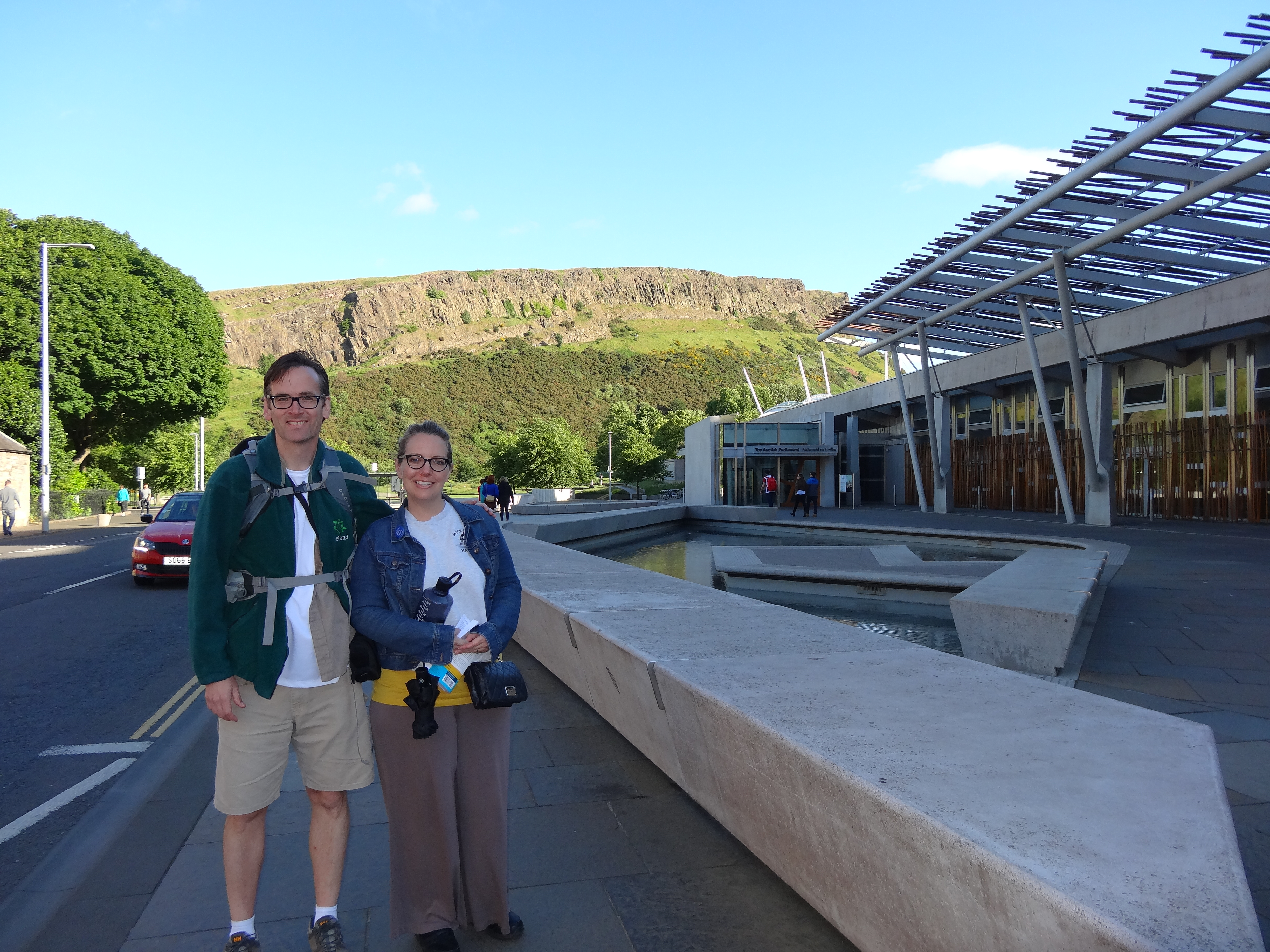
We started with Ice Cave, where we had a twenty-minute wait after our energetic hike up to the mouth of the cave. We were in a multi-lingual party of about twenty-five people, but there were options for all of us — either a downloaded app for your smart phone or a printed information card in various languages, and the guide spoke in both German and English.

DSC02249The tour of the cave was about a half-mile long, with a fairly major elevation change over five hundred steps; the exit was a separate place from the entrance and was quite a bit higher up the mountain. The first third of the tour gently went down, and all of that part of the cave was ice-free, with a temperature of about 35 degrees. We then went through a door and the temperature dropped. I had always thought that all caves had the same constant temperature, but I was wrong. This cave is such that cold air in the winter cools the cave, but then in the summer does not heat it so much. At any rate, it hovers right below 32 degrees all year round, and so most of the water that finds its way into the cave freezes. The summer water, which is warm, melts the ice some, but the winter gains outpace the summer losses, so the ice accumulates about 1/3 to 1/2 an inch per year.
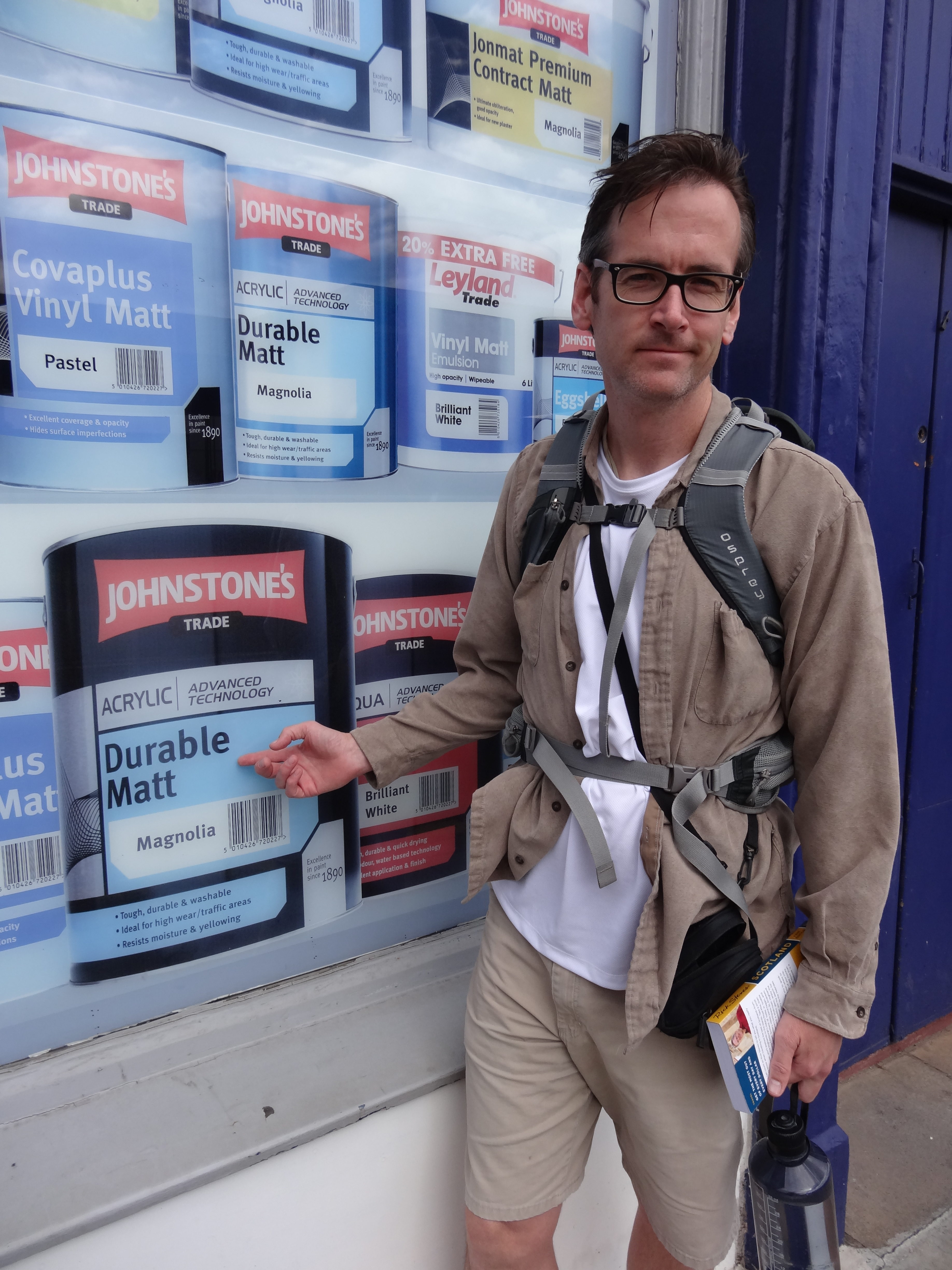
DSC02251It was very impressive. I like caves anyway, and this one was full of ice, which I had never seen in a cave before. The ice piled up to make interesting formations or to look like flowing frozen water. We got splashed a lot from the drops of water coming from overhead, but it was well worth it. Two highlights from the cave were a large ice pillar almost thirty feet tall and a huge room full of ice that was over sixty feet deep (which you could see the profile of when you left that room). It was all very beautiful, and it meant that we had gone from Salzburg being over 90 degrees two days ago to being in this cave where it was about 30 degrees.

We got out of the ice cave and checked the time. We had a group tour of the other cave at 12:55, and it looked as if we only had about twenty minutes to get there. Mer and I went along without stopping and got to the other cave door right at five of. The door was closed, and there was no one there. We sat down in the beautiful spot and waited. After a few minutes, a couple came around the corner and joined us, but still no guide. Then the couple got up and left. Still no guide. We got restless. It had now been fifteen minutes. A few people showed up, but still no guide. We decided after twenty minutes to give up, but as we got to the corner, I looked back and saw the guide coming out of the cave. We hurried back, but he had disappeared. We could not find him, so we gave up again, and as we got to the first corner and were talking about how to get a refund, I mentioned to Meredith that we had been waiting over a half hour to 12:30. Then it hit Mer — our time was for 12:55. We had gotten to the door at 11:55. Ooopps.

DSC02255So, happily, we made the tour. The Mammoth Cave is so named because it is huge and not because any bones were found in it. They know of over forty miles of cave system in Mammoth Cave and they are still exploring parts of it. The tour we were taking was again about a half-mile, or, as our guide put it, one percent of the system.

While lacking in ice since the cave stayed at about 35 or 36 degrees, it was still impressive. The first part of the tour featured colossal rooms. The second part of the tour was through steep and narrow passages, and included a room where lime and iron had leeched through to the walls and ceilings and created these amazing patterns. It was worth the little mix-up we had.

We came out of the cave and went back to the cable car center. We tried to buy tickets to the next level, but the kind man told us it would not be worth it, as the peak was fogged in. Mer was disappointed. I was sad for her, but not too upset for me, as the peak features the “Five Fingers” — five metal walkways that extend over the side of the mountain for a sheer view of (and drop to) the valley below. I’m fairly confident I would have been terrified.
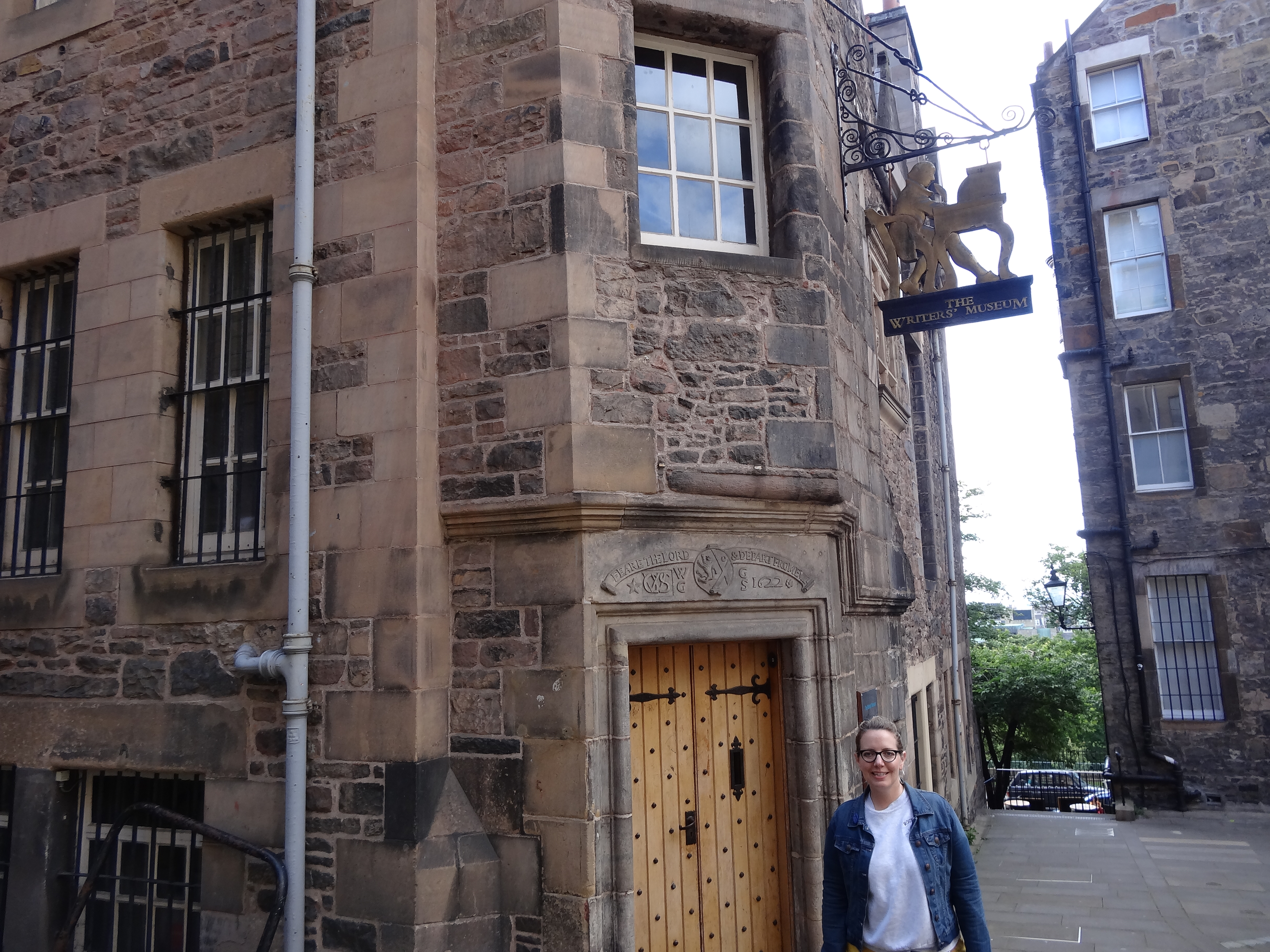
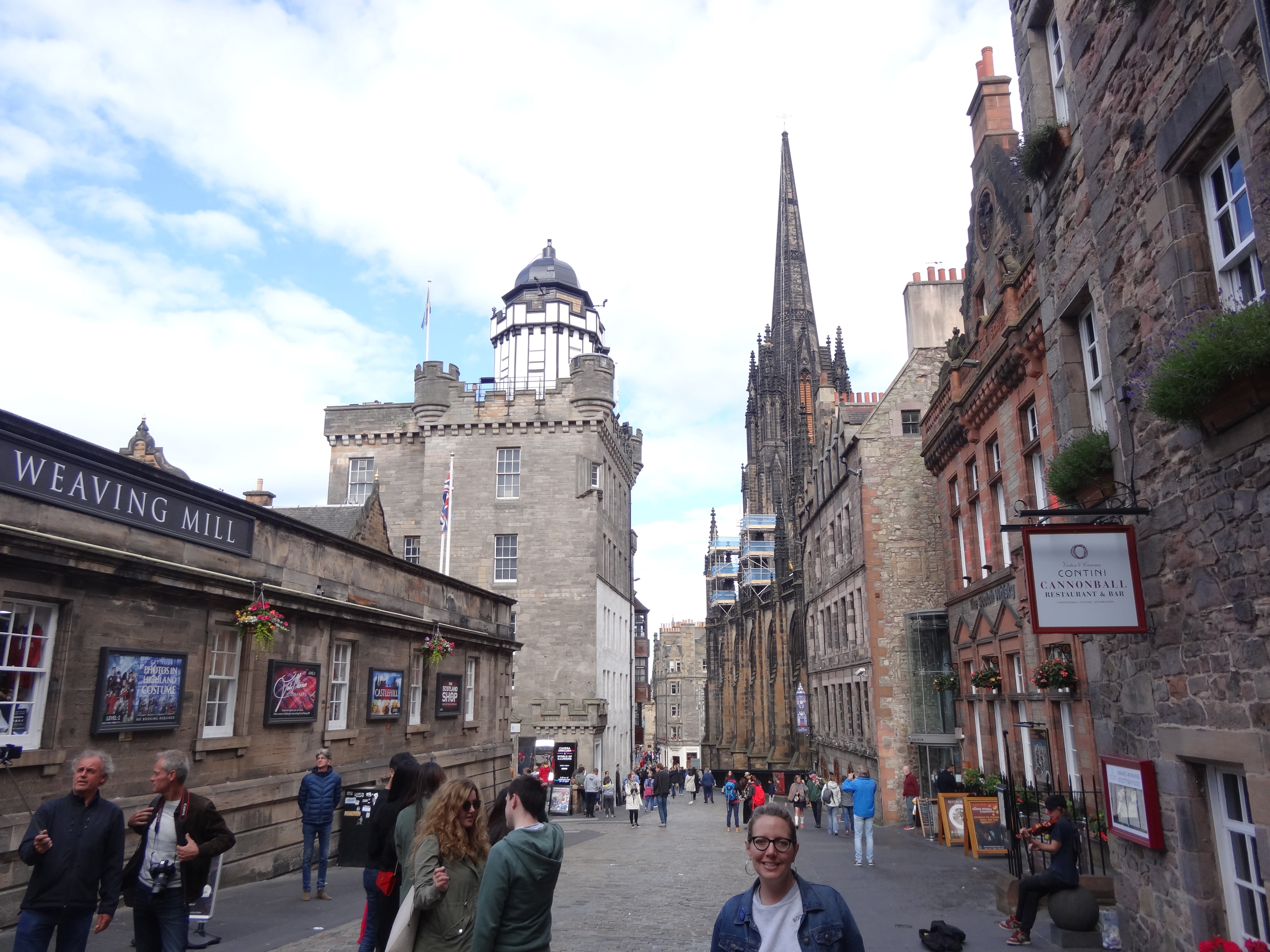
DSC02258We went back into Hallstatt, and after a quick snack in our B and B room, we went into Hallstatt to go and tour the Hallstatt museum. This is where we were when a thunderstorm rolled through, so we stayed quite dry. The museum, in addition to its noteworthy waterproofness, laid out the history of Hallstatt and its important salt trade, dating back to at least 5,000 BC. You can see the museum in less than two hours, and it is laid out very logically, with displays in both German and English.

DSC02260After supper, we wandered the town according to our Rick Steves guide book “recommended walk.” It took us up to a waterfall we had heard but not seen, and through a very narrow lane that used to be the town’s main street up above the current one. That wrapped up our last day of being in Hallstatt before we head out to the town of Melk tomorrow.