Category Archives: Uncategorized

England 2022, Day 7, Sunday – Geevor Tin Mine and Penzance

The rain held off for us until very late afternoon, so we managed a full day of touring while remaining largely dry. The wind out here was pretty intense at times, but we can manage that.

Tin has been mined in Cornwall for about four thousand years (or more), and mines played a very important role in the show Poldark that introduced me and Meredith to Cornwall, so it seemed right that we pay a visit to a mine. The Geevor tin mine ran from about 1920 to 1991, and was a huge mine with a main shaft going sixteen hundred feet underground and had tunnels up to one mile long extending from it. The mine was turned into a museum a few years after it closed, and large industrial areas are sort of my thing, so I was excited to go.

But first, a walk. We got to the mine around 10:00, and our ticket was good for all day, so I wanted to take advantage of the rain-free time and hike out ten minutes to an older mine from the nineteenth century. It was closed for some reason today, but you could still wander the grounds looking at the crumbling buildings. The walk and the mine ruins are on the coast, so it is a pretty place for a walk. We did learn that the investors in the mine who bought a share for twenty pounds ended up being paid total dividends of over twelve thousand pounds. That is a solid investment.

We walked back to Geevor and started the tour. We spent about four hours wandering around the buildings of the mine and learned a ton of things about tin mining.  For example….
1. Mining is hot and hard work. Temperatures go up about a degree for every one hundred feet of depth.
2. Extracting tin is such a mind-numbingly difficult process, it makes me wonder how people four thousand years ago ever figured it out.
3. Tin is only located in a few places on Earth, and at one point, Cornwall supplied two thirds of the world’s supply of it.

Tin, to my eye, looks like quartz flecks imbedded in other rock. To get it out, it had to be mined and brought to the surface. Then it had to be pulverized and sorted and pulverized and sorted and pulverized and sorted. Then it got sorted again. Then it got washed by chemicals to pull out sulfides (in earlier times, people used a furnace, exposing them to arsenic). Then it gets run under a strong magnet to pull out iron bits from the tin sand. Finally, the tin that is seventy percent pure is bagged up to be sent to smelters. When running well, the mill could grab eighty percent of the tin ore from the rock that was mined. At the height of the mine, it employed 400 people, about 120 of whom were miners underground. The rest processed the ore or did other support jobs.

Miners worked one shift, and if they weren’t ready to blast the rock away at the end of the shift (when blasting was scheduled), then they couldn’t set off the explosives and didn’t get paid for the day, since they were paid on how much rock they moved. People in the processing mill worked three shifts to keep up.

The price of tin fell in the mid 1980s to one third of what it had been worth, and while the mine struggled on for a few years, it finally closed down in 1991.

The modern mine did also have an old hand-hewn mine on site, which dated back a couple hundred years or more; no one knows the exact age, since the mine isn’t on any maps anywhere. But it is safe to tour, so we got to go underground in a tiny tin tunnel. I only hit my head four or five times. Thank goodness you are required to wear a hard hat.

We also read that two kitties named Basil and Scraggs made the mine home right after it opened as a tourist attraction, and they lived to be fourteen and sixteen, which is impressively long for outdoor cats. They now appear as mascots in several parts of the museum.

We grabbed a convenient lunch/supper at the cafe around 4:00, and then headed back to the room to regroup for the evening. I took advantage of the time by shaving for the first time in eight days, since my poison ivy rash has finally cleared up off my face. I was as close to being bearded as I have ever been. But now I was ready for church.

We went back into Penzance and parked by the harbor and walked up the hill into town to the Penzance Baptist Church for a 6:30 evening service. The people were very kind (kindness seems a Cornish specialty), and the service was soothing. We sang familiar hymns, and we got to hear a sermon on lessons learned from Paul in 2 Corinthians where Paul talks about his thorn in his flesh and his boasting in his weakness. We were invited to stay after and eat cookies/biscuits, which is not a hard sell. We chatted with more kind Cornish people and stayed for about thirty minutes.

So we got in a good day of touring. In light of the hardships of mining or in light of eternal matters, a little late afternoon rain doesn’t seem so bad.

England 2022, Day 6, Saturday – Penwith Peninsula, Cornwall

We certainly felt blessed today by the surprisingly tour-able weather. The forecast had called for high winds and rain all day, and while there were some pretty intense winds, we had almost no rain until 5:00, and then only for an hour, and that was when we were in the car.

Mer was in charge today, and she wanted to follow a recommended drive in her tour book. So we set off on a day of broad skies and narrow roads. Our first stop was the postcard village of Mousehole. It is a small fishing village west of Penzance, and I loved it. It is a walkable town, with narrow streets (as I found out later trying to leave) that invite wandering. It has a small artificial harbor with the village huddled around the sea. It’s full of cute shops and great views, and even a Victorian rock pool which traps sea life in it once the tide goes out (for viewing – they can leave again next high tide). We wandered the town for about an hour, ducking into one shop and swinging by an ice cream shop. I have to say that adding clotted cream to ice cream is a fabulous idea.

We then drove (and prayed) down to Lamorna Cove. One Cornish man we met told me even the Cornish folks try not to drive down to the cove. But, like Mousehole, it was a beautiful spot, but with only half a dozen houses and a cafe. It also has access to the South West Coast Path, England’s longest hiking trail. We set off in one direction, looking to hike a short ways. We got to some sign that said more or less, “Abandon all hope, ye who enter here.” We turned around. We went the other way, which was past the half-dozen cute houses and had a stream we crossed. We made our way up a moderately steep trail, and as we started to make some real distance, we heard thunder. There was no rain, but it seemed like climbing up to the top of an exposed cliff with lightning around was a bad idea. We turned around. We went to the cafe, where we got pastry bars. We sat down.

We skipped down another narrow lane to the small cluster of homes and six boats that make up Penberth Cove. All the boats were tied way up on the boat launch – this part of England has twenty foot tides. It was another spot to admire natural beauty while being off the beaten path. After sitting on a rock and listening to the ocean (and one occasionally baring dog), we headed on.

We spent the bulk of the afternoon in the village of Porthcurno. It is home to perhaps the most improbable and the most dramatically situated outdoor theater in the world. The Minack Theatre is carved into the cliffside overlooking the ocean and more cliffs. Despite the challenges of performing on the Cornish coast, the stage and all the seating are outdoors. Sets often have to be anchored down, and the sound system has a “loud ocean” setting for the soundbooth. Plays are changed out every week during the six-month season.

The theater is largely the work of one woman, with the help of three men. Rowena Cade came from a wealthy family and moved to Cornwall with her mother. When she was in her thirties, a friend got her involved in making costumes for local theater productions. When her friend wanted to stage The Tempest, Rowena offered her cliff garden as a setting. She, with the help of her one gardener, spent six months clearing the ground on the cliff, cutting rough terraces for seating, and filling in a level area for the stage. The play was a huge success, not the least for the setting. Thus the Minack Theatre was born, and Rowena continued to work on the theater with her gardener (and two others after he passed away in the 1960s) for fifty years. Now, the theater can seat seven hundred people and is run by a non-profit. It’s amazing what one determined woman can do, and it’s a pretty great legacy. We’ll be seeing The Odyssey there on Monday – it should be special. Today, we toured the place and learned about it.

Porthcurno has also been a communications hub. At one point, the village had fourteen international telegraph lines coming into it. It was so important that in World War II, all the telegraph operations were moved into two bunkers carved into the mountain specifically to protect communications. Three hundred men guarded the place, and automated flame throwers were installed on the beach. Nowadays, Porthcurno still has multiple fiber optic lines come ashore here. We learned all of this at the Telegrah Museum, which presents the history of the telegraph and how that evolved into modern communications. The museum includes the two bunkers, and it has examples of all of the equipment used for telegraphs, dating back to the 1860s. We spent an hour and a half in the museum, and could have spent another hour or so, but we closed the space out.

As a little quirk, there is a huge squid made of PVC flexible piping outside the museum. If you talk into one of the tentacles, the sound will come out for a listener who sticks her head in the eye of the squid. Meredith said it worked well.

About at this point was when the hard rain started, continuing while we were seeking, and eventually finding, Cape Cornwall (after one missed road detour). It looked lovely, with a high cliff rising above both the sea and the parking lot. It looked like a great place to hike up, but the heavy rain and howling winds kept us in the car. We sat and watched the waves for several minutes, and then made our way back to Penzance for supper.

Mer’s first choice for a restaurant no longer existed (a new place had opened there instead), so she let me pick a place. I chose Admiral Benbow, a pirate/smuggler-themed restaurant. It was rambling inside, and as we tried to find a table that wasn’t reserved, we made our way all the way to the back, which was a full replica of the inside of a ship. I loved it.

So ended our shipshape touring day. We may or may not get so lucky tomorrow with the weather, but today was a good day.

England 2022, Day 5, Friday – Tintagel, St. Mawes, Penzance (Cornwall)

I needed to be the very model of a modern major tourist today, since I was in charge. We left the Dartmoor area, heading northwest toward the Cornish town of Tintagel, home of a ruined castle long rumored to be the birthplace (or at least the magical conception place) of King Arthur. Happily, although I had to leave Dartmoor behind, the ridiculously narrow roads continued, to where an oncoming car whose driver wouldn’t slow down or move over clipped my mirror, despite my being over as far as I could go and being nearly stopped. That was too close.

We did get to Tintagel safely, and pulled into the ever-present “pay and display” parking lot that doesn’t take credit cards. There was an older man in the lot packing up his truck, and I asked him where I could get change. He asked me what I was trying to change (a ten), and he actually walked a half block or so to his home to get the change for me. What a great guy.

After breakfast at a pretty amazing bakery (Shannon will again note I had the best scone and clotted cream I’ve ever had), we walked out to the castle, which is dramatically on an (almost) island. It used to have a main part connected to a rear part, but the narrow neck of land between the two parts collapsed, leaving rubble between the two. It could be crossed, so it is not quite an island, but I was happy to use the modern steel bridge installed in 2019.

The day was sunny and fine as we explored the mainland part of the castle (a couple of rooms and walls). Right after we crossed the bridge, a thick fog started blowing in in bands. It was surprising, but atmospheric. Most of the mainland was eventually blotted out by fog. We clambered around paths and rocks and had a good time. There were the remains of fourth- or fifth-century structures (which is when Arthur would have lived if he did actually exist), but most of the castle was built in the 1200s, and was falling into disrepair just a little over a hundred years later. No one is quite sure why, but eventually the castle was fully abandoned. My guess is that it became too expensive for upkeep when the lord over the castle never actually visited it.

The is a cool and somewhat creepy statue of a man wearing a crown and holding a sword at the very top of the cliffs. It is called (in Cornish) Power, and in NO way could ever be in the slightest way misconstrued to be King Arthur. I happily took Meredith’s picture with King Arthur. Which reminded her that her parents had told her that for a time, they had been considering, if she had been a boy, naming him Arthur. They claimed not to have processed that his name, when read by last name, would have been “King, Arthur”; they said that what had dissuaded them was the fact that all of Carlene’s Mainer relatives would have called him “Ahthuh.”

By the time we finished touring the upper island and descended to explore a path we had skipped, the fog had cleared, and we had good views again. So we had the best of both worlds. We took the older entrance path back, which is down one hundred steps, but has great views of the coast and the new bridge. We walked the half mile back up (and up and up) to town, made a quick second stop at our new favorite bakery, and headed southwest toward the southern coast town of St. Mawes.

St. Mawes is on a peninsula, so it took a little time to get out there and then again to get back from there, but I wanted to see the fort there. We’d bought a sixteen-day English Heritage card, which gets us in for free at any Heritage site, and there are over four hundred of them (many are free for everyone). St. Mawes was touted as the castle with the prettiest setting, and it was (sort of) on the way to our inn near Penzance, and it was free for us.

It turned out to be a good decision. The fort was never besieged, so it is in good shape. It was built by Henry VIII, so is “only” about 475 years old, and it is indeed in a pretty place, on the wide mouth of the Carrick Roads, which is large waterway that connects to Truro (an important town of the time). As an added visual bonus, the “bay” was full of sailboats. The docent wasn’t sure why, but felt there was something maritime-related going on in the nearby town of Falmouth. They were elegant.

All four floors of the fort were open to visitors, as well as the main grounds in front of the fort, where later and larger cannons were installed, as well as a main powder magazine. Mer loved the letter on display in the fort of the captain politely reminding King Henry’s court that the fort had been promised shot and powder, and maybe, just maybe, if it wasn’t too much trouble, they might do a better job of defending the fort with said shot and powder. Mer said she recognized the type of letter of a subordinate politely asking for material needed to actually do a job.

At 5:00, we headed to our inn, but it took about thirty minutes just to backtrack off the peninsula. We got to our inn around 6:30, got checked in, and had supper, and because the next two days are calling for difficult weather (rain and winds up to fifty mph), I drove us into Penzance to see it in the sun.

Gilbert and Sullivan notwithstanding, it turns out that Penzance isn’t so cute as I thought it would be. Most of the businesses were already shuttered at 8:00 on a Friday, and very few people were out. The town does have an awesome 1930s art-deco saltwater sea pool that is huge, and it has a cool island with a monastery sitting on it in the bay, but that seemed to be about all it had going for it tonight. And we got splatted by seagull shrapnel. Ew. We drove back to our room, getting in a little after 9:00.

Cornwall was the seed of this trip to England, since we had watched all of the TV show Poldark which is set here. I deliberately wanted to be here three days, and Mer wanted one day, so that we might maximize the chance for good weather. Today was great, and Monday looks fine, but the next two days will present modern major challenges with the weather.

England 2022, Day 4, Thursday- Dartmoor

Rites of passage are important. You often remember them your whole life long. Today was one such day – we got our first British Ordnance Survey map. My brother, who owns approximately the entire island of Great Britain in survey maps, will be proud.

But first we left Salisbury, but not far. We drove a couple of miles on narrow lanes to a tiny church – the Church of St. Andrews. It was a cute building, but I wasn’t sure why we were there. I found out inside when we saw the list of rectors of the church – the 1630 entry was George Herbert, whom Meredith’s dad loved for his religious poetry. Mer and her parents had been in the church about forty years ago, so she wanted to pay tribute to them by going back.

From there we drove about two hours to the Dartmoor National Park. Dartmoor is an area of rolling hills with few trees (too much wind), and many of the hills are covered in bare towers of rock called “tors.” Sheep, cows, and horses wander freely, often in the one-lane roads – it seems as if Dartmoor took the Iceland/Ireland road challenges of the last two years and threw bovines in the mix. One or two of the roads actually were so narrow my tiny car was brushing the vegetation in the hedge – on both sides of the road at the same time. We managed.

We started the Dartmoor day in the town of Chagford. It’s just a tiny village, but has a beautiful church from the 1200s and a sprawling churchyard that’s being allowed to grow wild to support butterflies. We checked out the church, and then went into a very old-school, multilevel, floor-creaking hardware store, where we bought a North Dartmoor map. But, lest Shannon tear up with pride, we actually got the OS Landranger map, which is an Ordnance map but at a 1:50,000 scale instead of a 1:25,000 scale. We couldn’t see every rock in the moor, but it was still very detailed.

We asked at the hardware store to direct us to the deli for which we had been looking as a place to get lunch. It turned out to be one of the buildings backing up to the church. If we had gone out a different church gate, we would have been at the deli. We got lunch and ate it at a table for two at the back, inside the churchyard. I’ve never eaten in a cemetery before, but it was a pretty (and quiet) place to have lunch.

After lunch, we did most of a circular drive that is recommended in Meredith’s Rick Steves guidebook. We went south and in a counterclockwise direction. Our first stop was a short side trip, to Hookney Tor and the Bronze Age “fortress” of Grimspound. Grimspound is a circle of stones with hut foundations inside the ring. The outer wall may have been for keeping the animals in, but either way, it is still impressive to see clearly the village of people from four thousand years ago. Above the stones was our first close-up encounter with a tor, which was worth the climb. Meredith forgot her long, flowing dress, so we couldn’t fully recreate the Keira Knightley Pride and Prejudice film sequence of her standing on a stone outcropping while the wind blew her dress back. But we tried. Mer dutifully scrambled up onto the tor, and I took the picture. We then hung out there for about ten minutes or so before heading back to the tour.
We stopped at the crossroads of Postbridge to see a clapper bridge – a stone slab laid on stone columns to bridge the river. The bridge dates from 1200 or earlier and can still be crossed. The stream it fords is clear and clean and pretty, so I dipped my toes in it.

We drove through the town of Widecombe-in-the-Moor, and tried to find the road to Hound Tor, but we missed it. Rick had misprinted the name of the town for which we were looking  (it should have been Manaton, not Menton), and if there once was a sign to the town, it is long gone now. We ended up driving all the way into Bovey Tracey, which is where our rooms are for the night. So we went ahead and got checked in and had supper at the inn’s restaurant.

Fortified, we went back out on the road to find Hound Tor. We had a landmark from the hostess (a hill leading into a town), so we felt confident. We again looked for the sign and overshot the road since there is no sign. We turned around and went back, sure we had the right road. If only we had had a map with us!

Anyway, we did find Hound Tor, which is huge. It’s big enough that we saw a couple of rock climbers practicing on the largest face (probably about fifty feet high). We found our own outcropping of rock, took some pictures, and then sat there listening to the distant calls of sheep and cows. In the lowering sun on a beautiful night, it was pretty perfect.

We headed back to town to the inn. We already knew the way. Tomorrow, we move on to Cornwall, but the very brief introduction to Dartmoor was a day well spent.

England 2022, Day 3, Wednesday – Salisbury

It takes amazing knowledge to build a cathedral, let alone build one in about forty years. For even more fun, the Salisbury Cathedral was built on marshland, and yet here it stands eight hundred years later, despite the improvement that nearly destroyed it:  a 6,500-ton steeple was added to a roof that sat on walls on a foundation not designed for the extra weight. The weight has actually warped some of the stone columns holding up the roof, and Christopher Wren (of St. Paul’s Cathedral in London fame) made recommendations to add internal buttresses to shore up the steeple. That is what you get when you have the tallest spire in the UK.

The cathedral was also seriously housecleaned by James Wyatt, an architect, who moved a bunch of things around in the church and got rid of those expensive stained glass windows. It did end up creating a clean-feeling church, even if he did get rid of spare tombs and flip some around so they are now facing away from the altar.

As you may have gathered, Mer wanted to tour the cathedral today, so we spent the morning with a guide wandering around the sanctuary. We also stuck around to see a demonstration of the world’s oldest known working clock, which tells time by ringing a bell (the word “clock” is related to the French and German words for “bell”). It is estimated the clock has “ticked” over five billion times since the late 1300s (although that must mean it doesn’t tick every second, since my back-of-envelope calculations have that at closer to nineteen billion).

After the tours, we ate at the Bell Tower, a tea room located where the old bell tower stood until burned down in the English Civil War. It is a lovely spot at which to eat, especially when I got a scone with clotted cream. Yum. After lunch, we went back into the church to see the best preserved copy of the four known copies of the Magna Carta. Then, Mer had to climb.

The church offers a roof-and-tower-climb tour, but there was only one ticket left, so the obvious not-afraid-of-heights choice was Mer. So, in a rare move, we split up on a vacation for a couple of hours. While Mer was learning about the engineering marvels that hold up the roof, I found and walked along the river through a park, and then along a path through a “flooded meadow,” which is a field with a bunch of irrigation canals. The path led to another pretty river and a pub, but better, I got what I imagined to be a pretty medieval view of the cathedral – it was across the field with no tall buildings in the way. It was impressive.

I went back to the room about 2:30, and Mer met me there about 3:15. We used the short time before 5:00 to explore the nearby Salisbury Museum, an eclectic little museum. It had multiple artifacts from pre-history, a bunch of Roman things (including most of a mosaic floor), several treasure hoards, and other things from the history of the area. They had a special exhibit on the author Thomas Hardy, who set many of his stories in a fictional version of this area. They had a room of paintings of the cathedral and other Salisbury places. A floor dedicated to fashion and dresses. A floor dedicated to ceramics. A giant puppet of the local weavers’ guild. The usual. We saw everything that was open, although we didn’t linger anywhere.

When the museum closed at 5:00, we went back to the cathedral once more in order to attend an evening prayer service in a small chapel, after which, since it was 6:00, we went for supper in the pub that had not been serving food on the first night here; Meredith is persistent. After supper, we went to another pub for dessert, which was really just an excuse to get our butts kicked at a pub quiz. Pub quizzes are trivia quizzes that are very popular in the UK. We like trivia, but had heard that pub quizzes are hard. They are, at least for Americans – many of the questions are British-centric (British brands or celebrities or British TV). We tried our best, but generally were pleased if we got about half the questions right in a given round. We did go out on a high note, though – the last round was a risk-it-all round in which one wrong answer wiped out your score. All other teams except one wiped out, so we came in second with three (out of ten) answers. Yay, team Nerd Royale!

It seems it also takes amazing knowledge to win pub quizzes. It was a fun time. We leave Salisbury in the morning, but it is a fun town. And Mer commented that she had never before had a touring day where she was never more than about a quarter of a mile from her bed and breakfast. Tomorrow we head off to the Dartmoor region.

England 2022, Day 2, Tuesday – Stonehenge and Avebury

Focus. Determination. Single-mindedness. Dedication bordering on obsession. Such is the drive of Meredith’s touristic need for completeness. It also seems to help if your largely unknown people group want to move slabs of rock miles and miles.

Today we started by driving over to Stonehenge. “But,” I hear you dedicated blog readers say, “you were there about three years ago in 2019.” Right you are, and points for good memory. You need to realize that when we were there in March of 2019, we had taken a bus to get to the stones, and we only had two hours to see things there. Clearly, that piddly amount of time wasn’t enough to see everything, so back we went. Where we spent four hours seeing everything.

We started with the monument itself. It was a perfect day, with puffy clouds in a blue sky. We were there before 10:00, so the bus tours hadn’t really arrived yet, so the site was uncrowded; we often had space on the walking area to ourselves. We wandered around the outside of the stones (the interior has been off limits since 2013 except for special tours), taking our time and several pictures. We chatted with a recent university graduate who was a docent, and in all we took about an hour there. We decided to walk back to the visitor center, which is about a thirty-minute stroll. The walking path takes you next to three burial mounds out of many that are in the area and along gently rolling farm fields.

Back at the visitor center, we took in the museum there. The docents there were very nerdy and friendly. One docent took the time to explain the evolution of the stone circle over time while we watched it happen in a simulation. Another guide told us about the skeleton of a man that had been unearthed in the area. He had remarkably good teeth, even to untrained eyes such as mine. It seems teeth were generally good before sugar and stone-ground grain (the stone would pulverize into the grain and grind teeth away).

There was a wall with quotations from famous people about Stonehenge, including the smile-worthy one from the fictional Nigel from Spinal Tap. There was a special exhibit of photos people had sent in from their visits to Stonehenge, dating back to the early 1900s. There were several reconstructed huts that are a best guess of how the workers would have lived based on archeological evidence. I also learned that the monument took hundreds of years to get to the final form as different generations added to or even changed the circle.

We ate lunch in the cafeteria there, and a woman asked me if I would watch her very sweet golden retriever while she ran to the bathroom. I’ve never been a man that women hit on, but it seems I have graduated to “nice sweet man” stage, or at least “mostly harmless.” She bought me a bag of potato chips as a thank you.

Back in the car and on to Avebury. I had no idea what Avebury was, but it turns out to be the world’s largest stone circle (or “henge,” used as a technical term since the 1980s). The twenty-five-foot ditch around the circle is about a mile around, and the stones are at least as old as Stonehenge, dating from 4600 years ago. We walked the whole way around, sharing the stones with some sheep, and we got to see ten or so gliders flying overhead in the pretty sky. It was very peaceful.

Avebury has more than just the stone circle, though. There was a procession way marked by pairs of huge boulders that ran about a mile out to a smaller circle that is no longer around. But there are markers in the ground to show where stones and wooden pillars would have been based on excavations held there in the 1960s. We stopped there briefly after driving out to it. We then continued on the all-things-Avebury tour by driving over to see Silbury Hill, which is the largest prehistoric mound in Europe at about a hundred feet tall. No one has any idea why people would take an estimated sixty years to build a giant hill surrounded by a moat, but there it is. Sadly, to conserve the mound, you can’t walk up it.

You can walk up to and into the restored Kennet Long Barrow, which is a burial mound. There are five small chambers inside that used to hold remains. It is also on a high point, offering good views of Silbury Hill.

We drove to see one last sight in the area, which has nothing to do with Avebury and prehistoric people. Mer wanted to see a white chalk horse on a hillside, which is a seventeenth-century fad that copied ancient chalk carvings. You would remove the turf and expose the chalk underneath. The current one near Avebury is actually a restoration of the seventeenth-century one, since the original was buried under turf in World War2 so that it wouldn’t be a landmark for German bombers.

We drove out to the horse, looking for a pull-off in which to park. Zoom. We drive by. We turn around. Zoom. We drive by, but Mer sees a sign. We turn around. Zoom. We drive by deliberately so that I can turn around to get to the sign Mer saw. Which was across the street from a pull-off which turned out to be a bus stop. Zoom. We drive on by. We turn around. We finally park at a pull-off and walk back to the can’t-be-seen-from-the-other-way sign. That was at the head of a path of an uphill walk that took us above the horse and near a monument to an area lord’s family. The horse was made up of chalk rocks, and was curved along the landscape. It looked flat when seen from below, so that was pretty clever. We admired the view from the hill and went back to the car.

Mer got us to a pub to eat, but because the pub folks were short-handed, they were only serving people who had made reservations. So we programmed the GPS to take us back home to Salisbury, a route which now led us down a bunch of narrow roads. On one of these roads, I saw a sign for the “Barge Inn” which demanded we check it out, based on the name alone. It did lead us down a truly one-lane road, and I told Mer to note for the record that this was a bad idea. Except it wasn’t. The road opened up to a large campground and inn situated on a working canal. We got out of the car just as a boat went by. Supper was cheap, plentiful, and very good, so that was a happy find.

We got back to our room and made a quick excursion for couple of candy bars. Because even single-minded touring needs energy.

England 2022, Day 1, Monday – Salisbury

Getting through the to-Europe travel day is often an exercise in sleepwalking. We are typically up for twenty-four (or even more) hours by the time we arrive and can check in to our local B and B. So it was today – we landed at Gatwick Airport on time, but then had to wait for about an hour for our luggage to come along. We got our small rental car, but because of Covid and staffing concerns, the company had closed the Terminal 2 desk, and we had to catch the tram to Terminal 1. About two hours later, we arrived at Salisbury, where our B and B was; it was about twenty-five hours since we had gotten up at home.

But, as foggy as I was at that point, I was grateful. I hadn’t slept well Friday night or Saturday night, and didn’t take any naps, so I was so exhausted I actually got three or four hours’ sleep on the seven-hour flight (in fitful sleeping spurts). That carried me through, especially on the drive to the B and B. Here, I am indebted to my brother a bit – he had mentioned always getting an automatic transmission car, which I have never done in Europe because they are always more expensive. This time, I checked it out when I was making the reservation, and it was less than two dollars per day more to get the automatic. I can drive a manual transmission car in England, but one less thing to mess with was appreciated. I spent the extra twenty dollars or so.

We took our usual jet-lag busting three(ish)-hour nap, and then showered. That was a good thing for me. Besides the shower’s eliminating any reminders of the ardors of travel, I had awakened Sunday morning to discover I had somehow gotten poison ivy on my left hand, the left side of my face, my right ankle, and a few other areas. Not great timing. My red nose looks as if I have been at the bottle some. But the shower helped calm down the itching quite a bit.

We went to a nearby pub for supper. I love English pubs – they are cozy and tend to be made up of multiple smaller rooms and different seating configurations. This pub was gorgeous, with woodwork and interesting nooks. And it wasn’t serving food. Ah. Mer had left our Rick Steves guidebook behind (silly girl), so she wanted to go back to the room to get it, but by a different route. But, without a map, we ended up taking a four-block detour that required retracing our steps, but did allow us to find a gelato place where we would later have dessert. Serendipity.

Rearmed with our guidebook, we went to another pub that was serving food, so supper was a success. After a dessert for which we managed to spend as much money on ice cream as we had on our entire supper, we wandered the center of town, just to see it. Salisbury has a huge cathedral and a large walled “close” area, which is where our B and B is located (it is a theological institute and school of music sometimes). In fact, since the close is still owned by the church, the entire close areas gets locked at 11:00 pm every night. Happily, we aren’t post-11:00 kind of people most days.

Salisbury is a cute and walkable town, at least in the center (centre?). The pub at which we ate was the “New Inn,” which was in a building built in the fifteenth century. The cathedral is from 1250 or so. And it houses one of four copies of the Magna Carta (from 1215). We ran across ten or more historical markers just wandering around town tonight. It’s an interesting place, and the evening was cool and delightful.

After circling the cathedral by accidently leaving the close and going the long way around, we got back to the church and admired it floodlit in the twilight. It is a beautiful sight. Not a bad way to end a first day, when any sightseeing is largely bonus. (As an aside, when I commented that there was one statue by itself near the top of a spire, even though there were bases for other statues, Meredith commented, “It’s lonely at the top.”)

And after such a great evening walk, sleep.


England 2022 – Day 0, Sunday – Toronto

Sometimes the early bird catches the worm, and sometimes it catches heck. Mer and I always have a time tug-of-war going on about when we need to get up and leave for Toronto to get to our gate in time. I had agreed on leaving 9.5 hours before the flight, which for us today would have been leaving the house around 11:30 or 11:45. This would have let us go to a student graduation party that started at 11:00.

Then I ran across a story of how terrible Toronto airport has been over the last few weeks because of staff shortages. One story had a man waiting in a customs line for seven hours. The stories warned of long lines and delays, and urged travelers to plan on extra time. Thus, I insisted we leave at 10:30 to give us an extra hour.
You can guess how things turned out since I am writing this post two hours before boarding, and we have already had a leisurely sit-down supper here at the airport. A one-car wait at the border. A ten-minute line for check-in. No wait at security. At the gate four hours early. Needless to say, Mer has revoked my time privileges for future trips to Toronto.

For the record, for anyone who may be considering flying out of Toronto from the Akron area:
– We woke up early naturally, and used all of the time. It took us four hours to get ready, pack, and get the car ready.
– It took us five and a half hours to get to the airport parking lot, but that was with skipping lunch and having an efficient border crossing. Personally, if I hadn’t been stripped of my time powers, I’d allow six hours for the drive.
– I was aiming to get the the airport four hours early for delays that never happened. Three hours is plenty.
– So, my non-binding recommendation is to get up four hours before you need to leave and then to allow nine hours for the trip itself. A cautious traveler would maybe consider 9.5 hours, and add more if a meal is involved on the driving part of the trip.

But we are here at the gate, and at some point (probably around 8:00 pm), we will board for a 9:15 departure. We get in to Gatwick (London) around 9:00 local time, which is 4:00 am EST.

Ireland 2022, Day 7, Saturday – Postscript

A kind woman at Sweny’s Pharmacy warned us that Dublin’s airport was understaffed and we should allow extra time. Man, I’m glad we had that tip. We got in the airport four hours ahead of our flight. It took two hours and fifty minutes to get to our gate, which included going through a second set of security procedures for US flights and pre-customs. I’m very much looking forward to flying out of Toronto again because it is closer to Ohio than Washington, but being able to skip US pre-customs in European airports is now a nice additional reason.

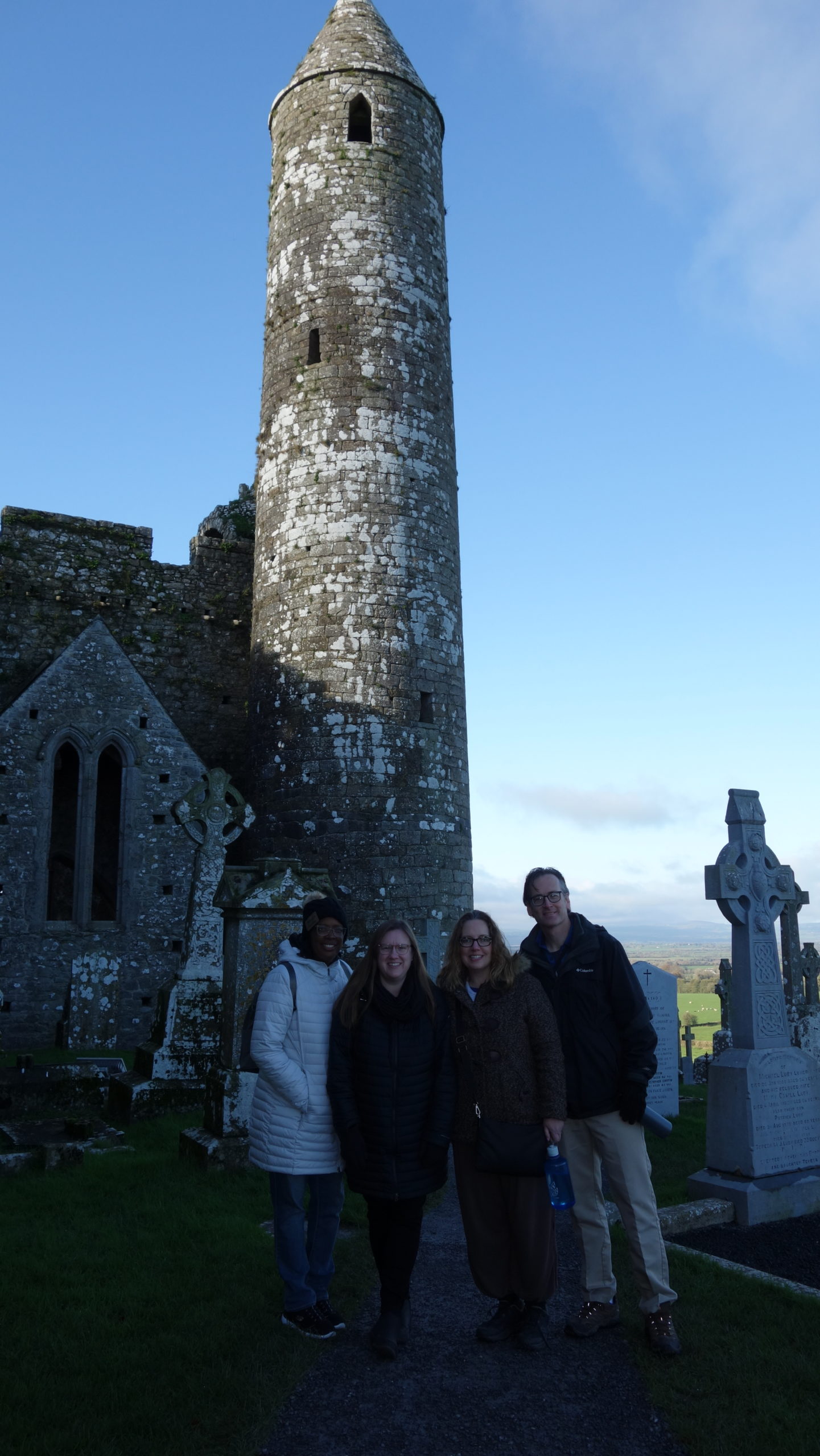
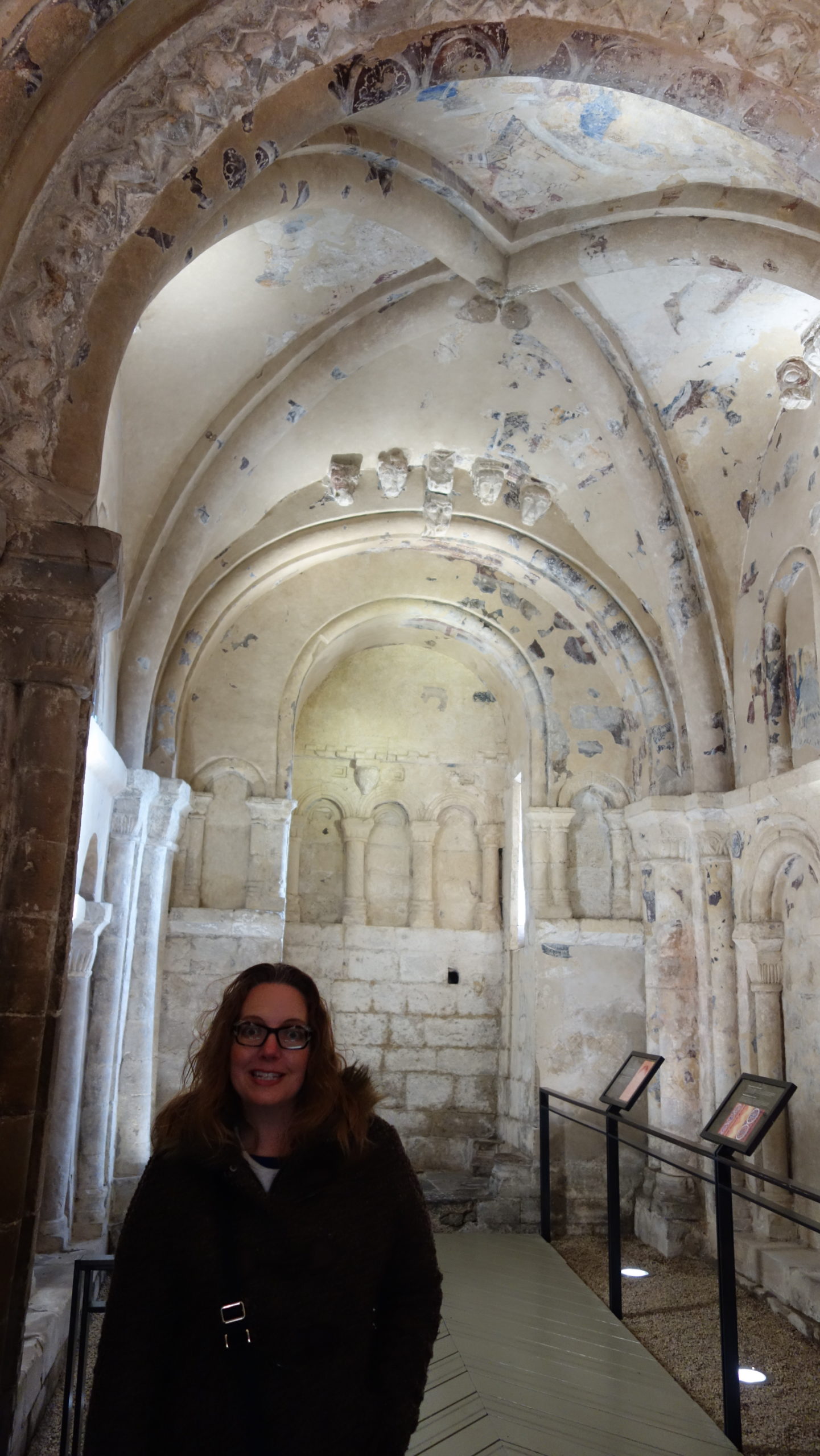
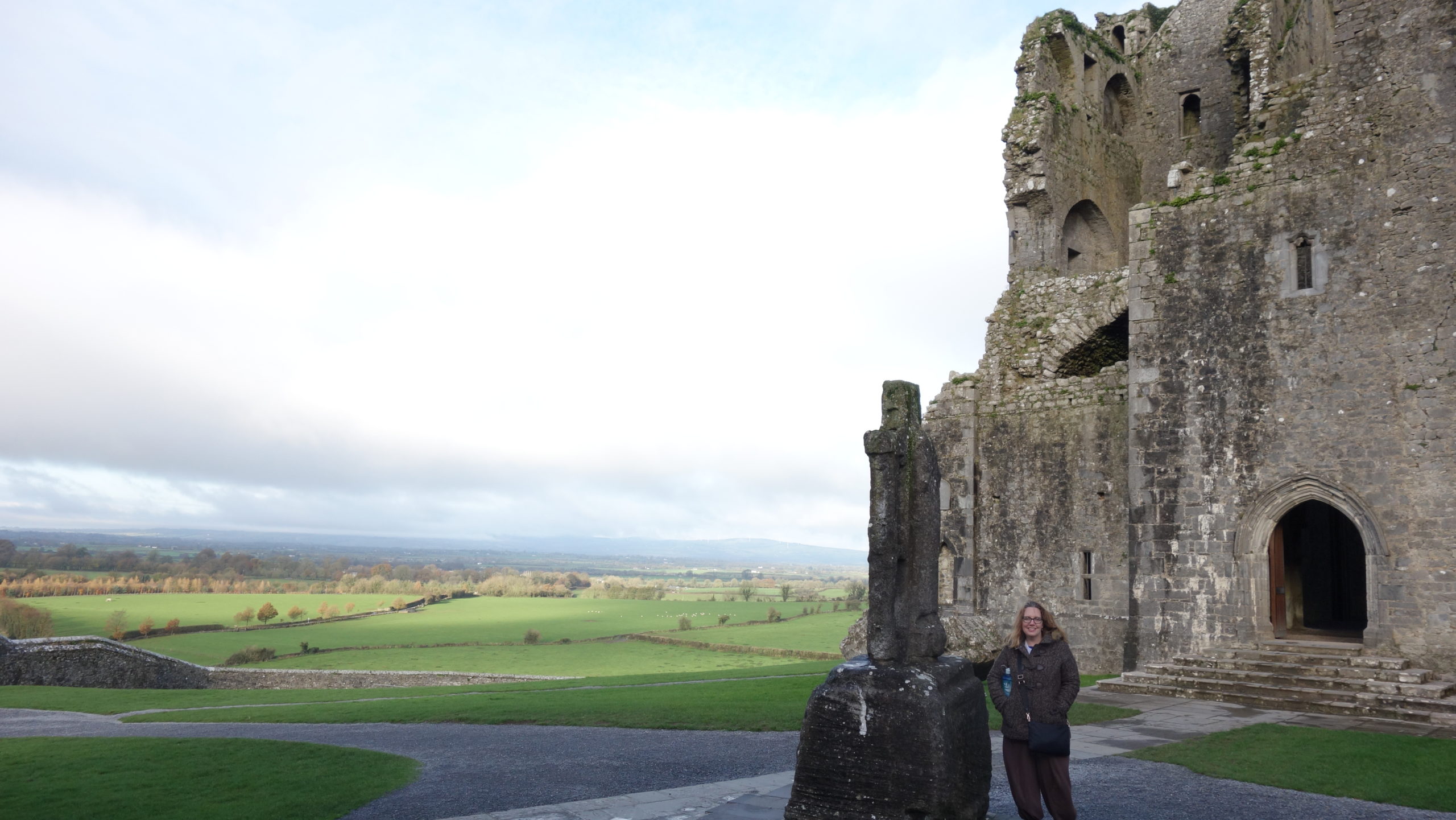
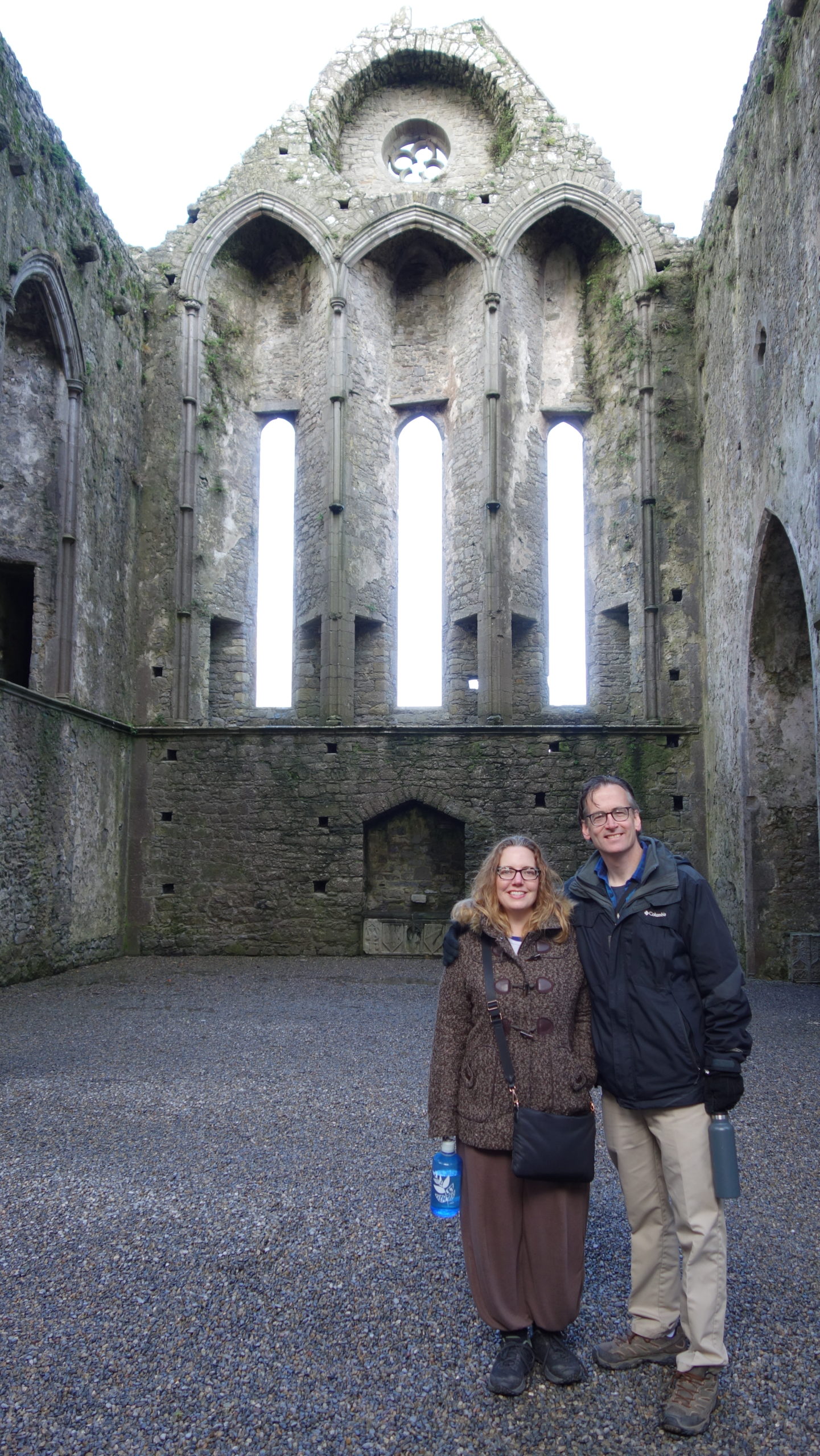
The trip was a grand success overall. We got to six days of things we had not seen or done before, and this is our fourth trip to Ireland. My fondest memories are around people – the pub in Kilkenny and our guide in the Medieval Museum and our guide at the Rock of Cashel and Alex for the Dublin Literary Tour.  Having charming accents certainly helps.
The Irish people, as I had remembered, are very friendly and helpful, and are fairly easy to “chat up” (the Irish gas pump man notwithstanding, and even he loved talking). We were offered drinks on two occasions, and no one was the least offended when we refused (since we don’t imbibe).

We need to get back here for many reasons, if only to see more of Dublin. I’d love to see some of the museums here, and I’ve not explored much of the interior of the country. While we will keep surfing around Europe, I told Meredith we could have made great vacations by just alternating Italy and Ireland. How such small countries can have so much to see is pretty amazing to me. Here’s to exploring more.

But first, friends, family, and kitties await. And that slightly pesky job thing.


Ireland 2022, Day 6, Friday – Dublin

Some days of touring are highly inefficient. Today was one such day. The way things are with Covid, combined with my mistakes, costs time. That is international travel for us.

We started the day by walking to Merrion Street by aiming for Merrion Square Park. We were meeting Alexander, a local guide, at 10:00. I plugged the destination into my phone, and away we went. We walked quite awhile, and I was getting a little worried about being late, when we saw the square. Only it wasn’t the square – it was St. Stephen’s Green, which is a good ten-minute walk from Merrion Square Park. My phone had locked up, and so I had overshot the correct place. So much for technology. We hightailed it to the correct place and met Alex, only being five minutes late.

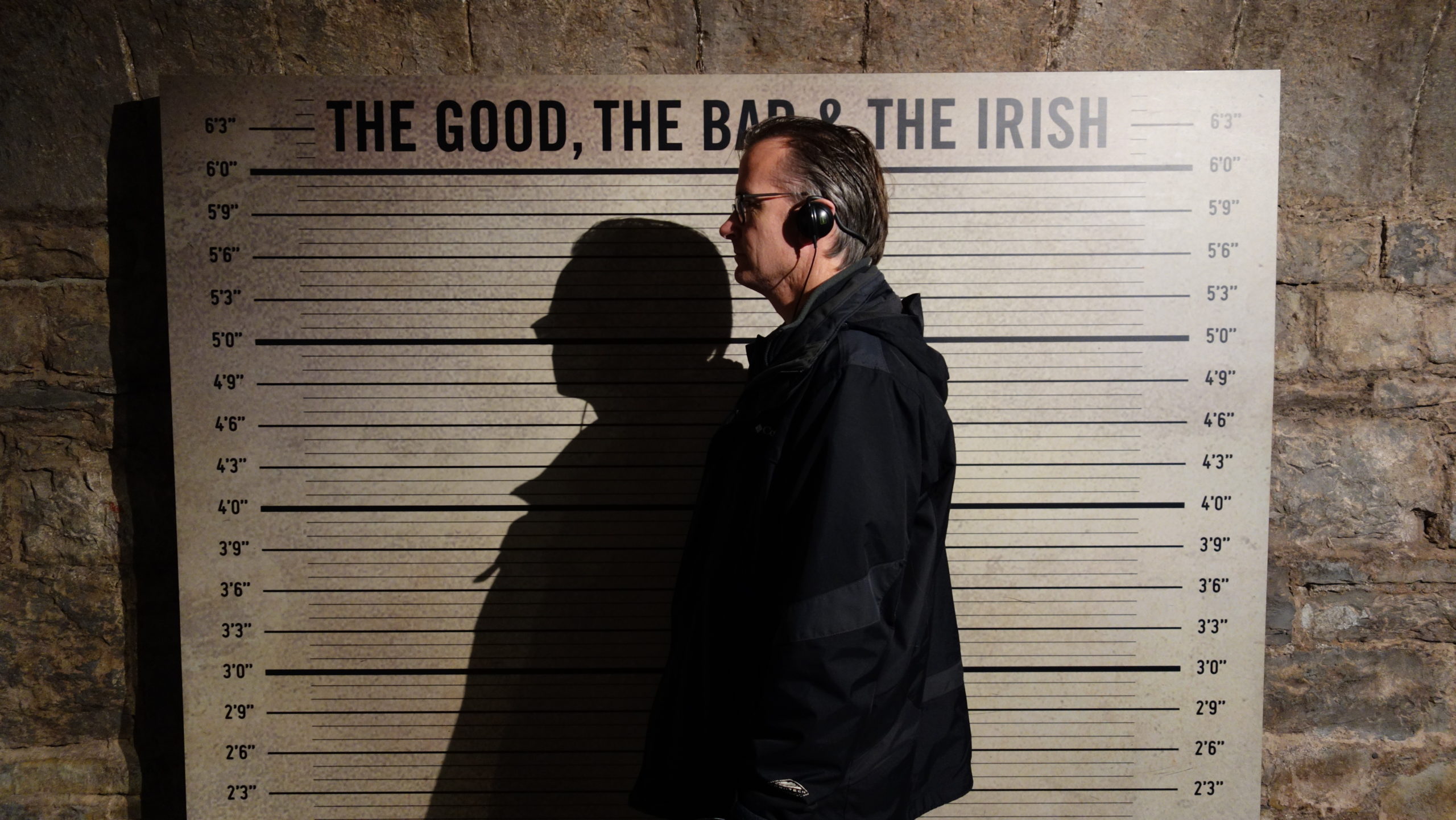
Alex was our guide for a three-hour (which turned into almost four hours) tour of Irish authors. I figured Mer would love it, which she did. We met at Merrion Square because our first author, Oscar Wilde, had lived there. Alex told us of the background for Wilde’s life and his complicated family and personal life. Alex’s personal take is that Wilde had a self-destructive tendency in his life that drove some of his art (especially The Picture of Dorian Grey).

We then walked over to the National Galley of Art to visit GB Shaw’s statue, which is placed there since Shaw was a major contributor of art and money when the museum was opening. Alex told us of how Shaw was highly political, and how Shaw moved from a position of believing that people were basically good and would continue to get better to a later position of believing that people were chaotic and irrational.

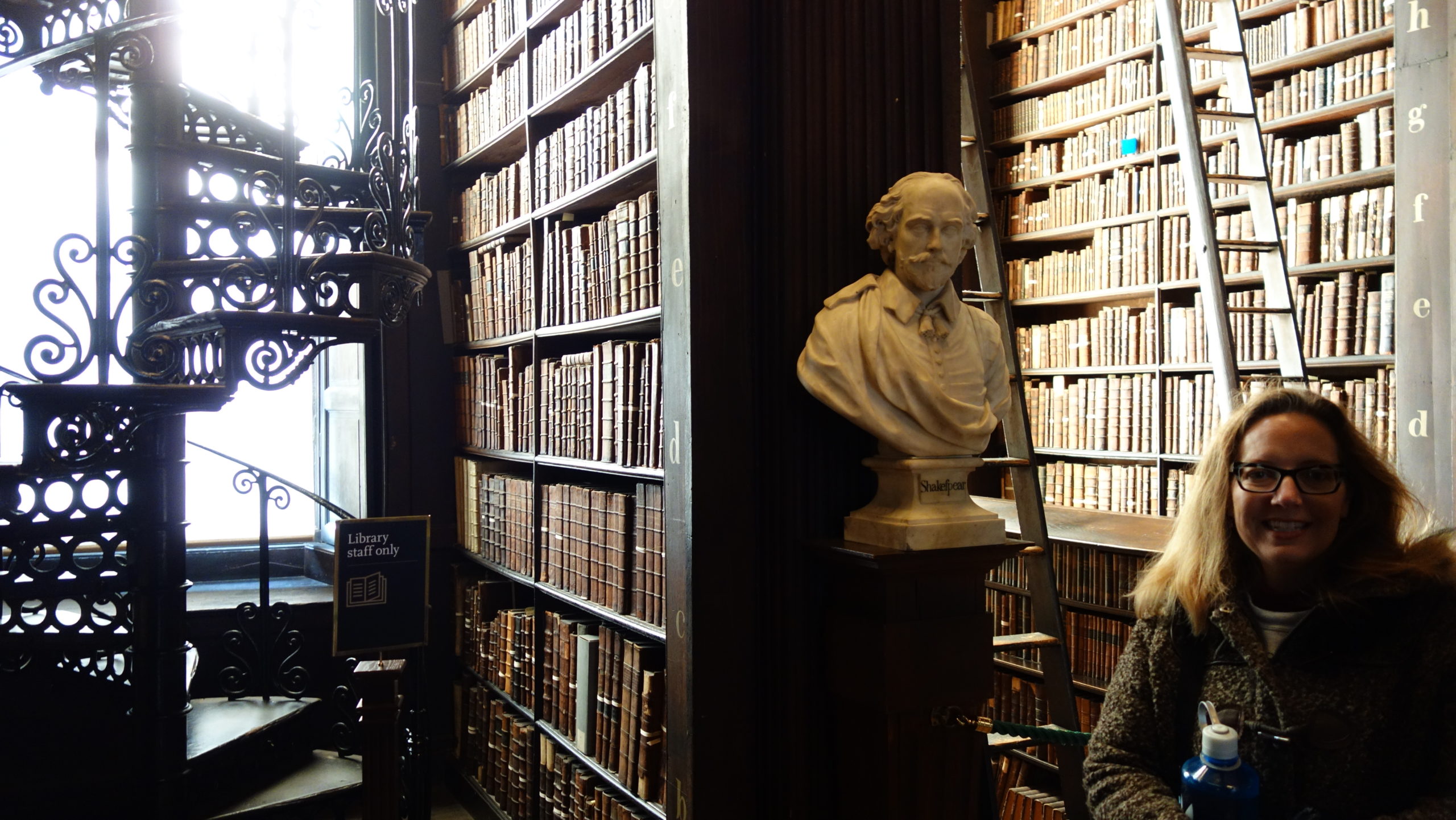
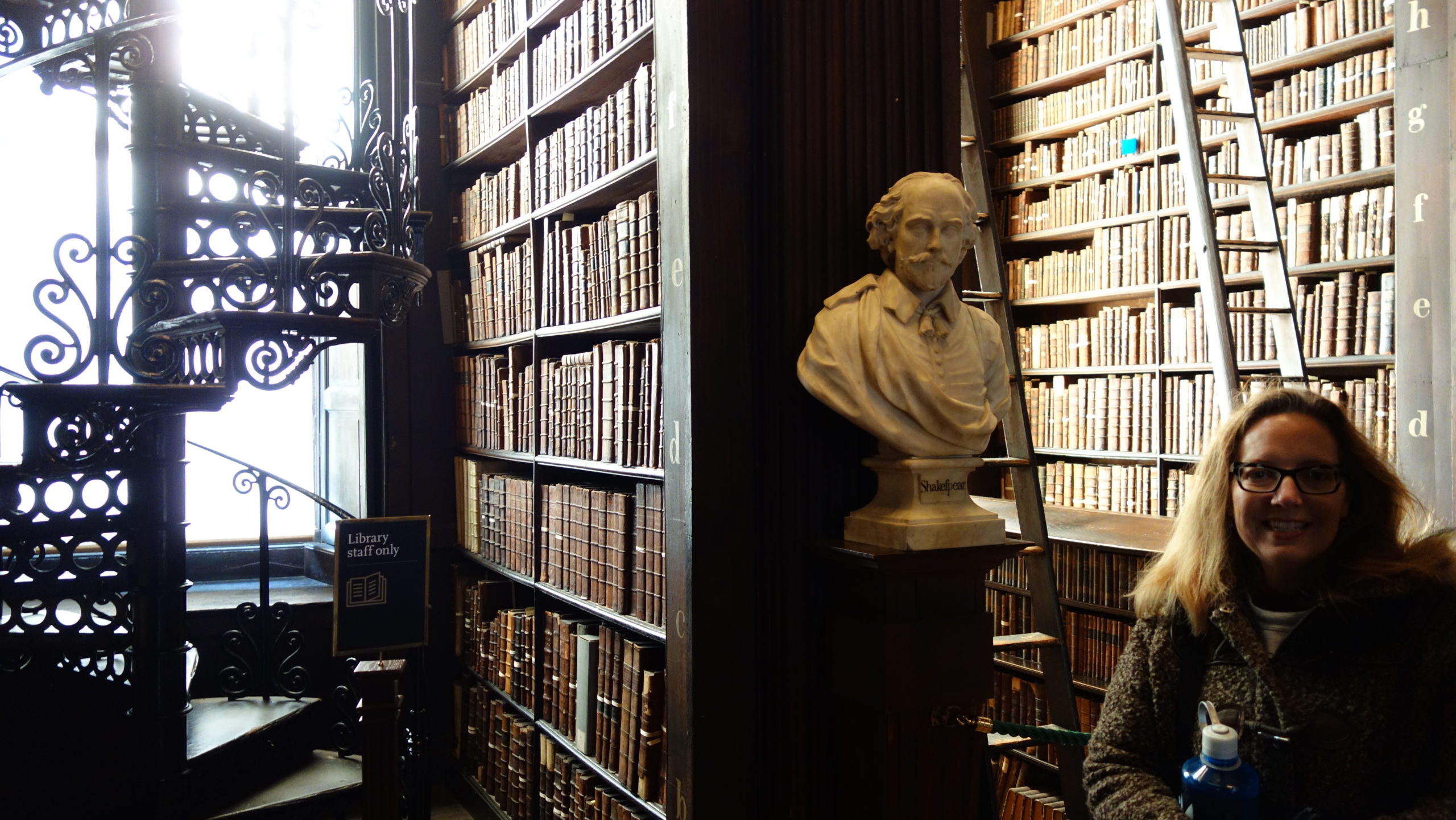
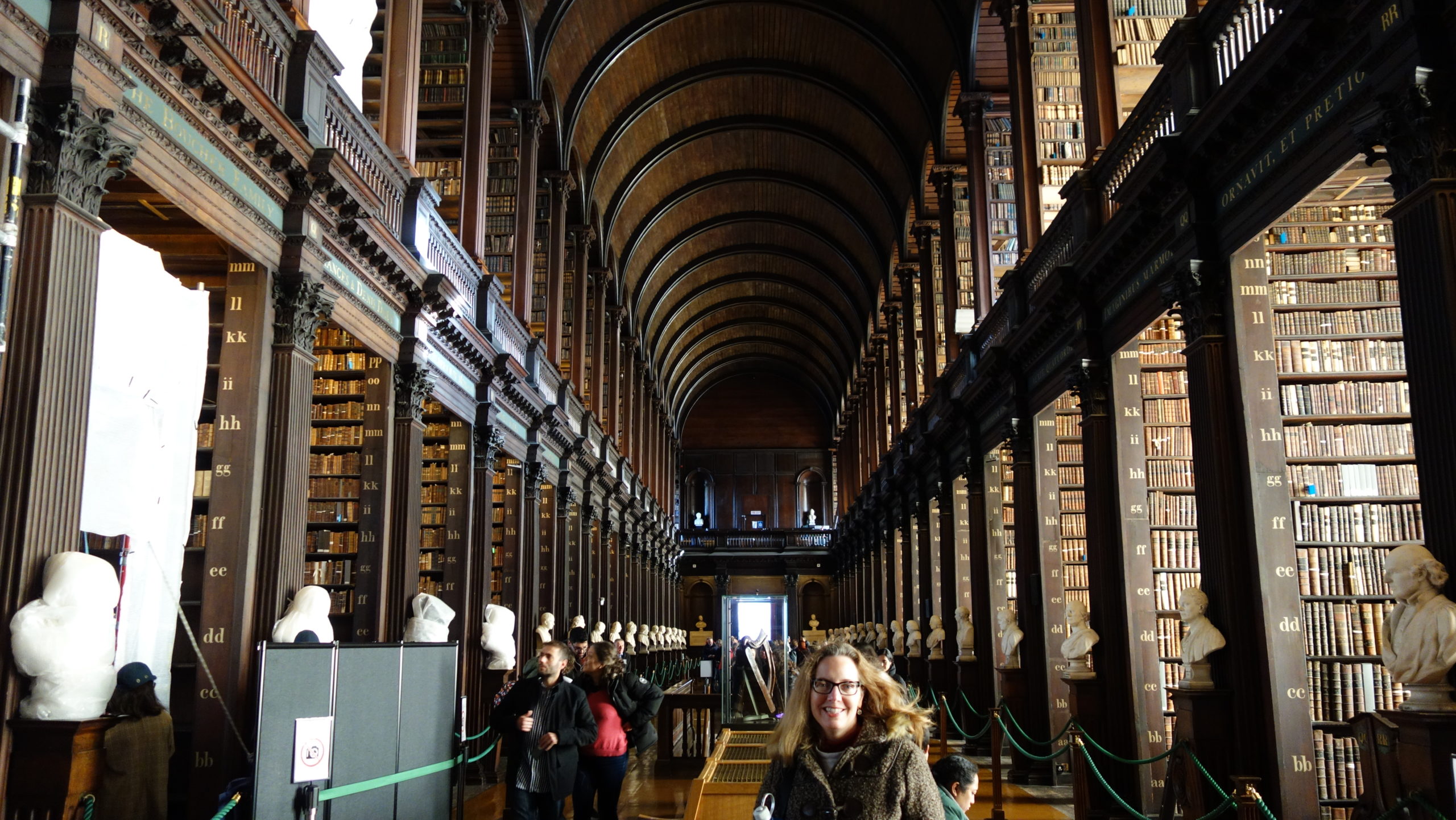
Our third author was William Butler Yeats, and we went to the National Library, where there was an exhibition on his work. We learned how Yeats was probably the most influential writer in Irish history, since he was writing around the time of Irish Independence. Yeats also was dedicated to preserving and creating a distinct Irish culture separate from England’s. Yeats essentially created his own religion/spiritual world view, and had complicated relationships with his wife and several other women, especially a woman whom he viewed as a type of muse for him.

We then walked back to Sweny’s Pharmacy to talk about James Joyce. We learned that Ulysses was banned in Ireland as obscene until the 1960s, forty years after it was published in France.

On to Samuel Beckett and a theater named for him on the campus of Trinity College. Beckett was obsessed with Joyce, and struggled to find his own voice for many years. Beckett taught French at Trinity, and eventually moved to Paris, and there he found he was able to write well in French. He is credited with saying, “Joyce has written about everything; therefore, I shall write about nothing.” Beckett is best known for Waiting for Godot, a play in which nothing really happens; Beckett believed that there was no absolute God-given point to existence and that the world tended toward absurdity.

We finished at the Abbey Theater, where we heard about Lady Gregory, one of the founders of the place (as was Yeats). Lady Gregory took the time to learn the Irish language, and then she set about preserving and translating the local folk tales.

We walked over to the Dublin Writers Museum, but the doors were locked. So Alex took us to a pub for a late lunch (it was 2:00), and we said goodbye to him and to an interesting tour.
Now more inefficiencies began to creep into the day. By the time we finished lunch, it was about 3:00, and so we hiked the forty minutes back to our room because we had to make sure we had time to take our Covid tests that are required to get back into the United States. By the time we had that all wrapped up and the passing tests printed out, it was almost 6:00. I had plans for us at 8:00, so off we went. Forty minutes. In the now-raining and cold outside. To get to about four blocks from where we had been. To go to a storytelling session at the National Leprechaun Museum. To find out I had booked the wrong date for the tickets and the show was sold out.
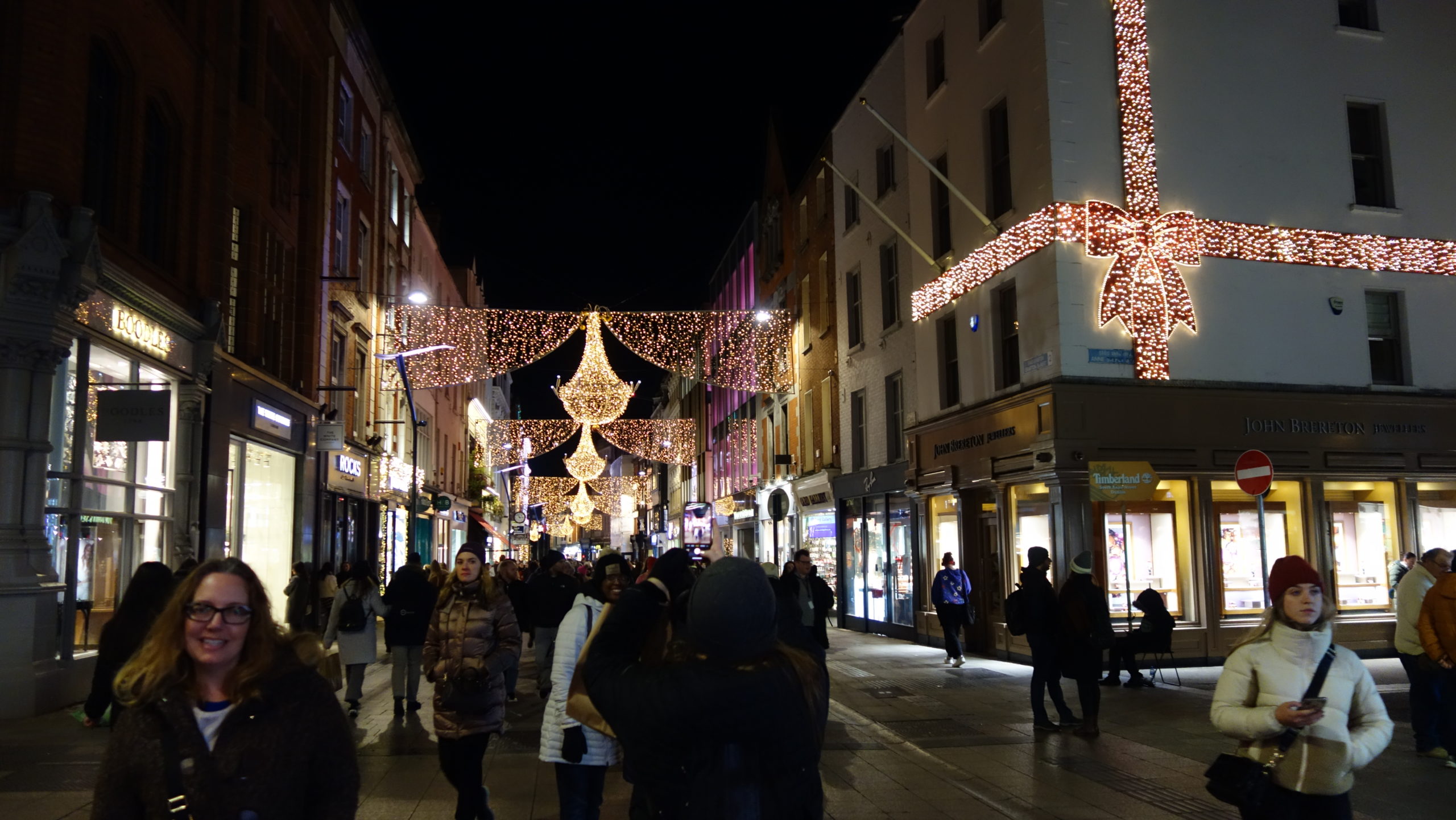
A rather long walk back to our B and B area ensued. But at least the rain stopped along the way. A good supper helped, but it had meant that our touring for the day essentially ended at 2:00 – not the best bang for the buck. But still, a good tour today, and the rest of the vacation went off stunningly well, especially with the weather – today was the first time we actually got rained on in six days In Ireland in the spring. That is not statistically likely, and we are grateful for our time here this week. What a blessing to get to travel here.

So we are off early to Dublin Airport tomorrow, where staff shortages seem to be creating long lines and other inefficiencies. We are going to aim to get there and have the car returned by 9:00 for a 12:30 flight. After that, here’s hoping we have smooth travels back home.