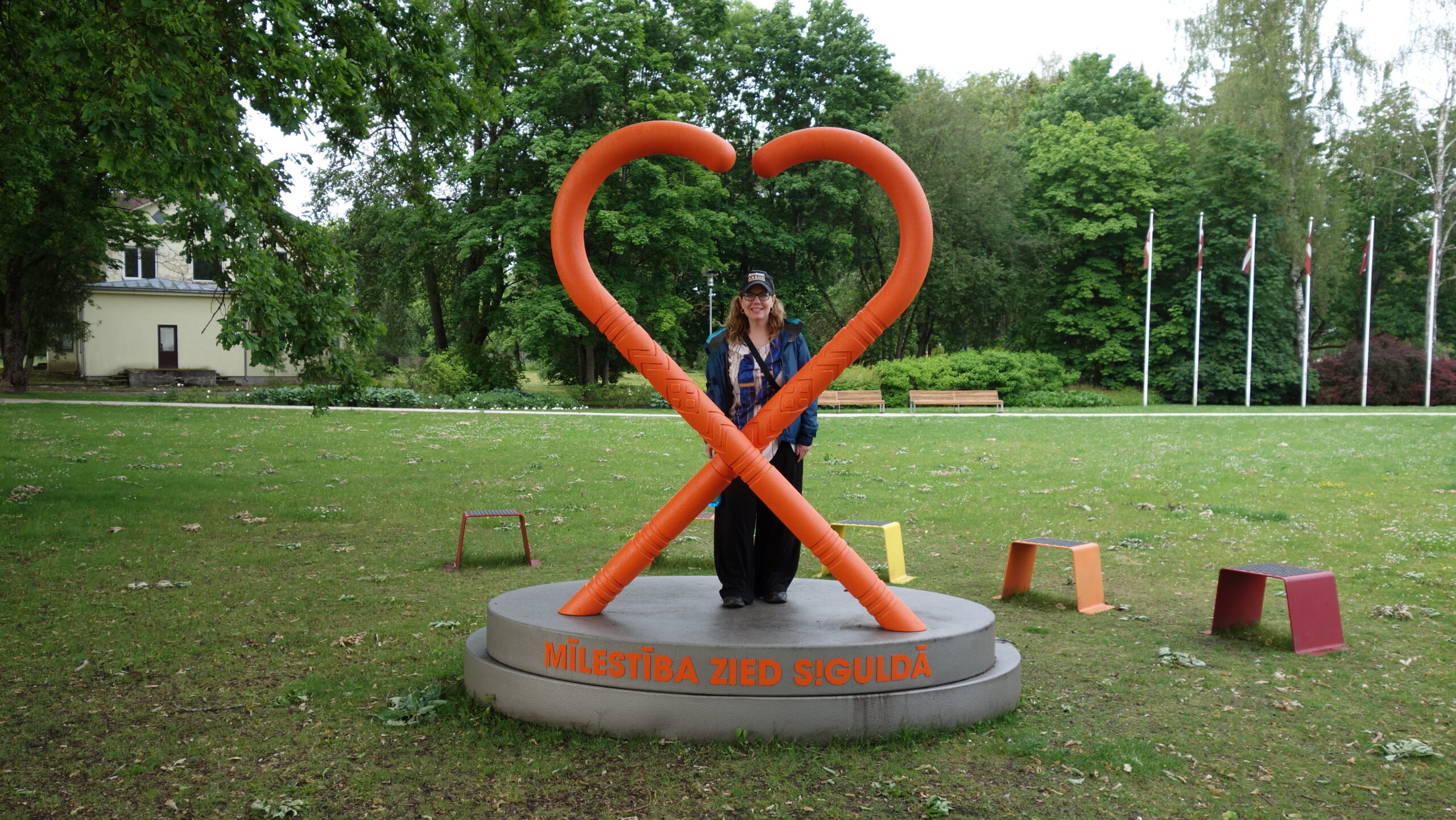
 Today we got the trifecta of Riordan tourism – Turaida Museum Reserve near the town of Sigulda. Turaida has a castle AND an open-air museum AND a sculpture park, all on one site, and all for a low price of about ten dollars. Except, of course, that I’m a student, so I got in for about five dollars. I’ve now gotten a student rate at four sites. My education is clearly paying for itself.
We got to the museum/park about 11:30, along with a tour bus to join the other half-dozen tour buses already there. Turaida is the most-visited site in Latvia, so no surprise there. But what amazes dedicated tourists like us is that when we went by the lot to go get lunch at 2:00, all the buses were gone. I guess two hours at a fifty-five-acre site with a dozen buildings, a castle, and a sculpture garden with twenty-six sculptures is way more than enough. Not so for us.
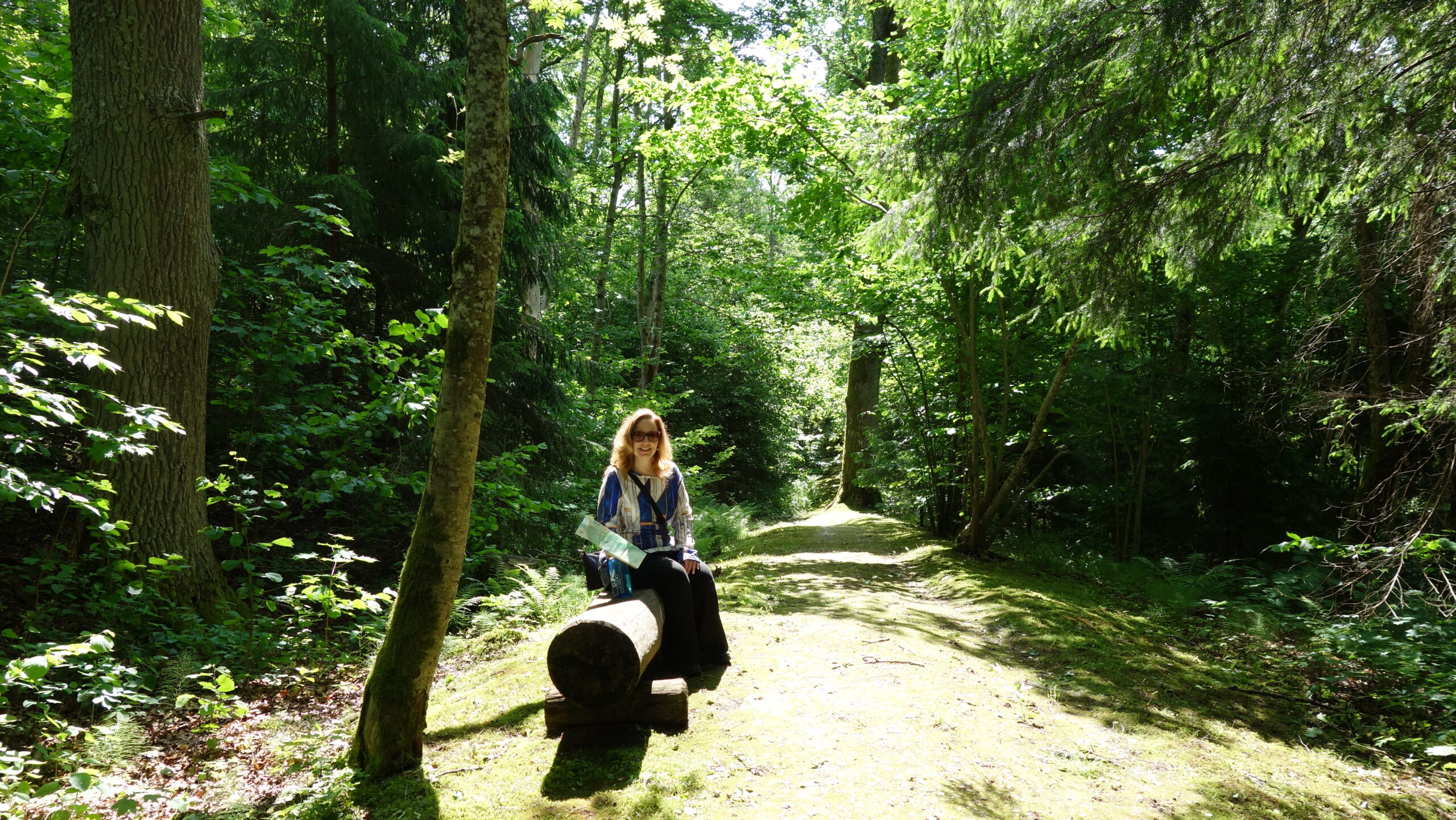
 We figured that the tour groups would head to the castle, so Meredith steered us onto the walking/hiking paths on the other side of the park. We met no one on the meadow trail, and we only met one group of young and middle-aged Latvians coming out of the woods when we were going into the woods trail. Otherwise, we had it to ourselves. The woods trail was especially pretty – dense woods and tall trees with the trail winding around them. We also had several signs along the trail telling us (in a very light version) about the culture of the ancient Liv people of the area. Most things were pretty basic (“The woods were important for fuel and food…”), but we found out that the bird is an important symbol to the Livs because it was somehow involved in creation. We also found out that if we washed our faces in a cold spring that was just a trickle though the mud, we would become beautiful. Neither of us cared about impressing the other enough to kneel in the mud.
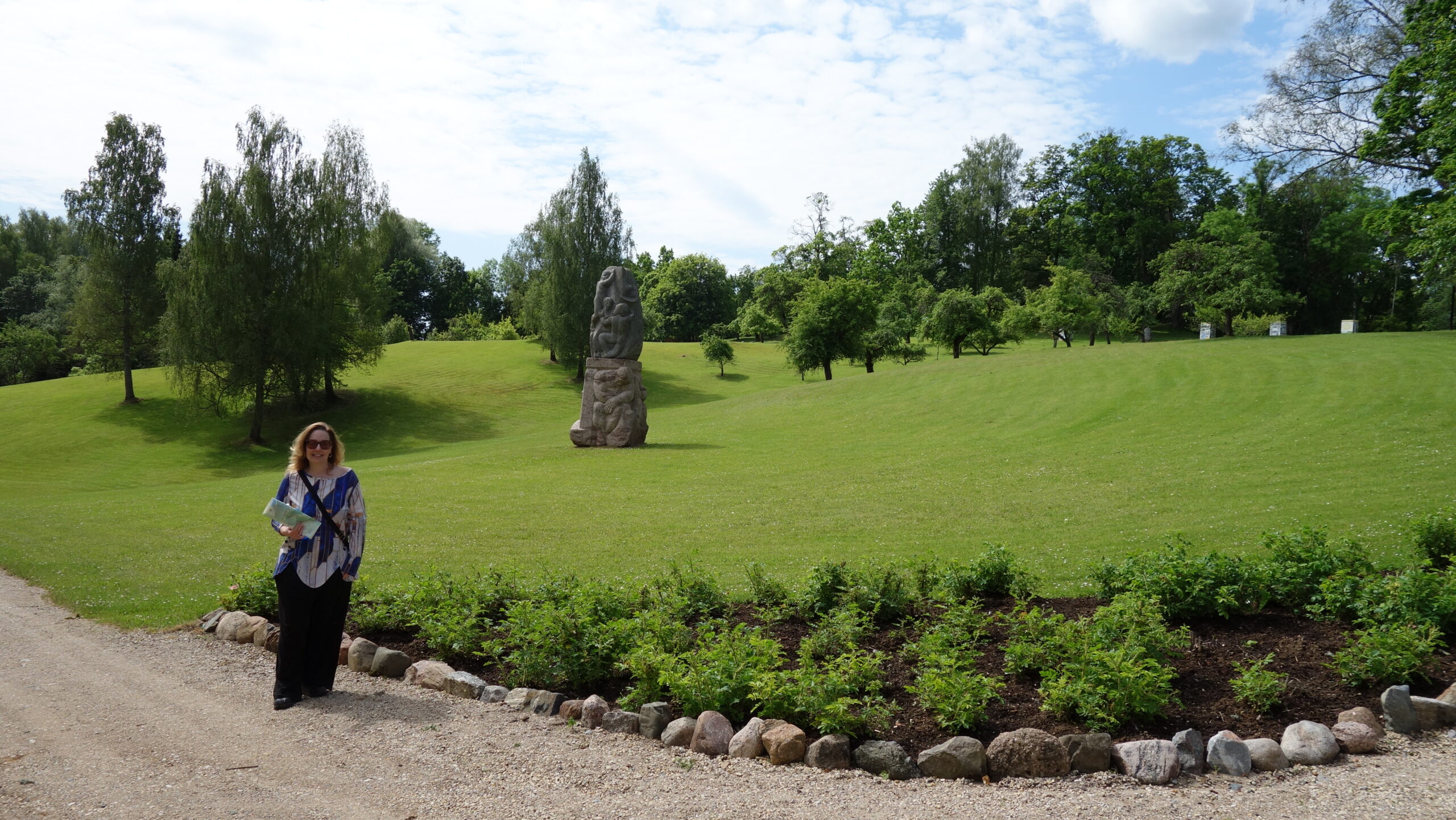
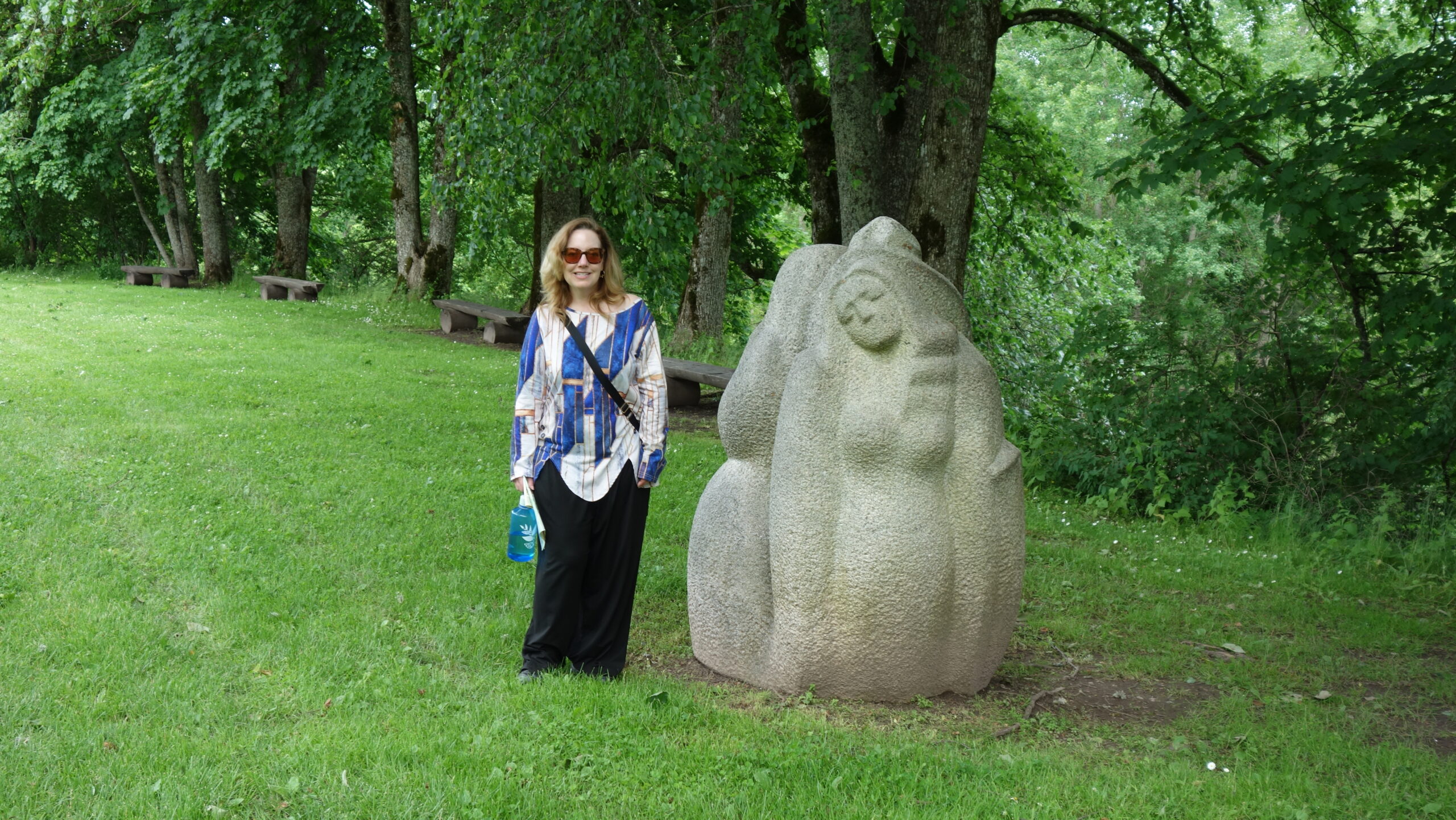
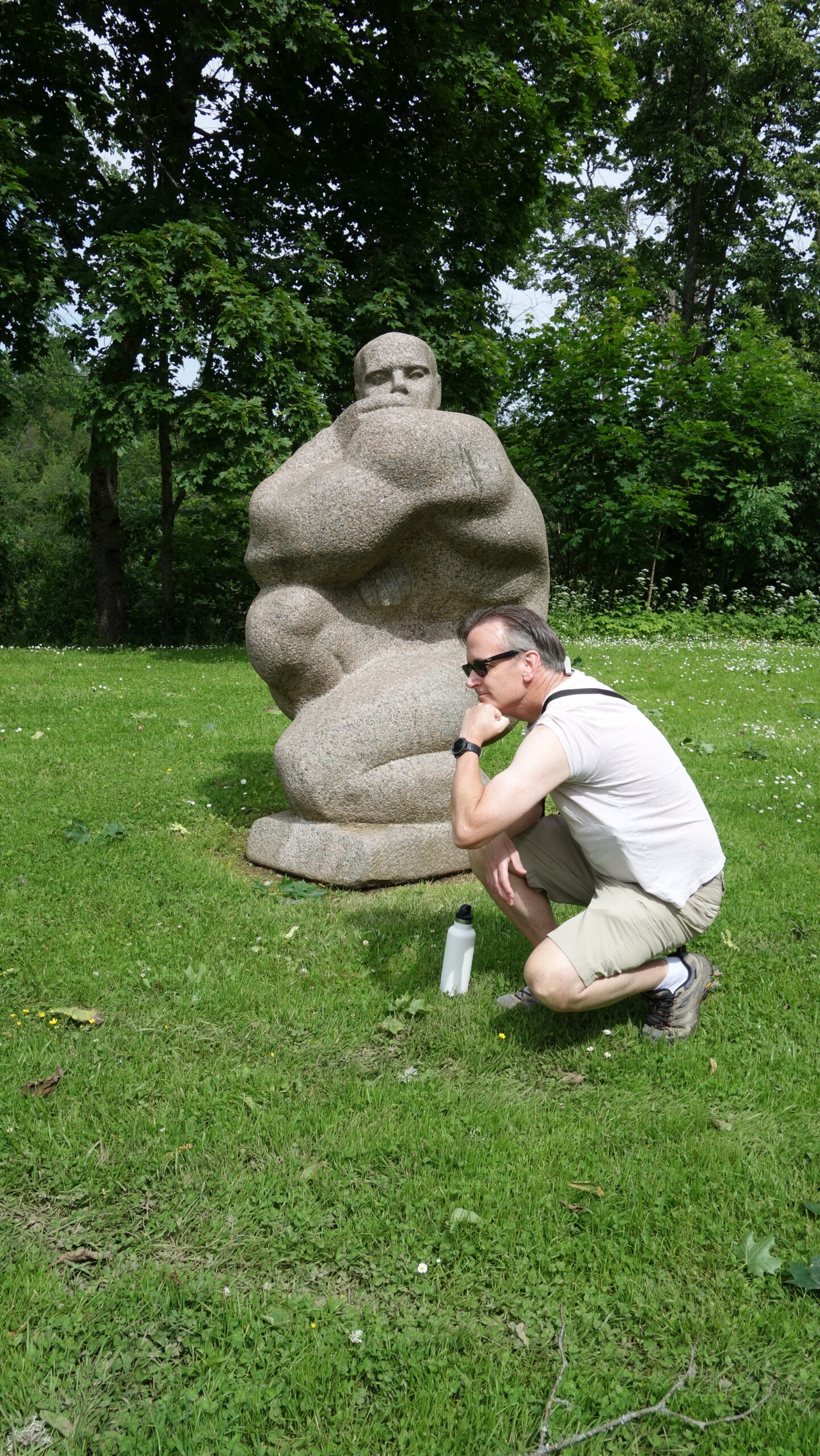
 The woods trail dumped us out into the middle of the main part of the sculpture garden. I love outdoor sculpture, so this was a big hit for me. Just like in Kuldiga, this park was the work of just one artist (not the same one as in Kuldiga). That is very interesting to me as it helps you to see the artist’s style. This artist was more abstract than the Kuldiga one, but still mainly focused on the human form (or forms for more than one person). To my untrained eye, the style was again a more humanized form of the “heroic figure” style of art I usually associate with the Soviets. Probably our favorite was Mother and Daughter, which somehow, with just hints of features, conveyed a young and lovely woman on one side and an older woman on the other. The figures were obvious to both of us even though the sculpture wasn’t literal in form.
We made our way along the path of the garden back to the welcome center area and the open-air museum found there. We had already seen an open-air museum in Ventspils consisting mainly of fishermen’s homes and buildings. This one was different from that one (and from all others that I’ve seen) in that they were all buildings left in place from when the grounds of the museum were still a manor. (I never learned whose manor it was or what happened to the manor house). So these buildings were all unified in the purpose of supporting the manor.
 Not exhaustively, there were a stable and a carriage house, and a “bath house” that was really a sauna and which was used for healing the sick, delivering babies, drying meats, and so on. There was a huge building where the hired hands slept during the week (they worked Monday noon to Saturday noon before going home). There were a fish storage building and a couple of homes for craftsmen on the manor. There was a house for the governor of the estate, and a church.
 While we didn’t have even close to enough time to read and watch everything, some things I remember were:
– The serfs were freed in 1817, but still had restricted movement for about twelve years.
– Many of the ex-serfs became hired hands on the estates they had been on, and the lord of the estate could still do pretty much what he wanted to do, including whipping them.
– Agricultural reform around 1900 broke up a lot of the manors and gave the land to peasant farmers.
– The Latvian war for independence seemed to be against Bolsheviks, with whom they shared many beliefs, except that the Bolsheviks refused to want Latvian independence.
– Latvia won the war for independence against great odds. It took two years, and the independence lasted until 1945, when the Soviets took over.
– The castle on the hill was started in the 1200s, like most good castles.
– The castle was largely abandoned after a huge 1776 fire burned all non-stone structures.
– The castle changed hands several times as the German Teutonic knights fought Riga’s archbishop over the control of much of Latvia. The power struggle seems to have caused that version of Latvia to collapse.
– The castle was restored in the twentieth century.
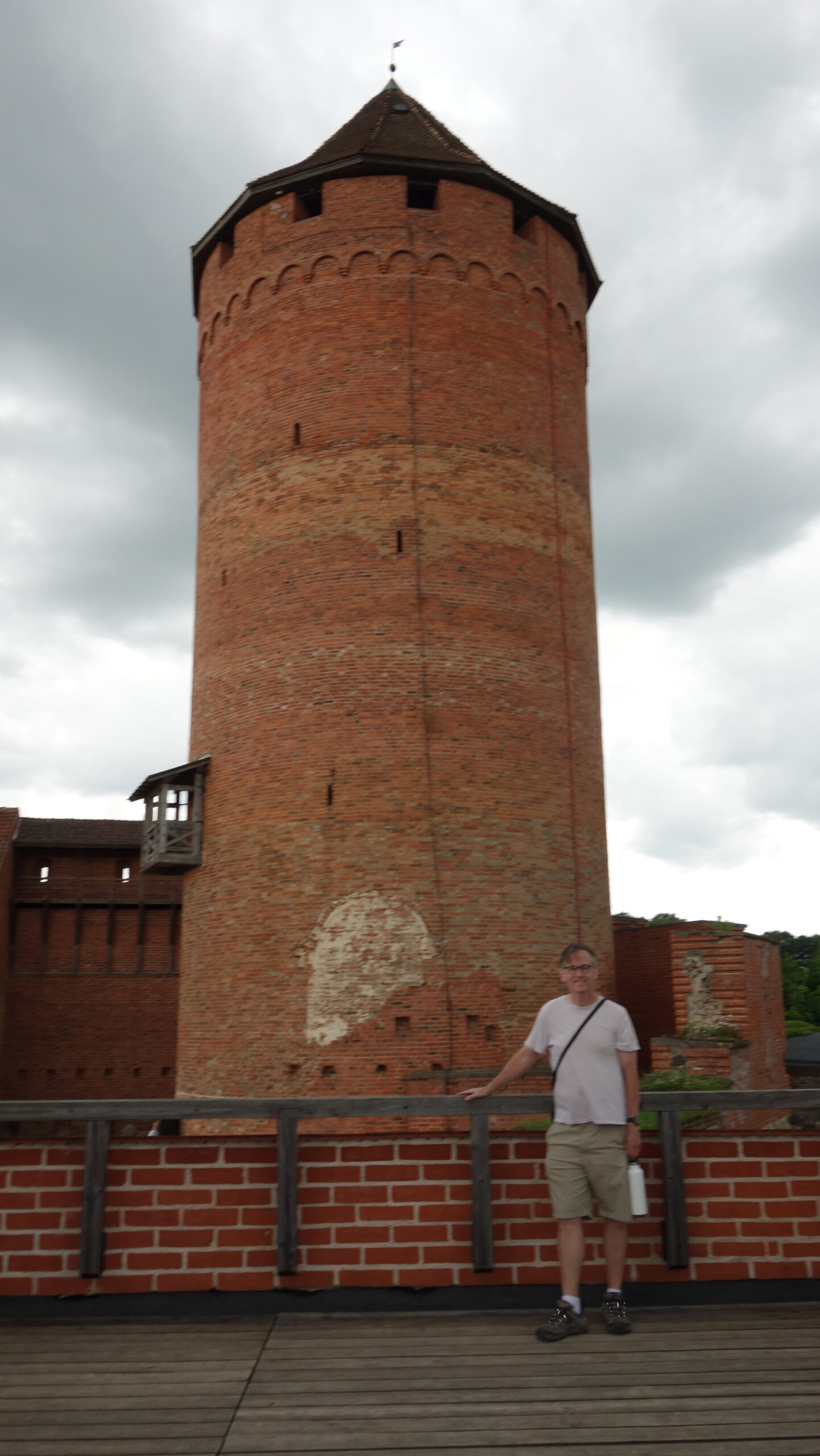
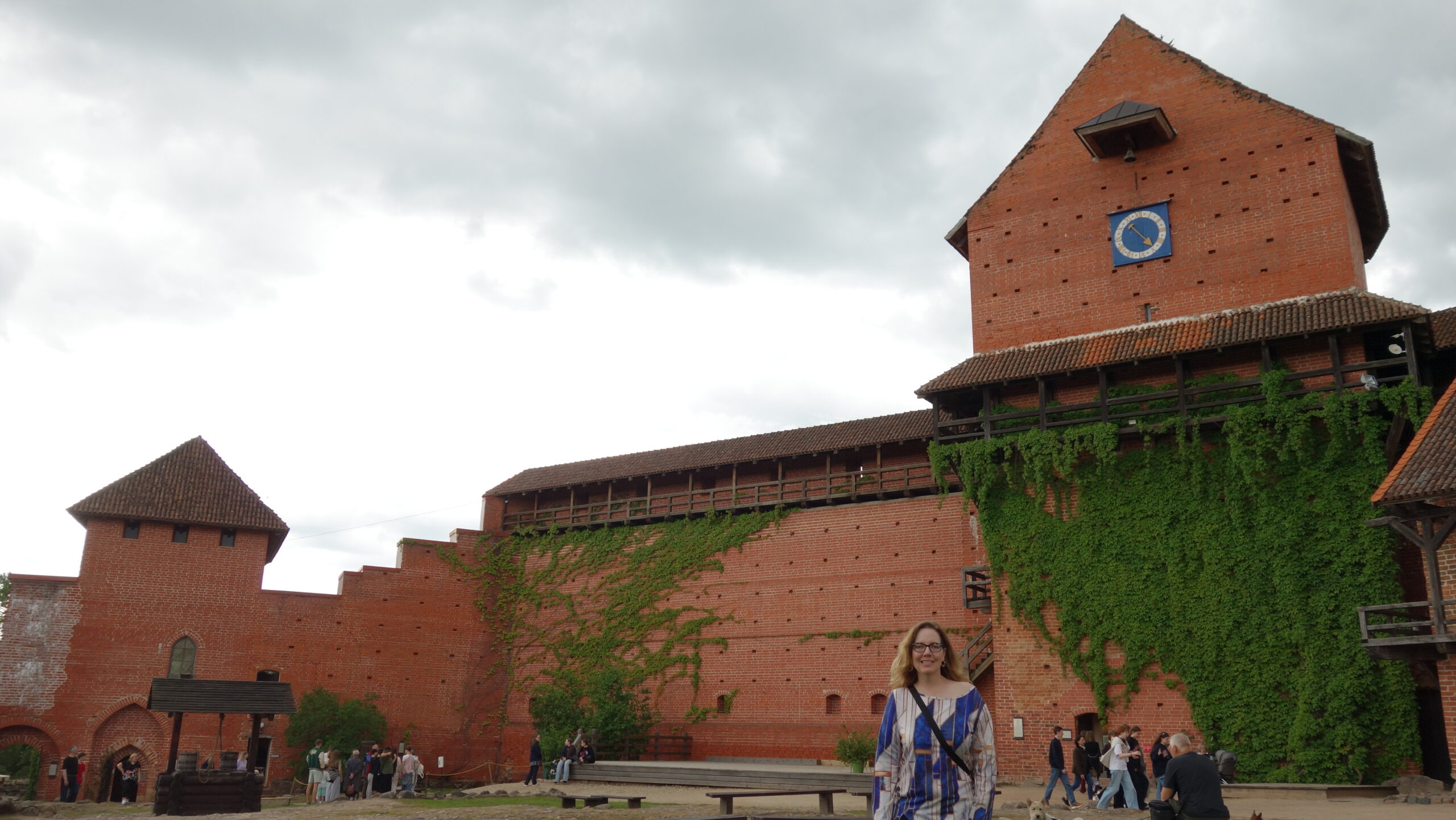 After lunch we headed up to the castle itself. The main tower had been fully restored, and so we climbed that. Mer loved the views while I sat comfortably on a bench in the safe middle of the platform. We explored the ruined parts of the castle as well as the other restored parts – the south and east walls and buildings. They housed exhibits on what life was like at the castle, and some history of the archbishop fighting the the knights.
While we had had a wonderful weather day for most of our time, it did rain some while we were at the castle (around 5:00). We avoided the worst of it by looking at the things in the inside rooms of the castle. We finished our tour of the museum land by looking at the three or four buildings we hadn’t yet seen. And so we managed to cover the museum in about six hours, finishing up a little before 6:00.
 We drove back the short distance to the hotel and checked in, and then walked out into town for supper. It was still misting when we started, but the rain finally stopped for the day as we were on the way. We ended up at a cat-themed restaurant that had a resident kitty. I was tickled (and the kitty got some scratching love from me).
After supper we were going to wander the town a bit, but everything is spread out more than it looked on the map. We headed home since we have two more days here. We can try more things tomorrow.