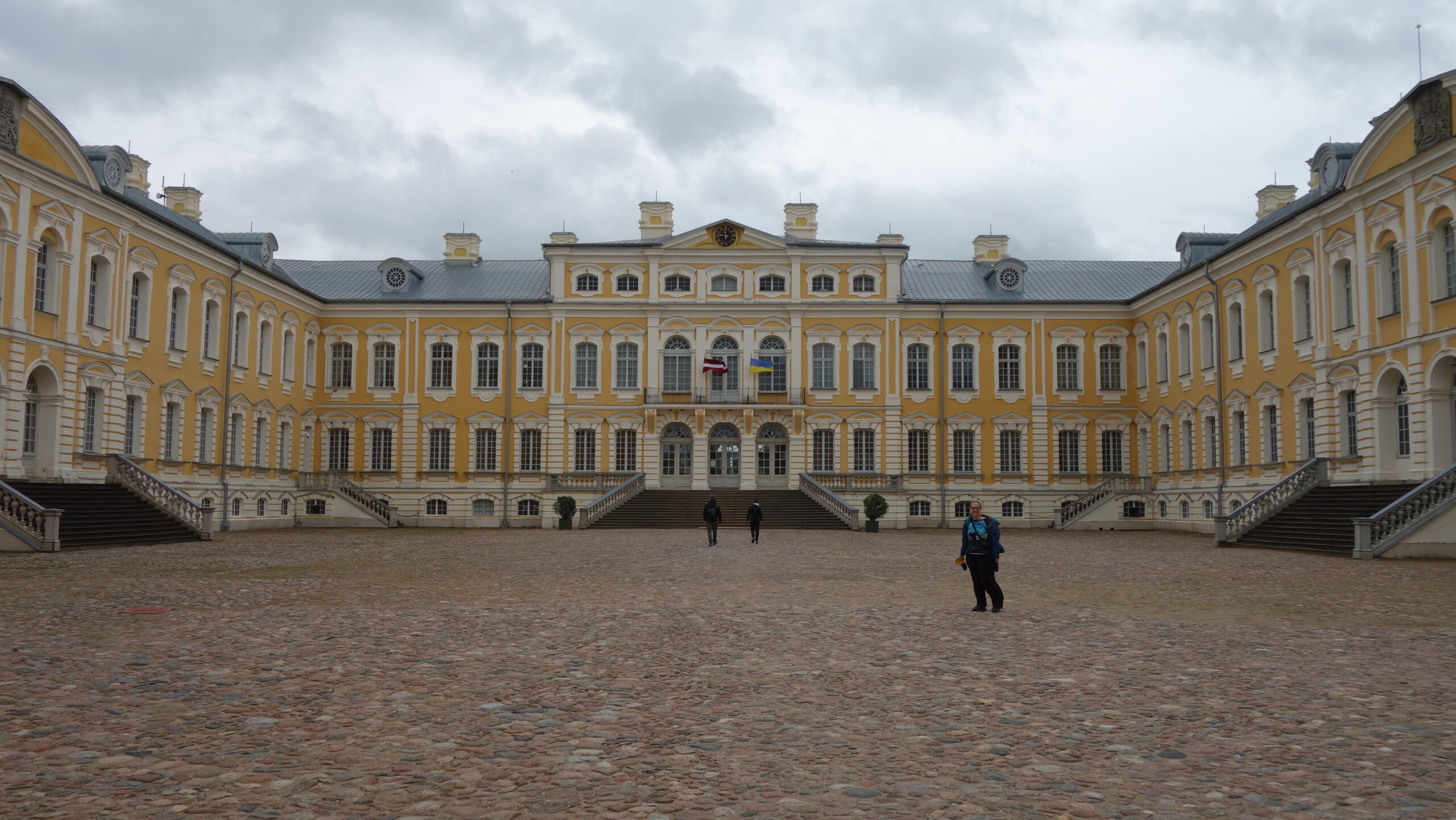
 When we plan these European trips, Mer and I split the days of one of us being in charge. For this trip, that meant I got to plan six days. As I sifted though my options, I came down to one free day (today), but I had a problem: I wanted to see Latvia’s “Versailles” (Rundale Palace) AND I wanted to see the tourist beach town that is next to Riga (Jurmala). After much consideration, I decided on doing both. I would drive from Kuldiga to Rundale (2.5 hours) and see the palace. We’d then drive on to Jurmala (1.25 hours) and spend the night there. I knew that this would shortchange both sites somewhat, but I wanted to see them both.
It worked out quite well, overall. The drive to Rundale went well except that in the last ten minutes, we drove into light rain. Since we had come from the west, I figured it would all blow over, especially in the twenty-mph winds. Besides, we could tour the inside of the palace to start with and then do the extensive garden.
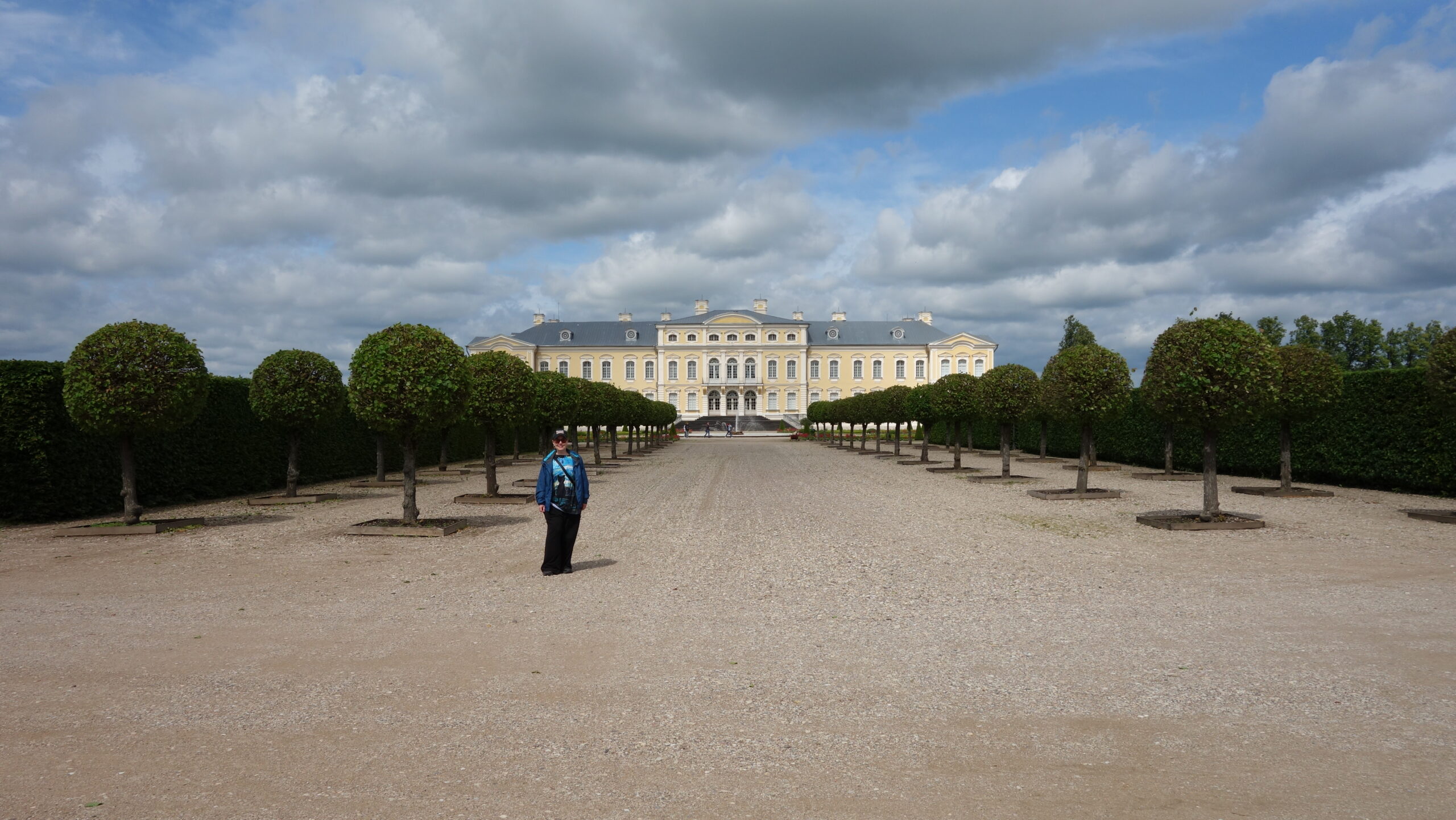
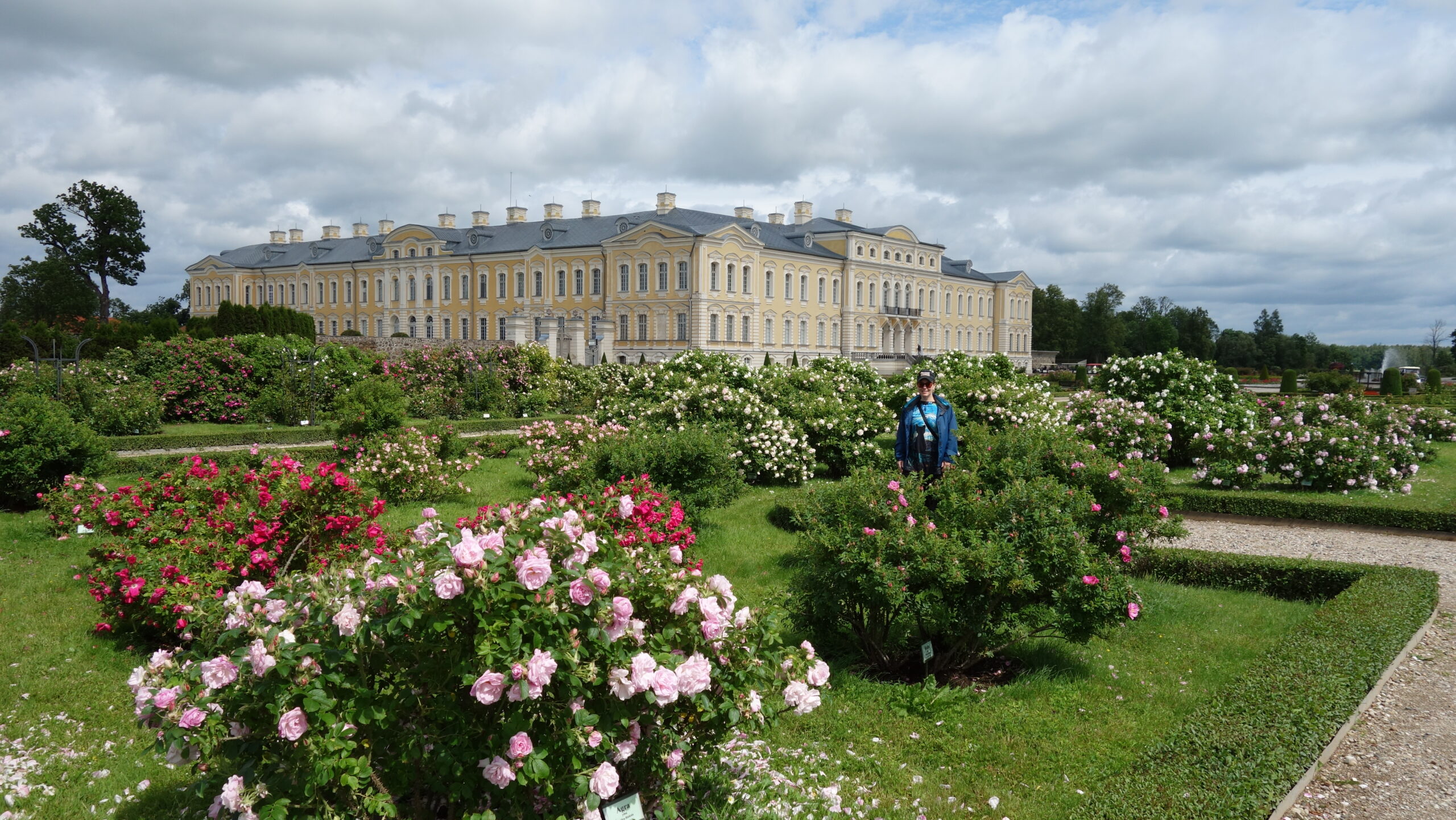 What a place. I think that most large palaces claim to be “the Versailles of *****”, but Rundale can definitely be mentioned in the same breath. It has all the pomp and luxury of Versailles, but is a smaller structure (Versailles has over 2000 rooms while Rundale has 138). I actually liked many of Rundale’s rooms more than the ones at Versailles – they suited my taste somehow. I’m picky in palaces.
The palace was built between 1736 and 1740 by Ernst Johann von Biron, the Duke of Courland. He seems to have won favor with a Russian princess who unexpectedly became the empress and favored von Biron. Needless to say, when the old Duke of Courland died, von Biron got the post. As part of his own anticipation of becoming successful and wealthy, he built Rundale as a summer home and hunting retreat. The palace was expanded and redecorated from 1764 to 1768. When the empress died, von Biron was accused of skimming off the Russian treasury and sentenced to death, a sentence which was commuted to exile, but he was able to come back in 1763 under Catherine the Great.
 The house and the gardens were both designed by the same Italian architect, so they are very harmonious together. From beginning to end of the building of the house and gardens, very little was changed from the original plans.
The gardens were kept up all the way until World War I, when they fell into disrepair. The house was used as a school at that time. A limited restoration of the gardens happened in the 1930s, but the house restoration didn’t start until 1964, and the restoration (as much as has been done) took fifty years. By now, 45 of the 138 rooms are fully restored, along with the outside of the palace and the gardens.
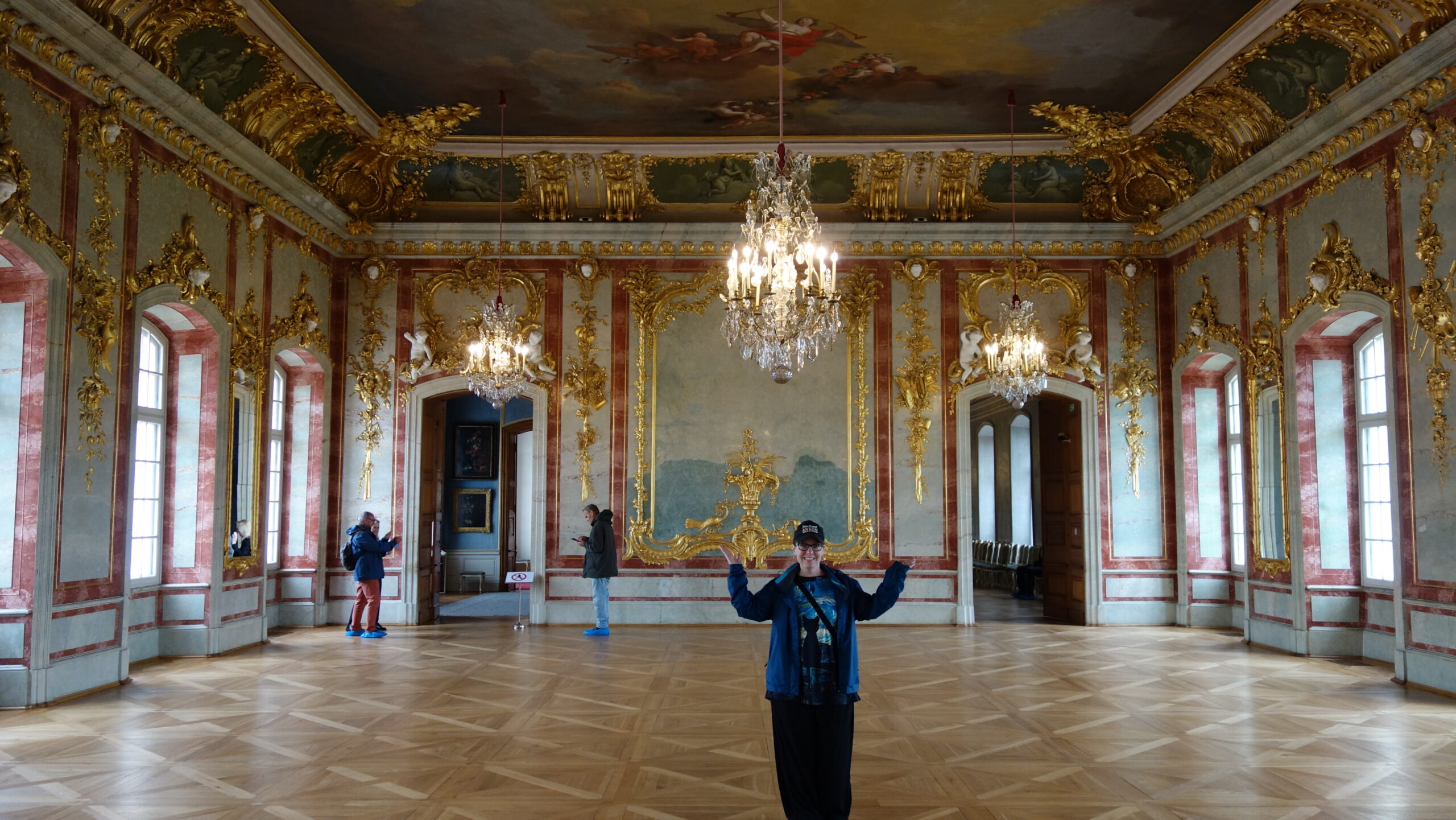
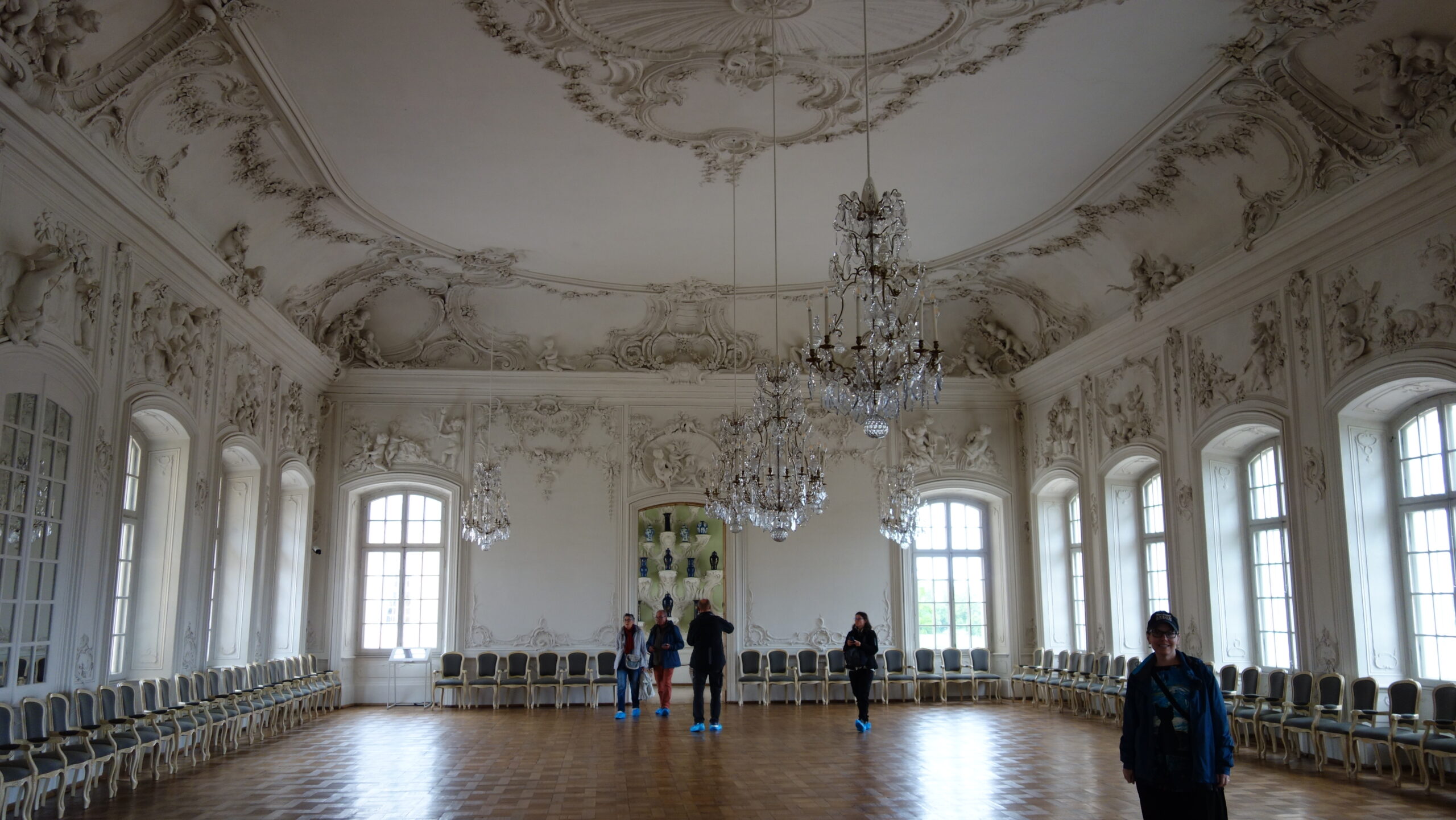 We toured the rooms that are open, and they are opulent. We saw some pictures of rooms before restoration, and would like to give a huge shout-out of thanks to the skill of the restorers. They did an incredible job.
For me, while the duke’s bedroom and the duchess’s bedroom were both striking, my favorite rooms were the two (yes, two) ballrooms. They were large and elegant spaces, and both elicited a “wow” from me as I entered.
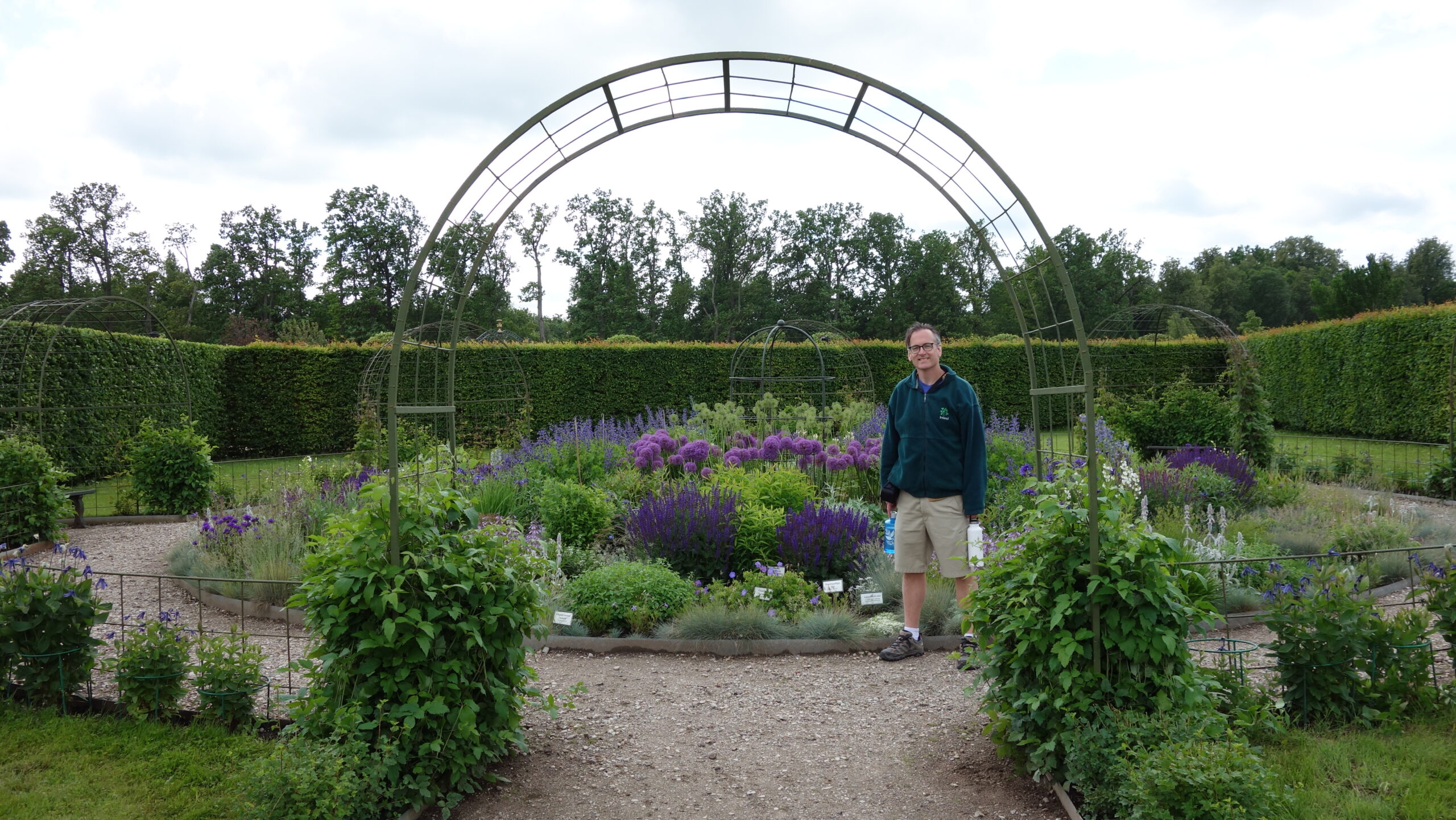 It took us ninety minutes to tour the house, and that was without our using an audio guide or stopping to read the information in the rooms. We had a light lunch in the cafe and headed out into the gardens, where we finally got a chance to do some butt-sitting tourism. “Butt-sitting tourism” for us is what it sounds like – getting to do a tour of somewhere while sitting down. In this case, we got to ride on a small tourist train (with just the two of us) while it went around the garden. We got to listen to a running commentary on the gardens as we went, so I know that the garden has over two thousand varieties of roses in it. It was also designed to be seen from above, centered on the second-floor bedroom of the duke. The garden has five major “arms,” or large paths, that radiate through it, with many secondary paths. We wound through many of them. It was a fun little tour, but Meredith was glad the tourist train provided a blanket on the last day of spring (it was a little cool).
 After the tour, we walked around the garden on our own. We liked the “blue garden,” which was actually made up of mostly purple flowers. We stumbled on the outdoor amphitheater that can seat six hundred people. And we walked the circular maze at the back end of the garden (a footpath maze, not a hedge maze).
By then it was almost 3:30, so we dashed quickly through an exhibit on decorative art, covering the 1400s to the early 1900s. By 4:00 I felt we should leave if we were going to see anything in Jurmala.
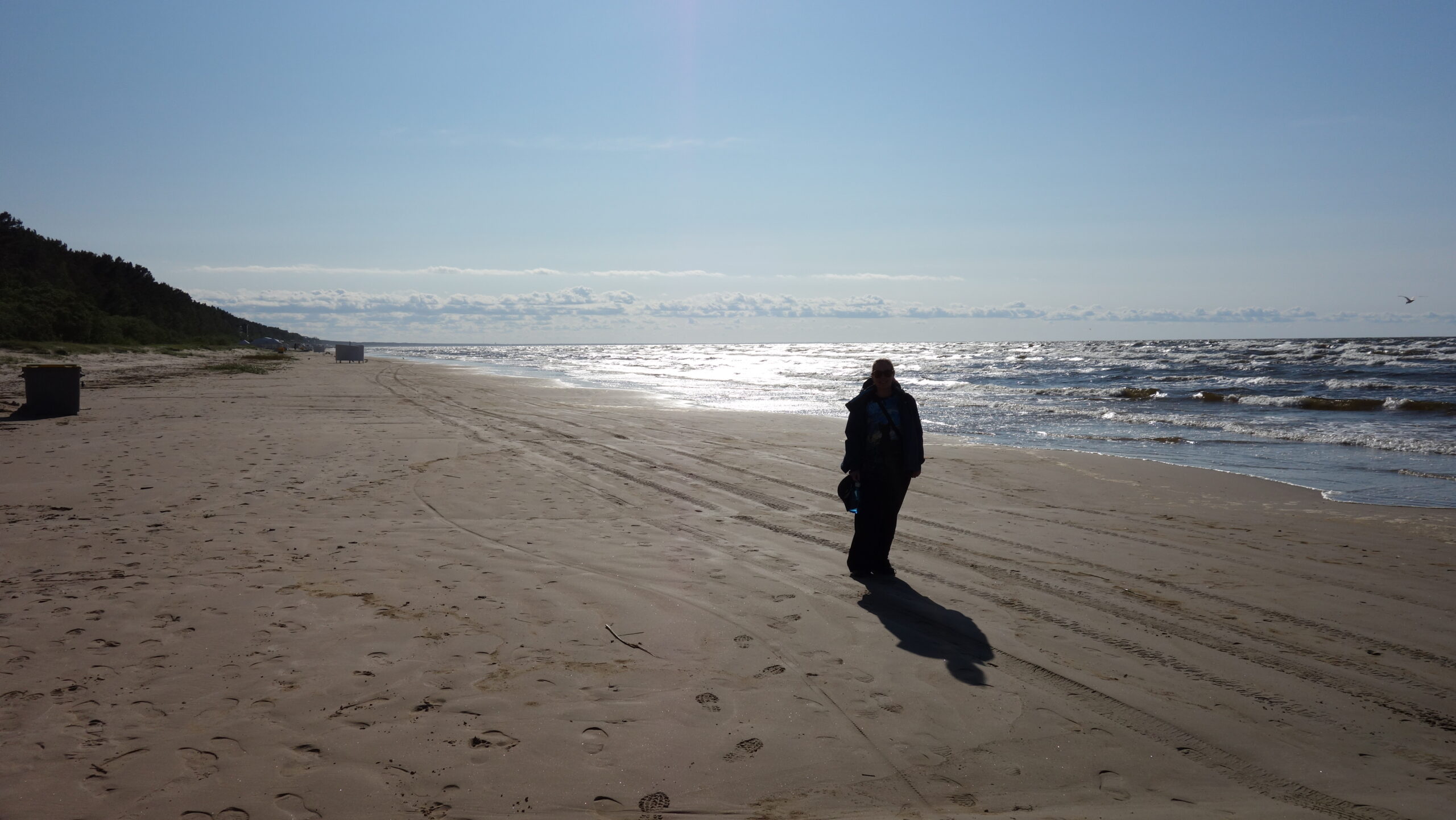 We got to Jurmala about 6:00 and got settled in our room, and I decided we should eat on the pedestrian street in town, Jomas Iela (street). To get there, we walked two hundred yards over a forested dune to the largely empty beach. It was in the mid-fifties, and the wind was blowing over the sea, and there were choppy waves crashing on the beach. We saw one swimmer. We walked past a lady who was wearing a winter coat in front of the “Summertime Cafe” on the last day of spring. That made me smile.
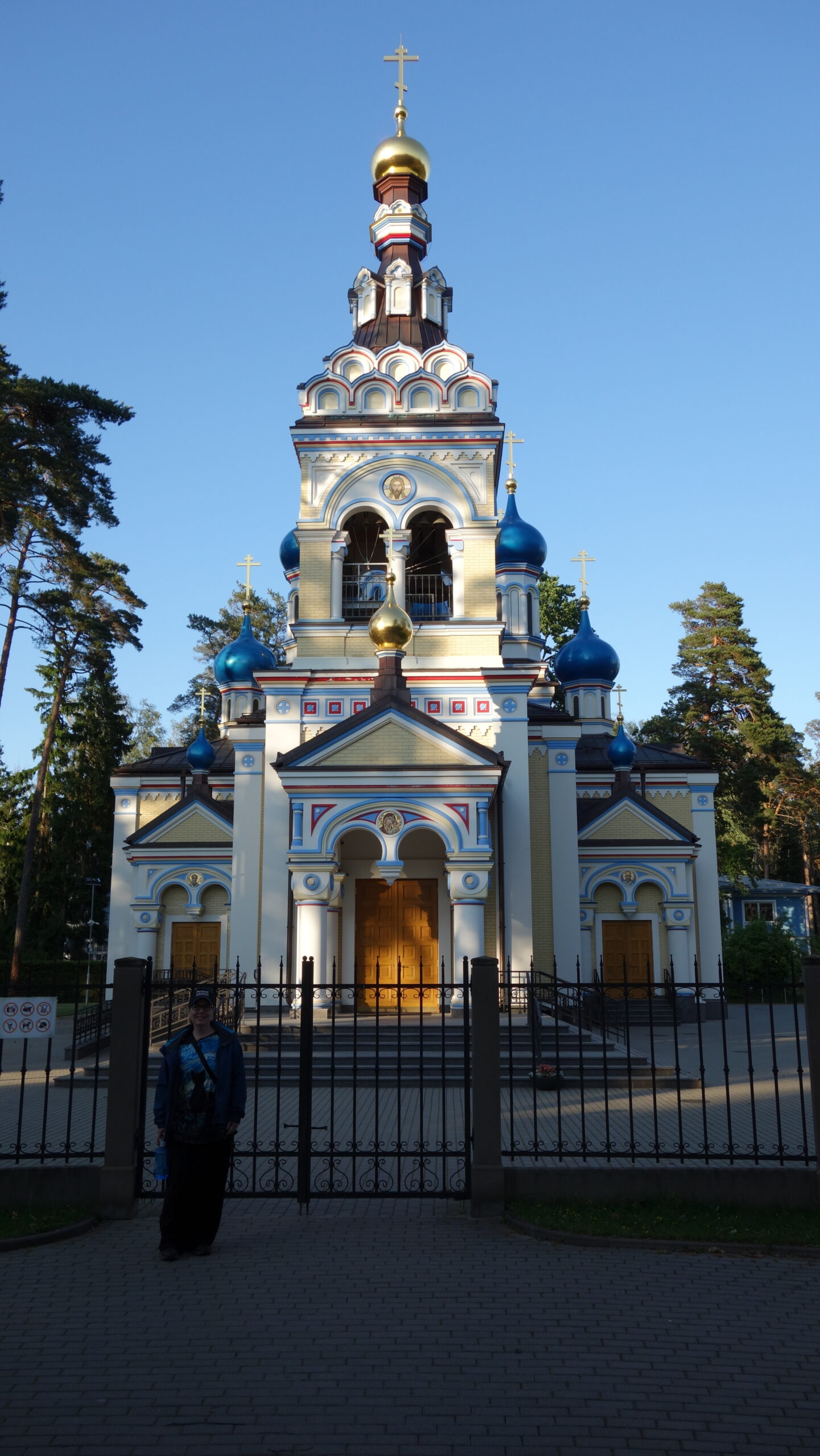
The beach walk was pleasant, if a little cool, and got us close to downtown. Even walking away from the beach here is fun because many of the houses are elegant and pretty to look at. When we got the the pedestrian street, we were surprised it was framed at one end by a wildly colorful Orthodox church. The rest of the street was mostly lined with shops and restaurants. We ate at an Italian pizza place, and had ice cream down the street a bit, where we ran into two American women. One works in Latvia (she didn’t say what she did), and her friend was visiting and then heading on to Florence, Italy.
 We started home after ice cream, making a detour down the main street leading to the beach. I wanted to see what the main beach access looked like. It had a concert venue next to it with a pop concert going on, and a lit-up dancing fountain in the street itself. When we got to the beach, the wind hadn’t died down, so we got some sand kicked up in our faces.
The walk home took about thirty minutes, but I loved looking at all the houses and the many mature trees, all with the distant sound of waves. It was a fun walk. I could easily spend another day here tomorrow to explore, but Meredith takes over the next two days. I’m glad I decided to squeeze both sites in today. It was worth the extra driving.