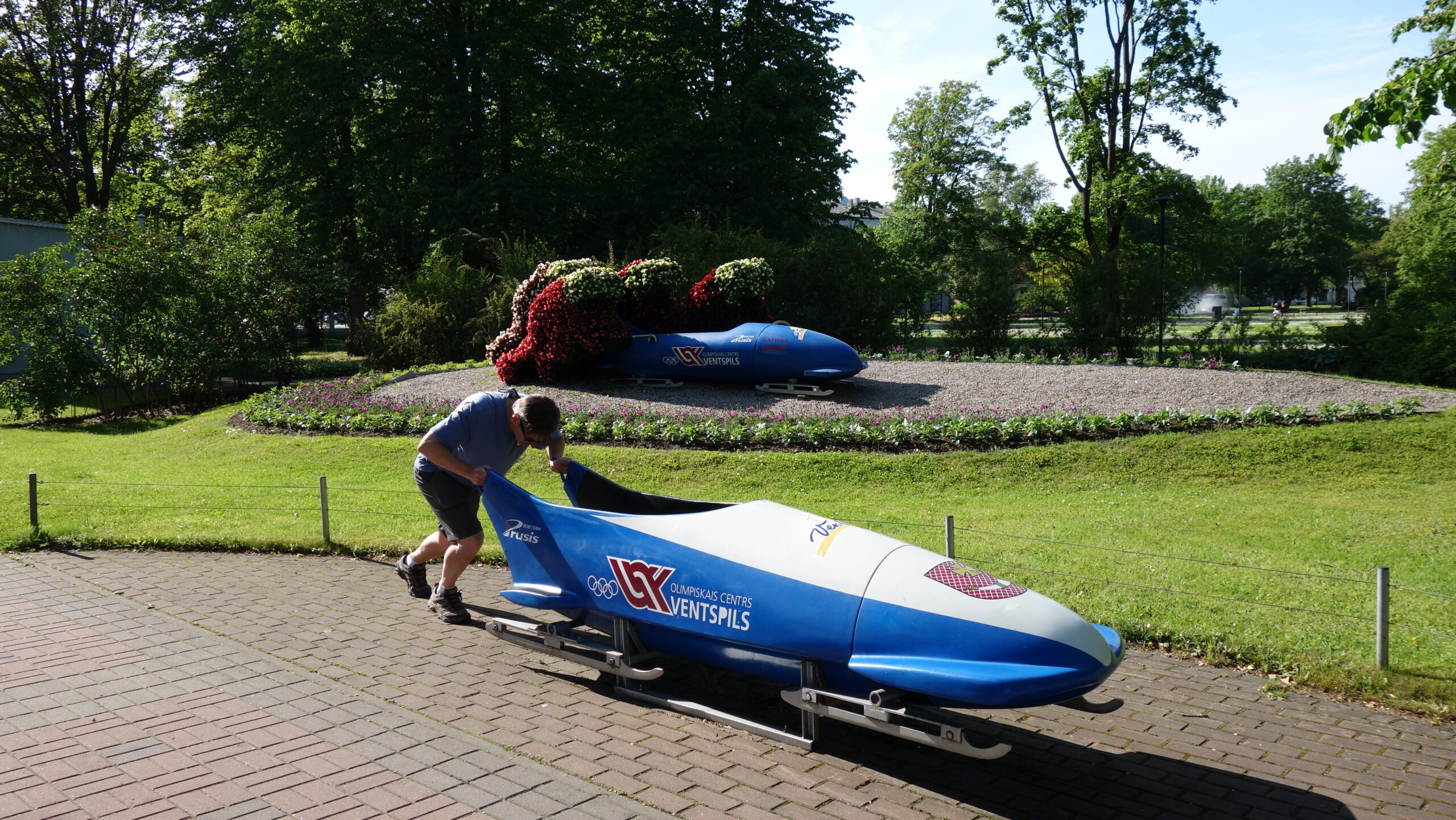
 I’m not sure which is more tiring – our walking forty-seven miles in the last four days, or our covering eight hundred years of history (with some centuries twice). Such was today.
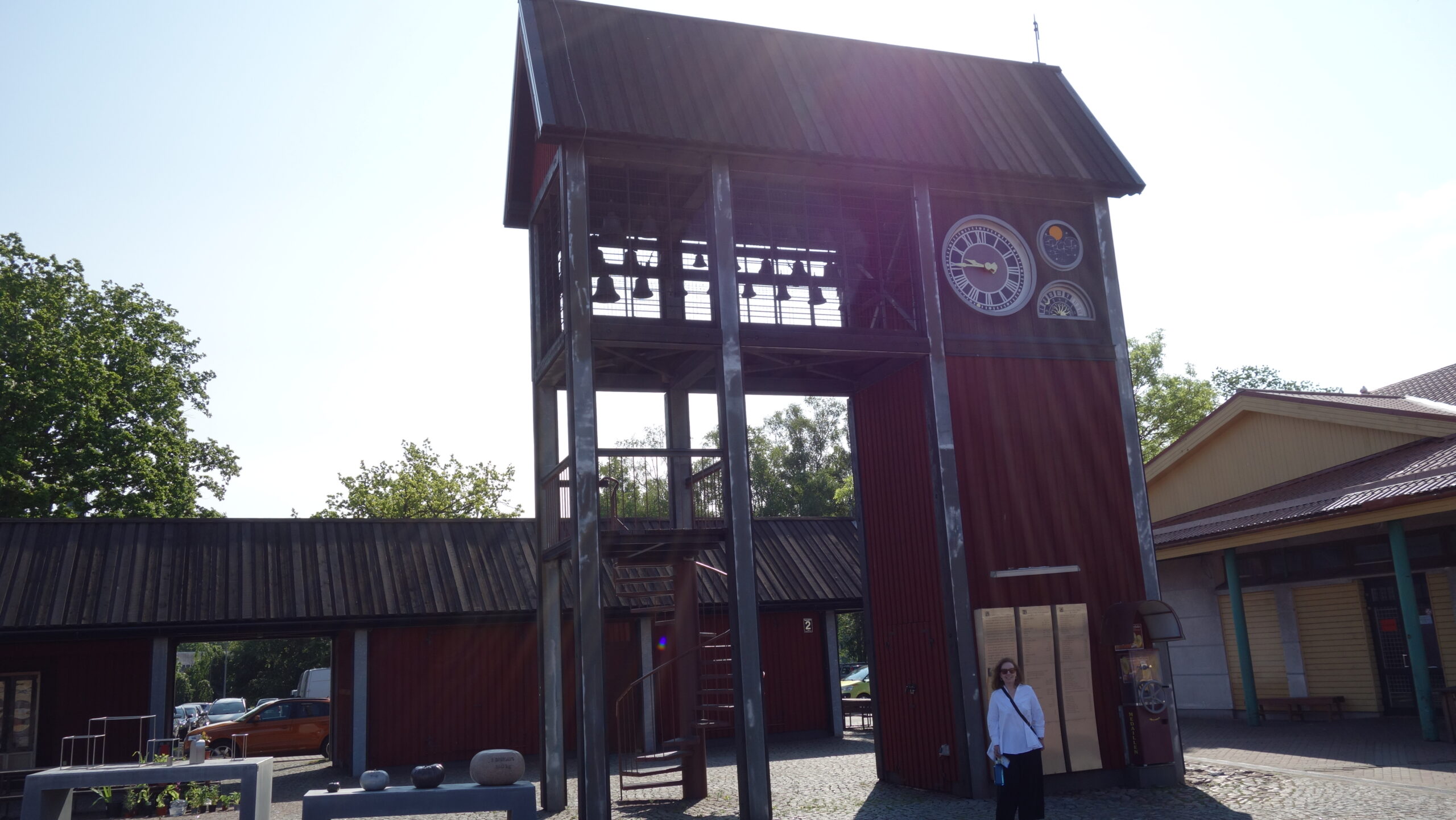
It was a perfect touring day – sunny and cool with a slight breeze. I love walking in this city; there are excellent sidewalks and walking paths, and many of them are shaded by rows of trees, sometimes on both sides of the path. We started the day off by swinging by the Lutheran church to see if it was open. It wasn’t. So we walked two blocks to what is actually the big square of the town, Old Town Market Square. It is quite large and had multiple flower vendors selling wares there this morning, and had a write-up on how this was THE place to own a house back in 1700. The other square (with the church on it) is much smaller, but does seem to have the solstice pole set up in it rather than in the big one.
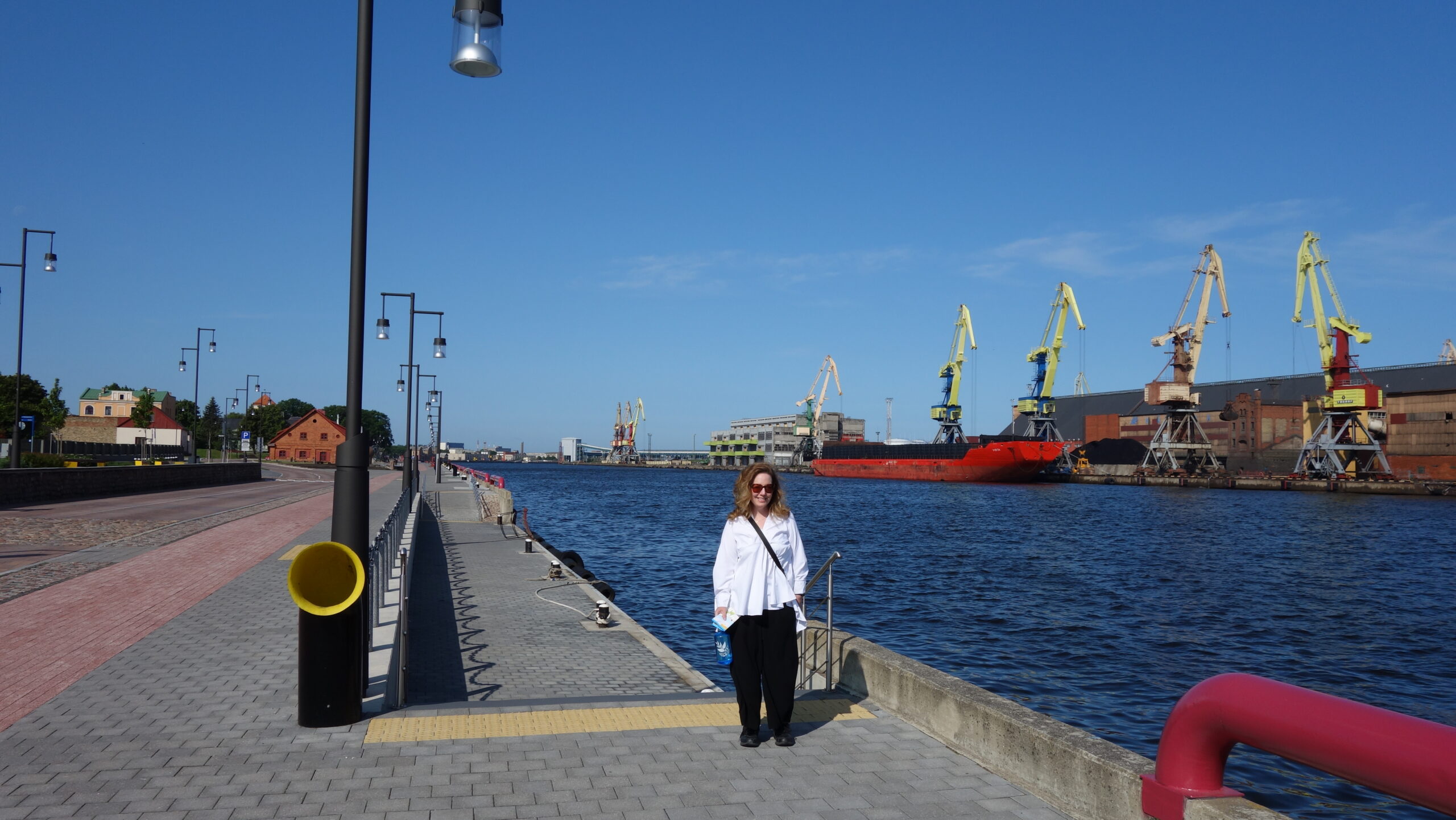
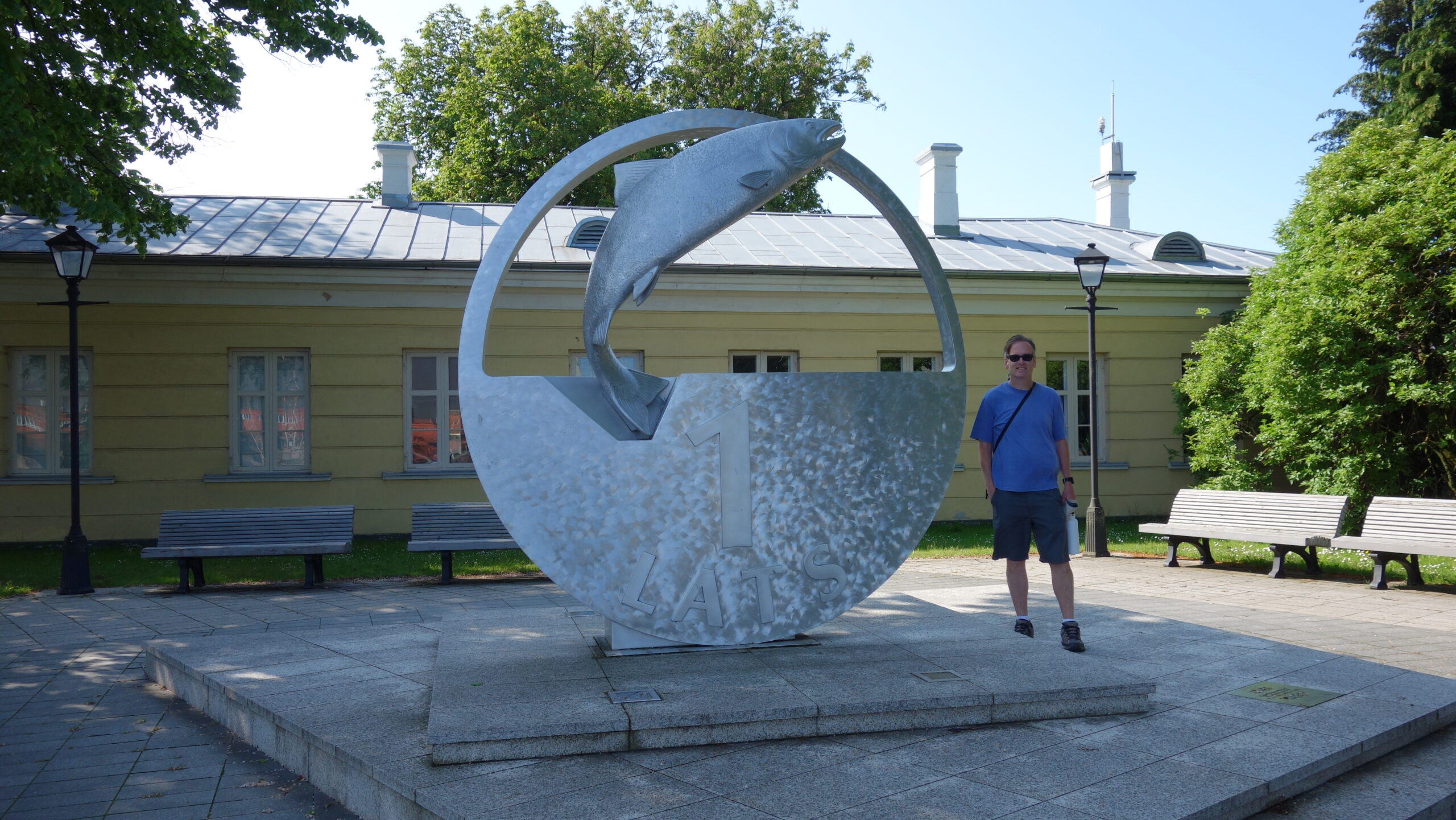
 From the square, we walked to and along the river. It’s still surprising to me how you can be looking across at heavy industrial areas but the pedestrian side of the river is so peaceful to stroll along. We strolled along until we got to a sculpture (and this town is full of sculptures) of a giant Lats coin, which was the money of independent Lativa between the world wars and again from 1989 to 2013, which was when Latvia joined the EU and adopted the euro. A short walk more brought us to:
THE CASTLE OF LIVONIAN KNIGHTS.
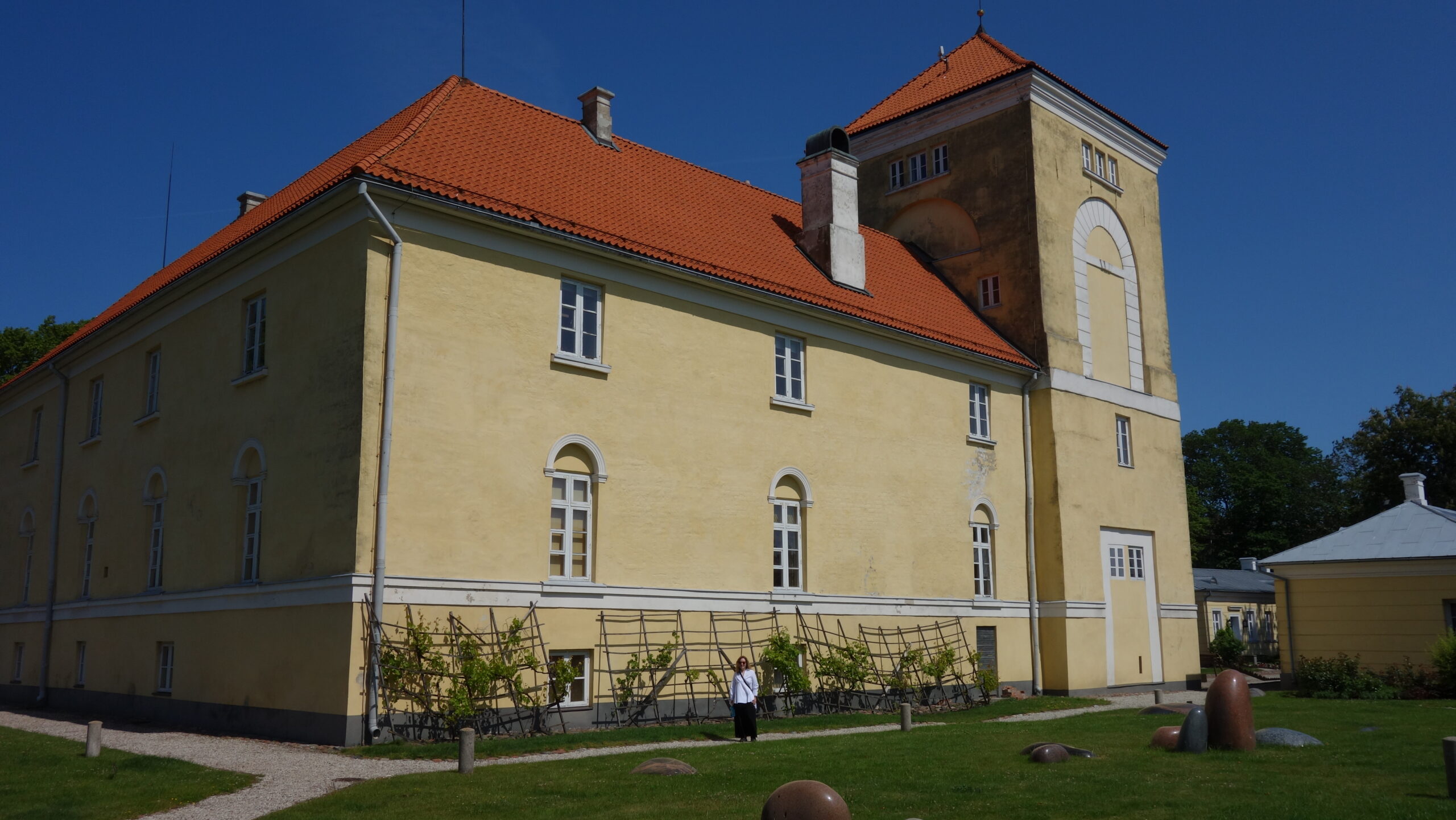 This is posted on pretty much every directional sign along all roads near the center of town. “The Castle of Livonian Knights – 1.2 km” and “The Castle of Livonian Knights – 0.55 km” and so on. We managed to gain entrance to the castle itself through the subterfuge of bribing the gate guard (with enough money to gain us a pass to four different museums in town; sly us). It was pretty easy to see why the locals are pleased with the castle. It’s more cheerful-looking than many “here be castle” castles of England, and it dates back to a similar time as many of those castles, to about 1300 for the oldest part, which is the five-story tower.
 We found out that we could pay for a guided tour in English, so we did that, and we spent the next ninety minutes in a private tour of the castle, getting the history explained to us by a local Ventspils man about our age. He was interesting himself – he grew up under the Soviets, studied history in school, jumped at a chance to go work in a factory in England for a few years once Latvia joined the EU, and finally came home to work at the castle. He’s also been to the US (Florida and California).
The Baltics were pagan states until about 1200, and became the location of “the northern crusade.” Christian countries (in this case, Germanic peoples) sent in knights to build castles and force the conversion of the Baltic peoples to Christianity. The castle here was one such castle, a frontier castle that historians estimate held about thirty knights along with other servants. There was a network of such small castles in this part of Latvia, but the castle here is the best preserved.
 Not that the locals didn’t have to work at it. The Germans used the castle for storage and housing in both world wars, and the Soviets used it for housing and administration until they left the castle in 1983. They did not leave it in great shape. The Latvians spent the 90s and part of the early 2000s restoring the castle to its present form, and it looks great.
Our guide helped us to start to straighten out our understanding about the Liv people who lived here, and the other Baltic tribes who filled in the vacuum once the Germanic peoples pushed the Livonians out and tried to convert them. There are only a few hundred Livs left now, and only about ten people who speak the language, which is more similar to Estonian than Latvian.
 We got to see a Latvian hoard that was found on a beach by a person looking for scrap metal. In fact, he sold some of the bronze from the hoard to a scrap dealer who happily called the museum, and they were able to recover it for display. It was mostly of bronze jewelry and looked similar to pieces we had seen in Britain from a couple of centuries before. Bronze wasn’t produced here in Latvia at the time, and so was very valuable and used as a kind of money for bartering.
The castle restorers removed years’ worth of plaster to reveal some fragments of the medieval room decorations, which were Christian-themed with crosses and vineyards and the like. In a couple of rooms, they left the layers of plaster partially cut back so that you can see the walls from different time periods, and our guide pointed out where doors had been moved or windows narrowed according to the contemporary fashion.
Our guide did indicate that he didn’t like the room that was made up as it had been under the Soviets. Who can blame him, really?
We wrapped up the visit to the castle by looking at some Latvian artists’ work, including one from a man who studied in New York and Cleveland back in the 1930s. It was all very influenced by Impressionism, and I was quite fond of it.
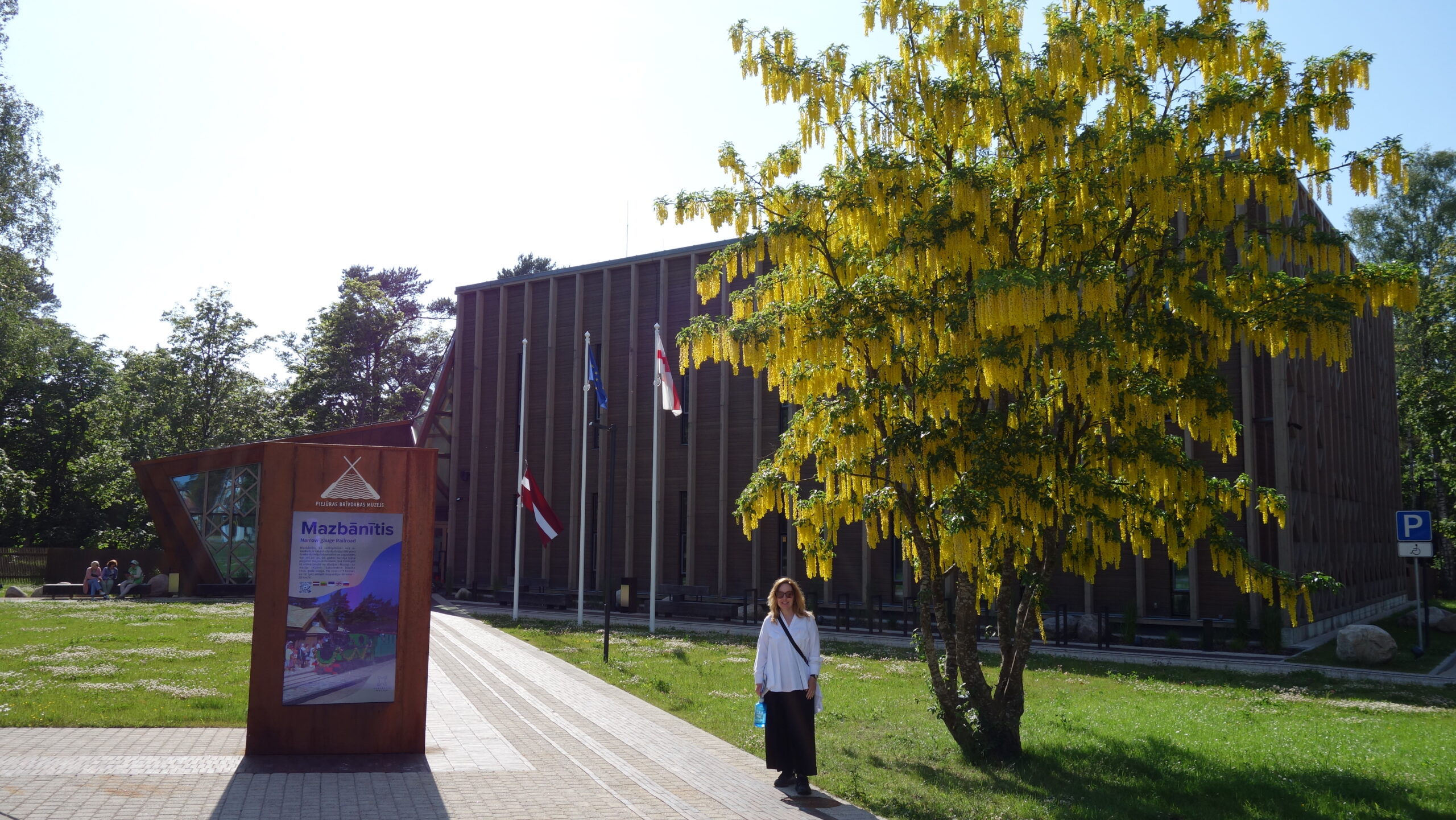 We grabbed a light lunch from a bakery, and we ate back at the hotel. After Meredith let me rest my (oddly sore after yesterday) back, we were off, walking a mile or more past the restaurant we went to last night, finishing at the Seaside Open Air Museum, which was included on our castle combo ticket. The Seaside Open Air Museum is a variation on a Riordan vacation staple – the historical regional buildings museum. We’ve been to them in Ireland, Scotland, Wales, Lithuania, the US, and more. We’re fond of them as visual ways to see how people lived.
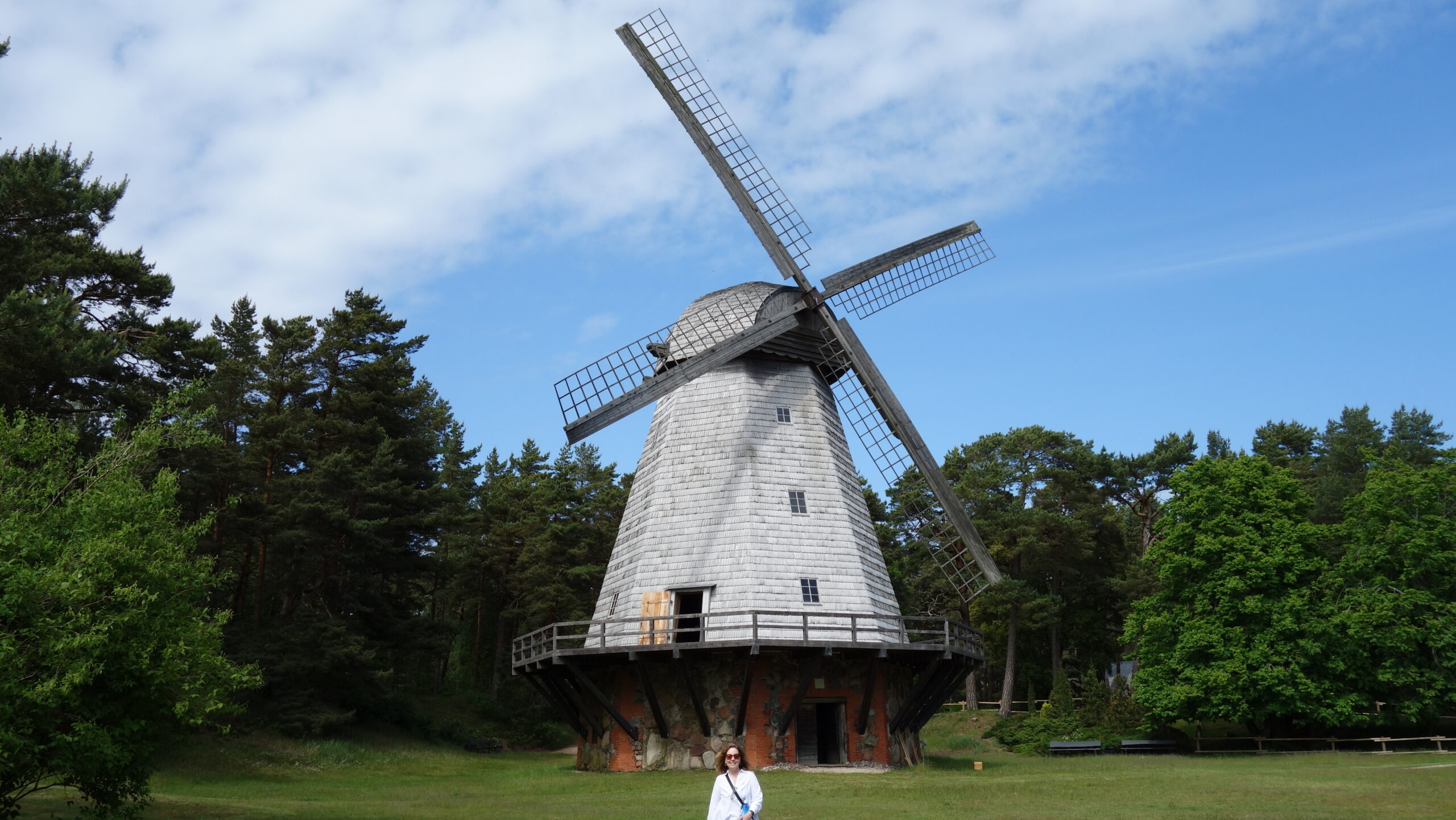
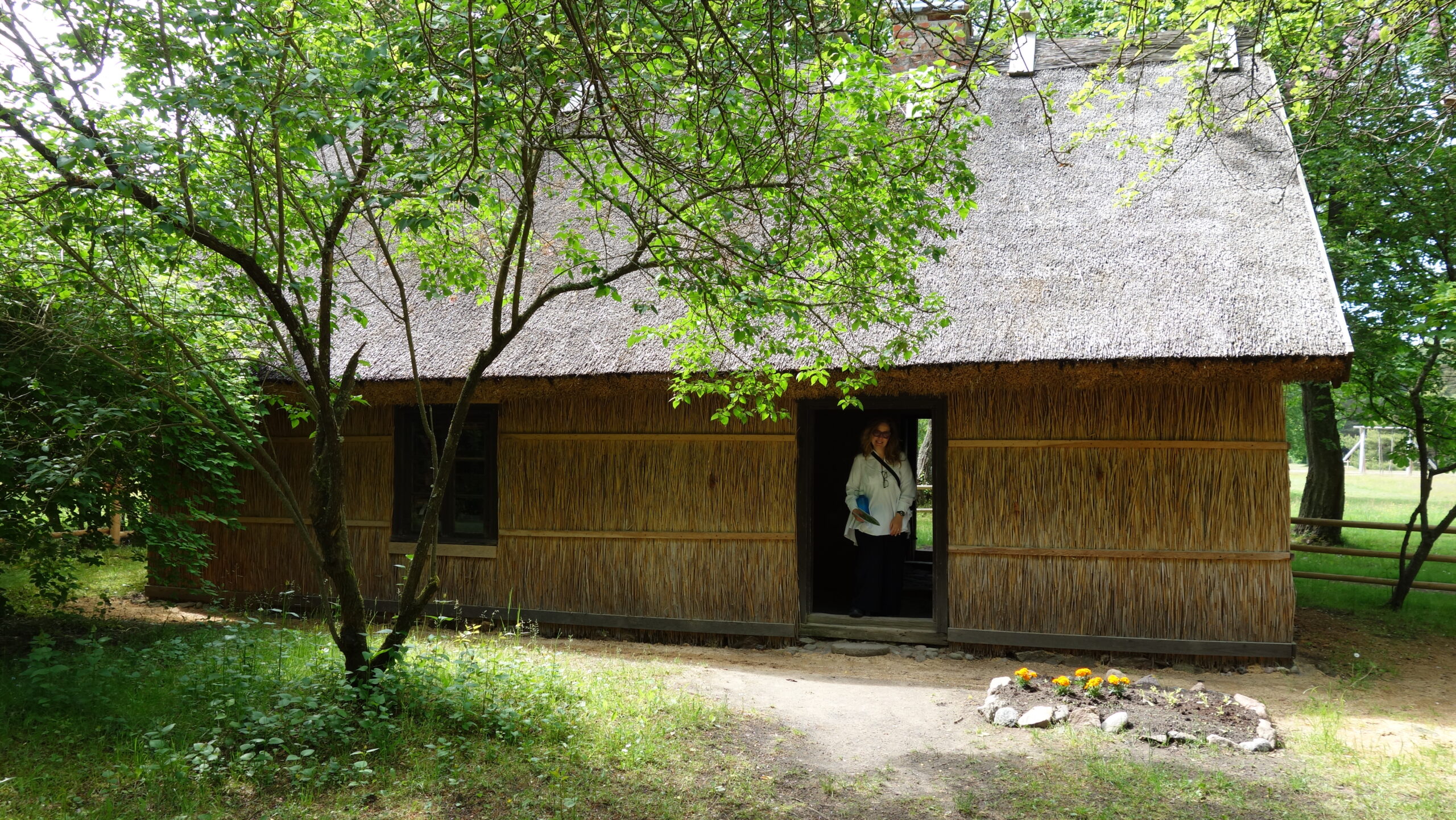 Not shockingly, given the location and the name of the place, many buildings were devoted to the lives of fishermen and their families. There were places to store nets, and places to dry fish, and there were dozens of boats of all sizes and dozens of anchors of various types. The museum also covered farms and buildings for animals and grain storage. There was a Dutch-style windmill for processing grain, and even two saunas (we are close to Scandinavia). There was even a small railroad, which sadly wasn’t running today. Mer and I found a two-person standing swing set which we managed to use without injury. My attempts at using stilts at the windmill were less successful.
The museum had a new one-year-old museum center that talked about the peoples of the area, which helped firm up some information about the Livs, who were almost all fishermen. Interestingly, the fishermen of the area tended to adopt new ideas and fashions more quickly than the farmers because the fishermen were in contact with outside peoples.
 We also learned the fun fact that the serfs were freed in Latvia in 1817, which was almost fifty years before that happened in Russia itself.
We’re not sure of the tie-in, but there were several different cartoon pictures of cats in the museum displays and in the information booklet. We liked that.
The new information center was fairly interactive, with push-button information centers and language translations and even a virtual lady of fashion from about 1900 who mirrored your own movements. We had a good time doing more than just reading things.
The museum wrapped up the touring day, and so we walked a mile or so to supper, passing through “Pittsburgh Park.” We think Pittsburgh is a sister city of Ventspils. The park may be the greatest kids’ park I have ever seen. There were multiple playgrounds, including one that had a three-story enclosed twisty-slide. Mer was tempted to try that but didn’t want to do that with a ton of kids running around. They sure seemed to be laughing and having a good time.
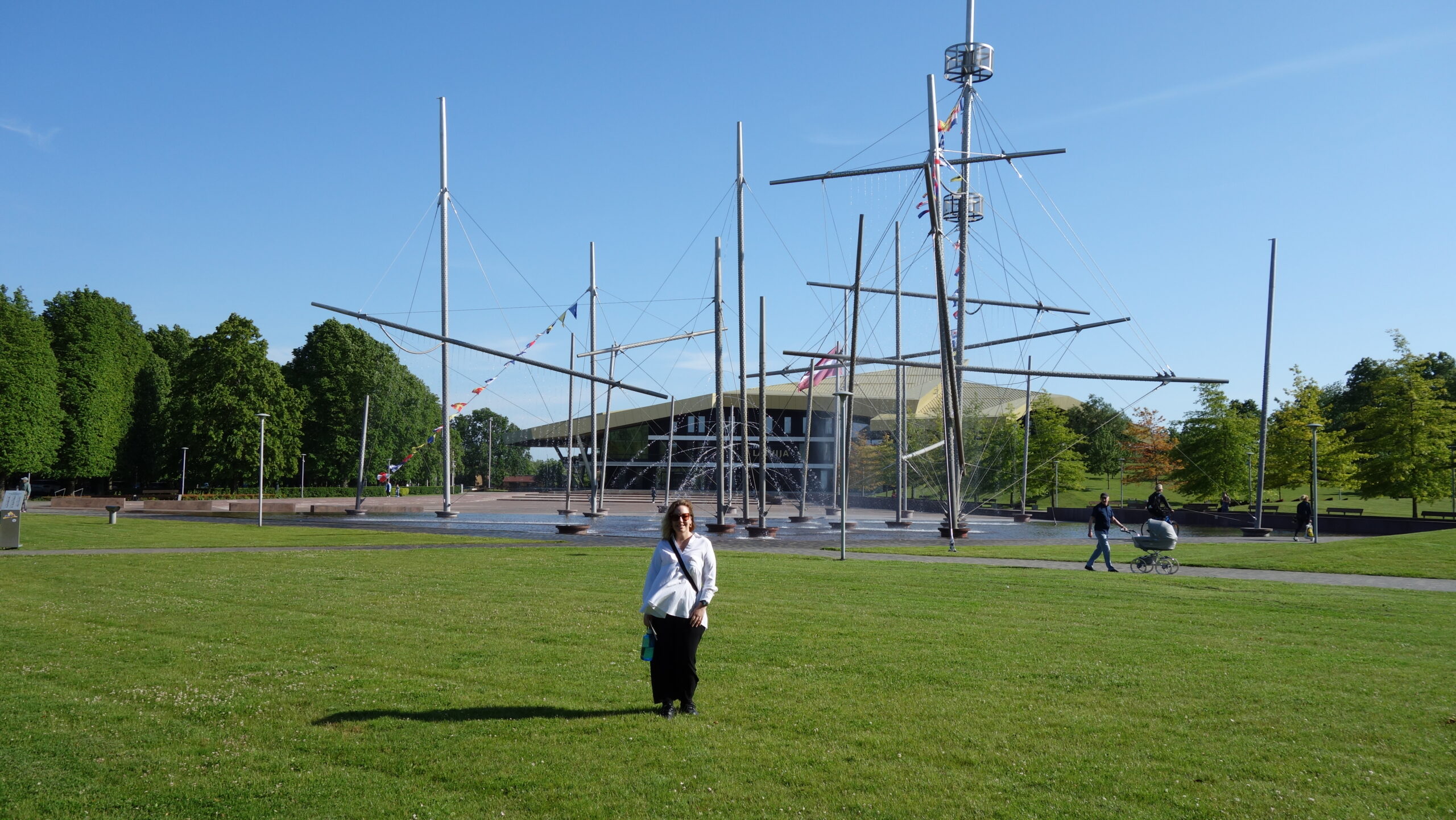 And so we will say goodbye to Ventspils. It’s a fun little city, with parks and sculptures and walking and biking paths and beaches and flowers that are surprising in a city of 35,000 people. We’ve loved how quiet it is here, and were impressed at the signs for parking everywhere in a city that didn’t seem to have a parking problem. We came up with a slogan for Ventspils – “Peace, Parks, and Parking.” Ventspils Tourism, you are welcome.