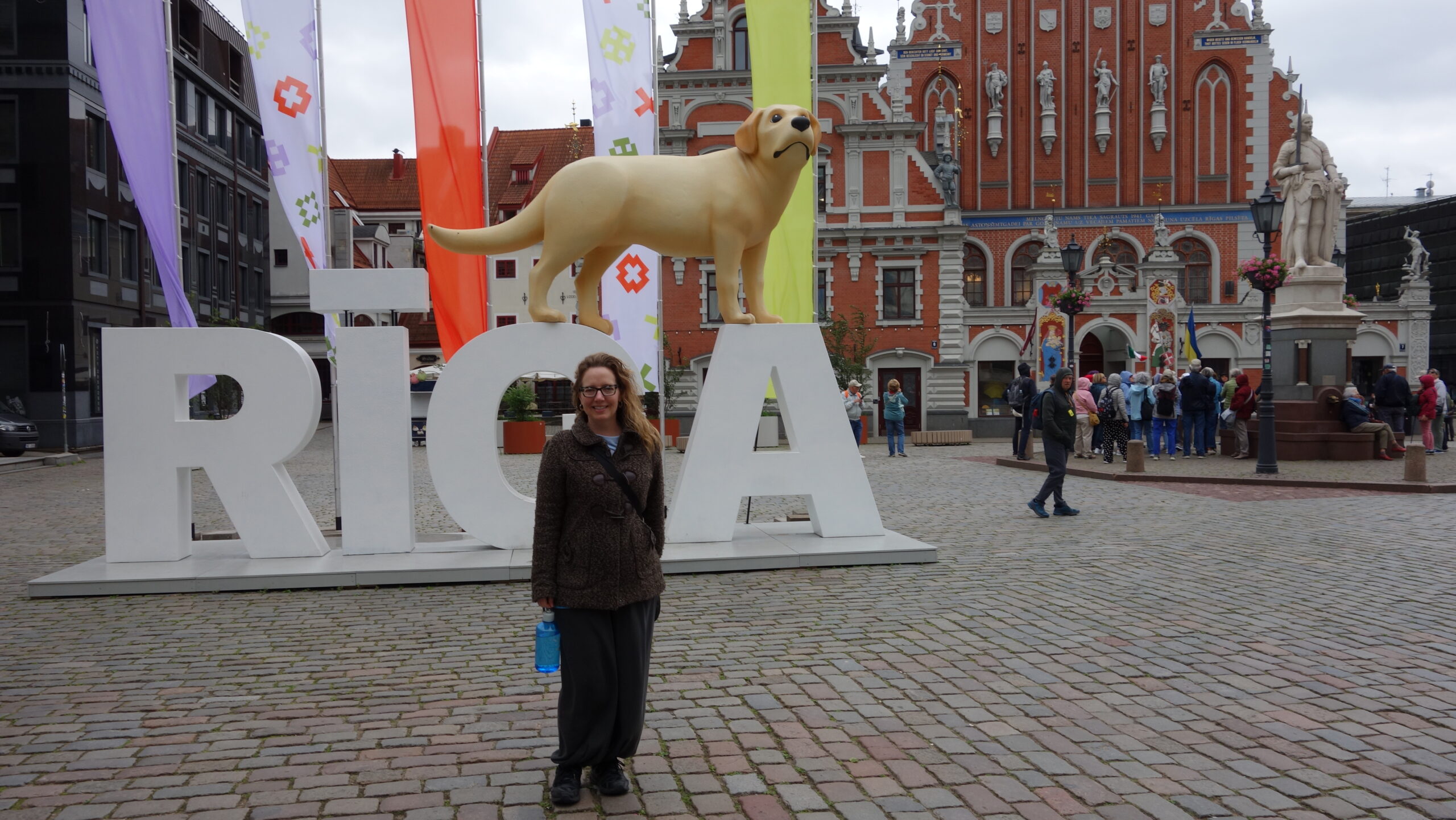
 So it appears that my late lunch/early supper yesterday caused me a moderate case of food poisoning. My Wednesday involved an exciting private tour of my GI tract. By 4:00 in the afternoon, I was feeling moderately better, so I did go over to join Meredith at the Museum of the Latvian Occupation, which tells the story of Latvia under German and Soviet rule. I managed to walk the two blocks, stay for half an hour, and walk the two blocks back to the hotel, where I promptly fell asleep from the exertion. Not the best touring day ever.
And so, for the first time in thirteen years of travel blogging, Mu-sings is proud to present a guest author, Meredith.
 Sometimes the travel challenges that worry you aren’t the ones that should, apparently. Matthew and I take turns being in charge of our touring, and while Matthew’s first three days went swimmingly, he spent the last two days wondering how he would find sufficient touring activities when the weather forecast looked grim and the majority of Latvia seemed to be closed for a national holiday … yet we ended up having a great time. Yesterday evening, however, he anticipated a fine final day of his being in charge, since although the weather was still seeming iffy, the morning was supposed to be dry, and even if the rest of the day proved rainy, the indoor options would be open again. It was a fine day of touring indeed – but unfortunately, I was the only one able to enjoy it (and my enjoyment was tempered by not being able to share it with my beloved).
Still, one doesn’t get to go to Riga every day, so once I was convinced that his condition wasn’t going to be helped by my presence or harmed by my absence, I decided to start the day on my own, beginning with breakfast. Oh, Matthew – I’m so sorry that of all the Latvian hotel breakfasts we’ve had (or haven’t had, in the case of our Sigulda hotel), you had to miss this one. The buffet was vast: I spent at least a few minutes just trying to get oriented to its layout and offerings. Matthew, I really hope you can take advantage of it for our final couple days here – I especially recommend the potato casserole, of which I had three helpings.
 But I couldn’t keep eating indefinitely, because I had a 9:30 rendezvous with Ieva (“EE-eh-vuh,” Latvian for “Eve”), the guide Matthew had booked for a private four-hour tour of Riga. She was terrific. In addition to learning more about Riga, I also learned more about Latvian life in general. Being in her early forties, Ieva doesn’t have a lot of memories of Latvia’s Soviet years, but she shared a few, such as being excited when her father somehow got access to a large number of bananas, or being proud to help her mom and other women serve soup to those manning anti-Soviet barricades in January of 1991. Ieva told me about some Latvian customs, too, like the celebrating of name days (May 22nd is the date set aside as a “name day” for those with nontraditional names) and Midsummer (Latvians like to stay up to see the sun set and then rise, but since it was so cloudy the other night, Ieva and her family ended their celebration earlier than usual).
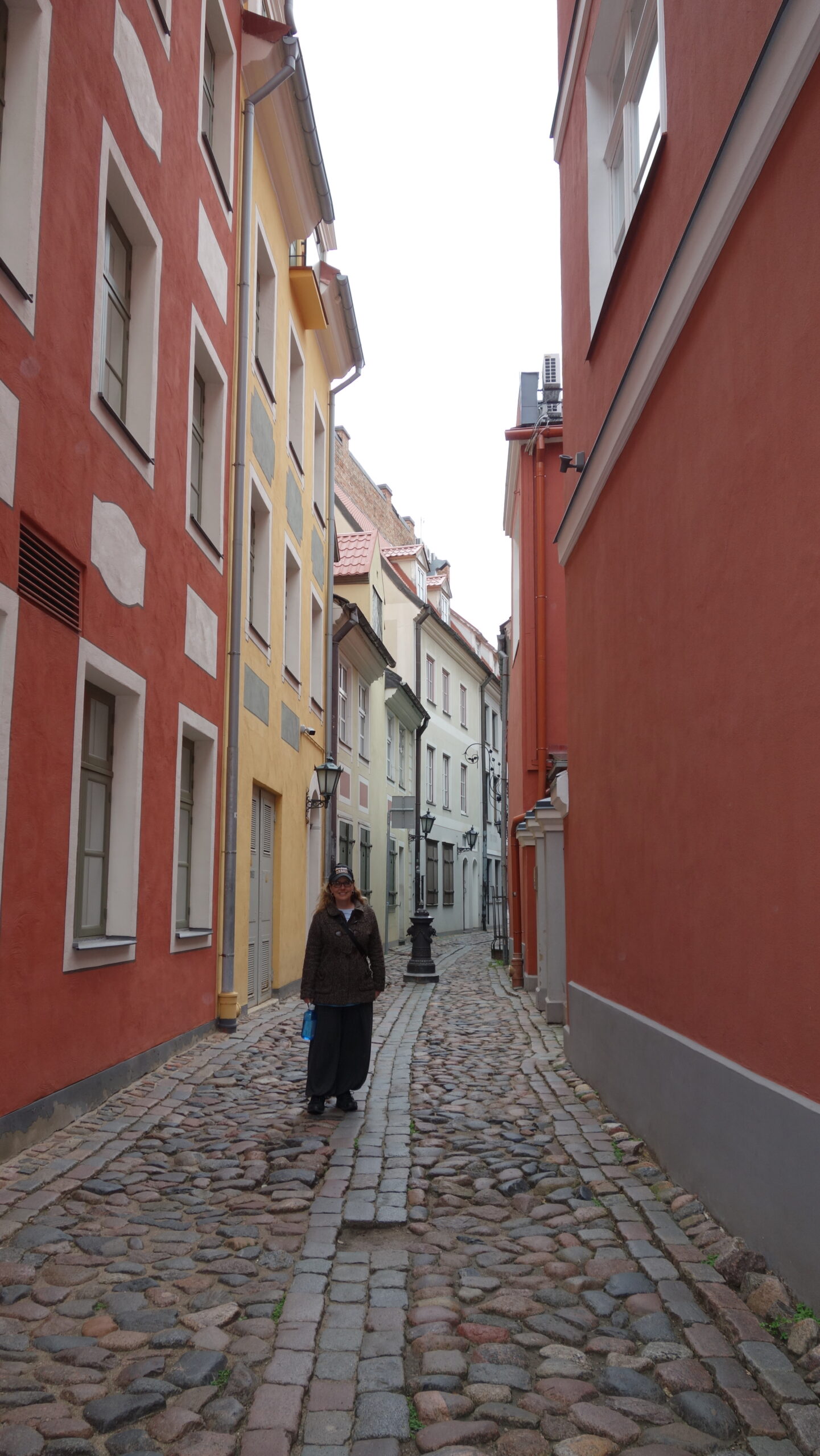
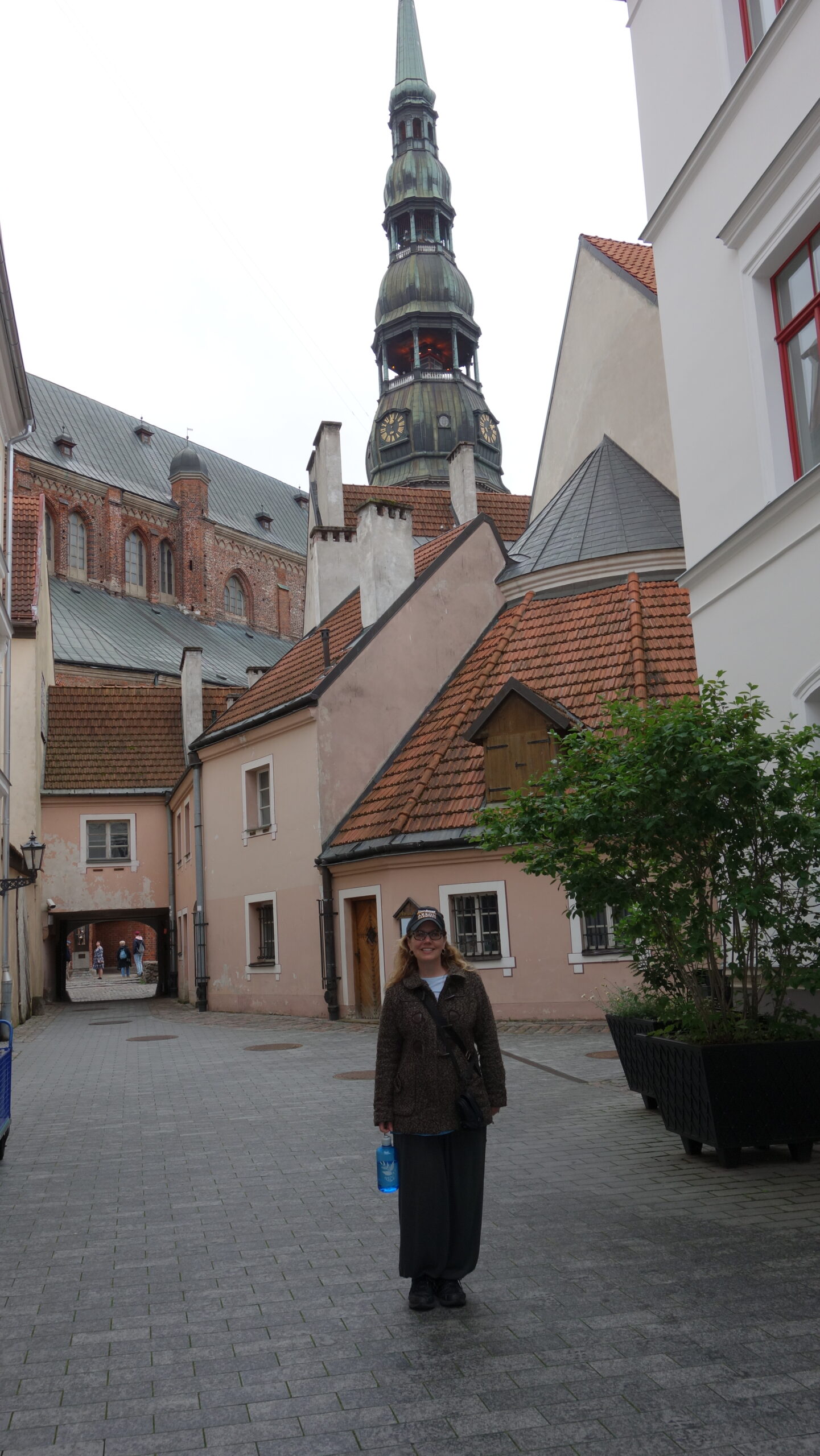
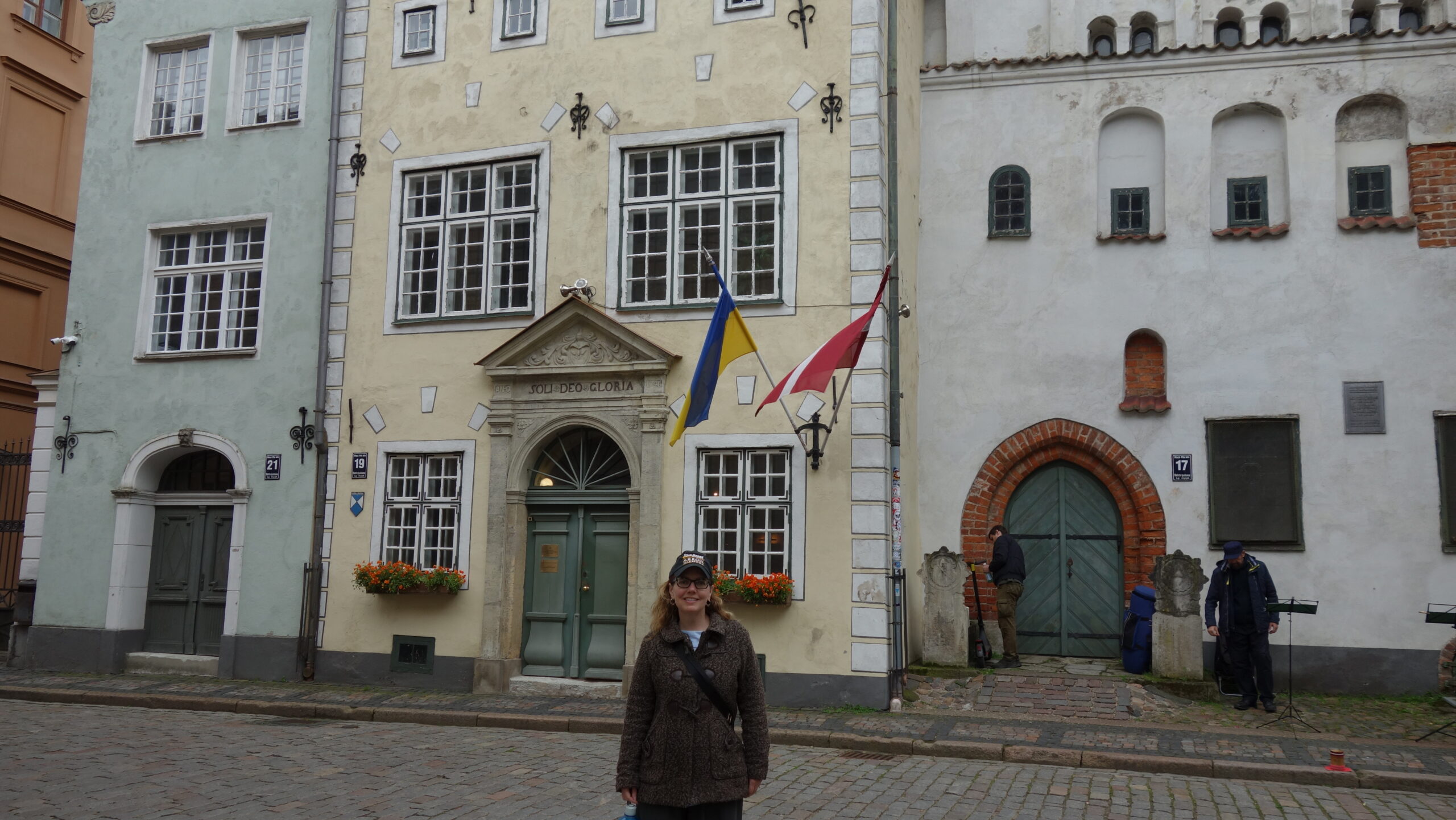
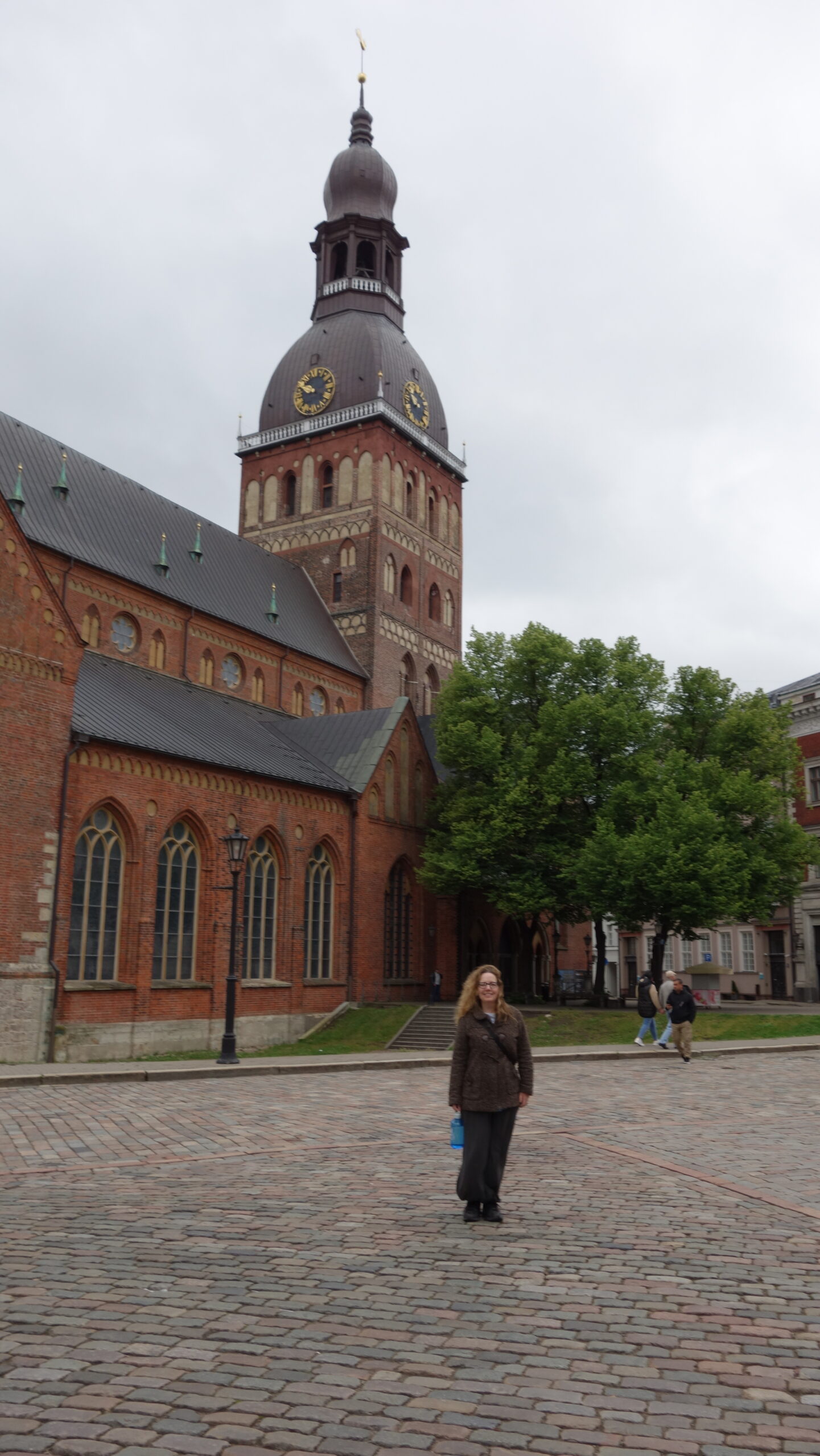
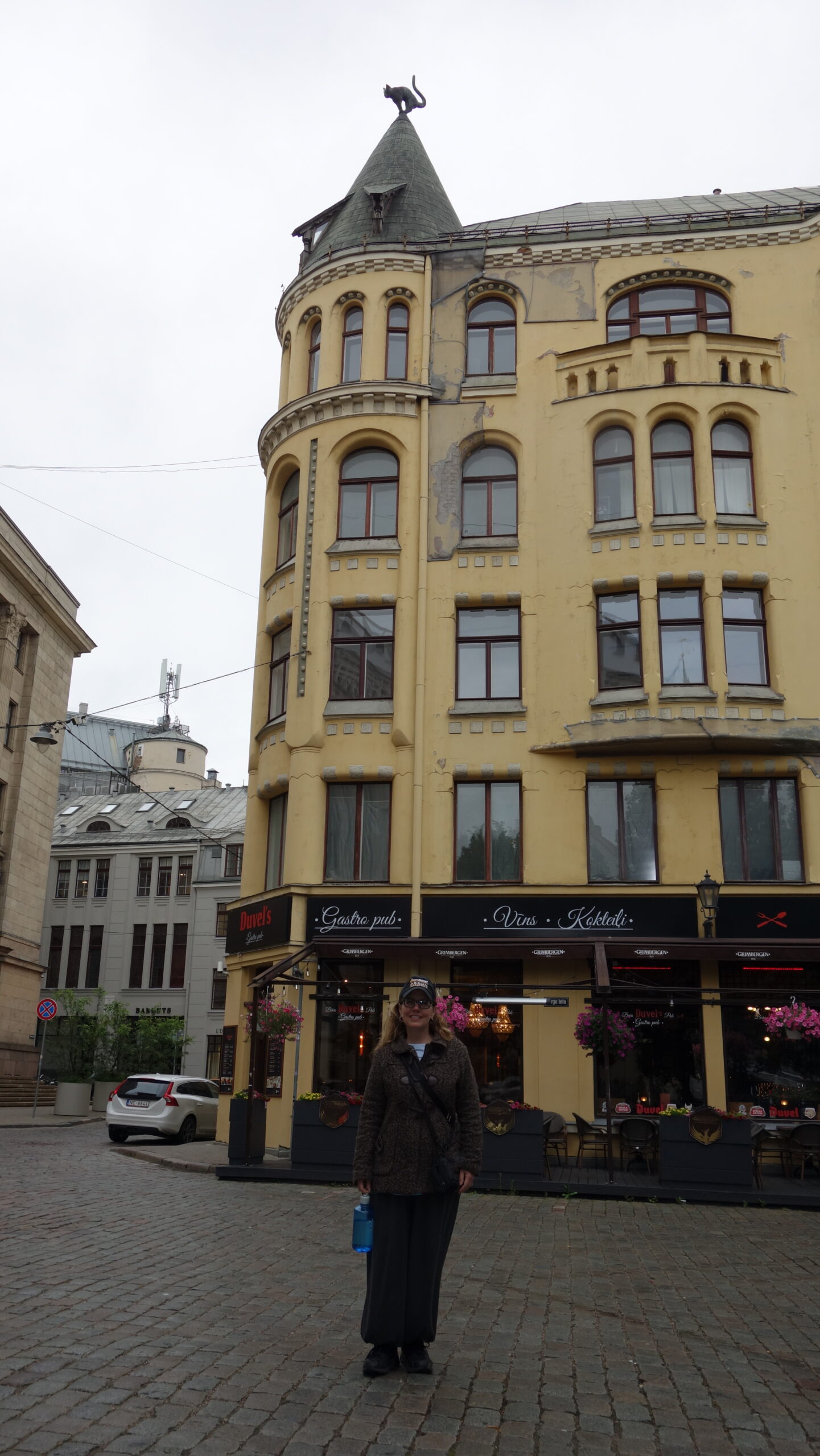
With regard to our tour of Riga, Ieva started in the Old Town, some of which Matthew and I had seen in our wanderings yesterday afternoon, but much of which was new to me. The Old Town has a plethora of beautiful buildings and a handful of lovely squares, so we spent most of our time outside (despite the forecast’s prediction of cloudy yet dry skies all morning, there was a little rain off and on, but nothing particularly problematic). We did briefly pop into a couple places where we could see interiors for free – one of the churches and a small architecture museum housed in one of Riga’s oldest stone buildings.
 After spending a couple hours in the Old Town, we went to Ieva’s favorite bakery, where she bought us several typical Latvian treats: bacon buns and two sweet pastries, one of which was a sort of Latvian spin on a cheesecake square, and the other of which was a Latvian version of a cream puff. She also kindly bought a bacon bun and pastries for Matthew (but he’s not up to that level of rich foodstuffs yet, so these ended up being my dinner).
The next portion of our tour was visiting Riga’s Central Market, a place that’s distinctive both inside and out. It’s housed in several German Zeppelin hangars left over from World War I, with different types of products in each of the different hangars: meats in one, fruits and veggies in another, souvenirs in another, dairy products and some other miscellaneous edibles in another, and seafood in the final one. Multiple stalls outside the hangars sold more stuff, from clothing to flowers. It was a fascinating place, but I resisted buying anything (though if you need to know where to get pig snouts or smoked eel the next time you’re in Riga, I now know where to send you).
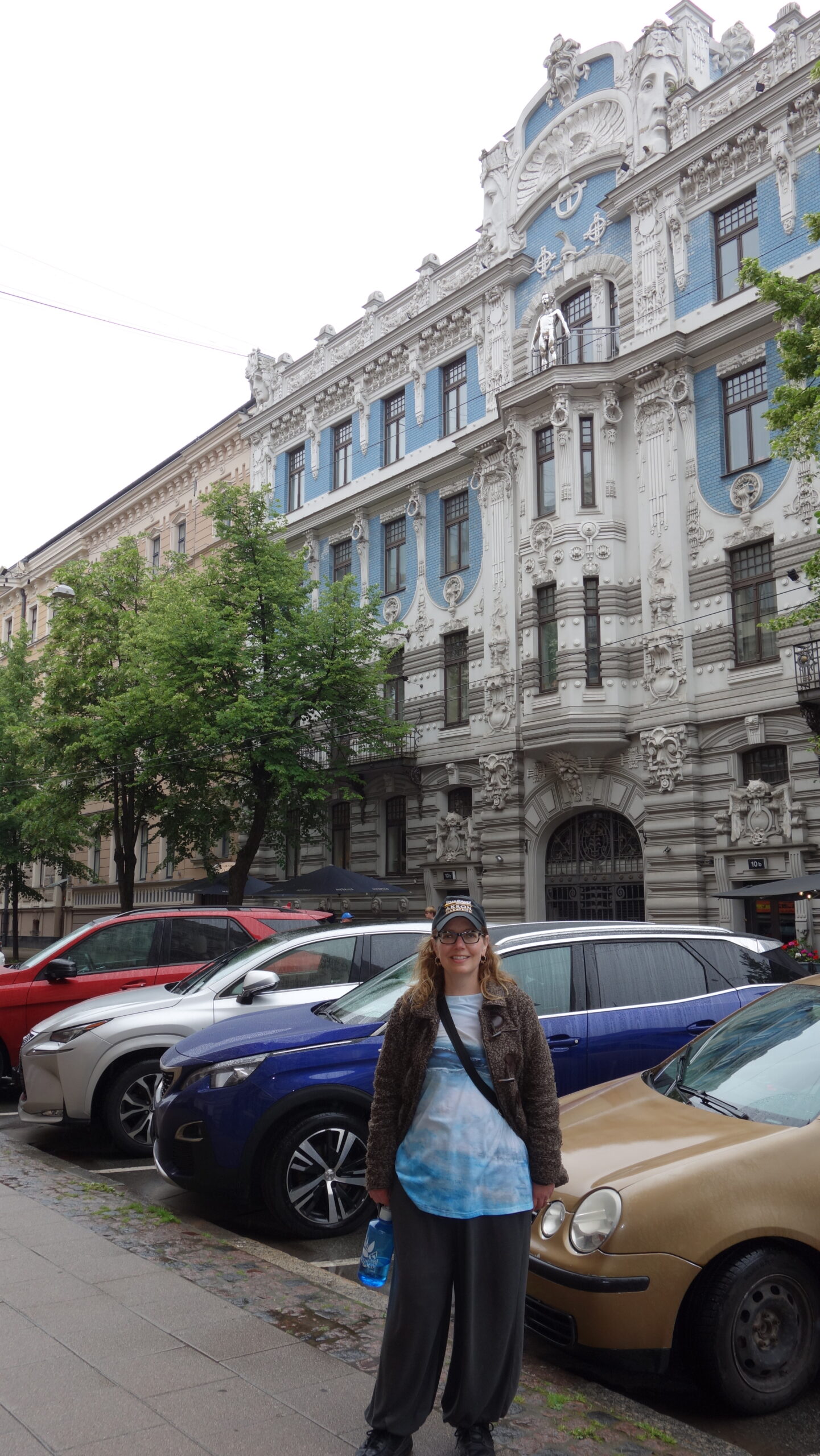 For the final portion of our tour, Ieva took me to a neighborhood that has helped to make Riga “recognized by UNESCO as unparalleled anywhere in the world,” according to our guidebook, in the realm of Art Nouveau architecture. I’d seen some snazzy Art Nouveau architecture before, including impressive examples in Prague, as well as noteworthy examples in Riga’s own aforementioned Old Town. But the elegant architectural confections in the city’s so-called Quiet Centre were jaw-dropping, especially where there were several in a row. So from a visual perspective, that was the tour’s climax, but we also had a lovely denouement, as Ieva walked me back to our starting point through a couple different parks and down streets I hadn’t yet seen.
Returning to the hotel room, I was hoping to find Matthew vimful, vigorous, and ready to join me in the rest of the day’s touring … but fearing I’d find him curled up and whimpering instead. The actuality was somewhere between those two extremes: he clearly wasn’t feeling great, but was trying to muster the energy to take a shower. I was trying to decide if I should go see a sight that would require me to figure out how to use Riga’s public transportation system or if I should just go to the sight that was a mere five-minute walk away. Figuring that Matthew might want to join me tomorrow at the latter sight, I was leaning toward the former, but he convinced me that, since the further sight closed at 5:00 and it was already almost 3:00, that would be a poor use of my touristic time. So I headed instead to the nearby Museum of the Occupation of Latvia.
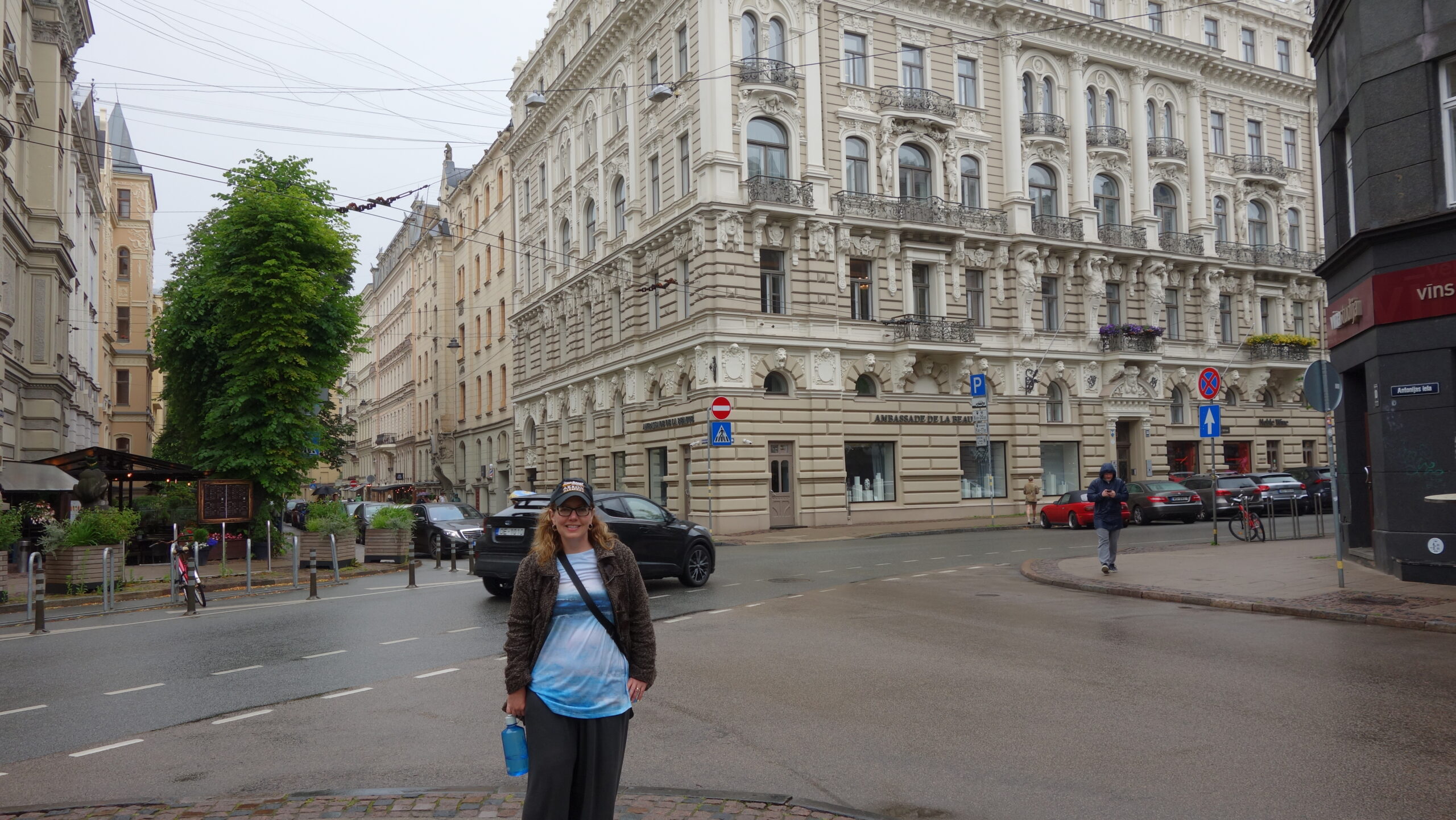 The museum has been around since the early nineties, but underwent extensive renovations just a few years ago; the result is an effective and thought-provoking treatment of Latvia’s twentieth-century experience. Part of the building that contains the museum is a dark, windowless, architectural eyesore from Soviet times, yet as Ieva earlier explained, Latvians see the building as part of their history, and a reminder of the dark times that they survived and overcame. The museum’s Latvian-American architect expanded the building with a white section that represents the present in contrast to the dark past, and capped that section with a glass one that represents the future.
Because I almost always feel as if I get more out of museums if I have a guided tour, I arranged to join the 3:30 English one … and our group of seven included a family of three who lived in Cleveland Heights. Our guide took us to each different area of the museum, addressing that area’s overall emphasis and drawing our attention to some of the specifics. The areas’ emphases were varied, including deportation transport conditions, gulag prison experiences, types of resistance, and more, ending with eventual liberation. Among the items we saw were a machine the Soviets had used for eavesdropping on foreigners in a hotel restaurant, “postcards” written on birchbark, an actual piece of Latvian rye bread a deportee had saved, and a set of metal dentures a prisoner had made for himself.
 Once the guided tour was over, I went back through the museum a second time on my own (Matthew had come and gone, by this point). I’m always a fan of museums with one-way layouts, as they reassure me I’m not missing anything – and, in the case of historical museums, they often help me feel more aware of chronological developments. Not only did this museum have the one-way layout, but it also had some effectively immersive touches. For example, a number of the displays were behind bars that didn’t obscure the objects or information, but did keep reinforcing underlying themes. Similarly, most of the museum was fairly dark, though again, not generally in a way that obscured objects or information. When you entered the section about deportations, you walked through a somewhat stylized yet accurately sized model of one of the train cars, so you got a better sense of how claustrophobic it would’ve been to have to share that car with forty other people for days on end. In one of the Soviet sections, the lighting was red. And the liberation section was on an upstairs level that allowed you to look down on the rest of the museum and feel a sense of rising above the darkness and struggle.
 I finished my visit just a few minutes before the museum closed, and left with increased gratitude for the freedoms I’ve enjoyed thus far in my life – and an increased sense that what we tend to see as hardships are usually pretty trivial compared to what many have endured. Nonetheless, while food poisoning is more of a minor inconvenience than a true hardship, I do hope Matthew and I are both feeling in tip-top touring shape tomorrow, especially since it’s our final full day in Latvia. However, whether we are or not, we’ve been richly blessed.