Monthly Archives: June 2025

Latvia 2025 – Day 3, Monday, Ventspils

Not all who wander are lost. Some are just trying to see all of Ventspils on foot. “Ah!” you say. “You have a car.” True. And it sat in its spot all day today. Why drive when you can walk to destinations a mere mile-and-a-half away?

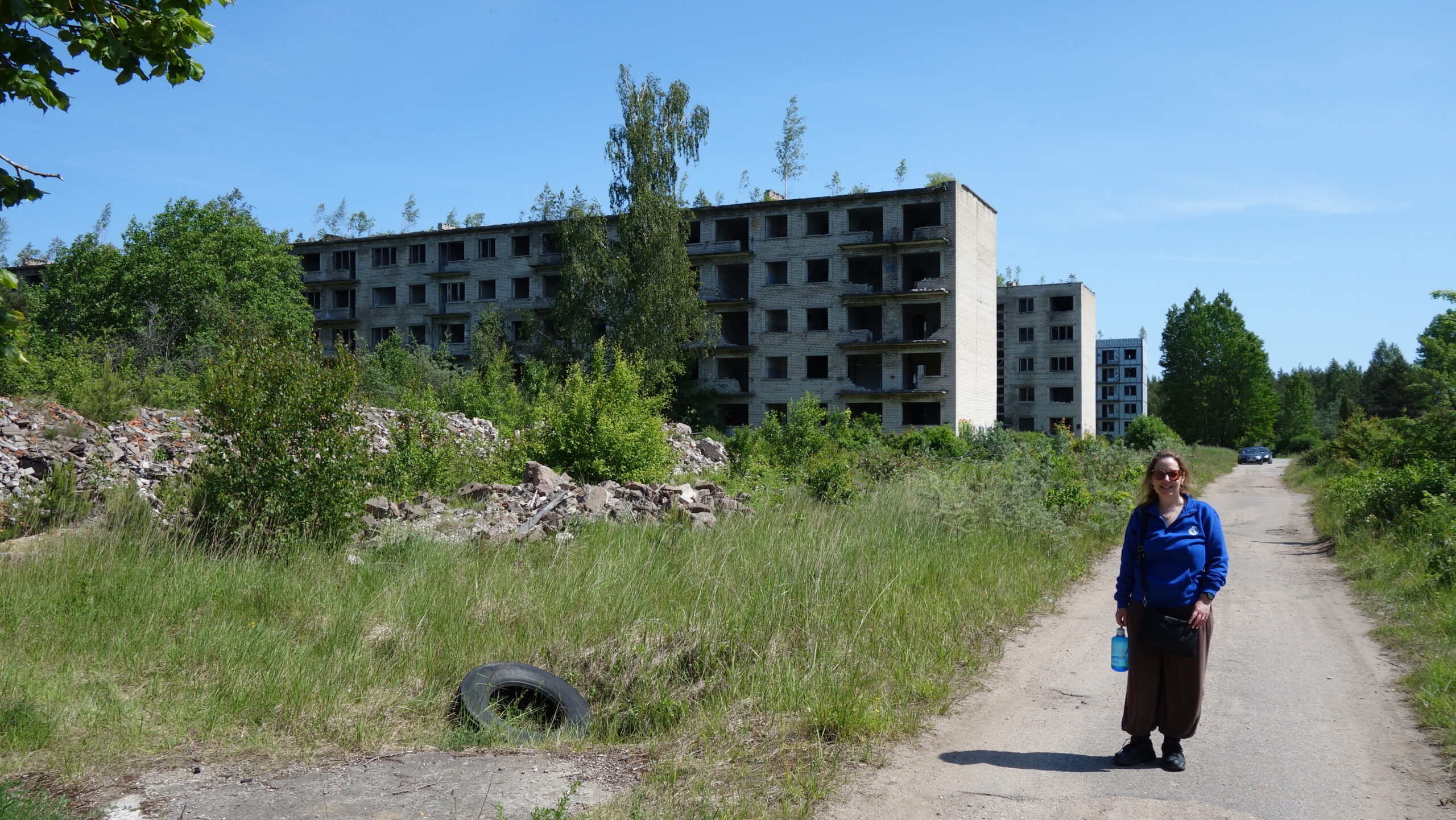
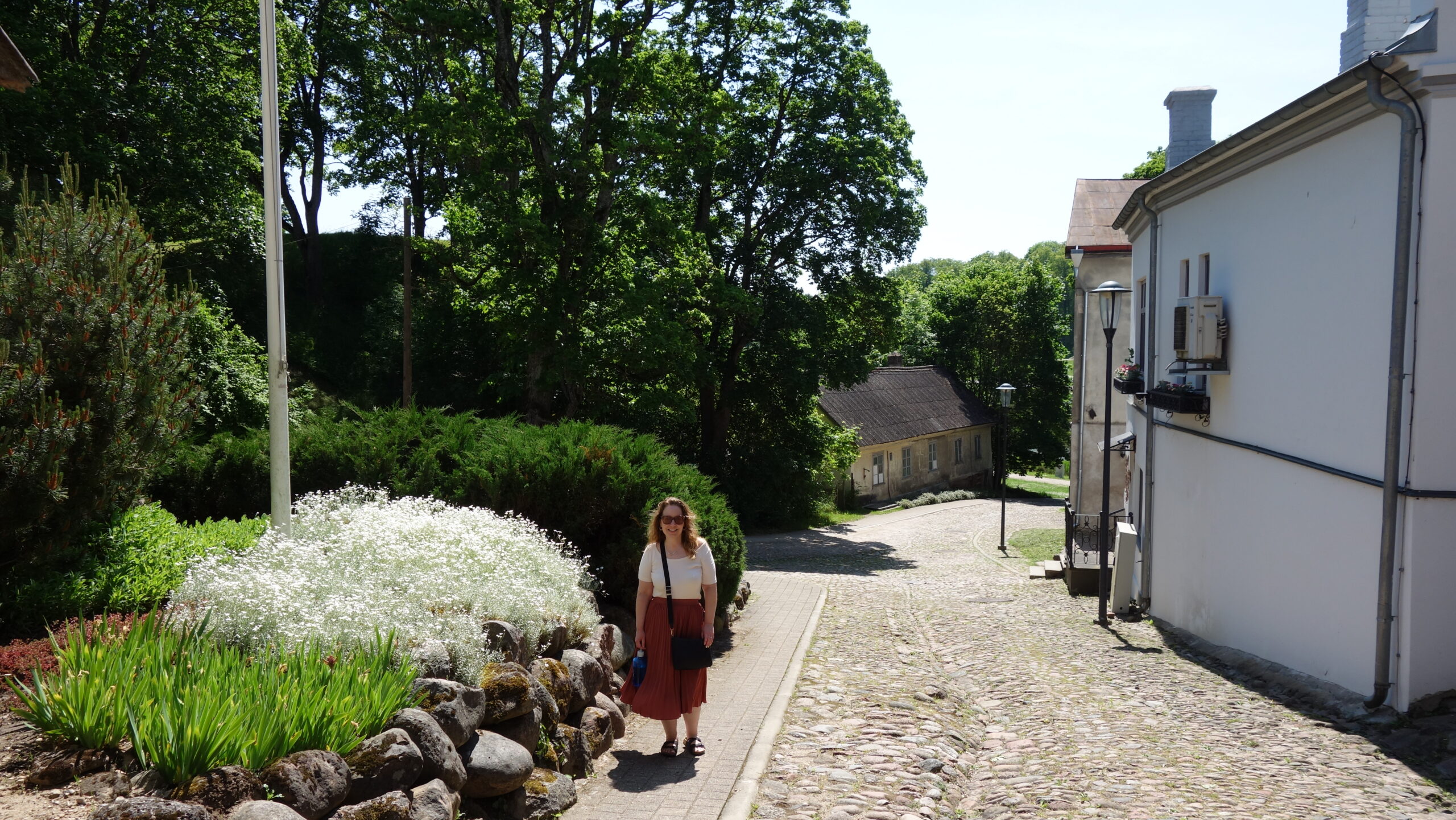
We actually do prefer walking in large towns and cities because you see so much more. We got a long look at beautiful homes with bright colors and carved woodwork. We got to see window displays and shop signs. We got to see impressive churches. And if we had driven, we would have zoomed right past the Soviet-era apartment blocks that were stunning in their total lack of architectural beauty. There were a dozen or more of them, and based on the blocks we saw housing the two thousand people at the spy center, these must hold five thousand or more people. I can understand why the apartments still exist. What I can’t understand is why they were built in a soulless design. What architect goes to school to draw up that?

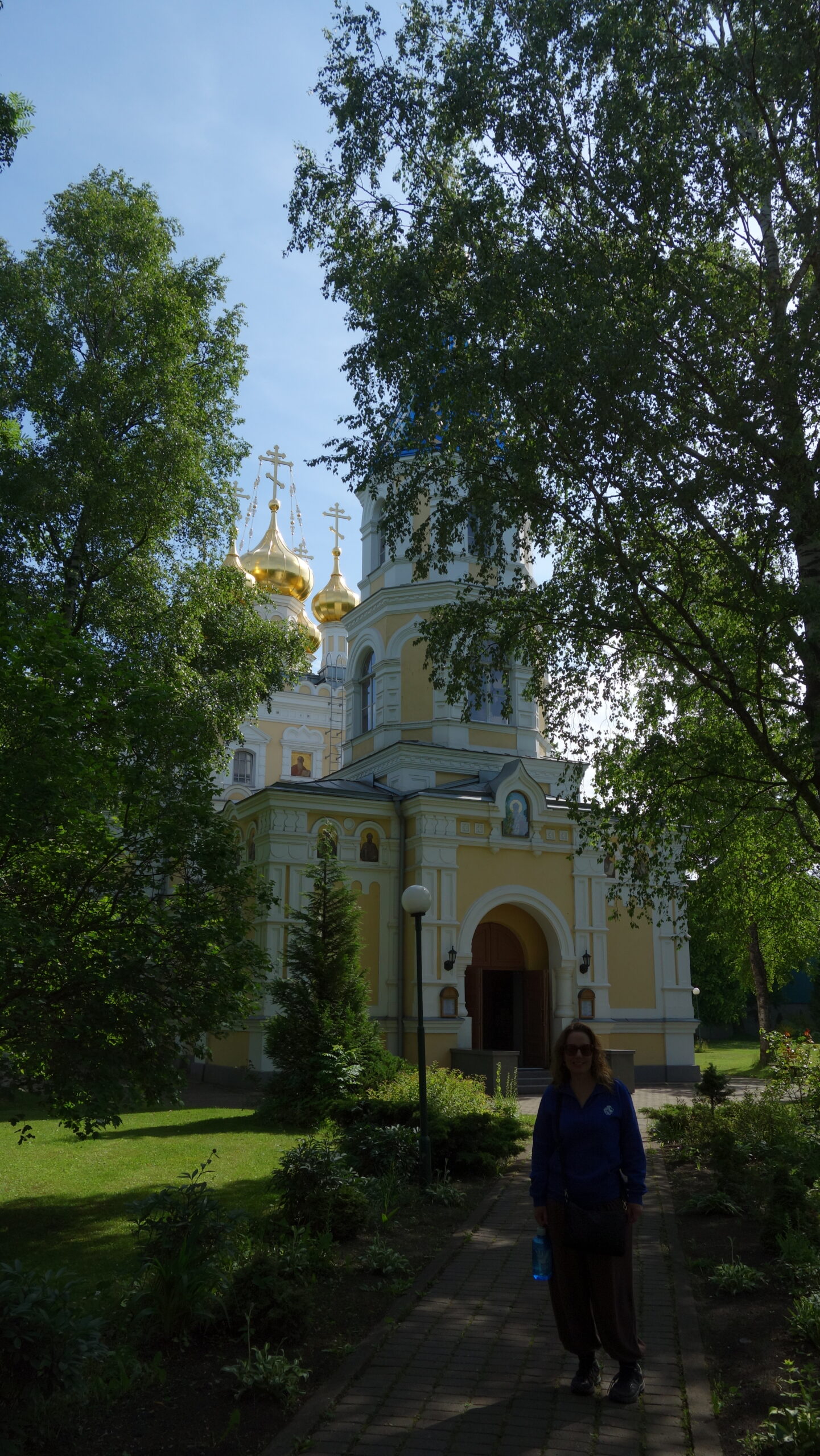
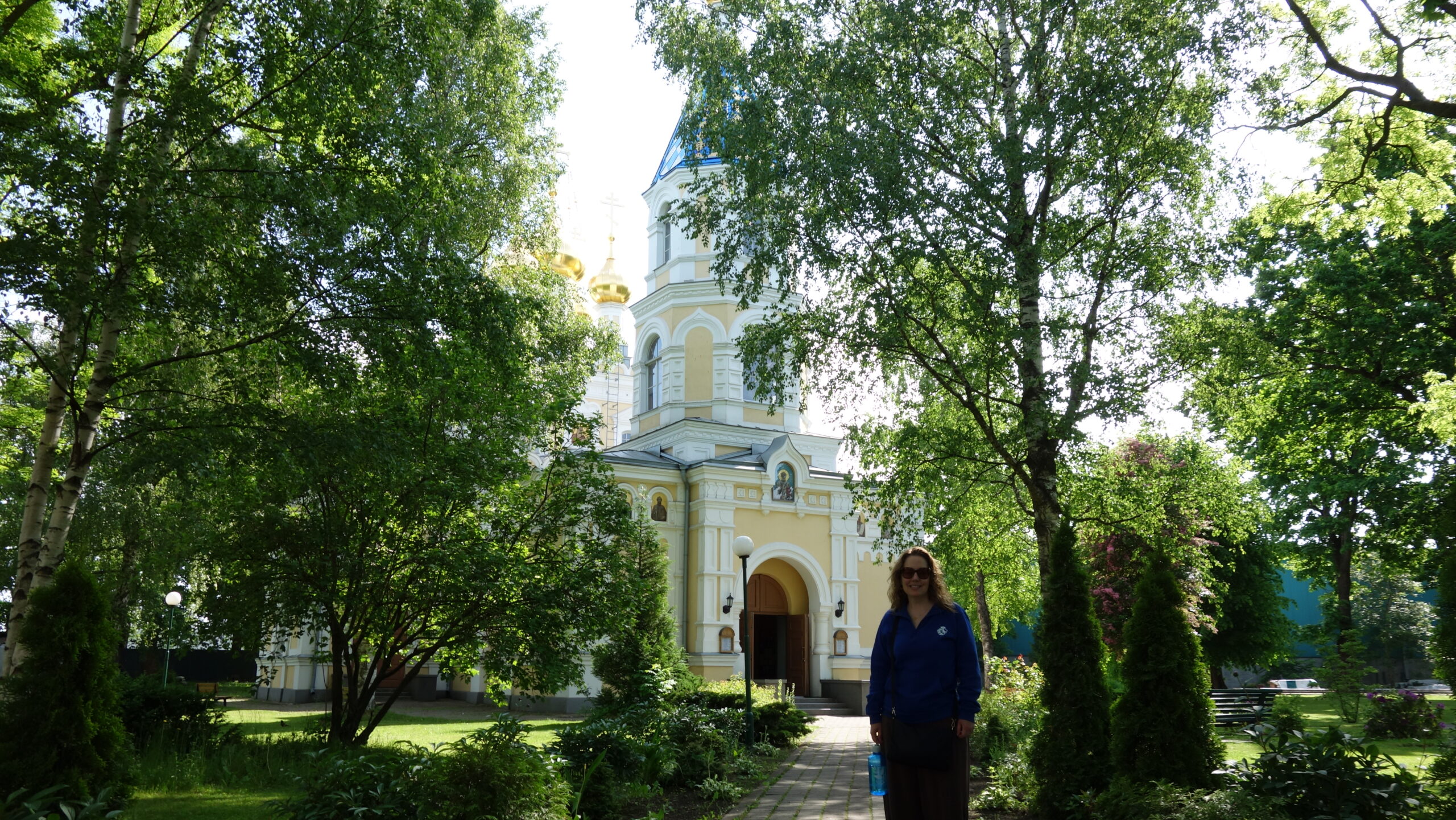
Anyway, we started the day off with a building on the completely other end of the beauty spectrum – the Russian Orthodox church in town. The outside has been recently renovated, and the domes shine from blocks away. The steeple is brightly tiled, and the paint on the outside is a cheerful yellow and white. The inside of the church still has some renovation to be done up near the roof, but the main eye-level area looked fresh, and there were icons everywhere. Several were interesting to us for their artistry or story; one showed saints being ordered around by men with guns. Our best guess was it was some story from World War I, but we’re not sure. Most of the icons were very colorful, and many had multiple saints in the icon. We spent a fair time looking around the church.
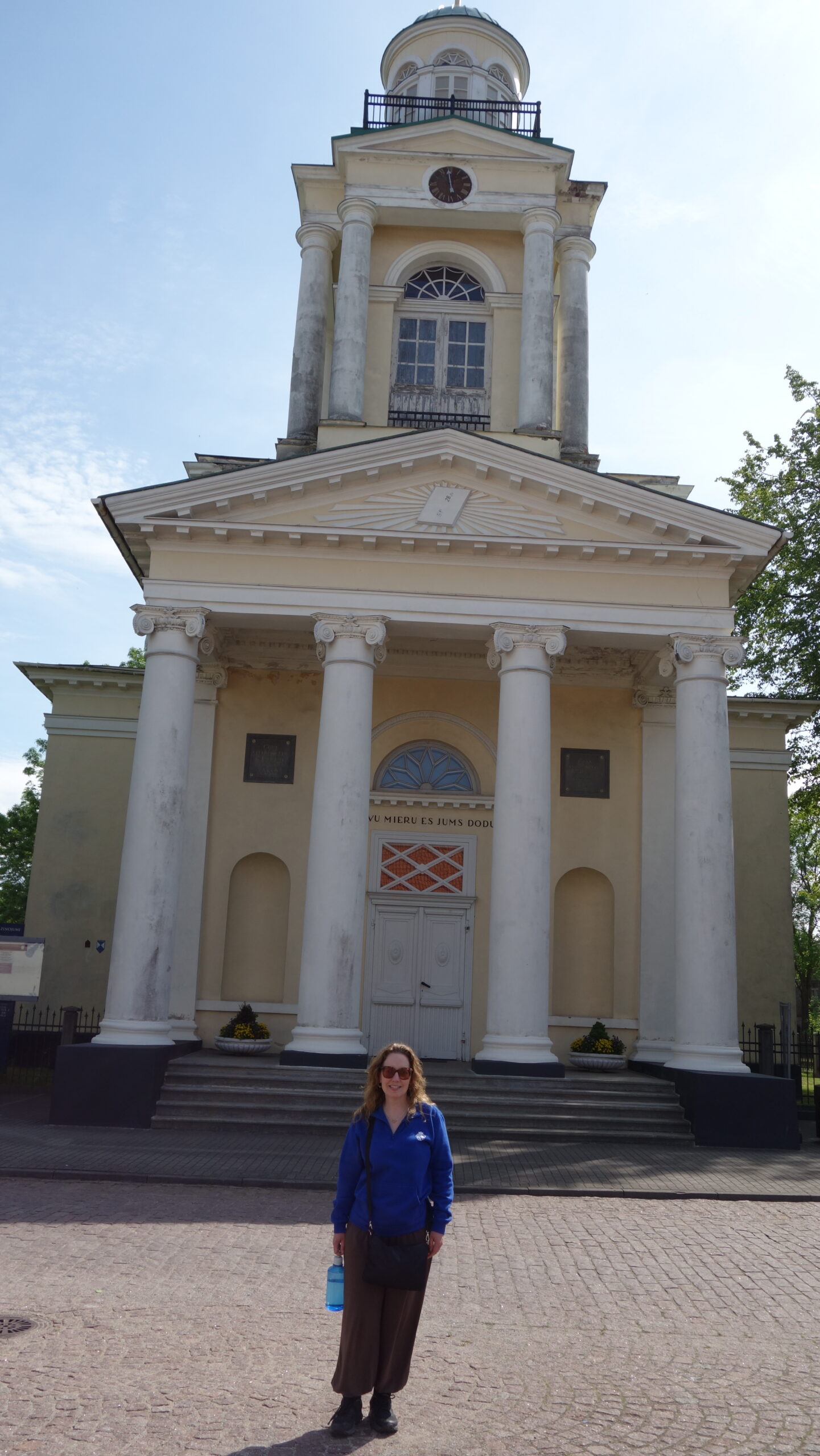
Continuing the church theme, we went on to the Lutheran church on the main (but small) square. There were city workers putting up a pole that is to be lit on fire on the solstice in a few days. Sadly, the Lutheran church was closed, but they did have an exhibit running around the fence of the church. It told the story of about two dozen women who had come in for counseling after having abortions. The issues around abortion are complex, and I’m not going to pretend to solve them here, but the stories did confirm for me that even with legal choice, women still sometimes end up with no choice. Two thirds (or more) of the stories were of women basically forced to have abortions by boyfriends/husbands or their families or even in a couple of cases by their doctor saying it was for the best. Obviously, women coming into a church for counseling are not a fully representative segment of the population, but their stories are still legitimate. It was a thought-provoking display.
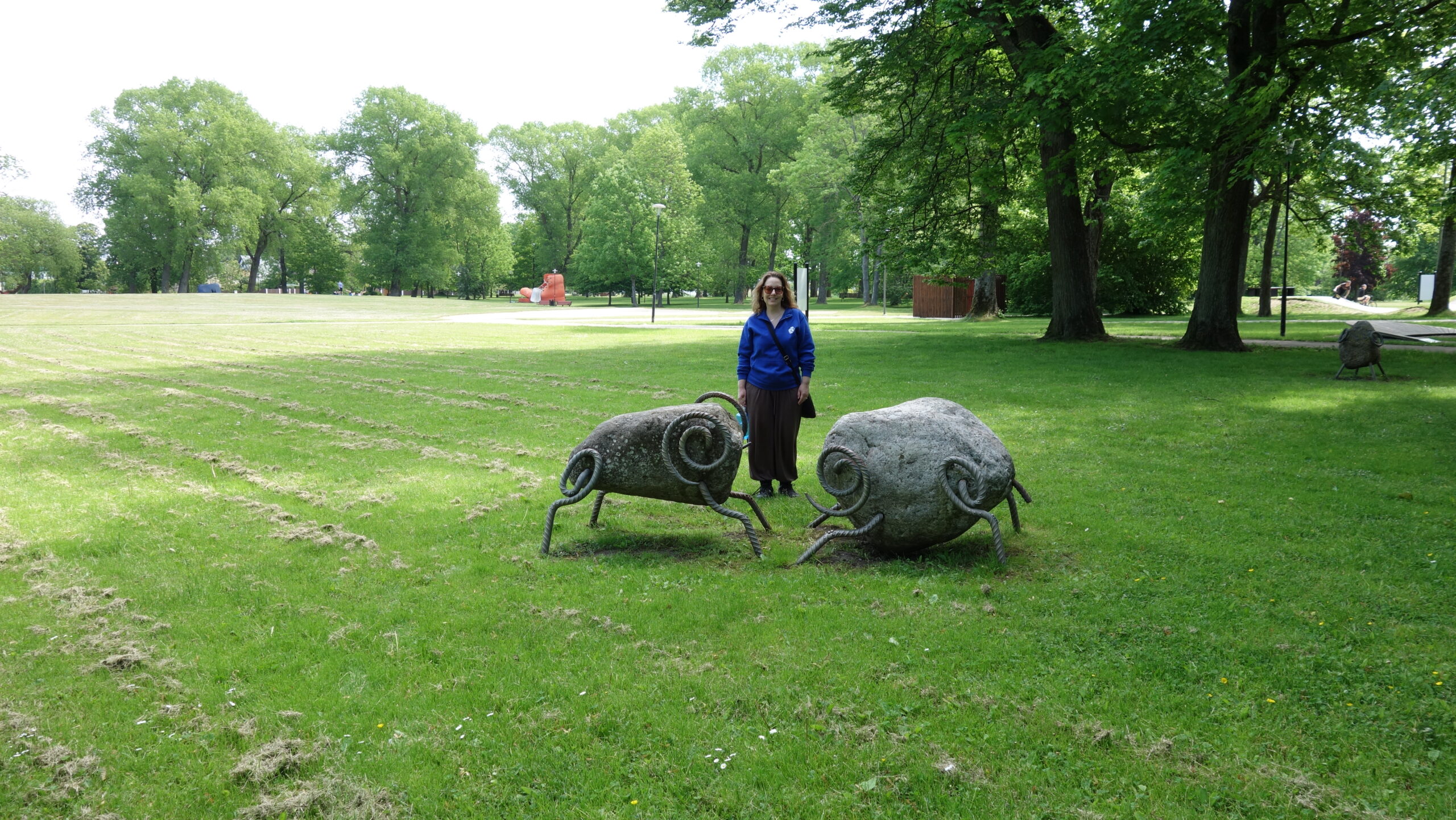
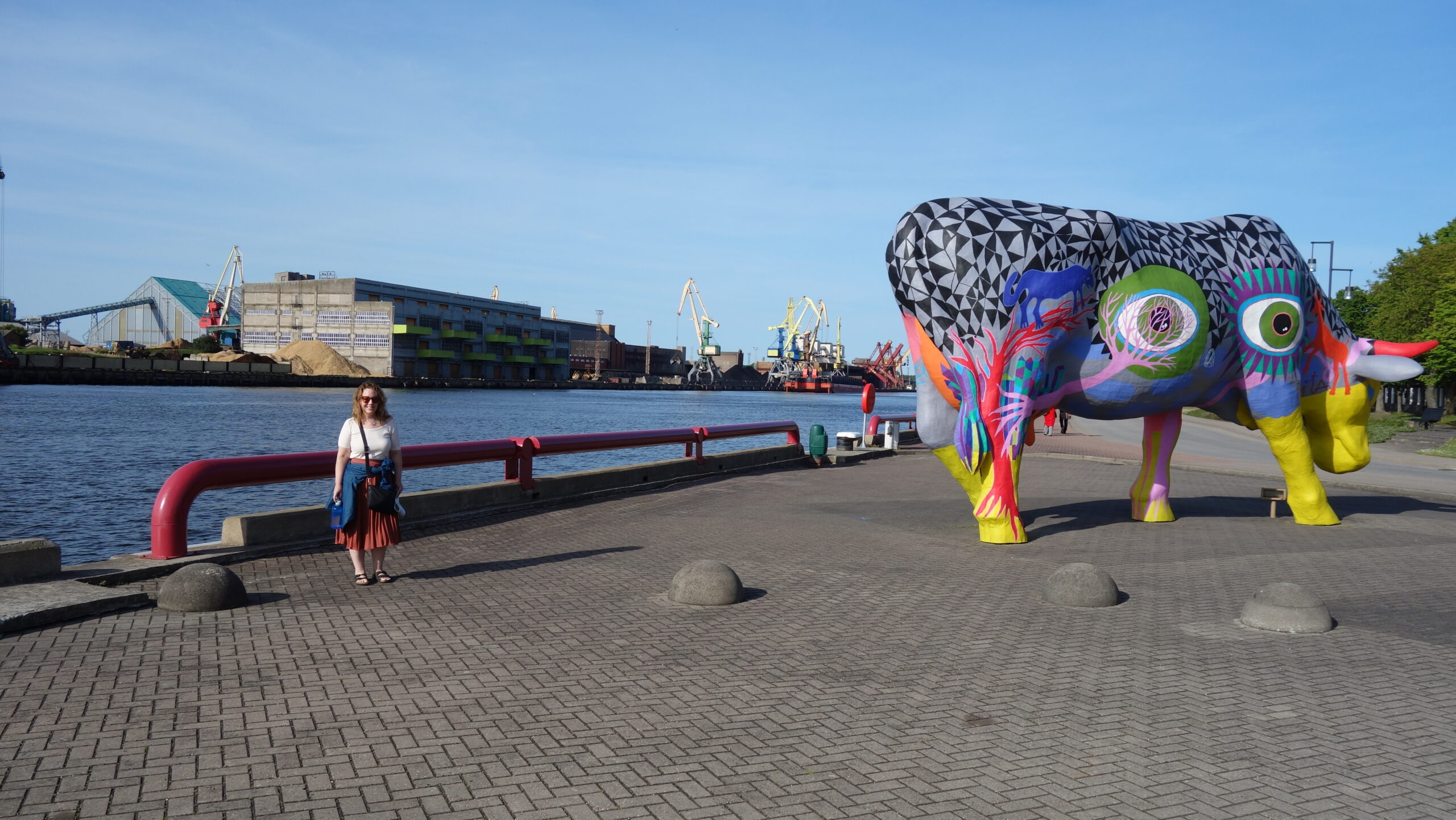
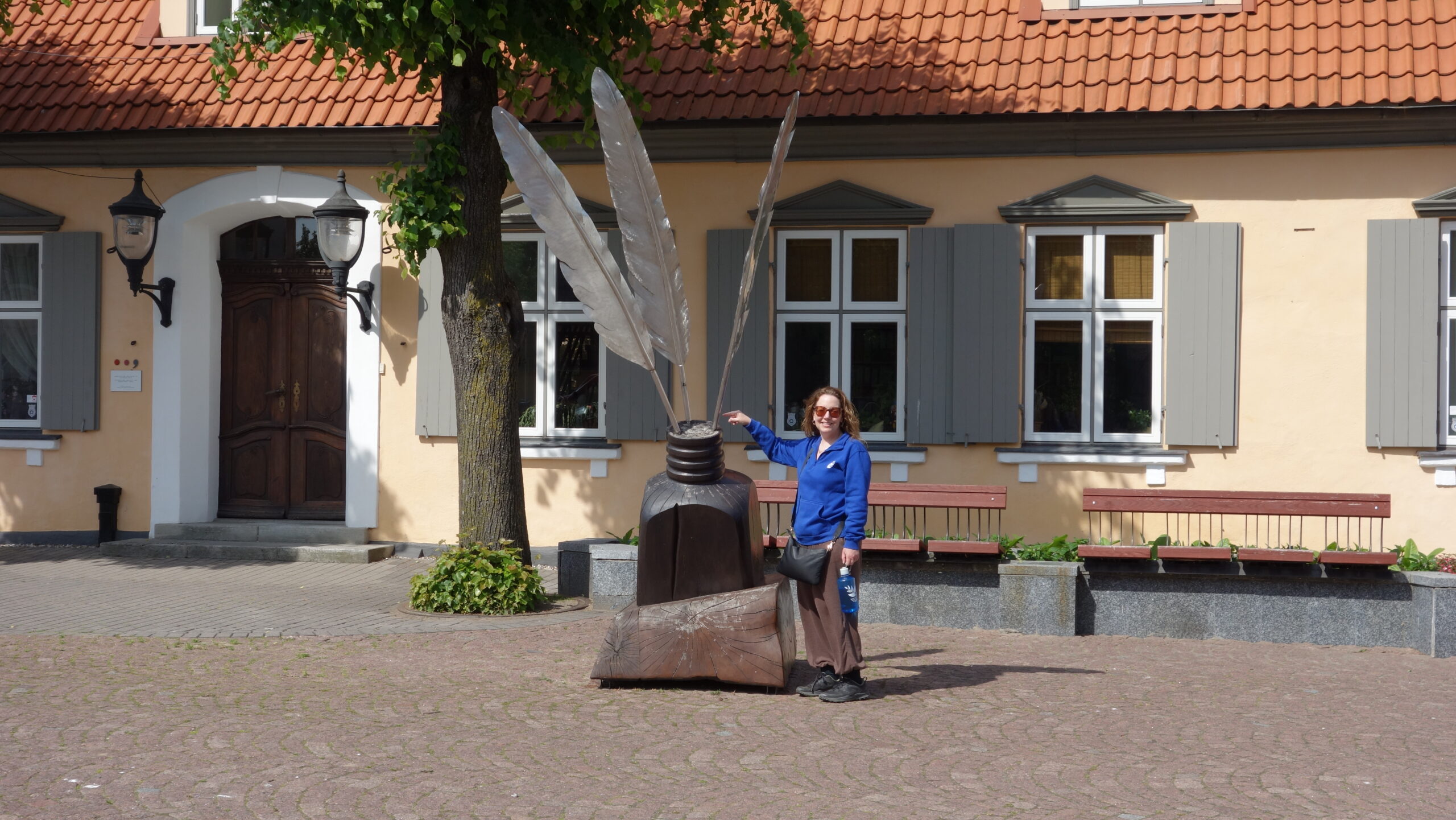
We headed off south and west to a park Mer wanted to see. We just strolled along, enjoying seeing things and the nice day. We were walking along a well-shaded path, and so the sun wasn’t an issue. The park itself was great, in the way we had seen in Lithuania. There was a kids’ area, and an exercise area. What was different was that there were quirky sculptures all over – a hat, some buttons, some rock sheep and bulls, a lobster, a shoe with a tongue you could climb. It also had a very impressive bike/skate/scooter park. It wasn’t just a concrete wall to do tricks off of. It was paved with multiple tracks going over bumps and hills and corners and valleys. It seemed very popular, and I can see why. We strolled the park and sat and people watched.
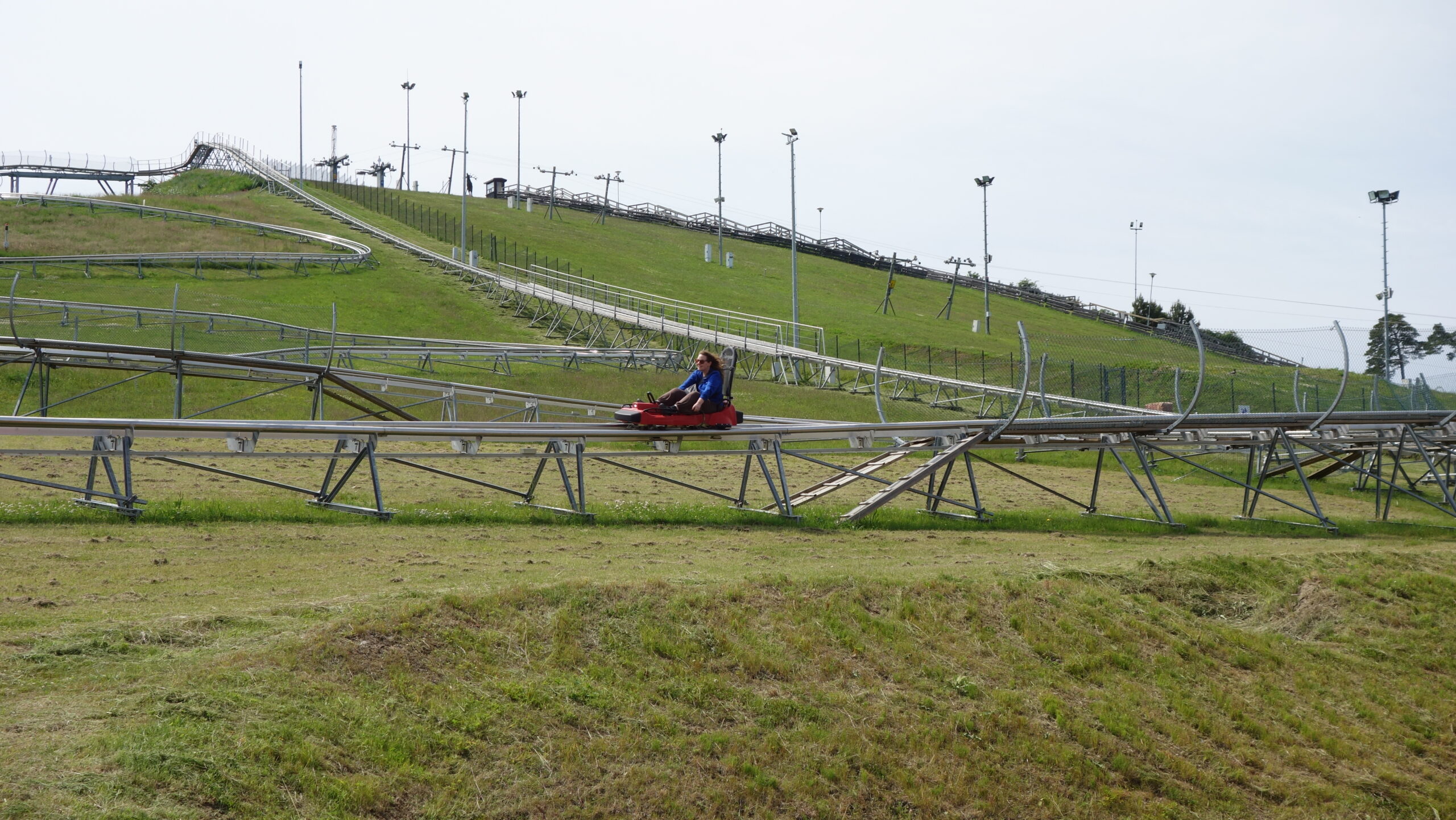
From the park, we walked a long ways southwest to an “adventure park” that had kids’ rides, a disc golf course, an innertube slide, and, most importantly for us, an alpine slide. We had found and ridden one two years ago in Lithuania, and so now we’ve covered slides in two thirds of the Baltic states (you’re on notice, Estonia!). The slide was short (only eight hundred meters long, including the ascent hill), but it was kicky. Slide designers can do some wonderful things with tight turns when they lack overall hill size. We both rode it twice, and had a great time.

We grabbed a light lunch on the way back to the apartment, where I got to relax for about thirty minutes while Meredith planned some stuff. What I didn’t see was Mer was sneaking my swimsuit into her backpack. Since the forecast was for rain in the evening, I assumed I was carrying umbrellas, which I was. But I was also hauling our towels and swimsuits to go to the indoor Water Adventure Park. It was a surprise to me since Mer had been so clever, but it was a nice one. In addition to two waterslides, a rapids slide (super fast), a wave pool, and a warm pool to relax in, there was a spa wing with hot tubs, saunas, an aromatherapy room (where I almost imagined I could smell something in the steam), a cold pool (that Mer tried, the nut), and a Himalayan salt room to relax in.
We spent a couple of hours there, trying everything except the hot saunas. My biggest issues were with the slides. I don’t know if my shorts have weird material, but about halfway down my first run, I pretty much came to a stop. I shoved/paddled myself along, but at the bottom I was still struck from behind by a fun-seeking supersonic tourism torpedo shouting, “I can’t stop!” Happily, she hit me with the heels of her feet to the small of my back, thereby saving any cushy and padded spot on her from being harmed.

The second slide was much the same, with regard to my slowness, and my third trip down was my last one on the waterslides. I figured someone was going to get hurt, and that someone could be me. So I tried the rapids slide. It was a much shorter slide with a bunch of sharp curves in the slide, and all the while, you are swept along by a ton of rapidly moving water. I was thinking, “THIS is more like it!” when I hit the first corner feet-first, legs extended. As my feet hit the wall and were suddenly forced right, the rest of my body weight, aided by a small tsunami of water, crushed into them. It hurt. And it happened again on the next corner. When I got to the bottom, I was left sprawling around in a shallow pool while being shoved by a lot of moving water with the sure conviction that someone else might be coming soon. I did try the slide one more time later on with the idea that I would pull my legs closer to my body. That saved my ankles. At the cost of my butt. And more floundering in the shallow pool after ramming my foot into the bottom.

I went to the spa. That was nice.

After regrouping back at the room, we walked in another direction for a mile or so to go have a nice supper. While we were walking, we got sprinkled on, and we walked home in a steady rain. But we had hats and umbrellas, and we were okay.
So we saw a lot of Ventspils today. It’s a lovely little city on the whole, and easy to get around with wide pedestrian and bike paths, and tons of parking everywhere for those driving. We’re here until Wednesday morning, so we’ll see what tomorrow brings.
Latvia 2025 – Day 2, Sunday, Livonian Peninsula

The northwest of Latvia juts out into the Baltic Sea, and the tip of that jut is home to the Livs, the smallest ethnic group of Europe. Ventspils is the largest town of the region, and we used that as a launch pad (ha! See more below…) to explore the tip of the region in a counter-clockwise direction.

After breakfast, we headed north to… nowhere.  There was no address we could find, which was consistent with a place that started life as a Soviet spying center. I used the internet to look up the longitude and latitude of VIRAC, home of Latvia’s space telescope center. The GPS found it just fine, turning us off the main road about thirty minutes north of Ventspils, and onto a concrete road. Within a few minutes, we were driving by some creepy abandoned Soviet apartment buildings that had housed the staff and families of the spy facility. We then got to the welcome center, where we paid for our English tour with Markus, a surprisingly mature and fluent sixteen-year-old who works for VIRAC to give tours. We were joined by a young Swiss man named Philip. He was enthusiastic and very funny.

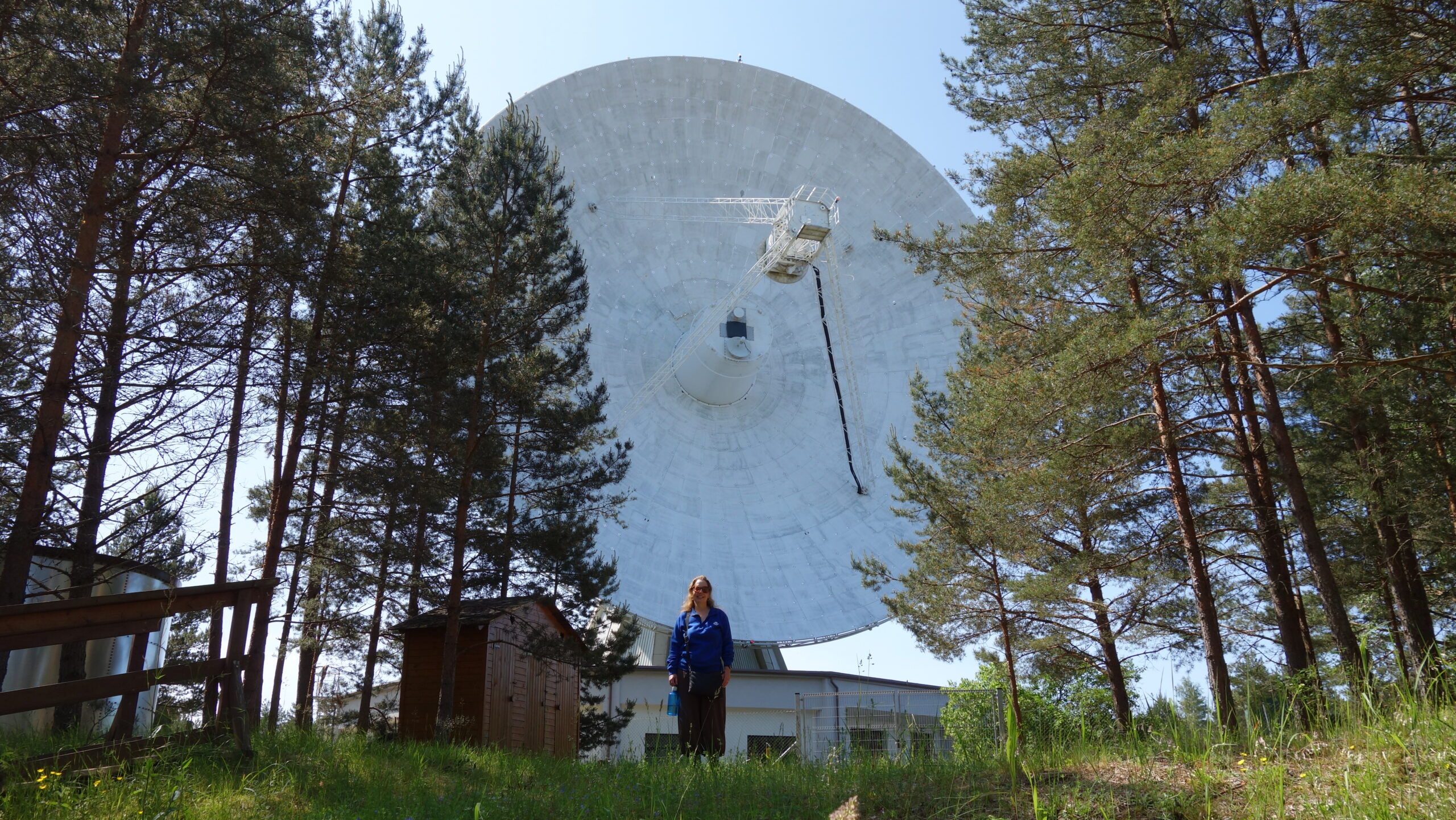
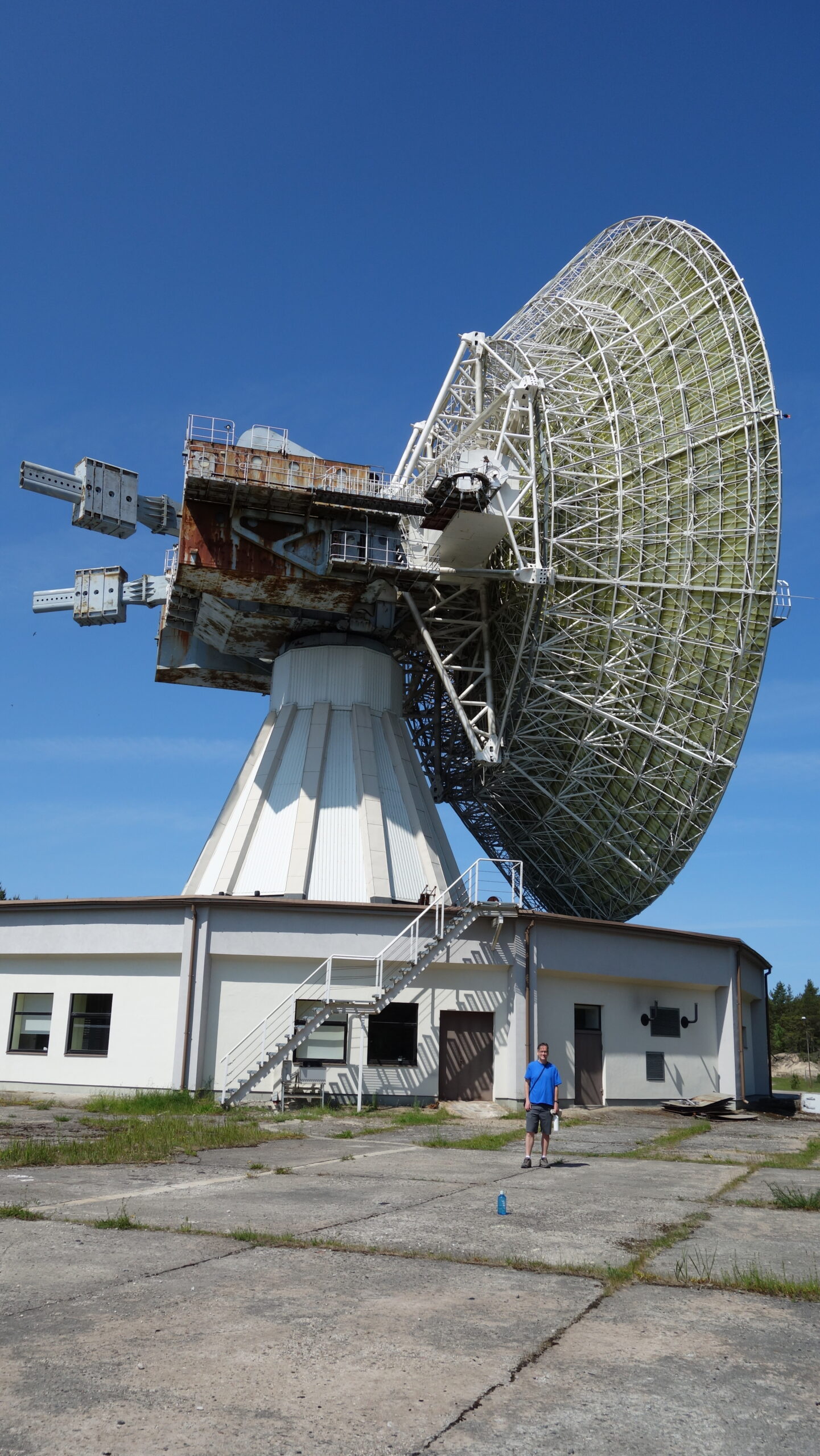
We started our tour heading over to the old control center, which had also been the base of an eight-meter radio dish. The facility also had (and still has) a sixteen-meter dish and a thirty-two-meter dish on top of remote buildings. The thirty-two-meter dish is one of the ten biggest in the world.

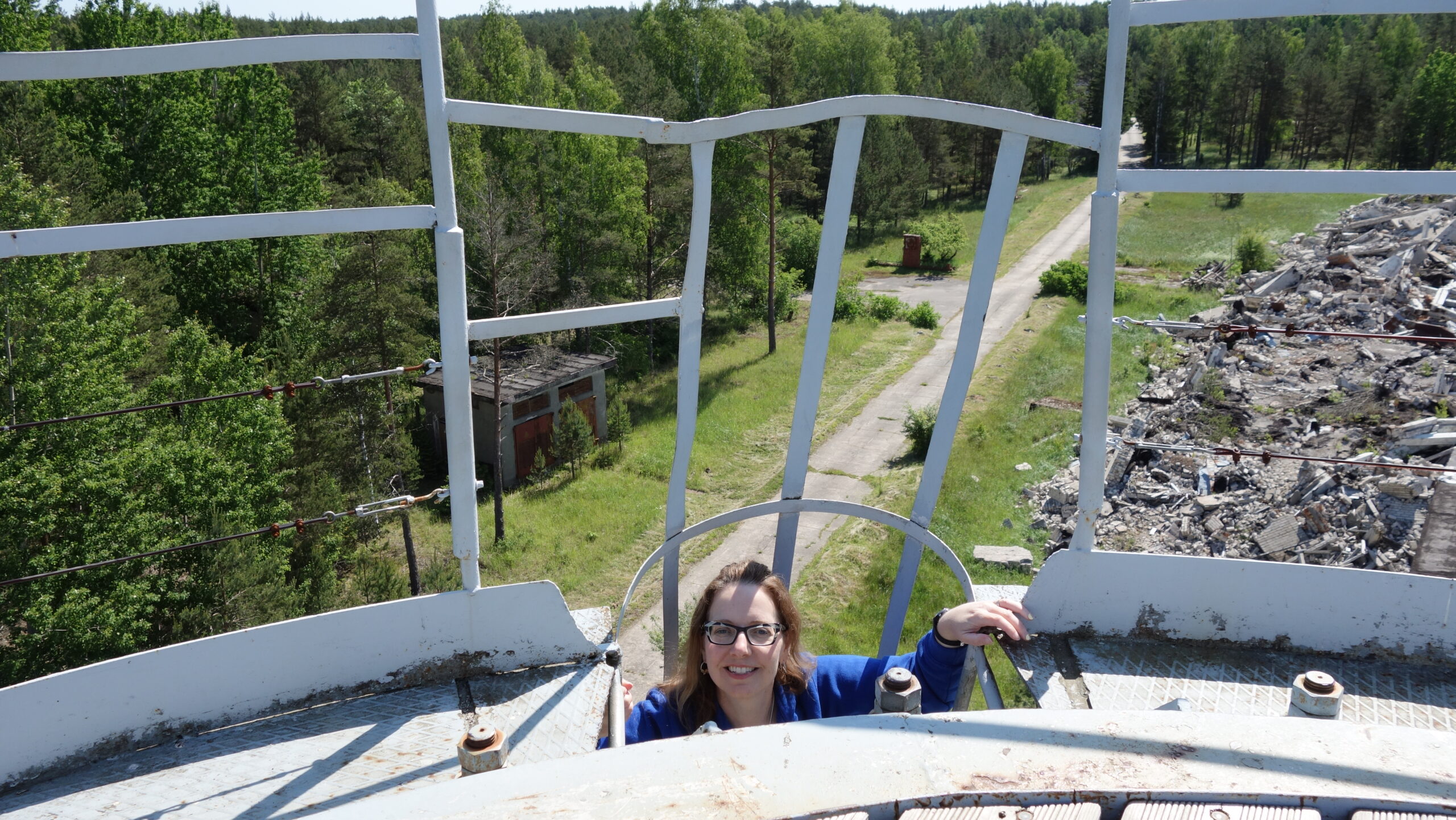
The large building next to the control center tower had been used for all the spies listening and going over things, but it is now a huge pile of rubble. It had become unsafe, so the Latvians demolished it in place. Markus explained that it’s easier to know when a building is going to collapse if you just do it yourself.

And that was cool to see, but then came nerd heaven. He let us into the control tower, and it still had the original control equipment in the room, including a massive wire harness that the Russians had wrecked when they left in 1994. But the Latvians were able to get it working again after two years, and it was used for about a decade until newer electronics were installed. That was fun. And then Markus told us we could use the really steep and sketchy-looking ladder/stairs to climb into the basement, where they had shoved all the electronics they couldn’t find anywhere else to put. They had large motors and large junction boxes and switches and wires everywhere. It was great. We climbed back up, and I expected to go outside again when we were told to climb equally suspicious metal ladders to go up to an area decked out with Soviet-era stuff. That included a Russian map that had all western military bases marked on it, and a Latvian/Soviet flag, and a bust of Lenin. In a heartwarming moment that should be a warning to all leaders who think they’re important – the Swiss man asked who the bust was of, and Markus said he didn’t know, but thought it might be Stalin. Young people have forgotten what both Stalin and Lenin looked like, which is great.

We got to head down the hallway that used to lead to the blown-up working center, and it was full of 1970s and 1980s electronic equipment (including oscilloscopes labeled in Cyrillic). There were (illegal) photos that the soldiers had taken of each other, and some wonderfully fun drawings modern-day school children had drawn of the telescope center, including one in which the telescope was staffed by aliens.

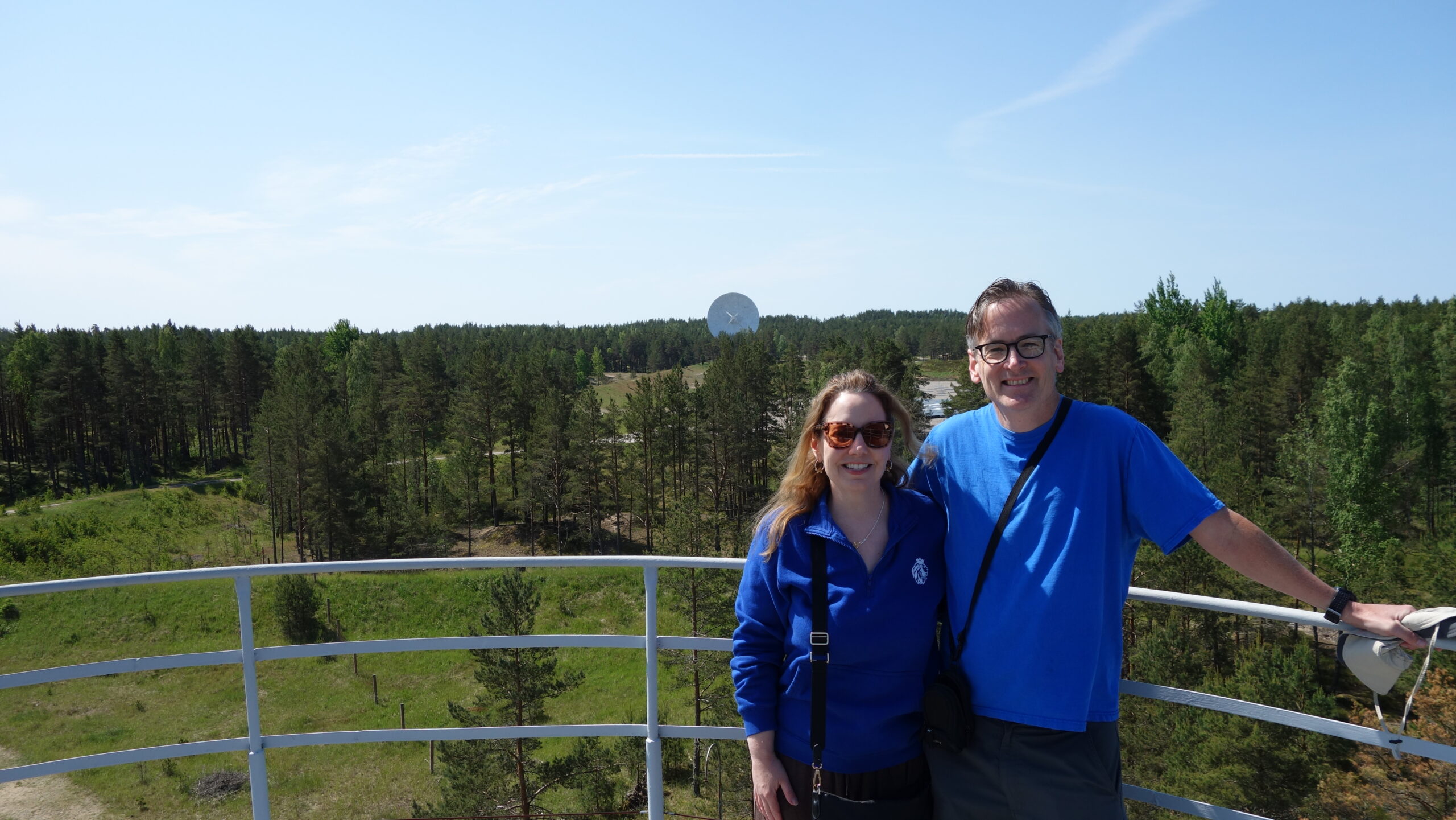
Back in the main tower, we got to go up another ladder-stair, and we headed outside to climb more sketchy ladders to get all the way up to where the old dish had been mounted. It was quite the vantage point. We could see the thirty-two-meter dish and trees as far as we could see. It’s not surprising a spying center ended up in the middle of nowhere.

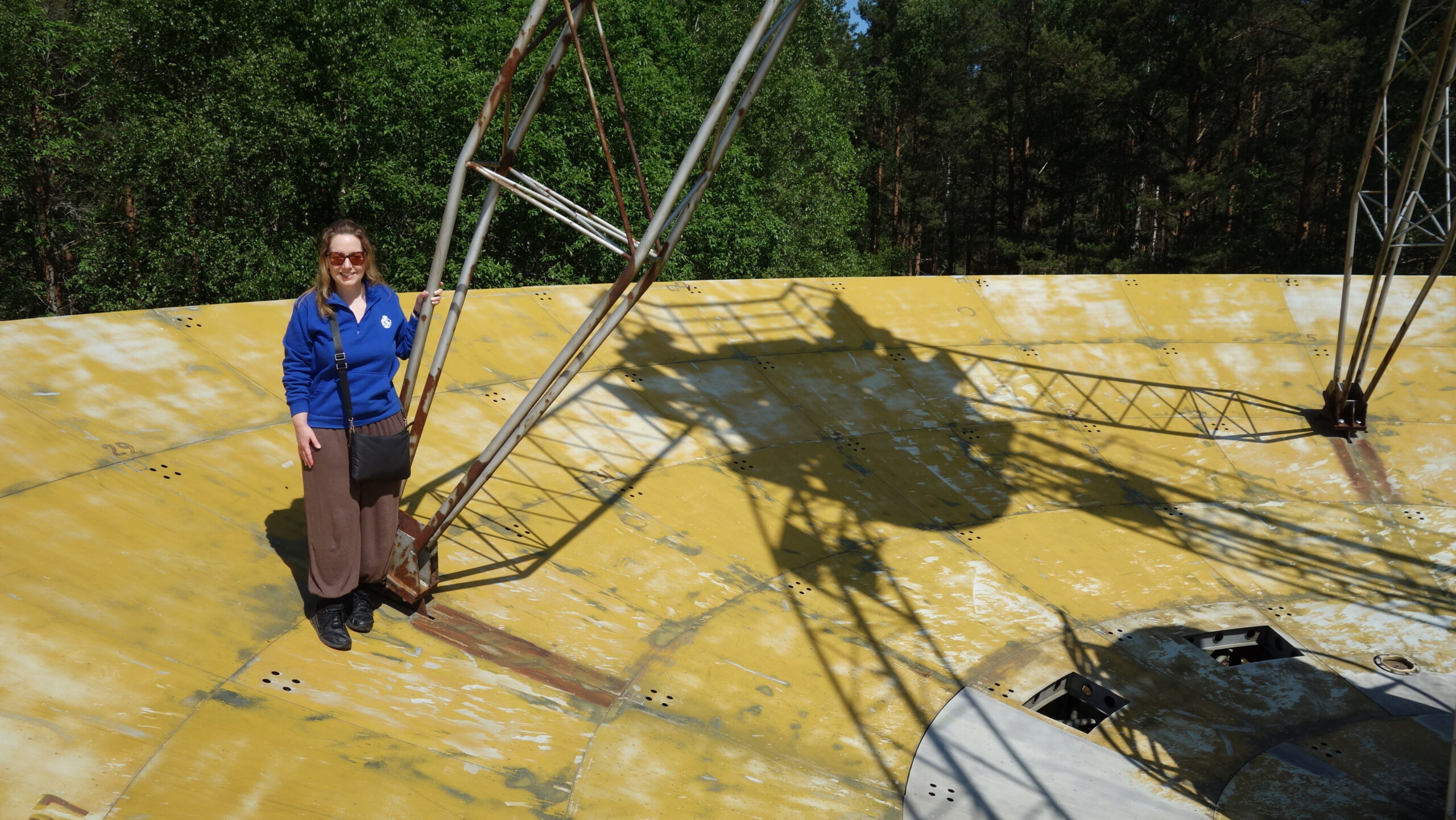
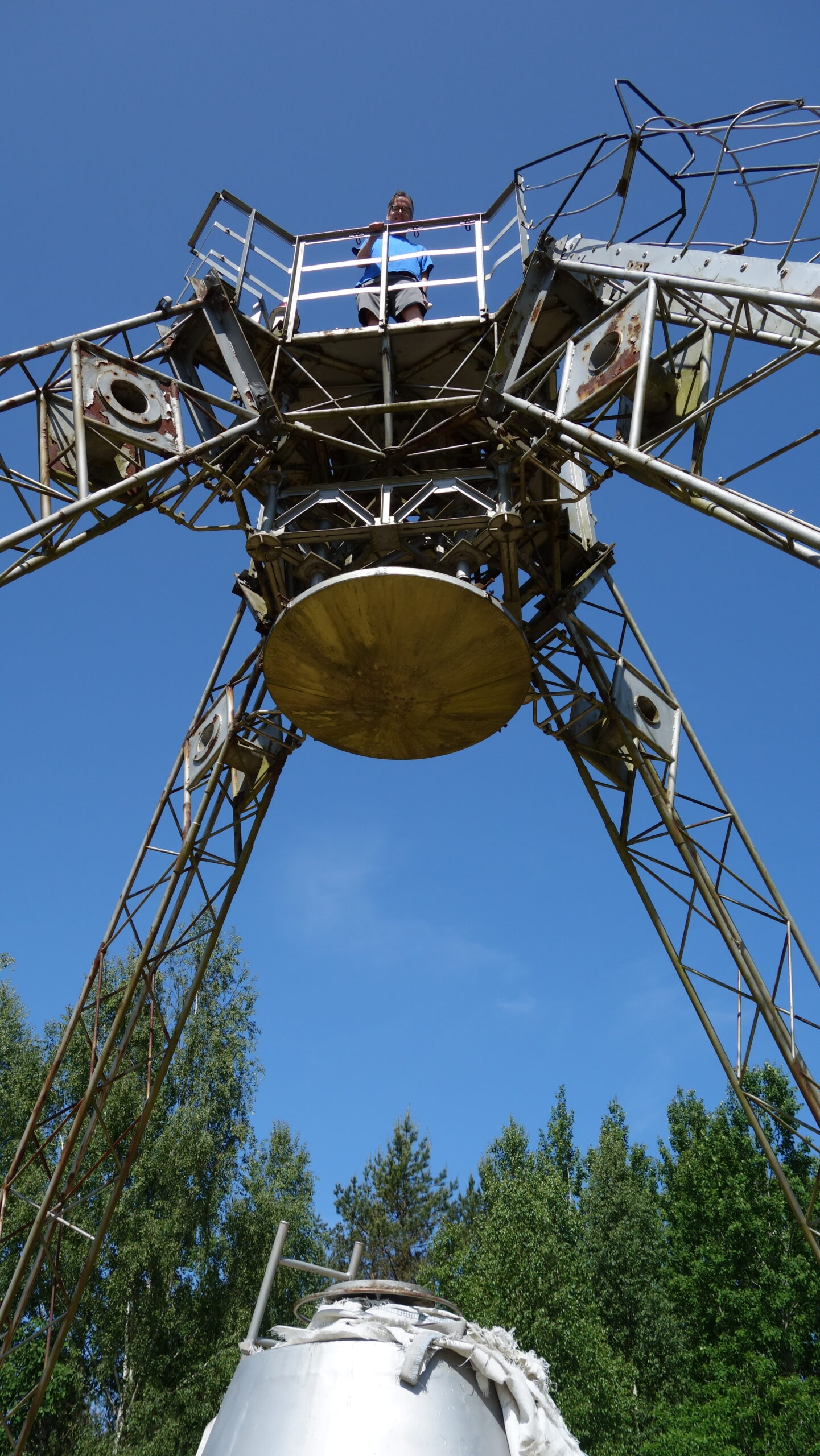
We went back down and outside and walked past a sculpture of Yuri Gagarin (the first man in space) over to the the old original sixteen-meter dish, which was on the ground. Markus told us we could climb up on it. We all clambered up in to the middle of the dish, even with its missing a few small panels. He then said we could climb even higher up to the reflecting mount above the dish, which was not an easy climb. I managed it, and the acoustics up there were incredible. Anything said down into the dish came echoing back to you immediately. I’m pretty sure that liability-conscious American facilities wouldn’t have let us climb all over everything. It was great.

Back on the ground, Markus told us that they had renovated the thirty-two-meter dish about ten years ago, but before the renovation, tours could take people out onto that dish too. What a facility! While we couldn’t go up on the big dish, we could go see it, so Markus led us to an old maintenance tunnel and told us he would meet us on the far end. So I led the way with my cell phone flashlight, followed by Meredith, and then Philip with his cell phone. We walked and walked and walked in the cool, slightly damp tunnel. Someone at some point had made little monster faces on electrical boxes every hundred feet or so, and Philip amused us by telling us the sounds the monsters would make. We also tried turning off our flashlights for a few seconds, and the dark was pretty complete. It turns out the tunnel is 500 meters long (.31 miles). We were walking for quite awhile.

But the tunnel took us to Markus and to the foot of the big dish. We were let in onto the grounds, but were told we had to hang back since people were working. It was a delight to see the dish from the front and from one side, from which we could see the structure that holds the dish up and points it wherever the scientists need it to point.

Understandably, that ended the tour. We went back to the welcome center, where we thanked Markus and said goodbye to Philip. We asked if we could go see the creepy abandoned apartment buildings, and to my surprise, we were told to “go ahead.” So, on the way out, we stopped there.

These were buildings that were lived in until 1994, just thirty(ish) years ago, but they are all in ruins. Mer has a strange fascination with abandoned places, so she was delighted. We walked down the old main street, and decided to go into the last building. The last building looked like a shell from the outside, but it was a real wreck on the inside – the main stairway was falling in, there were holes in the floor and in the ceiling up to the second level, and one wing of the building seemed to have had the internal structures all collapse in on themselves. We were very careful and didn’t stay long since I wasn’t sure where the floor might be weak. Mer loved it.

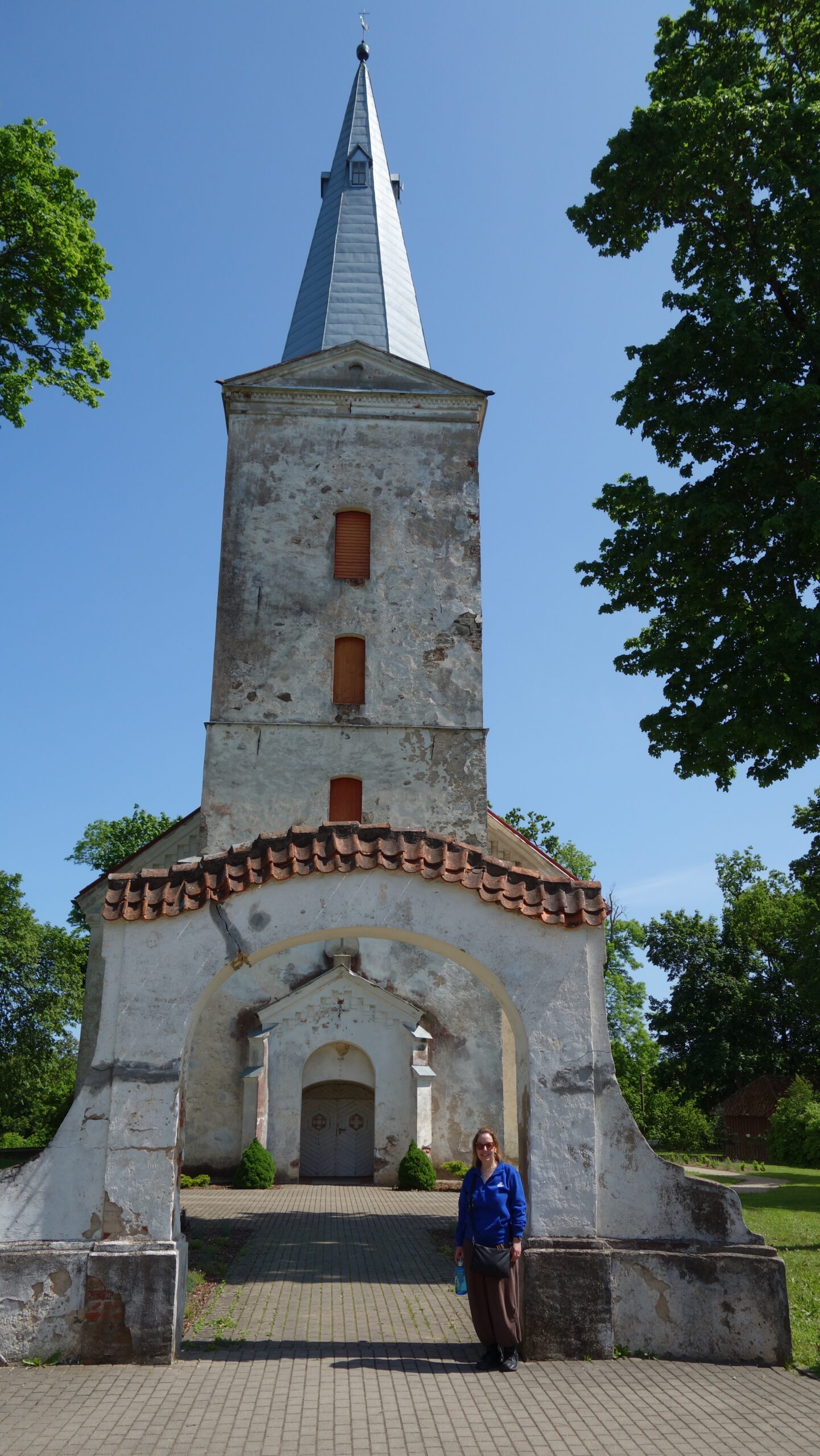
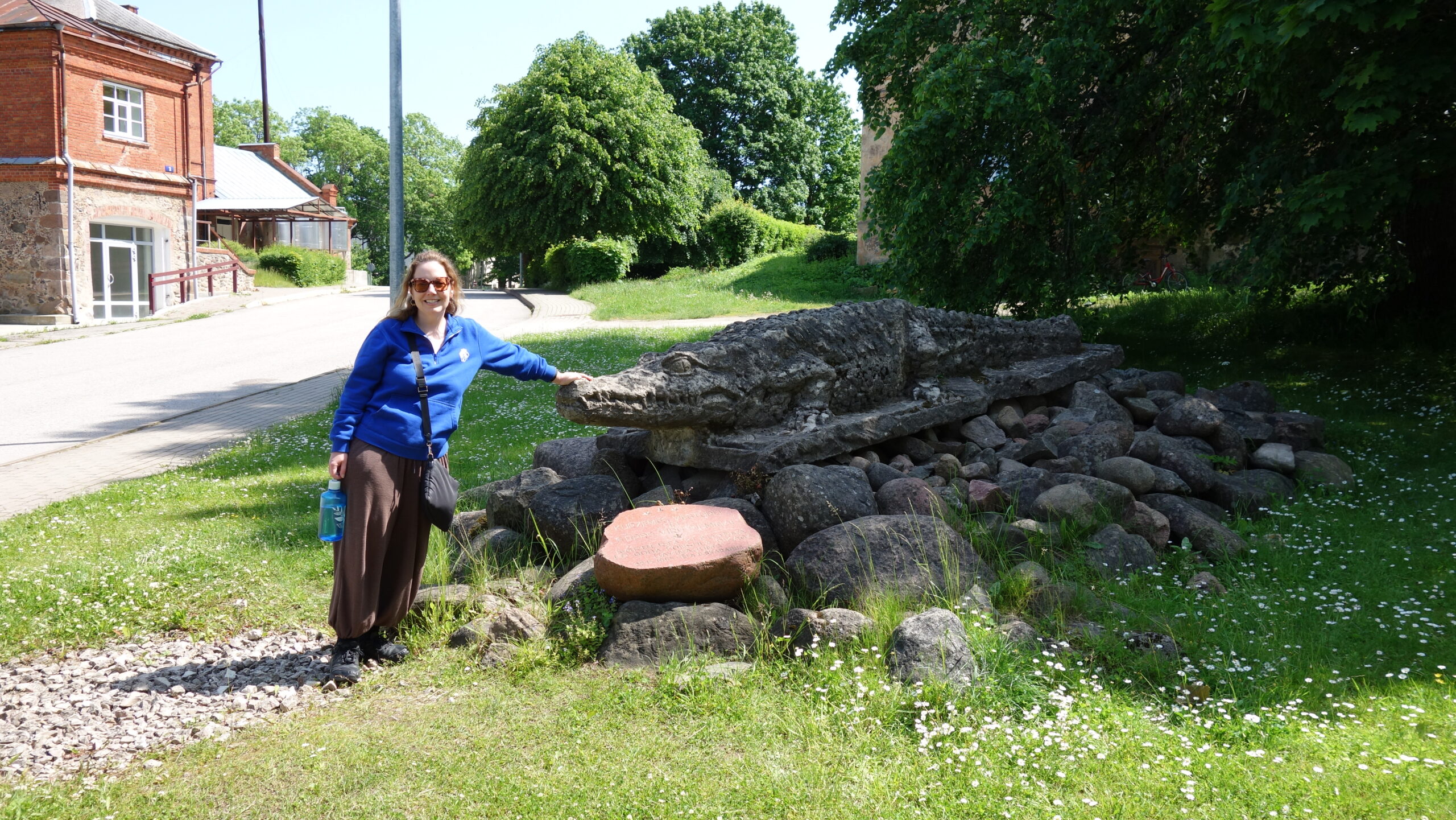
That wrapped up a hugely successful first outing. We then drove east to the town of Dundaga. It looked to be a pretty town with a large park and a lake/lagoon area. Mer was hoping to see inside the town church, which has an elaborately carved altar, but the church was closed by the time we got there (about 1:00 p.m.). We headed down a side road to find a large sculpture of a crocodile. In the middle of a small town in Latvia. It turns out that a man from the town fought in World War II, but ended up on the American side of Germany at the end of the war. If he went home, he risked being arrested by the Soviets, so he moved to Australia instead, where he lived in a cave where he mined opals for his art. As one does. To make a living, he killed about ten thousand crocodiles and sold the skins. This is supposed to be the inspiration for “Crocodile Dundee” and why there is now a sculpture in town (in addition to a modern one near the castle/great house of the town).

After a cafeteria lunch, we toured said castle. The town castle is more of a great house than intimidating fortress, although the original thirteenth=century building did have walls for defense. We got a tour from a young man (late teens?) whose English was very good, but he did say the castle had to be rebuilt after the “first firework and the second firework.” He meant fire, of course, but I didn’t have the heart to correct him.

The castle now houses the tourist information office, and a small museum, and an after-school program for music and art for the local students. One room of interest was based on the fact that somehow people started sending commemorative medals to the castle at some point, and they now have about a hundred of them. There are medals to Hans Christian Andersen and Goethe and many others from around the world. The contribution from the USA? A medal featuring Richard Nixon. We clearly need to do better.

We got to see all three floors of the house, including some art exhibits of the very talented students, as well as two terraces and the courtyard. It was an interesting tour and good to see a small town try to save its local grand building.

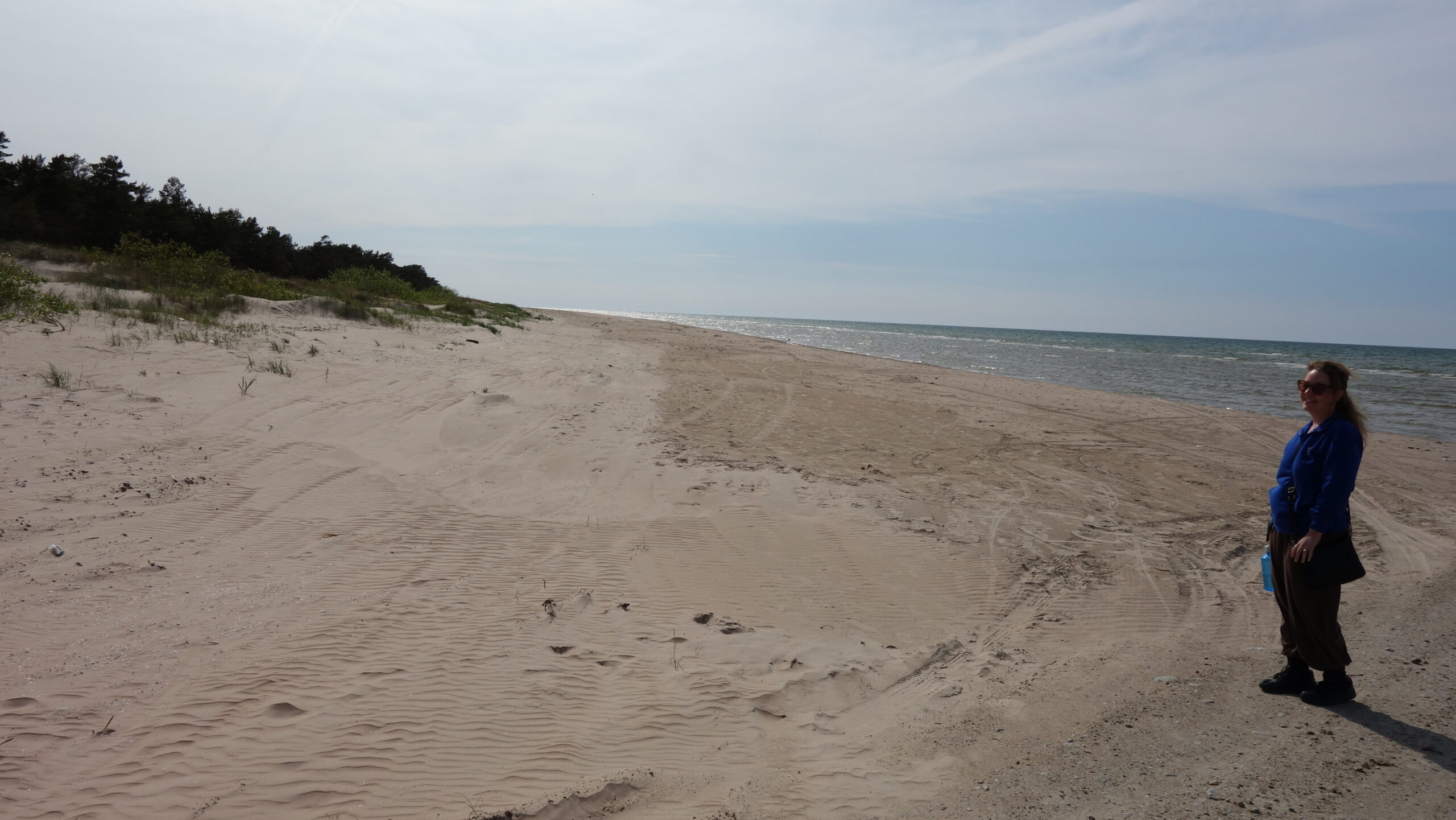
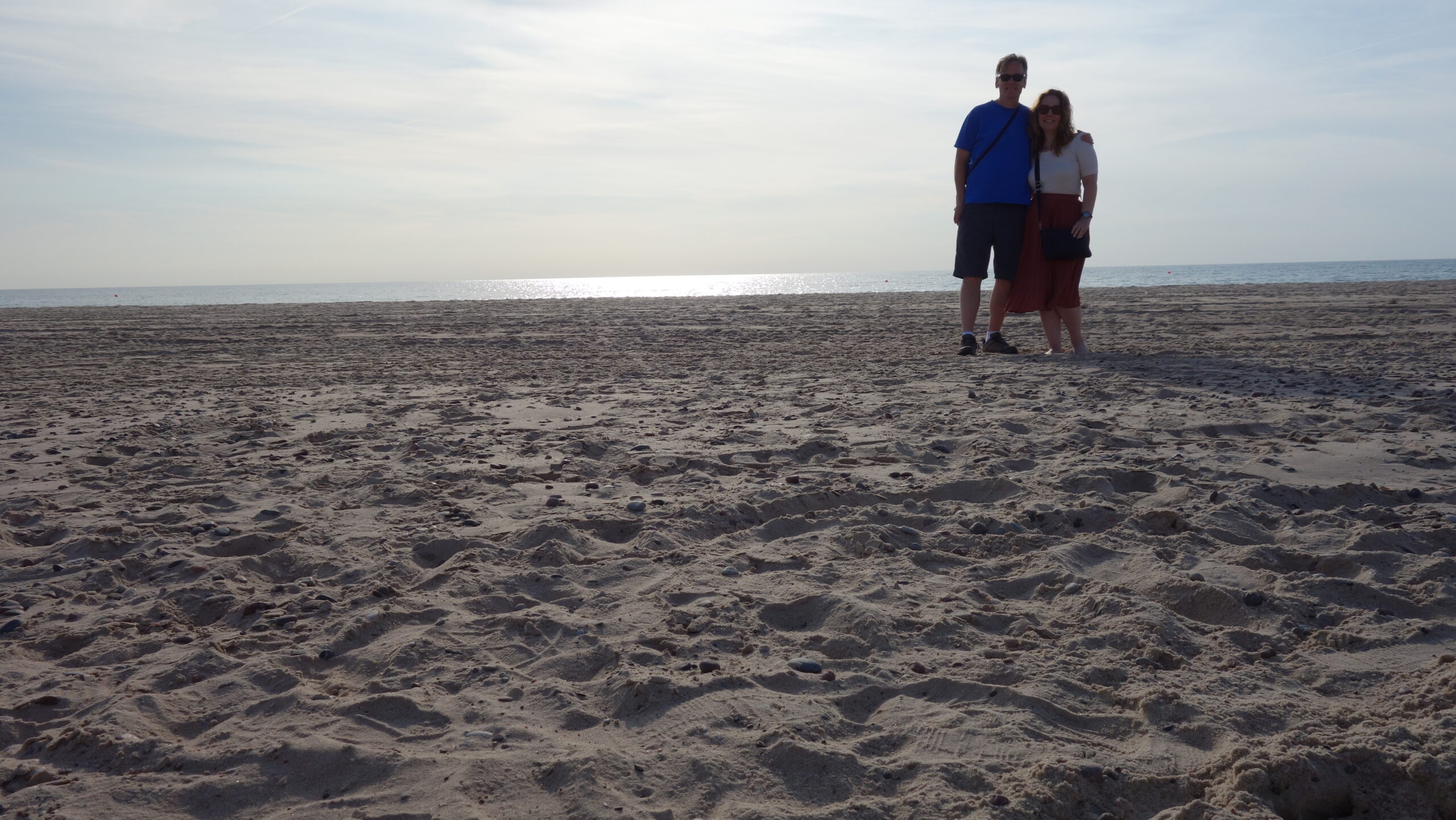
We then drove about twelve miles down a dirt road to go west to get back to the coast on the far side of the peninsula. We tried to find a large dunes area with a boardwalk, but the guidebook was vague, and we never found it. We kept on driving north to Cape Kolka, which is a point where the Gulf of Riga meets the Baltic Sea. We walked along the mostly secluded beach a fair amount, and climbed an observation platform. We tried to hike a pine-tree path, but there were tons of ants everywhere, and one bit my shin, and it actually hurt, so we retreated back to the waterside.

After the Cape, we tried to find the ocean again at a small “village” that was more of a collection of houses that were all posted as private property, so we gave up on that sight.

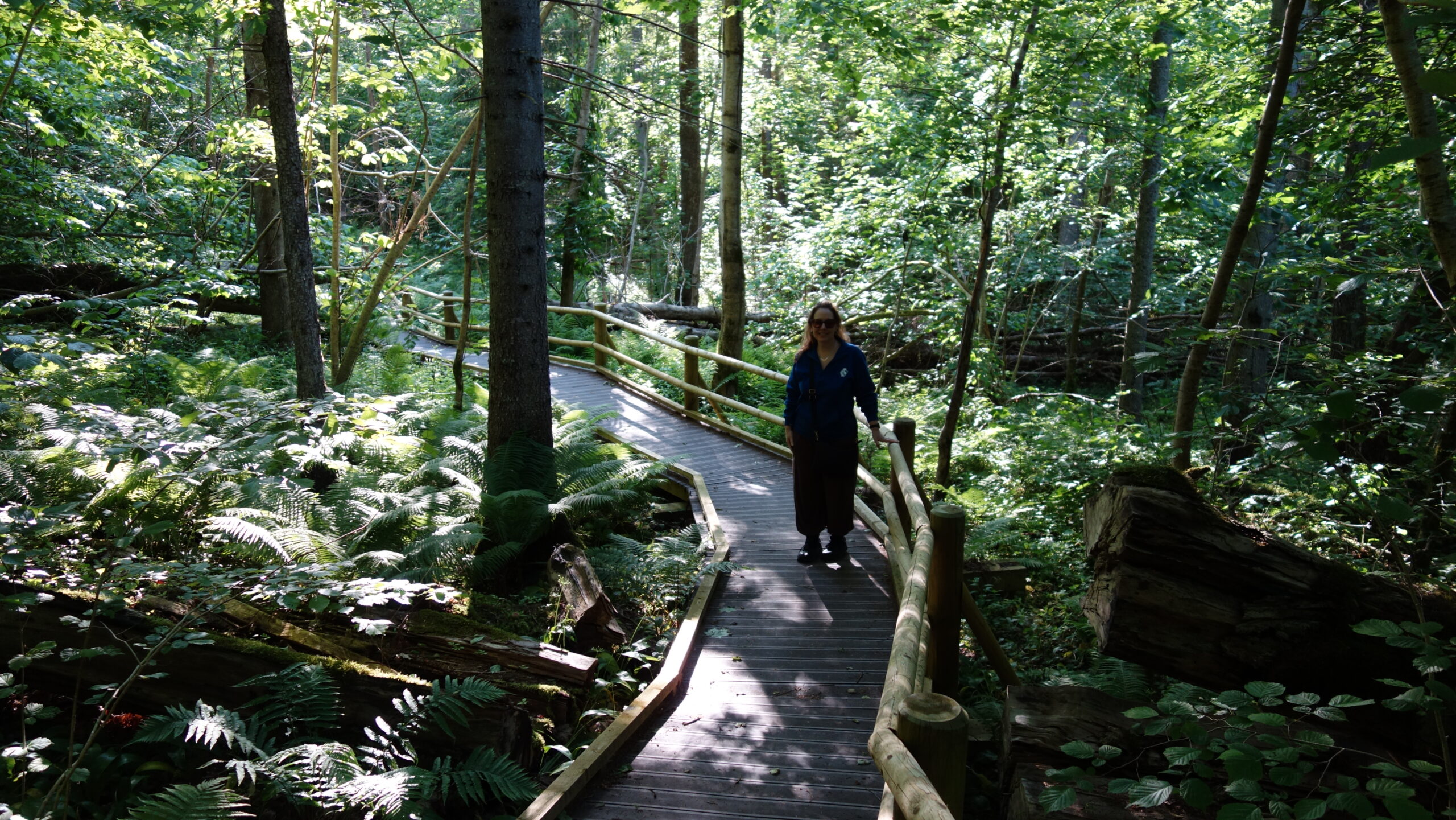
We finished the touring day by going to the area lighthouse. Mer figured that lighthouses are usually in dramatic places, like the ones in Maine. It turns out the Latvians built this lighthouse on the highest ground around, which is a couple of miles inland, in a farmer’s field. That was amusing. There was a hike down the hill on wooden stairs that led to a boardwalk through the forest, and we walked some of that trail. It was completely quiet except for the birdsong all around us. It was very peaceful.

And so we drove back home, where we got a late supper at 9:00. There are some hits and misses when you travel on your own, and while we had two misses today, the three hits more than made up for them.

Latvia 2025 – Days 0 and Day 1, Thursday/Friday and Saturday, Toronto to Lisbon to Riga, and Riga, Talsi, and Ventspils, Latvia

Sometimes finding yourself in Riga is a bit of a surprise, especially after a couple of really long days. I always get Mer a travel book for Christmas that tells her where we will be going in Europe in the summer (she lets me pick as long as we go somewhere new); this last Christmas I got her a book on Montenegro, which looks like a wonderfully scenic country with coastline and mountains and lakes and parks. We were looking forward to it. We went to buy tickets in early January, and somehow ended up on Google Explore’s website. Google Explore searches airfares for entire regions over a time frame you loosely set and returns the best prices it can find. We put in for any two weeks in June hoping to bring down the about-$1,000-per-ticket cost to get to Montenegro. I don’t remember what Google Explore came up with because we were immediately distracted by $450 tickets to Latvia. That included luggage. We looked at each other, and Mer said, “I guess we’re going to Latvia.”

We had been to Lithuania two years ago, so we had some familiarity with the region, and so we were excited to see what Latvia has to offer. But we had to get here first. We think the reason the tickets were so cheap is that the itinerary was less than ideal. We always fly out of Toronto because it’s usually half the cost of flying from any US airport we can easily reach, but that adds about six hours to the travel day (or days, in this case). Our flight from Toronto to Lisbon, Portugal, left at 11:50 pm, so we got up at home normally (about 6:30 a.m. in my case). packed, and left for the airport around 2:00 p.m. All of that was expected, but meant that by the time we landed in Lisbon around 7:00 a.m. EST, we were already tired, and we still had a four-hour layover. Except that it became a five-hour layover when our plane was delayed. Which became taking off almost two hours late because loading the plane took a long time. Which had us finally landing in Riga right around 5:00 p.m. EST (midnight here). We had been smart enough to get a room at a hotel next to the airport, so we got to bed around 6:00 EST (1:00 a.m. Saturday here). It was a long, long day.

But here we are! We slept in as late as we could and still get breakfast (9:00 a.m.), and then we got ready and walked back to the airport to get our rental car. That went smoothly, and so we were off, heading west toward the Baltic coast a little before noon.

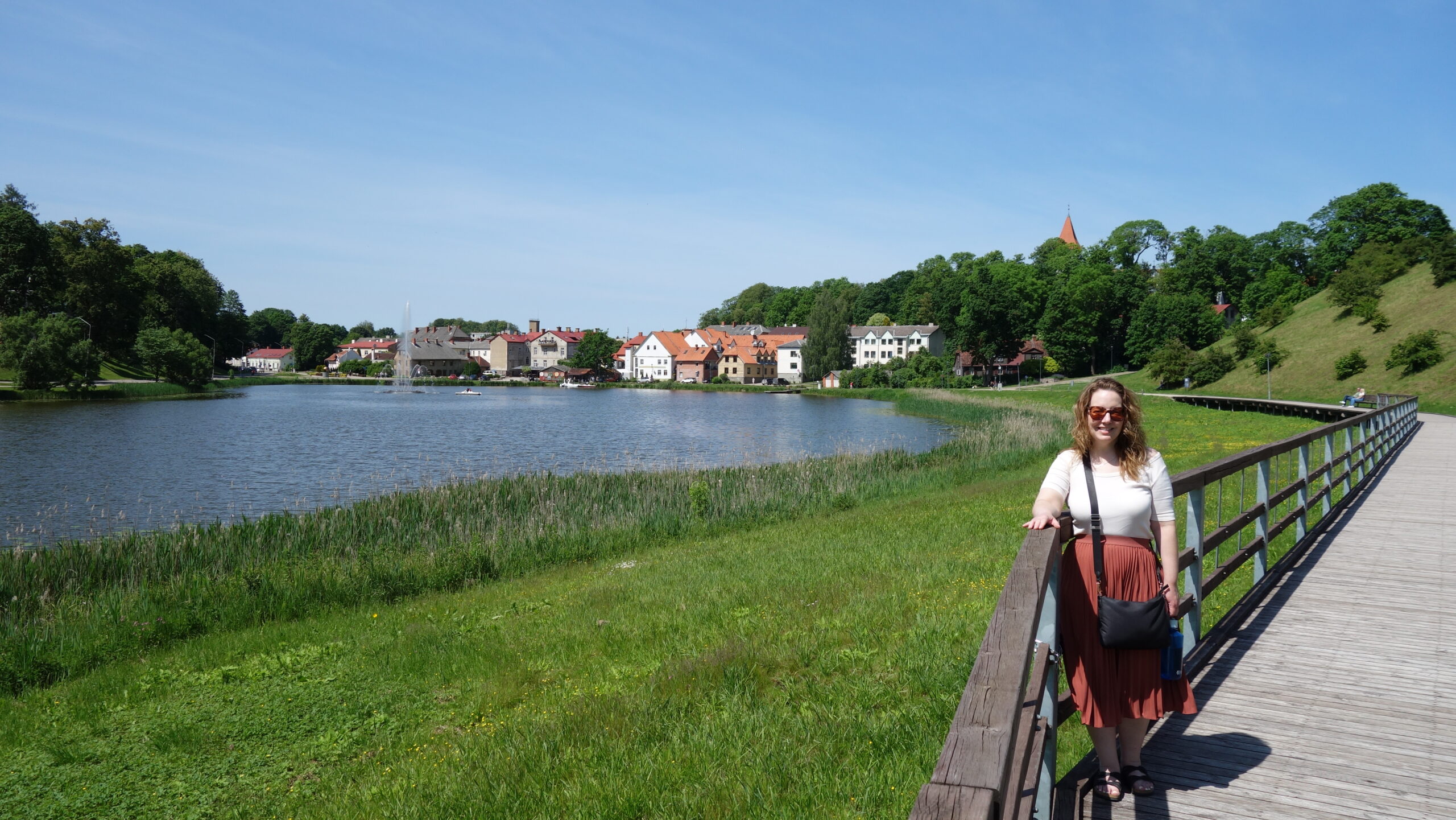
We were headed to the coastal town of Ventspils, but Mer decided to break up the three-hour drive by stopping in the small town of Talsi. Talsi is a small inland town built on multiple hills and has two small lakes on each end of town. It’s very cute. We parked the car in the town’s ridiculously ample free parking areas; for a town of eleven thousand, there were on-street parking and large parking lots all over town. That was a refreshing change from Wales last summer.

We were in Talsi to wander and see Talsi. We tromped up over Mill Hill, but the mill is gone. But that brought us into a section of town where we stumbled across a bride and groom having their pictures taken. Weddings make us both smile. We continued back down to the smaller of the two lakes and then back toward the car when Mer decided we had time to go see the regional museum. So we headed back past the lake, where I got distracted by a boardwalk and a bridge, so I made a wrong turn (I was following my travel phone). Then, I took another wrong turn while trying to make up for the first wrong turn. We got it figured out and finally got to the regional museum, where we ran into the wedding party for the bride and groom we had seen earlier. We were afraid they were going to be in the museum and thus it would be closed, but they were just using it as a home base. We think the wedding may have been in the park next to the museum.

So we got to tour the museum. It cost us both all of five euros total (about six dollars) to get into the museum AND their special art exhibit in an outbuilding. Meredith was very excited about that. The museum was cute – there was a room on a local author who seemed important for Latvia, but we couldn’t read any of the information on him since it was all in Latvian. The history rooms full of stone, bronze, and iron artifacts did have English translations, so we lingered in those rooms a little while longer. There was one room of an art installation that had photos of Hitler and children where the artist had painted devil heads and horns on all of the people in the photo. It was effective if a bit creepy. There were two room of more standard paintings and one restored room of how the mansion the museum is housed in may have looked. The upstairs rooms had a room on local birds and animals, including cycling through native bird calls. The last room in the main museum was a temporary exhibit on musical instruments the museum has in the collection, including an accordion and eighties-style Casio keyboard you could actually play. The other instruments, dating from the nineteenth and twentieth centuries, were for display only.

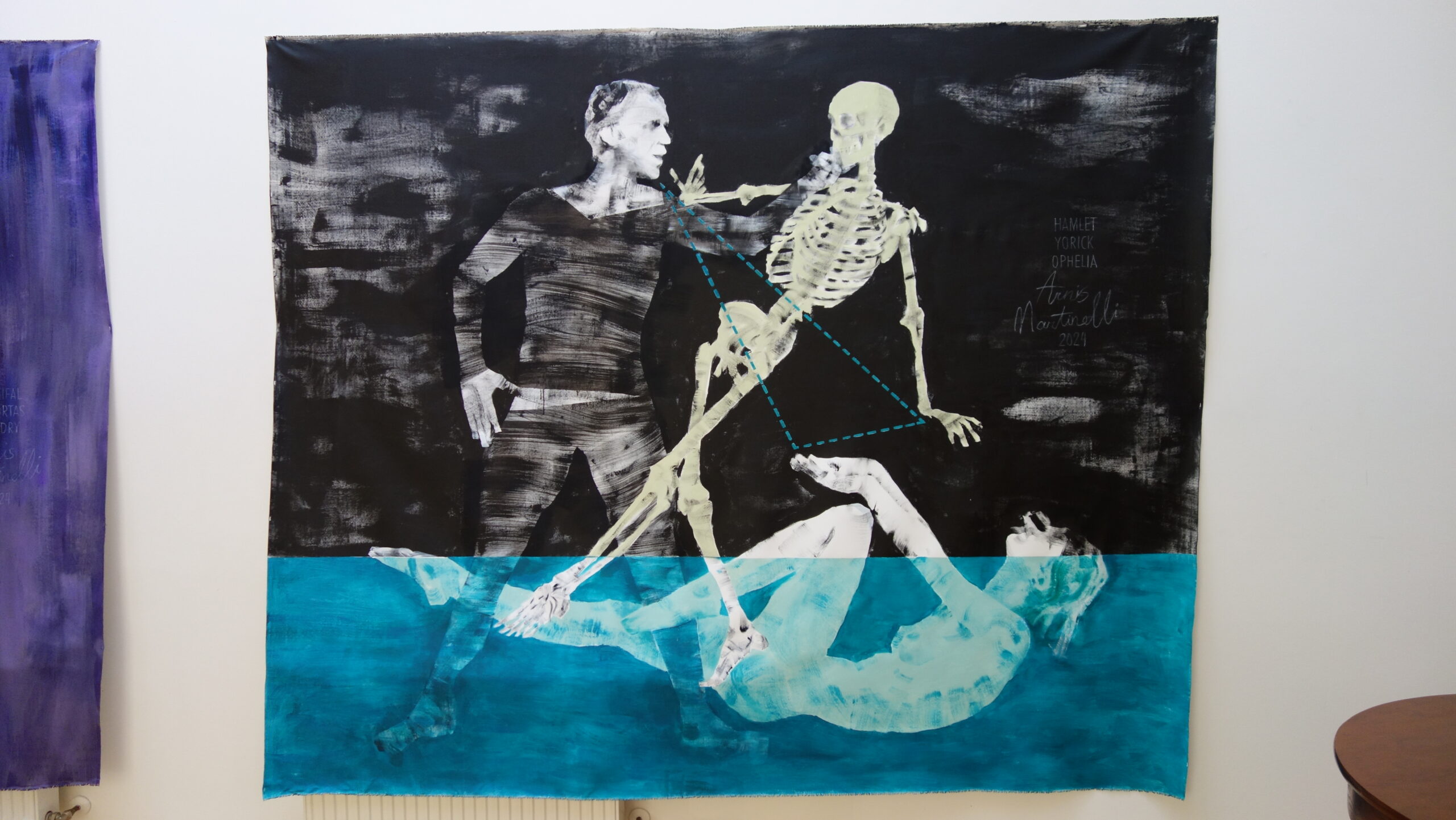
The young woman who gave us our tickets then took us to the outbuilding. Along the way, she was surprised to find out we were in Latvia for twelve days. I guess Talsi doesn’t get many American visitors. The outbuilding had an art installment by one artist who did large paintings of famous trios – Adam, Eve, and the serpent; Hamlet, Ophelia, and Yorick (as a full skeleton); Theseus, Ariadne, and the Minotaur; and others. The figures were all joined by a triangle, and the woman was usually overlaid by two swaths of color. In the case of Hamlet and Ophelia and Yorick, Meredith pointed out that Hamlet and Ophelia are joined by the hands of the skeleton of Yorick, who is standing in for Death. Ophelia is also overlaid mostly by horizontal blue, and so is drowning. Mer really loved the piece. It’s fun to be surprised by small museums like that.

We ran into the ticket woman as we left, and she told us there was a bench overlooking the pond. The bench would play Beethoven if we sat on the bench. We tried that, but the speaker was just a commentary in Latvian. We noticed the wedding party coming toward us down a lovely tree allee when I got impatient at the narration I couldn’t understand. I pushed the button several times, which made Meredith wonder if it was going to start over, but instead it suddenly started blaring out Beethoven’s “Ode to Joy” just as the wedding party came into full view. Both Mer and I started laughing at the timing.

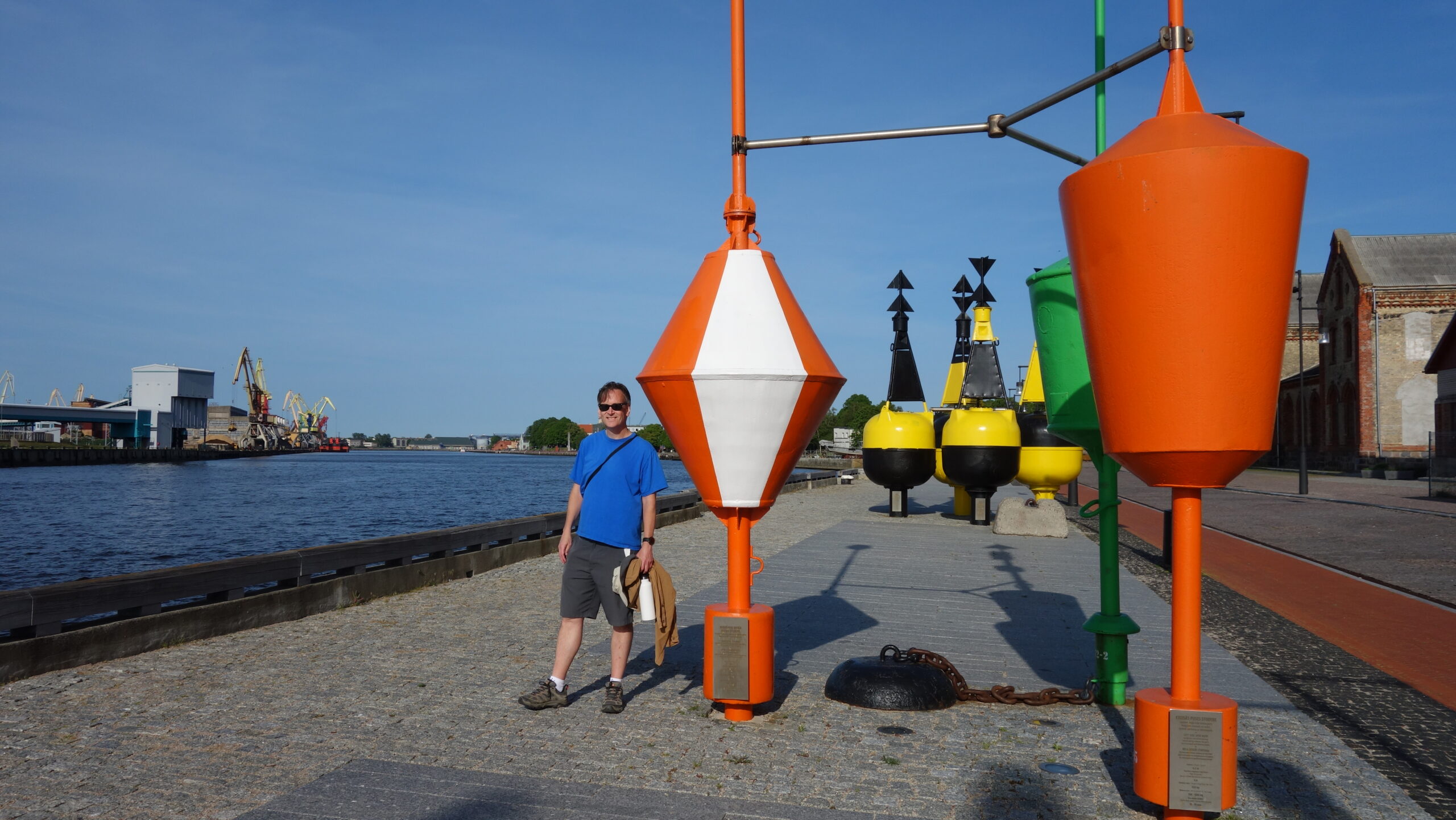
We headed back into town and got a cafeteria-style early supper, and headed off for Ventspils around 4:30. We got to town and settled in our room and headed off on foot to explore around 6:00. Mer had a destination in mind, but felt free to wander as well. As such, we got to walk along the River Venta toward the sea. The riverfront is very interesting. The north side of the river is dominated by cranes and large industry (mostly coal processing), but the south side is mostly bike and pedestrian sidewalks. Ventspils has managed to keep a working riverfront next to a people-friendly zone. Plus, I got to see enormous coal cranes lifting coal from a barge. It was very cool.

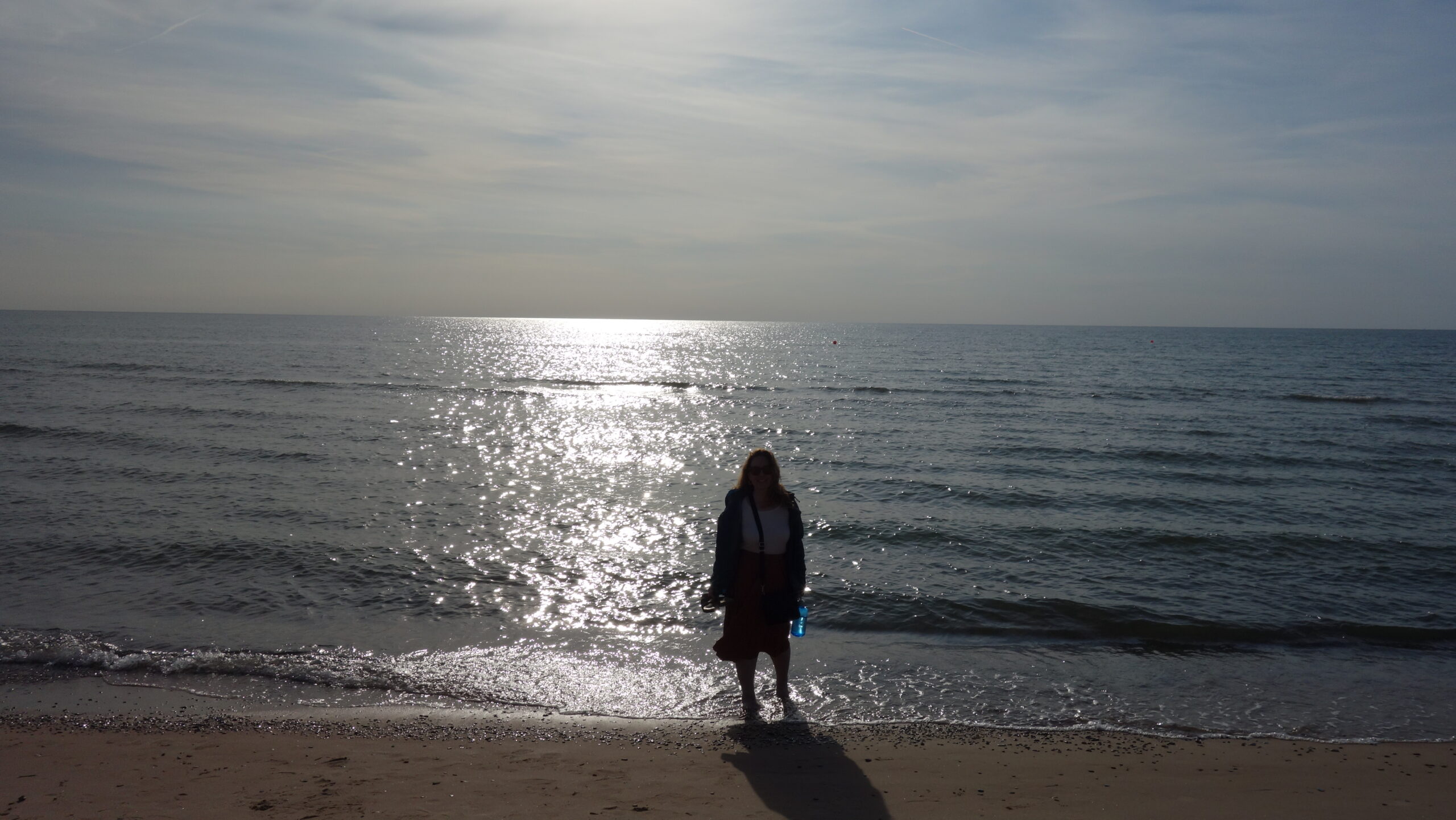
We eventually made our way to the beach here. The beach is hidden from the town (and vice versa) by a long line of high dunes. We sat on a bench and enjoyed the sea breeze and the mild temperature (in the seventies). There were some people about, but it wasn’t crowded, especially for a city of 33,000 people who had a beautiful Saturday to relax. We wandered up the beach to the southern breakwater and walked out on it. It was reinforced by giant concrete “jacks,” like in the children’s game. The city casts the jacks and piles them up on either side of the path out to the lighthouse. I hadn’t seen that before – the breakwater in Rockland, Maine, is made of solid granite blocks.

After sitting out at the lighthouse for a few minutes, we strolled back into town along the river. We toured a couple of dry-docked, but publicly accessible, ships. The cranes were still at the coal, and it was a fine evening to be out.

Latvia is a northern country. I was surprised to find that it was almost 10:00 when we got back to the room, and as I write this at 11:00, the sun still hasn’t set. It’s going to take some getting used to.

And so it’s been a good day of surprises for me in our surprise country to tour. We’re here on the sea for a few more days as we use Ventspils as a home base. We’re here and happy to be so.